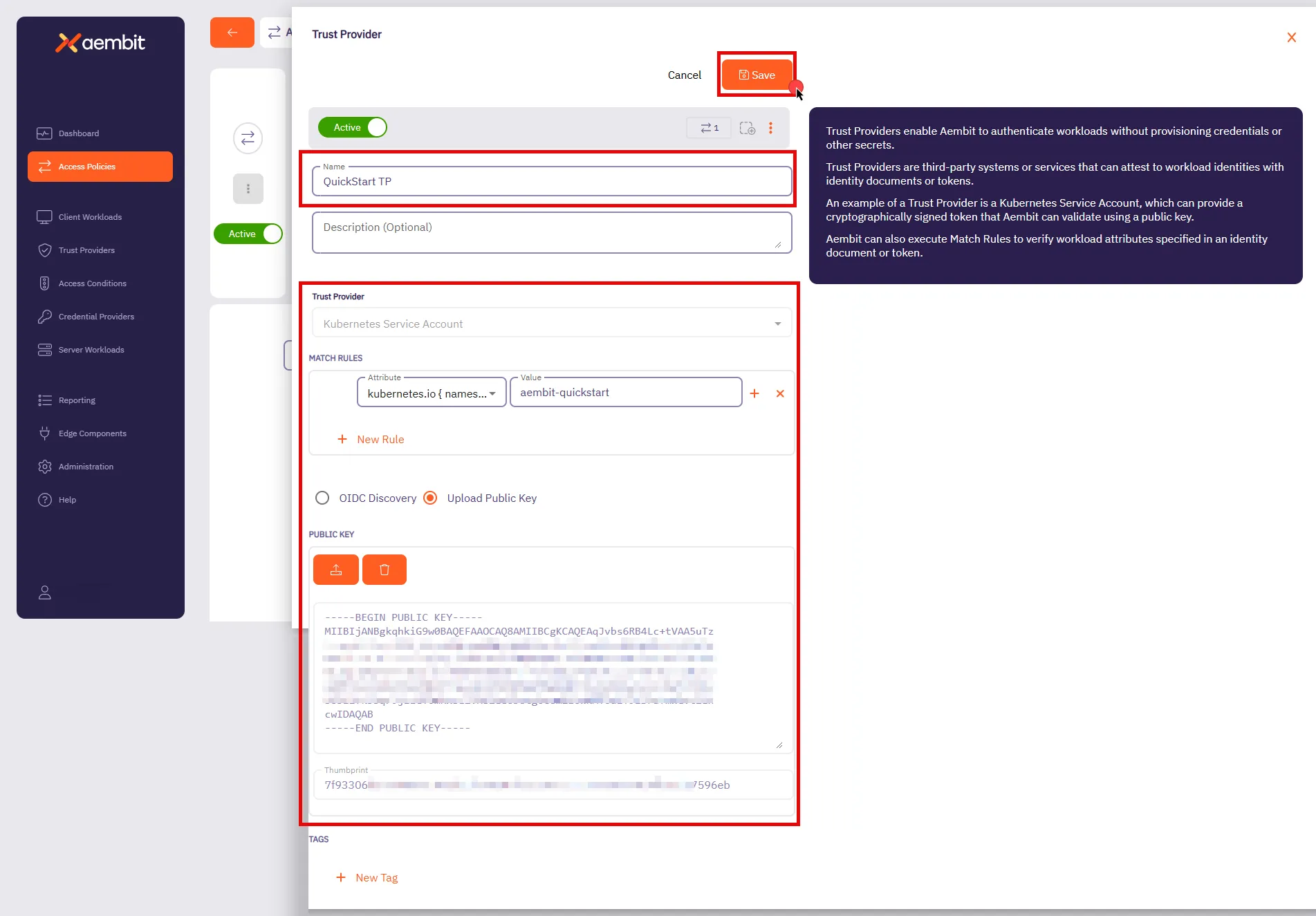
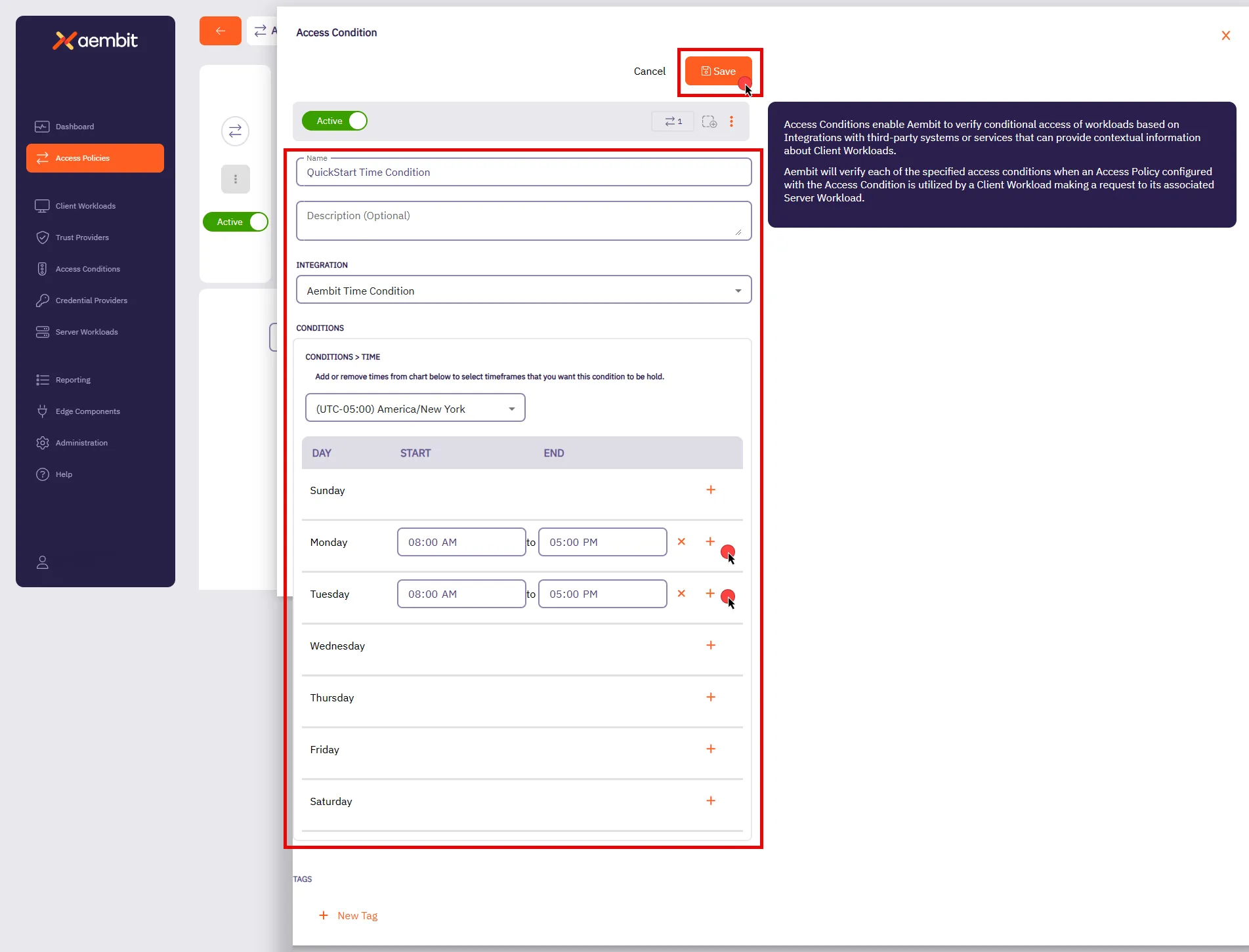
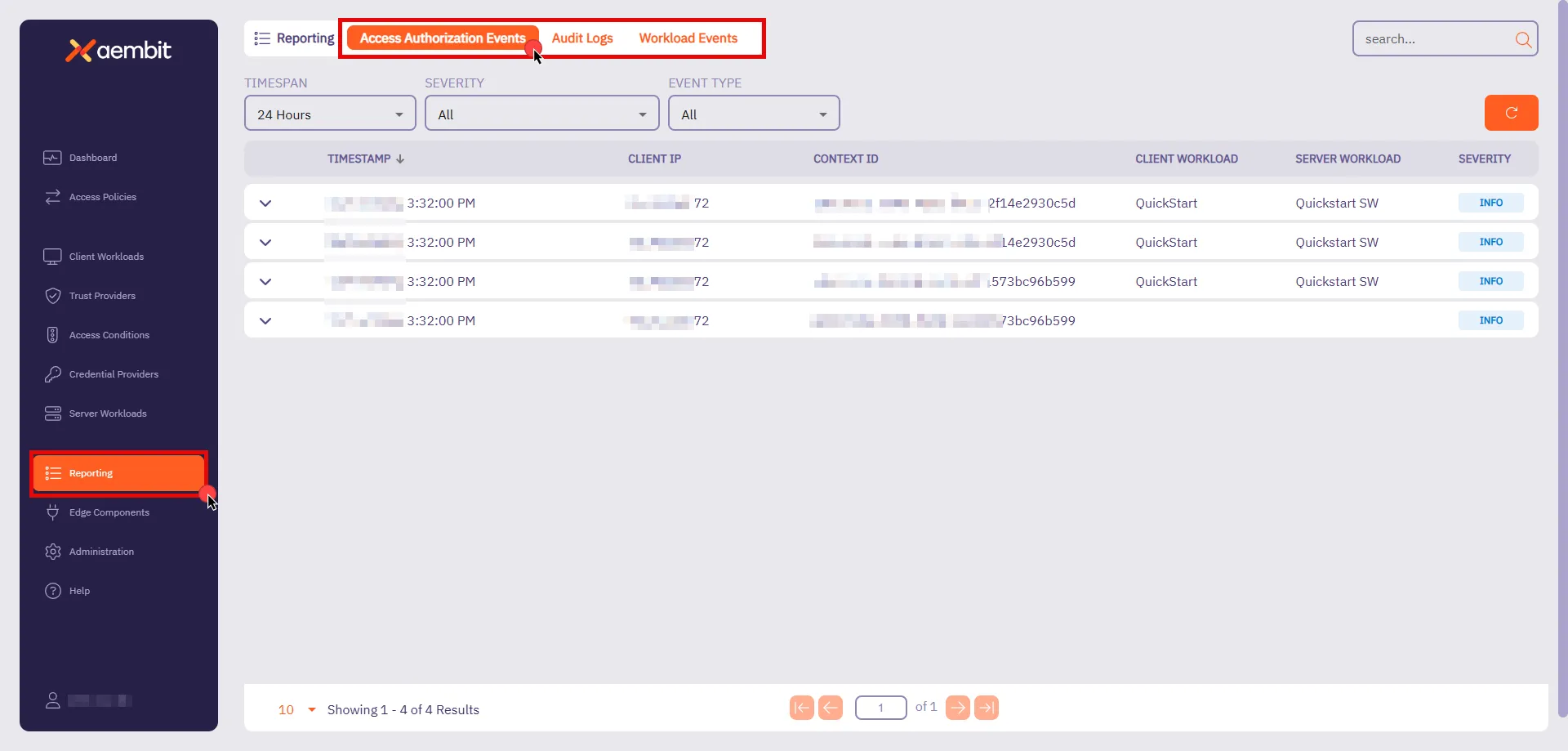
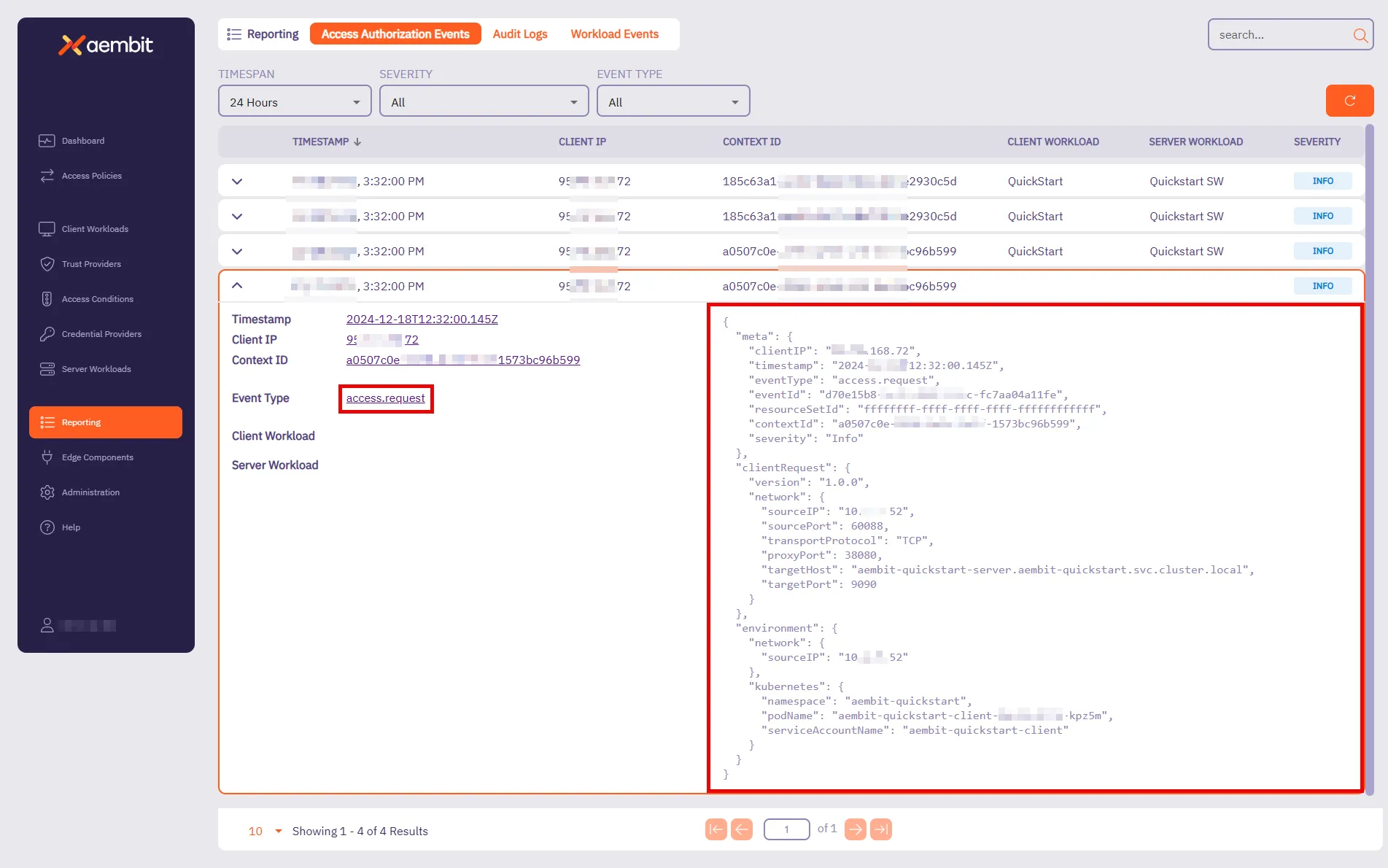
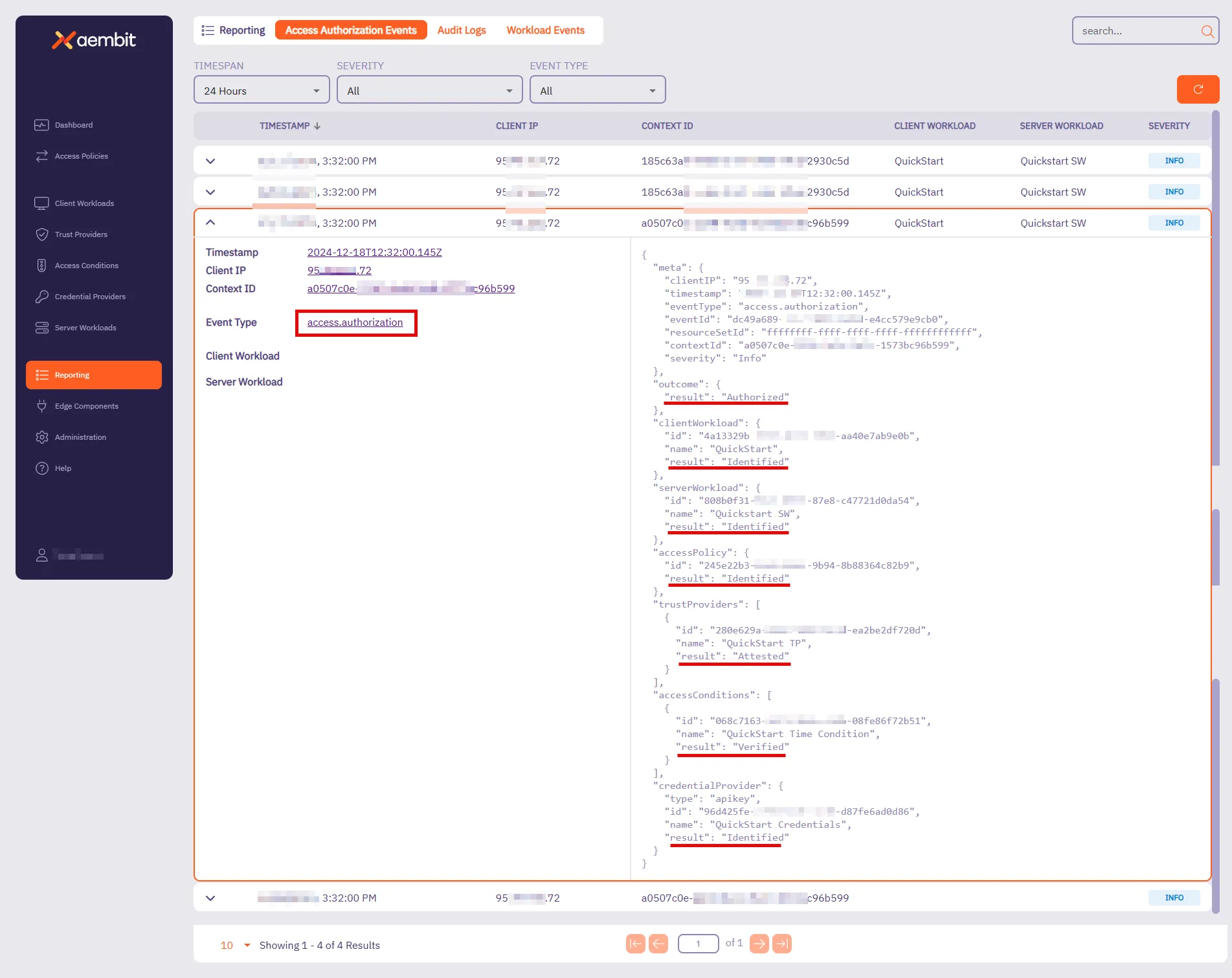
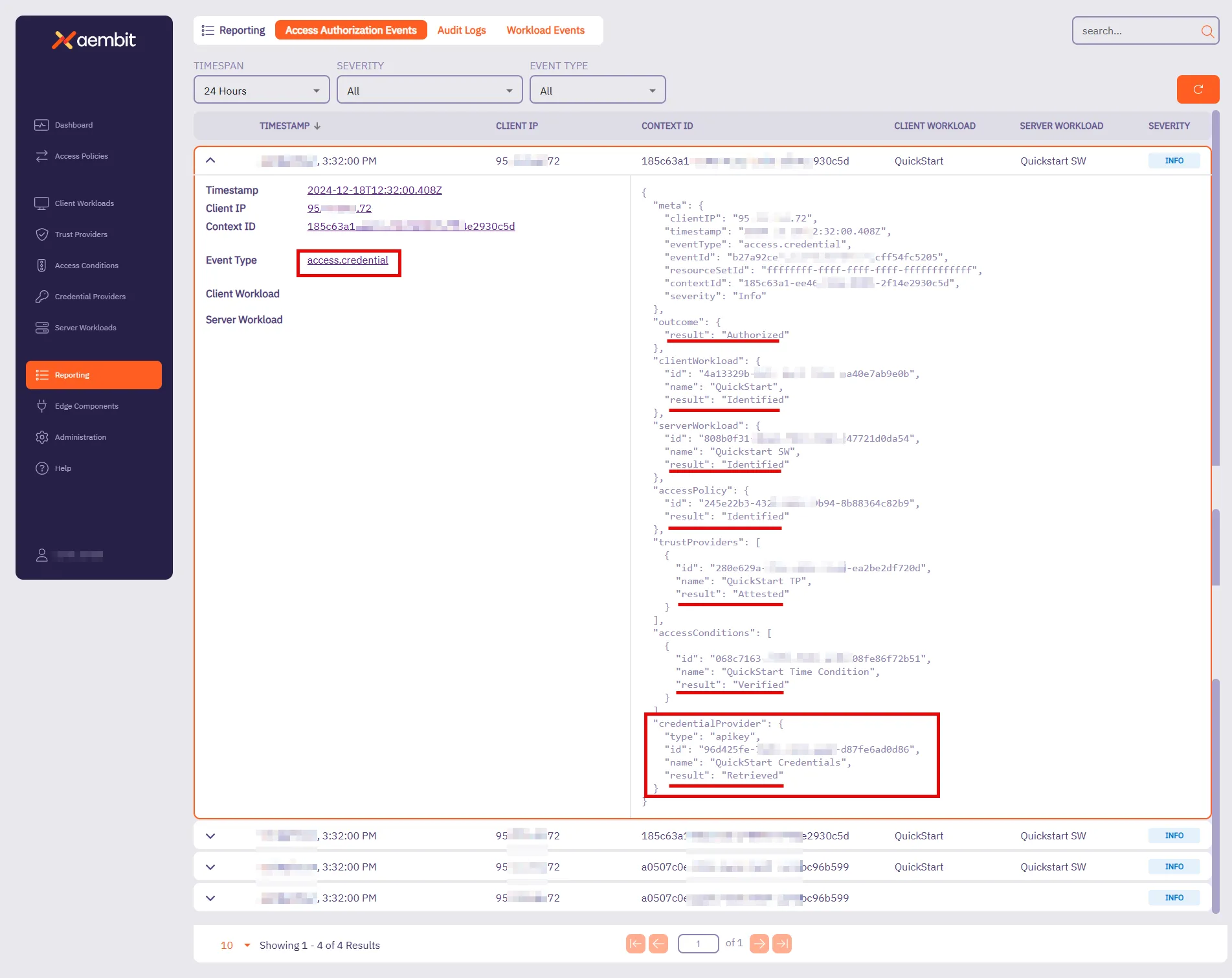
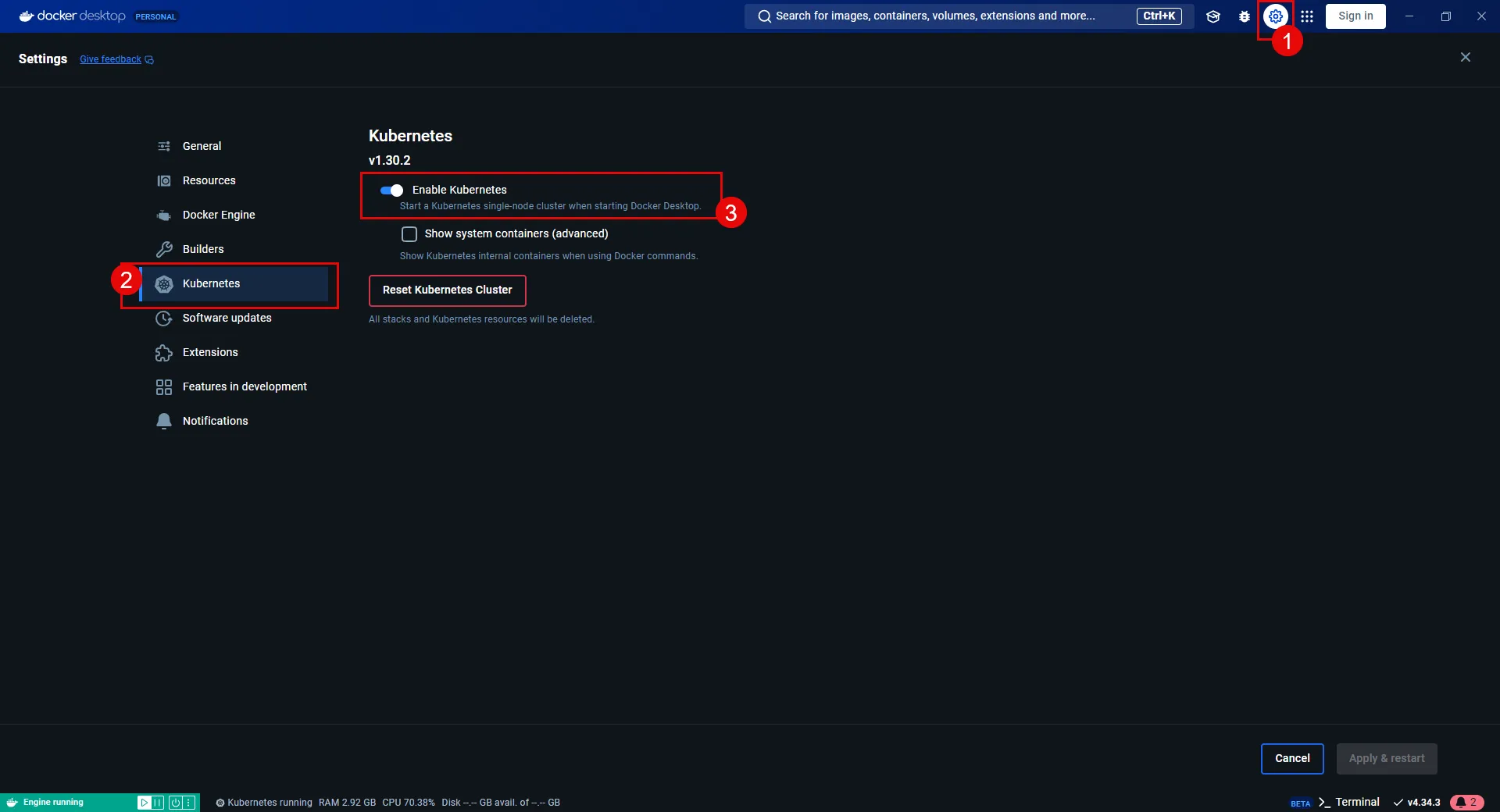
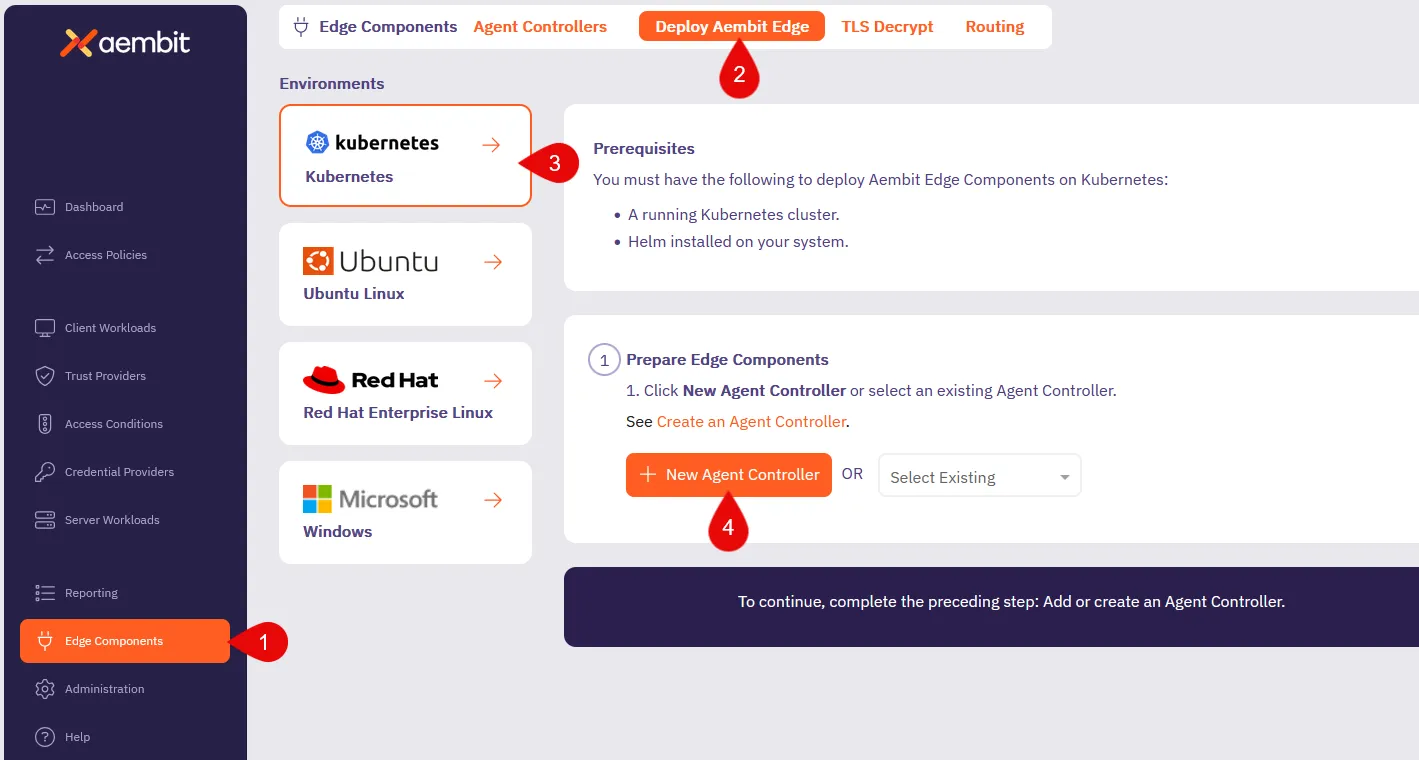
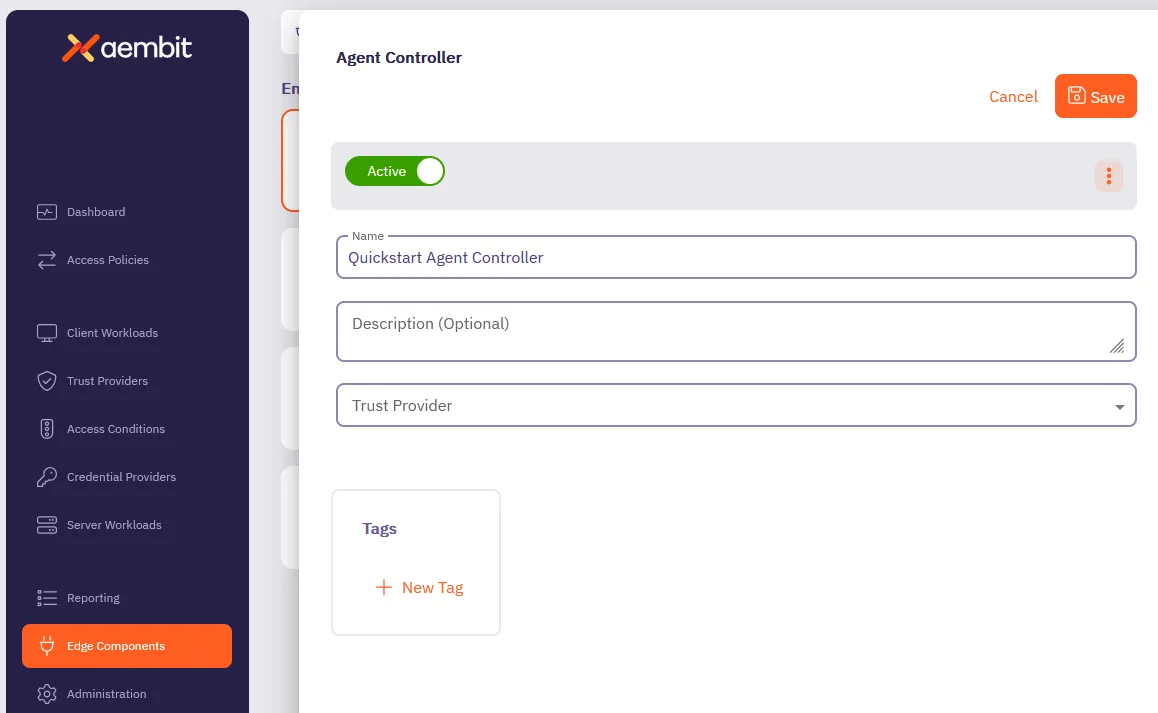
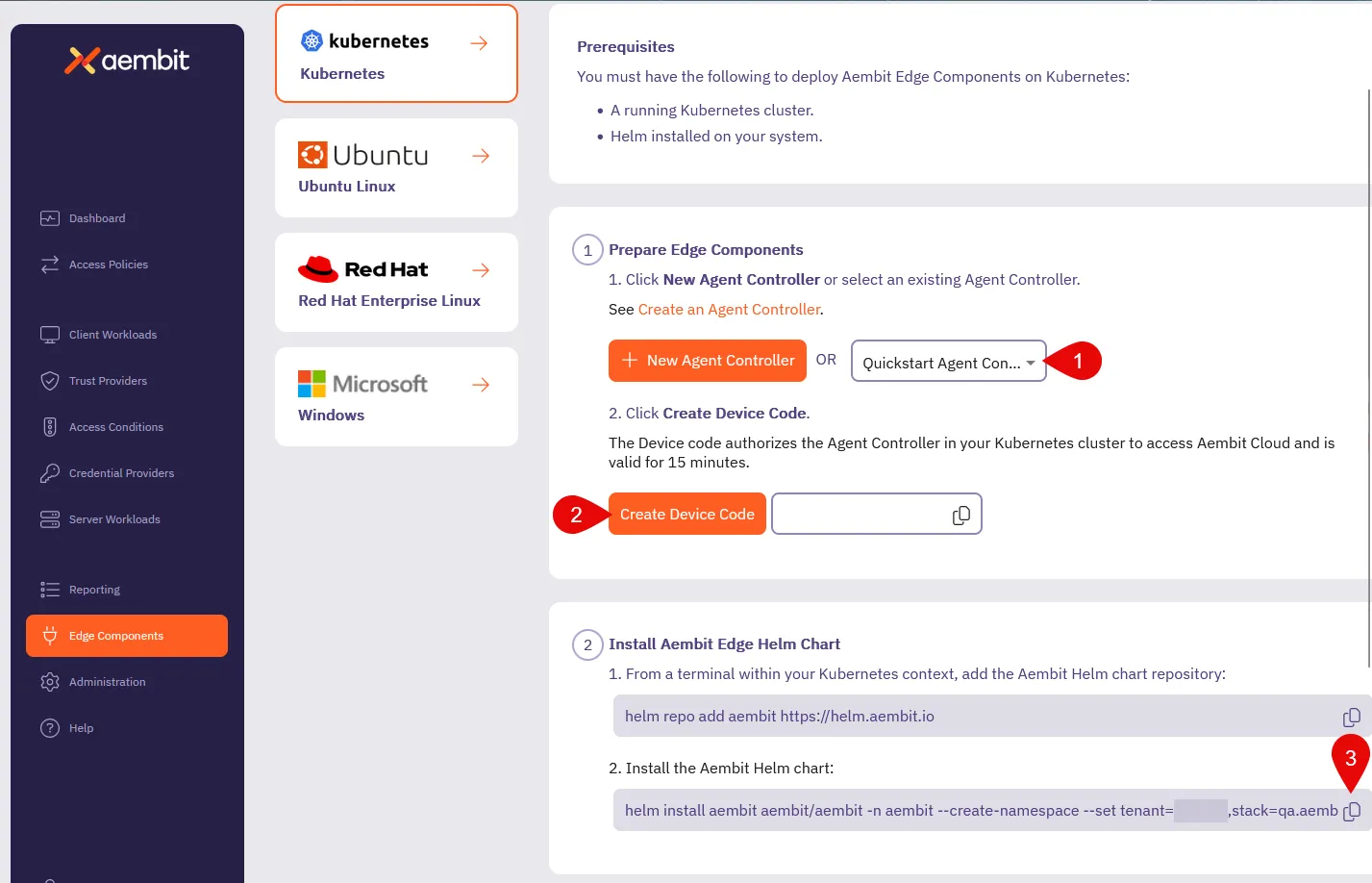
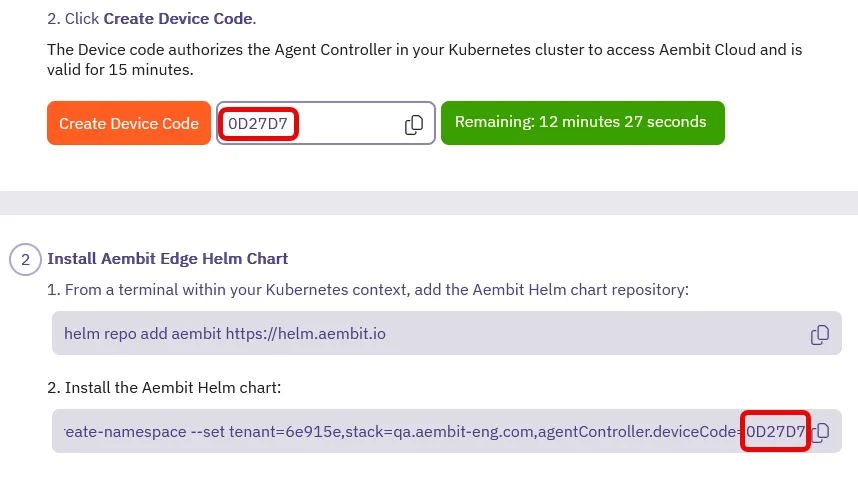
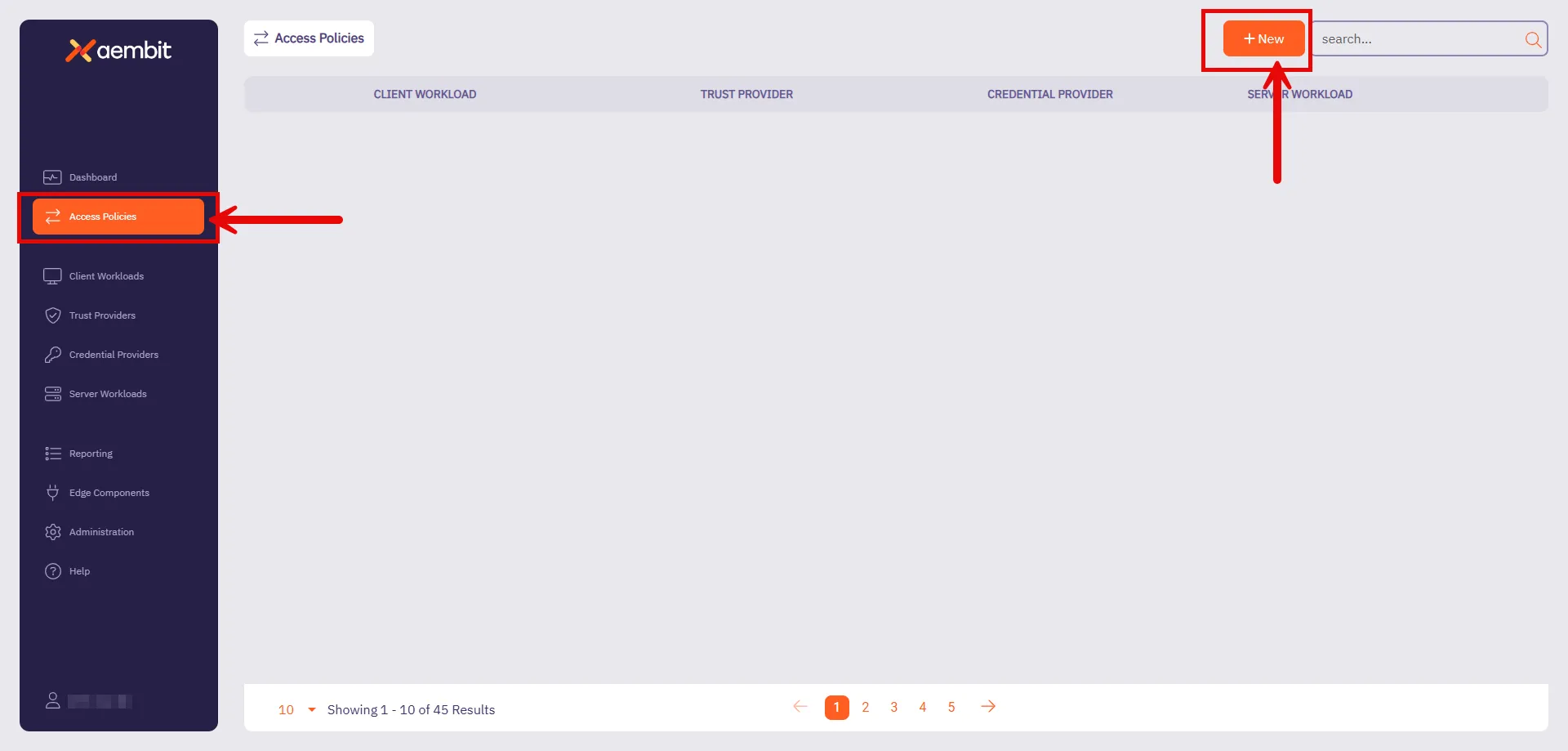
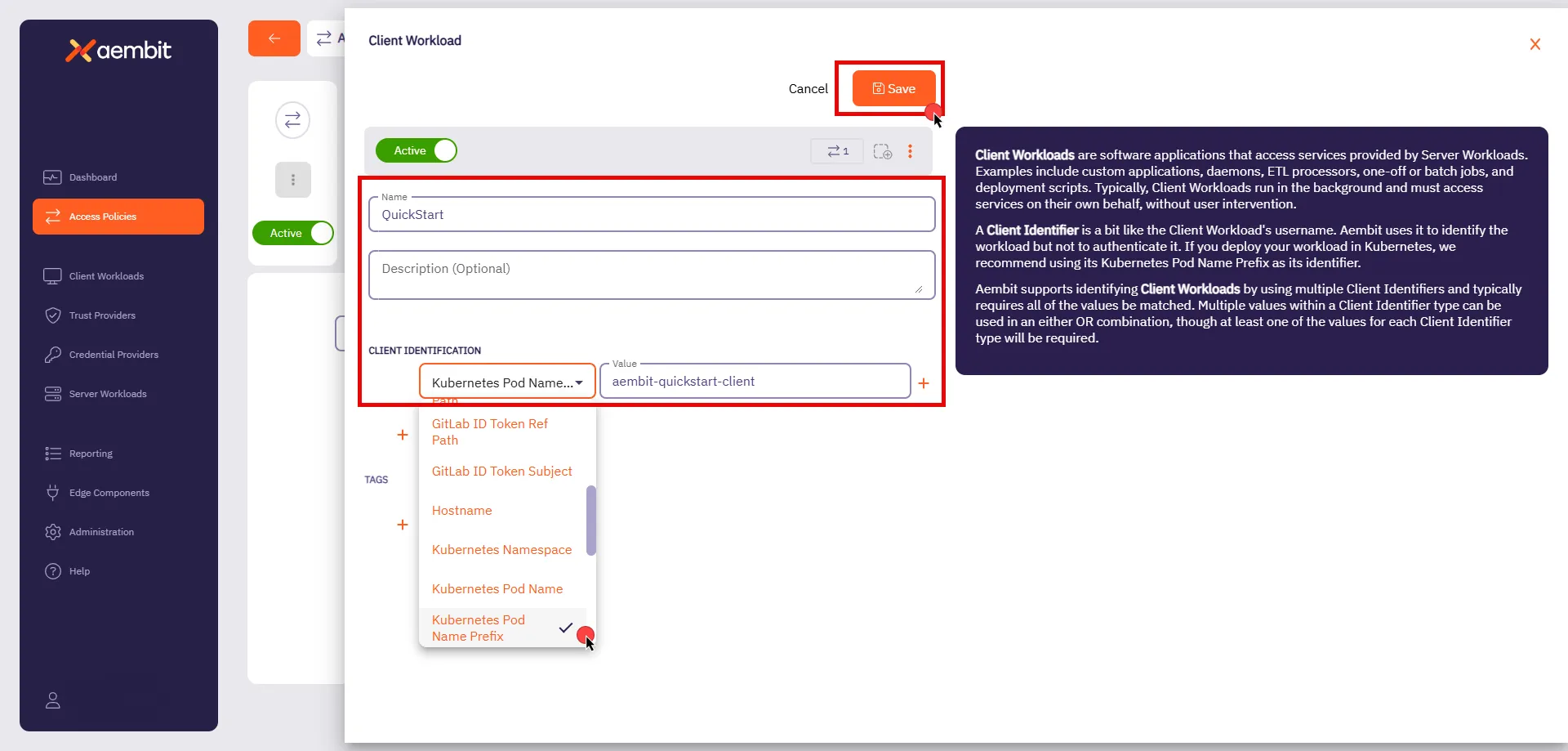
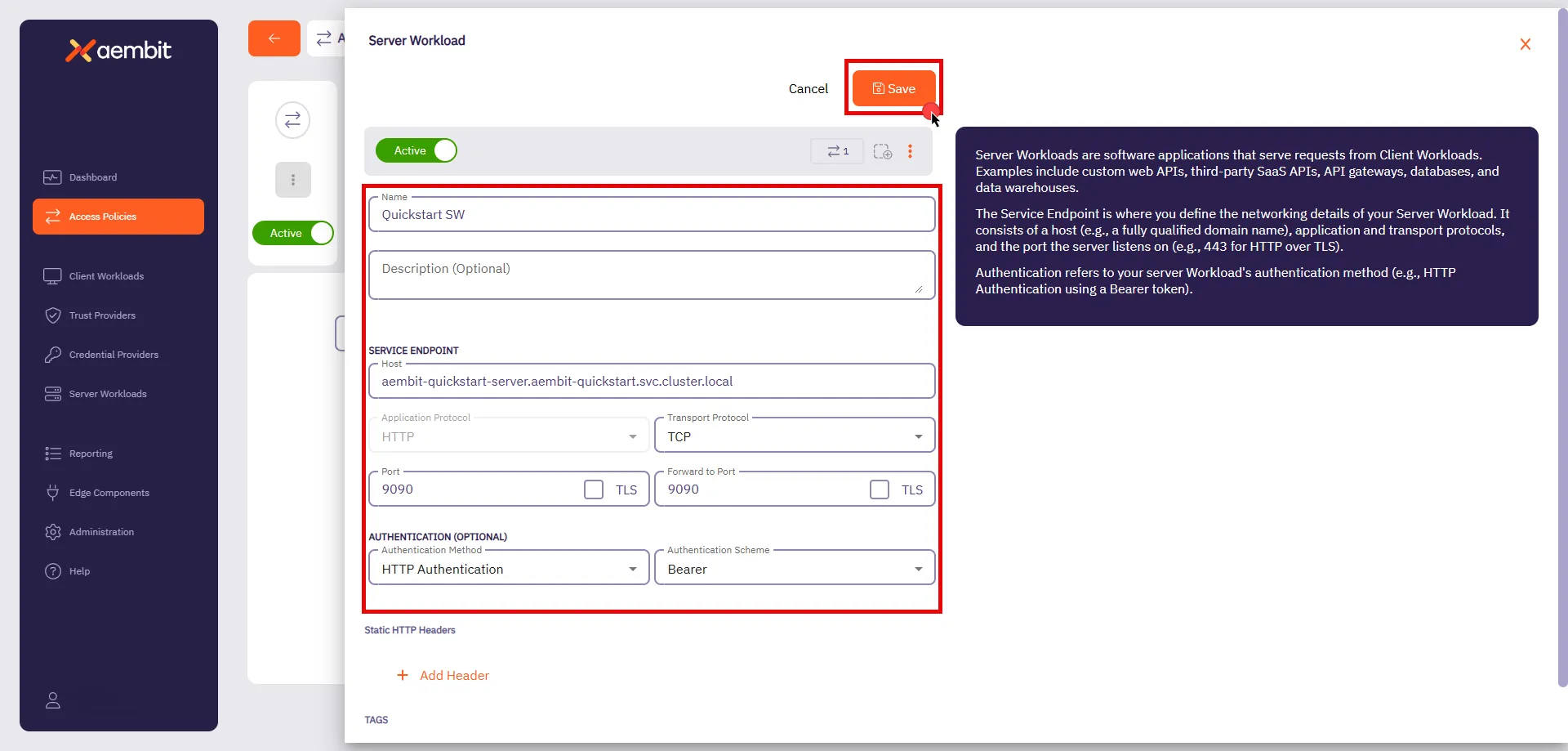
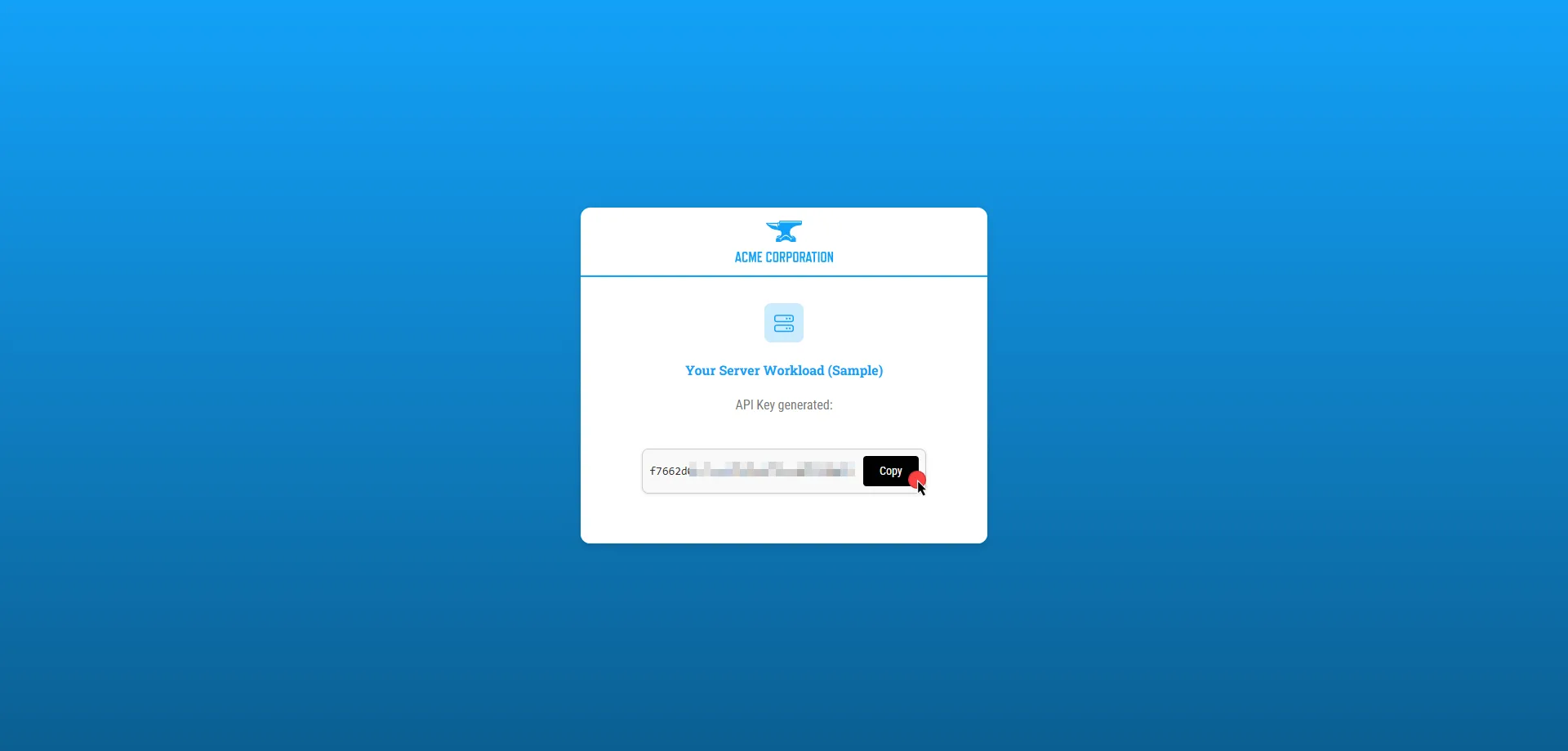
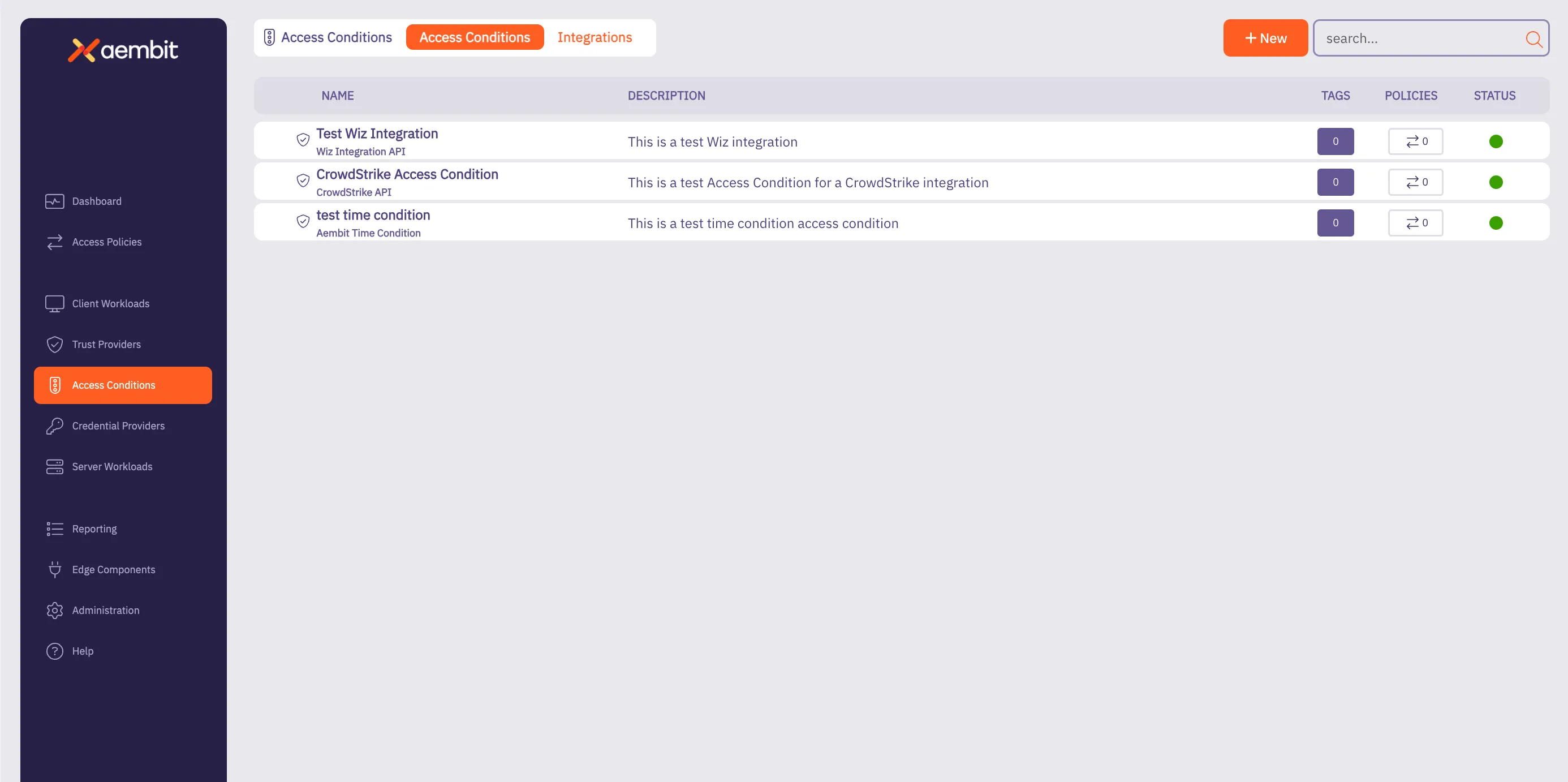
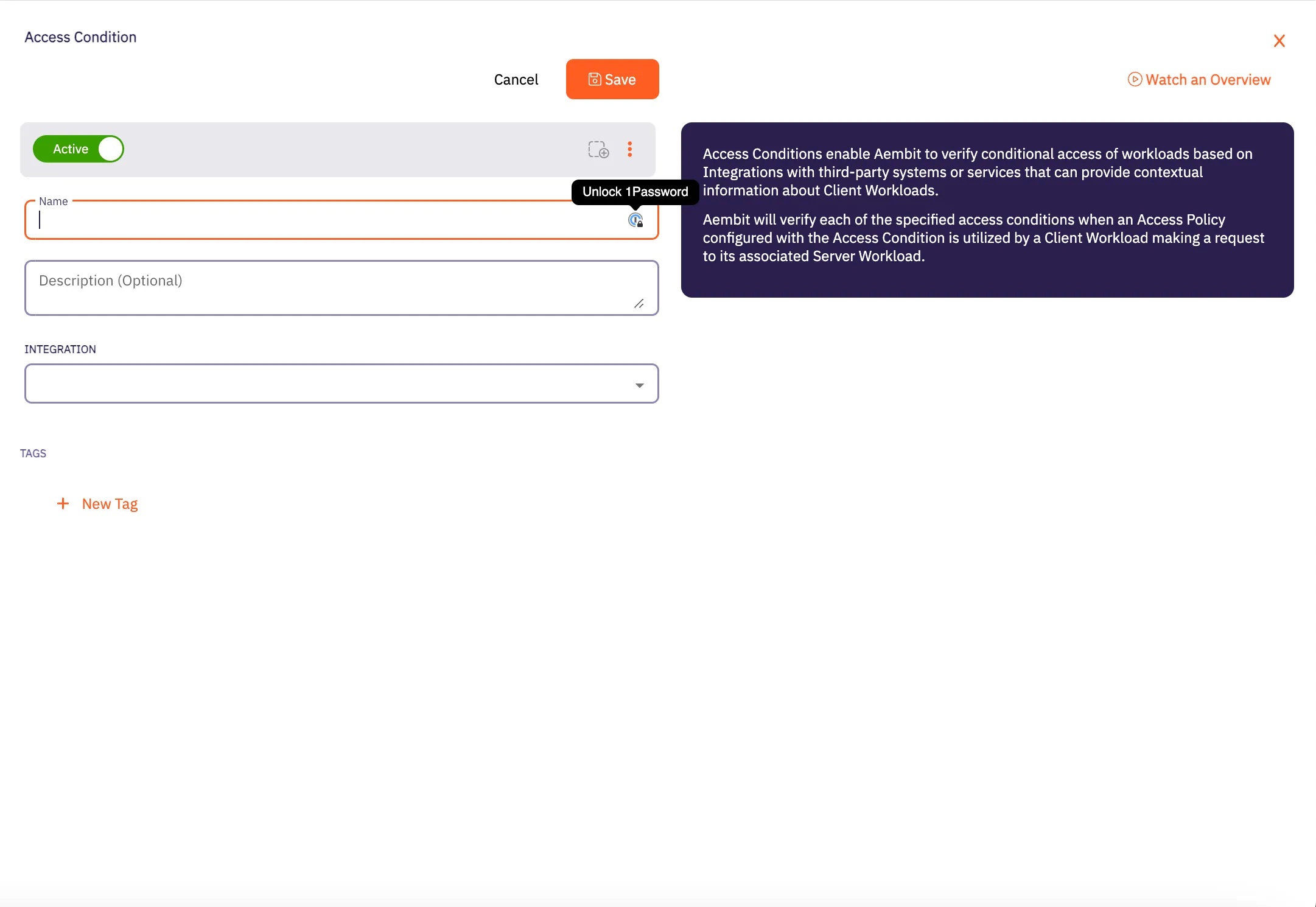
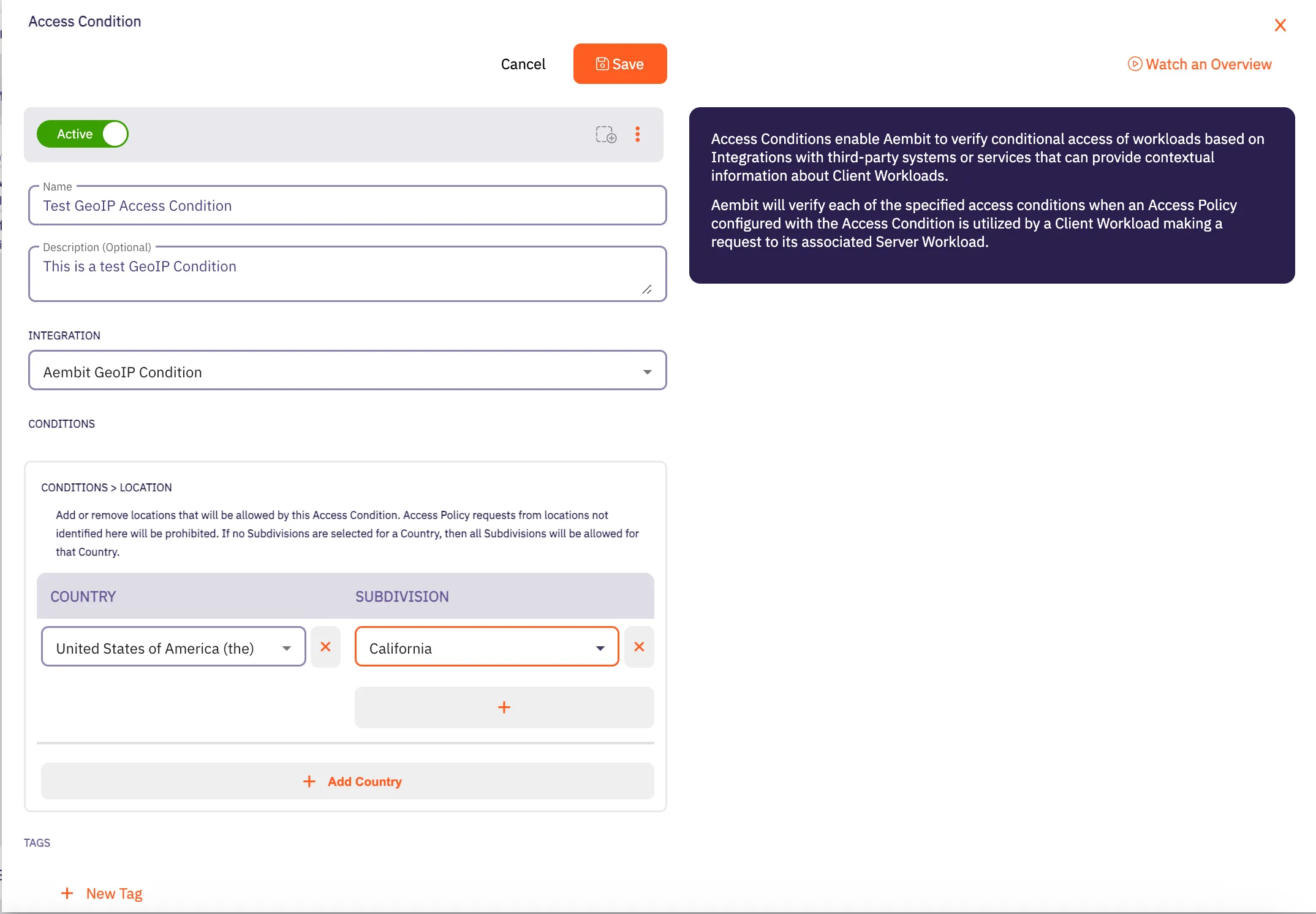
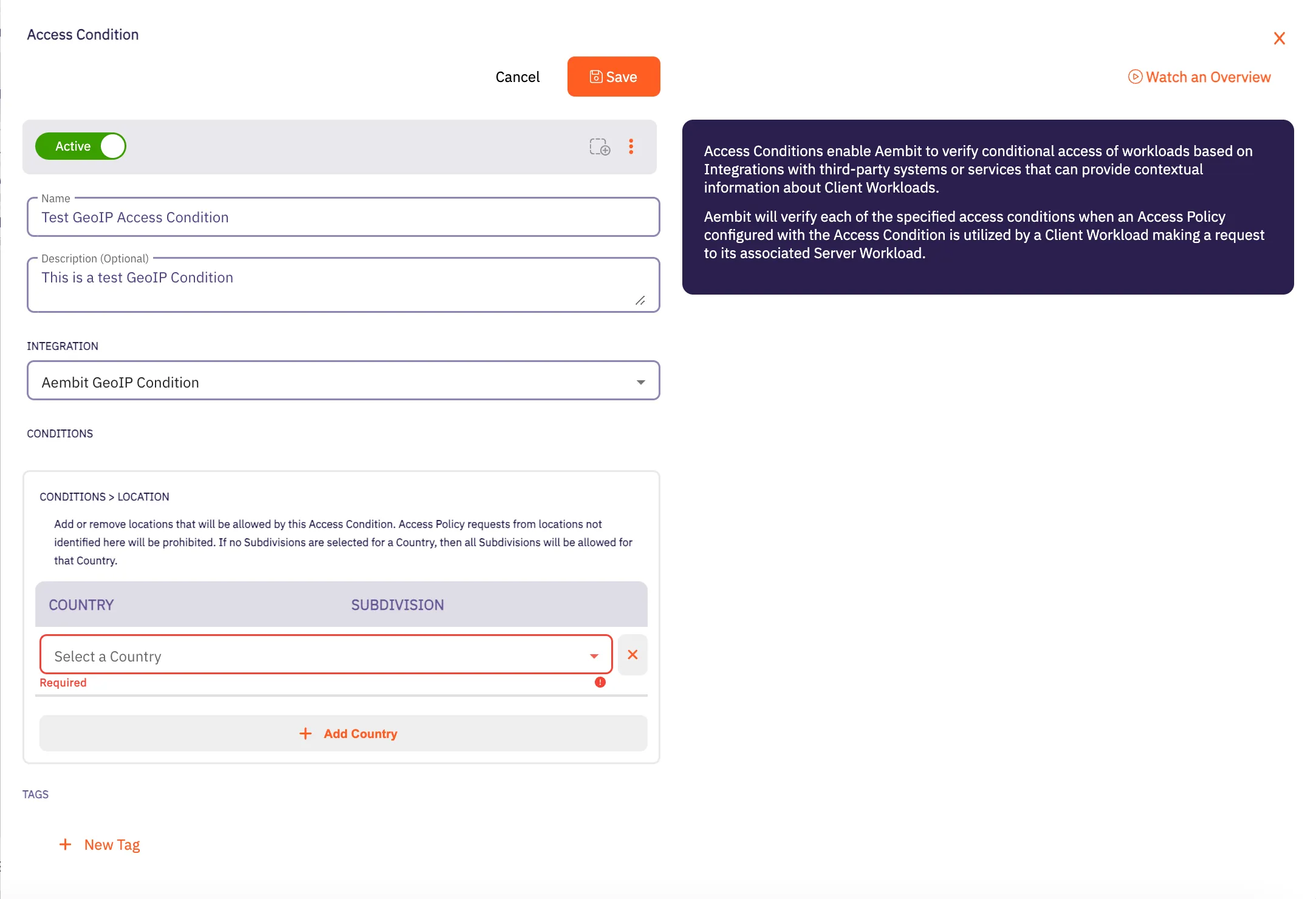
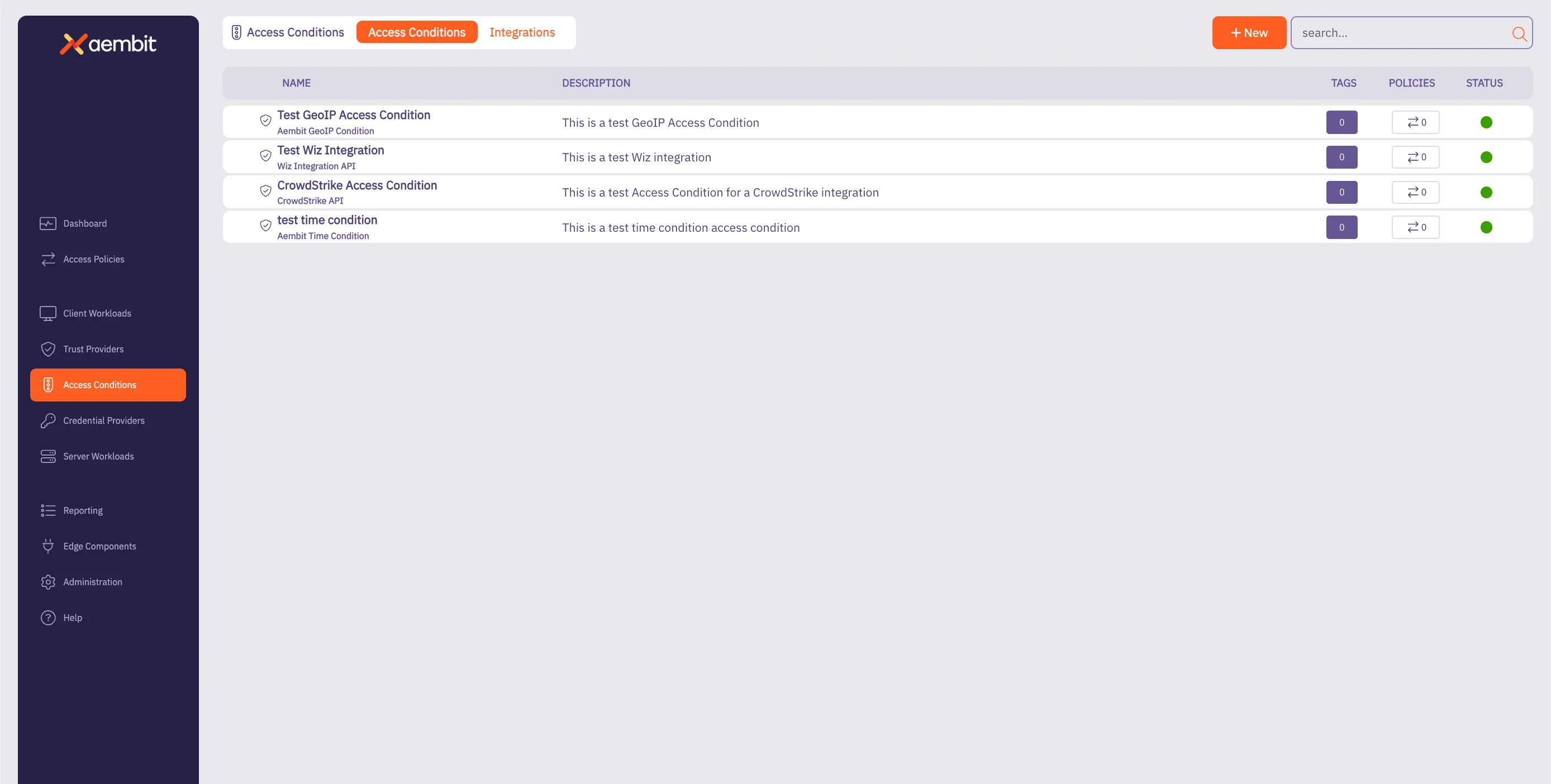
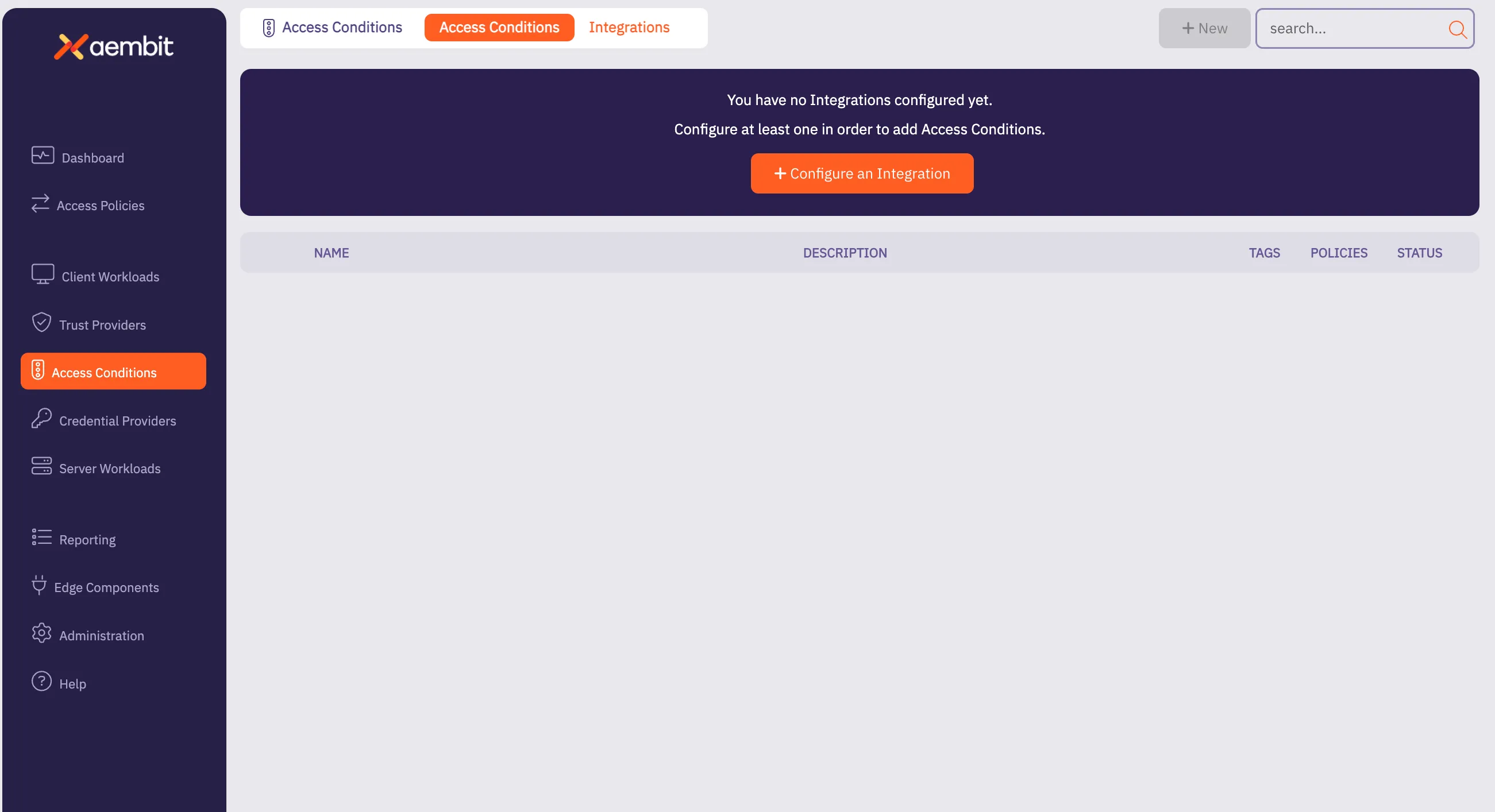
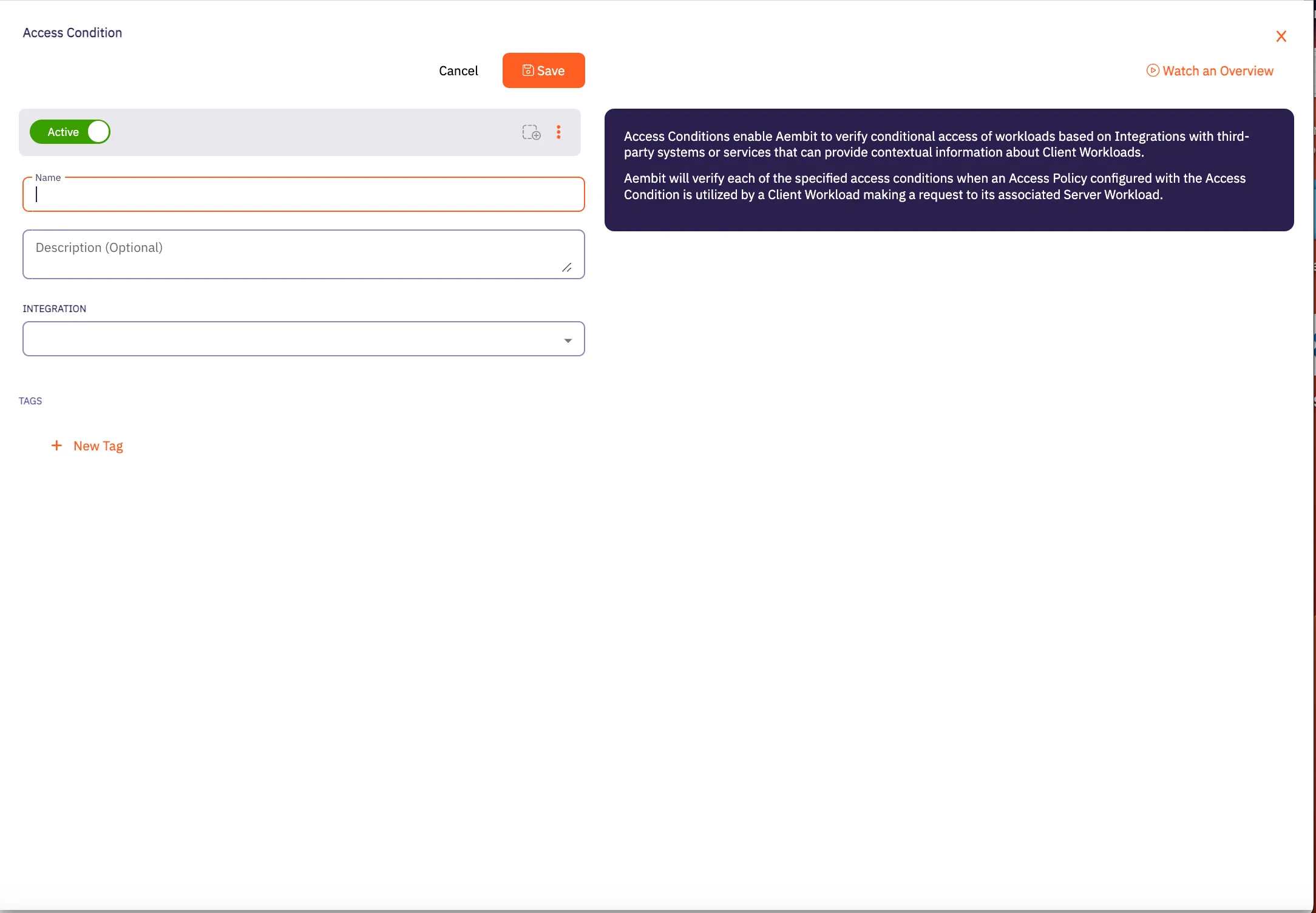
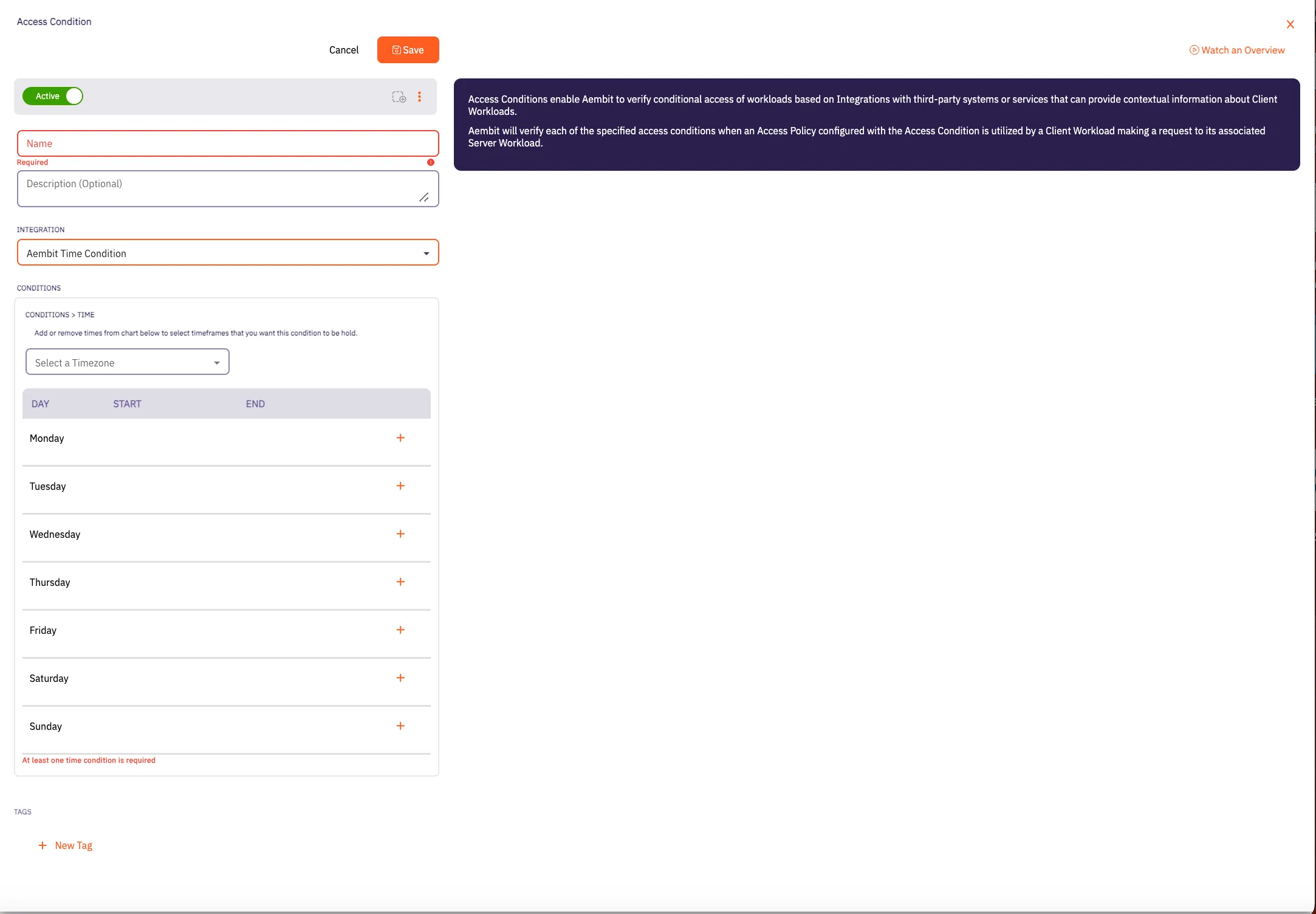
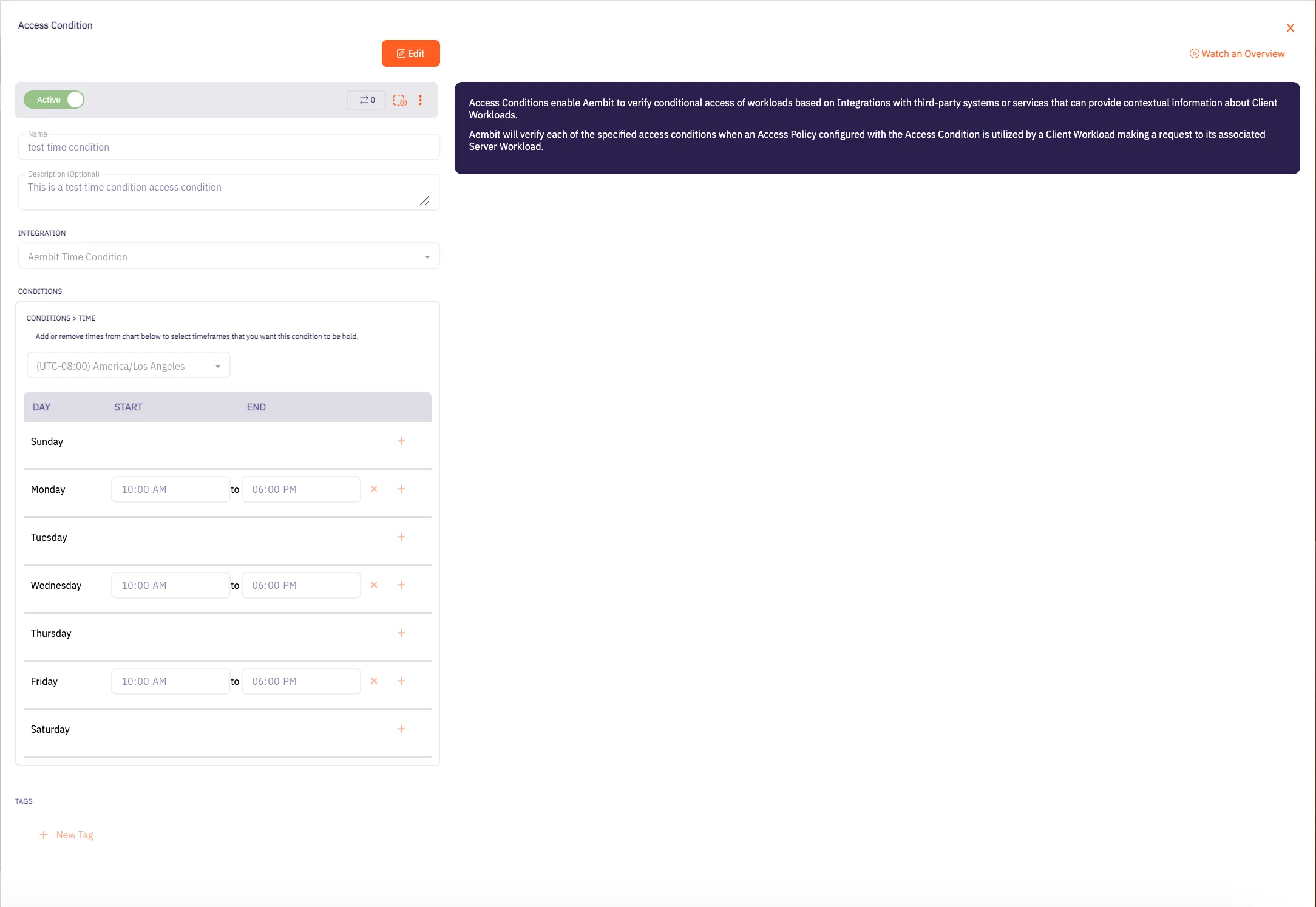
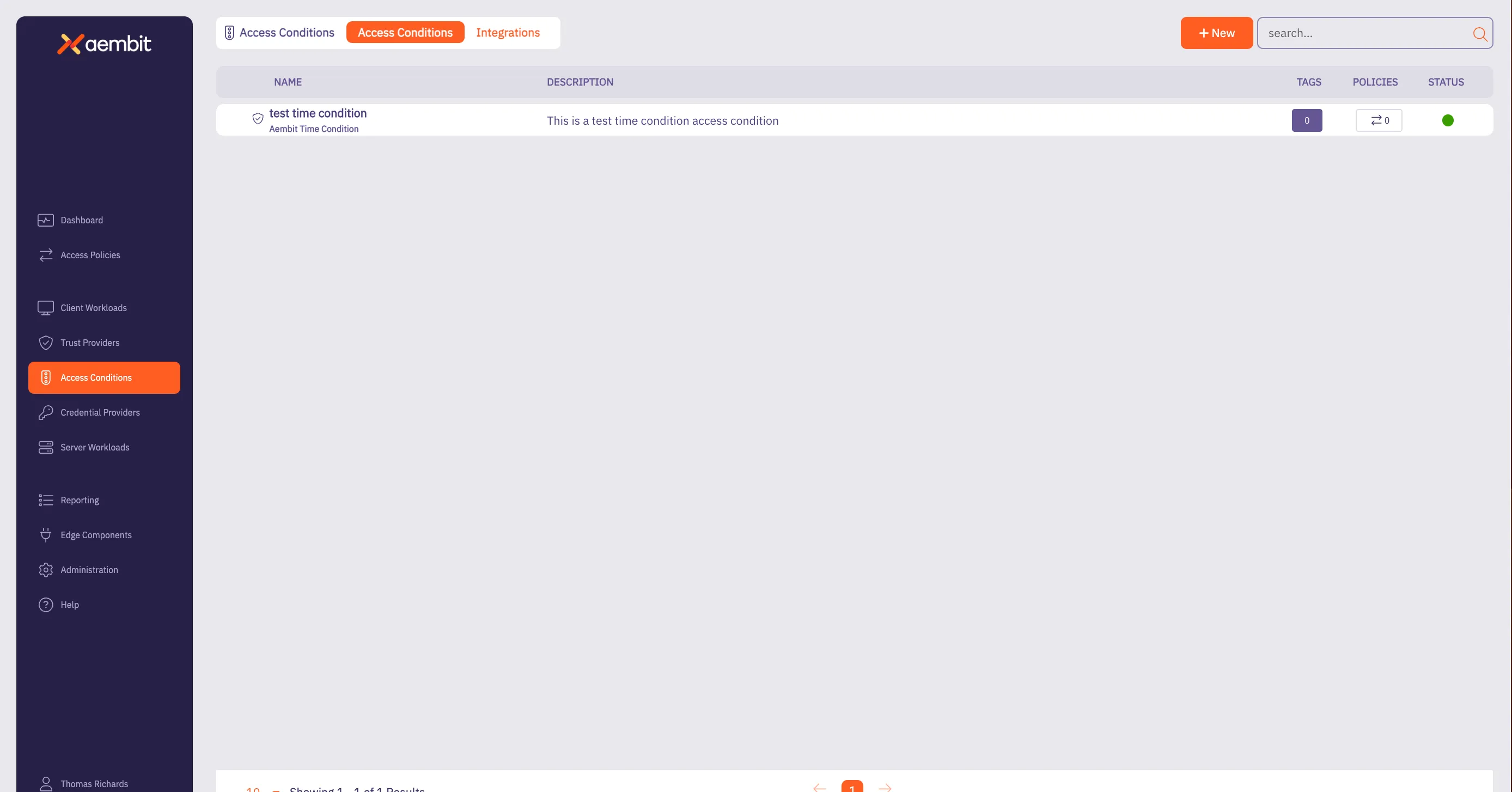
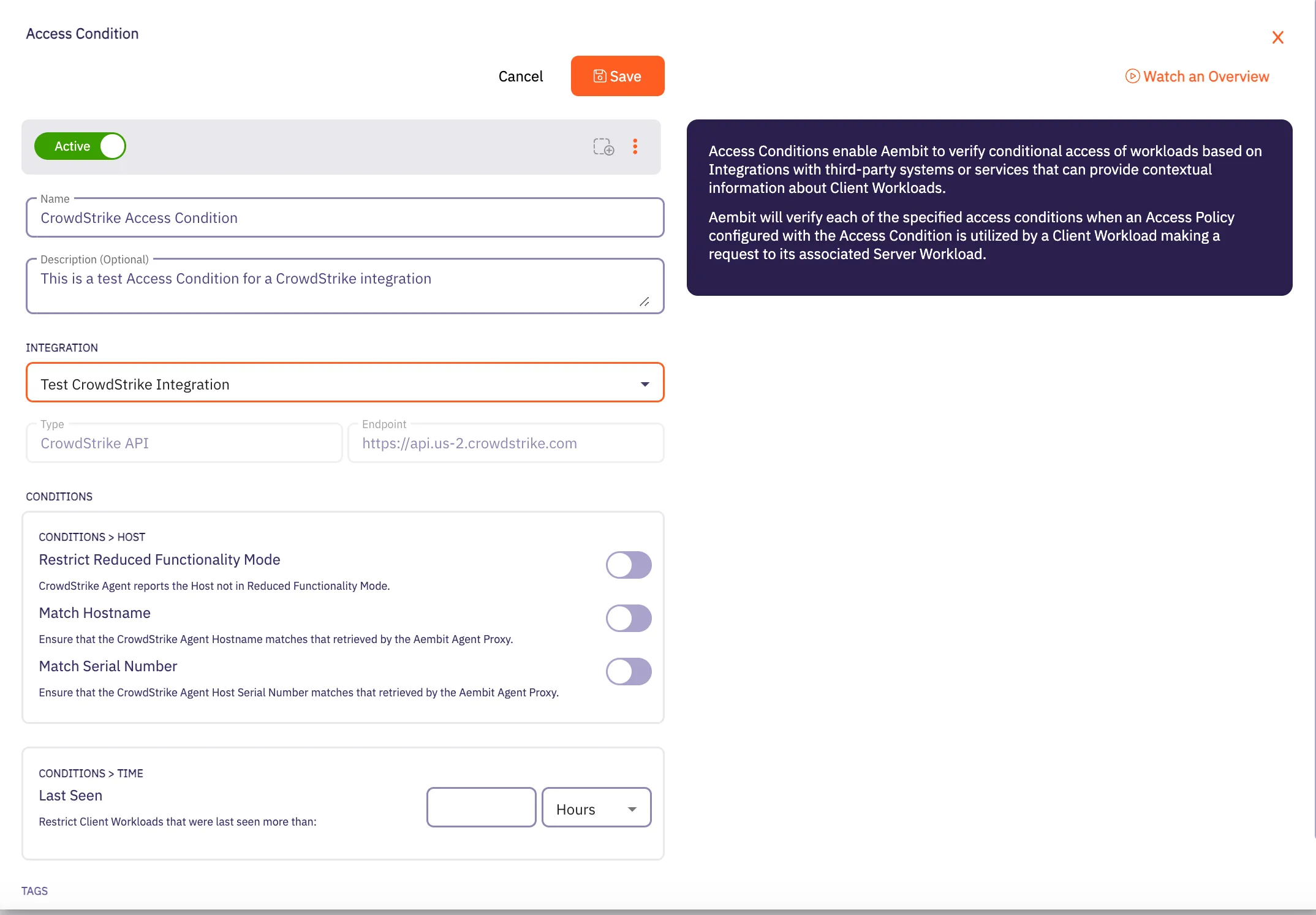
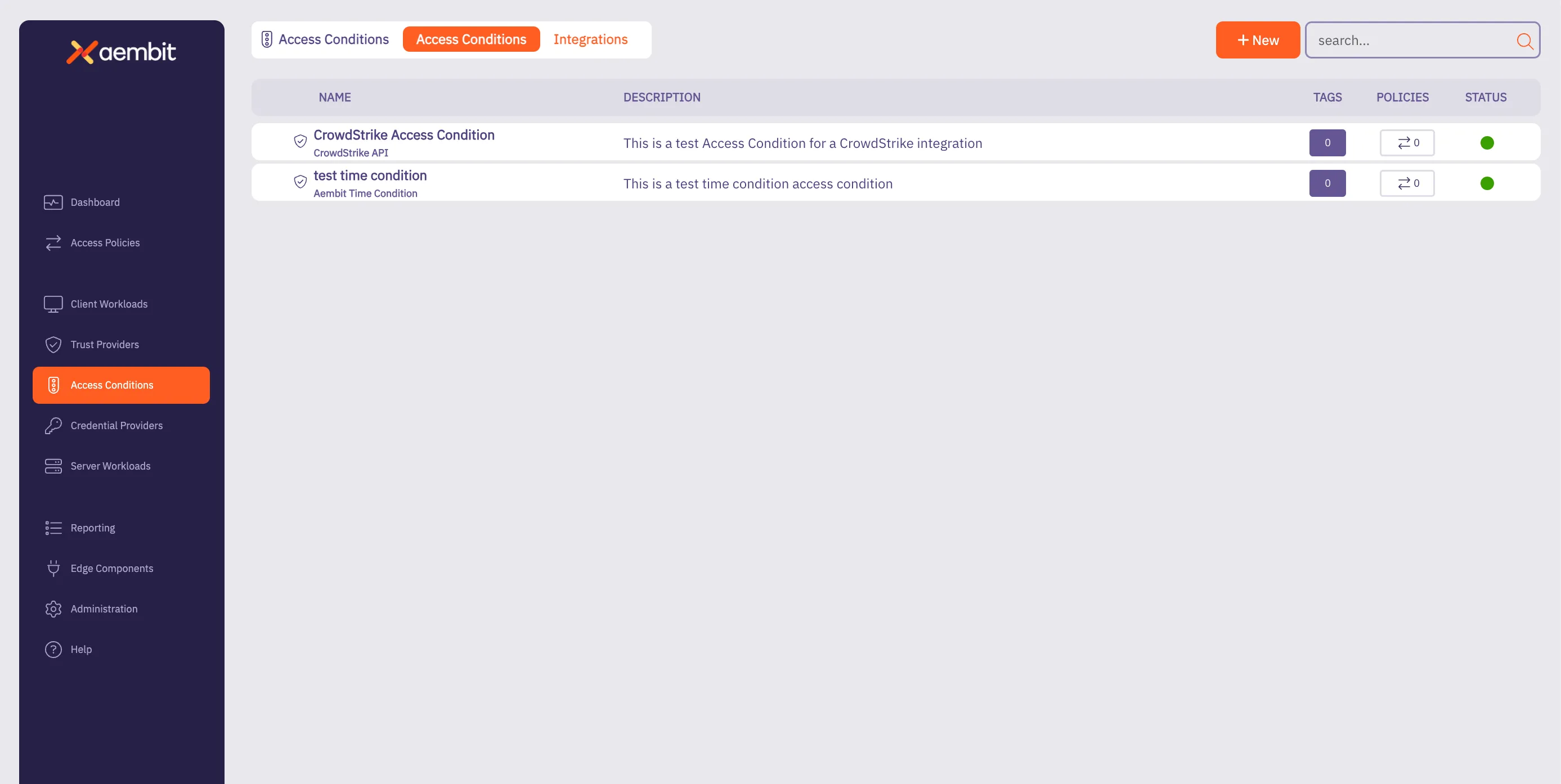
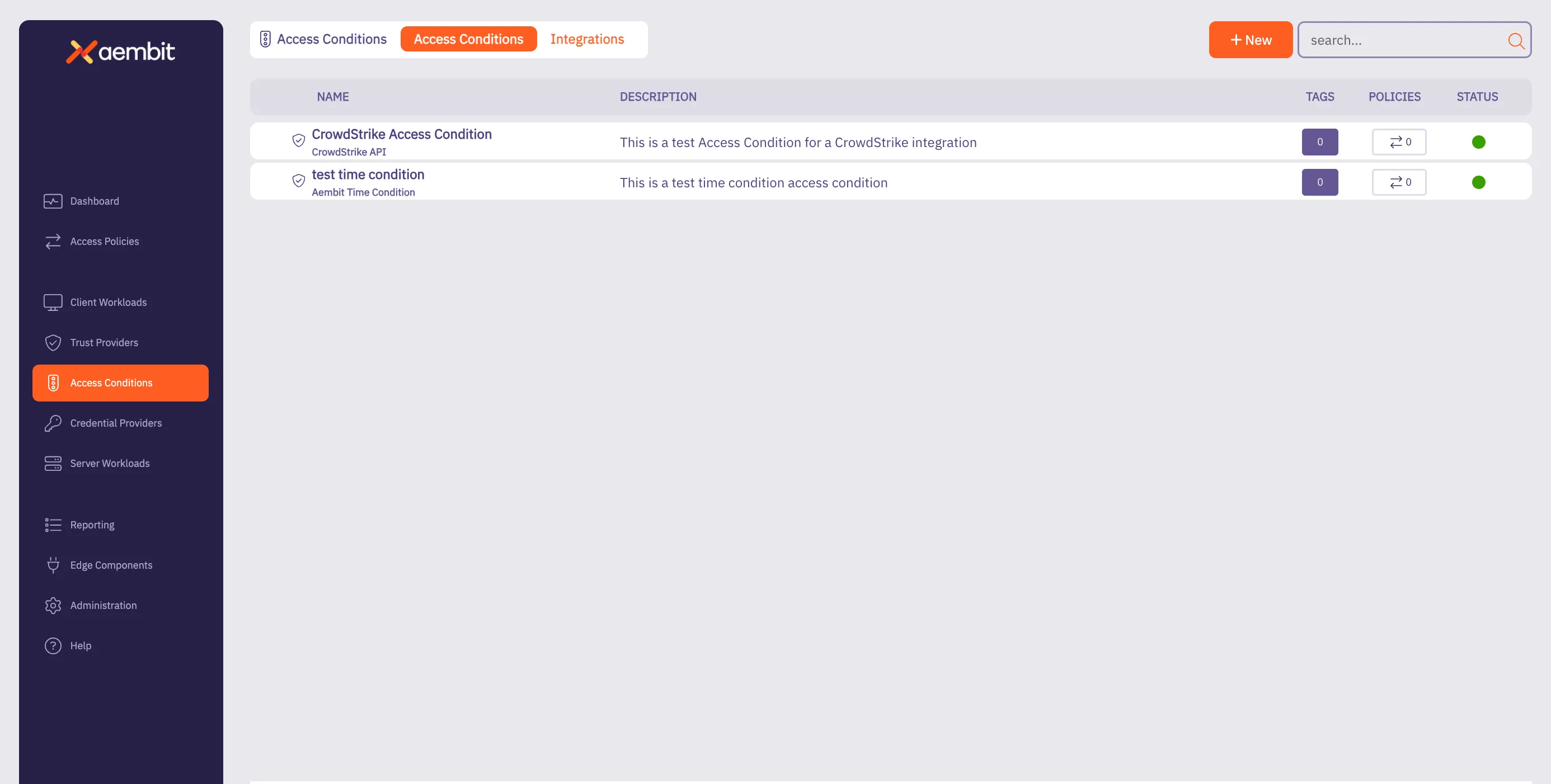
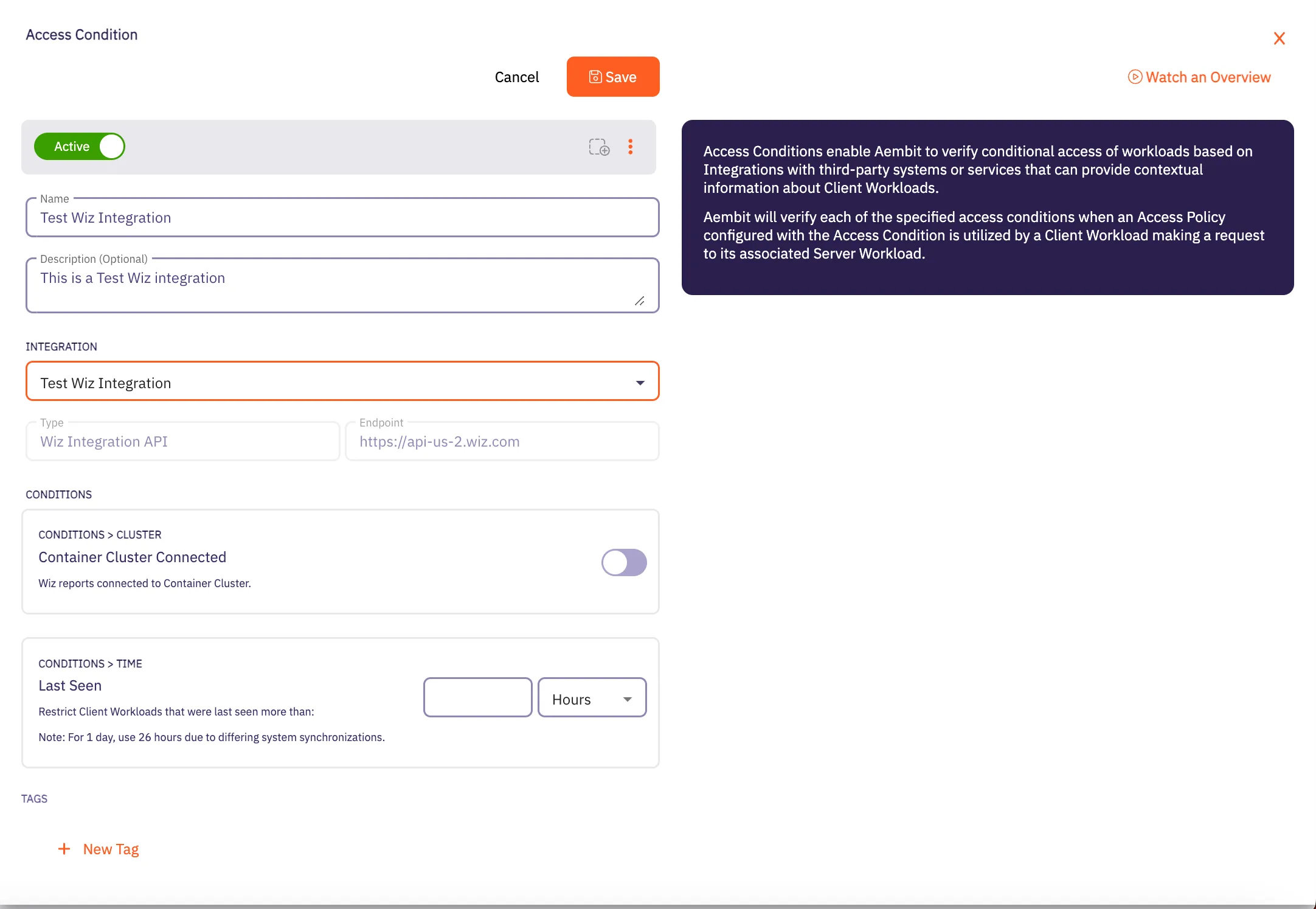
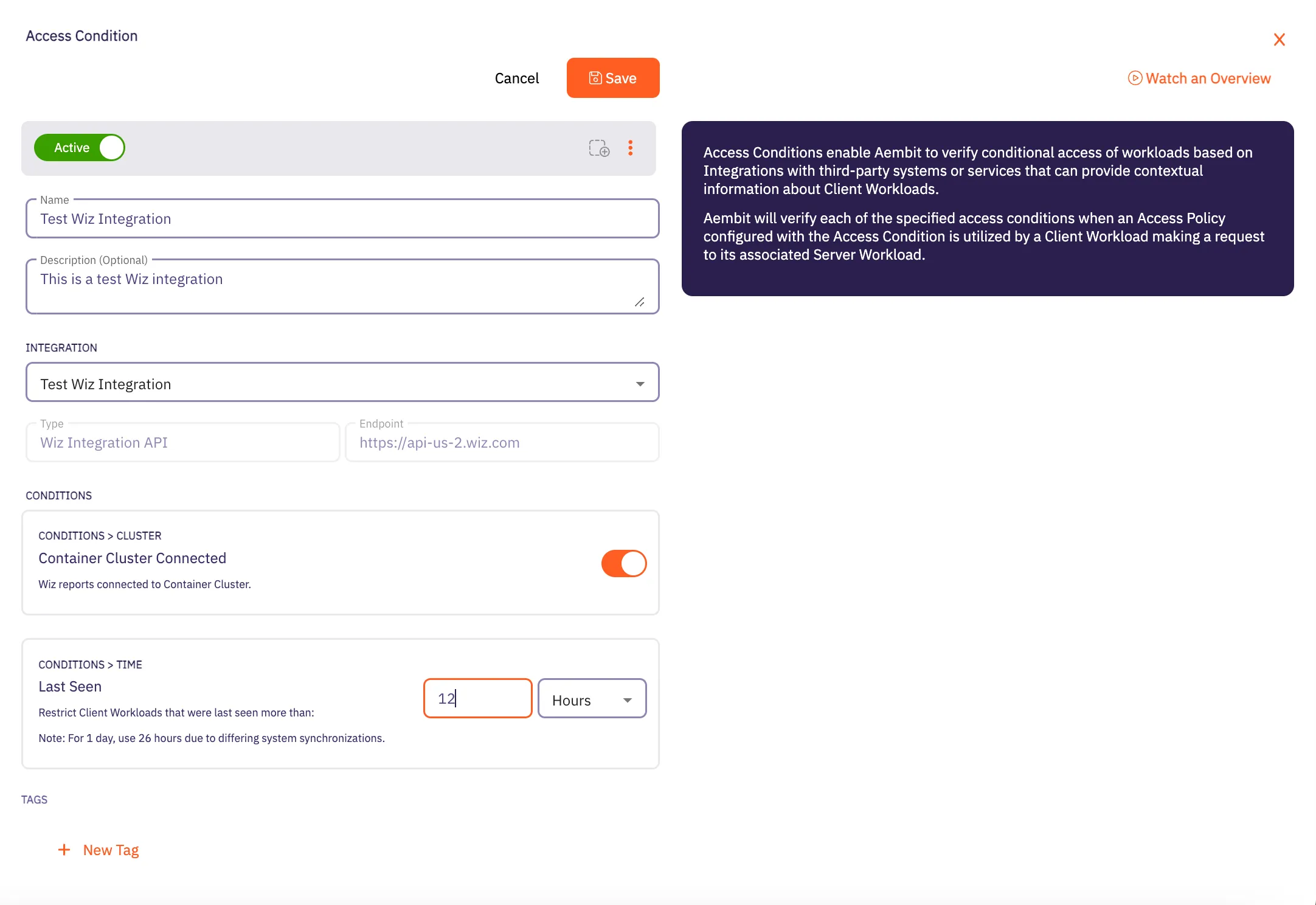
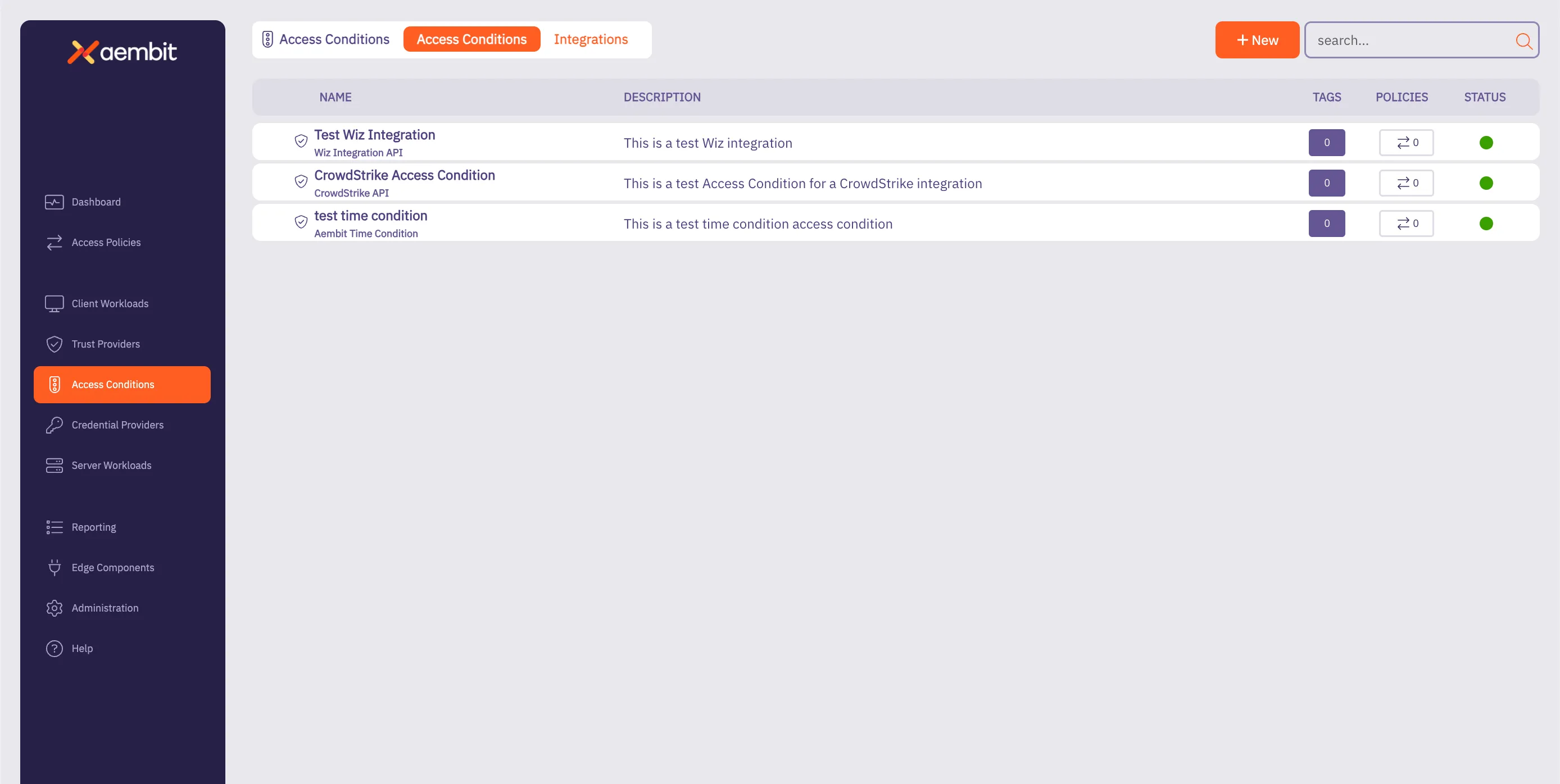
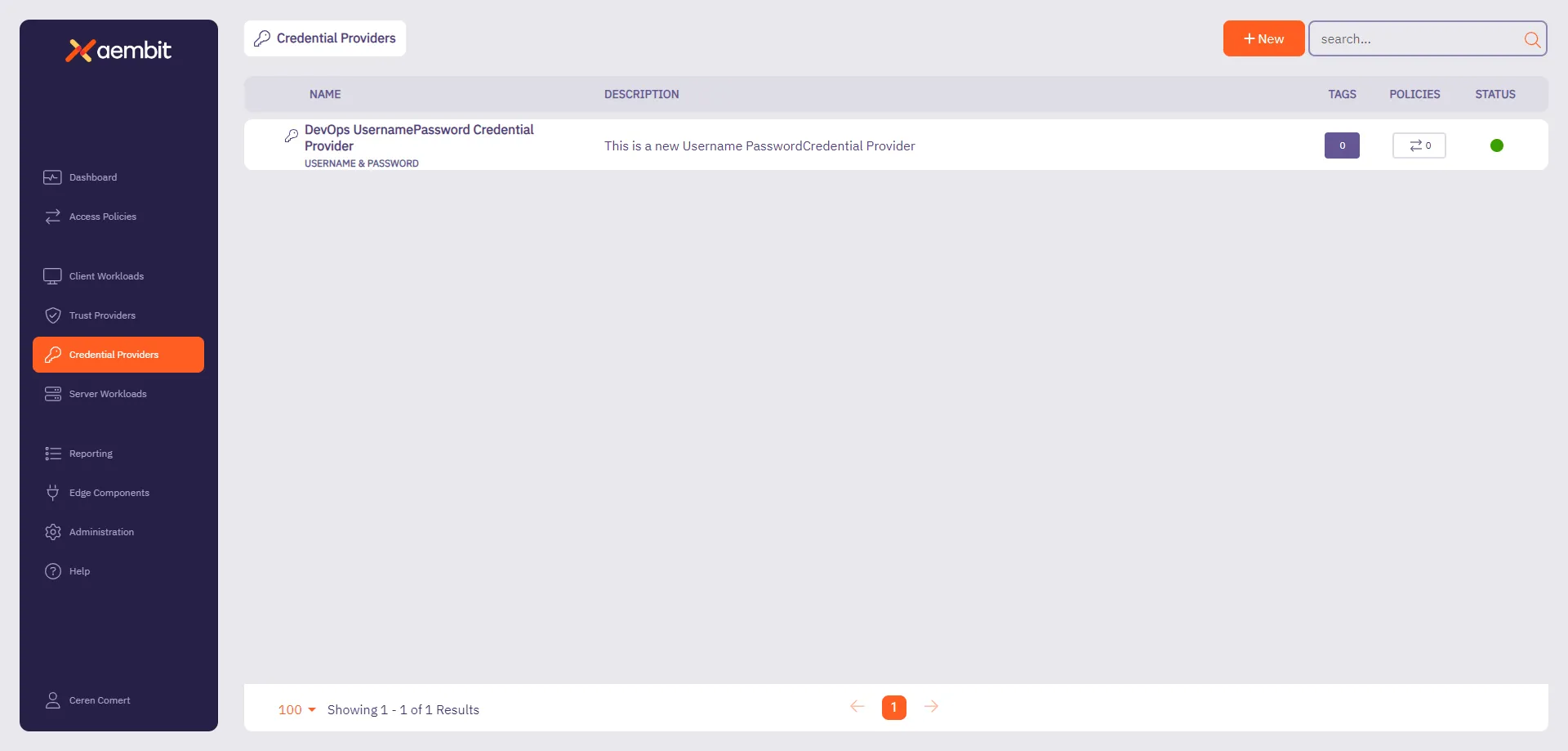
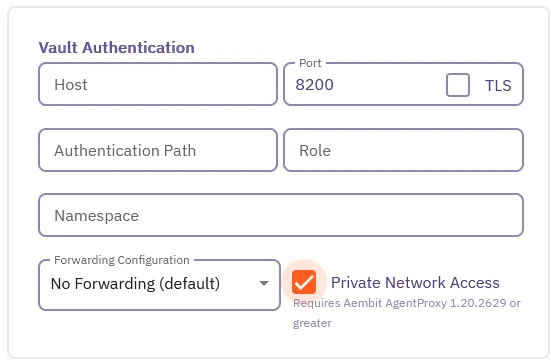
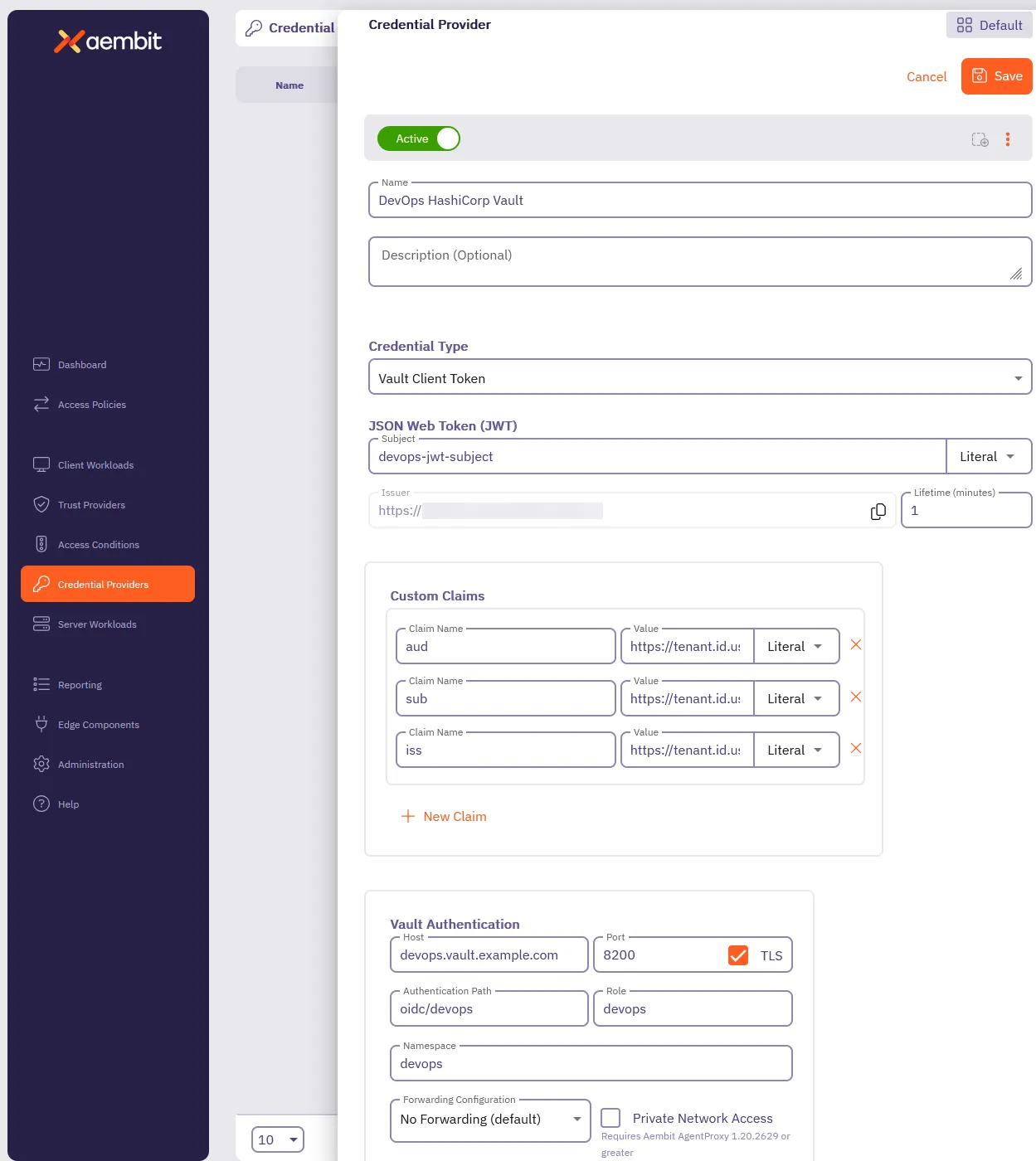
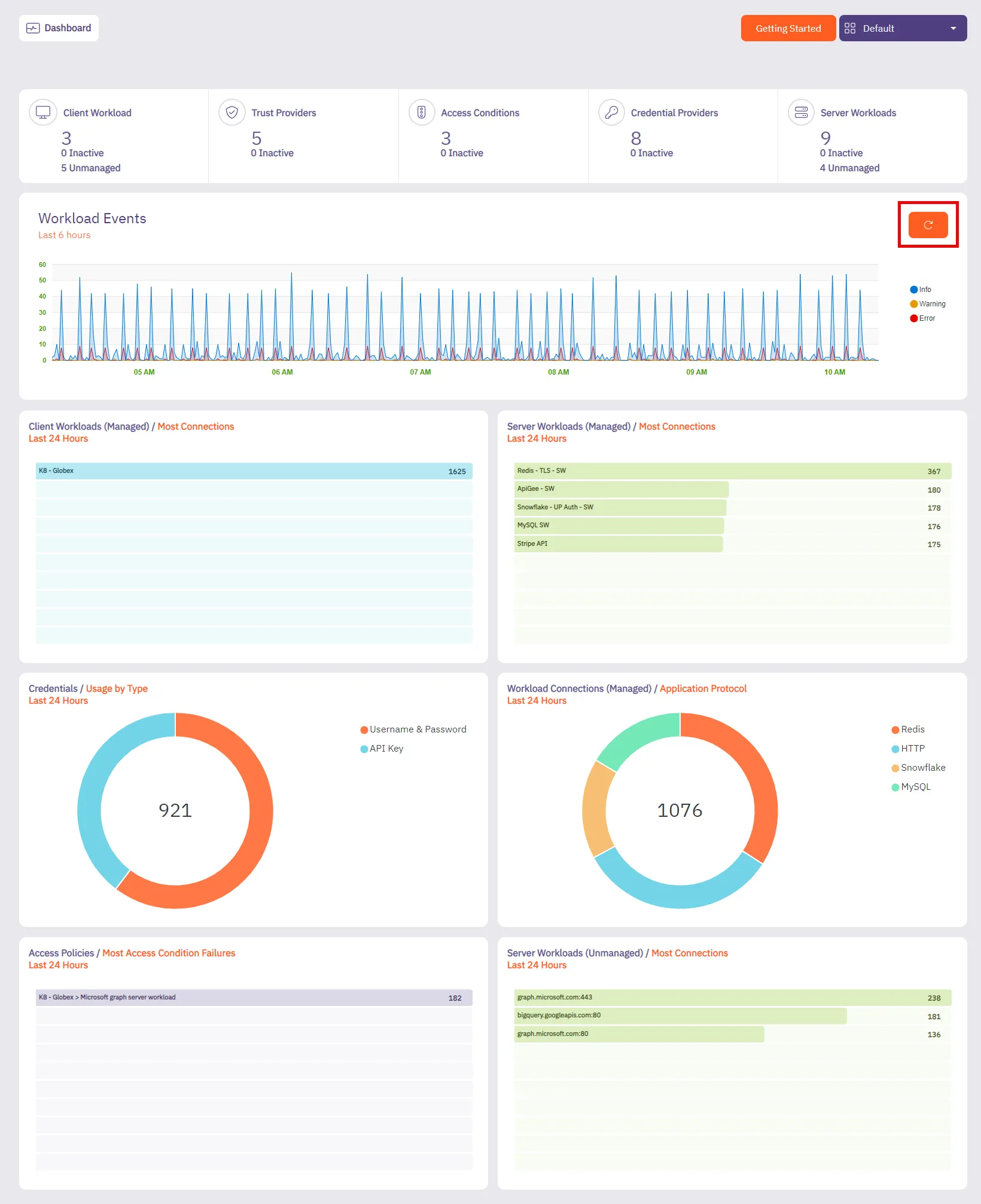
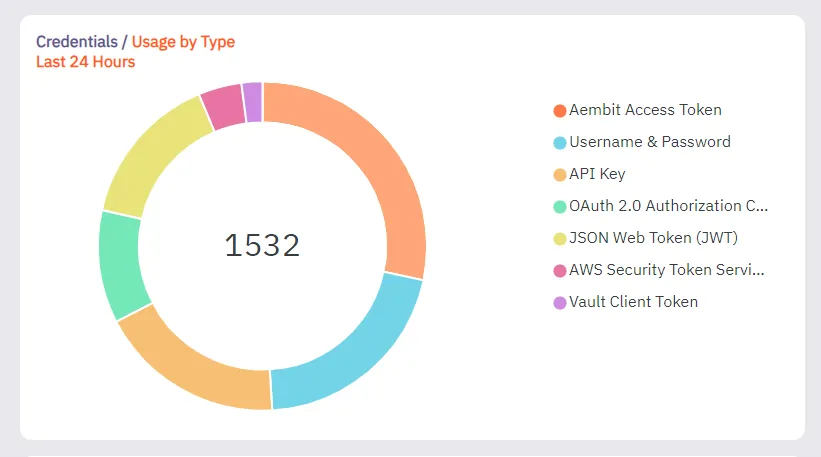
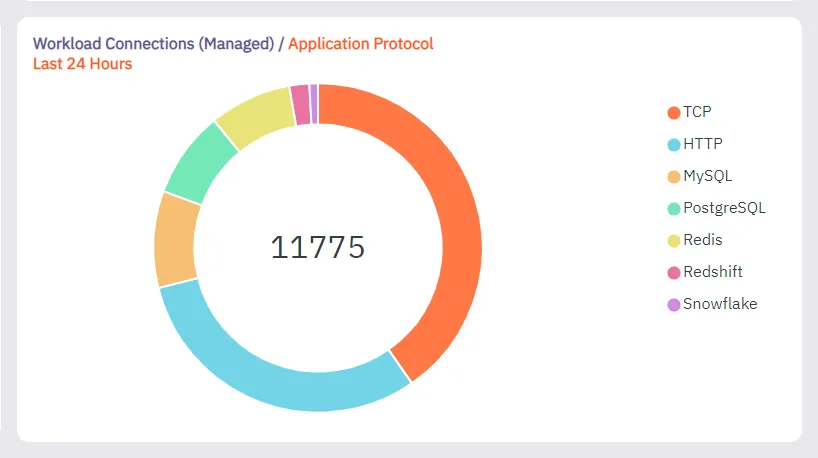
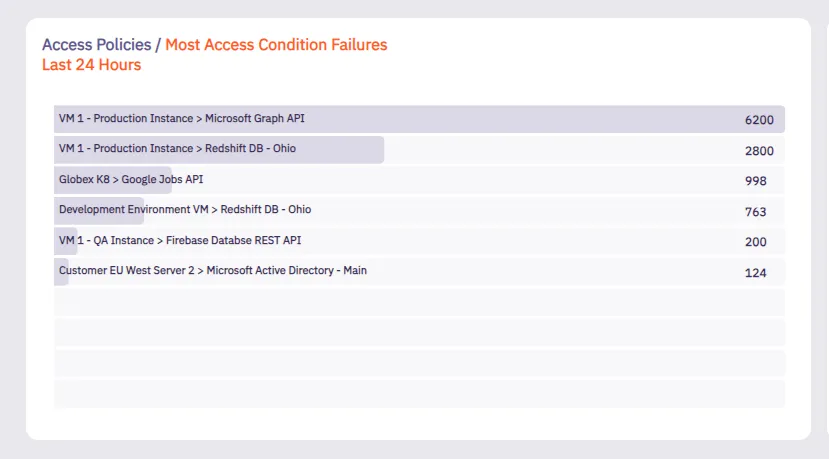
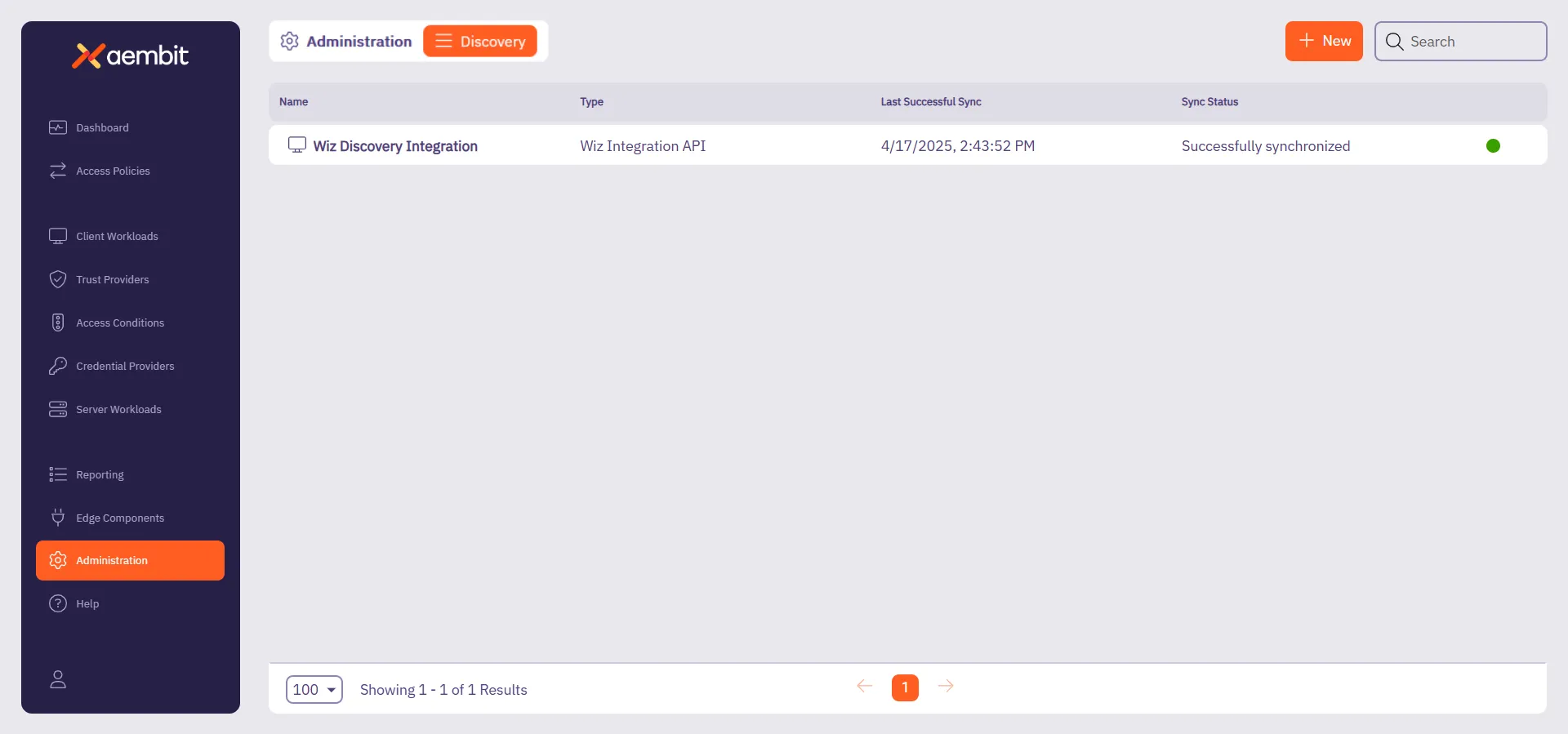
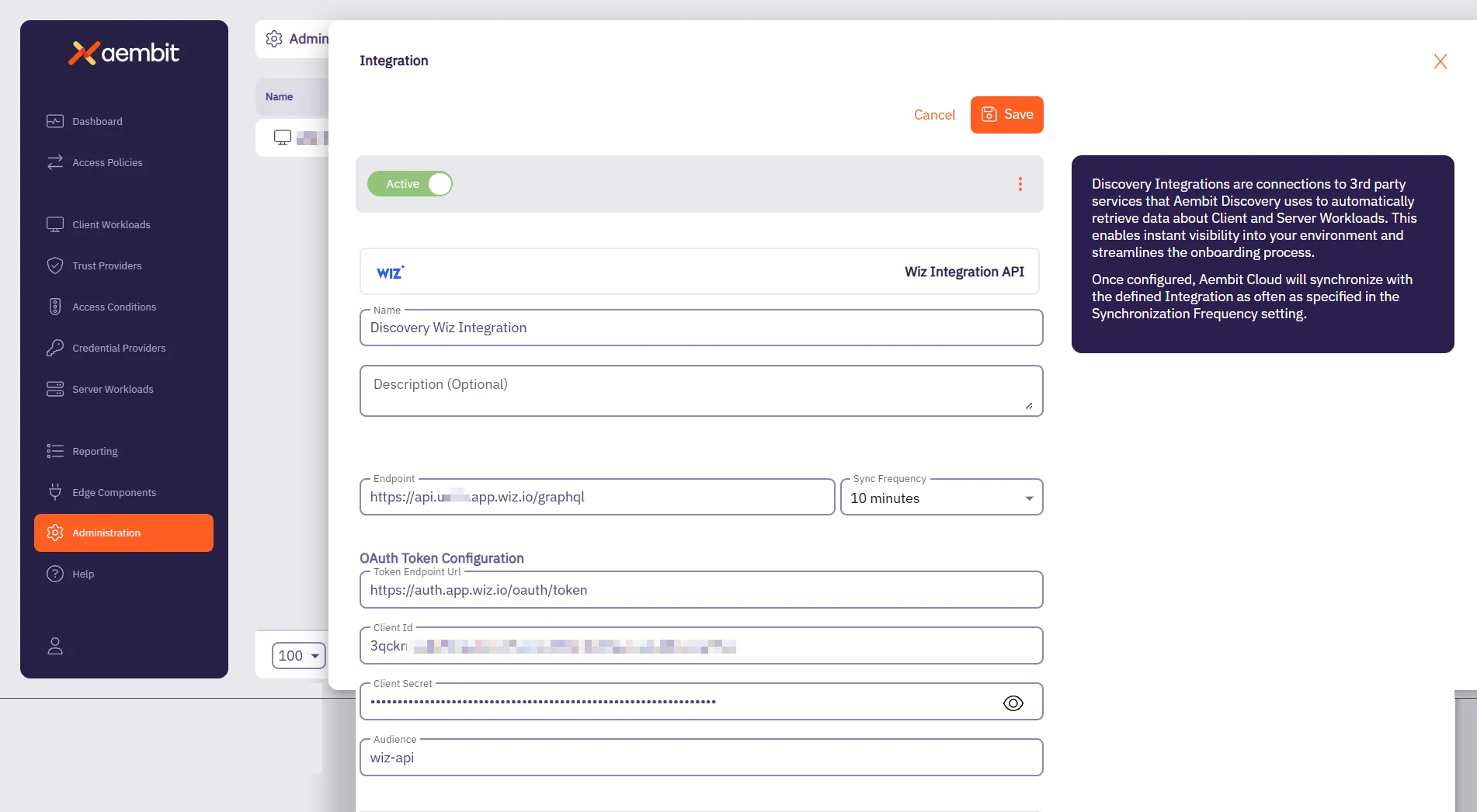
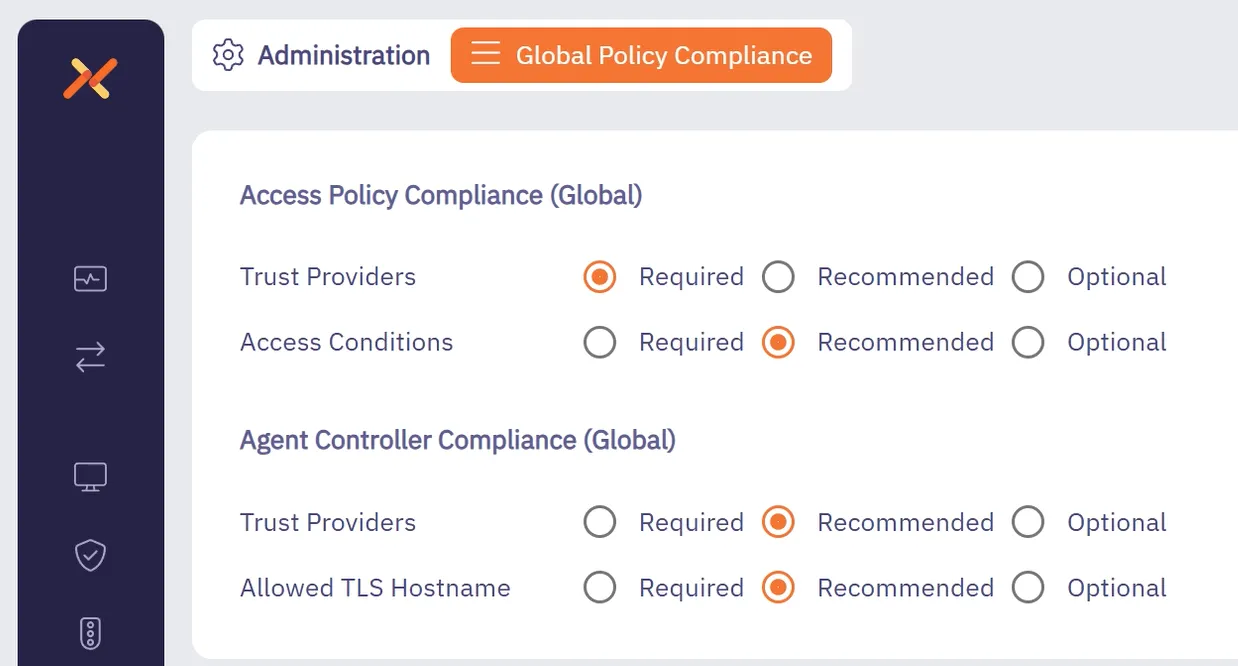
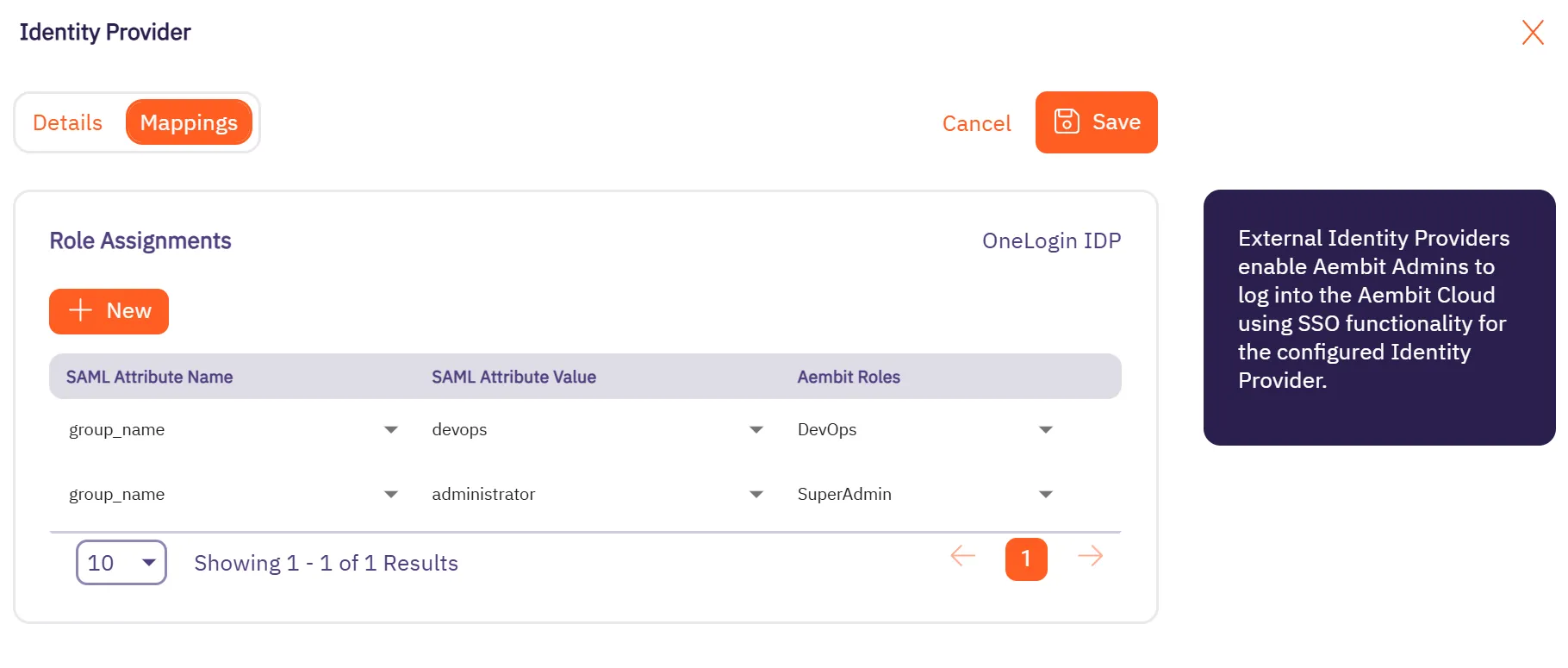
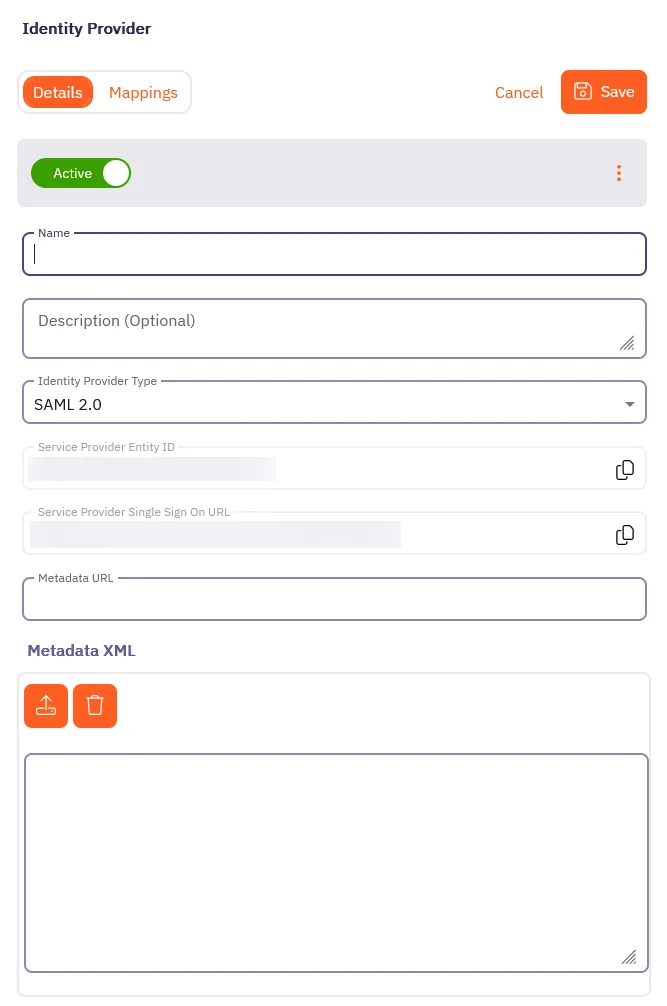
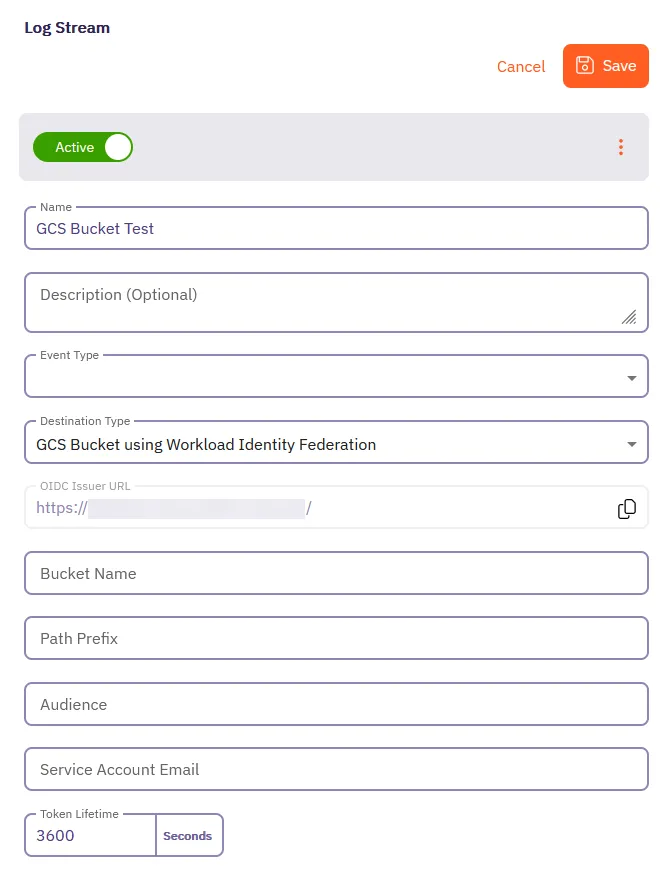
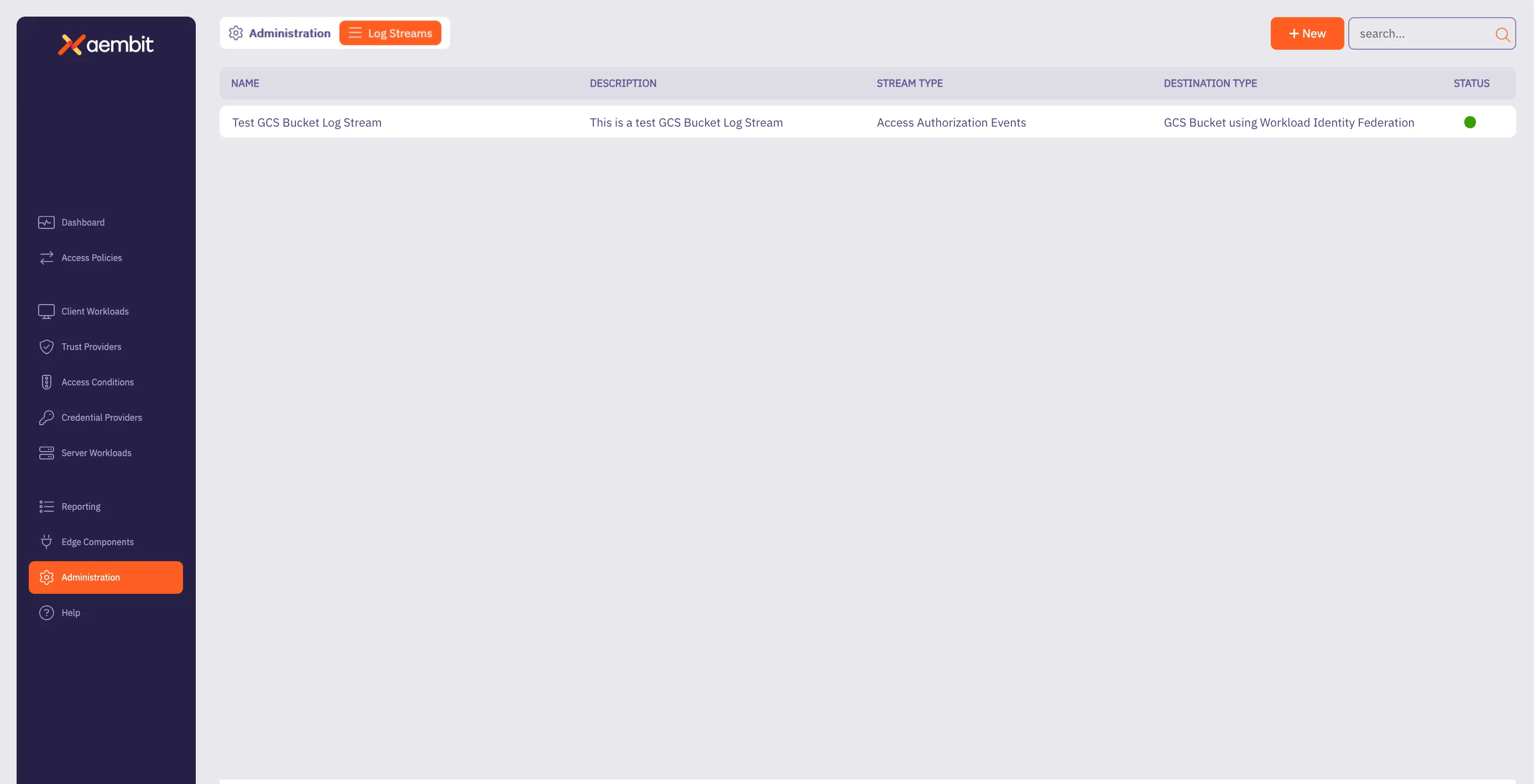
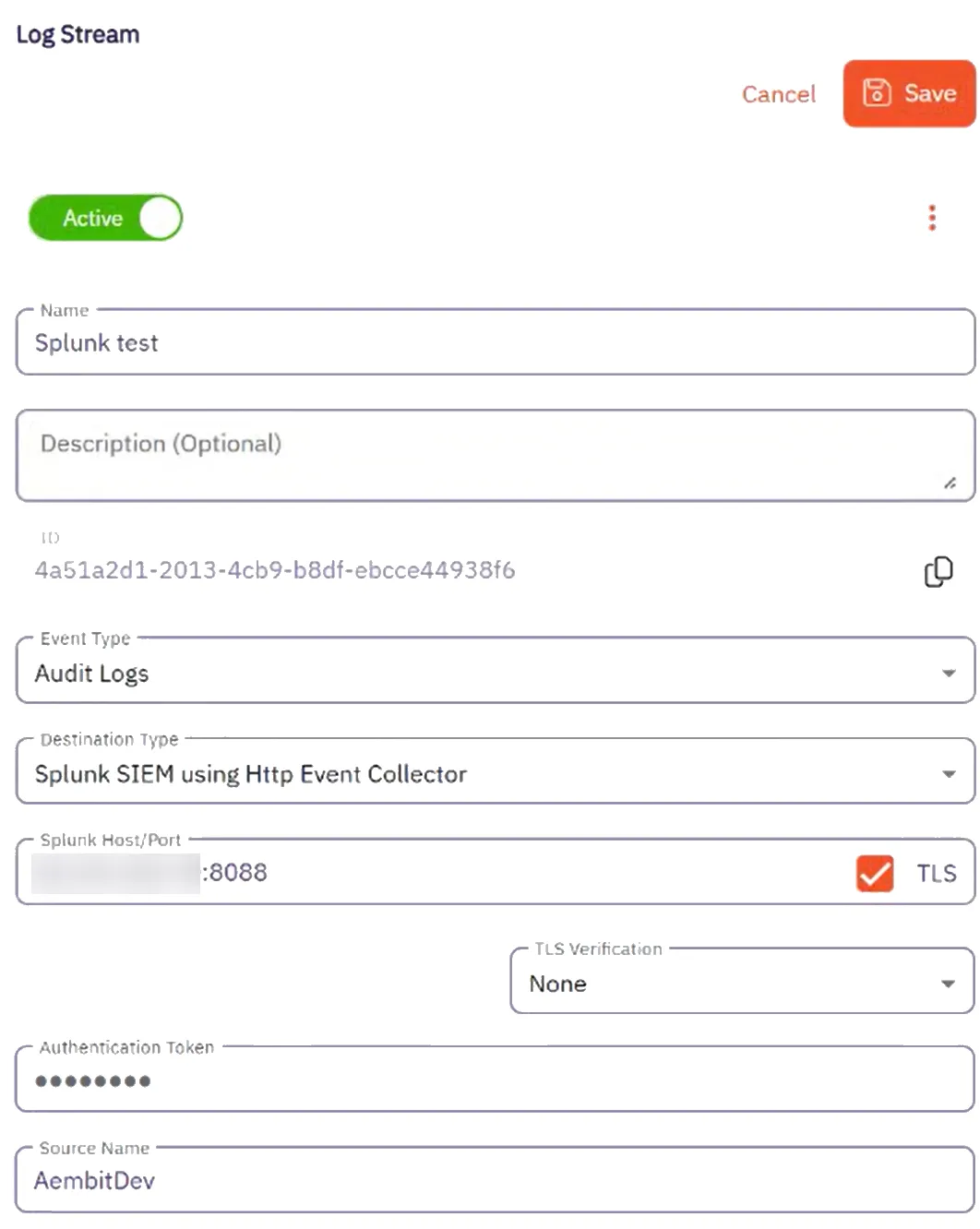
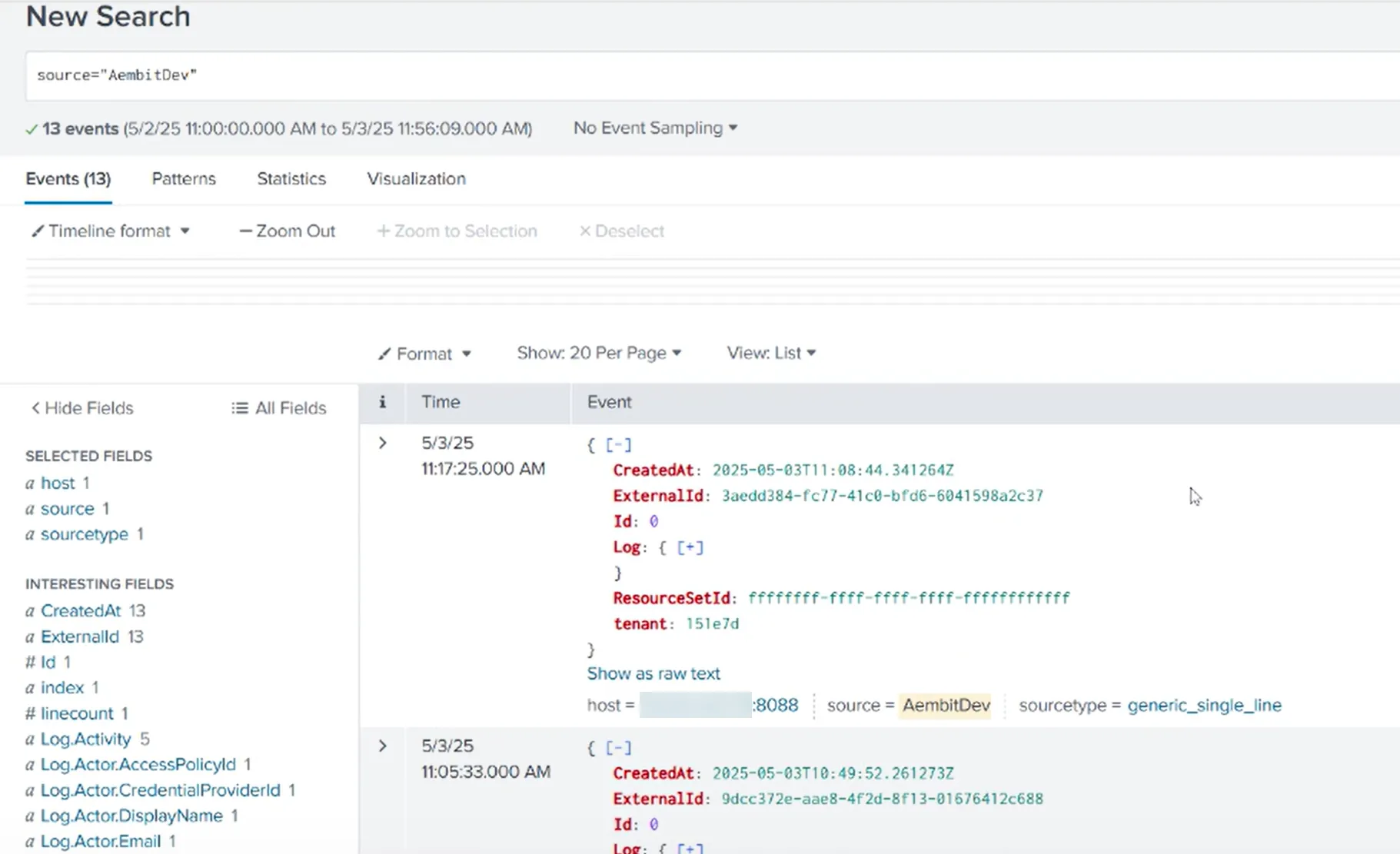
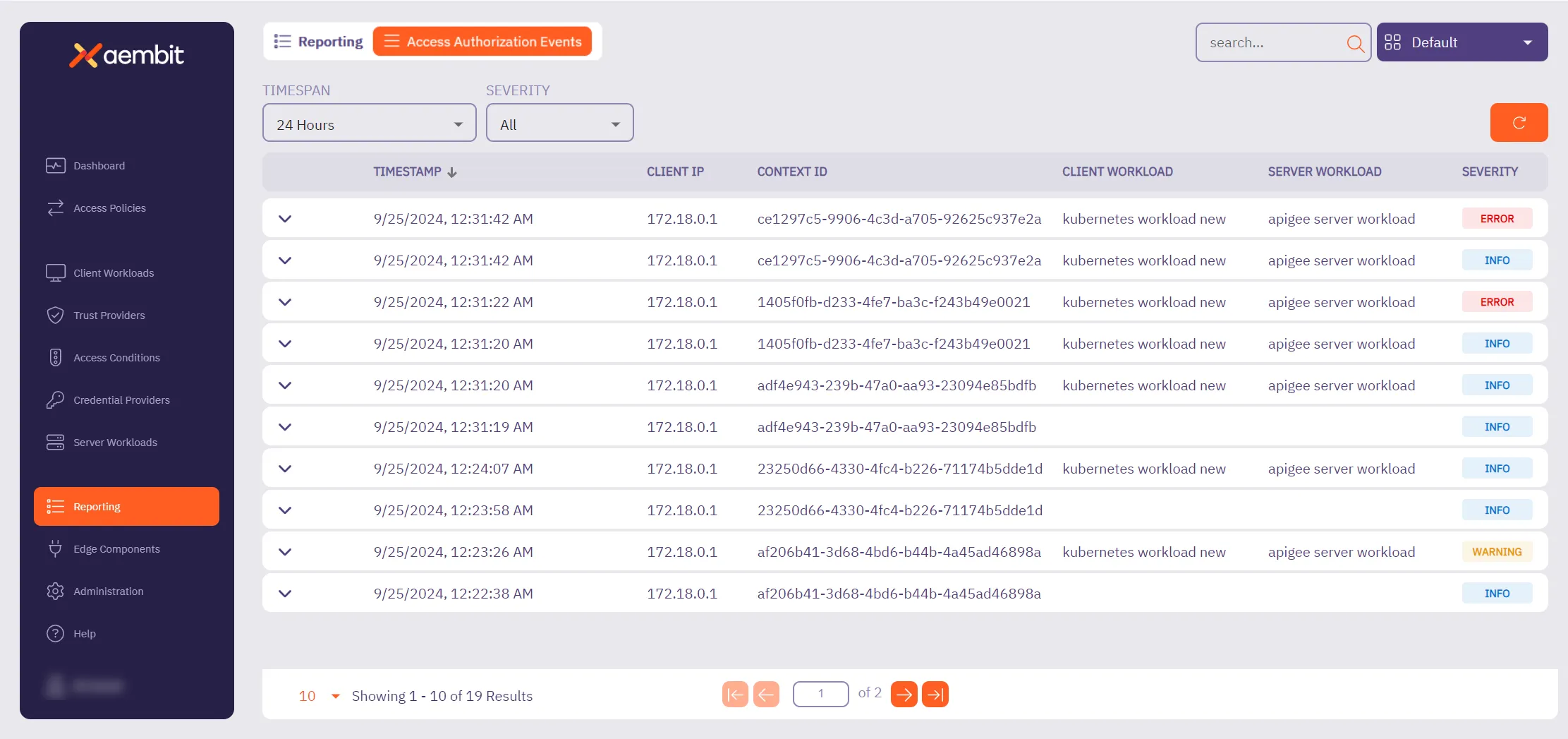
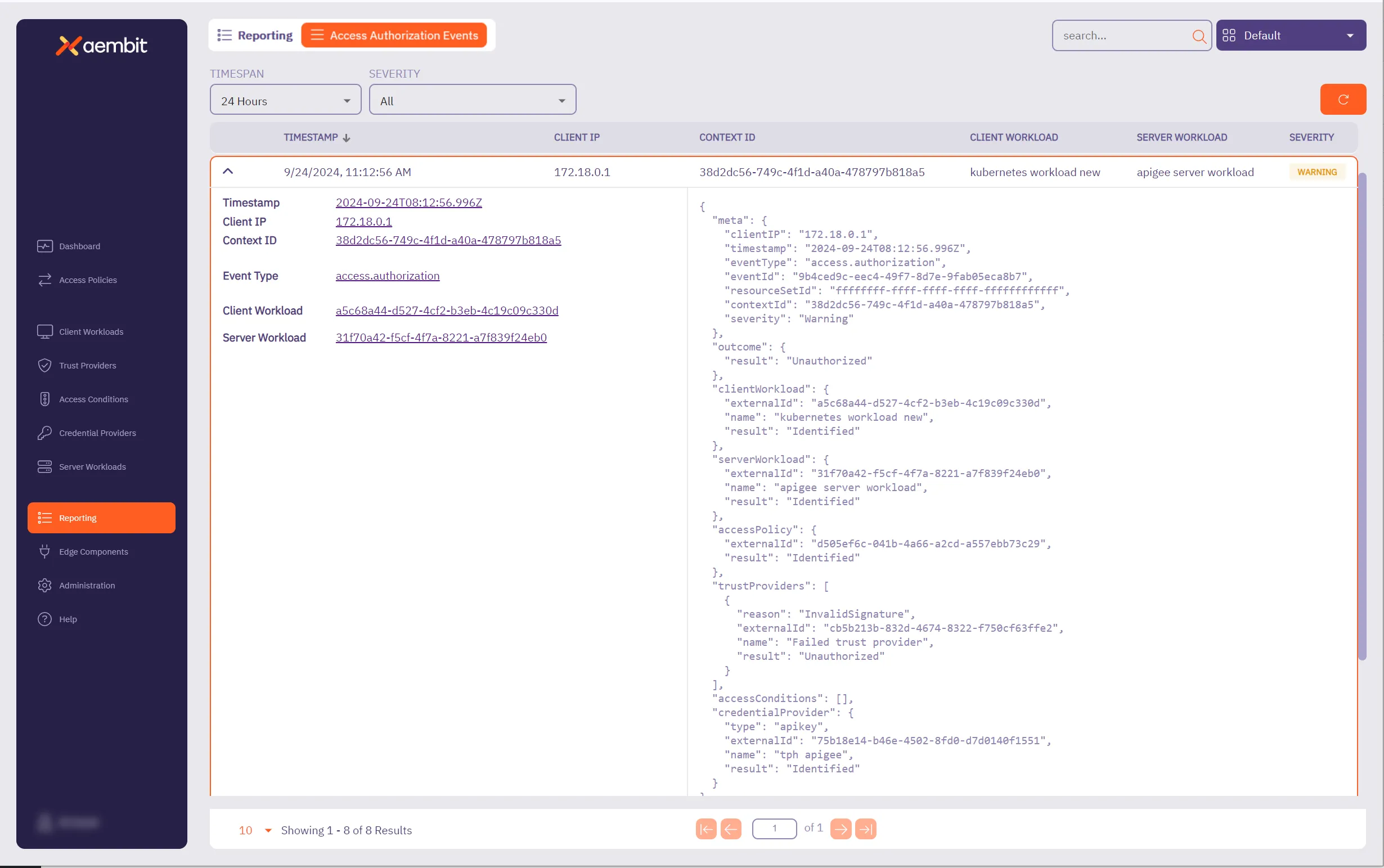
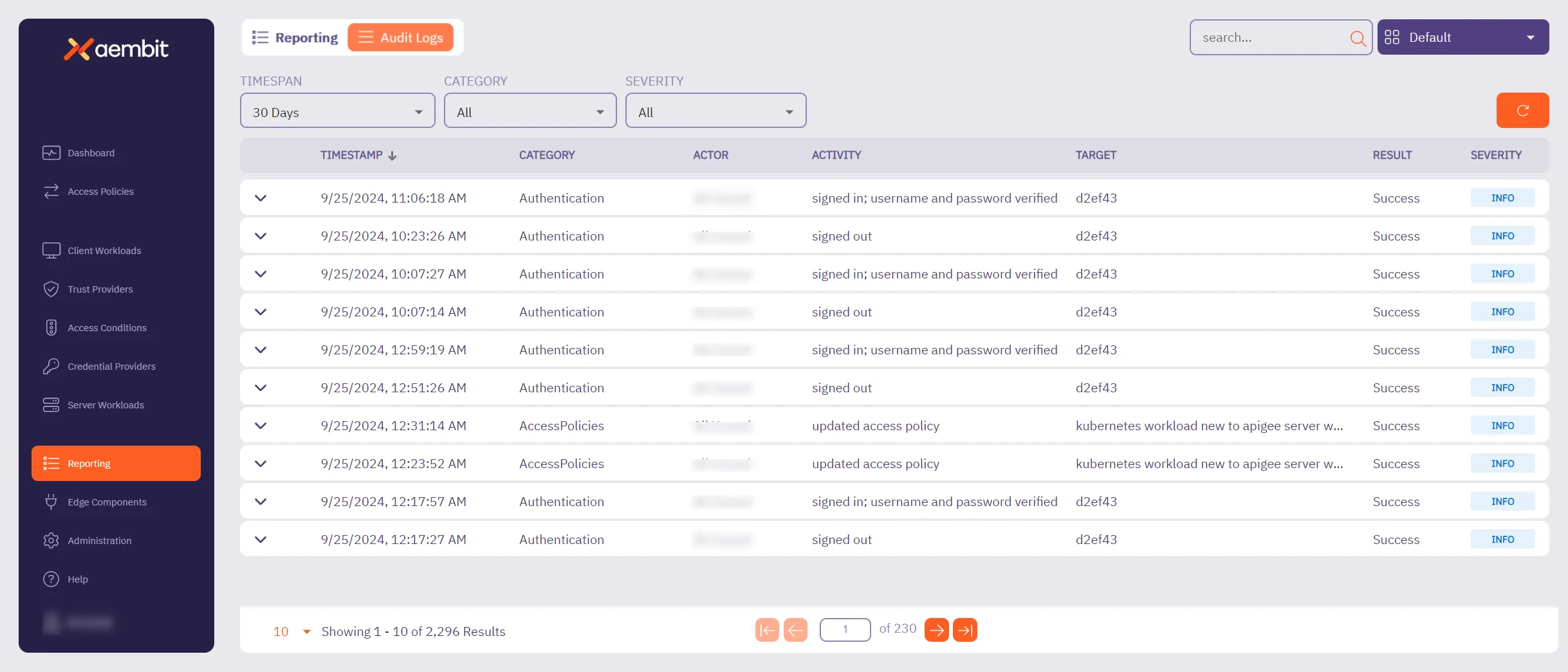
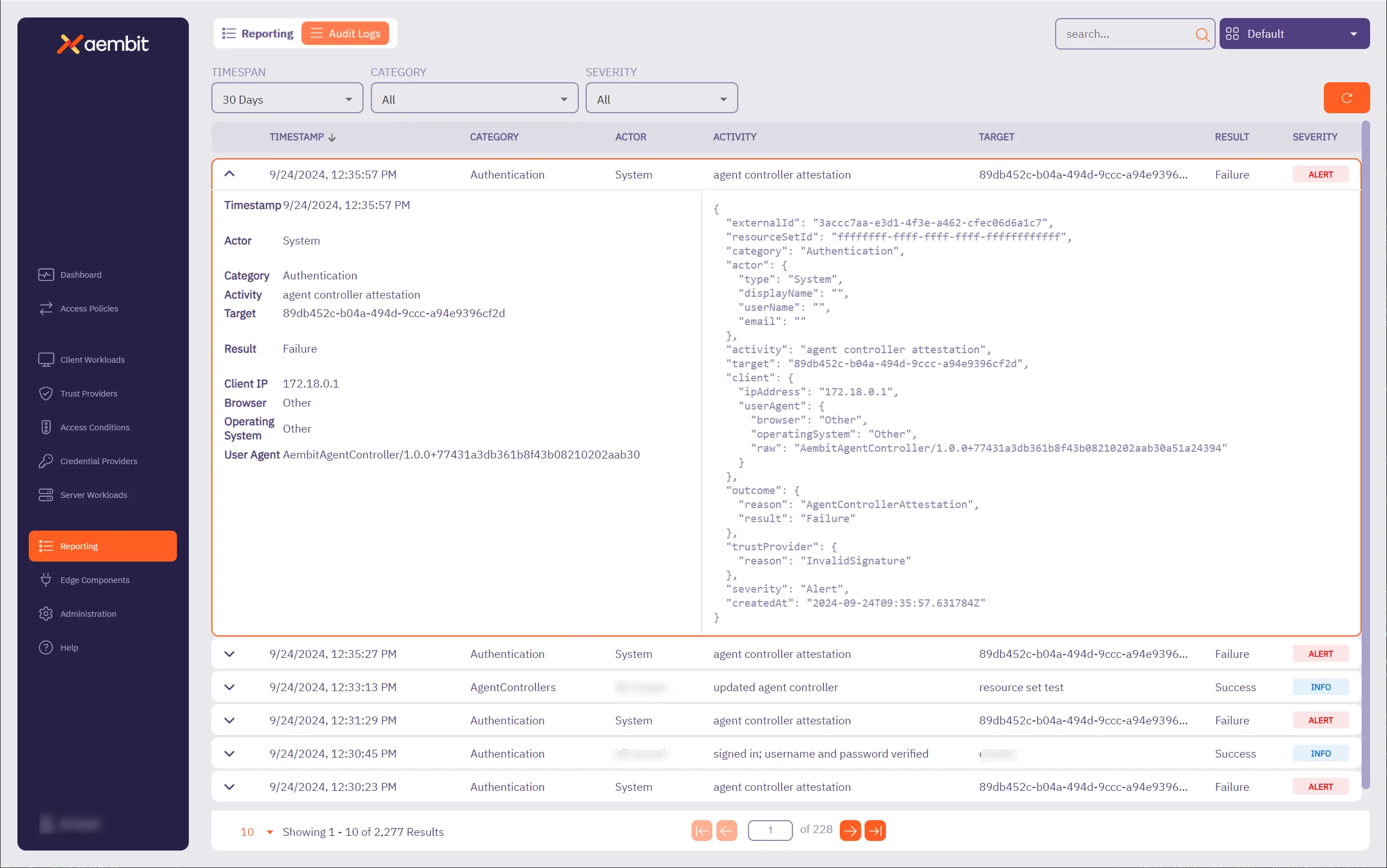
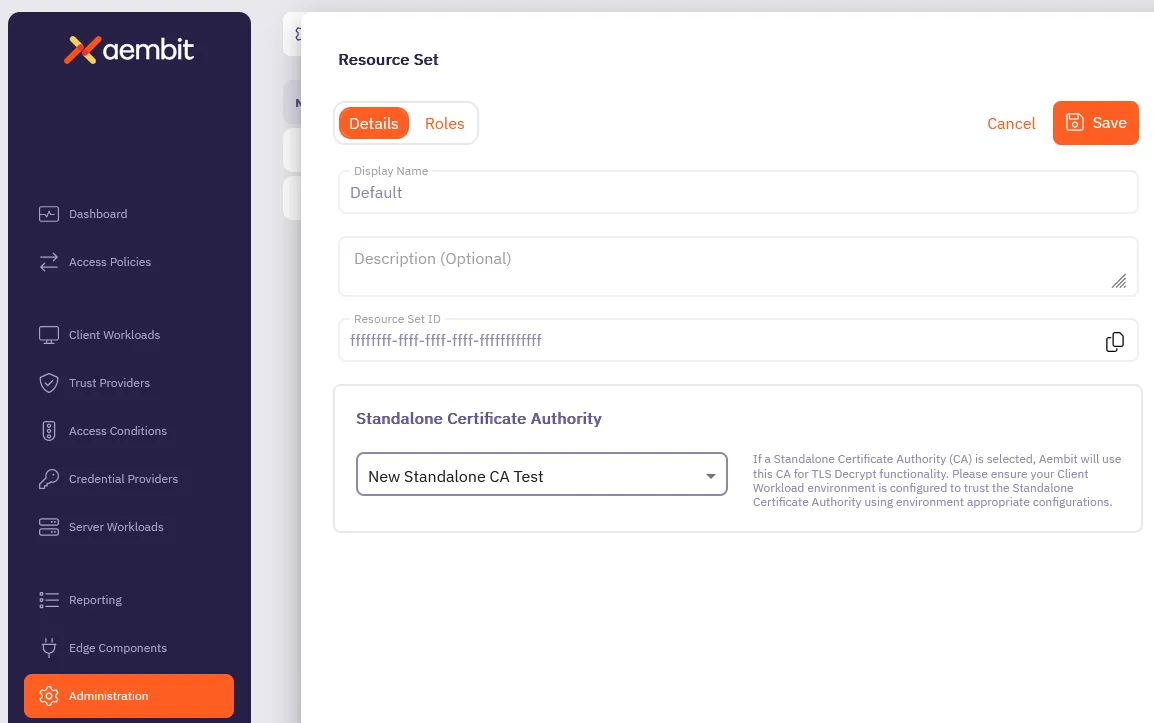
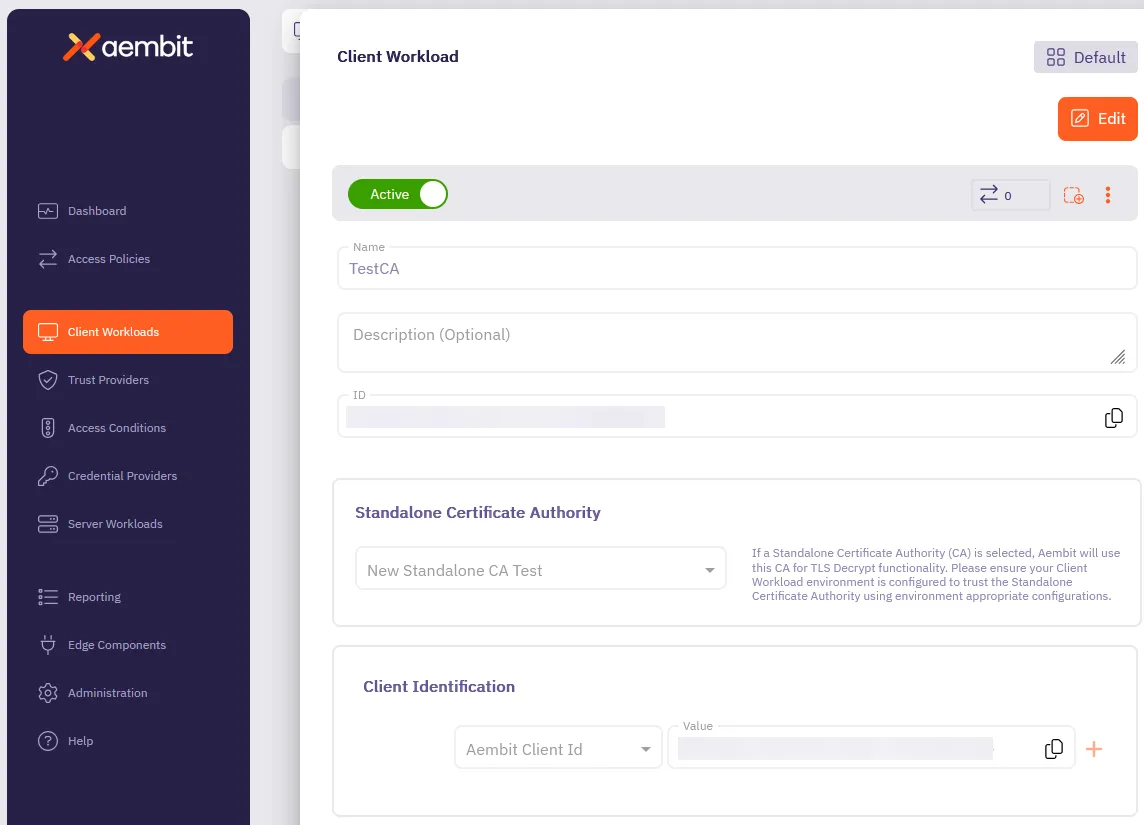
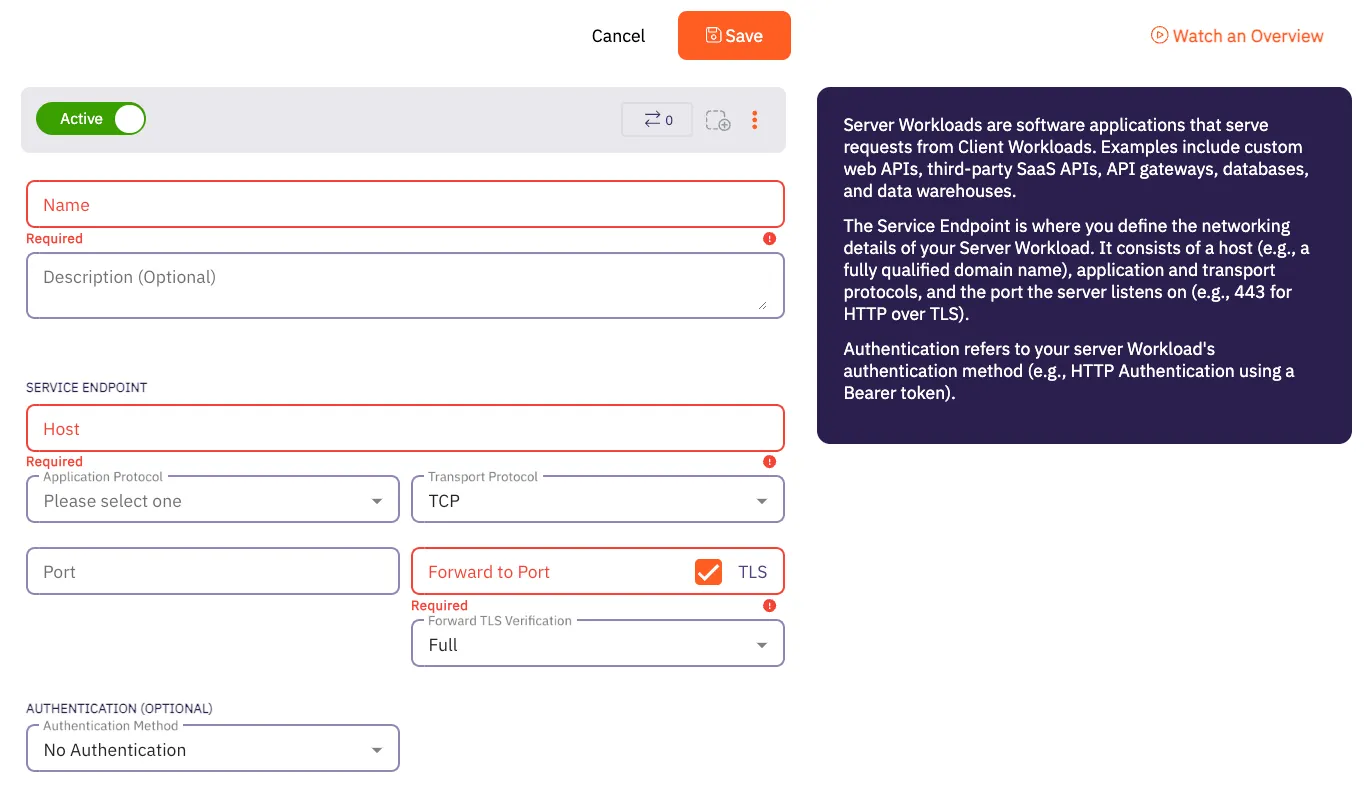
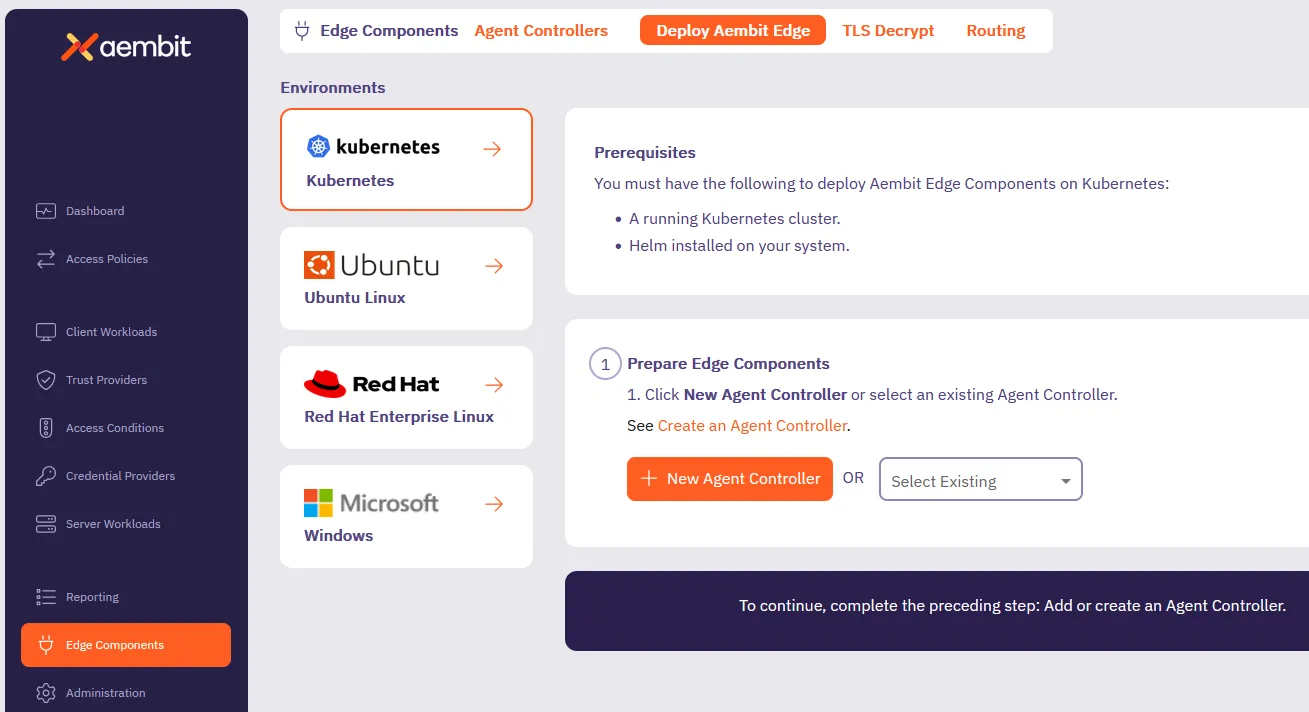
This is the full developer documentation for DOCS # What is Aembit? > An overview of Aembit, its core principles, and key capabilities Aembit is a cloud-native Identity and Access Management (IAM) platform: **IAM for Agentic AI & Workloads**. The name comes from ‘ambit’ (meaning boundary or scope). Where traditional *User IAM* governs how people sign in to applications, Aembit governs how **non-human identities** authenticate and reach the resources they depend on. It does this across cloud, on-premises, and SaaS environments. These non-human identities come in two forms, and Aembit secures both with one identity-first model. A workload**Workload**: Any non-human entity (application, service, automation, AI agent, etc.) that needs to access resources.[Learn more](/get-started/concepts/how-aembit-works/#introducing-workload-iam) is any application or program that uses computing resources to do work: a CI/CD job, a microservice, a database client, or a serverless function. An AI agent**AI Agent**: A software workload that authenticates to systems, requests credentials, and accesses resources, either on behalf of a person or on its own. Aembit secures AI agents with the same identity-first model it uses for any workload. User-driven agents such as Claude Desktop also carry a blended identity that ties access to both the user and the agent.[Learn more](/get-started/use-cases/ai-agents) authenticates, requests credentials, and reaches resources the same way, whether it acts on a person’s behalf (a user-driven assistant like Claude Desktop) or runs on its own (an autonomous service). The difference is the workload type, not the security model. Both face the same core problem. Traditional approaches to workload authentication rely on static credentials embedded in code, configuration files, or environment variables. These credentials must be manually created, rotated, and protected. This creates significant security and operational challenges. Aembit takes a fundamentally different approach by shifting from managing static secrets to managing access based on verified workload identity and policy. This Workload IAM approach provides just-in-time, ephemeral credentials while enforcing dynamic access policies. ![Without Aembit, a workload pulls a long-lived secret from a store; with Aembit, it receives a just-in-time credential after verifying its identity](/d2/docs/get-started/index-0.svg) AI agents raise the stakes for this model. A user-driven agent acts with its operator’s full rights, which breaks attribution (you can’t tell whether the user or the agent took an action). The MCP servers that connect agents to your systems also hold long-lived credentials. Aembit closes this gap by giving the agent a verifiable identity that Access Policies evaluate alongside the user’s. See [blended identity](/ai-guide/blended-identity/) and [securing AI agent access](/get-started/use-cases/ai-agents/) for the full story. ![](/aembit-icons/lightbulb-light.svg) [How Aembit works ](/get-started/how-aembit-works)A deeper look at how Aembit works and its architecture → Whether you’re securing AI agents or traditional workloads, the model is the same. Pick the path that fits what you’re building: ### AI agents Claude Desktop, MCP clients, and user-driven assistants. [Securing AI agent access](/get-started/use-cases/ai-agents/) [Blended identity](/ai-guide/blended-identity/) [AI Guide](/ai-guide/) ### Workloads CI/CD jobs, microservices, databases, and APIs. [Workload use cases](/get-started/use-cases/) [Access Policies](/get-started/concepts/access-policies/) [User Guide](/user-guide/) ## Aembit’s core principles [Section titled “Aembit’s core principles”](#aembits-core-principles) * **Manage Access, Not Secrets** - The foundational principle of Aembit is to shift the security focus from *managing static credentials* to *managing access* based on verified workload identity and policy. Instead of relying on long-lived secrets that you must store, protect, and rotate, Aembit employs mechanisms to authenticate workloads based on their intrinsic properties and environment. > Aembit grants access based on defined Access Policies**Access Policy**: Access Policies define, enforce, and audit access between Client and Server Workloads by cryptographically verifying workload identity and contextual factors rather than relying on static secrets.[Learn more](/get-started/concepts/access-policies) and real-time context. * **Zero Trust Architecture** - Aembit’s identity-centric approach aligns with the *principles of Zero Trust* architecture, extending concepts traditionally applied to human users into the domain of non-human workloads. > Aembit never implicitly trusts access. * **Least Privilege** - Aembit verifies every access request based on a Client Workload**Client Workload**: Client Workloads represent software applications, scripts, or automated processes that initiate access requests to Server Workloads, operating autonomously without direct user interaction.[Learn more](/get-started/concepts/client-workloads)‘s identity, the specific resource its requesting (Server Workload**Server Workload**: Server Workloads represent target services, APIs, databases, or applications that receive and respond to access requests from Client Workloads.[Learn more](/get-started/concepts/server-workloads)), and applicable contextual constraints defined in the Access Policy. This confirms adherence to the *principle of Least Privilege*. > Aembit grants only the necessary permissions required for a specific task at a specific time. ## What Aembit can do for you [Section titled “What Aembit can do for you”](#what-aembit-can-do-for-you) Aembit’s value proposition centers on enhancing security and operational efficiency in managing non-human identities. This offers specific benefits for different roles: ### Build applications with secretless access [Section titled “Build applications with secretless access”](#build-applications-with-secretless-access) If you’re building and deploying applications, AI agents, or MCP integrations, managing secrets is a common challenge. Aembit solves this by enabling a “secretless” approach for workload-to-workload access. Aembit lets your applications and agents dynamically obtain credentials based on their verified identity and policy, simplifying your development process by: * Removing the need to embed credentials in application code, configuration files, or environment variables. * Authenticating applications using their runtime attributes (like container signatures), removing the need for initial secrets (“secret zero” problem). * Handling authentication via network interception, so you can focus on business logic instead of auth code. * Letting AI agents and MCP clients authenticate without holding credentials, which Aembit issues or exchanges at request time. ![](/aembit-icons/rocket.svg) [Aembit quickstart ](/get-started/quickstart/quickstart-core/)Start building with Aembit by checking out the quickstart guide → ### Advance security maturity and risk reduction [Section titled “Advance security maturity and risk reduction”](#advance-security-maturity-and-risk-reduction) From a strategic perspective focused on risk and security maturity, Aembit provides a dedicated platform to secure non-human identities. They’re a significant and growing source of enterprise risk, as teams adopt AI agents alongside traditional workloads. By replacing insecure static credentials with an identity-first, secretless approach, Aembit drastically reduces the attack surface and the risk of breaches. Aembit supports implementing a Zero Trust architecture for workloads, simplifies compliance and auditing, and offers centralized visibility and governance to advance your organization’s security maturity by: * Reducing credential exposure risk through ephemeral, Just-In-Time (JIT) access grants. * Implementing Zero Trust principles for machine-to-machine communication. * Centralizing access logs for simplified compliance reporting and incident investigation. * Providing consistent access patterns across cloud, SaaS, and on-premises resources. * Addressing the security gap in non-human workload interactions without adding developer overhead. * Giving each user-driven AI agent a distinct, verifiable identity separate from the human operating it, closing the audit-attribution gap. ![](/aembit-icons/clouds.svg) [Aembit use cases ](/get-started/use-cases/)Check out Aembit's use cases to see how it can help you → ### Enhance security posture and enforce access control [Section titled “Enhance security posture and enforce access control”](#enhance-security-posture-and-enforce-access-control) As a security engineer responsible for defining and enforcing controls, Aembit enhances your security posture by focusing on securing non-human identity access. Aembit provides centralized policy management and conditional access capabilities. You can enforce granular controls over workload and AI agent access alike, based on verifiable identity and live context like security posture. This helps implement Zero Trust principles for workloads and reduces risk by: * Verifying workload identity using concrete attributes like container signatures or cloud metadata. * Implementing fine-grained access controls based on workload context and runtime conditions. * Reducing attack surface by eliminating long-lived static credentials. * Providing standardized logging of all access attempts for troubleshooting and audit trails. * Enabling identity-based security without requiring deep security expertise from application developers. * Applying the same conditional-access controls (time, location, security posture) to AI agent access, and revoking a specific user, user-agent combination, or all agents through policy, without rotating credentials. ![](/aembit-icons/lightbulb-light.svg) [Aembit security posture ](/get-started/security-posture/)Check out Aembit's software architecture, threat model, and compliance → ### Streamline secure deployments and operations [Section titled “Streamline secure deployments and operations”](#streamline-secure-deployments-and-operations) For those focused on automating and managing infrastructure, Aembit integrates identity and access management for your workloads and AI agents directly into your operational workflows. Aembit enables you to focus on building and deploying applications through the following benefits: * Automating credential management tasks, reducing time spent on access provisioning and rotation. * Eliminating manual secret rotation workflows that distract from core development work. * Integrating with existing workloads without requiring application code changes. * Providing a Terraform provider for managing configurations and infrastructure as code. * Centralizing access management across multiple environments from a single interface. * Integrating with your existing identity providers (Okta, Entra ID, Google) over OIDC and SAML to secure AI agent access, with no new identity infrastructure to stand up. ![](/aembit-icons/gear-complex-code-light.svg) [Scaling Aembit with Terraform ](/get-started/concepts/scaling-terraform)See how Aembit integrates with Terraform to manage your infrastructure → ## Key capabilities [Section titled “Key capabilities”](#key-capabilities) The tables in the following sections detail Aembit’s primary capabilities, along with example use cases and what benefit Aembit provides for each: ### Blended identity for AI agents [Section titled “Blended identity for AI agents”](#blended-identity-for-ai-agents) | | | | -------------------- | ------------------------------------------------------------------------------------------------------------------------------------------------------------------------------------------------------------------------------------------------------------------------------------------------------------------------------------------------------------------------------------------------------------------------------------------------------------------------------------------------------------------------------------------- | | **Capability** | For user-driven AI agents, Aembit evaluates a blended identity**Blended Identity**: An access model that combines a human user's identity (authenticated through an Identity Provider) with an AI agent's workload identity into a single access decision, enabling policies that evaluate both "who is this user" and "which agent are they using" simultaneously.[Learn more](/ai-guide/blended-identity) in a single Access Policy: the human user’s identity (from your identity provider) together with the agent’s workload identity. | | **Example Use Case** | An employee uses Claude Desktop to query Jira and search Confluence through an MCP server. Aembit authenticates the user through your IdP, identifies the agent by its workload identity, and issues a short-lived token scoped to both, so the security team can use an agent to reach the vulnerability scanner while engineering reaches only Jira and Confluence. | | **Benefit** | Every access event carries both the user and the agent (dual attribution), and you enforce least privilege at the agent layer. You can revoke a specific user, user-agent combination, or all agents through policy, without rotating credentials. | ### Zero-credential MCP access [Section titled “Zero-credential MCP access”](#zero-credential-mcp-access) | | | | -------------------- | ------------------------------------------------------------------------------------------------------------------------------------------------------------------------------------------------------------------------------------------------------------------------------------------------------------------------ | | **Capability** | For AI agents and MCP clients, Aembit’s MCP Identity Gateway sits in front of your MCP servers as a transparent proxy. It enforces Access Policies and injects per-request credentials that Aembit manages, so the agent never holds credentials for the MCP servers it reaches. | | **Example Use Case** | An engineering team points Claude Desktop at the Identity Gateway instead of connecting to MCP servers directly. Aembit authenticates each user, applies your Access Policies, and injects each user’s own credentials per request, so each user’s access stays isolated from the rest and the agent holds none of them. | | **Benefit** | Agents hold no downstream credentials, access follows the policies you define, and every request is attributable to a specific user, agent, and target MCP server. | ### Secretless workload authentication [Section titled “Secretless workload authentication”](#secretless-workload-authentication) | | | | -------------------- | --------------------------------------------------------------------------------------------------------------------------------------------------------------------------------------------------------------------------------------------------------------------------------------------- | | **Capability** | Aembit authenticates workloads (like applications or scripts) based on their verifiable environment attributes (workload attestation) rather than relying on stored secrets like API keys or passwords. | | **Example Use Case** | In a multicloud setup, an automated script running in an AWS EC2 instance needs to access a database hosted in Google Cloud. Instead of embedding database credentials within the script or its configuration, Aembit verifies the script’s identity based on its AWS environment attributes. | | **Benefit** | Aembit eliminates the risk of exposing the database credentials if an attacker compromises the script’s code or configuration files. It also removes the operational overhead of rotating and managing those static secrets. | ### Conditional Access Policies [Section titled “Conditional Access Policies”](#conditional-access-policies) | | | | -------------------- | ---------------------------------------------------------------------------------------------------------------------------------------------------------------------------------------------------------------------------------------------------------------------------------------------------------------------------------------------------------------------------------------------- | | **Capability** | Aembit enables Multi-Factor Authentication (MFA)-like controls for workloads by defining access policies that consider not just the workload’s identity but also live contextual factors like security posture (results from a vulnerability scan), geographical location, or time of day. | | **Example Use Case** | A microservice responsible for processing payments is only allowed to access the production billing API if **all** the following are true: 1) it has a verified identity, 2) a recent security scan (for example, via Snyk integration) shows no critical vulnerabilities, 3) the request originates from the expected cloud region, 4) the request originates during specific business hours. | | **Benefit** | Aembit provides a higher level of assurance than identity alone, mimicking for non-human interactions. Aembit enables fine-grained, risk-adaptive control, reducing the likelihood of unauthorized access even if a workload’s basic identity is somehow spoofed. | ### Identity brokering across heterogeneous environments [Section titled “Identity brokering across heterogeneous environments”](#identity-brokering-across-heterogeneous-environments) | | | | -------------------- | -------------------------------------------------------------------------------------------------------------------------------------------------------------------------------------------------------------------------------------------------------------------------------------------- | | **Capability** | Aembit acts as a central intermediary, managing access requests between workloads that might reside in different environments (multiple public clouds, on-premises data centers, SaaS applications, third-party APIs). | | **Example Use Case** | A legacy application running in an on-premises data center needs to fetch customer data from Salesforce (SaaS) and store processed results in an AWS S3 bucket (public cloud). Aembit manages the authentication and authorization for both interactions through a unified policy framework. | | **Benefit** | It simplifies security management in complex, hybrid/multi-cloud setups by providing a single point of control and visibility, eliminating the need to configure and manage disparate access control mechanisms for each environment. | ### Centralized Access Policy management & auditing [Section titled “Centralized Access Policy management & auditing”](#centralized-access-policy-management--auditing) | | | | -------------------- | ------------------------------------------------------------------------------------------------------------------------------------------------------------------------------------------------------------------------------------------------------------------------------------------------------ | | **Capability** | Aembit provides a global system to define, enforce, and monitor access rules between all managed non-human identities. It also offers centralized logging and auditing of all access events. | | **Example Use Case** | A security team needs to define a policy stating that only specific, approved data analytics services running in Kubernetes can access a sensitive data warehouse (like Snowflake ). They also need a consolidated audit trail of all access attempts to this data warehouse for compliance reporting. | | **Benefit** | Centralization simplifies administration, makes sure policy enforcement is consistent across the board, and makes auditing and compliance reporting much easier compared to managing policies and logs scattered across different systems. | ### Automation and “No-Code Auth” [Section titled “Automation and “No-Code Auth””](#automation-and-no-code-auth) | | | | -------------------- | ----------------------------------------------------------------------------------------------------------------------------------------------------------------------------------------------------------------------------------------------------------------------------------------------------------------------------------------------------------------------------------------------------------------------------------------------------------------------------------------------------------------------------------------------------------- | | **Capability** | Aembit automates the process of authenticating workloads and providing them with necessary credentials just-in-time. Its interception mechanism (via Aembit Edge**Aembit Edge**: Aembit Edge represents components deployed within your operational environments that enforce Access Policies by intercepting traffic, verifying identities, and injecting credentials just-in-time.[Learn more](/get-started/concepts/aembit-edge)) aims to secure workload communication without requiring you to modify application code to handle authentication logic. | | **Example Use Case** | A development team deploys a new microservice. Instead of writing code to handle API key retrieval and injection for accessing downstream services, they deploy Aembit Edge Components alongside their service. Aembit then: 1) automatically intercepts outgoing calls, 2) handles authentication/authorization via a central Access Policy, 3) injects credentials as needed. | | **Benefit** | Aembit reduces developer friction, speeds up deployment cycles, and makes sure the security implementation is consistent without placing the burden of complex authentication coding on application developers. It also improves operational efficiency by automating credential lifecycle management. | ## Additional resources [Section titled “Additional resources”](#additional-resources) * [How Aembit Works](/get-started/how-aembit-works) * [Aembit User Guide](/user-guide) * [Use cases](/get-started/use-cases/) * [Security posture](/get-started/security-posture/) * [AI Guide](/ai-guide/) # Conceptual overview > This page provides a high-level conceptual overview of Aembit and its components This topic explains how Aembit operates behind the scenes (at a high level) to provide secure, seamless access between workloads. Use the links in each section to dive deeper into specific topics related to how Aembit works or start configuring and using those features. ## Aembit as an identity broker [Section titled “Aembit as an identity broker”](#aembit-as-an-identity-broker) Aembit operates conceptually as an identity broker. It acts as an intermediary, facilitating secure access requests initiated by a Client Workload**Client Workload**: Client Workloads represent software applications, scripts, or automated processes that initiate access requests to Server Workloads, operating autonomously without direct user interaction.[Learn more](/get-started/concepts/client-workloads) (like an application or script) attempting to connect to a target Server Workload**Server Workload**: Server Workloads represent target services, APIs, databases, or applications that receive and respond to access requests from Client Workloads.[Learn more](/get-started/concepts/server-workloads) (like an API or database). These workloads may operate across security boundaries or reside in different compute environments. For example, a Client Workload in AWS accessing a Server Workload in Azure. By centralizing the brokering function, Aembit helps you simplify the management of trust relationships and Access Policies across your disparate security boundaries and environments. ## Workloads [Section titled “Workloads”](#workloads) Workloads are the fundamental entities in Aembit’s access control model. They represent software applications, services, or processes that either request access to resources ([Client Workloads](#client-workloads)) or provide resources that others access ([Server Workloads](#server-workloads)). Aembit establishes secure communication channels between these workloads by verifying their identities, evaluating access policies, and providing Just-In-Time (JIT) credentials without requiring code changes to your applications. ### Client Workloads [Section titled “Client Workloads”](#client-workloads) Client Workloads are the initiators of access requests in Aembit’s security model. They represent any non-human entity that needs to consume services or resources provided by Server Workloads. Examples include: * Web applications requesting data from APIs * Microservices communicating with other services * Background jobs accessing databases * CI/CD pipelines deploying to cloud environments * Scheduled tasks retrieving configuration information When a Client Workload attempts to access a Server Workload, [Aembit Edge](#aembit-edge) intercepts the request and works with [Aembit Cloud](#aembit-cloud) to verify the Client Workload’s identity through an [Access Policy](#access-policies). This verification happens without the Client Workload storing or managing long-lived credentials, eliminating credential sprawl, and reducing security risks. ![](/aembit-icons/lightbulb-light.svg) [More on Client Workloads ](/get-started/concepts/client-workloads)See Core Concepts → ![](/aembit-icons/gears-light.svg) [Configure Client Workloads ](/user-guide/access-policies/client-workloads/)See the Aembit User Guide → ### Server Workloads [Section titled “Server Workloads”](#server-workloads) Server Workloads are the targets of access requests in Aembit’s security model. They represent services or resources that Client Workloads need to access. Examples include: * REST APIs and web services * Databases and data warehouses * Third-party SaaS applications * Cloud provider services * Legacy applications and internal systems Server Workloads can exist in multiple environments, like public cloud, private cloud, on-premises, or SaaS, and Aembit provides consistent access controls regardless of their location. For each Server Workload, you can define authentication requirements, network locations, and specific access restrictions. Aembit helps you manage credentials for Server Workloads through Credential Providers, which generate or retrieve the appropriate authentication material for each Server Workload once Aembit grants access. ![](/aembit-icons/lightbulb-light.svg) [More on Server Workloads ](/get-started/concepts/server-workloads)See Core Concepts → ![](/aembit-icons/gears-light.svg) [Configure Server Workloads ](/user-guide/access-policies/server-workloads/)See the Aembit User Guide → *** ## Access Policies [Section titled “Access Policies”](#access-policies) Aembit uses Access Policies**Access Policy**: Access Policies define, enforce, and audit access between Client and Server Workloads by cryptographically verifying workload identity and contextual factors rather than relying on static secrets.[Learn more](/get-started/concepts/access-policies) to control which Client Workloads can access which Server Workloads and under what conditions. Access Policies evaluate the following components when making access decisions: * **Client Workloads** - Any non-human entity that initiates an access request to consume a service or resource provided by a Server Workload. * Trust Providers**Trust Provider**: Trust Providers validate Client Workload identities through workload attestation, verifying identity claims from the workload's runtime environment rather than relying on pre-shared secrets.[Learn more](/get-started/concepts/trust-providers) - Attest to workload identities and provide information about the environment in which they operate with high reliability and trustworthiness. * Access Conditions**Access Condition**: Access Conditions add dynamic, context-aware constraints to authorization by evaluating circumstances like time, location, or security posture to determine whether to grant access.[Learn more](/get-started/concepts/access-conditions) - Criteria Aembit checks when evaluating an Access Policy to determine whether to grant a Client Workload access to a target Server Workload. * Credential Providers**Credential Provider**: Credential Providers obtain the specific access credentials—such as API keys, OAuth tokens, or temporary cloud credentials—that Client Workloads need to authenticate to Server Workloads.[Learn more](/get-started/concepts/credential-providers) - Systems that provide access credentials, such as OAuth tokens, service account tokens, API keys, or username-and-password pairs. * **Server Workloads** - Software applications that serve requests from Client Workloads such as third-party SaaS APIs, API gateways, databases, and data warehouses. For a simplified illustration of the Access Policy evaluation flow, see \[Evaluation flow: how Aembit grants access]\(/get-started/how-aembit-works#access-policy-flow-putting-it-all together). If a request meets all requirements, Aembit allows the connection and injects the credential. If any step fails, Aembit denies the request and logs the reason. ![](/aembit-icons/lightbulb-light.svg) [More on Access Policies ](/get-started/concepts/access-policies)See Core Concepts → ![](/aembit-icons/gears-light.svg) [Configure Access Policies ](/user-guide/access-policies/)See the Aembit User Guide → *** ### Trust Providers [Section titled “Trust Providers”](#trust-providers) Instead of Client Workloads managing and presenting a long-lived secret for authentication, Aembit uses [Trust Providers](/get-started/concepts/trust-providers) to cryptographically verify the identity of Client Workloads attempting to access target Server Workloads. Trust Providers verify a Client Workload’s identity using evidence obtained directly from its runtime environment—also known as workload attestation**Workload Attestation**: Workload attestation cryptographically verifies a workload's identity using evidence from its runtime environment, such as platform identity documents or tokens, rather than using static credentials.[Learn more](/get-started/concepts/trust-providers). Aembit integrates with many Trust Providers to support attestation across different environments: * AWS * Azure * Kubernetes * CI/CD platforms * Aembit Agent Controller in Kerberos environments Trust Providers supply cryptographically signed evidence, such as platform identity documents or tokens, about the Client Workload to Aembit Cloud. Aembit Cloud then validates this evidence to confirm the workload’s identity before proceeding with access policy evaluation. Upon successful attestation, Aembit Cloud gains high confidence in the Client Workload’s identity without relying on a shared secret. ![](/aembit-icons/lightbulb-light.svg) [More on Trust Providers ](/get-started/concepts/trust-providers)See Core Concepts → ![](/aembit-icons/gears-light.svg) [Set up Trust Providers ](/user-guide/access-policies/trust-providers/)See the Aembit User Guide → *** ### Access Conditions [Section titled “Access Conditions”](#access-conditions) Aembit uses [Access Conditions](/get-started/concepts/access-conditions) to provide a mechanism for adding dynamic, context-aware constraints to Access Policies—similar to Multi-Factor Authentication (MFA) for human identities. Access Conditions allow Access Policies to incorporate rapid environmental or operational factors into the access decision. For example: * **Time** - restrictions based on the time of day or day of the week * **GeoIP** - geographic location of the requesting workload During \[Access Policy evaluation]\(/get-started/how-aembit-works#access-policy-flow-putting-it-all together), after Aembit Cloud matches the Client and Server Workloads to an Access Policy *and* it verifies the Client Workload’s identity, Aembit Cloud explicitly evaluates all associated Access Conditions. Only if all Access Conditions pass, along with the Client Workload’s identity check, does the Access Policy grant access and trigger the Credential Provider. Aembit also integrates with external security posture management tools, such as Wiz or CrowdStrike. This allows Access Policies to enforce conditions such as “Aembit only grants access if Wiz reports a healthy security posture for that Client Workload. ![](/aembit-icons/lightbulb-light.svg) [More on Access Conditions ](/get-started/concepts/access-conditions)See Core Concepts → ![](/aembit-icons/gears-light.svg) [Set up Access Conditions ](/user-guide/access-policies/access-conditions/)See the Aembit User Guide → *** ### Credential Providers [Section titled “Credential Providers”](#credential-providers) Aembit uses [Credential Providers](/get-started/concepts/credential-providers) to facilitate secure authentication between workloads. Credential Providers generate and manage the credentials needed for a Client Workload to authenticate to a Server Workload when an Access Policy determines to grant a Client Workload access. Credential Providers abstract away the complexity of different authentication mechanisms and credential types, providing a consistent interface for workload-to-workload authentication regardless of the underlying systems. When an Access Policy evaluation succeeds, Aembit Cloud triggers the Credential Provider to generate the appropriate credentials for the specific authentication mechanism that the target Server Workload requires. This interaction is what allows a Client Workload to authenticate to a Server Workload without storing or managing long-lived credentials. This design limits exposure and prevents credential sprawl. Aembit supports many types of Credential Providers to accommodate different authentication requirements: * **Basic Authentication** - For systems requiring username/password authentication * **OAuth 2.0** - For modern API authentication flows * **API Key** - For services using API key-based authentication * **Certificate-Based** - For systems requiring mutual TLS authentication * **Cloud Provider Credentials** - For accessing cloud services (AWS, Azure, GCP) through Workload Identity Federation (WIF) * **SAML** - For enterprise federated authentication scenarios * **Kubernetes Tokens** - For Kubernetes-based workloads You can also set up Credential Providers for external secrets management systems like HashiCorp Vault, AWS Secrets Manager, or Azure Key Vault to retrieve sensitive authentication material when needed. To provide **credential lifecycle management** capabilities, Aembit offers [Credential Provider integrations](/user-guide/access-policies/credential-providers/integrations/) with services like GitLab to create, rotate, and delete access credentials on your behalf. ![](/aembit-icons/lightbulb-light.svg) [More on Credential Providers ](/get-started/concepts/credential-providers)See Core Concepts → ![](/aembit-icons/gears-light.svg) [Set up Credential Providers ](/user-guide/access-policies/credential-providers/)See the Aembit User Guide → *** ## Observability [Section titled “Observability”](#observability) Aembit logs every access request (Access Authorization Events) and administrative change. These logs help you understand what’s happening, troubleshoot problems, and meet compliance goals and requirements. Key event types include: * **Audit Logs:** Track administrative changes to the platform. * **Workload Events:** Provide high-level visibility into workload interactions. * **Access Authorization Events:** Offer **detailed, step-by-step visibility** into policy evaluation for each access request. These logs show Client/Server identification, the outcome of **Trust Provider attestation** (identity verification), **Access Conditions verification** (contextual checks), **Credential Provider retrieval**, and the final **Allow/Deny verdict**. This granularity is essential for **troubleshooting access issues**. Aembit logs the following: * Each request’s source, destination, and decision. * The specific policy that allowed or blocked access. * Details about which Trust Provider verified an identity. * What credential Aembit delivered (or why it didn’t). You can view this information in your Aembit Tenant UI or export it to external log systems for long-term storage and analysis by setting up a [Log Stream](/user-guide/administration/log-streams/). See [Audit and report](/get-started/concepts/audit-report) ![](/aembit-icons/lightbulb-light.svg) [More on Auditing ](/get-started/concepts/audit-report)See Core Concepts → ![](/aembit-icons/gears-light.svg) [Audit Aembit logs ](/user-guide/audit-report/)See the Aembit User Guide → *** ## Aembit’s architecture [Section titled “Aembit’s architecture”](#aembits-architecture) Aembit consists of two cooperating systems: [Aembit Edge](#aembit-edge) and [Aembit Cloud](#aembit-cloud). Aembit Edge communicates with Aembit Cloud to handle authentication and authorization of access between your workloads. Separating the control plane and the data plane enables you to centralize policy management in the cloud while keeping the enforcement mechanism close to the workloads in your environments. The interception model employed by Aembit Edge is key to enabling the “No-Code Auth” capability. ### Aembit Edge [Section titled “Aembit Edge”](#aembit-edge) Aembit Edge**Aembit Edge**: Aembit Edge represents components deployed within your operational environments that enforce Access Policies by intercepting traffic, verifying identities, and injecting credentials just-in-time.[Learn more](/get-started/concepts/aembit-edge) acts as the **data plane** or interception point and runs alongside Client Workloads in your infrastructure (such as a Kubernetes cluster). The primary function of Aembit Edge is to intercept outbound network requests from Client Workloads destined for target Server Workloads. Upon interception, Aembit Edge sends requests from Client Workloads to Aembit Cloud which handles the authentication and authorization of that request. If Aembit Cloud approves access, then Aembit Edge does the following: 1. Receives a credential from Aembit Cloud. 2. Injects the credential into the original request “just-in-time.” 3. Forwards the modified request to the intended target Server Workload. Aembit Edge also sends detailed access event logs to Aembit Cloud for auditing purposes. ![](/aembit-icons/lightbulb-light.svg) [More on Aembit Edge ](/get-started/concepts/aembit-edge)See Core Concepts → ![](/aembit-icons/gears-light.svg) [Configure Aembit Edge ](/user-guide/deploy-install/)See the Aembit User Guide → *** ### Aembit Cloud [Section titled “Aembit Cloud”](#aembit-cloud) Aembit Cloud**Aembit Cloud**: Aembit Cloud serves as both the central control plane and management plane, making authorization decisions, evaluating policies, coordinating credential issuance, and providing administrative interfaces for configuration.[Learn more](/get-started/concepts/aembit-cloud) acts as the **control plane** and receives requests intercepted by Aembit Edge. Aembit Cloud determines whether to authorize Client Workload requests and what credential to deliver. The primary functions of Aembit Cloud are to: 1. Evaluate access requests. 2. Authenticate Client Workloads and attest their identities through a [Trust Provider](/get-started/concepts/trust-providers). 3. Enforce [Access Policies](/get-started/concepts/access-policies) (including [Access Conditions](/get-started/concepts/access-conditions) such as GeoIP or time). 4. Interact with external [Credential Providers](/get-started/concepts/credential-providers) to obtain and issue necessary credentials. 5. Communicate access decisions to Aembit Edge. You can [administer Aembit Cloud](/get-started/concepts/administration) through your unique, and isolated Aembit Tenant**Aembit Tenant**: Aembit Tenants serve as isolated, dedicated environments within Aembit that provide complete separation of administrative domains and security configurations.[Learn more](/get-started/concepts/administration) to define access rules, configure trust and credential sources, and monitor access events. Aembit Cloud logs all Access Authorization Events so you can [audit and report](/get-started/concepts/audit-report) metadata related to access control. Aembit only logs metadata Crucially, Aembit functions purely as a control plane; it doesn’t process or log any actual data from your workloads, only metadata related to access control. ![](/aembit-icons/lightbulb-light.svg) [More on Aembit Cloud ](/get-started/concepts/aembit-cloud)See Core Concepts → ![](/aembit-icons/gears-light.svg) [Configure Aembit Cloud ](/user-guide/access-policies/)See the Aembit User Guide → *** ## Administration [Section titled “Administration”](#administration) Administration in Aembit provides a comprehensive framework for managing security policies, credentials, and access controls across your organization to control and monitor how your users access and use Aembit. To administer Aembit, you can do so through your unique, dedicated environment—your [Aembit Tenant](#about-aembit-tenants). Aembit’s Administration UI provides centralized management of all Aembit’s primary components, including Access Policies. Additionally, you can configure and manage advanced Aembit Edge Component features such as TLS Decrypt, PKI-based TLS, proxy steering methods, and more. Aembit’s administration system follows a Role-Based Access Control (RBAC) model, allowing you to delegate specific administrative responsibilities while maintaining the principle of least privilege. Aembit’s administration capabilities include: * **Admin Dashboard** - A central interface providing visibility into system status, recent activities, and security alerts. * **Users** - Management of human users who interact with the Aembit administrative interface. * **Roles** - Predefined and custom sets of responsibilities that you can assign to your users to control their administrative access. * **Permissions** - Granular controls that define what actions your users can perform within your Aembit Tenant. * **Discovery** - Tools for identifying and cataloging workloads across your infrastructure. * **Resource Sets** - Logical groupings of resources that help organize and manage access at scale across your environment. * **Log Streams** - Configuration for sending security and audit logs to external monitoring systems. * **Identity Providers** - Integration with external identity systems for authenticating administrators. * **Sign-On Policies** - Rules governing how administrators authenticate to the Aembit system. ### About Aembit Tenants [Section titled “About Aembit Tenants”](#about-aembit-tenants) Aembit Tenants serve as isolated, dedicated environments within Aembit that provide complete separation of administrative domains and security configurations. Each tenant operates independently with its own set of: * **Administrative Users** - Users who manage the tenant have no access to other tenants. * **Resources** - All workloads, policies, and configurations are tenant-specific. * **Security Boundaries** - Complete isolation makes sure configurations in one tenant can’t affect others. ![](/aembit-icons/lightbulb-light.svg) [More on Administration ](/get-started/concepts/administration)See Core Concepts → ![](/aembit-icons/gears-light.svg) [Configure Admin settings ](/user-guide/administration/)See the Aembit User Guide → *** ## Aembit Terraform Provider [Section titled “Aembit Terraform Provider”](#aembit-terraform-provider) Aembit supports scalable, repeatable infrastructure-as-code (IaC) workflows through the [Aembit Terraform Provider](https://registry.terraform.io/providers/Aembit/aembit/latest). Terraform gives you the ability to: * Codify access policies and workload identity configuration. * Version control changes to your identity and access infrastructure. * Apply changes consistently across staging, production, and multicloud environments. * Automate onboarding for new workloads, trust providers, and credential integrations. This helps reduce manual steps, eliminate configuration drift, and ensure your access policies are reproducible and reviewable. The Aembit Terraform Provider supports all core Aembit resources: | Resource Type | Terraform Support | | -------------------- | ---------------------------- | | Trust Providers | ✅ Create and configure | | Client Workloads | ✅ Manage identity matching | | Server Workloads | ✅ Define endpoints, auth | | Credential Providers | ✅ Integrate secrets/tokens | | Access Policies | ✅ Authorize workload access | | Access Conditions | ✅ Enforce dynamic controls | | Resource Sets | ✅ Segment environments | | Roles & Permissions | ✅ Assign fine-grained access | This full coverage enables you to declare your Aembit configuration as code, just like cloud resources or Kubernetes objects. ![](/aembit-icons/lightbulb-light.svg) [More on Aembit & Terraform ](/get-started/concepts/scaling-terraform)See Core Concepts → ![](/aembit-icons/gears-light.svg) [Scale with Terraform ](/user-guide/access-policies/advanced-options/terraform/terraform-configuration)See the Aembit User Guide → *** ## Additional resources [Section titled “Additional resources”](#additional-resources) * [Access Policies](/get-started/concepts/access-policies) * [Audit and report](/get-started/concepts/audit-report) * [Administering Aembit](/get-started/concepts/administration) * [Scaling with Terraform](/get-started/concepts/scaling-terraform) # About Access Conditions > Understanding Access Conditions and their role in context-aware authorization Access Conditions**Access Condition**: Access Conditions add dynamic, context-aware constraints to authorization by evaluating circumstances like time, location, or security posture to determine whether to grant access.[Learn more](/get-started/concepts/access-conditions) add dynamic, context-aware constraints to the authorization process in Aembit Access Policies. They evaluate the circumstances surrounding each access request—such as time, location, or security posture—to determine whether to grant access. While Trust Providers**Trust Provider**: Trust Providers validate Client Workload identities through workload attestation, verifying identity claims from the workload's runtime environment rather than relying on pre-shared secrets.[Learn more](/get-started/concepts/trust-providers) verify “who” is making the request, Access Conditions evaluate “when,” “where,” and “under what security conditions” to allow the request. This provides Multi-Factor Authentication (MFA)-like security for workload interactions by requiring both verified identity and verified context. Aembit evaluates Access Conditions after confirming workload identity but before issuing any credentials. This placement ensures that sensitive access tokens are only generated when both the workload’s identity and its operational context meet policy requirements. ![](/aembit-icons/access-condition.svg) [Start configuring Access Conditions ](/user-guide/access-policies/access-conditions/)See Access Conditions in the User Guide → ## How Access Conditions work [Section titled “How Access Conditions work”](#how-access-conditions-work) The following steps outline how Aembit evaluates Access Conditions during the authorization process: 1. **Request Initiation** - A Client Workload**Client Workload**: Client Workloads represent software applications, scripts, or automated processes that initiate access requests to Server Workloads, operating autonomously without direct user interaction.[Learn more](/get-started/concepts/client-workloads) attempts to access a Server Workload**Server Workload**: Server Workloads represent target services, APIs, databases, or applications that receive and respond to access requests from Client Workloads.[Learn more](/get-started/concepts/server-workloads). 2. **Identity Verification** - Aembit Edge**Aembit Edge**: Aembit Edge represents components deployed within your operational environments that enforce Access Policies by intercepting traffic, verifying identities, and injecting credentials just-in-time.[Learn more](/get-started/concepts/aembit-edge) sends identity evidence to Aembit Cloud**Aembit Cloud**: Aembit Cloud serves as both the central control plane and management plane, making authorization decisions, evaluating policies, coordinating credential issuance, and providing administrative interfaces for configuration.[Learn more](/get-started/concepts/aembit-cloud), where [Trust Providers](/get-started/concepts/trust-providers) verify the Client Workload’s identity through workload attestation. 3. **Context Gathering** - Access Conditions gather contextual information from multiple sources (time, location, security tools). Aembit caches context data it collects from thrid-party security tools in Aembit Cloud to avoid latency and unnecessary API calls on every access request. 4. **Context Evaluation** - Access Conditions evaluate the gathered context against configured rules to determine if the request meets policy requirements. 5. **Authorization Decision** - If all Access Conditions pass, Aembit proceeds to credential issuance. If any condition fails, Aembit immediately denies access. 6. **Credential Issuance** - Only after successful context verification does Aembit invoke the Credential Provider**Credential Provider**: Credential Providers obtain the specific access credentials—such as API keys, OAuth tokens, or temporary cloud credentials—that Client Workloads need to authenticate to Server Workloads.[Learn more](/get-started/concepts/credential-providers) to issue access credentials. The following diagram illustrates this process: ![Diagram showing how Aembit evaluates Access Conditions during the authorization process](/d2/docs/get-started/concepts/access-conditions-0.svg) ## Supported condition types [Section titled “Supported condition types”](#supported-condition-types) Aembit supports multiple types of Access Conditions that allow you to control access based on different contextual factors: ### Time-based conditions [Section titled “Time-based conditions”](#time-based-conditions) [Time conditions](/user-guide/access-policies/access-conditions/aembit-time-condition/) restrict access to specific schedules, such as business hours or maintenance windows. These conditions compare the current time (in a specified timezone) against configured allowed time ranges. **Common use cases:** * Limiting development tool access to production systems during business hours only * Restricting automated batch jobs to specific maintenance windows * Enforcing “follow the sun” access patterns for global teams ### Geographic GeoIP conditions [Section titled “Geographic GeoIP conditions”](#geographic-geoip-conditions) [GeoIP conditions](/user-guide/access-policies/access-conditions/aembit-geoip/) restrict access based on the geographic location of the request’s source IP address. Aembit determines location using integrated GeoIP databases and compares it against allowed countries and subdivisions. **Common use cases:** * Ensuring data sovereignty compliance (EU data accessed only from EU locations) * Blocking access from high-risk geographic regions * Enforcing regional access boundaries for compliance requirements ### Security posture conditions [Section titled “Security posture conditions”](#security-posture-conditions) Security posture conditions evaluate the rapid security health of the Client Workload’s environment by integrating with third-party security tools. These conditions make API calls to security platforms and evaluate their responses against configured requirements. **Supported integrations:** * **[Wiz](/user-guide/access-policies/access-conditions/wiz/)** - Verifies cloud security posture, including cluster connectivity and monitoring status * **[CrowdStrike](/user-guide/access-policies/access-conditions/crowdstrike/)** - Confirms endpoint protection status, agent health, and host attributes **Common use cases:** * Blocking access from hosts with outdated security agents * Preventing compromised or non-compliant systems from accessing sensitive resources * Enforcing Zero Trust policies that require continuous security verification ## Benefits of using Access Conditions [Section titled “Benefits of using Access Conditions”](#benefits-of-using-access-conditions) * **Enhanced Security** - Provides MFA-like protection for workloads by requiring both identity and context verification before granting access. * **Zero Trust Implementation** - Enables continuous verification of context on every access request, moving beyond static identity-based authorization. * **Compliance Support** - Helps meet regulatory requirements for data sovereignty, access timing, and security posture verification. * **Risk Reduction** - Prevents access from compromised or non-compliant environments, reducing the risk of lateral movement in security incidents. * **Operational Flexibility** - Allows fine-grained control over when, where, and under what conditions workloads can access resources without modifying application code. * **Audit Trail** - Provides detailed logging of context evaluation results for security monitoring and compliance reporting. # About Access Policies > Description of Access Policies, their components, and how the evaluation flow works Access Policies**Access Policy**: Access Policies define, enforce, and audit access between Client and Server Workloads by cryptographically verifying workload identity and contextual factors rather than relying on static secrets.[Learn more](/get-started/concepts/access-policies) are the central mechanism within Aembit. Access Policies define, enforce, and audit access between Non-Human Identities (NHI), such as applications, scripts, services, and infrastructure components. The fundamental purpose of Access Policies is to govern workload-to-workload interactions. They do by cryptographically verifying workload identity and contextual factors, rather than relying on the distribution and management of static secrets. This approach aims to deliver granular, dynamic, and continuously verifiable control over NHI access, enhancing security posture and simplifying operations in complex, distributed environments. This topic provides high-level details of Aembit Access Policies, focusing on their core components and the intricate interplay between the components during Access Policy evaluation. ## Access Policy components [Section titled “Access Policy components”](#access-policy-components) Click each link card to learn more details about each Access Policy component: ![](/aembit-icons/client-workload.svg) [Client Workloads ](/user-guide/access-policies/client-workloads/)are any non-human entity that initiates an access request to consume a service or resource provided by a Server Workload. → ![](/aembit-icons/server-workload.svg) [Server Workloads ](/user-guide/access-policies/server-workloads/)are software applications that serve requests from Client Workloads such as third-party SaaS APIs, API gateways, databases, and data warehouses. → ![](/aembit-icons/trust-provider.svg) [Trust Providers ](/user-guide/access-policies/trust-providers/)attest to workload identities and provide information about the environment in which they operate with high reliability and trustworthiness. → ![](/aembit-icons/access-condition.svg) [Access Conditions ](/user-guide/access-policies/access-conditions/)are criteria Aembit checks when evaluating an Access Policy to determine whether to grant a Client Workload access to a target Server Workload. → ![](/aembit-icons/credential-provider.svg) [Credential Providers ](/user-guide/access-policies/credential-providers/)are systems that provide access credentials, such as OAuth tokens, service account tokens, API keys, or username-and-password pairs. → Aembit’s multi-component structure provides many advantages and separates concerns: * Trust Providers handle identity verification * Access Conditions handle context * Credential Providers handle target authentication * Access Policies orchestrate everything This modularity allows Aembit to adapt to diverse environments and authentication protocols. See how Aembit evaluates Access Policies in the next section. ## The Access Policy evaluation flow [Section titled “The Access Policy evaluation flow”](#the-access-policy-evaluation-flow) The power of Aembit Access Policies lies in the coordinated interaction of its distinct components during an access attempt. The following Access Policy evaluation flow diagram illustrates this process: ![Access Policy evaluation flow showing request interception, identity verification, condition checks, credential provisioning, and audit logging](/d2/docs/get-started/concepts/access-policies-0.svg) The following explains the Access Policy evaluation flow in detail: 1. **Request Initiation & Interception** - A Client Workload attempts to connect to a Server Workload. When you deploy Aembit Edge**Aembit Edge**: Aembit Edge represents components deployed within your operational environments that enforce Access Policies by intercepting traffic, verifying identities, and injecting credentials just-in-time.[Learn more](/get-started/concepts/aembit-edge) alongside your Client Workloads, it transparently intercepts this outgoing network request. 2. **Identity Evidence Retrieval** - Aembit Edge interacts with the local environment to retrieve identity evidence suitable for the configured Trust Provider by fetching a cached cloud metadata token or platform OIDC token. Aembit caches identity evidence to prevent Access Policies from failing if the external system goes down for a brief time. Upon successful identification, Aembit Cloud**Aembit Cloud**: Aembit Cloud serves as both the central control plane and management plane, making authorization decisions, evaluating policies, coordinating credential issuance, and providing administrative interfaces for configuration.[Learn more](/get-started/concepts/aembit-cloud) identifies the specific Access Policy that governs the interaction between the now-verified Client Workload and the intended Server Workload. 3. **Match request to an Access Policy** - Aembit Edge sends the identity evidence to Aembit Cloud to match the requesting Client Workload and the Server Workload its requesting to access with an Access Policy. If no policy matches both workloads, Aembit denies the request. 4. **Authentication via Trust Provider** - If you’ve configured a Trust Provider, Aembit Cloud uses the appropriate Trust Provider associated with the identified Client Workload to perform cryptographic attestation, verifying the workload’s identity based on its environment. Aembit also caches the identity evidence from the Trust Provider it uses for attestation. Aembit logs attestation events to its Authorization Log, which you can view in your Aembit Tenant UI. 5. **Access Condition Check** - If you’ve configured Access Conditions, Aembit Cloud evaluates any Access Conditions associated with the matched Access Policy. This may involve checking time constraints, geographic rules, or querying external systems (like Wiz) for security posture data. If using external systems, Aembit caches their security posture data for the same reasons as for Trust Provider identity evidence. The Client Workload must meet all conditions for authorization to proceed. 6. **Credential Provisioning Request** - If Aembit verifies the Client Workload’s identity and it satisfies all Access Conditions, Aembit Cloud logs the Access Policy Authorization Event and then interacts with the Credential Provider. Aembit requests an appropriate access credential required by the target Server Workload (like an OAuth token, a temporary AWS key via STS, or an Azure token via WIF). 7. **Credential Injection & Request Forwarding** - Aembit Cloud returns the policy decision (allow) and the freshly obtained access credential to Aembit Edge. Finally, Aembit Edge injects the credential into the original Client Workload’s request (like adding an `Authorization: Bearer ` header) and forwards the modified request to the actual Server Workload endpoint. ## Additional resources [Section titled “Additional resources”](#additional-resources) * [Aembit Edge: The data plane](/get-started/concepts/aembit-edge) * [Aembit Cloud: The control plane](/get-started/concepts/aembit-cloud) * [Aembit administration](/get-started/concepts/administration) * [Scaling with Terraform](/get-started/concepts/scaling-terraform) # About Administering Aembit > Discover Aembit's administration capabilities This page provides an of all administrative capabilities available in your Aembit Tenant**Aembit Tenant**: Aembit Tenants serve as isolated, dedicated environments within Aembit that provide complete separation of administrative domains and security configurations.[Learn more](/get-started/concepts/administration). ## Admin dashboard [Section titled “Admin dashboard”](#admin-dashboard) The Admin dashboard serves as your command center for monitoring the health and activity of your Aembit deployment. It provides real-time visibility into workload connections, credential usage, and potential security issues. This visibility allows you to identify and address operational concerns. The [Admin dashboard](/user-guide/administration/admin-dashboard/) provides: * Summary metrics for configured workloads and entities * Workload event history with severity indicators * Client and Server Workloads connection metrics * Credential usage analytics * Application protocol distribution * Access condition failure monitoring ## User management [Section titled “User management”](#user-management) User management in Aembit allows you to control who can access your Aembit Tenant and what actions they can perform. This capability is essential for implementing the principle of least privilege and making sure you have proper separation of duties within your organization. [User management](/user-guide/administration/users/) features include: * [Add users](/user-guide/administration/users/add-user) with specific roles and contact information * Configure external authentication options * Manage user credentials and access rights ## Roles and permissions [Section titled “Roles and permissions”](#roles-and-permissions) Aembit’s role-based access control system allows you to create customized roles with precise permissions. This enables you to delegate administrative responsibilities without granting excessive privileges. This granular approach to access control helps maintain security while supporting collaborative administration. [Role-based access control](/user-guide/administration/roles/) provides: * [Create specialized roles](/user-guide/administration/roles/add-roles) beyond default SuperAdmin and Auditor * Configure granular permissions for each role * Integrate with Resource Sets for multi-tenancy ## Workload Discovery [Section titled “Workload Discovery”](#workload-discovery) Workload Discovery automates the identification and management of workloads within your Aembit environment. It simplifies the process of adding new workloads by automatically detecting them to provide a streamlined workflow for onboarding. Workload Discovery allows you to: * [Manage Workload Discovery](/user-guide/administration/discovery/) in your environment. * Integrate security tools like [Wiz](/user-guide/administration/discovery/integrations/wiz) to discover workloads. ## Identity providers [Section titled “Identity providers”](#identity-providers) Identity provider integration allows you to leverage your existing identity infrastructure with Aembit. By connecting your corporate identity provider, you can make sure consistent authentication policies across your organization. This integration simplifies user management through automatic provisioning and role mapping. [Identity provider integration](/user-guide/administration/identity-providers/) enables: * Connect with [SAML 2.0 providers](/user-guide/administration/identity-providers/create-idp-saml) (Okta, Google, Microsoft Entra ID) * Enable Single Sign-On (SSO) authentication * Configure [SSO automatic user creation](/user-guide/administration/identity-providers/automatic-user-creation) for new users ## Resource Sets [Section titled “Resource Sets”](#resource-sets) Resource Sets provide powerful multi-tenancy capabilities, allowing you to segment your Aembit environment for different teams, applications, or business units. This isolation makes sure administrators can only manage resources within their assigned domains. It supports organizational boundaries while maintaining centralized oversight. [Resource Sets](/user-guide/administration/resource-sets/) allow you to: * [Create isolated resource groups](/user-guide/administration/resource-sets/create-resource-set) * [Add workloads and resources](/user-guide/administration/resource-sets/adding-resources-to-resource-set) to specific sets * [Assign roles](/user-guide/administration/resource-sets/assign-roles) for managing each Resource Set * [Deploy Resource Sets](/user-guide/administration/resource-sets/deploy-resource-set) using specific methods ## Global Policy Compliance [Section titled “Global Policy Compliance”](#global-policy-compliance) Aembit’s Global Policy Compliance is a security enforcement feature that allows you to establish organization-wide security standards for Access Policies and Agent Controllers. Global Policy Compliance ensures consistent security practices across your Aembit environment and prevents the creation of policies that might inadvertently expose resources. See [Global Policy Compliance](/user-guide/administration/global-policy/) for more information and configuration details, and see [Global Policy Compliance report dashboard](/user-guide/audit-report/global-policy) to review the compliance status of your Aembit Tenant’s global policies. ## Log streams [Section titled “Log streams”](#log-streams) Log streams extend Aembit’s audit and monitoring capabilities by forwarding logs to external systems. This enables long-term storage, analysis, and compliance reporting. The integration with your existing security monitoring infrastructure allows Aembit activity to become part of your organization’s overall security operations. [Log streams](/user-guide/administration/log-streams/) allow you to: * Forward logs to [AWS S3 buckets](/user-guide/administration/log-streams/aws-s3) * Export logs to [Google Cloud Storage](/user-guide/administration/log-streams/gcs-bucket) * Configure multiple stream types for different log categories ## Sign-on policy [Section titled “Sign-on policy”](#sign-on-policy) Sign-on policy controls how administrators authenticate to the Aembit platform. This central configuration point allows you to enforce strong authentication requirements. It makes sure that access to this privileged system follows your organization’s security standards. The [Sign-on policy](/user-guide/administration/sign-on-policy/) page allows you to: * Configure SSO enforcement requirements * Set up multi-factor authentication policies * Manage authentication grace periods # About Aembit Cloud > Understanding Aembit Cloud and its role as the central control plane and management plane for workload identity and access management Aembit Cloud**Aembit Cloud**: Aembit Cloud serves as both the central control plane and management plane, making authorization decisions, evaluating policies, coordinating credential issuance, and providing administrative interfaces for configuration.[Learn more](/get-started/concepts/aembit-cloud) serves as both the central control plane and management plane for the Aembit Workload Identity and Access Management platform. Operating as a Software-as-a-Service (SaaS) offering, Aembit provides the intelligence, decision-making, configuration, and management capabilities that govern secure interactions between non-human identities across diverse IT environments. As the **control plane**, Aembit Cloud makes authorization decisions, evaluates policies, and coordinates credential issuance. As the **management plane**, it provides the administrative interfaces, configuration management, and operational oversight needed to define policies, manage workloads, and monitor system behavior. Aembit Cloud functions as the authoritative source for defining and evaluating access policies, managing workload identities, brokering credentials, and providing comprehensive visibility into workload-to-workload communications. It centralizes fragmented access management approaches scattered across multiple clouds, on-premises systems, and SaaS applications. The platform enables organizations to shift from managing static, long-lived secrets to managing access based on verified workload identities. By acting as an identity broker and policy enforcement coordinator, Aembit Cloud facilitates Zero Trust security principles for non-human interactions. This ensures that Aembit verifies every access request regardless of network location. ![](/aembit-icons/gears-light.svg) [Start using Aembit Cloud ](/user-guide/administration/)See Administration in the User Guide → ## How Aembit Cloud works [Section titled “How Aembit Cloud works”](#how-aembit-cloud-works) The following steps outline how Aembit Cloud operates as both the control plane and management plane for workload access management: 1. **Policy Configuration** - Administrators use Aembit Cloud’s management plane capabilities to define access policies through web UI or API, specifying which Client Workloads**Client Workload**: Client Workloads represent software applications, scripts, or automated processes that initiate access requests to Server Workloads, operating autonomously without direct user interaction.[Learn more](/get-started/concepts/client-workloads) can access which Server Workloads**Server Workload**: Server Workloads represent target services, APIs, databases, or applications that receive and respond to access requests from Client Workloads.[Learn more](/get-started/concepts/server-workloads) under what conditions. 2. **Identity Verification** - When a workload requests access, Aembit Cloud’s control plane receives attestation data from Aembit Edge**Aembit Edge**: Aembit Edge represents components deployed within your operational environments that enforce Access Policies by intercepting traffic, verifying identities, and injecting credentials just-in-time.[Learn more](/get-started/concepts/aembit-edge) components and validates the workload’s identity using configured Trust Providers**Trust Provider**: Trust Providers validate Client Workload identities through workload attestation, verifying identity claims from the workload's runtime environment rather than relying on pre-shared secrets.[Learn more](/get-started/concepts/trust-providers). 3. **Policy Evaluation** - The control plane’s policy engine evaluates the verified identity against defined access policies, including any Access Conditions**Access Condition**: Access Conditions add dynamic, context-aware constraints to authorization by evaluating circumstances like time, location, or security posture to determine whether to grant access.[Learn more](/get-started/concepts/access-conditions) such as time constraints, geographic location, or security posture requirements. 4. **Context Assessment** - For conditional access policies, the control plane gathers additional context from integrated security tools or environmental factors to make informed authorization decisions. 5. **Credential Brokering** - If Aembit authorizes access, the control plane invokes the appropriate Credential Provider**Credential Provider**: Credential Providers obtain the specific access credentials—such as API keys, OAuth tokens, or temporary cloud credentials—that Client Workloads need to authenticate to Server Workloads.[Learn more](/get-started/concepts/credential-providers) to obtain or generate the necessary access credentials for the target service. 6. **Decision Transmission** - Aembit Cloud sends the authorization decision and credentials (if approved) back to the requesting Aembit Edge component for enforcement and credential injection. The following diagram illustrates this control plane and management plane architecture: ![Aembit Cloud control plane and management plane architecture showing policy evaluation, identity verification, and credential brokering flow](/d2/docs/get-started/concepts/aembit-cloud-0.svg) ## Core capabilities [Section titled “Core capabilities”](#core-capabilities) Aembit Cloud integrates multiple key capabilities across both control plane and management plane functions: ### Control plane capabilities [Section titled “Control plane capabilities”](#control-plane-capabilities) **Access Policy Engine** - The core decision-making component that evaluates access policies during workload access requests. **Identity Federation Hub** - Verifies workload identities through attestation and brokers trust between different identity domains. **Credential Brokering** - Interacts with external credential providers to obtain or generate access credentials just-in-time for authorized workloads. ### Management plane capabilities [Section titled “Management plane capabilities”](#management-plane-capabilities) **Administrative Interfaces** - Provides web UI, API, and Terraform provider for configuring, monitoring, and managing the entire platform. **Configuration Management** - Handles the definition, storage, and distribution of policies, workload definitions, and system configurations. **Workload Directory** - Maintains comprehensive inventory and discovery of Client and Server Workloads across the environment. **Auditing and Logging** - Captures, stores, and analyzes detailed records of access events, policy evaluations, and administrative changes. ### Integrated capabilities spanning both planes [Section titled “Integrated capabilities spanning both planes”](#integrated-capabilities-spanning-both-planes) **Security Integrations** - Connects with external security tools (CrowdStrike, Wiz, etc.) for posture assessment and policy enforcement. **Identity Provider Management** - Configures and maintains trust relationships with multiple identity providers across cloud and on-premises environments. **Compliance and Reporting** - Generates compliance reports and provides security monitoring capabilities across both operational and administrative activities. ## Deployment and operational model [Section titled “Deployment and operational model”](#deployment-and-operational-model) ### SaaS delivery [Section titled “SaaS delivery”](#saas-delivery) Aembit Cloud operates as a **multi-tenant SaaS platform**, providing both control plane and management plane capabilities as a managed service: * **High availability** through multi-region deployment with automatic failover * **Scalability** with auto-scaling capabilities to handle millions of workload identities * **Operational simplicity** by consolidating both control and management functions * **Continuous updates** and security patches without customer intervention ### Three-plane architecture separation [Section titled “Three-plane architecture separation”](#three-plane-architecture-separation) The architecture separates responsibilities across three distinct planes: * **Management plane** (Aembit Cloud): Configuration, administration, auditing, monitoring * **Control plane** (Aembit Cloud): Real-time policy evaluation, identity verification, credential brokering * **Data plane** (Aembit Edge): Request interception, credential injection, local enforcement This separation enables **static stability**, where Edge components can continue operating with buffered credentials during temporary Cloud outages, while administrative functions remain centralized for consistency and control. ## Benefits of using Aembit Cloud [Section titled “Benefits of using Aembit Cloud”](#benefits-of-using-aembit-cloud) * **Unified Control and Management** - Combines access control with comprehensive administrative capabilities in a single platform. * **Zero Trust Implementation** - Enables continuous verification of workload identities and context for every access request, regardless of network location. * **Centralized Operations** - Provides single-pane-of-glass management for policies, identities, and access across diverse environments. * **Secretless Architecture** - Facilitates the shift away from static, long-lived secrets to dynamic, identity-based access management. * **Comprehensive Visibility** - Delivers integrated auditing and monitoring of both operational access events and administrative changes. * **Scalable SaaS Delivery** - Leverages cloud-native architecture to handle enterprise-scale workload access management with high availability. * **Identity Federation Abstraction** - Transforms complex, application-specific identity federation into reusable platform capabilities. * **Policy Consistency** - Ensures uniform application of access policies across multi-cloud, SaaS, and on-premises environments through centralized management. * **Operational Resilience** - Maintains service availability through architectural separation and local credential buffering capabilities. * **Administrative Efficiency** - Streamlines policy management, workload discovery, and compliance reporting through integrated management plane functions. # About Aembit Edge > Understanding Aembit Edge and its role as the distributed enforcement layer within your environments Aembit Edge**Aembit Edge**: Aembit Edge represents components deployed within your operational environments that enforce Access Policies by intercepting traffic, verifying identities, and injecting credentials just-in-time.[Learn more](/get-started/concepts/aembit-edge) represents the collection of components deployed directly within your operational environments to enforce Access Policies**Access Policy**: Access Policies define, enforce, and audit access between Client and Server Workloads by cryptographically verifying workload identity and contextual factors rather than relying on static secrets.[Learn more](/get-started/concepts/access-policies) and enable secretless workload communication. It functions as a distributed enforcement and interaction layer, positioned within your compute environments alongside your workloads—spanning Kubernetes clusters, virtual machines, and serverless platforms. The Edge architecture separates the control plane (Aembit Cloud) from the data plane (where workload traffic flows). While Aembit Cloud**Aembit Cloud**: Aembit Cloud serves as both the central control plane and management plane, making authorization decisions, evaluating policies, coordinating credential issuance, and providing administrative interfaces for configuration.[Learn more](/get-started/concepts/aembit-cloud) makes authorization decisions and manages credential lifecycles, Aembit Edge components handle traffic interception, credential injection, and forwarding locally within your environment. This design ensures that your sensitive workload data remains within your network boundaries and never passes through Aembit’s infrastructure. Aembit Edge is essential for translating centralized policies into concrete access control actions at the point where your workloads interact. It eliminates the need for applications to store or manage long-lived secrets by intercepting requests, verifying identities, and injecting short-lived credentials just-in-time. ![](/aembit-icons/gears-light.svg) [Start deploying Aembit Edge ](/user-guide/deploy-install/)See Aembit Edge deployment in the User Guide → ### Edge Component registration [Section titled “Edge Component registration”](#edge-component-registration) Before Aembit Edge can enforce access control, first you must deploy it within your operational environments. This involves installing the necessary components that intercept workload traffic, gather identity evidence, and inject credentials as needed. Upon deployment, Aembit Edge components must register with Aembit Cloud to establish trust and enable policy synchronization. This registration process typically involves the following steps: 1. **Controller Registration** - Agent Controller registers with Aembit Cloud to establish trust. Agent Controller has two registration options: using a Device Code flow or by providing a Controller ID and configured Trust Providers**Trust Provider**: Trust Providers validate Client Workload identities through workload attestation, verifying identity claims from the workload's runtime environment rather than relying on pre-shared secrets.[Learn more](/get-started/concepts/trust-providers). 2. **Proxy Retrieves Token** - Agent Proxy registers with Agent Controller to obtain a token for authenticating with Aembit Cloud. This is typically done via an HTTP/S call to the Agent Controller API endpoint `/api/token`. 3. **Aembit Cloud Grants Token** - Aembit Cloud verifies grants Agent Proxy a token. This token is used to authenticate the Agent Proxy with Aembit Cloud. 4. **Proxy Registration with Aembit Cloud** - The Agent Proxy uses the obtained token to register with Aembit Cloud, allowing it to receive Access Policies and interact with the Aembit Cloud services. From there, Agent Proxy can start intercepting outbound requests from Client Workloads, gathering identity evidence, and [injecting credentials](#credential-injection) as needed based on the Access Policies defined in Aembit Cloud. ![Aembit Edge registration process showing Agent Controller and Agent Proxy registering with Aembit Cloud](/d2/docs/get-started/concepts/aembit-edge-0.svg) ## Credential injection [Section titled “Credential injection”](#credential-injection) Once Aembit Edge registers with Aembit Cloud and is operational, it can perform **credential injection** to enable secure workload communication. This process allows Client Workloads to access Server Workloads without needing to store or manage long-lived credentials. Aembit Edge intercepts outbound requests from Client Workloads, gathers identity evidence, and injects short-lived credentials just-in-time based on the evaluated Access Policy. The credential injection process typically follows these steps: 1. **Request Interception** - Agent Proxy intercepts outbound requests from the Client Workload**Client Workload**: Client Workloads represent software applications, scripts, or automated processes that initiate access requests to Server Workloads, operating autonomously without direct user interaction.[Learn more](/get-started/concepts/client-workloads). This interception allows Aembit to gather identity evidence and contextual information about the Client Workload and its runtime environment. 2. **Identity Attestation** - Agent Proxy collects identity attributes and contextual information about the Client Workload, such as Kubernetes service account tokens, cloud provider metadata, or process information. 3. **Credential Request** - Agent Proxy directly requests the necessary short-lived access credentials from Aembit Cloud for the target Server Workload**Server Workload**: Server Workloads represent target services, APIs, databases, or applications that receive and respond to access requests from Client Workloads.[Learn more](/get-started/concepts/server-workloads) based on the evaluated Access Policy. 4. **Credential Retrieval** - Aembit Cloud interacts with the configured Credential Provider**Credential Provider**: Credential Providers obtain the specific access credentials—such as API keys, OAuth tokens, or temporary cloud credentials—that Client Workloads need to authenticate to Server Workloads.[Learn more](/get-started/concepts/credential-providers) to obtain the necessary short-lived access credentials and returns them to the Agent Proxy. 5. **Credential Injection** - Agent Proxy receives the credentials and injects them just-in-time into the original client request, modifying headers, connection parameters, or authentication fields as required. 6. **Request Forwarding** - Agent Proxy forwards the modified request to the target Server Workload, which can now authenticate the Client Workload using the injected credentials. The following diagram illustrates this process: ![Aembit Edge credential injection flow from Client Workload through Agent Proxy to Server Workload](/d2/docs/get-started/concepts/aembit-edge-1.svg) ## Network protocols [Section titled “Network protocols”](#network-protocols) Aembit Edge components communicate via the HTTP application protocol. The specific version used depends on where the traffic flows: * **Communication with Aembit Cloud uses gRPC with HTTP/2.** Agent Proxy and Agent Controller send operational traffic—such as policy synchronization, credential requests, logging, and audit data—to Aembit Cloud over HTTP/2. The initial authentication handshake is the exception and uses HTTP/1.1. * **Traffic that stays within your environment uses HTTP/1.1.** This includes workload traffic routed through Agent Proxy and the connections between Edge components. The following diagram shows which protocol each connection uses: ![HTTP protocol used for each Aembit Edge connection](/d2/docs/get-started/concepts/aembit-edge-2.svg) The following table summarizes the protocol used for each connection: | Connection | Protocol | | ------------------------------------------------- | ------------------------------------- | | Workload traffic routed through Agent Proxy | HTTP/1.1 | | Agent Proxy to Agent Controller (token retrieval) | HTTP/1.1 | | Agent Proxy to Network Identity Attestor | HTTP/1.1 | | Agent Proxy to Aembit Cloud | HTTP/2 (authentication uses HTTP/1.1) | | Agent Controller to Aembit Cloud | HTTP/2 (authentication uses HTTP/1.1) | | Component health endpoints | HTTP/1.1 | Agent Proxy handles proxied workload traffic over HTTP/1.1. If your HTTP client or automation tool negotiates HTTP/2 by default, configure it to use HTTP/1.1 when routing requests through Agent Proxy. ## Supported deployment environments [Section titled “Supported deployment environments”](#supported-deployment-environments) Aembit designed Edge components for deployment across diverse modern computing environments: **Container Orchestration** * [Kubernetes deployment](/user-guide/deploy-install/kubernetes/) - Agent Controller and Agent Injector deployed via Helm chart, with Agent Proxy automatically injected as a sidecar container * [Amazon ECS deployment](/user-guide/deploy-install/serverless/aws-ecs-fargate) - Components deployed as ECS tasks and services using Terraform modules **Virtual Machines** * [Linux deployment](/user-guide/deploy-install/virtual-machine/) - Downloadable installers for Ubuntu 20.04/22.04 LTS and Red Hat Enterprise Linux 8/9 with SELinux support * [Windows deployment](/user-guide/deploy-install/virtual-machine/) - MSI packages for Windows Server 2019/2022 environments **CI/CD Platforms** * [GitHub Actions](/user-guide/deploy-install/ci-cd/github/) - Agent Proxy deployed as a GitHub Action for workflow-based access control * [GitLab CI/CD](/user-guide/deploy-install/ci-cd/gitlab/) - Agent Proxy deployed as a GitLab Runner for pipeline-based access control * [Jenkins Pipelines](/user-guide/deploy-install/ci-cd/jenkins-pipelines) - Agent Proxy deployed as a Jenkins Pipeline step for job-based access control **Serverless Platforms** * [AWS Lambda containers](/user-guide/deploy-install/serverless) - Agent Proxy deployed as a Lambda Extension layer for containerized functions * [AWS Lambda functions](/user-guide/deploy-install/) - Agent Proxy deployed as a Lambda layer for standard Lambda functions **Specialized Deployments** * [Virtual appliance](/user-guide/deploy-install/) - Pre-packaged `.ova` format bundling Agent Controller and Agent Proxy for virtualized environments * [High availability configurations](/user-guide/deploy-install/advanced-options/agent-controller/agent-controller-high-availability/) - Multiple Agent Controller instances with load balancing ## Benefits of using Aembit Edge [Section titled “Benefits of using Aembit Edge”](#benefits-of-using-aembit-edge) * **Local Traffic Control** - Intercepts and processes workload traffic within your environment, ensuring sensitive data never leaves your network boundaries while Aembit enforces Access Policies. * **Secretless Architecture** - Eliminates the need for workloads to store or manage long-lived credentials by handling credential injection transparently at the network layer. * **Environment Integration** - Deploys natively within your existing infrastructure using standard tools like Helm, installers, and container images without requiring application code changes. * **Distributed Enforcement** - Provides consistent policy enforcement across heterogeneous environments while maintaining centralized policy management through Aembit Cloud. * **Performance Optimization** - Processes requests locally to minimize latency and includes credential caching to maintain availability during temporary network disruptions. # About Auditing and reporting > Understanding Aembit's auditing and reporting capabilities for workload access monitoring and compliance **Auditing and reporting** in Aembit provides comprehensive visibility into workload access patterns, administrative changes, and policy evaluation decisions through centralized, identity-centric logging. Unlike traditional logging methods that focus on network artifacts or secrets management events, Aembit’s approach centers on verified workload identities to create clear audit trails. The platform captures three distinct types of events: administrative changes through Audit Logs, high-level workload interactions through Workload Events, and detailed policy evaluation steps through Access Authorization Events. This tiered logging structure enables organizations to monitor both operational workload behavior and administrative governance activities across their distributed environments. Aembit’s auditing capabilities serve multiple critical functions: operational monitoring and troubleshooting, security incident response and forensics, and compliance with frameworks like NIST SP 800-171. The identity-first logging philosophy simplifies attribution and correlation in dynamic environments with ephemeral workloads, providing a single source of intelligence for workload access reviews. ![](/aembit-icons/gears-light.svg) [Start exploring audit and reporting ](/user-guide/audit-report/)See Audit & Report in the User Guide → ## How auditing and reporting works [Section titled “How auditing and reporting works”](#how-auditing-and-reporting-works) The following steps outline how Aembit captures and processes audit information throughout the access control lifecycle: 1. **Access Attempt** - As workloads attempt access and administrators make changes, Aembit generates structured log events capturing the verified identity of participants, actions performed, and contextual information. 2. **Identity Attribution** - Aembit anchors each workload event to a cryptographically verified workload or rather than relying solely on network addresses or temporary tokens, providing clear attribution in dynamic environments. 3. **Tiered Categorization** - Aembit categorizes events into three distinct types: Audit Logs for administrative changes, Workload Events for high-level interactions, and Access Authorization Events for detailed policy evaluation steps. 4. **Contextual Enrichment** - Events include rich contextual metadata such as security posture checks, geographical information, time-based conditions, and environmental attributes to support comprehensive analysis. 5. **Authorization Events** - Access Authorization Events provide granular visibility into each step of policy evaluation, including Trust Provider attestation, Access Condition verification, and Credential Provider results. 6. **Internal Analysis** - Aembit makes events available through the Admin Dashboard for at-a-glance monitoring and dedicated reporting interfaces for detailed investigation with filtering and search capabilities. 7. **Centralized Collection** - Aembit collects all events centrally within Aembit Cloud, providing a unified view across heterogeneous environments and deployment models. 8. **External Export** - Log Streams enable continuous export of events to external systems like AWS S3 and Google Cloud Storage for integration with Security Information and Event Management (SIEM) and Security Orchestration, Automation, and Response (SOAR) platforms and long-term retention. The following diagram illustrates this process: ![Diagram showing the auditing and reporting flow from client workloads and admin interface through Aembit Cloud event processing to external systems](/d2/docs/get-started/concepts/audit-report-0.svg) ## Supported event types and analysis tools [Section titled “Supported event types and analysis tools”](#supported-event-types-and-analysis-tools) Aembit provides multiple event types and analysis interfaces tailored for different monitoring and investigation needs: **Event Types** * [Audit Logs](/user-guide/audit-report/audit-logs/) - Track administrative changes including policy modifications, user management, and configuration updates with administrator identity, timestamps, and affected resources * Workload Events - Monitor high-level workload interactions with severity levels (Info, Warning, Error) while excluding sensitive payload data for privacy * [Access Authorization Events](/user-guide/audit-report/access-authorization-events/) - Provide granular visibility into each step of policy evaluation including Trust Provider attestation, Access Condition verification, and Credential Provider results **Internal Analysis Tools** * [Admin Dashboard](/user-guide/administration/admin-dashboard/) - At-a-glance visibility through summary panels, recent activity widgets, and trend analysis for quick operational awareness * [Dedicated reporting interfaces](/user-guide/audit-report/) - Detailed event exploration with filtering by time range, severity, workload identity, and Resource Set for focused investigation **External Integration** * [Log Streams to AWS S3](/user-guide/administration/log-streams/aws-s3/) - Continuous export of events to Amazon S3 buckets for SIEM integration and long-term storage * [Log Streams to Google Cloud Storage](/user-guide/administration/log-streams/gcs-bucket/) - Export events to Google Cloud Storage (GCS) buckets for analysis in Google Cloud-based security tools * [SIEM integrations](/user-guide/administration/log-streams/) - Configuration guidance for Splunk, Microsoft Sentinel, and other security platforms ## Benefits of using auditing and reporting [Section titled “Benefits of using auditing and reporting”](#benefits-of-using-auditing-and-reporting) * **Identity-Centric Attribution** - Links all events to verified workload or administrator identities rather than network artifacts, providing clear accountability in dynamic environments with ephemeral workloads. * **Comprehensive Visibility** - Captures both operational workload interactions and administrative governance activities through a unified logging framework across heterogeneous environments. * **Compliance Support** - Provides detailed audit trails meeting requirements for frameworks like NIST SP 800-171 with structured records supporting accountability and access enforcement verification. * **Troubleshooting Efficiency** - Enables rapid identification of policy evaluation failures through granular Access Authorization Events that pinpoint exact failure points in complex policy logic. * **Security Investigation** - Delivers rich contextual information including security posture checks, geographical data, and environmental attributes essential for incident response and forensic analysis. # About Client Workloads > Understanding Client Workloads and their role as access requesters in Aembit Client Workloads**Client Workload**: Client Workloads represent software applications, scripts, or automated processes that initiate access requests to Server Workloads, operating autonomously without direct user interaction.[Learn more](/get-started/concepts/client-workloads) represent the software applications, scripts, or automated processes that initiate access requests to Server Workloads**Server Workload**: Server Workloads represent target services, APIs, databases, or applications that receive and respond to access requests from Client Workloads.[Learn more](/get-started/concepts/server-workloads). They’re the “clients” in Aembit’s client-server access model, acting as the requesting party that needs to consume services, APIs, or data from other workloads. Unlike human users, Client Workloads operate autonomously without direct user interaction. They include applications like microservices, CI/CD pipeline jobs, serverless functions, background scripts, and AI agents that need to access databases, APIs, or other services as part of their automated workflows. The core challenge Client Workloads solve is **secretless authentication**—eliminating the need to store and manage long-lived credentials like API keys or passwords within the workload itself. Instead, Aembit identifies and authenticates Client Workloads based on verifiable evidence from their runtime environment. ![](/aembit-icons/client-workload.svg) [Start configuring Client Workloads ](/user-guide/access-policies/client-workloads/)See Client Workloads in the User Guide → ## How Client Workloads work [Section titled “How Client Workloads work”](#how-client-workloads-work) The following steps outline how Client Workloads function within Aembit’s access control flow: 1. **Access Request** - A Client Workload (for example, a microservice, CI/CD job, or Lambda function) attempts to access a Server Workload (for example, a database or API). 2. **Send Identity Evidence** - Aembit Edge**Aembit Edge**: Aembit Edge represents components deployed within your operational environments that enforce Access Policies by intercepting traffic, verifying identities, and injecting credentials just-in-time.[Learn more](/get-started/concepts/aembit-edge) intercepts the request and collects identity evidence from the Client Workload’s runtime environment. This evidence varies by platform—for example, Kubernetes service account tokens, AWS instance metadata, or GitHub Actions OIDC tokens. Aembit Edge then sends this evidence to Aembit Cloud for processing. 3. **Identity Matching** - Aembit Cloud**Aembit Cloud**: Aembit Cloud serves as both the central control plane and management plane, making authorization decisions, evaluating policies, coordinating credential issuance, and providing administrative interfaces for configuration.[Learn more](/get-started/concepts/aembit-cloud) compares the collected evidence against configured Client Workload definitions to identify which specific workload is making the request. 4. **Policy Evaluation** - Once identified, Aembit Cloud locates the appropriate Access Policy**Access Policy**: Access Policies define, enforce, and audit access between Client and Server Workloads by cryptographically verifying workload identity and contextual factors rather than relying on static secrets.[Learn more](/get-started/concepts/access-policies) that links the identified Client Workload to the target Server Workload. 5. **Authentication and Authorization** - The Access Policy’s Trust Providers**Trust Provider**: Trust Providers validate Client Workload identities through workload attestation, verifying identity claims from the workload's runtime environment rather than relying on pre-shared secrets.[Learn more](/get-started/concepts/trust-providers) cryptographically verify the Client Workload’s identity, and any Access Conditions**Access Condition**: Access Conditions add dynamic, context-aware constraints to authorization by evaluating circumstances like time, location, or security posture to determine whether to grant access.[Learn more](/get-started/concepts/access-conditions) are evaluated. 6. **Credential Retrieval** - If access passes authorization, Aembit obtains the necessary credentials from the configured Credential Provider**Credential Provider**: Credential Providers obtain the specific access credentials—such as API keys, OAuth tokens, or temporary cloud credentials—that Client Workloads need to authenticate to Server Workloads.[Learn more](/get-started/concepts/credential-providers). The Credential Provider is specifically associated with the target Server Workload and knows how to generate or retrieve the appropriate authentication credentials (such as API keys, OAuth tokens, or database passwords) that the Server Workload expects. 7. **Credential Injection** - Aembit Edge injects the obtained credentials into the Client Workload’s original request and forwards the modified request to the Server Workload. The following diagram illustrates this process: ![Client Workload access flow showing how Aembit Edge intercepts requests, verifies identity through Aembit Cloud, and injects credentials](/d2/docs/get-started/concepts/client-workloads-0.svg) ## Supported identification methods [Section titled “Supported identification methods”](#supported-identification-methods) Aembit offers multiple identification methods tailored to different deployment environments, called [Client Workload Identifiers](/user-guide/access-policies/client-workloads/identification/). These enable you to accurately recognize Client Workloads based on their runtime context and platform-specific attributes. **Cloud Platforms** * [AWS identifiers](/user-guide/access-policies/client-workloads/identification/#aws-client-workload-identifiers) - EC2 Instance ID, ECS Task Family, Lambda ARN, IAM Role ARN, Account ID, and Region * [Azure identifiers](/user-guide/access-policies/client-workloads/identification/#azure-client-workload-identifiers) - Subscription ID and VM ID * [Google Cloud identifiers](/user-guide/access-policies/client-workloads/identification/#gcp-client-workload-identifiers) - Identity Token claims **Container Orchestration** * [Kubernetes identifiers](/user-guide/access-policies/client-workloads/identification/#kubernetes-client-workload-identifiers) - Pod Name, Pod Name Prefix, Service Account Name, and Namespace **CI/CD Platforms** * [GitHub Actions identifiers](/user-guide/access-policies/client-workloads/identification/#github-client-workload-identifiers) - Repository and Subject claims from OIDC tokens * [GitLab Jobs identifiers](/user-guide/access-policies/client-workloads/identification/#gitlab-client-workload-identifiers) - Namespace Path, Project Path, Ref Path, and Subject claims from OIDC tokens * [Terraform Cloud identifiers](/user-guide/access-policies/client-workloads/identification/#terraform-cloud) - Organization ID, Project ID, and Workspace ID from OIDC tokens **Virtual Machines and Generic** * [Hostname and Process identifiers](/user-guide/access-policies/client-workloads/identification/#generic-client-workload-identifiers) - System hostname, process name, process user, and source IP * [Aembit Client ID](/user-guide/access-policies/client-workloads/identification/#generic-client-workload-identifiers) - Native Aembit identifier for edge cases Aembit supports [configuring multiple identifiers](/user-guide/access-policies/client-workloads/identification/client-workload-multiple-ids) for a single Client Workload definition to increase specificity and prevent misidentification. ## Benefits of using Client Workloads [Section titled “Benefits of using Client Workloads”](#benefits-of-using-client-workloads) * **Secretless Authentication** - Eliminates the need for Client Workloads to store or manage long-lived identity secrets like API keys or passwords. * **Environment-Native Identity** - Leverages existing platform identity mechanisms (Kubernetes service accounts, cloud metadata, OIDC tokens) rather than introducing new credential management overhead. * **Precise Access Control** - Enables granular policies that specify exactly which workloads can access which resources, supporting the principle of least privilege. * **Automated Credential Management** - Handles the entire credential lifecycle automatically, from identity verification to credential injection, reducing operational burden. * **Audit and Compliance** - Provides detailed logging of which workloads accessed what resources and when, supporting security monitoring and compliance requirements. # About Credential Providers > Understanding Credential Providers and their role in secure access credential management Credential Providers**Credential Provider**: Credential Providers obtain the specific access credentials—such as API keys, OAuth tokens, or temporary cloud credentials—that Client Workloads need to authenticate to Server Workloads.[Learn more](/get-started/concepts/credential-providers) bridge the gap between authorized Client Workloads**Client Workload**: Client Workloads represent software applications, scripts, or automated processes that initiate access requests to Server Workloads, operating autonomously without direct user interaction.[Learn more](/get-started/concepts/client-workloads) and the authentication requirements of target Server Workloads**Server Workload**: Server Workloads represent target services, APIs, databases, or applications that receive and respond to access requests from Client Workloads.[Learn more](/get-started/concepts/server-workloads). They obtain the specific access credentials—such as API keys, OAuth tokens, temporary cloud credentials, or signed tokens—that Client Workloads need to authenticate successfully to Server Workloads. Credential Providers function as an abstraction layer, decoupling Client Workloads from the complex authentication mechanisms required by diverse Server Workloads. Whether a target service requires AWS federation, OAuth 2.0 flows, JWT validation, or basic API keys, the Client Workload doesn’t need to implement the corresponding protocol logic. Aembit invokes Credential Providers only after rigorous security checks: first, Trust Providers**Trust Provider**: Trust Providers validate Client Workload identities through workload attestation, verifying identity claims from the workload's runtime environment rather than relying on pre-shared secrets.[Learn more](/get-started/concepts/trust-providers) verify the Client Workload’s identity through attestation, and second, all Access Conditions**Access Condition**: Access Conditions add dynamic, context-aware constraints to authorization by evaluating circumstances like time, location, or security posture to determine whether to grant access.[Learn more](/get-started/concepts/access-conditions) must pass. This ensures that credentials are only dispensed to trusted and authorized requesters. ![](/aembit-icons/gears-light.svg) [Start configuring Credential Providers ](/user-guide/access-policies/credential-providers/)See Credential Providers in the User Guide → ## How Credential Providers work [Section titled “How Credential Providers work”](#how-credential-providers-work) The following steps outline how Aembit uses Credential Providers during the authorization process: 1. **Request Access** - A Client Workload**Client Workload**: Client Workloads represent software applications, scripts, or automated processes that initiate access requests to Server Workloads, operating autonomously without direct user interaction.[Learn more](/get-started/concepts/client-workloads) initiates a request to access a Server Workload, which Aembit Edge**Aembit Edge**: Aembit Edge represents components deployed within your operational environments that enforce Access Policies by intercepting traffic, verifying identities, and injecting credentials just-in-time.[Learn more](/get-started/concepts/aembit-edge) intercepts. 2. **Identity and Context Verification** - Aembit first verifies the workload’s identity through Trust Providers and evaluates all Access Conditions. 3. **Credential Provider**Credential Provider**: Credential Providers obtain the specific access credentials—such as API keys, OAuth tokens, or temporary cloud credentials—that Client Workloads need to authenticate to Server Workloads.[Learn more](/get-started/concepts/credential-providers) Selection** - Once all security checks pass, Aembit selects the appropriate Credential Provider based on the matched Access Policy configuration. 4. **Backend Interaction** - The Credential Provider interacts with the relevant backend system (AWS Security Token Service (STS), OAuth server, internal vault, etc.) to obtain the required access credential. 5. **Credential Acquisition** - The provider generates, retrieves, or manages the specific credential format needed by the target Server Workload. 6. **Secure Transmission** - Aembit Cloud**Aembit Cloud**: Aembit Cloud serves as both the central control plane and management plane, making authorization decisions, evaluating policies, coordinating credential issuance, and providing administrative interfaces for configuration.[Learn more](/get-started/concepts/aembit-cloud) securely transmits the obtained credential back to the Aembit Edge component that intercepted the original request. 7. **Credential Injection** - Aembit Edge modifies the original client request by injecting the credential (typically into HTTP headers) before forwarding it to the Server Workload. The following diagram illustrates this process: ![Credential provider process showing how Aembit obtains and injects credentials for client workloads](/d2/docs/get-started/concepts/credential-providers-0.svg) ## Supported provider types [Section titled “Supported provider types”](#supported-provider-types) Aembit offers multiple types of Credential Providers to accommodate the varied authentication mechanisms used by modern and legacy Server Workloads: ### Local providers [Section titled “Local providers”](#local-providers) **Local Credential Providers** store and manage credential values within the Aembit platform itself. When invoked, Aembit retrieves the pre-configured secret from its internal secure storage. **Supported local types:** * **[API Key](/user-guide/access-policies/credential-providers/api-key/)** - For services authenticating via static API keys. * **[Username & Password](/user-guide/access-policies/credential-providers/username-password/)** - For services using traditional username/password authentication. **Common use cases:** * Legacy systems that don’t support modern authentication methods * Basic APIs requiring static key-based authentication * Bridging authentication for systems during modernization transitions ### Remote providers [Section titled “Remote providers”](#remote-providers) **Remote Credential Providers** interact with external systems to dynamically generate or retrieve access credentials on behalf of Client Workloads. Aembit acts as a broker to these external credential authorities. **Cloud provider federations:** * **[AWS Security Token Service Federation](/user-guide/access-policies/credential-providers/aws-security-token-service-federation/)** - Uses AWS Workload Identity Federation via OIDC to obtain temporary AWS credentials * **[Azure Entra Workload Identity Federation](/user-guide/access-policies/credential-providers/azure-entra-workload-identity-federation/)** - Leverages OIDC federation to authenticate with Azure Entra ID * **[Google Cloud Platform Workload Identity Federation](/user-guide/access-policies/credential-providers/google-workload-identity-federation/)** - Integrates with GCP WIF via OIDC for short-lived tokens **Standards-based authentication:** * **[JSON Web Token (JWT)](/user-guide/access-policies/credential-providers/json-web-token/)** - Generates and signs JWTs according to specified configurations * **[OAuth 2.0 Authorization Code](/user-guide/access-policies/credential-providers/oauth-authorization-code/)** - Implements the full OAuth Authorization Code flow with user consent * **[OAuth 2.0 Client Credentials](/user-guide/access-policies/credential-providers/oauth-client-credentials/)** - Uses Client Credentials flow for machine-to-machine authentication **Platform-specific providers:** * **[Aembit Access Token](/user-guide/access-policies/credential-providers/aembit-access-token/)** - Generates OIDC ID tokens for authenticating to the Aembit API itself * **[Vault Client Token](/user-guide/access-policies/credential-providers/vault-client-token/)** - Authenticates to HashiCorp Vault via OIDC to retrieve Vault tokens * **[Managed GitLab Account](/user-guide/access-policies/credential-providers/managed-gitlab-account/)** - Manages the credential lifecycle for GitLab service accounts **Common use cases:** * Accessing cloud services with temporary, scoped credentials * Integrating with modern SaaS applications using OAuth 2.0 * Connecting to enterprise secrets management systems * Authenticating to CI/CD platforms and development tools ### Advanced configurations [Section titled “Advanced configurations”](#advanced-configurations) Aembit supports sophisticated configurations for complex scenarios: * **[Multiple Credential Providers](/user-guide/access-policies/credential-providers/multiple-credential-providers/)** - Associate multiple providers with a single Access Policy for different authentication paths. * **[OIDC Dynamic Claims](/user-guide/access-policies/credential-providers/advanced-options/dynamic-claims-oidc)** - Customize token claims based on workload context. * **[Vault Dynamic Claims](/user-guide/access-policies/credential-providers/advanced-options/dynamic-claims-vault)** - Use dynamic claims to configure HashiCorp Vault roles based on workload attributes. * **[Integration Options](/user-guide/access-policies/credential-providers/integrations/)** - Extended integration capabilities for specialized platforms. ## Benefits of using Credential Providers [Section titled “Benefits of using Credential Providers”](#benefits-of-using-credential-providers) * **Security Abstraction** - Shields Client Workloads from complex authentication protocols, reducing the risk of implementation errors and credential exposure. * **Dynamic Credential Management** - Facilitates the use of short-lived, ephemeral credentials wherever possible, reducing the risk of credential compromise. * **Simplified Development** - Eliminates the need for developers to implement and maintain diverse authentication mechanisms in their applications. * **Centralized Control** - Provides a single point of configuration and management for access credentials across heterogeneous environments. * **Zero-Touch Authentication** - Enables “secretless” architectures where Client Workloads don’t need to handle credentials directly. * **Policy-Driven Access** - Ensures credentials are only issued after identity verification and policy compliance, enforcing least privilege access. * **Operational Flexibility** - Allows authentication method changes without modifying Client Workload code, supporting system modernization efforts. * **Comprehensive Coverage** - Supports both modern federated authentication and legacy systems, enabling unified access management across diverse infrastructures. # Scaling Aembit with Terraform > Description of how to scale with the Aembit Terraform provider Aembit supports scalable, repeatable infrastructure-as-code workflows through its [official **Terraform provider**](https://registry.terraform.io/providers/Aembit/aembit/latest). By managing Aembit resources declaratively in code, you can automate onboarding, ensure consistent policies across environments, and scale access controls alongside your infrastructure. This guide explains how the Aembit Terraform Provider works and how to use it to scale Aembit in production environments. ## Why Use Terraform with Aembit? [Section titled “Why Use Terraform with Aembit?”](#why-use-terraform-with-aembit) Terraform gives you the ability to: * **Codify access policies and workload identity configuration** * **Version control changes** to your identity and access infrastructure * **Apply changes consistently** across staging, production, and multicloud environments * **Automate onboarding** for new workloads, trust providers, and credential integrations This helps reduce manual steps, eliminate configuration drift, and ensure your access policies are reproducible and reviewable. ## What Can You Manage? [Section titled “What Can You Manage?”](#what-can-you-manage) The Aembit Terraform Provider supports all core Aembit resources: | Resource Type | Terraform Support | | -------------------- | ------------------------------------- | | Trust Providers | ✅ Create and configure | | Client Workloads | ✅ Manage identity matching | | Server Workloads | ✅ Define endpoints, auth | | Credential Providers | ✅ Integrate secrets/tokens | | Access Policies | ✅ Authorize workload access | | Access Conditions | ✅ Enforce dynamic controls | | Resource Sets | ✅ Create, manage, and assign entities | | Roles & Permissions | ✅ Assign fine-grained access | This full coverage enables you to declare your Aembit configuration as code, just like cloud resources or Kubernetes objects. ## Managing Resource Sets at scale [Section titled “Managing Resource Sets at scale”](#managing-resource-sets-at-scale) When you manage many environments or tenants, defining Resource Sets by hand in the Aembit UI doesn’t scale well. The Aembit Terraform Provider lets you define Resource Sets as code and assign entities to them, so you can manage a large footprint consistently and repeatably. * Use the `aembit_resource_set` resource to manage the lifecycle of a Resource Set. * Set the `resource_set_id` argument on a resource to assign that entity to a specific Resource Set. * Set the `resource_set_id` argument on a data source to filter results to a specific Resource Set. * If you omit `resource_set_id`, Aembit assigns the entity to the Default Resource Set, so existing configurations keep working without changes. For the arguments, attributes, and import syntax of each resource and data source, see the [Aembit provider documentation](https://registry.terraform.io/providers/Aembit/aembit/latest/docs) in the Terraform Registry. Destroying a Resource Set deletes everything in it Destroying an `aembit_resource_set` deletes every entity the Resource Set contains, the same as [deleting it in the UI](/user-guide/administration/resource-sets/delete-resource-set). This can leave your Terraform state out of sync and stop associated Agent Proxy and Edge components from working. ## How the Terraform Provider Works [Section titled “How the Terraform Provider Works”](#how-the-terraform-provider-works) 1. **Authenticate** with your Aembit Tenant by providing an access token. 2. **Declare resources** like workloads, policies, and credential providers in `.tf` files. 3. **Run `terraform apply`** to push the desired state to Aembit. 4. Aembit **provisions or updates** the corresponding resources in your tenant. Example provider block: ```hcl provider "aembit" { token = var.aembit_api_token tenant_id = var.aembit_tenant_id } ``` # About Server Workloads > Understanding Server Workloads and their role as access targets in Aembit Server Workloads**Server Workload**: Server Workloads represent target services, APIs, databases, or applications that receive and respond to access requests from Client Workloads.[Learn more](/get-started/concepts/server-workloads) represent the target services, APIs, databases, or applications that receive and respond to access requests from Client Workloads**Client Workload**: Client Workloads represent software applications, scripts, or automated processes that initiate access requests to Server Workloads, operating autonomously without direct user interaction.[Learn more](/get-started/concepts/client-workloads). They’re the “servers” in Aembit’s client-server access model, acting as the resource providers that Client Workloads need to consume services, data, or functionality from. Server Workloads can be virtually any service that provides functionality to other systems—from modern cloud-native APIs and microservices to legacy on-premises databases, from third-party SaaS platforms like Snowflake and Stripe to AI services like OpenAI and Claude. The key characteristic is that they receive incoming requests and provide responses, making them the targets of access control policies. The core challenge Server Workloads address is **centralized access management**—providing a unified way to define, configure, and manage access to diverse services regardless of their location, protocol, or authentication requirements. Instead of managing separate authentication configurations for each service, Aembit creates a logical abstraction that standardizes how [Client Workloads](/get-started/concepts/client-workloads) access any target service. ![](/aembit-icons/server-workload.svg) [Start configuring Server Workloads ](/user-guide/access-policies/server-workloads/)See Server Workloads in the User Guide → ## How Server Workloads work [Section titled “How Server Workloads work”](#how-server-workloads-work) The following steps outline how Server Workloads function within Aembit’s access control flow: 1. **Access Request** - A [Client Workload](/get-started/concepts/client-workloads) attempts to access a target service (the Server Workload), such as making an API call to a database or third-party service. 2. **Server Workload Identification and Policy Lookup** - Aembit Edge**Aembit Edge**: Aembit Edge represents components deployed within your operational environments that enforce Access Policies by intercepting traffic, verifying identities, and injecting credentials just-in-time.[Learn more](/get-started/concepts/aembit-edge) intercepts the outbound request and matches the destination (host and port) against configured Server Workload definitions. Aembit Cloud**Aembit Cloud**: Aembit Cloud serves as both the central control plane and management plane, making authorization decisions, evaluating policies, coordinating credential issuance, and providing administrative interfaces for configuration.[Learn more](/get-started/concepts/aembit-cloud) then locates the appropriate Access Policy that links the identified Client Workload to the target Server Workload, along with any required Trust Providers**Trust Provider**: Trust Providers validate Client Workload identities through workload attestation, verifying identity claims from the workload's runtime environment rather than relying on pre-shared secrets.[Learn more](/get-started/concepts/trust-providers) and Access Conditions**Access Condition**: Access Conditions add dynamic, context-aware constraints to authorization by evaluating circumstances like time, location, or security posture to determine whether to grant access.[Learn more](/get-started/concepts/access-conditions). 3. **Authentication Requirements** - The Server Workload definition specifies what type of authentication the target service expects (such as Bearer tokens, API keys, or database credentials). 4. **Credential Provisioning** - Aembit obtains the required credentials from the configured Credential Provider**Credential Provider**: Credential Providers obtain the specific access credentials—such as API keys, OAuth tokens, or temporary cloud credentials—that Client Workloads need to authenticate to Server Workloads.[Learn more](/get-started/concepts/credential-providers), which knows how to generate or retrieve the specific authentication credentials that the target service expects. 5. **Request Forwarding** - Aembit Edge injects the obtained credentials into the Client Workload’s original request (such as adding HTTP headers or modifying connection parameters) and forwards the authenticated request to the actual target service. 6. **Response Handling** - The target service processes the authenticated request and returns its response, which Aembit Edge forwards back to the Client Workload transparently. The following diagram illustrates this process: ![Server Workload access flow showing how Aembit Edge intercepts requests, looks up policies, obtains credentials, and forwards authenticated requests to the target service](/d2/docs/get-started/concepts/server-workloads-0.svg) ## Supported environments [Section titled “Supported environments”](#supported-environments) Aembit supports virtually any service as a Server Workload, regardless of location, protocol, or authentication method. Aembit’s flexibility allows organizations to centralize access control across their entire technology stack. The [Server Workload guides](/user-guide/access-policies/server-workloads/guides/) provide configuration examples for many common services, but this list isn’t exhaustive. You can configure Aembit to work with any service that accepts network requests. **Cloud Platforms and APIs** * [AWS services](/user-guide/access-policies/server-workloads/guides/aws-cloud) - S3, Lambda, and other AWS APIs * [Microsoft Graph](/user-guide/access-policies/server-workloads/guides/microsoft-graph) - Office 365 and Azure services * [Google Cloud services](/user-guide/access-policies/server-workloads/guides/gcp-bigquery) - BigQuery and other GCP APIs **Databases and Data Platforms** * [Local databases](/user-guide/access-policies/server-workloads/guides/local-mysql) - MySQL, PostgreSQL, Redis on-premises * [AWS databases](/user-guide/access-policies/server-workloads/guides/aws-redshift) - RDS, Redshift, and other managed databases * [Snowflake](/user-guide/access-policies/server-workloads/guides/snowflake) - Cloud data warehouse platform * [Databricks](/user-guide/access-policies/server-workloads/guides/databricks) - Analytics and machine learning platform **Third-Party SaaS and APIs** * [Financial services](/user-guide/access-policies/server-workloads/guides/stripe) - Stripe, PayPal payment processing * [AI and ML platforms](/user-guide/access-policies/server-workloads/guides/openai) - OpenAI, Claude, Gemini APIs * [Developer tools](/user-guide/access-policies/server-workloads/guides/github-rest) - GitHub, GitLab, Slack APIs * [Security platforms](/user-guide/access-policies/server-workloads/guides/okta) - Okta, Beyond Identity, GitGuardian **CI/CD and DevOps** * [Version control](/user-guide/access-policies/server-workloads/guides/gitlab-rest) - Git repositories and CI/CD platforms * [Infrastructure tools](/user-guide/access-policies/server-workloads/guides/hashicorp-vault) - HashiCorp Vault, Key Management Service (KMS) services * [Monitoring platforms](/user-guide/access-policies/server-workloads/guides/pagerduty) - PagerDuty, SauceLabs **Legacy and On-Premises Systems** * Any HTTP/HTTPS-based service or API * Database servers using standard protocols (SQL, NoSQL) * Custom applications and microservices * Legacy systems accessible over TCP ## Benefits of using Server Workloads [Section titled “Benefits of using Server Workloads”](#benefits-of-using-server-workloads) * **Centralized Access Management** - Provides a single point of control for managing access to diverse services across hybrid and multi-cloud environments. * **Abstraction from Implementation Details** - Decouples access policies from specific service locations, authentication methods, or infrastructure changes. * **Standardized Authentication** - Enables consistent authentication patterns regardless of the target service’s native authentication requirements. * **Simplified Credential Management** - Eliminates the need for Client Workloads to store or manage service-specific credentials. * **Policy Resilience** - Access policies remain stable even when services change locations, ports, or authentication methods. * **Audit and Compliance** - Provides comprehensive logging of which workloads accessed which services and when, supporting security monitoring and compliance requirements. # About Trust Providers > Understanding Trust Providers and their role in verifying workload identities in Aembit Trust Providers**Trust Provider**: Trust Providers validate Client Workload identities through workload attestation, verifying identity claims from the workload's runtime environment rather than relying on pre-shared secrets.[Learn more](/get-started/concepts/trust-providers) validate the identity of [Client Workloads](/get-started/concepts/client-workloads) through a process called workload attestation**Workload Attestation**: Workload attestation cryptographically verifies a workload's identity using evidence from its runtime environment, such as platform identity documents or tokens, rather than using static credentials.[Learn more](/get-started/concepts/trust-providers). Instead of relying on pre-shared secrets like API keys, passwords, or certificates Trust Providers verify identity by consulting trusted systems in the workload’s runtime environment. The core idea is simple but powerful: rather than asking, “What secret do you know?”, Trust Providers ask, “Can your environment vouch for who you are?” It’s similar to checking someone’s government-issued ID rather than taking their word for it. You can think of Trust Providers as a kind of certificate authority for workloads—but instead of issuing certificates, they produce cryptographically verifiable claims about a workload’s environment. Aembit uses these claims to establish trust before granting access, reducing the risk of unauthorized workloads posing as trusted ones. ![](/aembit-icons/gears-light.svg) [Start configuring Trust Providers ](/user-guide/access-policies/trust-providers/)See Trust Providers in the User Guide → ## How Trust Providers work [Section titled “How Trust Providers work”](#how-trust-providers-work) The following steps outline the process of how Trust Providers work in Aembit: 1. **Client Workload Request** - A Client Workload**Client Workload**: Client Workloads represent software applications, scripts, or automated processes that initiate access requests to Server Workloads, operating autonomously without direct user interaction.[Learn more](/get-started/concepts/client-workloads) (for example, a microservice or application) attempts to access a Server Workload**Server Workload**: Server Workloads represent target services, APIs, databases, or applications that receive and respond to access requests from Client Workloads.[Learn more](/get-started/concepts/server-workloads) (for example, a database or API). 2. **Workload Attestation** - When a Client Workload attempts to access a Server Workload, Aembit Edge**Aembit Edge**: Aembit Edge represents components deployed within your operational environments that enforce Access Policies by intercepting traffic, verifying identities, and injecting credentials just-in-time.[Learn more](/get-started/concepts/aembit-edge) gathers identity evidence from the Client Workload’s runtime environment. 3. **Evidence Submission** - Aembit Edge submits this identity evidence to Aembit Cloud**Aembit Cloud**: Aembit Cloud serves as both the central control plane and management plane, making authorization decisions, evaluating policies, coordinating credential issuance, and providing administrative interfaces for configuration.[Learn more](/get-started/concepts/aembit-cloud). 4. **Trust Provider Validation** - Aembit Cloud uses a configured Trust Provider to validate the submitted evidence. The Trust Provider checks the evidence against its own records and policies to confirm the workload’s identity. Trust Providers vs. Attestation Sources When configuring a Trust Provider in Aembit, you aren’t configuring the external attestation source itself (like AWS, Azure, Kubernetes, or GitHub). Instead, you’re telling Aembit how to validate the identity evidence coming from that attestation source and what criteria to use when determining if Aembit should trust a workload. 5. **Identity Confirmation** - If the Trust Provider validates the evidence, Aembit Cloud confirms the Client Workload’s identity. 6. **Access Policy**Access Policy**: Access Policies define, enforce, and audit access between Client and Server Workloads by cryptographically verifying workload identity and contextual factors rather than relying on static secrets.[Learn more](/get-started/concepts/access-policies) Evaluation** - With the workload’s identity established, Aembit Cloud proceeds with evaluating the remaining components of the Access Policy. At this point in the process, Aembit continues to evaluate the Access Policy, which may include additional Access Conditions**Access Condition**: Access Conditions add dynamic, context-aware constraints to authorization by evaluating circumstances like time, location, or security posture to determine whether to grant access.[Learn more](/get-started/concepts/access-conditions), such as checking the workload’s attributes, permissions, or other contextual information. The following diagram illustrates this process: ![Diagram showing how Trust Providers validate Client Workload identity through attestation sources and Aembit Cloud](/d2/docs/get-started/concepts/trust-providers-0.svg) ## Supported environments [Section titled “Supported environments”](#supported-environments) Aembit integrates with a variety of Trust Providers to support workload attestation across different environments, including: **Cloud Providers** * [AWS Role](/user-guide/access-policies/trust-providers/aws-role-trust-provider) and [AWS Metadata Service](/user-guide/access-policies/trust-providers/aws-metadata-service-trust-provider) * [Azure Instance Metadata Service](/user-guide/access-policies/trust-providers/azure-metadata-service-trust-provider) * [Google Cloud Platform Identity Token](/user-guide/access-policies/trust-providers/gcp-identity-token-trust-provider) **Container Orchestration** * [Kubernetes Service Account](/user-guide/access-policies/trust-providers/kubernetes-service-account-trust-provider) **CI/CD Platforms** * [GitHub Actions](/user-guide/access-policies/trust-providers/github-trust-provider) * [GitLab Jobs](/user-guide/access-policies/trust-providers/gitlab-trust-provider) * [Terraform Cloud Identity Token](/user-guide/access-policies/trust-providers/terraform-cloud-identity-token-trust-provider) **On-Premises** * [Kerberos](/user-guide/access-policies/trust-providers/kerberos-trust-provider) ## Benefits of using trust providers [Section titled “Benefits of using trust providers”](#benefits-of-using-trust-providers) * **Enhanced Security** - Eliminates reliance on static, long-lived secrets, reducing the attack surface. * **Simplified Management** - Centralizes identity verification, simplifying access control across diverse environments. * **Improved Auditability** - Provides a clear audit trail of workload identities and access attempts. * **Zero-Trust Architecture** - This approach verifies every workload access request before granting access, enabling a zero-trust model. # How Aembit works > A simplified description of how Aembit works, including its architecture and components In modern technical environments, applications, services, scripts, APIs, and AI agents**AI Agent**: A software workload that authenticates to systems, requests credentials, and accesses resources, either on behalf of a person or on its own. Aembit secures AI agents with the same identity-first model it uses for any workload. User-driven agents such as Claude Desktop also carry a blended identity that ties access to both the user and the agent.[Learn more](/get-started/use-cases/ai-agents) frequently need to communicate with each other. They also access shared resources like databases, SaaS platforms, and other internal services. These automated systems operating without direct human interaction are **Non-Human Identities (NHI)**, commonly called **workloads**. AI agents are a distinct class of non-human identity. Whether a user-driven assistant like Claude Desktop or an autonomous service, they authenticate and reach systems through APIs, databases, and MCP servers the same way other workloads do. Use the links in each section to dive deeper into specific topics related to how Aembit works or start configuring and using those features. ## The core problem Aembit solves [Section titled “The core problem Aembit solves”](#the-core-problem-aembit-solves) Most organizations secure workload access using static, long-lived secrets (API keys, passwords, tokens) that are: * Difficult to securely distribute and store * Prone to leakage and theft * Hard to rotate * A significant security risk when compromised AI agents compound this problem in two ways. First, the MCP servers that connect agents to your systems often store long-lived credentials. Second, a user-driven agent inherits its operator’s full rights, with no least-privilege boundary at the agent layer. Aembit resolves this with [blended identity](/ai-guide/blended-identity/), evaluating the user and the agent together in every access decision. ## Introducing Agentic AI and Workload IAM [Section titled “Introducing Agentic AI and Workload IAM”](#introducing-agentic-ai-and-workload-iam) Aembit solves these challenges with its Workload Identity and Access Management (Workload IAM) platform, which secures two forms of non-human identity under one identity-first model. **Traditional workloads** are the applications, services, scripts, and APIs that run your business. Examples include a microservice calling an API, a script accessing a database, or a CI/CD job deploying to a cloud provider. **AI agents** are a form of non-human identity in their own right. A user-driven assistant like Claude Desktop or an autonomous agent reaches tools and data through APIs, databases, and MCP servers. Both forms interact the same way: one workload (a Client Workload**Client Workload**: Client Workloads represent software applications, scripts, or automated processes that initiate access requests to Server Workloads, operating autonomously without direct user interaction.[Learn more](/get-started/concepts/client-workloads)) initiates a request to access another workload or service (a Server Workload**Server Workload**: Server Workloads represent target services, APIs, databases, or applications that receive and respond to access requests from Client Workloads.[Learn more](/get-started/concepts/server-workloads)). A Client Workload might be a microservice calling a payments API or an AI agent calling an MCP server, and the Server Workload is whatever it needs to reach. Aembit shifts authentication away from what a workload knows (static secrets) toward who a workload verifiably is, using evidence from its environment and context. Instead of using a traditional password or API key, Aembit verifies a workload’s identity cryptographically using evidence from its runtime environment, such as: * Where the workload is running * What platform issued the workload’s identity * Cloud instance metadata * Kubernetes service account tokens * SPIFFE Verifiable Identity Documents (SVID) ![Simplified Workload IAM overview showing a Client Workload requesting access through Aembit to a Server Workload](/d2/docs/get-started/how-aembit-works-0.svg) ### Client Workloads [Section titled “Client Workloads”](#client-workloads) Client Workloads are the initiators of requests to access Server Workloads. A Client Workload can be any service, API, script, or AI agent that needs to reach another service, API, or resource. ![](/aembit-icons/lightbulb-light.svg) [More on Client Workloads ](/get-started/concepts/client-workloads)See Core Concepts → ![](/aembit-icons/gears-light.svg) [Configure Client Workloads ](/user-guide/access-policies/client-workloads/)See the Aembit User Guide → ### Server Workloads [Section titled “Server Workloads”](#server-workloads) Server Workloads are the target of Client Workload requests. A Server Workload can be any service, API, database, or MCP server that a Client Workload needs to access. ![](/aembit-icons/lightbulb-light.svg) [More on Server Workloads ](/get-started/concepts/server-workloads)See Core Concepts → ![](/aembit-icons/gears-light.svg) [Configure Server Workloads ](/user-guide/access-policies/server-workloads/)See the Aembit User Guide → ### Blended identity for AI agents [Section titled “Blended identity for AI agents”](#blended-identity-for-ai-agents) An AI agent acts as a Client Workload, so Aembit’s model already secures it. User-driven agents add one dimension: a second identity in every request, the human operating the agent. Aembit’s blended identity**Blended Identity**: An access model that combines a human user's identity (authenticated through an Identity Provider) with an AI agent's workload identity into a single access decision, enabling policies that evaluate both "who is this user" and "which agent are they using" simultaneously.[Learn more](/ai-guide/blended-identity) model combines the user’s identity (validated through your identity provider by a Trust Provider) with the agent’s workload identity**Workload Identity**: A unique, verifiable identity assigned to a workload by Aembit.[Learn more](/get-started/concepts/how-aembit-works/#introducing-workload-iam). It then evaluates both in a single Access Policy. This lets a policy express not just “is this a trusted agent?” but “is this specific user, using this specific agent, allowed to access this resource?” Aembit treats autonomous agents that run without a human as standard workloads, securing them with the same model as any other Client Workload. ![](/aembit-icons/lightbulb-light.svg) [Understanding blended identity ](/ai-guide/blended-identity/)See the AI Guide → ![](/aembit-icons/shield-keyhole-solid.svg) [Securing AI agent access ](/get-started/use-cases/ai-agents/)See the use case → ## Secure workloads with Access Policies [Section titled “Secure workloads with Access Policies”](#secure-workloads-with-access-policies) Aembit manages workload-to-workload access through Access Policies**Access Policy**: Access Policies define, enforce, and audit access between Client and Server Workloads by cryptographically verifying workload identity and contextual factors rather than relying on static secrets.[Learn more](/get-started/concepts/access-policies). Access Policies serve as the central control mechanism to define **who** (which Client Workload) **can access what** (which Server Workload) **under what conditions**. This policy-driven approach replaces the need for Client Workloads to possess static secrets for every service they need to access. Instead of relying on secrets embedded in the client, Access Policies work by leveraging the inherent identity of the workload. Aembit verifies a Client Workload’s identity from its runtime environment. It then provisions the necessary credentials Just-In-Time (JIT) to the Server Workload it’s trying to access. ![Simplified Access Policy showing Client Workload, Access Policy evaluation, and Server Workload](/d2/docs/get-started/how-aembit-works-1.svg) Access Policies link a specific Client Workload to a specific Server Workload and define the security checks required for access. ![](/aembit-icons/lightbulb-light.svg) [More on Access Policies ](/get-started/concepts/access-policies)See Core Concepts → ![](/aembit-icons/gears-light.svg) [Configure Access Policies ](/user-guide/access-policies/)See the Aembit User Guide → The components of an Access Policy include: * A Client Workload (who wants access) * A Server Workload (what they want to access) * A Trust Provider**Trust Provider**: Trust Providers validate Client Workload identities through workload attestation, verifying identity claims from the workload's runtime environment rather than relying on pre-shared secrets.[Learn more](/get-started/concepts/trust-providers) (how to verify the client’s identity) * Access Conditions**Access Condition**: Access Conditions add dynamic, context-aware constraints to authorization by evaluating circumstances like time, location, or security posture to determine whether to grant access.[Learn more](/get-started/concepts/access-conditions) (when/where/under what circumstances to allow access) * A Credential Provider**Credential Provider**: Credential Providers obtain the specific access credentials—such as API keys, OAuth tokens, or temporary cloud credentials—that Client Workloads need to authenticate to Server Workloads.[Learn more](/get-started/concepts/credential-providers) (what credentials to issue) The following sections describe these key components of an Access Policy: ### Trust Providers [Section titled “Trust Providers”](#trust-providers) Trust Providers are fundamental to Aembit’s “secretless” approach. Trust Providers **cryptographically verify the identity** of Client Workloads *without* clients needing a pre-shared secret to authenticate itself to Aembit. Trust Providers authenticate the workload’s identity by examining verifiable evidence from its environment, such as cloud instance metadata, Kubernetes service account tokens, or OIDC tokens from CI/CD platforms. ![Simplified Trust Provider identity verification within an Access Policy](/d2/docs/get-started/how-aembit-works-2.svg) Aembit calls this Workload Attestation**Workload Attestation**: Workload attestation cryptographically verifies a workload's identity using evidence from its runtime environment, such as platform identity documents or tokens, rather than using static credentials.[Learn more](/get-started/concepts/trust-providers). If the Trust Provider can’t verify the workload’s identity, Aembit denies access to the Server Workload. ![](/aembit-icons/lightbulb-light.svg) [More on Trust Providers ](/get-started/concepts/trust-providers)See Core Concepts → ![](/aembit-icons/gears-light.svg) [Set up Trust Providers ](/user-guide/access-policies/trust-providers/)See the Aembit User Guide → Once Aembit successfully verifies the identity of a Client Workload through a Trust Provider it goes to the next step in the Access Policy Evaluation flow: Access Conditions. ### Access Conditions [Section titled “Access Conditions”](#access-conditions) Once a Client Workload’s identity is successfully verified by a Trust Provider, Aembit evaluates any Access Conditions you may have defined in the Access Policy. Access Conditions add **contextual checks** to the access decision. You can enforce rules based on factors like the time of day, geographic location (GeoIP), or the security posture of the workload’s host. Aembit derives that posture from integrations with tools like Wiz or CrowdStrike. ![Simplified Access Conditions evaluation with Trust Provider, context sources, and GeoIP/security posture checks](/d2/docs/get-started/how-aembit-works-3.svg) All Access Conditions you configure must evaluate successfully for authorization to proceed. This provides a level of dynamic, risk-adaptive security, providing a Multi-Factor Authentication (MFA)-like strength for non-human access. ![](/aembit-icons/lightbulb-light.svg) [More on Access Conditions ](/get-started/concepts/access-conditions)See Core Concepts → ![](/aembit-icons/gears-light.svg) [Set up Access Conditions ](/user-guide/access-policies/access-conditions/)See the Aembit User Guide → Once Aembit successfully verifies the context of a Client Workload through Access Conditions it goes to the next step in the Access Policy Evaluation flow: Credential Provider. ### Credential Providers [Section titled “Credential Providers”](#credential-providers) If Aembit verifies a Client Workload’s identity by using a Trust Provider and the Client Workload meets all Access Conditions, Aembit then invokes the necessary **Credential Provider**. The role of the Credential Provider is to **obtain the specific access credential** required by the target Server Workload. This could involve interacting with systems like cloud Security Token Services (AWS STS, Azure WIF, Google WIF), OAuth servers, or internal credential stores. From these, Aembit gets a short-lived token, API key, or other required secret. ![Simplified Credential Provider flow showing just-in-time credential retrieval from external services](/d2/docs/get-started/how-aembit-works-4.svg) Credential Providers abstract away the complexity of how the target Server Workload expects to authenticate Client Workloads. ![](/aembit-icons/lightbulb-light.svg) [More on Credential Providers ](/get-started/concepts/credential-providers)See Core Concepts → ![](/aembit-icons/gears-light.svg) [Set up Credential Providers ](/user-guide/access-policies/credential-providers/)See the Aembit User Guide → ## Aembit’s architecture [Section titled “Aembit’s architecture”](#aembits-architecture) Aembit’s two main architectural components, Aembit Cloud and Aembit Edge, work together to execute its identity-first, policy-driven access flow. ### Aembit Cloud [Section titled “Aembit Cloud”](#aembit-cloud) Aembit Cloud**Aembit Cloud**: Aembit Cloud serves as both the central control plane and management plane, making authorization decisions, evaluating policies, coordinating credential issuance, and providing administrative interfaces for configuration.[Learn more](/get-started/concepts/aembit-cloud) is Aembit’s **centralized control plane**, where all the configuration and policy management occurs. Aembit Cloud is where you define and manage your Client Workloads, Server Workloads, Access Policies, Trust Providers, Access Conditions, and Credential Providers. Aembit Cloud receives requests from Aembit Edge (more on that in the next section), and performs Access Policy decision-making logic and administrative tasks such as: * authenticating Client Workloads using Trust Providers * evaluating Access Conditions * interacting with Credential Providers to obtain necessary credentials * centralizes all access event logs for auditing and visibility It then sends the authorization decision and any credentials back to Aembit Edge. ![Simplified Aembit Cloud architecture showing Access Policy evaluation, trust verification, credential retrieval, and authorization logging](/d2/docs/get-started/how-aembit-works-5.svg) Aembit Cloud is explicitly designed *not* to process or log the actual application data exchanged between workloads; it only handles metadata related to the access control decision. ![](/aembit-icons/lightbulb-light.svg) [More on Aembit Cloud ](/get-started/concepts/aembit-cloud)See Core Concepts → ![](/aembit-icons/gears-light.svg) [Configure Aembit Cloud ](/user-guide/access-policies/)See the Aembit User Guide → ### Aembit Edge [Section titled “Aembit Edge”](#aembit-edge) Aembit Edge**Aembit Edge**: Aembit Edge represents components deployed within your operational environments that enforce Access Policies by intercepting traffic, verifying identities, and injecting credentials just-in-time.[Learn more](/get-started/concepts/aembit-edge) is Aembit’s **distributed data plane** and **enforcement point**, deployed directly within your environments, close to your workloads. Aembit Edge’s primary job is to transparently intercept outbound network requests from Client Workloads destined for Server Workloads. Upon interception, Aembit Edge gathers identity evidence from its local runtime environment, communicates with Aembit Cloud for authentication, policy evaluation, and credential retrieval. Once Aembit authenticates a Client Workload’s identity, Aembit Edge **injects the credential just-in-time (JIT)** into the Client Workload’s original request. Aembit Edge then forwards the request to the target Server Workload. ![Simplified Aembit Edge proxy flow showing request interception, Aembit Cloud communication, and just-in-time credential injection](/d2/docs/get-started/how-aembit-works-6.svg) If Aembit Cloud denies a request, Aembit Edge blocks it. This interception and injection capability allows Aembit to secure access for many existing applications without requiring code changes (“no-code auth”). Aembit Edge also sends detailed access event logs back to the Cloud. ![](/aembit-icons/lightbulb-light.svg) [More on Aembit Edge ](/get-started/concepts/aembit-edge)See Core Concepts → ![](/aembit-icons/gears-light.svg) [Deploy Aembit Edge ](/user-guide/deploy-install/)See the Aembit User Guide → ### Specialized enforcement for AI agents [Section titled “Specialized enforcement for AI agents”](#specialized-enforcement-for-ai-agents) Aembit Cloud and Aembit Edge secure access for traditional workloads and AI agents alike. AI agents that connect over MCP add two specialized enforcement surfaces, rather than a separate deployed component: * The **MCP Authorization Server** performs OAuth 2.1**OAuth 2.1**: An updated consolidation of the OAuth 2.0 specification that mandates PKCE for all clients, removes the implicit grant and resource owner password grant, and requires stricter security defaults.[Learn more(opens in new tab)](https://oauth.net/2.1/) authorization for MCP clients and runs inside Aembit Cloud. * The **MCP Identity Gateway** is a transparent proxy that enforces Access Policies and injects credentials, so the agent never holds them directly. Both apply the same Access Policy model described in this guide. ![](/aembit-icons/shield-keyhole-solid.svg) [MCP Authorization Server ](/ai-guide/mcp/authorization-server/)OAuth 2.1 authorization for MCP clients → ![](/aembit-icons/aembit-edge.svg) [MCP Identity Gateway ](/ai-guide/mcp/identity-gateway/)Transparent proxy for MCP traffic → ## Logging and auditing [Section titled “Logging and auditing”](#logging-and-auditing) Aembit provides **comprehensive, centralized logging and auditing** critical for security and visibility. Its logging is identity-centric, linking events to verified workload or administrator identities. Aembit’s logging capabilities include recording workload access attempts or Access Authorization Events and administrative actions. You can export logs using **Log Streams** to external destinations like **AWS S3** and **Google Cloud Storage** for retention and integration with SIEM platforms. ![Simplified logging flow showing Aembit Cloud writing to the Authorization Log with Log Stream export to AWS S3 and Google Cloud Storage](/d2/docs/get-started/how-aembit-works-7.svg) Aembit’s logging directly supports **compliance requirements**, by generating detailed, identity-based audit records. It also aids **security incident response and forensic analysis** by providing clear context and attribution for workload activities. For AI-agent use cases, each access event carries both the agent’s workload identity and the user’s identity, so you can separate what an agent did from who directed it. See [blended identity and audit](/ai-guide/blended-identity/#blended-identity-and-audit). ![](/aembit-icons/lightbulb-light.svg) [More on Auditing ](/get-started/concepts/audit-report)See Core Concepts → ![](/aembit-icons/gears-light.svg) [Audit Aembit logs ](/user-guide/audit-report/)See the Aembit User Guide → ## Access Policy flow: Putting it all together [Section titled “Access Policy flow: Putting it all together”](#access-policy-flow-putting-it-all-together) Putting all these components together, Aembit provides a powerful and flexible solution for managing workload access without the need for static secrets. The following simplified Access Policy evaluation flow illustrates how all Aembit’s components work together to provide secure workload access: 1. **Request Initiation and Interception** - A Client Workload attempts to connect to a Server Workload. 2. **Identify the Workloads** - Aembit Edge observes the Client Workload’s identity using metadata from your environment, such as Kubernetes service account names, VM identity tokens, or cloud-specific signals. 3. **Match request to an Access Policy** - Aembit Cloud compares the request to existing Access Policies. If no policy matches both workloads, Aembit denies the request. 4. **Verify Identity with Trust Providers** (optional) - Aembit checks with a Trust Provider (like AWS, Azure, or Kubernetes) to verify the Client Workload’s identity. This process removes the need for long-lived secrets by leveraging native cloud or orchestration signals. 5. **Evaluate Access Conditions** (optional) - If the request matches a policy, Aembit checks whether it satisfies any extra conditions. For example, it might require the workload to run in a specific region or during certain hours. 6. **Retrieve Credentials from a Credential Provider** - When the request passes all checks, Aembit contacts the Credential Provider to retrieve the appropriate credential, such as an API key or OAuth token. 7. **Inject the Credential** - Aembit Edge injects the credential directly into the request, typically using an HTTP header. The Client Workload never sees or stores the credential. The following diagram is a simplified illustration of the Access Policy evaluation flow: ![End-to-end Access Policy evaluation flow from Client Workload request through Aembit Edge and Cloud to authenticated Server Workload access](/d2/docs/get-started/how-aembit-works-8.svg) AI-agent and MCP access follows this same policy model, with one addition. Before issuing a credential, the Access Policy evaluates both the agent’s workload identity and the user’s identity. The agent-specific flow is already diagrammed in [securing AI agent access](/get-started/use-cases/ai-agents/) and the [MCP Identity Gateway concepts](/ai-guide/mcp/identity-gateway/concepts-mcp-gateway/). ## Additional resources [Section titled “Additional resources”](#additional-resources) * [Conceptual overview](/get-started/concepts/) * [Access Policies](/get-started/concepts/access-policies) * [Audit and report](/get-started/concepts/audit-report) * [Administering Aembit](/get-started/concepts/administration) * [Scaling with Terraform](/get-started/concepts/scaling-terraform) # Aembit quickstart overview > Get direct experience with Aembit by following linear quickstart guides. This section provides Aembit’s quickstart guides of how to quickly set up Aembit. These quickstart guides help you get started quickly, so you can get direct experience with and start using Aembit in your projects. ## How to use Aembit’s quickstart guides [Section titled “How to use Aembit’s quickstart guides”](#how-to-use-aembits-quickstart-guides) The quickstart guides are linear, meaning you should follow them in the order. Each guide builds on the previous one, so it’s important to follow them to get the most out of Aembit. You can find the quickstart guides in the sidebar on the left, or you can use the following links to get started: 1. [Quickstart: Core setup](/get-started/quickstart/quickstart-core) - Get the core Aembit setup running. 2. [Quickstart: Add Access Policy](/get-started/quickstart/quickstart-access-policy) - Add access policy to your core Aembit setup. # Quickstart: Add an Access Policy to the core setup > Enhancing the Aembit quickstart guide to set up a Trust Provider, Access Conditions, and reporting You’ve completed the [Quickstart guide](/get-started/quickstart/quickstart-core) and set up your sandbox environment. Now you can enhance your Access Policies**Access Policy**: Access Policies define, enforce, and audit access between Client and Server Workloads by cryptographically verifying workload identity and contextual factors rather than relying on static secrets.[Learn more](/get-started/concepts/access-policies). Add Trust Providers, Access Conditions, and reporting to give you finer control over how you grant access and to gain insights about those interactions. To build upon your quickstart foundation, you’ll complete practical steps to implement the following features: * Trust Provider**Trust Provider**: Trust Providers validate Client Workload identities through workload attestation, verifying identity claims from the workload's runtime environment rather than relying on pre-shared secrets.[Learn more](/get-started/concepts/trust-providers) - This verifies workload identities, making sure only authenticated workloads can securely interact with your resources. * Access Conditions**Access Condition**: Access Conditions add dynamic, context-aware constraints to authorization by evaluating circumstances like time, location, or security posture to determine whether to grant access.[Learn more](/get-started/concepts/access-conditions) - Enforce detailed rules such as time-based or geo-based restrictions, to tailor access policies to your needs. * [Reporting](#reporting) - Tools to help you monitor and analyze workload interactions in your sandbox environment, providing insights into policy effectiveness and system health. With these enhancements, Aembit empowers you to make the most of your sandbox setup and prepare for more advanced scenarios. ## Before you begin [Section titled “Before you begin”](#before-you-begin) You must have completed the following *before* starting this guide: * [Aembit quickstart guide](/get-started/quickstart/quickstart-core) and it’s prerequisites. ## Configure a Trust Provider [Section titled “Configure a Trust Provider”](#configure-a-trust-provider) Trust Providers allow Aembit to verify workload identities without relying on traditional credentials or secrets. By using third-party systems for authentication, Trust Providers make sure that only verified workloads can securely interact with your resources. These steps use Docker Desktop Kubernetes deployments. Returning to the Access Policy Builder If you’re continuing directly from the core quickstart, your Access Policy should still be open in the builder. If you’re returning later, navigate to **Access Policies** and select the policy you created. 1. From your Aembit Tenant, go to **Access Policies** and select the Access Policy you created in the quickstart guide. 2. In the **Trust Provider** card in the right panel, click **+ Configure**. 3. Configure the Trust Provider: * **Name** - `QuickStart Kubernetes Trust Provider` (or another user-friendly name) * **Trust Provider** - `Kubernetes Service Account` 4. In the **Match Rules** section, click **+ New Rule**, then enter the following values: * **Attribute** - `kubernetes.io { namespace }`. * **Value** - `aembit-quickstart`. 5. Select **Upload Public Key**. 6. Browse for the `.pub` file or copy its contents and paste them into the **Public Key** field: Obtain the public key specific to your environment. Use the following locations for your operating system: * **Windows** - `%USERPROFILE%\AppData\Local\Docker\pki\sa.pub` * **macOS** - `~/Library/Containers/com.docker.docker/pki/sa.pub` ![Configuring Trust Provider](/_astro/quickstart_trust_provider.Z7Xmbe8b_Z1UsLM4.webp) 7. Click **Save** to add the Trust Provider to the policy. By associating this Trust Provider with an Access Policy, Aembit validates workload identities based on the rules you defined. For example, Aembit automatically authenticates Kubernetes service accounts running in the `aembit-quickstart` namespace and denies accounts from all other namespaces. This makes sure that only workloads within that namespace can access your sensitive resources. Aembit supports a wide variety of Trust Providers tailored for different environments: * [Kubernetes Service Account](/user-guide/access-policies/trust-providers/kubernetes-service-account-trust-provider) * [AWS roles](/user-guide/access-policies/trust-providers/aws-role-trust-provider) * [Azure Instance Metadata Service](/user-guide/access-policies/trust-providers/azure-metadata-service-trust-provider) This flexibility allows you to seamlessly integrate Trust Providers that align with your existing infrastructure. For more details on Trust Providers, including advanced configurations and other types, see [Trust Provider Overview](/user-guide/access-policies/trust-providers/add-trust-provider) and related sub-pages. ## Configure Access Conditions [Section titled “Configure Access Conditions”](#configure-access-conditions) Access Conditions allow you to define specific rules to control when and how Aembit issues credentials to Server Workloads. Access Conditions strengthen security by making sure Aembit grants access only when the Access Conditions aligns with your organization’s policies. Paid feature Access Conditions are a paid feature. To enable this feature, contact [Aembit Support](https://aembit.io/support/). 1. In the **Access Conditions** card in the right panel, click **+ Configure**. 2. Configure the Access Condition: * **Name** - `QuickStart Time Condition` (or another user-friendly name) * **Integration** - `Aembit Time Condition` 3. In the **Conditions** section, select the appropriate timezone for your condition. 4. Click the **+** icon next to each day you want to include in your Time Condition configuration, such as Monday from 8 AM to 5 PM. Include your current time Make sure your current time falls within the period you set so the condition remains in effect while following this guide. 5. Click **Save** to add the Access Condition to the policy. ![Configuring Access Condition](/_astro/quickstart_access_condition.cr-LKOWb_Zazhua.webp) 6. Click **Save Policy** in the header bar to save all changes. With this configuration, Aembit grants access to the workloads you specified only during the days and timeframes you defined. If the conditional access check fails, Aembit denies access, and an displays an error message on the client workload. Aembit logs this action and detailed information about the failure, including the `accessConditions` field with an `Unauthorized` result, which you can find in the associated logs. In the next section, [Reporting](#reporting), you’ll see how to review these logs. Aembit also supports other types of Conditional Access configurations, such as [GeoIP restrictions](/user-guide/access-policies/access-conditions/aembit-geoip) and integrations with third-party vendors such as [CrowdStrike](/user-guide/access-policies/access-conditions/crowdstrike). These options allow you to build comprehensive and flexible access policies suited to your organization’s needs. For more details on Access Conditions, see [Access Conditions Overview](/user-guide/access-policies/access-conditions/) and explore related sub-pages to configure additional types. ## Reporting [Section titled “Reporting”](#reporting) Reporting is crucial for maintaining security and operational efficiency. It provides a clear view of access attempts, policy evaluations, and credential usage, enabling you to identify potential issues and maintain compliance. To access the Reporting Dashboard, in your Aembit Tenant, select **Reporting** from the left sidebar menu. By default, you’ll see the **Access Authorization Events** page, where you can review event details related to workload access attempts. In the top ribbon menu, there are three key reporting categories: * **Access Authorization Events** - View event logs for all access attempts. Each event details its evaluation stages, showing which Access Policies Aembit applied, whether they succeeded, and the reason for any failures. * **Audit Logs** - Track system changes, such as user actions, configuration updates, or policy changes. * **Workload Events** - Monitor events generated from the traffic between Client Workloads and Server Workloads. These events provide detailed information about all requests and responses, helping you analyze workload interactions comprehensively. ![Reporting Dashboard](/_astro/quickstart_reporting_dashboard.wQyXnMMW_eU8aE.webp) You also have filters available to you to narrow down your view by **Timespan**, **Severity**, and **Event Type**. These filters help you analyze events more efficiently, focusing on specific time periods or issues that require your attention. For now, you’ll look at **Access Authorization Events**. As they provide essential insight into how Aembit evaluates access requests. ### Access Authorization Events [Section titled “Access Authorization Events”](#access-authorization-events) Whenever a Client Workload**Client Workload**: Client Workloads represent software applications, scripts, or automated processes that initiate access requests to Server Workloads, operating autonomously without direct user interaction.[Learn more](/get-started/concepts/client-workloads) attempts to access a Server Workload**Server Workload**: Server Workloads represent target services, APIs, databases, or applications that receive and respond to access requests from Client Workloads.[Learn more](/get-started/concepts/server-workloads), Aembit generates Access Authorization Events. These events capture access attempts, log how Aembit evaluated access, and display the outcome (granted or denied). The process has three stages: * **Access Request** - Captures initial request details, including source, target, and transport protocol. * **Access Authorization** - Evaluates the request against Access Policies, detailing results from Trust Providers, Access Conditions, and Credential Providers**Credential Provider**: Credential Providers obtain the specific access credentials—such as API keys, OAuth tokens, or temporary cloud credentials—that Client Workloads need to authenticate to Server Workloads.[Learn more](/get-started/concepts/credential-providers). * **Access Credential** - Shows how Aembit retrieved and injected credentials, or explains any failure reasons. To review these stages, follow these steps: 1. **Filter by Request** - In the filtering options, locate the **Event Type** and select **Request**. Then, click an event in the list to inspect it. ![Access Request Event](/_astro/quickstart_reporting_access_request.DrDC9hSq_1lNMiB.webp) This event provides key details about the connection attempt. It shows when the request happened, where it’s coming from, and which workload made the request. For the quickstart, you should see: * **Target Host** - `aembit-quickstart-server.aembit-quickstart.svc.cluster.local` * **Service Account** - `aembit-quickstart-client` Both should match what you configured in the Access Policy. 2. Filter by **Authorization** - Change the **Event Type** filter to **Authorization** and select an event from the list. ![Access Authorization Event](/_astro/quickstart_reporting_access_auth.Blrjygp8_28gs2F.webp) This event shows how Aembit evaluated access against the Access Policy. It displays the result (**Authorized** or **Unauthorized**) and highlights key components that Aembit checked. For the quickstart sandbox environment, you’ll see that Aembit successfully: * Identified the Client Workload, Server Workload, and Access Policy. * Attested the Trust Provider. * Verified the Access Condition. * Identified the Credential Provider. When Aembit successfully identifies and verifies these components, Aembit grants access to that Client Workload. 3. **Filter by Credential** - Change the **Event Type** filter to **Credential** and select an event from the list. ![Access Credential Event](/_astro/quickstart_reporting_access_credential.DkRU8My8_ZwoYGM.webp) This event tracks how Aembit retrieves credentials to enable access. It shows whether Aembit was successful in retrieving the credential and which Credential Provider Aembit used. For the quickstart sandbox environment, you’ll see that Aembit successfully: * Identified the Client Workload, Server Workload, and Access Policy. * Retrieved the Credential Provider, verifying that the Client Workload had the required credentials for secure access. At this stage, everything is in place; the request was successfully authorized, credentials were securely retrieved, and the Client Workload can now access the Server Workload. For more detailed insights into Access Credential Events and other reports, visit the [Reporting](/user-guide/audit-report/) page. These pages provide further guidance on using filters, understanding event data, and troubleshooting potential issues. Quickstart completed! Congratulations on completing the quickstart! You now have a solid foundation in Aembit’s key capabilities. This is just the beginning, and Aembit has much more to offer! Aembit’s full documentation provides in-depth guides and advanced techniques to help you expand your access policies and strengthen workload identity management. For your next steps, you can either try configuring Aembit with your real client workloads or explore additional possibilities to tailor it to your needs. In both cases, see the following resources: * **Server Workload Cookbook** - Offers ready-to-use recipes for popular APIs and services. Explore guides such as [Salesforce REST](/user-guide/access-policies/server-workloads/guides/salesforce-rest) and [GitHub REST](/user-guide/access-policies/server-workloads/guides/github-rest) to learn how to authorize secure access to these resources. * **Exploring Deployment Models** - Aembit supports diverse deployment environments beyond Kubernetes. For detailed examples and guidance, visit the [Support Matrix](/reference/support-matrix) and explore related sub-pages to learn about configuring deployments for specific environments like [Virtual Machines](/user-guide/deploy-install/virtual-machine/), [AWS Lambda Containers](/user-guide/deploy-install/serverless/aws-lambda-container), and more. Check out these guides and more to optimize your workloads with confidence! ## Next steps [Section titled “Next steps”](#next-steps) * [Core concepts](/get-started/concepts/) - Understand Aembit’s core concepts and how they work together. * [Aembit User Guide](/user-guide/) - Dive deeper into Aembit’s features and capabilities. * [Aembit API Guide](/api-guide/) - Access detailed technical documentation. # Quickstart: Aembit core setup > Aembit's quickstart core guide - practical experience automating and securing access between workloads Aembit is a cloud-native, non-human identity and access management platform. It provides secure, seamless access management for workloads across diverse environments. It simplifies how organizations control and authorize access between client and Server Workloads**Server Workload**: Server Workloads represent target services, APIs, databases, or applications that receive and respond to access requests from Client Workloads.[Learn more](/get-started/concepts/server-workloads), ensuring that only the right workloads can access critical resources at the right time. Aembit shifts the focus away from long-term credential management by enabling automated, secure access management for workloads connecting to services. By concentrating on managing access rather than secrets, Aembit provides a flexible and security-first approach to non-human identity across a wide range of infrastructures. ## In this guide [Section titled “In this guide”](#in-this-guide) This quickstart guide provides a practical introduction to Aembit’s capabilities. Here’s what you’ll do: 1. Set up a sandbox environment with pre-configured client and Server Workloads using Docker Desktop with Kubernetes. 2. Deploy workloads and configure a secure Access Policy between the client and server. 3. Gain practical experience managing automated, secure access between workloads. **Estimated Time to Complete** - \~15 minutes (if prerequisites are already installed). By completing this quickstart guide, you’ll have practical experience creating an example of Aembit’s capabilities, ensuring quick results as you implement access management in a real-world environment. Once you are comfortable with these foundational steps, Aembit offers the flexibility to manage access for more complex and scalable workloads across a range of infrastructure setups. ## Before you begin [Section titled “Before you begin”](#before-you-begin) Before starting Aembit’s quickstart guide, you must complete the following prerequisites: 1. [Sign up with Aembit](#sign-up-with-aembit) and you can access your Aembit Tenant**Aembit Tenant**: Aembit Tenants serve as isolated, dedicated environments within Aembit that provide complete separation of administrative domains and security configurations.[Learn more](/get-started/concepts/administration) at `https://.aembit.io`. 2. [Install Docker Desktop and enable Kubernetes](#install-docker-desktop-and-enable-kubernetes). 3. [Install Helm](#install-helm). Note The Aembit quickstart guide doesn’t require complex network configurations, such as a static external IP, outbound connection adjustments, or firewall rule changes. Aembit has designed these prerequisites to work securely and seamlessly within your local environment. ### Sign up with Aembit [Section titled “Sign up with Aembit”](#sign-up-with-aembit) Visit the [Sign Up page](https://useast2.aembit.io/signup) to create an account and set up your tenant for accessing the platform. A Tenant in Aembit is your organization’s dedicated workspace within the platform. It isolates your workloads, Access Policies**Access Policy**: Access Policies define, enforce, and audit access between Client and Server Workloads by cryptographically verifying workload identity and contextual factors rather than relying on static secrets.[Learn more](/get-started/concepts/access-policies), and configurations, enabling you to manage your environment securely and efficiently. Your Aembit Tenant ID is a unique identifier for your workspace, which you must use to access your Aembit Tenant at `https://.aembit.io`. Look for a welcome email from Aembit. It may take a few minutes; check your Junk or Spam folders if you don’t see it. ### Install Docker Desktop and enable Kubernetes [Section titled “Install Docker Desktop and enable Kubernetes”](#install-docker-desktop-and-enable-kubernetes) Docker Desktop includes Docker Engine and Kubernetes, making it easier to manage your containerized applications. 1. Download and install Docker Desktop from the [official Docker website](https://docs.docker.com/get-started/get-docker/) for your operating system. Once installed, open Docker Desktop. 2. Enable Kubernetes by going to **Settings -> Kubernetes** in Docker Desktop and toggling the **Enable Kubernetes** switch to the **On** position. ![Enable Kubernetes in Docker](/_astro/quickstart_enable_kubernetes.B1yxdwOD_Z1x3sXB.webp) Security best practice If you get errors or warnings about permissions on your `~/.kube/config` file being too permissive, tighten up the file’s permissions by running the following command: ```shell chmod 600 ~/.kube/config ``` Locking down permissions on your `~/.kube/config` file is a security best practice since the config file contains sensitive credentials for accessing Kubernetes clusters. ### Install Helm [Section titled “Install Helm”](#install-helm) Helm deploys the pre-configured sandbox client and Server Workloads for this quickstart guide. A basic understanding of [Helm commands](https://helm.sh/docs/helm/) is helpful for deploying the sandbox workloads. Select one of the following tabs for your operating system to install Helm: * Windows 1. Download the [latest Helm version](https://github.com/helm/helm/releases) for Windows. 2. Run the installer and follow the on-screen instructions. 3. Once installed, open a Command Prompt or PowerShell terminal and verify the installation by running: ```cmd helm version ``` **Expected Output:** ```cmd version.BuildInfo{Version:"v3.x.x", GitCommit:"xxxxxxxxxxxxxxxxxxxxxxxxxxxxxxx", GitTreeState:"clean", GoVersion:"go1.x.x"} ``` * macOS 1. Use Homebrew to install Helm: ```shell brew install helm ``` 2. Verify the installation: ```shell helm version ``` **Expected Output:** ```shell version.BuildInfo{Version:"v3.x.x", GitCommit:"xxxxxxxxxxxxxxxxxxxxxxxxxxxxxxx", GitTreeState:"clean", GoVersion:"go1.x.x"} ``` * Linux 1. Download and install the latest Helm binary: ```shell curl -fsSL -o get_helm.sh "https://raw.githubusercontent.com/helm/helm/main/scripts/get-helm-3" chmod 700 get_helm.sh ./get_helm.sh ``` 2. Verify the installation: ```shell helm version ``` **Expected Output:** ```shell version.BuildInfo{Version:"v3.x.x", GitCommit:"xxxxxxxxxxxxxxxxxxxxxxxxxxxxxxx", GitTreeState:"clean", GoVersion:"go1.x.x"} ``` With these prerequisites complete, you are ready to deploy the sandbox workloads and configure secure access between workloads. ## Deploying workloads [Section titled “Deploying workloads”](#deploying-workloads) Make sure that your environment is ready for deployment by verifying the following: * [Docker Desktop installed and Kubernetes enabled](#install-docker-desktop-and-enable-kubernetes). * [Helm installed and configured correctly](#install-helm). With these steps in place, you are ready to deploy the workloads. ### Install applications [Section titled “Install applications”](#install-applications) Re-installing? Clean up first If you’ve run this quickstart before, remove the previous deployment before reinstalling to avoid conflicts. **Skip this step if this is your first time.** ```shell helm uninstall aembit-quickstart -n aembit-quickstart helm uninstall aembit -n aembit kubectl delete namespace aembit-quickstart kubectl delete namespace aembit helm repo remove aembit ``` 1. From your terminal, add the Aembit Helm chart repo by running: ```shell helm repo add aembit https://helm.aembit.io ``` 2. Deploy both the client and Server Workloads: ```shell helm install aembit-quickstart aembit/quickstart \ -n aembit-quickstart \ --create-namespace ``` ### Set up ingress routing [Section titled “Set up ingress routing”](#set-up-ingress-routing) Docker Desktop v4.38 and later use `kind` (Kubernetes in Docker) as the default Kubernetes provisioner. Under `kind`, the sandbox’s services don’t bind to `localhost`, so you reach the client and Server Workloads through an Ingress controller instead of directly. The quickstart chart creates the Ingress for you, so you only need to install an ingress controller for it to route traffic. 1. Install the ingress-nginx controller for `kind`: ```shell kubectl apply -f https://kind.sigs.k8s.io/examples/ingress/deploy-ingress-nginx.yaml ``` 2. Wait for the Ingress Controller to be ready: ```shell kubectl wait --namespace ingress-nginx \ --for=condition=ready pod \ --selector=app.kubernetes.io/component=controller \ --timeout=120s ``` 3. Confirm the Ingresses exist: ```shell kubectl get ingress -n aembit-quickstart ``` **Expected Output:** ```shell NAME CLASS HOSTS ADDRESS PORTS AGE aembit-quickstart-client nginx client.quickstart.aembit.localhost localhost 80 30s aembit-quickstart-server nginx server.quickstart.aembit.localhost localhost 80 30s ``` You can now reach the workloads at `http://client.quickstart.aembit.localhost` and `http://server.quickstart.aembit.localhost`. ### Verify deployments [Section titled “Verify deployments”](#verify-deployments) After deploying the applications, verify that everything is running correctly using the following commands: 1. Check the Helm release status: ```shell helm status aembit-quickstart -n aembit-quickstart ``` **Expected Output:** ```shell NAME: aembit-quickstart LAST DEPLOYED: Wed Jan 01 10:00:00 2025 NAMESPACE: aembit-quickstart STATUS: deployed REVISION: 1 TEST SUITE: None ``` 2. List all resources in the namespace: ```shell kubectl get all -n aembit-quickstart ``` **Expected Output:** ```shell NAME READY STATUS RESTARTS AGE pod/aembit-quickstart-client-abcdef 1/1 Running 0 1m pod/aembit-quickstart-server-abcdef 1/1 Running 0 1m NAME TYPE CLUSTER-IP EXTERNAL-IP PORT(S) AGE service/aembit-quickstart-client NodePort 10.109.109.55 8080:30080/TCP 1m service/aembit-quickstart-server NodePort 10.109.104.236 9090:30090/TCP 1m ``` These outputs help you confirm that you’ve deployed the workloads and services correctly and are functioning as expected. ### Interacting with the applications [Section titled “Interacting with the applications”](#interacting-with-the-applications) In this section, you are going to interact with the pre-configured applications. This interaction demonstrates that the Client Workload can connect to the Server Workload but lacks the credentials to authenticate to it. 1. With the client and Server Workloads running, open the [**Client Workload**](http://client.quickstart.aembit.localhost) 2. Click **Get Data**. **you’ll receive a failure response** since you haven’t deployed Aembit Edge, nor has Aembit injected the necessary credentials for the Client Workload to access the Server Workload yet. ![Failure Message - Client Workload](/_astro/quickstart_client_workload_unauthorized.C-e1r-h1_Z2mQLrR.webp) In the next sections, you’ll deploy Aembit Edge. Making it so that Aembit automatically acquires and injects the credential on behalf of the Client Workload so it can then access the Server Workload. ## Deploying Aembit Edge [Section titled “Deploying Aembit Edge”](#deploying-aembit-edge) With your workloads deployed, it’s time to integrate Aembit Edge into your system. Aembit Edge**Aembit Edge**: Aembit Edge represents components deployed within your operational environments that enforce Access Policies by intercepting traffic, verifying identities, and injecting credentials just-in-time.[Learn more](/get-started/concepts/aembit-edge) consists of components that customers install within their environment. These components form the core of Aembit’s Workload IAM functionality. Proceed with deploying Aembit Edge into your environment. ### Create a new Agent Controller [Section titled “Create a new Agent Controller”](#create-a-new-agent-controller) The Agent Controller is a helper component that facilitates the registration of other Aembit Edge Components. 1. In your Aembit Tenant, go to **Edge Components** from the left sidebar menu. 2. From the top ribbon menu, select **Deploy Aembit Edge**. 3. Select **Kubernetes** from the list of **Environments**. ![Navigate to Deploy Aembit Edge Page](/_astro/quickstart_navigate_deploy_aembit_edge_page.BTFSt_41_1W3aBH.webp) 4. In the **Prepare Edge Components** section, click to **New Agent Controller**. you’ll see the Agent Controller setup page displayed. 5. Enter a name, such as `Quickstart Agent Controller` (or another user-friendly name). 6. Add an optional description for the controller. 7. For now, ignore the Trust Provider**Trust Provider**: Trust Providers validate Client Workload identities through workload attestation, verifying identity claims from the workload's runtime environment rather than relying on pre-shared secrets.[Learn more](/get-started/concepts/trust-providers) section, as you don’t need it for this quickstart guide. ![Create a New Agent Controller](/_astro/quickstart_create_new_agent_controller.BTnJT9rU_YuWPK.webp) 8. Click **Save**. Once saved, your newly created Agent Controller auto-selects from the list of available Agent Controllers. This reveals the **Install Aembit Edge Helm Chart** section. ### Deploy the Aembit Edge [Section titled “Deploy the Aembit Edge”](#deploy-the-aembit-edge) As part of Aembit Edge, the Agent Proxy is automatically injected within the Client Workload pod. It manages workload identity and securely injects credentials for communication with Server Workloads. 1. In the **Install Aembit Edge Helm Chart** section, make sure that you select the Agent Controller you just created in the dropdown menu. 2. In the **New Agent Controller** section, click **Generate Code** to generate a Device Code. The Device Code is a temporary one-time-use code, valid for 15 minutes, that you use during installation to authenticate the Agent Controller with your Tenant. Make sure you complete the next steps before the code expires. ![Deploy Aembit Edge](/_astro/quickstart_deploy_aembit_edge.Di403P3s_1Qu8pz.webp) 3. Since you already [installed the Aembit Helm repo](#install-applications), go ahead and install the Aembit Helm chart. *From your terminal*, run the following command, making sure to replace: * `` with your tenant ID (Find this in the Aembit website URL: `.aembit.io`) * `` with the code you generated in the Aembit web UI ```shell helm install aembit aembit/aembit \ --create-namespace \ -n aembit \ --set tenant=,agentController.deviceCode= ``` Tip To reduce errors, copy the command from the Aembit Web UI for this step, as it populates your `` and `` for you. ![Deploy Aembit Edge Generate Code button](/_astro/deploy_aembit_edge-generate-code.CDA9UBHb_1uPgM1.webp) Aembit Edge is now deployed in your Kubernetes cluster! 4. Check the current state of quickstart Client pod to confirm it is running without the Agent Proxy container. The **`READY`** column for the `pod/aembit-quickstart-client-abcdef` should display **`1/1`**, indicating only the Client Workload container is running. ```shell kubectl get all -n aembit-quickstart ``` **Expected Output:** ```shell NAME READY STATUS RESTARTS AGE pod/aembit-quickstart-client-abcdef 1/1 Running 0 1m pod/aembit-quickstart-server-abcdef 1/1 Running 0 1m ``` 5. Restart the quickstart Client pod to include the Agent Proxy in the deployment: ```shell kubectl delete pods -l app=aembit-quickstart-client -n aembit-quickstart --grace-period=0 --force ``` 6. After the pod restarts, verify that the `aembit-quickstart-client` pod now includes two containers: the Client Workload container and the Agent Proxy container. After the pod restarts, check its state again. **`READY`** column for the `aembit-quickstart-client` pod should now display **`2/2`**, indicating that both the Client Workload container and the Agent Proxy container are running successfully. ```shell kubectl get all -n aembit-quickstart ``` **Expected Output:** ```shell NAME READY STATUS RESTARTS AGE pod/aembit-quickstart-client-abcdef 2/2 Running 0 1m pod/aembit-quickstart-server-abcdef 1/1 Running 0 1m ``` This step confirms that Aembit has injected Agent Proxy within the Client pod, enabling Aembit to securely manage credentials for communication between Client and Server Workloads. ## Configuring an Access Policy**Access Policy**: Access Policies define, enforce, and audit access between Client and Server Workloads by cryptographically verifying workload identity and contextual factors rather than relying on static secrets.[Learn more](/get-started/concepts/access-policies) [Section titled “Configuring an ”](#configuring-an-) Access Policies define the conditions for granting Client Workloads access to Server Workloads. Aembit evaluates access by: 1. Verifying if the Client and Server Workloads match the Access Policy. 2. A Trust Provider authenticates the Client Workload’s identity. 3. The Access Policy meets all Access Conditions. In this quickstart guide, you have omitted configuring a Trust Provider to simplify your first walkthrough. However, Trust Providers are a critical component in securing all production deployments. They enable Aembit to authenticate workloads without provisioning long-lived credentials or secrets, making sure that Aembit authenticates and authorizes only workloads it trusts. Once authorized, Aembit delivers the necessary credentials to Agent Proxy, which it then uses to authenticate the Client workload to the Server Workload. About Client Workload credentials Aembit never releases credentials directly to Client Workloads. Instead, Aembit inject credentials into the traffic destined for the target Server Workload, providing secure communication. 1. From your Aembit Tenant, click **Access Policies** in the left sidebar menu. 2. Click **+ New** to open the Access Policy Builder. ![Create Access Policy](/_astro/apb-access-policies-list.B7z6pV7Z_u9Wjn.webp) The Access Policy Builder displays component cards in the right panel, with an **Access Policy** status card on the left. The **Access Policy** panel opens by default so you can name and save the policy first. ### Name the Access Policy [Section titled “Name the Access Policy”](#name-the-access-policy) Before configuring the policy components, name your Access Policy. You must provide a name before you can save the policy. 1. In the **Name** field, enter `Quickstart Policy` (or another descriptive name). 2. (Optional) Add a description to help identify the policy’s purpose. ![Create Access Policy](/_astro/quickstart_create_access_policy.CO4JHVhq_Zq04f3.webp) 3. Click **Save** to add these details to the policy. ### Configure a Client Workload [Section titled “Configure a Client Workload”](#configure-a-client-workload) Client Workloads**Client Workload**: Client Workloads represent software applications, scripts, or automated processes that initiate access requests to Server Workloads, operating autonomously without direct user interaction.[Learn more](/get-started/concepts/client-workloads) are software applications that access services provided by Server Workloads. These could be custom apps, CI/CD pipelines, or scripts running without user intervention. 1. In the **Client Workload** card in the right panel, click **+ Configure**. 2. Configure the Client Workload: * **Name** - `Quickstart Client` (or another user-friendly name) * **Client Identification** - `Kubernetes Pod Name Prefix` * **Value** - `aembit-quickstart-client` 3. Click **Save** to add the Client Workload to the policy. ![Configuring Client Workload](/_astro/quickstart_client_workload.K6c7Ky4B_YPHWn.webp) ### Configure a Server Workload [Section titled “Configure a Server Workload”](#configure-a-server-workload) [Server Workloads](/user-guide/access-policies/server-workloads/guides/) serve requests from Client Workloads and can include APIs, gateways, databases, and more. The configuration settings define the Service Endpoint and Authentication methods, specifying the networking details and Aembit authenticates requests. 1. In the **Server Workload** card in the right panel, click **+ Configure**. 2. Configure the Server Workload: * **Name** - `Quickstart Server` (or another user-friendly name) * **Host** - `aembit-quickstart-server.aembit-quickstart.svc.cluster.local` * **Application Protocol** - `HTTP` * **Transport Protocol** - `TCP` * **Port** - `9090` * **Forward to Port** - `9090` * **Authentication Method** - `HTTP Authentication` * **Authentication Scheme** - `Bearer` 3. Click **Save** to add the Server Workload to the policy. ![Configuring Server Workload](/_astro/quickstart_server_workload.Bu9fh40T_ZSGuN3.webp) ### Configuring a Credential Provider [Section titled “Configuring a Credential Provider”](#configuring-a-credential-provider) Credential Providers**Credential Provider**: Credential Providers obtain the specific access credentials—such as API keys, OAuth tokens, or temporary cloud credentials—that Client Workloads need to authenticate to Server Workloads.[Learn more](/get-started/concepts/credential-providers) supply the access credentials, such as OAuth tokens or API keys, that allow Client Workloads to authenticate with Server Workloads. Aembit can also request and manage tokens from third-party services. Security Best Practice In this QuickStart, you are using the API Key option for simplicity. However, Aembit recommends using short-lived credentials whenever possible to enhance security and reduce exposure to risks associated with long-lived credentials. 1. From your web browser, go to the [sandbox Server Workload](http://server.quickstart.aembit.localhost). 2. Click **Generate API Key**. This generates a unique API key you’ll use in later in this section. Generating more than one key Avoid clicking the button multiple times, as only one API key (the last generated) remains active at a time. Copy the API key immediately after creating it, as you need it in the next step. 3. Copy the API key. ![Copy API Key - Server Workload](/_astro/quickstart_server_workload_copy_api_key.DusDE6Es_ZeruHM.webp) 4. In the **Credential Provider** card in the right panel, click **+ Configure**. 5. Configure the Credential Provider: * **Name** - `Quickstart API Key` (or another user-friendly name) * **Credential Type** - `API Key` * **API Key** - Paste the API key you generated from the Server Workload 6. Click **Save** to add the Credential Provider to the policy. ![Configuring Credential Provider](/_astro/quickstart_credential_provider.DPDqdxDE_Z1SgKdQ.webp) ### Finalizing the Access Policy [Section titled “Finalizing the Access Policy”](#finalizing-the-access-policy) Once you have configured all components, click **Save Policy & Activate** in the header bar. ## Testing the Access Policy [Section titled “Testing the Access Policy”](#testing-the-access-policy) To test your newly configured Access Policy, go to the [sandbox Client Workload](http://client.quickstart.aembit.localhost) and click **Get Data**. Since you activated the Access Policy and Aembit Edge installed the necessary credential into the request, you should see a successful response. ![Success Message - Client Workload](/_astro/quickstart_client_workload_success.CVp2MEMa_CQiRw.webp) Congratulations! You’ve created a Access Policy that’s securing access between workloads! With just a few steps, you have deployed workloads, configured an Access Policy, and successfully authenticated requests, all without the complexity of manual credential management. This quickstart guide is just the foundation of all the features that Aembit has to offer. It supports powerful capabilities for scaling, securing, and managing workload identity across many environments, providing security and efficiency as your needs grow. #### Troubleshoot [Section titled “Troubleshoot”](#troubleshoot) If you encounter any issues or don’t see a successful response, the Aembit Web UI has a useful **Troubleshooter** that can help you identify potential problems: 1. Go to **Access Policies** and select the Access Policy you created for this quickstart guide. 2. In the **Access Policy** status card, open the **Troubleshooter** tab. The **Troubleshooter** tab is available after you save the Access Policy. This brings up the Troubleshooter with your Access Policy’s Client and Server Workloads already populated. ![Aembit Help Troubleshooter page](/_astro/quickstart_troubleshooting.C0uHnAao_Z2mPheQ.webp) 3. Inspect and make sure that the **Access Policy Checks**, **Client Workload Checks**, **Credential Provider Checks** and **Server Workload Checks** are **Active** (they have green checks). ![Aembit Help Troubleshooter page](/_astro/quickstart_troubleshooting_sw_checks.CQJxnz87_Babuv.webp) 4. For any sections that aren’t Active, go back to the respective section in the quickstart guide and double check your configurations. Also, make sure all the [Prerequisites](#before-you-begin) are complete. The Troubleshooter helps diagnose potential issues with your configuration. For more details, visit the [Troubleshooter Tool](/user-guide/troubleshooting/tenant-configuration) page. Still need help? Please [submit a support request](https://aembit.io/support/) to Aembit’s support team. ## What’s next? [Section titled “What’s next?”](#whats-next) Now that you’ve completed the basics, it’s time to explore additional features and capabilities to get the most out of Aembit. See [Quickstart: Add an Access Policy to the core setup](/get-started/quickstart/quickstart-access-policy) to learn how to: * **Configure Trust Providers** to enhance workload identity verification and strengthen access control. * **Set Up Access Conditions** to enforce time-based, geo-based, or custom rules for workload access. * **Navigate Reporting Tools** to review access events, track policy usage, and analyze workload behavior. Following the *Quickstart: Access Policy enhancements* page helps you expand beyond the core Aembit setup, guiding you toward features that enhance security, visibility, and scalability. # Aembit security posture > How Aembit approaches, implements, and maintains security Using Aembit for workload credentials extends your security boundary. This section provides transparency into how Aembit protects your data, meets compliance requirements, and defends against threats. ![SOC 2 Type II certified](/3p-logos/soc-2-type-2-logo.png) ![ISO 27001 certified](/3p-logos/iso-27001-logo.png) Core security principles * **Defense in depth**: Multiple layers of security controls, not single points of failure * **Least privilege**: Components and services only have access they need * **Zero trust**: Aembit verifies every request, regardless of source * **Transparency**: Aembit documents security practices and makes them auditable For more information about compliance, monitoring, and subprocessors, see the [Aembit Trust Center](https://app.drata.com/trust/9cc6b899-0c38-11ee-865f-029d78a187d9). ![](/aembit-icons/gears-light.svg) [Security architecture ](/get-started/security-posture/architecture)Component isolation, data protection, encryption in transit and at rest, and secure communication patterns. → ![](/aembit-icons/shield-check-light.svg) [Security compliance ](/get-started/security-posture/security-compliance)SOC 2 Type II certification, ISO 27001 compliance, and data protection requirements. → ![](/aembit-icons/shield-halved-light.svg) [Threat model ](/get-started/security-posture/threat-model)Attack vectors, trust boundaries, and the controls that mitigate risks in Aembit deployments. → # Aembit software architecture > Explanation and illustration of Aembit's software architecture Aembit is a cloud-native, multi-tenant SaaS Workload IAM**Workload IAM**: Identity and Access Management for non-human entities (services, applications, automated workloads) rather than human users. Unlike traditional IAM that manages user access, Workload IAM manages machine-to-machine authentication and authorization.[Learn more](/get-started/how-aembit-works) platform for federated workloads that provides credential brokering**Credential brokering**: The process of mediating credential issuance between a requesting workload and a target resource. The broker verifies identity, evaluates policy, and issues short-lived credentials so that workloads never manage static secrets directly.[Learn more](/get-started/how-aembit-works) and access policy enforcement across diverse infrastructure environments. ## High-level architecture overview [Section titled “High-level architecture overview”](#high-level-architecture-overview) Aembit’s architecture consists of two primary systems: * **Aembit Cloud**: A multi-tenant SaaS platform responsible for centralized management, policy enforcement, credential brokering, and audit logging. * **Aembit Edge**: Lightweight components deployed in customer environments (Kubernetes clusters, VMs, CI/CD pipelines) that enforce access policies and broker credentials locally. **Deployment:** Edge components deploy as containers (Kubernetes), VMs (Linux/Windows), or serverless functions (AWS Lambda/ECS Fargate). They require outbound HTTPS connectivity to Aembit Cloud (no inbound ports) and you can deploy them redundantly for high availability. Edge components are stateless, enabling flexible scaling. For detailed deployment options, see [Deploy Aembit Edge](/user-guide/deploy-install/). ### Key components [Section titled “Key components”](#key-components) * **Workloads**: Applications or services (clients and servers) that require access to resources. * **Access Policies**: Declarative rules that define which workloads can access which resources, under what conditions. * **Trust Providers**: Integrations with identity providers (AWS, Azure, Google Cloud) to verify workload identities. * **Credential Providers**: Integrations that securely issue short-lived credentials (cloud IAM tokens, database passwords) to workloads. * **Audit logs and workload events**: Comprehensive logging of access requests, policy evaluations, and credential issuance for compliance and forensics. ## Architecture diagram [Section titled “Architecture diagram”](#architecture-diagram) Below is a high-level D2 diagram representing Aembit’s architecture: ![High-level architecture showing Client Workloads requesting access through Aembit Edge, policy evaluation in Aembit Cloud, identity verification via Trust Providers, and credential issuance to access Server Workloads](/d2/docs/get-started/security-posture/architecture-0.svg) Aembit’s deployment model shows three zones: Aembit Cloud (SaaS, managed by Aembit), Your Infrastructure (where you deploy Edge components), and External Systems (existing identity providers and target workloads). Numbered arrows show a typical access flow from workload request through policy evaluation to credential delivery. ## Security design principles [Section titled “Security design principles”](#security-design-principles) Aembit’s architecture follows modern security principles: * **Zero Trust**: Aembit authenticates every access request via workload identity and authorizes it against policy, with no implicit trust based on network location. This prevents lateral movement even if an attacker gains network access. Technical example Even if a container runs inside your trusted VPC, Aembit Edge requires identity attestation (via AWS IAM Role, Kubernetes Service Account, etc.) and policy evaluation before granting credentials. Network location alone is never sufficient. A compromised pod in your Kubernetes cluster can’t access production databases without valid service account credentials and an Access Policy authorizing that specific workload. * **Least Privilege**: Aembit issues credentials dynamically for specific access requests only, with minimal scope and short validity periods. No long-lived static credentials exist in workload configurations or environment variables. Technical example When your application requests database access, Aembit issues credentials scoped to only that database. Each credential has a configurable TTL**TTL (Time to Live)**: The configured duration for which a credential, token, or cached value remains valid before expiring. Shorter TTLs reduce the window of exposure if a credential is compromised.. The credential never exists in your container’s environment variables or configuration files. It’s delivered just-in-time via the Aembit Edge proxy. If an attacker dumps your container’s memory or environment, they won’t find static database passwords. * **Defense in Depth**: Multiple security layers protect credential access: identity attestation at Edge, policy evaluation in Cloud, credential generation by providers, and audit logging at all stages. Compromise of any single layer doesn’t expose credentials. Technical example To access AWS S3, a workload must first pass identity verification at Edge (a valid Kubernetes service account token). It must then match an Access Policy in Cloud (including any time-based or IP-based conditions) and receive temporary AWS STS credentials from the Credential Provider. An attacker who compromises only the Edge component can’t forge credentials without also controlling the Cloud policy engine and STS credential generation. * **Separation of Duties**: Separate components with distinct responsibilities handle identity verification (Trust Providers), policy decisions (Aembit Cloud), and credential issuance (Credential Providers). No single system has full control over access decisions. Technical example AWS validates workload identity via IAM roles (Trust Provider), Aembit Cloud evaluates Access Policies based on that identity, and then AWS STS issues temporary credentials (Credential Provider). No single component can unilaterally grant access. The Trust Provider can’t issue credentials, and the Credential Provider can’t override policy decisions. This separation limits the blast radius of any individual component compromise. ## Next steps [Section titled “Next steps”](#next-steps) **To validate how this architecture addresses specific security scenarios:** * [Threat Model](/get-started/security-posture/threat-model) for how the architecture prevents common attacks * [Use Cases](/get-started/use-cases/) for practical security scenarios **To plan your deployment:** * [Deploy Aembit Edge](/user-guide/deploy-install/) for deployment overview and planning * [Kubernetes Deployment](/user-guide/deploy-install/kubernetes/kubernetes) for Kubernetes clusters * [VM Deployment](/user-guide/deploy-install/virtual-machine/) for Linux/Windows VMs * [Serverless Deployment](/user-guide/deploy-install/serverless/) for Lambda/ECS Fargate * [CI/CD Deployment](/user-guide/deploy-install/ci-cd/) for GitHub Actions and GitLab **To understand component details:** * [Aembit Edge Concepts](/get-started/concepts/aembit-edge) for Edge component details * [Aembit Cloud Concepts](/get-started/concepts/aembit-cloud) for Cloud architecture details * [How Aembit Works](/get-started/how-aembit-works) for end-to-end system flow **To explore conceptual foundations:** * [Conceptual Overview](/get-started/concepts/) for core concepts and terminology * [Access Policies](/get-started/concepts/access-policies) for policy evaluation flow * [Trust Providers](/get-started/concepts/trust-providers) for identity verification concepts # Security compliance > Overview of Aembit's security posture and compliance Aembit is a cloud-native Workload IAM**Workload IAM**: Identity and Access Management for non-human entities (services, applications, automated workloads) rather than human users. Unlike traditional IAM that manages user access, Workload IAM manages machine-to-machine authentication and authorization.[Learn more](/get-started/how-aembit-works) platform committed to maintaining the highest standards of security, privacy, and compliance for its customers. The security program meets the needs of organizations with stringent regulatory and risk management requirements. Looking for deployment architecture? This page covers Aembit’s security compliance certifications and processes. For deployment architecture, infrastructure components, and integration details, see: * [How Aembit Works](/get-started/how-aembit-works) for simplified architecture and components * [Software Architecture](/get-started/security-posture/architecture) for detailed deployment zones and data flow ## How Aembit compliance supports your organization [Section titled “How Aembit compliance supports your organization”](#how-aembit-compliance-supports-your-organization) Aembit’s SOC 2 Type II**SOC 2 (Service Organization Control 2)**: An auditing standard for service providers that store customer data in the cloud. SOC 2 Type II reports demonstrate the effectiveness of security controls over time across five Trust Service Criteria - Security, Availability, Processing Integrity, Confidentiality, and Privacy.[Learn more(opens in new tab)](https://www.aicpa.org/soc2) and ISO/IEC 27001:2022**ISO/IEC 27001**: An international standard for information security management. Certification demonstrates that an organization has implemented comprehensive security controls and risk management processes aligned with ISO 27001 Annex A requirements.[Learn more(opens in new tab)](https://www.iso.org/isoiec-27001-information-security.html) certifications provide assurance that workload identity and access management operations follow rigorous security controls. These certifications can support your organization’s compliance with: * **HIPAA Security Rule** (§164.308-312): SOC 2 controls for access management, audit logging, and encryption support healthcare data protection requirements * **PCI-DSS Requirement 12**: Security policy enforcement and RBAC**RBAC (Role-Based Access Control)**: A security model that restricts system access based on user roles. In Aembit, RBAC controls which administrators can perform specific actions like creating policies, viewing audit logs, or managing credentials.[Learn more](/user-guide/administration/roles) align with PCI requirements for cardholder data environments * **Sarbanes-Oxley Act (SOX) IT Controls**: SOC 2 audit provides evidence for SOX internal control assessments * **FedRAMP Authorization**: ISO 27001 framework aligns with NIST 800-53 controls required for federal cloud systems When you use Aembit to manage workload access: * **Inherit audit evidence**: SOC 2 and ISO 27001 reports provide third-party validation you can reference in your own audits * **Reduce compliance scope**: Centralized credential management reduces the number of systems requiring direct compliance assessment * **Automate evidence collection**: Aembit’s audit logs provide tamper-proof records of access events for compliance reporting For detailed control mappings and compliance reports, visit the [Aembit Trust Center](https://trust.aembit.io/) or contact . ## Service certifications [Section titled “Service certifications”](#service-certifications) Aembit’s Workload IAM platform has achieved the following certifications: * **SOC 2 Type II**: Demonstrates the effectiveness of security, availability, and confidentiality controls. * **ISO/IEC 27001:2022**: Validates the information security management system (ISMS)**ISMS (Information Security Management System)**: A systematic approach to managing sensitive information, ensuring confidentiality, integrity, and availability. ISO 27001 certifies that an organization's ISMS meets international standards for risk management and security controls.[Learn more(opens in new tab)](https://www.iso.org/isoiec-27001-information-security.html) and risk management practices. For the most current certifications and reports, visit the [Aembit Trust Center](https://trust.aembit.io/). ## Compliance processes [Section titled “Compliance processes”](#compliance-processes) * **Continuous Monitoring**: Automated tools and manual reviews monitor controls and infrastructure. * **Regular Audits**: Annual third-party audits for SOC 2 Type II and ISO 27001 validate compliance posture. * **Penetration Testing**: Independent security firms conduct routine penetration tests. * **Policy Enforcement**: Global policy compliance settings ensure consistent security requirements across all Access Policies. * **Role-Based Access Control (RBAC)**: Granular role-based access control protects administrative actions and sensitive operations. ## Shared responsibility model [Section titled “Shared responsibility model”](#shared-responsibility-model) Aembit follows a shared responsibility model similar to other SaaS platforms: ### What Aembit secures (managed by Aembit) [Section titled “What Aembit secures (managed by Aembit)”](#what-aembit-secures-managed-by-aembit) * **Platform Infrastructure**: Cloud hosting, network security, infrastructure hardening * **Security Controls**: Continuous monitoring, penetration testing, vulnerability management, audit processes * **Compliance Programs**: SOC 2, ISO 27001 certifications, annual audits, regulatory updates * **Service Availability**: High availability, disaster recovery, backup and restoration Aembit fully manages all preceding compliance processes (monitoring, audits, penetration testing, RBAC for Aembit administration). Your team doesn’t configure or maintain these platform-level controls. ### What you secure (your responsibilities) [Section titled “What you secure (your responsibilities)”](#what-you-secure-your-responsibilities) * **Access Policies**Access Policy**: Access Policies define, enforce, and audit access between Client and Server Workloads by cryptographically verifying workload identity and contextual factors rather than relying on static secrets.[Learn more](/get-started/concepts/access-policies)**: Defining which workloads can access which resources and under what conditions * **Workload Identity Verification**: Configuring Trust Providers and verifying workload identities in your environments * **Credential Lifecycle**: Managing credential rotation policies and integration with your Credential Providers * **Integration Security**: Ensuring secure communication (TLS), network access controls, and firewall rules for Edge Components * **User Access Management**: Managing who can administer Aembit policies and with what permissions For deployment architecture and operational details, see [Software Architecture](/get-started/security-posture/architecture). ## Ongoing commitment [Section titled “Ongoing commitment”](#ongoing-commitment) Aembit’s security and compliance program continuously evolves to address emerging threats and regulatory changes. Review the [Aembit Trust Center](https://trust.aembit.io/) for the latest updates. ## Exclusions and rationale [Section titled “Exclusions and rationale”](#exclusions-and-rationale) This overview excludes internal audit results, detailed control mappings, and proprietary operational procedures. For access to detailed reports (under non-disclosure agreement (NDA)), contact . Evaluating Aembit for your organization? **Next steps for your security review:** 1. **Request detailed compliance reports** at [Aembit Trust Center](https://trust.aembit.io/) 2. **Review the security architecture** at [Software Architecture](/get-started/security-posture/architecture) and [Threat Model](/get-started/security-posture/threat-model) 3. **Discuss your specific requirements** by contacting for NDA-protected detailed reports and compliance mapping For general questions, see [What is Aembit?](/get-started/) or start with the [quickstart guides](/get-started/quickstart). # Aembit in your threat model > How and where Aembit fits into your threat model New to Aembit? This page explains Aembit’s threat model for security professionals evaluating workload identity and access management solutions. If you’re looking for a basic overview of what Aembit does, start with: * [What is Aembit?](/get-started) - High-level introduction * [How Aembit Works](/get-started/how-aembit-works) - Simplified architecture explanation * [Core Concepts](/get-started/concepts) - Foundational terminology and components Aembit addresses the unique security challenges of managing access between workloads in modern, distributed environments. This section explains the threat modeling approach, the types of threats considered, and how Aembit’s controls mitigate those threats. ## Deployment model [Section titled “Deployment model”](#deployment-model) Aembit uses a hybrid deployment model that balances centralized control with distributed enforcement: * **Aembit Cloud**Aembit Cloud**: Aembit Cloud serves as both the central control plane and management plane, making authorization decisions, evaluating policies, coordinating credential issuance, and providing administrative interfaces for configuration.[Learn more](/get-started/concepts/aembit-cloud):** Managed SaaS control plane operated by Aembit for policy management, authorization decisions, and audit logging. * **Aembit Edge**Aembit Edge**: Aembit Edge represents components deployed within your operational environments that enforce Access Policies by intercepting traffic, verifying identities, and injecting credentials just-in-time.[Learn more](/get-started/concepts/aembit-edge):** Policy enforcement components deployed in your infrastructure as containers, sidecars, or proxies, depending on your integration pattern. This model provides centralized policy management while keeping credential brokering close to your workloads for performance and security. For detailed deployment patterns and architecture, see [Software Architecture](/get-started/security-posture/architecture). ## Threat modeling methodology [Section titled “Threat modeling methodology”](#threat-modeling-methodology) Aembit uses a structured, risk-based threat modeling process that systematically identifies, categorizes, and prioritizes potential security threats. This process follows these steps: * **Identify Assets**: Workloads, credentials, policies, audit logs. * **Enumerate Threats**: Unauthorized access, credential theft, supply chain attacks, insider threats, data exfiltration. * **Assess Risks**: Evaluate likelihood and impact. * **Define Mitigations**: Implement controls and monitoring. ## Key threat categories and mitigations [Section titled “Key threat categories and mitigations”](#key-threat-categories-and-mitigations) | Threat Category | Example Scenario | Aembit Mitigation | | -------------------- | ----------------------------------------------- | ----------------------------------------------------- | | Unauthorized Access | Compromised workload attempts access | Policy-based access control, identity verification | | Credential Theft | Stolen API keys or tokens | Short-lived credentials, secure brokering, audit logs | | Supply Chain Attacks | Malicious code in dependencies | Signed container images, policy enforcement | | Insider Threats | Privileged user abuses access | RBAC, audit logging, separation of duties | | Data Exfiltration | Sensitive data sent to unauthorized destination | Policy restrictions, monitoring, alerting | ## How Aembit fits into your threat model [Section titled “How Aembit fits into your threat model”](#how-aembit-fits-into-your-threat-model) Aembit acts as a control point for workload-to-resource access, providing: * **Centralized Policy Enforcement**: Centrally managed, auditable policies govern all access. * **Identity Federation**: Integrates with cloud and on-prem identity providers to verify workload identities. * **Credential Brokering**: Issues ephemeral credentials**Ephemeral credentials**: Short-lived credentials issued on demand that automatically expire after a configured time period. Because they aren't stored persistently, they reduce the risk window if compromised., reducing the risk of long-lived secrets. * **Comprehensive Auditing**: Aembit logs all access requests and policy decisions for compliance and forensics. ### Threat surfaces and controls [Section titled “Threat surfaces and controls”](#threat-surfaces-and-controls) The following diagram illustrates how Aembit mediates all workload access, enforcing policy, and logging events. Aembit denies and logs unauthorized attempts. ![Threat model overview showing how Aembit mediates workload access, enforces policy, logs events, and denies unauthorized attempts from attackers](/d2/docs/get-started/security-posture/threat-model-0.svg) ### Component definitions [Section titled “Component definitions”](#component-definitions) The preceding diagram shows how Aembit components interact: * **Aembit Cloud** - Managed SaaS control plane for policy management, credential brokering, and audit logging. Operated by Aembit. * **Aembit Edge** - Policy enforcement components deployed in your environment (as containers, sidecars, or proxies). Managed by you. * **Protected Resource**Server Workload**: Server Workloads represent target services, APIs, databases, or applications that receive and respond to access requests from Client Workloads.[Learn more](/get-started/concepts/server-workloads)** - Your databases, APIs, or services requiring access control. * **Workload**Client Workload**: Client Workloads represent software applications, scripts, or automated processes that initiate access requests to Server Workloads, operating autonomously without direct user interaction.[Learn more](/get-started/concepts/client-workloads)** - Your applications or services requesting access to protected resources. * **Audit Logs** - Centralized event logs stored in Aembit Cloud for compliance and monitoring. ## Security implementation overview [Section titled “Security implementation overview”](#security-implementation-overview) ### Authentication and authorization [Section titled “Authentication and authorization”](#authentication-and-authorization) * **Policy Model:** Policy-based access control with Access Policies**Access Policy**: Access Policies define, enforce, and audit access between Client and Server Workloads by cryptographically verifying workload identity and contextual factors rather than relying on static secrets.[Learn more](/get-started/concepts/access-policies) * **Identity Verification:** OAuth 2.0/OIDC protocols * **Policy Enforcement:** Distributed enforcement via Aembit Edge ### Credential management [Section titled “Credential management”](#credential-management) * **Ephemeral Credentials:** Short-lived credentials with configurable TTL**TTL (Time to Live)**: The configured duration for which a credential, token, or cached value remains valid before expiring. Shorter TTLs reduce the window of exposure if a credential is compromised. * **Just-in-Time Issuance:** Credentials issued only when needed, never stored in application code * **Automatic Rotation:** Supported for compatible Credential Providers**Credential Provider**: Credential Providers obtain the specific access credentials—such as API keys, OAuth tokens, or temporary cloud credentials—that Client Workloads need to authenticate to Server Workloads.[Learn more](/get-started/concepts/credential-providers) ### Encryption and data protection [Section titled “Encryption and data protection”](#encryption-and-data-protection) * **Data in Transit:** TLS 1.2 or higher for all communications * **Data at Rest:** AES-256 encryption for stored data * **Key Management:** Centralized key management in Aembit Cloud ### Audit and monitoring [Section titled “Audit and monitoring”](#audit-and-monitoring) * **Centralized Logging:** All access requests logged to Aembit Cloud * **SIEM Integration:** Export logs to external SIEM systems * **Compliance Support:** Audit trail for regulatory requirements ### Detailed security information [Section titled “Detailed security information”](#detailed-security-information) For detailed cryptographic specifications, key management procedures, enterprise security commitments, incident response processes, and SLA details, [contact Aembit support](/support-overview). ## Customer responsibilities [Section titled “Customer responsibilities”](#customer-responsibilities) While Aembit provides robust controls, customers are responsible for: * Securing their own workloads and environments. * Configuring access policies appropriately. * Monitoring audit logs and responding to alerts. ## Threat model scope [Section titled “Threat model scope”](#threat-model-scope) ### In scope: threats Aembit addresses [Section titled “In scope: threats Aembit addresses”](#in-scope-threats-aembit-addresses) Aembit’s threat model focuses on workload-to-resource access and identity: * **Credential Exposure and Theft** - Stolen API keys, leaked secrets, compromised credentials * **Policy Enforcement** - Unauthorized access, privilege escalation, access policy violations * **Identity Verification** - Workload impersonation, spoofing, man-in-the-middle attacks * **Access Auditing** - Visibility into access patterns, compliance monitoring, forensics ### Out of scope: complementary controls [Section titled “Out of scope: complementary controls”](#out-of-scope-complementary-controls) Aembit addresses workload identity and access control. You remain responsible for: * **Network Security** - DDoS protection, packet filtering, network segmentation * **Application Security** - SQL injection, XSS, input validation, secure coding practices * **Endpoint Security** - Host hardening, malware protection, patch management * **Physical Security** - Data center security, hardware protection ### Additional security information [Section titled “Additional security information”](#additional-security-information) For Aembit’s compliance certifications and framework mappings, see [Security Compliance](/get-started/security-posture/security-compliance). For operational security commitments, SLA details, incident response procedures, and enterprise security specifications, [contact Aembit support](/support-overview). # Sign up for an Aembit Tenant > How to sign up for an Aembit Tenant directly through Aembit or cloud providers ## Signup options [Section titled “Signup options”](#signup-options) Aembit provides multiple ways for you to sign up for your own Aembit Tenant**Aembit Tenant**: Aembit Tenants serve as isolated, dedicated environments within Aembit that provide complete separation of administrative domains and security configurations.[Learn more](/get-started/concepts/administration) to start securing your workloads with Aembit. Aembit Tenants are where you manage your Access Policies**Access Policy**: Access Policies define, enforce, and audit access between Client and Server Workloads by cryptographically verifying workload identity and contextual factors rather than relying on static secrets.[Learn more](/get-started/concepts/access-policies), ### Direct [Section titled “Direct”](#direct) ![Aembit Icon](/aembit-icons/aembit-icon-color.svg) [Aembit ](https://useast2.aembit.io/signup)Sign up directly with Aembit → ### Cloud providers [Section titled “Cloud providers”](#cloud-providers) ![AWS Icon](/3p-logos/aws-icon.svg) [AWS Marketplace ](https://aws.amazon.com/marketplace/pp/prodview-uubndvyt7slgu)Sign up through AWS Marketplace → ![Azure Icon](/3p-logos/azure-icon2.svg) [Azure Marketplace ](https://azuremarketplace.microsoft.com/en-us/marketplace/apps/aembitinc1743804383861.aembit_starter)Sign up through Azure Marketplace → ## Pricing plans [Section titled “Pricing plans”](#pricing-plans) Sign up or upgrade anytime. Use Aembit to manage access between your workloads and sensitive services on-prem, in the cloud, and SaaS. The following table details the available plans and their pricing structure, what each plan includes, and guidance on when to upgrade your plan: | Plan | What’s included | When to upgrade | | ------------------- | ------------------------------------------------------------------------------------------------------------------------------------------------------------------------------------------------------------------------------------------------------------------------------------------------------------------------------------------ | -------------------------------------------------------------------------------------------------------------- | | Starter (Free) | 10 Client Workloads**Client Workload**: Client Workloads represent software applications, scripts, or automated processes that initiate access requests to Server Workloads, operating autonomously without direct user interaction.[Learn more](/get-started/concepts/client-workloads) 24 hours of event log retention Community support | You need more workloads. You need multi-tenancy. You want live Aembit support. | | Teams (monthly) | 10 Client Workloads included Grow to 500 Workloads 3 [Resource Sets](/get-started/concepts/administration#resource-sets) 24 hours of event log retention Live support during Business Hours | You need to support more than 500 workloads. You have custom event log retention needs. You need 24x7 support. | | Enterprise (custom) | Unlimited Workloads Unlimited Access Policies Custom event log retention Conditional access 24x7 support | You can adjust resources when you need. You can add private networking. | For details about pricing, see the [Aembit Pricing page](https://aembit.io/pricing/) on the official Aembit website. # Aembit use cases > Find the right starting point for your Aembit implementation Aembit replaces static secrets with identity-based access. It secures two kinds of non-human identity, AI agents**AI Agent**: A software workload that authenticates to systems, requests credentials, and accesses resources, either on behalf of a person or on its own. Aembit secures AI agents with the same identity-first model it uses for any workload. User-driven agents such as Claude Desktop also carry a blended identity that ties access to both the user and the agent.[Learn more](/get-started/use-cases/ai-agents) and workloads**Workload**: Any non-human entity (application, service, automation, AI agent, etc.) that needs to access resources.[Learn more](/get-started/concepts/how-aembit-works/#introducing-workload-iam), so find your starting point below based on what you’re securing. New to Aembit? Start with **CI/CD Pipelines**. It’s the fastest path to seeing Aembit in action, with no agent deployment required. ## AI [Section titled “AI”](#ai) Aembit secures AI access in both directions: AI agents reaching into your systems (directly or through MCP servers), and your own applications reaching out to LLM APIs. All three use cases share the same identity-first model. [Securing AI agent access to your resources ](/get-started/use-cases/ai-agents)Secure Claude Desktop, Gemini CLI, and other MCP clients with user-level access control and full audit trails. → [Securing MCP server access ](/get-started/use-cases/mcp-server-access)Front your MCP servers with the Identity Gateway so AI agents hold no credentials and every request is audited per user. → [Securing your applications' access to LLM APIs ](/get-started/use-cases/ai-llm-access)Eliminate embedded API keys for OpenAI, Anthropic, Azure OpenAI, and other LLM APIs. Control costs and prevent denial of wallet attacks. → ## Workloads [Section titled “Workloads”](#workloads) Applications, services, pipelines, and databases all need credentials to reach the resources they depend on. Aembit issues those credentials just-in-time from verified identity, with no static secrets to store or leak. ### Applications and services [Section titled “Applications and services”](#applications-and-services) [Credential Management ](/get-started/use-cases/credential-management)Unify access to AWS Secrets Manager, Azure Key Vault, and HashiCorp Vault through a single identity-based policy layer. → [Microservices Security ](/get-started/use-cases/microservices-security)Replace shared service accounts with per-workload identity using SPIFFE JWT-SVID or OIDC tokens in your service mesh. → ### CI/CD and automation [Section titled “CI/CD and automation”](#cicd-and-automation) [CI/CD Pipelines ](/get-started/use-cases/ci-cd)Eliminate hardcoded secrets in GitHub Actions, GitLab CI, and Jenkins. No agent required; it uses your platform's OIDC tokens. → ### Data and analytics [Section titled “Data and analytics”](#data-and-analytics) [Database Access ](/get-started/use-cases/database-access)Replace static database passwords with short-lived, identity-based credentials. No changes required on the database side. → ### Infrastructure and platform [Section titled “Infrastructure and platform”](#infrastructure-and-platform) [Multicloud Environments ](/get-started/use-cases/multicloud)Authenticate workloads in AWS, Azure, and GCP using their native identity, with unified policies across all environments. → [Third-Party Access ](/get-started/use-cases/third-party-access)Securely connect to external services like GitLab or Snowflake with automatic credential rotation. → *** ## Quick reference [Section titled “Quick reference”](#quick-reference) | If you’re… | Start with | Complexity | | ------------------------------------------- | ----------------------------------------------------------------------- | ----------- | | Securing AI assistants and MCP clients | [AI agent access](/get-started/use-cases/ai-agents) | Moderate | | Centralizing and auditing MCP server access | [MCP server access](/get-started/use-cases/mcp-server-access) | Moderate | | Protecting LLM API access | [LLM API access](/get-started/use-cases/ai-llm-access) | Quick start | | Securing CI/CD pipelines | [CI/CD Pipelines](/get-started/use-cases/ci-cd) | Quick start | | Consolidating vault access | [Credential Management](/get-started/use-cases/credential-management) | Moderate | | Securing database access | [Database Access](/get-started/use-cases/database-access) | Moderate | | Running Kubernetes microservices | [Microservices Security](/get-started/use-cases/microservices-security) | Moderate | | Managing multiple cloud providers | [Multicloud Environments](/get-started/use-cases/multicloud) | Advanced | | Connecting to external SaaS APIs | [Third-Party Access](/get-started/use-cases/third-party-access) | Moderate | *** ## See also [Section titled “See also”](#see-also) * [How Aembit works](/get-started/how-aembit-works) - Architecture and deployment model * [Quickstart](/get-started/quickstart/) - Get started in minutes * [Security posture](/get-started/security-posture/) - Security architecture and compliance # Securing AI agent access to your resources > How Aembit secures AI agent access to enterprise resources through the Model Context Protocol (MCP) AI agents are fundamentally workloads, whether they’re user-driven assistants like Claude Desktop or autonomous decision-makers. They authenticate to systems, request credentials, and access enterprise resources. The same identity and access management principles that secure your applications and services apply to AI agents. Everything Aembit has built for workload IAM (attestation methods, SPIFFE compatibility, credential issuance, access policies) extends to agentic AI. The difference is the workload type, not the security model. Most organizations struggle with this because they treat AI agents as a special case. They either block agents entirely or distribute long-lived API keys that give every user’s agent identical access with no visibility or control. ![Both traditional applications and AI agents authenticate through Aembit to receive short-lived credentials for enterprise resource access](/d2/docs/get-started/use-cases/ai-agents-0.svg) Both traditional applications and AI agents follow the same path: authenticate with Aembit, receive short-lived credentials, and access enterprise resources under policy control. ### User-driven AI agents [Section titled “User-driven AI agents”](#user-driven-ai-agents) AI assistants like Claude Desktop or Gemini CLI that act on behalf of an authenticated user. These agents have a blended identity**Blended Identity**: An access model that combines a human user's identity (authenticated through an Identity Provider) with an AI agent's workload identity into a single access decision, enabling policies that evaluate both "who is this user" and "which agent are they using" simultaneously.[Learn more](/ai-guide/blended-identity): access ties to both the user’s identity (from your IdP) and the agent’s workload identity, so policies can scope permissions based on “who is using which agent to do what.” The rest of this page focuses on user-driven agents, the most mature category and the one organizations are deploying today. ## What Aembit solves [Section titled “What Aembit solves”](#what-aembit-solves) Organizations want to deploy AI agents, but security and compliance requirements block progress. Without centralized identity controls, teams wait on security reviews, agents lack access to internal systems, and long-lived API keys distributed as workarounds create unmonitored risk. Aembit’s Model Context Protocol (MCP) integrations bring identity-based access control to AI agents through [blended identity](/ai-guide/blended-identity/), combining the user’s identity with the agent’s workload identity in every access decision. Instead of distributing static credentials to each agent, Aembit authenticates the user behind the agent and identifies which agent they’re using. It then issues short-lived tokens based on your access policies. Static API keys can’t scope per-agent or revoke access without rotation. Virtual Private Network (VPN)-based access doesn’t distinguish agents from users. AI vendor built-in auth is provider-specific and not unified across systems. Aembit treats AI agents as workload identities with the same attestation, policy, and audit capabilities used for any other workload. With Aembit, you get: * Blended identity access control that evaluates both the user (through your IdP) and the agent (through workload identity) in a single access decision, not just “who is this user?” but “who is this user, using which agent?” * Credential isolation, so AI agents never see the actual credentials for backend systems * Per-user credential scoping, where each user’s agent receives different downstream credentials based on their identity, even when all users share the same agent and policies * A centralized audit trail that logs every agent request with both user identity and agent identity * Instant revocation by disabling access for a specific user, agent type, or user-agent combination through policy changes, not credential rotation ## Real example: securing Claude Desktop access [Section titled “Real example: securing Claude Desktop access”](#real-example-securing-claude-desktop-access) Your team wants to use Claude Desktop to query Jira issues and search Confluence documentation. Without Aembit, you’d need to: 1. Create API tokens for Jira and Confluence 2. Distribute those tokens to every user’s Claude Desktop configuration 3. Hope nobody commits their config file to a repository 4. Accept that you have no idea which user made which API call With Aembit, this flow looks different: ![Claude Desktop MCP authorization flow showing user authentication through identity provider, policy evaluation in Aembit, and token-based access to enterprise resources](/d2/docs/get-started/use-cases/ai-agents-1.svg) When a user opens Claude Desktop and connects to your MCP server, the [MCP Authorization Server](/ai-guide/mcp/authorization-server/) intercepts the connection. Aembit redirects the user to your identity provider to authenticate. Once authenticated, Aembit evaluates your [Access Policies](/get-started/concepts/access-policies/) to determine if this user, at this time, from this location, should have access. If approved, Aembit issues a short-lived token that the MCP server validates. The user’s Claude Desktop session can now access Jira and Confluence through MCP. The actual API credentials never leave Aembit’s control. How MCP OAuth 2.1 authorization works The [Model Context Protocol (MCP) specification](https://spec.modelcontextprotocol.io/) defines how AI agents discover and connect to servers that provide context (data sources, tools, resources). MCP uses OAuth 2.1**OAuth 2.1**: An updated consolidation of the OAuth 2.0 specification that mandates PKCE for all clients, removes the implicit grant and resource owner password grant, and requires stricter security defaults.[Learn more(opens in new tab)](https://oauth.net/2.1/) with dynamic client registration, which means: * AI agent clients don’t need static credentials to authenticate to the MCP Authorization Server (no pre-shared secrets) * The agent registers itself at runtime, receives a client ID, and uses Proof Key for Code Exchange (PKCE)**PKCE (Proof Key for Code Exchange)**: An OAuth 2.0 extension that prevents authorization code interception attacks. The client creates a cryptographic challenge during the authorization request and proves possession of the original secret when exchanging the code for a token.[Learn more(opens in new tab)](https://oauth.net/2/pkce/) to complete the OAuth flow * After user authentication, the MCP Authorization Server issues a token with a limited lifetime (default 1 hour), which the agent uses to access the MCP server This differs from traditional OAuth 2.0 by eliminating client secrets, since AI agents running on user devices can’t protect stored secrets. It also requires PKCE for all clients, not just public clients. MCP Authorization Server vs. MCP Identity Gateway Aembit offers two components for securing MCP traffic: **MCP Authorization Server** Issues short-lived tokens to AI agents after user authentication. The agent holds the token and presents it to the MCP server on each request. Implements blended identity through a single access policy that evaluates both user and agent. **MCP Identity Gateway** Proxies all MCP traffic through Aembit, so the AI agent never holds any credential, not even the short-lived token. Every MCP request flows through the Identity Gateway, which validates the user’s identity and injects credentials on the fly. Extends blended identity across two policy hops, enabling per-user credential isolation for each downstream MCP server. The Identity Gateway model provides the strongest security (zero credential exposure to the agent and per-user credential scoping) but introduces latency and a single point of failure. The authorization server model is simpler and sufficient for most use cases, as the short-lived tokens expire fast and scope to specific resources. Both models implement [blended identity](/ai-guide/blended-identity/), combining user and workload identity in every access decision. ### Why this architecture matters for AI agents [Section titled “Why this architecture matters for AI agents”](#why-this-architecture-matters-for-ai-agents) AI agents introduce security challenges that traditional secret management doesn’t address. Unlike scripts or applications, AI agents make decisions about what to access and when. An agent might query your entire Jira backlog or search Confluence for sensitive keywords. Blended identity policies let you scope access based on both the user and the agent. You can allow your security team to use Claude Desktop for vulnerability data while restricting engineering to Jira and Confluence only. As AI assistants become standard developer tools, every employee needs access to backend systems. Distributing static credentials to hundreds of agent configurations creates significant risk. Blended identity eliminates this problem. Aembit issues credentials per user per session, scopes them to specific resources, and never shares them across users or agents. When an AI agent takes an action on behalf of a user, compliance teams need to know who was responsible. Aembit’s logging ties every MCP request to both a verified user identity and the specific agent that made the request. Aembit’s AI agent security isn’t a separate product. It leverages the same [Trust Providers](/get-started/concepts/trust-providers/), [Credential Providers](/get-started/concepts/credential-providers/), and [Access Policies](/get-started/concepts/access-policies/) you use for securing service-to-service communication. The MCP Authorization Server is an integration layer on top of Aembit’s workload IAM foundation, and it extends to new agent types without rebuilding the security model. ### Audit and compliance for AI agents [Section titled “Audit and compliance for AI agents”](#audit-and-compliance-for-ai-agents) AI agents introduce a new audit challenge. When an agent takes an action, compliance teams need the same answers they require for human access: who was responsible, what did they access, and when did it happen? Because Aembit’s blended identity model captures both user and agent identity, every access event includes full attribution. Aembit logs every AI agent request with both verified user identity and agent workload identity. It treats agent access events the same way you’d audit a human logging into a VPN or accessing a database. Logged events include: * Authentication events, covering which user authenticated to which agent, at what time, from what location * Authorization decisions, including which access policies evaluated, what conditions matched, and what access Aembit granted or denied * Workload events, showing what resources the agent accessed, what operations it performed, and what credentials Aembit issued Why audit for AI agents differs from traditional application logging Traditional applications have predictable behavior: a web service queries the same database endpoints, a cron job runs the same script. AI agents make decisions in real time about what to access and how to use it. One user’s agent might query three Jira tickets; another might search your entire Confluence knowledge base. This unpredictability means you can’t rely on static application logs to understand what happened. You need identity-based audit trails that tie every agent action to a responsible user, just like you would for human access to sensitive systems. Aembit’s access logs provide this by capturing not just “an MCP request happened,” but “’s Claude Desktop agent accessed Jira at 2:34 PM, received access under policy ‘Jira-Read’, and made 3 API calls.” For organizations with audit requirements around privileged access or regulatory compliance (SOC 2, HIPAA, PCI), this agent-level logging satisfies the same controls as human access monitoring. ## Supported AI platforms [Section titled “Supported AI platforms”](#supported-ai-platforms) Aembit’s MCP Authorization Server supports OAuth 2.1 with dynamic client registration, which means it works with MCP-compatible AI platforms including: * Claude Desktop, the Anthropic desktop application with MCP support * Gemini CLI, Google’s command-line AI assistant * Custom MCP clients (any application implementing the MCP specification) ## Next steps [Section titled “Next steps”](#next-steps) ### Start with the MCP Authorization Server [Section titled “Start with the MCP Authorization Server”](#start-with-the-mcp-authorization-server) * [MCP Authorization Server overview](/ai-guide/mcp/authorization-server/) covers how OAuth 2.1 authorization works for MCP clients * [Set up the MCP Authorization Server](/ai-guide/mcp/authorization-server/setup-mcp-auth-server) walks through configuring Aembit as your MCP authorization provider ### Understand blended identity [Section titled “Understand blended identity”](#understand-blended-identity) * [Blended identity](/ai-guide/blended-identity/) explains how Aembit combines user and workload identity for AI agent access control ### Configure identity and policies [Section titled “Configure identity and policies”](#configure-identity-and-policies) * [Trust Providers](/get-started/concepts/trust-providers/) for connecting your identity provider for user authentication * [Access Policies](/get-started/concepts/access-policies/) for defining who can access which MCP servers and under what conditions ### Related use cases [Section titled “Related use cases”](#related-use-cases) * [MCP server access](/get-started/use-cases/mcp-server-access/) covers the MCP Identity Gateway, a centralized proxy that adds per-user credential isolation and zero credential exposure when agents reach many MCP servers * [AI and LLM Access](/get-started/use-cases/ai-llm-access/) covers securing your applications’ access to AI APIs (OpenAI, Anthropic, etc.), which is distinct from securing AI agents’ access to your enterprise resources * [Multicloud](/get-started/use-cases/multicloud/) explains how Aembit provides unified workload identity across cloud providers, relevant if your AI agents access resources across AWS, Azure, and GCP # Securing your applications' access to LLM APIs > How Aembit protects workload connections to LLM APIs like OpenAI, Azure OpenAI, and Anthropic Applications that call LLM APIs like OpenAI, Anthropic, or Azure OpenAI typically embed static API keys in code. Exfiltrated or misused keys let attackers consume API services at the victim’s expense. This attack pattern is called LLMjacking**LLMjacking**: The unauthorized use of stolen LLM API credentials to consume AI services at the victim's expense. Attackers obtain API keys through exposed repositories, compromised environments, or leaked credentials, then resell access or use it directly.[Learn more(opens in new tab)](https://sysdig.com/blog/llmjacking-stolen-cloud-credentials-used-in-new-ai-attack/). Stolen credentials sell for as little as $30, and a single compromised key can generate significant unexpected charges in hours. LLMjacking and denial of wallet attacks **LLMjacking** is the unauthorized use of stolen LLM API credentials to consume AI services at the victim’s expense. Attackers obtain API keys through exposed repositories, compromised environments, or leaked credentials, then resell access or use it directly. Sysdig reported a 10x increase in LLMjacking attacks in mid-2024, and Pillar Security documented 35,000 attack sessions targeting exposed AI infrastructure between December 2025 and January 2026. LLMjacking is a form of **denial of wallet (DoW) attack**, a broader class of attacks that exploit consumption-based billing models to inflict financial damage. Unlike traditional denial-of-service attacks that crash systems, denial of wallet**Denial of wallet**: An attack that exploits consumption-based billing models to inflict financial damage through excessive resource usage. Unlike denial-of-service attacks that crash systems, denial of wallet attacks drain budgets. attacks drain your budget through excessive resource consumption. LLM APIs are particularly susceptible because of how they’re priced and provisioned: * LLM API calls cost markedly more than typical cloud API calls * Token-based pricing means long responses or large context windows multiply costs * Many LLM providers allow unlimited usage with pay-as-you-go billing and no built-in rate limits As an example, one experimental AI agent project making unconstrained calls to GPT-4 ran up about $4M-$15M in bills in a single week. ## What Aembit solves [Section titled “What Aembit solves”](#what-aembit-solves) Aembit eliminates embedded API keys and brings identity-based access control to LLM API access. Instead of distributing static credentials to applications, Aembit authenticates workloads and issues short-lived credentials based on your Access Policy**Access Policy**: Access Policies define, enforce, and audit access between Client and Server Workloads by cryptographically verifying workload identity and contextual factors rather than relying on static secrets.[Learn more](/get-started/concepts/access-policies) rules. * Applications request temporary credentials from Aembit instead of storing static API keys in code or configuration files. * Access Policies enforce conditional access to prevent unauthorized or runaway LLM API usage that generates unexpected bills. * Aembit logs every access request with verified workload identity, so you can track which workload accessed which LLM API, when, and under what conditions. * Protecting LLM APIs uses the same Aembit pattern as any other API. If you’re already using Aembit for other resources, you don’t need any new features. * Aembit verifies workload identity before granting access, replacing static keys with cryptographically attested identity. LLM API credential vulnerabilities Most LLM APIs use bearer token**Bearer token**: An authentication credential passed in HTTP headers where anyone who possesses the token can use it to access the protected resource. No additional proof of identity is required beyond holding the token itself. authentication, which means basic API keys passed in HTTP headers. This is one of the most rudimentary authentication methods. * Keys often remain valid indefinitely until manually revoked. * A single key typically grants full account access to all models and endpoints. * The credential itself provides no protection against excessive usage. * The API provider has no way to know which workload or user is actually making the call. An exfiltrated key is functionally identical to a legitimate one. Without external controls like Aembit, there’s no way to distinguish between authorized and unauthorized usage until the bill arrives. ## Real example: Application accessing OpenAI API [Section titled “Real example: Application accessing OpenAI API”](#real-example-application-accessing-openai-api) Your organization runs a customer support chatbot that calls OpenAI’s GPT-4 API. Without Aembit, you’d need to: 1. Create an OpenAI API key 2. Store that key in your application’s environment variables or secrets manager 3. Manually rotate the key periodically and update all consuming applications 4. Accept that any compromise of your application, deployment pipeline, or secrets storage exposes the key With Aembit, this flow looks different: ![Application accessing OpenAI API through Aembit with identity verification, policy evaluation, and temporary credential issuance](/d2/docs/get-started/use-cases/ai-llm-access-0.svg) Application requests credentials from Aembit instead of storing them directly. Access Policy enforces which workloads can call the LLM API and under what conditions. The flow works like this: 1. Your application needs to call the OpenAI API 2. [Aembit Edge](/get-started/concepts/aembit-edge) intercepts the request and asks Aembit for credentials 3. Aembit verifies the workload’s identity using a [Trust Provider](/get-started/concepts/trust-providers) (AWS IAM role, Kubernetes service account, Azure managed identity, etc.) 4. If the Access Policy allows this workload to access OpenAI, Aembit retrieves or generates the appropriate credential 5. Aembit returns a temporary credential to the application 6. The application uses that credential to call the OpenAI API The application makes a standard HTTP request to OpenAI. Aembit handles authentication and authorization transparently, so your application code doesn’t change. ### Why this matters for AI and LLM access [Section titled “Why this matters for AI and LLM access”](#why-this-matters-for-ai-and-llm-access) LLM APIs bill per token and request, making them prime targets for LLMjacking. Attackers use stolen credentials to consume AI services at the victim’s expense. One experimental agent project ran up about $4M-$15M in bills in a single week of operation. Credential protection for LLM APIs has a direct budget impact. While some LLM providers offer more sophisticated authentication options, the most common pattern across the LLM ecosystem remains static API keys with rudimentary security. Aembit upgrades this security model without requiring LLM providers to change anything. Connecting to an LLM API is the same fundamental pattern as connecting to any other resource. If you’re already using Aembit for other resources, you can protect LLM API access immediately with the same capabilities, without any new features. When an application makes thousands of LLM API calls, compliance, finance, and security teams need to know which workload was responsible. Aembit logs every access request with verified workload identity, creating an audit trail that ties API usage to specific applications. ## Supported LLM providers [Section titled “Supported LLM providers”](#supported-llm-providers) Aembit works with any LLM API that accepts standard authentication mechanisms like API keys, OAuth tokens, or bearer tokens. The integration is credential-provider-specific, not provider-specific. Configure Aembit with the appropriate [Credential Provider](/get-started/concepts/credential-providers) for your LLM service, and Aembit handles the rest. Common LLM providers include: * OpenAI (GPT-4, ChatGPT API), using API key authentication * Anthropic (Claude API), using Workload Identity Federation or API key authentication * Azure OpenAI Service, using Azure Entra managed identities or API keys * Google Vertex AI (Gemini API), using GCP Workload Identity Federation * AWS Bedrock, using AWS STS Federation * Any HTTP-based LLM API that uses API keys, OAuth, or bearer tokens See the [Credential Provider documentation](/get-started/concepts/credential-providers) for configuration details specific to your LLM provider’s authentication method. ## Next steps [Section titled “Next steps”](#next-steps) * [Learn about Access Policies](/get-started/concepts/access-policies) to control which workloads can access LLM APIs and under what conditions * [Explore AI agent scenarios](/get-started/use-cases/ai-agents) where AI agents themselves become workloads accessing enterprise resources via the Model Context Protocol (MCP) * [Review Trust Provider options](/get-started/concepts/trust-providers) to verify workload identity using your environment’s native identity system * [Secure third-party SaaS API access](/get-started/use-cases/third-party-access/) beyond LLMs, including Salesforce, Slack, Snowflake, and other SaaS applications # Securing CI/CD pipelines > How Aembit secures workload access in CI/CD environments Most teams running CI/CD pipelines manage secrets in environment variables, vaults, or hardcoded in scripts. Rotating these credentials is tedious and risky. Every rotation requires updating pipeline configurations, risking outages, and burning engineering hours. For regulated industries, auditability is critical: who accessed what, when, and why? CI/CD pipelines are particularly attractive targets because they often hold the highest privileges in the deployment chain. Static secrets stored in CI/CD systems also create attack vectors that many teams underestimate. ## Risks in CI/CD secret management [Section titled “Risks in CI/CD secret management”](#risks-in-cicd-secret-management) Keeping secrets out of code isn’t enough to protect them. Common CI/CD patterns leave credentials exposed in ways that teams often overlook. Compromised pipeline credentials with high privileges Teams often configure AWS administrator credentials, database root passwords, or API keys with full account access directly into CI/CD secret stores. A single compromised pipeline job (through dependency confusion, supply chain attacks, or malicious PR merges) can exfiltrate these credentials. For enterprise environments, this could enable multi-million dollar cloud resource abuse or data exfiltration. Consider a scenario where new development teams create AWS accounts and store administrator credentials in pipeline settings. A compromise could allow unauthorized resource provisioning, cryptomining operations, or sensitive data theft, creating both financial and regulatory exposure. Secrets leaked through pipeline logs Even with log masking showing asterisks instead of actual secrets, a compromised developer account can merge code that exfiltrates credentials via network requests. For example, malicious code could send environment variables to an external server in a legitimate-looking HTTP request. The secret never appears in logs, but it’s stolen anyway. Short-lived credentials limit the damage: even if exfiltrated, they expire before an attacker can exploit them. Pipeline configurations committed to repos Many teams version-control their GitLab CI YAML files or GitHub Actions workflow files. If these files reference secrets directly, even as variable names, and if those secrets are later exposed through environment dumps or logs, attackers can correlate variable names with actual values. Worse, if the configuration includes base64-encoded secrets for convenience, those are immediately compromised once someone clones the repo. ## What Aembit solves [Section titled “What Aembit solves”](#what-aembit-solves) Aembit assigns a unique identity to each CI/CD job using [Trust Providers](/get-started/concepts/trust-providers), which verify that the pipeline job is authentic. Instead of storing static secrets in your pipeline configuration, jobs request [credentials dynamically](/get-started/concepts/credential-providers) from Aembit at runtime. Aembit issues short-lived tokens or credentials based on [Access Policies](/get-started/concepts/access-policies) you define. * Aembit removes static secrets from pipeline configurations, runners, and repository files, eliminating exposure through logs, version control, or compromised pipeline jobs. * Aembit handles credential rotation centrally, with no pipeline downtime. * Aembit logs every credential request for straightforward audits. * Aembit secures access in both directions: your pipelines accessing external systems and external systems accessing your CI/CD platform APIs. Example: External monitoring tools accessing GitHub APIs Your security scanning tool needs to query GitHub for repository activity, open pull requests, and workflow run results. Instead of creating a long-lived Personal Access Token**Personal Access Token (PAT)**: A long-lived authentication token used as an alternative to passwords for API access. PATs are commonly used with services like GitLab, GitHub, and Jira, and are a frequent target for credential theft. for the scanning tool, Aembit provisions short-lived tokens on-demand. If an attacker compromises the scanning tool, the blast radius**Blast radius**: The scope of damage that can result from a security breach. A smaller blast radius means a compromised credential or component affects fewer systems and less data. covers only the current token’s lifetime, not months or years. ## Reduce secrets management costs [Section titled “Reduce secrets management costs”](#reduce-secrets-management-costs) Traditional secrets managers like AWS Secrets Manager and HashiCorp Vault charge per secret stored, per API call to retrieve that secret, and per rotation operation. For large organizations running hundreds or thousands of pipeline jobs daily, this adds up fast. One large financial services company reported spending $500,000 annually on secrets management alone for their CI/CD infrastructure. Aembit issues credentials on-demand rather than storing thousands of static secrets, which reduces costs markedly while improving security. In this case, the organization projected reducing their secrets management spend to approximately $100,000 by eliminating per-secret storage costs and API call volume. Why secrets-per-API pricing becomes expensive Traditional secrets management charges per secret stored and per API call to retrieve that secret. In a CI/CD environment with hundreds of jobs running daily, each job reads multiple secrets like database credentials, API keys, and cloud provider tokens. The API call volume accumulates fast. Consider a financial services company with 50 teams each running 20 pipeline jobs per day, averaging 5 secret reads per job. That generates 5,000 secret retrievals daily—about 2 million per year. At typical pricing tiers, this becomes a substantial line item. Aembit eliminates per-secret storage costs by issuing credentials dynamically rather than storing them persistently. ## Real example: GitLab service account management [Section titled “Real example: GitLab service account management”](#real-example-gitlab-service-account-management) Suppose your team manages multiple CI/CD pipelines that need access to GitLab’s API. Each pipeline stores Personal Access Tokens (PATs) in your pipeline configuration or environment variables. Rotating these tokens is manual and error-prone, and auditing who accessed what’s difficult. With Aembit, the workflow looks like this: ![CI/CD pipeline job authenticating through Aembit to receive a short-lived GitLab Personal Access Token for API access](/d2/docs/get-started/use-cases/ci-cd-0.svg) When a GitLab CI pipeline job starts, Aembit authenticates it using the [Gitlab Trust Provider](/user-guide/access-policies/trust-providers/gitlab-trust-provider). This verifies the job is legitimate before proceeding. Once authenticated, the job requests credentials from Aembit. Aembit checks your [Access Policies](/get-started/concepts/access-policies) to determine if this job can access GitLab. If approved, Aembit retrieves or provisions a Personal Access Token (PAT) through the [Managed GitLab Account Credential Provider](/user-guide/access-policies/credential-providers/managed-gitlab-account). Aembit injects this short-lived token into the job at runtime. The job uses it to call GitLab’s API, then the token expires automatically. Next time the job runs, the process repeats with a fresh token. No manual rotation needed, no static secrets stored in your repository, and Aembit logs every access for compliance. If you need to revoke access to a specific job, update the [Access Policy](/user-guide/access-policies), not dozens of stored credentials. ### Why this architecture matters for CI/CD [Section titled “Why this architecture matters for CI/CD”](#why-this-architecture-matters-for-cicd) Unlike traditional secret management where static, long-lived tokens sit in pipeline configuration or environment variables, Aembit provisions short-lived credentials on-demand at job runtime. If pipeline logs, artifacts, or repository history expose a token, its short lifespan limits the window of exposure and potential damage. Revoking access happens immediately through policy changes, with no need to rotate credentials across dozens of systems or runners. An employee departure or security incident triggers access revocation with a single policy update. Aembit also logs every credential request and usage, so security and compliance teams can determine which workload accessed which system, and when. ## Beyond CI/CD: Platform engineering and automation orchestration [Section titled “Beyond CI/CD: Platform engineering and automation orchestration”](#beyond-cicd-platform-engineering-and-automation-orchestration) GitHub and GitLab increasingly serve as automation platforms for orchestrating activities across organizations, extending beyond traditional code commit, test, and deploy workflows. Platform engineering teams use these systems to manage configuration, provision resources, and coordinate activities across enterprise systems. Example: Automating identity provider configuration Some organizations use GitHub Actions or GitLab CI as an orchestration layer to manage configuration across enterprise systems. For example, a financial services company might use GitHub workflows to automate Okta user provisioning, group assignments, and policy updates whenever organizational changes occur. Traditional approaches require storing long-lived Okta API tokens in GitHub secrets, which creates a significant security risk if an attacker gains access to those secrets. Aembit eliminates this risk by issuing short-lived credentials dynamically to each workflow run. Aembit secures credentials for both traditional CI/CD pipelines and these broader automation orchestration use cases. Whether your GitHub Actions workflow deploys code or configures your identity provider, the same architecture applies: verify job identity, check policy, issue short-lived credentials, and log everything. ## Supported platforms [Section titled “Supported platforms”](#supported-platforms) Aembit provides native integrations with major CI/CD platforms. Each integration uses your platform’s built-in identity capabilities for secure workload authentication: * **GitLab** (including GitLab Dedicated and Self-Managed) - Uses GitLab CI tokens for authentication * **GitHub** (via OIDC tokens) - Leverages GitHub’s native OIDC provider Additionally, Aembit supports CI/CD platforms through OIDC**OpenID Connect (OIDC)**: An identity layer built on top of OAuth 2.0 that lets applications verify the identity of a user or workload and obtain basic profile information using JSON Web Tokens (JWTs).[Learn more(opens in new tab)](https://openid.net/developers/how-connect-works/) ID Token Trust Providers, including Jenkins and other systems that support OpenID Connect. ## Next steps [Section titled “Next steps”](#next-steps) **Choose your platform:** * [GitLab CI/CD](/user-guide/deploy-install/ci-cd/gitlab) - Deploy Aembit Edge or use the GitLab CI/CD Component * [GitHub Actions](/user-guide/deploy-install/ci-cd/github) - Deploy Aembit Edge with GitHub Actions * [Jenkins Pipelines](/user-guide/deploy-install/ci-cd/jenkins-pipelines) - Inject credentials into Jenkins using OIDC **Next, configure your platform’s Trust Provider:** * [GitLab Trust Provider](/user-guide/access-policies/trust-providers/gitlab-trust-provider) - Authenticate GitLab CI jobs * [GitHub Trust Provider](/user-guide/access-policies/trust-providers/github-trust-provider) - Authenticate GitHub Actions jobs * [OIDC ID Token Trust Provider](/user-guide/access-policies/trust-providers/oidc-id-token-trust-provider) - For Jenkins and other OIDC-compatible platforms **Explore related use cases:** * [Multicloud Access](/get-started/use-cases/multicloud/) - For pipelines deploying across AWS, Azure, and GCP * [Database Access](/get-started/use-cases/database-access/) - For securing database connections from your applications * [Third-Party SaaS Access](/get-started/use-cases/third-party-access/) - For pipelines that push to services like Datadog, PagerDuty, and Slack # Securing credential management > How Aembit enables you to centrally manage and control credentials in your environments Teams running workloads in Kubernetes, VMs, or serverless environments need to distribute and rotate credentials. Manual rotation is error-prone and often gets skipped. Credentials end up in environment variables, configuration maps, or even checked into source control. When someone leaves the company or a secret leaks, rotating everything becomes an urgent task. Why Kubernetes Secrets aren’t secure by default Kubernetes Secrets are base64-encoded, not encrypted. Anyone with `kubectl` access and the right Role-Based Access Control (RBAC) permissions can decode them. The secrets sit in `etcd`, Kubernetes’ backing datastore, where they persist unencrypted unless you explicitly configure encryption at rest. Even with encryption at rest enabled, any pod that mounts the secret and any user with RBAC read permissions can access the plaintext value. Kubernetes Secrets solve distribution (getting the secret to the pod) but not access control (restricting which workloads should have it) or lifecycle management (rotating the secret when it changes). Aembit addresses all three: workloads receive credentials only after identity verification, Access Policies scope credentials to specific applications, and rotation happens transparently through the vault. ## What Aembit solves [Section titled “What Aembit solves”](#what-aembit-solves) Aembit centralizes credential management and ties access to [workload identity](/get-started/concepts/client-workloads). Aembit delivers credentials just-in-time to requesting workloads, scopes them to specific applications, and rotates them automatically: * [Credential Providers](/user-guide/access-policies/credential-providers) integrate with AWS Secrets Manager, Azure Key Vault, HashiCorp Vault, and other secret storage systems * Workloads authenticate to Aembit using their identity (Kubernetes ServiceAccount, VM metadata, OIDC token) via [Trust Providers](/get-started/concepts/trust-providers) * Aembit retrieves the secret from your vault and injects it into the workload at runtime—no secrets stored in configuration files * Rotating a secret in the vault is seamless because Aembit always delivers the latest version to requesting workloads ## Real example: Using cloud credential vaults [Section titled “Real example: Using cloud credential vaults”](#real-example-using-cloud-credential-vaults) Imagine you’re running Kubernetes workloads across multiple environments that all need database passwords. You’re storing these passwords in Kubernetes Secrets or ConfigMaps, which means they’re stored in `etcd` (Kubernetes’ database) and visible to anyone with cluster access. Rotating passwords is a manual process: update the secret, restart the deployment, hope nothing breaks. Aembit changes this model entirely: ![Kubernetes workload authenticating through Aembit to retrieve secrets from AWS Secrets Manager and inject them at runtime](/d2/docs/get-started/use-cases/credential-management-0.svg) Your Kubernetes workloads authenticate to Aembit using their [Kubernetes ServiceAccount](/user-guide/access-policies/trust-providers/kubernetes-service-account-trust-provider). Aembit verifies this identity and checks whether your [Access Policies](/get-started/concepts/access-policies) permit the workload to request database credentials. If approved, Aembit connects to your AWS Secrets Manager or Azure Key Vault to retrieve the current database password. You can see all available [credential providers](/user-guide/access-policies/credential-providers) for different vault systems. Instead of storing the password in Kubernetes, Aembit injects it directly into the workload’s memory at runtime. The workload uses it to connect to the database, then Aembit automatically cleans it up. When you rotate the password in your vault, you don’t need to update any Kubernetes manifests or restart deployments. The next time a workload requests credentials, it automatically gets the new password from your vault. You can [audit every credential request](/get-started/concepts/audit-report) for compliance, knowing exactly which workload accessed what secret and when. ### Why this matters for credential management [Section titled “Why this matters for credential management”](#why-this-matters-for-credential-management) Secrets stored in Kubernetes Secrets or ConfigMaps sit in `etcd` and are visible to anyone with cluster access. Rotating them means updating manifests, restarting pods, and coordinating across teams. One missed update breaks a deployment. Aembit removes secrets from your infrastructure entirely. Workloads authenticate with their existing identity, Aembit retrieves the current credential from your vault, and the workload never stores it. Rotation happens in the vault and takes effect on the next request with no restarts or manifest changes. ## Supported platforms [Section titled “Supported platforms”](#supported-platforms) * AWS Secrets Manager * Azure Key Vault * HashiCorp Vault * Snowflake (keypair rotation) ## Next steps [Section titled “Next steps”](#next-steps) * [Configure a Credential Provider](/user-guide/access-policies/credential-providers) for your vault system * [Set up Trust Providers](/get-started/concepts/trust-providers/) to authenticate your workloads by identity * [Define Access Policies](/get-started/concepts/access-policies/) to control which workloads can request which credentials **Related use cases:** * For securing database connections specifically, see [Database Access](/get-started/use-cases/database-access/) * For credentials needed by CI/CD pipelines, see [CI/CD Pipelines](/get-started/use-cases/ci-cd/) * For managing credentials across cloud providers, see [Multicloud Environments](/get-started/use-cases/multicloud/) # Securing database access > How Aembit replaces static database credentials with identity-based access for PostgreSQL, MySQL, Snowflake, and more Databases and data warehouses hold your organization’s most sensitive data, including transaction records, customer information, financial data, and business intelligence. Static database credentials embedded in application code, configuration files, or environment variables create constant risk. If an attacker compromises the application, they gain persistent access to the underlying data stores. ## What Aembit solves [Section titled “What Aembit solves”](#what-aembit-solves) Aembit eliminates static database credentials by generating short-lived, database-native credentials on demand using workload identity. Your applications authenticate using their cloud identity (AWS IAM, Azure Managed Identity, Kubernetes service accounts), and Aembit translates that identity into the credentials your database requires. * Applications never store database passwords, reducing the attack surface from persistent credentials * Aembit generates credentials your database already understands (PostgreSQL passwords, MySQL tokens, Snowflake OAuth tokens), so there is no need to retrofit federation onto legacy systems * Access Policy**Access Policy**: Access Policies define, enforce, and audit access between Client and Server Workloads by cryptographically verifying workload identity and contextual factors rather than relying on static secrets.[Learn more](/get-started/concepts/access-policies) verify workload identity before issuing credentials, enforcing least-privilege access to specific databases * Credentials expire after minutes or hours based on policy, and Aembit issues new ones automatically without manual rotation scripts * Aembit logs every database access request with workload identity, timestamp, and policy decision, regardless of database type * You manage access policies for PostgreSQL, MySQL, SQL Server, Snowflake, and MongoDB through a single control plane How Aembit translates cloud identity into database credentials Your workload authenticates to Aembit using AWS IAM, Azure Managed Identity, or Kubernetes service accounts. Aembit verifies that identity against your Trust Provider**Trust Provider**: Trust Providers validate Client Workload identities through workload attestation, verifying identity claims from the workload's runtime environment rather than relying on pre-shared secrets.[Learn more](/get-started/concepts/trust-providers) configuration. Once verified, Aembit generates database-specific credentials (a PostgreSQL username and password, for example). These credentials are valid for a limited time (typically minutes to hours, based on your policy). The database itself doesn’t need to understand AWS IAM. It receives a standard PostgreSQL authentication request with a username and password. From the database’s perspective, this looks like normal authentication. The difference is that the credentials are dynamically generated, short-lived, and tied to a verified workload identity. When the credentials expire, the application automatically requests new ones from Aembit. Aembit cleans up the database user and issues a new set of credentials. This rotation happens transparently to your application code. ## Real example: Application accessing production database [Section titled “Real example: Application accessing production database”](#real-example-application-accessing-production-database) A customer-facing order management application running in AWS needs to query a PostgreSQL database that stores transaction history and customer records. Without Aembit, the application would use a static database password stored in AWS Secrets Manager or environment variables. Those credentials never rotate and provide a constant attack surface. ![Order management service authenticating through Aembit with AWS IAM identity to receive short-lived PostgreSQL database credentials](/d2/docs/get-started/use-cases/database-access-0.svg) With Aembit, the flow works like this: 1. The application workload authenticates to Aembit using its AWS IAM identity (no passwords or keys to manage) 2. Aembit’s Trust Provider**Trust Provider**: Trust Providers validate Client Workload identities through workload attestation, verifying identity claims from the workload's runtime environment rather than relying on pre-shared secrets.[Learn more](/get-started/concepts/trust-providers) verifies the workload identity against policy (which AWS account, which role, which workload attributes) 3. The Access Policy checks whether this workload should access this specific database 4. Aembit’s Credential Provider**Credential Provider**: Credential Providers obtain the specific access credentials—such as API keys, OAuth tokens, or temporary cloud credentials—that Client Workloads need to authenticate to Server Workloads.[Learn more](/get-started/concepts/credential-providers) issues a short-lived PostgreSQL username and password 5. The application uses these credentials to connect to the database 6. When the credentials expire, the application requests new ones automatically 7. Aembit logs every access request, creating an audit trail of which workloads accessed the database ### Why this matters for database security [Section titled “Why this matters for database security”](#why-this-matters-for-database-security) The application never stores database passwords. Every credential is short-lived and bound to a specific workload identity. If an attacker compromises the application, they can’t extract long-lived database credentials because none exist. Database vendors built many enterprise databases before SAML and OAuth existed. These databases authenticate with usernames and passwords or certificate-based authentication, not identity federation. Aembit bridges this gap. Your workloads authenticate with modern cloud identity (AWS IAM, Azure Managed Identity, Kubernetes service accounts), and Aembit translates that into the authentication protocol your database understands. Why doesn’t every database support federation? Each database uses different authentication protocols. PostgreSQL uses Salted Challenge Response Authentication Mechanism (SCRAM) or MD5, and MySQL uses its own authentication plugin system. Oracle supports multiple modes (password, Kerberos, certificate-based), and Snowflake uses OAuth tokens. Database vendors designed many of these protocols before modern identity federation standards like SAML and OAuth existed. Retrofitting federation support into legacy database engines is technically complex and often not feasible for systems that have been in production for decades. Aembit solves this by acting as a translation layer. Workloads authenticate using modern cloud identity, and Aembit generates the legacy credentials the database requires. ### A good starting place for zero trust [Section titled “A good starting place for zero trust”](#a-good-starting-place-for-zero-trust) Databases hold your most sensitive data. Securing database access is often where organizations start their zero-trust**Zero trust**: A security model that requires verification of every access request regardless of network location. No user, workload, or device is implicitly trusted, even inside the network perimeter.[Learn more(opens in new tab)](https://csrc.nist.gov/publications/detail/sp/800-207/final) journey. Aembit supports the major enterprise databases and gives you coverage across most of your critical systems. The Trust Providers and Access Policies you configure for database access use the same model for API access, cloud services, and CI/CD pipelines. The identity-based access patterns you build here apply across all workload types, so each subsequent use case is faster to deploy. ## Supported databases [Section titled “Supported databases”](#supported-databases) Aembit supports the following databases and data warehouses. Each integration uses database-native authentication protocols, so the database side requires no changes. **Relational databases:** * [PostgreSQL](/user-guide/access-policies/server-workloads/guides/aws-postgres) * [MySQL](/user-guide/access-policies/server-workloads/guides/aws-mysql) * [Oracle Database](/user-guide/access-policies/server-workloads/guides/oracle-database) **Data warehouses:** * [Snowflake](/user-guide/access-policies/server-workloads/guides/snowflake) For a complete list of supported databases, see [Server Workloads](/user-guide/access-policies/server-workloads/). Why doesn’t Aembit support every database? Each database uses different authentication protocols. PostgreSQL uses SCRAM or MD5, and MySQL uses its own authentication plugin system. Oracle supports multiple modes (password, Kerberos, certificate-based), and Snowflake uses OAuth tokens. Aembit must implement specific support for each protocol. Rather than supporting every niche database, Aembit focuses on platforms that represent the majority of enterprise usage, targeting 80%+ coverage. Once you have Oracle, PostgreSQL, MySQL, and major cloud data warehouses, you cover most production databases. Specialized databases (like International Business Machines (IBM) DB2 or legacy systems) go through Aembit’s feature prioritization process based on customer demand. ## Next steps [Section titled “Next steps”](#next-steps) * [Quickstart guide](/get-started/quickstart/) * [Configure your first Access Policy](/user-guide/access-policies/) * [Server Workloads integration guides](/user-guide/access-policies/server-workloads/) **Related use cases:** * For applications accessing databases across AWS, Azure, and GCP, see [Multicloud access](/get-started/use-cases/multicloud/) * For securing pipeline access to databases during deployments, see [CI/CD pipelines](/get-started/use-cases/ci-cd/) * For protecting connections to third-party SaaS APIs (not just databases), see [Third-party SaaS access](/get-started/use-cases/third-party-access/) # Securing MCP server access > How Aembit's MCP Identity Gateway gives AI agents centralized, zero-credential access to your MCP servers. Teams now connect AI agents**AI Agent**: A software workload that authenticates to systems, requests credentials, and accesses resources, either on behalf of a person or on its own. Aembit secures AI agents with the same identity-first model it uses for any workload. User-driven agents such as Claude Desktop also carry a blended identity that ties access to both the user and the agent.[Learn more](/get-started/use-cases/ai-agents) to a growing number of MCP servers**MCP Server**: A server that implements the Model Context Protocol to provide tools, resources, or data to AI agents and MCP clients.[Learn more(opens in new tab)](https://modelcontextprotocol.io/specification/2025-03-26/server). Each new connection becomes another place to store credentials, another identity to track, and another blind spot in the audit trail. Aembit’s MCP Identity Gateway**MCP Identity Gateway**: A component that brokers MCP traffic between MCP clients and target MCP servers, validating authorization and presenting Aembit-managed credentials on each request.[Learn more](/ai-guide/mcp/identity-gateway/) addresses this by sitting in front of your MCP servers as a single, identity-aware control point for all MCP traffic. This is the centralized, zero-credential model for MCP access. If you want the fastest path to identity-based access for the AI assistants your users run (Claude Desktop, Gemini CLI), use the MCP Authorization Server. Start with [AI agent access](/get-started/use-cases/ai-agents/). Use the Identity Gateway when you need one audited control point across many MCP servers and users, and want AI agents to hold no downstream credentials at all. ## What Aembit solves [Section titled “What Aembit solves”](#what-aembit-solves) Without a gateway in front of your MCP servers, AI agents connect to each server directly. That creates three problems at scale: * Every agent holds a credential or token for every MCP server it reaches, multiplying the secrets you have to manage. * All users behind a shared agent inherit the same access, so you can’t isolate or attribute requests to a person. * MCP activity spreads across individual agent configurations, with no central policy or audit trail. The MCP Identity Gateway is a data-plane proxy that Aembit operates as a managed service for your Tenant. AI agents connect to the Identity Gateway as if it were an MCP server. The Identity Gateway relays each request to the real MCP server using credentials that Aembit manages. The agent never receives those downstream credentials. With Aembit, you get: * Zero credential exposure, because AI agents never hold credentials for your MCP servers. The Identity Gateway holds them in memory and injects them per request. * Per-user credential isolation, where many users share the same two access policies, yet each user’s requests use their own downstream credentials scoped to their identity. * Centralized routing, where a single Identity Gateway endpoint reaches multiple MCP servers, so you add or remove servers through policy instead of reconfiguring every agent. * Full attribution, because the Identity Gateway logs every request with the user identity, the agent identity, the target MCP server, and the policy decision. ## How it works [Section titled “How it works”](#how-it-works) AI agents connect to the Identity Gateway instead of connecting directly to your MCP servers. The Identity Gateway handles authentication and credential injection, so each request reaches the MCP server with the right credentials, and the agent holds none of them. ![AI agents connect to the MCP Identity Gateway, which proxies each request to the MCP server using credentials the agent never receives](/d2/docs/get-started/use-cases/mcp-server-access-0.svg) The Identity Gateway evaluates every MCP request against two Access Policies**Access Policy**: Access Policies define, enforce, and audit access between Client and Server Workloads by cryptographically verifying workload identity and contextual factors rather than relying on static secrets.[Learn more](/get-started/concepts/access-policies): * The Client-to-Gateway policy validates which AI agent (MCP client**MCP Client**: An application (such as Claude Desktop, Claude Code, or Gemini CLI) that connects to MCP servers to access tools and resources on behalf of users.[Learn more](/user-guide/ai/mcp-auth-server/setup-mcp-auth-server/)) is connecting and authenticates the user through your identity provider with a Trust Provider**Trust Provider**: Trust Providers validate Client Workload identities through workload attestation, verifying identity claims from the workload's runtime environment rather than relying on pre-shared secrets.[Learn more](/get-started/concepts/trust-providers). * The Gateway-to-Server policy authorizes the Identity Gateway to reach a specific MCP server and uses a Credential Provider**Credential Provider**: Credential Providers obtain the specific access credentials—such as API keys, OAuth tokens, or temporary cloud credentials—that Client Workloads need to authenticate to Server Workloads.[Learn more](/get-started/concepts/credential-providers) to obtain that user’s credentials for it. Because the user’s identity rides in every request, the Identity Gateway extends blended identity**Blended Identity**: An access model that combines a human user's identity (authenticated through an Identity Provider) with an AI agent's workload identity into a single access decision, enabling policies that evaluate both "who is this user" and "which agent are they using" simultaneously.[Learn more](/ai-guide/blended-identity) across both hops, combining the human user and the AI agent in a single access decision. For the full request flow, token exchange, and security model, see [MCP Identity Gateway concepts](/ai-guide/mcp/identity-gateway/concepts-mcp-gateway/). For a side-by-side comparison of the Identity Gateway and the MCP Authorization Server, see [AI agent access](/get-started/use-cases/ai-agents/). ## What you can put behind the Identity Gateway [Section titled “What you can put behind the Identity Gateway”](#what-you-can-put-behind-the-identity-gateway) A single Identity Gateway can front both the third-party SaaS MCP servers your agents consume and the MCP servers you build and operate yourself. It proxies both tool invocations and resource access, applying the same policies and credential isolation to each. For how Aembit handles different MCP service types, including the current support and limitations for MCP apps, see [MCP servers and MCP apps](/ai-guide/mcp/mcp-servers-and-apps/). ## Next steps [Section titled “Next steps”](#next-steps) ### Set up the Identity Gateway [Section titled “Set up the Identity Gateway”](#set-up-the-identity-gateway) * [MCP Identity Gateway overview](/ai-guide/mcp/identity-gateway/) covers what the Identity Gateway does and when to use it * [MCP Identity Gateway concepts](/ai-guide/mcp/identity-gateway/concepts-mcp-gateway/) explains the architecture, two-policy model, and security boundaries * [Set up the MCP Identity Gateway](/ai-guide/mcp/identity-gateway/setup-mcp-gateway/) walks through configuring your Tenant for the managed Gateway ### Configure identity and policies [Section titled “Configure identity and policies”](#configure-identity-and-policies) * [Trust Providers](/get-started/concepts/trust-providers/) for authenticating the user behind each agent * [Credential Providers](/get-started/concepts/credential-providers/) for obtaining per-user credentials for each MCP server * [Access Policies](/get-started/concepts/access-policies/) for defining who can reach which MCP servers and under what conditions ### Understand blended identity [Section titled “Understand blended identity”](#understand-blended-identity) * [Blended identity](/ai-guide/blended-identity/) explains how Aembit combines user and agent identity in every access decision ## Related use cases [Section titled “Related use cases”](#related-use-cases) * [AI agent access](/get-started/use-cases/ai-agents/) secures the AI assistants your users run, using the MCP Authorization Server for the fastest path to identity-based MCP access * [LLM API access](/get-started/use-cases/ai-llm-access/) secures your own applications’ access to LLM APIs such as OpenAI, Anthropic, and Azure OpenAI # Securing microservices > How Aembit secures workload access between microservices In microservices setups (Kubernetes, Elastic Container Service (ECS), VMs), services need to authenticate to each other. Teams often rely on shared secrets, static API keys, or network controls. This creates lateral movement**Lateral movement**: An attack technique where an adversary moves through a network after initial compromise, using stolen credentials or exploited trust relationships to access additional systems and escalate privileges. risks, stale credentials, and limited visibility into service-to-service communication. ## What Aembit solves [Section titled “What Aembit solves”](#what-aembit-solves) Aembit issues unique, verifiable identities to each microservice using [Trust Providers](/get-started/concepts/trust-providers). When Service A calls Service B, Aembit issues a signed authentication token. This can be an [OpenID Connect (OIDC) ID Token](/user-guide/access-policies/credential-providers/oidc-id-token). Alternatively, it can issue a [JWT-SVID Token](/user-guide/access-policies/credential-providers/spiffe-jwt-svid). JWT-SVID stands for Secure Production Identity Framework For Everyone (SPIFFE) JSON Web Token. Service B validates this token using standard cryptographic libraries. Your [Access Policies](/get-started/concepts/access-policies) control which services can communicate with each other, and Aembit logs every interaction for audit visibility. With this approach, you can: * Remove shared secrets and static API keys from your microservices configurations * Use SPIFFE JWT-SVID for service mesh**Service mesh**: A dedicated infrastructure layer that manages service-to-service communication in a microservices architecture, typically through sidecar proxies. Handles concerns like load balancing, encryption, authentication, and observability.[Learn more(opens in new tab)](https://glossary.cncf.io/service-mesh/) environments (for example, Istio, Consul, Kuma) * Use OIDC**OpenID Connect (OIDC)**: An identity layer built on top of OAuth 2.0 that lets applications verify the identity of a user or workload and obtain basic profile information using JSON Web Tokens (JWTs).[Learn more(opens in new tab)](https://openid.net/developers/how-connect-works/) tokens for custom or legacy services that support standard JWT validation Choosing between JWT-SVID and OIDC tokens Aembit signs both JWT-SVID and OIDC tokens as JWTs that prove workload identity. The difference is the ecosystem they target. **JWT-SVID** follows the SPIFFE specification. Service meshes like Istio, Consul, and Kuma natively understand SPIFFE identities and can validate JWT-SVIDs without custom configuration. If you run a service mesh, JWT-SVID is the natural fit because your Envoy sidecars already know how to verify them. **OIDC ID Tokens** follow the OpenID Connect standard. Services that already validate JWTs using standard libraries (most web frameworks include this) can verify OIDC tokens without any SPIFFE awareness. If your services don’t run in a service mesh or you’re integrating with legacy services, OIDC tokens require less infrastructure. You can use both in the same environment. Use JWT-SVID for service mesh traffic and OIDC tokens for services outside the mesh. ## Real example: SPIFFE JWT-SVID in service mesh [Section titled “Real example: SPIFFE JWT-SVID in service mesh”](#real-example-spiffe-jwt-svid-in-service-mesh) Consider an Istio-on-Amazon-EKS environment where microservices need to authenticate with each other. Without Aembit, you would typically run separate SPIRE**SPIRE**: Secure Production Identity Runtime Environment — the reference implementation of the SPIFFE specification. SPIRE issues and manages cryptographic identities for workloads in distributed systems.[Learn more(opens in new tab)](https://spiffe.io/docs/latest/spire-about/) (Secure Production Identity Runtime Environment) infrastructure just to issue certificates to your services. That adds another cluster component to manage, patch, and monitor. What running separate SPIRE infrastructure involves SPIRE requires deploying and operating its own server and agent components in your cluster. The SPIRE Server manages identity registration and signs SVIDs. SPIRE Agents run as DaemonSets on every node, performing workload attestation and delivering SVIDs to pods. This means a separate certificate authority to secure, a separate control plane to monitor for availability, and a separate upgrade cycle to track against Kubernetes versions. If the SPIRE Server goes down, services can’t get new SVIDs and authentication fails. Aembit replaces this infrastructure with a managed service. Identity attestation, credential issuance, and policy evaluation happen through Aembit’s control plane, so you don’t run or maintain SPIRE components in your cluster. Aembit replaces this separate infrastructure: ![Kubernetes microservice authentication flow with Aembit sidecar requesting JWT-SVID tokens for service-to-service communication through Envoy proxy](/d2/docs/get-started/use-cases/microservices-security-0.svg) When a microservice pod starts in your Kubernetes cluster, Aembit’s [Trust Provider](/get-started/concepts/trust-providers) authenticates it. The Trust Provider uses the pod’s Kubernetes ServiceAccount to verify identity. The pod registers its identity with Aembit. When the service needs to call another service, it requests a credential from Aembit. Aembit issues a [JWT-SVID Token](/user-guide/access-policies/credential-providers/spiffe-jwt-svid), a signed token in the SPIFFE standard format. Your [Access Policies](/get-started/concepts/access-policies) determine whether to grant the credential. The service makes its request with this token in the Authorization header. The Istio Envoy proxies validate the token using SPIFFE standard verification. The request succeeds because Aembit confirmed the caller’s identity and verified that it has permission to access the target service. You deploy Aembit as a sidecar in your [Kubernetes cluster](/user-guide/deploy-install/kubernetes), using the same deployment patterns as your other services. Compared to running separate SPIRE infrastructure, this reduces operational overhead while aligning with Zero Trust security practices. Aembit also gives you audit logs of every service-to-service interaction. ### Why this matters for microservices [Section titled “Why this matters for microservices”](#why-this-matters-for-microservices) Shared secrets and static API keys between services create lateral movement risk. If an attacker compromises one service, those credentials give access to every service that shares them. With per-workload identity, each service authenticates individually. Compromising Service A doesn’t grant access to Service B because there are no shared credentials to steal. Access Policies define exactly which services can communicate, and Aembit logs every interaction for audit visibility. ## Supported platforms [Section titled “Supported platforms”](#supported-platforms) * Kubernetes (EKS, Azure Kubernetes Service (AKS), Google Kubernetes Engine (GKE)) * Istio, Consul, Kuma (via SPIFFE JWT-SVID) * Any service supporting OIDC or JWT validation ## Next steps [Section titled “Next steps”](#next-steps) * [Deploy Aembit in Kubernetes](/user-guide/deploy-install/kubernetes) to get started with service-to-service identity * [Configure JWT-SVID Credential Providers](/user-guide/access-policies/credential-providers/spiffe-jwt-svid) for SPIFFE-based service mesh environments * [Configure OIDC ID Token Credential Providers](/user-guide/access-policies/credential-providers/oidc-id-token) for services that validate standard JWTs **Related use cases:** * For securing database connections from your microservices, see [Database Access](/get-started/use-cases/database-access/) * For microservices spanning multiple cloud providers, see [Multicloud Environments](/get-started/use-cases/multicloud/) * For microservices accessing third-party SaaS APIs, see [Third-Party Access](/get-started/use-cases/third-party-access/) # Securing multicloud access > How Aembit secures workload access between cloud providers Most organizations run workloads across AWS, Azure, and Google Cloud Platform (GCP). When a workload in one cloud needs to access a resource in another, teams face a federation challenge. Each cloud has its own Identity and Access Management (IAM) system, and connecting them requires custom integration code, shared secrets, or complex federation setups. Multicloud identity isn’t a networking problem. It’s not about connecting AWS to Azure with a VPN or interconnecting cloud networks. It’s about a specific workload in one cloud authenticating to a specific resource in another, the same Client Workload to Server Workload relationship that Aembit secures everywhere else. Most multicloud environments aren’t planned from the start. Whether through acquisitions, strategic vendor diversification, or teams independently choosing the best tool for their job, most enterprises end up operating across AWS, Azure, GCP, or a combination. The challenge is that each cloud has its own identity system, and they weren’t designed to work together. Terminology note The following terms describe the same pattern but for different audiences: workloads in one cloud accessing resources in another * **Multicloud** resonates with CISOs and strategic decision-makers who think about *multicloud strategy* * **Crosscloud** resonates with DevOps engineers who need to wire different systems together ## What Aembit solves [Section titled “What Aembit solves”](#what-aembit-solves) Cloud providers aren’t incentivized to make cross-cloud identity straightforward. Each has built an IAM system optimized for keeping workloads within their own ecosystem. AWS IAM, Azure Managed Identity, and GCP Workload Identity Federation each work well internally. None of them provide a native way to authenticate a workload in one cloud to a resource in another. Why cloud IAM systems don’t work together AWS IAM, Azure Entra, and GCP IAM are each designed to authenticate and authorize workloads within their own cloud. They use different identity formats (AWS SigV4, Azure tokens, GCP JWTs), different policy languages, and different trust models. Cross-cloud federation requires custom integration work to translate between these systems—work that cloud providers don’t prioritize because their business model rewards keeping workloads within their ecosystem. Aembit simplifies cross-cloud access by acting as a vendor-neutral translation layer between cloud identity systems. Aembit provides a single control plane for access policies across all your cloud environments. Define a policy once, and it applies whether the workload runs on AWS, Azure, or GCP. There’s no per-cloud policy duplication and no drift between environments. A workload in AWS can access resources in Azure or GCP without managing cross-cloud IAM federation directly. Each [Access Policy](/get-started/concepts/access-policies) connects one Client Workload to one Server Workload, regardless of which clouds they run in. Aembit handles the identity translation: * [Trust Providers](/get-started/concepts/trust-providers) verify workload identity using each cloud’s native identity system (AWS IAM, Azure Entra, GCP Workload Identity) * [Credential Providers](/get-started/concepts/credential-providers) generate the credentials needed for the target resource in whatever format it requires * You define policies in one place instead of configuring federation in each cloud’s IAM console ## When multicloud happens [Section titled “When multicloud happens”](#when-multicloud-happens) Multicloud environments don’t start with a strategy document. A company acquires a competitor running on Azure while the parent company runs on AWS. A data team adopts GCP BigQuery because it’s the best fit, while production services run on AWS EKS. A security mandate requires geographic redundancy across providers. These are business decisions, not infrastructure failures, but each one adds another identity system to manage. Often it’s engineering teams and data teams operating in different clouds. Engineering runs production services on AWS while the data team builds analytics pipelines on GCP or Snowflake. Both teams need access to each other’s resources, and each manages credentials independently with no centralized visibility. ### When this applies [Section titled “When this applies”](#when-this-applies) This use case applies when your workloads need to authenticate across cloud boundaries. For example, an AWS Lambda calling an Azure SQL database, a GCP Cloud Run service pushing to an S3 bucket, or Kubernetes pods accessing resources in a different cloud. If your workloads stay within a single cloud provider’s ecosystem, native IAM handles this well. Aembit adds value when workloads need to cross those boundaries. Many Aembit use cases involve multicloud scenarios. A CI/CD pipeline deploying to both AWS and Azure is both a CI/CD use case and a multicloud use case. A service accessing a SaaS API from GCP touches both third-party access and multicloud. This page focuses on the cross-cloud identity challenge specifically. See [CI/CD Pipelines](/get-started/use-cases/ci-cd/), [Database Access](/get-started/use-cases/database-access/), and [Third-Party SaaS Access](/get-started/use-cases/third-party-access/) for use-case-specific guidance that may also apply. What traditional cross-cloud federation looks like Without a vendor-neutral layer, teams typically handle cross-cloud access by: * Storing long-lived credentials in secrets managers (AWS Secrets Manager, Azure Key Vault) * Building custom integration code to handle authentication for each cloud * Setting up complex OIDC federation between cloud identity providers * Managing credential rotation scripts and update procedures Each approach has security and operational drawbacks, which is why teams describe these as “workarounds” rather than solutions. ## Real example: AWS Lambda accessing Azure Blob Storage [Section titled “Real example: AWS Lambda accessing Azure Blob Storage”](#real-example-aws-lambda-accessing-azure-blob-storage) You might be managing this problem today by maintaining separate credentials for each cloud: an AWS access key, an Azure service principal, a GCP service account key. For a single service accessing resources in three clouds, that’s three sets of credentials to provision, rotate, audit, and revoke. Multiply that across dozens of services, and credential management becomes a significant operational and security burden. To see how this works in practice, consider a common pattern: a service running in one cloud that needs to access a resource in another. Without Aembit, this means provisioning static credentials in the target cloud and distributing them to the source. This creates the kind of long-lived, hard-to-audit secrets that security teams want to remove. Your organization runs data processing in AWS Lambda but stores results in Azure Blob Storage. Without Aembit, you’d need to: 1. Store Azure credentials in AWS Secrets Manager or Lambda environment variables 2. Manually rotate those credentials and update your Lambda configuration 3. Build custom code to handle Azure authentication With Aembit, the Lambda function authenticates using its native AWS identity, and Aembit handles the Azure side: ![AWS Lambda accessing Azure Blob Storage through Aembit with cross-cloud identity translation from AWS IAM to Azure Entra token](/d2/docs/get-started/use-cases/multicloud-0.svg) The flow works like this: 1. Your Lambda function makes a request to Azure Blob Storage 2. [Aembit Edge](/get-started/concepts/aembit-edge) (deployed as a Lambda layer) intercepts the request 3. Aembit verifies the Lambda’s identity using the [AWS Role Trust Provider](/user-guide/access-policies/trust-providers/aws-role-trust-provider) 4. If the Access Policy allows this Lambda to access this Azure resource, Aembit provisions an Azure token using the [Azure Entra WIF Credential Provider](/user-guide/access-policies/credential-providers/azure-entra-workload-identity-federation) 5. Aembit injects the Azure token and forwards the request to Blob Storage The Lambda makes a standard HTTP request to Azure. Aembit handles the cross-cloud authentication transparently. ### Why this matters for multicloud [Section titled “Why this matters for multicloud”](#why-this-matters-for-multicloud) Each cross-cloud access path gets its own Access Policy. If you have workloads in three clouds accessing resources in three clouds, you create policies for each specific access pattern you need, such as: * AWS Lambda → Azure Blob Storage * GCP Cloud Run → AWS S3 * Azure Functions → Snowflake (hosted on AWS) Workloads authenticate using their native cloud identity, so there are no shared secrets between clouds and no long-lived credentials stored in environment variables or secrets managers. Each policy specifies exactly which workload can access which resource. You can restrict access by workload attributes like AWS account ID, Azure subscription, or GCP project. Aembit logs every cross-cloud access request in one place, regardless of which clouds your workloads use. ## Supported cross-cloud patterns [Section titled “Supported cross-cloud patterns”](#supported-cross-cloud-patterns) Aembit verifies Client Workload identity using [Trust Providers](/get-started/concepts/trust-providers). Each cloud platform has a corresponding Trust Provider that validates workloads running in that environment: * [AWS Role Trust Provider](/user-guide/access-policies/trust-providers/aws-role-trust-provider) for EC2, ECS, Lambda, and EKS workloads * [Azure Instance Metadata Service Trust Provider](/user-guide/access-policies/trust-providers/azure-metadata-service-trust-provider) for VMs, AKS, and Functions workloads * [GCP Identity Token Trust Provider](/user-guide/access-policies/trust-providers/gcp-identity-token-trust-provider) for Compute Engine, GKE, and Cloud Run workloads Aembit can provision credentials for resources in: * [AWS](/user-guide/access-policies/credential-providers/aws-security-token-service-federation) (S3, DynamoDB, any AWS service) * [Azure](/user-guide/access-policies/credential-providers/azure-entra-workload-identity-federation) (Blob Storage, Cosmos DB, any Azure service) * [GCP](/user-guide/access-policies/credential-providers/google-workload-identity-federation) (Cloud Storage, BigQuery, any GCP service) * Third-party services like [Snowflake](/user-guide/access-policies/server-workloads/guides/snowflake), [Databricks](/user-guide/access-policies/server-workloads/guides/databricks), and [more](/user-guide/access-policies/server-workloads/guides/) ## Next steps [Section titled “Next steps”](#next-steps) * For securing pipelines that deploy across clouds, see [CI/CD Pipelines](/get-started/use-cases/ci-cd/) * For cross-cloud database access specifically, see [Database Access](/get-started/use-cases/database-access/) * For third-party API access from any cloud, see [Third-Party SaaS Access](/get-started/use-cases/third-party-access/) To configure your first cross-cloud access policy, see [Getting Started with Aembit](/get-started/). # Securing third-party access > How Aembit secures third-party access to your environment Workloads often need to access third-party APIs, most commonly SaaS applications like Salesforce, Slack, GitLab, Snowflake, or Microsoft Graph. Managing credentials for these integrations is challenging because different SaaS providers implement different authentication methods: OAuth 2.0 (two-legged or three-legged), certificate-based auth, API keys, and more. When you need to rotate credentials or restrict access to certain workloads, this variety becomes a significant operational burden. ## What Aembit solves [Section titled “What Aembit solves”](#what-aembit-solves) Regardless of your organization’s multicloud posture (all-in on AWS, hybrid Azure/GCP, or still primarily on-premises), you almost certainly have SaaS applications powering your business processes. Aembit manages third-party credentials as first-class objects and abstracts away provider-specific authentication. When a workload needs to access a third-party service, it authenticates to Aembit using its [workload identity](/get-started/concepts/client-workloads). Aembit checks your [Access Policies](/get-started/concepts/access-policies) to determine if this workload can access the service. If approved, Aembit provisions the necessary [credential](/get-started/concepts/credential-providers) (API key, OAuth token, or service account token) and injects it into the workload. Your application requests access to a SaaS service, and Aembit handles the OAuth flow, API key injection, or certificate exchange. Your code doesn’t change per provider. Platform teams configure each SaaS provider’s authentication once in Aembit. Developers never see or manage credentials. They authenticate their workload identity, and Aembit handles the rest. Credentials are short-lived, automatically rotated, and scoped to the workloads that need them. * [API Keys](/user-guide/access-policies/credential-providers/api-key), [OAuth 2.0 tokens](/user-guide/access-policies/credential-providers/oauth-client-credentials), and service account credentials are all first-class objects in Aembit * Workload scoping ensures only approved services get credentials. [Access Conditions](/get-started/concepts/access-conditions) can add additional requirements (time-based, geo-based, etc.) * Aembit automatically rotates credentials, so if someone compromises a key or a key needs replacement, workloads transparently get the new credential on next request * For SaaS providers not yet supported as built-in credential providers, Aembit supports custom credential provider configurations. Contact support for guidance on custom integrations. ## Why SaaS authentication is complex [Section titled “Why SaaS authentication is complex”](#why-saas-authentication-is-complex) Every SaaS provider implements authentication differently. Salesforce supports OAuth 2.0 with JWT bearer tokens or client credentials. Snowflake uses key-pair authentication. Datadog expects API keys with application keys. Even providers that nominally use “OAuth” implement different grant types with different token lifetimes and scoping models. For platform teams managing access to dozens of SaaS APIs, this means learning and maintaining a different authentication flow for each one. Your cloud IAM (AWS IAM, Azure Entra) handles access to cloud resources well, but it doesn’t help when your workload needs to authenticate to Salesforce or Slack. These SaaS providers have their own authentication systems, and you need to manage credentials for each one independently. Modern enterprises use dozens or hundreds of SaaS applications, and the applications you’re building need to connect to many of these APIs. The variety of authentication methods across providers multiplies into a significant operational burden at scale. Examples of authentication method variety across SaaS providers Different SaaS applications require fundamentally different authentication approaches: * Salesforce supports OAuth 2.0 two-legged (client credentials flow) or certificate-based authentication (X.509 certs for JWT bearer tokens). Your integration needs to handle both patterns. * Slack only supports OAuth 2.0 three-legged (authorization code flow with user interaction for initial setup). No two-legged option, no API keys. * Jira supports API tokens (bearer tokens) for Jira Cloud, but Jira Server/Data Center uses OAuth 1.0a or HTTP Basic Auth with PATs. * GitLab uses Personal Access Tokens (PATs) or OAuth 2.0 applications, depending on your setup. * Snowflake uses public key pair authentication (you generate a key pair, register the public key with Snowflake, and use the private key to sign JWTs). Each of these requires different configuration, different rotation logic, and different security considerations. Across dozens of SaaS apps in a typical environment, this adds up to a significant operational burden. ## Real example: GitLab service account tokens [Section titled “Real example: GitLab service account tokens”](#real-example-gitlab-service-account-tokens) Your security team requires strict control over which applications can access GitLab’s API. You maintain lists of Personal Access Tokens (PATs)**Personal Access Token (PAT)**: A long-lived authentication token used as an alternative to passwords for API access. PATs are commonly used with services like GitLab, GitHub, and Jira, and are a frequent target for credential theft. manually, and developers store them in environment variables or configuration files. Rotating them requires coordinating with developers, updating multiple places, and hoping nothing breaks in the process. When someone leaves the team, there’s no reliable way to know which PATs to revoke. With Aembit, this workflow looks different: ![Internal workload authenticating through Aembit to receive managed GitLab credentials with automatic rotation for third-party SaaS API access](/d2/docs/get-started/use-cases/third-party-access-0.svg) Your application authenticates to Aembit using its [workload identity](/get-started/concepts/client-workloads). This could be a Kubernetes ServiceAccount, AWS IAM role, or any other [supported identity method](/user-guide/access-policies/client-workloads/identification). Aembit verifies this identity. The application requests credentials to access GitLab. Aembit checks your [Access Policy](/get-started/concepts/access-policies): “Is this workload allowed to access GitLab? What permissions should it have?” If approved, Aembit uses the [Managed GitLab Account Credential Provider](/user-guide/access-policies/credential-providers/managed-gitlab-account) to either retrieve an existing Personal Access Token (PAT) or provision a new one. Aembit scopes this credential to exactly what the application needs, replacing broad administrator tokens with least-privilege access. Aembit injects this PAT into the application at runtime. The application uses it to call GitLab, then Aembit automatically handles rotation on a schedule you define. If you need to block an application from accessing GitLab, you remove it from the [Access Policy](/get-started/concepts/access-policies). Next time it requests credentials, Aembit denies the request. No stale PATs left behind, no manual revocation required. Aembit [logs every credential request](/get-started/concepts/audit-report), making them auditable for compliance and security investigations. ### Why this matters for third-party access [Section titled “Why this matters for third-party access”](#why-this-matters-for-third-party-access) Each SaaS provider implements authentication differently, and your platform team has to learn and maintain each one. Aembit abstracts that complexity. Developers authenticate their workload identity, and Aembit handles the OAuth flow, API key injection, or certificate exchange regardless of the target service. When someone leaves the team, revoking access means updating an Access Policy, not hunting down PATs across dozens of services. Credential rotation happens automatically on a schedule you define, not when someone remembers to do it. Is this relevant to your environment? Ask yourself: * Are the applications you’re building connecting to SaaS APIs and services? * How are you handling secrets and authentication for these integrations? * Are you aware that AWS IAM, Azure Entra, and other cloud IAM solutions don’t help with SaaS authentication? * Are you using a secrets manager? How often do you rotate these credentials? ## Supported integrations [Section titled “Supported integrations”](#supported-integrations) Aembit supports credential management for a wide range of SaaS providers, including Salesforce, Snowflake, Datadog, Slack, Jira, PagerDuty, and GitHub. These cover approximately 80% of common enterprise SaaS integrations. Each integration handles the provider’s specific authentication method (OAuth variants, API keys, certificates) so your application code stays consistent regardless of the target service. See the [authentication methods details](#why-saas-authentication-is-complex) in the preceding section for specifics, or visit the [Credential Providers documentation](/user-guide/access-policies/server-workloads/) for the full list of supported integrations and configuration details. ## Next steps [Section titled “Next steps”](#next-steps) * Configure your first SaaS credential provider. See [Credential Providers](/user-guide/access-policies/server-workloads/) for setup guides by provider. * For securing LLM API connections specifically (OpenAI, Azure OpenAI, Anthropic), see [AI and LLM Access](/get-started/use-cases/ai-llm-access/) * For pipelines that push data to SaaS services (Datadog, PagerDuty), see [CI/CD Pipelines](/get-started/use-cases/ci-cd/) * For workloads accessing SaaS APIs from multiple cloud environments, see [Multicloud Access](/get-started/use-cases/multicloud/) # AI Guide > Aembit's AI and MCP ecosystem documentation The AI Guide provides documentation for Aembit’s AI integrations, including the Model Context Protocol (MCP) ecosystem. ## MCP ecosystem [Section titled “MCP ecosystem”](#mcp-ecosystem) Aembit provides different components for securing AI agent communications using the Model Context Protocol: * **[MCP Authorization Server](/ai-guide/mcp/authorization-server/)** - OAuth 2.1 authorization for MCP clients * **[MCP Identity Gateway](/ai-guide/mcp/identity-gateway/)** - Centralized Access Policy enforcement and credential management for MCP clients * [Connect Microsoft Copilot Studio](/ai-guide/mcp/identity-gateway/connect-copilot-studio/) - Connect Copilot Studio agents to enterprise MCP servers through the Gateway * **[MCP Service](/ai-guide/mcp/mcp-server/)** - Query Aembit event logs using the Model Context Protocol ## Resources [Section titled “Resources”](#resources) * [Prompt Library](/ai-guide/prompt-library/) - Curated prompts for Aembit MCP integrations # Understanding Blended Identities > How Aembit combines user identity and AI agent workload identity into unified access decisions Traditional IAM answers one of two questions: “who is this user?” (user identity) or “what is this workload?” (workload identity**Workload Identity**: A unique, verifiable identity assigned to a workload by Aembit.[Learn more](/get-started/concepts/how-aembit-works/#introducing-workload-iam)). AI agents require both answers at the same time. When an employee uses Claude Desktop to query Jira, two identities are in play: * **User identity** - the human, authenticated through your Identity Provider (Okta, Entra ID, Google). This determines *who* is responsible for the agent’s actions. * **Workload identity** - the AI agent application itself, identified by properties like its OAuth redirect URL. This determines *which* agent is making the request. Blended identity is an access model where Aembit evaluates both identities together in a single Access Policy**Access Policy**: Access Policies define, enforce, and audit access between Client and Server Workloads by cryptographically verifying workload identity and contextual factors rather than relying on static secrets.[Learn more](/get-started/concepts/access-policies). Instead of asking “is this a trusted workload?” or “is this an authorized user?” separately, Aembit asks: “is this specific user, using this specific agent, authorized to access this specific resource right now?” ## Why blended identity matters [Section titled “Why blended identity matters”](#why-blended-identity-matters) Without blended identity, organizations face a binary choice: * **User-only identity** (traditional IAM) - You know who the user is but treat all agents identically. Every AI assistant gets the same access regardless of its trust level or capabilities. * **Workload-only identity** (traditional workload IAM) - You know which agent is connecting but can’t distinguish between users behind it. All users of Claude Desktop get identical access with no per-user scoping. Blended identity eliminates this trade-off. Access policies can express rules like: * “Engineers can use Claude Desktop to access Jira, but only the security team can use it to access the vulnerability scanner” * “This user can access Confluence through Claude Desktop but not through an untrusted third-party agent” * “Revoke this specific user’s AI agent access without affecting other users or rotating shared credentials” ## How Aembit implements blended identity [Section titled “How Aembit implements blended identity”](#how-aembit-implements-blended-identity) Aembit implements blended identity through its Access Policy model, where policies evaluate user attributes and workload attributes simultaneously. ### MCP Authorization Server [Section titled “MCP Authorization Server”](#mcp-authorization-server) The [MCP Authorization Server](/ai-guide/mcp/authorization-server/) implements blended identity in a single access policy: * The **Client Workload** identifies the AI agent by its OAuth redirect URL * The **Trust Provider**Trust Provider**: Trust Providers validate Client Workload identities through workload attestation, verifying identity claims from the workload's runtime environment rather than relying on pre-shared secrets.[Learn more](/get-started/concepts/trust-providers)** validates the user’s identity through your IdP (OIDC or SAML claims) * The **Credential Provider**Credential Provider**: Credential Providers obtain the specific access credentials—such as API keys, OAuth tokens, or temporary cloud credentials—that Client Workloads need to authenticate to Server Workloads.[Learn more](/get-started/concepts/credential-providers)** issues a short-lived token scoped to both the user and the agent The user authenticates through your IdP, the redirect URL identifies the agent, and the policy evaluates both before issuing a token. ### MCP Identity Gateway [Section titled “MCP Identity Gateway”](#mcp-identity-gateway) The [MCP Identity Gateway](/ai-guide/mcp/identity-gateway/) extends blended identity across two policy hops: * **Client-to-Gateway policy** - Validates the AI agent’s identity (redirect URL) *and* the user’s identity (IdP claims) together. The Credential Provider**Credential Provider**: Credential Providers obtain the specific access credentials—such as API keys, OAuth tokens, or temporary cloud credentials—that Client Workloads need to authenticate to Server Workloads.[Learn more](/get-started/concepts/credential-providers) embeds the user’s identity into the access token using dynamic claim expressions like `${oidc.identityToken.decode.payload.email}`. * **Gateway-to-Server policy** - Uses the Gateway’s workload identity plus the embedded user context to obtain per-user credentials for each downstream MCP server. This architecture enables per-user credential isolation: each user’s AI agent receives different downstream credentials based on their identity, even though all users connect through the same Gateway. ### Per-user credential isolation [Section titled “Per-user credential isolation”](#per-user-credential-isolation) A key benefit of blended identity is that Aembit scopes credentials to individual users, not shared across an agent type. When the MCP Identity Gateway connects to a downstream MCP server on behalf of a user: * The Gateway stores OAuth tokens per user, not per agent * Each user completes their own authorization flow for each MCP server * Revoking one user’s access doesn’t affect others This means User A’s Claude Desktop session accesses Jira with User A’s permissions, while User B’s session uses User B’s permissions, even though both connect through the same Gateway with the same policies. ## Blended identity and audit [Section titled “Blended identity and audit”](#blended-identity-and-audit) Every access event logged by Aembit includes both identity dimensions: * **Who** - The authenticated user (for example, `user@example.com`) * **What agent** - The AI agent that made the request (for example, Claude Desktop via `https://claude.ai/...`) * **Which resource** - The MCP server and operation accessed * **Policy outcome** - Which Access Policy evaluated and whether Aembit granted or denied access This dual attribution satisfies compliance requirements (SOC 2, HIPAA, PCI) that need clear accountability for every action - something that workload-only or user-only identity models can’t provide for AI agent access. ## Next steps [Section titled “Next steps”](#next-steps) * [Securing AI agent access](/get-started/use-cases/ai-agents/) - How blended identity fits into the broader AI agent security use case * [MCP Authorization Server](/ai-guide/mcp/authorization-server/) - Blended identity in the authorization-only model * [MCP Identity Gateway concepts](/ai-guide/mcp/identity-gateway/concepts-mcp-gateway/) - Blended identity in the full proxy model, including per-hop policy architecture # MCP overview > Overview of Aembit's Model Context Protocol (MCP) components Aembit provides components for securing AI agent communications using the Model Context Protocol (MCP). These components enable AI agents to authenticate and access protected resources using workload identity. ## Components [Section titled “Components”](#components) | Component | Description | Status | | ----------------------------------------------------------- | ----------------------------------------------------------------------------------------------------------------------------- | --------- | | [Authorization Server](/ai-guide/mcp/authorization-server/) | OAuth 2.1 authorization server for MCP clients | Available | | [Identity Gateway](/ai-guide/mcp/identity-gateway/) | Transparent proxy that enforces access policies and injects workload identity credentials into MCP tool and resource requests | Available | ## Concepts [Section titled “Concepts”](#concepts) * [MCP servers and MCP apps](/ai-guide/mcp/mcp-servers-and-apps/) - How Aembit handles MCP servers and MCP apps differently ## Troubleshooting and observability [Section titled “Troubleshooting and observability”](#troubleshooting-and-observability) * [Troubleshoot MCP and AI IAM access](/user-guide/troubleshooting/mcp-ai-iam/) - End-to-end investigation guide that ties Access Authorization Events, Workload Events, and MCP Authorization Tracing together * [MCP Authorization Tracing](/user-guide/audit-report/mcp-authorization-tracing/) - Live view of inbound MCP authorization requests at the Gateway # MCP Authorization Server > Secure OAuth 2.1 authorization for Model Context Protocol (MCP) clients and servers using Aembit Access Policies. Aembit’s MCP**Model Context Protocol**: A standard protocol for AI agent and server interactions that defines how AI assistants communicate with external tools and data sources.[Learn more(opens in new tab)](https://modelcontextprotocol.io/) Authorization Server secures MCP workloads using OAuth 2.1 authorization flows. It implements the authorization functionality defined in the [MCP specification](https://modelcontextprotocol.io/specification/2025-06-18/basic). AI agents and MCP clients authenticate and receive access tokens governed by Aembit Access Policies**Access Policy**: Access Policies define, enforce, and audit access between Client and Server Workloads by cryptographically verifying workload identity and contextual factors rather than relying on static secrets.[Learn more](/get-started/concepts/access-policies). ## What it does [Section titled “What it does”](#what-it-does) * **Handles OAuth for MCP** - Implements the OAuth 2.1 authorization code flow from the MCP specification so you don’t have to build it yourself * **Works with existing MCP clients** - Supports Dynamic Client Registration**Dynamic Client Registration**: An OAuth mechanism that allows MCP clients to register with the Authorization Server at runtime without pre-configuration, receiving unique credentials for subsequent authorization requests.[Learn more](/ai-guide/mcp/authorization-server/concepts-mcp-auth-server/#client-registration), so tools like Gemini CLI and Claude Desktop can connect without pre-configuration * **Uses your existing identity provider** - Integrates with OIDC and SAML providers (Okta, Azure AD, Google) for user authentication, or skip user authentication entirely for use cases that don’t require it * **Adds access control** - Apply Aembit Access Policies**Access Policy**: Access Policies define, enforce, and audit access between Client and Server Workloads by cryptographically verifying workload identity and contextual factors rather than relying on static secrets.[Learn more](/get-started/concepts/access-policies) to restrict who can access which MCP servers, with optional time and location conditions * **Runs in Aembit Cloud** - Available in v1.27+ with no additional agents to deploy ## When to use it [Section titled “When to use it”](#when-to-use-it) Use Aembit’s MCP Authorization Server when you need to: * Secure MCP-compliant workloads or AI agents using OAuth 2.1 flows * Apply fine-grained access control, including geo/time-based conditions and integration with OIDC identity providers * Enable dynamic client registration and seamless integration with MCP clients like Claude Desktop and Gemini CLI, or use MCP Jam for testing and debugging your authorization flows ## How it works [Section titled “How it works”](#how-it-works) Aembit’s MCP Authorization Server processes requests through these steps: 1. **Client registration** - MCP clients register with the MCP Authorization Server using a [redirect URI](/user-guide/access-policies/client-workloads/identification/redirect-uri) as their identifier, via dynamic client registration 2. **Authorization request** - Clients initiate OAuth 2.1 flows. When **Enforce SSO** is on (the default), users authenticate through their configured identity provider. When Enforce SSO is off, the flow skips user authentication 3. **Policy evaluation** - Aembit evaluates Access Policies, including access conditions. When Enforce SSO is on, Trust Provider attestation also applies 4. **Token issuance** - On successful authorization, the server issues access tokens for use with MCP servers using the OIDC ID Token Credential Provider 5. **Token validation** - MCP servers validate tokens using standard [OIDC](https://openid.net/specs/openid-connect-core-1_0.html)/JWKS**JWKS**: JSON Web Key Set - A set of cryptographic keys published at a well-known endpoint, used to verify the signatures of JSON Web Tokens (JWTs) issued by an authorization server.[Learn more](/ai-guide/mcp/authorization-server/reference-mcp-auth-server/) mechanisms. Aembit lets you configure the audience, issuer, subject claims, and token lifetime For an architecture diagram showing these components, see [MCP Authorization Server architecture](/ai-guide/mcp/authorization-server/concepts-mcp-auth-server/#mcp-authorization-server-architecture). ## Authentication support [Section titled “Authentication support”](#authentication-support) Aembit’s MCP Authorization Server supports human/user authentication through OIDC and SAML Identity Providers, as well as flows that skip user authentication entirely. | Authentication type | Description | Supported? | | ---------------------- | ------------------------------------------------------------------------------- | ---------- | | Human/user (SSO) | Users authenticate via OIDC or SAML Identity Providers (Azure AD, Okta, Google) | ✅ | | No user authentication | OAuth flow completes without user sign-in, for use cases like ChatGPT apps | ✅ | | Non-human workload | Service accounts, AWS IAM roles, Azure Managed Identity | ❌ | The **Enforce SSO** option on your Client Workload controls which flow applies. Enforce SSO is on by default, requiring user authentication. To skip user authentication, turn off Enforce SSO on your Client Workload. See [Set up the MCP Authorization Server](/ai-guide/mcp/authorization-server/setup-mcp-auth-server/#create-a-client-workload) for configuration details. ### Choosing between OIDC and SAML [Section titled “Choosing between OIDC and SAML”](#choosing-between-oidc-and-saml) When Enforce SSO is on, Aembit’s MCP Authorization Server supports both OIDC and SAML identity providers. Both require a Credential Provider to generate access tokens, but they differ in Trust Provider support: | Protocol | Trust Provider | Credential Provider | | ------------------------------ | ------------------------------ | ------------------- | | OIDC | OIDC ID Token Trust Provider | Required | | SAML | SAMLv2 Response Trust Provider | Required | | No user auth (Enforce SSO off) | None | Required | * **OIDC**: Use the [OIDC ID Token Trust Provider](/user-guide/access-policies/trust-providers/oidc-id-token-trust-provider/) in your Access Policy to validate identity tokens. A Credential Provider generates the access token. * **SAML**: Use the [SAMLv2 Response Trust Provider](/user-guide/access-policies/trust-providers/saml-response-trust-provider/) in your Access Policy to validate SAML responses. A Credential Provider generates the access token. * **No user auth**: When Enforce SSO is off, no Trust Provider or identity provider is needed. A Credential Provider still generates the access token. When Enforce SSO is on, both protocols require an identity provider configured in your Aembit tenant under **Administration > Identity Providers**. If you configure multiple identity providers for your tenant, users select their IdP during the authentication flow. ## Observability and troubleshooting [Section titled “Observability and troubleshooting”](#observability-and-troubleshooting) Aembit’s MCP Authorization Server uses the same observability and audit pipeline as the rest of Aembit Cloud. MCP-related activity appears in: * **[Access Authorization Events](/user-guide/audit-report/access-authorization-events/)** — authorization decisions for MCP client and server workloads, including the `access.discovery` event type and Access Condition failures * **[Workload Events](/user-guide/audit-report/workload-events/)** — request and response traffic for MCP flows, with MCP-specific user and workload fields * **[MCP Authorization Tracing](/user-guide/audit-report/mcp-authorization-tracing/)** — live view of inbound MCP authorization requests at the Identity Gateway For end-to-end investigation that ties these surfaces together, see [Troubleshoot MCP and AI IAM access](/user-guide/troubleshooting/mcp-ai-iam/). View and export this data using Aembit’s standard tools: [Admin Dashboard](/user-guide/administration/admin-dashboard/) for interactive inspection, or [Log Streams](/user-guide/administration/log-streams/) to export to external systems such as a SIEM. ## In this section [Section titled “In this section”](#in-this-section) * [MCP Authorization Server concepts](/ai-guide/mcp/authorization-server/concepts-mcp-auth-server/) - URL configuration, token handling, and Access Policy components * [Set up the MCP Authorization Server](/ai-guide/mcp/authorization-server/setup-mcp-auth-server/) - Configure Access Policies and deploy the service * [MCP Authorization Server reference](/ai-guide/mcp/authorization-server/reference-mcp-auth-server/) - Configuration options, endpoints, and error codes * [Troubleshoot the MCP Authorization Server](/ai-guide/mcp/authorization-server/troubleshooting-mcp-auth-server/) - Common errors and solutions # MCP Authorization Server concepts > Conceptual deep-dive of Aembit's MCP Authorization Server including access control, client authentication, token handling, and URL configuration. This page covers the key concepts you need to understand when working with the Aembit Model Context Protocol (MCP) Authorization Server. For setup instructions, see [Set up the MCP Authorization Server](/ai-guide/mcp/authorization-server/setup-mcp-auth-server/). ## Access control [Section titled “Access control”](#access-control) Aembit’s MCP Authorization Server uses Aembit Access Policies**Access Policy**: Access Policies define, enforce, and audit access between Client and Server Workloads by cryptographically verifying workload identity and contextual factors rather than relying on static secrets.[Learn more](/get-started/concepts/access-policies) to control access. An Access Policy connects these components to answer key questions during authorization: * **Client Workload**Client Workload**: Client Workloads represent software applications, scripts, or automated processes that initiate access requests to Server Workloads, operating autonomously without direct user interaction.[Learn more](/get-started/concepts/client-workloads)** - Identifies which MCP client is requesting access. For MCP, the redirect URI from Dynamic Client Registration serves as the client identifier. This enables granular policies per client application (such as Gemini CLI or MCP Jam). * **Server Workload**Server Workload**: Server Workloads represent target services, APIs, databases, or applications that receive and respond to access requests from Client Workloads.[Learn more](/get-started/concepts/server-workloads)** - Identifies which MCP server the client wants to access. The Server Workload configuration (host, port, path) must align with your MCP server’s URL and the `resource` parameter. See [URL configuration alignment](#url-configuration-alignment) for details. * **Trust Provider**Trust Provider**: Trust Providers validate Client Workload identities through workload attestation, verifying identity claims from the workload's runtime environment rather than relying on pre-shared secrets.[Learn more](/get-started/concepts/trust-providers)** - Validates user identity during the authorization flow. For MCP with human authentication, the OIDC ID Token Trust Provider matches claims (issuer, audience, subject) from your identity provider to verify the user. When [Enforce SSO is off](#how-no-user-auth-authorization-works) on the Client Workload, no Trust Provider is needed. * **Access Conditions**Access Condition**: Access Conditions add dynamic, context-aware constraints to authorization by evaluating circumstances like time, location, or security posture to determine whether to grant access.[Learn more](/get-started/concepts/access-conditions)** - Adds context-based restrictions such as time-of-day or geolocation. For geolocation conditions, both the MCP client’s IP and the user’s browser IP must satisfy the restriction. * **Credential Provider**Credential Provider**: Credential Providers obtain the specific access credentials—such as API keys, OAuth tokens, or temporary cloud credentials—that Client Workloads need to authenticate to Server Workloads.[Learn more](/get-started/concepts/credential-providers)** - Generates the access token that the MCP client uses to authenticate with the MCP server. The token includes an audience claim matching the Server Workload and uses the configured signing algorithm (ES256 (default) or RSA). For step-by-step configuration, see [Set up the MCP Authorization Server](/ai-guide/mcp/authorization-server/setup-mcp-auth-server/). ### Left-side and right-side auth [Section titled “Left-side and right-side auth”](#left-side-and-right-side-auth) The Access Policy components are also described using **left-side** and **right-side** terminology. These are terms you’ll encounter in Aembit documentation and support conversations. * **Left-side auth** - the inbound authentication side. The Trust Provider validates user identity, and the Client Workload identifies which MCP client application is requesting access. * **Right-side auth** - the outbound credential side. The Credential Provider generates the access token, and the Server Workload defines the MCP server the token targets. ## MCP Authorization Server architecture [Section titled “MCP Authorization Server architecture”](#mcp-authorization-server-architecture) This diagram shows how Aembit’s MCP Authorization Server fits into the MCP ecosystem. Aembit sits between MCP clients and MCP servers, applying Access Policy controls to authorization flows. The authorization flow differs depending on your configuration. When **Enforce SSO** is on for your Client Workload (the default), users authenticate through your identity provider. Select your protocol to see the flow. When **Enforce SSO** is off, the flow skips user authentication entirely. * OIDC ![MCP Authorization Server architecture with OIDC identity provider](/d2/docs/ai-guide/mcp/authorization-server/concepts-mcp-auth-server-0.svg) * SAML ![MCP Authorization Server architecture with SAML identity provider](/d2/docs/ai-guide/mcp/authorization-server/concepts-mcp-auth-server-1.svg) * No user auth ![MCP Authorization Server architecture without user authentication (Enforce SSO disabled)](/d2/docs/ai-guide/mcp/authorization-server/concepts-mcp-auth-server-2.svg) ### How OIDC authorization works [Section titled “How OIDC authorization works”](#how-oidc-authorization-works) 1. **Initiate command** - The user runs a command in their MCP client (like Gemini CLI) 2. **Register and request auth** - The MCP client registers with Aembit and requests authorization 3. **Redirect to IdP** - Aembit redirects the user’s browser to the OIDC identity provider 4. **Authenticate** - The user signs in with their corporate credentials 5. **Return ID token** - The identity provider returns an OIDC ID token to Aembit’s Trust Provider 6. **Verify** - The Trust Provider validates the ID token claims (issuer, audience, subject) 7. **Check** - Access Conditions check contextual factors (time, location) 8. **Issue access token** - The Credential Provider generates a JWT access token 9. **Access with bearer token** - The MCP client uses the token to access the protected MCP server ### How SAML authorization works [Section titled “How SAML authorization works”](#how-saml-authorization-works) 1. **Initiate command** - The user runs a command in their MCP client (like Gemini CLI) 2. **Register and request auth** - The MCP client registers with Aembit and requests authorization 3. **Redirect to IdP** - Aembit redirects the user’s browser to the SAML identity provider 4. **Authenticate** - The user signs in with their corporate credentials 5. **Return SAML assertion** - The identity provider returns a SAML assertion to Aembit’s Trust Provider 6. **Verify** - The SAMLv2 Response Trust Provider validates the SAML assertion 7. **Check** - Access Conditions check contextual factors (time, location) 8. **Issue access token** - The Credential Provider generates a JWT access token 9. **Access with bearer token** - The MCP client uses the token to access the protected MCP server ### How no-user-auth authorization works [Section titled “How no-user-auth authorization works”](#how-no-user-auth-authorization-works) 1. **Initiate command** - The user runs a command in their MCP client (like Gemini CLI) 2. **Register and request auth** - The MCP client registers with Aembit and requests authorization 3. **Check** - Access Conditions check contextual factors (time, location) using the MCP client’s IP address 4. **Issue access token** - The Credential Provider generates a JWT access token 5. **Access with bearer token** - The MCP client uses the token to access the protected MCP server No user authentication or Trust Provider When Enforce SSO is off on the Client Workload, the MCP Authorization Server skips user authentication entirely. There is no browser redirect, no identity provider interaction, and no Trust Provider validation. The Credential Provider still generates the access token, and Access Conditions still apply. For guidance on choosing between OIDC and SAML, see [MCP Authorization Server overview](/ai-guide/mcp/authorization-server/#choosing-between-oidc-and-saml). ## Client authentication [Section titled “Client authentication”](#client-authentication) Aembit’s MCP Authorization Server identifies MCP clients through two OAuth mechanisms: Dynamic Client Registration (DCR)**Dynamic Client Registration**: An OAuth mechanism that allows MCP clients to register with the Authorization Server at runtime without pre-configuration, receiving unique credentials for subsequent authorization requests.[Learn more](/ai-guide/mcp/authorization-server/concepts-mcp-auth-server/#client-registration) and Client ID Metadata Documents (CIMD)**Client ID Metadata Document**: A JSON document that an MCP client hosts at an HTTPS URL, containing its client\_id, client\_name, and redirect\_uris. When a client presents that URL as its OAuth client\_id, the Authorization Server fetches and validates the document, so the client can authenticate without Dynamic Client Registration (DCR).[Learn more(opens in new tab)](https://modelcontextprotocol.io/specification/2025-11-25/basic/authorization#client-id-metadata-documents). This section covers both, along with how redirect URIs identify clients. ### Client registration [Section titled “Client registration”](#client-registration) With Dynamic Client Registration (DCR), MCP clients register themselves at runtime by sending a registration request to the `/register` endpoint. The Authorization Server returns a unique `client_id` for subsequent authorization requests. For detailed DCR mechanics, see the [MCP authorization specification](https://modelcontextprotocol.io/specification/2025-06-18/basic/authorization#2-3-2-dynamic-client-registration-dcr). ### Client ID Metadata Documents [Section titled “Client ID Metadata Documents”](#client-id-metadata-documents) With CIMD, an MCP client hosts a metadata document at an HTTPS URL and presents that URL as its `client_id`. When the client presents a URL-formatted `client_id`, Aembit fetches the document from that URL and validates the client’s metadata. Aembit processes a document only when an administrator has registered its URL on a Client Workload, which ensures only clients you register can obtain access tokens. To configure a Client Workload that uses CIMD, see [CIMD Client ID](/user-guide/access-policies/client-workloads/identification/cimd-client-id/). ### Redirect URIs [Section titled “Redirect URIs”](#redirect-uris) In OAuth 2.1, a redirect URI is the callback URL where the Authorization Server sends users after they authenticate. When an MCP client registers through Dynamic Client Registration, it provides its redirect URI, which tells the Authorization Server where to send the authorization code after successful authentication. For details on the OAuth 2.1 redirect flow, see [RFC 6749](https://datatracker.ietf.org/doc/html/rfc6749#section-3.1.2). #### Redirect URIs as Client Workload identifiers [Section titled “Redirect URIs as Client Workload identifiers”](#redirect-uris-as-client-workload-identifiers) In Aembit Access Policies, the redirect URI serves a dual purpose. It’s both the OAuth callback URL and the identifier for your Client Workload. This enables granular access policies based on which MCP clients are requesting access. For step-by-step configuration, see [Redirect URI identifier](/user-guide/access-policies/client-workloads/identification/redirect-uri). For example, if Gemini CLI registers with `http://localhost:7777/oauth/callback`, you would configure a Client Workload with the Redirect URI identifier type set to this value. This ensures only authorized MCP clients can obtain access tokens for your protected MCP servers. #### Common redirect URI patterns [Section titled “Common redirect URI patterns”](#common-redirect-uri-patterns) Different MCP clients use different redirect URI formats depending on whether they run locally or remotely. **Local development:** | MCP client | Redirect URI | | ---------- | -------------------------------------- | | MCP Jam | `http://localhost:6274/oauth/callback` | | Gemini CLI | `http://localhost:7777/oauth/callback` | **Remote or cloud-hosted:** | MCP client | Redirect URI | | -------------- | --------------------------------------------- | | Claude Desktop | `https://claude.ai/api/mcp/auth_callback` | | Custom web app | `https://your-app.example.com/oauth/callback` | Port numbers for loopback URIs For loopback IP addresses (localhost and 127.0.0.1), Aembit ignores the port number during redirect URI matching. This means a Client Workload configured with `http://localhost:7777/oauth/callback` will match requests from any port like `http://localhost:8080/oauth/callback` or `http://localhost:3000/oauth/callback`. Wildcards aren’t supported in redirect URIs. ## Token handling [Section titled “Token handling”](#token-handling) This section covers token issuance, validation, and refresh behavior in the MCP authorization flow. ### Token audience [Section titled “Token audience”](#token-audience) The `audience` claim is a standard [JWT claim](https://datatracker.ietf.org/doc/html/rfc7519#section-4.1.3) that identifies the intended recipient of a token - in this case, your MCP server. In Aembit, you configure the audience value in your Credential Provider settings. This value must match exactly what your MCP server expects in its token verifier configuration. For example, `https://mcp.acme-corp.example.com` and `https://mcp.acme-corp.example.com/` (with trailing slash) are different values and cause validation to fail. ### Credential acquisition [Section titled “Credential acquisition”](#credential-acquisition) Aembit’s MCP Authorization Server supports acquiring credentials for downstream services through Aembit’s Credential Provider system. #### Supported credential types [Section titled “Supported credential types”](#supported-credential-types) When an MCP client successfully authenticates, the Authorization Server provides OIDC ID Tokens (JWT tokens) for accessing protected MCP servers. Configure the credential type in your Access Policy’s Credential Provider settings. See [Credential Providers](/user-guide/access-policies/credential-providers/) for available options. ### Token refresh [Section titled “Token refresh”](#token-refresh) OIDC ID Token and Aembit Access Token Credential Providers support optional refresh token configuration for MCP Authorization Server flows. When you enable refresh token support on a Credential Provider, the MCP Authorization Server returns a refresh token alongside the access token during OAuth token requests. Clients can exchange a refresh token for a new access token and a new refresh token, maintaining an active session without completing a new authorization flow. Key behaviors: * **Single-use tokens** - Each refresh token works for a single exchange. Every exchange returns a new refresh token. * **Absolute Token Lifetime** - Controls the total duration during which refresh tokens remain valid after the initial token issuance. This lifetime doesn’t reset with each exchange. * **Lifetime constraint** - The Absolute Token Lifetime must be greater than the access token Lifetime to allow at least one token exchange. * **MCP-only** - The MCP Authorization Server only returns refresh tokens for MCP flows. Agent Proxy flows don’t return refresh tokens, even when you enable this option on the Credential Provider. To configure refresh token support, see [OIDC ID Token](/user-guide/access-policies/credential-providers/oidc-id-token) or [Aembit Access Token](/user-guide/access-policies/credential-providers/aembit-access-token). ## URL configuration alignment [Section titled “URL configuration alignment”](#url-configuration-alignment) Three URLs must align for the MCP authorization flow to succeed: | Component | Configuration | Example value | | ---------- | ---------------------------------- | --------------------------------------- | | MCP Client | Target URL | `https://mcp.acme-corp.example.com/mcp` | | MCP Server | `resource` | `https://mcp.acme-corp.example.com` | | Aembit | Server Workload (host, port, path) | `mcp.acme-corp.example.com:443/mcp` | The `resource` parameter omits the path (`/mcp`) because it identifies the server origin for token audience matching, not the specific endpoint. The MCP client and Aembit Server Workload include the full path to specify the MCP endpoint mount location. If these URLs don’t match, you encounter [URL mismatch errors](/ai-guide/mcp/authorization-server/troubleshooting-mcp-auth-server/#url-mismatch-errors). ### Why alignment matters [Section titled “Why alignment matters”](#why-alignment-matters) During the OAuth flow: 1. The MCP client connects to your MCP server using its target URL 2. The MCP client receives protected resource metadata (including the `resource` parameter) from your MCP server 3. Aembit verifies the `resource` parameter matches the Server Workload configuration in the Access Policy 4. The MCP client requests a token from the Aembit MCP Authorization Server 5. The Aembit MCP Authorization Server validates the request against your Server Workload configuration A mismatch at any step causes the authorization flow to fail. ![URL configuration alignment between MCP client, MCP server, and Aembit](/d2/docs/ai-guide/mcp/authorization-server/concepts-mcp-auth-server-3.svg) ## Related resources [Section titled “Related resources”](#related-resources) * [MCP Authorization Server overview](/ai-guide/mcp/authorization-server/) * [Set up the MCP Authorization Server](/ai-guide/mcp/authorization-server/setup-mcp-auth-server/) * [MCP Authorization Server reference](/ai-guide/mcp/authorization-server/reference-mcp-auth-server/) * [Troubleshooting](/ai-guide/mcp/authorization-server/troubleshooting-mcp-auth-server/) * [MCP Identity Gateway concepts](/ai-guide/mcp/identity-gateway/concepts-mcp-gateway/) - How left-side and right-side auth apply in the Gateway context # MCP server environment variables (for Aembit MCP Authorization Server) > Reference for environment variables to configure MCP servers to use the Aembit MCP Authorization Server These environment variables configure your MCP server (resource server), so it can use the Aembit MCP Authorization Server. Use these environment variables to configure your MCP server and **not** the Aembit-hosted MCP Authorization Server. ## MCP server environment variables [Section titled “MCP server environment variables”](#mcp-server-environment-variables) The following environment variables configure your MCP server to work with the Aembit MCP Authorization Server. ### `MCP_SERVER_HOST` [Section titled “MCP\_SERVER\_HOST”](#mcp_server_host) Default - `0.0.0.0` The network interface address your MCP server binds to. *Example*:\ `0.0.0.0` *** ### `MCP_SERVER_PORT` [Section titled “MCP\_SERVER\_PORT”](#mcp_server_port) Default - `8000` The port your MCP server listens on. *Example*:\ `8000` *** ### `MCP_SERVER_URL` Required [Section titled “MCP\_SERVER\_URL ”](#mcp_server_url) Default - not set The public URL of your MCP server. OAuth callbacks and token audience validation use this URL. It must match the URL that MCP clients use to connect to your server and the Server Workload configuration in Aembit. See [URL configuration alignment](/ai-guide/mcp/authorization-server/concepts-mcp-auth-server/#url-configuration-alignment) for details on ensuring your URLs match correctly. *Example*:\ `http://localhost:8000` *** ### `AEMBIT_MCP_AUTH_SERVER` Required [Section titled “AEMBIT\_MCP\_AUTH\_SERVER ”](#aembit_mcp_auth_server) Default - not set The URL of the Aembit MCP Authorization Server for your tenant. This URL uses the `.mcp.` subdomain. You can find this URL in the **Aembit MCP Authorization Server URL** field when you configure a Server Workload with the MCP application protocol. *Example*:\ `https://abc123.mcp.useast2.aembit.io` *** ### `AEMBIT_ISSUER` Required [Section titled “AEMBIT\_ISSUER ”](#aembit_issuer) Default - not set The token issuer URL used during JWT verification. This URL uses the `.id.` subdomain, **not** the `.mcp.` subdomain. Caution The issuer URL must use the `.id.` subdomain (for example, `abc123.id.useast2.aembit.io`). Using the `.mcp.` subdomain causes token verification to fail. See [Tenant URL patterns](/ai-guide/mcp/authorization-server/reference-mcp-auth-server/#tenant-url-patterns) for details on Aembit subdomain usage. *Example*:\ `https://abc123.id.useast2.aembit.io` *** ### `AEMBIT_JWKS_URI` Required [Section titled “AEMBIT\_JWKS\_URI ”](#aembit_jwks_uri) Default - not set The JSON Web Key Set (JWKS) endpoint for token signature verification. Your MCP server uses this endpoint to retrieve the public keys needed to validate access tokens issued by the Aembit MCP Authorization Server. *Example*:\ `https://abc123.mcp.useast2.aembit.io/.well-known/openid-configuration/jwks` ## Related resources [Section titled “Related resources”](#related-resources) For an example of how to use these environment variables in a Python MCP server, see [Test with a demo MCP server](/ai-guide/mcp/authorization-server/setup-mcp-auth-server/#test-with-a-demo-mcp-server) in the setup guide. * [MCP Authorization Server reference](/ai-guide/mcp/authorization-server/reference-mcp-auth-server/) * [Set up the MCP Authorization Server](/ai-guide/mcp/authorization-server/setup-mcp-auth-server/) * [Tenant URL patterns](/ai-guide/mcp/authorization-server/reference-mcp-auth-server/#tenant-url-patterns) # MCP Authorization Server reference > Configuration options, endpoints, and error codes for the Aembit MCP Authorization Server. This reference documents the configuration options, endpoints, and error codes for the Aembit Model Context Protocol (MCP) Authorization Server. ## Configuration concepts [Section titled “Configuration concepts”](#configuration-concepts) MCP servers require specific configuration to work with Aembit’s MCP Authorization Server. Most settings are standard OAuth concepts from the MCP specification—the exact field names vary by MCP server implementation. | Concept | Purpose | Aembit value | Required by | | ---------------------------- | ------------------------------------------------------ | ------------------------------------------------------------------------------- | ----------- | | **Authorization Server URL** | Where MCP clients discover OAuth endpoints | `https://[tenant].mcp.[region].aembit.io` | MCP spec | | **Resource Server URL** | Identifies your MCP server for token audience matching | Your MCP server’s public URL | MCP spec | | **JWKS Endpoint** | Public keys used for token signature verification | `https://[tenant].mcp.[region].aembit.io/.well-known/openid-configuration/jwks` | RFC 8414 | | **Token Issuer** | OIDC issuer URL of token validation | `https://[tenant].id.[region].aembit.io` (note: `.id.` subdomain) | RFC 8414 | | **Token Audience** | Expected audience claim in issued tokens | Must match your Credential Provider configuration | RFC 8707 | | **Signing Algorithm** | Algorithm for token signatures | `ES256` (default) or RSA | Aembit | ### MCP server configuration [Section titled “MCP server configuration”](#mcp-server-configuration) Looking for the Aembit MCP Server? This section covers configuring third-party MCP servers to work with Aembit’s MCP Authorization Server. For information about Aembit’s own MCP Server, see [Aembit MCP Server](/ai-guide/mcp/mcp-server/). MCP servers must specify their Authorization Server so unauthenticated clients know where to authenticate. Configuration methods and field names vary by implementation—your MCP server may use JSON, YAML, environment variables, or other formats. Use the values from the preceding table and consult your MCP server’s documentation for the correct field names. For step-by-step configuration instructions, see [Set up the MCP Authorization Server](/ai-guide/mcp/authorization-server/setup-mcp-auth-server/#mcp-server-requirements). For environment variable-based configuration, see the [MCP server environment variables reference](/ai-guide/mcp/authorization-server/env-vars-mcp-auth-server/). ## Tenant URL patterns [Section titled “Tenant URL patterns”](#tenant-url-patterns) Aembit uses different subdomains for different services. When configuring your MCP server, use the correct subdomain for each service. | Service | URL pattern | Example | | --------------- | ------------------------------------------------------------------------------- | ---------------------------------------------------------------------------- | | MCP Auth Server | `https://[tenant].mcp.[region].aembit.io` | `https://abc123.mcp.useast2.aembit.io` | | Token Issuer | `https://[tenant].id.[region].aembit.io` | `https://abc123.id.useast2.aembit.io` | | JWKS | `https://[tenant].mcp.[region].aembit.io/.well-known/openid-configuration/jwks` | `https://abc123.mcp.useast2.aembit.io/.well-known/openid-configuration/jwks` | Replace `[tenant]` with your Aembit tenant ID and `[region]` with your deployment region (for example, `useast2`). Token issuer subdomain The token issuer uses the `.id.` subdomain, not `.mcp.`. Ensure your MCP server’s `issuer` configuration uses the correct subdomain. ## Endpoints [Section titled “Endpoints”](#endpoints) | Endpoint | Method | Description | | ---------------------------------------------- | ------ | --------------------------------------------------------- | | `/.well-known/openid-configuration` | GET | OIDC discovery metadata document | | `` | GET | JWKS public keys, as advertised in the discovery document | | `` | POST | Dynamic Client Registration (DCR) | | `` (e.g. `/authorize`) | GET | OAuth 2.1 authorization endpoint | | `` (e.g. `/token`) | POST | OAuth 2.1 token endpoint | All endpoints except `/.well-known/openid-configuration` are discovered via the metadata document and must not be hard-coded; the preceding examples (`/authorize`, `/token`) illustrate typical paths only. ### Endpoint response examples [Section titled “Endpoint response examples”](#endpoint-response-examples) #### OAuth authorization server metadata [Section titled “OAuth authorization server metadata”](#oauth-authorization-server-metadata) ```http GET /.well-known/oauth-authorization-server ``` Response: ```json { "issuer": "https://[tenant].mcp.[region].aembit.io", "authorization_endpoint": "https://[tenant].mcp.[region].aembit.io/connect/authorize", "token_endpoint": "https://[tenant].mcp.[region].aembit.io/connect/token", "jwks_uri": "https://[tenant].mcp.[region].aembit.io/.well-known/openid-configuration/jwks", "registration_endpoint": "https://[tenant].mcp.[region].aembit.io/register", "scopes_supported": ["openid", "profile", "email"], "response_types_supported": ["code", "token", "id_token", "id_token token", "code id_token", "code token", "code id_token token"], "response_modes_supported": ["form_post", "query", "fragment"], "grant_types_supported": ["authorization_code"], "code_challenge_methods_supported": ["plain", "S256"], "client_id_metadata_document_supported": true } ``` #### Protected resource metadata [Section titled “Protected resource metadata”](#protected-resource-metadata) ```http GET ``` Response: ```json { "resource": "http://your-mcp-server:8000/mcp", "authorization_servers": ["https://[tenant].mcp.[region].aembit.io"] } ``` ## HTTP headers [Section titled “HTTP headers”](#http-headers) The MCP authorization flow uses these headers: ### Response headers [Section titled “Response headers”](#response-headers) | Header | Description | | ------------------ | --------------------------------------------------------------------------------------------- | | `WWW-Authenticate` | Returned with 401 responses, contains `resource_metadata_url` pointing to MCP server metadata | Example 401 response header: ```text WWW-Authenticate: Bearer resource_metadata_url="http://localhost:8000/mcp" ``` ### Request headers [Section titled “Request headers”](#request-headers) | Header | Description | | --------------- | ------------------------------------------------------ | | `Authorization` | Bearer token for authenticated requests to MCP servers | Example authenticated request: ```text Authorization: Bearer ``` ## Error codes [Section titled “Error codes”](#error-codes) The following table contains common HTTP status codes returned by the MCP Authorization Server (this isn’t an exhaustive list): | Code | Description | | ---- | ----------------------------------------------------------------- | | 400 | Invalid request (malformed parameters or missing required fields) | | 401 | Unauthorized (authentication failed) | | 403 | Forbidden (Access Policy mismatch) | | 404 | Not found (endpoint or resource doesn’t exist) | | 429 | Too many requests (rate limit exceeded) | | 500 | Internal server error | ## Supported components [Section titled “Supported components”](#supported-components) | Component | Options | | ------------------------------ | ----------------------------------------------------------------------------------------------------------------------------------------------------------------------------------------------------------------------------------------------------------------------------- | | Identity providers | OpenID Connect (OIDC) with MFA support; SAML 2.0 | | Client Workload identification | [Redirect URI](/user-guide/access-policies/client-workloads/identification/redirect-uri) and [CIMD Client ID](/user-guide/access-policies/client-workloads/identification/cimd-client-id); supports Dynamic Client Registration (DCR) and Client ID Metadata Documents (CIMD) | | Server Workload protocol | MCP application protocol | | Trust Providers | OIDC ID Token; [SAMLv2 Response](/user-guide/access-policies/trust-providers/saml-response-trust-provider/) | When Enforce SSO is off on the Client Workload, no Trust Provider is required. For guidance on choosing between OIDC and SAML, see [MCP Authorization Server overview](/ai-guide/mcp/authorization-server/#choosing-between-oidc-and-saml). ## Dynamic client registration (DCR) support [Section titled “Dynamic client registration (DCR) support”](#dynamic-client-registration-dcr-support) Aembit’s MCP Authorization Server supports Dynamic Client Registration (DCR) as defined in RFC 7591, allowing MCP clients to register automatically without pre-configuration. ### Client registration requirements [Section titled “Client registration requirements”](#client-registration-requirements) When implementing DCR in your MCP client: | Requirement | Value | | -------------------------------------- | ------------------------------- | | **Grant Type** | `authorization_code` (required) | | **Response Type** | `code` (required) | | **Authentication Method** | `private_key_jwt` (recommended) | | **Proof Key for Code Exchange (PKCE)** | Required per MCP specification | ### Registration behavior [Section titled “Registration behavior”](#registration-behavior) * **Automatic registration**: Clients can self-register on first connection * **Standards compliance**: Follows RFC 7591 Dynamic Client Registration specification * **Unique credentials**: Each client receives a unique `client_id` * **Redirect URI matching**: Exact match required (port ignored for localhost per MCP spec) ### Implementation notes [Section titled “Implementation notes”](#implementation-notes) Ensure your MCP client library supports DCR. The client must: 1. Discover the `registration_endpoint` from the OAuth/OIDC metadata document (exposed at `/.well-known/openid-configuration`) 2. Send a POST request with `redirect_uris`, `grant_types`, and `response_types` 3. Store the returned `client_id` for subsequent requests 4. Include PKCE (`code_challenge` and `code_challenge_method`) in authorization requests ## Client ID Metadata Document (CIMD) support [Section titled “Client ID Metadata Document (CIMD) support”](#client-id-metadata-document-cimd-support) Aembit’s MCP Authorization Server also supports OAuth Client ID Metadata Documents (CIMD). Instead of registering through DCR, an MCP client hosts a metadata document at an HTTPS URL, and that URL serves as its `client_id`. An administrator registers the URL on a Client Workload, and Aembit fetches and validates the document at runtime. The hosted document and its URL must use HTTPS, omit query strings and fragments, return `application/json`, stay within 8 KB, and set a `client_id` that exactly matches the fetch URL. Aembit must reach the URL directly, without redirects or private IP ranges. For configuration steps and the full requirements, see [CIMD Client ID](/user-guide/access-policies/client-workloads/identification/cimd-client-id/). ## Access token information [Section titled “Access token information”](#access-token-information) Aembit’s MCP Authorization Server issues standard OAuth 2.1 JWT access tokens for use with MCP resource servers. ### Token validation for resource servers [Section titled “Token validation for resource servers”](#token-validation-for-resource-servers) MCP resource servers validate access tokens using standard OAuth practices: | Validation Step | Description | | -------------------------- | -------------------------------------------------------------------------- | | **Signature verification** | Verify using the Authorization Server’s public key from JWKS endpoint | | **Issuer (`iss`)** | Confirm matches your expected Authorization Server (uses `.id.` subdomain) | | **Audience (`aud`)** | Confirm matches your resource server URL | | **Expiration (`exp`)** | Confirm token hasn’t expired | | **Scope** | Confirm token includes required scopes for the request | ### Standard claims [Section titled “Standard claims”](#standard-claims) Tokens issued by the MCP Authorization Server include these standard claims: | Claim | Description | | ------- | -------------------------------------------------------- | | `iss` | Token issuer - your Aembit tenant’s `.id.` subdomain | | `aud` | Intended audience - your MCP resource server URL | | `sub` | Authenticated user identifier from the identity provider | | `scope` | Authorized scopes for the request | | `exp` | Token expiration timestamp | | `iat` | Token issuance timestamp | ### JWKS endpoint [Section titled “JWKS endpoint”](#jwks-endpoint) Token validation keys are available at: ```text https://[tenant].mcp.[region].aembit.io/.well-known/openid-configuration/jwks ``` Resource servers should cache JWKS responses and refresh periodically per standard OAuth practices. Resource servers should obtain this from the `jwks_uri` field in the discovery document. ## MCP server token configuration [Section titled “MCP server token configuration”](#mcp-server-token-configuration) ### Configurable token claims [Section titled “Configurable token claims”](#configurable-token-claims) MCP servers validate tokens using these configurable claims: * `aud` (audience) * `iss` (issuer) * `sub` (subject) Token lifetime is configurable on the MCP server side. ### Token algorithm [Section titled “Token algorithm”](#token-algorithm) Aembit supports two signing algorithms for access tokens: * **ES256** - ECDSA with P-256 and SHA-256 * **RSA** - RSA signatures Algorithm selection Aembit typically uses ES256 by default and supports RSA-based algorithms, as configured in your Credential Provider. Configure your MCP server’s JWT verifier to match the algorithm in your Credential Provider settings: ```python token_verifier = JWTVerifier( # ... other configuration algorithm="ES256", # or "RS256" if using RSA ) ``` ## Related resources [Section titled “Related resources”](#related-resources) * [MCP specification (version 2025-06-18)](https://modelcontextprotocol.io/specification/2025-06-18/basic) * [MCP Authorization Server overview](/ai-guide/mcp/authorization-server/) * [Set up the MCP Authorization Server](/ai-guide/mcp/authorization-server/setup-mcp-auth-server/) # Set up the MCP Authorization Server > How to configure Access Policies and register MCP clients for the Aembit MCP Authorization Server. Model Context Protocol (MCP), like many other AI-related technologies, is still novel when it comes to security best practices. This page explains how to configure the Aembit MCP**Model Context Protocol**: A standard protocol for AI agent and server interactions that defines how AI assistants communicate with external tools and data sources.[Learn more(opens in new tab)](https://modelcontextprotocol.io/) Authorization Server. ## Prerequisites [Section titled “Prerequisites”](#prerequisites) Before you begin, ensure you have: * An Aembit Tenant**Aembit Tenant**: Aembit Tenants serve as isolated, dedicated environments within Aembit that provide complete separation of administrative domains and security configurations.[Learn more](/get-started/concepts/administration) with admin access * If using user authentication (Enforce SSO on), at least one identity provider configured in **Administration > Identity Providers**: * [OIDC 1.0](/user-guide/administration/identity-providers/create-idp-oidc/) - Requires an [OIDC ID Token Trust Provider](/user-guide/access-policies/trust-providers/oidc-id-token-trust-provider) and a [Credential Provider](/user-guide/access-policies/credential-providers/) * [SAML 2.0](/user-guide/administration/identity-providers/create-idp-saml/) - Requires a [SAMLv2 Response Trust Provider](/user-guide/access-policies/trust-providers/saml-response-trust-provider/) and a [Credential Provider](/user-guide/access-policies/credential-providers/) * An MCP server**MCP Server**: A server that implements the Model Context Protocol to provide tools, resources, or data to AI agents and MCP clients.[Learn more(opens in new tab)](https://modelcontextprotocol.io/specification/2025-03-26/server) (cloud, on-premises, or local demo) * An MCP client**MCP Client**: An application (such as Claude Desktop, Claude Code, or Gemini CLI) that connects to MCP servers to access tools and resources on behalf of users.[Learn more](/user-guide/ai/mcp-auth-server/setup-mcp-auth-server/) (for example, [MCP Jam](https://www.mcpjam.com/) or Gemini CLI) For details on the differences between OIDC and SAML flows, see [Choosing between OIDC and SAML](/ai-guide/mcp/authorization-server/#choosing-between-oidc-and-saml). ## Configure an Access Policy [Section titled “Configure an Access Policy”](#configure-an-access-policy) Configure your Access Policy**Access Policy**: Access Policies define, enforce, and audit access between Client and Server Workloads by cryptographically verifying workload identity and contextual factors rather than relying on static secrets.[Learn more](/get-started/concepts/access-policies) with these components: ### Create a Client Workload [Section titled “Create a Client Workload”](#create-a-client-workload) Create a Client Workload**Client Workload**: Client Workloads represent software applications, scripts, or automated processes that initiate access requests to Server Workloads, operating autonomously without direct user interaction.[Learn more](/get-started/concepts/client-workloads) to represent the MCP clients that will request access to your MCP servers. For MCP, use the [**Redirect URI**](/user-guide/access-policies/client-workloads/identification/redirect-uri) identifier type - this allows MCP clients to register dynamically at runtime through [Dynamic Client Registration](/ai-guide/mcp/authorization-server/reference-mcp-auth-server/#dynamic-client-registration-dcr-support). For details on how redirect URIs work in MCP, see [Redirect URIs](/ai-guide/mcp/authorization-server/concepts-mcp-auth-server/#redirect-uris). For general Client Workload configuration guidance, see [Client Workloads](/user-guide/access-policies/client-workloads/). 1. Log into your Aembit Tenant. 2. Go to **Client Workloads** in the left sidebar. 3. Click **+ New** to open the Client Workload form. 4. Enter the **Name** and optional **Description** for your MCP client. 5. Under **Client Identification**, select **Redirect URI** from the dropdown. 6. In the **Value** field, enter the redirect URI that your MCP client uses for OAuth callbacks. Each MCP client uses a specific redirect URI for OAuth callbacks. Enter the redirect URI for your client: * Local host **Local development:** | MCP client | Redirect URI | | ---------- | -------------------------------------- | | MCP Jam | `http://localhost:6274/oauth/callback` | | Gemini CLI | `http://localhost:7777/oauth/callback` | Local development For local development, you can use either `127.0.0.1` or `localhost`. The MCP specification allows ephemeral ports, so the Authorization Server ignores port numbers in redirect URIs when matching policies against local IP addresses. See [Redirect URIs](/ai-guide/mcp/authorization-server/concepts-mcp-auth-server/#redirect-uris). * Remote/cloud **Remote or cloud-hosted:** | MCP client | Redirect URI | | -------------- | --------------------------------------------- | | Claude Desktop | `https://claude.ai/api/mcp/auth_callback` | | Custom web app | `https://your-app.example.com/oauth/callback` | 7. (Optional) Under **Custom Claims**, add any claims your MCP server requires from the authenticated user’s identity. Enter each claim as a key-value pair. Values can be strings or arrays. 8. Under **MCP Authorization Configuration**, configure the **Enforce SSO** option: * **On** (default) - Users must authenticate through your configured identity provider during the OAuth flow. Configure a [Trust Provider](#create-a-trust-provider) and [Credential Provider](#create-a-credential-provider) in your Access Policy. * **Off** - The OAuth flow completes without user authentication. You don’t need a Trust Provider, but you must still configure a [Credential Provider](#create-a-credential-provider). For architecture diagrams comparing these flows, see [MCP Authorization Server architecture](/ai-guide/mcp/authorization-server/concepts-mcp-auth-server/#mcp-authorization-server-architecture). 9. Click **Save** to create the Client Workload. ### Create a Server Workload [Section titled “Create a Server Workload”](#create-a-server-workload) Create a Server Workload**Server Workload**: Server Workloads represent target services, APIs, databases, or applications that receive and respond to access requests from Client Workloads.[Learn more](/get-started/concepts/server-workloads) to represent the MCP server you want to protect. The configuration must match the URL that MCP clients connect to and your MCP server’s resource server URL. The specific configuration name varies by implementation (for example, FastMCP uses `resource_server_url`). For general Server Workload configuration guidance, see [Server Workloads](/user-guide/access-policies/server-workloads/). 1. In Aembit, go to **Server Workloads** in the left sidebar. 2. Click **+ New** to open the Server Workload form. 3. Enter the **Name** and optional **Description** for your MCP server. 4. In the **Host** field, enter the hostname where your MCP server runs (for example, `mcp.acme-corp.example.com`). 5. From the **Application Protocol** dropdown, select **MCP**. 6. In the **Port** field, enter the port your MCP server listens on (for example, `443` for HTTPS). 7. (Optional) In the **URL Path** field, enter the path if your MCP server uses one (for example, `/mcp`). When you select **MCP** as the application protocol, Aembit automatically configures HTTP Authentication with the Bearer scheme. The **Aembit MCP Authorization Server URL** field displays the auto-generated authorization server URL that MCP clients use for OAuth discovery. URL alignment The Host, Port, and URL Path must match exactly with: * The URL your MCP clients connect to * The resource server URL in your MCP server configuration (for example, `resource_server_url` in FastMCP) See [URL configuration alignment](/ai-guide/mcp/authorization-server/concepts-mcp-auth-server/#url-configuration-alignment) for details. 8. Click **Save** to create the Server Workload. ### Create a Trust Provider [Section titled “Create a Trust Provider”](#create-a-trust-provider) Enforce SSO only A Trust Provider is only required when Enforce SSO is on for your Client Workload. If you turned off Enforce SSO, skip this step. Create a Trust Provider**Trust Provider**: Trust Providers validate Client Workload identities through workload attestation, verifying identity claims from the workload's runtime environment rather than relying on pre-shared secrets.[Learn more](/get-started/concepts/trust-providers) to validate user identity during the MCP authorization flow. The Trust Provider verifies that incoming identity tokens match your expected claims. For detailed configuration including advanced claim matching, see [OIDC ID Token Trust Provider](/user-guide/access-policies/trust-providers/oidc-id-token-trust-provider). 1. In Aembit, go to **Trust Providers** in the left sidebar. 2. Click **+ New** to open the Trust Provider form. 3. Enter the **Name** and optional **Description** for your Trust Provider. 4. From the **Trust Provider** dropdown, select **OIDC ID Token**. 5. Configure the **Attestation Method**: * **Method** - Select `OIDC Discovery` (recommended for standard OIDC providers). * **OIDC Endpoint** - Enter your identity provider’s discovery URL, for example: `https://login.microsoftonline.com/{tenant}/v2.0`. 6. Configure **Match Rules** to validate identity token claims: * **Audience (`aud`)** - The intended recipient of the token. Set this to your Aembit identity provider client ID. This ensures your MCP server only accepts tokens issued for your application. * **Issuer (`iss`)** - (Optional) The identity provider URL that issued the token. * **Subject (`sub`)** - (Optional) The user identifier pattern to match. Avoid wildcards You can use `*` as a wildcard to allow any value, but Aembit doesn’t recommend this approach. Wildcards weaken your security posture by allowing tokens from unintended sources. Always specify explicit values when possible, especially for the `aud` (audience) claim. 7. Click **Save**. Aembit displays your new Trust Provider in the list of Trust Providers. ### Configure Access Conditions (optional) [Section titled “Configure Access Conditions (optional)”](#configure-access-conditions-optional) Optionally configure Access Conditions**Access Condition**: Access Conditions add dynamic, context-aware constraints to authorization by evaluating circumstances like time, location, or security posture to determine whether to grant access.[Learn more](/get-started/concepts/access-conditions) to add additional security requirements such as time-based restrictions or geolocation-based access control. For details, see [Access Conditions](/user-guide/access-policies/access-conditions/). ### Create a Credential Provider [Section titled “Create a Credential Provider”](#create-a-credential-provider) Create a Credential Provider**Credential Provider**: Credential Providers obtain the specific access credentials—such as API keys, OAuth tokens, or temporary cloud credentials—that Client Workloads need to authenticate to Server Workloads.[Learn more](/get-started/concepts/credential-providers) to configure how Aembit issues tokens that MCP servers use to authenticate requests. The Credential Provider type depends on your identity provider protocol: * **OIDC identity providers:** Use an OIDC ID Token Credential Provider. For configuration details, see [Create an OIDC ID Token Credential Provider](/user-guide/access-policies/credential-providers/oidc-id-token). * **SAML identity providers:** Use an OIDC ID Token Credential Provider. Aembit translates the SAML response into an OIDC-compatible token for downstream MCP servers. 1. In Aembit, go to **Credential Providers** in the left sidebar. 2. Click **+ New** to open the Credential Provider form. 3. Enter the **Name** and optional **Description** for your Credential Provider. 4. Under **Credential Type**, select **OIDC ID Token**. 5. Configure the following fields: * **Subject** - Select `Dynamic` or `Literal`. Use Dynamic to extract the subject from the incoming identity token. For details, see [Dynamic Claims](/user-guide/access-policies/credential-providers/advanced-options/dynamic-claims-oidc). * **Audience** - Your MCP server’s base URL (for example, `https://mcp.acme-corp.example.com`). Must match the [token audience](/ai-guide/mcp/authorization-server/concepts-mcp-auth-server/#token-audience) your server expects. * **Lifetime** - Token validity in minutes, for example `60` (1 hour). Adjust based on security requirements. * **Signing Algorithm Type** - Select `ES256` or RSA. Aembit auto-generates the **Issuer** field based on your tenant configuration. 6. (Optional) Add **Custom Claims** if your MCP server requires additional token claims. 7. Click **Save** to create the Credential Provider. ## Use MCP clients [Section titled “Use MCP clients”](#use-mcp-clients) After configuring your Access Policy, connect an MCP client to your protected MCP server. The following clients support OAuth 2.1 with Dynamic Client Registration, which allows them to automatically discover and authenticate with the Aembit MCP Authorization Server. Select your MCP client to see configuration instructions: * MCP Jam [MCPJam Inspector](https://www.mcpjam.com/) is an MCP client that provides visual testing and debugging for your MCP servers. It includes an OAuth debugger that displays each step of the authentication flow. This helps troubleshoot issues that are otherwise invisible due to redirects. To start the MCPJam Inspector: ```shell npx @mcpjam/inspector@latest ``` The inspector launches in your browser at `http://127.0.0.1:6274`. **Local development configuration:** | Field | Value | | -------------- | ---------------------------- | | **Transport** | Streamable HTTP | | **Server URL** | `http://localhost:8000/mcp` | | **Auth** | OAuth 2.1 with Dynamic (DCR) | **Remote server configuration:** | Field | Value | | -------------- | ------------------------------------- | | **Transport** | Streamable HTTP | | **Server URL** | `https://your-server.example.com/mcp` | | **Auth** | OAuth 2.1 with Dynamic (DCR) | When running the inspector in Docker and connecting to a host machine server, use `http://host.docker.internal:PORT` instead of `http://localhost:PORT`. The debugger displays each step of the authorization flow: 1. Initial MCP request (401 response) 2. Metadata retrieval 3. Dynamic client registration 4. Authorization request 5. Token exchange 6. Authenticated MCP request MCPJam Inspector supports Standard Input/Output (STDIO), Server-Sent Events (SSE), and streamable HTTP connections, with OAuth 2.1 and bearer token authentication. **Network considerations:** MCPJam uses a backend proxy server to fetch OAuth metadata. If your MCP server has restricted network access, you may need to allow MCPJam’s proxy IP ranges. See [MCPJam backend proxy error](/ai-guide/mcp/authorization-server/troubleshooting-mcp-auth-server/#mcpjam-backend-proxy-error) for details. * Gemini CLI Gemini CLI supports automatic discovery and registration with the MCP Authorization Server. **Key details:** * Supports OAuth 2.0 authentication for remote MCP servers * Automatic OAuth discovery for servers that support it * Manages tokens automatically after initial authentication **Authentication commands:** * `/mcp auth` - List servers requiring authentication * `/mcp auth serverName` - Authenticate with a specific server Add your MCP server to the Gemini CLI [settings.json](https://geminicli.com/docs/tools/mcp-server/) file: | Scope | File path | | ------------- | ------------------------- | | User (global) | `~/.gemini/settings.json` | | Project | `.gemini/settings.json` | Add the `mcpServers` configuration: ```json { "mcpServers": { "TestMCPServer": { "httpUrl": "http://localhost:8000/mcp" } } } ``` The CLI handles OAuth discovery and registration automatically when it encounters a 401 response from the MCP server. * Claude Desktop Claude Desktop supports MCP servers through **Settings > Connectors**. Adding remote MCP servers Add remote MCP servers through the Connectors UI, not via `claude_desktop_config.json`. **Key details:** * Supports OAuth 2.1 with Dynamic Client Registration (DCR) * OAuth callback URL: `https://claude.ai/api/mcp/auth_callback` * Available on Pro, Max, Team, and Enterprise plans **Configuration:** 1. Navigate to **Settings > Connectors** 2. Add your MCP server URL (for example, `http://localhost:8000/mcp`) 3. Optionally configure OAuth `client_id` and `client_secret` in **Advanced settings** 4. Complete OAuth authentication when prompted For more information, see [Building Custom Connectors via Remote MCP Servers](https://support.claude.com/en/articles/11503834-building-custom-connectors-via-remote-mcp-servers). * Claude Code Claude Code supports MCP servers through the CLI or configuration files. **Key details:** * Supports OAuth 2.0 for MCP servers * Supports Dynamic Client Registration (DCR) * Uses `/mcp` command to manage authentication * Automatic token storage and refresh **Add via CLI:** ```shell claude mcp add --transport http test-mcp-server http://localhost:8000/mcp ``` **Add via `.mcp.json`:** ```json { "mcpServers": { "TestMCPServer": { "url": "http://localhost:8000/mcp" } } } ``` | Scope | File path | | --------------------- | --------------------------- | | Project (team-shared) | `.mcp.json` at project root | | User | `claude mcp add` command | To authenticate, run `/mcp` within Claude Code and select **Authenticate**. For more information, see [Claude Code MCP Documentation](https://code.claude.com/docs/en/mcp). If you encounter authentication errors, see [Troubleshoot the MCP Authorization Server](/ai-guide/mcp/authorization-server/troubleshooting-mcp-auth-server/). ## MCP server requirements [Section titled “MCP server requirements”](#mcp-server-requirements) To work with Aembit’s MCP Authorization Server, your MCP server needs certain configuration settings. Most of these are standard OAuth concepts from the MCP specification—the exact field names vary by MCP server implementation. | Concept | Purpose | Aembit value | Required by | | ---------------------------- | ------------------------------------------------- | ------------------------------------------------------------------------------- | ----------- | | **Authorization Server URL** | Where MCP clients discover OAuth endpoints | `https://[tenant].mcp.[region].aembit.io` | MCP spec | | **Token Issuer** | OIDC issuer URL of token validation | `https://[tenant].id.[region].aembit.io` | RFC 8414 | | **JWKS URI** | Public keys used for token signature verification | `https://[tenant].mcp.[region].aembit.io/.well-known/openid-configuration/jwks` | RFC 8414 | | **Token Audience** | Must match your Credential Provider configuration | Your MCP server’s public URL | RFC 8707 | | **Token Algorithm** | Signing algorithm for access tokens | `ES256` (default) or RSA | Aembit | Token algorithm The MCP specification doesn’t mandate a specific signing algorithm. Aembit supports ES256 (default) and RSA—configure your MCP server’s token verifier to match your Credential Provider settings. Consult your MCP server’s documentation for how to configure these settings. For a complete reference, see [Configuration concepts](/ai-guide/mcp/authorization-server/reference-mcp-auth-server/#configuration-concepts). Issuer subdomain When configuring your MCP server’s token verification, the `issuer` must use the `.id.` subdomain (for example, `abc123.id.useast2.aembit.io`), **not** the `.mcp.` subdomain. See [Tenant URL patterns](/ai-guide/mcp/authorization-server/reference-mcp-auth-server/#tenant-url-patterns) for details. ## Test with a demo MCP server [Section titled “Test with a demo MCP server”](#test-with-a-demo-mcp-server) If you don’t have an existing MCP server, you can use this [FastMCP](https://gofastmcp.com/) demo server to test your Aembit configuration. This example shows one way to configure the settings from the preceding table—your production MCP server may use different field names or configuration methods. Replace the placeholder values with your Aembit tenant details, then run with `python server.py`. * server.py ```python from fastmcp import FastMCP from fastmcp.server.auth import RemoteAuthProvider from fastmcp.server.auth.providers.jwt import JWTVerifier from pydantic import AnyHttpUrl import json # Replace [your-tenant-id] and [region] with your Aembit tenant details. # Find these values in the Server Workload form after selecting MCP protocol. cfg = { "host": "0.0.0.0", "port": 8000, "mcp_server_url": "http://localhost:8000", # Authorization server uses .mcp. subdomain "auth_server": "https://[your-tenant-id].mcp.[region].aembit.io", # Token issuer uses .id. subdomain (NOT .mcp.) "issuer": "https://[your-tenant-id].id.[region].aembit.io", "jwks_uri": "https://[your-tenant-id].mcp.[region].aembit.io/.well-known/openid-configuration/jwks", } # Configure JWT verification against Aembit's JWKS endpoint token_verifier = JWTVerifier( jwks_uri=cfg["jwks_uri"], issuer=cfg["issuer"], audience=cfg["mcp_server_url"], # Audience must match server URL algorithm="ES256", # Or "RS256" if using RSA in your Credential Provider ) # Configure OAuth 2.1 discovery - returns 401 with auth server URL auth = RemoteAuthProvider( token_verifier=token_verifier, authorization_servers=[AnyHttpUrl(cfg["auth_server"])], base_url=cfg["mcp_server_url"], ) # Initialize server with authentication mcp = FastMCP( "Aembit Test MCP Server", host=cfg["host"], port=cfg["port"], auth=auth, ) @mcp.tool() def get_server_status() -> str: """Get server status - confirms authentication succeeded.""" return json.dumps({ "server": "Aembit Test MCP Server", "status": "running", "authenticated": True, "message": "Successfully authenticated via Aembit!" }) if __name__ == "__main__": print(f"Starting server on {cfg['mcp_server_url']}/mcp") mcp.run(transport="streamable-http") ``` * requirements.txt ```text fastmcp>=2.11.0 httpx uvicorn pyjwt[crypto] pydantic ``` **Key configuration notes:** * The `issuer` uses the `.id.` subdomain (for example, `abc123.id.useast2.aembit.io`), not `.mcp.` * The `algorithm` must match your Credential Provider setting—ES256 (default) or RSA (see [Token algorithm](/ai-guide/mcp/authorization-server/reference-mcp-auth-server/#token-algorithm)) * The `audience` must match your server’s public URL exactly For URL configuration details, see [URL configuration alignment](/ai-guide/mcp/authorization-server/concepts-mcp-auth-server/#url-configuration-alignment). ## Troubleshooting [Section titled “Troubleshooting”](#troubleshooting) For common errors and solutions, see [Troubleshoot the MCP Authorization Server](/ai-guide/mcp/authorization-server/troubleshooting-mcp-auth-server/). ## Next steps [Section titled “Next steps”](#next-steps) * Review the [MCP Authorization Server reference](/ai-guide/mcp/authorization-server/reference-mcp-auth-server/) for configuration options and endpoints * Learn more about [Access Policies](/user-guide/access-policies/) # Troubleshoot the MCP Authorization Server > Common errors and solutions when configuring the Aembit MCP Authorization Server. This guide covers common errors you may encounter when setting up or using the Aembit Model Context Protocol (MCP) Authorization Server. Event-based troubleshooting For runtime failures that surface as generic errors in the MCP client start with [Troubleshoot MCP and AI IAM access](/user-guide/troubleshooting/mcp-ai-iam/). That guide walks through Access Authorization Events, Workload Events, and MCP Authorization Tracing in order. Use this page for configuration-time errors visible to the MCP client during setup. ## Quick reference [Section titled “Quick reference”](#quick-reference) | Error | Jump to | | ----------------------------------- | ----------------------------------------------------------------------------------- | | `redirect_uri mismatch` | [Redirect URI mismatch](#redirect-uri-mismatch) | | `Protected resource does not match` | [Resource URL mismatch](#resource-url-mismatch) | | `No Identity Providers Available` | [No identity providers available](#no-identity-providers-available) | | `scope is required` | [Missing scope parameter](#missing-scope-parameter) | | `Backend debug proxy error` | [MCPJam backend proxy error](#mcpjam-backend-proxy-error) | | `invalid_client_metadata` | [Client registration failures](#client-registration-failures) | | `code_verifier doesn't match` | [Proof Key for Code Exchange (PKCE) validation failures](#pkce-validation-failures) | | `No matching Access Policy found` | [Access Policy not found](#access-policy-not-found) | | `Token exchange failed` | [Token exchange failures](#token-exchange-failures) | | `JWT signature verification failed` | [Key authentication failures](#key-authentication-failures) | | `Required SAML attribute not found` | [SAML attribute mapping errors](#saml-attribute-mapping-errors) | | `Failed to parse SAML metadata` | [SAML metadata errors](#saml-metadata-errors) | ## URL mismatch errors [Section titled “URL mismatch errors”](#url-mismatch-errors) URL mismatches are among the most common configuration issues. Three URLs must align for the MCP authorization flow to succeed. ### Redirect URI mismatch [Section titled “Redirect URI mismatch”](#redirect-uri-mismatch) **Error:** ```text Error: redirect_uri mismatch ``` **Cause:** The redirect URI registered in your Aembit Client Workload**Client Workload**: Client Workloads represent software applications, scripts, or automated processes that initiate access requests to Server Workloads, operating autonomously without direct user interaction.[Learn more](/get-started/concepts/client-workloads) doesn’t match the callback URL your MCP client uses. **Resolution:** 1. Check your Client Workload configuration in Aembit 2. Verify the redirect URI matches your MCP client’s callback URL exactly 3. For local development, ensure you’re consistent with `localhost` vs `127.0.0.1` ### Resource URL mismatch [Section titled “Resource URL mismatch”](#resource-url-mismatch) **Error:** ```text Error: Protected resource http://server-a:8080/mcp does not match expected http://server-b:8080/mcp (or origin) ``` **Cause:** The URL your MCP client connects to doesn’t match the resource server URL configured in your MCP server. **Resolution:** 1. Check your MCP server’s resource server URL configuration 2. Ensure your MCP client connects to the exact same URL 3. See [URL configuration alignment](/ai-guide/mcp/authorization-server/concepts-mcp-auth-server/#url-configuration-alignment) for details ## No identity providers available [Section titled “No identity providers available”](#no-identity-providers-available) **Error:** ```text No Identity Providers Available ``` **Cause:** The Access Policy's**Access Policy**: Access Policies define, enforce, and audit access between Client and Server Workloads by cryptographically verifying workload identity and contextual factors rather than relying on static secrets.[Learn more](/get-started/concepts/access-policies) Trust Provider**Trust Provider**: Trust Providers validate Client Workload identities through workload attestation, verifying identity claims from the workload's runtime environment rather than relying on pre-shared secrets.[Learn more](/get-started/concepts/trust-providers) doesn’t have an associated identity provider configured. **Resolution:** 1. Verify your Access Policy includes a Trust Provider 2. Ensure the Trust Provider is an OIDC ID Token Trust Provider 3. Confirm the Trust Provider has an identity provider (IdP) linked to it 4. Check that the IdP is correctly configured with your OIDC provider (Azure AD, Okta, Google, etc.) ## Missing scope parameter [Section titled “Missing scope parameter”](#missing-scope-parameter) **Error:** ```json {"StatusCode":400,"Error":"scope is required","Custom":{}} ``` **Cause:** The MCP client didn’t send a `scope` parameter during the OAuth flow. This typically indicates a Trust Provider configuration issue. **Resolution:** 1. Verify you configured a Trust Provider and added it to your Access Policy 2. Check that you correctly configured the Trust Provider for OIDC ID Token authentication 3. Ensure the Trust Provider’s IdP settings match your identity provider Active development This is an area of active development. Contact Aembit support if the issue persists after verifying Trust Provider configuration. ## MCPJam backend proxy error [Section titled “MCPJam backend proxy error”](#mcpjam-backend-proxy-error) **Error:** ```text Backend debug proxy error: 500 Internal Server Error ``` **Cause:** MCPJam uses a backend proxy server to fetch OAuth metadata. If your MCP server’s firewall only allows specific IP addresses, your firewall blocks MCPJam’s proxy servers. **Resolution:** 1. Open your firewall to allow MCPJam’s proxy IP ranges 2. Or use a different MCP client that performs OAuth entirely in the browser MCPJam limitation This limitation only affects MCPJam when connecting to remote MCP servers with restricted network access. Local development typically doesn’t encounter this issue. ## Dynamic client registration issues [Section titled “Dynamic client registration issues”](#dynamic-client-registration-issues) ### Client registration failures [Section titled “Client registration failures”](#client-registration-failures) **Error:** ```text Error: invalid_client_metadata ``` **Cause:** The MCP client’s registration request is missing required fields or contains invalid values. **Resolution:** 1. Verify your Dynamic Client Registration (DCR) request includes `authorization_code` in `grant_types` 2. Verify your DCR request includes `code` in `response_types` 3. Check that `redirect_uris` contains valid, correctly formatted URLs 4. Ensure redirect URIs match exactly with your Client Workload configuration ### PKCE validation failures [Section titled “PKCE validation failures”](#pkce-validation-failures) **Error:** ```text Error: invalid_grant - code_verifier doesn't match code_challenge ``` **Cause:** The PKCE code verifier doesn’t match the code challenge sent during authorization. **Resolution:** 1. Verify your client generates a proper `code_challenge` from the `code_verifier` 2. Ensure `code_challenge_method` is set to `S256` 3. Check for URL encoding issues in code values 4. Confirm the same `code_verifier` is used throughout the flow ## Policy evaluation errors [Section titled “Policy evaluation errors”](#policy-evaluation-errors) ### Access Policy not found [Section titled “Access Policy not found”](#access-policy-not-found) **Error:** ```text Error: No matching Access Policy found ``` **Cause:** No Access Policy matches the combination of Client Workload (redirect URI) and Server Workload for this request. **Resolution:** 1. Verify you have an Access Policy that connects your Client Workload to your Server Workload 2. Check that the redirect URI in your Client Workload matches the MCP client’s registered redirect URI 3. Confirm the Server Workload’s host, port, and path match your MCP server configuration 4. Ensure the Access Policy is active (not turned off) ### Token exchange failures [Section titled “Token exchange failures”](#token-exchange-failures) **Error:** ```text Error: Token exchange failed ``` **Cause:** The client failed to exchange the authorization code for an access token. **Resolution:** 1. Verify the authorization code hasn’t expired (codes are short-lived) 2. Check that the `code_verifier` matches the `code_challenge` from the authorization request 3. Confirm the redirect URI in the token request matches the one used in authorization 4. Review the Credential Provider configuration for your Access Policy ## Identity provider issues [Section titled “Identity provider issues”](#identity-provider-issues) ### Key authentication failures [Section titled “Key authentication failures”](#key-authentication-failures) **Error:** ```text Error: invalid_client - JWT signature verification failed ``` **Cause:** Public/private key mismatch between your identity provider and Aembit configuration. **Resolution:** 1. Verify the public key uploaded to your IdP matches the private key configured in Aembit 2. Check the key format (PEM or JWKS) 3. Ensure the key ID (`kid`) matches between systems 4. Test the key pair independently using a JWT library ### SAML attribute mapping errors [Section titled “SAML attribute mapping errors”](#saml-attribute-mapping-errors) **Error:** ```text Error: Required SAML attribute not found ``` **Cause:** Your SAML Identity Provider isn’t returning the required user attributes in the SAML assertion. **Resolution:** 1. Verify your SAML Trust Provider configuration includes the correct attribute mappings 2. Check your IdP’s attribute release policy to ensure it sends required attributes 3. Confirm the attribute names match between your IdP configuration and Aembit Trust Provider 4. Test the SAML assertion using your IdP’s testing tools to verify attribute contents ### SAML metadata errors [Section titled “SAML metadata errors”](#saml-metadata-errors) **Error:** ```text Error: Failed to parse SAML metadata ``` **Cause:** The SAML metadata URL is inaccessible or the metadata format is invalid. **Resolution:** 1. Verify the metadata URL is accessible from Aembit’s servers 2. Check that the metadata XML is valid and well-formed 3. If using a metadata file, ensure you exported it correctly from your IdP 4. Verify your IdP’s signing certificate hasn’t expired ## Related resources [Section titled “Related resources”](#related-resources) * [MCP Authorization Server overview](/ai-guide/mcp/authorization-server/) * [Set up the MCP Authorization Server](/ai-guide/mcp/authorization-server/setup-mcp-auth-server/) * [MCP Authorization Server reference](/ai-guide/mcp/authorization-server/reference-mcp-auth-server/) # MCP Identity Gateway > Identity federation for MCP clients connecting to MCP servers through Aembit. The **Aembit Model Context Protocol**Model Context Protocol**: A standard protocol for AI agent and server interactions that defines how AI assistants communicate with external tools and data sources.[Learn more(opens in new tab)](https://modelcontextprotocol.io/) (MCP) Identity Gateway** is a data-plane gateway that sits between AI agents and MCP servers. It centralizes how AI agents connect to MCP servers by enforcing Access Policies**Access Policy**: Access Policies define, enforce, and audit access between Client and Server Workloads by cryptographically verifying workload identity and contextual factors rather than relying on static secrets.[Learn more](/get-started/concepts/access-policies), performing secure token exchange, and providing visibility into MCP activity. ## What it does [Section titled “What it does”](#what-it-does) * **Proxies MCP traffic** - AI agents connect to the MCP Identity Gateway as if it were an MCP server. The Gateway connects to downstream MCP servers and relays requests and responses, including both tool invocations and resource access. * **Enforces identity-aware policies** - The Gateway validates the AI agent’s access token on every MCP request and requests evaluation of the Gateway-to-Server policy from Aembit Cloud to authorize access to the target MCP server. Aembit Cloud evaluates the Client-to-Gateway policy when the AI agent initially connects and obtains an access token. A Trust Provider validates user identity, and OAuth 2.0 Authorization Code Credential Providers manage per-user credentials. * **Performs secure token exchange** - The Gateway obtains and manages credentials for MCP servers so that AI agents never hold direct credentials for enterprise systems. Supported credential types include OAuth 2.0 tokens (via Authorization Code flow) and API keys. The Gateway obtains credentials per-request and caches them for 60 seconds—it never persists them to disk. For details on the token exchange flow, see [MCP Identity Gateway concepts](/ai-guide/mcp/identity-gateway/concepts-mcp-gateway/). * **Centralizes MCP routing** - AI agents connect to the Gateway endpoint instead of connecting directly to MCP servers. The Gateway routes requests to the configured MCP server based on policy. * **Provides auditability** - The Gateway produces structured logs that capture agent identity, user identity, target MCP server, and policy decisions. These logs integrate with [Log Streams](/user-guide/administration/log-streams/) for centralized observability. ## When to use it [Section titled “When to use it”](#when-to-use-it) Use the MCP Identity Gateway when you need: * Centralized policy enforcement for all MCP traffic from AI agents, including both tool invocations and resource access * Auditability for which user and agent accessed which MCP server, tools, and resources * Guarantees that AI agents never hold reusable credentials to critical systems The MCP Identity Gateway targets those who need to secure, control, and audit access from AI agents to third-party and custom-built MCP servers. A single Identity Gateway can route traffic to multiple MCP servers while sharing centralized policies across many users, with each user’s access isolated by their own credentials. ## Deployment options [Section titled “Deployment options”](#deployment-options) Aembit offers the MCP Identity Gateway in two deployment models: * **Aembit-managed (recommended)** - Aembit operates the Gateway for your Tenant at `https://.mcpgateway.aembit.io`, handling provisioning, TLS termination, certificate renewal, and runtime operations. Aembit runs the managed service on Kubernetes on your behalf. To request an endpoint, contact your Aembit representative, then see [Set up the MCP Identity Gateway](/ai-guide/mcp/identity-gateway/setup-mcp-gateway/). * **Self-hosted (secondary)** - You run the Gateway as a service on a Linux host you provision and maintain, for cases where it must stay in your own infrastructure. See [Self-host the MCP Identity Gateway](/ai-guide/mcp/identity-gateway/self-host-mcp-gateway/). ## How it works [Section titled “How it works”](#how-it-works) The following diagram shows the request flow from a user through the MCP Identity Gateway: ![Request flow from a user through the MCP Identity Gateway to an MCP server](/d2/docs/ai-guide/mcp/identity-gateway/index-0.svg) 1. A user sends a prompt to their large language model (LLM) client (AI agent). 2. The AI agent connects to the MCP Identity Gateway and presents a signed JSON Web Token (JWT) that identifies the agent and user. 3. The Gateway validates the token, requests policy evaluation from Aembit Cloud, and proxies the request to the MCP server using credentials that Aembit manages. If token validation or policy evaluation fails, the Gateway rejects the request (fail-closed). 4. The MCP server processes the request and returns a response. 5. The Gateway relays the response back to the AI agent. The AI agent never receives credentials for the MCP server—the Gateway handles credential exchange transparently. For architecture details, see [MCP Identity Gateway concepts](/ai-guide/mcp/identity-gateway/concepts-mcp-gateway/). ## Identity validation [Section titled “Identity validation”](#identity-validation) The MCP Identity Gateway validates identity through three distinct processes: initial authentication (one-time setup), per-request token validation, and per-request access policy evaluation. ### Initial authentication (one-time setup) [Section titled “Initial authentication (one-time setup)”](#initial-authentication-one-time-setup) Before an AI agent can make MCP requests, it must obtain credentials through a one-time authentication flow: 1. **User authentication** - The user authenticates to their identity provider (such as Google, Okta, or Microsoft Entra ID) through single sign-on (SSO). 2. **Access token issuance** - The identity provider issues a signed access token containing the user’s identity claims (`iss`, `sub`, `aud`, `email`). 3. **Aembit access token issuance** - The Aembit Authorization Server validates the access token and issues an Aembit-signed access token (an OAuth 2.0 access token in JWT format). 4. **Token storage** - The AI agent stores the Aembit access token for subsequent MCP requests. This authentication process happens once during MCP client configuration. The AI agent reuses the stored token for all subsequent requests until it expires. ### Token validation (per request) [Section titled “Token validation (per request)”](#token-validation-per-request) On every MCP request, the Gateway validates the token before processing: 1. **JWT format** - The AI agent presents an access token (a signed JWT) with each request. 2. **Signature validation** - The Gateway validates the token signature using Aembit’s signing keys (JWKS). 3. **Audience check** - The token `aud` claim must match the Gateway URL. 4. **Claims extraction** - The Gateway extracts user identity and agent identity from the token. 5. **Trust Provider validation** - The configured Trust Provider validates the token issuer, audience, and key material for your identity provider. If token validation fails, the Gateway rejects the request immediately. ### Access policy evaluation (per request) [Section titled “Access policy evaluation (per request)”](#access-policy-evaluation-per-request) After token validation succeeds, the Gateway requests policy evaluation from Aembit Cloud: 1. **Client-to-Gateway policy** - Validates which MCP client is connecting and which user it represents. 2. **Gateway-to-Server policy** - Authorizes access to the target MCP server. Optional Access Conditions can enforce time-based or geographic restrictions. 3. **Credential retrieval** - The Credential Provider retrieves the user’s OAuth tokens for the target MCP server. If policy evaluation fails, the Gateway rejects the request and logs the decision. For details on the security model, see [MCP Identity Gateway concepts](/ai-guide/mcp/identity-gateway/concepts-mcp-gateway/). ## Security properties [Section titled “Security properties”](#security-properties) The MCP Identity Gateway provides the following security guarantees: * **Credential isolation** - AI agents never receive credentials for MCP servers. The Gateway obtains and manages credentials on their behalf. * **Fail-closed behavior** - If token validation or policy evaluation fails, the Gateway rejects the request. The Gateway denies requests by default unless a policy explicitly allows them. * **Audit trail** - The Gateway logs MCP traffic with agent identity, user identity, target server, and policy decision so you can see which agents and users accessed which MCP servers and when. * **Centralized policy** - Aembit policies govern access, not scattered configurations in individual agents. **What the Gateway doesn’t do:** * The Gateway doesn’t replace the MCP server’s internal authorization logic. ## Troubleshooting and observability [Section titled “Troubleshooting and observability”](#troubleshooting-and-observability) * [Troubleshoot MCP and AI IAM access](/user-guide/troubleshooting/mcp-ai-iam/) - End-to-end investigation guide for MCP authorization and Gateway failures * [MCP Authorization Tracing](/user-guide/audit-report/mcp-authorization-tracing/) - Live view of inbound MCP authorization requests at the Gateway * [Access Authorization Events](/user-guide/audit-report/access-authorization-events/) - Authorization decisions made by Aembit Cloud, including the `access.discovery` event type * [Workload Events](/user-guide/audit-report/workload-events/) - Request and response traffic that flowed through the Gateway, including MCP-specific fields ## In this section [Section titled “In this section”](#in-this-section) * [Concepts](/ai-guide/mcp/identity-gateway/concepts-mcp-gateway/) - Architecture, security model, token handling, access policies, deployment patterns, and operational considerations * [Client workload identification](/ai-guide/mcp/identity-gateway/client-workload-identification/) - How the Gateway identifies users in multi-user deployments * [Setup](/ai-guide/mcp/identity-gateway/setup-mcp-gateway/) - Configure your Aembit Tenant for the managed Gateway, with validation steps * [Connect Microsoft Copilot Studio](/ai-guide/mcp/identity-gateway/connect-copilot-studio/) - Connect Copilot Studio agents to enterprise MCP servers through the Gateway * [Self-host](/ai-guide/mcp/identity-gateway/self-host-mcp-gateway/) - Deploy and operate the Gateway on your own Linux host (secondary option) * [Reference](/ai-guide/mcp/identity-gateway/reference-mcp-gateway/) - Token formats, proxied MCP methods, session management, and workload events * [Environment variables](/ai-guide/mcp/identity-gateway/env-vars-mcp-gateway/) - Operator reference for the environment variables Aembit sets when provisioning a Gateway # Client workload identification in MCP Identity Gateway > How the MCP Identity Gateway identifies which user is making requests in multi-user shared Gateway scenarios. Every MCP request through Aembit’s Identity Gateway carries a blended identity**Blended Identity**: An access model that combines a human user's identity (authenticated through an Identity Provider) with an AI agent's workload identity into a single access decision, enabling policies that evaluate both "who is this user" and "which agent are they using" simultaneously.[Learn more](/ai-guide/blended-identity): the AI agent’s workload identity *and* the human user’s identity. When multiple users share a single MCP Identity Gateway, the Identity Gateway needs to determine which user is behind each request. This page explains how the Identity Gateway resolves the user side of that blended identity and how that identification flows through Access Policies, credential isolation, and audit events. ## How identification works [Section titled “How identification works”](#how-identification-works) The MCP Identity Gateway identifies users through the OAuth identity embedded in their access token. When a user first connects through an AI agent, the following happens: 1. The user authenticates with their Identity Provider (IdP) through single sign-on (SSO) 2. The Aembit Authorization Server validates the IdP token and issues an Aembit access token 3. The Aembit access token embeds the user’s identity claims (such as email, subject, or preferred username) 4. The AI agent presents this token with every subsequent MCP request The Identity Gateway extracts identity claims from the token on each request. These claims are the foundation for all downstream identification: policy evaluation, credential isolation, and audit logging. ## What the Identity Gateway uses for identification [Section titled “What the Identity Gateway uses for identification”](#what-the-identity-gateway-uses-for-identification) The Identity Gateway relies on claims from your IdP token to identify users. You configure which claims to use when you set up the Client-to-Gateway Access Policy**Access Policy**: Access Policies define, enforce, and audit access between Client and Server Workloads by cryptographically verifying workload identity and contextual factors rather than relying on static secrets.[Learn more](/get-started/concepts/access-policies). Common identification claims: | Claim | Example value | When to use | | -------------------- | ------------------ | --------------------------------------------------------------------------------------- | | `email` | `jane@example.com` | Most common. Works when all users have unique email addresses in your IdP. | | `sub` | `auth0\|abc123` | Use when email isn’t guaranteed unique or when you need a stable, immutable identifier. | | `preferred_username` | `jdoe` | Use when your IdP provides a human-readable username that’s unique across users. | You specify the claim in the Credential Provider**Credential Provider**: Credential Providers obtain the specific access credentials—such as API keys, OAuth tokens, or temporary cloud credentials—that Client Workloads need to authenticate to Server Workloads.[Learn more](/get-started/concepts/credential-providers) dynamic claim expression: ```plaintext ${oidc.identityToken.decode.payload.} ``` Replace `` with the claim from your IdP that uniquely identifies users. For details on configuring identity claims, see [User identity in MCP traffic](/ai-guide/mcp/identity-gateway/concepts-mcp-gateway/#user-identity-in-mcp-traffic). ## What identification impacts [Section titled “What identification impacts”](#what-identification-impacts) User identification affects three areas of the MCP Identity Gateway: ### Access policies [Section titled “Access policies”](#access-policies) The Client-to-Gateway policy uses the user’s identity to determine whether to allow the request. The Trust Provider**Trust Provider**: Trust Providers validate Client Workload identities through workload attestation, verifying identity claims from the workload's runtime environment rather than relying on pre-shared secrets.[Learn more](/get-started/concepts/trust-providers) validates that the token was issued by a trusted IdP and that the user’s claims meet the policy requirements. The Identity Gateway-to-Server policy authorizes the Identity Gateway to access MCP servers on behalf of the authenticated user. The user’s identity determines which credentials the Credential Provider**Credential Provider**: Credential Providers obtain the specific access credentials—such as API keys, OAuth tokens, or temporary cloud credentials—that Client Workloads need to authenticate to Server Workloads.[Learn more](/get-started/concepts/credential-providers) retrieves. ### Credential isolation [Section titled “Credential isolation”](#credential-isolation) Each user gets their own set of credentials for each MCP server. When User `A` connects to an MCP server through the Identity Gateway, Aembit stores User `A`’s credentials in isolation from User `B`’s credentials. This isolation means: * Users can’t access each other’s MCP server sessions * Revoking one user’s access doesn’t affect other users * Audit trails show per-user credential usage ### Audit and workload events [Section titled “Audit and workload events”](#audit-and-workload-events) Workload events in Aembit Cloud**Aembit Cloud**: Aembit Cloud serves as both the central control plane and management plane, making authorization decisions, evaluating policies, coordinating credential issuance, and providing administrative interfaces for configuration.[Learn more](/get-started/concepts/aembit-cloud) capture the user identity associated with each request. This enables you to answer questions like: * Which user accessed which MCP server and when? * Which tools did a specific user invoke? * Are there unusual access patterns for a particular user? ## Multi-user shared Identity Gateway [Section titled “Multi-user shared Identity Gateway”](#multi-user-shared-identity-gateway) The most common deployment pattern is a single MCP Identity Gateway shared by multiple users. In this model: * All users connect to the same Identity Gateway URL * Each user authenticates with their own IdP credentials * The Identity Gateway identifies each user by the claims in their access token * Aembit evaluates Access Policies and credentials per-user, not per-Identity Gateway This works because the Identity Gateway is stateless for authentication purposes. It doesn’t maintain user sessions in the traditional sense. Instead, it extracts the user’s identity from the access token on every request and evaluates policies accordingly. ## See also [Section titled “See also”](#see-also) * [Blended identity](/ai-guide/blended-identity/) - How Aembit combines user and workload identity in access decisions * [MCP Identity Gateway concepts](/ai-guide/mcp/identity-gateway/concepts-mcp-gateway/) - Architecture and security model * [Set up the MCP Identity Gateway](/ai-guide/mcp/identity-gateway/setup-mcp-gateway/) - Deploy and configure the Identity Gateway * [About MCP User-Based Access Tokens](/user-guide/access-policies/credential-providers/about-mcp-user-based-access-token/) - Per-user credential management # MCP Identity Gateway concepts > Architecture, token handling, access policies, and deployment patterns for the MCP Identity Gateway. This page explains how the MCP Identity Gateway works, including its architecture and policy model. For setup instructions, see [Set up the MCP Identity Gateway](/ai-guide/mcp/identity-gateway/setup-mcp-gateway/) (managed) or [Self-host the MCP Identity Gateway](/ai-guide/mcp/identity-gateway/self-host-mcp-gateway/). ## Core actors [Section titled “Core actors”](#core-actors) The MCP Identity Gateway architecture involves: * **AI Agent (MCP Client**MCP Client**: An application (such as Claude Desktop, Claude Code, or Gemini CLI) that connects to MCP servers to access tools and resources on behalf of users.[Learn more](/user-guide/ai/mcp-auth-server/setup-mcp-auth-server/))** - MCP-capable AI agents (such as Claude) that connect to the Gateway * **MCP Identity Gateway** - The data-plane proxy. Aembit operates it as a managed service for your Tenant at `https://.mcpgateway.aembit.io` (replace `` with your Aembit Tenant ID), or you [self-host it](/ai-guide/mcp/identity-gateway/self-host-mcp-gateway/) on your own Linux host. * **Aembit Cloud** - Evaluates access policies**Access Policy**: Access Policies define, enforce, and audit access between Client and Server Workloads by cryptographically verifying workload identity and contextual factors rather than relying on static secrets.[Learn more](/get-started/concepts/access-policies) and provides credentials via Credential Providers**Credential Provider**: Credential Providers obtain the specific access credentials—such as API keys, OAuth tokens, or temporary cloud credentials—that Client Workloads need to authenticate to Server Workloads.[Learn more](/get-started/concepts/credential-providers) * **Identity Provider (IdP)** - Your IdP (Okta, Google, Entra ID) authenticates users * **MCP servers**MCP Server**: A server that implements the Model Context Protocol to provide tools, resources, or data to AI agents and MCP clients.[Learn more(opens in new tab)](https://modelcontextprotocol.io/specification/2025-03-26/server)** - The target services providing tools and resources ## User identity in MCP traffic [Section titled “User identity in MCP traffic”](#user-identity-in-mcp-traffic) Unlike typical workload-to-workload scenarios, MCP traffic involves a human user operating an AI agent. This means every MCP request carries **two identities**: * **MCP client identity (workload)** - The AI agent application making the request, identified by its OAuth redirect URL (for example, `https://claude.ai/api/mcp/auth_callback`) * **User identity (human)** - The person using the AI agent, identified by claims from your IdP such as their email address The MCP Identity Gateway uses both identities for access control. The MCP client identity determines *which* AI agents can connect, while the user identity determines *who* can access which MCP servers and enables per-user credential isolation. In the client-to-Gateway policy, the Credential Provider extracts the user’s identity from their IdP token. You specify this using a dynamic claim expression like `${oidc.identityToken.decode.payload.}`. Replace `` with a claim from your IdP that uniquely identifies users (such as `email`, `sub`, or `preferred_username`). This embeds the user’s identity in the access token, enabling Aembit to: * Enforce per-user access policies * Store OAuth tokens for each user in isolation * Provide user-level audit trails showing who accessed which MCP servers ## MCP Identity Gateway architecture [Section titled “MCP Identity Gateway architecture”](#mcp-identity-gateway-architecture) The following diagram shows how traffic flows through the MCP Identity Gateway. The flow is identical in both deployment models; only where the Gateway runs differs—inside Aembit’s managed service, or inside your own environment when you self-host. * Aembit-managed ![Traffic flow through the Aembit-managed MCP Identity Gateway (user, AI agent, gateway, Aembit Cloud, MCP server)](/d2/docs/ai-guide/mcp/identity-gateway/concepts-mcp-gateway-0.svg) * Self-hosted ![Traffic flow through a self-hosted MCP Identity Gateway (user, AI agent, gateway, Aembit Cloud, MCP server)](/d2/docs/ai-guide/mcp/identity-gateway/concepts-mcp-gateway-1.svg) ### Authorization flows [Section titled “Authorization flows”](#authorization-flows) The Gateway orchestrates two flows: initial authentication and per-request authorization. #### Initial authentication [Section titled “Initial authentication”](#initial-authentication) The AI agent initiates an OAuth flow with the Aembit Authorization Server, which redirects the user to their Identity Provider for authentication. After validating the user’s OIDC token against the Client-to-Gateway policy, Aembit issues a long-lived access token. This token embeds the user’s identity and enables per-user access policies. This happens once per AI agent. #### Per-request authorization [Section titled “Per-request authorization”](#per-request-authorization) For each request, the Gateway validates the access token locally, then requests an assessment from Aembit Cloud. The Policy Engine evaluates the Gateway-to-Server policy and returns credentials if allowed. The Gateway proxies the request using those credentials. The Gateway is stateless—every request triggers fresh policy evaluation with per-request credentials. ## Identity-aware access policies [Section titled “Identity-aware access policies”](#identity-aware-access-policies) The MCP Identity Gateway evaluates every MCP interaction against Aembit access policies. The MCP Identity Gateway requires **two access policies** to function: ![Two access policies required by the MCP Identity Gateway: client-to-gateway and gateway-to-server](/d2/docs/ai-guide/mcp/identity-gateway/concepts-mcp-gateway-2.svg) You configure one Client-to-Gateway policy per MCP Identity Gateway and one Gateway-to-Server policy per MCP server—not one policy per user. This model supports many users sharing the same policies while maintaining per-user credential isolation through the Credential Provider. **Client-to-Gateway policy** - Validates which MCP client is connecting (by redirect URL) and authenticates the user through your IdP via a Trust Provider. This policy handles blended access: both the AI agent identity and the user identity. **Gateway-to-Server policy** - Authorizes the Gateway to access MCP servers on behalf of authenticated users. The Credential Provider manages access to the MCP server, with optional Access Conditions for time or GeoIP restrictions. Use [MCP User-Based Access Token](/user-guide/access-policies/credential-providers/about-mcp-user-based-access-token/) when the MCP server requires per-user OAuth credentials (most SaaS MCP servers). Use [OAuth 2.0 Authorization Code](/user-guide/access-policies/credential-providers/oauth-authorization-code/) when the server accepts a shared, administrator-authorized token. Each user completes an OAuth flow once per MCP server. If unauthorized, the Gateway denies the request and logs the event. ### Left-side and right-side auth [Section titled “Left-side and right-side auth”](#left-side-and-right-side-auth) The Client-to-Gateway and Gateway-to-Server policies are also called **left-side auth** and **right-side auth**. These are terms you’ll encounter in Aembit documentation and support conversations. The naming is positional: the Gateway sits in the middle of every MCP request. The left side is the inbound connection from MCP clients; the right side is the outbound connection to MCP servers. * **Left-side auth (Client-to-Gateway)** - Controls who can connect to the Gateway. Validates MCP client identity and authenticates users through your IdP. One left-side policy per MCP client and Gateway combination. * **Right-side auth (Gateway-to-Server)** - Controls where the Gateway routes traffic and how it authenticates to each destination. One right-side policy per MCP server, so a Gateway routing to multiple servers has multiple right-side policies. ## Token exchange [Section titled “Token exchange”](#token-exchange) A central design principle: the MCP Identity Gateway scopes credentials to where they’re needed: * **Agent → MCP Identity Gateway** - The AI agent holds a token that identifies the agent and user. This token is only valid against the MCP Identity Gateway. * **MCP Identity Gateway → MCP server** - The MCP Identity Gateway holds a token that’s valid against the MCP server. The MCP Identity Gateway never exposes this token to the AI agent. This separation allows you to: * Revoke or change access by updating Aembit policies without reconfiguring AI agents * Rotate MCP-side credentials without redistributing anything to AI agents * Prove for audit purposes that AI agents never received direct credentials for sensitive systems ## Security model [Section titled “Security model”](#security-model) The MCP Identity Gateway enforces four security boundaries: * **Token validation** - The MCP Identity Gateway validates incoming tokens against the configured Trust Provider**Trust Provider**: Trust Providers validate Client Workload identities through workload attestation, verifying identity claims from the workload's runtime environment rather than relying on pre-shared secrets.[Learn more](/get-started/concepts/trust-providers) before processing any request. Aembit rejects unauthenticated requests immediately with a `401` response and they’re never forwarded to MCP servers. * **Transport security** - All connections use Transport Layer Security (TLS) 1.2 or higher. The MCP Identity Gateway terminates TLS from clients and initiates new TLS connections to MCP servers. * **Credential isolation** - The MCP Identity Gateway holds downstream credentials only in memory and never exposes them to AI agents. * **Policy enforcement** - The MCP Identity Gateway evaluates every request against Aembit access policies before proxying it. ## MCP resource support [Section titled “MCP resource support”](#mcp-resource-support) The MCP Identity Gateway proxies MCP resource requests using the same infrastructure that handles tool requests. Resources require no additional configuration. The same access policies, authentication flows, and credential isolation that govern tool requests apply automatically to resource requests. ### What are MCP resources? [Section titled “What are MCP resources?”](#what-are-mcp-resources) Among the capabilities that MCP servers can expose, **tools** and **resources** are the most relevant to the Identity Gateway. * **Tools** are actions that an LLM decides to invoke, such as sending an email or querying a database. The LLM selects which tool to call and provides the required parameters. * **Resources** are data that an application or user retrieves for context, such as reading a file, fetching a database schema, or loading documentation. The client application (not the LLM) decides which resources to include. | Aspect | Tools | Resources | | ----------------- | ----------------------------------------------- | ----------------------------------------------------- | | **Purpose** | Perform actions | Provide context data | | **Who initiates** | The LLM decides when to invoke | The application or user decides what to include | | **Input** | Parameterized (JSON Schema) | Single URI | | **Output** | Structured results | Raw content (text or binary) | | **Example** | `tools/call` with `{"name": "send_email", ...}` | `resources/read` with `{"uri": "file:///schema.sql"}` | Think of tools as **actions you can take** and resources as **reference material you can read**. ### How the Gateway handles resources [Section titled “How the Gateway handles resources”](#how-the-gateway-handles-resources) The Gateway proxies resource discovery and retrieval using the same request flow as tools. Clients can list available resources across all connected MCP servers and read individual resources by URI. The existing two-policy model (client-to-Gateway and Gateway-to-server) applies identically. You don’t need to create separate policies for resources. For the specific MCP methods the Gateway proxies, see the [proxied MCP methods](/ai-guide/mcp/identity-gateway/reference-mcp-gateway/#proxied-mcp-methods) reference. For more on the distinction between MCP servers and MCP apps, see [MCP servers and MCP apps](/ai-guide/mcp/mcp-servers-and-apps/). ## Next steps [Section titled “Next steps”](#next-steps) **Get started:** * [Set up the MCP Identity Gateway](/ai-guide/mcp/identity-gateway/setup-mcp-gateway/) - Deploy and configure the Gateway **Learn more:** * [Client workload identification](/ai-guide/mcp/identity-gateway/client-workload-identification/) - How the Gateway identifies users in multi-user deployments * [MCP servers and MCP apps](/ai-guide/mcp/mcp-servers-and-apps/) - How Aembit handles different types of MCP services * [Environment variables](/ai-guide/mcp/identity-gateway/env-vars-mcp-gateway/) - Configuration reference * [Reference](/ai-guide/mcp/identity-gateway/reference-mcp-gateway/) - Networking, logging, and operational details * [About MCP User-Based Access Tokens](/user-guide/access-policies/credential-providers/about-mcp-user-based-access-token/) - When to use this Credential Provider and how it works * [Configure MCP User-Based Access Token](/user-guide/access-policies/credential-providers/mcp-user-based-access-token/) - Step-by-step configuration guide * [MCP Authorization Server concepts](/ai-guide/mcp/authorization-server/concepts-mcp-auth-server/) - How left-side and right-side auth apply in the Authorization Server context # Connect Microsoft Copilot Studio > Connect Microsoft Copilot Studio agents to enterprise MCP servers through the Aembit MCP Identity Gateway. Microsoft Copilot Studio agents can reach your enterprise MCP servers through the Aembit Model Context Protocol (MCP)**Model Context Protocol**: A standard protocol for AI agent and server interactions that defines how AI assistants communicate with external tools and data sources.[Learn more(opens in new tab)](https://modelcontextprotocol.io/) Identity Gateway. Copilot Studio connects to the Gateway as an MCP client**MCP Client**: An application (such as Claude Desktop, Claude Code, or Gemini CLI) that connects to MCP servers to access tools and resources on behalf of users.[Learn more](/user-guide/ai/mcp-auth-server/setup-mcp-auth-server/), and the Gateway enforces your Aembit Access Policies**Access Policy**: Access Policies define, enforce, and audit access between Client and Server Workloads by cryptographically verifying workload identity and contextual factors rather than relying on static secrets.[Learn more](/get-started/concepts/access-policies) and presents per-user credentials to each downstream MCP server. This guide covers the Copilot Studio side of the connection. For the Aembit Tenant configuration, see [Set up the MCP Identity Gateway](/ai-guide/mcp/identity-gateway/setup-mcp-gateway/). ## How it works [Section titled “How it works”](#how-it-works) The following diagram shows the high-level flow from a Copilot Studio agent through the Gateway to an MCP server: ![Copilot Studio agent connecting through the Aembit MCP Identity Gateway to an MCP server](/d2/docs/ai-guide/mcp/identity-gateway/connect-copilot-studio-0.svg) 1. A Copilot Studio agent connects to the Gateway over Streamable HTTP transport and presents an OAuth 2.0 access token that identifies the agent and user. 2. The Gateway validates the token, requests policy evaluation from Aembit Cloud, and proxies the request to the target MCP server using credentials that Aembit manages. 3. The MCP server processes the request and returns a response. 4. The Gateway relays the response back to the Copilot Studio agent. Copilot Studio never receives credentials for the MCP server. The Gateway handles credential exchange on each request. ## Prerequisites [Section titled “Prerequisites”](#prerequisites) Before you begin, ensure you have: * A provisioned MCP Identity Gateway endpoint running version `1.32.5006` or higher. * Both Access Policies from [Set up the MCP Identity Gateway](/ai-guide/mcp/identity-gateway/setup-mcp-gateway/) configured and active: client-to-Gateway and Gateway-to-server. * A Microsoft Copilot Studio tenant with licensing that allows custom agents and tools. * Permission in Copilot Studio to create agents, add tools, and create connections. * An Aembit role that can edit the Client Workload**Client Workload**: Client Workloads represent software applications, scripts, or automated processes that initiate access requests to Server Workloads, operating autonomously without direct user interaction.[Learn more](/get-started/concepts/client-workloads) for the client-to-Gateway policy, so you can add the Copilot Studio redirect URI. ## Create a Copilot Studio agent [Section titled “Create a Copilot Studio agent”](#create-a-copilot-studio-agent) If you don’t already have an agent to connect, create one. 1. In Copilot Studio, go to **Agents** and click **+ Create a Blank Agent**. 2. Enter a name for the agent. 3. Click **Create**. ## Create the MCP tool in Copilot Studio [Section titled “Create the MCP tool in Copilot Studio”](#create-the-mcp-tool-in-copilot-studio) Create a tool that points Copilot Studio at your Gateway endpoint. 1. In Copilot Studio, go to **Tools** and click **+ New Tool**. 2. Select **Model Context Protocol**. 3. Configure the tool with the following settings: | Field | Value | | ------------------ | --------------------------------------------------------------------------------------------- | | Friendly name | A short, descriptive name for the tool | | Server description | A required description of the MCP server | | MCP Gateway URL | Your Gateway endpoint with the `/mcp` path suffix (for example, `https:///mcp`) | | Authentication | Select **OAuth 2.0** | | Type | Select **Dynamic Discovery** | 4. Click **Create**. After Copilot Studio creates the tool, refresh your browser to see it. The Gateway URL must end in `/mcp` The Gateway exposes MCP traffic at the `/mcp` path. Use `https:///mcp`—the `/me` path is deprecated for this use case. Recreate the tool after a Gateway upgrade Creating the tool caches the OAuth-protected-resource parameters but doesn’t establish a connection. If you upgrade the Gateway to a Copilot-compatible version after creating the tool, delete and recreate the tool so Copilot Studio re-reads the OAuth-protected-resource metadata. ## Assign the tool to the agent and connect [Section titled “Assign the tool to the agent and connect”](#assign-the-tool-to-the-agent-and-connect) Assign the tool to your agent and complete the OAuth connection. The first connection attempt surfaces the Copilot Studio redirect URI in Aembit, which you then add to the Client Workload. 1. In Copilot Studio, go to **Agents**, open your agent, and select the **Tools** tab. 2. Click **+ Add a tool**, select **All**, and search for your tool’s friendly name. 3. Select the tool, open the **Not Connected** dropdown, and click **Create new connection**, then **Create**. An OAuth pop-up opens and Copilot Studio attempts to authenticate. 4. Capture the redirect URI and add it to the Client Workload: 1. In your Aembit Tenant, open MCP Authorization Tracing**MCP Authorization Tracing**: A live view in the Aembit Tenant that surfaces each inbound authorization request as MCP Identity Gateway receives it, including the redirect URI, resource, matched Client Workload, and Access Policy outcome.[Learn more](/user-guide/audit-report/mcp-authorization-tracing/) to view the inbound authorization request and copy the full redirect URI. 2. Add the redirect URI to the **Client Workload** in your client-to-Gateway Access Policy. For testing, the wildcard redirect URI `https://global.consent.azure-apim.net/redirect/*` is acceptable. For production, add the exact redirect URI captured from MCP Authorization Tracing. 5. Retry the connection. Complete single sign-on (SSO) and the OAuth consent flow. When the connection succeeds, the dropdown turns green. 6. Click **+ Add and Configure**. This step fetches the OAuth access token. Sign-in fails without the redirect URI If the Client Workload doesn’t yet include the redirect URI, the connection fails during sign-in. Add the redirect URI from MCP Authorization Tracing to the Client Workload, then retry the connection. ## Test the connection [Section titled “Test the connection”](#test-the-connection) 1. Open your agent and click **Test**. 2. Ask the agent: **“What MCP tools do you have access to?”** Copilot Studio prompts you to connect first. 3. Click **Connect**, then **Submit** to establish the MCP connection. 4. Return to the **Test** panel and click **Retry**. The agent lists the tools available through the Gateway. ## Connect the Microsoft MCP Server for Enterprise (Microsoft Graph) [Section titled “Connect the Microsoft MCP Server for Enterprise (Microsoft Graph)”](#connect-the-microsoft-mcp-server-for-enterprise-microsoft-graph) The Microsoft MCP Server for Enterprise, which exposes Microsoft Graph, doesn’t support OAuth discovery. Configure its Credential Provider**Credential Provider**: Credential Providers obtain the specific access credentials—such as API keys, OAuth tokens, or temporary cloud credentials—that Client Workloads need to authenticate to Server Workloads.[Learn more](/get-started/concepts/credential-providers) manually in the Gateway-to-server Access Policy. Use the **MCP User-Based Access Token** Credential Provider type. Use user-based authentication The Microsoft MCP Server for Enterprise requires **user-based** authentication. Before configuring the Credential Provider, register an application in Microsoft Entra ID: 1. Create the Aembit Credential Provider first (without the OAuth client values) to obtain its ID. 2. In Microsoft Entra ID, create a single-tenant app registration with the **Web** platform and redirect URI `https:///userauth//callback`, where `` is the Credential Provider ID. 3. Copy the **Application (client) ID** for use as the Client ID. 4. Create a client secret and copy its **Value** for use as the Client Secret. 5. Add the **Microsoft MCP Server for Enterprise** API permission. Granting the permission requires the **Application Administrator** or **Cloud Application Administrator** role. 6. Note your Microsoft Entra **tenant ID** (a GUID) for the OAuth URLs. Then configure the **MCP User-Based Access Token** Credential Provider in the Gateway-to-server Access Policy. For the full configuration reference, see [Configure MCP User-Based Access Token](/user-guide/access-policies/credential-providers/mcp-user-based-access-token/). Because discovery isn’t available for this server, enter the OAuth values manually: | Field | Value | | ----------------- | --------------------------------------------------------------------------- | | MCP Server URL | `mcp.svc.cloud.microsoft/enterprise` | | Authorization URL | `https://login.microsoftonline.com//oauth2/v2.0/authorize` | | Token URL | `https://login.microsoftonline.com//oauth2/v2.0/token` | | Scopes | `api://e8c77dc2-69b3-43f4-bc51-3213c9d915b4/.default` | | Resource | `e8c77dc2-69b3-43f4-bc51-3213c9d915b4` | | Client ID | The Application (client) ID from your app registration | | Client Secret | The client secret value from your app registration | | PKCE Required | Enabled | Add `offline_access` to Scopes You can optionally append `offline_access` to the **Scopes** value, so it reads `api://e8c77dc2-69b3-43f4-bc51-3213c9d915b4/.default offline_access`. Microsoft Entra ID then issues a refresh token for unattended token renewal. For the matching Server Workload**Server Workload**: Server Workloads represent target services, APIs, databases, or applications that receive and respond to access requests from Client Workloads.[Learn more](/get-started/concepts/server-workloads), use these values: | Field | Value | | -------------------- | ------------------------- | | Host | `mcp.svc.cloud.microsoft` | | Port | `443` (TLS enabled) | | URL Path | `/enterprise` | | Application Protocol | MCP | ## Limitations and troubleshooting [Section titled “Limitations and troubleshooting”](#limitations-and-troubleshooting) Copilot Studio has some limitations. The following guidance helps you work with them. ### Practical tool limit [Section titled “Practical tool limit”](#practical-tool-limit) Microsoft Copilot Studio limitation While the Aembit MCP Identity Gateway places no limit on tools, Microsoft Copilot Studio limits how many MCP tools an agent can load. In practice, Copilot Studio drops tools once the total across your assigned MCP servers exceeds 70, showing an error message instead of loading them all. Because the Gateway returns tools in the order the upstream servers respond, the specific tools that drop vary between sessions. To stay within the limit: * Assign fewer Access Policies to each agent. * Use Copilot Studio’s per-tool toggles to enable only the tools the agent needs. * Split integrations across child agents, where each child agent has its own tool budget. ### Entity and tool name length [Section titled “Entity and tool name length”](#entity-and-tool-name-length) * Keep **Server Workload** and **Credential Provider** names to 15 characters or fewer. Longer names can cause silent connection failures. * Keep MCP tool names to 64 characters or fewer, including the server-name prefix that the Gateway adds. ### Copilot Studio caches the tool list [Section titled “Copilot Studio caches the tool list”](#copilot-studio-caches-the-tool-list) Copilot Studio caches the list of tools it loads from the Gateway. After a Gateway upgrade or a policy change, refresh your browser or delete and recreate the tool so Copilot Studio re-reads the current tool list. ## Next steps [Section titled “Next steps”](#next-steps) * [Set up the MCP Identity Gateway](/ai-guide/mcp/identity-gateway/setup-mcp-gateway/) - Configure the two Access Policies the Gateway requires * [MCP Identity Gateway concepts](/ai-guide/mcp/identity-gateway/concepts-mcp-gateway/) - Architecture, security model, and token handling * [MCP Authorization Tracing](/user-guide/audit-report/mcp-authorization-tracing/) - View inbound MCP authorization requests at the Gateway # MCP Identity Gateway environment variables (self-hosted only) > Environment variables for configuring a self-hosted MCP Identity Gateway. This page is the configuration reference for [self-hosting the MCP Identity Gateway](/ai-guide/mcp/identity-gateway/self-host-mcp-gateway/). You supply these environment variables on the install command when you run the Gateway on your own host, and they configure how it operates at install time. Self-hosted only These variables apply only to self-hosted deployments. If you use the Aembit-managed service, you don’t configure any of these. Aembit sets them when it provisions your Gateway endpoint. For Tenant-side configuration (Identity Provider, Trust Provider, and Access Policies), which applies to both deployment models, see [Set up the MCP Identity Gateway](/ai-guide/mcp/identity-gateway/setup-mcp-gateway/). ## Required variables [Section titled “Required variables”](#required-variables) ### `AEMBIT_AUTHORIZATION_SERVER` Required [Section titled “AEMBIT\_AUTHORIZATION\_SERVER ”](#aembit_authorization_server) Default - not set URL of the Aembit authorization server for this Aembit Tenant. The format is `https://.mcp..aembit.io/`. Replace `` with your Aembit Tenant ID, visible in the Aembit Tenant URL (for example, `abc123` in `https://abc123.aembit.io`). Aembit Tenants use the `useast2` region. In the future, Aembit may add more regions, making this value dynamic. See [Set up the MCP Identity Gateway](/ai-guide/mcp/identity-gateway/setup-mcp-gateway/) for detailed configuration steps. *Example*:\ `https://abc123.mcp.useast2.aembit.io/` *** ### `AEMBIT_MCP_GATEWAY_URL` Required [Section titled “AEMBIT\_MCP\_GATEWAY\_URL ”](#aembit_mcp_gateway_url) Default - not set Public URL of this MCP Identity Gateway instance. This is the URL that MCP clients use to connect. *Example*:\ `https://mcp-gateway.example.com` *** ### `AEMBIT_AGENT_CONTROLLER_URL` Required [Section titled “AEMBIT\_AGENT\_CONTROLLER\_URL ”](#aembit_agent_controller_url) Default - not set URL of the local Agent Controller. Must point to localhost because the MCP Identity Gateway and Agent Controller must run on the same host. The Agent Controller registers the MCP Identity Gateway with Aembit Cloud and provides it with the credentials and configuration needed to operate. This local-only communication ensures credentials never traverse the network. For architecture details, see [MCP Identity Gateway concepts](/ai-guide/mcp/identity-gateway/concepts-mcp-gateway/). *Example*:\ `http://localhost:5000` *** ### `AEMBIT_TLS_CERT_CHAIN_PATH` Required [Section titled “AEMBIT\_TLS\_CERT\_CHAIN\_PATH ”](#aembit_tls_cert_chain_path) Default - not set Sensitive - No Filesystem path to the TLS certificate chain file (PEM format). Must include the full chain (leaf certificate and intermediates). The certificate Common Name (CN) or Subject Alternative Name (SAN) must match the hostname in `AEMBIT_MCP_GATEWAY_URL`. *Example*:\ `/etc/ssl/certs/fullchain.pem` *** ### `AEMBIT_TLS_PRIVATE_KEY_PATH` Required [Section titled “AEMBIT\_TLS\_PRIVATE\_KEY\_PATH ”](#aembit_tls_private_key_path) Default - not set Sensitive - Yes Filesystem path to the TLS private key file (PEM format). Store in a secrets manager for production. *Example*:\ `/etc/ssl/private/privkey.pem` *** ## Optional variables [Section titled “Optional variables”](#optional-variables) ### `AEMBIT_LOG_LEVEL` [Section titled “AEMBIT\_LOG\_LEVEL”](#aembit_log_level) Default - `info` Log verbosity level. Options: `trace`, `debug`, `info`, `warn`, `error`, `off`. Use `info` or higher for production; `trace` and `debug` may log sensitive information. *Example*:\ `debug` *** ### `AEMBIT_METRICS_PORT` [Section titled “AEMBIT\_METRICS\_PORT”](#aembit_metrics_port) Default - `9091` Port number for the Prometheus-compatible metrics endpoint. The MCP Identity Gateway exposes metrics at `/metrics` on this port. Port `9091` avoids a collision with the Agent Controller, which uses port `9090` for its own metrics endpoint on the same host. *Example*:\ `9092` *** ### `AEMBIT_TRUSTED_ISSUER_DOMAINS` [Section titled “AEMBIT\_TRUSTED\_ISSUER\_DOMAINS”](#aembit_trusted_issuer_domains) Default - not set Additional trusted issuer domains for token validation. When set, MCP Identity Gateway also accepts tokens from these domains beyond the default Aembit Cloud domain. This variable is primarily for testing and development environments where MCP Identity Gateway needs to work with non-production Aembit Cloud instances or mocked services. Most production deployments don’t need this variable. *Example*:\ `test.aembit-eng.com` ## Example installation [Section titled “Example installation”](#example-installation) Production security The following example shows environment variables on the command line for clarity. In production, use an environment file with restricted permissions (`chmod 600`) or inject values from a secrets manager so configuration values don’t appear in shell history or process listings. ```shell sudo AEMBIT_AUTHORIZATION_SERVER=https://abc123.mcp.useast2.aembit.io/ \ AEMBIT_MCP_GATEWAY_URL=https://mcp-gateway.example.com \ AEMBIT_TLS_CERT_CHAIN_PATH=/etc/ssl/certs/fullchain.pem \ AEMBIT_TLS_PRIVATE_KEY_PATH=/etc/ssl/private/privkey.pem \ AEMBIT_AGENT_CONTROLLER_URL=http://localhost:5000 \ AEMBIT_LOG_LEVEL=info \ ./install ``` ## Validation and failure behavior [Section titled “Validation and failure behavior”](#validation-and-failure-behavior) The MCP Identity Gateway validates configuration at startup and fails closed on errors. ### Startup validation [Section titled “Startup validation”](#startup-validation) When the MCP Identity Gateway starts, it validates: * **Required variables** - You must set all required environment variables * **URL format** - Authorization server and controller URLs must be well-formed * **TLS certificates** - Certificate and key files must exist and be readable * **Agent Controller connectivity** - The MCP Identity Gateway must reach the Agent Controller on localhost If any validation fails, the MCP Identity Gateway exits immediately with an error message. ### Runtime caching [Section titled “Runtime caching”](#runtime-caching) During operation, the MCP Identity Gateway caches data from Aembit Cloud to maintain availability: | Data type | Cache duration | | ----------------------------- | -------------- | | Assigned MCP server workloads | 60 seconds | | Access policy directives | 60 seconds | | Credentials | 60 seconds | If Aembit Cloud becomes unreachable, the MCP Identity Gateway continues operating with cached data until the cache expires. ### Verifying configuration [Section titled “Verifying configuration”](#verifying-configuration) After installation, verify the MCP Identity Gateway is running: ```shell sudo systemctl status aembit_mcp_gateway ``` Check the logs for startup errors: ```shell sudo journalctl -u aembit_mcp_gateway -n 50 ``` ## Agent Controller environment variables [Section titled “Agent Controller environment variables”](#agent-controller-environment-variables) The MCP Identity Gateway requires an Agent Controller running on the same host. The Agent Controller uses its own set of environment variables during installation. ### `AEMBIT_TENANT_ID` Required [Section titled “AEMBIT\_TENANT\_ID ”](#aembit_tenant_id) Default - not set Aembit Tenant ID. *Example*:\ `123abc` *** ### `AEMBIT_AGENT_CONTROLLER_ID` Required [Section titled “AEMBIT\_AGENT\_CONTROLLER\_ID ”](#aembit_agent_controller_id) Default - not set ID of the Agent Controller as configured in Aembit. *Example*:\ `01234567-89ab-cdef-0123-456789abcdef` *** ### `AEMBIT_STACK_DOMAIN` [Section titled “AEMBIT\_STACK\_DOMAIN”](#aembit_stack_domain) Default - `useast2.aembit.io` Aembit stack domain for this tenant. **Don’t set this value unless directed by your Aembit representative.** *** ### `AEMBIT_LOG_LEVEL` [Section titled “AEMBIT\_LOG\_LEVEL”](#aembit_log_level-1) Default - `information` Log verbosity level for Agent Controller. The supported levels include `fatal`, `error`, `warning`, `information`, `debug`, `verbose`. *Example*:\ `verbose` Log level mapping The Agent Controller uses its own `AEMBIT_LOG_LEVEL` independently from the Gateway. For consistent logging in aggregated environments, use the following mapping: | Gateway level | Agent Controller level | | ------------- | ---------------------- | | `info` | `information` | | `debug` | `debug` | | `trace` | `verbose` | For Agent Controller installation details, see [Set up the MCP Identity Gateway](/ai-guide/mcp/identity-gateway/setup-mcp-gateway/). ## Related resources [Section titled “Related resources”](#related-resources) * [MCP Identity Gateway reference](/ai-guide/mcp/identity-gateway/reference-mcp-gateway/) # MCP Identity Gateway reference > Reference for the MCP Identity Gateway—token formats, proxied methods, connectivity, workload events, and self-hosted operations. Operational reference for the MCP Identity Gateway, covering the Aembit-managed service and self-hosted deployments. For Tenant-side configuration, see [Set up the MCP Identity Gateway](/ai-guide/mcp/identity-gateway/setup-mcp-gateway/). To deploy and operate the Gateway yourself, see [Self-host the MCP Identity Gateway](/ai-guide/mcp/identity-gateway/self-host-mcp-gateway/). ## Token and credential details [Section titled “Token and credential details”](#token-and-credential-details) The tokens and credentials used in each hop have different formats and purposes: | Token / Credential | Format | Source | | ------------------ | ------------------------------------------ | --------------------------------------------------------------------------------------------------------------------- | | Agent-to-Gateway | Aembit-issued access token (typically JWT) | Issued by the Aembit Authorization Server after the user authenticates via a configured IdP | | Gateway-to-Server | Varies by MCP server | Determined by the Credential Provider configuration (for example, OAuth 2.0 access token via Authorization Code flow) | * **Agent-to-Gateway tokens** - The Aembit Authorization Server issues these tokens after it authenticates the user via an external identity provider (such as Google, Okta, or Microsoft Entra ID). The MCP Gateway validates these tokens using Aembit’s signing keys. * **Gateway-to-Server credentials** - Aembit manages these via Credential Providers. For modern SaaS MCP servers, these are typically OAuth 2.0 access tokens obtained via the Authorization Code (3-legged OAuth) flow. Aembit may support other methods depending on how the MCP server authenticates. * **Credential caching** - The MCP Gateway caches downstream MCP server credentials and configuration in memory to reduce latency. Cached credentials are short-lived and refreshed as needed; the Gateway doesn’t persist them to disk. ## Proxied MCP methods [Section titled “Proxied MCP methods”](#proxied-mcp-methods) The MCP Identity Gateway proxies the following MCP protocol methods to downstream MCP servers. All methods go through the same token validation, policy evaluation, and credential injection flow. ### Tool methods [Section titled “Tool methods”](#tool-methods) | Method | Description | | ------------ | ------------------------------------------------------------------------------------------------------------------------------------------------------------------------------------------------------------------------------- | | `tools/list` | Discovers available tools across all assigned MCP servers. The Gateway adds prefixes to prevent tool name collisions across servers. The response includes tool annotations from upstream servers when those servers send them. | | `tools/call` | Invokes a tool on the appropriate MCP server. | ### Resource methods [Section titled “Resource methods”](#resource-methods) | Method | Description | | ---------------- | ------------------------------------------------------------------------------------------------------------------------------------------ | | `resources/list` | Discovers available resources across all assigned MCP servers. The Gateway fans out the request to all servers and aggregates the results. | | `resources/read` | Retrieves a specific resource by URI from the appropriate MCP server. | No resource prefixing When the Gateway fans out `resources/list` across multiple MCP servers, it returns resource URIs as-is without adding server-specific prefixes. If two MCP servers expose resources with the same URI, both appear in the aggregated list. This differs from tool discovery, where the Gateway adds prefixes to tool names to prevent collisions. ### Unsupported methods [Section titled “Unsupported methods”](#unsupported-methods) The MCP Identity Gateway uses streamable HTTP transport, not Server-Sent Events (SSE). HTTP `GET` requests to the `/mcp` endpoint return `405 Method Not Allowed`, per the MCP specification. ## Session management [Section titled “Session management”](#session-management) MCP clients can end their session with the Gateway by sending an HTTP `DELETE` request to the `/mcp` endpoint with the `mcp-session-id` header set to the session identifier. The Gateway returns `204 No Content` on success. Subsequent requests that reuse the deleted session ID return `404 Not Found`. ```shell curl -X DELETE "https:///mcp" \ -H "Authorization: Bearer " \ -H "mcp-session-id: " # Expected: 204 No Content ``` This behavior implements [MCP specification section 2.5.5](https://modelcontextprotocol.io/specification/2025-03-26/basic/transports#session-management). ## Connectivity requirements [Section titled “Connectivity requirements”](#connectivity-requirements) Aembit operates the Gateway endpoint at `https://.mcpgateway.aembit.io` (replace `` with your Aembit Tenant ID). For MCP clients to reach the Gateway, the network paths from your AI agent hosts must allow outbound HTTPS on port `443` to this hostname. | Source | Destination | Port | Purpose | | ----------------------- | ----------------------------------------- | ---- | ------------------------------------------------- | | MCP clients / AI agents | `https://.mcpgateway.aembit.io` | 443 | MCP requests over TLS | | MCP clients / AI agents | Your IdP (Okta, Google, Entra ID, etc.) | 443 | User authentication during the initial OAuth flow | MCP clients authenticate using access tokens (JWTs) issued by the Aembit Authorization Server after the user authenticates through your configured IdP. The Gateway validates tokens against the configured Trust Provider and uses streamable HTTP transport for server-to-client streaming. Aembit manages the Gateway’s outbound paths to the Aembit Cloud control plane, MCP servers, and IdP discovery endpoints, so these don’t require customer configuration. ## Logging and events [Section titled “Logging and events”](#logging-and-events) ### Log access [Section titled “Log access”](#log-access) Because Aembit operates the Gateway, the Aembit operations team manages runtime logs—customers don’t access them directly. For customer-facing visibility into MCP activity, use **workload events** in Aembit Cloud (see the next section) and forward them via [Log Streams](/user-guide/administration/log-streams/) to your SIEM or observability tooling. If you self-host the Gateway, you access its runtime logs directly on the host. See [Logs](#logs) under [Self-hosted operations](#self-hosted-operations). ### Workload events [Section titled “Workload events”](#workload-events) Workload events in Aembit Cloud**Aembit Cloud**: Aembit Cloud serves as both the central control plane and management plane, making authorization decisions, evaluating policies, coordinating credential issuance, and providing administrative interfaces for configuration.[Learn more](/get-started/concepts/aembit-cloud) capture access patterns for audit and observability. See [Audit and report on Workload activity](/user-guide/audit-report/) for details. #### The `userId` field [Section titled “The userId field”](#the-userid-field) When an [identity provider](/user-guide/access-policies/trust-providers/) authenticates the MCP client, `mcp.request` and `mcp.response` workload events include a `userId` field containing the subject of the user’s OAuth or OIDC access token. This lets you attribute MCP activity to the specific authenticated user in audit reports. The `userId` field is absent when Aembit can’t identify the MCP client, such as when client workload identification fails. Event coverage Workload events capture **Gateway to MCP Server** traffic only. This includes: * Tool invocations forwarded to upstream MCP servers * Resource requests forwarded to upstream MCP servers * Credential injection events * Policy evaluation results for server access **Agent to Gateway** events (such as initial client connections and authentication) don’t appear in workload events. Aembit plans this capability for a future release. Until Agent-to-Gateway events are available in workload events, if you need connection or authentication visibility, contact your Aembit representative. ## Observability [Section titled “Observability”](#observability) The MCP Identity Gateway produces structured JSON logs that help you: * Answer “who did what” questions—which user and AI agent accessed which MCP server and tools, and when * Trace policy decisions—which policy allowed or denied a given request * Monitor behavior—connection patterns and error rates between AI agents and MCP servers Forward these logs to [Log Streams](/user-guide/administration/log-streams/) to integrate with your existing observability and Security Information and Event Management (SIEM) tooling. ## Operational considerations [Section titled “Operational considerations”](#operational-considerations) * **Policy management** - Configure access policies through the [Aembit Tenant](/user-guide/access-policies/), [Terraform provider](/user-guide/access-policies/advanced-options/terraform/terraform-configuration/), or [API](/api-guide/). * **Service management** - Aembit operates the Gateway as a managed service. The Aembit operations team handles provisioning, upgrades, TLS certificate management, and runtime health. * **Customer-facing observability** - Use workload events in Aembit Cloud and forward via [Log Streams](/user-guide/administration/log-streams/) for visibility into MCP activity. To verify your Tenant configuration is working correctly, see [Verify the connection](/ai-guide/mcp/identity-gateway/setup-mcp-gateway/#verify-the-connection) in the setup guide. ## Deployment model [Section titled “Deployment model”](#deployment-model) Aembit operates the MCP Identity Gateway as a managed service. Each Aembit Tenant has a per-Tenant Gateway endpoint at `https://.mcpgateway.aembit.io`. * Aembit provisions, operates, and upgrades the Gateway. * Aembit handles TLS termination, certificate management, and runtime operations. * Customers configure only Aembit Tenant resources (Identity Provider, Trust Provider, Access Policies, Credential Providers). To request a Gateway endpoint for your Tenant, contact your Aembit representative. As a secondary option, you can self-host the Gateway in your own infrastructure. See [Self-host the MCP Identity Gateway](/ai-guide/mcp/identity-gateway/self-host-mcp-gateway/) and [Self-hosted operations](#self-hosted-operations). ## Self-hosted operations [Section titled “Self-hosted operations”](#self-hosted-operations) The following sections apply only when you [self-host the MCP Identity Gateway](/ai-guide/mcp/identity-gateway/self-host-mcp-gateway/). For the Aembit-managed service, Aembit handles service management, networking, logging, and metrics for you. ### Service management [Section titled “Service management”](#service-management) A self-hosted MCP Identity Gateway runs as a `systemd` service named `aembit_mcp_gateway`. ```shell # Check service status sudo systemctl status aembit_mcp_gateway # Restart the service sudo systemctl restart aembit_mcp_gateway # Stop the service sudo systemctl stop aembit_mcp_gateway # Start the service sudo systemctl start aembit_mcp_gateway # Follow logs journalctl --namespace aembit_mcp_gateway -f ``` ### Network requirements [Section titled “Network requirements”](#network-requirements) Open the following network paths for the host running a self-hosted Gateway. #### Inbound [Section titled “Inbound”](#inbound) | Port | Protocol | Purpose | | ---- | -------- | ----------------------------------------------------------- | | 443 | TCP/TLS | MCP client connections | | 80 | TCP | TLS certificate provisioning (Let’s Encrypt) | | 9091 | TCP/HTTP | Prometheus metrics (configurable via `AEMBIT_METRICS_PORT`) | #### Outbound [Section titled “Outbound”](#outbound) | Port | Target | Destination | Purpose | | ---- | ---------------- | ------------------------------ | -------------------------------------- | | 443 | Aembit Cloud | `https://.aembit.io` | Authorization, policy, and credentials | | 443 | MCP servers | `https://` | Proxied MCP traffic | | 443 | IdP endpoints | `https:///...` | OAuth/OIDC user authentication | | 5000 | Agent Controller | `http://localhost:5000` | Registration (localhost only) | Agent Controller dependency The Agent Controller is a colocated Aembit Edge component that registers the MCP Identity Gateway with Aembit Cloud and provides credentials and configuration. A self-hosted MCP Identity Gateway requires a running Agent Controller to start and operate. For details, see [About the Agent Controller](/user-guide/deploy-install/about-agent-controller/). ### Logs [Section titled “Logs”](#logs) A self-hosted MCP Identity Gateway writes logs to journald. View them using `journalctl`: ```shell # Follow logs in real-time journalctl --namespace aembit_mcp_gateway -f # View recent logs journalctl --namespace aembit_mcp_gateway -n 100 # View logs since a specific time journalctl --namespace aembit_mcp_gateway --since "1 hour ago" ``` ### Prometheus metrics [Section titled “Prometheus metrics”](#prometheus-metrics) The MCP Identity Gateway exposes a Prometheus-compatible metrics endpoint for integration with observability tools. #### Endpoint The metrics endpoint is available at `/metrics` on a configurable port (default `9091`). To override the port, set `AEMBIT_METRICS_PORT` during installation. See [MCP Identity Gateway environment variables](/ai-guide/mcp/identity-gateway/env-vars-mcp-gateway/) for details. The default port is `9091` to avoid a collision with the Agent Controller, which exposes its metrics on port `9090` on the same host. #### Available metrics | Metric | Type | Labels | Description | | ---------------------------- | ------- | ----------------------- | ----------------------------------------------------------- | | `machine_cpu_cores` | gauge | `component`, `hostname` | Number of CPU cores available to the MCP Identity Gateway | | `version` | gauge | `component`, `version` | MCP Identity Gateway version | | `process_cpu_seconds_total` | counter | `component`, `hostname` | CPU seconds consumed by the MCP Identity Gateway process | | `process_memory_usage_bytes` | gauge | `component`, `hostname` | Memory consumed by the MCP Identity Gateway process (bytes) | The `component` label value is `aembit_mcp_gateway`. #### Scraping configuration Configure Prometheus to scrape the metrics endpoint: ```yaml scrape_configs: - job_name: 'aembit-mcp-gateway' static_configs: - targets: [':9091'] ``` Replace `` with your MCP Identity Gateway hostname or IP address. Note Aembit plans to add MCP-specific metrics (such as request counts and policy evaluation results) in future releases. ## Supported MCP servers [Section titled “Supported MCP servers”](#supported-mcp-servers) The Gateway supports both third-party SaaS MCP providers and customer-built MCP servers, subject to compatibility and configuration. Aembit has validated the Gateway with a small set of MCP servers. Additional MCP servers may work but Aembit considers them best-effort until explicitly documented. ## Security guarantees and non-goals [Section titled “Security guarantees and non-goals”](#security-guarantees-and-non-goals) **Guarantees:** * The Identity Gateway authenticates every request before any processing—unauthenticated requests receive `401` immediately and are never forwarded to MCP servers * AI agents never receive downstream credentials for MCP servers * Centrally managed Aembit policies govern all access * Aembit enforces TLS end-to-end: the Gateway terminates TLS at its endpoint and initiates new TLS connections to MCP servers **Non-goals:** * The Gateway doesn’t replace the MCP server’s internal authorization logic * The Gateway doesn’t inspect or filter prompt content beyond what policy evaluation requires ## See also [Section titled “See also”](#see-also) * [MCP Identity Gateway concepts](/ai-guide/mcp/identity-gateway/concepts-mcp-gateway/) - Architecture, identity model, and access policies * [Environment variables](/ai-guide/mcp/identity-gateway/env-vars-mcp-gateway/) - Operator reference (the environment variables Aembit sets when provisioning a Gateway) # Self-host the MCP Identity Gateway > Deploy and operate the Aembit MCP Identity Gateway on your own Linux host. This guide explains how to deploy and operate the Model Context Protocol (MCP)**Model Context Protocol**: A standard protocol for AI agent and server interactions that defines how AI assistants communicate with external tools and data sources.[Learn more(opens in new tab)](https://modelcontextprotocol.io/) Identity Gateway on your own Linux host, as a standalone service that you run and maintain. Most teams should use the managed service Aembit operates the MCP Identity Gateway as a managed service, and that’s the recommended path for most teams. The managed service handles provisioning, TLS termination, certificate renewal, and runtime operations for you. See [Set up the MCP Identity Gateway](/ai-guide/mcp/identity-gateway/setup-mcp-gateway/) to use it. Self-host the Gateway only when you must run it in your own infrastructure. For example, you might need to keep MCP traffic inside a network boundary you control, meet data-locality requirements, or integrate with existing host-level tooling. When you self-host, you run the MCP Identity Gateway as a `systemd` service on a Linux host that you provision and maintain, alongside a colocated [Agent Controller](/user-guide/deploy-install/about-agent-controller/). A bare virtual machine and a cloud instance (such as an AWS EC2 instance) follow the same procedure—an EC2 instance *is* a virtual machine for this purpose. ## How self-hosting differs from the managed service [Section titled “How self-hosting differs from the managed service”](#how-self-hosting-differs-from-the-managed-service) The Aembit Cloud configuration is identical for both deployment models: you create an Identity Provider, two Access Policies, and a Credential Provider for each MCP server. Self-hosting adds the host-side work that Aembit otherwise does for you: | Responsibility | Managed service | Self-host | | ----------------------------------------------------------------------- | --------------------------------- | ----------------------------------------------------------- | | Compute host | Aembit | You provision and maintain a Linux host | | Gateway hostname | `.mcpgateway.aembit.io` | A DNS name you own (for example, `mcp-gateway.example.com`) | | TLS certificate | Aembit | You obtain and renew it | | Gateway runtime and upgrades | Aembit | You install, start, and upgrade the binary | | Aembit Cloud configuration (IdP, Access Policies, Credential Providers) | You | You | This guide covers the host-side work. Once the Gateway is running, you [configure Aembit Cloud](#configure-aembit-cloud) using the existing setup guide. ## Prerequisites [Section titled “Prerequisites”](#prerequisites) Before you begin, ensure you have: * An Aembit Tenant**Aembit Tenant**: Aembit Tenants serve as isolated, dedicated environments within Aembit that provide complete separation of administrative domains and security configurations.[Learn more](/get-started/concepts/administration) with admin access * A Linux host (a virtual machine or cloud instance) for the MCP Identity Gateway, with network access to: * Your Aembit Tenant (`https://.aembit.io`, outbound HTTPS) * Target MCP servers**MCP Server**: A server that implements the Model Context Protocol to provide tools, resources, or data to AI agents and MCP clients.[Learn more(opens in new tab)](https://modelcontextprotocol.io/specification/2025-03-26/server) (outbound HTTPS) * MCP clients**MCP Client**: An application (such as Claude Desktop, Claude Code, or Gemini CLI) that connects to MCP servers to access tools and resources on behalf of users.[Learn more](/user-guide/ai/mcp-auth-server/setup-mcp-auth-server/) and AI agents (inbound on the listener port, typically 443) * A DNS name you control for the Gateway (for example, `mcp-gateway.example.com`) * The ability to obtain a TLS certificate for that DNS name (a public certificate authority or your internal public key infrastructure) ## Provision the host [Section titled “Provision the host”](#provision-the-host) Create a Linux host for the MCP Identity Gateway. Aembit supports the Gateway as a `systemd` service on a virtual machine or cloud instance; an Ubuntu host is a common choice. Size the host’s network access so it can: * Accept inbound MCP client connections (typically on port 443) * Reach the Aembit control plane (outbound HTTPS) * Reach every MCP server you plan to proxy (outbound HTTPS) For detailed host setup guidance, see [Linux virtual machine deployment](/user-guide/deploy-install/virtual-machine/). EC2 security groups On AWS, open inbound **443** (HTTPS) so MCP clients can reach the Gateway. If you use Let’s Encrypt for TLS (described later), also open inbound **80** (HTTP) *temporarily* for the certificate challenge, then close it again once you have the certificate. ## Install Agent Controller [Section titled “Install Agent Controller”](#install-agent-controller) The MCP Identity Gateway requires a colocated Agent Controller on the same host. The Agent Controller registers the Gateway with Aembit Cloud and supplies it with the credentials and configuration it needs to operate. Because the two run on the same host and communicate over localhost, credentials never traverse the network. Create the Agent Controller in your Aembit Tenant, then install it on the Gateway host before you install the Gateway itself. For full instructions, see [Install Agent Controller on Linux](/user-guide/deploy-install/virtual-machine/linux/agent-controller-install-linux/). Use the following configuration: | Setting | Value | Reason | | ------------ | ---------------------------------------------------------------------------------------------- | ---------------------------------------------------------------------------------------- | | TLS | Off | The MCP Identity Gateway terminates TLS and reaches the Agent Controller over localhost. | | Registration | [Trust Provider-based](/user-guide/deploy-install/about-agent-controller/#during-registration) | Recommended for automated registration | | Port | 5000 (default) | The MCP Identity Gateway connects to `http://localhost:5000` | ## Set up DNS [Section titled “Set up DNS”](#set-up-dns) Point your chosen DNS name at the host so MCP clients can reach the Gateway. Create an address (A) record that maps your Gateway hostname (for example, `mcp-gateway.example.com`) to the host’s public IP address. On AWS, you create this record in Route 53 for the hosted zone of the domain you control. Confirm the record resolves before continuing: ```shell dig +short mcp-gateway.example.com ``` Expected: the host’s public IP address. ## Obtain a TLS certificate [Section titled “Obtain a TLS certificate”](#obtain-a-tls-certificate) The MCP Identity Gateway terminates TLS itself, so it needs a certificate and private key for your Gateway hostname. The following steps use [Let’s Encrypt](https://letsencrypt.org/) with `certbot` to issue a certificate. This is a quick option for a single host; for production you might instead offload TLS to a load balancer or use your internal public key infrastructure. 1. Open inbound port **80** on the host (and in your cloud security group) so Let’s Encrypt can complete the HTTP challenge. 2. Install `nginx`, which `certbot` uses to answer the challenge: ```shell sudo apt update sudo apt install nginx -y sudo systemctl enable nginx ``` 3. Install `certbot` and its `nginx` plugin: ```shell sudo apt install -y certbot python3-certbot-nginx ``` 4. Request a certificate for your Gateway hostname (replace `mcp-gateway.example.com` with your own): ```shell sudo certbot --nginx -d mcp-gateway.example.com ``` `certbot` writes the certificate chain and private key to `/etc/letsencrypt/live/mcp-gateway.example.com/`. 5. Stop and disable `nginx` so it doesn’t compete with the Gateway for port 443: ```shell sudo systemctl stop nginx sudo systemctl disable nginx ``` 6. Close inbound port **80** again—the Gateway only needs inbound 443 for normal operation. Certificate renewal Let’s Encrypt certificates expire after 90 days. Because `nginx` is stopped, schedule renewal with a method that doesn’t need port 80 held open continuously (for example, `certbot renew` with the standalone plugin during a brief maintenance window), and reopen port 80 only for the duration of the renewal. ## Install and start the Gateway [Section titled “Install and start the Gateway”](#install-and-start-the-gateway) Download, install, and start the MCP Identity Gateway on the host. On startup, the Gateway registers with Aembit Cloud through the colocated Agent Controller. 1. Download the MCP Identity Gateway archive from the [Aembit releases portal](https://releases.aembit.io/mcp_gateway/) and extract it: ```shell tar xf .tar.gz ``` 2. Install the Gateway, supplying its configuration as environment variables on the install command: Keep configuration out of shell history The following command shows configuration values inline for clarity. In production, load them from an environment file with restricted permissions (`chmod 600`) or a secrets manager so they don’t appear in shell history or process listings. ```shell sudo AEMBIT_AUTHORIZATION_SERVER=https://.mcp.useast2.aembit.io/ \ AEMBIT_MCP_GATEWAY_URL=https://mcp-gateway.example.com \ AEMBIT_TLS_CERT_CHAIN_PATH=/etc/letsencrypt/live/mcp-gateway.example.com/fullchain.pem \ AEMBIT_TLS_PRIVATE_KEY_PATH=/etc/letsencrypt/live/mcp-gateway.example.com/privkey.pem \ AEMBIT_AGENT_CONTROLLER_URL=http://localhost:5000 \ AEMBIT_LOG_LEVEL=info \ ./install ``` Replace `` with your Aembit Tenant ID (visible in your Aembit Tenant URL—for example, `abc123` in `https://abc123.aembit.io`), and replace `mcp-gateway.example.com` with your own Gateway hostname. For a full description of every variable, see [MCP Identity Gateway environment variables](/ai-guide/mcp/identity-gateway/env-vars-mcp-gateway/). ## Verify the Gateway service [Section titled “Verify the Gateway service”](#verify-the-gateway-service) Confirm the Gateway is running before you configure Aembit Cloud. 1. Check that the service is active: ```shell sudo systemctl status aembit_mcp_gateway ``` Expected: `active (running)`. If it isn’t, check the [environment variables](/ai-guide/mcp/identity-gateway/env-vars-mcp-gateway/) and the TLS certificate paths. 2. Confirm the endpoint is reachable and presents a valid certificate: ```shell curl -I "https://mcp-gateway.example.com/" ``` Expected: the TLS handshake succeeds and you get an HTTP response (possibly an error, since this isn’t a valid MCP request). If it fails, confirm DNS resolves and the certificate is valid for the hostname. 3. Review the Gateway logs for startup or connection events: ```shell sudo journalctl --namespace aembit_mcp_gateway -n 50 ``` ## Configure Aembit Cloud [Section titled “Configure Aembit Cloud”](#configure-aembit-cloud) With the Gateway running, complete the Aembit Cloud configuration—the Identity Provider, both Access Policies, and a Credential Provider for each MCP server. These steps are identical to the managed service. Follow [Set up the MCP Identity Gateway](/ai-guide/mcp/identity-gateway/setup-mcp-gateway/), starting at [Configure an Identity Provider](/ai-guide/mcp/identity-gateway/setup-mcp-gateway/#configure-an-identity-provider), with one substitution: Use your own Gateway hostname Wherever the setup guide references the managed endpoint `.mcpgateway.aembit.io`, use your own Gateway hostname instead (for example, `mcp-gateway.example.com`). This applies to the **Server Workload** **Host** and the **Credential Provider** **Audience** in the client-to-Gateway Access Policy. After you configure both Access Policies, return to the setup guide’s [Verify the connection](/ai-guide/mcp/identity-gateway/setup-mcp-gateway/#verify-the-connection) section to test the end-to-end flow. ## Operate the MCP Identity Gateway [Section titled “Operate the MCP Identity Gateway”](#operate-the-mcp-identity-gateway) Because you run the Gateway yourself, you also operate it: * **Restart the service** after a configuration change: ```shell sudo systemctl restart aembit_mcp_gateway ``` * **Follow the logs** while troubleshooting: ```shell sudo journalctl --namespace aembit_mcp_gateway -f ``` * **Upgrade** by downloading a newer release and rerunning the install command. * **Renew TLS certificates** before they expire, as described in [Obtain a TLS certificate](#obtain-a-tls-certificate). For connectivity, log, and metrics details, see the [MCP Identity Gateway reference](/ai-guide/mcp/identity-gateway/reference-mcp-gateway/). ## Next steps [Section titled “Next steps”](#next-steps) * [MCP Identity Gateway environment variables](/ai-guide/mcp/identity-gateway/env-vars-mcp-gateway/) - Every variable the Gateway and its Agent Controller accept at install time * [MCP Identity Gateway reference](/ai-guide/mcp/identity-gateway/reference-mcp-gateway/) - Token formats, proxied MCP methods, connectivity, and workload events * [Client workload identification](/ai-guide/mcp/identity-gateway/client-workload-identification/) - How the Gateway identifies users in multi-user deployments # Set up the MCP Identity Gateway > Configure your Aembit Tenant for the managed MCP Identity Gateway. This guide explains how to configure your Aembit Tenant for the Model Context Protocol (MCP)**Model Context Protocol**: A standard protocol for AI agent and server interactions that defines how AI assistants communicate with external tools and data sources.[Learn more(opens in new tab)](https://modelcontextprotocol.io/) Identity Gateway, which Aembit operates as a managed service. Running the Gateway yourself? This guide covers the recommended managed service, where Aembit hosts and operates the Gateway for you. If you must run the Gateway in your own infrastructure instead, see [Self-host the MCP Identity Gateway](/ai-guide/mcp/identity-gateway/self-host-mcp-gateway/) for the host-side deployment steps. Then return here for the Aembit Cloud configuration. ## Prerequisites [Section titled “Prerequisites”](#prerequisites) Before you begin, ensure you have: * An Aembit Tenant**Aembit Tenant**: Aembit Tenants serve as isolated, dedicated environments within Aembit that provide complete separation of administrative domains and security configurations.[Learn more](/get-started/concepts/administration) with admin access * A provisioned MCP Identity Gateway endpoint for your Tenant (`https://.mcpgateway.aembit.io`). If you don’t have one yet, contact your Aembit representative. * An identity provider (Okta, Google, Microsoft Entra ID, or similar) for user authentication * The OAuth redirect URLs of the MCP clients**MCP Client**: An application (such as Claude Desktop, Claude Code, or Gemini CLI) that connects to MCP servers to access tools and resources on behalf of users.[Learn more](/user-guide/ai/mcp-auth-server/setup-mcp-auth-server/) (AI agents) you plan to connect * The hostname and OAuth configuration for each MCP server**MCP Server**: A server that implements the Model Context Protocol to provide tools, resources, or data to AI agents and MCP clients.[Learn more(opens in new tab)](https://modelcontextprotocol.io/specification/2025-03-26/server) you plan to proxy MCP resource support Aembit’s MCP Identity Gateway automatically proxies MCP resource requests using the same Access Policies and credential management as tool requests. You don’t need to configure additional Access Policies or change existing ones. For details, see [MCP resource support](/ai-guide/mcp/identity-gateway/concepts-mcp-gateway/#mcp-resource-support). ## Request your MCP Identity Gateway endpoint [Section titled “Request your MCP Identity Gateway endpoint”](#request-your-mcp-identity-gateway-endpoint) Aembit operates the MCP Identity Gateway as a managed service. Each Aembit Tenant has a per-Tenant Gateway endpoint at `https://.mcpgateway.aembit.io` (replace `` with your Aembit Tenant ID, visible in your Aembit Tenant URL, for example, `abc123` in `https://abc123.aembit.io`). To get started, contact your Aembit representative to provision a Gateway endpoint for your Tenant. Aembit handles provisioning, TLS termination, certificate management, and runtime operations. Once provisioned, note the Gateway hostname. You’ll reference it later in this guide when configuring the Server Workload and Credential Provider for the client-to-Gateway Access Policy. Provisioning model Aembit provisions MCP Identity Gateway endpoints by request. Self-service provisioning isn’t yet available. ## Configure an Identity Provider [Section titled “Configure an Identity Provider”](#configure-an-identity-provider) Connect Aembit to your enterprise Identity Provider (IdP) to authenticate the humans behind MCP clients. Unlike typical Aembit workload-to-workload scenarios, MCP requests involve two identities: * **MCP client identity** (workload) - The AI agent or application making the request, identified by its redirect URL. * **User identity** (human) - The person using the AI agent, identified by claims from your IdP (such as email address). The MCP Identity Gateway needs both: it validates *which* MCP client is connecting and *who* is using it. The Credential Provider then stores tokens per-user, tying each user’s MCP server access to their own authorization. In this model, you configure identity once at the tenant level. Many users can share the same set of policies, while the per-user credentials the Credential Provider manages isolate their individual access. In your Aembit Tenant, go to **Administration -> Identity Providers** and configure your IdP using [OIDC](/user-guide/administration/identity-providers/create-idp-oidc/) or [SAML](/user-guide/administration/identity-providers/create-idp-saml/). Automating configuration Automate Workload, Trust Provider, Credential Provider, and Access Policy creation using the [Aembit Terraform provider](/user-guide/access-policies/advanced-options/terraform/terraform-configuration/) or the [Aembit API](/api-guide/). ## Create the client-to-gateway Access Policy [Section titled “Create the client-to-gateway Access Policy”](#create-the-client-to-gateway-access-policy) The MCP Identity Gateway requires **two Access Policies** to function: one for the client-to-Gateway connection and one for the Gateway-to-server connection. You must create both policies for the Gateway to work. ![Two Access Policies required for the MCP Identity Gateway: client-to-Gateway and Gateway-to-server](/d2/docs/ai-guide/mcp/identity-gateway/setup-mcp-gateway-0.svg) This section covers creating the first policy, which governs which MCP clients and users can connect to the MCP Identity Gateway. For step-by-step instructions on using the Access Policy Builder interface, see [Create an Access Policy](/user-guide/access-policies/create-access-policy/). ### Name the Access Policy [Section titled “Name the Access Policy”](#name-the-access-policy) 1. While still in your Aembit Tenant, go to **Access Policies** and click **+ New**. 2. In the **Name** field, enter a name (for example, `MCP Client to Gateway`). ### Client Workload [Section titled “Client Workload”](#client-workload) Create a Client Workload**Client Workload**: Client Workloads represent software applications, scripts, or automated processes that initiate access requests to Server Workloads, operating autonomously without direct user interaction.[Learn more](/get-started/concepts/client-workloads) that represents the MCP client connecting to the Gateway. 1. In the **Client Workload** card in the right panel, click **+ Configure**. 2. Select the **Add New** tab. 3. Configure the Client Workload with the following settings: | Field | Value | | --------------------- | -------------------------------------------------------------------------------------------- | | Name | A descriptive name (for example, `Claude MCP Client`) | | Client Identification | Select **Redirect URL** | | Value | The MCP client’s OAuth callback URL (for example, `https://claude.ai/api/mcp/auth_callback`) | 4. Click **Save**. The Redirect URL identifies which MCP client application is requesting access. Each MCP client (Claude, Gemini, etc.) has its own callback URL. See [Client Workloads](/user-guide/access-policies/client-workloads/) for additional configuration options. ### Server Workload [Section titled “Server Workload”](#server-workload) Create a Server Workload**Server Workload**: Server Workloads represent target services, APIs, databases, or applications that receive and respond to access requests from Client Workloads.[Learn more](/get-started/concepts/server-workloads) that represents the MCP Identity Gateway endpoint. 1. In the **Server Workload** card in the right panel, click **+ Configure**. 2. Select the **Add New** tab. 3. Configure the Server Workload with the following settings: | Field | Value | | -------------------- | --------------------------------------------------------------------------------------- | | Name | A descriptive name (for example, `MCP Identity Gateway`) | | Host | The Gateway’s hostname for your Tenant (for example, `.mcpgateway.aembit.io`) | | Application Protocol | Select **MCP** | | Port | **443** | | TLS | Enabled | | URL Path | `/mcp` | 4. Click **Save**. Set URL Path to `/mcp` The **URL Path** field is an Aembit policy-matching identifier. The Gateway always exposes MCP traffic at `/mcp`, so MCP clients connect to `https:///mcp`. Setting **URL Path** to `/mcp` matches this path exactly, which is the most precise policy configuration. See [Server Workloads](/user-guide/access-policies/server-workloads/) for additional configuration options. ### Trust Provider [Section titled “Trust Provider”](#trust-provider) Create a Trust Provider**Trust Provider**: Trust Providers validate Client Workload identities through workload attestation, verifying identity claims from the workload's runtime environment rather than relying on pre-shared secrets.[Learn more](/get-started/concepts/trust-providers) that validates user tokens from your enterprise IdP. 1. In the **Trust Provider** card in the right panel, click **+ Configure**. 2. Select the **Add New** tab. 3. Configure the Trust Provider with the following settings: | Field | Value | | ------------------ | ------------------------------------------------------------------------ | | Name | A descriptive name (for example, `Okta User Tokens`) | | Trust Provider | Select **OIDC ID Token** | | OIDC Discovery URL | Your IdP’s discovery endpoint (for example, `https://your-org.okta.com`) | | Match Rules | Configure issuer validation | 4. Configure **Match Rules** to validate identity token claims: * **Issuer (`iss`)** - Your IdP’s URL (for example, `https://your-org.okta.com`). This must match the OIDC Discovery URL. * **Audience (`aud`)** - (Optional) The intended recipient identifier. * **Subject (`sub`)** - (Optional) User identifier pattern to match. 5. Click **Save**. Find your IdP’s OIDC discovery URL in your identity provider’s administrator console. Enter only the base URL (for example, `https://your-org.okta.com`). Aembit automatically appends `/.well-known/openid-configuration` to discover the provider’s configuration. See [Trust Providers](/user-guide/access-policies/trust-providers/) for additional configuration options. ### Credential Provider [Section titled “Credential Provider”](#credential-provider) Create a Credential Provider**Credential Provider**: Credential Providers obtain the specific access credentials—such as API keys, OAuth tokens, or temporary cloud credentials—that Client Workloads need to authenticate to Server Workloads.[Learn more](/get-started/concepts/credential-providers) that issues tokens for MCP clients to authenticate to the Gateway. 1. In the **Credential Provider** card in the right panel, click **+ Configure**. 2. Select the **Add New** tab. 3. Configure the Credential Provider with the following settings: | Field | Value | | ---------------------- | ---------------------------------------------------------------------------------------------------------------------------- | | Name | A descriptive name (for example, `Gateway Access Token`) | | Credential Type | Select **OIDC ID Token** | | Subject | Select **Dynamic** from the dropdown, then enter `${oidc.identityToken.decode.payload.}` (see the following tip) | | Audience | The Gateway URL **with a trailing slash** (for example, `https://mcp-gateway.example.com/`) | | Signing Algorithm Type | **RS256** (recommended) or ES256 | 4. Click **Save**. UI Terminology The Aembit Cloud UI labels this credential type as ‘OIDC ID Token’, but what’s generated is an OAuth 2.0 access token in JWT format. This documentation uses ‘access token’ in conceptual explanations while preserving the exact UI field values in step-by-step instructions. Choosing a user identifier claim Replace `` with a claim from your IdP that uniquely identifies users (for example, `email`, `sub`, or `preferred_username`). The exact claim name depends on your Identity Provider. Check your IdP’s token documentation to find available claims. Unlike typical workload-to-workload scenarios, MCP traffic involves a human user. This dynamic claim identifies *who* is using the AI agent, enabling per-user access control. See [User identity in MCP traffic](/ai-guide/mcp/identity-gateway/concepts-mcp-gateway/#user-identity-in-mcp-traffic) for details, or [OIDC Dynamic Claims](/user-guide/access-policies/credential-providers/advanced-options/dynamic-claims-oidc/) for the full syntax reference. The token contains the authenticated user’s identity (for example, an email claim) and targets **only** the MCP Identity Gateway. See [Credential Providers](/user-guide/access-policies/credential-providers/) for additional configuration options. ### Save the Access Policy [Section titled “Save the Access Policy”](#save-the-access-policy) 1. In the **Access Policy** status card on the left, verify each required component shows a green **Configured** status. 2. In the header, click **Save Policy & Activate**. ## Create the gateway-to-server Access Policy [Section titled “Create the gateway-to-server Access Policy”](#create-the-gateway-to-server-access-policy) The second policy governs the MCP Identity Gateway’s access to each MCP server. The Credential Provider enforces per-user access by storing OAuth tokens for each user. Per-user access control In this policy, the **Client Workload** is the MCP Identity Gateway itself, not individual users. The Credential Provider enforces per-user access: each user completes an OAuth authorization flow once per MCP server, and Aembit stores their tokens individually. Optional Access Conditions can add Time or GeoIP restrictions. ### Name the Access Policy [Section titled “Name the Access Policy”](#name-the-access-policy-1) 1. While still in your Aembit Tenant, go to **Access Policies** and click **+ New**. 2. In the **Name** field, enter a name (for example, `Gateway to Finance MCP Server`). ### Client Workload [Section titled “Client Workload”](#client-workload-1) Create a Client Workload that represents the MCP Identity Gateway as a client. 1. In the **Client Workload** card in the right panel, click **+ Configure**. 2. Select the **Add New** tab. 3. Configure the Client Workload with the following settings: | Field | Value | | --------------------- | ------------------------------------------------------------------------------------------- | | Name | A descriptive name (for example, `MCP Identity Gateway`) | | Client Identification | Select **OIDC ID Token Audience** | | Value | The Gateway URL **with a trailing slash** (for example, `https://mcp-gateway.example.com/`) | The Audience value must include the trailing slash and match the audience that the left-side policy’s Credential Provider issues, so Aembit recognizes the Gateway as the authenticated caller. 4. Click **Save**. The Gateway acts as the client when accessing MCP servers. See [Client Workloads](/user-guide/access-policies/client-workloads/) for additional configuration options. ### Server Workload [Section titled “Server Workload”](#server-workload-1) Create a Server Workload for each downstream MCP server. 1. In the **Server Workload** card in the right panel, click **+ Configure**. 2. Select the **Add New** tab. 3. Configure the Server Workload with the following settings: | Field | Value | | -------------------- | ---------------------------------------------------------- | | Name | A descriptive name (for example, `Finance MCP Server`) | | Host | The MCP server’s hostname (for example, `mcp.example.com`) | | Application Protocol | Select **MCP** | | Port | Typically **443** with TLS enabled | | URL Path | The MCP endpoint path (for example, `/integrations/mcp`) | 4. Click **Save**. Find the hostname, path, and port in your MCP server vendor’s documentation. See [Server Workloads](/user-guide/access-policies/server-workloads/) for additional configuration options. ### Trust Provider [Section titled “Trust Provider”](#trust-provider-1) Create a Trust Provider that validates Aembit-issued tokens. 1. In the **Trust Provider** card in the right panel, click **+ Configure**. 2. Select the **Add New** tab. 3. Configure the Trust Provider with the following settings: | Field | Value | | ------------------ | --------------------------------------------------------------------------- | | Name | A descriptive name (for example, `Aembit MCP Tokens`) | | Trust Provider | Select **OIDC ID Token** | | OIDC Discovery URL | Your Aembit Tenant’s base URL (for example, `https://.aembit.io`) | 4. Configure **Match Rules** to validate Aembit-issued tokens: * **Audience (`aud`)** - The Gateway identifier (for example, `gateway`). * **Issuer (`iss`)** - (Optional) Your Aembit Tenant URL (for example, `https://.aembit.io`). If you configure this, this must match the OIDC Discovery URL. 5. Click **Save**. See [Trust Providers](/user-guide/access-policies/trust-providers/) for additional configuration options, including how to locate your tenant’s OIDC discovery URL. ### Credential Provider [Section titled “Credential Provider”](#credential-provider-1) Create a Credential Provider that retrieves credentials for the MCP server. The MCP Identity Gateway supports two credential provider types for this policy, depending on how the MCP server issues credentials. #### Choosing a credential type [Section titled “Choosing a credential type”](#choosing-a-credential-type) | | MCP User-Based Access Token | OAuth 2.0 Authorization Code | | ---------------------- | ----------------------------------------------------------------------------------------------- | ----------------------------------------------------------------------------------- | | **Token storage** | Per user. Aembit stores and refreshes each user’s tokens individually. | Per credential provider. One set of tokens, shared across all users. | | **Authorization flow** | Each user completes their own OAuth consent flow on first access through the Gateway. | An administrator clicks **Authorize** in the Aembit UI during setup. | | **Best for** | SaaS MCP servers that issue credentials scoped to individual users (most common). | MCP servers that accept a shared service account or administrator-authorized token. | | **Discovery** | **MCP Server URL** field with **Discover** auto-populates OAuth endpoints from server metadata. | **OAuth URL** field with **URL Discovery** auto-populates endpoints. | Most SaaS MCP servers require per-user credentials. Use **MCP User-Based Access Token** unless the MCP server explicitly accepts shared credentials. Where to find OAuth client settings The Client ID, Client Secret, Scopes, and OAuth endpoint URLs come from your MCP server vendor. To find these values: * **Check the vendor’s developer documentation** for OAuth or API integration guides. * **Look in the vendor’s administrator console** for an app registration or API credentials section. * **Use dynamic client registration** if the vendor supports it. Some MCP servers let you register a client by sending a POST request to their registration endpoint, which returns a Client ID automatically. * **Use Discover/URL Discovery** after entering the MCP Server URL or OAuth URL. Aembit can auto-populate endpoint URLs and scopes from the server’s published OAuth metadata. - MCP User-Based Access Token 1. In the **Credential Provider** card in the right panel, click **+ Configure**. 2. Select the **Add New** tab. 3. Configure the Credential Provider with the following settings: | Field | Value | | --------------- | ---------------------------------------------------------------------- | | Name | A descriptive name (for example, `Finance MCP User Token`) | | Credential Type | Select **MCP User-Based Access Token** | | MCP Server URL | The MCP server’s base URL (for example, `https://mcp.example.com/mcp`) | 4. Click **Discover** to auto-populate the Authorization URL, Token URL, and Scopes from the MCP server’s metadata. If the MCP server doesn’t support discovery, enter the Authorization URL and Token URL manually using values from the MCP server vendor’s documentation. 5. Enter the remaining OAuth client settings: | Field | Value | | ------------- | -------------------------------------------------------------------- | | Client ID | Your OAuth client ID for the MCP server | | Client Secret | The OAuth client secret, if required | | Scopes | Required scopes (may be auto-populated by Discover) | | PKCE Required | Enable if the MCP server requires Proof Key for Code Exchange (PKCE) | 6. Click **Save**. Per-user authorization Unlike the OAuth 2.0 Authorization Code Credential Provider, this type doesn’t require an administrator to click **Authorize** during setup. Instead, each user completes their own OAuth consent flow the first time they access the MCP server through the Gateway. Aembit stores and refreshes each user’s tokens individually. - OAuth 2.0 Authorization Code 1. In the **Credential Provider** card in the right panel, click **+ Configure**. 2. Select the **Add New** tab. 3. Configure the Credential Provider with the following settings: | Field | Value | | --------------- | -------------------------------------------------------------- | | Name | A descriptive name (for example, `Finance Shared OAuth Token`) | | Credential Type | Select **OAuth 2.0 Authorization Code** | 4. Enter the OAuth client settings: | Field | Value | | ----------------- | ----------------------------------------------------------------------------------------------------------------------------------------------------------------- | | Client ID | Your OAuth client ID for the MCP server | | Client Secret | The OAuth client secret, if required | | Scopes | Required scopes (for example, `read:all offline_access`) | | OAuth URL | The base URL of the OAuth endpoints (for example, `https://mcp.example.com/oauth`). Click **URL Discovery** to auto-populate the Authorization URL and Token URL. | | Authorization URL | The endpoint where the user authenticates and grants consent (auto-populated by URL Discovery if available) | | Token URL | The endpoint that exchanges authorization codes for access tokens (auto-populated by URL Discovery if available) | | PKCE Required | Enable if the MCP server requires Proof Key for Code Exchange (PKCE) | | Lifetime | The expected lifetime of the authorization (for example, `1 year`) | 5. Click **Save**. 6. After saving, click **Authorize** to complete the OAuth flow. An administrator must authenticate with the MCP server and grant access. All users who access this MCP server through the Gateway share the resulting tokens. Shared authorization With this credential type, an administrator completes the OAuth flow once during setup. All users who access this MCP server through the Gateway share the same credentials. If the authorization expires, an administrator must re-authorize in the Aembit UI. OAuth endpoint sources OAuth endpoint URLs vary by MCP server vendor. Consult your MCP server’s documentation for these values, or use the discovery button to auto-populate them from the server’s metadata. For more information, see: * [About MCP User-Based Access Tokens](/user-guide/access-policies/credential-providers/about-mcp-user-based-access-token/) for guidance on when each type is appropriate * [Configure MCP User-Based Access Token](/user-guide/access-policies/credential-providers/mcp-user-based-access-token/) for the full MCP User-Based configuration reference * [OAuth 2.0 Authorization Code](/user-guide/access-policies/credential-providers/oauth-authorization-code/) for the full OAuth 2.0 configuration reference * [Credential Providers](/user-guide/access-policies/credential-providers/) for all available Credential Provider types ### Access Conditions (optional) [Section titled “Access Conditions (optional)”](#access-conditions-optional) Access Conditions**Access Condition**: Access Conditions add dynamic, context-aware constraints to authorization by evaluating circumstances like time, location, or security posture to determine whether to grant access.[Learn more](/get-started/concepts/access-conditions) add contextual restrictions to the policy. The MCP Identity Gateway supports time-based and GeoIP-based conditions for MCP traffic. To add Access Conditions, in the **Access Conditions** card in the right panel, click **+ Configure** and configure as needed. See [Access Conditions](/user-guide/access-policies/access-conditions/) for available condition types and configuration options. Per-user access Access Conditions are optional. Without them, any authenticated user routed through the Gateway can access the MCP server. Each user has their own OAuth tokens managed by the Credential Provider. When the Gateway acts on behalf of a user, it retrieves that user’s specific credentials. ### Save the Access Policy [Section titled “Save the Access Policy”](#save-the-access-policy-1) 1. In the **Access Policy** status card on the left, verify each required component shows a green **Configured** status. 2. In the header, click **Save Policy & Activate**. When the MCP Identity Gateway connects to the Aembit control plane, it automatically discovers which MCP servers are available based on the Access Policies that apply to it. This policy-driven discovery means you can add or remove MCP servers by updating your Aembit configuration without modifying the Gateway itself. ### User authorization flow [Section titled “User authorization flow”](#user-authorization-flow) For MCP servers that require user authorization (for example, via OAuth 2.0 flows), the first access triggers a consent flow: 1. When a user first attempts to access a given MCP server via the MCP Identity Gateway, Aembit detects that no credentials exist for that user and MCP server. 2. Aembit starts an OAuth 2.0 authorization flow and directs the user to authenticate with your IdP and approve the MCP integration (for example, by opening a browser flow). 3. After the user completes the flow, Aembit obtains credentials from the MCP server’s authorization infrastructure and associates those credentials with that user and MCP server. Subsequent access for that user and server proceeds without repeated consent, subject to token expiration and revocation policies. ## Verify the connection [Section titled “Verify the connection”](#verify-the-connection) Activate both policies Both the client-to-Gateway and Gateway-to-server Access Policies must be active before testing. If you didn’t activate them during creation, go to **Access Policies** and enable the **Active** toggle for each policy. Once configuration is complete, verify the end-to-end flow: 1. Verify the Gateway endpoint is reachable from a client host: ```shell curl -I "https://.mcpgateway.aembit.io/" ``` Expected: TLS handshake succeeds (you’ll get an HTTP response, possibly an error since this isn’t a valid MCP request). If this fails, check DNS resolution and confirm with your Aembit representative that the Gateway endpoint is active. 2. Confirm the user can authenticate via the IdP and that the MCP Identity Gateway receives a valid token. Use your MCP client to initiate a connection. The IdP / consent flow should appear in the user’s browser. If this fails, check the Trust Provider configuration in Aembit and verify the IdP endpoints are correct. 3. Verify the MCP Identity Gateway can evaluate Access Policies and that permitted requests succeed. After authentication, the MCP client should be able to list tools or resources. If this fails, check the Access Policy configuration in Aembit. Ensure both Client-to-Gateway and Gateway-to-Server policies are active. 4. Review MCP activity in Aembit Cloud: * **Workload events** - Check `mcp.request` and `mcp.response` events in Aembit Cloud for authentication, policy evaluation, and MCP request handling. See [Audit and report on Workload activity](/user-guide/audit-report/). * **Log Streams** - Forward workload events to your SIEM or observability tooling via [Log Streams](/user-guide/administration/log-streams/). If you need access to Gateway runtime logs (operated by Aembit), contact your Aembit representative. ## Relationship to the MCP Authorization Server [Section titled “Relationship to the MCP Authorization Server”](#relationship-to-the-mcp-authorization-server) The MCP Identity Gateway uses Aembit’s existing authorization capabilities behind the scenes to: * Authenticate users via your configured Identity Provider (IdP), * Evaluate Aembit Access Policies, and * Orchestrate OAuth 2.0 Authorization Code (3LO) flows to MCP servers. You **don’t** need to deploy or configure the standalone **Aembit MCP Authorization Server** product to use the MCP Identity Gateway. * The public MCP Authorization Server docs ([Set up the MCP Authorization Server](/ai-guide/mcp/authorization-server/)) describe a **separate control-plane deployment** where Aembit acts as the official Authorization Server for your MCP servers. * In the MCP Identity Gateway flow, Aembit Cloud provides those authorization capabilities and wires them into the Gateway for you. To use the MCP Identity Gateway, you only configure: * An **Identity Provider** in your Aembit Tenant (OIDC or SAML), * Two **Access Policies**: * Client-to-Gateway (AI agent → MCP Gateway) * Gateway-to-Server (MCP Gateway → MCP server), * One **Credential Provider** for each MCP server. Use [MCP User-Based Access Token](/user-guide/access-policies/credential-providers/mcp-user-based-access-token/) when the server requires per-user OAuth credentials, or [OAuth 2.0 Authorization Code](/user-guide/access-policies/credential-providers/oauth-authorization-code/) for shared credentials. You **shouldn’t** follow the “Set up the MCP Authorization Server” steps unless you’re explicitly using Aembit as a standalone MCP Authorization Server for your own MCP servers. ## Example end-to-end scenario [Section titled “Example end-to-end scenario”](#example-end-to-end-scenario) 1. An administrator configures the Gateway and access policies in Aembit 2. A user opens an AI agent (such as Claude), which connects through the Gateway 3. The user queries an MCP server through the agent 4. An auditor reviews logs to see which user and agent accessed which MCP server and when ## Next steps [Section titled “Next steps”](#next-steps) * [Connect Microsoft Copilot Studio](/ai-guide/mcp/identity-gateway/connect-copilot-studio/) - Connect Copilot Studio agents to your MCP servers through the Gateway * [MCP Identity Gateway reference](/ai-guide/mcp/identity-gateway/reference-mcp-gateway/) - Token formats, proxied MCP methods, session management, connectivity, and workload events * [Client workload identification](/ai-guide/mcp/identity-gateway/client-workload-identification/) - How the Gateway identifies users in multi-user deployments * [Audit and report on Workload activity](/user-guide/audit-report/) - Review MCP request and response events for your Tenant # Supported MCP Servers > Configuration guides for connecting third-party MCP servers to AI agents through the Aembit MCP Identity Gateway. The Aembit MCP Identity Gateway**MCP Identity Gateway**: A component that brokers MCP traffic between MCP clients and target MCP servers, validating authorization and presenting Aembit-managed credentials on each request.[Learn more](/ai-guide/mcp/identity-gateway/) brokers AI agent**AI Agent**: A software workload that authenticates to systems, requests credentials, and accesses resources, either on behalf of a person or on its own. Aembit secures AI agents with the same identity-first model it uses for any workload. User-driven agents such as Claude Desktop also carry a blended identity that ties access to both the user and the agent.[Learn more](/get-started/use-cases/ai-agents) access to third-party MCP servers**MCP Server**: A server that implements the Model Context Protocol to provide tools, resources, or data to AI agents and MCP clients.[Learn more(opens in new tab)](https://modelcontextprotocol.io/specification/2025-03-26/server). It enforces Access Policies**Access Policy**: Access Policies define, enforce, and audit access between Client and Server Workloads by cryptographically verifying workload identity and contextual factors rather than relying on static secrets.[Learn more](/get-started/concepts/access-policies) and injects per-user credentials, so agents never hold credentials directly. Each of the following guides configures one MCP server to work through the Identity Gateway, using the **MCP User-Based Access Token** credential type. MCP access vs. direct API access These guides configure **MCP tool access through the Identity Gateway**. For direct REST API access to the same vendor (a traditional Server Workload**Server Workload**: Server Workloads represent target services, APIs, databases, or applications that receive and respond to access requests from Client Workloads.[Learn more](/get-started/concepts/server-workloads)), see the [Server Workload guides](/user-guide/access-policies/server-workloads/guides/). ## Supported servers [Section titled “Supported servers”](#supported-servers) Configuration guides are available for the following servers: ### Productivity [Section titled “Productivity”](#productivity) * [Slack](/ai-guide/mcp/identity-gateway/supported-servers/slack) * [Notion](/ai-guide/mcp/identity-gateway/supported-servers/notion) * [Google Workspace](/ai-guide/mcp/identity-gateway/supported-servers/google-workspace): Drive, Calendar, and People ### Data analytics [Section titled “Data analytics”](#data-analytics) * [BigQuery](/ai-guide/mcp/identity-gateway/supported-servers/bigquery) # BigQuery MCP Server > Configure the BigQuery MCP Server to work with AI agents through the Aembit MCP Identity Gateway. Aembit supports the official [BigQuery MCP server](https://docs.cloud.google.com/bigquery/docs/use-bigquery-mcp), which lets AI agents**AI Agent**: A software workload that authenticates to systems, requests credentials, and accesses resources, either on behalf of a person or on its own. Aembit secures AI agents with the same identity-first model it uses for any workload. User-driven agents such as Claude Desktop also carry a blended identity that ties access to both the user and the agent.[Learn more](/get-started/use-cases/ai-agents) explore datasets and run SQL queries through MCP**Model Context Protocol**: A standard protocol for AI agent and server interactions that defines how AI assistants communicate with external tools and data sources.[Learn more(opens in new tab)](https://modelcontextprotocol.io/) tools. This page describes how to configure BigQuery as an MCP server**MCP Server**: A server that implements the Model Context Protocol to provide tools, resources, or data to AI agents and MCP clients.[Learn more(opens in new tab)](https://modelcontextprotocol.io/specification/2025-03-26/server) behind the Aembit MCP Identity Gateway**MCP Identity Gateway**: A component that brokers MCP traffic between MCP clients and target MCP servers, validating authorization and presenting Aembit-managed credentials on each request.[Learn more](/ai-guide/mcp/identity-gateway/). Each user authenticates with their own Google identity, and the Gateway injects their token into MCP requests. Looking for direct BigQuery API access? This page covers **MCP tool access through Aembit’s MCP Identity Gateway**. To broker credentials for the BigQuery REST API as a traditional Server Workload**Server Workload**: Server Workloads represent target services, APIs, databases, or applications that receive and respond to access requests from Client Workloads.[Learn more](/get-started/concepts/server-workloads), see the [GCP BigQuery Server Workload guide](/user-guide/access-policies/server-workloads/guides/gcp-bigquery) instead. ## Prerequisites [Section titled “Prerequisites”](#prerequisites) Before you begin, ensure you have the following: * A Google Cloud project where you can enable APIs and create OAuth credentials * A BigQuery dataset with data to query * A configured [Aembit MCP Identity Gateway](/ai-guide/mcp/identity-gateway/setup-mcp-gateway/) ## Requirements and considerations [Section titled “Requirements and considerations”](#requirements-and-considerations) Before you configure BigQuery, review these requirements and behaviors specific to BigQuery’s MCP server. * **Each user needs their own BigQuery access.** The Gateway authenticates with each user’s Google identity, so BigQuery enforces that user’s IAM roles rather than a shared service account. Also grant `roles/bigquery.jobUser`; without it, BigQuery rejects the `execute_sql` tool. * **This guide grants read-only access.** It uses the `bigquery.readonly` scope, which covers browsing datasets and running queries. Add a broader scope if your agents need to modify data. ## Set up your Google Cloud Platform project [Section titled “Set up your Google Cloud Platform project”](#set-up-your-google-cloud-platform-project) Configure a Google Cloud project with the BigQuery API, user permissions, and an OAuth client. 1. In the [Google Cloud console](https://console.cloud.google.com/), select the project you want to use. 2. Enable the **BigQuery API** (`bigquery.googleapis.com`) for the project. 3. Grant each user who queries BigQuery the `roles/bigquery.dataViewer` and `roles/bigquery.jobUser` IAM roles. 4. Go to the [Credentials](https://console.cloud.google.com/apis/credentials) page, click **Create Credentials**, then select **OAuth client ID**. If your project has no consent screen, configure one first: choose a **User type**, enter the app details, then add the `https://www.googleapis.com/auth/bigquery.readonly` scope. 5. For **Application type**, select **Web application**, enter a name, then click **Create**. Leave **Authorized redirect URIs** empty for now. You add the Aembit Callback URL after you create the Credential Provider. 6. Copy the **Client ID** and **Client secret**, and store them for the next section. ## Configure the Credential Provider [Section titled “Configure the Credential Provider”](#configure-the-credential-provider) Create an MCP User-Based Access Token Credential Provider**Credential Provider**: Credential Providers obtain the specific access credentials—such as API keys, OAuth tokens, or temporary cloud credentials—that Client Workloads need to authenticate to Server Workloads.[Learn more](/get-started/concepts/credential-providers) in Aembit. 1. Log into your Aembit Tenant. 2. Go to **Credential Providers** in the left sidebar and click **+ New**. 3. Configure the following fields: | Field | Value | | ------------------- | --------------------------------------------------- | | **Name** | A user-friendly name | | **Credential Type** | MCP User-Based Access Token | | **MCP Server URL** | `https://bigquery.googleapis.com/mcp` | | **Client ID** | The Client ID you copied from Google Cloud | | **Client Secret** | The Client Secret you copied from Google Cloud | | **Scopes** | `https://www.googleapis.com/auth/bigquery.readonly` | | **PKCE Required** | On | For **MCP Server URL**, click **Discover** to populate the Authorization URL and Token URL. 4. Click **Save**. 5. Copy the read-only **Callback URL** from the Credential Provider. ## Finish configuring the OAuth client [Section titled “Finish configuring the OAuth client”](#finish-configuring-the-oauth-client) Return to the OAuth client in the Google Cloud console. 1. Open the **Web application** OAuth client you created. 2. Under **Authorized redirect URIs**, click **Add URI**, paste the Aembit **Callback URL**, then click **Save**. ## Authorize the Credential Provider [Section titled “Authorize the Credential Provider”](#authorize-the-credential-provider) 1. Return to the Credential Provider in Aembit and click **Authorize**. 2. Choose your Google Account and approve access. The Credential Provider status changes to **Ready** when the flow completes. ## Create the Server Workload [Section titled “Create the Server Workload”](#create-the-server-workload) 1. Go to **Server Workloads** in the left sidebar and click **+ New**. 2. Configure the following fields: | Field | Value | | ------------------------- | ------------------------- | | **Name** | A user-friendly name | | **Host** | `bigquery.googleapis.com` | | **Application Protocol** | MCP | | **Port** | 443 with TLS | | **URL Path** | `/mcp` | | **Authentication method** | HTTP Authentication | | **Authentication scheme** | Bearer | 3. Click **Save**. ## Create an Access Policy [Section titled “Create an Access Policy”](#create-an-access-policy) Create an Access Policy**Access Policy**: Access Policies define, enforce, and audit access between Client and Server Workloads by cryptographically verifying workload identity and contextual factors rather than relying on static secrets.[Learn more](/get-started/concepts/access-policies) linking your Client Workload**Client Workload**: Client Workloads represent software applications, scripts, or automated processes that initiate access requests to Server Workloads, operating autonomously without direct user interaction.[Learn more](/get-started/concepts/client-workloads) (the AI agent), the MCP User-Based Access Token Credential Provider, and the BigQuery Server Workload. See [Access Policies](/user-guide/access-policies/) for details. ## Verify [Section titled “Verify”](#verify) After a user authorizes access, the Aembit **AI Access Authorized** page lists the BigQuery MCP Server as **Ready**. The AI agent can then call BigQuery MCP tools (such as `execute_sql`) through the Gateway. # Google Workspace MCP Servers > Configure the Google Workspace MCP Servers (Drive, Calendar, and People) to work with AI agents through the Aembit MCP Identity Gateway. Aembit supports the official [Google Workspace MCP servers](https://developers.google.com/workspace/guides/configure-mcp-servers), which let AI agents**AI Agent**: A software workload that authenticates to systems, requests credentials, and accesses resources, either on behalf of a person or on its own. Aembit secures AI agents with the same identity-first model it uses for any workload. User-driven agents such as Claude Desktop also carry a blended identity that ties access to both the user and the agent.[Learn more](/get-started/use-cases/ai-agents) read Drive files, calendar events, and contacts through MCP**Model Context Protocol**: A standard protocol for AI agent and server interactions that defines how AI assistants communicate with external tools and data sources.[Learn more(opens in new tab)](https://modelcontextprotocol.io/) tools. This page describes how to configure three Google Workspace MCP servers**MCP Server**: A server that implements the Model Context Protocol to provide tools, resources, or data to AI agents and MCP clients.[Learn more(opens in new tab)](https://modelcontextprotocol.io/specification/2025-03-26/server): Google Drive, Calendar, and People. The Aembit MCP Identity Gateway**MCP Identity Gateway**: A component that brokers MCP traffic between MCP clients and target MCP servers, validating authorization and presenting Aembit-managed credentials on each request.[Learn more](/ai-guide/mcp/identity-gateway/) brokers the connection. Each user authenticates with their own Google identity, and the Gateway injects their token into MCP requests. Looking for direct Google API access? This page covers **MCP tool access through Aembit’s MCP Identity Gateway**. To broker credentials for a Google REST API as a traditional Server Workload**Server Workload**: Server Workloads represent target services, APIs, databases, or applications that receive and respond to access requests from Client Workloads.[Learn more](/get-started/concepts/server-workloads), see the [Server Workload guides](/user-guide/access-policies/server-workloads/guides/) instead. ## Prerequisites [Section titled “Prerequisites”](#prerequisites) Before you begin, ensure you have the following: * A Google Cloud project where you can enable APIs and create OAuth credentials * A Google Workspace organization enrolled in Google’s Developer Preview Program (see [Requirements and considerations](#requirements-and-considerations)) * A configured [Aembit MCP Identity Gateway](/ai-guide/mcp/identity-gateway/setup-mcp-gateway/) ## Requirements and considerations [Section titled “Requirements and considerations”](#requirements-and-considerations) Before you configure Google Workspace, review these requirements and behaviors specific to Google’s MCP servers. * **Enroll in Google’s Developer Preview Program.** Google’s Workspace MCP servers are available only through the Developer Preview Program. Until your organization enrolls, Google returns permission errors for every tool call. Preview enrollment also expands the data Google collects on the vendor side. Review Google’s Preview terms before you enroll. * **Configure each service on its own.** Drive, Calendar, and People each require their own GCP OAuth client, their own enabled API, and their own Aembit Credential Provider, Server Workload, and Access Policy. * **Google Chat isn’t available.** The Gateway returns an “Internal error encountered” for every Google Chat tool, so this guide doesn’t cover Chat. * **Gmail isn’t available.** This guide doesn’t cover Gmail. ## Service settings [Section titled “Service settings”](#service-settings) Each service uses the same configuration flow but different values. Use the values for the service you’re configuring in the following steps. These scopes grant read-only access. Substitute the read/write variant (for example, `https://www.googleapis.com/auth/drive` instead of `drive.readonly`) if your agents need to modify data. * Drive | Setting | Value | | ------------------------ | ------------------------------------------------ | | **API to enable** | `drive.googleapis.com` | | **OAuth scope** | `https://www.googleapis.com/auth/drive.readonly` | | **MCP Server URL** | `https://drivemcp.googleapis.com/mcp/v1` | | **Server Workload host** | `drivemcp.googleapis.com` | | **URL Path** | `/mcp/v1` | * Calendar | Setting | Value | | ------------------------ | --------------------------------------------------- | | **API to enable** | `calendar-json.googleapis.com` | | **OAuth scope** | `https://www.googleapis.com/auth/calendar.readonly` | | **MCP Server URL** | `https://calendarmcp.googleapis.com/mcp/v1` | | **Server Workload host** | `calendarmcp.googleapis.com` | | **URL Path** | `/mcp/v1` | * People | Setting | Value | | ------------------------ | ------------------------------------------------------------------------------------------------------------------------------------------------------- | | **API to enable** | `people.googleapis.com` | | **OAuth scope** | `https://www.googleapis.com/auth/contacts.readonly https://www.googleapis.com/auth/directory.readonly https://www.googleapis.com/auth/userinfo.profile` | | **MCP Server URL** | `https://people.googleapis.com/mcp/v1` | | **Server Workload host** | `people.googleapis.com` | | **URL Path** | `/mcp/v1` | ## Set up your Google Cloud Platform project [Section titled “Set up your Google Cloud Platform project”](#set-up-your-google-cloud-platform-project) Repeat this section for each Google Workspace service you want to enable. Each service needs its own enabled API and its own OAuth client. 1. In the [Google Cloud console](https://console.cloud.google.com/), select the project you want to use. 2. Enable the API for your service (see [Service settings](#service-settings)). If a later tool call reports that an API “has not been used or is disabled,” enable the API named in that error too. 3. Go to the [Credentials](https://console.cloud.google.com/apis/credentials) page, click **Create Credentials**, then select **OAuth client ID**. If your project has no consent screen, configure one first: choose a **User type**, enter the app details, then add your service’s OAuth scope. 4. For **Application type**, select **Web application**, enter a name, then click **Create**. Leave **Authorized redirect URIs** empty for now. You add the Aembit Callback URL after you create the Credential Provider. 5. Copy the **Client ID** and **Client secret**, and store them for the next section. ## Configure the Credential Provider [Section titled “Configure the Credential Provider”](#configure-the-credential-provider) Create an MCP User-Based Access Token Credential Provider**Credential Provider**: Credential Providers obtain the specific access credentials—such as API keys, OAuth tokens, or temporary cloud credentials—that Client Workloads need to authenticate to Server Workloads.[Learn more](/get-started/concepts/credential-providers) in Aembit for the service. 1. Log into your Aembit Tenant. 2. Go to **Credential Providers** in the left sidebar and click **+ New**. 3. Configure the following fields: | Field | Value | | ------------------- | ------------------------------------------------------------------------- | | **Name** | A user-friendly name | | **Credential Type** | MCP User-Based Access Token | | **MCP Server URL** | Your service’s MCP Server URL (see [Service settings](#service-settings)) | | **Client ID** | The Client ID you copied from Google Cloud | | **Client Secret** | The Client Secret you copied from Google Cloud | | **Scopes** | Your service’s OAuth scope (see [Service settings](#service-settings)) | | **PKCE Required** | On | For **MCP Server URL**, click **Discover** to populate the Authorization URL and Token URL. 4. Click **Save**. 5. Copy the read-only **Callback URL** from the Credential Provider. ## Finish configuring the OAuth client [Section titled “Finish configuring the OAuth client”](#finish-configuring-the-oauth-client) Return to the OAuth client in the Google Cloud console. 1. Open the **Web application** OAuth client you created for this service. 2. Under **Authorized redirect URIs**, click **Add URI**, paste the Aembit **Callback URL**, then click **Save**. ## Authorize the Credential Provider [Section titled “Authorize the Credential Provider”](#authorize-the-credential-provider) 1. Return to the Credential Provider in Aembit and click **Authorize**. 2. Choose your Google Account and approve access. The Credential Provider status changes to **Ready** when the flow completes. ## Create the Server Workload [Section titled “Create the Server Workload”](#create-the-server-workload) 1. Go to **Server Workloads** in the left sidebar and click **+ New**. 2. Configure the following fields: | Field | Value | | ------------------------- | ------------------------------------------------------------------------------- | | **Name** | A user-friendly name | | **Host** | Your service’s Server Workload host (see [Service settings](#service-settings)) | | **Application Protocol** | MCP | | **Port** | 443 with TLS | | **URL Path** | Your service’s URL Path (see [Service settings](#service-settings)) | | **Authentication method** | HTTP Authentication | | **Authentication scheme** | Bearer | 3. Click **Save**. ## Create an Access Policy [Section titled “Create an Access Policy”](#create-an-access-policy) Create an Access Policy**Access Policy**: Access Policies define, enforce, and audit access between Client and Server Workloads by cryptographically verifying workload identity and contextual factors rather than relying on static secrets.[Learn more](/get-started/concepts/access-policies) linking your Client Workload**Client Workload**: Client Workloads represent software applications, scripts, or automated processes that initiate access requests to Server Workloads, operating autonomously without direct user interaction.[Learn more](/get-started/concepts/client-workloads) (the AI agent), the service’s MCP User-Based Access Token Credential Provider, and the service’s Server Workload. See [Access Policies](/user-guide/access-policies/) for details. ## Verify [Section titled “Verify”](#verify) After a user authorizes access, the Aembit **AI Access Authorized** page lists each configured Google Workspace MCP Server as **Ready**. The AI agent can then call the corresponding MCP tools (such as listing Drive files or calendar events) through the Gateway. # Notion MCP Server > Configure the Notion MCP Server to work with AI agents through the Aembit MCP Identity Gateway. Aembit supports the official [Notion MCP server](https://developers.notion.com/guides/mcp/overview), which lets AI agents**AI Agent**: A software workload that authenticates to systems, requests credentials, and accesses resources, either on behalf of a person or on its own. Aembit secures AI agents with the same identity-first model it uses for any workload. User-driven agents such as Claude Desktop also carry a blended identity that ties access to both the user and the agent.[Learn more](/get-started/use-cases/ai-agents) search and read workspace content through MCP**Model Context Protocol**: A standard protocol for AI agent and server interactions that defines how AI assistants communicate with external tools and data sources.[Learn more(opens in new tab)](https://modelcontextprotocol.io/) tools. This page describes how to configure Notion as an MCP server**MCP Server**: A server that implements the Model Context Protocol to provide tools, resources, or data to AI agents and MCP clients.[Learn more(opens in new tab)](https://modelcontextprotocol.io/specification/2025-03-26/server) behind the Aembit MCP Identity Gateway**MCP Identity Gateway**: A component that brokers MCP traffic between MCP clients and target MCP servers, validating authorization and presenting Aembit-managed credentials on each request.[Learn more](/ai-guide/mcp/identity-gateway/). Each user authenticates with their own Notion identity, and the Gateway injects their token into MCP requests. ## Prerequisites [Section titled “Prerequisites”](#prerequisites) Before you begin, ensure you have the following: * A Notion workspace where you can create an integration * A configured [Aembit MCP Identity Gateway](/ai-guide/mcp/identity-gateway/setup-mcp-gateway/) ## Requirements and considerations [Section titled “Requirements and considerations”](#requirements-and-considerations) Before you configure Notion, review these requirements and behaviors specific to Notion’s MCP server. * **Create a Public integration.** Notion’s OAuth flow requires a Public integration. Internal integrations and Personal Access Tokens (`ntn_*`) work only with the deprecated local (stdio) Notion MCP server, not the remote server Aembit connects to. * **Aembit refreshes tokens automatically.** Notion issues short-lived (one-hour) access tokens with rotating refresh tokens. Aembit refreshes them in the background, so users don’t need to re-authorize each hour. ## Create the integration [Section titled “Create the integration”](#create-the-integration) Notion requires a registered Public integration before users can authenticate through OAuth. 1. Go to [Notion integrations](https://www.notion.so/profile/integrations) and click **New integration**. 2. Select the **Public** integration type, enter a name and the required organization and contact details, then create the integration. 3. Copy the **OAuth client ID** and **OAuth client secret**, and store them for the next section. Keep the integration settings open. You add the Aembit Redirect URI after you create the Credential Provider. ## Configure the Credential Provider [Section titled “Configure the Credential Provider”](#configure-the-credential-provider) Create an MCP User-Based Access Token Credential Provider**Credential Provider**: Credential Providers obtain the specific access credentials—such as API keys, OAuth tokens, or temporary cloud credentials—that Client Workloads need to authenticate to Server Workloads.[Learn more](/get-started/concepts/credential-providers) in Aembit. 1. Log into your Aembit Tenant. 2. Go to **Credential Providers** in the left sidebar and click **+ New**. 3. Configure the following fields: | Field | Value | | ------------------- | ---------------------------------------------------- | | **Name** | A user-friendly name | | **Credential Type** | MCP User-Based Access Token | | **MCP Server URL** | `https://mcp.notion.com/mcp` | | **Client ID** | The OAuth client ID from your Notion integration | | **Client Secret** | The OAuth client secret from your Notion integration | | **PKCE Required** | On | For **MCP Server URL**, click **Discover** to populate the Authorization URL and Token URL. 4. Click **Save**. 5. Copy the read-only **Callback URL** from the Credential Provider. ## Finish configuring the integration [Section titled “Finish configuring the integration”](#finish-configuring-the-integration) Return to the Notion integration’s settings. 1. Under the OAuth configuration, add the Aembit **Callback URL** as a **Redirect URI**, then save. ## Authorize the Credential Provider [Section titled “Authorize the Credential Provider”](#authorize-the-credential-provider) 1. Return to the Credential Provider in Aembit and click **Authorize**. 2. Complete the Notion sign-in, select the workspace and pages to share, then approve access. The Credential Provider status changes to **Ready** when the flow completes. ## Create the Server Workload [Section titled “Create the Server Workload”](#create-the-server-workload) 1. Go to **Server Workloads** in the left sidebar and click **+ New**. 2. Configure the following fields: | Field | Value | | ------------------------- | -------------------- | | **Name** | A user-friendly name | | **Host** | `mcp.notion.com` | | **Application Protocol** | MCP | | **Port** | 443 with TLS | | **URL Path** | `/mcp` | | **Authentication method** | HTTP Authentication | | **Authentication scheme** | Bearer | 3. Click **Save**. ## Create an Access Policy [Section titled “Create an Access Policy”](#create-an-access-policy) Create an Access Policy**Access Policy**: Access Policies define, enforce, and audit access between Client and Server Workloads by cryptographically verifying workload identity and contextual factors rather than relying on static secrets.[Learn more](/get-started/concepts/access-policies) linking your Client Workload**Client Workload**: Client Workloads represent software applications, scripts, or automated processes that initiate access requests to Server Workloads, operating autonomously without direct user interaction.[Learn more](/get-started/concepts/client-workloads) (the AI agent), the MCP User-Based Access Token Credential Provider, and the Notion Server Workload. See [Access Policies](/user-guide/access-policies/) for details. ## Verify [Section titled “Verify”](#verify) After a user authorizes access, the Aembit **AI Access Authorized** page lists the Notion MCP Server as **Ready**. The AI agent can then call Notion MCP tools through the Gateway. # Slack MCP Server > Configure the Slack MCP Server to work with AI agents through the Aembit MCP Identity Gateway. Aembit supports the official [Slack MCP server](https://docs.slack.dev/ai/slack-mcp-server/), which lets AI agents**AI Agent**: A software workload that authenticates to systems, requests credentials, and accesses resources, either on behalf of a person or on its own. Aembit secures AI agents with the same identity-first model it uses for any workload. User-driven agents such as Claude Desktop also carry a blended identity that ties access to both the user and the agent.[Learn more](/get-started/use-cases/ai-agents) search and read workspace content through MCP**Model Context Protocol**: A standard protocol for AI agent and server interactions that defines how AI assistants communicate with external tools and data sources.[Learn more(opens in new tab)](https://modelcontextprotocol.io/) tools. This page describes how to configure Slack as an MCP server**MCP Server**: A server that implements the Model Context Protocol to provide tools, resources, or data to AI agents and MCP clients.[Learn more(opens in new tab)](https://modelcontextprotocol.io/specification/2025-03-26/server) behind the Aembit MCP Identity Gateway**MCP Identity Gateway**: A component that brokers MCP traffic between MCP clients and target MCP servers, validating authorization and presenting Aembit-managed credentials on each request.[Learn more](/ai-guide/mcp/identity-gateway/). Each user authenticates with their own Slack identity, and the Gateway injects their token into MCP requests. Looking for direct Slack API access? This page covers **MCP tool access through Aembit’s MCP Identity Gateway**. To broker credentials for Slack’s REST API as a traditional Server Workload**Server Workload**: Server Workloads represent target services, APIs, databases, or applications that receive and respond to access requests from Client Workloads.[Learn more](/get-started/concepts/server-workloads), see the [Slack Server Workload guide](/user-guide/access-policies/server-workloads/guides/slack) instead. ## Prerequisites [Section titled “Prerequisites”](#prerequisites) Before you begin, ensure you have the following: * A Slack workspace where you can create and install a Slack app * A configured [Aembit MCP Identity Gateway](/ai-guide/mcp/identity-gateway/setup-mcp-gateway/) ## Requirements and considerations [Section titled “Requirements and considerations”](#requirements-and-considerations) Before you configure Slack, review these requirements and behaviors specific to Slack’s MCP server. * **Use User-Based Auth.** Slack returns an `invalid_scope` error during the Admin-Based (OAuth 2.0 Authorization Code) flow, so this guide uses the MCP User-Based Access Token credential type. * **Register an internal or Marketplace app.** Slack lets only internal apps and apps published in the Slack Marketplace use MCP; it rejects unlisted apps. * **Connect over Streamable HTTP.** Slack’s MCP server supports only the Streamable HTTP transport, not Server-Sent Events (SSE). ## Create the app [Section titled “Create the app”](#create-the-app) Slack doesn’t support OAuth Dynamic Client Registration**Dynamic Client Registration**: An OAuth mechanism that allows MCP clients to register with the Authorization Server at runtime without pre-configuration, receiving unique credentials for subsequent authorization requests.[Learn more](/ai-guide/mcp/authorization-server/concepts-mcp-auth-server/#client-registration), so an administrator must register an app before users can authenticate. 1. Go to [Slack API: Your Apps](https://api.slack.com/apps), click **Create New App**, then choose **From Scratch**. 2. Enter an app name, select your workspace, then click **Create**. 3. On the **App Credentials** screen, copy the **Client ID** and **Client Secret**, and store them for the next section. 4. Go to **Agents & AI Apps** and enable the **Model Context Protocol** toggle. 5. Go to **OAuth & Permissions** and opt in to **PKCE**. Keep this page open. You add the Aembit Callback URL and scopes after you create the Credential Provider. ## Configure the Credential Provider [Section titled “Configure the Credential Provider”](#configure-the-credential-provider) Create an MCP User-Based Access Token Credential Provider**Credential Provider**: Credential Providers obtain the specific access credentials—such as API keys, OAuth tokens, or temporary cloud credentials—that Client Workloads need to authenticate to Server Workloads.[Learn more](/get-started/concepts/credential-providers) in Aembit. 1. Log into your Aembit Tenant. 2. Go to **Credential Providers** in the left sidebar and click **+ New**. 3. Configure the following fields: | Field | Value | | ------------------- | -------------------------------------------------------------- | | **Name** | A user-friendly name | | **Credential Type** | MCP User-Based Access Token | | **MCP Server URL** | `https://mcp.slack.com/mcp` | | **Client ID** | The Client ID you copied from Slack | | **Client Secret** | The Client Secret you copied from Slack | | **Scopes** | `search:read.public channels:history channels:read users:read` | | **PKCE Required** | On | For **MCP Server URL**, click **Discover** to populate the Authorization URL and Token URL. 4. Click **Save**. 5. Copy the read-only **Callback URL** from the Credential Provider. ## Finish configuring the app [Section titled “Finish configuring the app”](#finish-configuring-the-app) Return to the Slack app’s **OAuth & Permissions** page. 1. Under **Redirect URLs**, click **Add New Redirect URL**, paste the Aembit **Callback URL**, click **Add**, then click **Save URLs**. 2. Under **Scopes**, add the same scopes you set on the Credential Provider. 3. Install and approve the app in your Slack workspace. ## Authorize the Credential Provider [Section titled “Authorize the Credential Provider”](#authorize-the-credential-provider) 1. Return to the Credential Provider in Aembit and click **Authorize**. 2. Complete the Slack sign-in and approve access. The Credential Provider status changes to **Ready** when the flow completes. ## Create the Server Workload [Section titled “Create the Server Workload”](#create-the-server-workload) 1. Go to **Server Workloads** in the left sidebar and click **+ New**. 2. Configure the following fields: | Field | Value | | ------------------------- | -------------------- | | **Name** | A user-friendly name | | **Host** | `mcp.slack.com` | | **Application Protocol** | MCP | | **Port** | 443 with TLS | | **URL Path** | `/mcp` | | **Authentication method** | HTTP Authentication | | **Authentication scheme** | Bearer | 3. Click **Save**. ## Create an Access Policy [Section titled “Create an Access Policy”](#create-an-access-policy) Create an Access Policy**Access Policy**: Access Policies define, enforce, and audit access between Client and Server Workloads by cryptographically verifying workload identity and contextual factors rather than relying on static secrets.[Learn more](/get-started/concepts/access-policies) linking your Client Workload**Client Workload**: Client Workloads represent software applications, scripts, or automated processes that initiate access requests to Server Workloads, operating autonomously without direct user interaction.[Learn more](/get-started/concepts/client-workloads) (the AI agent), the MCP User-Based Access Token Credential Provider, and the Slack Server Workload. See [Access Policies](/user-guide/access-policies/) for details. ## Verify [Section titled “Verify”](#verify) After a user authorizes access, the Aembit **AI Access Authorized** page lists the Slack MCP Server as **Ready**. The AI agent can then call Slack MCP tools through the Gateway. # Aembit MCP Server > Use the Aembit Model Context Protocol (MCP) Server to enable AI agents and users to query Aembit event logs The Aembit Model Context Protocol (MCP) Server is a secure, read-only API layer that enables AI agents and users to query Aembit event logs using structured commands. Built on the [Model Context Protocol specification](https://modelcontextprotocol.io/specification/2025-06-18), this service enables agentic observability and auditability for organizations using Aembit. You can query audit logs, authorization events, and workload**Workload**: Any non-human entity (application, service, automation, AI agent, etc.) that needs to access resources.[Learn more](/get-started/concepts/how-aembit-works/#introducing-workload-iam) events through integrations with tools like MCP Inspector, Claude Code, GitHub Copilot, and Visual Studio. See [Audit and report on Workload activity](/user-guide/audit-report/) to learn more about Aembit event logs. ## Security model [Section titled “Security model”](#security-model) The MCP Server enforces multiple layers of access control: * **Authentication** - API Token authentication via the `Authorization: Bearer` header. Generate tokens from the Aembit Admin UI Profile page. * **Authorization** - Resource Set**Resource Set**: Resource Sets are organizational containers that group Access Policy components together, enabling you to manage configurations across different environments, regions, or use cases.[Learn more](/user-guide/administration/resource-sets)-based scoping restricts queries to resources in the assigned set, enforcing least-privilege access. * **Read-only access** - The MCP Server supports only read operations. You can’t create, update, or delete data. * **Audit trail** - Aembit logs all MCP Server queries, including the identity of the requesting agent. The MCP Server provides access to operational event metadata such as timestamps, event types, and workload identifiers. It doesn’t expose secrets, credentials, or sensitive configuration data. For more detail on how these mechanisms work, see [About the MCP Server](/ai-guide/mcp/mcp-server/about-mcp-server/). ## Pages in this section [Section titled “Pages in this section”](#pages-in-this-section) The following pages provide information about the Aembit MCP Server: * [About the MCP Server](/ai-guide/mcp/mcp-server/about-mcp-server/) - Learn how the MCP Server works, its capabilities, and integration scenarios * [Connect to the MCP Server](/ai-guide/mcp/mcp-server/connect/) - Prerequisites, authentication, and client-specific connection guides * [MCP Server reference](/ai-guide/mcp/mcp-server/reference-mcp-server/) - Technical reference for endpoints, tools, resources, and example requests **Evaluating the MCP Server for your organization?** Start with [About the MCP Server](/ai-guide/mcp/mcp-server/about-mcp-server/) for security model and access control details. **Ready to integrate?** Jump to [Connect to the MCP Server](/ai-guide/mcp/mcp-server/connect/) for authentication and client setup guides. # About the Aembit MCP Server > Learn how the Aembit MCP Server provides a secure, read-only API layer for AI agents to query Aembit event logs. The Aembit MCP Server is a read-only API service that lets AI agents and integrations query Aembit event logs using the Model Context Protocol (MCP) open standard. Read-only access The Aembit MCP Server only supports read operations. You can’t create, update, or delete data through the MCP Server. ## What Aembit’s MCP Server does [Section titled “What Aembit’s MCP Server does”](#what-aembits-mcp-server-does) The Aembit MCP Server is a secure, read-only API layer that enables AI agents and users to query Aembit event logs using high-level, structured commands. You can query audit, authorization, and workload logs. It’s built on the [Model Context Protocol specification](https://modelcontextprotocol.io/specification/2025-06-18/server/tools), an open standard for agentic AI integrations. This service brings observability, auditability, and automation to organizations using Aembit. ## Why use Aembit’s MCP Server [Section titled “Why use Aembit’s MCP Server”](#why-use-aembits-mcp-server) The MCP Server provides: * Visibility into security and operational events for compliance and audit needs. * Automation and AI-driven insights, reducing manual investigation and reporting. * Secure, governed access to sensitive event data. * Custom CLI tools, dashboards, or chatbots that interact directly with Aembit event data. * Integration with agentic workflows and AI assistants. * Rapid, programmatic access to logs for troubleshooting, monitoring, and reporting. ## How does it work? [Section titled “How does it work?”](#how-does-it-work) * **Authentication:** Users or AI agents authenticate using an Aembit API Token, which you can generate from the Admin UI Profile page. * **MCP Service URL:** Send structured queries to the MCP Service URL: ```shell https://.mcp.useast2.aembit.io/mcp ``` Replace `` with your tenant identifier, visible in the Aembit Admin UI Profile screen. * **Resource Sets:** Resource Sets**Resource Set**: Resource Sets are organizational containers that group Access Policy components together, enabling you to manage configurations across different environments, regions, or use cases.[Learn more](/user-guide/administration/resource-sets) govern which event data your queries can access, providing separation of concerns and least-privilege access. If your API token targets a specific Resource Set, you can only query logs for resources in that set. [Learn more about Resource Sets](/user-guide/administration/resource-sets/). * **Audit Logging:** Aembit logs all queries to the MCP Server in the audit trail, including the identity of the requesting agent. * **Manifest/Tool Definition:** The MCP Server exposes a machine-readable manifest (tool definition) that you can register with agent frameworks such as LangChain or OpenAI function calling. This allows agents to discover available tools and their parameters programmatically. See the [MCP specification](https://modelcontextprotocol.io/specification/2025-06-18) for more details. * **No Natural Language Parsing:** The MCP Server expects structured JSON commands, not free-form natural language. Your agent or integration must translate user queries into the supported tool format. ## Supported tools and resources [Section titled “Supported tools and resources”](#supported-tools-and-resources) * **Tools:** * `get_audit_logs`: Retrieve audit logs (filtering, pagination) * `get_auth_events`: Retrieve authorization events * `get_workload_events`: Retrieve workload**Workload**: Any non-human entity (application, service, automation, AI agent, etc.) that needs to access resources.[Learn more](/get-started/concepts/how-aembit-works/#introducing-workload-iam) events * **Resources:** * Audit Log Severities * Audit Log Categories * Authorization Event Types * Authorization Event Severities * Workload Event Types * Workload Event Severities * **General MCP Protocol Documentation:** * [MCP Tools](https://modelcontextprotocol.io/specification/2025-06-18/server/tools) * [MCP Resources](https://modelcontextprotocol.io/specification/2025-06-18/server/resources) ## Integration scenarios [Section titled “Integration scenarios”](#integration-scenarios) * **DevOps/Security:** Build custom CLI tooling to query and summarize Aembit event logs for compliance, troubleshooting, or monitoring. Integrate with agentic workflows to automate event visibility and reporting. * **Developers:** Create dashboards or chatbots that interface directly with Aembit logs, enabling rapid insights and alerts. * **AI/ML Teams:** Enable AI agents to analyze, summarize, or act on Aembit event data as part of broader automation or security workflows. ## Example prompts [Section titled “Example prompts”](#example-prompts) See the [Prompt Library](/ai-guide/prompt-library/) for curated prompts you can use with the MCP Server, including: * Authentication activity monitoring * Authorization event investigation * Workload event analysis The library includes ready-to-use prompts and guidance on customizing them for your specific needs. ## Security considerations [Section titled “Security considerations”](#security-considerations) * **Token scope** - API tokens grant read-only access to audit, authorization, and workload event logs. Tokens can’t create, modify, or delete any data. * **Data exposure** - Queries return operational metadata such as timestamps, event types, and workload identifiers. The MCP Server doesn’t expose secrets, credentials, or sensitive configuration data. * **Audit logging** - Aembit logs all MCP Server queries in the audit trail, including the identity of the requesting agent. * **Rate limiting** - The MCP Server limits concurrent requests per source IP and tenant to prevent abuse. ## Next steps [Section titled “Next steps”](#next-steps) * [Connect to the MCP Server](/ai-guide/mcp/mcp-server/connect/) - Authentication setup and client-specific connection guides * [MCP Server reference](/ai-guide/mcp/mcp-server/reference-mcp-server/) - Complete tool schemas, parameters, and example requests * [Prompt Library](/ai-guide/prompt-library/) - Curated prompts and prompt engineering best practices ## Limitations and release status [Section titled “Limitations and release status”](#limitations-and-release-status) * **Read-only access:** The Aembit MCP Server supports only read-only operations. You can’t create, update, or delete data using this server. * **Release status:** * Your Aembit administrator must enable the MCP Server for your tenant # Connect to the MCP Server > Prerequisites and authentication for connecting your AI tools to the Aembit MCP Server. Use this page to find authentication requirements and connection instructions for the Aembit MCP Server. Read-only access The Aembit MCP Server only supports read operations. You can’t create, update, or delete data through the MCP Server. ## Prerequisites [Section titled “Prerequisites”](#prerequisites) Before connecting any client, ensure you have: * **Feature enabled:** Your Aembit administrator must enable the MCP Server for your tenant**Aembit Tenant**: Aembit Tenants serve as isolated, dedicated environments within Aembit that provide complete separation of administrative domains and security configurations.[Learn more](/get-started/concepts/administration). If the feature isn’t enabled, you receive a 403 error when attempting to connect. * **API Token:** Generate or retrieve your API Token from the Aembit Admin UI: 1. Log in to the Aembit Admin UI. 2. Navigate to your Profile page. 3. Generate or copy your API Token. * **MCP Service URL:** Find your MCP Service URL in the Aembit Admin UI Profile screen. ## MCP service URL [Section titled “MCP service URL”](#mcp-service-url) Your MCP Service URL follows this pattern: ```shell https://.mcp.useast2.aembit.io/mcp ``` Replace `` with your tenant identifier (visible in your Admin UI Profile screen). ## Authentication [Section titled “Authentication”](#authentication) All connections require a Bearer token in the `Authorization` header: ```shell Authorization: Bearer ``` ### Resource set scoping Optional [Section titled “Resource set scoping ”](#resource-set-scoping-) By default, queries use your default resource set. To scope queries to a different resource set, include: ```shell X-Aembit-ResourceSet: ``` Resource sets provide separation of concerns, allowing you to segment event data access by team, environment, or project. [Learn more about Resource Sets](/user-guide/administration/resource-sets/). ## Choose your client [Section titled “Choose your client”](#choose-your-client) Select your AI tool to get connection instructions: * [Claude Desktop](/ai-guide/mcp/mcp-server/connect/claude-desktop) - Connect the Claude desktop app to query Aembit events * [MCP Inspector](/ai-guide/mcp/mcp-server/connect/mcp-inspector) - Test and explore the MCP endpoint interactively * [GitHub Copilot](/ai-guide/mcp/mcp-server/connect/github-copilot) - Integrate with GitHub Copilot’s agent mode * [Visual Studio](/ai-guide/mcp/mcp-server/connect/visual-studio) - Connect from Visual Studio’s MCP support ## Troubleshooting [Section titled “Troubleshooting”](#troubleshooting) The following sections help resolve common connection, authentication, and query issues: ### Connection issues [Section titled “Connection issues”](#connection-issues) **Server not detected or not appearing:** * Verify your configuration file exists in the correct location. * Check that the JSON syntax is valid (no trailing commas, proper quotes). * Restart your IDE or application fully. **Connection timeout:** * Verify your endpoint URL matches the format shown in your Admin UI Profile screen. * Check that the transport type is correct for your client (Streamable HTTP for MCP Inspector). ### Authentication errors [Section titled “Authentication errors”](#authentication-errors) **403 Forbidden error:** * Your administrator hasn’t enabled the MCP Server for your tenant. * Your API token is invalid or expired. * Generate a new token from the Aembit Admin UI Profile page. **Permission denied:** * Confirm your API token is correct and hasn’t expired. * Verify that you have enabled the MCP Server feature for your tenant. Contact your Aembit administrator if needed. ### Query issues [Section titled “Query issues”](#query-issues) **No data returned or empty results:** * Adjust your filter parameters (try a broader time range). * Verify you’re querying the correct resource set. * Check that the resource set contains data for the period. **“Tool not found” errors:** * You may need to enable the MCP Server for your Aembit Tenant. * Contact your Aembit administrator to verify feature enablement. ## Prompts and examples [Section titled “Prompts and examples”](#prompts-and-examples) For example prompts and prompt engineering best practices, see the [Prompt Library](/ai-guide/prompt-library/). # Connect with Claude (Desktop/web) > Configure Claude Desktop or Claude on the web to query Aembit event logs through the MCP Server. Connect Claude Desktop or Claude on the web to the Aembit MCP Server to query audit logs, authorization events, and workload events from your Aembit Tenant. ## Choose a connection method [Section titled “Choose a connection method”](#choose-a-connection-method) This page covers two ways to connect Claude to Aembit’s MCP Server. Pick the method that fits your situation: | Method | When to use | | ----------------------------------------------------------------------------------- | ----------------------------------------------------------------------------------------------------------------------------------------------------------- | | [**Connectors UI**](#claude-connectors-ui-recommended) | **OAuth with single sign-on (SSO)** Day-to-day use, multiple users, or long-lived access without token rotation | | [**Local configuration**](#local-configuration-with-stdio-http-bridge-desktop-only) | **Static API Token with stdio-to-HTTP bridge** Quick one-off testing, automation that can’t complete an interactive sign-in, or environments without an IdP | The Connectors UI method works in both Claude Desktop and Claude on the web. The local configuration method is **Claude Desktop only**, as Claude on the web doesn’t read a local config file. ## Claude Connectors UI (recommended) [Section titled “Claude Connectors UI (recommended)”](#claude-connectors-ui-recommended) Aembit’s Access Policy gates the MCP Server. Claude registers as an OAuth client through Aembit, authenticates the user against your IdP, and then receives an Aembit Access Token tied to that user’s identity. Aembit refreshes the token as long as the user stays signed in, so there’s nothing for the user to rotate in Claude. ### Prerequisites [Section titled “Prerequisites”](#prerequisites) * Claude Desktop installed ([download](https://claude.ai/download)), or access to Claude on the web ([claude.ai](https://claude.ai/)) * **MCP Service URL** from the Aembit Admin UI Profile screen (see [Connect to the MCP Server](/ai-guide/mcp/mcp-server/connect/)) in the following format: `.mcp.useast2.aembit.io` * An Aembit role that can create Credential Providers, Client and Server Workloads, and Access Policies * An IdP configured in your Aembit Tenant under [Administrators > Identity Providers](/user-guide/administration/identity-providers/) ### Create an Access Policy for Claude Desktop/web [Section titled “Create an Access Policy for Claude Desktop/web”](#create-an-access-policy-for-claude-desktopweb) Follow these steps to create an Access Policy that allows Claude to authenticate and access the Aembit MCP Server: 1. Log into your Aembit Tenant and go to Access Policies, then click **+ New**. 2. Name the Access Policy something like “Claude Connector” and optionally add a description. 3. Click **Save**. If you need full details about creating this Access Policy, see [Create an Access Policy](/user-guide/access-policies/create-access-policy/). 4. Add a **Client Workload** to represent Claude with these values: | Field | Value | | ----------------------- | --------------------- | | Client identifier type | `Redirect URI` | | Client identifier value | `https://claude.ai/*` | | Enforce SSO | Enabled | | Identity provider | Your configured IdP | The trailing `/*` on the **Redirect URI** lets a single Client Workload cover both Claude Desktop and Claude on the web. If you don’t have an IdP configured yet, see [Identity Providers](/user-guide/administration/identity-providers/) to add one before continuing. If you need the full procedure, see [Client Workloads](/user-guide/access-policies/client-workloads/). 5. Add a **Server Workload** for the *Aembit MCP Server* with these values: | Field | Value | | ----------------------- | ---------------------------------- | | Authentication protocol | `MCP` | | Host | `.mcp.useast2.aembit.io` | | Port | `443` | | URL path | `/mcp` | Find your tenant’s MCP Service URL on the Aembit Admin UI Profile screen, or at the bottom of the **Authentication** section. Make sure `/mcp` appears in the **URL path** field—without it, the connector returns a 502 from the Aembit gateway. If you need the full procedure, see [Server Workloads](/user-guide/access-policies/server-workloads/). 6. Add a **Credential Provider** for your *Aembit Access Token* with the following values: | Field | Value | | ---------------------------- | ----------------------------------------------------------------------------------------- | | Credential Type | `Aembit Access Token` | | Role | Select the desired role you want this credential to provide | | Lifetime | Select the desired lifetime of this token (default is `900` seconds) | | Enable Refresh Token Support | Optionally set this value if you want the token to automatically refresh after a duration | If you need the full procedure, see [Configure an Aembit Access Token Credential Provider](/user-guide/access-policies/credential-providers/aembit-access-token/). 7. Save and Activate the Access Policy. ### Connect Claude to Aembit [Section titled “Connect Claude to Aembit”](#connect-claude-to-aembit) 1. Open Claude (Desktop or on the web), then in the left sidebar menu, go to **Customize** -> **Connectors**. 2. In the **Connectors** sidebar panel, click **+ Add Connector** and select **… Add custom connector**. About permissions If the **… Add custom connector** option isn’t available, your account may not have permission to create connectors. Contact your administrator to either have them create the connector for you or grant you the necessary permissions (the `connector.create` permission). 3. Enter the desired **Name**. 4. Enter the **Remove MCP Server URL** of your full MCP Service URL (for example, `https://.mcp.useast2.aembit.io/mcp`) and continue. 5. Claude redirects you to your IdP, and sign in with the same account you used to log into the Aembit Admin UI and set up the Access Policy. After successful authentication, your IdP directs you back to Claude. 6. After the IdP returns you to Claude, the Aembit connector appears as **Connected** in the Connectors list. ### Verify the connection [Section titled “Verify the connection”](#verify-the-connection) 1. Expand the Aembit connector under `Settings` > `Connectors`. The list of available tools appears, including `get_audit_logs`, `get_audit_events`, and `get_workload_events`. 2. In a new chat, ask Claude a question such as **“Show me the last 10 audit log entries.”** Claude routes the request through the Aembit MCP Server and returns results. ## Local configuration with stdio-HTTP bridge (Desktop only) [Section titled “Local configuration with stdio-HTTP bridge (Desktop only)”](#local-configuration-with-stdio-http-bridge-desktop-only) Use this method when your Aembit tenant doesn’t have an IdP configured yet, or for a one-off test before you set up the full [Connectors UI method](#claude-connectors-ui-recommended). About the stdio-HTTP bridge Claude Desktop’s local configuration only supports stdio-based MCP servers. Anthropic routes remote MCP servers through the [Connectors UI](#claude-connectors-ui-recommended) instead. The stdio-HTTP bridge works around that by relaying Claude Desktop’s stdio traffic through [`mcp-remote`](https://github.com/geelen/mcp-remote), an MIT-licensed community bridge. Neither Anthropic nor the Model Context Protocol project publishes an official equivalent. Aembit doesn’t maintain `mcp-remote`; evaluate it like any other third-party dependency before relying on it in production. ### How the stdio-HTTP bridge works [Section titled “How the stdio-HTTP bridge works”](#how-the-stdio-http-bridge-works) Claude Desktop launches `mcp-remote` as a local bridge. The `mcp-remote` bridge forwards Claude’s stdio MCP traffic to the Aembit MCP Server over Streamable HTTP and attaches your Aembit API Token to each request as a Bearer credential. ### Prerequisites [Section titled “Prerequisites”](#prerequisites-1) * Claude Desktop app installed ([download](https://claude.ai/download)) * **Node.js installed on the operating system Claude Desktop runs on** (not inside Windows Subsystem for Linux), with `npx` available on the system PATH. Verify with `where.exe npx` (Windows) or `which npx` (macOS) from a new terminal—both should return a path. See [Troubleshooting](#troubleshooting) if they don’t. * Aembit API Token and MCP Service URL from the Aembit Admin UI Profile screen (see [Connect to the MCP Server](/ai-guide/mcp/mcp-server/connect/)) ### Add Aembit’s MCP server to `claude_desktop_config.json` [Section titled “Add Aembit’s MCP server to claude\_desktop\_config.json”](#add-aembits-mcp-server-to-claude_desktop_configjson) Protect your API Token Avoid committing API tokens to version control. Store tokens in environment variables or a secrets manager, and reference them in your configuration file. 1. Locate the `claude_desktop_config.json` file on your system: | Operating System | Path | | ---------------- | ----------------------------------------------------------------- | | macOS | `~/Library/Application Support/Claude/claude_desktop_config.json` | | Windows | `%APPDATA%\Claude\claude_desktop_config.json` | Create the file if it doesn’t exist. 2. Add the Aembit MCP server configuration to `claude_desktop_config.json`, replacing the following values: * `` with your tenant ID from the Aembit Admin UI Profile screen * `` with your Aembit API Token from the Profile screen - macOS claude\_desktop\_config.json ```json { "mcpServers": { "aembit": { "command": "npx", "args": [ "-y", "mcp-remote", "https://.mcp.useast2.aembit.io/mcp", "--header", "Authorization:Bearer ${AEMBIT_API_TOKEN}" ], "env": { "AEMBIT_API_TOKEN": "" } } } } ``` - Windows claude\_desktop\_config.json ```json { "mcpServers": { "aembit": { "command": "npx.cmd", "args": [ "-y", "mcp-remote", "https://.mcp.useast2.aembit.io/mcp", "--header", "Authorization:Bearer ${AEMBIT_API_TOKEN}" ], "env": { "AEMBIT_API_TOKEN": "" } } } } ``` Notice on Windows that you must use `npx.cmd` instead of `npx` so Claude Desktop’s process spawner resolves the file extension correctly. Don’t add a space after `Authorization:` Claude Desktop on Windows and Cursor have a known bug where spaces inside `npx` arguments get mangled. Write the header value as `Authorization:Bearer ${AEMBIT_API_TOKEN}` with no space around the colon. Spaces inside `env` values work fine—the bug only affects values inside `args`. 3. Fully restart Claude Desktop to load the new configuration. * macOS Quit Claude Desktop from the menu bar (`Claude` > `Quit Claude`, or `Cmd+Q`), then reopen. * Windows Closing the Claude Desktop window isn’t enough On Windows, closing the Claude Desktop window sends the app to the system tray, and the process keeps running with the old in-memory configuration. You must **fully quit** the app for `claude_desktop_config.json` changes to take effect. 1. Find the Claude icon in the system tray (you may need to expand the **Show hidden icons** arrow). 2. Right-click the icon and choose `Quit`. 3. Open `Task Manager` and confirm no `Claude.exe` processes remain. 4. Relaunch Claude Desktop from the Start menu. ### Verify the connection [Section titled “Verify the connection”](#verify-the-connection-1) Verify that Claude Desktop connects to the Aembit MCP Server and can query data. 1. Open Claude Desktop. 2. Open `Settings` and locate the Aembit MCP server in the MCP servers list. Note Locally configured MCP servers don’t appear under `Settings` > `Connectors`, which Claude Desktop reserves for OAuth-based servers. Look under `Developer` > `MCP Servers` or under an `MCP Servers` top-level item, depending on your Claude Desktop version. 3. Confirm the Aembit server appears in the list and reports as connected. If it shows as failed, see [Troubleshooting](#troubleshooting). 4. In a new chat, try a prompt like: “List the available Aembit MCP tools.” ## Example prompts [Section titled “Example prompts”](#example-prompts) After connecting, you can ask Claude questions like: * “Show me the last 10 audit log entries.” * “What authorization events occurred in the past hour?” * “List workload events for the api-gateway service.” Claude translates your questions into structured MCP queries automatically. See the [Prompt Library](/ai-guide/prompt-library/) for example prompts and best practices. ## Troubleshooting [Section titled “Troubleshooting”](#troubleshooting) The following sections cover failure modes for the **local configuration with stdio-HTTP bridge** method. When this method fails, Claude Desktop writes errors to a per-server log file. Locate the log first, then match the error against the relevant section. ### Find the log file [Section titled “Find the log file”](#find-the-log-file) | Operating System | Path | | ---------------- | --------------------------------------------- | | macOS | `~/Library/Logs/Claude/mcp-server-aembit.log` | | Windows | `%APPDATA%\Claude\logs\mcp-server-aembit.log` | Claude Desktop creates this file the first time it spawns the `aembit` MCP server. If the file doesn’t exist after you’ve added the configuration and restarted Claude Desktop, see [The Aembit server doesn’t appear in Claude Desktop](#the-aembit-server-doesnt-appear-in-claude-desktop). ### `spawn npx ENOENT` or `'npx' is not recognized` [Section titled “spawn npx ENOENT or 'npx' is not recognized”](#spawn-npx-enoent-or-npx-is-not-recognized) **Symptom:** The log contains one of: ```text 'npx' is not recognized as an internal or external command, operable program or batch file. Error: spawn npx ENOENT ``` **Cause:** Node.js isn’t installed on the system PATH that Claude Desktop inherits. On Windows, this commonly happens for two reasons. You may have installed Node only inside Windows Subsystem for Linux (WSL), which is invisible to Windows GUI applications. Or you installed Node through a version manager such as `nvm-windows` or `fnm` that only updates PATH for shell sessions. **Fix:** 1. Install Node.js on the operating system Claude Desktop runs on. On Windows, use the official installer from [nodejs.org](https://nodejs.org/), Chocolatey (`choco install nodejs-lts -y`), or `winget` (`winget install OpenJS.NodeJS.LTS`). 2. Open a **new** terminal and confirm `npx` resolves: `where.exe npx` on Windows or `which npx` on macOS. You should see a path such as `C:\Program Files\nodejs\npx.cmd`. 3. Fully quit and relaunch Claude Desktop (see step 3 of [Add Aembit’s MCP server](#add-aembits-mcp-server-to-claude_desktop_configjson)). Claude Desktop inherits PATH at launch; a running instance won’t see the new install. ### Error: `502 Bad Gateway` [Section titled “Error: 502 Bad Gateway”](#error-502-bad-gateway) **Symptom:** The log contains: ```text Connection error: StreamableHTTPError: Streamable HTTP error: Error POSTing to endpoint: 502 Bad Gateway ``` **Cause:** The MCP Service URL in your configuration doesn’t match a healthy backend. The most common reason is a stack mismatch—Aembit tenants live on Aembit-managed stacks (such as `useast2` and `usd1`), and each stack uses a different hostname. If the URL in your config points at a stack where your tenant doesn’t exist, the Aembit gateway has nothing to route the request to and returns 502. **Fix:** 1. Open the Aembit Admin UI Profile screen and copy the **exact** MCP Service URL shown there, including the stack segment. 2. Update the URL in `claude_desktop_config.json` to match. 3. If your Aembit API Token has expired, generate a fresh one from the Profile screen. The default token lifetime is 1 hour, and you can choose a longer value when generating the token. 4. Fully quit and relaunch Claude Desktop. Less common 502 causes: the MCP backend is temporarily unhealthy for your tenant, or the MCP feature isn’t provisioned for your tenant (which more often returns 403). If you’ve confirmed the URL and the issue persists, contact your Aembit administrator. ### Error: `401 Unauthorized` [Section titled “Error: 401 Unauthorized”](#error-401-unauthorized) **Symptom:** mcp-remote connects, but every request returns 401. **Cause:** Your Aembit API Token is invalid or has expired. Profile-screen tokens have a default 1-hour lifetime (extendable) and must still be valid when Claude Desktop spawns mcp-remote and makes its first request. **Fix:** Generate a fresh API Token from the Profile screen, update `AEMBIT_API_TOKEN` in `claude_desktop_config.json`, and fully quit and relaunch Claude Desktop. ### The Aembit server doesn’t appear in Claude Desktop [Section titled “The Aembit server doesn’t appear in Claude Desktop”](#the-aembit-server-doesnt-appear-in-claude-desktop) If `mcp-server-aembit.log` doesn’t exist after you’ve added the configuration and restarted, Claude Desktop hasn’t attempted to spawn the server. Check each of these: * **Are you looking in the right section?** Locally configured servers don’t appear under `Settings` > `Connectors` (OAuth-only). Look under `Developer` > `MCP Servers` or under an `MCP Servers` top-level Settings item. * **Did you fully quit Claude Desktop?** On Windows, closing the window sends the app to the system tray; the process keeps running with the old configuration in memory. Right-click the tray icon and choose `Quit`, then relaunch. * **Is your `claude_desktop_config.json` valid JSON?** A syntax error elsewhere in the file can cause Claude Desktop to skip MCP server initialization. Validate the file with a JSON linter. ## Next steps [Section titled “Next steps”](#next-steps) * See the [Prompt Library](/ai-guide/prompt-library/) for example prompts and best practices. * If you have connection issues, see the preceding [Troubleshooting](#troubleshooting) section or the [overview page](/ai-guide/mcp/mcp-server/connect/#troubleshooting). # Connect with GitHub Copilot > Configure GitHub Copilot to query Aembit event logs through the MCP Server. Connect GitHub Copilot’s agent mode to the Aembit MCP Server to query audit logs and events directly from your development environment. ## Prerequisites [Section titled “Prerequisites”](#prerequisites) * GitHub Copilot subscription with agent mode access * VS Code or compatible IDE with Copilot extension * Aembit API Token and MCP Service URL (see [Connect to the MCP Server](/ai-guide/mcp/mcp-server/connect/)) ## Configure the MCP connection [Section titled “Configure the MCP connection”](#configure-the-mcp-connection) Protect your API Token Avoid committing API tokens to version control. Store tokens in environment variables or a secrets manager, and reference them in your configuration file. 1. Create the configuration file. In your project root (or user config directory), create a file named `.mcp.json`: ```json { "servers": { "aembit": { "url": "https://.mcp.useast2.aembit.io/mcp", "headers": { "Authorization": "Bearer " } } } } ``` Replace: * `` with your tenant identifier from the Aembit Admin UI * `` with your API Token Add `.mcp.json` to your `.gitignore` file to prevent committing it to version control. 2. (Optional) Scope to a resource set. Add the `X-Aembit-ResourceSet` header to query a specific resource set: ```json { "servers": { "aembit": { "url": "https://.mcp.useast2.aembit.io/mcp", "headers": { "Authorization": "Bearer ", "X-Aembit-ResourceSet": "" } } } } ``` 3. Reload your IDE to pick up the new configuration. ## Verify the connection [Section titled “Verify the connection”](#verify-the-connection) When Copilot detects MCP tools, it may prompt you for permission to use them. Select **Allow** (once or always) to enable Aembit queries. Try asking Copilot: * “What Aembit MCP tools are available?” * “Show recent audit logs from Aembit.” ## Usage notes [Section titled “Usage notes”](#usage-notes) Keep these points in mind when using GitHub Copilot with the Aembit MCP Server. * Copilot translates natural language into structured MCP queries. * The MCP Server expects precise, structured commands—if Copilot’s query fails, try being more specific. * The MCP Server only supports read operations; you can’t modify Aembit data through this connection. ## Next steps [Section titled “Next steps”](#next-steps) * See the [Prompt Library](/ai-guide/prompt-library/) for example prompts and best practices. * If you have connection issues, see [Troubleshooting](/ai-guide/mcp/mcp-server/connect/#troubleshooting). ## Learn more [Section titled “Learn more”](#learn-more) * [GitHub Copilot MCP documentation](https://docs.github.com/en/copilot/using-github-copilot/using-extensions-to-integrate-external-tools-with-copilot-chat/using-model-context-protocol-with-github-copilot) # Connect with MCP Inspector > Use MCP Inspector to test and explore the Aembit MCP Server interactively. MCP Inspector is a visual testing tool for MCP endpoints—similar to Postman for REST APIs. Use it to explore available tools, test queries, and verify your connection before integrating with other clients. ## Prerequisites [Section titled “Prerequisites”](#prerequisites) * Node.js installed ([download](https://nodejs.org/)) * Aembit API Token and MCP Service URL (see [Connect to the MCP Server](/ai-guide/mcp/mcp-server/connect/)) ## Launch MCP inspector [Section titled “Launch MCP inspector”](#launch-mcp-inspector) Run the following command to download and launch MCP Inspector: ```shell npx @modelcontextprotocol/inspector ``` Your browser opens automatically to the MCP Inspector interface. Tip You can also use the hosted version at [mcpjam.com](https://www.mcpjam.com/). ## Configure the connection [Section titled “Configure the connection”](#configure-the-connection) To connect MCP Inspector to the Aembit MCP Server, configure the transport type, endpoint URL, and authentication. 1. Set the transport type. Select **Streamable HTTP** from the Transport Type dropdown. 2. Enter your MCP Service URL. Paste your Aembit MCP Service URL: ```shell https://.mcp.useast2.aembit.io/mcp ``` 3. Set the connection type. Select **Via Proxy**. 4. Configure authentication. * Enable **Custom Header**. * Set the header name to `Authorization`. * Set the value to `Bearer ` (include “Bearer ” with a space before the token). Replace `` with your API Token from the Aembit Admin UI. 5. Click **Connect**. ## Explore and test [Section titled “Explore and test”](#explore-and-test) Once connected: 1. Go to the **Tools** tab. 2. Click **List Tools** to see available Aembit MCP tools. 3. Select a tool (like `get_audit_logs`) from the list. 4. Configure parameters in the right pane. 5. Click **Run Tool** to execute the query and view results. ## Example: Query audit logs [Section titled “Example: Query audit logs”](#example-query-audit-logs) 1. Select the `get_audit_logs` tool. 2. Set parameters: ```json { "filter": { "timestamp": { "gte": "2025-01-01T00:00:00Z" } }, "pagination": { "limit": 10 } } ``` 3. Click **Run Tool**. 4. View the returned audit log entries in the response pane. ## Next steps [Section titled “Next steps”](#next-steps) * See the [Prompt Library](/ai-guide/prompt-library/) for example prompts and best practices. * If you have connection issues, see [Troubleshooting](/ai-guide/mcp/mcp-server/connect/#troubleshooting). # Connect with Visual Studio > Configure Visual Studio to query Aembit event logs through the MCP Server. Connect Visual Studio’s MCP support to the Aembit MCP Server to query audit logs and events directly from your IDE. ## Prerequisites [Section titled “Prerequisites”](#prerequisites) * Visual Studio 2022 or later with MCP support * Aembit API Token and MCP Service URL (see [Connect to the MCP Server](/ai-guide/mcp/mcp-server/connect/)) ## Configure the MCP connection [Section titled “Configure the MCP connection”](#configure-the-mcp-connection) Protect your API Token Avoid committing API tokens to version control. Store tokens in environment variables or a secrets manager, and reference them in your configuration file. 1. Create the configuration file. In your project root (or user config directory), create a file named `.mcp.json`: ```json { "servers": { "aembit": { "url": "https://.mcp.useast2.aembit.io/mcp", "headers": { "Authorization": "Bearer " } } } } ``` Replace: * `` with your tenant identifier from the Aembit Admin UI * `` with your API Token Add `.mcp.json` to your `.gitignore` file to prevent committing it to version control. 2. (Optional) Scope to a resource set. Add the `X-Aembit-ResourceSet` header to query a specific resource set: ```json { "servers": { "aembit": { "url": "https://.mcp.useast2.aembit.io/mcp", "headers": { "Authorization": "Bearer ", "X-Aembit-ResourceSet": "" } } } } ``` 3. Restart Visual Studio to load the configuration. ## Verify the connection [Section titled “Verify the connection”](#verify-the-connection) Visual Studio may prompt for permission when MCP tools are first invoked. Select **Allow** to enable Aembit queries. Test the connection by asking about available tools or requesting recent audit logs. ## Usage notes [Section titled “Usage notes”](#usage-notes) Keep these points in mind when using Visual Studio’s MCP support with the Aembit MCP Server. * The MCP Server expects structured JSON commands, not free-form natural language. * The MCP Server only supports read operations; you can’t modify Aembit data through this connection. * Queries operate on your default resource set unless you specify `X-Aembit-ResourceSet`. ## Next steps [Section titled “Next steps”](#next-steps) * See the [Prompt Library](/ai-guide/prompt-library/) for example prompts and best practices. * If you have connection issues, see [Troubleshooting](/ai-guide/mcp/mcp-server/connect/#troubleshooting). ## Learn more [Section titled “Learn more”](#learn-more) * [Visual Studio MCP documentation](https://learn.microsoft.com/en-us/visualstudio/ide/mcp-servers) # Aembit MCP Server reference > Technical reference for the Aembit Model Context Protocol (MCP) Server including endpoints, authentication, tools, and resources. This page documents the Aembit MCP Server API, including the service URL, authentication headers, available tools, and metadata resources. For a conceptual overview, see [About the MCP Server](/ai-guide/mcp/mcp-server/about-mcp-server/). Read-only access The Aembit MCP Server only supports read operations. You can’t create, update, or delete data through the MCP Server. ## MCP service URL [Section titled “MCP service URL”](#mcp-service-url) Use the following URL pattern to connect to the Aembit MCP Server: * **Production:** ```shell https://.mcp.useast2.aembit.io/mcp ``` Replace `` with your tenant identifier, visible in the Aembit Admin UI Profile screen. ## Authentication [Section titled “Authentication”](#authentication) All requests require bearer token authentication using your Aembit API Token. | Header | Required | Description | | ---------------------- | -------- | -------------------------------------------------------------------------------- | | `Authorization` | Required | Bearer token for all requests. | | `X-Aembit-ResourceSet` | Optional | Scope queries to a specific resource set. Omit to use your default resource set. | **Authorization:** ```shell Authorization: Bearer ``` **Resource set scoping:** ```shell X-Aembit-ResourceSet: ``` ## Tools [Section titled “Tools”](#tools) The following tools are the available MCP Server tools for querying Aembit event logs: ### `get_audit_logs` [Section titled “get\_audit\_logs”](#get_audit_logs) See also [Audit Logs](/user-guide/audit-report/audit-logs/) Retrieve audit logs with filtering and pagination. By default, returns the last 30 days of audit logs, sorted by newest first. **Parameters** All parameters are optional. | Parameter | Type | Default | Description | | ----------------- | -------------- | ------------- | ------------------------------------------------------------------------------------------------------------------------------------------------ | | `page` | integer | `1` | Page number for pagination. | | `perPage` | integer | `100` | Results per page. Maximum and default value is `100`. | | `orderBy` | string | `"CreatedAt"` | Sort field. Valid values: `CreatedAt`, `Category`, `ActorDisplayName`, `Activity`, `Target`, `OutcomeResult`, `Severity`. | | `descending` | boolean | `true` | Sort in descending order when `true`. | | `search` | string | `""` | Search text to filter audit logs by content. | | `startDate` | string \| null | `null` | Start of date range in ISO 8601 format. Requires `endDate`. Overrides `spanLastMinutes` and `spanLastDays`. | | `endDate` | string \| null | `null` | End of date range in ISO 8601 format. Requires `startDate`. The server clamps values beyond the current Coordinated Universal Time (UTC) to now. | | `spanLastMinutes` | integer | `0` | Return logs from the last N minutes. Takes priority over `spanLastDays`. Ignored when you specify `startDate`/`endDate`. | | `spanLastDays` | integer | `30` | Return logs from the last N days. Only applies when you don’t specify `startDate`/`endDate` or `spanLastMinutes`. | | `category` | string \| null | `null` | Filter by audit log category. See [Audit log categories](#audit-log-categories) for valid values. | | `severity` | string \| null | `null` | Filter by severity. Valid values: `Info`, `Warn`, `Alert`. | **Date range priority:** `startDate`/`endDate` > `spanLastMinutes` > `spanLastDays`. *Example request*: ```json { "category": "Authentication", "severity": "Warn", "spanLastDays": 7, "perPage": 10 } ``` *** ### `get_auth_events` [Section titled “get\_auth\_events”](#get_auth_events) See also [Audit and Report](/user-guide/audit-report/) Retrieve authorization events with filtering and pagination. By default, returns the last 24 hours of authorization events, sorted by newest first. **Parameters** All parameters are optional. | Parameter | Type | Default | Description | | ----------------- | -------------- | ------------- | --------------------------------------------------------------------------------------------------------------------------- | | `page` | integer | `1` | Page number for pagination. | | `perPage` | integer | `100` | Results per page. Maximum and default value is `100`. | | `orderBy` | string | `"Timestamp"` | Sort field. Valid values: `Timestamp`, `ClientIp`, `ContextId`, `ClientWorkload`, `ServerWorkload`, `Severity`. | | `descending` | boolean | `true` | Sort in descending order when `true`. | | `search` | string | `""` | Search text to filter authorization events by content. | | `startDate` | string \| null | `null` | Start of date range in ISO 8601 format. Requires `endDate`. Overrides `spanLastMinutes` and `spanLastHours`. | | `endDate` | string \| null | `null` | End of date range in ISO 8601 format. Requires `startDate`. The server clamps values beyond the current UTC to now. | | `spanLastMinutes` | integer | `0` | Return events from the last N minutes. Takes priority over `spanLastHours`. Ignored when you specify `startDate`/`endDate`. | | `spanLastHours` | integer | `24` | Return events from the last N hours. Only applies when you don’t specify `startDate`/`endDate` or `spanLastMinutes`. | | `severity` | string \| null | `null` | Filter by severity. Valid values: `Error`, `Alert`, `Warn`, `Info`. | | `eventType` | string \| null | `null` | Filter by event type. Valid values: `Request`, `Authorization`, `Credential`. | **Date range priority:** `startDate`/`endDate` > `spanLastMinutes` > `spanLastHours`. *Example request*: ```json { "eventType": "Request", "severity": "Error", "startDate": "2025-12-02T08:00:00Z", "endDate": "2025-12-02T09:00:00Z", "perPage": 50 } ``` *** ### `get_workload_events` [Section titled “get\_workload\_events”](#get_workload_events) See also [Workload Events](/user-guide/audit-report/workload-events/) Retrieve workload**Workload**: Any non-human entity (application, service, automation, AI agent, etc.) that needs to access resources.[Learn more](/get-started/concepts/how-aembit-works/#introducing-workload-iam) events with filtering and pagination. By default, returns the last 24 hours of workload events, sorted by newest first. **Parameters** All parameters are optional. | Parameter | Type | Default | Description | | ----------------- | ------------------------ | ------------- | --------------------------------------------------------------------------------------------------------------------------- | | `page` | integer | `1` | Page number for pagination. | | `perPage` | integer | `100` | Results per page. Maximum and default value is `100`. | | `orderBy` | string | `"Timestamp"` | Sort field. Valid values: `Timestamp`, `ConnectionId`, `EventType`, `ClientWorkload`, `ServerWorkload`, `Severity`. | | `descending` | boolean | `true` | Sort in descending order when `true`. | | `search` | string | `""` | Search text to filter workload events by content. | | `startDate` | string \| null | `null` | Start of date range in ISO 8601 format. Requires `endDate`. Overrides `spanLastMinutes` and `spanLastHours`. | | `endDate` | string \| null | `null` | End of date range in ISO 8601 format. Requires `startDate`. The server clamps values beyond the current UTC to now. | | `spanLastMinutes` | integer | `0` | Return events from the last N minutes. Takes priority over `spanLastHours`. Ignored when you specify `startDate`/`endDate`. | | `spanLastHours` | integer | `24` | Return events from the last N hours. Only applies when you don’t specify `startDate`/`endDate` or `spanLastMinutes`. | | `severity` | string \| null | `null` | Filter by severity. Valid values: `Error`, `Alert`, `Warn`, `Info`. | | `appProtocol` | string \| null | `null` | Filter by application protocol. See [Workload event types](#workload-event-types) for valid values. | | `sourceWorkload` | array of `UUIDs` \| null | `null` | Filter by client workload IDs. | | `targetWorkload` | array of `UUIDs` \| null | `null` | Filter by server workload IDs. | **Date range priority:** `startDate`/`endDate` > `spanLastMinutes` > `spanLastHours`. *Example request*: ```json { "appProtocol": "Postgres", "severity": "Error", "spanLastHours": 6 } ``` *** ## Resources [Section titled “Resources”](#resources) The MCP Server exposes the following resources as machine-readable metadata. AI agents use these resources to discover valid filter values for each tool. ### Audit log severities [Section titled “Audit log severities”](#audit-log-severities) Severity values for the `severity` filter in `get_audit_logs`. | Value | Description | | ------- | ------------------------------------------------------------------- | | `Info` | Routine administrative activity. | | `Warn` | Events that may indicate a configuration issue or unusual activity. | | `Alert` | High-importance events requiring attention. | ### Audit log categories [Section titled “Audit log categories”](#audit-log-categories) Valid values for the `category` filter in `get_audit_logs`. Each category corresponds to a type of activity logged in the Aembit Admin UI. See [Audit Logs](/user-guide/audit-report/audit-logs/) for descriptions of each category. `Unknown`, `Tenant`, `Users`, `Authentication`, `Workloads`, `AccessPolicies`, `Agents`, `CredentialProvider`, `TrustProvider`, `AgentControllers`, `LogStreams`, `Integrations`, `AccessConditions`, `Roles`, `IdentityProviders`, `ResourceSets`, `Analysis`, `Routing`, `SignOnPolicies`, `PkiSettings`, `StandaloneCertificateAuthorities`, `CredentialProviderIntegrations`, `DiscoveryIntegration`, `GlobalPolicyCompliance` ### Authorization event types [Section titled “Authorization event types”](#authorization-event-types) Valid values for the `eventType` filter in `get_auth_events`. Each type represents a step in Aembit’s access authorization flow. See [Access Authorization Events](/user-guide/audit-report/access-authorization-events/) for the full event schema. | Value | Description | | --------------- | ------------------------------------------------------------------------------------------------------- | | `Request` | Captures the incoming access request and associated metadata. | | `Authorization` | Records the outcome of Access Policy evaluation, including Trust Provider and Access Condition results. | | `Credential` | Records the result of credential retrieval from the Credential Provider. | ### Authorization event severities [Section titled “Authorization event severities”](#authorization-event-severities) Severity values for the `severity` filter in `get_auth_events`. | Value | Description | | ------- | ------------------------------------------------------ | | `Error` | Authorization failed due to an internal error. | | `Alert` | High-priority authorization event requiring attention. | | `Warn` | Concerning authorization activity. | | `Info` | Standard, expected authorization activity. | ### Workload event types [Section titled “Workload event types”](#workload-event-types) Application protocol values used with the `appProtocol` filter parameter: `Redshift`, `HTTP`, `MySQL`, `Postgres`, `Redis`, `Snowflake`, `TCP`, `OracleDatabase`, `MCP` ### Workload event severities [Section titled “Workload event severities”](#workload-event-severities) Severity values for the `severity` filter in `get_workload_events`. | Value | Description | | ------- | --------------------------------------------------- | | `Error` | Workload connection failed or encountered an error. | | `Alert` | High-priority workload event requiring attention. | | `Warn` | Concerning workload activity. | | `Info` | Standard, expected workload activity. | ## Supported integration tools [Section titled “Supported integration tools”](#supported-integration-tools) The following tools work with the Aembit MCP Server: * [MCP Inspector](https://www.mcpjam.com/) * [modelcontextprotocol/inspector (GitHub)](https://github.com/modelcontextprotocol/inspector) * [Claude Code CLI](https://code.claude.com/docs/en/mcp) * [GitHub Copilot Integration](https://docs.github.com/en/copilot/how-tos/use-copilot-agents/coding-agent/extend-coding-agent-with-mcp) * [Visual Studio](https://learn.microsoft.com/en-us/visualstudio/ide/mcp-servers?view=visualstudio) ## Sample prompts [Section titled “Sample prompts”](#sample-prompts) For example prompts and prompt engineering best practices, see the [Prompt Library](/ai-guide/prompt-library/). ## Drilldown and filtering [Section titled “Drilldown and filtering”](#drilldown-and-filtering) * **Drilldown:** Tools and integrations such as MCP Inspector allow you to drill into event details for each result. * **Filtering:** Each tool accepts optional filter parameters for time range, severity, and tool-specific fields. See the preceding parameter tables for available filters per tool. ## Audit logging [Section titled “Audit logging”](#audit-logging) Aembit logs all queries to the MCP Server in the audit trail, including the identity of the requesting agent. ## Rate limits and constraints [Section titled “Rate limits and constraints”](#rate-limits-and-constraints) The MCP Server doesn’t enforce application-level rate limiting. The maximum page size (`perPage`) is `100`. Requests that exceed this value cap to `100`. ## Limitations [Section titled “Limitations”](#limitations) Read-only access The Aembit MCP Server only supports read operations. You can’t create, update, or delete data through the MCP Server. * Only the tools and resources listed in the preceding sections are available. * Your Aembit administrator must enable the MCP Server for your tenant**Aembit Tenant**: Aembit Tenants serve as isolated, dedicated environments within Aembit that provide complete separation of administrative domains and security configurations.[Learn more](/get-started/concepts/administration). # MCP servers and MCP apps > How Aembit handles MCP servers and MCP apps differently, and what to expect when connecting each through the MCP Identity Gateway. The MCP ecosystem includes two types of services that AI agents connect to: **MCP servers** and **MCP apps**. While both use the Model Context Protocol**Model Context Protocol**: A standard protocol for AI agent and server interactions that defines how AI assistants communicate with external tools and data sources.[Learn more(opens in new tab)](https://modelcontextprotocol.io/), they expose different capabilities and behave differently when connected through the Aembit MCP Identity Gateway. This page explains the distinction and what Aembit supports for each. For the official specification, see the [MCP Apps overview](https://modelcontextprotocol.io/extensions/apps/overview) in the MCP documentation. ## What MCP servers expose [Section titled “What MCP servers expose”](#what-mcp-servers-expose) A traditional MCP Server**MCP Server**: A server that implements the Model Context Protocol to provide tools, resources, or data to AI agents and MCP clients.[Learn more(opens in new tab)](https://modelcontextprotocol.io/specification/2025-03-26/server) exposes **tools** that AI agents can invoke. Tools are actions like querying a database, sending an email, or creating a Jira ticket. The AI agent (LLM) decides when to call a tool and provides the required parameters. Most MCP servers in use today expose only tools. The Aembit MCP Identity Gateway fully supports tool discovery (`tools/list`) and invocation (`tools/call`) across all assigned MCP servers. ## What MCP apps are [Section titled “What MCP apps are”](#what-mcp-apps-are) An MCP App**MCP App**: A UI application that renders inside an MCP host such as Claude Desktop. MCP Apps combine a tool (which declares a UI resource via \_meta.ui.resourceUri) with an HTML resource that the host renders in a sandboxed iframe. Defined as an extension to the core MCP specification.[Learn more](/ai-guide/mcp/mcp-servers-and-apps/) is an interactive UI application that renders inside an MCP host such as Claude Desktop or ChatGPT. MCP Apps are an [extension to the core MCP specification](https://modelcontextprotocol.io/extensions/apps/overview), not part of the base protocol. An MCP App works by combining two MCP primitives: a **tool** that declares a UI resource in its description (via a `_meta.ui.resourceUri` field pointing to a `ui://` resource), and a **resource** that contains an HTML page the host renders in a sandboxed iframe. This lets MCP servers return interactive interfaces — data visualizations, forms, dashboards — directly in the chat conversation. In short: * **MCP servers** expose tools (actions the LLM invokes) * **MCP apps** extend MCP servers with interactive HTML interfaces that render inside the host ## How the Identity Gateway handles apps vs servers [Section titled “How the Identity Gateway handles apps vs servers”](#how-the-identity-gateway-handles-apps-vs-servers) This section describes how Aembit’s MCP Identity Gateway supports MCP servers and MCP apps, including any limitations or expected behaviors when connecting each type through the Identity Gateway. ### Tool support (fully supported) [Section titled “Tool support (fully supported)”](#tool-support-fully-supported) The Identity Gateway proxies tool discovery and invocation for both MCP servers and MCP apps. When an MCP client requests `tools/list`, the Identity Gateway fans out the request across all assigned MCP servers. It aggregates the results and returns them with server-specific prefixes to prevent name collisions. The Identity Gateway also preserves tool annotations**Tool annotations**: Metadata in MCP tool discovery responses that categorize tools by behavior, such as read-only or destructive operations. MCP clients use annotations to drive safety decisions — specifically whether to auto-approve a tool call or prompt the user for confirmation.[Learn more(opens in new tab)](https://modelcontextprotocol.io/specification/2025-03-26/server/tools#annotations) in `tools/list` responses. Annotations categorize tools by behavior (such as read-only or destructive operations), and MCP clients use them to organize tools in their UI. ### Resource support (supported with limitations) [Section titled “Resource support (supported with limitations)”](#resource-support-supported-with-limitations) The Identity Gateway supports MCP resource**MCP Resource**: Data that an MCP server exposes for context, such as files, database schemas, or documentation. Unlike tools, which are model-controlled, resources are application-controlled — the client or user decides when to retrieve them, not the model.[Learn more(opens in new tab)](https://modelcontextprotocol.io/specification/2025-03-26/server/resources) discovery and retrieval: | Method | Description | | ---------------- | ---------------------------------------------------------------------------------------------------------------------------- | | `resources/list` | Discovers available resources across all assigned MCP servers. Returns resource URIs as-is without server-specific prefixes. | | `resources/read` | Retrieves a specific resource by URI from the appropriate MCP server. | Resources go through the same Access Policy evaluation, authentication, and credential injection as tool requests. Aembit doesn’t require any special configuration to support resources from MCP apps. No resource prefixing Unlike tool names, the Identity Gateway doesn’t prefix resource URIs with server identifiers. If two MCP servers expose resources with the same URI, both appear in the aggregated list. ### MCP apps (partial support) [Section titled “MCP apps (partial support)”](#mcp-apps-partial-support) The Identity Gateway can proxy tool and resource requests from MCP apps. One limitation exists: the Identity Gateway adds server-specific prefixes to tool names, which can conflict with the `_meta.ui.resourceUri` references that MCP apps use to link tools to their UI resources. In practice, this means: * Tools from MCP apps work as expected through the Identity Gateway * Resources from MCP apps are accessible * Interactive UI experiences may not render correctly if the host can’t match the prefixed tool name to its declared UI resource ### What to expect with unsupported capabilities [Section titled “What to expect with unsupported capabilities”](#what-to-expect-with-unsupported-capabilities) If an MCP server doesn’t support resources, the Identity Gateway handles this cleanly. The `resources/list` request returns an empty list for that server without generating errors. If you connect an MCP app and its UI features don’t work as expected, this is likely due to the tool-naming limitation described in the previous section. The tools and resources themselves remain accessible individually. ## How AI models use resources in practice [Section titled “How AI models use resources in practice”](#how-ai-models-use-resources-in-practice) Current AI models (such as Claude and Gemini) tend to access resources indirectly through tools rather than through explicit `resources/read` calls. For example, when asked to fetch a resource, the model typically invokes a tool like `get_resource` exposed by the MCP server rather than calling `resources/read` directly. This behavior is evolving as both the MCP specification and AI model capabilities mature. The Identity Gateway supports both access patterns. ## See also [Section titled “See also”](#see-also) * [MCP Apps overview](https://modelcontextprotocol.io/extensions/apps/overview) - Official MCP specification for apps * [MCP Identity Gateway concepts](/ai-guide/mcp/identity-gateway/concepts-mcp-gateway/) - Architecture and resource support details * [Proxied MCP methods](/ai-guide/mcp/identity-gateway/reference-mcp-gateway/#proxied-mcp-methods) - Complete list of MCP methods the Identity Gateway proxies # Prompt Library > Curated prompts for querying Aembit event logs through the MCP Server. The Prompt Library provides curated prompts for working with the [Aembit MCP Server](/ai-guide/mcp/mcp-server/). Use these prompts as starting points when querying audit logs, authorization events, and workload events through AI assistants and MCP-compatible clients. This page assumes you have configured the MCP Server. See [Connect to the MCP Server](/ai-guide/mcp/mcp-server/connect/) for authentication and setup. Prompt precision Prompts must be precise and structured. The MCP Server checks for specific fields and may not understand ambiguous or vague requests. For example, instead of “Show me recent security events,” specify the event type and time range: “Summarize authorization event activity for the 8am EST hour this morning.” ## Authentication activity [Section titled “Authentication activity”](#authentication-activity) Audit events track administrative actions and system events in your Aembit tenant, including user logins, configuration changes, and API token usage. Use these prompts for security monitoring or troubleshooting. ```text Provide a summary report of authentication activity audit events over the last hour. ``` ## Authorization events [Section titled “Authorization events”](#authorization-events) Authorization events capture access request decisions between client and server workloads, including approvals, denials, and policy evaluations. Use these prompts to investigate access patterns during a specific time window. ```text Summarize authorization event activity audit events for the 8am EST hour this morning. ``` ## Workload events [Section titled “Workload events”](#workload-events) Workload events track operational activity for managed workloads, including database queries, HTTP requests, and connection lifecycle events. Use these prompts for daily reporting or incident review. ```text Show workload event activity audit events over the last day. ``` ## Customizing prompts [Section titled “Customizing prompts”](#customizing-prompts) Adjust these parameters in your prompts to retrieve different data: * **Time window** - Change “last hour” to “last day”, “past week”, or a specific time range * **Event type** - Specify authentication, authorization, or workload events * **Severity** - Filter by severity level (for example, “Show only error-level events”) ### Example variations [Section titled “Example variations”](#example-variations) ```text Show only error-level authentication events from the past week. ``` ```text List all authorization denials for the last 24 hours. ``` ```text Summarize workload failures between 9am and 12pm EST today. ``` ## Learn more [Section titled “Learn more”](#learn-more) * [Prompt Engineering Best Practices](/ai-guide/prompt-library/best-practices/) - Ten essential techniques for writing effective prompts * [MCP Server reference](/ai-guide/mcp/mcp-server/reference-mcp-server/) - Complete tool schemas, filter parameters, and example request/response formats # Prompt engineering best practices > Ten essential techniques for writing effective prompts that get better results from AI models. These ten best practices help you write more effective prompts for AI models, including when using the [Aembit MCP Server](/ai-guide/mcp/mcp-server/). Note Examples in this guide use placeholder names like `payment-service` and `database-prod` for illustration. When adapting these prompts, use sanitized or generic names appropriate for your environment. For the highest impact on basic prompts, start with [Section 1](#1-be-clear-and-specific) (clarity) and [Section 2](#2-provide-context) (context). Add [Section 7](#7-specify-output-format) (format) and [Section 8](#8-use-delimiters-and-structure) (delimiters) for structured output. Sections 3-6 and 9-10 refine results for complex analysis tasks. ## 1. Be clear and specific [Section titled “1. Be clear and specific”](#1-be-clear-and-specific) Models process tokens sequentially, so ambiguous requests force them to guess your intent rather than follow it. The most common prompt failures come from ambiguity, not model limitations. Clear structure and context matter more than clever wording. **Instead of vague requests:** ```text Tell me about authentication events. ``` **Be specific about what you need:** ```text List the 5 most recent failed authentication events, including the timestamp, source IP, and reason for failure. ``` ## 2. Provide context [Section titled “2. Provide context”](#2-provide-context) Background information narrows the model’s interpretation space, producing more relevant and targeted responses. Give background information to help the model understand your goals and deliver targeted responses. Explain why you need the information and how you’ll use it. ```text I'm investigating a potential security incident that occurred around 2pm EST. Show me all authorization denials from 1pm to 3pm EST today, grouped by client workload. ``` ## 3. Use examples (few-shot prompting) [Section titled “3. Use examples (few-shot prompting)”](#3-use-examples-few-shot-prompting) Examples anchor the model’s output format and style more reliably than instructions alone. Show the model what you want by providing examples of ideal inputs and outputs. This is especially effective for establishing consistent formatting. ```text Format authorization events like this example: [2024-01-15 14:32:01] DENIED - Client: api-gateway → Server: database-prod Reason: Trust provider validation failed Policy: prod-db-access Now show me the last 10 authorization denials in this format. ``` ## 4. Break complex tasks into steps [Section titled “4. Break complex tasks into steps”](#4-break-complex-tasks-into-steps) Smaller sub-tasks reduce the chance of compounding errors in multi-step analysis. For multi-step analysis, chain your prompts rather than asking for everything at once. Each prompt builds on the previous response. **Step 1:** ```text List all unique client workloads that had authorization failures in the last 24 hours. ``` **Step 2:** ```text For the client workload "payment-service", show the timeline of all events (successes and failures) from the last 24 hours. ``` **Step 3:** ```text Based on this timeline, identify any patterns in when failures occur. ``` ## 5. Encourage step-by-step reasoning [Section titled “5. Encourage step-by-step reasoning”](#5-encourage-step-by-step-reasoning) Explicit reasoning steps force the model to show its work, making errors visible and correctable. For complex analysis, ask the model to think through the problem systematically. This improves accuracy for troubleshooting and multi-step reasoning. ```text Analyze the authorization events from the last hour and identify any anomalies. Think through this step by step: 1. First, establish what normal activity looks like 2. Then identify any deviations from normal patterns 3. Finally, assess the severity of each anomaly ``` ## 6. Assign a role or persona [Section titled “6. Assign a role or persona”](#6-assign-a-role-or-persona) A persona constrains vocabulary, depth, and analytical lens to match your intended audience. Setting a persona helps the model adopt the appropriate tone, vocabulary, and depth of analysis. ```text As a security analyst reviewing audit logs for compliance, summarize all administrative actions taken in the last 7 days. Flag any actions that would require additional documentation for SOC 2 compliance. ``` ## 7. Specify output format [Section titled “7. Specify output format”](#7-specify-output-format) Specifying structure prevents the model from choosing a format that doesn’t match your workflow. Define the structure, length, and format you need. Be explicit about lists, tables, JSON, or prose. ```text Provide a summary of workload events from the last 24 hours in this format: ## Summary - Total events: [number] - By severity: [breakdown] ## Critical Events [Bulleted list of critical events with timestamps] ## Recommendations [2-3 actionable recommendations] ``` ## 8. Use delimiters and structure [Section titled “8. Use delimiters and structure”](#8-use-delimiters-and-structure) Clear boundaries help the model distinguish between instructions, context, and data in your prompt. Separate different parts of your prompt with clear delimiters. This helps the model understand which parts are instructions, context, and data. ```text CONTEXT: We're troubleshooting intermittent connection failures between our payment-service and the external payment gateway. TASK: Search for authorization events involving payment-service from the last 6 hours. OUTPUT REQUIREMENTS: - Include timestamp, event type, and any error messages - Group by success/failure - Highlight any patterns in failure timing ``` ## 9. Iterate and refine [Section titled “9. Iterate and refine”](#9-iterate-and-refine) Prompt engineering is empirical—small wording changes can markedly shift model behavior. Start with a basic prompt and refine based on results. Small wording changes can improve outputs by a large margin. **First attempt:** ```text Show authentication events. ``` **Refined after reviewing output:** ```text Show authentication events from the last 2 hours where the outcome was "failure", sorted by timestamp descending. Include the authentication method used and any error codes. ``` ## 10. Provide output primers [Section titled “10. Provide output primers”](#10-provide-output-primers) Starting the response constrains the model’s first tokens, which strongly influence the rest of the output. Start the response format for the model to guide how it completes the rest. This reduces randomness and improves consistency. ```text Analyze authorization patterns for the last 24 hours. Begin your response with: "Authorization Activity Summary (Last 24 Hours) Total Requests: " ``` ## Security considerations [Section titled “Security considerations”](#security-considerations) Keep these practices in mind when writing prompts for your organization: * **Never include credentials or secrets** - Don’t embed API keys, passwords, or tokens in prompts. If your prompt needs to reference an authenticated service, use the service name without credentials. * **Sanitize real data** - Replace real service names, hostnames, and internal identifiers with generic placeholders before sharing prompts with others or storing them in shared repositories. * **Use delimiters for untrusted input** - When building prompts that include user-provided content, use clear delimiters ([Section 8](#8-use-delimiters-and-structure)) to separate system instructions from external input. * **Consider prompt visibility** - Other team members may log, store, or view your prompts. Avoid embedding sensitive operational details that shouldn’t appear outside your security tooling. ## Combining techniques [Section titled “Combining techniques”](#combining-techniques) For best results, combine multiple techniques. Here’s an example that uses context, role assignment, specific formatting, and step-by-step reasoning: ```text ROLE: You are a security operations analyst preparing a daily briefing. CONTEXT: The security team needs a summary of yesterday's Aembit activity for the morning standup meeting. TASK: Create a briefing document covering: 1. Overall authorization health (success/failure rates) 2. Any anomalies or concerns 3. Recommended follow-up actions FORMAT: Use bullet points. Keep the total summary under 200 words. Prioritize actionable insights over raw statistics. Begin with: "Daily Security Briefing - Authorization Activity" ``` ## Sources [Section titled “Sources”](#sources) These best practices are from industry-leading resources: * [Anthropic Claude Prompt Engineering Guide](https://platform.claude.com/docs/en/docs/build-with-claude/prompt-engineering/overview) * [Prompt Engineering Guide](https://www.promptingguide.ai/) * [IBM Prompt Engineering Guide](https://www.ibm.com/think/prompt-engineering) * [Lakera Prompt Engineering Guide](https://www.lakera.ai/blog/prompt-engineering-guide) * [Palantir LLM Best Practices](https://www.palantir.com/docs/foundry/aip/best-practices-prompt-engineering) * [SuperAnnotate 26 Prompting Tricks](https://www.superannotate.com/blog/llm-prompting-tricks) * [Codesmith Mastering LLM Prompts](https://www.codesmith.io/blog/mastering-llm-prompts) * [CodeSignal Prompt Engineering Best Practices](https://codesignal.com/blog/prompt-engineering-best-practices-2025/) # Aembit APIs > Overview Aembit's APIs Aembit has two RESTful APIs for interacting with Aembit and its components: * [Aembit Cloud API](/api-guide/cloud/) - enables you to manage your Aembit resources such as Client and Server Workloads, Credential and Trust Providers, Access Conditions, Access Policies, and all administration capabilities programmatically. * [Aembit Edge API](/api-guide/edge/) - enables your cloud-native applications to retrieve credentials dynamically without deploying additional infrastructure. # Get started with Aembit Cloud API > Overview of how to get started learning about and using Aembit Cloud API The Aembit API is a lightweight, RESTful API that enables clients to make calls to various API endpoints using standard HTTP URL syntax to perform Create, Read, Update and Delete (CRUD) tasks, and access different types of resources and information. Requests are made using URL and JSON request format, and responses are returned in easy-to-read JSON format. Create, Read, Update and Delete operations are performed using the following REST verbs: * **Create** - `POST` * **Read** - `GET` * **Update** - `PUT` or `PATCH` * **Delete** - `DELETE` Adhering to REST standards and best practices, the Aembit API was designed to be easy-to-use, with minimal complexity or sophistication. Note The Aembit API documentation assumes you already have a base level understanding of REST API concepts, terminology, and syntax. If you are not familiar with REST, or simply need a refresher, please see the [RESTful API Tutorial](https://restfulapi.net/) for comprehensive information about REST APIs and how to use them. ## Authentication [Section titled “Authentication”](#authentication) To ensure only authorized users have access to the Aembit REST API, Aembit enforces authentication to validate and verify whether a developer should be allowed to make requests. To provide flexibility to users, several types of authentication methods are supported, depending on the type of API client you want to implement. The sections below describe the available authentication methods. ### Using the Session Access Token [Section titled “Using the Session Access Token”](#using-the-session-access-token) One way you may authenticate to the Aembit API is to use a session specific access token in your API requests. When you sign into your tenant, you will be assigned an access token for this session. To locate the access token, follow the steps below. 1. Log into your tenant. The Dashboard page appears. 2. In the bottom-left corner of the Dashboard page, hover over your name. Notice that a **Profile** link appears. ![Dashboard Page](/_astro/authentication_main_page_user_profile.P0nVL3xB_Z17WVKB.webp) 3. Click on the **Profile** link. The User Profile dialog window appears. 4. In the API Access section of the dialog window, copy the values in the **Access Token** and **API Base Url** fields. ![User Profile Dialog Window - API Access](/_astro/authentication_user_profile_api_access.DAHTUZ2z_Z5WWxH.webp) You may use the **Access Token** and **API Base Url** values in your API requests, as shown below in the [REST API Request Structure](#rest-api-request-structure) section. ### Using Aembit Native Authentication [Section titled “Using Aembit Native Authentication”](#using-aembit-native-authentication) Aembit also supports authentication to the Aembit API using a native authentication capability which utilizes OIDC (Open ID Connect tokens) ID Tokens. This capability requires configuring your Aembit Tenant with the appropriate components as follows: * Client Workload * For the source of your API requests (e.g. GitHub Actions, GitLab Jobs, etc.) * Trust Provider * To authenticate using cryptographic verification * Credential Provider * Using the Aembit Access Token type and a Role with permissions to the appropriate entities * Server Workload * Referencing the tenant-specific Aembit API hostname * Access Policy * Using the access entities above enables the configured Client Workload access to the Aembit API ## REST API Request Structure [Section titled “REST API Request Structure”](#rest-api-request-structure) Making a REST API call to a server requires adhering to strict syntax and formatting guidelines for the server to process the request correctly. REST APIs rely on clients and users following prescribed URL structures and HTTP methods to ensure proper request handling and response generation. While there’s flexibility in data formats, the core structure of a REST API request remains consistent to perform specific actions and tasks in a single request. The structure of a REST API call typically consists of the following elements: * HTTP Method (REST Verb) * REST API Url * Base Url * Version * Resource * HTTP Authorization Header Access Token ### HTTP Method (REST Verb) [Section titled “HTTP Method (REST Verb)”](#http-method-rest-verb) When you want to make an API request, there are several types of requests (verbs) you can use, depending on what task you are trying to perform. REST uses the following verbs: * **GET** - retrieves information from one more resources * **POST** - creates a new resource * **PUT** - updates an existing resource * **PATCH** - partially updates an existing resource * **DELETE** - deletes a resource ### Base URL [Section titled “Base URL”](#base-url) The Base Url value is the standard HTTP address where requests are sent to the API server. For the Aembit API, this will be the **API Base Url** from your Aembit Tenant and can be retrieved using the steps below: 1. Log into your Aembit Tenant. 2. On the main Dashboard page, hover over your name in the bottom-left corner and click on **Profile**. A User Profile dialog window appears. ![User Profile Dialog Window](/_astro/dashboard_api_access_fields.D94sVqN7_Vdyjq.webp) 3. In the **API Access** section, copy the values in the **API Token** and **API Base Url** fields. You will need these values in your API client to make requests to the server. ### Versioning [Section titled “Versioning”](#versioning) Every public API, including the Aembit API, includes a **Version** that distinguishes it from other API versions. If an organization manages multiple versions of an API (e.g. v1, v2, v3, etc.), each version often includes different features and functions. Depending on the API version used in the request, you may have access to different features. To make it easier for users to make calls to the correct API version, the version number is included the API request. So, for example, in the Aembit API, a request with the version number looks like the following example: `/api/v1/users` The `v1` in the URL specifies that the request is for the `v1` version of the Aembit API. By adding the version number in the URL, this tells the server that you want to access resources for that specific version of the API. ### Resource [Section titled “Resource”](#resource) The `resource` value is the specific resource being called. For example, `server-workloads` and `client-workloads` are resources. ### Access Token [Section titled “Access Token”](#access-token) The Access Token value is a unique identifier that can be included in the API request, enabling Aembit APIs to identify the requestor and verify the enabled API permissions. Note Aembit requires Authorization Header Bearer (access) tokens to be used when making API calls and does not support long lived credentials. ### Resource Set (optional) [Section titled “Resource Set (optional)”](#resource-set-optional) Aembit supports an optional feature where customers can segment their tenant into multiple isolated Resource Sets that do not interact. To manage access entities in custom Resource Sets, an additional HTTP Header value is required, `X-Aembit-ResourceSet`. Note If the `X-Aembit-ResourceSet` HTTP header is not specified, then the Aembit API will operate against the Default Resource Set (identified as `ffffffff-ffff-ffff-ffff-ffffffffffff`). ### REST API Request Example [Section titled “REST API Request Example”](#rest-api-request-example) A typical Aembit API request should look similar to the `curl` examples shown below: ```bash curl -X GET -L 'https://tenant.aembit.io/api/v1/server-workloads' -H 'Authorization: Bearer ' curl -X GET -L 'https://tenant.aembit.io/api/v1/server-workloads' -H 'Authorization: Bearer ' -H 'X-Aembit-ResourceSet: ffffffff-ffff-ffff-ffff-ffffffffffff' ``` Where: * `GET` is the type of request being made * `https://tenant.aembit.io/api` is the Base URL * `v1` is the API version * `server-workloads` is the resource being called ## REST API Response [Section titled “REST API Response”](#rest-api-response) Every REST API response includes a HTTP Status Code and a response body. Successful responses will typically include a response body with the `Content-Type: application/json` and associated, structured data. ### Status Codes [Section titled “Status Codes”](#status-codes) Whenever you use the Aembit REST API, you will receive a HTTP status code when your request has been processed. The type of status code you receive depends on whether your request was successful or not. The Aembit API uses standard HTTP Status Codes to denote whether a request has been successfully processed. Generally, you will see three types of status codes returned after you make a request. * **2XX Codes** - If you request is successful, you will receive a 2XX error response code (e.g. 200, 201, etc). * **4xx Codes** - If your request is not successful, and there is an client error in your request, you will receive a 4XX error response code (e.g. 401, 403, 404, etc). * **5xx Codes** - If you request is not successful, and there is a server error, you will receive a 5XX error response code (e.g. 500, 502, 503, etc). Note For a full list of HTTP Status Codes, please see the [REST API Tutorial Status Codes](https://www.restapitutorial.com/httpstatuscodes) page. ## OpenAPI YAML [Section titled “OpenAPI YAML”](#openapi-yaml) Specific details about the Aembit API are available in the sections on the left and grouped based on the associated Aembit entities or features. However, in some cases, you may want the original OpenAPI document for importing into a code generator which can be downloaded with the link below. [Download Aembit API OpenAPI Document](/cloud.yaml) # Get started with Aembit Edge API > Learn how to integrate Aembit Edge API into your cloud-native applications for secure credential retrieval The Aembit Edge API enables your cloud-native applications to retrieve credentials dynamically without deploying additional infrastructure. Perfect for serverless functions, containers, and CI/CD pipelines that need secure access to third-party services. ## What you can do with Edge API [Section titled “What you can do with Edge API”](#what-you-can-do-with-edge-api) * **Retrieve credentials on-demand** for any configured service from your CI/CD pipelines. * **Authenticate workloads** using platform-native identity tokens (GitHub Actions, GitLab CI, AWS Lambda, etc.). * **Eliminate hardcoded secrets** by fetching credentials just-in-time. * **Support multiple credential types** including API keys, username/password, and cloud provider tokens. ## Understanding the authentication flow [Section titled “Understanding the authentication flow”](#understanding-the-authentication-flow) Aembit Edge API uses a two-step authentication flow: 1. **Authenticate** your workload using the `/auth` endpoint to get an access token Your application proves its identity using platform-native tokens 2. **Use** that access token to call the `/credentials` endpoint Aembit provides credentials based on your configured policies ### Supported workload types [Section titled “Supported workload types”](#supported-workload-types) The Edge API supports identity attestation from: * **GitLab CI/CD**: Uses `$GITLAB_OIDC_TOKEN` identity tokens with custom audience * **GitHub Actions**: Uses OIDC identity tokens * **AWS Lambda**: Uses instance identity documents * **Azure Functions**: Uses managed identity tokens * **Kubernetes**: Uses service account tokens * **And more**: GCP, traditional hosts, and containerized environments ### Token expiration and caching [Section titled “Token expiration and caching”](#token-expiration-and-caching) * **Access tokens** expire in 1 hour by default * **Credentials** have expiration times set by your Credential Provider * **Best practice**: Cache tokens until near expiration, then refresh ## Visual tree diagram [Section titled “Visual tree diagram”](#visual-tree-diagram) The following is a visual representation of the Edge API endpoints and their structure in a tree format. This provides you with an at-a-glance view to understand the its organization and the relationships between different endpoints. ```bash Aembit Edge API {} ├─/edge/v1/auth (POST) {} │ ├─Headers {} │ │ └─X-Aembit-ResourceSet (string, uuid) │ ├─Request: AuthRequest {} │ │ ├─clientId (string, nullable) │ │ └─client: ClientWorkloadDetails {} │ │ ├─sourceIP (string, nullable) │ │ ├─aws: AwsDTO {} │ │ │ ├─instanceIdentityDocument (string, nullable) │ │ │ ├─instanceIdentityDocumentSignature (string, nullable) │ │ │ ├─lambda: LambdaDTO {} │ │ │ │ └─arn (string, nullable) │ │ │ ├─ecs: AwsEcsDTO {} │ │ │ │ ├─containerMetadata (string, nullable) │ │ │ │ └─taskMetadata (string, nullable) │ │ │ └─stsGetCallerIdentity: StsGetCallerIdentityDTO {} │ │ │ ├─headers {} │ │ │ │ └─[key] (string, nullable) │ │ │ └─region (string, nullable) │ │ ├─azure: AzureAttestationDTO {} │ │ │ └─attestedDocument: AzureAttestedDocumentDTO {} │ │ │ ├─encoding (string, nullable) │ │ │ ├─signature (string, nullable) │ │ │ └─nonce (string, nullable) │ │ ├─gcp: GcpAttestationDTO {} │ │ │ ├─identityToken (string, nullable) │ │ │ └─instanceDocument (string, nullable) │ │ ├─os: OsDTO {} │ │ │ └─environment: EnvironmentDTO {} │ │ │ ├─K8S_POD_NAME (string, nullable) │ │ │ ├─CLIENT_WORKLOAD_ID (string, nullable) │ │ │ ├─KUBERNETES_PROVIDER_ID (string, nullable) │ │ │ └─AEMBIT_RESOURCE_SET_ID (string, nullable) │ │ ├─k8s: K8sDTO {} │ │ │ └─serviceAccountToken (string, nullable) │ │ ├─host: HostDTO {} │ │ │ ├─hostname (string, nullable) │ │ │ ├─domainName (string, nullable) │ │ │ ├─process: ProcessDTO {} │ │ │ │ ├─name (string, nullable) │ │ │ │ ├─pid (number) │ │ │ │ ├─userId (number) │ │ │ │ ├─userName (string, nullable) │ │ │ │ └─exePath (string, nullable) │ │ │ ├─sensors: SensorsDTO {} │ │ │ │ └─crowdStrike: CrowdStrikeDTO {} │ │ │ │ └─agentId (string, nullable) │ │ │ └─systemSerialNumber (string, nullable) │ │ ├─github: IdentityTokenAttestationDTO {} │ │ │ └─identityToken (string, nullable) │ │ ├─terraform: IdentityTokenAttestationDTO {} │ │ │ └─identityToken (string, nullable) │ │ └─gitlab: IdentityTokenAttestationDTO {} │ │ └─identityToken (string, nullable) │ └─Response: TokenDTO {} │ ├─accessToken (string, nullable) │ ├─tokenType (string, nullable) │ └─expiresIn (number) └─/edge/v1/credentials (POST) {} ├─Headers {} │ └─X-Aembit-ResourceSet (string, uuid) ├─Request: ApiCredentialsRequest {} │ ├─client: ClientWorkloadDetails {} │ │ ├─sourceIP (string, nullable) │ │ ├─aws: AwsDTO {} │ │ │ ├─instanceIdentityDocument (string, nullable) │ │ │ ├─instanceIdentityDocumentSignature (string, nullable) │ │ │ ├─lambda: LambdaDTO {} │ │ │ │ └─arn (string, nullable) │ │ │ ├─ecs: AwsEcsDTO {} │ │ │ │ ├─containerMetadata (string, nullable) │ │ │ │ └─taskMetadata (string, nullable) │ │ │ └─stsGetCallerIdentity: StsGetCallerIdentityDTO {} │ │ │ ├─headers {} │ │ │ │ └─[key] (string, nullable) │ │ │ └─region (string, nullable) │ │ ├─azure: AzureAttestationDTO {} │ │ │ └─attestedDocument: AzureAttestedDocumentDTO {} │ │ │ ├─encoding (string, nullable) │ │ │ ├─signature (string, nullable) │ │ │ └─nonce (string, nullable) │ │ ├─gcp: GcpAttestationDTO {} │ │ │ ├─identityToken (string, nullable) │ │ │ └─instanceDocument (string, nullable) │ │ ├─os: OsDTO {} │ │ │ └─environment: EnvironmentDTO {} │ │ │ ├─K8S_POD_NAME (string, nullable) │ │ │ ├─CLIENT_WORKLOAD_ID (string, nullable) │ │ │ ├─KUBERNETES_PROVIDER_ID (string, nullable) │ │ │ └─AEMBIT_RESOURCE_SET_ID (string, nullable) │ │ ├─k8s: K8sDTO {} │ │ │ └─serviceAccountToken (string, nullable) │ │ ├─host: HostDTO {} │ │ │ ├─hostname (string, nullable) │ │ │ ├─domainName (string, nullable) │ │ │ ├─process: ProcessDTO {} │ │ │ │ ├─name (string, nullable) │ │ │ │ ├─pid (number) │ │ │ │ ├─userId (number) │ │ │ │ ├─userName (string, nullable) │ │ │ │ └─exePath (string, nullable) │ │ │ ├─sensors: SensorsDTO {} │ │ │ │ └─crowdStrike: CrowdStrikeDTO {} │ │ │ │ └─agentId (string, nullable) │ │ │ └─systemSerialNumber (string, nullable) │ │ ├─github: IdentityTokenAttestationDTO {} │ │ │ └─identityToken (string, nullable) │ │ ├─terraform: IdentityTokenAttestationDTO {} │ │ │ └─identityToken (string, nullable) │ │ └─gitlab: IdentityTokenAttestationDTO {} │ │ └─identityToken (string, nullable) │ ├─server: ServerWorkloadDetails {} │ │ ├─transportProtocol (enum: TCP) │ │ ├─host (string, nullable) │ │ └─port (number) │ └─credentialType (enum) │ └─[Unknown|ApiKey|UsernamePassword|GoogleWorkloadIdentityFederation|OAuthToken|AwsStsFederation] └─Response: ApiCredentialsResponse {} ├─credentialType (enum) │ └─[Unknown|ApiKey|UsernamePassword|GoogleWorkloadIdentityFederation|OAuthToken|AwsStsFederation] ├─expiresAt (string, date-time, nullable) └─data: EdgeCredentials {} ├─apiKey (string, nullable) ├─token (string, nullable) ├─username (string, nullable) ├─password (string, nullable) ├─awsAccessKeyId (string, nullable) ├─awsSecretAccessKey (string, nullable) └─awsSessionToken (string, nullable) ``` # Edge API authentication methods > Authenticating with Aembit Edge API using different methods Aembit Edge API supports multiple authentication methods to accommodate different environments and workloads, including cloud providers, CI/CD systems, and container orchestration platforms. The authentication process involves attesting the identity of Client Workloads and validating them against your configured Trust Providers. Edge API then issues an access token for subsequent API calls. ## List of authentication methods [Section titled “List of authentication methods”](#list-of-authentication-methods) The `/edge/v1/auth` endpoint accepts the following attestation methods. For the full request schema and field-level details, see the [`auth` endpoint reference](/api-guide/edge/endpoints/auth). ### AWS [Section titled “AWS”](#aws) * [AWS Metadata Service](/api-guide/edge/auth/aws-metadata-service) - Authenticate EC2 instances using the instance identity document and its signature from the AWS Instance Metadata Service (IMDS). * [AWS IAM Role](/api-guide/edge/auth/aws-iam-role) - Authenticate using a signed AWS STS `GetCallerIdentity` request, proving identity through an attached IAM role. * [AWS Lambda](/api-guide/edge/auth/aws-lambda) - Authenticate Lambda functions with a signed STS `GetCallerIdentity` request from the function’s execution role, optionally identified by the function ARN. * [AWS ECS](/api-guide/edge/auth/aws-ecs) - Authenticate ECS tasks with a signed STS `GetCallerIdentity` request from the task’s IAM role, optionally identified by container and task metadata. ### Kubernetes [Section titled “Kubernetes”](#kubernetes) * [Kubernetes service account](/api-guide/edge/endpoints/auth#kubernetes-attestation) - Authenticate pods using a Kubernetes service account JWT. ### CI/CD platforms [Section titled “CI/CD platforms”](#cicd-platforms) * [GitHub Actions](/api-guide/edge/endpoints/auth#github-actions-attestation) - Authenticate workflows using a GitHub-issued OIDC identity token. * [Terraform Cloud](/api-guide/edge/endpoints/auth#terraform-cloud-attestation) - Authenticate workspaces using a Terraform Cloud OIDC identity token. * [GitLab Jobs](/api-guide/edge/endpoints/auth#gitlab-jobs-attestation) - Authenticate CI/CD pipelines using a GitLab-issued OIDC identity token. # Edge API authentication with AWS ECS > Authenticating with Aembit Edge API from an AWS ECS task using the task's IAM role AWS ECS tasks (including ECS Fargate) authenticate with the Aembit Edge API using the [AWS Role](/user-guide/access-policies/trust-providers/aws-role-trust-provider) attestation method. You provide a signed AWS Security Token Service (STS) [GetCallerIdentity request](https://docs.aws.amazon.com/STS/latest/APIReference/API_GetCallerIdentity.html), signed with the task’s IAM role credentials. Aembit calls `GetCallerIdentity` to verify the signature and confirm the task’s identity. This is the same [AWS Signature Version 4 (SigV4)](/user-guide/access-policies/credential-providers/aws-sigv4) request signing used for [AWS IAM Role](/api-guide/edge/auth/aws-iam-role) authentication. ECS differs only in where the role credentials come from: ECS exposes the task role credentials through the container credentials endpoint instead of an EC2 instance metadata service. You can optionally include the task’s base64-encoded container and task metadata in the request to enable [AWS ECS Service Name](/user-guide/access-policies/client-workloads/identification/aws-ecs-service-name) and [AWS ECS Task Family](/user-guide/access-policies/client-workloads/identification/aws-ecs-task-family) Client Workload identification. ## Prerequisites [Section titled “Prerequisites”](#prerequisites) To authenticate from an AWS ECS task, you must have the following: * Your Trust Provider’s [Edge SDK Client ID](#how-to-find-your-edge-sdk-client-id) from an AWS Role Trust Provider * An ECS task with an attached [task IAM role](https://docs.aws.amazon.com/AmazonECS/latest/developerguide/task-iam-roles.html) that the AWS Role Trust Provider’s match rules identify * Terminal access to the running container (for example, through [ECS Exec](https://docs.aws.amazon.com/AmazonECS/latest/developerguide/ecs-exec.html)), or the equivalent logic running in your task * Python 3.x with the `requests` library (for the Python method) or the `boto3` library (for the Boto3 method) ECS provides the task role’s temporary credentials through the [container credentials endpoint](https://docs.aws.amazon.com/AmazonECS/latest/developerguide/task-iam-roles.html), addressed by the `AWS_CONTAINER_CREDENTIALS_RELATIVE_URI` environment variable that ECS sets automatically. ## Authenticate from AWS ECS [Section titled “Authenticate from AWS ECS”](#authenticate-from-aws-ecs) To authenticate with the Aembit Edge API from an ECS task, follow these steps: 1. Retrieve the task role credentials from the ECS container credentials endpoint. ECS sets `AWS_CONTAINER_CREDENTIALS_RELATIVE_URI` automatically for tasks with an attached task role: ```shell curl "169.254.170.2$AWS_CONTAINER_CREDENTIALS_RELATIVE_URI" ``` You should get output similar to: ```json { "RoleArn": "arn:aws:iam::123456789012:role/ecsTaskRole", "AccessKeyId": "ASIA42HLLFVDQQZD2PSX", "SecretAccessKey": "iMapV1Wn6fKCanxLwsE1RGgzUy2H7BR95zMbmKuR", "Token": "IQoJb3JpZ2luX2VjEO///////////wEaCXVzLWVhc3QtMSJI...", "Expiration": "2025-01-15T16:30:45Z" } ``` In the next step’s Python Script method, use `AccessKeyId`, `SecretAccessKey`, and `Token` as the `ACCESS_KEY`, `SECRET_KEY`, and `SESSION_TOKEN` values. The Boto3 method discovers these credentials automatically from the task environment, so you only need this manual retrieval for the Python Script method (or to confirm the credentials are present). You’ll also need the AWS region where your task runs. Unlike Lambda, ECS doesn’t inject the region as an environment variable. Use the region of your ECS cluster, or read it from the `TaskARN` field returned by the task metadata endpoint (`curl -s "$ECS_CONTAINER_METADATA_URI_V4/task"`). The region is the fourth field of the ARN, as in `arn:aws:ecs:us-east-1:123456789012:task/...`. 2. Generate the signed STS GetCallerIdentity request headers using one of the following methods. Both methods produce the same set of headers and the AWS region, which you’ll use to construct the authentication request payload. * Python Script Using this method, you’ll create a standalone Python script that manually implements AWS SigV4 signing. Create a file named `generate_sts_headers.py` with the following content. Replace the placeholder values with the AWS credentials you retrieved in the previous step: ```python import datetime, hashlib, hmac, json # Replace these with the AWS credentials you retrieved in the previous step ACCESS_KEY = "ACCESS_KEY_PLACEHOLDER" SECRET_KEY = "SECRET_KEY_PLACEHOLDER" SESSION_TOKEN = "SESSION_TOKEN_PLACEHOLDER" # Your full session token REGION = "REGION_PLACEHOLDER" # Your AWS region def sign(key, msg): return hmac.new(key, msg.encode("utf-8"), hashlib.sha256).digest() def getSignatureKey(key, date_stamp, regionName, serviceName): kDate = sign(('AWS4' + key).encode('utf-8'), date_stamp) kRegion = sign(kDate, regionName) kService = sign(kRegion, serviceName) kSigning = sign(kService, 'aws4_request') return kSigning # Request details method = 'POST' service = 'sts' host = f'{service}.{REGION}.amazonaws.com' endpoint = f'https://{host}/' content_type = 'application/x-www-form-urlencoded; charset=utf-8' request_parameters = "Action=GetCallerIdentity&Version=2011-06-15" # Create timestamp t = datetime.datetime.now(datetime.timezone.utc) amz_date = t.strftime('%Y%m%dT%H%M%SZ') date_stamp = t.strftime('%Y%m%d') # Create canonical request canonical_uri = '/' canonical_querystring = '' canonical_headers = f'content-type:{content_type}\nhost:{host}\nx-amz-date:{amz_date}\nx-amz-security-token:{SESSION_TOKEN}\n' signed_headers = 'content-type;host;x-amz-date;x-amz-security-token' payload_hash = hashlib.sha256(request_parameters.encode('utf-8')).hexdigest() canonical_request = f'{method}\n{canonical_uri}\n{canonical_querystring}\n{canonical_headers}\n{signed_headers}\n{payload_hash}' # Create string to sign algorithm = 'AWS4-HMAC-SHA256' credential_scope = f'{date_stamp}/{REGION}/{service}/aws4_request' string_to_sign = f'{algorithm}\n{amz_date}\n{credential_scope}\n{hashlib.sha256(canonical_request.encode()).hexdigest()}' # Calculate signature signing_key = getSignatureKey(SECRET_KEY, date_stamp, REGION, service) signature = hmac.new(signing_key, string_to_sign.encode('utf-8'), hashlib.sha256).hexdigest() # Create authorization header authorization_header = f'{algorithm} Credential={ACCESS_KEY}/{credential_scope}, SignedHeaders={signed_headers}, Signature={signature}' # Output the headers needed for Aembit authentication headers_for_aembit = { "Content-Type": content_type, "X-Amz-Date": amz_date, "X-Amz-Security-Token": SESSION_TOKEN, "Authorization": authorization_header } print("Headers for Aembit stsGetCallerIdentity:") print(json.dumps(headers_for_aembit, indent=2)) print(f"\nRegion: {REGION}") ``` Run the script and note the output headers and region: ```shell python3 generate_sts_headers.py ``` * Boto3 (AWS SDK) Using this method, you’ll use the [AWS SDK for Python (Boto3)](https://aws.amazon.com/sdk-for-python/). Boto3 handles credential discovery and request signing for you. 1. Install Boto3 if not already available: ```shell # pip pip3 install boto3 # apt apt install python3-boto3 ``` 2. Create a Python script named `generate_sts_headers_boto3.py` that uses Boto3’s internal signing mechanisms: ```python import boto3 import json from botocore.auth import SigV4Auth from botocore.awsrequest import AWSRequest # Boto3 automatically uses the credentials available in your AWS environment session = boto3.Session() credentials = session.get_credentials() # Set your region region = 'REGION_PLACEHOLDER' # Change to your AWS region # Create the STS GetCallerIdentity request request = AWSRequest( method='POST', url=f'https://sts.{region}.amazonaws.com/', data='Action=GetCallerIdentity&Version=2011-06-15', headers={ 'Content-Type': 'application/x-www-form-urlencoded; charset=utf-8' } ) # Sign the request using SigV4 SigV4Auth(credentials, "sts", region).add_auth(request) # Extract headers for Aembit authentication headers_for_aembit = { 'Content-Type': request.headers.get('Content-Type'), 'X-Amz-Date': request.headers.get('X-Amz-Date'), 'X-Amz-Security-Token': request.headers.get('X-Amz-Security-Token'), 'Authorization': request.headers.get('Authorization') } print("Headers for Aembit stsGetCallerIdentity:") print(json.dumps(headers_for_aembit, indent=2)) print(f"\nRegion: {region}") ``` 3. Run the script: ```shell python3 generate_sts_headers_boto3.py ``` 3. *(Optional)* Get the container and task metadata to include for Client Workload identification. ECS exposes the [Task Metadata Endpoint version 4](https://docs.aws.amazon.com/AmazonECS/latest/developerguide/task-metadata-endpoint-v4-fargate.html) through the `ECS_CONTAINER_METADATA_URI_V4` environment variable. Query the container and task metadata, then base64-encode each response using standard base64 on a single line: ```shell # Container metadata, base64-encoded curl -s "$ECS_CONTAINER_METADATA_URI_V4" | base64 -w 0 # Task metadata, base64-encoded (includes the task family and, for service-launched tasks, the service name) curl -s "$ECS_CONTAINER_METADATA_URI_V4/task" | base64 -w 0 ``` Use the base64-encoded container and task metadata as the `containerMetadata` and `taskMetadata` values in the next step. These let Aembit match the [ECS Service Name](/user-guide/access-policies/client-workloads/identification/aws-ecs-service-name) and [ECS Task Family](/user-guide/access-policies/client-workloads/identification/aws-ecs-task-family). 4. Construct the authentication request payload using the `clientId`, the headers and region from the signing step, and—optionally—the `containerMetadata` and `taskMetadata`: ```json { "clientId": "", "client": { "aws": { "stsGetCallerIdentity": { "headers": { "Content-Type": "application/x-www-form-urlencoded; charset=utf-8", "X-Amz-Date": "20250115T103045Z", "X-Amz-Security-Token": "IQoJb3JpZ2luX2VjEO...", "Authorization": "AWS4-HMAC-SHA256 Credential=ASIA42HLLFVDQQZD2PSX/20250115/us-east-1/sts/aws4_request, SignedHeaders=content-type;host;x-amz-date;x-amz-security-token, Signature=abc123..." }, "region": "" }, "ecs": { "containerMetadata": "", "taskMetadata": "" } } } } ``` 5. Send the authentication request to your Aembit Edge API endpoint: ```shell curl --location 'https:///edge/v1/auth' \ --header 'Content-Type: application/json' \ --data '{ "clientId": "your-edge-sdk-client-id", "client": { "aws": { "stsGetCallerIdentity": { "headers": { "Content-Type": "application/x-www-form-urlencoded; charset=utf-8", "X-Amz-Date": "20250115T103045Z", "X-Amz-Security-Token": "IQoJb3JpZ2luX2VjEO...", "Authorization": "AWS4-HMAC-SHA256 Credential=ASIA42HLLFVDQQZD2PSX/20250115/us-east-1/sts/aws4_request, SignedHeaders=content-type;host;x-amz-date;x-amz-security-token, Signature=abc123..." }, "region": "us-east-1" } } } }' ``` When successful, you’ll receive output similar to: ```json { "accessToken": "eyJhbGciOiJSUzI1NiIsImtpZCI6IkpyR3JLQ0x6RVFN...", "tokenType": "Bearer", "expiresIn": 3600 } ``` 6. Use the `accessToken` as the `bearerToken` in subsequent API calls to authenticate your requests. This token is valid for the duration specified in `expiresIn` (in seconds). ## How to find your Edge SDK Client ID [Section titled “How to find your Edge SDK Client ID”](#how-to-find-your-edge-sdk-client-id) 1. Log in to your Aembit Tenant. 2. Go to the **Trust Providers** section in the left sidebar. 3. Select the Trust Provider you want to use for Edge API authentication. 4. In the **TRUST PROVIDER** section, find the **Edge SDK Client ID** field. 5. Copy the Edge SDK Client ID to use in your authentication requests. ![Aembit UI Trust Provider page](/_astro/edge-sdk-client-id.BJB7d1dG_H47oi.webp) # Edge API authentication with AWS IAM Role > Authenticating with Aembit Edge API using AWS IAM Role To authenticate with the Aembit Edge API using AWS IAM Role, you need to provide a signed AWS Security Token Service (STS) [GetCallerIdentity request](https://docs.aws.amazon.com/STS/latest/APIReference/API_GetCallerIdentity.html). This authentication method uses [AWS Signature Version 4 (SigV4)](/user-guide/access-policies/credential-providers/aws-sigv4) to sign the request, proving your identity through the IAM role attached to your EC2 instance. ## Prerequisites [Section titled “Prerequisites”](#prerequisites) To authenticate using an AWS IAM Role, you must have the following: * Your Trust Provider’s [Edge SDK Client ID](#how-to-find-your-edge-sdk-client-id) * EC2 instance with an attached IAM role that has `sts:GetCallerIdentity` permission * SSH access to the instance or terminal access * Python 3.x with the `requests` library installed (for the Python method) * AWS credentials accessible from the instance (automatically available via instance metadata) The IAM role attached to your EC2 instance must have at minimum the following permission: ```json { "Version": "2012-10-17", "Statement": [ { "Effect": "Allow", "Action": "sts:GetCallerIdentity", "Resource": "*" } ] } ``` ## Authenticate with AWS IAM Role [Section titled “Authenticate with AWS IAM Role”](#authenticate-with-aws-iam-role) To authenticate with the Aembit Edge API using AWS IAM Role, follow these steps: 1. Open your terminal and SSH into your EC2 instance. 2. Retrieve AWS credentials from AWS’s Instance Metadata Service (IMDS) version 2 with the following command. These credentials are automatically provided by AWS for instances with attached IAM roles: * Linux ```shell # Get the AWS credentials from instance metadata TOKEN=`curl -X PUT "http://169.254.169.254/latest/api/token" -H "X-aws-ec2-metadata-token-ttl-seconds: 21600"` \ && ROLE_NAME=`curl -H "X-aws-ec2-metadata-token: $TOKEN" http://169.254.169.254/latest/meta-data/iam/security-credentials/` \ && curl -H "X-aws-ec2-metadata-token: $TOKEN" http://169.254.169.254/latest/meta-data/iam/security-credentials/$ROLE_NAME ``` * Windows First, get the session token: ```powershell [string]$token = (Invoke-WebRequest -Headers @{'X-aws-ec2-metadata-token-ttl-seconds' = '21600'} ` -Method PUT -Uri 'http://169.254.169.254/latest/api/token' -UseBasicParsing).Content ``` Then get the role name: ```powershell [string]$roleName = (Invoke-WebRequest -Headers @{'X-aws-ec2-metadata-token' = $token} ` -Uri 'http://169.254.169.254/latest/meta-data/iam/security-credentials/' -UseBasicParsing).Content ``` Finally, get the credentials: ```powershell (Invoke-WebRequest -Headers @{'X-aws-ec2-metadata-token' = $token} ` -Uri "http://169.254.169.254/latest/meta-data/iam/security-credentials/$roleName" -UseBasicParsing).Content ``` You should get output similar to: ```json ... { "Code": "Success", "LastUpdated": "2025-01-15T10:30:45Z", "Type": "AWS-HMAC", "AccessKeyId": "ASIA42HLLFVDQQZD2PSX", "SecretAccessKey": "iMapV1Wn6fKCanxLwsE1RGgzUy2H7BR95zMbmKuR", "Token": "IQoJb3JpZ2luX2VjEO///////////wEaCXVzLWVhc3QtMSJI...", "Expiration": "2025-01-15T16:30:45Z" } ``` In the next step’s Python Script method, use `AccessKeyId`, `SecretAccessKey`, and `Token` as the `ACCESS_KEY`, `SECRET_KEY`, and `SESSION_TOKEN` values. The Boto3 method discovers these credentials automatically from the instance environment, so you only need this manual retrieval for the Python Script method (or to confirm the credentials are present). You’ll also need the AWS region where your instance runs. Read it from the instance metadata `placement/region` path (reusing the IMDSv2 token from the previous command), or use the region your instance runs in: ```shell curl -H "X-aws-ec2-metadata-token: $TOKEN" http://169.254.169.254/latest/meta-data/placement/region ``` 3. Generate the signed STS GetCallerIdentity request headers using one of the following methods. Both methods produce the same set of headers and the AWS region, which you’ll use to construct the authentication request payload. * Python Script Using this method, you’ll create a standalone Python script that manually implements AWS SigV4 signing. Create a file named `generate_sts_headers.py` with the following content. Replace the placeholder values with the AWS credentials you retrieved in the previous step: ```python import datetime, hashlib, hmac, json # Replace these with the AWS credentials you retrieved in the previous step ACCESS_KEY = "ACCESS_KEY_PLACEHOLDER" SECRET_KEY = "SECRET_KEY_PLACEHOLDER" SESSION_TOKEN = "SESSION_TOKEN_PLACEHOLDER" # Your full session token REGION = "REGION_PLACEHOLDER" # Your AWS region def sign(key, msg): return hmac.new(key, msg.encode("utf-8"), hashlib.sha256).digest() def getSignatureKey(key, date_stamp, regionName, serviceName): kDate = sign(('AWS4' + key).encode('utf-8'), date_stamp) kRegion = sign(kDate, regionName) kService = sign(kRegion, serviceName) kSigning = sign(kService, 'aws4_request') return kSigning # Request details method = 'POST' service = 'sts' host = f'{service}.{REGION}.amazonaws.com' endpoint = f'https://{host}/' content_type = 'application/x-www-form-urlencoded; charset=utf-8' request_parameters = "Action=GetCallerIdentity&Version=2011-06-15" # Create timestamp t = datetime.datetime.now(datetime.timezone.utc) amz_date = t.strftime('%Y%m%dT%H%M%SZ') date_stamp = t.strftime('%Y%m%d') # Create canonical request canonical_uri = '/' canonical_querystring = '' canonical_headers = f'content-type:{content_type}\nhost:{host}\nx-amz-date:{amz_date}\nx-amz-security-token:{SESSION_TOKEN}\n' signed_headers = 'content-type;host;x-amz-date;x-amz-security-token' payload_hash = hashlib.sha256(request_parameters.encode('utf-8')).hexdigest() canonical_request = f'{method}\n{canonical_uri}\n{canonical_querystring}\n{canonical_headers}\n{signed_headers}\n{payload_hash}' # Create string to sign algorithm = 'AWS4-HMAC-SHA256' credential_scope = f'{date_stamp}/{REGION}/{service}/aws4_request' string_to_sign = f'{algorithm}\n{amz_date}\n{credential_scope}\n{hashlib.sha256(canonical_request.encode()).hexdigest()}' # Calculate signature signing_key = getSignatureKey(SECRET_KEY, date_stamp, REGION, service) signature = hmac.new(signing_key, string_to_sign.encode('utf-8'), hashlib.sha256).hexdigest() # Create authorization header authorization_header = f'{algorithm} Credential={ACCESS_KEY}/{credential_scope}, SignedHeaders={signed_headers}, Signature={signature}' # Output the headers needed for Aembit authentication headers_for_aembit = { "Content-Type": content_type, "X-Amz-Date": amz_date, "X-Amz-Security-Token": SESSION_TOKEN, "Authorization": authorization_header } print("Headers for Aembit stsGetCallerIdentity:") print(json.dumps(headers_for_aembit, indent=2)) print(f"\nRegion: {REGION}") ``` Run the script and note the output headers and region: ```shell python3 generate_sts_headers.py ``` * Boto3 (AWS SDK) Using this method, you’ll use the [AWS SDK for Python (Boto3)](https://aws.amazon.com/sdk-for-python/). Boto3 handles credential discovery and request signing for you. 1. Install Boto3 if not already available: ```shell # pip pip3 install boto3 # apt apt install python3-boto3 ``` 2. Create a Python script named `generate_sts_headers_boto3.py` that uses Boto3’s internal signing mechanisms: ```python import boto3 import json from botocore.auth import SigV4Auth from botocore.awsrequest import AWSRequest # Boto3 automatically uses the credentials available in your AWS environment session = boto3.Session() credentials = session.get_credentials() # Set your region region = 'REGION_PLACEHOLDER' # Change to your AWS region # Create the STS GetCallerIdentity request request = AWSRequest( method='POST', url=f'https://sts.{region}.amazonaws.com/', data='Action=GetCallerIdentity&Version=2011-06-15', headers={ 'Content-Type': 'application/x-www-form-urlencoded; charset=utf-8' } ) # Sign the request using SigV4 SigV4Auth(credentials, "sts", region).add_auth(request) # Extract headers for Aembit authentication headers_for_aembit = { 'Content-Type': request.headers.get('Content-Type'), 'X-Amz-Date': request.headers.get('X-Amz-Date'), 'X-Amz-Security-Token': request.headers.get('X-Amz-Security-Token'), 'Authorization': request.headers.get('Authorization') } print("Headers for Aembit stsGetCallerIdentity:") print(json.dumps(headers_for_aembit, indent=2)) print(f"\nRegion: {region}") ``` 3. Run the script: ```shell python3 generate_sts_headers_boto3.py ``` 4. Construct the authentication request payload using the `clientId`, and the headers and region from the signing step: ```json { "clientId": "", "client": { "aws": { "stsGetCallerIdentity": { "headers": { "Content-Type": "application/x-www-form-urlencoded; charset=utf-8", "X-Amz-Date": "20250115T103045Z", "X-Amz-Security-Token": "IQoJb3JpZ2luX2VjEO...", "Authorization": "AWS4-HMAC-SHA256 Credential=ASIA42HLLFVDQQZD2PSX/20250115/us-east-1/sts/aws4_request, SignedHeaders=content-type;host;x-amz-date;x-amz-security-token, Signature=abc123..." }, "region": "" } } } } ``` 5. Send the authentication request to your Aembit Edge API endpoint: ```shell curl --location 'https:///edge/v1/auth' \ --header 'Content-Type: application/json' \ --data '{ "clientId": "your-edge-sdk-client-id", "client": { "aws": { "stsGetCallerIdentity": { "headers": { "Content-Type": "application/x-www-form-urlencoded; charset=utf-8", "X-Amz-Date": "20250115T103045Z", "X-Amz-Security-Token": "IQoJb3JpZ2luX2VjEO...", "Authorization": "AWS4-HMAC-SHA256 Credential=ASIA42HLLFVDQQZD2PSX/20250115/us-east-1/sts/aws4_request, SignedHeaders=content-type;host;x-amz-date;x-amz-security-token, Signature=abc123..." }, "region": "us-east-1" } } } }' ``` When successful, you’ll receive output similar to: ```json { "accessToken": "eyJhbGciOiJSUzI1NiIsImtpZCI6IkpyR3JLQ0x6RVFN...", "tokenType": "Bearer", "expiresIn": 3600 } ``` 6. Use the `accessToken` as the `bearerToken` in subsequent API calls to authenticate your requests. This token is valid for the duration specified in `expiresIn` (in seconds). ## How to find your Edge SDK Client ID [Section titled “How to find your Edge SDK Client ID”](#how-to-find-your-edge-sdk-client-id) 1. Log in to your Aembit Tenant. 2. Go to the **Trust Providers** section in the left sidebar. 3. Select the Trust Provider you want to use for Edge API authentication. 4. In the **TRUST PROVIDER** section, find the **Edge SDK Client ID** field. 5. Copy the Edge SDK Client ID to use in your authentication requests. ![Aembit UI Trust Provider page](/_astro/edge-sdk-client-id.BJB7d1dG_H47oi.webp) # Edge API authentication with AWS Lambda > Authenticating with Aembit Edge API from an AWS Lambda function using the function's execution role AWS Lambda functions authenticate with the Aembit Edge API using the [AWS Role](/user-guide/access-policies/trust-providers/aws-role-trust-provider) attestation method. You provide a signed AWS Security Token Service (STS) [GetCallerIdentity request](https://docs.aws.amazon.com/STS/latest/APIReference/API_GetCallerIdentity.html), signed with the function’s execution role credentials. Aembit calls `GetCallerIdentity` to verify the signature and confirm the function’s identity. This is the same [AWS Signature Version 4 (SigV4)](/user-guide/access-policies/credential-providers/aws-sigv4) request signing used for [AWS IAM Role](/api-guide/edge/auth/aws-iam-role) authentication. Lambda differs only in where the role credentials come from: AWS injects them into the function’s runtime environment instead of an EC2 instance metadata service. You can optionally include the function’s ARN in the request to enable [AWS Lambda ARN Client Workload identification](/user-guide/access-policies/client-workloads/identification/aws-lambda-arn). ## Prerequisites [Section titled “Prerequisites”](#prerequisites) To authenticate from an AWS Lambda function, you must have the following: * Your Trust Provider’s [Edge SDK Client ID](#how-to-find-your-edge-sdk-client-id) from an AWS Role Trust Provider * A Lambda function with an attached execution role that the AWS Role Trust Provider’s match rules identify * Python 3.x available in your function’s runtime or build, with the `requests` library (for the Python method) or the `boto3` library (for the Boto3 method) AWS automatically provides the execution role’s temporary credentials to your function through the [runtime environment variables](https://docs.aws.amazon.com/lambda/latest/dg/configuration-envvars.html#configuration-envvars-runtime) `AWS_ACCESS_KEY_ID`, `AWS_SECRET_ACCESS_KEY`, and `AWS_SESSION_TOKEN`. ## Authenticate from AWS Lambda [Section titled “Authenticate from AWS Lambda”](#authenticate-from-aws-lambda) To authenticate with the Aembit Edge API from a Lambda function, follow these steps: 1. Retrieve the execution role credentials from the function’s runtime environment variables. AWS sets these automatically for the function’s execution role: ```python import os ACCESS_KEY = os.environ["AWS_ACCESS_KEY_ID"] SECRET_KEY = os.environ["AWS_SECRET_ACCESS_KEY"] SESSION_TOKEN = os.environ["AWS_SESSION_TOKEN"] REGION = os.environ["AWS_REGION"] ``` If you’re verifying the flow interactively, you can print the same values from within the function’s environment: ```shell echo "$AWS_ACCESS_KEY_ID" echo "$AWS_SECRET_ACCESS_KEY" echo "$AWS_SESSION_TOKEN" echo "$AWS_REGION" ``` 2. Generate the signed STS GetCallerIdentity request headers using one of the following methods. Both methods produce the same set of headers and the AWS region, which you’ll use to construct the authentication request payload. * Python Script Using this method, you’ll create a standalone Python script that manually implements AWS SigV4 signing. Create a file named `generate_sts_headers.py` with the following content. Replace the placeholder values with the AWS credentials you retrieved in the previous step: ```python import datetime, hashlib, hmac, json # Replace these with the AWS credentials you retrieved in the previous step ACCESS_KEY = "ACCESS_KEY_PLACEHOLDER" SECRET_KEY = "SECRET_KEY_PLACEHOLDER" SESSION_TOKEN = "SESSION_TOKEN_PLACEHOLDER" # Your full session token REGION = "REGION_PLACEHOLDER" # Your AWS region def sign(key, msg): return hmac.new(key, msg.encode("utf-8"), hashlib.sha256).digest() def getSignatureKey(key, date_stamp, regionName, serviceName): kDate = sign(('AWS4' + key).encode('utf-8'), date_stamp) kRegion = sign(kDate, regionName) kService = sign(kRegion, serviceName) kSigning = sign(kService, 'aws4_request') return kSigning # Request details method = 'POST' service = 'sts' host = f'{service}.{REGION}.amazonaws.com' endpoint = f'https://{host}/' content_type = 'application/x-www-form-urlencoded; charset=utf-8' request_parameters = "Action=GetCallerIdentity&Version=2011-06-15" # Create timestamp t = datetime.datetime.now(datetime.timezone.utc) amz_date = t.strftime('%Y%m%dT%H%M%SZ') date_stamp = t.strftime('%Y%m%d') # Create canonical request canonical_uri = '/' canonical_querystring = '' canonical_headers = f'content-type:{content_type}\nhost:{host}\nx-amz-date:{amz_date}\nx-amz-security-token:{SESSION_TOKEN}\n' signed_headers = 'content-type;host;x-amz-date;x-amz-security-token' payload_hash = hashlib.sha256(request_parameters.encode('utf-8')).hexdigest() canonical_request = f'{method}\n{canonical_uri}\n{canonical_querystring}\n{canonical_headers}\n{signed_headers}\n{payload_hash}' # Create string to sign algorithm = 'AWS4-HMAC-SHA256' credential_scope = f'{date_stamp}/{REGION}/{service}/aws4_request' string_to_sign = f'{algorithm}\n{amz_date}\n{credential_scope}\n{hashlib.sha256(canonical_request.encode()).hexdigest()}' # Calculate signature signing_key = getSignatureKey(SECRET_KEY, date_stamp, REGION, service) signature = hmac.new(signing_key, string_to_sign.encode('utf-8'), hashlib.sha256).hexdigest() # Create authorization header authorization_header = f'{algorithm} Credential={ACCESS_KEY}/{credential_scope}, SignedHeaders={signed_headers}, Signature={signature}' # Output the headers needed for Aembit authentication headers_for_aembit = { "Content-Type": content_type, "X-Amz-Date": amz_date, "X-Amz-Security-Token": SESSION_TOKEN, "Authorization": authorization_header } print("Headers for Aembit stsGetCallerIdentity:") print(json.dumps(headers_for_aembit, indent=2)) print(f"\nRegion: {REGION}") ``` Run the script and note the output headers and region: ```shell python3 generate_sts_headers.py ``` * Boto3 (AWS SDK) Using this method, you’ll use the [AWS SDK for Python (Boto3)](https://aws.amazon.com/sdk-for-python/). Boto3 handles credential discovery and request signing for you. 1. Install Boto3 if not already available: ```shell # pip pip3 install boto3 # apt apt install python3-boto3 ``` 2. Create a Python script named `generate_sts_headers_boto3.py` that uses Boto3’s internal signing mechanisms: ```python import boto3 import json from botocore.auth import SigV4Auth from botocore.awsrequest import AWSRequest # Boto3 automatically uses the credentials available in your AWS environment session = boto3.Session() credentials = session.get_credentials() # Set your region region = 'REGION_PLACEHOLDER' # Change to your AWS region # Create the STS GetCallerIdentity request request = AWSRequest( method='POST', url=f'https://sts.{region}.amazonaws.com/', data='Action=GetCallerIdentity&Version=2011-06-15', headers={ 'Content-Type': 'application/x-www-form-urlencoded; charset=utf-8' } ) # Sign the request using SigV4 SigV4Auth(credentials, "sts", region).add_auth(request) # Extract headers for Aembit authentication headers_for_aembit = { 'Content-Type': request.headers.get('Content-Type'), 'X-Amz-Date': request.headers.get('X-Amz-Date'), 'X-Amz-Security-Token': request.headers.get('X-Amz-Security-Token'), 'Authorization': request.headers.get('Authorization') } print("Headers for Aembit stsGetCallerIdentity:") print(json.dumps(headers_for_aembit, indent=2)) print(f"\nRegion: {region}") ``` 3. Run the script: ```shell python3 generate_sts_headers_boto3.py ``` 3. *(Optional)* Get the function ARN to include for Client Workload identification. AWS provides the fully qualified function ARN in the [context object](https://docs.aws.amazon.com/lambda/latest/dg/python-context.html) passed to your handler: ```python def handler(event, context): function_arn = context.invoked_function_arn # arn:aws:lambda:::function: ``` The ARN uses the format `arn:aws:lambda:::function:`. For details on qualified versus unqualified ARNs, see [AWS Lambda ARN](/user-guide/access-policies/client-workloads/identification/aws-lambda-arn). 4. Construct the authentication request payload using the `clientId`, the headers and region from the signing step, and—optionally—the function `arn`: ```json { "clientId": "", "client": { "aws": { "stsGetCallerIdentity": { "headers": { "Content-Type": "application/x-www-form-urlencoded; charset=utf-8", "X-Amz-Date": "20250115T103045Z", "X-Amz-Security-Token": "IQoJb3JpZ2luX2VjEO...", "Authorization": "AWS4-HMAC-SHA256 Credential=ASIA42HLLFVDQQZD2PSX/20250115/us-east-1/sts/aws4_request, SignedHeaders=content-type;host;x-amz-date;x-amz-security-token, Signature=abc123..." }, "region": "" }, "lambda": { "arn": "" } } } } ``` 5. Send the authentication request to your Aembit Edge API endpoint: ```shell curl --location 'https:///edge/v1/auth' \ --header 'Content-Type: application/json' \ --data '{ "clientId": "your-edge-sdk-client-id", "client": { "aws": { "stsGetCallerIdentity": { "headers": { "Content-Type": "application/x-www-form-urlencoded; charset=utf-8", "X-Amz-Date": "20250115T103045Z", "X-Amz-Security-Token": "IQoJb3JpZ2luX2VjEO...", "Authorization": "AWS4-HMAC-SHA256 Credential=ASIA42HLLFVDQQZD2PSX/20250115/us-east-1/sts/aws4_request, SignedHeaders=content-type;host;x-amz-date;x-amz-security-token, Signature=abc123..." }, "region": "us-east-1" } } } }' ``` When successful, you’ll receive output similar to: ```json { "accessToken": "eyJhbGciOiJSUzI1NiIsImtpZCI6IkpyR3JLQ0x6RVFN...", "tokenType": "Bearer", "expiresIn": 3600 } ``` 6. Use the `accessToken` as the `bearerToken` in subsequent API calls to authenticate your requests. This token is valid for the duration specified in `expiresIn` (in seconds). ## How to find your Edge SDK Client ID [Section titled “How to find your Edge SDK Client ID”](#how-to-find-your-edge-sdk-client-id) 1. Log in to your Aembit Tenant. 2. Go to the **Trust Providers** section in the left sidebar. 3. Select the Trust Provider you want to use for Edge API authentication. 4. In the **TRUST PROVIDER** section, find the **Edge SDK Client ID** field. 5. Copy the Edge SDK Client ID to use in your authentication requests. ![Aembit UI Trust Provider page](/_astro/edge-sdk-client-id.BJB7d1dG_H47oi.webp) # Edge API authentication with AWS Metadata Service > Authenticating with Aembit Edge API using AWS metadata service To authenticate with the Aembit Edge API using AWS Metadata Service, you need to provide the instance identity document and its signature. This is typically done by querying the AWS Metadata Service from within an EC2 instance. ## Prerequisites [Section titled “Prerequisites”](#prerequisites) To authenticate using the AWS Metadata Service, you must have the following: * Your Trust Provider’s [Edge SDK Client ID](#how-to-find-your-edge-sdk-client-id) * EC2 instance or Kubernetes pod (or any machine with terminal access) on AWS. * SSH access to the instance or pod. * Both an `instanceIdentityDocument` and `instanceIdentityDocumentSignature`. * The `instanceIdentityDocument` is a JSON document that contains metadata about the instance or pod.\ *You must base64-encode this document in standard BASE64 format with padding*. * The `instanceIdentityDocumentSignature` is a signature of the document, which is what verifies the identity document’s authenticity. The instance identity document contains useful metadata like instance ID, region, availability zone, instance type, and more, which are all securely accessible only from within the instance itself. ## Authenticate with AWS Metadata Service [Section titled “Authenticate with AWS Metadata Service”](#authenticate-with-aws-metadata-service) To authenticate with the Aembit Edge API using the AWS Metadata Service, follow these steps: 1. Open your terminal and SSH into your EC2 instance or Kubernetes pod. 2. Generate the instance or pod `instanceIdentityDocument` using AWS’s Instance Metadata Service (IMDS) version 2 with the following command: * Linux ```shell TOKEN=`curl -X PUT "http://169.254.169.254/latest/api/token" -H "X-aws-ec2-metadata-token-ttl-seconds: 21600"` \ && curl -H "X-aws-ec2-metadata-token: $TOKEN" http://169.254.169.254/latest/dynamic/instance-identity/document ``` * Windows First, run: ```powershell [string]$token = (Invoke-WebRequest -Headers @{'X-aws-ec2-metadata-token-ttl-seconds' = '21600'} ` -Method PUT -Uri 'http://169.254.169.254/latest/api/token' -UseBasicParsing).Content ``` Then, run: ```powershell (Invoke-WebRequest -Headers @{'X-aws-ec2-metadata-token' = $token} ` -Uri 'http://169.254.169.254/latest/dynamic/instance-identity/document' -UseBasicParsing).Content ``` *See [Retrieve the instance identity document for an EC2 instance](https://docs.aws.amazon.com/AWSEC2/latest/UserGuide/retrieve-iid.html) in the AWS docs for more details*. The link-local IP address `169.254.169.254` is the IMDS endpoint. The first request gets a session token with a 6-hour TTL. The second request uses that session token to retrieve the instance identity document. You should get output similar to the following: ```json { "accountId" : "123456789012", "architecture" : "x86_64", "availabilityZone" : "us-east-1a", "billingProducts" : null, "devpayProductCodes" : null, "marketplaceProductCodes" : null, "imageId" : "ami-0123456789abcdef0", "instanceId" : "i-0123456789abcdef0", "instanceType" : "t2.micro", "kernelId" : null, "pendingTime" : "2025-06-12T11:38:17Z", "privateIp" : "172.31.88.56", "ramdiskId" : null, "region" : "us-east-1", "version" : "2017-09-30" } ``` 3. Base64-encode the `instanceIdentityDocument` using standard BASE64 encoding with padding. Aembit suggests using a tool like [Base64 Encode and Decode](https://www.base64encode.org/). 4. Get the `instanceIdentityDocumentSignature` using the following command: * Linux ```shell TOKEN=`curl -X PUT "http://169.254.169.254/latest/api/token" -H "X-aws-ec2-metadata-token-ttl-seconds: 21600"` \ && curl -H "X-aws-ec2-metadata-token: $TOKEN" http://169.254.169.254/latest/dynamic/instance-identity/signature TOKEN=`curl -X PUT "http://169.254.169.254/latest/api/token" -H "X-aws-ec2-metadata-token-ttl-seconds: 21600"` \ && curl -H "X-aws-ec2-metadata-token: $TOKEN" http://169.254.169.254/latest/dynamic/instance-identity/signature | base64 -d >> signature ``` * Windows First, run: ```powershell [string]$token = (Invoke-WebRequest -Method Put -Headers @{'X-aws-ec2-metadata-token-ttl-seconds' = '21600'} http://169.254.169.254/latest/api/token).Content ``` Then, run: ```powershell $Signature = [Convert]::FromBase64String((Invoke-WebRequest -Headers @{'X-aws-ec2-metadata-token' = $Token} http://169.254.169.254/latest/dynamic/instance-identity/signature).Content) ``` *See [Verify the instance identity document for an Amazon EC2 instance](https://docs.aws.amazon.com/AWSEC2/latest/UserGuide/verify-iid.html) in the AWS docs for more details*. You should get output similar to the following: ```shell % Total % Received % Xferd Average Speed Time Time Time Current Dload Upload Total Spent Left Speed 100 56 100 56 0 0 25327 0 --:--:-- --:--:-- --:--:-- 28000 VO7la7Q7cDGw1v/3vpoPwaJaBLh9r+KX5cm15KfH7K9YaCILlNJ8UbCjph0991BSSZh3h+wrtlYy tdjTx0NW274MrkpUWuYOwnI3WSKIpc3ue+HkS13iL6rwaPODfh83gA5xvEvvxgtCrESPoKRcc1xy QB3AhLthSIsx0aN+V1Q= ``` The output signature is already formatted correctly for you to use in the `auth` API request. The signature must be a single line without any extra spaces or newlines. Use a text editor or IDE to make sure. 5. Construct the authentication request payload using the `clientId`, `instanceIdentityDocument`, and `instanceIdentityDocumentSignature` you generated in the previous steps. It should look something like this: ```shell { "clientId": "", "client": { "aws": { "instanceIdentityDocument": "", "instanceIdentityDocumentSignature": "" } } } ``` When successful, you’ll receive output similar to the following: ```shell { "accessToken": "eyJhbGciOiJSUzI1NiIsImtpZCI6IkpyR3JLQ0x6RVFN...", "tokenType": "Bearer", "expiresIn": 3600 } ``` 6. Use the `accessToken` as the `bearerToken` in subsequent API calls to authenticate your requests. This token is valid for the duration specified in `expiresIn` (in seconds). Example of an AWS attestation request to an EC2 instance ```shell curl --location 'https://a12b3c4.aembit.io/edge/v1/credentials' \ --header 'Content-Type: application/json' \ --header 'Authorization: Bearer eyJhbGciOiJSUzI1NiIsImtpZCI6IkpyR3JLQ0x6RVFN...' \ --data '{ "client": { "aws": { "instanceIdentityDocument": "ewogICJhY2NvdW50SWQiIDogIjEyMzQ1Njc4OTAxMiIsCiAgImFyY2hpdGVjdHVyZSIgOiAieDg2XzY0IiwKICAiYXZhaWxhYmlsaXR5Wm9uZSIgOiAidXMtZWFzdC0yIiwKICAiYmlsbGluZ1Byb2R1Y3RzIiA6IG51bGwsCiAgImRldnBheVByb2R1Y3RDb2RlcyIgOiBudWxsLAogICJtYXJrZXRwbGFjZVByb2R1Y3RDb2RlcyIgOiBudWxsLAogICJpbWFnZUlkIiA6ICJhbWktMDEyMzQ1Njc4OWFiY2RlZjAiLAogICJpbnN0YW5jZUlkIiA6ICJpLTAxMjM0NTY3ODlhYmNkZWYwIiwKICAiaW5zdGFuY2VUeXBlIiA6ICJ0Mi5taWNybyIsCiAgImtlcm5lbElkIiA6IG51bGwsCiAgInBlbmRpbmdUaW1lIiA6ICIyMDI1LTA2LTMwVDE3OjE4OjQ3WiIsCiAgInByaXZhdGVJcCIgOiAiMTcyLjMxLjcuMjAwIiwKICAicmFtZGlza0lkIiA6IG51bGwsCiAgInJlZ2lvbiIgOiAidXMtZWFzdC0yIiwKICAidmVyc2lvbiIgOiAiMjAxNy0wOS0zMCIKfQ==", "instanceIdentityDocumentSignature": "aBcDeFgHiJkLmNoPqRsTuVwXyZ0123456789+/aBcDeFgHiJkLmNoPqRsTuVwXyZ0123456789+/aBcDeFgHiJkLmNoPqRsTuVwXyZ0123456789+/aBcDeFgHiJkLmNoPqRsTuVwXyZ0123456789+/aBcDeFgH=" } } }' ``` ## How to find your Edge SDK Client ID [Section titled “How to find your Edge SDK Client ID”](#how-to-find-your-edge-sdk-client-id) 1. Log in to your Aembit Tenant. 2. Go to the **Trust Providers** section in the left sidebar. 3. Select the Trust Provider you want to use for Edge API authentication. 4. In the **TRUST PROVIDER** section, find the **Edge SDK Client ID** field. 5. Copy the Edge SDK Client ID to use in your authentication requests. ![Aembit UI Trust Provider page](/_astro/edge-sdk-client-id.BJB7d1dG_H47oi.webp) # Aembit Edge API endpoints > Overview of Aembit Edge API endpoints and their structure This section covers topics on the following Aembit Edge API endpoints: * [`auth`](/api-guide/edge/endpoints/auth) POST - Authenticates Client Workloads * [`credentials`](/api-guide/edge/endpoints/credentials) POST - Retrieves a credential to access a Server Workload # Edge API - /edge/v1/auth > Overview of Aembit Edge API auth endpoint and its structure The authentication endpoint is the entry point for Client Workloads to establish trust with Aembit Edge. It validates Client Workload identity, with many attestation methods available, and returns an access token for subsequent API calls. ## How the `auth` endpoint works [Section titled “How the auth endpoint works”](#how-the-auth-endpoint-works) The Aembit Edge API `auth` endpoint provides a secure way for Client Workloads to authenticate and obtain an access token. The authentication flow consists of the following steps: 1. **Identity attestation** - Client workloads provide attestation data specific to their environment (AWS, Azure, GCP, Kubernetes, etc.) 2. **Trust validation** - Aembit Edge validates the attestation against configured Trust Providers 3. **Access Policy evaluation** - Aembit evaluates Access Policies to match the correct Client Workload and determine which credentials it can access for which Server Workloads 4. (Optional) **Resource Set validation** - If you specify a Resource Set, Aembit makes sure the Client Workload only accesses resources within the same Resource Set through the `X-Aembit-ResourceSet` header 5. **Token issuance** - Upon successful validation, Aembit Edge API returns an OAuth 2.0-style bearer token The authentication flow supports multiple attestation methods simultaneously, allowing workloads running in hybrid or multi-cloud environments to provide multiple forms of identity proof. No `bearerToken` in Authorization header This authentication endpoint doesn’t pass a `bearerToken` in the `Authorization` header like most other API endpoints. This means you **must** call the `/auth` endpoint first to get a valid access token before calling the `/credentials` endpoint. If you get any unexpected 401 errors, double-check that you aren’t setting the `Authorization` header with a `Bearer` token. ## Base structure [Section titled “Base structure”](#base-structure) The following is the base structure of the authentication endpoint, including headers, request, and response formats: ```shell /edge/v1/auth (POST) {} ├─Headers {} │ └─X-Aembit-ResourceSet (string, uuid) [optional] ├─Request: AuthRequest {} │ ├─clientId (string) [Edge Client SDK ID from Trust Provider] │ └─client: ClientWorkloadDetails {} [Workload attestation data] └─Response: TokenDTO {} ├─accessToken (string, nullable) [Bearer token for API calls] ├─tokenType (string, nullable) [Typically "Bearer"] └─expiresIn (number) [Token lifetime in seconds] ``` ## Client Workload attestation types [Section titled “Client Workload attestation types”](#client-workload-attestation-types) The `client` field supports multiple attestation methods that you can use individually or in combination. Each attestation type provides different identity proof mechanisms based on where your Client Workload is running: ### AWS attestation [Section titled “AWS attestation”](#aws-attestation) For workloads running on Amazon Web Services, including EC2 instances, Lambda functions, and ECS containers: ```shell aws: AwsDTO {} [AWS workload attestation] ├─instanceIdentityDocument (string, nullable) [Base64-encoded EC2 instance identity document] ├─instanceIdentityDocumentSignature (string, nullable) [Base64-encoded signature for EC2 verification] ├─lambda: LambdaDTO {} [AWS Lambda specific attestation] │ └─arn (string, nullable) [Lambda function ARN for identity verification] ├─ecs: AwsEcsDTO {} [AWS ECS container attestation] │ ├─containerMetadata (string, nullable) [Base64-encoded JSON string containing ECS container metadata] │ └─taskMetadata (string, nullable) [Base64-encoded JSON string containing ECS task metadata] └─stsGetCallerIdentity: StsGetCallerIdentityDTO {} [AWS STS identity verification] ├─headers {} [HTTP headers for STS GetCallerIdentity request] │ └─[key] (string, nullable) [Header name/value pairs] └─region (string, nullable) [AWS region for STS GetCallerIdentity request] ``` Example of an AWS attestation request to an EC2 instance: ```json { "clientId": "", "client": { "aws": { "instanceIdentityDocument": "", "instanceIdentityDocumentSignature": "", } } } ``` **200 OK response**: ```json { "accessToken": "eyJhbGciOiJSUzI1NiIsImtpZCI6IkpyR3JLQ0x6RVFN...", "tokenType": "Bearer", "expiresIn": 3600 } ``` ### Kubernetes attestation [Section titled “Kubernetes attestation”](#kubernetes-attestation) For workloads running in Kubernetes clusters, using service account tokens: ```shell k8s: K8sDTO {} [Kubernetes workload attestation] └─serviceAccountToken (string, nullable) [Kubernetes service account JWT token] ``` ### CI/CD platform attestation [Section titled “CI/CD platform attestation”](#cicd-platform-attestation) For workloads running in continuous integration and deployment platforms using OpenID Connect (OIDC) identity tokens: #### GitHub Actions attestation [Section titled “GitHub Actions attestation”](#github-actions-attestation) ```shell github: IdentityTokenAttestationDTO {} [GitHub Actions workflow attestation] └─identityToken (string, nullable) [GitHub OIDC identity token for workflow verification] ``` #### Terraform Cloud attestation [Section titled “Terraform Cloud attestation”](#terraform-cloud-attestation) ```shell terraform: IdentityTokenAttestationDTO {} [Terraform Cloud workspace attestation] └─identityToken (string, nullable) [Terraform Cloud OIDC identity token] ``` #### GitLab Jobs attestation [Section titled “GitLab Jobs attestation”](#gitlab-jobs-attestation) ```shell gitlab: IdentityTokenAttestationDTO {} [GitLab CI/CD pipeline attestation] └─identityToken (string, nullable) [GitLab OIDC identity token for pipeline verification] ``` ### Additional context [Section titled “Additional context”](#additional-context) ```shell sourceIP (string, nullable) [IP address of the requesting Client Workload] ``` Note You don’t have to include the `sourceIP` in `auth` requests. # Edge API - /edge/v1/credentials > Overview of Aembit Edge API credentials endpoint and its structure The credentials endpoint provides just-in-time credential provisioning for authenticated Client Workloads. It returns the specific credentials needed to access target Server Workloads based on your configured Access Policies and Credential Providers. ## How the `credentials` endpoint works [Section titled “How the credentials endpoint works”](#how-the-credentials-endpoint-works) 1. **Authentication**: Client Workloads must first authenticate via the `/auth` endpoint to obtain a bearer token 2. **Authorization**: Aembit validates the bearer token and authorizes the request 3. **Access Policy Evaluation**: Access Policies determine which credentials the Client Workload can access 4. (Optional) **Resource Set validation** - If you specify a Resource Set, Aembit makes sure the Client Workload only accesses resources within the same Resource Set through the `X-Aembit-ResourceSet` header 5. **Credential Retrieval**: Aembit fetches credentials from the configured Credential Provider 6. **Secure Delivery**: Aembit returns credentials with appropriate expiration information The `credentials` endpoint supports multiple credential types and can integrate with many credential stores and identity providers. ## Base structure [Section titled “Base structure”](#base-structure) The following is the base structure of the credentials endpoint, including headers, request, and response formats: ```shell /edge/v1/credentials (POST) {} ├─Headers {} │ ├─Authorization: Bearer {token} [Required - from /auth endpoint] │ └─X-Aembit-ResourceSet (string, uuid) [optional] ├─Request: ApiCredentialsRequest {} │ ├─client: ClientWorkloadDetails {} [Requesting workload identity] │ ├─server: ServerWorkloadDetails {} [Target server information] │ └─credentialType (enum) [Type of credential requested] └─Response: ApiCredentialsResponse {} ├─credentialType (enum) [Type of credential returned] ├─expiresAt (string, date-time, nullable) [When credentials expire] └─data: EdgeCredentials {} [Actual credential data] ``` ## Client Workload structure (requesting side) [Section titled “Client Workload structure (requesting side)”](#client-workload-structure-requesting-side) The `client` field identifies and provides attestation for the workload requesting credentials. This uses the same comprehensive attestation structure as the authentication endpoint, allowing Client Workloads to prove their identity through multiple methods: ```shell client: ClientWorkloadDetails {} [Requesting workload identity] ├─sourceIP (string, nullable) [IP address of requesting workload] ├─aws: AwsDTO {} [AWS attestation methods] │ ├─instanceIdentityDocument (string, nullable) [EC2 instance identity] │ ├─instanceIdentityDocumentSignature (string, nullable) [EC2 signature] │ ├─lambda: LambdaDTO {} [Lambda-specific attestation] │ │ └─arn (string, nullable) [Lambda function ARN] │ ├─ecs: AwsEcsDTO {} [ECS container attestation] │ │ ├─containerMetadata (string, nullable) [ECS container metadata JSON] │ │ └─taskMetadata (string, nullable) [ECS task metadata JSON] │ └─stsGetCallerIdentity: StsGetCallerIdentityDTO {} [STS identity proof] │ ├─headers {} [STS request headers] │ │ └─[key] (string, nullable) │ └─region (string, nullable) [AWS region for STS call] ├─azure: AzureAttestationDTO {} [Azure attestation methods] │ └─attestedDocument: AzureAttestedDocumentDTO {} │ ├─encoding (string, nullable) [Document encoding format] │ ├─signature (string, nullable) [Azure attestation signature] │ └─nonce (string, nullable) [Cryptographic nonce] ├─gcp: GcpAttestationDTO {} [Google Cloud attestation] │ ├─identityToken (string, nullable) [GCP identity token] │ └─instanceDocument (string, nullable) [GCE instance document] ├─os: OsDTO {} [Operating system context] │ └─environment: EnvironmentDTO {} [Environment variables] │ ├─K8S_POD_NAME (string, nullable) │ ├─CLIENT_WORKLOAD_ID (string, nullable) │ ├─KUBERNETES_PROVIDER_ID (string, nullable) │ └─AEMBIT_RESOURCE_SET_ID (string, nullable) ├─k8s: K8sDTO {} [Kubernetes attestation] │ └─serviceAccountToken (string, nullable) [K8s service account JWT] ├─host: HostDTO {} [Host system information] │ ├─hostname (string, nullable) [System hostname] │ ├─domainName (string, nullable) [Domain name] │ ├─process: ProcessDTO {} [Process information] │ │ ├─name (string, nullable) [Process name] │ │ ├─pid (number) [Process ID] │ │ ├─userId (number) [User ID] │ │ ├─userName (string, nullable) [Username] │ │ └─exePath (string, nullable) [Executable path] │ ├─sensors: SensorsDTO {} [Security sensors] │ │ └─crowdStrike: CrowdStrikeDTO {} [CrowdStrike agent data] │ │ └─agentId (string, nullable) [Agent identifier] │ └─systemSerialNumber (string, nullable) [Hardware serial number] ├─github: IdentityTokenAttestationDTO {} [GitHub Actions attestation] │ └─identityToken (string, nullable) [GitHub OIDC token] ├─terraform: IdentityTokenAttestationDTO {} [Terraform Cloud attestation] │ └─identityToken (string, nullable) [Terraform OIDC token] └─gitlab: IdentityTokenAttestationDTO {} [GitLab CI/CD attestation] └─identityToken (string, nullable) [GitLab OIDC token] ``` ## Server Workload structure (target side) [Section titled “Server Workload structure (target side)”](#server-workload-structure-target-side) The `server` field specifies the target Server Workload that the client wants to access. This defines where you should use the credentials that Aembit returns: ```shell server: ServerWorkloadDetails {} [Target server information] ├─transportProtocol (enum: TCP) [Network protocol for connection] ├─host (string, nullable) [Target server hostname or IP address] └─port (number) [Target server port number] ``` ## Credential type specific responses [Section titled “Credential type specific responses”](#credential-type-specific-responses) The `credentialType` field in both the request and response specifies what type of credentials the Client Workload is requesting and what Aembit returns. The `data` field structure varies based on this type: ### API key credentials [Section titled “API key credentials”](#api-key-credentials) ```shell credentialType: ApiKey └─data: EdgeCredentials {} └─apiKey (string) [API key for target service authentication] ``` ### Username/password credentials [Section titled “Username/password credentials”](#usernamepassword-credentials) ```shell credentialType: UsernamePassword └─data: EdgeCredentials {} ├─username (string) [Username for basic authentication] └─password (string) [Password for basic authentication] ``` ### OAuth token credentials [Section titled “OAuth token credentials”](#oauth-token-credentials) ```shell credentialType: OAuthToken └─data: EdgeCredentials {} └─token (string) [Bearer token for target service] ``` About Access Policy mismatches When making a `credentials` request and any part of the request doesn’t match any of the values that Aembit Edge API expects for a specific Access Policy, you’ll get the following in the `200 OK` response: ```shell { "credentialType": "Unknown", "data": {} } ``` This indicates that there may be a typo or other misconfiguration in the request. Review your request and make sure that all of the parameters in the request match what Aembit Edge API expects. ## Key considerations [Section titled “Key considerations”](#key-considerations) **Security** - Aembit handles all credential responses securely and doesn’t log or cache them beyond their expiration time. **Expiration** - Always check the `expiresAt` field and refresh credentials before they expire to avoid service interruptions. **Error Handling** - Implement proper retry logic for credential requests, as temporary failures in credential providers can occur. **Resource Sets** - Use the `X-Aembit-ResourceSet` header to scope credential requests to specific Access Policies when your workload operates in multiple contexts. ## Typical workflow [Section titled “Typical workflow”](#typical-workflow) 1. **Authenticate**: Call `/edge/v1/auth` with workload attestation data 2. **Store Token**: Securely store the returned access token 3. **Request credentials**: Call `/edge/v1/credentials` with the bearer token when accessing target services 4. **Use credentials**: Use the returned credentials to authenticate with the target service 5. **Refresh**: Monitor expiration and refresh credentials as needed # Get started with Aembit Edge API > Learn how to integrate Aembit Edge API into your cloud-native applications for secure credential retrieval In this quickstart, you’ll learn how to set up Aembit Edge API with either GitHub or GitLab CI/CD to securely retrieve credentials for your cloud-native application. This guide walks you through the following primary steps: 1. [Connect Aembit to GitHub or GitLab](#step-1-connect-aembit-to-github-or-gitlab) 2. [Configure your Aembit Tenant](#step-2-complete-aembit-config) 3. [Make your first API calls to retrieve credentials](#step-3-make-your-first-api-calls) ## Before you begin [Section titled “Before you begin”](#before-you-begin) This quickstart assumes you have a basic understanding of [how Aembit works](/get-started/how-aembit-works) and GitHub or GitLab basic concepts. Enterprise support Aembit supports GitHub Cloud and GitLab Cloud but doesn’t support self-hosted GitHub Enterprise Server or GitLab instances. To follow this quickstart, you must have the following: * The `tenantId` from your Aembit Tenant (`https://.aembit.io`).\ *[Create a free Aembit Tenant](https://useast2.aembit.io/signup) if you don’t have one.* * Either a: * GitHub account with: * Access to create repositories * A email verified GitHub account * GitLab account with: * Access to create projects/repositories * A email verified GitLab account * SSH keys configured for GitLab (see [Use SSH keys to communicate with GitLab](https://docs.gitlab.com/user/ssh/) for more info) * (Optional) Postman installed to use the [Aembit Edge API Postman Collection](/aembit-edge-api.postman_collection.json) ## Step 1: Connect Aembit to GitHub or GitLab [Section titled “Step 1: Connect Aembit to GitHub or GitLab”](#step-1-connect-aembit-to-github-or-gitlab) For the initial setup of Aembit Edge API, you’ll: 1. create a GitHub or GitLab repository 2. create a Trust Provider in your Aembit Tenant to authenticate your CI/CD job’s identity 3. configure a CI configuration file that generates a JSON Web Token (JWT) in your CI/CD pipeline ### Create a git repository [Section titled “Create a git repository”](#create-a-git-repository) Select the appropriate tab and follow the steps within it to create a new repository in GitHub or GitLab where your CI/CD configuration file resides. * GitHub 1. Go to , login, and create a **New repository**. 2. Select **Create a new repository**, and give it a descriptive **Repository name**. For this quickstart, name it `edge-api-test`. 3. For **Visibility**, choose **Private**. 4. Click **Create repository**. Notice the URL of your new repository, which should look like this: ```shell https://github.com//edge-api-test ``` Where `` is your GitHub username and `edge-api-test` is your repository name. Keep note of the repository name (`/edge-api-test`). This repository name is important because it will be used to match your GitHub Action with the Aembit Trust Provider you create later. * GitLab 1. Go to , login, and create a **New project/repository**. 2. Select **Create blank project**, and give it a descriptive **Project name**. For this quickstart, name it `edge-api-test`. 3. For **Visibility Level**, choose **Private**. 4. Click **Create project**. Notice the URL of your new project, which should look like this: ```shell https://gitlab.com//edge-api-test ``` Where `` is your GitLab username or group name and `edge-api-test` is your project name. Keep note of the project path (`/edge-api-test`). This project path is important because it will be used to match your GitLab CI job with the Aembit Trust Provider you create later. ### Create an Aembit Trust Provider [Section titled “Create an Aembit Trust Provider”](#create-an-aembit-trust-provider) For Aembit to verify the identity of your CI/CD job, you need to create a Trust Provider that uses the either a GitHub Action or GitLab Job ID Token. The Trust Provider you create automatically generates two important values: * An **Edge SDK Client ID** that you’ll use in your API calls. * An **Edge SDK Audience** that you’ll use in the CI/CD configuration file. Select the appropriate tab to follow the steps for creating a Trust Provider for either GitHub or GitLab: * GitHub 1. **Open a new browser tab or window**.\ This is helpful as you’ll be switching between your GitHub repository and your Aembit Tenant. 2. **Log into your Aembit Tenant** at `https://.aembit.io`. Go to **Trust Providers** in the left sidebar menu. Click **+ New**. ![Aembit Tenant UI Trust Provider page](/_astro/edge-api-quickstart-trust-provider.7U0kV7Rl_bgKns.webp) 3. Fill out the **Trust Provider** form: * **Name** - Enter a descriptive name like `Edge API GitHub Test`. * **TRUST PROVIDER** - Select **GitHub Action ID Token**, which reveals its configuration options. * **Edge SDK Audience** - You’ll use this auto-generated value in your CI/CD config file. * **Match Rules** - Select **repository** and enter the repository name as the **Value**.\ Use the repository name you created in the previous step (like `/edge-api-test`). ![Aembit Trust Provider form completed](/_astro/edge-api-quickstart-trust-provider-form-github.mm27kkWI_yYONn.webp) 4. Click **Save**. Aembit displays your new Trust Provider in the list of Trust Providers. 5. Click on your newly created Trust Provider to view its details. You’ll see **Edge SDK Client ID** and **Edge SDK Audience** that Aembit automatically generated for your Trust Provider. ![Aembit Trust Provider form completed](/_astro/edge-api-quickstart-trust-provider-form-github-complete.DPn3VyjL_1VQIER.webp) Keep this tab or window open, as you’ll need these values in the next steps. * GitLab 1. **Open a new browser tab or window**.\ This is helpful as you’ll be switching between your GitLab project and your Aembit Tenant. 2. **Log into your Aembit Tenant** at `https://.aembit.io`. Go to **Trust Providers** in the left sidebar menu. Click **+ New**. 3. Fill out the **Trust Provider** form: * **Name** - Enter a descriptive name like `Edge API GitLab Test`. * **TRUST PROVIDER** - Select **GitLab Job ID Token**, which reveals its configuration options. * **OIDC Endpoint** - Enter `https://gitlab.com`. * **Edge SDK Audience** - You’ll use this auto-generated value in your CI/CD config file. * **Match Rules** - Select **project\_path** and enter project path as the **Value**.\ Use the project path you created in the previous step (like `/edge-api-test`). ![Aembit Trust Provider form](/_astro/edge-api-quickstart-trust-provider-form-gitlab.DWlXjJeu_Z1UBch5.webp) 4. Click **Save**. Aembit displays your new Trust Provider in the list of Trust Providers. 5. Click on your newly created Trust Provider to view its details. You’ll see **Edge SDK Client ID** and **Edge SDK Audience** that Aembit automatically generated for your Trust Provider. ![Aembit Trust Provider form completed](/_astro/edge-api-quickstart-trust-provider-form-gitlab-complete.NUmvW4BZ_2nyVXx.webp) Keep this tab or window open, as you’ll need these values in the next steps. ### Create a CI/CD configuration file [Section titled “Create a CI/CD configuration file”](#create-a-cicd-configuration-file) Now you’ll create the CI/CD configuration file that runs in your GitHub or GitLab repository. This file uses the Trust Provider you created to authenticate your CI/CD job with Aembit Edge API. The CI/CD job generates an OpenID Connect (OIDC) token that Aembit Edge API uses to verify the identity of your CI/CD job. The CI configuration file also prints the Base64-encoded OIDC token, which you’ll decode later to retrieve your identity token. The OIDC token is a JWT that contains information about the identity of your CI/CD job. The CI configuration file is different for GitHub and GitLab, so be sure to follow the steps for your chosen provider: * GitHub 1. Go back to your GitHub repository in the browser tab or window you opened earlier. In your new repository, click **Add file** and select **Create new file**. 2. Create a new file called `.github/workflows/aembit-edge-api.yml`.\ Paste the entire filepath into the **Name your file…** field and GitHub automatically creates the directories. Add the following content to the file: .github/workflows/aembit-edge-api.yml ```yaml # Generate an OIDC token for Aembit Edge API with GitHub name: Generate OIDC Token on: workflow_dispatch: push: branches: [main] jobs: demo: runs-on: ubuntu-latest permissions: id-token: write contents: read steps: - name: Get OIDC Token uses: actions/github-script@v7 with: script: | const token = await core.getIDToken(''); const encoded = Buffer.from(token).toString('base64'); console.log('Token (split to avoid masking):'); console.log(encoded.substring(0, 50)); console.log(encoded.substring(50, 100)); console.log(encoded.substring(100)); ``` 3. Replace `` with the **Edge SDK Audience** value you copied from your Trust Provider configuration in the previous step. This value is crucial as it tells GitHub to generate an OIDC token with the correct audience for Aembit Edge API. The value should look something like this: ```shell https://.id.useast2.aembit.io ``` This value is crucial as it tells GitHub to generate an OIDC token with the correct audience for Aembit Edge API. * GitLab 1. Go back to your GitLab project in the browser tab or window you opened earlier. In your new project, click **Edit** and select **Web IDE**, which opens the web-based integrated development environment. 2. Create a new file called `.gitlab-ci.yml` in the root of your project with the following content: .gitlab-ci.yml ```yaml # Generate an OIDC token for Aembit Edge API with GitLab demo: image: alpine id_tokens: GITLAB_OIDC_TOKEN: aud: script: - echo "Token:" - echo -n $GITLAB_OIDC_TOKEN | base64 ``` 3. Replace `` with the **Edge SDK Audience** value you copied from your Trust Provider configuration in the previous step. This value is crucial as it tells GitLab to generate an OIDC token with the correct audience for Aembit Edge API. The value should look something like this: ```shell https://.id.useast2.aembit.io ``` This value is crucial as it tells GitLab to generate an OIDC token with the correct audience for Aembit Edge API. 4. Click **Source Control** in the left side menu. Click **Commit and push to ‘main’** to save the file to your repository. ### Generate an OIDC token [Section titled “Generate an OIDC token”](#generate-an-oidc-token) Now that you have your CI configuration file set up, it’s time to run it and generate the OIDC token. * GitHub 1. While still in your GitHub repository, click on the **Actions** tab at the top of the page. 2. In the left sidebar menu, you should see your workflow named **Generate OIDC Token**. Click on it to view the workflow runs. 3. Click on the latest run to view its details. Click on the “Demo” run. Then, expand the **Get OIDC Token** section to reveal the full logs. 4. You should see the output containing the `Token:` value which is standard Base64-encoded and should look something like this (*the output is split so that GitHub won’t mask the token in the log output*.): GitHub Action Output ```shell ... Token (split to avoid masking): ZXlKaGJHY2lPaUpTVXpJMU5pSXNJbXRwWkNJNklqTTRPREkyWW pFM0xUWmhNekF0TldZNVlpMWlNVFk1TFRoaVpXSTRNakF5Wmpj eU15SXNJblI1Y0NJNklrcFhWQ0lzSW5nMWRDSTZJbmxyVG1GWk5IRk5YM1JoTkdzeVZHZGFUME5G ... omitted for brevity ... ZHZjbXRtYkc5M1gyUnBjM0JoZEdOb0lpd2laWGh3SWpveE56VXdNVE0xTlRZeUxDSm9aV0ZrWDNK bFppSTZJaUlzSW1saGRDSTZNVGMxTURFeE16azJNaXdpYVhOeklqb2 ``` 5. Copy the Base64-encoded token from the job output. 6. Decode the token using a Base64 decoder like [BASE64 Decode and Encode](https://www.base64decode.org/).\ The decoded token should start with `ey` and should look something like this: Decoded GitHub OIDC Token ```shell eyJraWQiOiI0aTNzRkU3c3hxTlBPVDdGZHZjR0ExWlZHR0lfci10c0RYbkV1WVQ0WnFFI iwidHlwIjoianNvbiIsImFsZyI6IlJTMjU2In0.e3JuYW1lc3BhY2VfaWQiOiIxMDgzOT ... omitted for brevity ... 1TCmnNp0ubYcDFn5lfpiJyhTCMzKpABlyaqq03CZFSJGkgVMVfHUWKkbBvl-gt1IJFnUq gdwZ3QxSUpGblVxUEhzRkFnNm90ZVVrZTlLa2JaRkM0clc1RUZTUEFqSmFWV2lhUlj59D ``` This is your GitHub identity token! Hold onto it, as you’ll need it to authenticate with Aembit. Now that you have your GitHub identity token, you must finish configuring Aembit to complete this quickstart guide. * GitLab 1. While still in your GitLab project, click on the **CI/CD** tab in the left sidebar menu. Click on **Pipelines** to view the list of pipelines. 2. You should see your pipeline named **Generate OIDC Token**. Click on it to view the pipeline runs. 3. Click on the latest run to view its details. 4. In the **Jobs** section, click on the job that corresponds to your pipeline (something like `#10346670123: demo`). 5. The output contains the `Token:` value which is standard Base64-encoded with padding and should look something like this: GitLab Job Output ```shell ... Token: ZXlKcmFXUWlPaUkwYVROelJrVTNjM2h4VGxCUFZEZEdaSFpqUjBFeFdsWkhSMGxmY2kxMGMwUlli a1YxV1ZRMFduRkZJaXdpZEhsd0lqb2lTbGRVSWl3aVlXeG5Jam9pVWxNeU5UWWlmUS5leUp1WVcx ... omitted for brevity ... dmwtZ3QxSUpGblVxUEhzRkFnNm90ZVVrZTlLa2JaRkM0clc1RUZTUEFqSmFWV2lhUkg0cUF6ckZP anJ3R3Bva1dQTW9pTlczVU0yNjBRZkVCVWluZTZFeHc= ``` 6. Copy the Base64-encoded token from the job output. 7. Decode the token using a Base64 decoder like [BASE64 Decode and Encode](https://www.base64decode.org/).\ The decoded token should start with `ey` and should look something like this: Decoded GitLab OIDC Token ```shell eyJraWQiOiI0aTNzRkU3c3hxTlBPVDdGZHZjR0ExWlZHR0lfci10c0RYbkV1WVQ0WnFFI iwidHlwIjoianNvbiIsImFsZyI6IlJTMjU2In0.e3JuYW1lc3BhY2VfaWQiOiIxMDgzOT ... omitted for brevity ... 1TCmnNp0ubYcDFn5lfpiJyhTCMzKpABlyaqq03CZFSJGkgVMVfHUWKkbBvl-gt1IJFnUq gdwZ3QxSUpGblVxUEhzRkFnNm90ZVVrZTlLa2JaRkM0clc1RUZTUEFqSmFWV2lhUlj59D ``` This is your GitLab identity token! Hold onto it, as you’ll need it to authenticate with Aembit. Now that you have your GitLab identity token, you must finish configuring Aembit to complete this quickstart guide. Token expiration The OIDC token you generate in your CI/CD job is only valid for 1 hour. If you complete all the steps correctly but still get 401 Unauthorized errors when making API calls, run your CI/CD job again to generate a fresh token. ## Step 2: Complete Aembit config [Section titled “Step 2: Complete Aembit config”](#step-2-complete-aembit-config) Now that you have your identity token from your CI/CD job, you’re ready to finish configuring the remaining Aembit components to complete this quickstart guide. In this section, you’ll create: * a Client Workload that represents your CI/CD job * a Credential Provider that defines the credentials for your target service * a Server Workload that represents the target service you want to retrieve credentials for * an Access Policy that ties everything together ### Create a Client Workload [Section titled “Create a Client Workload”](#create-a-client-workload) Create a Client Workload that represents your CI/CD job. This Client Workload is what authenticates with Aembit using the identity token you just generated. You must create this Client Workload so you can retrieve credentials for your target service later using the Aembit Edge API. * GitHub This Client Workload represents your GitHub CI job that authenticates with Aembit using the identity token. 1. Switch back to the tab or window with your Aembit Tenant, go to **Client Workloads** in the left sidebar menu. Click **+ New**. 2. Fill out the **Client Workload** form: * **Name** - Enter a descriptive name like `GitHub Edge API Test`. * **Client Identification** - Select **GitHub ID Token Repository** and enter the repository name (`/edge-api-test`) you created earlier as the **Value**. ![Aembit Client Workload form](/_astro/edge-api-quickstart-client-workload-form-github.DDF-5hmh_OXe8I.webp) 3. Click **Save**. Aembit displays your new Client Workload in the list of Client Workloads. * GitLab This Client Workload represents your GitLab CI job that authenticates with Aembit using the identity token. 1. Switch back to the tab or window with your Aembit Tenant, go to **Client Workloads** in the left sidebar menu. Click **+ New**. 2. Fill out the **Client Workload** form: * **Name** - Enter a descriptive name like `GitLab Edge API Test`. * **Client Identification** - Select **GitLab ID Token Project Path** and enter the project path (`/edge-api-test`) you created earlier as the **Value**. ![Aembit Client Workload form](/_astro/edge-api-quickstart-client-workload-form-gitlab.Dsz3S4iJ_2B8fE.webp) 3. Click **Save**. Aembit displays your new Client Workload in the list of Client Workloads. ### Create a Credential Provider [Section titled “Create a Credential Provider”](#create-a-credential-provider) Next, you must create a Credential Provider. Credential Providers define the credential (like an API key or database password) for your target service that you’ll retrieve using Aembit Edge API calls later. Follow these steps to create a Credential Provider in your Aembit Tenant: Note Regardless of which git provider you’re using, follow these steps to create a Credential Provider, as it applies to either use case. 1. While still in your Aembit Tenant, go to **Credential Providers** in the left sidebar menu. Click **+ New**. 2. Fill out the **Credential Provider** form: 3. Enter a **Name** for your Credential Provider, like `My Service API Key`. 4. Select `API Key` as the **Credential Type**. 5. Enter an **API Key** for your target service, like `my_secure_api_key_abc123xyz789`. ![Aembit Credential Provider form](/_astro/edge-api-quickstart-credential-provider-form.DlqVt5CA_ZPdAUm.webp) 6. Click **Save**. Aembit displays your new Credential Provider in the list of Credential Providers. ### Create a Server Workload [Section titled “Create a Server Workload”](#create-a-server-workload) Now, you’ll create a Server Workload that represents the target service you want to retrieve credentials for. For the purposes of this quickstart guide, this won’t be a real service, but rather a placeholder to showcase how to authenticate and retrieve credentials using Aembit Edge API. Typically, this would be a database, API, or other service that your application needs to authenticate with. This Server Workload’s credential is what you’ll be retrieving later in this quickstart. Follow these steps to create a Server Workload in your Aembit Tenant: Note Regardless of which git provider you’re using, follow these steps to create a Server Workload, as it applies to either use case. 1. While still in your Aembit Tenant, go to **Server Workloads** in the left sidebar menu. Click **+ New**. 2. Fill out the **Server Workload** form: 3. Enter a **Name** for your Server Workload, like `My API Service`. 4. In the **Service Endpoint** section, fill out the following fields: * **Host** - Enter the hostname of your target service, like `api.myservice.com`. * **Application Protocol** - Select `HTTP`. Record these values, as you’ll use them later when making API calls to retrieve credentials. Leave the remaining fields at their default values. ![Aembit Server Workload form](/_astro/edge-api-quickstart-server-workload-form.BJA9yr6p_ZbyQiQ.webp) 5. Click **Save**. Aembit displays your new Server Workload in the list of Server Workloads. ### Create an Access Policy [Section titled “Create an Access Policy”](#create-an-access-policy) It’s time to put everything together into an Access Policy. Access Policies define: * the identity of your Client Workload through the Trust Provider * which Client Workload (your CI/CD job) can access which Server Workload (your target service) * the credential to retrieve for the Server Workload from the Credential Provider You must create an Access Policy that defines these relationships, otherwise, Aembit won’t permit you to retrieve credentials. Select the appropriate tab to follow the steps for creating an Access Policy for either GitHub or GitLab: * GitHub 1. While still in your Aembit Tenant, go to **Access Policies** in the left sidebar menu. 2. Click **+ New** to open the Access Policy Builder. 3. **Name the Access Policy**: 1. In the **Name** field, enter a descriptive name for the policy. 2. (Optional) In the **Description** field, add a description to help identify the policy’s purpose. 3. Click **Save** to add these details to the policy. 4. **Select a Client Workload**: 1. In the **Client Workload** card in the right panel, click **+ Configure**, then select the **Select Existing** tab. 2. Select the *GitHub Client Workload* you created earlier from the list. 3. Click **Use Selected** to add the Client Workload to the policy. 5. **Select a Server Workload**: 1. In the **Server Workload** card in the right panel, click **+ Configure**, then select the **Select Existing** tab. 2. Select the Server Workload you created earlier from the list. 3. Click **Use Selected** to add the Server Workload to the policy. 6. **Select a Trust Provider**: 1. In the **Trust Provider** card in the right panel, click **+ Configure**, then select the **Select Existing** tab. 2. Select the *GitHub ID Token Trust Provider* you created earlier from the list. 3. Click **Use Selected** to add the Trust Provider to the policy. 7. **Select a Credential Provider**: 1. In the **Credential Provider** card in the right panel, click **+ Configure**, then select the **Select Existing** tab. 2. Select the Credential Provider you created earlier from the list. 3. Click **Use Selected** to add the Credential Provider to the policy. 8. Click **Save Policy** to save the policy without activating it, or click **Save Policy & Activate** to save and activate it in one step. After saving, Aembit displays the Access Policy in the list of Access Policies. Click on the Access Policy, the detailed view should look similar to the following screenshot: ![Aembit Access Policies page detailed view](/_astro/edge-api-quickstart-access-policy-complete-github.CKgAfVHs_2jbs79.webp) You’ve successfully created an Access Policy that permits your GitHub ID Token-based Client Workload to retrieve credentials for your target service using Aembit Edge API. * GitLab 1. While still in your Aembit Tenant, go to **Access Policies** in the left sidebar menu. 2. Click **+ New** to open the Access Policy Builder. 3. **Name the Access Policy**: 1. In the **Name** field, enter a descriptive name for the policy. 2. (Optional) In the **Description** field, add a description to help identify the policy’s purpose. 3. Click **Save** to add these details to the policy. 4. **Select a Client Workload**: 1. In the **Client Workload** card in the right panel, click **+ Configure**, then select the **Select Existing** tab. 2. Select the *GitLab Client Workload* you created earlier from the list. 3. Click **Use Selected** to add the Client Workload to the policy. 5. **Select a Server Workload**: 1. In the **Server Workload** card in the right panel, click **+ Configure**, then select the **Select Existing** tab. 2. Select the Server Workload you created earlier from the list. 3. Click **Use Selected** to add the Server Workload to the policy. 6. **Select a Trust Provider**: 1. In the **Trust Provider** card in the right panel, click **+ Configure**, then select the **Select Existing** tab. 2. Select the *GitLab ID Token Trust Provider* you created earlier from the list. 3. Click **Use Selected** to add the Trust Provider to the policy. 7. **Select a Credential Provider**: 1. In the **Credential Provider** card in the right panel, click **+ Configure**, then select the **Select Existing** tab. 2. Select the Credential Provider you created earlier from the list. 3. Click **Use Selected** to add the Credential Provider to the policy. 8. Click **Save Policy** to save the policy without activating it, or click **Save Policy & Activate** to save and activate it in one step. After saving, Aembit displays the Access Policy in the list of Access Policies. Click on the Access Policy, the detailed view should look similar to the following screenshot: ![Aembit Access Policies page detailed view](/_astro/edge-api-quickstart-access-policy-complete-gitlab.DbIaYxko_1jFNEK.webp) You’ve successfully created an Access Policy that permits your GitLab ID Token-based Client Workload to retrieve credentials for your target service using Aembit Edge API. You’re doing great and almost there! 💪 You’ve successfully: * Connected Aembit to your chosen git provider (GitHub or GitLab) * Created Aembit components and an Access Policy that ties them together Continue to make your first API calls with the Aembit Edge API. ## Step 3: Make your first API calls [Section titled “Step 3: Make your first API calls”](#step-3-make-your-first-api-calls) Your CI/CD job, Client Workload, and remaining Aembit components are now set up. You’re ready to make your first API calls to retrieve credentials for your target service. Postman Collection You can also use the [Aembit Edge API Postman Collection](/aembit-edge-api.postman_collection.json) to follow along if you prefer using Postman. ### Get your Aembit Edge API base URL [Section titled “Get your Aembit Edge API base URL”](#get-your-aembit-edge-api-base-url) To make API calls to Aembit Edge API, you must have your Edge API base URL. Follow these steps to find it in your Aembit Tenant: 1. Hover over your username in the bottom left corner of your Aembit Tenant. 2. Select **Profile**. 3. Click the **Edge API Base URL** field to copy it. It should look something like this: ```shell https://.ec.useast2.aembit.io ``` Where `` is your Aembit Tenant ID. Note When using Postman, make sure to remove the trailing slash (`/`) from the Edge API base URL. ### Authenticate your workload [Section titled “Authenticate your workload”](#authenticate-your-workload) Before retrieving credentials, you must authenticate your workload with Aembit Edge API, you’ll use the decoded identity token from the CI job you obtained earlier in [Step 1](#step-1-connect-aembit-to-github-or-gitlab). First, authenticate your GitLab CI job with Aembit using your identity token: * curl ```shell curl /edge/v1/auth \ --request POST \ --header 'Content-Type: application/json' \ --data '{ "clientId": , "client": { "": { "identityToken": "" } } }' ``` * Python ```python import http.client conn = http.client.HTTPSConnection(".aembit.io") payload = "{\n \"clientId\": ,\n \"client\": {\n : {\n \"identityToken\": \n }\n }\n}" headers = { 'Content-Type': "application/json", } conn.request("POST", "/edge/v1/auth", payload, headers) res = conn.getresponse() data = res.read() print(data.decode("utf-8")) ``` * JavaScript ```javascript fetch('/edge/v1/auth', { method: 'POST', headers: { 'Content-Type': 'application/json', }, body: JSON.stringify({ clientId: , client: { : { identityToken: } } }) }) ``` **Replace the values that apply:** * `` with your Aembit Tenant ID * `` with the Edge API base URL you copied earlier * `` with either `github` or `gitlab` depending on your CI/CD job * `` with the Client ID from your Trust Provider * `` with your decoded GitHub or GitLab identity token (starts with `ey`) Caution As you may notice, this is different from most API calls where you would pass a `bearerToken` in the `Authorization` header. This is because Aembit Edge API uses the `identityToken` or JWT to verify the identity of your CI/CD job. If you get any unexpected 401 errors, double-check that you are not setting the `Authorization` header with a `Bearer` token. Instead, ensure you are passing the `identityToken` in the request body as the preceding examples show. You’ll receive an access token response: ```json { "accessToken": "eyJhbGciOiJIUzI1NiIsInR5cCI6IkpXVCJ9...", "tokenType": "Bearer", "expiresIn": 3600 } ``` The `expiresIn` value is in seconds, so your access token is valid for 3600 seconds, or 1 hour. Great! You’ve successfully authenticated with Aembit. 🔑 Use the value of `accessToken` as the `` in the next step to get the credential for your target service. ### Get your credential [Section titled “Get your credential”](#get-your-credential) Now use the access token you just received to retrieve credentials for your target service. Select the appropriate tab to follow the steps for retrieving credentials for either GitHub or GitLab using the language of your choice: * curl ```shell curl --location '/edge/v1/credentials' \ --header 'Content-Type: application/json' \ --header 'Authorization: Bearer ' \ --data '{ "client": { "": { "identityToken": "" } }, "server": { "host": "", "port": "80" }, "credentialType": "ApiKey" }' ``` * Python ```python import http.client import json conn = http.client.HTTPSConnection("") payload = json.dumps({ "client": { "": { "identityToken": "" } }, "server": { "host": "", "port": "80" }, "credentialType": "ApiKey" }) headers = { 'Content-Type': 'application/json', 'Authorization': 'Bearer ' } conn.request("POST", "/edge/v1/credentials", payload, headers) res = conn.getresponse() data = res.read() print(data.decode("utf-8")) ``` * JavaScript ```javascript const myHeaders = new Headers(); myHeaders.append("Content-Type", "application/json"); myHeaders.append("Authorization", "Bearer "); const raw = JSON.stringify({ "client": { "": { "identityToken": "" } }, "server": { "host": "", "port": "80" }, "credentialType": "ApiKey" }); const requestOptions = { method: "POST", headers: myHeaders, body: raw, redirect: "follow" }; fetch("/edge/v1/credentials", requestOptions) .then((response) => response.text()) .then((result) => console.log(result)) .catch((error) => console.error(error)); ``` **Replace these values:** * `` with the token from the authentication response * `` with the Edge API base URL you copied earlier * `` with either `github` or `gitlab` depending on your CI/CD job * `` with the decoded identity token you obtained earlier (starts with `ey`) * `` with the hostname of your target service You’ll receive credentials for your configured service: ```json { "credentialType": "ApiKey", "expiresAt": "2024-01-15T10:30:00Z", "data": { "apiKey": "someapikeythatsgreat!123" } } ``` That’s it, you did it! 🎉🎉 You now have a valid API key to authenticate with your target service. ## Summary [Section titled “Summary”](#summary) In this quickstart guide, you learned how to: * Connect Aembit to your GitHub or GitLab repository * Create a Trust Provider to authenticate your CI/CD job * Set up a CI/CD configuration file to generate an OIDC token * Create Aembit components like Client Workload, Credential Provider, Server Workload, and Access Policy * Authenticate your workload with Aembit Edge API * Retrieve credentials for your target service using Aembit Edge API Congratulations on completing your first Aembit Edge API integration! 🚀 ## Common errors and solutions [Section titled “Common errors and solutions”](#common-errors-and-solutions) ### 401 unauthorized [Section titled “401 unauthorized”](#401-unauthorized) ```json { "success": false, "message": "Authentication failed", "id": 12345 } ``` **Common causes**: * Trust Provider not configured for your workload type * *Invalid or expired* identity token * Client Workload not matching configured patterns * Incorrect EdgeSDK Client ID * OIDC audience mismatch in GitLab CI configuration **Solution**: Verify your Trust Provider configuration matches your workload environment and check that your EdgeSDK Client ID is correct. ### 400 bad request [Section titled “400 bad request”](#400-bad-request) ```json { "success": false, "message": "Invalid request or missing parameters", "id": 12346 } ``` **Common causes**: * Missing required attestation data in the `client` object * Invalid JSON structure * Unsupported `credentialType` **Solution**: Check that your request includes all required workload attestation data. ### 500 internal server error [Section titled “500 internal server error”](#500-internal-server-error) ```json { "success": false, "message": "Internal server error", "id": 12347 } ``` **Common causes**: * Credential Provider configuration issues * Target service connectivity problems * Temporary service unavailability **Solution**: Check your Credential Provider configuration and try again after a brief delay. What’s next? Now that you’ve made your first successful API call: * **Explore the [API Reference](/api-guide/edge/api-reference-edge)** for complete endpoint documentation * **See more about each endpoint** in the [Endpoints section](/api-guide/edge/endpoints/) * **Set up additional workload types** like AWS Lambda or Kubernetes pods * **Configure different credential types** for other target services * **Use dynamic claims** in your OIDC tokens with [OIDC Dynamic Claims](/user-guide/access-policies/credential-providers/advanced-options/dynamic-claims-oidc) * **Implement error handling and retry logic** for production deployments * **Review the API reference** for detailed parameter specifications # Aembit Cloud API - API Endpoints > API endpoints reference for Aembit Cloud API # Aembit Cloud API - API Endpoints [Section titled “Aembit Cloud API - API Endpoints”](#aembit-cloud-api---api-endpoints) **Version:** v1 **Base URL:** https\://{tenant}.aembit.io ## Access Condition [Section titled “Access Condition”](#access-condition) ### GET /api/v1/access-conditions [Section titled “GET /api/v1/access-conditions”](#get-apiv1access-conditions) **Summary:** Get a page of Access Conditions **Description:** Retrieve a page of Aembit Access Conditions. **Operation ID:** get-access-conditions **Parameters:** * **X-Aembit-ResourceSet** (undefined) *(optional)*: any * **page** (undefined) *(optional)*: any * **per-page** (undefined) *(optional)*: any * **filter** (undefined) *(optional)*: any * **order** (undefined) *(optional)*: any * **group-by** (undefined) *(optional)*: any **Responses:** * **‘200’**: Page of Access Conditions * Content-Type: application/json * Schema: any * **‘400’**: Bad Request * **‘401’**: Not Authenticated * **‘500’**: Internal Server Error * Content-Type: application/json * Schema: any **cURL Example:** ```bash curl -X GET \ "https://your-tenant.aembit.io/api/v1/access-conditions" ``` ### POST /api/v1/access-conditions [Section titled “POST /api/v1/access-conditions”](#post-apiv1access-conditions) **Summary:** Create an Access Condition **Description:** Create an Aembit Access Condition which can then be associated with an Access Policy. **Operation ID:** post-access-condition **Parameters:** * **X-Aembit-ResourceSet** (undefined) *(optional)*: any **Request Body:** AccessConditionDTO * Content-Type: application/json * Schema: any **Responses:** * **‘201’**: Successfully created Access Condition * Content-Type: application/json * Schema: any * **‘400’**: Bad Request * **‘401’**: Not Authenticated * **‘500’**: Internal Server Error * Content-Type: application/json * Schema: any **cURL Example:** ```bash curl -X POST \ -H "Content-Type: application/json" \ -d '{"example": "data"}' \ "https://your-tenant.aembit.io/api/v1/access-conditions" ``` ### PUT /api/v1/access-conditions [Section titled “PUT /api/v1/access-conditions”](#put-apiv1access-conditions) **Summary:** Update a single Access Condition **Description:** Update a specific Access Condition identified by its ID. **Operation ID:** put-access-condition **Parameters:** * **X-Aembit-ResourceSet** (undefined) *(optional)*: any **Request Body:** AccessConditionDTO * Content-Type: application/json * Schema: any **Responses:** * **‘200’**: Successfully updated Access Condition * Content-Type: application/json * Schema: any * **‘400’**: Bad Request * **‘401’**: Not Authenticated * **‘500’**: Internal Server Error * Content-Type: application/json * Schema: any **cURL Example:** ```bash curl -X PUT \ -H "Content-Type: application/json" \ -d '{"example": "data"}' \ "https://your-tenant.aembit.io/api/v1/access-conditions" ``` ### GET ‘/api/v1/access-conditions/{id}’ [Section titled “GET ‘/api/v1/access-conditions/{id}’”](#get-apiv1access-conditionsid) **Summary:** Get the identified Access Condition **Description:** Get the Access Condition identified by its ID. **Operation ID:** get-access-condition **Parameters:** * **id** (undefined) *(optional)*: any * **X-Aembit-ResourceSet** (undefined) *(optional)*: any **Responses:** * **‘200’**: Access Condition * Content-Type: application/json * Schema: any * **‘204’**: Access Condition Not Found * **‘400’**: Bad Request * **‘401’**: Not Authenticated * **‘500’**: Internal Server Error * Content-Type: application/json * Schema: any **cURL Example:** ```bash curl -X GET \ "https://your-tenant.aembit.io'/api/v1/access-conditions/{id}'" ``` ### DELETE ‘/api/v1/access-conditions/{id}’ [Section titled “DELETE ‘/api/v1/access-conditions/{id}’”](#delete-apiv1access-conditionsid) **Summary:** Delete a single Access Condition **Description:** Delete a specific Access Condition identified by its ID. **Operation ID:** delete-access-condition **Parameters:** * **id** (undefined) *(optional)*: any * **X-Aembit-ResourceSet** (undefined) *(optional)*: any **Responses:** * **‘204’**: Deleted the Access Condition * **‘400’**: Bad Request * **‘401’**: Not Authenticated * **‘404’**: Not Found * **‘500’**: Internal Server Error * Content-Type: application/json * Schema: any **cURL Example:** ```bash curl -X DELETE \ "https://your-tenant.aembit.io'/api/v1/access-conditions/{id}'" ``` ### PATCH ‘/api/v1/access-conditions/{id}’ [Section titled “PATCH ‘/api/v1/access-conditions/{id}’”](#patch-apiv1access-conditionsid) **Summary:** Patch a single Access Condition **Description:** Patch a specific Access Condition identified by its ID. **Operation ID:** patch-access-condition **Parameters:** * **id** (undefined) *(optional)*: any * **X-Aembit-ResourceSet** (undefined) *(optional)*: any **Request Body:** AccessConditionPatchDTO * Content-Type: application/json * Schema: any **Responses:** * **‘200’**: Successfully updated Access Condition * Content-Type: application/json * Schema: any * **‘400’**: Bad Request * **‘401’**: Not Authenticated * **‘500’**: Internal Server Error * Content-Type: application/json * Schema: any **cURL Example:** ```bash curl -X PATCH \ -H "Content-Type: application/json" \ -d '{"example": "data"}' \ "https://your-tenant.aembit.io'/api/v1/access-conditions/{id}'" ``` ## Access Policy (Deprecated) [Section titled “Access Policy (Deprecated)”](#access-policy-deprecated) ### GET ‘/api/v1/access-policies/{id}’ [Section titled “GET ‘/api/v1/access-policies/{id}’”](#get-apiv1access-policiesid) **Summary:** Get the identified Access Policy **Description:** Get the Access Policy identified by its ID. **Operation ID:** get-access-policy **Parameters:** * **id** (undefined) *(optional)*: any * **X-Aembit-ResourceSet** (undefined) *(optional)*: any **Responses:** * **‘200’**: Access Policy * Content-Type: application/json * Schema: any * **‘204’**: Access Policy Not Found * **‘400’**: Bad Request * **‘401’**: Not Authenticated * **‘500’**: Internal Server Error * Content-Type: application/json * Schema: any **cURL Example:** ```bash curl -X GET \ "https://your-tenant.aembit.io'/api/v1/access-policies/{id}'" ``` ### DELETE ‘/api/v1/access-policies/{id}’ [Section titled “DELETE ‘/api/v1/access-policies/{id}’”](#delete-apiv1access-policiesid) **Summary:** Delete an Access Policy **Description:** Delete an Access Policy. **Operation ID:** delete-access-policy **Parameters:** * **id** (undefined) *(optional)*: any * **X-Aembit-ResourceSet** (undefined) *(optional)*: any **Responses:** * **‘204’**: Deleted the Access Policy * **‘400’**: Bad Request * **‘401’**: Not Authenticated * **‘500’**: Internal Server Error * Content-Type: application/json * Schema: any **cURL Example:** ```bash curl -X DELETE \ "https://your-tenant.aembit.io'/api/v1/access-policies/{id}'" ``` ### PATCH ‘/api/v1/access-policies/{id}’ [Section titled “PATCH ‘/api/v1/access-policies/{id}’”](#patch-apiv1access-policiesid) **Summary:** Patch an Access Policy **Description:** Patch an Access Policy. **Operation ID:** patch-access-policy **Parameters:** * **id** (undefined) *(optional)*: any * **X-Aembit-ResourceSet** (undefined) *(optional)*: any **Request Body:** PolicyPatchDTO * Content-Type: application/json * Schema: any **Responses:** * **‘200’**: Patched Access Policy * Content-Type: application/json * Schema: any * **‘400’**: Bad Request * **‘401’**: Not Authenticated * **‘500’**: Internal Server Error * Content-Type: application/json * Schema: any **cURL Example:** ```bash curl -X PATCH \ -H "Content-Type: application/json" \ -d '{"example": "data"}' \ "https://your-tenant.aembit.io'/api/v1/access-policies/{id}'" ``` ### GET ‘/api/v1/access-policies/getByWorkloadIds/{clientWorkloadId}/{serverWorkloadId}’ [Section titled “GET ‘/api/v1/access-policies/getByWorkloadIds/{clientWorkloadId}/{serverWorkloadId}’”](#get-apiv1access-policiesgetbyworkloadidsclientworkloadidserverworkloadid) **Summary:** Get the identified Access Policy **Description:** Get the Access Policy identified by a Client and Server Workload. **Operation ID:** get-access-policy-by-workloads **Parameters:** * **clientWorkloadId** (undefined) *(optional)*: any * **serverWorkloadId** (undefined) *(optional)*: any * **X-Aembit-ResourceSet** (undefined) *(optional)*: any **Responses:** * **‘200’**: Access Policy * Content-Type: application/json * Schema: any * **‘400’**: Bad Request * **‘401’**: Not Authenticated * **‘500’**: Internal Server Error * Content-Type: application/json * Schema: any **cURL Example:** ```bash curl -X GET \ "https://your-tenant.aembit.io'/api/v1/access-policies/getByWorkloadIds/{clientWorkloadId}/{serverWorkloadId}'" ``` ### GET /api/v1/access-policies [Section titled “GET /api/v1/access-policies”](#get-apiv1access-policies) **Summary:** Get a page of Access Policies **Description:** Retrieve a page of Access Policies. **Operation ID:** get-access-policies **Parameters:** * **X-Aembit-ResourceSet** (undefined) *(optional)*: any * **page** (undefined) *(optional)*: any * **per-page** (undefined) *(optional)*: any * **filter** (undefined) *(optional)*: any * **order** (undefined) *(optional)*: any * **group-by** (undefined) *(optional)*: any **Responses:** * **‘200’**: Page of Access Policies * Content-Type: application/json * Schema: any * **‘400’**: Bad Request * **‘401’**: Not Authenticated * **‘500’**: Internal Server Error * Content-Type: application/json * Schema: any **cURL Example:** ```bash curl -X GET \ "https://your-tenant.aembit.io/api/v1/access-policies" ``` ### POST /api/v1/access-policies [Section titled “POST /api/v1/access-policies”](#post-apiv1access-policies) **Summary:** Create an Access Policy **Description:** Create an Access Policy. **Operation ID:** post-access-policy **Parameters:** * **X-Aembit-ResourceSet** (undefined) *(optional)*: any **Request Body:** PolicyDTO * Content-Type: application/json * Schema: any **Responses:** * **‘200’**: Created Access Policy * Content-Type: application/json * Schema: any * **‘400’**: Bad Request * **‘401’**: Not Authenticated * **‘500’**: Internal Server Error * Content-Type: application/json * Schema: any **cURL Example:** ```bash curl -X POST \ -H "Content-Type: application/json" \ -d '{"example": "data"}' \ "https://your-tenant.aembit.io/api/v1/access-policies" ``` ### PUT /api/v1/access-policies [Section titled “PUT /api/v1/access-policies”](#put-apiv1access-policies) **Summary:** Update an Access Policy **Description:** Update an Access Policy. **Operation ID:** put-access-policy **Parameters:** * **X-Aembit-ResourceSet** (undefined) *(optional)*: any **Request Body:** PolicyDTO * Content-Type: application/json * Schema: any **Responses:** * **‘200’**: Updated Access Policy * Content-Type: application/json * Schema: any * **‘400’**: Bad Request * **‘401’**: Not Authenticated * **‘500’**: Internal Server Error * Content-Type: application/json * Schema: any **cURL Example:** ```bash curl -X PUT \ -H "Content-Type: application/json" \ -d '{"example": "data"}' \ "https://your-tenant.aembit.io/api/v1/access-policies" ``` ### POST ‘/api/v1/access-policies/{id}/notes’ [Section titled “POST ‘/api/v1/access-policies/{id}/notes’”](#post-apiv1access-policiesidnotes) **Summary:** Add a note to an Access Policy **Description:** Add a note to an Access Policy. **Operation ID:** post-access-policy-note **Parameters:** * **id** (undefined) *(optional)*: any * **X-Aembit-ResourceSet** (undefined) *(optional)*: any **Request Body:** PolicyNoteDTO * Content-Type: application/json * Schema: any **Responses:** * **‘201’**: Note added to an Access Policy * **‘400’**: Bad Request * **‘401’**: Not Authenticated * **‘500’**: Internal Server Error * Content-Type: application/json * Schema: any **cURL Example:** ```bash curl -X POST \ -H "Content-Type: application/json" \ -d '{"example": "data"}' \ "https://your-tenant.aembit.io'/api/v1/access-policies/{id}/notes'" ``` ## Access Policy v2 [Section titled “Access Policy v2”](#access-policy-v2) ### GET ‘/api/v2/access-policies/{id}’ [Section titled “GET ‘/api/v2/access-policies/{id}’”](#get-apiv2access-policiesid) **Summary:** Get the identified Access Policy **Description:** Get the Access Policy identified by its ID. **Operation ID:** get-access-policy-v2 **Parameters:** * **id** (undefined) *(optional)*: any **Responses:** * **‘200’**: Access Policy * Content-Type: application/json * Schema: any * **‘204’**: Access Policy Not Found * **‘400’**: Bad Request * **‘401’**: Not Authenticated * **‘500’**: Internal Server Error * Content-Type: application/json * Schema: any **cURL Example:** ```bash curl -X GET \ "https://your-tenant.aembit.io'/api/v2/access-policies/{id}'" ``` ### DELETE ‘/api/v2/access-policies/{id}’ [Section titled “DELETE ‘/api/v2/access-policies/{id}’”](#delete-apiv2access-policiesid) **Summary:** Delete an Access Policy **Description:** Delete an Access Policy. **Operation ID:** delete-access-policy-v2 **Parameters:** * **id** (undefined) *(optional)*: any **Responses:** * **‘204’**: Deleted the Access Policy * **‘400’**: Bad Request * **‘401’**: Not Authenticated * **‘404’**: Not Found * **‘500’**: Internal Server Error * Content-Type: application/json * Schema: any **cURL Example:** ```bash curl -X DELETE \ "https://your-tenant.aembit.io'/api/v2/access-policies/{id}'" ``` ### PATCH ‘/api/v2/access-policies/{id}’ [Section titled “PATCH ‘/api/v2/access-policies/{id}’”](#patch-apiv2access-policiesid) **Summary:** Patch an Access Policy **Description:** Patch an Access Policy. **Operation ID:** patch-access-policy-v2 **Parameters:** * **id** (undefined) *(optional)*: any **Request Body:** PatchPolicyV2DTO * Content-Type: application/json * Schema: any **Responses:** * **‘200’**: Patched Access Policy * Content-Type: application/json * Schema: any * **‘400’**: Bad Request * **‘401’**: Not Authenticated * **‘500’**: Internal Server Error * Content-Type: application/json * Schema: any **cURL Example:** ```bash curl -X PATCH \ -H "Content-Type: application/json" \ -d '{"example": "data"}' \ "https://your-tenant.aembit.io'/api/v2/access-policies/{id}'" ``` ### GET ‘/api/v2/access-policies/getByWorkloadIds/{clientWorkloadId}/{serverWorkloadId}’ [Section titled “GET ‘/api/v2/access-policies/getByWorkloadIds/{clientWorkloadId}/{serverWorkloadId}’”](#get-apiv2access-policiesgetbyworkloadidsclientworkloadidserverworkloadid) **Summary:** Get the identified Access Policy **Description:** Get the Access Policy identified by a Client and Server Workload. **Operation ID:** get-access-policy-by-workloads-v2 **Parameters:** * **clientWorkloadId** (undefined) *(optional)*: any * **serverWorkloadId** (undefined) *(optional)*: any **Responses:** * **‘200’**: Access Policy * Content-Type: application/json * Schema: any * **‘400’**: Bad Request * **‘401’**: Not Authenticated * **‘500’**: Internal Server Error * Content-Type: application/json * Schema: any **cURL Example:** ```bash curl -X GET \ "https://your-tenant.aembit.io'/api/v2/access-policies/getByWorkloadIds/{clientWorkloadId}/{serverWorkloadId}'" ``` ### GET /api/v2/access-policies [Section titled “GET /api/v2/access-policies”](#get-apiv2access-policies) **Summary:** Get a page of Access Policies **Description:** Retrieve a page of Access Policies. **Operation ID:** get-access-policies-v2 **Parameters:** * **page** (undefined) *(optional)*: any * **per-page** (undefined) *(optional)*: any * **filter** (undefined) *(optional)*: any * **order** (undefined) *(optional)*: any * **group-by** (undefined) *(optional)*: any * **query** (undefined) *(optional)*: any **Responses:** * **‘200’**: Page of Access Policies * Content-Type: application/json * Schema: any * **‘400’**: Bad Request * **‘401’**: Not Authenticated * **‘500’**: Internal Server Error * Content-Type: application/json * Schema: any **cURL Example:** ```bash curl -X GET \ "https://your-tenant.aembit.io/api/v2/access-policies" ``` ### POST /api/v2/access-policies [Section titled “POST /api/v2/access-policies”](#post-apiv2access-policies) **Summary:** Create an Access Policy **Description:** Create an Access Policy. **Operation ID:** post-access-policy-v2 **Request Body:** CreatePolicyDTO * Content-Type: application/json * Schema: any **Responses:** * **‘200’**: Created Access Policy * Content-Type: application/json * Schema: any * **‘400’**: Bad Request * **‘401’**: Not Authenticated * **‘500’**: Internal Server Error * Content-Type: application/json * Schema: any **cURL Example:** ```bash curl -X POST \ -H "Content-Type: application/json" \ -d '{"example": "data"}' \ "https://your-tenant.aembit.io/api/v2/access-policies" ``` ### PUT /api/v2/access-policies [Section titled “PUT /api/v2/access-policies”](#put-apiv2access-policies) **Summary:** Update an Access Policy **Description:** Update an Access Policy. **Operation ID:** put-access-policy-v2 **Request Body:** CreatePolicyDTO * Content-Type: application/json * Schema: any **Responses:** * **‘200’**: Updated Access Policy * Content-Type: application/json * Schema: any * **‘400’**: Bad Request * **‘401’**: Not Authenticated * **‘500’**: Internal Server Error * Content-Type: application/json * Schema: any **cURL Example:** ```bash curl -X PUT \ -H "Content-Type: application/json" \ -d '{"example": "data"}' \ "https://your-tenant.aembit.io/api/v2/access-policies" ``` ### POST ‘/api/v2/access-policies/{id}/notes’ [Section titled “POST ‘/api/v2/access-policies/{id}/notes’”](#post-apiv2access-policiesidnotes) **Summary:** Add a note to an Access Policy **Description:** Add a note to an Access Policy. **Operation ID:** post-access-policy-note-v2 **Parameters:** * **id** (undefined) *(optional)*: any **Request Body:** PolicyNoteDTO * Content-Type: application/json * Schema: any **Responses:** * **‘201’**: Note added to an Access Policy * **‘400’**: Bad Request * **‘401’**: Not Authenticated * **‘500’**: Internal Server Error * Content-Type: application/json * Schema: any **cURL Example:** ```bash curl -X POST \ -H "Content-Type: application/json" \ -d '{"example": "data"}' \ "https://your-tenant.aembit.io'/api/v2/access-policies/{id}/notes'" ``` ### GET ‘/api/v2/access-policies/{id}/notes’ [Section titled “GET ‘/api/v2/access-policies/{id}/notes’”](#get-apiv2access-policiesidnotes) **Summary:** Gets notes for an Access Policy **Description:** Retrieves note information for an Access Policy. **Operation ID:** get-access-policy-notes-v2 **Parameters:** * **id** (undefined) *(optional)*: any **Responses:** * **‘200’**: Page of Access Policy Notes * Content-Type: application/json * Schema: any * **‘400’**: Bad Request * **‘401’**: Not Authenticated * **‘500’**: Internal Server Error * Content-Type: application/json * Schema: any **cURL Example:** ```bash curl -X GET \ "https://your-tenant.aembit.io'/api/v2/access-policies/{id}/notes'" ``` ### GET ‘/api/v2/access-policies/{id}/credential-mappings’ [Section titled “GET ‘/api/v2/access-policies/{id}/credential-mappings’”](#get-apiv2access-policiesidcredential-mappings) **Summary:** Gets a credential mappings of Access Policy **Description:** Retrieves credential mappings of Access Policy. **Operation ID:** get-access-policy-credential-mappings-v2 **Parameters:** * **id** (undefined) *(optional)*: any **Responses:** * **‘200’**: Page of Credential Mappings * Content-Type: application/json * Schema: any * **‘400’**: Bad Request * **‘401’**: Not Authenticated * **‘500’**: Internal Server Error * Content-Type: application/json * Schema: any **cURL Example:** ```bash curl -X GET \ "https://your-tenant.aembit.io'/api/v2/access-policies/{id}/credential-mappings'" ``` ## Agent Controller [Section titled “Agent Controller”](#agent-controller) ### GET /api/v1/agent-controllers [Section titled “GET /api/v1/agent-controllers”](#get-apiv1agent-controllers) **Summary:** Get a page of Agent Controllers **Description:** Get a page of Agent Controllers. **Operation ID:** get-agent-controllers **Parameters:** * **page** (undefined) *(optional)*: any * **per-page** (undefined) *(optional)*: any * **filter** (undefined) *(optional)*: any * **order** (undefined) *(optional)*: any * **group-by** (undefined) *(optional)*: any * **check-tls-type** (undefined) *(optional)*: any **Responses:** * **‘200’**: Page of Agent Controllers * Content-Type: application/json * Schema: any * **‘400’**: Bad Request * **‘401’**: Not Authenticated * **‘500’**: Internal Server Error * Content-Type: application/json * Schema: any **cURL Example:** ```bash curl -X GET \ "https://your-tenant.aembit.io/api/v1/agent-controllers" ``` ### POST /api/v1/agent-controllers [Section titled “POST /api/v1/agent-controllers”](#post-apiv1agent-controllers) **Summary:** Create an Agent Controller **Description:** Create an Agent Controller. **Operation ID:** post-agent-controller **Request Body:** AgentControllerDTO * Content-Type: application/json * Schema: any **Responses:** * **‘201’**: Created Agent Controller * Content-Type: application/json * Schema: any * **‘400’**: Bad Request * **‘401’**: Not Authenticated * **‘500’**: Internal Server Error * Content-Type: application/json * Schema: any **cURL Example:** ```bash curl -X POST \ -H "Content-Type: application/json" \ -d '{"example": "data"}' \ "https://your-tenant.aembit.io/api/v1/agent-controllers" ``` ### PUT /api/v1/agent-controllers [Section titled “PUT /api/v1/agent-controllers”](#put-apiv1agent-controllers) **Summary:** Update an Agent Controller **Description:** Update an Agent Controller. **Operation ID:** put-agent-controller **Request Body:** AgentControllerDTO * Content-Type: application/json * Schema: any **Responses:** * **‘200’**: Updated Agent Controller * Content-Type: application/json * Schema: any * **‘400’**: Bad Request * **‘401’**: Not Authenticated * **‘500’**: Internal Server Error * Content-Type: application/json * Schema: any **cURL Example:** ```bash curl -X PUT \ -H "Content-Type: application/json" \ -d '{"example": "data"}' \ "https://your-tenant.aembit.io/api/v1/agent-controllers" ``` ### GET ‘/api/v1/agent-controllers/{id}’ [Section titled “GET ‘/api/v1/agent-controllers/{id}’”](#get-apiv1agent-controllersid) **Summary:** Get an Agent Controller **Description:** Get an Agent Controller identified by its ID. **Operation ID:** get-agent-controller **Parameters:** * **id** (undefined) *(optional)*: any **Responses:** * **‘200’**: Agent Controller * Content-Type: application/json * Schema: any * **‘204’**: Agent Controller Not Found * **‘400’**: Bad Request * **‘401’**: Not Authenticated * **‘500’**: Internal Server Error * Content-Type: application/json * Schema: any **cURL Example:** ```bash curl -X GET \ "https://your-tenant.aembit.io'/api/v1/agent-controllers/{id}'" ``` ### PATCH ‘/api/v1/agent-controllers/{id}’ [Section titled “PATCH ‘/api/v1/agent-controllers/{id}’”](#patch-apiv1agent-controllersid) **Summary:** Patch an Agent Controller **Description:** Patch an Agent Controller identified by its ID. **Operation ID:** patch-agent-controller **Parameters:** * **id** (undefined) *(optional)*: any **Request Body:** AgentControllerPatchDTO * Content-Type: application/json * Schema: any **Responses:** * **‘200’**: Patched Agent Controller * Content-Type: application/json * Schema: any * **‘400’**: Bad Request * **‘401’**: Not Authenticated * **‘500’**: Internal Server Error * Content-Type: application/json * Schema: any **cURL Example:** ```bash curl -X PATCH \ -H "Content-Type: application/json" \ -d '{"example": "data"}' \ "https://your-tenant.aembit.io'/api/v1/agent-controllers/{id}'" ``` ### DELETE ‘/api/v1/agent-controllers/{id}’ [Section titled “DELETE ‘/api/v1/agent-controllers/{id}’”](#delete-apiv1agent-controllersid) **Summary:** Delete an Agent Controller **Description:** Delete an Agent Controller identified by its ID. **Operation ID:** delete-agent-controller **Parameters:** * **id** (undefined) *(optional)*: any **Responses:** * **‘201’**: Successfully deleted Agent Controller * **‘400’**: Bad Request * **‘401’**: Not Authenticated * **‘500’**: Internal Server Error * Content-Type: application/json * Schema: any **cURL Example:** ```bash curl -X DELETE \ "https://your-tenant.aembit.io'/api/v1/agent-controllers/{id}'" ``` ### POST ‘/api/v1/agent-controllers/{agentControllerExternalId}/device-code’ [Section titled “POST ‘/api/v1/agent-controllers/{agentControllerExternalId}/device-code’”](#post-apiv1agent-controllersagentcontrollerexternaliddevice-code) **Summary:** Generate a Device Code for an Agent Controller **Description:** Generate a Device Code for an Agent Controller. **Operation ID:** post-agent-controller-device-code **Parameters:** * **agentControllerExternalId** (undefined) *(optional)*: any **Responses:** * **‘201’**: Agent Controller Device Code * Content-Type: application/json * Schema: any * **‘400’**: Bad Request * **‘401’**: Not Authenticated * **‘500’**: Internal Server Error * Content-Type: application/json * Schema: any **cURL Example:** ```bash curl -X POST \ "https://your-tenant.aembit.io'/api/v1/agent-controllers/{agentControllerExternalId}/device-code'" ``` ## Audit Log [Section titled “Audit Log”](#audit-log) ### GET /api/v1/audit-logs [Section titled “GET /api/v1/audit-logs”](#get-apiv1audit-logs) **Summary:** Get a page of Audit Log events **Description:** Get a page of Audit Log events. **Operation ID:** get-audit-logs **Parameters:** * **X-Aembit-ResourceSet** (undefined) *(optional)*: any * **page** (undefined) *(optional)*: any * **per-page** (undefined) *(optional)*: any * **order** (undefined) *(optional)*: any * **search** (undefined) *(optional)*: any * **span-last-days** (undefined) *(optional)*: any * **category** (undefined) *(optional)*: any * **severity** (undefined) *(optional)*: any **Responses:** * **‘200’**: Page of Audit Logs * Content-Type: application/json * Schema: any * **‘400’**: Bad Request * **‘401’**: Not Authenticated * **‘500’**: Internal Server Error * Content-Type: application/json * Schema: any **cURL Example:** ```bash curl -X GET \ "https://your-tenant.aembit.io/api/v1/audit-logs" ``` ### GET ‘/api/v1/audit-logs/{id}’ [Section titled “GET ‘/api/v1/audit-logs/{id}’”](#get-apiv1audit-logsid) **Summary:** Get an Audit Log event **Description:** Get an Audit Log event identified by its ID. **Operation ID:** get-audit-log **Parameters:** * **id** (undefined) *(optional)*: any * **X-Aembit-ResourceSet** (undefined) *(optional)*: any **Responses:** * **‘200’**: Audit Log * Content-Type: application/json * Schema: any * **‘400’**: Bad Request * **‘401’**: Not Authenticated * **‘500’**: Internal Server Error * Content-Type: application/json * Schema: any **cURL Example:** ```bash curl -X GET \ "https://your-tenant.aembit.io'/api/v1/audit-logs/{id}'" ``` ## Access Authorization Event [Section titled “Access Authorization Event”](#access-authorization-event) ### GET /api/v1/authorization-events [Section titled “GET /api/v1/authorization-events”](#get-apiv1authorization-events) **Summary:** Get a page of Access Authorization Events **Description:** Get a page of Access Authorization Events. **Operation ID:** get-access-authorization-events **Parameters:** * **X-Aembit-ResourceSet** (undefined) *(optional)*: any * **page** (undefined) *(optional)*: any * **per-page** (undefined) *(optional)*: any * **order** (undefined) *(optional)*: any * **search** (undefined) *(optional)*: any * **span-last-hours** (undefined) *(optional)*: any * **severity** (undefined) *(optional)*: any * **event-type** (undefined) *(optional)*: any **Responses:** * **‘200’**: Page of Access Authorization Events * Content-Type: application/json * Schema: any * **‘400’**: Bad Request * **‘401’**: Not Authenticated * **‘500’**: Internal Server Error * Content-Type: application/json * Schema: any **cURL Example:** ```bash curl -X GET \ "https://your-tenant.aembit.io/api/v1/authorization-events" ``` ### GET ‘/api/v1/authorization-events/{id}’ [Section titled “GET ‘/api/v1/authorization-events/{id}’”](#get-apiv1authorization-eventsid) **Summary:** Get an Access Authorization Event **Description:** Get an Access Authorization Event identified by its ID. **Operation ID:** get-access-authorization-event **Parameters:** * **id** (undefined) *(optional)*: any * **X-Aembit-ResourceSet** (undefined) *(optional)*: any **Responses:** * **‘200’**: Access Authorization Event * Content-Type: application/json * Schema: any * **‘400’**: Bad Request * **‘401’**: Not Authenticated * **‘500’**: Internal Server Error * Content-Type: application/json * Schema: any **cURL Example:** ```bash curl -X GET \ "https://your-tenant.aembit.io'/api/v1/authorization-events/{id}'" ``` ## Compliance [Section titled “Compliance”](#compliance) ### GET /api/v1/compliance-settings [Section titled “GET /api/v1/compliance-settings”](#get-apiv1compliance-settings) **Summary:** Gets global compliance settings **Description:** Gets global compliance settings which control the rules for creating access policy and other entities **Operation ID:** get-compliance-settings **Responses:** * **‘200’**: A list of compliance settings * Content-Type: application/json * Schema: Array * **‘401’**: Not Authenticated * **‘500’**: Internal Server Error * Content-Type: application/json * Schema: any **cURL Example:** ```bash curl -X GET \ "https://your-tenant.aembit.io/api/v1/compliance-settings" ``` ### PUT /api/v1/compliance-settings [Section titled “PUT /api/v1/compliance-settings”](#put-apiv1compliance-settings) **Summary:** Updates a global compliance setting **Description:** Updates a global compliance setting **Operation ID:** update-compliance-setting **Request Body:** SettingDTO * Content-Type: application/json * Schema: any **Responses:** * **‘200’**: Successfully updated a compliance setting * Content-Type: application/json * Schema: any * **‘400’**: Bad Request * **‘401’**: Not Authenticated * **‘500’**: Internal Server Error * Content-Type: application/json * Schema: any **cURL Example:** ```bash curl -X PUT \ -H "Content-Type: application/json" \ -d '{"example": "data"}' \ "https://your-tenant.aembit.io/api/v1/compliance-settings" ``` ## Credential Provider (Deprecated) [Section titled “Credential Provider (Deprecated)”](#credential-provider-deprecated) ### GET ‘/api/v1/credential-providers/{id}’ [Section titled “GET ‘/api/v1/credential-providers/{id}’”](#get-apiv1credential-providersid) **Summary:** Get a Credential Provider **Description:** Get a Credential Provider identified by its ID. **Operation ID:** get-credential-provider **Parameters:** * **id** (undefined) *(optional)*: any * **X-Aembit-ResourceSet** (undefined) *(optional)*: any **Responses:** * **‘200’**: Credential Provider * Content-Type: application/json * Schema: any * **‘204’**: Credential Provider Not Found * **‘400’**: Bad Request * **‘401’**: Not Authenticated * **‘500’**: Internal Server Error * Content-Type: application/json * Schema: any **cURL Example:** ```bash curl -X GET \ "https://your-tenant.aembit.io'/api/v1/credential-providers/{id}'" ``` ### DELETE ‘/api/v1/credential-providers/{id}’ [Section titled “DELETE ‘/api/v1/credential-providers/{id}’”](#delete-apiv1credential-providersid) **Summary:** Delete a Credential Provider **Description:** Delete a Credential Provider identified by its ID. **Operation ID:** delete-credential-provider **Parameters:** * **id** (undefined) *(optional)*: any * **X-Aembit-ResourceSet** (undefined) *(optional)*: any **Responses:** * **‘204’**: Deleted Credential Provider * **‘400’**: Bad Request * **‘401’**: Not Authenticated * **‘500’**: Internal Server Error * Content-Type: application/json * Schema: any **cURL Example:** ```bash curl -X DELETE \ "https://your-tenant.aembit.io'/api/v1/credential-providers/{id}'" ``` ### PATCH ‘/api/v1/credential-providers/{id}’ [Section titled “PATCH ‘/api/v1/credential-providers/{id}’”](#patch-apiv1credential-providersid) **Summary:** Patch a Credential Provider **Description:** Patch a Credential Provider. **Operation ID:** patch-credential-provider **Parameters:** * **id** (undefined) *(optional)*: any * **X-Aembit-ResourceSet** (undefined) *(optional)*: any **Request Body:** CredentialProviderPatchDTO * Content-Type: application/json * Schema: any **Responses:** * **‘201’**: Patched Credential Provider * Content-Type: application/json * Schema: any * **‘400’**: Bad Request * **‘401’**: Not Authenticated * **‘500’**: Internal Server Error * Content-Type: application/json * Schema: any **cURL Example:** ```bash curl -X PATCH \ -H "Content-Type: application/json" \ -d '{"example": "data"}' \ "https://your-tenant.aembit.io'/api/v1/credential-providers/{id}'" ``` ### GET ‘/api/v1/credential-providers/{id}/authorize’ [Section titled “GET ‘/api/v1/credential-providers/{id}/authorize’”](#get-apiv1credential-providersidauthorize) **Summary:** Get a Credential Provider Authorization URL **Description:** Get a Credential Provider Authorization URL identified by the Credential Provider ID. **Operation ID:** get-credential-provider-authorization **Parameters:** * **id** (undefined) *(optional)*: any * **X-Aembit-ResourceSet** (undefined) *(optional)*: any **Responses:** * **‘302’**: Redirects to the Credential Provider Authorization URL * **‘400’**: Bad Request * **‘401’**: Not Authenticated * **‘500’**: Internal Server Error * Content-Type: application/json * Schema: any **cURL Example:** ```bash curl -X GET \ "https://your-tenant.aembit.io'/api/v1/credential-providers/{id}/authorize'" ``` ### GET /api/v1/credential-providers [Section titled “GET /api/v1/credential-providers”](#get-apiv1credential-providers) **Summary:** Get a page of Credential Providers **Description:** Get a page of Credential Providers. **Operation ID:** get-credential-providers **Parameters:** * **X-Aembit-ResourceSet** (undefined) *(optional)*: any * **page** (undefined) *(optional)*: any * **per-page** (undefined) *(optional)*: any * **filter** (undefined) *(optional)*: any * **order** (undefined) *(optional)*: any * **group-by** (undefined) *(optional)*: any **Responses:** * **‘200’**: Page of Credential Providers * Content-Type: application/json * Schema: any * **‘400’**: Bad Request * **‘401’**: Not Authenticated * **‘500’**: Internal Server Error * Content-Type: application/json * Schema: any **cURL Example:** ```bash curl -X GET \ "https://your-tenant.aembit.io/api/v1/credential-providers" ``` ### POST /api/v1/credential-providers [Section titled “POST /api/v1/credential-providers”](#post-apiv1credential-providers) **Summary:** Create a Credential Provider **Description:** Create a Credential Provider. **Operation ID:** post-credential-provider **Parameters:** * **X-Aembit-ResourceSet** (undefined) *(optional)*: any **Request Body:** CredentialProviderDTO * Content-Type: application/json * Schema: any **Responses:** * **‘201’**: Created Credential Provider * Content-Type: application/json * Schema: any * **‘400’**: Bad Request * **‘401’**: Not Authenticated * **‘500’**: Internal Server Error * Content-Type: application/json * Schema: any **cURL Example:** ```bash curl -X POST \ -H "Content-Type: application/json" \ -d '{"example": "data"}' \ "https://your-tenant.aembit.io/api/v1/credential-providers" ``` ### PUT /api/v1/credential-providers [Section titled “PUT /api/v1/credential-providers”](#put-apiv1credential-providers) **Summary:** Update a Credential Provider **Description:** Update a Credential Provider. **Operation ID:** put-credential-provider **Parameters:** * **X-Aembit-ResourceSet** (undefined) *(optional)*: any **Request Body:** CredentialProviderDTO * Content-Type: application/json * Schema: any **Responses:** * **‘201’**: Updated Credential Provider * Content-Type: application/json * Schema: any * **‘400’**: Bad Request * **‘401’**: Not Authenticated * **‘500’**: Internal Server Error * Content-Type: application/json * Schema: any **cURL Example:** ```bash curl -X PUT \ -H "Content-Type: application/json" \ -d '{"example": "data"}' \ "https://your-tenant.aembit.io/api/v1/credential-providers" ``` ### GET ‘/api/v1/credential-providers/{id}/verification’ [Section titled “GET ‘/api/v1/credential-providers/{id}/verification’”](#get-apiv1credential-providersidverification) **Summary:** Verify the Credential Provider **Description:** Verify the Credential Provider will successfully return a credential. **Operation ID:** get-credential-provider-verification **Parameters:** * **id** (undefined) *(optional)*: any * **X-Aembit-ResourceSet** (undefined) *(optional)*: any **Responses:** * **‘200’**: Details on the verification of a Credential Provider * Content-Type: application/json * Schema: any * **‘400’**: Bad Request * **‘401’**: Not Authenticated * **‘500’**: Internal Server Error * Content-Type: application/json * Schema: any **cURL Example:** ```bash curl -X GET \ "https://your-tenant.aembit.io'/api/v1/credential-providers/{id}/verification'" ``` ## Credential Provider Integration [Section titled “Credential Provider Integration”](#credential-provider-integration) ### GET ‘/api/v1/credential-integrations/{id}’ [Section titled “GET ‘/api/v1/credential-integrations/{id}’”](#get-apiv1credential-integrationsid) **Summary:** Get a Credential Provider Integration **Description:** Get a Credential Provider Integration identified by its ID. **Operation ID:** get-credential-provider-integration **Parameters:** * **id** (undefined) *(optional)*: any **Responses:** * **‘200’**: Credential Provider Integration * Content-Type: application/json * Schema: any * **‘400’**: Bad Request * **‘401’**: Not Authenticated * **‘500’**: Internal Server Error * Content-Type: application/json * Schema: any **cURL Example:** ```bash curl -X GET \ "https://your-tenant.aembit.io'/api/v1/credential-integrations/{id}'" ``` ### DELETE ‘/api/v1/credential-integrations/{id}’ [Section titled “DELETE ‘/api/v1/credential-integrations/{id}’”](#delete-apiv1credential-integrationsid) **Summary:** Delete a Credential Provider Integration **Description:** Delete a Credential Provider Integration identified by its ID. **Operation ID:** delete-credential-provider-integration **Parameters:** * **id** (undefined) *(optional)*: any **Responses:** * **‘204’**: Successfully deleted Credential Provider Integration * **‘400’**: Bad Request * **‘401’**: Not Authenticated * **‘404’**: Not Found * **‘500’**: Internal Server Error * Content-Type: application/json * Schema: any **cURL Example:** ```bash curl -X DELETE \ "https://your-tenant.aembit.io'/api/v1/credential-integrations/{id}'" ``` ### PATCH ‘/api/v1/credential-integrations/{id}’ [Section titled “PATCH ‘/api/v1/credential-integrations/{id}’”](#patch-apiv1credential-integrationsid) **Summary:** Patch a Credential Provider Integration **Description:** Patch a Credential Provider Integration identified by its ID. **Operation ID:** patch-credential-provider-integration **Parameters:** * **id** (undefined) *(optional)*: any **Request Body:** CredentialProviderIntegrationPatchDTO * Content-Type: application/json * Schema: any **Responses:** * **‘200’**: Patched Credential Provider Integration * Content-Type: application/json * Schema: any * **‘400’**: Bad Request * **‘401’**: Not Authenticated * **‘500’**: Internal Server Error * Content-Type: application/json * Schema: any **cURL Example:** ```bash curl -X PATCH \ -H "Content-Type: application/json" \ -d '{"example": "data"}' \ "https://your-tenant.aembit.io'/api/v1/credential-integrations/{id}'" ``` ### GET /api/v1/credential-integrations [Section titled “GET /api/v1/credential-integrations”](#get-apiv1credential-integrations) **Summary:** Get a page of Credential Provider Integrations **Description:** Get a page of Credential Provider Integrations. **Operation ID:** get-credential-provider-integrations **Parameters:** * **page** (undefined) *(optional)*: any * **per-page** (undefined) *(optional)*: any * **filter** (undefined) *(optional)*: any * **order** (undefined) *(optional)*: any * **group-by** (undefined) *(optional)*: any **Responses:** * **‘200’**: Page of Credential Provider Integrations * Content-Type: application/json * Schema: any * **‘400’**: Bad Request * **‘401’**: Not Authenticated * **‘500’**: Internal Server Error * Content-Type: application/json * Schema: any **cURL Example:** ```bash curl -X GET \ "https://your-tenant.aembit.io/api/v1/credential-integrations" ``` ### POST /api/v1/credential-integrations [Section titled “POST /api/v1/credential-integrations”](#post-apiv1credential-integrations) **Summary:** Create a Credential Provider Integration **Description:** Create a Credential Provider Integration. **Operation ID:** post-credential-provider-integration **Request Body:** CredentialProviderIntegrationDTO * Content-Type: application/json * Schema: any **Responses:** * **‘201’**: Created Credential Provider Integration * Content-Type: application/json * Schema: any * **‘400’**: Bad Request * **‘401’**: Not Authenticated * **‘500’**: Internal Server Error * Content-Type: application/json * Schema: any **cURL Example:** ```bash curl -X POST \ -H "Content-Type: application/json" \ -d '{"example": "data"}' \ "https://your-tenant.aembit.io/api/v1/credential-integrations" ``` ### PUT /api/v1/credential-integrations [Section titled “PUT /api/v1/credential-integrations”](#put-apiv1credential-integrations) **Summary:** Update a Credential Provider Integration **Description:** Update a Credential Provider Integration. **Operation ID:** put-credential-provider-integration **Request Body:** CredentialProviderIntegrationDTO * Content-Type: application/json * Schema: any **Responses:** * **‘200’**: Updated Credential Provider Integration * Content-Type: application/json * Schema: any * **‘400’**: Bad Request * **‘401’**: Not Authenticated * **‘404’**: Not Found * **‘500’**: Internal Server Error * Content-Type: application/json * Schema: any **cURL Example:** ```bash curl -X PUT \ -H "Content-Type: application/json" \ -d '{"example": "data"}' \ "https://your-tenant.aembit.io/api/v1/credential-integrations" ``` ### GET ‘/api/v1/credential-integrations/list/{type}’ [Section titled “GET ‘/api/v1/credential-integrations/list/{type}’”](#get-apiv1credential-integrationslisttype) **Summary:** Get a list of Credential Provider Integrations by type **Description:** Get a list of Credential Provider Integrations by type. The most common usage is to populate a dropdown or selection list in the UI. **Operation ID:** get-credential-provider-integration-list **Parameters:** * **type** (undefined) *(optional)*: any **Responses:** * **‘200’**: List of Credential Provider Integrations * Content-Type: application/json * Schema: Array * **‘400’**: Bad Request * **‘401’**: Not Authenticated * **‘500’**: Internal Server Error * Content-Type: application/json * Schema: any **cURL Example:** ```bash curl -X GET \ "https://your-tenant.aembit.io'/api/v1/credential-integrations/list/{type}'" ``` ## Credential Provider v2 [Section titled “Credential Provider v2”](#credential-provider-v2) ### POST /api/v2/credential-providers [Section titled “POST /api/v2/credential-providers”](#post-apiv2credential-providers) **Summary:** Create a Credential Provider **Description:** Create a Credential Provider. **Operation ID:** post-credential-provider2 **Parameters:** * **X-Aembit-ResourceSet** (undefined) *(optional)*: any **Request Body:** CredentialProviderV2DTO * Content-Type: application/json * Schema: any **Responses:** * **‘201’**: Created Credential Provider * Content-Type: application/json * Schema: any * **‘400’**: Bad Request * **‘401’**: Not Authenticated * **‘500’**: Internal Server Error * Content-Type: application/json * Schema: any **cURL Example:** ```bash curl -X POST \ -H "Content-Type: application/json" \ -d '{"example": "data"}' \ "https://your-tenant.aembit.io/api/v2/credential-providers" ``` ### PUT /api/v2/credential-providers [Section titled “PUT /api/v2/credential-providers”](#put-apiv2credential-providers) **Summary:** Update a Credential Provider **Description:** Update a Credential Provider. **Operation ID:** put-credential-provider2 **Parameters:** * **X-Aembit-ResourceSet** (undefined) *(optional)*: any **Request Body:** CredentialProviderV2DTO * Content-Type: application/json * Schema: any **Responses:** * **‘200’**: Updated Credential Provider * Content-Type: application/json * Schema: any * **‘400’**: Bad Request * **‘401’**: Not Authenticated * **‘500’**: Internal Server Error * Content-Type: application/json * Schema: any **cURL Example:** ```bash curl -X PUT \ -H "Content-Type: application/json" \ -d '{"example": "data"}' \ "https://your-tenant.aembit.io/api/v2/credential-providers" ``` ### GET /api/v2/credential-providers [Section titled “GET /api/v2/credential-providers”](#get-apiv2credential-providers) **Summary:** Get a page of Credential Providers **Description:** Get a page of Credential Providers. **Operation ID:** get-credential-providers-v2 **Parameters:** * **X-Aembit-ResourceSet** (undefined) *(optional)*: any * **page** (undefined) *(optional)*: any * **per-page** (undefined) *(optional)*: any * **filter** (undefined) *(optional)*: any * **order** (undefined) *(optional)*: any * **group-by** (undefined) *(optional)*: any **Responses:** * **‘200’**: Page of Credential Providers * Content-Type: application/json * Schema: any * **‘400’**: Bad Request * **‘401’**: Not Authenticated * **‘500’**: Internal Server Error * Content-Type: application/json * Schema: any **cURL Example:** ```bash curl -X GET \ "https://your-tenant.aembit.io/api/v2/credential-providers" ``` ### GET ‘/api/v2/credential-providers/{id}’ [Section titled “GET ‘/api/v2/credential-providers/{id}’”](#get-apiv2credential-providersid) **Summary:** Get a Credential Provider **Description:** Get a Credential Provider identified by its ID. **Operation ID:** get-credential-provider2 **Parameters:** * **id** (undefined) *(optional)*: any * **X-Aembit-ResourceSet** (undefined) *(optional)*: any **Responses:** * **‘200’**: Credential Provider * Content-Type: application/json * Schema: any * **‘204’**: Credential Provider Not Found * **‘400’**: Bad Request * **‘401’**: Not Authenticated * **‘500’**: Internal Server Error * Content-Type: application/json * Schema: any **cURL Example:** ```bash curl -X GET \ "https://your-tenant.aembit.io'/api/v2/credential-providers/{id}'" ``` ### DELETE ‘/api/v2/credential-providers/{id}’ [Section titled “DELETE ‘/api/v2/credential-providers/{id}’”](#delete-apiv2credential-providersid) **Summary:** Delete a Credential Provider **Description:** Delete a Credential Provider identified by its ID. **Operation ID:** delete-credential-provider2 **Parameters:** * **id** (undefined) *(optional)*: any * **X-Aembit-ResourceSet** (undefined) *(optional)*: any **Responses:** * **‘204’**: Deleted Credential Provider * **‘400’**: Bad Request * **‘401’**: Not Authenticated * **‘404’**: Not Found * **‘500’**: Internal Server Error * Content-Type: application/json * Schema: any **cURL Example:** ```bash curl -X DELETE \ "https://your-tenant.aembit.io'/api/v2/credential-providers/{id}'" ``` ### PATCH ‘/api/v2/credential-providers/{id}’ [Section titled “PATCH ‘/api/v2/credential-providers/{id}’”](#patch-apiv2credential-providersid) **Summary:** Patch a Credential Provider **Description:** Patch a Credential Provider. **Operation ID:** patch-credential-provider-v2 **Parameters:** * **id** (undefined) *(optional)*: any * **X-Aembit-ResourceSet** (undefined) *(optional)*: any **Request Body:** CredentialProviderPatchDTO * Content-Type: application/json * Schema: any **Responses:** * **‘200’**: Patched Credential Provider * Content-Type: application/json * Schema: any * **‘400’**: Bad Request * **‘401’**: Not Authenticated * **‘500’**: Internal Server Error * Content-Type: application/json * Schema: any **cURL Example:** ```bash curl -X PATCH \ -H "Content-Type: application/json" \ -d '{"example": "data"}' \ "https://your-tenant.aembit.io'/api/v2/credential-providers/{id}'" ``` ### GET ‘/api/v2/credential-providers/{id}/verification’ [Section titled “GET ‘/api/v2/credential-providers/{id}/verification’”](#get-apiv2credential-providersidverification) **Summary:** Verify the Credential Provider **Description:** Verify the Credential Provider will successfully return a credential. **Operation ID:** get-credential-provider-verification-v2 **Parameters:** * **id** (undefined) *(optional)*: any * **X-Aembit-ResourceSet** (undefined) *(optional)*: any **Responses:** * **‘200’**: Details on the verification of a Credential Provider * Content-Type: application/json * Schema: any * **‘400’**: Bad Request * **‘401’**: Not Authenticated * **‘500’**: Internal Server Error * Content-Type: application/json * Schema: any **cURL Example:** ```bash curl -X GET \ "https://your-tenant.aembit.io'/api/v2/credential-providers/{id}/verification'" ``` ### GET ‘/api/v2/credential-providers/{id}/authorize’ [Section titled “GET ‘/api/v2/credential-providers/{id}/authorize’”](#get-apiv2credential-providersidauthorize) **Summary:** Get a Credential Provider Authorization URL **Description:** Get a Credential Provider Authorization URL identified by the Credential Provider ID. **Operation ID:** get-credential-provider-authorization-v2 **Parameters:** * **id** (undefined) *(optional)*: any * **X-Aembit-ResourceSet** (undefined) *(optional)*: any **Responses:** * **‘302’**: Redirects to the Credential Provider Authorization URL * **‘400’**: Bad Request * **‘401’**: Not Authenticated * **‘500’**: Internal Server Error * Content-Type: application/json * Schema: any **cURL Example:** ```bash curl -X GET \ "https://your-tenant.aembit.io'/api/v2/credential-providers/{id}/authorize'" ``` ## DiscoveryIntegration [Section titled “DiscoveryIntegration”](#discoveryintegration) ### GET /api/v1/discovery-integrations [Section titled “GET /api/v1/discovery-integrations”](#get-apiv1discovery-integrations) **Summary:** Get a page of Integrations **Description:** Get a page of Integrations. **Operation ID:** get-discovery-integrations **Parameters:** * **page** (undefined) *(optional)*: any * **per-page** (undefined) *(optional)*: any * **filter** (undefined) *(optional)*: any * **order** (undefined) *(optional)*: any **Responses:** * **‘200’**: Page of Integrations * Content-Type: application/json * Schema: any * **‘400’**: Bad Request * **‘401’**: Not Authenticated * **‘500’**: Internal Server Error * Content-Type: application/json * Schema: any **cURL Example:** ```bash curl -X GET \ "https://your-tenant.aembit.io/api/v1/discovery-integrations" ``` ### POST /api/v1/discovery-integrations [Section titled “POST /api/v1/discovery-integrations”](#post-apiv1discovery-integrations) **Summary:** Create an Integration **Description:** Create an Integration. **Operation ID:** post-discovery-integration **Request Body:** DiscoveryIntegrationDTO * Content-Type: application/json * Schema: any **Responses:** * **‘201’**: Created Integration * Content-Type: application/json * Schema: any * **‘400’**: Bad Request * **‘401’**: Not Authenticated * **‘500’**: Internal Server Error * Content-Type: application/json * Schema: any **cURL Example:** ```bash curl -X POST \ -H "Content-Type: application/json" \ -d '{"example": "data"}' \ "https://your-tenant.aembit.io/api/v1/discovery-integrations" ``` ### PUT /api/v1/discovery-integrations [Section titled “PUT /api/v1/discovery-integrations”](#put-apiv1discovery-integrations) **Summary:** Update an Integration **Description:** Update an Integration. **Operation ID:** put-discovery-integration **Request Body:** DiscoveryIntegrationDTO * Content-Type: application/json * Schema: any **Responses:** * **‘200’**: Updated Integration * Content-Type: application/json * Schema: any * **‘400’**: Bad Request * **‘401’**: Not Authenticated * **‘500’**: Internal Server Error * Content-Type: application/json * Schema: any **cURL Example:** ```bash curl -X PUT \ -H "Content-Type: application/json" \ -d '{"example": "data"}' \ "https://your-tenant.aembit.io/api/v1/discovery-integrations" ``` ### GET ‘/api/v1/discovery-integrations/{id}’ [Section titled “GET ‘/api/v1/discovery-integrations/{id}’”](#get-apiv1discovery-integrationsid) **Summary:** Get an Integration **Description:** Get an Integration. **Operation ID:** get-discovery-integration **Parameters:** * **id** (undefined) *(optional)*: any **Responses:** * **‘200’**: Integration * Content-Type: application/json * Schema: any * **‘204’**: Integration Not Found * **‘400’**: Bad Request * **‘401’**: Not Authenticated * **‘500’**: Internal Server Error * Content-Type: application/json * Schema: any **cURL Example:** ```bash curl -X GET \ "https://your-tenant.aembit.io'/api/v1/discovery-integrations/{id}'" ``` ### DELETE ‘/api/v1/discovery-integrations/{id}’ [Section titled “DELETE ‘/api/v1/discovery-integrations/{id}’”](#delete-apiv1discovery-integrationsid) **Summary:** Delete an Integration **Description:** Delete an Integration as identified by its ID. **Operation ID:** delete-discovery-integration **Parameters:** * **id** (undefined) *(optional)*: any **Responses:** * **‘200’**: Successfully deleted Integration * **‘400’**: Bad Request * **‘401’**: Not Authenticated * **‘500’**: Internal Server Error * Content-Type: application/json * Schema: any **cURL Example:** ```bash curl -X DELETE \ "https://your-tenant.aembit.io'/api/v1/discovery-integrations/{id}'" ``` ### PATCH ‘/api/v1/discovery-integrations/{id}’ [Section titled “PATCH ‘/api/v1/discovery-integrations/{id}’”](#patch-apiv1discovery-integrationsid) **Summary:** Patch an Integration **Description:** Patch an Integration as identified by its ID. **Operation ID:** patch-discovery-integration **Parameters:** * **id** (undefined) *(optional)*: any **Request Body:** DiscoveryIntegrationPatchDTO * Content-Type: application/json * Schema: any **Responses:** * **‘200’**: Patched Integration * Content-Type: application/json * Schema: any * **‘400’**: Bad Request * **‘401’**: Not Authenticated * **‘500’**: Internal Server Error * Content-Type: application/json * Schema: any **cURL Example:** ```bash curl -X PATCH \ -H "Content-Type: application/json" \ -d '{"example": "data"}' \ "https://your-tenant.aembit.io'/api/v1/discovery-integrations/{id}'" ``` ## DiscoveryServerWorkloadDraft [Section titled “DiscoveryServerWorkloadDraft”](#discoveryserverworkloaddraft) ### GET ‘/api/alpha/server-workload-drafts/{id}’ [Section titled “GET ‘/api/alpha/server-workload-drafts/{id}’”](#get-apialphaserver-workload-draftsid) **Parameters:** * **id** (undefined) *(optional)*: any **Responses:** * **‘200’**: OK **cURL Example:** ```bash curl -X GET \ "https://your-tenant.aembit.io'/api/alpha/server-workload-drafts/{id}'" ``` ## Workload Event [Section titled “Workload Event”](#workload-event) ### GET /api/v1/workload-events [Section titled “GET /api/v1/workload-events”](#get-apiv1workload-events) **Summary:** Get a page of Workload Events **Description:** Get a page of Workload Events. **Operation ID:** get-workload-events **Parameters:** * **X-Aembit-ResourceSet** (undefined) *(optional)*: any * **page** (undefined) *(optional)*: any * **per-page** (undefined) *(optional)*: any * **order** (undefined) *(optional)*: any * **search** (undefined) *(optional)*: any * **span-last-hours** (undefined) *(optional)*: any * **application-protocol** (undefined) *(optional)*: any * **severity** (undefined) *(optional)*: any * **source-workload** (undefined) *(optional)*: any * **target-workload** (undefined) *(optional)*: any **Responses:** * **‘200’**: Page of Workload Events * Content-Type: application/json * Schema: any * **‘400’**: Bad Request * **‘401’**: Not Authenticated * **‘500’**: Internal Server Error * Content-Type: application/json * Schema: any **cURL Example:** ```bash curl -X GET \ "https://your-tenant.aembit.io/api/v1/workload-events" ``` ### GET ‘/api/v1/workload-events/{id}’ [Section titled “GET ‘/api/v1/workload-events/{id}’”](#get-apiv1workload-eventsid) **Summary:** Get a Workload Event **Description:** Get a Workload Event. **Operation ID:** get-workload-event **Parameters:** * **id** (undefined) *(optional)*: any * **X-Aembit-ResourceSet** (undefined) *(optional)*: any **Responses:** * **‘200’**: Workload Event * Content-Type: application/json * Schema: any * **‘400’**: Bad Request * **‘401’**: Not Authenticated * **‘500’**: Internal Server Error * Content-Type: application/json * Schema: any **cURL Example:** ```bash curl -X GET \ "https://your-tenant.aembit.io'/api/v1/workload-events/{id}'" ``` ## Health [Section titled “Health”](#health) ### GET /api/v1/health [Section titled “GET /api/v1/health”](#get-apiv1health) **Summary:** Aembit Cloud API Health **Description:** Get the health of the Aembit Cloud API. **Operation ID:** get-health **Responses:** * **‘200’**: API Health * Content-Type: application/json * Schema: any **cURL Example:** ```bash curl -X GET \ "https://your-tenant.aembit.io/api/v1/health" ``` ## Integration [Section titled “Integration”](#integration) ### GET /api/v1/integrations [Section titled “GET /api/v1/integrations”](#get-apiv1integrations) **Summary:** Get a page of Integrations **Description:** Get a page of Integrations. **Operation ID:** get-integrations **Parameters:** * **X-Aembit-ResourceSet** (undefined) *(optional)*: any * **page** (undefined) *(optional)*: any * **per-page** (undefined) *(optional)*: any * **filter** (undefined) *(optional)*: any * **order** (undefined) *(optional)*: any **Responses:** * **‘200’**: Page of Integrations * Content-Type: application/json * Schema: any * **‘400’**: Bad Request * **‘401’**: Not Authenticated * **‘500’**: Internal Server Error * Content-Type: application/json * Schema: any **cURL Example:** ```bash curl -X GET \ "https://your-tenant.aembit.io/api/v1/integrations" ``` ### POST /api/v1/integrations [Section titled “POST /api/v1/integrations”](#post-apiv1integrations) **Summary:** Create an Integration **Description:** Create an Integration. **Operation ID:** post-integration **Parameters:** * **X-Aembit-ResourceSet** (undefined) *(optional)*: any **Request Body:** IntegrationDTO * Content-Type: application/json * Schema: any **Responses:** * **‘201’**: Created Integration * Content-Type: application/json * Schema: any * **‘400’**: Bad Request * **‘401’**: Not Authenticated * **‘500’**: Internal Server Error * Content-Type: application/json * Schema: any **cURL Example:** ```bash curl -X POST \ -H "Content-Type: application/json" \ -d '{"example": "data"}' \ "https://your-tenant.aembit.io/api/v1/integrations" ``` ### PUT /api/v1/integrations [Section titled “PUT /api/v1/integrations”](#put-apiv1integrations) **Summary:** Update an Integration **Description:** Update an Integration. **Operation ID:** put-integration **Parameters:** * **X-Aembit-ResourceSet** (undefined) *(optional)*: any **Request Body:** IntegrationDTO * Content-Type: application/json * Schema: any **Responses:** * **‘200’**: Updated Integration * Content-Type: application/json * Schema: any * **‘400’**: Bad Request * **‘401’**: Not Authenticated * **‘500’**: Internal Server Error * Content-Type: application/json * Schema: any **cURL Example:** ```bash curl -X PUT \ -H "Content-Type: application/json" \ -d '{"example": "data"}' \ "https://your-tenant.aembit.io/api/v1/integrations" ``` ### GET ‘/api/v1/integrations/{id}’ [Section titled “GET ‘/api/v1/integrations/{id}’”](#get-apiv1integrationsid) **Summary:** Get an Integration **Description:** Get an Integration. **Operation ID:** get-integration **Parameters:** * **id** (undefined) *(optional)*: any * **X-Aembit-ResourceSet** (undefined) *(optional)*: any **Responses:** * **‘200’**: Integration * Content-Type: application/json * Schema: any * **‘204’**: Integration Not Found * **‘400’**: Bad Request * **‘401’**: Not Authenticated * **‘500’**: Internal Server Error * Content-Type: application/json * Schema: any **cURL Example:** ```bash curl -X GET \ "https://your-tenant.aembit.io'/api/v1/integrations/{id}'" ``` ### DELETE ‘/api/v1/integrations/{id}’ [Section titled “DELETE ‘/api/v1/integrations/{id}’”](#delete-apiv1integrationsid) **Summary:** Delete an Integration **Description:** Delete an Integration as identified by its ID. **Operation ID:** delete-integration **Parameters:** * **id** (undefined) *(optional)*: any * **X-Aembit-ResourceSet** (undefined) *(optional)*: any **Responses:** * **‘200’**: Successfully deleted Integration * **‘400’**: Bad Request * **‘401’**: Not Authenticated * **‘500’**: Internal Server Error * Content-Type: application/json * Schema: any **cURL Example:** ```bash curl -X DELETE \ "https://your-tenant.aembit.io'/api/v1/integrations/{id}'" ``` ### PATCH ‘/api/v1/integrations/{id}’ [Section titled “PATCH ‘/api/v1/integrations/{id}’”](#patch-apiv1integrationsid) **Summary:** Patch an Integration **Description:** Patch an Integration as identified by its ID. **Operation ID:** patch-integration **Parameters:** * **id** (undefined) *(optional)*: any * **X-Aembit-ResourceSet** (undefined) *(optional)*: any **Request Body:** IntegrationPatchDTO * Content-Type: application/json * Schema: any **Responses:** * **‘200’**: Patched Integration * Content-Type: application/json * Schema: any * **‘400’**: Bad Request * **‘401’**: Not Authenticated * **‘500’**: Internal Server Error * Content-Type: application/json * Schema: any **cURL Example:** ```bash curl -X PATCH \ -H "Content-Type: application/json" \ -d '{"example": "data"}' \ "https://your-tenant.aembit.io'/api/v1/integrations/{id}'" ``` ## Log Stream [Section titled “Log Stream”](#log-stream) ### GET /api/v1/log-streams [Section titled “GET /api/v1/log-streams”](#get-apiv1log-streams) **Summary:** Get a page of Log Streams **Description:** Get a page of Log Streams. **Operation ID:** get-log-streams **Parameters:** * **page** (undefined) *(optional)*: any * **per-page** (undefined) *(optional)*: any * **filter** (undefined) *(optional)*: any * **order** (undefined) *(optional)*: any **Responses:** * **‘200’**: Page of Log Streams * Content-Type: application/json * Schema: any * **‘400’**: Bad Request * **‘401’**: Not Authenticated * **‘500’**: Internal Server Error * Content-Type: application/json * Schema: any **cURL Example:** ```bash curl -X GET \ "https://your-tenant.aembit.io/api/v1/log-streams" ``` ### POST /api/v1/log-streams [Section titled “POST /api/v1/log-streams”](#post-apiv1log-streams) **Summary:** Create a Log Stream **Description:** Create a Log Stream. **Operation ID:** post-log-stream **Request Body:** LogStreamDTO * Content-Type: application/json * Schema: any **Responses:** * **‘201’**: Created Log Stream * Content-Type: application/json * Schema: any * **‘400’**: Bad Request * **‘401’**: Not Authenticated * **‘500’**: Internal Server Error * Content-Type: application/json * Schema: any **cURL Example:** ```bash curl -X POST \ -H "Content-Type: application/json" \ -d '{"example": "data"}' \ "https://your-tenant.aembit.io/api/v1/log-streams" ``` ### PUT /api/v1/log-streams [Section titled “PUT /api/v1/log-streams”](#put-apiv1log-streams) **Summary:** Update a Log Stream **Description:** Update a Log Stream. **Operation ID:** put-log-stream **Request Body:** LogStreamDTO * Content-Type: application/json * Schema: any **Responses:** * **‘200’**: Updated Log Stream * Content-Type: application/json * Schema: any * **‘400’**: Bad Request * **‘401’**: Not Authenticated * **‘500’**: Internal Server Error * Content-Type: application/json * Schema: any **cURL Example:** ```bash curl -X PUT \ -H "Content-Type: application/json" \ -d '{"example": "data"}' \ "https://your-tenant.aembit.io/api/v1/log-streams" ``` ### GET ‘/api/v1/log-streams/{id}’ [Section titled “GET ‘/api/v1/log-streams/{id}’”](#get-apiv1log-streamsid) **Summary:** Get a Log Stream **Description:** Get a Log Stream identified by its ID. **Operation ID:** get-log-stream **Parameters:** * **id** (undefined) *(optional)*: any **Responses:** * **‘200’**: Log Stream * Content-Type: application/json * Schema: any * **‘204’**: Log Stream Not Found * **‘400’**: Bad Request * **‘401’**: Not Authenticated * **‘500’**: Internal Server Error * Content-Type: application/json * Schema: any **cURL Example:** ```bash curl -X GET \ "https://your-tenant.aembit.io'/api/v1/log-streams/{id}'" ``` ### DELETE ‘/api/v1/log-streams/{id}’ [Section titled “DELETE ‘/api/v1/log-streams/{id}’”](#delete-apiv1log-streamsid) **Summary:** Delete a Log Stream **Description:** Delete a Log Stream identified by its ID. **Operation ID:** delete-log-stream **Parameters:** * **id** (undefined) *(optional)*: any **Responses:** * **‘204’**: Successfully deleted Log Stream * **‘400’**: Bad Request * **‘401’**: Not Authenticated * **‘500’**: Internal Server Error * Content-Type: application/json * Schema: any **cURL Example:** ```bash curl -X DELETE \ "https://your-tenant.aembit.io'/api/v1/log-streams/{id}'" ``` ### PATCH ‘/api/v1/log-streams/{id}’ [Section titled “PATCH ‘/api/v1/log-streams/{id}’”](#patch-apiv1log-streamsid) **Summary:** Patch a Log Stream **Description:** Patch a Log Stream identified by its ID. **Operation ID:** patch-log-stream **Parameters:** * **id** (undefined) *(optional)*: any **Request Body:** LogStreamPatchDTO * Content-Type: application/json * Schema: any **Responses:** * **‘200’**: Patched Log Stream * Content-Type: application/json * Schema: any * **‘400’**: Bad Request * **‘401’**: Not Authenticated * **‘500’**: Internal Server Error * Content-Type: application/json * Schema: any **cURL Example:** ```bash curl -X PATCH \ -H "Content-Type: application/json" \ -d '{"example": "data"}' \ "https://your-tenant.aembit.io'/api/v1/log-streams/{id}'" ``` ## Resource Set [Section titled “Resource Set”](#resource-set) ### GET ‘/api/v1/resource-sets/{id}’ [Section titled “GET ‘/api/v1/resource-sets/{id}’”](#get-apiv1resource-setsid) **Summary:** Get a Resource Set **Description:** Get a Resource Set identified by its ID. **Operation ID:** get-resource-set **Parameters:** * **id** (undefined) *(optional)*: any **Responses:** * **‘200’**: Resource Set * Content-Type: application/json * Schema: any * **‘400’**: Bad Request * **‘401’**: Not Authenticated * **‘500’**: Internal Server Error * Content-Type: application/json * Schema: any **cURL Example:** ```bash curl -X GET \ "https://your-tenant.aembit.io'/api/v1/resource-sets/{id}'" ``` ### PATCH ‘/api/v1/resource-sets/{id}’ [Section titled “PATCH ‘/api/v1/resource-sets/{id}’”](#patch-apiv1resource-setsid) **Summary:** Patch a Resource Set **Description:** Patch a Resource Set identified by its ID. **Operation ID:** patch-resource-set **Parameters:** * **id** (undefined) *(optional)*: any **Request Body:** ResourceSetPatchDTO * Content-Type: application/json * Schema: any **Responses:** * **‘200’**: Patched Resource Set * Content-Type: application/json * Schema: any * **‘400’**: Bad Request * **‘401’**: Not Authenticated * **‘500’**: Internal Server Error * Content-Type: application/json * Schema: any **cURL Example:** ```bash curl -X PATCH \ -H "Content-Type: application/json" \ -d '{"example": "data"}' \ "https://your-tenant.aembit.io'/api/v1/resource-sets/{id}'" ``` ### GET /api/v1/resource-sets [Section titled “GET /api/v1/resource-sets”](#get-apiv1resource-sets) **Summary:** Get a page of Resource Sets **Description:** Get a page of Resource Sets. **Operation ID:** get-resource-sets **Parameters:** * **page** (undefined) *(optional)*: any * **per-page** (undefined) *(optional)*: any * **filter** (undefined) *(optional)*: any * **order** (undefined) *(optional)*: any * **group-by** (undefined) *(optional)*: any **Responses:** * **‘200’**: Page of Resource Sets * Content-Type: application/json * Schema: any * **‘400’**: Bad Request * **‘401’**: Not Authenticated * **‘500’**: Internal Server Error * Content-Type: application/json * Schema: any **cURL Example:** ```bash curl -X GET \ "https://your-tenant.aembit.io/api/v1/resource-sets" ``` ### POST /api/v1/resource-sets [Section titled “POST /api/v1/resource-sets”](#post-apiv1resource-sets) **Summary:** Create a Resource Set **Description:** Create a Resource Set. **Operation ID:** post-resource-set **Request Body:** ResourceSetDTO * Content-Type: application/json * Schema: any **Responses:** * **‘201’**: Created Resource Set * Content-Type: application/json * Schema: any * **‘400’**: Bad Request * **‘401’**: Not Authenticated * **‘500’**: Internal Server Error * Content-Type: application/json * Schema: any **cURL Example:** ```bash curl -X POST \ -H "Content-Type: application/json" \ -d '{"example": "data"}' \ "https://your-tenant.aembit.io/api/v1/resource-sets" ``` ### PUT /api/v1/resource-sets [Section titled “PUT /api/v1/resource-sets”](#put-apiv1resource-sets) **Summary:** Update a Resource Set **Description:** Update a Resource Set. **Operation ID:** put-resource-set **Request Body:** ResourceSetDTO * Content-Type: application/json * Schema: any **Responses:** * **‘200’**: Updated Resource Set * Content-Type: application/json * Schema: any * **‘400’**: Bad Request * **‘401’**: Not Authenticated * **‘500’**: Internal Server Error * Content-Type: application/json * Schema: any **cURL Example:** ```bash curl -X PUT \ -H "Content-Type: application/json" \ -d '{"example": "data"}' \ "https://your-tenant.aembit.io/api/v1/resource-sets" ``` ## Role [Section titled “Role”](#role) ### GET /api/v1/roles [Section titled “GET /api/v1/roles”](#get-apiv1roles) **Summary:** Get a page of Roles **Description:** Get a page of Roles. **Operation ID:** get-roles **Parameters:** * **page** (undefined) *(optional)*: any * **per-page** (undefined) *(optional)*: any * **filter** (undefined) *(optional)*: any * **order** (undefined) *(optional)*: any * **group-by** (undefined) *(optional)*: any **Responses:** * **‘200’**: Page of Roles * Content-Type: application/json * Schema: any * **‘400’**: Bad Request * **‘401’**: Not Authenticated * **‘500’**: Internal Server Error * Content-Type: application/json * Schema: any **cURL Example:** ```bash curl -X GET \ "https://your-tenant.aembit.io/api/v1/roles" ``` ### POST /api/v1/roles [Section titled “POST /api/v1/roles”](#post-apiv1roles) **Summary:** Create a new Role **Description:** Create a new Role. **Operation ID:** post-role **Request Body:** RoleDTO * Content-Type: application/json * Schema: any **Responses:** * **‘201’**: Created Role * Content-Type: application/json * Schema: any * **‘400’**: Bad Request * **‘401’**: Not Authenticated * **‘500’**: Internal Server Error * Content-Type: application/json * Schema: any **cURL Example:** ```bash curl -X POST \ -H "Content-Type: application/json" \ -d '{"example": "data"}' \ "https://your-tenant.aembit.io/api/v1/roles" ``` ### PUT /api/v1/roles [Section titled “PUT /api/v1/roles”](#put-apiv1roles) **Summary:** Update a Role **Description:** Update a Role. **Operation ID:** put-role **Request Body:** RoleDTO * Content-Type: application/json * Schema: any **Responses:** * **‘200’**: Updated Role * Content-Type: application/json * Schema: any * **‘400’**: Bad Request * **‘401’**: Not Authenticated * **‘500’**: Internal Server Error * Content-Type: application/json * Schema: any **cURL Example:** ```bash curl -X PUT \ -H "Content-Type: application/json" \ -d '{"example": "data"}' \ "https://your-tenant.aembit.io/api/v1/roles" ``` ### GET ‘/api/v1/roles/{id}’ [Section titled “GET ‘/api/v1/roles/{id}’”](#get-apiv1rolesid) **Summary:** Get a Role **Description:** Get a Role identified by its ID. **Operation ID:** get-role **Parameters:** * **id** (undefined) *(optional)*: any **Responses:** * **‘200’**: Role * Content-Type: application/json * Schema: any * **‘204’**: Role Not Found * **‘400’**: Bad Request * **‘401’**: Not Authenticated * **‘500’**: Internal Server Error * Content-Type: application/json * Schema: any **cURL Example:** ```bash curl -X GET \ "https://your-tenant.aembit.io'/api/v1/roles/{id}'" ``` ### DELETE ‘/api/v1/roles/{id}’ [Section titled “DELETE ‘/api/v1/roles/{id}’”](#delete-apiv1rolesid) **Summary:** Delete a Role **Description:** Delete a Role identified by its ID. **Operation ID:** delete-role **Parameters:** * **id** (undefined) *(optional)*: any **Responses:** * **‘204’**: Successfully deleted Role * **‘400’**: Bad Request * **‘401’**: Not Authenticated * **‘500’**: Internal Server Error * Content-Type: application/json * Schema: any **cURL Example:** ```bash curl -X DELETE \ "https://your-tenant.aembit.io'/api/v1/roles/{id}'" ``` ### PATCH ‘/api/v1/roles/{id}’ [Section titled “PATCH ‘/api/v1/roles/{id}’”](#patch-apiv1rolesid) **Summary:** Patch a Role **Description:** Patch a Role identified by its ID. **Operation ID:** patch-role **Parameters:** * **id** (undefined) *(optional)*: any **Request Body:** RolePatchDTO * Content-Type: application/json * Schema: any **Responses:** * **‘200’**: Patch Role * **‘400’**: Bad Request * **‘401’**: Not Authenticated * **‘500’**: Internal Server Error * Content-Type: application/json * Schema: any **cURL Example:** ```bash curl -X PATCH \ -H "Content-Type: application/json" \ -d '{"example": "data"}' \ "https://your-tenant.aembit.io'/api/v1/roles/{id}'" ``` ## Routing [Section titled “Routing”](#routing) ### GET ‘/api/v1/routings/{id}’ [Section titled “GET ‘/api/v1/routings/{id}’”](#get-apiv1routingsid) **Summary:** Get a Routing **Description:** Get a Routing identified by its ID. **Operation ID:** get-routing **Parameters:** * **id** (undefined) *(optional)*: any **Responses:** * **‘200’**: Routing * Content-Type: application/json * Schema: any * **‘400’**: Bad Request * **‘401’**: Not Authenticated * **‘403’**: Forbidden * **‘404’**: Not Found * **‘500’**: Internal Server Error * Content-Type: application/json * Schema: any **cURL Example:** ```bash curl -X GET \ "https://your-tenant.aembit.io'/api/v1/routings/{id}'" ``` ### PATCH ‘/api/v1/routings/{id}’ [Section titled “PATCH ‘/api/v1/routings/{id}’”](#patch-apiv1routingsid) **Summary:** Patch a Routing **Description:** Patch a Routing identified by its ID. **Operation ID:** patch-routing **Parameters:** * **id** (undefined) *(optional)*: any **Request Body:** RoutingPatchDTO * Content-Type: application/json * Schema: any **Responses:** * **‘200’**: Patched Routing * Content-Type: application/json * Schema: any * **‘400’**: Bad Request * **‘401’**: Not Authenticated * **‘500’**: Internal Server Error * Content-Type: application/json * Schema: any **cURL Example:** ```bash curl -X PATCH \ -H "Content-Type: application/json" \ -d '{"example": "data"}' \ "https://your-tenant.aembit.io'/api/v1/routings/{id}'" ``` ### GET /api/v1/routings [Section titled “GET /api/v1/routings”](#get-apiv1routings) **Summary:** Get a page of Routings **Description:** Get a page of Routings. **Operation ID:** get-routings **Parameters:** * **page** (undefined) *(optional)*: any * **per-page** (undefined) *(optional)*: any * **filter** (undefined) *(optional)*: any * **order** (undefined) *(optional)*: any * **group-by** (undefined) *(optional)*: any **Responses:** * **‘200’**: Page of Routings * Content-Type: application/json * Schema: any * **‘400’**: Bad Request * **‘401’**: Not Authenticated * **‘500’**: Internal Server Error * Content-Type: application/json * Schema: any **cURL Example:** ```bash curl -X GET \ "https://your-tenant.aembit.io/api/v1/routings" ``` ### POST /api/v1/routings [Section titled “POST /api/v1/routings”](#post-apiv1routings) **Summary:** Create a Routing **Description:** Create a Routing. **Operation ID:** post-routing **Request Body:** RoutingDTO * Content-Type: application/json * Schema: any **Responses:** * **‘201’**: Created Routing * Content-Type: application/json * Schema: any * **‘400’**: Bad Request * **‘401’**: Not Authenticated * **‘403’**: Forbidden * **‘500’**: Internal Server Error * Content-Type: application/json * Schema: any **cURL Example:** ```bash curl -X POST \ -H "Content-Type: application/json" \ -d '{"example": "data"}' \ "https://your-tenant.aembit.io/api/v1/routings" ``` ### PUT /api/v1/routings [Section titled “PUT /api/v1/routings”](#put-apiv1routings) **Summary:** Update a Routing **Description:** Update a Routing. **Operation ID:** put-routing **Request Body:** RoutingDTO * Content-Type: application/json * Schema: any **Responses:** * **‘200’**: Updated Routing * Content-Type: application/json * Schema: any * **‘400’**: Bad Request * **‘401’**: Not Authenticated * **‘500’**: Internal Server Error * Content-Type: application/json * Schema: any **cURL Example:** ```bash curl -X PUT \ -H "Content-Type: application/json" \ -d '{"example": "data"}' \ "https://your-tenant.aembit.io/api/v1/routings" ``` ## SignOn Policy [Section titled “SignOn Policy”](#signon-policy) ### GET /api/v1/signin-policies [Section titled “GET /api/v1/signin-policies”](#get-apiv1signin-policies) **Summary:** Get a SignOn Policy **Description:** Get a SignOn Policy by its name. **Operation ID:** get-signon-policy **Responses:** * **‘200’**: SignOn Policy * Content-Type: application/json * Schema: any * **‘204’**: SignOn Policy Not Found * **‘400’**: Bad Request * **‘401’**: Not Authenticated * **‘500’**: Internal Server Error * Content-Type: application/json * Schema: any **cURL Example:** ```bash curl -X GET \ "https://your-tenant.aembit.io/api/v1/signin-policies" ``` ## MFA SignOn Policy [Section titled “MFA SignOn Policy”](#mfa-signon-policy) ### PUT /api/v1/signin-policies/mfa [Section titled “PUT /api/v1/signin-policies/mfa”](#put-apiv1signin-policiesmfa) **Summary:** Update a MFA SignOn Policy **Description:** Update a MFA SignOn Policy. **Operation ID:** put-mfa-signon Policy **Request Body:** MFASignInPolicyDTO * Content-Type: application/json * Schema: any **Responses:** * **‘200’**: Updated MFA SignOn Policy * Content-Type: application/json * Schema: any * **‘400’**: Bad Request * **‘401’**: Not Authenticated * **‘403’**: Forbidden * Content-Type: application/json * Schema: any * **‘500’**: Internal Server Error * Content-Type: application/json * Schema: any **cURL Example:** ```bash curl -X PUT \ -H "Content-Type: application/json" \ -d '{"example": "data"}' \ "https://your-tenant.aembit.io/api/v1/signin-policies/mfa" ``` ## SSO SignOn Policy [Section titled “SSO SignOn Policy”](#sso-signon-policy) ### PUT /api/v1/signin-policies/sso [Section titled “PUT /api/v1/signin-policies/sso”](#put-apiv1signin-policiessso) **Summary:** Update a SSO SignOn Policy **Description:** Update a SSO SignOn Policy. **Operation ID:** put-SSO-signon Policy **Request Body:** SSOSignInPolicyDTO * Content-Type: application/json * Schema: any **Responses:** * **‘200’**: Updated SSO SignOn Policy * Content-Type: application/json * Schema: any * **‘400’**: Bad Request * **‘401’**: Not Authenticated * **‘500’**: Internal Server Error * Content-Type: application/json * Schema: any **cURL Example:** ```bash curl -X PUT \ -H "Content-Type: application/json" \ -d '{"example": "data"}' \ "https://your-tenant.aembit.io/api/v1/signin-policies/sso" ``` ## SSO Identity Provider [Section titled “SSO Identity Provider”](#sso-identity-provider) ### GET ‘/api/v1/sso-idps/{id}/verification’ [Section titled “GET ‘/api/v1/sso-idps/{id}/verification’”](#get-apiv1sso-idpsidverification) **Summary:** Verify the SSO Identity Provider **Description:** Verify the SSO Identity Provider has all necessary configuration data. **Operation ID:** get-identity-provider-verification **Parameters:** * **id** (undefined) *(optional)*: any **Responses:** * **‘200’**: SSO Identity Provider verification * Content-Type: application/json * Schema: any * **‘400’**: Bad Request * **‘401’**: Not Authenticated * **‘500’**: Internal Server Error * Content-Type: application/json * Schema: any **cURL Example:** ```bash curl -X GET \ "https://your-tenant.aembit.io'/api/v1/sso-idps/{id}/verification'" ``` ### GET ‘/api/v1/sso-idps/{id}’ [Section titled “GET ‘/api/v1/sso-idps/{id}’”](#get-apiv1sso-idpsid) **Summary:** Get a SSO Identity Provider **Description:** Get a SSO Identity Provider identified by its ID. **Operation ID:** get-identity-provider **Parameters:** * **id** (undefined) *(optional)*: any **Responses:** * **‘200’**: SSO Identity Provider * Content-Type: application/json * Schema: any * **‘400’**: Bad Request * **‘401’**: Not Authenticated * **‘500’**: Internal Server Error * Content-Type: application/json * Schema: any **cURL Example:** ```bash curl -X GET \ "https://your-tenant.aembit.io'/api/v1/sso-idps/{id}'" ``` ### DELETE ‘/api/v1/sso-idps/{id}’ [Section titled “DELETE ‘/api/v1/sso-idps/{id}’”](#delete-apiv1sso-idpsid) **Summary:** Delete a SSO Identity Provider **Description:** Delete a SSO Identity Provider identified by its ID. **Operation ID:** delete-identity-provider **Parameters:** * **id** (undefined) *(optional)*: any **Responses:** * **‘204’**: Successfully deleted SSO Identity Provider * **‘400’**: Bad Request * **‘401’**: Not Authenticated * **‘500’**: Internal Server Error * Content-Type: application/json * Schema: any **cURL Example:** ```bash curl -X DELETE \ "https://your-tenant.aembit.io'/api/v1/sso-idps/{id}'" ``` ### PATCH ‘/api/v1/sso-idps/{id}’ [Section titled “PATCH ‘/api/v1/sso-idps/{id}’”](#patch-apiv1sso-idpsid) **Summary:** Patch a SSO Identity Provider **Description:** Patch a SSO Identity Provider identified by its ID. **Operation ID:** patch-identity-provider **Parameters:** * **id** (undefined) *(optional)*: any **Request Body:** SSOIdentityProviderPatchDTO * Content-Type: application/json * Schema: any **Responses:** * **‘200’**: Patched SSO Identity Provider * Content-Type: application/json * Schema: any * **‘400’**: Bad Request * **‘401’**: Not Authenticated * **‘500’**: Internal Server Error * Content-Type: application/json * Schema: any **cURL Example:** ```bash curl -X PATCH \ -H "Content-Type: application/json" \ -d '{"example": "data"}' \ "https://your-tenant.aembit.io'/api/v1/sso-idps/{id}'" ``` ### GET /api/v1/sso-idps [Section titled “GET /api/v1/sso-idps”](#get-apiv1sso-idps) **Summary:** Get a page of SSO Identity Providers **Description:** Get a page of SSO Identity Providers. **Operation ID:** get-identity-providers **Parameters:** * **page** (undefined) *(optional)*: any * **per-page** (undefined) *(optional)*: any * **filter** (undefined) *(optional)*: any * **order** (undefined) *(optional)*: any * **group-by** (undefined) *(optional)*: any **Responses:** * **‘200’**: Page of SSO Identity Providers * Content-Type: application/json * Schema: any * **‘400’**: Bad Request * **‘401’**: Not Authenticated * **‘500’**: Internal Server Error * Content-Type: application/json * Schema: any **cURL Example:** ```bash curl -X GET \ "https://your-tenant.aembit.io/api/v1/sso-idps" ``` ### POST /api/v1/sso-idps [Section titled “POST /api/v1/sso-idps”](#post-apiv1sso-idps) **Summary:** Create a SSO Identity Provider **Description:** Create a SSO Identity Provider. **Operation ID:** post-identity-provider **Request Body:** SSOIdentityProviderDTO * Content-Type: application/json * Schema: any **Responses:** * **‘201’**: Created SSO Identity Provider * Content-Type: application/json * Schema: any * **‘400’**: Bad Request * **‘401’**: Not Authenticated * **‘500’**: Internal Server Error * Content-Type: application/json * Schema: any **cURL Example:** ```bash curl -X POST \ -H "Content-Type: application/json" \ -d '{"example": "data"}' \ "https://your-tenant.aembit.io/api/v1/sso-idps" ``` ### PUT /api/v1/sso-idps [Section titled “PUT /api/v1/sso-idps”](#put-apiv1sso-idps) **Summary:** Update a SSO Identity Provider **Description:** Update a SSO Identity Provider. **Operation ID:** put-identity-provider **Request Body:** SSOIdentityProviderDTO * Content-Type: application/json * Schema: any **Responses:** * **‘200’**: Updated SSO Identity Provider * Content-Type: application/json * Schema: any * **‘400’**: Bad Request * **‘401’**: Not Authenticated * **‘500’**: Internal Server Error * Content-Type: application/json * Schema: any **cURL Example:** ```bash curl -X PUT \ -H "Content-Type: application/json" \ -d '{"example": "data"}' \ "https://your-tenant.aembit.io/api/v1/sso-idps" ``` ## Standalone Certificate Authority [Section titled “Standalone Certificate Authority”](#standalone-certificate-authority) ### DELETE ‘/api/v1/certificate-authorities/{id}’ [Section titled “DELETE ‘/api/v1/certificate-authorities/{id}’”](#delete-apiv1certificate-authoritiesid) **Summary:** Delete a Standalone Certificate Authority **Description:** Delete a Standalone Certificate Authority identified by its ID. **Operation ID:** delete-standalone-certificate-authority **Parameters:** * **id** (undefined) *(optional)*: any **Responses:** * **‘204’**: Successfully deleted Standalone Certificate Authority * **‘400’**: Bad Request * **‘401’**: Not Authenticated * **‘500’**: Internal Server Error * Content-Type: application/json * Schema: any **cURL Example:** ```bash curl -X DELETE \ "https://your-tenant.aembit.io'/api/v1/certificate-authorities/{id}'" ``` ### GET ‘/api/v1/certificate-authorities/{id}’ [Section titled “GET ‘/api/v1/certificate-authorities/{id}’”](#get-apiv1certificate-authoritiesid) **Summary:** Get a Standalone Certificate Authority **Description:** Get a Standalone Certificate Authority identified by its ID. **Operation ID:** get-standalone-certificate-authority **Parameters:** * **id** (undefined) *(optional)*: any **Responses:** * **‘200’**: Standalone Certificate Authority * Content-Type: application/json * Schema: any * **‘400’**: Bad Request * **‘401’**: Not Authenticated * **‘500’**: Internal Server Error * Content-Type: application/json * Schema: any **cURL Example:** ```bash curl -X GET \ "https://your-tenant.aembit.io'/api/v1/certificate-authorities/{id}'" ``` ### PATCH ‘/api/v1/certificate-authorities/{id}’ [Section titled “PATCH ‘/api/v1/certificate-authorities/{id}’”](#patch-apiv1certificate-authoritiesid) **Summary:** Patch a Standalone Certificate Authority **Description:** Patch a Standalone Certificate Authority identified by its ID. **Operation ID:** patch-standalone-certificate-authority **Parameters:** * **id** (undefined) *(optional)*: any **Request Body:** StandaloneCertificatePatchDTO * Content-Type: application/json * Schema: any **Responses:** * **‘200’**: Patched Standalone Certificate Authority * Content-Type: application/json * Schema: any * **‘400’**: Bad Request * **‘401’**: Not Authenticated * **‘500’**: Internal Server Error * Content-Type: application/json * Schema: any **cURL Example:** ```bash curl -X PATCH \ -H "Content-Type: application/json" \ -d '{"example": "data"}' \ "https://your-tenant.aembit.io'/api/v1/certificate-authorities/{id}'" ``` ### GET /api/v1/certificate-authorities [Section titled “GET /api/v1/certificate-authorities”](#get-apiv1certificate-authorities) **Summary:** Get a page of Standalone Certificate Authorities **Description:** Get a page of Standalone Certificate Authorities. **Operation ID:** get-standalone-certificate-authorities **Parameters:** * **page** (undefined) *(optional)*: any * **per-page** (undefined) *(optional)*: any * **filter** (undefined) *(optional)*: any * **order** (undefined) *(optional)*: any * **group-by** (undefined) *(optional)*: any **Responses:** * **‘200’**: Page of Standalone Certificate Authorities * Content-Type: application/json * Schema: any * **‘400’**: Bad Request * **‘401’**: Not Authenticated * **‘500’**: Internal Server Error * Content-Type: application/json * Schema: any **cURL Example:** ```bash curl -X GET \ "https://your-tenant.aembit.io/api/v1/certificate-authorities" ``` ### POST /api/v1/certificate-authorities [Section titled “POST /api/v1/certificate-authorities”](#post-apiv1certificate-authorities) **Summary:** Create a Standalone Certificate Authority **Description:** Create a Standalone Certificate Authority. **Operation ID:** post-standalone-certificate-authority **Request Body:** StandaloneCertificateDTO * Content-Type: application/json * Schema: any **Responses:** * **‘201’**: Created Standalone Certificate Authority * Content-Type: application/json * Schema: any * **‘400’**: Bad Request * **‘401’**: Not Authenticated * **‘500’**: Internal Server Error * Content-Type: application/json * Schema: any **cURL Example:** ```bash curl -X POST \ -H "Content-Type: application/json" \ -d '{"example": "data"}' \ "https://your-tenant.aembit.io/api/v1/certificate-authorities" ``` ### PUT /api/v1/certificate-authorities [Section titled “PUT /api/v1/certificate-authorities”](#put-apiv1certificate-authorities) **Summary:** Update a Standalone Certificate Authority **Description:** Update a Standalone Certificate Authority. **Operation ID:** put-standalone-certificate-authority **Request Body:** StandaloneCertificateDTO * Content-Type: application/json * Schema: any **Responses:** * **‘200’**: Updated Standalone Certificate Authority * Content-Type: application/json * Schema: any * **‘400’**: Bad Request * **‘401’**: Not Authenticated * **‘500’**: Internal Server Error * Content-Type: application/json * Schema: any **cURL Example:** ```bash curl -X PUT \ -H "Content-Type: application/json" \ -d '{"example": "data"}' \ "https://your-tenant.aembit.io/api/v1/certificate-authorities" ``` ## Standalone TLS Decrypt [Section titled “Standalone TLS Decrypt”](#standalone-tls-decrypt) ### GET ‘/api/v1/certificate-authorities/{id}/root-ca’ [Section titled “GET ‘/api/v1/certificate-authorities/{id}/root-ca’”](#get-apiv1certificate-authoritiesidroot-ca) **Summary:** Download Standalone Root CA Certificate **Description:** Download the Standalone Root CA Certificate. This CA Certificate can be used for TLS verification when utilizing the Aembit TLS Decrypt feature. **Operation ID:** standalone-root-ca **Parameters:** * **id** (undefined) *(optional)*: any **Responses:** * **‘200’**: OK * Content-Type: application/x-pem-file * Schema: string (binary) **cURL Example:** ```bash curl -X GET \ "https://your-tenant.aembit.io'/api/v1/certificate-authorities/{id}/root-ca'" ``` ## TLS Decrypt [Section titled “TLS Decrypt”](#tls-decrypt) ### GET /api/v1/root-ca [Section titled “GET /api/v1/root-ca”](#get-apiv1root-ca) **Summary:** Download Tenant Root CA Certificate **Description:** Download the Tenant Root CA Certificate. This CA Certificate can be used for TLS verification when utilizing the Aembit TLS Decrypt feature. **Operation ID:** root-ca **Responses:** * **‘200’**: OK * Content-Type: application/x-pem-file * Schema: string (binary) **cURL Example:** ```bash curl -X GET \ "https://your-tenant.aembit.io/api/v1/root-ca" ``` ## Trust Provider [Section titled “Trust Provider”](#trust-provider) ### GET /api/v1/trust-providers [Section titled “GET /api/v1/trust-providers”](#get-apiv1trust-providers) **Summary:** Get a page of Trust Providers **Description:** Get a page of Trust Providers. **Operation ID:** get-trust-providers **Parameters:** * **X-Aembit-ResourceSet** (undefined) *(optional)*: any * **page** (undefined) *(optional)*: any * **per-page** (undefined) *(optional)*: any * **filter** (undefined) *(optional)*: any * **order** (undefined) *(optional)*: any * **group-by** (undefined) *(optional)*: any * **active** (undefined) *(optional)*: any **Responses:** * **‘200’**: Page of Trust Providers * Content-Type: application/json * Schema: any * **‘400’**: Bad Request * **‘401’**: Not Authenticated * **‘500’**: Internal Server Error * Content-Type: application/json * Schema: any **cURL Example:** ```bash curl -X GET \ "https://your-tenant.aembit.io/api/v1/trust-providers" ``` ### POST /api/v1/trust-providers [Section titled “POST /api/v1/trust-providers”](#post-apiv1trust-providers) **Summary:** Create a Trust Provider **Description:** Create a Trust Provider. **Operation ID:** post-trust-provider **Parameters:** * **X-Aembit-ResourceSet** (undefined) *(optional)*: any **Request Body:** TrustProviderDTO * Content-Type: application/json * Schema: any **Responses:** * **‘200’**: Created Trust Provider * Content-Type: application/json * Schema: any * **‘400’**: Bad Request * **‘401’**: Not Authenticated * **‘500’**: Internal Server Error * Content-Type: application/json * Schema: any **cURL Example:** ```bash curl -X POST \ -H "Content-Type: application/json" \ -d '{"example": "data"}' \ "https://your-tenant.aembit.io/api/v1/trust-providers" ``` ### PUT /api/v1/trust-providers [Section titled “PUT /api/v1/trust-providers”](#put-apiv1trust-providers) **Summary:** Update a Trust Provider **Description:** Update a Trust Provider. **Operation ID:** put-trust-provider **Parameters:** * **X-Aembit-ResourceSet** (undefined) *(optional)*: any **Request Body:** TrustProviderDTO * Content-Type: application/json * Schema: any **Responses:** * **‘200’**: Updated Trust Provider * Content-Type: application/json * Schema: any * **‘400’**: Bad Request * **‘401’**: Not Authenticated * **‘500’**: Internal Server Error * Content-Type: application/json * Schema: any **cURL Example:** ```bash curl -X PUT \ -H "Content-Type: application/json" \ -d '{"example": "data"}' \ "https://your-tenant.aembit.io/api/v1/trust-providers" ``` ### GET ‘/api/v1/trust-providers/{id}’ [Section titled “GET ‘/api/v1/trust-providers/{id}’”](#get-apiv1trust-providersid) **Summary:** Get a Trust Provider **Description:** Get a Trust Provider identified by its ID. **Operation ID:** get-trust-provider **Parameters:** * **id** (undefined) *(optional)*: any * **X-Aembit-ResourceSet** (undefined) *(optional)*: any **Responses:** * **‘200’**: Trust Provider * Content-Type: application/json * Schema: any * **‘204’**: Trust Provider Not Found * **‘400’**: Bad Request * **‘401’**: Not Authenticated * **‘500’**: Internal Server Error * Content-Type: application/json * Schema: any **cURL Example:** ```bash curl -X GET \ "https://your-tenant.aembit.io'/api/v1/trust-providers/{id}'" ``` ### DELETE ‘/api/v1/trust-providers/{id}’ [Section titled “DELETE ‘/api/v1/trust-providers/{id}’”](#delete-apiv1trust-providersid) **Summary:** Delete a Trust Provider **Description:** Delete a Trust Provider identified by its ID. **Operation ID:** delete-trust-provider **Parameters:** * **id** (undefined) *(optional)*: any * **X-Aembit-ResourceSet** (undefined) *(optional)*: any **Responses:** * **‘204’**: Successfully deleted Trust Provider * **‘400’**: Bad Request * **‘401’**: Not Authenticated * **‘404’**: Not Found * **‘500’**: Internal Server Error * Content-Type: application/json * Schema: any **cURL Example:** ```bash curl -X DELETE \ "https://your-tenant.aembit.io'/api/v1/trust-providers/{id}'" ``` ### PATCH ‘/api/v1/trust-providers/{id}’ [Section titled “PATCH ‘/api/v1/trust-providers/{id}’”](#patch-apiv1trust-providersid) **Summary:** Patch a Trust Provider **Description:** Patch a Trust Provider. **Operation ID:** patch-trust-provider **Parameters:** * **id** (undefined) *(optional)*: any * **X-Aembit-ResourceSet** (undefined) *(optional)*: any **Request Body:** TrustProviderPatchDTO * Content-Type: application/json * Schema: any **Responses:** * **‘200’**: Patched Trust Provider * Content-Type: application/json * Schema: any * **‘400’**: Bad Request * **‘401’**: Not Authenticated * **‘500’**: Internal Server Error * Content-Type: application/json * Schema: any **cURL Example:** ```bash curl -X PATCH \ -H "Content-Type: application/json" \ -d '{"example": "data"}' \ "https://your-tenant.aembit.io'/api/v1/trust-providers/{id}'" ``` ## User [Section titled “User”](#user) ### GET /api/v1/users [Section titled “GET /api/v1/users”](#get-apiv1users) **Summary:** Get a page of Users **Description:** Get a page of Users. **Operation ID:** get-users **Parameters:** * **page** (undefined) *(optional)*: any * **per-page** (undefined) *(optional)*: any * **filter** (undefined) *(optional)*: any * **order** (undefined) *(optional)*: any * **group-by** (undefined) *(optional)*: any **Responses:** * **‘200’**: Page of Users * Content-Type: application/json * Schema: any * **‘400’**: Bad Request * **‘401’**: Not Authenticated * **‘500’**: Internal Server Error * Content-Type: application/json * Schema: any **cURL Example:** ```bash curl -X GET \ "https://your-tenant.aembit.io/api/v1/users" ``` ### POST /api/v1/users [Section titled “POST /api/v1/users”](#post-apiv1users) **Summary:** Create a User **Description:** Create a User. **Operation ID:** post-user **Request Body:** UserDTO * Content-Type: application/json * Schema: any **Responses:** * **‘201’**: Created User * Content-Type: application/json * Schema: any * **‘400’**: Bad Request * **‘401’**: Not Authenticated * **‘500’**: Internal Server Error * Content-Type: application/json * Schema: any **cURL Example:** ```bash curl -X POST \ -H "Content-Type: application/json" \ -d '{"example": "data"}' \ "https://your-tenant.aembit.io/api/v1/users" ``` ### PATCH ‘/api/v1/users/{id}’ [Section titled “PATCH ‘/api/v1/users/{id}’”](#patch-apiv1usersid) **Summary:** Patch a User **Description:** Patch a User identified by its ID. **Operation ID:** patch-user **Parameters:** * **id** (undefined) *(optional)*: any **Request Body:** UserPatchDTO * Content-Type: application/json * Schema: any **Responses:** * **‘200’**: Patched User * Content-Type: application/json * Schema: any * **‘400’**: Bad Request * **‘401’**: Not Authenticated * **‘500’**: Internal Server Error * Content-Type: application/json * Schema: any **cURL Example:** ```bash curl -X PATCH \ -H "Content-Type: application/json" \ -d '{"example": "data"}' \ "https://your-tenant.aembit.io'/api/v1/users/{id}'" ``` ### GET ‘/api/v1/users/{id}’ [Section titled “GET ‘/api/v1/users/{id}’”](#get-apiv1usersid) **Summary:** Get a User **Description:** Get a User identified by its ID. **Operation ID:** get-user **Parameters:** * **id** (undefined) *(optional)*: any **Responses:** * **‘201’**: User * Content-Type: application/json * Schema: any * **‘204’**: User Not Found * **‘400’**: Bad Request * **‘401’**: Not Authenticated * **‘500’**: Internal Server Error * Content-Type: application/json * Schema: any **cURL Example:** ```bash curl -X GET \ "https://your-tenant.aembit.io'/api/v1/users/{id}'" ``` ### PUT ‘/api/v1/users/{id}’ [Section titled “PUT ‘/api/v1/users/{id}’”](#put-apiv1usersid) **Summary:** Update a User **Description:** Update a User. **Operation ID:** put-user **Parameters:** * **id** (undefined) *(optional)*: any **Request Body:** UserDTO * Content-Type: application/json * Schema: any **Responses:** * **‘200’**: User * Content-Type: application/json * Schema: any * **‘400’**: Bad Request * **‘401’**: Not Authenticated * **‘500’**: Internal Server Error * Content-Type: application/json * Schema: any **cURL Example:** ```bash curl -X PUT \ -H "Content-Type: application/json" \ -d '{"example": "data"}' \ "https://your-tenant.aembit.io'/api/v1/users/{id}'" ``` ### DELETE ‘/api/v1/users/{id}’ [Section titled “DELETE ‘/api/v1/users/{id}’”](#delete-apiv1usersid) **Summary:** Delete a User **Description:** Delete a User identified by its ID. **Operation ID:** delete-user **Parameters:** * **id** (undefined) *(optional)*: any **Responses:** * **‘204’**: Successfully deleted User * **‘400’**: Bad Request * **‘401’**: Not Authenticated * **‘500’**: Internal Server Error * Content-Type: application/json * Schema: any **cURL Example:** ```bash curl -X DELETE \ "https://your-tenant.aembit.io'/api/v1/users/{id}'" ``` ### POST ‘/api/v1/users/{id}/unlock’ [Section titled “POST ‘/api/v1/users/{id}/unlock’”](#post-apiv1usersidunlock) **Summary:** Unlock a User **Description:** Unlock a User identified by its ID. **Operation ID:** post-user-unlock **Parameters:** * **id** (undefined) *(optional)*: any **Responses:** * **‘200’**: Successfully unlocked User * Content-Type: application/json * Schema: any * **‘400’**: Bad Request * **‘401’**: Not Authenticated * **‘500’**: Internal Server Error * Content-Type: application/json * Schema: any **cURL Example:** ```bash curl -X POST \ "https://your-tenant.aembit.io'/api/v1/users/{id}/unlock'" ``` ## Server Workload [Section titled “Server Workload”](#server-workload) ### POST /api/v1/server-workloads [Section titled “POST /api/v1/server-workloads”](#post-apiv1server-workloads) **Summary:** Create a Server Workload **Description:** Create a Server Workload. **Operation ID:** post-server-workload **Parameters:** * **X-Aembit-ResourceSet** (undefined) *(optional)*: any **Request Body:** ServerWorkloadExternalDTO * Content-Type: application/json * Schema: any **Responses:** * **‘204’**: Created Server Workload * Content-Type: application/json * Schema: any * **‘400’**: Bad Request * **‘401’**: Not Authenticated * **‘500’**: Internal Server Error * Content-Type: application/json * Schema: any **cURL Example:** ```bash curl -X POST \ -H "Content-Type: application/json" \ -d '{"example": "data"}' \ "https://your-tenant.aembit.io/api/v1/server-workloads" ``` ### PUT /api/v1/server-workloads [Section titled “PUT /api/v1/server-workloads”](#put-apiv1server-workloads) **Summary:** Update a Server Workload **Description:** Update a Server Workload. **Operation ID:** put-server-workload **Parameters:** * **X-Aembit-ResourceSet** (undefined) *(optional)*: any **Request Body:** ServerWorkloadExternalDTO * Content-Type: application/json * Schema: any **Responses:** * **‘200’**: Updated Server Workload * Content-Type: application/json * Schema: any * **‘400’**: Bad Request * **‘401’**: Not Authenticated * **‘500’**: Internal Server Error * Content-Type: application/json * Schema: any **cURL Example:** ```bash curl -X PUT \ -H "Content-Type: application/json" \ -d '{"example": "data"}' \ "https://your-tenant.aembit.io/api/v1/server-workloads" ``` ### GET /api/v1/server-workloads [Section titled “GET /api/v1/server-workloads”](#get-apiv1server-workloads) **Summary:** Get a page of Server Workloads **Description:** Get a page of Server Workloads. **Operation ID:** get-server-workloads **Parameters:** * **X-Aembit-ResourceSet** (undefined) *(optional)*: any * **page** (undefined) *(optional)*: any * **per-page** (undefined) *(optional)*: any * **filter** (undefined) *(optional)*: any * **order** (undefined) *(optional)*: any * **group-by** (undefined) *(optional)*: any **Responses:** * **‘200’**: Page of Server Workloads * Content-Type: application/json * Schema: any * **‘400’**: Bad Request * **‘401’**: Not Authenticated * **‘500’**: Internal Server Error * Content-Type: application/json * Schema: any **cURL Example:** ```bash curl -X GET \ "https://your-tenant.aembit.io/api/v1/server-workloads" ``` ### PATCH ‘/api/v1/server-workloads/{id}’ [Section titled “PATCH ‘/api/v1/server-workloads/{id}’”](#patch-apiv1server-workloadsid) **Summary:** Patch a Server Workload **Description:** Patch a Server Workload. **Operation ID:** patch-server-workload **Parameters:** * **id** (undefined) *(optional)*: any * **X-Aembit-ResourceSet** (undefined) *(optional)*: any **Request Body:** EntityPatchDTO * Content-Type: application/json * Schema: any **Responses:** * **‘200’**: Patched Server Workload * Content-Type: application/json * Schema: any * **‘400’**: Bad Request * **‘401’**: Not Authenticated * **‘500’**: Internal Server Error * Content-Type: application/json * Schema: any **cURL Example:** ```bash curl -X PATCH \ -H "Content-Type: application/json" \ -d '{"example": "data"}' \ "https://your-tenant.aembit.io'/api/v1/server-workloads/{id}'" ``` ### GET ‘/api/v1/server-workloads/{id}’ [Section titled “GET ‘/api/v1/server-workloads/{id}’”](#get-apiv1server-workloadsid) **Summary:** Get a Server Workload **Description:** Get a Server Workload identified by its ID. **Operation ID:** get-server-workload **Parameters:** * **id** (undefined) *(optional)*: any * **X-Aembit-ResourceSet** (undefined) *(optional)*: any **Responses:** * **‘200’**: Server Workload * Content-Type: application/json * Schema: any * **‘204’**: Server Workload Not Found * **‘400’**: Bad Request * **‘401’**: Not Authenticated * **‘500’**: Internal Server Error * Content-Type: application/json * Schema: any **cURL Example:** ```bash curl -X GET \ "https://your-tenant.aembit.io'/api/v1/server-workloads/{id}'" ``` ### DELETE ‘/api/v1/server-workloads/{id}’ [Section titled “DELETE ‘/api/v1/server-workloads/{id}’”](#delete-apiv1server-workloadsid) **Summary:** Delete a Server Workload **Description:** Delete a Server Workload identified by its ID. **Operation ID:** delete-server-workload **Parameters:** * **id** (undefined) *(optional)*: any * **X-Aembit-ResourceSet** (undefined) *(optional)*: any **Responses:** * **‘204’**: Successfully deleted Server Workload * **‘400’**: Bad Request * **‘401’**: Not Authenticated * **‘500’**: Internal Server Error * Content-Type: application/json * Schema: any **cURL Example:** ```bash curl -X DELETE \ "https://your-tenant.aembit.io'/api/v1/server-workloads/{id}'" ``` ## Client Workload [Section titled “Client Workload”](#client-workload) ### POST /api/v1/client-workloads [Section titled “POST /api/v1/client-workloads”](#post-apiv1client-workloads) **Summary:** Create a Client Workload **Description:** Create a Client Workload. **Operation ID:** post-client-workload **Parameters:** * **X-Aembit-ResourceSet** (undefined) *(optional)*: any **Request Body:** ClientWorkloadExternalDTO * Content-Type: application/json * Schema: any **Responses:** * **‘204’**: Created Client Workload * Content-Type: application/json * Schema: any * **‘400’**: Bad Request * **‘401’**: Not Authenticated * **‘500’**: Internal Server Error * Content-Type: application/json * Schema: any **cURL Example:** ```bash curl -X POST \ -H "Content-Type: application/json" \ -d '{"example": "data"}' \ "https://your-tenant.aembit.io/api/v1/client-workloads" ``` ### PUT /api/v1/client-workloads [Section titled “PUT /api/v1/client-workloads”](#put-apiv1client-workloads) **Summary:** Update a Client Workload **Description:** Update a Client Workload. **Operation ID:** put-client-workload **Parameters:** * **X-Aembit-ResourceSet** (undefined) *(optional)*: any **Request Body:** ClientWorkloadExternalDTO * Content-Type: application/json * Schema: any **Responses:** * **‘200’**: Updated Client Workload * Content-Type: application/json * Schema: any * **‘400’**: Bad Request * **‘401’**: Not Authenticated * **‘500’**: Internal Server Error * Content-Type: application/json * Schema: any **cURL Example:** ```bash curl -X PUT \ -H "Content-Type: application/json" \ -d '{"example": "data"}' \ "https://your-tenant.aembit.io/api/v1/client-workloads" ``` ### GET /api/v1/client-workloads [Section titled “GET /api/v1/client-workloads”](#get-apiv1client-workloads) **Summary:** Get a page of Client Workloads **Description:** Get a page of Client Workloads. **Operation ID:** get-client-workloads **Parameters:** * **X-Aembit-ResourceSet** (undefined) *(optional)*: any * **page** (undefined) *(optional)*: any * **per-page** (undefined) *(optional)*: any * **filter** (undefined) *(optional)*: any * **order** (undefined) *(optional)*: any * **group-by** (undefined) *(optional)*: any **Responses:** * **‘200’**: Page of Client Workloads * Content-Type: application/json * Schema: any * **‘400’**: Bad Request * **‘401’**: Not Authenticated * **‘500’**: Internal Server Error * Content-Type: application/json * Schema: any **cURL Example:** ```bash curl -X GET \ "https://your-tenant.aembit.io/api/v1/client-workloads" ``` ### PATCH ‘/api/v1/client-workloads/{id}’ [Section titled “PATCH ‘/api/v1/client-workloads/{id}’”](#patch-apiv1client-workloadsid) **Summary:** Patch a Client Workload **Description:** Patch a Client Workload. **Operation ID:** patch-client-workload **Parameters:** * **id** (undefined) *(optional)*: any * **X-Aembit-ResourceSet** (undefined) *(optional)*: any **Request Body:** ClientWorkloadPatchDTO * Content-Type: application/json * Schema: any **Responses:** * **‘200’**: Patched Client Workload * Content-Type: application/json * Schema: any * **‘400’**: Bad Request * **‘401’**: Not Authenticated * **‘500’**: Internal Server Error * Content-Type: application/json * Schema: any **cURL Example:** ```bash curl -X PATCH \ -H "Content-Type: application/json" \ -d '{"example": "data"}' \ "https://your-tenant.aembit.io'/api/v1/client-workloads/{id}'" ``` ### GET ‘/api/v1/client-workloads/{id}’ [Section titled “GET ‘/api/v1/client-workloads/{id}’”](#get-apiv1client-workloadsid) **Summary:** Get a Client Workload **Description:** Get a Client Workload identified by its ID. **Operation ID:** get-client-workload **Parameters:** * **id** (undefined) *(optional)*: any * **X-Aembit-ResourceSet** (undefined) *(optional)*: any **Responses:** * **‘200’**: Client Workload * Content-Type: application/json * Schema: any * **‘204’**: Client Workload Not Found * **‘400’**: Bad Request * **‘401’**: Not Authenticated * **‘500’**: Internal Server Error * Content-Type: application/json * Schema: any **cURL Example:** ```bash curl -X GET \ "https://your-tenant.aembit.io'/api/v1/client-workloads/{id}'" ``` ### DELETE ‘/api/v1/client-workloads/{id}’ [Section titled “DELETE ‘/api/v1/client-workloads/{id}’”](#delete-apiv1client-workloadsid) **Summary:** Delete a Client Workload **Description:** Delete a Client Workload identified by its ID. **Operation ID:** delete-client-workload **Parameters:** * **id** (undefined) *(optional)*: any * **X-Aembit-ResourceSet** (undefined) *(optional)*: any **Responses:** * **‘204’**: Successfully deleted Client Workload * **‘400’**: Bad Request * **‘401’**: Not Authenticated * **‘404’**: Not Found * **‘500’**: Internal Server Error * Content-Type: application/json * Schema: any **cURL Example:** ```bash curl -X DELETE \ "https://your-tenant.aembit.io'/api/v1/client-workloads/{id}'" ``` ### GET /api/v1/client-workloads/identifiers [Section titled “GET /api/v1/client-workloads/identifiers”](#get-apiv1client-workloadsidentifiers) **Summary:** Get Client Identifier List **Description:** Get list of client identifier objects **Operation ID:** get-client-identifiers **Responses:** * **‘200’**: Client Identifiers * Content-Type: application/json * Schema: Array * **‘204’**: Client Identifiers Not Found * **‘400’**: Bad Request * **‘401’**: Not Authenticated **cURL Example:** ```bash curl -X GET \ "https://your-tenant.aembit.io/api/v1/client-workloads/identifiers" ``` # Aembit Cloud API - Full Reference > Complete API reference including endpoints and schemas for Aembit Cloud API # Aembit Cloud API [Section titled “Aembit Cloud API”](#aembit-cloud-api) **Version:** v1 ## Base URL [Section titled “Base URL”](#base-url) https\://{tenant}.aembit.io *** # Aembit Cloud API - API Endpoints [Section titled “Aembit Cloud API - API Endpoints”](#aembit-cloud-api---api-endpoints) **Version:** v1 **Base URL:** https\://{tenant}.aembit.io ## Access Condition [Section titled “Access Condition”](#access-condition) ### GET /api/v1/access-conditions [Section titled “GET /api/v1/access-conditions”](#get-apiv1access-conditions) **Summary:** Get a page of Access Conditions **Description:** Retrieve a page of Aembit Access Conditions. **Operation ID:** get-access-conditions **Parameters:** * **X-Aembit-ResourceSet** (undefined) *(optional)*: any * **page** (undefined) *(optional)*: any * **per-page** (undefined) *(optional)*: any * **filter** (undefined) *(optional)*: any * **order** (undefined) *(optional)*: any * **group-by** (undefined) *(optional)*: any **Responses:** * **‘200’**: Page of Access Conditions * Content-Type: application/json * Schema: any * **‘400’**: Bad Request * **‘401’**: Not Authenticated * **‘500’**: Internal Server Error * Content-Type: application/json * Schema: any **cURL Example:** ```bash curl -X GET \ "https://your-tenant.aembit.io/api/v1/access-conditions" ``` ### POST /api/v1/access-conditions [Section titled “POST /api/v1/access-conditions”](#post-apiv1access-conditions) **Summary:** Create an Access Condition **Description:** Create an Aembit Access Condition which can then be associated with an Access Policy. **Operation ID:** post-access-condition **Parameters:** * **X-Aembit-ResourceSet** (undefined) *(optional)*: any **Request Body:** AccessConditionDTO * Content-Type: application/json * Schema: any **Responses:** * **‘201’**: Successfully created Access Condition * Content-Type: application/json * Schema: any * **‘400’**: Bad Request * **‘401’**: Not Authenticated * **‘500’**: Internal Server Error * Content-Type: application/json * Schema: any **cURL Example:** ```bash curl -X POST \ -H "Content-Type: application/json" \ -d '{"example": "data"}' \ "https://your-tenant.aembit.io/api/v1/access-conditions" ``` ### PUT /api/v1/access-conditions [Section titled “PUT /api/v1/access-conditions”](#put-apiv1access-conditions) **Summary:** Update a single Access Condition **Description:** Update a specific Access Condition identified by its ID. **Operation ID:** put-access-condition **Parameters:** * **X-Aembit-ResourceSet** (undefined) *(optional)*: any **Request Body:** AccessConditionDTO * Content-Type: application/json * Schema: any **Responses:** * **‘200’**: Successfully updated Access Condition * Content-Type: application/json * Schema: any * **‘400’**: Bad Request * **‘401’**: Not Authenticated * **‘500’**: Internal Server Error * Content-Type: application/json * Schema: any **cURL Example:** ```bash curl -X PUT \ -H "Content-Type: application/json" \ -d '{"example": "data"}' \ "https://your-tenant.aembit.io/api/v1/access-conditions" ``` ### GET ‘/api/v1/access-conditions/{id}’ [Section titled “GET ‘/api/v1/access-conditions/{id}’”](#get-apiv1access-conditionsid) **Summary:** Get the identified Access Condition **Description:** Get the Access Condition identified by its ID. **Operation ID:** get-access-condition **Parameters:** * **id** (undefined) *(optional)*: any * **X-Aembit-ResourceSet** (undefined) *(optional)*: any **Responses:** * **‘200’**: Access Condition * Content-Type: application/json * Schema: any * **‘204’**: Access Condition Not Found * **‘400’**: Bad Request * **‘401’**: Not Authenticated * **‘500’**: Internal Server Error * Content-Type: application/json * Schema: any **cURL Example:** ```bash curl -X GET \ "https://your-tenant.aembit.io'/api/v1/access-conditions/{id}'" ``` ### DELETE ‘/api/v1/access-conditions/{id}’ [Section titled “DELETE ‘/api/v1/access-conditions/{id}’”](#delete-apiv1access-conditionsid) **Summary:** Delete a single Access Condition **Description:** Delete a specific Access Condition identified by its ID. **Operation ID:** delete-access-condition **Parameters:** * **id** (undefined) *(optional)*: any * **X-Aembit-ResourceSet** (undefined) *(optional)*: any **Responses:** * **‘204’**: Deleted the Access Condition * **‘400’**: Bad Request * **‘401’**: Not Authenticated * **‘404’**: Not Found * **‘500’**: Internal Server Error * Content-Type: application/json * Schema: any **cURL Example:** ```bash curl -X DELETE \ "https://your-tenant.aembit.io'/api/v1/access-conditions/{id}'" ``` ### PATCH ‘/api/v1/access-conditions/{id}’ [Section titled “PATCH ‘/api/v1/access-conditions/{id}’”](#patch-apiv1access-conditionsid) **Summary:** Patch a single Access Condition **Description:** Patch a specific Access Condition identified by its ID. **Operation ID:** patch-access-condition **Parameters:** * **id** (undefined) *(optional)*: any * **X-Aembit-ResourceSet** (undefined) *(optional)*: any **Request Body:** AccessConditionPatchDTO * Content-Type: application/json * Schema: any **Responses:** * **‘200’**: Successfully updated Access Condition * Content-Type: application/json * Schema: any * **‘400’**: Bad Request * **‘401’**: Not Authenticated * **‘500’**: Internal Server Error * Content-Type: application/json * Schema: any **cURL Example:** ```bash curl -X PATCH \ -H "Content-Type: application/json" \ -d '{"example": "data"}' \ "https://your-tenant.aembit.io'/api/v1/access-conditions/{id}'" ``` ## Access Policy (Deprecated) [Section titled “Access Policy (Deprecated)”](#access-policy-deprecated) ### GET ‘/api/v1/access-policies/{id}’ [Section titled “GET ‘/api/v1/access-policies/{id}’”](#get-apiv1access-policiesid) **Summary:** Get the identified Access Policy **Description:** Get the Access Policy identified by its ID. **Operation ID:** get-access-policy **Parameters:** * **id** (undefined) *(optional)*: any * **X-Aembit-ResourceSet** (undefined) *(optional)*: any **Responses:** * **‘200’**: Access Policy * Content-Type: application/json * Schema: any * **‘204’**: Access Policy Not Found * **‘400’**: Bad Request * **‘401’**: Not Authenticated * **‘500’**: Internal Server Error * Content-Type: application/json * Schema: any **cURL Example:** ```bash curl -X GET \ "https://your-tenant.aembit.io'/api/v1/access-policies/{id}'" ``` ### DELETE ‘/api/v1/access-policies/{id}’ [Section titled “DELETE ‘/api/v1/access-policies/{id}’”](#delete-apiv1access-policiesid) **Summary:** Delete an Access Policy **Description:** Delete an Access Policy. **Operation ID:** delete-access-policy **Parameters:** * **id** (undefined) *(optional)*: any * **X-Aembit-ResourceSet** (undefined) *(optional)*: any **Responses:** * **‘204’**: Deleted the Access Policy * **‘400’**: Bad Request * **‘401’**: Not Authenticated * **‘500’**: Internal Server Error * Content-Type: application/json * Schema: any **cURL Example:** ```bash curl -X DELETE \ "https://your-tenant.aembit.io'/api/v1/access-policies/{id}'" ``` ### PATCH ‘/api/v1/access-policies/{id}’ [Section titled “PATCH ‘/api/v1/access-policies/{id}’”](#patch-apiv1access-policiesid) **Summary:** Patch an Access Policy **Description:** Patch an Access Policy. **Operation ID:** patch-access-policy **Parameters:** * **id** (undefined) *(optional)*: any * **X-Aembit-ResourceSet** (undefined) *(optional)*: any **Request Body:** PolicyPatchDTO * Content-Type: application/json * Schema: any **Responses:** * **‘200’**: Patched Access Policy * Content-Type: application/json * Schema: any * **‘400’**: Bad Request * **‘401’**: Not Authenticated * **‘500’**: Internal Server Error * Content-Type: application/json * Schema: any **cURL Example:** ```bash curl -X PATCH \ -H "Content-Type: application/json" \ -d '{"example": "data"}' \ "https://your-tenant.aembit.io'/api/v1/access-policies/{id}'" ``` ### GET ‘/api/v1/access-policies/getByWorkloadIds/{clientWorkloadId}/{serverWorkloadId}’ [Section titled “GET ‘/api/v1/access-policies/getByWorkloadIds/{clientWorkloadId}/{serverWorkloadId}’”](#get-apiv1access-policiesgetbyworkloadidsclientworkloadidserverworkloadid) **Summary:** Get the identified Access Policy **Description:** Get the Access Policy identified by a Client and Server Workload. **Operation ID:** get-access-policy-by-workloads **Parameters:** * **clientWorkloadId** (undefined) *(optional)*: any * **serverWorkloadId** (undefined) *(optional)*: any * **X-Aembit-ResourceSet** (undefined) *(optional)*: any **Responses:** * **‘200’**: Access Policy * Content-Type: application/json * Schema: any * **‘400’**: Bad Request * **‘401’**: Not Authenticated * **‘500’**: Internal Server Error * Content-Type: application/json * Schema: any **cURL Example:** ```bash curl -X GET \ "https://your-tenant.aembit.io'/api/v1/access-policies/getByWorkloadIds/{clientWorkloadId}/{serverWorkloadId}'" ``` ### GET /api/v1/access-policies [Section titled “GET /api/v1/access-policies”](#get-apiv1access-policies) **Summary:** Get a page of Access Policies **Description:** Retrieve a page of Access Policies. **Operation ID:** get-access-policies **Parameters:** * **X-Aembit-ResourceSet** (undefined) *(optional)*: any * **page** (undefined) *(optional)*: any * **per-page** (undefined) *(optional)*: any * **filter** (undefined) *(optional)*: any * **order** (undefined) *(optional)*: any * **group-by** (undefined) *(optional)*: any **Responses:** * **‘200’**: Page of Access Policies * Content-Type: application/json * Schema: any * **‘400’**: Bad Request * **‘401’**: Not Authenticated * **‘500’**: Internal Server Error * Content-Type: application/json * Schema: any **cURL Example:** ```bash curl -X GET \ "https://your-tenant.aembit.io/api/v1/access-policies" ``` ### POST /api/v1/access-policies [Section titled “POST /api/v1/access-policies”](#post-apiv1access-policies) **Summary:** Create an Access Policy **Description:** Create an Access Policy. **Operation ID:** post-access-policy **Parameters:** * **X-Aembit-ResourceSet** (undefined) *(optional)*: any **Request Body:** PolicyDTO * Content-Type: application/json * Schema: any **Responses:** * **‘200’**: Created Access Policy * Content-Type: application/json * Schema: any * **‘400’**: Bad Request * **‘401’**: Not Authenticated * **‘500’**: Internal Server Error * Content-Type: application/json * Schema: any **cURL Example:** ```bash curl -X POST \ -H "Content-Type: application/json" \ -d '{"example": "data"}' \ "https://your-tenant.aembit.io/api/v1/access-policies" ``` ### PUT /api/v1/access-policies [Section titled “PUT /api/v1/access-policies”](#put-apiv1access-policies) **Summary:** Update an Access Policy **Description:** Update an Access Policy. **Operation ID:** put-access-policy **Parameters:** * **X-Aembit-ResourceSet** (undefined) *(optional)*: any **Request Body:** PolicyDTO * Content-Type: application/json * Schema: any **Responses:** * **‘200’**: Updated Access Policy * Content-Type: application/json * Schema: any * **‘400’**: Bad Request * **‘401’**: Not Authenticated * **‘500’**: Internal Server Error * Content-Type: application/json * Schema: any **cURL Example:** ```bash curl -X PUT \ -H "Content-Type: application/json" \ -d '{"example": "data"}' \ "https://your-tenant.aembit.io/api/v1/access-policies" ``` ### POST ‘/api/v1/access-policies/{id}/notes’ [Section titled “POST ‘/api/v1/access-policies/{id}/notes’”](#post-apiv1access-policiesidnotes) **Summary:** Add a note to an Access Policy **Description:** Add a note to an Access Policy. **Operation ID:** post-access-policy-note **Parameters:** * **id** (undefined) *(optional)*: any * **X-Aembit-ResourceSet** (undefined) *(optional)*: any **Request Body:** PolicyNoteDTO * Content-Type: application/json * Schema: any **Responses:** * **‘201’**: Note added to an Access Policy * **‘400’**: Bad Request * **‘401’**: Not Authenticated * **‘500’**: Internal Server Error * Content-Type: application/json * Schema: any **cURL Example:** ```bash curl -X POST \ -H "Content-Type: application/json" \ -d '{"example": "data"}' \ "https://your-tenant.aembit.io'/api/v1/access-policies/{id}/notes'" ``` ## Access Policy v2 [Section titled “Access Policy v2”](#access-policy-v2) ### GET ‘/api/v2/access-policies/{id}’ [Section titled “GET ‘/api/v2/access-policies/{id}’”](#get-apiv2access-policiesid) **Summary:** Get the identified Access Policy **Description:** Get the Access Policy identified by its ID. **Operation ID:** get-access-policy-v2 **Parameters:** * **id** (undefined) *(optional)*: any **Responses:** * **‘200’**: Access Policy * Content-Type: application/json * Schema: any * **‘204’**: Access Policy Not Found * **‘400’**: Bad Request * **‘401’**: Not Authenticated * **‘500’**: Internal Server Error * Content-Type: application/json * Schema: any **cURL Example:** ```bash curl -X GET \ "https://your-tenant.aembit.io'/api/v2/access-policies/{id}'" ``` ### DELETE ‘/api/v2/access-policies/{id}’ [Section titled “DELETE ‘/api/v2/access-policies/{id}’”](#delete-apiv2access-policiesid) **Summary:** Delete an Access Policy **Description:** Delete an Access Policy. **Operation ID:** delete-access-policy-v2 **Parameters:** * **id** (undefined) *(optional)*: any **Responses:** * **‘204’**: Deleted the Access Policy * **‘400’**: Bad Request * **‘401’**: Not Authenticated * **‘404’**: Not Found * **‘500’**: Internal Server Error * Content-Type: application/json * Schema: any **cURL Example:** ```bash curl -X DELETE \ "https://your-tenant.aembit.io'/api/v2/access-policies/{id}'" ``` ### PATCH ‘/api/v2/access-policies/{id}’ [Section titled “PATCH ‘/api/v2/access-policies/{id}’”](#patch-apiv2access-policiesid) **Summary:** Patch an Access Policy **Description:** Patch an Access Policy. **Operation ID:** patch-access-policy-v2 **Parameters:** * **id** (undefined) *(optional)*: any **Request Body:** PatchPolicyV2DTO * Content-Type: application/json * Schema: any **Responses:** * **‘200’**: Patched Access Policy * Content-Type: application/json * Schema: any * **‘400’**: Bad Request * **‘401’**: Not Authenticated * **‘500’**: Internal Server Error * Content-Type: application/json * Schema: any **cURL Example:** ```bash curl -X PATCH \ -H "Content-Type: application/json" \ -d '{"example": "data"}' \ "https://your-tenant.aembit.io'/api/v2/access-policies/{id}'" ``` ### GET ‘/api/v2/access-policies/getByWorkloadIds/{clientWorkloadId}/{serverWorkloadId}’ [Section titled “GET ‘/api/v2/access-policies/getByWorkloadIds/{clientWorkloadId}/{serverWorkloadId}’”](#get-apiv2access-policiesgetbyworkloadidsclientworkloadidserverworkloadid) **Summary:** Get the identified Access Policy **Description:** Get the Access Policy identified by a Client and Server Workload. **Operation ID:** get-access-policy-by-workloads-v2 **Parameters:** * **clientWorkloadId** (undefined) *(optional)*: any * **serverWorkloadId** (undefined) *(optional)*: any **Responses:** * **‘200’**: Access Policy * Content-Type: application/json * Schema: any * **‘400’**: Bad Request * **‘401’**: Not Authenticated * **‘500’**: Internal Server Error * Content-Type: application/json * Schema: any **cURL Example:** ```bash curl -X GET \ "https://your-tenant.aembit.io'/api/v2/access-policies/getByWorkloadIds/{clientWorkloadId}/{serverWorkloadId}'" ``` ### GET /api/v2/access-policies [Section titled “GET /api/v2/access-policies”](#get-apiv2access-policies) **Summary:** Get a page of Access Policies **Description:** Retrieve a page of Access Policies. **Operation ID:** get-access-policies-v2 **Parameters:** * **page** (undefined) *(optional)*: any * **per-page** (undefined) *(optional)*: any * **filter** (undefined) *(optional)*: any * **order** (undefined) *(optional)*: any * **group-by** (undefined) *(optional)*: any * **query** (undefined) *(optional)*: any **Responses:** * **‘200’**: Page of Access Policies * Content-Type: application/json * Schema: any * **‘400’**: Bad Request * **‘401’**: Not Authenticated * **‘500’**: Internal Server Error * Content-Type: application/json * Schema: any **cURL Example:** ```bash curl -X GET \ "https://your-tenant.aembit.io/api/v2/access-policies" ``` ### POST /api/v2/access-policies [Section titled “POST /api/v2/access-policies”](#post-apiv2access-policies) **Summary:** Create an Access Policy **Description:** Create an Access Policy. **Operation ID:** post-access-policy-v2 **Request Body:** CreatePolicyDTO * Content-Type: application/json * Schema: any **Responses:** * **‘200’**: Created Access Policy * Content-Type: application/json * Schema: any * **‘400’**: Bad Request * **‘401’**: Not Authenticated * **‘500’**: Internal Server Error * Content-Type: application/json * Schema: any **cURL Example:** ```bash curl -X POST \ -H "Content-Type: application/json" \ -d '{"example": "data"}' \ "https://your-tenant.aembit.io/api/v2/access-policies" ``` ### PUT /api/v2/access-policies [Section titled “PUT /api/v2/access-policies”](#put-apiv2access-policies) **Summary:** Update an Access Policy **Description:** Update an Access Policy. **Operation ID:** put-access-policy-v2 **Request Body:** CreatePolicyDTO * Content-Type: application/json * Schema: any **Responses:** * **‘200’**: Updated Access Policy * Content-Type: application/json * Schema: any * **‘400’**: Bad Request * **‘401’**: Not Authenticated * **‘500’**: Internal Server Error * Content-Type: application/json * Schema: any **cURL Example:** ```bash curl -X PUT \ -H "Content-Type: application/json" \ -d '{"example": "data"}' \ "https://your-tenant.aembit.io/api/v2/access-policies" ``` ### POST ‘/api/v2/access-policies/{id}/notes’ [Section titled “POST ‘/api/v2/access-policies/{id}/notes’”](#post-apiv2access-policiesidnotes) **Summary:** Add a note to an Access Policy **Description:** Add a note to an Access Policy. **Operation ID:** post-access-policy-note-v2 **Parameters:** * **id** (undefined) *(optional)*: any **Request Body:** PolicyNoteDTO * Content-Type: application/json * Schema: any **Responses:** * **‘201’**: Note added to an Access Policy * **‘400’**: Bad Request * **‘401’**: Not Authenticated * **‘500’**: Internal Server Error * Content-Type: application/json * Schema: any **cURL Example:** ```bash curl -X POST \ -H "Content-Type: application/json" \ -d '{"example": "data"}' \ "https://your-tenant.aembit.io'/api/v2/access-policies/{id}/notes'" ``` ### GET ‘/api/v2/access-policies/{id}/notes’ [Section titled “GET ‘/api/v2/access-policies/{id}/notes’”](#get-apiv2access-policiesidnotes) **Summary:** Gets notes for an Access Policy **Description:** Retrieves note information for an Access Policy. **Operation ID:** get-access-policy-notes-v2 **Parameters:** * **id** (undefined) *(optional)*: any **Responses:** * **‘200’**: Page of Access Policy Notes * Content-Type: application/json * Schema: any * **‘400’**: Bad Request * **‘401’**: Not Authenticated * **‘500’**: Internal Server Error * Content-Type: application/json * Schema: any **cURL Example:** ```bash curl -X GET \ "https://your-tenant.aembit.io'/api/v2/access-policies/{id}/notes'" ``` ### GET ‘/api/v2/access-policies/{id}/credential-mappings’ [Section titled “GET ‘/api/v2/access-policies/{id}/credential-mappings’”](#get-apiv2access-policiesidcredential-mappings) **Summary:** Gets a credential mappings of Access Policy **Description:** Retrieves credential mappings of Access Policy. **Operation ID:** get-access-policy-credential-mappings-v2 **Parameters:** * **id** (undefined) *(optional)*: any **Responses:** * **‘200’**: Page of Credential Mappings * Content-Type: application/json * Schema: any * **‘400’**: Bad Request * **‘401’**: Not Authenticated * **‘500’**: Internal Server Error * Content-Type: application/json * Schema: any **cURL Example:** ```bash curl -X GET \ "https://your-tenant.aembit.io'/api/v2/access-policies/{id}/credential-mappings'" ``` ## Agent Controller [Section titled “Agent Controller”](#agent-controller) ### GET /api/v1/agent-controllers [Section titled “GET /api/v1/agent-controllers”](#get-apiv1agent-controllers) **Summary:** Get a page of Agent Controllers **Description:** Get a page of Agent Controllers. **Operation ID:** get-agent-controllers **Parameters:** * **page** (undefined) *(optional)*: any * **per-page** (undefined) *(optional)*: any * **filter** (undefined) *(optional)*: any * **order** (undefined) *(optional)*: any * **group-by** (undefined) *(optional)*: any * **check-tls-type** (undefined) *(optional)*: any **Responses:** * **‘200’**: Page of Agent Controllers * Content-Type: application/json * Schema: any * **‘400’**: Bad Request * **‘401’**: Not Authenticated * **‘500’**: Internal Server Error * Content-Type: application/json * Schema: any **cURL Example:** ```bash curl -X GET \ "https://your-tenant.aembit.io/api/v1/agent-controllers" ``` ### POST /api/v1/agent-controllers [Section titled “POST /api/v1/agent-controllers”](#post-apiv1agent-controllers) **Summary:** Create an Agent Controller **Description:** Create an Agent Controller. **Operation ID:** post-agent-controller **Request Body:** AgentControllerDTO * Content-Type: application/json * Schema: any **Responses:** * **‘201’**: Created Agent Controller * Content-Type: application/json * Schema: any * **‘400’**: Bad Request * **‘401’**: Not Authenticated * **‘500’**: Internal Server Error * Content-Type: application/json * Schema: any **cURL Example:** ```bash curl -X POST \ -H "Content-Type: application/json" \ -d '{"example": "data"}' \ "https://your-tenant.aembit.io/api/v1/agent-controllers" ``` ### PUT /api/v1/agent-controllers [Section titled “PUT /api/v1/agent-controllers”](#put-apiv1agent-controllers) **Summary:** Update an Agent Controller **Description:** Update an Agent Controller. **Operation ID:** put-agent-controller **Request Body:** AgentControllerDTO * Content-Type: application/json * Schema: any **Responses:** * **‘200’**: Updated Agent Controller * Content-Type: application/json * Schema: any * **‘400’**: Bad Request * **‘401’**: Not Authenticated * **‘500’**: Internal Server Error * Content-Type: application/json * Schema: any **cURL Example:** ```bash curl -X PUT \ -H "Content-Type: application/json" \ -d '{"example": "data"}' \ "https://your-tenant.aembit.io/api/v1/agent-controllers" ``` ### GET ‘/api/v1/agent-controllers/{id}’ [Section titled “GET ‘/api/v1/agent-controllers/{id}’”](#get-apiv1agent-controllersid) **Summary:** Get an Agent Controller **Description:** Get an Agent Controller identified by its ID. **Operation ID:** get-agent-controller **Parameters:** * **id** (undefined) *(optional)*: any **Responses:** * **‘200’**: Agent Controller * Content-Type: application/json * Schema: any * **‘204’**: Agent Controller Not Found * **‘400’**: Bad Request * **‘401’**: Not Authenticated * **‘500’**: Internal Server Error * Content-Type: application/json * Schema: any **cURL Example:** ```bash curl -X GET \ "https://your-tenant.aembit.io'/api/v1/agent-controllers/{id}'" ``` ### PATCH ‘/api/v1/agent-controllers/{id}’ [Section titled “PATCH ‘/api/v1/agent-controllers/{id}’”](#patch-apiv1agent-controllersid) **Summary:** Patch an Agent Controller **Description:** Patch an Agent Controller identified by its ID. **Operation ID:** patch-agent-controller **Parameters:** * **id** (undefined) *(optional)*: any **Request Body:** AgentControllerPatchDTO * Content-Type: application/json * Schema: any **Responses:** * **‘200’**: Patched Agent Controller * Content-Type: application/json * Schema: any * **‘400’**: Bad Request * **‘401’**: Not Authenticated * **‘500’**: Internal Server Error * Content-Type: application/json * Schema: any **cURL Example:** ```bash curl -X PATCH \ -H "Content-Type: application/json" \ -d '{"example": "data"}' \ "https://your-tenant.aembit.io'/api/v1/agent-controllers/{id}'" ``` ### DELETE ‘/api/v1/agent-controllers/{id}’ [Section titled “DELETE ‘/api/v1/agent-controllers/{id}’”](#delete-apiv1agent-controllersid) **Summary:** Delete an Agent Controller **Description:** Delete an Agent Controller identified by its ID. **Operation ID:** delete-agent-controller **Parameters:** * **id** (undefined) *(optional)*: any **Responses:** * **‘201’**: Successfully deleted Agent Controller * **‘400’**: Bad Request * **‘401’**: Not Authenticated * **‘500’**: Internal Server Error * Content-Type: application/json * Schema: any **cURL Example:** ```bash curl -X DELETE \ "https://your-tenant.aembit.io'/api/v1/agent-controllers/{id}'" ``` ### POST ‘/api/v1/agent-controllers/{agentControllerExternalId}/device-code’ [Section titled “POST ‘/api/v1/agent-controllers/{agentControllerExternalId}/device-code’”](#post-apiv1agent-controllersagentcontrollerexternaliddevice-code) **Summary:** Generate a Device Code for an Agent Controller **Description:** Generate a Device Code for an Agent Controller. **Operation ID:** post-agent-controller-device-code **Parameters:** * **agentControllerExternalId** (undefined) *(optional)*: any **Responses:** * **‘201’**: Agent Controller Device Code * Content-Type: application/json * Schema: any * **‘400’**: Bad Request * **‘401’**: Not Authenticated * **‘500’**: Internal Server Error * Content-Type: application/json * Schema: any **cURL Example:** ```bash curl -X POST \ "https://your-tenant.aembit.io'/api/v1/agent-controllers/{agentControllerExternalId}/device-code'" ``` ## Audit Log [Section titled “Audit Log”](#audit-log) ### GET /api/v1/audit-logs [Section titled “GET /api/v1/audit-logs”](#get-apiv1audit-logs) **Summary:** Get a page of Audit Log events **Description:** Get a page of Audit Log events. **Operation ID:** get-audit-logs **Parameters:** * **X-Aembit-ResourceSet** (undefined) *(optional)*: any * **page** (undefined) *(optional)*: any * **per-page** (undefined) *(optional)*: any * **order** (undefined) *(optional)*: any * **search** (undefined) *(optional)*: any * **span-last-days** (undefined) *(optional)*: any * **category** (undefined) *(optional)*: any * **severity** (undefined) *(optional)*: any **Responses:** * **‘200’**: Page of Audit Logs * Content-Type: application/json * Schema: any * **‘400’**: Bad Request * **‘401’**: Not Authenticated * **‘500’**: Internal Server Error * Content-Type: application/json * Schema: any **cURL Example:** ```bash curl -X GET \ "https://your-tenant.aembit.io/api/v1/audit-logs" ``` ### GET ‘/api/v1/audit-logs/{id}’ [Section titled “GET ‘/api/v1/audit-logs/{id}’”](#get-apiv1audit-logsid) **Summary:** Get an Audit Log event **Description:** Get an Audit Log event identified by its ID. **Operation ID:** get-audit-log **Parameters:** * **id** (undefined) *(optional)*: any * **X-Aembit-ResourceSet** (undefined) *(optional)*: any **Responses:** * **‘200’**: Audit Log * Content-Type: application/json * Schema: any * **‘400’**: Bad Request * **‘401’**: Not Authenticated * **‘500’**: Internal Server Error * Content-Type: application/json * Schema: any **cURL Example:** ```bash curl -X GET \ "https://your-tenant.aembit.io'/api/v1/audit-logs/{id}'" ``` ## Access Authorization Event [Section titled “Access Authorization Event”](#access-authorization-event) ### GET /api/v1/authorization-events [Section titled “GET /api/v1/authorization-events”](#get-apiv1authorization-events) **Summary:** Get a page of Access Authorization Events **Description:** Get a page of Access Authorization Events. **Operation ID:** get-access-authorization-events **Parameters:** * **X-Aembit-ResourceSet** (undefined) *(optional)*: any * **page** (undefined) *(optional)*: any * **per-page** (undefined) *(optional)*: any * **order** (undefined) *(optional)*: any * **search** (undefined) *(optional)*: any * **span-last-hours** (undefined) *(optional)*: any * **severity** (undefined) *(optional)*: any * **event-type** (undefined) *(optional)*: any **Responses:** * **‘200’**: Page of Access Authorization Events * Content-Type: application/json * Schema: any * **‘400’**: Bad Request * **‘401’**: Not Authenticated * **‘500’**: Internal Server Error * Content-Type: application/json * Schema: any **cURL Example:** ```bash curl -X GET \ "https://your-tenant.aembit.io/api/v1/authorization-events" ``` ### GET ‘/api/v1/authorization-events/{id}’ [Section titled “GET ‘/api/v1/authorization-events/{id}’”](#get-apiv1authorization-eventsid) **Summary:** Get an Access Authorization Event **Description:** Get an Access Authorization Event identified by its ID. **Operation ID:** get-access-authorization-event **Parameters:** * **id** (undefined) *(optional)*: any * **X-Aembit-ResourceSet** (undefined) *(optional)*: any **Responses:** * **‘200’**: Access Authorization Event * Content-Type: application/json * Schema: any * **‘400’**: Bad Request * **‘401’**: Not Authenticated * **‘500’**: Internal Server Error * Content-Type: application/json * Schema: any **cURL Example:** ```bash curl -X GET \ "https://your-tenant.aembit.io'/api/v1/authorization-events/{id}'" ``` ## Compliance [Section titled “Compliance”](#compliance) ### GET /api/v1/compliance-settings [Section titled “GET /api/v1/compliance-settings”](#get-apiv1compliance-settings) **Summary:** Gets global compliance settings **Description:** Gets global compliance settings which control the rules for creating access policy and other entities **Operation ID:** get-compliance-settings **Responses:** * **‘200’**: A list of compliance settings * Content-Type: application/json * Schema: Array * **‘401’**: Not Authenticated * **‘500’**: Internal Server Error * Content-Type: application/json * Schema: any **cURL Example:** ```bash curl -X GET \ "https://your-tenant.aembit.io/api/v1/compliance-settings" ``` ### PUT /api/v1/compliance-settings [Section titled “PUT /api/v1/compliance-settings”](#put-apiv1compliance-settings) **Summary:** Updates a global compliance setting **Description:** Updates a global compliance setting **Operation ID:** update-compliance-setting **Request Body:** SettingDTO * Content-Type: application/json * Schema: any **Responses:** * **‘200’**: Successfully updated a compliance setting * Content-Type: application/json * Schema: any * **‘400’**: Bad Request * **‘401’**: Not Authenticated * **‘500’**: Internal Server Error * Content-Type: application/json * Schema: any **cURL Example:** ```bash curl -X PUT \ -H "Content-Type: application/json" \ -d '{"example": "data"}' \ "https://your-tenant.aembit.io/api/v1/compliance-settings" ``` ## Credential Provider (Deprecated) [Section titled “Credential Provider (Deprecated)”](#credential-provider-deprecated) ### GET ‘/api/v1/credential-providers/{id}’ [Section titled “GET ‘/api/v1/credential-providers/{id}’”](#get-apiv1credential-providersid) **Summary:** Get a Credential Provider **Description:** Get a Credential Provider identified by its ID. **Operation ID:** get-credential-provider **Parameters:** * **id** (undefined) *(optional)*: any * **X-Aembit-ResourceSet** (undefined) *(optional)*: any **Responses:** * **‘200’**: Credential Provider * Content-Type: application/json * Schema: any * **‘204’**: Credential Provider Not Found * **‘400’**: Bad Request * **‘401’**: Not Authenticated * **‘500’**: Internal Server Error * Content-Type: application/json * Schema: any **cURL Example:** ```bash curl -X GET \ "https://your-tenant.aembit.io'/api/v1/credential-providers/{id}'" ``` ### DELETE ‘/api/v1/credential-providers/{id}’ [Section titled “DELETE ‘/api/v1/credential-providers/{id}’”](#delete-apiv1credential-providersid) **Summary:** Delete a Credential Provider **Description:** Delete a Credential Provider identified by its ID. **Operation ID:** delete-credential-provider **Parameters:** * **id** (undefined) *(optional)*: any * **X-Aembit-ResourceSet** (undefined) *(optional)*: any **Responses:** * **‘204’**: Deleted Credential Provider * **‘400’**: Bad Request * **‘401’**: Not Authenticated * **‘500’**: Internal Server Error * Content-Type: application/json * Schema: any **cURL Example:** ```bash curl -X DELETE \ "https://your-tenant.aembit.io'/api/v1/credential-providers/{id}'" ``` ### PATCH ‘/api/v1/credential-providers/{id}’ [Section titled “PATCH ‘/api/v1/credential-providers/{id}’”](#patch-apiv1credential-providersid) **Summary:** Patch a Credential Provider **Description:** Patch a Credential Provider. **Operation ID:** patch-credential-provider **Parameters:** * **id** (undefined) *(optional)*: any * **X-Aembit-ResourceSet** (undefined) *(optional)*: any **Request Body:** CredentialProviderPatchDTO * Content-Type: application/json * Schema: any **Responses:** * **‘201’**: Patched Credential Provider * Content-Type: application/json * Schema: any * **‘400’**: Bad Request * **‘401’**: Not Authenticated * **‘500’**: Internal Server Error * Content-Type: application/json * Schema: any **cURL Example:** ```bash curl -X PATCH \ -H "Content-Type: application/json" \ -d '{"example": "data"}' \ "https://your-tenant.aembit.io'/api/v1/credential-providers/{id}'" ``` ### GET ‘/api/v1/credential-providers/{id}/authorize’ [Section titled “GET ‘/api/v1/credential-providers/{id}/authorize’”](#get-apiv1credential-providersidauthorize) **Summary:** Get a Credential Provider Authorization URL **Description:** Get a Credential Provider Authorization URL identified by the Credential Provider ID. **Operation ID:** get-credential-provider-authorization **Parameters:** * **id** (undefined) *(optional)*: any * **X-Aembit-ResourceSet** (undefined) *(optional)*: any **Responses:** * **‘302’**: Redirects to the Credential Provider Authorization URL * **‘400’**: Bad Request * **‘401’**: Not Authenticated * **‘500’**: Internal Server Error * Content-Type: application/json * Schema: any **cURL Example:** ```bash curl -X GET \ "https://your-tenant.aembit.io'/api/v1/credential-providers/{id}/authorize'" ``` ### GET /api/v1/credential-providers [Section titled “GET /api/v1/credential-providers”](#get-apiv1credential-providers) **Summary:** Get a page of Credential Providers **Description:** Get a page of Credential Providers. **Operation ID:** get-credential-providers **Parameters:** * **X-Aembit-ResourceSet** (undefined) *(optional)*: any * **page** (undefined) *(optional)*: any * **per-page** (undefined) *(optional)*: any * **filter** (undefined) *(optional)*: any * **order** (undefined) *(optional)*: any * **group-by** (undefined) *(optional)*: any **Responses:** * **‘200’**: Page of Credential Providers * Content-Type: application/json * Schema: any * **‘400’**: Bad Request * **‘401’**: Not Authenticated * **‘500’**: Internal Server Error * Content-Type: application/json * Schema: any **cURL Example:** ```bash curl -X GET \ "https://your-tenant.aembit.io/api/v1/credential-providers" ``` ### POST /api/v1/credential-providers [Section titled “POST /api/v1/credential-providers”](#post-apiv1credential-providers) **Summary:** Create a Credential Provider **Description:** Create a Credential Provider. **Operation ID:** post-credential-provider **Parameters:** * **X-Aembit-ResourceSet** (undefined) *(optional)*: any **Request Body:** CredentialProviderDTO * Content-Type: application/json * Schema: any **Responses:** * **‘201’**: Created Credential Provider * Content-Type: application/json * Schema: any * **‘400’**: Bad Request * **‘401’**: Not Authenticated * **‘500’**: Internal Server Error * Content-Type: application/json * Schema: any **cURL Example:** ```bash curl -X POST \ -H "Content-Type: application/json" \ -d '{"example": "data"}' \ "https://your-tenant.aembit.io/api/v1/credential-providers" ``` ### PUT /api/v1/credential-providers [Section titled “PUT /api/v1/credential-providers”](#put-apiv1credential-providers) **Summary:** Update a Credential Provider **Description:** Update a Credential Provider. **Operation ID:** put-credential-provider **Parameters:** * **X-Aembit-ResourceSet** (undefined) *(optional)*: any **Request Body:** CredentialProviderDTO * Content-Type: application/json * Schema: any **Responses:** * **‘201’**: Updated Credential Provider * Content-Type: application/json * Schema: any * **‘400’**: Bad Request * **‘401’**: Not Authenticated * **‘500’**: Internal Server Error * Content-Type: application/json * Schema: any **cURL Example:** ```bash curl -X PUT \ -H "Content-Type: application/json" \ -d '{"example": "data"}' \ "https://your-tenant.aembit.io/api/v1/credential-providers" ``` ### GET ‘/api/v1/credential-providers/{id}/verification’ [Section titled “GET ‘/api/v1/credential-providers/{id}/verification’”](#get-apiv1credential-providersidverification) **Summary:** Verify the Credential Provider **Description:** Verify the Credential Provider will successfully return a credential. **Operation ID:** get-credential-provider-verification **Parameters:** * **id** (undefined) *(optional)*: any * **X-Aembit-ResourceSet** (undefined) *(optional)*: any **Responses:** * **‘200’**: Details on the verification of a Credential Provider * Content-Type: application/json * Schema: any * **‘400’**: Bad Request * **‘401’**: Not Authenticated * **‘500’**: Internal Server Error * Content-Type: application/json * Schema: any **cURL Example:** ```bash curl -X GET \ "https://your-tenant.aembit.io'/api/v1/credential-providers/{id}/verification'" ``` ## Credential Provider Integration [Section titled “Credential Provider Integration”](#credential-provider-integration) ### GET ‘/api/v1/credential-integrations/{id}’ [Section titled “GET ‘/api/v1/credential-integrations/{id}’”](#get-apiv1credential-integrationsid) **Summary:** Get a Credential Provider Integration **Description:** Get a Credential Provider Integration identified by its ID. **Operation ID:** get-credential-provider-integration **Parameters:** * **id** (undefined) *(optional)*: any **Responses:** * **‘200’**: Credential Provider Integration * Content-Type: application/json * Schema: any * **‘400’**: Bad Request * **‘401’**: Not Authenticated * **‘500’**: Internal Server Error * Content-Type: application/json * Schema: any **cURL Example:** ```bash curl -X GET \ "https://your-tenant.aembit.io'/api/v1/credential-integrations/{id}'" ``` ### DELETE ‘/api/v1/credential-integrations/{id}’ [Section titled “DELETE ‘/api/v1/credential-integrations/{id}’”](#delete-apiv1credential-integrationsid) **Summary:** Delete a Credential Provider Integration **Description:** Delete a Credential Provider Integration identified by its ID. **Operation ID:** delete-credential-provider-integration **Parameters:** * **id** (undefined) *(optional)*: any **Responses:** * **‘204’**: Successfully deleted Credential Provider Integration * **‘400’**: Bad Request * **‘401’**: Not Authenticated * **‘404’**: Not Found * **‘500’**: Internal Server Error * Content-Type: application/json * Schema: any **cURL Example:** ```bash curl -X DELETE \ "https://your-tenant.aembit.io'/api/v1/credential-integrations/{id}'" ``` ### PATCH ‘/api/v1/credential-integrations/{id}’ [Section titled “PATCH ‘/api/v1/credential-integrations/{id}’”](#patch-apiv1credential-integrationsid) **Summary:** Patch a Credential Provider Integration **Description:** Patch a Credential Provider Integration identified by its ID. **Operation ID:** patch-credential-provider-integration **Parameters:** * **id** (undefined) *(optional)*: any **Request Body:** CredentialProviderIntegrationPatchDTO * Content-Type: application/json * Schema: any **Responses:** * **‘200’**: Patched Credential Provider Integration * Content-Type: application/json * Schema: any * **‘400’**: Bad Request * **‘401’**: Not Authenticated * **‘500’**: Internal Server Error * Content-Type: application/json * Schema: any **cURL Example:** ```bash curl -X PATCH \ -H "Content-Type: application/json" \ -d '{"example": "data"}' \ "https://your-tenant.aembit.io'/api/v1/credential-integrations/{id}'" ``` ### GET /api/v1/credential-integrations [Section titled “GET /api/v1/credential-integrations”](#get-apiv1credential-integrations) **Summary:** Get a page of Credential Provider Integrations **Description:** Get a page of Credential Provider Integrations. **Operation ID:** get-credential-provider-integrations **Parameters:** * **page** (undefined) *(optional)*: any * **per-page** (undefined) *(optional)*: any * **filter** (undefined) *(optional)*: any * **order** (undefined) *(optional)*: any * **group-by** (undefined) *(optional)*: any **Responses:** * **‘200’**: Page of Credential Provider Integrations * Content-Type: application/json * Schema: any * **‘400’**: Bad Request * **‘401’**: Not Authenticated * **‘500’**: Internal Server Error * Content-Type: application/json * Schema: any **cURL Example:** ```bash curl -X GET \ "https://your-tenant.aembit.io/api/v1/credential-integrations" ``` ### POST /api/v1/credential-integrations [Section titled “POST /api/v1/credential-integrations”](#post-apiv1credential-integrations) **Summary:** Create a Credential Provider Integration **Description:** Create a Credential Provider Integration. **Operation ID:** post-credential-provider-integration **Request Body:** CredentialProviderIntegrationDTO * Content-Type: application/json * Schema: any **Responses:** * **‘201’**: Created Credential Provider Integration * Content-Type: application/json * Schema: any * **‘400’**: Bad Request * **‘401’**: Not Authenticated * **‘500’**: Internal Server Error * Content-Type: application/json * Schema: any **cURL Example:** ```bash curl -X POST \ -H "Content-Type: application/json" \ -d '{"example": "data"}' \ "https://your-tenant.aembit.io/api/v1/credential-integrations" ``` ### PUT /api/v1/credential-integrations [Section titled “PUT /api/v1/credential-integrations”](#put-apiv1credential-integrations) **Summary:** Update a Credential Provider Integration **Description:** Update a Credential Provider Integration. **Operation ID:** put-credential-provider-integration **Request Body:** CredentialProviderIntegrationDTO * Content-Type: application/json * Schema: any **Responses:** * **‘200’**: Updated Credential Provider Integration * Content-Type: application/json * Schema: any * **‘400’**: Bad Request * **‘401’**: Not Authenticated * **‘404’**: Not Found * **‘500’**: Internal Server Error * Content-Type: application/json * Schema: any **cURL Example:** ```bash curl -X PUT \ -H "Content-Type: application/json" \ -d '{"example": "data"}' \ "https://your-tenant.aembit.io/api/v1/credential-integrations" ``` ### GET ‘/api/v1/credential-integrations/list/{type}’ [Section titled “GET ‘/api/v1/credential-integrations/list/{type}’”](#get-apiv1credential-integrationslisttype) **Summary:** Get a list of Credential Provider Integrations by type **Description:** Get a list of Credential Provider Integrations by type. The most common usage is to populate a dropdown or selection list in the UI. **Operation ID:** get-credential-provider-integration-list **Parameters:** * **type** (undefined) *(optional)*: any **Responses:** * **‘200’**: List of Credential Provider Integrations * Content-Type: application/json * Schema: Array * **‘400’**: Bad Request * **‘401’**: Not Authenticated * **‘500’**: Internal Server Error * Content-Type: application/json * Schema: any **cURL Example:** ```bash curl -X GET \ "https://your-tenant.aembit.io'/api/v1/credential-integrations/list/{type}'" ``` ## Credential Provider v2 [Section titled “Credential Provider v2”](#credential-provider-v2) ### POST /api/v2/credential-providers [Section titled “POST /api/v2/credential-providers”](#post-apiv2credential-providers) **Summary:** Create a Credential Provider **Description:** Create a Credential Provider. **Operation ID:** post-credential-provider2 **Parameters:** * **X-Aembit-ResourceSet** (undefined) *(optional)*: any **Request Body:** CredentialProviderV2DTO * Content-Type: application/json * Schema: any **Responses:** * **‘201’**: Created Credential Provider * Content-Type: application/json * Schema: any * **‘400’**: Bad Request * **‘401’**: Not Authenticated * **‘500’**: Internal Server Error * Content-Type: application/json * Schema: any **cURL Example:** ```bash curl -X POST \ -H "Content-Type: application/json" \ -d '{"example": "data"}' \ "https://your-tenant.aembit.io/api/v2/credential-providers" ``` ### PUT /api/v2/credential-providers [Section titled “PUT /api/v2/credential-providers”](#put-apiv2credential-providers) **Summary:** Update a Credential Provider **Description:** Update a Credential Provider. **Operation ID:** put-credential-provider2 **Parameters:** * **X-Aembit-ResourceSet** (undefined) *(optional)*: any **Request Body:** CredentialProviderV2DTO * Content-Type: application/json * Schema: any **Responses:** * **‘200’**: Updated Credential Provider * Content-Type: application/json * Schema: any * **‘400’**: Bad Request * **‘401’**: Not Authenticated * **‘500’**: Internal Server Error * Content-Type: application/json * Schema: any **cURL Example:** ```bash curl -X PUT \ -H "Content-Type: application/json" \ -d '{"example": "data"}' \ "https://your-tenant.aembit.io/api/v2/credential-providers" ``` ### GET /api/v2/credential-providers [Section titled “GET /api/v2/credential-providers”](#get-apiv2credential-providers) **Summary:** Get a page of Credential Providers **Description:** Get a page of Credential Providers. **Operation ID:** get-credential-providers-v2 **Parameters:** * **X-Aembit-ResourceSet** (undefined) *(optional)*: any * **page** (undefined) *(optional)*: any * **per-page** (undefined) *(optional)*: any * **filter** (undefined) *(optional)*: any * **order** (undefined) *(optional)*: any * **group-by** (undefined) *(optional)*: any **Responses:** * **‘200’**: Page of Credential Providers * Content-Type: application/json * Schema: any * **‘400’**: Bad Request * **‘401’**: Not Authenticated * **‘500’**: Internal Server Error * Content-Type: application/json * Schema: any **cURL Example:** ```bash curl -X GET \ "https://your-tenant.aembit.io/api/v2/credential-providers" ``` ### GET ‘/api/v2/credential-providers/{id}’ [Section titled “GET ‘/api/v2/credential-providers/{id}’”](#get-apiv2credential-providersid) **Summary:** Get a Credential Provider **Description:** Get a Credential Provider identified by its ID. **Operation ID:** get-credential-provider2 **Parameters:** * **id** (undefined) *(optional)*: any * **X-Aembit-ResourceSet** (undefined) *(optional)*: any **Responses:** * **‘200’**: Credential Provider * Content-Type: application/json * Schema: any * **‘204’**: Credential Provider Not Found * **‘400’**: Bad Request * **‘401’**: Not Authenticated * **‘500’**: Internal Server Error * Content-Type: application/json * Schema: any **cURL Example:** ```bash curl -X GET \ "https://your-tenant.aembit.io'/api/v2/credential-providers/{id}'" ``` ### DELETE ‘/api/v2/credential-providers/{id}’ [Section titled “DELETE ‘/api/v2/credential-providers/{id}’”](#delete-apiv2credential-providersid) **Summary:** Delete a Credential Provider **Description:** Delete a Credential Provider identified by its ID. **Operation ID:** delete-credential-provider2 **Parameters:** * **id** (undefined) *(optional)*: any * **X-Aembit-ResourceSet** (undefined) *(optional)*: any **Responses:** * **‘204’**: Deleted Credential Provider * **‘400’**: Bad Request * **‘401’**: Not Authenticated * **‘404’**: Not Found * **‘500’**: Internal Server Error * Content-Type: application/json * Schema: any **cURL Example:** ```bash curl -X DELETE \ "https://your-tenant.aembit.io'/api/v2/credential-providers/{id}'" ``` ### PATCH ‘/api/v2/credential-providers/{id}’ [Section titled “PATCH ‘/api/v2/credential-providers/{id}’”](#patch-apiv2credential-providersid) **Summary:** Patch a Credential Provider **Description:** Patch a Credential Provider. **Operation ID:** patch-credential-provider-v2 **Parameters:** * **id** (undefined) *(optional)*: any * **X-Aembit-ResourceSet** (undefined) *(optional)*: any **Request Body:** CredentialProviderPatchDTO * Content-Type: application/json * Schema: any **Responses:** * **‘200’**: Patched Credential Provider * Content-Type: application/json * Schema: any * **‘400’**: Bad Request * **‘401’**: Not Authenticated * **‘500’**: Internal Server Error * Content-Type: application/json * Schema: any **cURL Example:** ```bash curl -X PATCH \ -H "Content-Type: application/json" \ -d '{"example": "data"}' \ "https://your-tenant.aembit.io'/api/v2/credential-providers/{id}'" ``` ### GET ‘/api/v2/credential-providers/{id}/verification’ [Section titled “GET ‘/api/v2/credential-providers/{id}/verification’”](#get-apiv2credential-providersidverification) **Summary:** Verify the Credential Provider **Description:** Verify the Credential Provider will successfully return a credential. **Operation ID:** get-credential-provider-verification-v2 **Parameters:** * **id** (undefined) *(optional)*: any * **X-Aembit-ResourceSet** (undefined) *(optional)*: any **Responses:** * **‘200’**: Details on the verification of a Credential Provider * Content-Type: application/json * Schema: any * **‘400’**: Bad Request * **‘401’**: Not Authenticated * **‘500’**: Internal Server Error * Content-Type: application/json * Schema: any **cURL Example:** ```bash curl -X GET \ "https://your-tenant.aembit.io'/api/v2/credential-providers/{id}/verification'" ``` ### GET ‘/api/v2/credential-providers/{id}/authorize’ [Section titled “GET ‘/api/v2/credential-providers/{id}/authorize’”](#get-apiv2credential-providersidauthorize) **Summary:** Get a Credential Provider Authorization URL **Description:** Get a Credential Provider Authorization URL identified by the Credential Provider ID. **Operation ID:** get-credential-provider-authorization-v2 **Parameters:** * **id** (undefined) *(optional)*: any * **X-Aembit-ResourceSet** (undefined) *(optional)*: any **Responses:** * **‘302’**: Redirects to the Credential Provider Authorization URL * **‘400’**: Bad Request * **‘401’**: Not Authenticated * **‘500’**: Internal Server Error * Content-Type: application/json * Schema: any **cURL Example:** ```bash curl -X GET \ "https://your-tenant.aembit.io'/api/v2/credential-providers/{id}/authorize'" ``` ## DiscoveryIntegration [Section titled “DiscoveryIntegration”](#discoveryintegration) ### GET /api/v1/discovery-integrations [Section titled “GET /api/v1/discovery-integrations”](#get-apiv1discovery-integrations) **Summary:** Get a page of Integrations **Description:** Get a page of Integrations. **Operation ID:** get-discovery-integrations **Parameters:** * **page** (undefined) *(optional)*: any * **per-page** (undefined) *(optional)*: any * **filter** (undefined) *(optional)*: any * **order** (undefined) *(optional)*: any **Responses:** * **‘200’**: Page of Integrations * Content-Type: application/json * Schema: any * **‘400’**: Bad Request * **‘401’**: Not Authenticated * **‘500’**: Internal Server Error * Content-Type: application/json * Schema: any **cURL Example:** ```bash curl -X GET \ "https://your-tenant.aembit.io/api/v1/discovery-integrations" ``` ### POST /api/v1/discovery-integrations [Section titled “POST /api/v1/discovery-integrations”](#post-apiv1discovery-integrations) **Summary:** Create an Integration **Description:** Create an Integration. **Operation ID:** post-discovery-integration **Request Body:** DiscoveryIntegrationDTO * Content-Type: application/json * Schema: any **Responses:** * **‘201’**: Created Integration * Content-Type: application/json * Schema: any * **‘400’**: Bad Request * **‘401’**: Not Authenticated * **‘500’**: Internal Server Error * Content-Type: application/json * Schema: any **cURL Example:** ```bash curl -X POST \ -H "Content-Type: application/json" \ -d '{"example": "data"}' \ "https://your-tenant.aembit.io/api/v1/discovery-integrations" ``` ### PUT /api/v1/discovery-integrations [Section titled “PUT /api/v1/discovery-integrations”](#put-apiv1discovery-integrations) **Summary:** Update an Integration **Description:** Update an Integration. **Operation ID:** put-discovery-integration **Request Body:** DiscoveryIntegrationDTO * Content-Type: application/json * Schema: any **Responses:** * **‘200’**: Updated Integration * Content-Type: application/json * Schema: any * **‘400’**: Bad Request * **‘401’**: Not Authenticated * **‘500’**: Internal Server Error * Content-Type: application/json * Schema: any **cURL Example:** ```bash curl -X PUT \ -H "Content-Type: application/json" \ -d '{"example": "data"}' \ "https://your-tenant.aembit.io/api/v1/discovery-integrations" ``` ### GET ‘/api/v1/discovery-integrations/{id}’ [Section titled “GET ‘/api/v1/discovery-integrations/{id}’”](#get-apiv1discovery-integrationsid) **Summary:** Get an Integration **Description:** Get an Integration. **Operation ID:** get-discovery-integration **Parameters:** * **id** (undefined) *(optional)*: any **Responses:** * **‘200’**: Integration * Content-Type: application/json * Schema: any * **‘204’**: Integration Not Found * **‘400’**: Bad Request * **‘401’**: Not Authenticated * **‘500’**: Internal Server Error * Content-Type: application/json * Schema: any **cURL Example:** ```bash curl -X GET \ "https://your-tenant.aembit.io'/api/v1/discovery-integrations/{id}'" ``` ### DELETE ‘/api/v1/discovery-integrations/{id}’ [Section titled “DELETE ‘/api/v1/discovery-integrations/{id}’”](#delete-apiv1discovery-integrationsid) **Summary:** Delete an Integration **Description:** Delete an Integration as identified by its ID. **Operation ID:** delete-discovery-integration **Parameters:** * **id** (undefined) *(optional)*: any **Responses:** * **‘200’**: Successfully deleted Integration * **‘400’**: Bad Request * **‘401’**: Not Authenticated * **‘500’**: Internal Server Error * Content-Type: application/json * Schema: any **cURL Example:** ```bash curl -X DELETE \ "https://your-tenant.aembit.io'/api/v1/discovery-integrations/{id}'" ``` ### PATCH ‘/api/v1/discovery-integrations/{id}’ [Section titled “PATCH ‘/api/v1/discovery-integrations/{id}’”](#patch-apiv1discovery-integrationsid) **Summary:** Patch an Integration **Description:** Patch an Integration as identified by its ID. **Operation ID:** patch-discovery-integration **Parameters:** * **id** (undefined) *(optional)*: any **Request Body:** DiscoveryIntegrationPatchDTO * Content-Type: application/json * Schema: any **Responses:** * **‘200’**: Patched Integration * Content-Type: application/json * Schema: any * **‘400’**: Bad Request * **‘401’**: Not Authenticated * **‘500’**: Internal Server Error * Content-Type: application/json * Schema: any **cURL Example:** ```bash curl -X PATCH \ -H "Content-Type: application/json" \ -d '{"example": "data"}' \ "https://your-tenant.aembit.io'/api/v1/discovery-integrations/{id}'" ``` ## DiscoveryServerWorkloadDraft [Section titled “DiscoveryServerWorkloadDraft”](#discoveryserverworkloaddraft) ### GET ‘/api/alpha/server-workload-drafts/{id}’ [Section titled “GET ‘/api/alpha/server-workload-drafts/{id}’”](#get-apialphaserver-workload-draftsid) **Parameters:** * **id** (undefined) *(optional)*: any **Responses:** * **‘200’**: OK **cURL Example:** ```bash curl -X GET \ "https://your-tenant.aembit.io'/api/alpha/server-workload-drafts/{id}'" ``` ## Workload Event [Section titled “Workload Event”](#workload-event) ### GET /api/v1/workload-events [Section titled “GET /api/v1/workload-events”](#get-apiv1workload-events) **Summary:** Get a page of Workload Events **Description:** Get a page of Workload Events. **Operation ID:** get-workload-events **Parameters:** * **X-Aembit-ResourceSet** (undefined) *(optional)*: any * **page** (undefined) *(optional)*: any * **per-page** (undefined) *(optional)*: any * **order** (undefined) *(optional)*: any * **search** (undefined) *(optional)*: any * **span-last-hours** (undefined) *(optional)*: any * **application-protocol** (undefined) *(optional)*: any * **severity** (undefined) *(optional)*: any * **source-workload** (undefined) *(optional)*: any * **target-workload** (undefined) *(optional)*: any **Responses:** * **‘200’**: Page of Workload Events * Content-Type: application/json * Schema: any * **‘400’**: Bad Request * **‘401’**: Not Authenticated * **‘500’**: Internal Server Error * Content-Type: application/json * Schema: any **cURL Example:** ```bash curl -X GET \ "https://your-tenant.aembit.io/api/v1/workload-events" ``` ### GET ‘/api/v1/workload-events/{id}’ [Section titled “GET ‘/api/v1/workload-events/{id}’”](#get-apiv1workload-eventsid) **Summary:** Get a Workload Event **Description:** Get a Workload Event. **Operation ID:** get-workload-event **Parameters:** * **id** (undefined) *(optional)*: any * **X-Aembit-ResourceSet** (undefined) *(optional)*: any **Responses:** * **‘200’**: Workload Event * Content-Type: application/json * Schema: any * **‘400’**: Bad Request * **‘401’**: Not Authenticated * **‘500’**: Internal Server Error * Content-Type: application/json * Schema: any **cURL Example:** ```bash curl -X GET \ "https://your-tenant.aembit.io'/api/v1/workload-events/{id}'" ``` ## Health [Section titled “Health”](#health) ### GET /api/v1/health [Section titled “GET /api/v1/health”](#get-apiv1health) **Summary:** Aembit Cloud API Health **Description:** Get the health of the Aembit Cloud API. **Operation ID:** get-health **Responses:** * **‘200’**: API Health * Content-Type: application/json * Schema: any **cURL Example:** ```bash curl -X GET \ "https://your-tenant.aembit.io/api/v1/health" ``` ## Integration [Section titled “Integration”](#integration) ### GET /api/v1/integrations [Section titled “GET /api/v1/integrations”](#get-apiv1integrations) **Summary:** Get a page of Integrations **Description:** Get a page of Integrations. **Operation ID:** get-integrations **Parameters:** * **X-Aembit-ResourceSet** (undefined) *(optional)*: any * **page** (undefined) *(optional)*: any * **per-page** (undefined) *(optional)*: any * **filter** (undefined) *(optional)*: any * **order** (undefined) *(optional)*: any **Responses:** * **‘200’**: Page of Integrations * Content-Type: application/json * Schema: any * **‘400’**: Bad Request * **‘401’**: Not Authenticated * **‘500’**: Internal Server Error * Content-Type: application/json * Schema: any **cURL Example:** ```bash curl -X GET \ "https://your-tenant.aembit.io/api/v1/integrations" ``` ### POST /api/v1/integrations [Section titled “POST /api/v1/integrations”](#post-apiv1integrations) **Summary:** Create an Integration **Description:** Create an Integration. **Operation ID:** post-integration **Parameters:** * **X-Aembit-ResourceSet** (undefined) *(optional)*: any **Request Body:** IntegrationDTO * Content-Type: application/json * Schema: any **Responses:** * **‘201’**: Created Integration * Content-Type: application/json * Schema: any * **‘400’**: Bad Request * **‘401’**: Not Authenticated * **‘500’**: Internal Server Error * Content-Type: application/json * Schema: any **cURL Example:** ```bash curl -X POST \ -H "Content-Type: application/json" \ -d '{"example": "data"}' \ "https://your-tenant.aembit.io/api/v1/integrations" ``` ### PUT /api/v1/integrations [Section titled “PUT /api/v1/integrations”](#put-apiv1integrations) **Summary:** Update an Integration **Description:** Update an Integration. **Operation ID:** put-integration **Parameters:** * **X-Aembit-ResourceSet** (undefined) *(optional)*: any **Request Body:** IntegrationDTO * Content-Type: application/json * Schema: any **Responses:** * **‘200’**: Updated Integration * Content-Type: application/json * Schema: any * **‘400’**: Bad Request * **‘401’**: Not Authenticated * **‘500’**: Internal Server Error * Content-Type: application/json * Schema: any **cURL Example:** ```bash curl -X PUT \ -H "Content-Type: application/json" \ -d '{"example": "data"}' \ "https://your-tenant.aembit.io/api/v1/integrations" ``` ### GET ‘/api/v1/integrations/{id}’ [Section titled “GET ‘/api/v1/integrations/{id}’”](#get-apiv1integrationsid) **Summary:** Get an Integration **Description:** Get an Integration. **Operation ID:** get-integration **Parameters:** * **id** (undefined) *(optional)*: any * **X-Aembit-ResourceSet** (undefined) *(optional)*: any **Responses:** * **‘200’**: Integration * Content-Type: application/json * Schema: any * **‘204’**: Integration Not Found * **‘400’**: Bad Request * **‘401’**: Not Authenticated * **‘500’**: Internal Server Error * Content-Type: application/json * Schema: any **cURL Example:** ```bash curl -X GET \ "https://your-tenant.aembit.io'/api/v1/integrations/{id}'" ``` ### DELETE ‘/api/v1/integrations/{id}’ [Section titled “DELETE ‘/api/v1/integrations/{id}’”](#delete-apiv1integrationsid) **Summary:** Delete an Integration **Description:** Delete an Integration as identified by its ID. **Operation ID:** delete-integration **Parameters:** * **id** (undefined) *(optional)*: any * **X-Aembit-ResourceSet** (undefined) *(optional)*: any **Responses:** * **‘200’**: Successfully deleted Integration * **‘400’**: Bad Request * **‘401’**: Not Authenticated * **‘500’**: Internal Server Error * Content-Type: application/json * Schema: any **cURL Example:** ```bash curl -X DELETE \ "https://your-tenant.aembit.io'/api/v1/integrations/{id}'" ``` ### PATCH ‘/api/v1/integrations/{id}’ [Section titled “PATCH ‘/api/v1/integrations/{id}’”](#patch-apiv1integrationsid) **Summary:** Patch an Integration **Description:** Patch an Integration as identified by its ID. **Operation ID:** patch-integration **Parameters:** * **id** (undefined) *(optional)*: any * **X-Aembit-ResourceSet** (undefined) *(optional)*: any **Request Body:** IntegrationPatchDTO * Content-Type: application/json * Schema: any **Responses:** * **‘200’**: Patched Integration * Content-Type: application/json * Schema: any * **‘400’**: Bad Request * **‘401’**: Not Authenticated * **‘500’**: Internal Server Error * Content-Type: application/json * Schema: any **cURL Example:** ```bash curl -X PATCH \ -H "Content-Type: application/json" \ -d '{"example": "data"}' \ "https://your-tenant.aembit.io'/api/v1/integrations/{id}'" ``` ## Log Stream [Section titled “Log Stream”](#log-stream) ### GET /api/v1/log-streams [Section titled “GET /api/v1/log-streams”](#get-apiv1log-streams) **Summary:** Get a page of Log Streams **Description:** Get a page of Log Streams. **Operation ID:** get-log-streams **Parameters:** * **page** (undefined) *(optional)*: any * **per-page** (undefined) *(optional)*: any * **filter** (undefined) *(optional)*: any * **order** (undefined) *(optional)*: any **Responses:** * **‘200’**: Page of Log Streams * Content-Type: application/json * Schema: any * **‘400’**: Bad Request * **‘401’**: Not Authenticated * **‘500’**: Internal Server Error * Content-Type: application/json * Schema: any **cURL Example:** ```bash curl -X GET \ "https://your-tenant.aembit.io/api/v1/log-streams" ``` ### POST /api/v1/log-streams [Section titled “POST /api/v1/log-streams”](#post-apiv1log-streams) **Summary:** Create a Log Stream **Description:** Create a Log Stream. **Operation ID:** post-log-stream **Request Body:** LogStreamDTO * Content-Type: application/json * Schema: any **Responses:** * **‘201’**: Created Log Stream * Content-Type: application/json * Schema: any * **‘400’**: Bad Request * **‘401’**: Not Authenticated * **‘500’**: Internal Server Error * Content-Type: application/json * Schema: any **cURL Example:** ```bash curl -X POST \ -H "Content-Type: application/json" \ -d '{"example": "data"}' \ "https://your-tenant.aembit.io/api/v1/log-streams" ``` ### PUT /api/v1/log-streams [Section titled “PUT /api/v1/log-streams”](#put-apiv1log-streams) **Summary:** Update a Log Stream **Description:** Update a Log Stream. **Operation ID:** put-log-stream **Request Body:** LogStreamDTO * Content-Type: application/json * Schema: any **Responses:** * **‘200’**: Updated Log Stream * Content-Type: application/json * Schema: any * **‘400’**: Bad Request * **‘401’**: Not Authenticated * **‘500’**: Internal Server Error * Content-Type: application/json * Schema: any **cURL Example:** ```bash curl -X PUT \ -H "Content-Type: application/json" \ -d '{"example": "data"}' \ "https://your-tenant.aembit.io/api/v1/log-streams" ``` ### GET ‘/api/v1/log-streams/{id}’ [Section titled “GET ‘/api/v1/log-streams/{id}’”](#get-apiv1log-streamsid) **Summary:** Get a Log Stream **Description:** Get a Log Stream identified by its ID. **Operation ID:** get-log-stream **Parameters:** * **id** (undefined) *(optional)*: any **Responses:** * **‘200’**: Log Stream * Content-Type: application/json * Schema: any * **‘204’**: Log Stream Not Found * **‘400’**: Bad Request * **‘401’**: Not Authenticated * **‘500’**: Internal Server Error * Content-Type: application/json * Schema: any **cURL Example:** ```bash curl -X GET \ "https://your-tenant.aembit.io'/api/v1/log-streams/{id}'" ``` ### DELETE ‘/api/v1/log-streams/{id}’ [Section titled “DELETE ‘/api/v1/log-streams/{id}’”](#delete-apiv1log-streamsid) **Summary:** Delete a Log Stream **Description:** Delete a Log Stream identified by its ID. **Operation ID:** delete-log-stream **Parameters:** * **id** (undefined) *(optional)*: any **Responses:** * **‘204’**: Successfully deleted Log Stream * **‘400’**: Bad Request * **‘401’**: Not Authenticated * **‘500’**: Internal Server Error * Content-Type: application/json * Schema: any **cURL Example:** ```bash curl -X DELETE \ "https://your-tenant.aembit.io'/api/v1/log-streams/{id}'" ``` ### PATCH ‘/api/v1/log-streams/{id}’ [Section titled “PATCH ‘/api/v1/log-streams/{id}’”](#patch-apiv1log-streamsid) **Summary:** Patch a Log Stream **Description:** Patch a Log Stream identified by its ID. **Operation ID:** patch-log-stream **Parameters:** * **id** (undefined) *(optional)*: any **Request Body:** LogStreamPatchDTO * Content-Type: application/json * Schema: any **Responses:** * **‘200’**: Patched Log Stream * Content-Type: application/json * Schema: any * **‘400’**: Bad Request * **‘401’**: Not Authenticated * **‘500’**: Internal Server Error * Content-Type: application/json * Schema: any **cURL Example:** ```bash curl -X PATCH \ -H "Content-Type: application/json" \ -d '{"example": "data"}' \ "https://your-tenant.aembit.io'/api/v1/log-streams/{id}'" ``` ## Resource Set [Section titled “Resource Set”](#resource-set) ### GET ‘/api/v1/resource-sets/{id}’ [Section titled “GET ‘/api/v1/resource-sets/{id}’”](#get-apiv1resource-setsid) **Summary:** Get a Resource Set **Description:** Get a Resource Set identified by its ID. **Operation ID:** get-resource-set **Parameters:** * **id** (undefined) *(optional)*: any **Responses:** * **‘200’**: Resource Set * Content-Type: application/json * Schema: any * **‘400’**: Bad Request * **‘401’**: Not Authenticated * **‘500’**: Internal Server Error * Content-Type: application/json * Schema: any **cURL Example:** ```bash curl -X GET \ "https://your-tenant.aembit.io'/api/v1/resource-sets/{id}'" ``` ### PATCH ‘/api/v1/resource-sets/{id}’ [Section titled “PATCH ‘/api/v1/resource-sets/{id}’”](#patch-apiv1resource-setsid) **Summary:** Patch a Resource Set **Description:** Patch a Resource Set identified by its ID. **Operation ID:** patch-resource-set **Parameters:** * **id** (undefined) *(optional)*: any **Request Body:** ResourceSetPatchDTO * Content-Type: application/json * Schema: any **Responses:** * **‘200’**: Patched Resource Set * Content-Type: application/json * Schema: any * **‘400’**: Bad Request * **‘401’**: Not Authenticated * **‘500’**: Internal Server Error * Content-Type: application/json * Schema: any **cURL Example:** ```bash curl -X PATCH \ -H "Content-Type: application/json" \ -d '{"example": "data"}' \ "https://your-tenant.aembit.io'/api/v1/resource-sets/{id}'" ``` ### GET /api/v1/resource-sets [Section titled “GET /api/v1/resource-sets”](#get-apiv1resource-sets) **Summary:** Get a page of Resource Sets **Description:** Get a page of Resource Sets. **Operation ID:** get-resource-sets **Parameters:** * **page** (undefined) *(optional)*: any * **per-page** (undefined) *(optional)*: any * **filter** (undefined) *(optional)*: any * **order** (undefined) *(optional)*: any * **group-by** (undefined) *(optional)*: any **Responses:** * **‘200’**: Page of Resource Sets * Content-Type: application/json * Schema: any * **‘400’**: Bad Request * **‘401’**: Not Authenticated * **‘500’**: Internal Server Error * Content-Type: application/json * Schema: any **cURL Example:** ```bash curl -X GET \ "https://your-tenant.aembit.io/api/v1/resource-sets" ``` ### POST /api/v1/resource-sets [Section titled “POST /api/v1/resource-sets”](#post-apiv1resource-sets) **Summary:** Create a Resource Set **Description:** Create a Resource Set. **Operation ID:** post-resource-set **Request Body:** ResourceSetDTO * Content-Type: application/json * Schema: any **Responses:** * **‘201’**: Created Resource Set * Content-Type: application/json * Schema: any * **‘400’**: Bad Request * **‘401’**: Not Authenticated * **‘500’**: Internal Server Error * Content-Type: application/json * Schema: any **cURL Example:** ```bash curl -X POST \ -H "Content-Type: application/json" \ -d '{"example": "data"}' \ "https://your-tenant.aembit.io/api/v1/resource-sets" ``` ### PUT /api/v1/resource-sets [Section titled “PUT /api/v1/resource-sets”](#put-apiv1resource-sets) **Summary:** Update a Resource Set **Description:** Update a Resource Set. **Operation ID:** put-resource-set **Request Body:** ResourceSetDTO * Content-Type: application/json * Schema: any **Responses:** * **‘200’**: Updated Resource Set * Content-Type: application/json * Schema: any * **‘400’**: Bad Request * **‘401’**: Not Authenticated * **‘500’**: Internal Server Error * Content-Type: application/json * Schema: any **cURL Example:** ```bash curl -X PUT \ -H "Content-Type: application/json" \ -d '{"example": "data"}' \ "https://your-tenant.aembit.io/api/v1/resource-sets" ``` ## Role [Section titled “Role”](#role) ### GET /api/v1/roles [Section titled “GET /api/v1/roles”](#get-apiv1roles) **Summary:** Get a page of Roles **Description:** Get a page of Roles. **Operation ID:** get-roles **Parameters:** * **page** (undefined) *(optional)*: any * **per-page** (undefined) *(optional)*: any * **filter** (undefined) *(optional)*: any * **order** (undefined) *(optional)*: any * **group-by** (undefined) *(optional)*: any **Responses:** * **‘200’**: Page of Roles * Content-Type: application/json * Schema: any * **‘400’**: Bad Request * **‘401’**: Not Authenticated * **‘500’**: Internal Server Error * Content-Type: application/json * Schema: any **cURL Example:** ```bash curl -X GET \ "https://your-tenant.aembit.io/api/v1/roles" ``` ### POST /api/v1/roles [Section titled “POST /api/v1/roles”](#post-apiv1roles) **Summary:** Create a new Role **Description:** Create a new Role. **Operation ID:** post-role **Request Body:** RoleDTO * Content-Type: application/json * Schema: any **Responses:** * **‘201’**: Created Role * Content-Type: application/json * Schema: any * **‘400’**: Bad Request * **‘401’**: Not Authenticated * **‘500’**: Internal Server Error * Content-Type: application/json * Schema: any **cURL Example:** ```bash curl -X POST \ -H "Content-Type: application/json" \ -d '{"example": "data"}' \ "https://your-tenant.aembit.io/api/v1/roles" ``` ### PUT /api/v1/roles [Section titled “PUT /api/v1/roles”](#put-apiv1roles) **Summary:** Update a Role **Description:** Update a Role. **Operation ID:** put-role **Request Body:** RoleDTO * Content-Type: application/json * Schema: any **Responses:** * **‘200’**: Updated Role * Content-Type: application/json * Schema: any * **‘400’**: Bad Request * **‘401’**: Not Authenticated * **‘500’**: Internal Server Error * Content-Type: application/json * Schema: any **cURL Example:** ```bash curl -X PUT \ -H "Content-Type: application/json" \ -d '{"example": "data"}' \ "https://your-tenant.aembit.io/api/v1/roles" ``` ### GET ‘/api/v1/roles/{id}’ [Section titled “GET ‘/api/v1/roles/{id}’”](#get-apiv1rolesid) **Summary:** Get a Role **Description:** Get a Role identified by its ID. **Operation ID:** get-role **Parameters:** * **id** (undefined) *(optional)*: any **Responses:** * **‘200’**: Role * Content-Type: application/json * Schema: any * **‘204’**: Role Not Found * **‘400’**: Bad Request * **‘401’**: Not Authenticated * **‘500’**: Internal Server Error * Content-Type: application/json * Schema: any **cURL Example:** ```bash curl -X GET \ "https://your-tenant.aembit.io'/api/v1/roles/{id}'" ``` ### DELETE ‘/api/v1/roles/{id}’ [Section titled “DELETE ‘/api/v1/roles/{id}’”](#delete-apiv1rolesid) **Summary:** Delete a Role **Description:** Delete a Role identified by its ID. **Operation ID:** delete-role **Parameters:** * **id** (undefined) *(optional)*: any **Responses:** * **‘204’**: Successfully deleted Role * **‘400’**: Bad Request * **‘401’**: Not Authenticated * **‘500’**: Internal Server Error * Content-Type: application/json * Schema: any **cURL Example:** ```bash curl -X DELETE \ "https://your-tenant.aembit.io'/api/v1/roles/{id}'" ``` ### PATCH ‘/api/v1/roles/{id}’ [Section titled “PATCH ‘/api/v1/roles/{id}’”](#patch-apiv1rolesid) **Summary:** Patch a Role **Description:** Patch a Role identified by its ID. **Operation ID:** patch-role **Parameters:** * **id** (undefined) *(optional)*: any **Request Body:** RolePatchDTO * Content-Type: application/json * Schema: any **Responses:** * **‘200’**: Patch Role * **‘400’**: Bad Request * **‘401’**: Not Authenticated * **‘500’**: Internal Server Error * Content-Type: application/json * Schema: any **cURL Example:** ```bash curl -X PATCH \ -H "Content-Type: application/json" \ -d '{"example": "data"}' \ "https://your-tenant.aembit.io'/api/v1/roles/{id}'" ``` ## Routing [Section titled “Routing”](#routing) ### GET ‘/api/v1/routings/{id}’ [Section titled “GET ‘/api/v1/routings/{id}’”](#get-apiv1routingsid) **Summary:** Get a Routing **Description:** Get a Routing identified by its ID. **Operation ID:** get-routing **Parameters:** * **id** (undefined) *(optional)*: any **Responses:** * **‘200’**: Routing * Content-Type: application/json * Schema: any * **‘400’**: Bad Request * **‘401’**: Not Authenticated * **‘403’**: Forbidden * **‘404’**: Not Found * **‘500’**: Internal Server Error * Content-Type: application/json * Schema: any **cURL Example:** ```bash curl -X GET \ "https://your-tenant.aembit.io'/api/v1/routings/{id}'" ``` ### PATCH ‘/api/v1/routings/{id}’ [Section titled “PATCH ‘/api/v1/routings/{id}’”](#patch-apiv1routingsid) **Summary:** Patch a Routing **Description:** Patch a Routing identified by its ID. **Operation ID:** patch-routing **Parameters:** * **id** (undefined) *(optional)*: any **Request Body:** RoutingPatchDTO * Content-Type: application/json * Schema: any **Responses:** * **‘200’**: Patched Routing * Content-Type: application/json * Schema: any * **‘400’**: Bad Request * **‘401’**: Not Authenticated * **‘500’**: Internal Server Error * Content-Type: application/json * Schema: any **cURL Example:** ```bash curl -X PATCH \ -H "Content-Type: application/json" \ -d '{"example": "data"}' \ "https://your-tenant.aembit.io'/api/v1/routings/{id}'" ``` ### GET /api/v1/routings [Section titled “GET /api/v1/routings”](#get-apiv1routings) **Summary:** Get a page of Routings **Description:** Get a page of Routings. **Operation ID:** get-routings **Parameters:** * **page** (undefined) *(optional)*: any * **per-page** (undefined) *(optional)*: any * **filter** (undefined) *(optional)*: any * **order** (undefined) *(optional)*: any * **group-by** (undefined) *(optional)*: any **Responses:** * **‘200’**: Page of Routings * Content-Type: application/json * Schema: any * **‘400’**: Bad Request * **‘401’**: Not Authenticated * **‘500’**: Internal Server Error * Content-Type: application/json * Schema: any **cURL Example:** ```bash curl -X GET \ "https://your-tenant.aembit.io/api/v1/routings" ``` ### POST /api/v1/routings [Section titled “POST /api/v1/routings”](#post-apiv1routings) **Summary:** Create a Routing **Description:** Create a Routing. **Operation ID:** post-routing **Request Body:** RoutingDTO * Content-Type: application/json * Schema: any **Responses:** * **‘201’**: Created Routing * Content-Type: application/json * Schema: any * **‘400’**: Bad Request * **‘401’**: Not Authenticated * **‘403’**: Forbidden * **‘500’**: Internal Server Error * Content-Type: application/json * Schema: any **cURL Example:** ```bash curl -X POST \ -H "Content-Type: application/json" \ -d '{"example": "data"}' \ "https://your-tenant.aembit.io/api/v1/routings" ``` ### PUT /api/v1/routings [Section titled “PUT /api/v1/routings”](#put-apiv1routings) **Summary:** Update a Routing **Description:** Update a Routing. **Operation ID:** put-routing **Request Body:** RoutingDTO * Content-Type: application/json * Schema: any **Responses:** * **‘200’**: Updated Routing * Content-Type: application/json * Schema: any * **‘400’**: Bad Request * **‘401’**: Not Authenticated * **‘500’**: Internal Server Error * Content-Type: application/json * Schema: any **cURL Example:** ```bash curl -X PUT \ -H "Content-Type: application/json" \ -d '{"example": "data"}' \ "https://your-tenant.aembit.io/api/v1/routings" ``` ## SignOn Policy [Section titled “SignOn Policy”](#signon-policy) ### GET /api/v1/signin-policies [Section titled “GET /api/v1/signin-policies”](#get-apiv1signin-policies) **Summary:** Get a SignOn Policy **Description:** Get a SignOn Policy by its name. **Operation ID:** get-signon-policy **Responses:** * **‘200’**: SignOn Policy * Content-Type: application/json * Schema: any * **‘204’**: SignOn Policy Not Found * **‘400’**: Bad Request * **‘401’**: Not Authenticated * **‘500’**: Internal Server Error * Content-Type: application/json * Schema: any **cURL Example:** ```bash curl -X GET \ "https://your-tenant.aembit.io/api/v1/signin-policies" ``` ## MFA SignOn Policy [Section titled “MFA SignOn Policy”](#mfa-signon-policy) ### PUT /api/v1/signin-policies/mfa [Section titled “PUT /api/v1/signin-policies/mfa”](#put-apiv1signin-policiesmfa) **Summary:** Update a MFA SignOn Policy **Description:** Update a MFA SignOn Policy. **Operation ID:** put-mfa-signon Policy **Request Body:** MFASignInPolicyDTO * Content-Type: application/json * Schema: any **Responses:** * **‘200’**: Updated MFA SignOn Policy * Content-Type: application/json * Schema: any * **‘400’**: Bad Request * **‘401’**: Not Authenticated * **‘403’**: Forbidden * Content-Type: application/json * Schema: any * **‘500’**: Internal Server Error * Content-Type: application/json * Schema: any **cURL Example:** ```bash curl -X PUT \ -H "Content-Type: application/json" \ -d '{"example": "data"}' \ "https://your-tenant.aembit.io/api/v1/signin-policies/mfa" ``` ## SSO SignOn Policy [Section titled “SSO SignOn Policy”](#sso-signon-policy) ### PUT /api/v1/signin-policies/sso [Section titled “PUT /api/v1/signin-policies/sso”](#put-apiv1signin-policiessso) **Summary:** Update a SSO SignOn Policy **Description:** Update a SSO SignOn Policy. **Operation ID:** put-SSO-signon Policy **Request Body:** SSOSignInPolicyDTO * Content-Type: application/json * Schema: any **Responses:** * **‘200’**: Updated SSO SignOn Policy * Content-Type: application/json * Schema: any * **‘400’**: Bad Request * **‘401’**: Not Authenticated * **‘500’**: Internal Server Error * Content-Type: application/json * Schema: any **cURL Example:** ```bash curl -X PUT \ -H "Content-Type: application/json" \ -d '{"example": "data"}' \ "https://your-tenant.aembit.io/api/v1/signin-policies/sso" ``` ## SSO Identity Provider [Section titled “SSO Identity Provider”](#sso-identity-provider) ### GET ‘/api/v1/sso-idps/{id}/verification’ [Section titled “GET ‘/api/v1/sso-idps/{id}/verification’”](#get-apiv1sso-idpsidverification) **Summary:** Verify the SSO Identity Provider **Description:** Verify the SSO Identity Provider has all necessary configuration data. **Operation ID:** get-identity-provider-verification **Parameters:** * **id** (undefined) *(optional)*: any **Responses:** * **‘200’**: SSO Identity Provider verification * Content-Type: application/json * Schema: any * **‘400’**: Bad Request * **‘401’**: Not Authenticated * **‘500’**: Internal Server Error * Content-Type: application/json * Schema: any **cURL Example:** ```bash curl -X GET \ "https://your-tenant.aembit.io'/api/v1/sso-idps/{id}/verification'" ``` ### GET ‘/api/v1/sso-idps/{id}’ [Section titled “GET ‘/api/v1/sso-idps/{id}’”](#get-apiv1sso-idpsid) **Summary:** Get a SSO Identity Provider **Description:** Get a SSO Identity Provider identified by its ID. **Operation ID:** get-identity-provider **Parameters:** * **id** (undefined) *(optional)*: any **Responses:** * **‘200’**: SSO Identity Provider * Content-Type: application/json * Schema: any * **‘400’**: Bad Request * **‘401’**: Not Authenticated * **‘500’**: Internal Server Error * Content-Type: application/json * Schema: any **cURL Example:** ```bash curl -X GET \ "https://your-tenant.aembit.io'/api/v1/sso-idps/{id}'" ``` ### DELETE ‘/api/v1/sso-idps/{id}’ [Section titled “DELETE ‘/api/v1/sso-idps/{id}’”](#delete-apiv1sso-idpsid) **Summary:** Delete a SSO Identity Provider **Description:** Delete a SSO Identity Provider identified by its ID. **Operation ID:** delete-identity-provider **Parameters:** * **id** (undefined) *(optional)*: any **Responses:** * **‘204’**: Successfully deleted SSO Identity Provider * **‘400’**: Bad Request * **‘401’**: Not Authenticated * **‘500’**: Internal Server Error * Content-Type: application/json * Schema: any **cURL Example:** ```bash curl -X DELETE \ "https://your-tenant.aembit.io'/api/v1/sso-idps/{id}'" ``` ### PATCH ‘/api/v1/sso-idps/{id}’ [Section titled “PATCH ‘/api/v1/sso-idps/{id}’”](#patch-apiv1sso-idpsid) **Summary:** Patch a SSO Identity Provider **Description:** Patch a SSO Identity Provider identified by its ID. **Operation ID:** patch-identity-provider **Parameters:** * **id** (undefined) *(optional)*: any **Request Body:** SSOIdentityProviderPatchDTO * Content-Type: application/json * Schema: any **Responses:** * **‘200’**: Patched SSO Identity Provider * Content-Type: application/json * Schema: any * **‘400’**: Bad Request * **‘401’**: Not Authenticated * **‘500’**: Internal Server Error * Content-Type: application/json * Schema: any **cURL Example:** ```bash curl -X PATCH \ -H "Content-Type: application/json" \ -d '{"example": "data"}' \ "https://your-tenant.aembit.io'/api/v1/sso-idps/{id}'" ``` ### GET /api/v1/sso-idps [Section titled “GET /api/v1/sso-idps”](#get-apiv1sso-idps) **Summary:** Get a page of SSO Identity Providers **Description:** Get a page of SSO Identity Providers. **Operation ID:** get-identity-providers **Parameters:** * **page** (undefined) *(optional)*: any * **per-page** (undefined) *(optional)*: any * **filter** (undefined) *(optional)*: any * **order** (undefined) *(optional)*: any * **group-by** (undefined) *(optional)*: any **Responses:** * **‘200’**: Page of SSO Identity Providers * Content-Type: application/json * Schema: any * **‘400’**: Bad Request * **‘401’**: Not Authenticated * **‘500’**: Internal Server Error * Content-Type: application/json * Schema: any **cURL Example:** ```bash curl -X GET \ "https://your-tenant.aembit.io/api/v1/sso-idps" ``` ### POST /api/v1/sso-idps [Section titled “POST /api/v1/sso-idps”](#post-apiv1sso-idps) **Summary:** Create a SSO Identity Provider **Description:** Create a SSO Identity Provider. **Operation ID:** post-identity-provider **Request Body:** SSOIdentityProviderDTO * Content-Type: application/json * Schema: any **Responses:** * **‘201’**: Created SSO Identity Provider * Content-Type: application/json * Schema: any * **‘400’**: Bad Request * **‘401’**: Not Authenticated * **‘500’**: Internal Server Error * Content-Type: application/json * Schema: any **cURL Example:** ```bash curl -X POST \ -H "Content-Type: application/json" \ -d '{"example": "data"}' \ "https://your-tenant.aembit.io/api/v1/sso-idps" ``` ### PUT /api/v1/sso-idps [Section titled “PUT /api/v1/sso-idps”](#put-apiv1sso-idps) **Summary:** Update a SSO Identity Provider **Description:** Update a SSO Identity Provider. **Operation ID:** put-identity-provider **Request Body:** SSOIdentityProviderDTO * Content-Type: application/json * Schema: any **Responses:** * **‘200’**: Updated SSO Identity Provider * Content-Type: application/json * Schema: any * **‘400’**: Bad Request * **‘401’**: Not Authenticated * **‘500’**: Internal Server Error * Content-Type: application/json * Schema: any **cURL Example:** ```bash curl -X PUT \ -H "Content-Type: application/json" \ -d '{"example": "data"}' \ "https://your-tenant.aembit.io/api/v1/sso-idps" ``` ## Standalone Certificate Authority [Section titled “Standalone Certificate Authority”](#standalone-certificate-authority) ### DELETE ‘/api/v1/certificate-authorities/{id}’ [Section titled “DELETE ‘/api/v1/certificate-authorities/{id}’”](#delete-apiv1certificate-authoritiesid) **Summary:** Delete a Standalone Certificate Authority **Description:** Delete a Standalone Certificate Authority identified by its ID. **Operation ID:** delete-standalone-certificate-authority **Parameters:** * **id** (undefined) *(optional)*: any **Responses:** * **‘204’**: Successfully deleted Standalone Certificate Authority * **‘400’**: Bad Request * **‘401’**: Not Authenticated * **‘500’**: Internal Server Error * Content-Type: application/json * Schema: any **cURL Example:** ```bash curl -X DELETE \ "https://your-tenant.aembit.io'/api/v1/certificate-authorities/{id}'" ``` ### GET ‘/api/v1/certificate-authorities/{id}’ [Section titled “GET ‘/api/v1/certificate-authorities/{id}’”](#get-apiv1certificate-authoritiesid) **Summary:** Get a Standalone Certificate Authority **Description:** Get a Standalone Certificate Authority identified by its ID. **Operation ID:** get-standalone-certificate-authority **Parameters:** * **id** (undefined) *(optional)*: any **Responses:** * **‘200’**: Standalone Certificate Authority * Content-Type: application/json * Schema: any * **‘400’**: Bad Request * **‘401’**: Not Authenticated * **‘500’**: Internal Server Error * Content-Type: application/json * Schema: any **cURL Example:** ```bash curl -X GET \ "https://your-tenant.aembit.io'/api/v1/certificate-authorities/{id}'" ``` ### PATCH ‘/api/v1/certificate-authorities/{id}’ [Section titled “PATCH ‘/api/v1/certificate-authorities/{id}’”](#patch-apiv1certificate-authoritiesid) **Summary:** Patch a Standalone Certificate Authority **Description:** Patch a Standalone Certificate Authority identified by its ID. **Operation ID:** patch-standalone-certificate-authority **Parameters:** * **id** (undefined) *(optional)*: any **Request Body:** StandaloneCertificatePatchDTO * Content-Type: application/json * Schema: any **Responses:** * **‘200’**: Patched Standalone Certificate Authority * Content-Type: application/json * Schema: any * **‘400’**: Bad Request * **‘401’**: Not Authenticated * **‘500’**: Internal Server Error * Content-Type: application/json * Schema: any **cURL Example:** ```bash curl -X PATCH \ -H "Content-Type: application/json" \ -d '{"example": "data"}' \ "https://your-tenant.aembit.io'/api/v1/certificate-authorities/{id}'" ``` ### GET /api/v1/certificate-authorities [Section titled “GET /api/v1/certificate-authorities”](#get-apiv1certificate-authorities) **Summary:** Get a page of Standalone Certificate Authorities **Description:** Get a page of Standalone Certificate Authorities. **Operation ID:** get-standalone-certificate-authorities **Parameters:** * **page** (undefined) *(optional)*: any * **per-page** (undefined) *(optional)*: any * **filter** (undefined) *(optional)*: any * **order** (undefined) *(optional)*: any * **group-by** (undefined) *(optional)*: any **Responses:** * **‘200’**: Page of Standalone Certificate Authorities * Content-Type: application/json * Schema: any * **‘400’**: Bad Request * **‘401’**: Not Authenticated * **‘500’**: Internal Server Error * Content-Type: application/json * Schema: any **cURL Example:** ```bash curl -X GET \ "https://your-tenant.aembit.io/api/v1/certificate-authorities" ``` ### POST /api/v1/certificate-authorities [Section titled “POST /api/v1/certificate-authorities”](#post-apiv1certificate-authorities) **Summary:** Create a Standalone Certificate Authority **Description:** Create a Standalone Certificate Authority. **Operation ID:** post-standalone-certificate-authority **Request Body:** StandaloneCertificateDTO * Content-Type: application/json * Schema: any **Responses:** * **‘201’**: Created Standalone Certificate Authority * Content-Type: application/json * Schema: any * **‘400’**: Bad Request * **‘401’**: Not Authenticated * **‘500’**: Internal Server Error * Content-Type: application/json * Schema: any **cURL Example:** ```bash curl -X POST \ -H "Content-Type: application/json" \ -d '{"example": "data"}' \ "https://your-tenant.aembit.io/api/v1/certificate-authorities" ``` ### PUT /api/v1/certificate-authorities [Section titled “PUT /api/v1/certificate-authorities”](#put-apiv1certificate-authorities) **Summary:** Update a Standalone Certificate Authority **Description:** Update a Standalone Certificate Authority. **Operation ID:** put-standalone-certificate-authority **Request Body:** StandaloneCertificateDTO * Content-Type: application/json * Schema: any **Responses:** * **‘200’**: Updated Standalone Certificate Authority * Content-Type: application/json * Schema: any * **‘400’**: Bad Request * **‘401’**: Not Authenticated * **‘500’**: Internal Server Error * Content-Type: application/json * Schema: any **cURL Example:** ```bash curl -X PUT \ -H "Content-Type: application/json" \ -d '{"example": "data"}' \ "https://your-tenant.aembit.io/api/v1/certificate-authorities" ``` ## Standalone TLS Decrypt [Section titled “Standalone TLS Decrypt”](#standalone-tls-decrypt) ### GET ‘/api/v1/certificate-authorities/{id}/root-ca’ [Section titled “GET ‘/api/v1/certificate-authorities/{id}/root-ca’”](#get-apiv1certificate-authoritiesidroot-ca) **Summary:** Download Standalone Root CA Certificate **Description:** Download the Standalone Root CA Certificate. This CA Certificate can be used for TLS verification when utilizing the Aembit TLS Decrypt feature. **Operation ID:** standalone-root-ca **Parameters:** * **id** (undefined) *(optional)*: any **Responses:** * **‘200’**: OK * Content-Type: application/x-pem-file * Schema: string (binary) **cURL Example:** ```bash curl -X GET \ "https://your-tenant.aembit.io'/api/v1/certificate-authorities/{id}/root-ca'" ``` ## TLS Decrypt [Section titled “TLS Decrypt”](#tls-decrypt) ### GET /api/v1/root-ca [Section titled “GET /api/v1/root-ca”](#get-apiv1root-ca) **Summary:** Download Tenant Root CA Certificate **Description:** Download the Tenant Root CA Certificate. This CA Certificate can be used for TLS verification when utilizing the Aembit TLS Decrypt feature. **Operation ID:** root-ca **Responses:** * **‘200’**: OK * Content-Type: application/x-pem-file * Schema: string (binary) **cURL Example:** ```bash curl -X GET \ "https://your-tenant.aembit.io/api/v1/root-ca" ``` ## Trust Provider [Section titled “Trust Provider”](#trust-provider) ### GET /api/v1/trust-providers [Section titled “GET /api/v1/trust-providers”](#get-apiv1trust-providers) **Summary:** Get a page of Trust Providers **Description:** Get a page of Trust Providers. **Operation ID:** get-trust-providers **Parameters:** * **X-Aembit-ResourceSet** (undefined) *(optional)*: any * **page** (undefined) *(optional)*: any * **per-page** (undefined) *(optional)*: any * **filter** (undefined) *(optional)*: any * **order** (undefined) *(optional)*: any * **group-by** (undefined) *(optional)*: any * **active** (undefined) *(optional)*: any **Responses:** * **‘200’**: Page of Trust Providers * Content-Type: application/json * Schema: any * **‘400’**: Bad Request * **‘401’**: Not Authenticated * **‘500’**: Internal Server Error * Content-Type: application/json * Schema: any **cURL Example:** ```bash curl -X GET \ "https://your-tenant.aembit.io/api/v1/trust-providers" ``` ### POST /api/v1/trust-providers [Section titled “POST /api/v1/trust-providers”](#post-apiv1trust-providers) **Summary:** Create a Trust Provider **Description:** Create a Trust Provider. **Operation ID:** post-trust-provider **Parameters:** * **X-Aembit-ResourceSet** (undefined) *(optional)*: any **Request Body:** TrustProviderDTO * Content-Type: application/json * Schema: any **Responses:** * **‘200’**: Created Trust Provider * Content-Type: application/json * Schema: any * **‘400’**: Bad Request * **‘401’**: Not Authenticated * **‘500’**: Internal Server Error * Content-Type: application/json * Schema: any **cURL Example:** ```bash curl -X POST \ -H "Content-Type: application/json" \ -d '{"example": "data"}' \ "https://your-tenant.aembit.io/api/v1/trust-providers" ``` ### PUT /api/v1/trust-providers [Section titled “PUT /api/v1/trust-providers”](#put-apiv1trust-providers) **Summary:** Update a Trust Provider **Description:** Update a Trust Provider. **Operation ID:** put-trust-provider **Parameters:** * **X-Aembit-ResourceSet** (undefined) *(optional)*: any **Request Body:** TrustProviderDTO * Content-Type: application/json * Schema: any **Responses:** * **‘200’**: Updated Trust Provider * Content-Type: application/json * Schema: any * **‘400’**: Bad Request * **‘401’**: Not Authenticated * **‘500’**: Internal Server Error * Content-Type: application/json * Schema: any **cURL Example:** ```bash curl -X PUT \ -H "Content-Type: application/json" \ -d '{"example": "data"}' \ "https://your-tenant.aembit.io/api/v1/trust-providers" ``` ### GET ‘/api/v1/trust-providers/{id}’ [Section titled “GET ‘/api/v1/trust-providers/{id}’”](#get-apiv1trust-providersid) **Summary:** Get a Trust Provider **Description:** Get a Trust Provider identified by its ID. **Operation ID:** get-trust-provider **Parameters:** * **id** (undefined) *(optional)*: any * **X-Aembit-ResourceSet** (undefined) *(optional)*: any **Responses:** * **‘200’**: Trust Provider * Content-Type: application/json * Schema: any * **‘204’**: Trust Provider Not Found * **‘400’**: Bad Request * **‘401’**: Not Authenticated * **‘500’**: Internal Server Error * Content-Type: application/json * Schema: any **cURL Example:** ```bash curl -X GET \ "https://your-tenant.aembit.io'/api/v1/trust-providers/{id}'" ``` ### DELETE ‘/api/v1/trust-providers/{id}’ [Section titled “DELETE ‘/api/v1/trust-providers/{id}’”](#delete-apiv1trust-providersid) **Summary:** Delete a Trust Provider **Description:** Delete a Trust Provider identified by its ID. **Operation ID:** delete-trust-provider **Parameters:** * **id** (undefined) *(optional)*: any * **X-Aembit-ResourceSet** (undefined) *(optional)*: any **Responses:** * **‘204’**: Successfully deleted Trust Provider * **‘400’**: Bad Request * **‘401’**: Not Authenticated * **‘404’**: Not Found * **‘500’**: Internal Server Error * Content-Type: application/json * Schema: any **cURL Example:** ```bash curl -X DELETE \ "https://your-tenant.aembit.io'/api/v1/trust-providers/{id}'" ``` ### PATCH ‘/api/v1/trust-providers/{id}’ [Section titled “PATCH ‘/api/v1/trust-providers/{id}’”](#patch-apiv1trust-providersid) **Summary:** Patch a Trust Provider **Description:** Patch a Trust Provider. **Operation ID:** patch-trust-provider **Parameters:** * **id** (undefined) *(optional)*: any * **X-Aembit-ResourceSet** (undefined) *(optional)*: any **Request Body:** TrustProviderPatchDTO * Content-Type: application/json * Schema: any **Responses:** * **‘200’**: Patched Trust Provider * Content-Type: application/json * Schema: any * **‘400’**: Bad Request * **‘401’**: Not Authenticated * **‘500’**: Internal Server Error * Content-Type: application/json * Schema: any **cURL Example:** ```bash curl -X PATCH \ -H "Content-Type: application/json" \ -d '{"example": "data"}' \ "https://your-tenant.aembit.io'/api/v1/trust-providers/{id}'" ``` ## User [Section titled “User”](#user) ### GET /api/v1/users [Section titled “GET /api/v1/users”](#get-apiv1users) **Summary:** Get a page of Users **Description:** Get a page of Users. **Operation ID:** get-users **Parameters:** * **page** (undefined) *(optional)*: any * **per-page** (undefined) *(optional)*: any * **filter** (undefined) *(optional)*: any * **order** (undefined) *(optional)*: any * **group-by** (undefined) *(optional)*: any **Responses:** * **‘200’**: Page of Users * Content-Type: application/json * Schema: any * **‘400’**: Bad Request * **‘401’**: Not Authenticated * **‘500’**: Internal Server Error * Content-Type: application/json * Schema: any **cURL Example:** ```bash curl -X GET \ "https://your-tenant.aembit.io/api/v1/users" ``` ### POST /api/v1/users [Section titled “POST /api/v1/users”](#post-apiv1users) **Summary:** Create a User **Description:** Create a User. **Operation ID:** post-user **Request Body:** UserDTO * Content-Type: application/json * Schema: any **Responses:** * **‘201’**: Created User * Content-Type: application/json * Schema: any * **‘400’**: Bad Request * **‘401’**: Not Authenticated * **‘500’**: Internal Server Error * Content-Type: application/json * Schema: any **cURL Example:** ```bash curl -X POST \ -H "Content-Type: application/json" \ -d '{"example": "data"}' \ "https://your-tenant.aembit.io/api/v1/users" ``` ### PATCH ‘/api/v1/users/{id}’ [Section titled “PATCH ‘/api/v1/users/{id}’”](#patch-apiv1usersid) **Summary:** Patch a User **Description:** Patch a User identified by its ID. **Operation ID:** patch-user **Parameters:** * **id** (undefined) *(optional)*: any **Request Body:** UserPatchDTO * Content-Type: application/json * Schema: any **Responses:** * **‘200’**: Patched User * Content-Type: application/json * Schema: any * **‘400’**: Bad Request * **‘401’**: Not Authenticated * **‘500’**: Internal Server Error * Content-Type: application/json * Schema: any **cURL Example:** ```bash curl -X PATCH \ -H "Content-Type: application/json" \ -d '{"example": "data"}' \ "https://your-tenant.aembit.io'/api/v1/users/{id}'" ``` ### GET ‘/api/v1/users/{id}’ [Section titled “GET ‘/api/v1/users/{id}’”](#get-apiv1usersid) **Summary:** Get a User **Description:** Get a User identified by its ID. **Operation ID:** get-user **Parameters:** * **id** (undefined) *(optional)*: any **Responses:** * **‘201’**: User * Content-Type: application/json * Schema: any * **‘204’**: User Not Found * **‘400’**: Bad Request * **‘401’**: Not Authenticated * **‘500’**: Internal Server Error * Content-Type: application/json * Schema: any **cURL Example:** ```bash curl -X GET \ "https://your-tenant.aembit.io'/api/v1/users/{id}'" ``` ### PUT ‘/api/v1/users/{id}’ [Section titled “PUT ‘/api/v1/users/{id}’”](#put-apiv1usersid) **Summary:** Update a User **Description:** Update a User. **Operation ID:** put-user **Parameters:** * **id** (undefined) *(optional)*: any **Request Body:** UserDTO * Content-Type: application/json * Schema: any **Responses:** * **‘200’**: User * Content-Type: application/json * Schema: any * **‘400’**: Bad Request * **‘401’**: Not Authenticated * **‘500’**: Internal Server Error * Content-Type: application/json * Schema: any **cURL Example:** ```bash curl -X PUT \ -H "Content-Type: application/json" \ -d '{"example": "data"}' \ "https://your-tenant.aembit.io'/api/v1/users/{id}'" ``` ### DELETE ‘/api/v1/users/{id}’ [Section titled “DELETE ‘/api/v1/users/{id}’”](#delete-apiv1usersid) **Summary:** Delete a User **Description:** Delete a User identified by its ID. **Operation ID:** delete-user **Parameters:** * **id** (undefined) *(optional)*: any **Responses:** * **‘204’**: Successfully deleted User * **‘400’**: Bad Request * **‘401’**: Not Authenticated * **‘500’**: Internal Server Error * Content-Type: application/json * Schema: any **cURL Example:** ```bash curl -X DELETE \ "https://your-tenant.aembit.io'/api/v1/users/{id}'" ``` ### POST ‘/api/v1/users/{id}/unlock’ [Section titled “POST ‘/api/v1/users/{id}/unlock’”](#post-apiv1usersidunlock) **Summary:** Unlock a User **Description:** Unlock a User identified by its ID. **Operation ID:** post-user-unlock **Parameters:** * **id** (undefined) *(optional)*: any **Responses:** * **‘200’**: Successfully unlocked User * Content-Type: application/json * Schema: any * **‘400’**: Bad Request * **‘401’**: Not Authenticated * **‘500’**: Internal Server Error * Content-Type: application/json * Schema: any **cURL Example:** ```bash curl -X POST \ "https://your-tenant.aembit.io'/api/v1/users/{id}/unlock'" ``` ## Server Workload [Section titled “Server Workload”](#server-workload) ### POST /api/v1/server-workloads [Section titled “POST /api/v1/server-workloads”](#post-apiv1server-workloads) **Summary:** Create a Server Workload **Description:** Create a Server Workload. **Operation ID:** post-server-workload **Parameters:** * **X-Aembit-ResourceSet** (undefined) *(optional)*: any **Request Body:** ServerWorkloadExternalDTO * Content-Type: application/json * Schema: any **Responses:** * **‘204’**: Created Server Workload * Content-Type: application/json * Schema: any * **‘400’**: Bad Request * **‘401’**: Not Authenticated * **‘500’**: Internal Server Error * Content-Type: application/json * Schema: any **cURL Example:** ```bash curl -X POST \ -H "Content-Type: application/json" \ -d '{"example": "data"}' \ "https://your-tenant.aembit.io/api/v1/server-workloads" ``` ### PUT /api/v1/server-workloads [Section titled “PUT /api/v1/server-workloads”](#put-apiv1server-workloads) **Summary:** Update a Server Workload **Description:** Update a Server Workload. **Operation ID:** put-server-workload **Parameters:** * **X-Aembit-ResourceSet** (undefined) *(optional)*: any **Request Body:** ServerWorkloadExternalDTO * Content-Type: application/json * Schema: any **Responses:** * **‘200’**: Updated Server Workload * Content-Type: application/json * Schema: any * **‘400’**: Bad Request * **‘401’**: Not Authenticated * **‘500’**: Internal Server Error * Content-Type: application/json * Schema: any **cURL Example:** ```bash curl -X PUT \ -H "Content-Type: application/json" \ -d '{"example": "data"}' \ "https://your-tenant.aembit.io/api/v1/server-workloads" ``` ### GET /api/v1/server-workloads [Section titled “GET /api/v1/server-workloads”](#get-apiv1server-workloads) **Summary:** Get a page of Server Workloads **Description:** Get a page of Server Workloads. **Operation ID:** get-server-workloads **Parameters:** * **X-Aembit-ResourceSet** (undefined) *(optional)*: any * **page** (undefined) *(optional)*: any * **per-page** (undefined) *(optional)*: any * **filter** (undefined) *(optional)*: any * **order** (undefined) *(optional)*: any * **group-by** (undefined) *(optional)*: any **Responses:** * **‘200’**: Page of Server Workloads * Content-Type: application/json * Schema: any * **‘400’**: Bad Request * **‘401’**: Not Authenticated * **‘500’**: Internal Server Error * Content-Type: application/json * Schema: any **cURL Example:** ```bash curl -X GET \ "https://your-tenant.aembit.io/api/v1/server-workloads" ``` ### PATCH ‘/api/v1/server-workloads/{id}’ [Section titled “PATCH ‘/api/v1/server-workloads/{id}’”](#patch-apiv1server-workloadsid) **Summary:** Patch a Server Workload **Description:** Patch a Server Workload. **Operation ID:** patch-server-workload **Parameters:** * **id** (undefined) *(optional)*: any * **X-Aembit-ResourceSet** (undefined) *(optional)*: any **Request Body:** EntityPatchDTO * Content-Type: application/json * Schema: any **Responses:** * **‘200’**: Patched Server Workload * Content-Type: application/json * Schema: any * **‘400’**: Bad Request * **‘401’**: Not Authenticated * **‘500’**: Internal Server Error * Content-Type: application/json * Schema: any **cURL Example:** ```bash curl -X PATCH \ -H "Content-Type: application/json" \ -d '{"example": "data"}' \ "https://your-tenant.aembit.io'/api/v1/server-workloads/{id}'" ``` ### GET ‘/api/v1/server-workloads/{id}’ [Section titled “GET ‘/api/v1/server-workloads/{id}’”](#get-apiv1server-workloadsid) **Summary:** Get a Server Workload **Description:** Get a Server Workload identified by its ID. **Operation ID:** get-server-workload **Parameters:** * **id** (undefined) *(optional)*: any * **X-Aembit-ResourceSet** (undefined) *(optional)*: any **Responses:** * **‘200’**: Server Workload * Content-Type: application/json * Schema: any * **‘204’**: Server Workload Not Found * **‘400’**: Bad Request * **‘401’**: Not Authenticated * **‘500’**: Internal Server Error * Content-Type: application/json * Schema: any **cURL Example:** ```bash curl -X GET \ "https://your-tenant.aembit.io'/api/v1/server-workloads/{id}'" ``` ### DELETE ‘/api/v1/server-workloads/{id}’ [Section titled “DELETE ‘/api/v1/server-workloads/{id}’”](#delete-apiv1server-workloadsid) **Summary:** Delete a Server Workload **Description:** Delete a Server Workload identified by its ID. **Operation ID:** delete-server-workload **Parameters:** * **id** (undefined) *(optional)*: any * **X-Aembit-ResourceSet** (undefined) *(optional)*: any **Responses:** * **‘204’**: Successfully deleted Server Workload * **‘400’**: Bad Request * **‘401’**: Not Authenticated * **‘500’**: Internal Server Error * Content-Type: application/json * Schema: any **cURL Example:** ```bash curl -X DELETE \ "https://your-tenant.aembit.io'/api/v1/server-workloads/{id}'" ``` ## Client Workload [Section titled “Client Workload”](#client-workload) ### POST /api/v1/client-workloads [Section titled “POST /api/v1/client-workloads”](#post-apiv1client-workloads) **Summary:** Create a Client Workload **Description:** Create a Client Workload. **Operation ID:** post-client-workload **Parameters:** * **X-Aembit-ResourceSet** (undefined) *(optional)*: any **Request Body:** ClientWorkloadExternalDTO * Content-Type: application/json * Schema: any **Responses:** * **‘204’**: Created Client Workload * Content-Type: application/json * Schema: any * **‘400’**: Bad Request * **‘401’**: Not Authenticated * **‘500’**: Internal Server Error * Content-Type: application/json * Schema: any **cURL Example:** ```bash curl -X POST \ -H "Content-Type: application/json" \ -d '{"example": "data"}' \ "https://your-tenant.aembit.io/api/v1/client-workloads" ``` ### PUT /api/v1/client-workloads [Section titled “PUT /api/v1/client-workloads”](#put-apiv1client-workloads) **Summary:** Update a Client Workload **Description:** Update a Client Workload. **Operation ID:** put-client-workload **Parameters:** * **X-Aembit-ResourceSet** (undefined) *(optional)*: any **Request Body:** ClientWorkloadExternalDTO * Content-Type: application/json * Schema: any **Responses:** * **‘200’**: Updated Client Workload * Content-Type: application/json * Schema: any * **‘400’**: Bad Request * **‘401’**: Not Authenticated * **‘500’**: Internal Server Error * Content-Type: application/json * Schema: any **cURL Example:** ```bash curl -X PUT \ -H "Content-Type: application/json" \ -d '{"example": "data"}' \ "https://your-tenant.aembit.io/api/v1/client-workloads" ``` ### GET /api/v1/client-workloads [Section titled “GET /api/v1/client-workloads”](#get-apiv1client-workloads) **Summary:** Get a page of Client Workloads **Description:** Get a page of Client Workloads. **Operation ID:** get-client-workloads **Parameters:** * **X-Aembit-ResourceSet** (undefined) *(optional)*: any * **page** (undefined) *(optional)*: any * **per-page** (undefined) *(optional)*: any * **filter** (undefined) *(optional)*: any * **order** (undefined) *(optional)*: any * **group-by** (undefined) *(optional)*: any **Responses:** * **‘200’**: Page of Client Workloads * Content-Type: application/json * Schema: any * **‘400’**: Bad Request * **‘401’**: Not Authenticated * **‘500’**: Internal Server Error * Content-Type: application/json * Schema: any **cURL Example:** ```bash curl -X GET \ "https://your-tenant.aembit.io/api/v1/client-workloads" ``` ### PATCH ‘/api/v1/client-workloads/{id}’ [Section titled “PATCH ‘/api/v1/client-workloads/{id}’”](#patch-apiv1client-workloadsid) **Summary:** Patch a Client Workload **Description:** Patch a Client Workload. **Operation ID:** patch-client-workload **Parameters:** * **id** (undefined) *(optional)*: any * **X-Aembit-ResourceSet** (undefined) *(optional)*: any **Request Body:** ClientWorkloadPatchDTO * Content-Type: application/json * Schema: any **Responses:** * **‘200’**: Patched Client Workload * Content-Type: application/json * Schema: any * **‘400’**: Bad Request * **‘401’**: Not Authenticated * **‘500’**: Internal Server Error * Content-Type: application/json * Schema: any **cURL Example:** ```bash curl -X PATCH \ -H "Content-Type: application/json" \ -d '{"example": "data"}' \ "https://your-tenant.aembit.io'/api/v1/client-workloads/{id}'" ``` ### GET ‘/api/v1/client-workloads/{id}’ [Section titled “GET ‘/api/v1/client-workloads/{id}’”](#get-apiv1client-workloadsid) **Summary:** Get a Client Workload **Description:** Get a Client Workload identified by its ID. **Operation ID:** get-client-workload **Parameters:** * **id** (undefined) *(optional)*: any * **X-Aembit-ResourceSet** (undefined) *(optional)*: any **Responses:** * **‘200’**: Client Workload * Content-Type: application/json * Schema: any * **‘204’**: Client Workload Not Found * **‘400’**: Bad Request * **‘401’**: Not Authenticated * **‘500’**: Internal Server Error * Content-Type: application/json * Schema: any **cURL Example:** ```bash curl -X GET \ "https://your-tenant.aembit.io'/api/v1/client-workloads/{id}'" ``` ### DELETE ‘/api/v1/client-workloads/{id}’ [Section titled “DELETE ‘/api/v1/client-workloads/{id}’”](#delete-apiv1client-workloadsid) **Summary:** Delete a Client Workload **Description:** Delete a Client Workload identified by its ID. **Operation ID:** delete-client-workload **Parameters:** * **id** (undefined) *(optional)*: any * **X-Aembit-ResourceSet** (undefined) *(optional)*: any **Responses:** * **‘204’**: Successfully deleted Client Workload * **‘400’**: Bad Request * **‘401’**: Not Authenticated * **‘404’**: Not Found * **‘500’**: Internal Server Error * Content-Type: application/json * Schema: any **cURL Example:** ```bash curl -X DELETE \ "https://your-tenant.aembit.io'/api/v1/client-workloads/{id}'" ``` ### GET /api/v1/client-workloads/identifiers [Section titled “GET /api/v1/client-workloads/identifiers”](#get-apiv1client-workloadsidentifiers) **Summary:** Get Client Identifier List **Description:** Get list of client identifier objects **Operation ID:** get-client-identifiers **Responses:** * **‘200’**: Client Identifiers * Content-Type: application/json * Schema: Array * **‘204’**: Client Identifiers Not Found * **‘400’**: Bad Request * **‘401’**: Not Authenticated **cURL Example:** ```bash curl -X GET \ "https://your-tenant.aembit.io/api/v1/client-workloads/identifiers" ``` *** # Aembit Cloud API - Data Schemas [Section titled “Aembit Cloud API - Data Schemas”](#aembit-cloud-api---data-schemas) **Version:** v1 ### AccessConditionDTO [Section titled “AccessConditionDTO”](#accessconditiondto) DTO of an individual Access Condition for enforcement during Access Policy evaluation **Type:** object **Properties:** * **externalId** *(optional)*: string (uuid) * **name** *(required)*: string - Name of the Entity * **description** *(optional)*: string | null - Description of the Entity * **isActive** *(required)*: boolean (boolean) - True/False value that determines if this entity is Active or Disabled * **tags** *(optional)*: Array * **createdAt** *(optional)*: string (date-time) * **modifiedAt** *(optional)*: string (date-time) | null * **createdBy** *(optional)*: string | null * **modifiedBy** *(optional)*: string | null * **resourceSet** *(required)*: string (uuid) - ID of the Resource Set in which this Access Entity exists * **integrationID** *(optional)*: string (uuid) - ID of the Integration Entity used by this Access Condition * **integration** *(optional)*: any * **conditions** *(required)*: object - Rules which are enforced by the Access Condition * **accessPolicyCount** *(optional)*: integer (int32) - Access Policies associated with this Access Condition * **integrationType** *(optional)*: string | null ### AccessConditionListDTO [Section titled “AccessConditionListDTO”](#accessconditionlistdto) Page of Access Conditions **Type:** object **Properties:** * **page** *(optional)*: integer (int32) - Page of entities * **perPage** *(optional)*: integer (int32) - Number of entities requested for the current page * **order** *(optional)*: string | null - Ordering criteria used for the current page * **statusCode** *(optional)*: integer (int32) * **recordsTotal** *(optional)*: integer (int32) * **accessConditions** *(optional)*: Array ### AccessConditionPatchDTO [Section titled “AccessConditionPatchDTO”](#accessconditionpatchdto) Patch Request DTO for individual Access Condition **Type:** object **Properties:** * **name** *(optional)*: string | null - New Name for the identified entity * **description** *(optional)*: string | null - New Description for the identified entity * **isActive** *(optional)*: boolean (boolean) | null - New Status for the identified entity * **tags** *(optional)*: Array - New Tags for the identified entity ### AgentControllerDTO [Section titled “AgentControllerDTO”](#agentcontrollerdto) DTO of an individual Agent Controller for Agent Proxy management **Type:** object **Properties:** * **id** *(optional)*: integer (int) - ID of the Agent Controller * **externalId** *(optional)*: string (uuid) - ID of the Agent Controller * **createdAt** *(optional)*: string (date) - Agent Controller creation Timestamp * **version** *(optional)*: string | null - Last reported software version of the Agent Controller * **isActive** *(optional)*: boolean (boolean) - Active status of the Agent Controller * **name** *(required)*: string - Name of the Agent Controller * **description** *(optional)*: string | null - Description of the Agent Controller * **tags** *(optional)*: Array - Tags assigned to the Agent Controller * **tlsCertificates** *(optional)*: Array - TLS Certificates associated with the Agent Controller * **trustProviderId** *(optional)*: string (uuid) | null - Trust Provider ID of the Agent Controller used for attested authentication * **trustProvider** *(optional)*: any * **modifiedAt** *(optional)*: string (date) - Agent Controller modification Timestamp * **isHealthy** *(optional)*: boolean (boolean) - Recently reported Agent Controller Health Status * **lastReportedUptime** *(optional)*: integer (int64) - Last Reported Agent Controller Uptime (in seconds) * **lastReportedHealthTime** *(optional)*: string (date) | null - Last Reported Agent Controller Health Time * **allowedTlsHostname** *(optional)*: string | null - Allowed TLS Hostname for Aembit Managed TLS ### AgentControllerDeviceCodeDTO [Section titled “AgentControllerDeviceCodeDTO”](#agentcontrollerdevicecodedto) DTO of an individual Agent Controller Device Code **Type:** object **Properties:** * **device\_code** *(optional)*: string | null - One time use OAuth 2 Device Code for use during AgentController deployment and registration ### AgentControllerListDTO [Section titled “AgentControllerListDTO”](#agentcontrollerlistdto) Page of Agent Controllers for Agent Proxy management **Type:** object **Properties:** * **page** *(optional)*: integer (int32) - Page of entities * **perPage** *(optional)*: integer (int32) - Number of entities requested for the current page * **order** *(optional)*: string | null - Ordering criteria used for the current page * **statusCode** *(optional)*: integer (int32) - HTTP StatusCode for the current result * **recordsTotal** *(optional)*: integer (int32) - Total number of AgentControllers available * **agentControllers** *(optional)*: Array - Page of AgentControllers for this request ### AgentControllerPatchDTO [Section titled “AgentControllerPatchDTO”](#agentcontrollerpatchdto) Patch Request DTO for individual Agent Controller **Type:** object **Properties:** * **version** *(optional)*: string | null * **isActive** *(optional)*: boolean (boolean) | null - New Status for the identified Agent Controller * **trustProviderId** *(optional)*: string (uuid) | null - New Trust Provider to use for the identified Agent Controller ### AgentControllerTagDTO [Section titled “AgentControllerTagDTO”](#agentcontrollertagdto) Agent Controller Tag key and value **Type:** object **Properties:** * **key** *(required)*: string - Key for the Agent Controller Tag * **value** *(required)*: string - Value for the Agent Controller Tag ### AgentControllerTlsCertificateDTO [Section titled “AgentControllerTlsCertificateDTO”](#agentcontrollertlscertificatedto) Agent Controller TLS Certificate information **Type:** object **Properties:** * **subject** *(required)*: string - Subject of the Certificate * **serialNumber** *(required)*: string - Serial Number of the Certificate * **thumbprint** *(required)*: string - Thumbprint of the Certificate * **notBefore** *(required)*: string (date-time) - Creation Timestamp of the Certificate * **notAfter** *(required)*: string (date-time) - Expiration Timestamp of the Certificate * **hostName** *(required)*: string - Last reported Hostname for the Agent Controller * **createdAt** *(required)*: string (date-time) - Creation Timestamp for this Agent Controller TLS Certificate * **isManagedByAembit** *(optional)*: boolean (boolean) - True if the Agent Controller TLS Certificate is managed by Aembit ### AuditActorDTO [Section titled “AuditActorDTO”](#auditactordto) DTO for the Actor details of an Aembit Audit Log **Type:** object **Properties:** * **type** *(optional)*: string | null - The type of Audit Log actor (e.g. User, System, or Role) * **displayName** *(optional)*: string | null - Fully qualified Audit Log Actor name * **userName** *(optional)*: string | null * **email** *(optional)*: string | null * **credentialProviderId** *(optional)*: string | null - Credential Provider ID that was used to generate the Role-based Access Token for this Audit Log action * **accessPolicyId** *(optional)*: string | null - Access Policy ID that was used to generate the Role-based Access Token for this Audit Log action ### AuditClientDTO [Section titled “AuditClientDTO”](#auditclientdto) DTO for the Client details of an Aembit Audit Log **Type:** object **Properties:** * **ipAddress** *(optional)*: string | null - IP Address of the remote client * **userAgent** *(optional)*: any ### AuditLogDTO [Section titled “AuditLogDTO”](#auditlogdto) DTO for an individual Aembit Audit Log **Type:** object **Properties:** * **externalId** *(optional)*: string (uuid) - ID of an Aembit Audit Log * **resourceSetId** *(optional)*: string (uuid) - Resource Set ID of an Aembit Audit Log * **category** *(optional)*: string | null - Category of an Aembit Audit Log (e.g. Users, AccessPolicies, Workloads, etc.) * **actor** *(optional)*: any * **activity** *(optional)*: string | null - Activity of an Aembit Audit Log * **target** *(optional)*: string | null - Target of an Aembit Audit Log * **client** *(optional)*: any * **outcome** *(optional)*: any * **trustProvider** *(optional)*: any * **severity** *(optional)*: string | null - Severity of an Aembit Audit Log * **createdAt** *(optional)*: string (date-time) - Timestamp of when this Aembit Audit Log was created ### AuditLogListDTO [Section titled “AuditLogListDTO”](#auditloglistdto) Page of Aembit Audit Logs **Type:** object **Properties:** * **page** *(optional)*: integer (int32) - Page of entities * **perPage** *(optional)*: integer (int32) - Number of entities requested for the current page * **order** *(optional)*: string | null - Ordering criteria used for the current page * **statusCode** *(optional)*: integer (int32) - HTTP Status Code of the response * **recordsTotal** *(optional)*: integer (int32) - Total number of Aembit Audit Logs * **auditLogs** *(optional)*: Array - Page of Aembit Audit Logs ### AuditOutcomeDTO [Section titled “AuditOutcomeDTO”](#auditoutcomedto) DTO for the Outcome of an individual Aembit Audit Log **Type:** object **Properties:** * **reason** *(optional)*: string | null - Reason for the outcome of this Aembit Audit Log * **result** *(optional)*: string | null - Outcome of the action associated with this Aembit Audit Log ### AuthorizationEventAtttestationResultDTO [Section titled “AuthorizationEventAtttestationResultDTO”](#authorizationeventatttestationresultdto) Individual Access Entity Attestation Result of an Aembit Access Authorization Event **Type:** object **Properties:** * **id** *(optional)*: string (uuid) - Access Entity ID * **name** *(optional)*: string | null - Access Entity Name * **result** *(optional)*: string | null - Access Entity processing Result for this Access Authorization Event * **matches** *(optional)*: Array - List of matched Access Entity Identifiers * **reason** *(optional)*: string | null * **attribute** *(optional)*: string | null * **expectedValue** *(optional)*: string | null * **actualValue** *(optional)*: string | null ### AuthorizationEventCPResultDTO [Section titled “AuthorizationEventCPResultDTO”](#authorizationeventcpresultdto) Individual Credential Provider Result of an Aembit Access Authorization Event **Type:** object **Properties:** * **id** *(optional)*: string (uuid) - Access Entity ID * **name** *(optional)*: string | null - Access Entity Name * **result** *(optional)*: string | null - Access Entity processing Result for this Access Authorization Event * **matches** *(optional)*: Array - List of matched Access Entity Identifiers * **type** *(optional)*: string | null - Credential Provider Type * **reason** *(optional)*: string | null - Credential Provider Failure Reason ### AuthorizationEventDTO [Section titled “AuthorizationEventDTO”](#authorizationeventdto) An individual Aembit Access Authorization Event **Type:** object **Properties:** * **meta** *(optional)*: any * **outcome** *(optional)*: any * **clientRequest** *(optional)*: any * **environment** *(optional)*: any * **clientWorkload** *(optional)*: any * **serverWorkload** *(optional)*: any * **accessPolicy** *(optional)*: any * **trustProviders** *(optional)*: Array - Trust Provider information for an individual Aembit Access Authorization Event * **accessConditions** *(optional)*: Array - Access Condition information for an individual Aembit Access Authorization Event * **credentialProvider** *(optional)*: any ### AuthorizationEventDataMetaDTO [Section titled “AuthorizationEventDataMetaDTO”](#authorizationeventdatametadto) Metadata DTO for an individual Aembit Access Authorization Event **Type:** object **Properties:** * **clientIP** *(optional)*: string | null - Remote Client IP Address of the Access Authorization Request * **timestamp** *(optional)*: string (date-time) - Timestamp of the Access Authorization Request * **eventType** *(optional)*: string | null - Event Type of the Access Authorization Request * **eventId** *(optional)*: string (uuid) - Unique ID of the Access Authorization Event * **resourceSetId** *(optional)*: string (uuid) - Resource Set ID of the Access Authorization Event * **contextId** *(optional)*: string (uuid) - Context ID of the Access Authorization Events for a single Access Authorization Request * **directiveId** *(optional)*: string (uuid) - Directive ID of the Access Authorization Event (if available) * **severity** *(optional)*: string | null - Severity of the Access Authorization Event (e.g. Info, Warning, Error) ### AuthorizationEventEntityResultDTO [Section titled “AuthorizationEventEntityResultDTO”](#authorizationevententityresultdto) Access Entity Result of an Aembit Access Authorization Event **Type:** object **Properties:** * **id** *(optional)*: string (uuid) - Access Entity ID * **name** *(optional)*: string | null - Access Entity Name * **result** *(optional)*: string | null - Access Entity processing Result for this Access Authorization Event * **matches** *(optional)*: Array - List of matched Access Entity Identifiers ### AuthorizationEventEnvironmentDataDTO [Section titled “AuthorizationEventEnvironmentDataDTO”](#authorizationeventenvironmentdatadto) **Type:** object **Properties:** * **network** *(optional)*: any * **host** *(optional)*: any * **process** *(optional)*: any * **aembit** *(optional)*: any * **aws** *(optional)*: any * **gcp** *(optional)*: any * **azure** *(optional)*: any * **kubernetes** *(optional)*: any * **gitlab** *(optional)*: any * **github** *(optional)*: any * **terraform** *(optional)*: any ### AuthorizationEventListDTO [Section titled “AuthorizationEventListDTO”](#authorizationeventlistdto) Page of Aembit Access Authorization Events **Type:** object **Properties:** * **page** *(optional)*: integer (int32) - Page of entities * **perPage** *(optional)*: integer (int32) - Number of entities requested for the current page * **order** *(optional)*: string | null - Ordering criteria used for the current page * **statusCode** *(optional)*: integer (int32) - HTTP Status Code of the response * **recordsTotal** *(optional)*: integer (int32) - Total number of Aembit Audit Logs * **authorizationEvents** *(optional)*: Array - Page of Aembit Access Authorization Events ### AuthorizationEventOutcomeDTO [Section titled “AuthorizationEventOutcomeDTO”](#authorizationeventoutcomedto) Outcome of an individual Aembit Access Authorization Event **Type:** object **Properties:** * **result** *(optional)*: string | null - Result of an individual Aembit Access Authorization Event * **reason** *(optional)*: string | null - Reason for the Result of an individual Aembit Access Authorization Event ### AwsIamRoleCpiDTO [Section titled “AwsIamRoleCpiDTO”](#awsiamrolecpidto) DTO for AWS IAM Role Credential Provider Integration ### CPAwsStsV2DTO [Section titled “CPAwsStsV2DTO”](#cpawsstsv2dto) ### CPGitLabManagedAccountDTO [Section titled “CPGitLabManagedAccountDTO”](#cpgitlabmanagedaccountdto) ### CPTypeAembitAccessTokenV2DTO [Section titled “CPTypeAembitAccessTokenV2DTO”](#cptypeaembitaccesstokenv2dto) ### CPTypeApiKeyUIV2DTO [Section titled “CPTypeApiKeyUIV2DTO”](#cptypeapikeyuiv2dto) ### CPTypeAzureEntraFederationV2DTO [Section titled “CPTypeAzureEntraFederationV2DTO”](#cptypeazureentrafederationv2dto) ### CPTypeGoogleWorkflowIDFederationV2DTO [Section titled “CPTypeGoogleWorkflowIDFederationV2DTO”](#cptypegoogleworkflowidfederationv2dto) ### CPTypeJWTTokenV2DTO [Section titled “CPTypeJWTTokenV2DTO”](#cptypejwttokenv2dto) ### CPTypeOAuth2AuthorizationCodeUIV2DTO [Section titled “CPTypeOAuth2AuthorizationCodeUIV2DTO”](#cptypeoauth2authorizationcodeuiv2dto) ### CPTypeOAuth2ClientCredentialsUIV2DTO [Section titled “CPTypeOAuth2ClientCredentialsUIV2DTO”](#cptypeoauth2clientcredentialsuiv2dto) ### CPTypeOAuth2CustomParameters [Section titled “CPTypeOAuth2CustomParameters”](#cptypeoauth2customparameters) **Type:** object **Properties:** * **key** *(optional)*: string | null * **value** *(optional)*: string | null * **valueType** *(optional)*: string | null ### CPTypeUsernamePasswordUIV2DTO [Section titled “CPTypeUsernamePasswordUIV2DTO”](#cptypeusernamepassworduiv2dto) ### CPTypeVaultClientTokenV2DTO [Section titled “CPTypeVaultClientTokenV2DTO”](#cptypevaultclienttokenv2dto) ### ClientIdentifierExternalDTO [Section titled “ClientIdentifierExternalDTO”](#clientidentifierexternaldto) **Type:** object **Properties:** * **name** *(optional)*: string | null * **displayName** *(optional)*: string | null * **environmentPath** *(optional)*: string | null * **isSupported** *(optional)*: boolean ### ClientRequestDTO [Section titled “ClientRequestDTO”](#clientrequestdto) **Type:** object **Properties:** * **version** *(required)*: string * **network** *(required)*: any ### ClientWorkloadExternalDTO [Section titled “ClientWorkloadExternalDTO”](#clientworkloadexternaldto) **Type:** object **Properties:** * **externalId** *(optional)*: string (uuid) * **name** *(required)*: string - Name of the Entity * **description** *(optional)*: string | null - Description of the Entity * **isActive** *(required)*: boolean (boolean) - True/False value that determines if this entity is Active or Disabled * **tags** *(optional)*: Array * **createdAt** *(optional)*: string (date-time) * **modifiedAt** *(optional)*: string (date-time) | null * **createdBy** *(optional)*: string | null * **modifiedBy** *(optional)*: string | null * **resourceSet** *(required)*: string (uuid) - ID of the Resource Set in which this Access Entity exists * **identities** *(optional)*: Array * **standaloneCertificateAuthority** *(optional)*: string (uuid) | null - Standalone Certificate Authority associated with this Client Workload * **type** *(optional)*: string | null * **accessPolicyCount** *(optional)*: integer (int32) - Access Policies associated with this Client Workload ### ClientWorkloadIdentityDTO [Section titled “ClientWorkloadIdentityDTO”](#clientworkloadidentitydto) **Type:** object **Properties:** * **type** *(optional)*: string | null * **value** *(required)*: string ### ClientWorkloadListDTO [Section titled “ClientWorkloadListDTO”](#clientworkloadlistdto) Page of Client Workloads **Type:** object **Properties:** * **page** *(optional)*: integer (int32) - Page of entities * **perPage** *(optional)*: integer (int32) - Number of entities requested for the current page * **order** *(optional)*: string | null - Ordering criteria used for the current page * **statusCode** *(optional)*: integer (int32) * **recordsTotal** *(optional)*: integer (int32) * **clientWorkloads** *(optional)*: Array ### ClientWorkloadPatchDTO [Section titled “ClientWorkloadPatchDTO”](#clientworkloadpatchdto) **Type:** object **Properties:** * **name** *(optional)*: string | null - New Name for the identified entity * **description** *(optional)*: string | null - New Description for the identified entity * **isActive** *(optional)*: boolean (boolean) | null - New Status for the identified entity * **tags** *(optional)*: Array - New Tags for the identified entity * **identities** *(optional)*: Array ### CreatePolicyDTO [Section titled “CreatePolicyDTO”](#createpolicydto) Create/Update Access Policy **Type:** object **Properties:** * **externalId** *(optional)*: string (uuid) * **name** *(required)*: string - Name of the Entity * **description** *(optional)*: string | null - Description of the Entity * **isActive** *(required)*: boolean (boolean) - True/False value that determines if this entity is Active or Disabled * **tags** *(optional)*: Array * **createdAt** *(optional)*: string (date-time) * **modifiedAt** *(optional)*: string (date-time) | null * **createdBy** *(optional)*: string | null * **modifiedBy** *(optional)*: string | null * **resourceSet** *(required)*: string (uuid) - ID of the Resource Set in which this Access Entity exists * **credentialProviders** *(optional)*: Array - Credential Providers associated with this Access Policy * **trustProviders** *(optional)*: Array\ - Trust Providers associated with this Access Policy * **accessConditions** *(optional)*: Array\ - Access Conditions associated with this Access Policy * **clientWorkload** *(required)*: string (uuid) - Client Workload associated with this Access Policy * **serverWorkload** *(required)*: string (uuid) - Server Workload associated with this Access Policy ### CredentialProviderDTO [Section titled “CredentialProviderDTO”](#credentialproviderdto) Individual Credential Provider **Type:** object **Properties:** * **externalId** *(optional)*: string (uuid) * **name** *(required)*: string - Name of the Entity * **description** *(optional)*: string | null - Description of the Entity * **isActive** *(required)*: boolean (boolean) - True/False value that determines if this entity is Active or Disabled * **tags** *(optional)*: Array * **createdAt** *(optional)*: string (date-time) * **modifiedAt** *(optional)*: string (date-time) | null * **createdBy** *(optional)*: string | null * **modifiedBy** *(optional)*: string | null * **resourceSet** *(required)*: string (uuid) - ID of the Resource Set in which this Access Entity exists * **type** *(required)*: string - Credential Provider Type (e.g. oauth-client-credential, username-password, etc.) * **roleId** *(optional)*: string (uuid) | null - Credential Provider Role for use with Aembit Access Token type Credential Providers * **lifetimeTimeSpanSeconds** *(optional)*: integer (int32) - The Lifetime of a Credential Provider’s credential value * **lifetimeExpiration** *(optional)*: string (date-time) | null - The expiration timestamp for a Credential Provider’s credential value * **providerDetailJSON** *(optional)*: string | null - JSON representation of the Credential Provider configuration details * **accessPolicyCount** *(optional)*: integer (int32) - Access Policies associated with this Credential Provider ### CredentialProviderIntegrationDTO [Section titled “CredentialProviderIntegrationDTO”](#credentialproviderintegrationdto) Individual Credential Provider Integration **Type:** object **Properties:** * **type** *(required)*: any * **externalId** *(optional)*: string (uuid) * **name** *(required)*: string - Name of the Entity * **description** *(optional)*: string | null - Description of the Entity * **isActive** *(required)*: boolean (boolean) - True/False value that determines if this entity is Active or Disabled * **tags** *(optional)*: Array * **createdAt** *(optional)*: string (date-time) * **modifiedAt** *(optional)*: string (date-time) | null * **createdBy** *(optional)*: string | null * **modifiedBy** *(optional)*: string | null * **resourceSet** *(required)*: string (uuid) - ID of the Resource Set in which this Access Entity exists * **tokenExpiration** *(optional)*: string (date-time) | null * **lastOperationTimestamp** *(optional)*: string (date-time) | null * **status** *(optional)*: string | null * **errorMessage** *(optional)*: string | null ### CredentialProviderIntegrationPatchDTO [Section titled “CredentialProviderIntegrationPatchDTO”](#credentialproviderintegrationpatchdto) Patch Request for an individual Credential Provider Integration **Type:** object **Properties:** * **name** *(optional)*: string | null - New Name for the identified entity * **description** *(optional)*: string | null - New Description for the identified entity * **isActive** *(optional)*: boolean (boolean) | null - New Status for the identified entity * **tags** *(optional)*: Array - New Tags for the identified entity ### CredentialProviderIntegrationType [Section titled “CredentialProviderIntegrationType”](#credentialproviderintegrationtype) **Type:** string **Possible values:** `GitLab`, `AwsIamRole` ### CredentialProviderPatchDTO [Section titled “CredentialProviderPatchDTO”](#credentialproviderpatchdto) Patch request for an individual Credential Provider **Type:** object **Properties:** * **name** *(optional)*: string | null - New Name for the identified entity * **description** *(optional)*: string | null - New Description for the identified entity * **isActive** *(optional)*: boolean (boolean) | null - New Status for the identified entity * **tags** *(optional)*: Array - New Tags for the identified entity * **providerDetailJSON** *(optional)*: string | null - JSON representation of the Credential Provider configuration details * **type** *(optional)*: string | null - Credential Provider Type (e.g. oauth-client-credential, username-password, etc.) ### CredentialProviderUIDTO [Section titled “CredentialProviderUIDTO”](#credentialprovideruidto) Individual Credential Provider **Type:** object **Properties:** * **externalId** *(optional)*: string (uuid) * **name** *(required)*: string - Name of the Entity * **description** *(optional)*: string | null - Description of the Entity * **isActive** *(required)*: boolean (boolean) - True/False value that determines if this entity is Active or Disabled * **tags** *(optional)*: Array * **createdAt** *(optional)*: string (date-time) * **modifiedAt** *(optional)*: string (date-time) | null * **createdBy** *(optional)*: string | null * **modifiedBy** *(optional)*: string | null * **resourceSet** *(required)*: string (uuid) - ID of the Resource Set in which this Access Entity exists * **type** *(required)*: string - Credential Provider Type (e.g. oauth-client-credential, username-password, etc.) * **roleId** *(optional)*: string (uuid) | null - Credential Provider Role for use with Aembit Access Token type Credential Providers * **lifetimeTimeSpanSeconds** *(optional)*: integer (int32) - The Lifetime of a Credential Provider’s credential value * **lifetimeExpiration** *(optional)*: string (date-time) | null - The expiration timestamp for a Credential Provider’s credential value * **providerDetailJSON** *(optional)*: string | null - JSON representation of the Credential Provider configuration details * **accessPolicyCount** *(optional)*: integer (int32) - Access Policies associated with this Credential Provider ### CredentialProviderUIDTOCredentialProviderListDTO [Section titled “CredentialProviderUIDTOCredentialProviderListDTO”](#credentialprovideruidtocredentialproviderlistdto) Page of Credential Providers **Type:** object **Properties:** * **page** *(optional)*: integer (int32) - Page of entities * **perPage** *(optional)*: integer (int32) - Number of entities requested for the current page * **order** *(optional)*: string | null - Ordering criteria used for the current page * **statusCode** *(optional)*: integer (int32) - HTTP Status Code of the response * **recordsTotal** *(optional)*: integer (int32) - Total number of Credential Providers * **credentialProviders** *(optional)*: Array - Page of Credential Providers ### CredentialProviderV2DTO [Section titled “CredentialProviderV2DTO”](#credentialproviderv2dto) **Type:** object **Properties:** * **type** *(required)*: string * **externalId** *(optional)*: string (uuid) * **name** *(required)*: string - Name of the Entity * **description** *(optional)*: string | null - Description of the Entity * **isActive** *(required)*: boolean (boolean) - True/False value that determines if this entity is Active or Disabled * **tags** *(optional)*: Array * **createdAt** *(optional)*: string (date-time) * **modifiedAt** *(optional)*: string (date-time) | null * **createdBy** *(optional)*: string | null * **modifiedBy** *(optional)*: string | null * **resourceSet** *(required)*: string (uuid) - ID of the Resource Set in which this Access Entity exists * **lifetimeTimeSpanSeconds** *(optional)*: integer (int32) * **lifetimeExpiration** *(optional)*: string (date-time) | null * **accessPolicyCount** *(optional)*: integer (int32) - Access Policies associated with this Credential Provider ### CredentialProviderV2DTOCredentialProviderListDTO [Section titled “CredentialProviderV2DTOCredentialProviderListDTO”](#credentialproviderv2dtocredentialproviderlistdto) Page of Credential Providers **Type:** object **Properties:** * **page** *(optional)*: integer (int32) - Page of entities * **perPage** *(optional)*: integer (int32) - Number of entities requested for the current page * **order** *(optional)*: string | null - Ordering criteria used for the current page * **statusCode** *(optional)*: integer (int32) - HTTP Status Code of the response * **recordsTotal** *(optional)*: integer (int32) - Total number of Credential Providers * **credentialProviders** *(optional)*: Array - Page of Credential Providers ### DiscoveryIntegrationDTO [Section titled “DiscoveryIntegrationDTO”](#discoveryintegrationdto) Integration details for 3rd party data used by Discovery **Type:** object **Properties:** * **externalId** *(optional)*: string (uuid) * **name** *(required)*: string - Name of the Entity * **description** *(optional)*: string | null - Description of the Entity * **isActive** *(required)*: boolean (boolean) - True/False value that determines if this entity is Active or Disabled * **tags** *(optional)*: Array * **createdAt** *(optional)*: string (date-time) * **modifiedAt** *(optional)*: string (date-time) | null * **createdBy** *(optional)*: string | null * **modifiedBy** *(optional)*: string | null * **resourceSet** *(required)*: string (uuid) - ID of the Resource Set in which this Access Entity exists * **type** *(required)*: string * **syncFrequencySeconds** *(required)*: integer (int32) * **lastSync** *(optional)*: string (date-time) | null * **lastSyncStatus** *(optional)*: string | null * **endpoint** *(required)*: string * **discoveryIntegrationJSON** *(required)*: string ### DiscoveryIntegrationListDTO [Section titled “DiscoveryIntegrationListDTO”](#discoveryintegrationlistdto) Page of Integrations **Type:** object **Properties:** * **page** *(optional)*: integer (int32) - Page of entities * **perPage** *(optional)*: integer (int32) - Number of entities requested for the current page * **order** *(optional)*: string | null - Ordering criteria used for the current page * **statusCode** *(optional)*: integer (int32) - HTTP Status Code of the response * **recordsTotal** *(optional)*: integer (int32) - Total number of Integrations * **integrations** *(optional)*: Array - Page of Integrations ### DiscoveryIntegrationPatchDTO [Section titled “DiscoveryIntegrationPatchDTO”](#discoveryintegrationpatchdto) Patch request for an individual Integration **Type:** object **Properties:** * **name** *(optional)*: string | null - New Name for the identified entity * **description** *(optional)*: string | null - New Description for the identified entity * **isActive** *(optional)*: boolean (boolean) | null - New Status for the identified entity * **tags** *(optional)*: Array - New Tags for the identified entity ### EntityMetaDTO [Section titled “EntityMetaDTO”](#entitymetadto) **Type:** object **Properties:** * **externalId** *(optional)*: string (uuid) * **name** *(optional)*: string | null * **isActive** *(optional)*: boolean * **tags** *(optional)*: Array ### EntityPatchDTO [Section titled “EntityPatchDTO”](#entitypatchdto) **Type:** object **Properties:** * **name** *(optional)*: string | null - New Name for the identified entity * **description** *(optional)*: string | null - New Description for the identified entity * **isActive** *(optional)*: boolean (boolean) | null - New Status for the identified entity * **tags** *(optional)*: Array - New Tags for the identified entity ### EventDTO [Section titled “EventDTO”](#eventdto) **Type:** object **Properties:** * **meta** *(optional)*: any * **network** *(optional)*: any * **outcome** *(optional)*: any ### EventListDTO [Section titled “EventListDTO”](#eventlistdto) **Type:** object **Properties:** * **page** *(optional)*: integer (int32) - Page of entities * **perPage** *(optional)*: integer (int32) - Number of entities requested for the current page * **order** *(optional)*: string | null - Ordering criteria used for the current page * **statusCode** *(optional)*: integer (int32) * **recordsTotal** *(optional)*: integer (int32) * **workloadEvents** *(optional)*: Array ### EventMetaDTO [Section titled “EventMetaDTO”](#eventmetadto) **Type:** object **Properties:** * **timestamp** *(optional)*: string (date-time) * **eventType** *(optional)*: string | null * **eventId** *(optional)*: string | null * **resourceSetId** *(optional)*: string (uuid) * **policyId** *(optional)*: string | null * **action** *(optional)*: string | null * **connectionId** *(optional)*: string | null * **severity** *(optional)*: string | null ### EventNetworkDTO [Section titled “EventNetworkDTO”](#eventnetworkdto) **Type:** object **Properties:** * **clientWorkloadIP** *(optional)*: string | null * **clientWorkloadPort** *(optional)*: integer (int32) * **serverWorkloadIP** *(optional)*: string | null * **serverWorkloadPort** *(optional)*: integer (int32) | null * **proxyPort** *(optional)*: integer (int32) | null ### EventOutcomeDTO [Section titled “EventOutcomeDTO”](#eventoutcomedto) **Type:** object **Properties:** * **result** *(optional)*: string | null ### EventResultDTO [Section titled “EventResultDTO”](#eventresultdto) **Type:** object **Properties:** * **reason** *(optional)*: string | null * **attribute** *(optional)*: string | null * **expectedValue** *(optional)*: string | null * **actualValue** *(optional)*: string | null ### GenericResponseDTO [Section titled “GenericResponseDTO”](#genericresponsedto) DTO for a Generic API Response **Type:** object **Properties:** * **success** *(optional)*: boolean - True if the API call was successful, False otherwise * **message** *(optional)*: string | null - Message to indicate why the API call failed * **id** *(optional)*: integer (int32) - Unique identifier of the API response ### GetPolicyDTO [Section titled “GetPolicyDTO”](#getpolicydto) Individual Access Policy **Type:** object **Properties:** * **externalId** *(optional)*: string (uuid) * **name** *(required)*: string - Name of the Entity * **description** *(optional)*: string | null - Description of the Entity * **isActive** *(required)*: boolean (boolean) - True/False value that determines if this entity is Active or Disabled * **tags** *(optional)*: Array * **createdAt** *(optional)*: string (date-time) * **modifiedAt** *(optional)*: string (date-time) | null * **createdBy** *(optional)*: string | null * **modifiedBy** *(optional)*: string | null * **resourceSet** *(required)*: string (uuid) - ID of the Resource Set in which this Access Entity exists * **clientWorkload** *(optional)*: any * **serverWorkload** *(optional)*: any * **trustProviders** *(optional)*: Array - Trust Providers associated with this Access Policy * **credentialProviders** *(optional)*: Array - Credential Providers associated with this Access Policy * **accessConditions** *(optional)*: Array - Access Conditions associated with this Access Policy ### GetPolicyDTOListDTO [Section titled “GetPolicyDTOListDTO”](#getpolicydtolistdto) **Type:** object **Properties:** * **page** *(optional)*: integer (int32) - Current page number of entities * **perPage** *(optional)*: integer (int32) - Number of entities requested for the current page * **order** *(optional)*: string | null - Ordering criteria used for the current page * **statusCode** *(optional)*: integer (int32) - HTTP StatusCode for the current result * **recordsTotal** *(optional)*: integer (int32) - Total number of entities available * **entities** *(optional)*: Array - Page of entities for this request ### GetSignInPolicyDTO [Section titled “GetSignInPolicyDTO”](#getsigninpolicydto) **Type:** object **Properties:** * **ssoRequired** *(optional)*: boolean * **mfaRequired** *(optional)*: boolean ### GitLabCredentialProviderIntegrationDTO [Section titled “GitLabCredentialProviderIntegrationDTO”](#gitlabcredentialproviderintegrationdto) Individual Credential Provider Integration ### GuidStringKeyValuePairDto [Section titled “GuidStringKeyValuePairDto”](#guidstringkeyvaluepairdto) **Type:** object **Properties:** * **key** *(optional)*: string (uuid) * **value** *(optional)*: string | null ### HealthDTO [Section titled “HealthDTO”](#healthdto) Aembit Health Status **Type:** object **Properties:** * **status** *(optional)*: string | null - Aembit Health Status * **version** *(optional)*: string | null - Aembit Cloud Version * **gitSHA** *(optional)*: string | null - Aembit Cloud Version Git SHA * **host** *(optional)*: string | null - Aembit Cloud Requested Hostname * **user** *(optional)*: string | null - Aembit Cloud Authenticated User Email * **userFullName** *(optional)*: string | null - Aembit Cloud Authenticated User Full Name * **tenant** *(optional)*: string | null - Aembit Cloud Tenant ID * **sessionExpiresAt** *(optional)*: string | null - Aembit Cloud Session Expiration ### IntegrationDTO [Section titled “IntegrationDTO”](#integrationdto) Integration details for 3rd party data used by Access Conditions **Type:** object **Properties:** * **externalId** *(optional)*: string (uuid) * **name** *(required)*: string - Name of the Entity * **description** *(optional)*: string | null - Description of the Entity * **isActive** *(required)*: boolean (boolean) - True/False value that determines if this entity is Active or Disabled * **tags** *(optional)*: Array * **createdAt** *(optional)*: string (date-time) * **modifiedAt** *(optional)*: string (date-time) | null * **createdBy** *(optional)*: string | null * **modifiedBy** *(optional)*: string | null * **resourceSet** *(required)*: string (uuid) - ID of the Resource Set in which this Access Entity exists * **type** *(required)*: string * **syncFrequencySeconds** *(required)*: integer (int32) * **lastSync** *(optional)*: string (date-time) | null * **lastSyncStatus** *(optional)*: string | null * **endpoint** *(required)*: string * **integrationJSON** *(required)*: object * **accessConditionsCount** *(optional)*: integer (int32) ### IntegrationListDTO [Section titled “IntegrationListDTO”](#integrationlistdto) Page of Integrations **Type:** object **Properties:** * **page** *(optional)*: integer (int32) - Page of entities * **perPage** *(optional)*: integer (int32) - Number of entities requested for the current page * **order** *(optional)*: string | null - Ordering criteria used for the current page * **statusCode** *(optional)*: integer (int32) - HTTP Status Code of the response * **recordsTotal** *(optional)*: integer (int32) - Total number of Integrations * **integrations** *(optional)*: Array - Page of Integrations ### IntegrationPatchDTO [Section titled “IntegrationPatchDTO”](#integrationpatchdto) Patch request for an individual Integration **Type:** object **Properties:** * **name** *(optional)*: string | null - New Name for the identified entity * **description** *(optional)*: string | null - New Description for the identified entity * **isActive** *(optional)*: boolean (boolean) | null - New Status for the identified entity * **tags** *(optional)*: Array - New Tags for the identified entity ### JWTClaimDTO [Section titled “JWTClaimDTO”](#jwtclaimdto) **Type:** object **Properties:** * **key** *(optional)*: string | null * **value** *(optional)*: string | null * **valueType** *(optional)*: string | null ### JsonNode [Section titled “JsonNode”](#jsonnode) **Type:** object **Properties:** * **options** *(optional)*: any * **parent** *(optional)*: any * **root** *(optional)*: any ### JsonNodeOptions [Section titled “JsonNodeOptions”](#jsonnodeoptions) **Type:** object **Properties:** * **propertyNameCaseInsensitive** *(optional)*: boolean ### ListCredentialProviderIntegrationDTO [Section titled “ListCredentialProviderIntegrationDTO”](#listcredentialproviderintegrationdto) Page of Credential Provider Integrations **Type:** object **Properties:** * **externalId** *(optional)*: string (uuid) * **name** *(required)*: string - Name of the Entity * **description** *(optional)*: string | null - Description of the Entity * **isActive** *(required)*: boolean (boolean) - True/False value that determines if this entity is Active or Disabled * **tags** *(optional)*: Array * **createdAt** *(optional)*: string (date-time) * **modifiedAt** *(optional)*: string (date-time) | null * **createdBy** *(optional)*: string | null * **modifiedBy** *(optional)*: string | null * **url** *(optional)*: string | null * **type** *(optional)*: any * **status** *(optional)*: string | null * **lastOperationTimestamp** *(optional)*: string (date-time) | null ### ListCredentialProviderIntegrationDTOListDTO [Section titled “ListCredentialProviderIntegrationDTOListDTO”](#listcredentialproviderintegrationdtolistdto) **Type:** object **Properties:** * **page** *(optional)*: integer (int32) - Current page number of entities * **perPage** *(optional)*: integer (int32) - Number of entities requested for the current page * **order** *(optional)*: string | null - Ordering criteria used for the current page * **statusCode** *(optional)*: integer (int32) - HTTP StatusCode for the current result * **recordsTotal** *(optional)*: integer (int32) - Total number of entities available * **entities** *(optional)*: Array - Page of entities for this request ### LogStreamDTO [Section titled “LogStreamDTO”](#logstreamdto) Individual Log Stream **Type:** object **Properties:** * **externalId** *(optional)*: string (uuid) * **name** *(required)*: string - Name of the Entity * **description** *(optional)*: string | null - Description of the Entity * **isActive** *(required)*: boolean (boolean) - True/False value that determines if this entity is Active or Disabled * **tags** *(optional)*: Array * **createdAt** *(optional)*: string (date-time) * **modifiedAt** *(optional)*: string (date-time) | null * **createdBy** *(optional)*: string | null * **modifiedBy** *(optional)*: string | null * **id** *(optional)*: integer (int32) * **dataType** *(required)*: string - Log Stream Data Type (e.g. AuditLogs, etc.) * **type** *(required)*: any * **inProgTransactionCount** *(optional)*: integer (int32) - Log Stream In Progress Transaction Count * **completedTransactionCount** *(optional)*: integer (int32) - Log Stream Completed Transaction Count * **erroredTransactionCount** *(optional)*: integer (int32) - Log Stream Errored Transaction Count ### LogStreamDestinationType [Section titled “LogStreamDestinationType”](#logstreamdestinationtype) **Type:** string **Possible values:** `AwsS3Bucket`, `GcsBucket`, `SplunkHttpEventCollector`, `CrowdstrikeHttpEventCollector` ### LogStreamListDTO [Section titled “LogStreamListDTO”](#logstreamlistdto) Page of Log Streams **Type:** object **Properties:** * **page** *(optional)*: integer (int32) - Page of entities * **perPage** *(optional)*: integer (int32) - Number of entities requested for the current page * **order** *(optional)*: string | null - Ordering criteria used for the current page * **statusCode** *(optional)*: integer (int32) - HTTP Status Code of the response * **recordsTotal** *(optional)*: integer (int32) - Total number of Log Streams * **logStreams** *(optional)*: Array - Page of Log Streams ### LogStreamPatchDTO [Section titled “LogStreamPatchDTO”](#logstreampatchdto) Patch Request for an individual of Log Stream **Type:** object **Properties:** * **name** *(optional)*: string | null - New Name for the identified entity * **description** *(optional)*: string | null - New Description for the identified entity * **isActive** *(optional)*: boolean (boolean) | null - New Status for the identified entity * **tags** *(optional)*: Array - New Tags for the identified entity ### MFASignInPolicyDTO [Section titled “MFASignInPolicyDTO”](#mfasigninpolicydto) **Type:** object **Properties:** * **mfaRequired** *(optional)*: boolean ### NetworkDTO [Section titled “NetworkDTO”](#networkdto) **Type:** object **Properties:** * **sourceIP** *(required)*: string * **sourcePort** *(required)*: integer (int32) * **transportProtocol** *(required)*: string * **proxyPort** *(required)*: integer (int32) * **targetHost** *(optional)*: string | null * **targetPort** *(optional)*: integer (int32) ### PatchPolicyV2DTO [Section titled “PatchPolicyV2DTO”](#patchpolicyv2dto) Patch request for an Access Policy **Type:** object **Properties:** * **name** *(optional)*: string | null - New Name for the identified entity * **description** *(optional)*: string | null - New Description for the identified entity * **isActive** *(optional)*: boolean (boolean) | null - New Status for the identified entity * **tags** *(optional)*: Array - New Tags for the identified entity * **clientWorkload** *(optional)*: string (uuid) - Client Workload associated with this Access Policy * **serverWorkload** *(optional)*: string (uuid) - Server Workload associated with this Access Policy * **credentialProviders** *(optional)*: Array - Credential Providers associated with this Access Policy * **trustProviders** *(optional)*: Array\ - Trust Providers associated with this Access Policy * **accessConditions** *(optional)*: Array\ - Access Conditions associated with this Access Policy ### PermissionDTO [Section titled “PermissionDTO”](#permissiondto) Individual Permission details **Type:** object **Properties:** * **name** *(optional)*: string | null - Name of the Permission Target * **read** *(optional)*: boolean - True if this permission allows access to Read the Permission Target, False otherwise * **write** *(optional)*: boolean - True if this permission allows access to Write the Permission Target, False otherwise * **isWritable** *(optional)*: boolean - True if this permission allows access to Write the Permission Target, False otherwise * **isReadable** *(optional)*: boolean - True if this permission allows access to Read the Permission Target, False otherwise * **accessLevel** *(optional)*: string | null - Description of the Permission level ### PolicyCredentialMappingDTO [Section titled “PolicyCredentialMappingDTO”](#policycredentialmappingdto) Access Policy Credential Mappings **Type:** object **Properties:** * **credentialProviderId** *(required)*: string (uuid) - CredentialProviderId * **mappingType** *(required)*: any * **accountName** *(optional)*: string | null - Snowflake Username * **headerName** *(optional)*: string | null - Header Name * **headerValue** *(optional)*: string | null - Header Value * **httpbodyFieldPath** *(optional)*: string | null - HttpBody Field Path * **httpbodyFieldValue** *(optional)*: string | null - HttpBody Field Value ### PolicyCredentialProviderMappingTypes [Section titled “PolicyCredentialProviderMappingTypes”](#policycredentialprovidermappingtypes) **Type:** string **Possible values:** `None`, `AccountName`, `HttpHeader`, `HttpBody` ### PolicyDTO [Section titled “PolicyDTO”](#policydto) Individual Access Policy **Type:** object **Properties:** * **externalId** *(optional)*: string (uuid) * **name** *(required)*: string - Name of the Entity * **description** *(optional)*: string | null - Description of the Entity * **isActive** *(required)*: boolean (boolean) - True/False value that determines if this entity is Active or Disabled * **tags** *(optional)*: Array * **createdAt** *(optional)*: string (date-time) * **modifiedAt** *(optional)*: string (date-time) | null * **createdBy** *(optional)*: string | null * **modifiedBy** *(optional)*: string | null * **resourceSet** *(required)*: string (uuid) - ID of the Resource Set in which this Access Entity exists * **credentialProvider** *(optional)*: string (uuid) | null - Credential Provider associated with this Access Policy * **trustProviders** *(optional)*: Array\ - Trust Providers associated with this Access Policy * **accessConditions** *(optional)*: Array\ - Access Conditions associated with this Access Policy * **clientWorkload** *(required)*: string (uuid) - Client Workload associated with this Access Policy * **serverWorkload** *(required)*: string (uuid) - Server Workload associated with this Access Policy * **clientWorkloadDetails** *(optional)*: any * **serverWorkloadDetails** *(optional)*: any * **policyNotes** *(optional)*: Array - Policy Notes for this Access Policy ### PolicyExternalDTO [Section titled “PolicyExternalDTO”](#policyexternaldto) Individual Access Policy **Type:** object **Properties:** * **externalId** *(optional)*: string (uuid) * **name** *(required)*: string - Name of the Entity * **description** *(optional)*: string | null - Description of the Entity * **isActive** *(required)*: boolean (boolean) - True/False value that determines if this entity is Active or Disabled * **tags** *(optional)*: Array * **createdAt** *(optional)*: string (date-time) * **modifiedAt** *(optional)*: string (date-time) | null * **createdBy** *(optional)*: string | null * **modifiedBy** *(optional)*: string | null * **resourceSet** *(required)*: string (uuid) - ID of the Resource Set in which this Access Entity exists * **clientWorkload** *(optional)*: any * **trustProviders** *(optional)*: Array - Details of the Trust Providers associated with this Access Policy * **accessConditions** *(optional)*: Array - Details of the Access Conditions associated with this Access Policy * **credentialProvider** *(optional)*: any * **serverWorkload** *(optional)*: any * **policyNotes** *(optional)*: Array - Policy Notes for this Access Policy ### PolicyListDTO [Section titled “PolicyListDTO”](#policylistdto) Page of Access Policies **Type:** object **Properties:** * **page** *(optional)*: integer (int32) - Page of entities * **perPage** *(optional)*: integer (int32) - Number of entities requested for the current page * **order** *(optional)*: string | null - Ordering criteria used for the current page * **statusCode** *(optional)*: integer (int32) - HTTP Status Code of the response * **recordsTotal** *(optional)*: integer (int32) - Total number of Access Policies * **accessPolicies** *(optional)*: Array - Page of Access Policies ### PolicyNoteDTO [Section titled “PolicyNoteDTO”](#policynotedto) Individual Note created for an Access Policy **Type:** object **Properties:** * **note** *(required)*: string - Note added to an Access Policy by a User * **createdAt** *(optional)*: string (date-time) - Timestamp the Note was created * **createdBy** *(optional)*: string | null - Email address of the User who created the Access Policy Note ### PolicyNoteDTOListDTO [Section titled “PolicyNoteDTOListDTO”](#policynotedtolistdto) **Type:** object **Properties:** * **page** *(optional)*: integer (int32) - Current page number of entities * **perPage** *(optional)*: integer (int32) - Number of entities requested for the current page * **order** *(optional)*: string | null - Ordering criteria used for the current page * **statusCode** *(optional)*: integer (int32) - HTTP StatusCode for the current result * **recordsTotal** *(optional)*: integer (int32) - Total number of entities available * **entities** *(optional)*: Array - Page of entities for this request ### PolicyPatchDTO [Section titled “PolicyPatchDTO”](#policypatchdto) Patch request for an Access Policy **Type:** object **Properties:** * **name** *(optional)*: string | null - New Name for the identified entity * **description** *(optional)*: string | null - New Description for the identified entity * **isActive** *(optional)*: boolean (boolean) | null - New Status for the identified entity * **tags** *(optional)*: Array - New Tags for the identified entity * **clientWorkload** *(optional)*: string (uuid) - Client Workload associated with this Access Policy * **serverWorkload** *(optional)*: string (uuid) - Server Workload associated with this Access Policy * **credentialProvider** *(optional)*: string (uuid) | null - Credential Provider associated with this Access Policy * **trustProviders** *(optional)*: Array\ - Trust Providers associated with this Access Policy * **accessConditions** *(optional)*: Array\ - Access Conditions associated with this Access Policy ### PublicKeyValidationDTO [Section titled “PublicKeyValidationDTO”](#publickeyvalidationdto) Response to a request for Public Key Validation **Type:** object **Properties:** * **isValidContent** *(optional)*: boolean - True if the Public Key was valid, False otherwise * **thumbprint** *(optional)*: string | null - Thumbprint of the Public Key * **expirationDate** *(optional)*: string | null - Expiration of the Public Key Certificate * **certificateSubject** *(optional)*: string | null - Subject of the Public Key Certificate * **message** *(optional)*: string | null - Message describing why the Public Key was not valid if IsValidContent is False ### RequestMetadaAembitDTO [Section titled “RequestMetadaAembitDTO”](#requestmetadaaembitdto) **Type:** object **Properties:** * **clientId** *(optional)*: string | null ### RequestMetadaAwsDTO [Section titled “RequestMetadaAwsDTO”](#requestmetadaawsdto) **Type:** object **Properties:** * **accountId** *(optional)*: string | null * **instanceId** *(optional)*: string | null * **region** *(optional)*: string | null * **ecs** *(optional)*: any * **lambda** *(optional)*: any ### RequestMetadaAzureDTO [Section titled “RequestMetadaAzureDTO”](#requestmetadaazuredto) **Type:** object **Properties:** * **vmId** *(optional)*: string | null * **subscriptionId** *(optional)*: string | null ### RequestMetadaEcsDTO [Section titled “RequestMetadaEcsDTO”](#requestmetadaecsdto) **Type:** object **Properties:** * **taskFamily** *(optional)*: string | null * **serviceName** *(optional)*: string | null ### RequestMetadaGcpDTO [Section titled “RequestMetadaGcpDTO”](#requestmetadagcpdto) **Type:** object **Properties:** * **serviceAccount** *(optional)*: string | null ### RequestMetadaGithubDTO [Section titled “RequestMetadaGithubDTO”](#requestmetadagithubdto) **Type:** object **Properties:** * **repository** *(optional)*: string | null * **subject** *(optional)*: string | null ### RequestMetadaGitlabDTO [Section titled “RequestMetadaGitlabDTO”](#requestmetadagitlabdto) **Type:** object **Properties:** * **namespacePath** *(optional)*: string | null * **projectPath** *(optional)*: string | null * **refPath** *(optional)*: string | null * **subject** *(optional)*: string | null ### RequestMetadaHostDTO [Section titled “RequestMetadaHostDTO”](#requestmetadahostdto) **Type:** object **Properties:** * **hostname** *(optional)*: string | null ### RequestMetadaKubernetesDTO [Section titled “RequestMetadaKubernetesDTO”](#requestmetadakubernetesdto) **Type:** object **Properties:** * **namespace** *(optional)*: string | null * **podName** *(optional)*: string | null * **serviceAccountName** *(optional)*: string | null * **serviceAccountUID** *(optional)*: string | null ### RequestMetadaLambdaDTO [Section titled “RequestMetadaLambdaDTO”](#requestmetadalambdadto) **Type:** object **Properties:** * **arn** *(optional)*: string | null ### RequestMetadaNetworkDTO [Section titled “RequestMetadaNetworkDTO”](#requestmetadanetworkdto) **Type:** object **Properties:** * **sourceIP** *(optional)*: string | null ### RequestMetadaProcessDTO [Section titled “RequestMetadaProcessDTO”](#requestmetadaprocessdto) **Type:** object **Properties:** * **name** *(optional)*: string | null * **userName** *(optional)*: string | null ### RequestMetadaTerraformDTO [Section titled “RequestMetadaTerraformDTO”](#requestmetadaterraformdto) **Type:** object **Properties:** * **workspaceId** *(optional)*: string | null * **organizationId** *(optional)*: string | null * **projectId** *(optional)*: string | null ### ResourceSetDTO [Section titled “ResourceSetDTO”](#resourcesetdto) Individual Resource Set **Type:** object **Properties:** * **externalId** *(optional)*: string (uuid) * **name** *(required)*: string - Name of the Entity * **description** *(optional)*: string | null - Description of the Entity * **isActive** *(required)*: boolean (boolean) - True/False value that determines if this entity is Active or Disabled * **tags** *(optional)*: Array * **createdAt** *(optional)*: string (date-time) * **modifiedAt** *(optional)*: string (date-time) | null * **createdBy** *(optional)*: string | null * **modifiedBy** *(optional)*: string | null * **serverWorkloadCount** *(optional)*: integer (int32) | null - Server Workloads associated with this Resource Set * **clientWorkloadCount** *(optional)*: integer (int32) | null - Client Workloads associated with this Resource Set * **accessPolicyCount** *(optional)*: integer (int32) | null - Access Policies associated with this Resource Set * **trustProviderCount** *(optional)*: integer (int32) | null - Trust Providers associated with this Resource Set * **accessConditionCount** *(optional)*: integer (int32) | null - Access Conditions associated with this Resource Set * **credentialProviderCount** *(optional)*: integer (int32) | null - Credential Providers associated with this Resource Set * **roles** *(optional)*: Array\ - Roles associated with this Resource Set * **rolesDetails** *(optional)*: Array - Details of the Roles associated with this Resource Set * **users** *(optional)*: Array - Users associated with this Resource Set * **standaloneCertificateAuthority** *(optional)*: string (uuid) | null - Standalone Certificate Authority associated with this Resource Set ### ResourceSetDTOListDTO [Section titled “ResourceSetDTOListDTO”](#resourcesetdtolistdto) **Type:** object **Properties:** * **page** *(optional)*: integer (int32) - Current page number of entities * **perPage** *(optional)*: integer (int32) - Number of entities requested for the current page * **order** *(optional)*: string | null - Ordering criteria used for the current page * **statusCode** *(optional)*: integer (int32) - HTTP StatusCode for the current result * **recordsTotal** *(optional)*: integer (int32) - Total number of entities available * **entities** *(optional)*: Array - Page of entities for this request ### ResourceSetPatchDTO [Section titled “ResourceSetPatchDTO”](#resourcesetpatchdto) Patch Request for an Individual Resource Set **Type:** object **Properties:** * **name** *(optional)*: string | null - New Name for the identified entity * **description** *(optional)*: string | null - New Description for the identified entity * **isActive** *(optional)*: boolean (boolean) | null - New Status for the identified entity * **tags** *(optional)*: Array - New Tags for the identified entity ### RoleDTO [Section titled “RoleDTO”](#roledto) Individual Role **Type:** object **Properties:** * **externalId** *(optional)*: string (uuid) * **name** *(required)*: string - Name of the Entity * **description** *(optional)*: string | null - Description of the Entity * **isActive** *(required)*: boolean (boolean) - True/False value that determines if this entity is Active or Disabled * **tags** *(optional)*: Array * **createdAt** *(optional)*: string (date-time) * **modifiedAt** *(optional)*: string (date-time) | null * **createdBy** *(optional)*: string | null * **modifiedBy** *(optional)*: string | null * **usersCount** *(optional)*: integer (int32) - Number of Users associated with this Role * **credentialProvidersCount** *(optional)*: integer (int32) - Number of Credential Providers associated with this Role * **isSystem** *(optional)*: boolean - True if this is a system included Role (e.g. SuperAdmin or Auditor) * **permissions** *(optional)*: Array - Permissions assigned to this Role * **resourceSets** *(optional)*: Array - Resource Sets assigned to this Role ### RoleListDTO [Section titled “RoleListDTO”](#rolelistdto) Page of Roles **Type:** object **Properties:** * **page** *(optional)*: integer (int32) - Page of entities * **perPage** *(optional)*: integer (int32) - Number of entities requested for the current page * **order** *(optional)*: string | null - Ordering criteria used for the current page * **statusCode** *(optional)*: integer (int32) - HTTP Status Code of the response * **recordsTotal** *(optional)*: integer (int32) - Total number of Roles * **roles** *(optional)*: Array - Page of Roles ### RolePatchDTO [Section titled “RolePatchDTO”](#rolepatchdto) Patch request for an individual Role **Type:** object **Properties:** * **name** *(optional)*: string | null - New Name for the identified entity * **description** *(optional)*: string | null - New Description for the identified entity * **isActive** *(optional)*: boolean (boolean) | null - New Status for the identified entity * **tags** *(optional)*: Array - New Tags for the identified entity ### RoutingDTO [Section titled “RoutingDTO”](#routingdto) Individual Routing **Type:** object **Properties:** * **externalId** *(optional)*: string (uuid) * **name** *(required)*: string - Name of the Entity * **description** *(optional)*: string | null - Description of the Entity * **isActive** *(required)*: boolean (boolean) - True/False value that determines if this entity is Active or Disabled * **tags** *(optional)*: Array * **createdAt** *(optional)*: string (date-time) * **modifiedAt** *(optional)*: string (date-time) | null * **createdBy** *(optional)*: string | null * **modifiedBy** *(optional)*: string | null * **resourceSetId** *(required)*: string (uuid) - ID of the Resource Set related to routing * **proxyUrl** *(required)*: string - URL of the proxy. The format is http(s)://server:port ### RoutingDTOListDTO [Section titled “RoutingDTOListDTO”](#routingdtolistdto) **Type:** object **Properties:** * **page** *(optional)*: integer (int32) - Current page number of entities * **perPage** *(optional)*: integer (int32) - Number of entities requested for the current page * **order** *(optional)*: string | null - Ordering criteria used for the current page * **statusCode** *(optional)*: integer (int32) - HTTP StatusCode for the current result * **recordsTotal** *(optional)*: integer (int32) - Total number of entities available * **entities** *(optional)*: Array - Page of entities for this request ### RoutingPatchDTO [Section titled “RoutingPatchDTO”](#routingpatchdto) Patch request for an individual Routing **Type:** object **Properties:** * **name** *(optional)*: string | null - New Name for the identified entity * **description** *(optional)*: string | null - New Description for the identified entity * **isActive** *(optional)*: boolean (boolean) | null - New Status for the identified entity * **tags** *(optional)*: Array - New Tags for the identified entity ### SSOIdentityProviderDTO [Section titled “SSOIdentityProviderDTO”](#ssoidentityproviderdto) Individual SSO Identity Provider **Type:** object **Properties:** * **externalId** *(optional)*: string (uuid) * **name** *(required)*: string - Name of the Entity * **description** *(optional)*: string | null - Description of the Entity * **isActive** *(required)*: boolean (boolean) - True/False value that determines if this entity is Active or Disabled * **tags** *(optional)*: Array * **createdAt** *(optional)*: string (date-time) * **modifiedAt** *(optional)*: string (date-time) | null * **createdBy** *(optional)*: string | null * **modifiedBy** *(optional)*: string | null * **entityId** *(optional)*: string | null - SAML Entity ID of the remote SSO Identity Provider * **metadataUrl** *(optional)*: string | null - Metadata URL of the remote SSO Identity Provider * **metadataXml** *(optional)*: string | null - Metadata XML content of the remote SSO Identity Provider * **samlStatementRoleMappings** *(optional)*: Array - Collection of mappings of SAML attributes to Aembit roles ### SSOIdentityProviderDTOListDTO [Section titled “SSOIdentityProviderDTOListDTO”](#ssoidentityproviderdtolistdto) **Type:** object **Properties:** * **page** *(optional)*: integer (int32) - Current page number of entities * **perPage** *(optional)*: integer (int32) - Number of entities requested for the current page * **order** *(optional)*: string | null - Ordering criteria used for the current page * **statusCode** *(optional)*: integer (int32) - HTTP StatusCode for the current result * **recordsTotal** *(optional)*: integer (int32) - Total number of entities available * **entities** *(optional)*: Array - Page of entities for this request ### SSOIdentityProviderPatchDTO [Section titled “SSOIdentityProviderPatchDTO”](#ssoidentityproviderpatchdto) Patch request for an individual SSO Identity Provider **Type:** object **Properties:** * **name** *(optional)*: string | null - New Name for the identified entity * **description** *(optional)*: string | null - New Description for the identified entity * **isActive** *(optional)*: boolean (boolean) | null - New Status for the identified entity * **tags** *(optional)*: Array - New Tags for the identified entity ### SSOSignInPolicyDTO [Section titled “SSOSignInPolicyDTO”](#ssosigninpolicydto) **Type:** object **Properties:** * **ssoRequired** *(optional)*: boolean ### SamlStatementRoleMappingDTO [Section titled “SamlStatementRoleMappingDTO”](#samlstatementrolemappingdto) Represents a mapping of a SAML attribute to an Aembit role **Type:** object **Properties:** * **attributeName** *(optional)*: string | null - SAML Attribute name * **attributeValue** *(optional)*: string | null - SAML Attribute value * **roleExternalId** *(optional)*: string (uuid) - Aembit Role ID ### ServerWorkloadExternalDTO [Section titled “ServerWorkloadExternalDTO”](#serverworkloadexternaldto) Individual Server Workload **Type:** object **Properties:** * **externalId** *(optional)*: string (uuid) * **name** *(required)*: string - Name of the Entity * **description** *(optional)*: string | null - Description of the Entity * **isActive** *(required)*: boolean (boolean) - True/False value that determines if this entity is Active or Disabled * **tags** *(optional)*: Array * **createdAt** *(optional)*: string (date-time) * **modifiedAt** *(optional)*: string (date-time) | null * **createdBy** *(optional)*: string | null * **modifiedBy** *(optional)*: string | null * **resourceSet** *(required)*: string (uuid) - ID of the Resource Set in which this Access Entity exists * **serviceEndpoint** *(required)*: any * **type** *(optional)*: string | null - Type of Server Workload * **accessPolicyCount** *(optional)*: integer (int32) - Access Policies associated with this Server Workload ### ServerWorkloadListDTO [Section titled “ServerWorkloadListDTO”](#serverworkloadlistdto) Page of Server Workloads **Type:** object **Properties:** * **page** *(optional)*: integer (int32) - Page of entities * **perPage** *(optional)*: integer (int32) - Number of entities requested for the current page * **order** *(optional)*: string | null - Ordering criteria used for the current page * **statusCode** *(optional)*: integer (int32) * **recordsTotal** *(optional)*: integer (int32) * **serverWorkloads** *(optional)*: Array ### SettingDTO [Section titled “SettingDTO”](#settingdto) **Type:** object **Properties:** * **name** *(required)*: string * **value** *(required)*: string ### StandaloneCertificatePatchDTO [Section titled “StandaloneCertificatePatchDTO”](#standalonecertificatepatchdto) Patch Request for an Individual Standalone Certificate Authority **Type:** object **Properties:** * **name** *(optional)*: string | null - New Name for the identified entity * **description** *(optional)*: string | null - New Description for the identified entity * **isActive** *(optional)*: boolean (boolean) | null - New Status for the identified entity * **tags** *(optional)*: Array - New Tags for the identified entity * **leafLifetime** *(optional)*: integer (int32) | null ### StandaloneCertificateRequestDTO [Section titled “StandaloneCertificateRequestDTO”](#standalonecertificaterequestdto) Individual Standalone Certificate Authority **Type:** object **Properties:** * **externalId** *(optional)*: string (uuid) * **name** *(required)*: string - Name of the Entity * **description** *(optional)*: string | null - Description of the Entity * **isActive** *(required)*: boolean (boolean) - True/False value that determines if this entity is Active or Disabled * **tags** *(optional)*: Array * **createdAt** *(optional)*: string (date-time) * **modifiedAt** *(optional)*: string (date-time) | null * **createdBy** *(optional)*: string | null * **modifiedBy** *(optional)*: string | null * **leafLifetime** *(required)*: integer (int32) - Leaf certificate lifetime value for this Standalone Certificate Authority ### StandaloneCertificateResponseDTO [Section titled “StandaloneCertificateResponseDTO”](#standalonecertificateresponsedto) Individual Standalone Certificate Authority **Type:** object **Properties:** * **externalId** *(optional)*: string (uuid) * **name** *(required)*: string - Name of the Entity * **description** *(optional)*: string | null - Description of the Entity * **isActive** *(required)*: boolean (boolean) - True/False value that determines if this entity is Active or Disabled * **tags** *(optional)*: Array * **createdAt** *(optional)*: string (date-time) * **modifiedAt** *(optional)*: string (date-time) | null * **createdBy** *(optional)*: string | null * **modifiedBy** *(optional)*: string | null * **leafLifetime** *(required)*: integer (int32) - Leaf certificate lifetime value for this Standalone Certificate Authority * **notBefore** *(optional)*: string (date-time) - Not before value of the Root CA for this Standalone Certificate Authority * **notAfter** *(optional)*: string (date-time) - Not after value of the Root CA for this Standalone Certificate Authority * **clientWorkloadCount** *(optional)*: integer (int32) | null - Client Workloads associated with this Standalone Certificate Authority ### StandaloneCertificateResponseDTOListDTO [Section titled “StandaloneCertificateResponseDTOListDTO”](#standalonecertificateresponsedtolistdto) **Type:** object **Properties:** * **page** *(optional)*: integer (int32) - Current page number of entities * **perPage** *(optional)*: integer (int32) - Number of entities requested for the current page * **order** *(optional)*: string | null - Ordering criteria used for the current page * **statusCode** *(optional)*: integer (int32) - HTTP StatusCode for the current result * **recordsTotal** *(optional)*: integer (int32) - Total number of entities available * **entities** *(optional)*: Array - Page of entities for this request ### StringStringKeyValuePair [Section titled “StringStringKeyValuePair”](#stringstringkeyvaluepair) **Type:** object **Properties:** * **key** *(optional)*: string | null * **value** *(optional)*: string | null ### TagDTO [Section titled “TagDTO”](#tagdto) Aembit Entity Tag Details **Type:** object **Properties:** * **key** *(required)*: string - Tag Key * **value** *(required)*: string - Tag Key Value ### TrustProviderDTO [Section titled “TrustProviderDTO”](#trustproviderdto) Individual Trust Provider **Type:** object **Properties:** * **externalId** *(optional)*: string (uuid) * **name** *(required)*: string - Name of the Entity * **description** *(optional)*: string | null - Description of the Entity * **isActive** *(required)*: boolean (boolean) - True/False value that determines if this entity is Active or Disabled * **tags** *(optional)*: Array * **createdAt** *(optional)*: string (date-time) * **modifiedAt** *(optional)*: string (date-time) | null * **createdBy** *(optional)*: string | null * **modifiedBy** *(optional)*: string | null * **resourceSet** *(required)*: string (uuid) - ID of the Resource Set in which this Access Entity exists * **id** *(optional)*: integer (int32) - Trust Provider Id * **provider** *(required)*: string - Trust Provider Type * **matchRules** *(optional)*: Array - Trust Provider Match Rules * **certificate** *(optional)*: string | null - Trust Provider Certificate or Public Key for cryptographic attestation * **jwks** *(optional)*: string | null - Jwks Content for cryptographic attestation * **publicKeyValidation** *(optional)*: any * **oidcUrl** *(optional)*: string | null - OIDC URL to use for retrieving JWKS Public Keys * **symmetricKey** *(optional)*: string | null - Symmetric Key * **pemType** *(optional)*: string | null - PEM Input Type * **accessPolicyCount** *(optional)*: integer (int32) - Access Policies associated with this Trust Provider * **agentControllersCount** *(optional)*: integer (int32) - Agent Controllers associated with this Trust Provider * **agentControllerIds** *(optional)*: Array\ - Agent Controller IDs associated with this Trust Provider ### TrustProviderItemDTO [Section titled “TrustProviderItemDTO”](#trustprovideritemdto) **Type:** object **Properties:** * **externalId** *(optional)*: string (uuid) * **name** *(optional)*: string | null ### TrustProviderListDTO [Section titled “TrustProviderListDTO”](#trustproviderlistdto) Page of Trust Providers **Type:** object **Properties:** * **page** *(optional)*: integer (int32) - Page of entities * **perPage** *(optional)*: integer (int32) - Number of entities requested for the current page * **order** *(optional)*: string | null - Ordering criteria used for the current page * **statusCode** *(optional)*: integer (int32) - HTTP Status Code of the response * **recordsTotal** *(optional)*: integer (int32) - Total number of Trust Providers * **trustProviders** *(optional)*: Array - Page of Trust Providers ### TrustProviderMatchRuleDTO [Section titled “TrustProviderMatchRuleDTO”](#trustprovidermatchruledto) Individual Match Rule to enforce during Trust Provider attestation **Type:** object **Properties:** * **attribute** *(required)*: string - Match Rule Attribute * **value** *(required)*: string - Match Rule Attribute Value ### TrustProviderPatchDTO [Section titled “TrustProviderPatchDTO”](#trustproviderpatchdto) Patch request for an individual Trust Provider **Type:** object **Properties:** * **name** *(optional)*: string | null - New Name for the identified entity * **description** *(optional)*: string | null - New Description for the identified entity * **isActive** *(optional)*: boolean (boolean) | null - New Status for the identified entity * **tags** *(optional)*: Array - New Tags for the identified entity * **provider** *(optional)*: string | null - Trust Provider Type * **matchRules** *(optional)*: Array - Trust Provider Match Rules * **oidcUrl** *(optional)*: string | null - OIDC URL to use for retrieving JWKS Public Keys * **pemType** *(optional)*: string | null - PEM Input Type * **certificate** *(optional)*: string | null - Trust Provider Certificate or Public Key for cryptographic attestation * **jwks** *(optional)*: string | null - Jwks Content for cryptographic attestation * **symmetricKey** *(optional)*: string | null - Symmetric Key * **publicKeyValidation** *(optional)*: any ### UserAgentDTO [Section titled “UserAgentDTO”](#useragentdto) DTO for the HTTP User Agent of an individual Aembit Audit Log **Type:** object **Properties:** * **browser** *(optional)*: string | null - The browser as determined from the HTTP User Agent * **operatingSystem** *(optional)*: string | null - The operating system as determined from the HTTP User Agent * **raw** *(optional)*: string | null - The raw HTTP User Agent ### UserDTO [Section titled “UserDTO”](#userdto) **Type:** object **Properties:** * **email** *(required)*: string (email) * **externalId** *(optional)*: string (uuid) * **roles** *(optional)*: Array\ * **rolesDetails** *(optional)*: Array * **firstName** *(required)*: string * **lastName** *(required)*: string * **phoneNumber** *(optional)*: string | null * **createdAt** *(optional)*: string (date-time) * **isActive** *(optional)*: boolean * **twoFactorEnabled** *(optional)*: boolean * **isLocked** *(optional)*: boolean * **tags** *(optional)*: Array * **userTokens** *(optional)*: Array ### UserListDTO [Section titled “UserListDTO”](#userlistdto) **Type:** object **Properties:** * **page** *(optional)*: integer (int32) - Page of entities * **perPage** *(optional)*: integer (int32) - Number of entities requested for the current page * **order** *(optional)*: string | null - Ordering criteria used for the current page * **statusCode** *(optional)*: integer (int32) * **recordsTotal** *(optional)*: integer (int32) * **users** *(optional)*: Array ### UserPatchDTO [Section titled “UserPatchDTO”](#userpatchdto) **Type:** object **Properties:** * **email** *(optional)*: string | null * **firstName** *(optional)*: string | null * **lastName** *(optional)*: string | null * **phoneNumber** *(optional)*: string | null * **isActive** *(optional)*: boolean | null ### UserTokensDTO [Section titled “UserTokensDTO”](#usertokensdto) **Type:** object **Properties:** * **id** *(optional)*: string (uuid) * **name** *(optional)*: string | null * **verified** *(optional)*: boolean * **createdAt** *(optional)*: string (date-time) ### WorkloadExternalDTO [Section titled “WorkloadExternalDTO”](#workloadexternaldto) **Type:** object **Properties:** * **externalId** *(optional)*: string (uuid) * **name** *(required)*: string - Name of the Entity * **description** *(optional)*: string | null - Description of the Entity * **isActive** *(required)*: boolean (boolean) - True/False value that determines if this entity is Active or Disabled * **tags** *(optional)*: Array * **createdAt** *(optional)*: string (date-time) * **modifiedAt** *(optional)*: string (date-time) | null * **createdBy** *(optional)*: string | null * **modifiedBy** *(optional)*: string | null * **resourceSet** *(required)*: string (uuid) - ID of the Resource Set in which this Access Entity exists * **trustProviders** *(optional)*: Array * **credentialProviderId** *(optional)*: string (uuid) | null * **credentialProviderText** *(optional)*: string | null * **workloadServiceEndpoints** *(optional)*: Array\ * **serviceEndpoint** *(optional)*: any * **type** *(optional)*: string | null ### WorkloadServiceAuthenticationDTO [Section titled “WorkloadServiceAuthenticationDTO”](#workloadserviceauthenticationdto) Authentication configuration for a Server Workload **Type:** object **Properties:** * **method** *(required)*: string - Authentication Method * **scheme** *(required)*: string - Authentication Scheme * **config** *(optional)*: string | null - Authentication Configuration ### WorkloadServiceEndpointDTO [Section titled “WorkloadServiceEndpointDTO”](#workloadserviceendpointdto) Service Endpoint for a Server Workload **Type:** object **Properties:** * **externalId** *(optional)*: string | null - External ID of the Service Endpoint * **id** *(optional)*: integer (int32) - ID of the Service Endpoint * **host** *(required)*: string - Hostname or IP Address * **appProtocol** *(required)*: string - Application Protocol * **transportProtocol** *(required)*: string - Transport Protocol (e.g. TCP) * **requestedPort** *(required)*: integer (int32) - The target port as specified by the Client Workload * **requestedTls** *(required)*: boolean - The TLS encryption configuration of the Client Workload * **port** *(required)*: integer (int32) - The target port to which the Agent/Proxy will communicate * **tls** *(required)*: boolean - The TLS encryption configuration which will be used by the Agent/Proxy * **workloadServiceAuthentication** *(optional)*: any * **tlsVerification** *(required)*: string - TLS Verification configuration for the Agent/Proxy to Server Workload connection * **httpHeaders** *(optional)*: Array - Static HTTP Headers to include for transmission to the Server Workload # Aembit Cloud API - Data Schemas > Data schemas and models for Aembit Cloud API # Aembit Cloud API - Data Schemas [Section titled “Aembit Cloud API - Data Schemas”](#aembit-cloud-api---data-schemas) **Version:** v1 ### AccessConditionDTO [Section titled “AccessConditionDTO”](#accessconditiondto) DTO of an individual Access Condition for enforcement during Access Policy evaluation **Type:** object **Properties:** * **externalId** *(optional)*: string (uuid) * **name** *(required)*: string - Name of the Entity * **description** *(optional)*: string | null - Description of the Entity * **isActive** *(required)*: boolean (boolean) - True/False value that determines if this entity is Active or Disabled * **tags** *(optional)*: Array * **createdAt** *(optional)*: string (date-time) * **modifiedAt** *(optional)*: string (date-time) | null * **createdBy** *(optional)*: string | null * **modifiedBy** *(optional)*: string | null * **resourceSet** *(required)*: string (uuid) - ID of the Resource Set in which this Access Entity exists * **integrationID** *(optional)*: string (uuid) - ID of the Integration Entity used by this Access Condition * **integration** *(optional)*: any * **conditions** *(required)*: object - Rules which are enforced by the Access Condition * **accessPolicyCount** *(optional)*: integer (int32) - Access Policies associated with this Access Condition * **integrationType** *(optional)*: string | null ### AccessConditionListDTO [Section titled “AccessConditionListDTO”](#accessconditionlistdto) Page of Access Conditions **Type:** object **Properties:** * **page** *(optional)*: integer (int32) - Page of entities * **perPage** *(optional)*: integer (int32) - Number of entities requested for the current page * **order** *(optional)*: string | null - Ordering criteria used for the current page * **statusCode** *(optional)*: integer (int32) * **recordsTotal** *(optional)*: integer (int32) * **accessConditions** *(optional)*: Array ### AccessConditionPatchDTO [Section titled “AccessConditionPatchDTO”](#accessconditionpatchdto) Patch Request DTO for individual Access Condition **Type:** object **Properties:** * **name** *(optional)*: string | null - New Name for the identified entity * **description** *(optional)*: string | null - New Description for the identified entity * **isActive** *(optional)*: boolean (boolean) | null - New Status for the identified entity * **tags** *(optional)*: Array - New Tags for the identified entity ### AgentControllerDTO [Section titled “AgentControllerDTO”](#agentcontrollerdto) DTO of an individual Agent Controller for Agent Proxy management **Type:** object **Properties:** * **id** *(optional)*: integer (int) - ID of the Agent Controller * **externalId** *(optional)*: string (uuid) - ID of the Agent Controller * **createdAt** *(optional)*: string (date) - Agent Controller creation Timestamp * **version** *(optional)*: string | null - Last reported software version of the Agent Controller * **isActive** *(optional)*: boolean (boolean) - Active status of the Agent Controller * **name** *(required)*: string - Name of the Agent Controller * **description** *(optional)*: string | null - Description of the Agent Controller * **tags** *(optional)*: Array - Tags assigned to the Agent Controller * **tlsCertificates** *(optional)*: Array - TLS Certificates associated with the Agent Controller * **trustProviderId** *(optional)*: string (uuid) | null - Trust Provider ID of the Agent Controller used for attested authentication * **trustProvider** *(optional)*: any * **modifiedAt** *(optional)*: string (date) - Agent Controller modification Timestamp * **isHealthy** *(optional)*: boolean (boolean) - Recently reported Agent Controller Health Status * **lastReportedUptime** *(optional)*: integer (int64) - Last Reported Agent Controller Uptime (in seconds) * **lastReportedHealthTime** *(optional)*: string (date) | null - Last Reported Agent Controller Health Time * **allowedTlsHostname** *(optional)*: string | null - Allowed TLS Hostname for Aembit Managed TLS ### AgentControllerDeviceCodeDTO [Section titled “AgentControllerDeviceCodeDTO”](#agentcontrollerdevicecodedto) DTO of an individual Agent Controller Device Code **Type:** object **Properties:** * **device\_code** *(optional)*: string | null - One time use OAuth 2 Device Code for use during AgentController deployment and registration ### AgentControllerListDTO [Section titled “AgentControllerListDTO”](#agentcontrollerlistdto) Page of Agent Controllers for Agent Proxy management **Type:** object **Properties:** * **page** *(optional)*: integer (int32) - Page of entities * **perPage** *(optional)*: integer (int32) - Number of entities requested for the current page * **order** *(optional)*: string | null - Ordering criteria used for the current page * **statusCode** *(optional)*: integer (int32) - HTTP StatusCode for the current result * **recordsTotal** *(optional)*: integer (int32) - Total number of AgentControllers available * **agentControllers** *(optional)*: Array - Page of AgentControllers for this request ### AgentControllerPatchDTO [Section titled “AgentControllerPatchDTO”](#agentcontrollerpatchdto) Patch Request DTO for individual Agent Controller **Type:** object **Properties:** * **version** *(optional)*: string | null * **isActive** *(optional)*: boolean (boolean) | null - New Status for the identified Agent Controller * **trustProviderId** *(optional)*: string (uuid) | null - New Trust Provider to use for the identified Agent Controller ### AgentControllerTagDTO [Section titled “AgentControllerTagDTO”](#agentcontrollertagdto) Agent Controller Tag key and value **Type:** object **Properties:** * **key** *(required)*: string - Key for the Agent Controller Tag * **value** *(required)*: string - Value for the Agent Controller Tag ### AgentControllerTlsCertificateDTO [Section titled “AgentControllerTlsCertificateDTO”](#agentcontrollertlscertificatedto) Agent Controller TLS Certificate information **Type:** object **Properties:** * **subject** *(required)*: string - Subject of the Certificate * **serialNumber** *(required)*: string - Serial Number of the Certificate * **thumbprint** *(required)*: string - Thumbprint of the Certificate * **notBefore** *(required)*: string (date-time) - Creation Timestamp of the Certificate * **notAfter** *(required)*: string (date-time) - Expiration Timestamp of the Certificate * **hostName** *(required)*: string - Last reported Hostname for the Agent Controller * **createdAt** *(required)*: string (date-time) - Creation Timestamp for this Agent Controller TLS Certificate * **isManagedByAembit** *(optional)*: boolean (boolean) - True if the Agent Controller TLS Certificate is managed by Aembit ### AuditActorDTO [Section titled “AuditActorDTO”](#auditactordto) DTO for the Actor details of an Aembit Audit Log **Type:** object **Properties:** * **type** *(optional)*: string | null - The type of Audit Log actor (e.g. User, System, or Role) * **displayName** *(optional)*: string | null - Fully qualified Audit Log Actor name * **userName** *(optional)*: string | null * **email** *(optional)*: string | null * **credentialProviderId** *(optional)*: string | null - Credential Provider ID that was used to generate the Role-based Access Token for this Audit Log action * **accessPolicyId** *(optional)*: string | null - Access Policy ID that was used to generate the Role-based Access Token for this Audit Log action ### AuditClientDTO [Section titled “AuditClientDTO”](#auditclientdto) DTO for the Client details of an Aembit Audit Log **Type:** object **Properties:** * **ipAddress** *(optional)*: string | null - IP Address of the remote client * **userAgent** *(optional)*: any ### AuditLogDTO [Section titled “AuditLogDTO”](#auditlogdto) DTO for an individual Aembit Audit Log **Type:** object **Properties:** * **externalId** *(optional)*: string (uuid) - ID of an Aembit Audit Log * **resourceSetId** *(optional)*: string (uuid) - Resource Set ID of an Aembit Audit Log * **category** *(optional)*: string | null - Category of an Aembit Audit Log (e.g. Users, AccessPolicies, Workloads, etc.) * **actor** *(optional)*: any * **activity** *(optional)*: string | null - Activity of an Aembit Audit Log * **target** *(optional)*: string | null - Target of an Aembit Audit Log * **client** *(optional)*: any * **outcome** *(optional)*: any * **trustProvider** *(optional)*: any * **severity** *(optional)*: string | null - Severity of an Aembit Audit Log * **createdAt** *(optional)*: string (date-time) - Timestamp of when this Aembit Audit Log was created ### AuditLogListDTO [Section titled “AuditLogListDTO”](#auditloglistdto) Page of Aembit Audit Logs **Type:** object **Properties:** * **page** *(optional)*: integer (int32) - Page of entities * **perPage** *(optional)*: integer (int32) - Number of entities requested for the current page * **order** *(optional)*: string | null - Ordering criteria used for the current page * **statusCode** *(optional)*: integer (int32) - HTTP Status Code of the response * **recordsTotal** *(optional)*: integer (int32) - Total number of Aembit Audit Logs * **auditLogs** *(optional)*: Array - Page of Aembit Audit Logs ### AuditOutcomeDTO [Section titled “AuditOutcomeDTO”](#auditoutcomedto) DTO for the Outcome of an individual Aembit Audit Log **Type:** object **Properties:** * **reason** *(optional)*: string | null - Reason for the outcome of this Aembit Audit Log * **result** *(optional)*: string | null - Outcome of the action associated with this Aembit Audit Log ### AuthorizationEventAtttestationResultDTO [Section titled “AuthorizationEventAtttestationResultDTO”](#authorizationeventatttestationresultdto) Individual Access Entity Attestation Result of an Aembit Access Authorization Event **Type:** object **Properties:** * **id** *(optional)*: string (uuid) - Access Entity ID * **name** *(optional)*: string | null - Access Entity Name * **result** *(optional)*: string | null - Access Entity processing Result for this Access Authorization Event * **matches** *(optional)*: Array - List of matched Access Entity Identifiers * **reason** *(optional)*: string | null * **attribute** *(optional)*: string | null * **expectedValue** *(optional)*: string | null * **actualValue** *(optional)*: string | null ### AuthorizationEventCPResultDTO [Section titled “AuthorizationEventCPResultDTO”](#authorizationeventcpresultdto) Individual Credential Provider Result of an Aembit Access Authorization Event **Type:** object **Properties:** * **id** *(optional)*: string (uuid) - Access Entity ID * **name** *(optional)*: string | null - Access Entity Name * **result** *(optional)*: string | null - Access Entity processing Result for this Access Authorization Event * **matches** *(optional)*: Array - List of matched Access Entity Identifiers * **type** *(optional)*: string | null - Credential Provider Type * **reason** *(optional)*: string | null - Credential Provider Failure Reason ### AuthorizationEventDTO [Section titled “AuthorizationEventDTO”](#authorizationeventdto) An individual Aembit Access Authorization Event **Type:** object **Properties:** * **meta** *(optional)*: any * **outcome** *(optional)*: any * **clientRequest** *(optional)*: any * **environment** *(optional)*: any * **clientWorkload** *(optional)*: any * **serverWorkload** *(optional)*: any * **accessPolicy** *(optional)*: any * **trustProviders** *(optional)*: Array - Trust Provider information for an individual Aembit Access Authorization Event * **accessConditions** *(optional)*: Array - Access Condition information for an individual Aembit Access Authorization Event * **credentialProvider** *(optional)*: any ### AuthorizationEventDataMetaDTO [Section titled “AuthorizationEventDataMetaDTO”](#authorizationeventdatametadto) Metadata DTO for an individual Aembit Access Authorization Event **Type:** object **Properties:** * **clientIP** *(optional)*: string | null - Remote Client IP Address of the Access Authorization Request * **timestamp** *(optional)*: string (date-time) - Timestamp of the Access Authorization Request * **eventType** *(optional)*: string | null - Event Type of the Access Authorization Request * **eventId** *(optional)*: string (uuid) - Unique ID of the Access Authorization Event * **resourceSetId** *(optional)*: string (uuid) - Resource Set ID of the Access Authorization Event * **contextId** *(optional)*: string (uuid) - Context ID of the Access Authorization Events for a single Access Authorization Request * **directiveId** *(optional)*: string (uuid) - Directive ID of the Access Authorization Event (if available) * **severity** *(optional)*: string | null - Severity of the Access Authorization Event (e.g. Info, Warning, Error) ### AuthorizationEventEntityResultDTO [Section titled “AuthorizationEventEntityResultDTO”](#authorizationevententityresultdto) Access Entity Result of an Aembit Access Authorization Event **Type:** object **Properties:** * **id** *(optional)*: string (uuid) - Access Entity ID * **name** *(optional)*: string | null - Access Entity Name * **result** *(optional)*: string | null - Access Entity processing Result for this Access Authorization Event * **matches** *(optional)*: Array - List of matched Access Entity Identifiers ### AuthorizationEventEnvironmentDataDTO [Section titled “AuthorizationEventEnvironmentDataDTO”](#authorizationeventenvironmentdatadto) **Type:** object **Properties:** * **network** *(optional)*: any * **host** *(optional)*: any * **process** *(optional)*: any * **aembit** *(optional)*: any * **aws** *(optional)*: any * **gcp** *(optional)*: any * **azure** *(optional)*: any * **kubernetes** *(optional)*: any * **gitlab** *(optional)*: any * **github** *(optional)*: any * **terraform** *(optional)*: any ### AuthorizationEventListDTO [Section titled “AuthorizationEventListDTO”](#authorizationeventlistdto) Page of Aembit Access Authorization Events **Type:** object **Properties:** * **page** *(optional)*: integer (int32) - Page of entities * **perPage** *(optional)*: integer (int32) - Number of entities requested for the current page * **order** *(optional)*: string | null - Ordering criteria used for the current page * **statusCode** *(optional)*: integer (int32) - HTTP Status Code of the response * **recordsTotal** *(optional)*: integer (int32) - Total number of Aembit Audit Logs * **authorizationEvents** *(optional)*: Array - Page of Aembit Access Authorization Events ### AuthorizationEventOutcomeDTO [Section titled “AuthorizationEventOutcomeDTO”](#authorizationeventoutcomedto) Outcome of an individual Aembit Access Authorization Event **Type:** object **Properties:** * **result** *(optional)*: string | null - Result of an individual Aembit Access Authorization Event * **reason** *(optional)*: string | null - Reason for the Result of an individual Aembit Access Authorization Event ### AwsIamRoleCpiDTO [Section titled “AwsIamRoleCpiDTO”](#awsiamrolecpidto) DTO for AWS IAM Role Credential Provider Integration ### CPAwsStsV2DTO [Section titled “CPAwsStsV2DTO”](#cpawsstsv2dto) ### CPGitLabManagedAccountDTO [Section titled “CPGitLabManagedAccountDTO”](#cpgitlabmanagedaccountdto) ### CPTypeAembitAccessTokenV2DTO [Section titled “CPTypeAembitAccessTokenV2DTO”](#cptypeaembitaccesstokenv2dto) ### CPTypeApiKeyUIV2DTO [Section titled “CPTypeApiKeyUIV2DTO”](#cptypeapikeyuiv2dto) ### CPTypeAzureEntraFederationV2DTO [Section titled “CPTypeAzureEntraFederationV2DTO”](#cptypeazureentrafederationv2dto) ### CPTypeGoogleWorkflowIDFederationV2DTO [Section titled “CPTypeGoogleWorkflowIDFederationV2DTO”](#cptypegoogleworkflowidfederationv2dto) ### CPTypeJWTTokenV2DTO [Section titled “CPTypeJWTTokenV2DTO”](#cptypejwttokenv2dto) ### CPTypeOAuth2AuthorizationCodeUIV2DTO [Section titled “CPTypeOAuth2AuthorizationCodeUIV2DTO”](#cptypeoauth2authorizationcodeuiv2dto) ### CPTypeOAuth2ClientCredentialsUIV2DTO [Section titled “CPTypeOAuth2ClientCredentialsUIV2DTO”](#cptypeoauth2clientcredentialsuiv2dto) ### CPTypeOAuth2CustomParameters [Section titled “CPTypeOAuth2CustomParameters”](#cptypeoauth2customparameters) **Type:** object **Properties:** * **key** *(optional)*: string | null * **value** *(optional)*: string | null * **valueType** *(optional)*: string | null ### CPTypeUsernamePasswordUIV2DTO [Section titled “CPTypeUsernamePasswordUIV2DTO”](#cptypeusernamepassworduiv2dto) ### CPTypeVaultClientTokenV2DTO [Section titled “CPTypeVaultClientTokenV2DTO”](#cptypevaultclienttokenv2dto) ### ClientIdentifierExternalDTO [Section titled “ClientIdentifierExternalDTO”](#clientidentifierexternaldto) **Type:** object **Properties:** * **name** *(optional)*: string | null * **displayName** *(optional)*: string | null * **environmentPath** *(optional)*: string | null * **isSupported** *(optional)*: boolean ### ClientRequestDTO [Section titled “ClientRequestDTO”](#clientrequestdto) **Type:** object **Properties:** * **version** *(required)*: string * **network** *(required)*: any ### ClientWorkloadExternalDTO [Section titled “ClientWorkloadExternalDTO”](#clientworkloadexternaldto) **Type:** object **Properties:** * **externalId** *(optional)*: string (uuid) * **name** *(required)*: string - Name of the Entity * **description** *(optional)*: string | null - Description of the Entity * **isActive** *(required)*: boolean (boolean) - True/False value that determines if this entity is Active or Disabled * **tags** *(optional)*: Array * **createdAt** *(optional)*: string (date-time) * **modifiedAt** *(optional)*: string (date-time) | null * **createdBy** *(optional)*: string | null * **modifiedBy** *(optional)*: string | null * **resourceSet** *(required)*: string (uuid) - ID of the Resource Set in which this Access Entity exists * **identities** *(optional)*: Array * **standaloneCertificateAuthority** *(optional)*: string (uuid) | null - Standalone Certificate Authority associated with this Client Workload * **type** *(optional)*: string | null * **accessPolicyCount** *(optional)*: integer (int32) - Access Policies associated with this Client Workload ### ClientWorkloadIdentityDTO [Section titled “ClientWorkloadIdentityDTO”](#clientworkloadidentitydto) **Type:** object **Properties:** * **type** *(optional)*: string | null * **value** *(required)*: string ### ClientWorkloadListDTO [Section titled “ClientWorkloadListDTO”](#clientworkloadlistdto) Page of Client Workloads **Type:** object **Properties:** * **page** *(optional)*: integer (int32) - Page of entities * **perPage** *(optional)*: integer (int32) - Number of entities requested for the current page * **order** *(optional)*: string | null - Ordering criteria used for the current page * **statusCode** *(optional)*: integer (int32) * **recordsTotal** *(optional)*: integer (int32) * **clientWorkloads** *(optional)*: Array ### ClientWorkloadPatchDTO [Section titled “ClientWorkloadPatchDTO”](#clientworkloadpatchdto) **Type:** object **Properties:** * **name** *(optional)*: string | null - New Name for the identified entity * **description** *(optional)*: string | null - New Description for the identified entity * **isActive** *(optional)*: boolean (boolean) | null - New Status for the identified entity * **tags** *(optional)*: Array - New Tags for the identified entity * **identities** *(optional)*: Array ### CreatePolicyDTO [Section titled “CreatePolicyDTO”](#createpolicydto) Create/Update Access Policy **Type:** object **Properties:** * **externalId** *(optional)*: string (uuid) * **name** *(required)*: string - Name of the Entity * **description** *(optional)*: string | null - Description of the Entity * **isActive** *(required)*: boolean (boolean) - True/False value that determines if this entity is Active or Disabled * **tags** *(optional)*: Array * **createdAt** *(optional)*: string (date-time) * **modifiedAt** *(optional)*: string (date-time) | null * **createdBy** *(optional)*: string | null * **modifiedBy** *(optional)*: string | null * **resourceSet** *(required)*: string (uuid) - ID of the Resource Set in which this Access Entity exists * **credentialProviders** *(optional)*: Array - Credential Providers associated with this Access Policy * **trustProviders** *(optional)*: Array\ - Trust Providers associated with this Access Policy * **accessConditions** *(optional)*: Array\ - Access Conditions associated with this Access Policy * **clientWorkload** *(required)*: string (uuid) - Client Workload associated with this Access Policy * **serverWorkload** *(required)*: string (uuid) - Server Workload associated with this Access Policy ### CredentialProviderDTO [Section titled “CredentialProviderDTO”](#credentialproviderdto) Individual Credential Provider **Type:** object **Properties:** * **externalId** *(optional)*: string (uuid) * **name** *(required)*: string - Name of the Entity * **description** *(optional)*: string | null - Description of the Entity * **isActive** *(required)*: boolean (boolean) - True/False value that determines if this entity is Active or Disabled * **tags** *(optional)*: Array * **createdAt** *(optional)*: string (date-time) * **modifiedAt** *(optional)*: string (date-time) | null * **createdBy** *(optional)*: string | null * **modifiedBy** *(optional)*: string | null * **resourceSet** *(required)*: string (uuid) - ID of the Resource Set in which this Access Entity exists * **type** *(required)*: string - Credential Provider Type (e.g. oauth-client-credential, username-password, etc.) * **roleId** *(optional)*: string (uuid) | null - Credential Provider Role for use with Aembit Access Token type Credential Providers * **lifetimeTimeSpanSeconds** *(optional)*: integer (int32) - The Lifetime of a Credential Provider’s credential value * **lifetimeExpiration** *(optional)*: string (date-time) | null - The expiration timestamp for a Credential Provider’s credential value * **providerDetailJSON** *(optional)*: string | null - JSON representation of the Credential Provider configuration details * **accessPolicyCount** *(optional)*: integer (int32) - Access Policies associated with this Credential Provider ### CredentialProviderIntegrationDTO [Section titled “CredentialProviderIntegrationDTO”](#credentialproviderintegrationdto) Individual Credential Provider Integration **Type:** object **Properties:** * **type** *(required)*: any * **externalId** *(optional)*: string (uuid) * **name** *(required)*: string - Name of the Entity * **description** *(optional)*: string | null - Description of the Entity * **isActive** *(required)*: boolean (boolean) - True/False value that determines if this entity is Active or Disabled * **tags** *(optional)*: Array * **createdAt** *(optional)*: string (date-time) * **modifiedAt** *(optional)*: string (date-time) | null * **createdBy** *(optional)*: string | null * **modifiedBy** *(optional)*: string | null * **resourceSet** *(required)*: string (uuid) - ID of the Resource Set in which this Access Entity exists * **tokenExpiration** *(optional)*: string (date-time) | null * **lastOperationTimestamp** *(optional)*: string (date-time) | null * **status** *(optional)*: string | null * **errorMessage** *(optional)*: string | null ### CredentialProviderIntegrationPatchDTO [Section titled “CredentialProviderIntegrationPatchDTO”](#credentialproviderintegrationpatchdto) Patch Request for an individual Credential Provider Integration **Type:** object **Properties:** * **name** *(optional)*: string | null - New Name for the identified entity * **description** *(optional)*: string | null - New Description for the identified entity * **isActive** *(optional)*: boolean (boolean) | null - New Status for the identified entity * **tags** *(optional)*: Array - New Tags for the identified entity ### CredentialProviderIntegrationType [Section titled “CredentialProviderIntegrationType”](#credentialproviderintegrationtype) **Type:** string **Possible values:** `GitLab`, `AwsIamRole` ### CredentialProviderPatchDTO [Section titled “CredentialProviderPatchDTO”](#credentialproviderpatchdto) Patch request for an individual Credential Provider **Type:** object **Properties:** * **name** *(optional)*: string | null - New Name for the identified entity * **description** *(optional)*: string | null - New Description for the identified entity * **isActive** *(optional)*: boolean (boolean) | null - New Status for the identified entity * **tags** *(optional)*: Array - New Tags for the identified entity * **providerDetailJSON** *(optional)*: string | null - JSON representation of the Credential Provider configuration details * **type** *(optional)*: string | null - Credential Provider Type (e.g. oauth-client-credential, username-password, etc.) ### CredentialProviderUIDTO [Section titled “CredentialProviderUIDTO”](#credentialprovideruidto) Individual Credential Provider **Type:** object **Properties:** * **externalId** *(optional)*: string (uuid) * **name** *(required)*: string - Name of the Entity * **description** *(optional)*: string | null - Description of the Entity * **isActive** *(required)*: boolean (boolean) - True/False value that determines if this entity is Active or Disabled * **tags** *(optional)*: Array * **createdAt** *(optional)*: string (date-time) * **modifiedAt** *(optional)*: string (date-time) | null * **createdBy** *(optional)*: string | null * **modifiedBy** *(optional)*: string | null * **resourceSet** *(required)*: string (uuid) - ID of the Resource Set in which this Access Entity exists * **type** *(required)*: string - Credential Provider Type (e.g. oauth-client-credential, username-password, etc.) * **roleId** *(optional)*: string (uuid) | null - Credential Provider Role for use with Aembit Access Token type Credential Providers * **lifetimeTimeSpanSeconds** *(optional)*: integer (int32) - The Lifetime of a Credential Provider’s credential value * **lifetimeExpiration** *(optional)*: string (date-time) | null - The expiration timestamp for a Credential Provider’s credential value * **providerDetailJSON** *(optional)*: string | null - JSON representation of the Credential Provider configuration details * **accessPolicyCount** *(optional)*: integer (int32) - Access Policies associated with this Credential Provider ### CredentialProviderUIDTOCredentialProviderListDTO [Section titled “CredentialProviderUIDTOCredentialProviderListDTO”](#credentialprovideruidtocredentialproviderlistdto) Page of Credential Providers **Type:** object **Properties:** * **page** *(optional)*: integer (int32) - Page of entities * **perPage** *(optional)*: integer (int32) - Number of entities requested for the current page * **order** *(optional)*: string | null - Ordering criteria used for the current page * **statusCode** *(optional)*: integer (int32) - HTTP Status Code of the response * **recordsTotal** *(optional)*: integer (int32) - Total number of Credential Providers * **credentialProviders** *(optional)*: Array - Page of Credential Providers ### CredentialProviderV2DTO [Section titled “CredentialProviderV2DTO”](#credentialproviderv2dto) **Type:** object **Properties:** * **type** *(required)*: string * **externalId** *(optional)*: string (uuid) * **name** *(required)*: string - Name of the Entity * **description** *(optional)*: string | null - Description of the Entity * **isActive** *(required)*: boolean (boolean) - True/False value that determines if this entity is Active or Disabled * **tags** *(optional)*: Array * **createdAt** *(optional)*: string (date-time) * **modifiedAt** *(optional)*: string (date-time) | null * **createdBy** *(optional)*: string | null * **modifiedBy** *(optional)*: string | null * **resourceSet** *(required)*: string (uuid) - ID of the Resource Set in which this Access Entity exists * **lifetimeTimeSpanSeconds** *(optional)*: integer (int32) * **lifetimeExpiration** *(optional)*: string (date-time) | null * **accessPolicyCount** *(optional)*: integer (int32) - Access Policies associated with this Credential Provider ### CredentialProviderV2DTOCredentialProviderListDTO [Section titled “CredentialProviderV2DTOCredentialProviderListDTO”](#credentialproviderv2dtocredentialproviderlistdto) Page of Credential Providers **Type:** object **Properties:** * **page** *(optional)*: integer (int32) - Page of entities * **perPage** *(optional)*: integer (int32) - Number of entities requested for the current page * **order** *(optional)*: string | null - Ordering criteria used for the current page * **statusCode** *(optional)*: integer (int32) - HTTP Status Code of the response * **recordsTotal** *(optional)*: integer (int32) - Total number of Credential Providers * **credentialProviders** *(optional)*: Array - Page of Credential Providers ### DiscoveryIntegrationDTO [Section titled “DiscoveryIntegrationDTO”](#discoveryintegrationdto) Integration details for 3rd party data used by Discovery **Type:** object **Properties:** * **externalId** *(optional)*: string (uuid) * **name** *(required)*: string - Name of the Entity * **description** *(optional)*: string | null - Description of the Entity * **isActive** *(required)*: boolean (boolean) - True/False value that determines if this entity is Active or Disabled * **tags** *(optional)*: Array * **createdAt** *(optional)*: string (date-time) * **modifiedAt** *(optional)*: string (date-time) | null * **createdBy** *(optional)*: string | null * **modifiedBy** *(optional)*: string | null * **resourceSet** *(required)*: string (uuid) - ID of the Resource Set in which this Access Entity exists * **type** *(required)*: string * **syncFrequencySeconds** *(required)*: integer (int32) * **lastSync** *(optional)*: string (date-time) | null * **lastSyncStatus** *(optional)*: string | null * **endpoint** *(required)*: string * **discoveryIntegrationJSON** *(required)*: string ### DiscoveryIntegrationListDTO [Section titled “DiscoveryIntegrationListDTO”](#discoveryintegrationlistdto) Page of Integrations **Type:** object **Properties:** * **page** *(optional)*: integer (int32) - Page of entities * **perPage** *(optional)*: integer (int32) - Number of entities requested for the current page * **order** *(optional)*: string | null - Ordering criteria used for the current page * **statusCode** *(optional)*: integer (int32) - HTTP Status Code of the response * **recordsTotal** *(optional)*: integer (int32) - Total number of Integrations * **integrations** *(optional)*: Array - Page of Integrations ### DiscoveryIntegrationPatchDTO [Section titled “DiscoveryIntegrationPatchDTO”](#discoveryintegrationpatchdto) Patch request for an individual Integration **Type:** object **Properties:** * **name** *(optional)*: string | null - New Name for the identified entity * **description** *(optional)*: string | null - New Description for the identified entity * **isActive** *(optional)*: boolean (boolean) | null - New Status for the identified entity * **tags** *(optional)*: Array - New Tags for the identified entity ### EntityMetaDTO [Section titled “EntityMetaDTO”](#entitymetadto) **Type:** object **Properties:** * **externalId** *(optional)*: string (uuid) * **name** *(optional)*: string | null * **isActive** *(optional)*: boolean * **tags** *(optional)*: Array ### EntityPatchDTO [Section titled “EntityPatchDTO”](#entitypatchdto) **Type:** object **Properties:** * **name** *(optional)*: string | null - New Name for the identified entity * **description** *(optional)*: string | null - New Description for the identified entity * **isActive** *(optional)*: boolean (boolean) | null - New Status for the identified entity * **tags** *(optional)*: Array - New Tags for the identified entity ### EventDTO [Section titled “EventDTO”](#eventdto) **Type:** object **Properties:** * **meta** *(optional)*: any * **network** *(optional)*: any * **outcome** *(optional)*: any ### EventListDTO [Section titled “EventListDTO”](#eventlistdto) **Type:** object **Properties:** * **page** *(optional)*: integer (int32) - Page of entities * **perPage** *(optional)*: integer (int32) - Number of entities requested for the current page * **order** *(optional)*: string | null - Ordering criteria used for the current page * **statusCode** *(optional)*: integer (int32) * **recordsTotal** *(optional)*: integer (int32) * **workloadEvents** *(optional)*: Array ### EventMetaDTO [Section titled “EventMetaDTO”](#eventmetadto) **Type:** object **Properties:** * **timestamp** *(optional)*: string (date-time) * **eventType** *(optional)*: string | null * **eventId** *(optional)*: string | null * **resourceSetId** *(optional)*: string (uuid) * **policyId** *(optional)*: string | null * **action** *(optional)*: string | null * **connectionId** *(optional)*: string | null * **severity** *(optional)*: string | null ### EventNetworkDTO [Section titled “EventNetworkDTO”](#eventnetworkdto) **Type:** object **Properties:** * **clientWorkloadIP** *(optional)*: string | null * **clientWorkloadPort** *(optional)*: integer (int32) * **serverWorkloadIP** *(optional)*: string | null * **serverWorkloadPort** *(optional)*: integer (int32) | null * **proxyPort** *(optional)*: integer (int32) | null ### EventOutcomeDTO [Section titled “EventOutcomeDTO”](#eventoutcomedto) **Type:** object **Properties:** * **result** *(optional)*: string | null ### EventResultDTO [Section titled “EventResultDTO”](#eventresultdto) **Type:** object **Properties:** * **reason** *(optional)*: string | null * **attribute** *(optional)*: string | null * **expectedValue** *(optional)*: string | null * **actualValue** *(optional)*: string | null ### GenericResponseDTO [Section titled “GenericResponseDTO”](#genericresponsedto) DTO for a Generic API Response **Type:** object **Properties:** * **success** *(optional)*: boolean - True if the API call was successful, False otherwise * **message** *(optional)*: string | null - Message to indicate why the API call failed * **id** *(optional)*: integer (int32) - Unique identifier of the API response ### GetPolicyDTO [Section titled “GetPolicyDTO”](#getpolicydto) Individual Access Policy **Type:** object **Properties:** * **externalId** *(optional)*: string (uuid) * **name** *(required)*: string - Name of the Entity * **description** *(optional)*: string | null - Description of the Entity * **isActive** *(required)*: boolean (boolean) - True/False value that determines if this entity is Active or Disabled * **tags** *(optional)*: Array * **createdAt** *(optional)*: string (date-time) * **modifiedAt** *(optional)*: string (date-time) | null * **createdBy** *(optional)*: string | null * **modifiedBy** *(optional)*: string | null * **resourceSet** *(required)*: string (uuid) - ID of the Resource Set in which this Access Entity exists * **clientWorkload** *(optional)*: any * **serverWorkload** *(optional)*: any * **trustProviders** *(optional)*: Array - Trust Providers associated with this Access Policy * **credentialProviders** *(optional)*: Array - Credential Providers associated with this Access Policy * **accessConditions** *(optional)*: Array - Access Conditions associated with this Access Policy ### GetPolicyDTOListDTO [Section titled “GetPolicyDTOListDTO”](#getpolicydtolistdto) **Type:** object **Properties:** * **page** *(optional)*: integer (int32) - Current page number of entities * **perPage** *(optional)*: integer (int32) - Number of entities requested for the current page * **order** *(optional)*: string | null - Ordering criteria used for the current page * **statusCode** *(optional)*: integer (int32) - HTTP StatusCode for the current result * **recordsTotal** *(optional)*: integer (int32) - Total number of entities available * **entities** *(optional)*: Array - Page of entities for this request ### GetSignInPolicyDTO [Section titled “GetSignInPolicyDTO”](#getsigninpolicydto) **Type:** object **Properties:** * **ssoRequired** *(optional)*: boolean * **mfaRequired** *(optional)*: boolean ### GitLabCredentialProviderIntegrationDTO [Section titled “GitLabCredentialProviderIntegrationDTO”](#gitlabcredentialproviderintegrationdto) Individual Credential Provider Integration ### GuidStringKeyValuePairDto [Section titled “GuidStringKeyValuePairDto”](#guidstringkeyvaluepairdto) **Type:** object **Properties:** * **key** *(optional)*: string (uuid) * **value** *(optional)*: string | null ### HealthDTO [Section titled “HealthDTO”](#healthdto) Aembit Health Status **Type:** object **Properties:** * **status** *(optional)*: string | null - Aembit Health Status * **version** *(optional)*: string | null - Aembit Cloud Version * **gitSHA** *(optional)*: string | null - Aembit Cloud Version Git SHA * **host** *(optional)*: string | null - Aembit Cloud Requested Hostname * **user** *(optional)*: string | null - Aembit Cloud Authenticated User Email * **userFullName** *(optional)*: string | null - Aembit Cloud Authenticated User Full Name * **tenant** *(optional)*: string | null - Aembit Cloud Tenant ID * **sessionExpiresAt** *(optional)*: string | null - Aembit Cloud Session Expiration ### IntegrationDTO [Section titled “IntegrationDTO”](#integrationdto) Integration details for 3rd party data used by Access Conditions **Type:** object **Properties:** * **externalId** *(optional)*: string (uuid) * **name** *(required)*: string - Name of the Entity * **description** *(optional)*: string | null - Description of the Entity * **isActive** *(required)*: boolean (boolean) - True/False value that determines if this entity is Active or Disabled * **tags** *(optional)*: Array * **createdAt** *(optional)*: string (date-time) * **modifiedAt** *(optional)*: string (date-time) | null * **createdBy** *(optional)*: string | null * **modifiedBy** *(optional)*: string | null * **resourceSet** *(required)*: string (uuid) - ID of the Resource Set in which this Access Entity exists * **type** *(required)*: string * **syncFrequencySeconds** *(required)*: integer (int32) * **lastSync** *(optional)*: string (date-time) | null * **lastSyncStatus** *(optional)*: string | null * **endpoint** *(required)*: string * **integrationJSON** *(required)*: object * **accessConditionsCount** *(optional)*: integer (int32) ### IntegrationListDTO [Section titled “IntegrationListDTO”](#integrationlistdto) Page of Integrations **Type:** object **Properties:** * **page** *(optional)*: integer (int32) - Page of entities * **perPage** *(optional)*: integer (int32) - Number of entities requested for the current page * **order** *(optional)*: string | null - Ordering criteria used for the current page * **statusCode** *(optional)*: integer (int32) - HTTP Status Code of the response * **recordsTotal** *(optional)*: integer (int32) - Total number of Integrations * **integrations** *(optional)*: Array - Page of Integrations ### IntegrationPatchDTO [Section titled “IntegrationPatchDTO”](#integrationpatchdto) Patch request for an individual Integration **Type:** object **Properties:** * **name** *(optional)*: string | null - New Name for the identified entity * **description** *(optional)*: string | null - New Description for the identified entity * **isActive** *(optional)*: boolean (boolean) | null - New Status for the identified entity * **tags** *(optional)*: Array - New Tags for the identified entity ### JWTClaimDTO [Section titled “JWTClaimDTO”](#jwtclaimdto) **Type:** object **Properties:** * **key** *(optional)*: string | null * **value** *(optional)*: string | null * **valueType** *(optional)*: string | null ### JsonNode [Section titled “JsonNode”](#jsonnode) **Type:** object **Properties:** * **options** *(optional)*: any * **parent** *(optional)*: any * **root** *(optional)*: any ### JsonNodeOptions [Section titled “JsonNodeOptions”](#jsonnodeoptions) **Type:** object **Properties:** * **propertyNameCaseInsensitive** *(optional)*: boolean ### ListCredentialProviderIntegrationDTO [Section titled “ListCredentialProviderIntegrationDTO”](#listcredentialproviderintegrationdto) Page of Credential Provider Integrations **Type:** object **Properties:** * **externalId** *(optional)*: string (uuid) * **name** *(required)*: string - Name of the Entity * **description** *(optional)*: string | null - Description of the Entity * **isActive** *(required)*: boolean (boolean) - True/False value that determines if this entity is Active or Disabled * **tags** *(optional)*: Array * **createdAt** *(optional)*: string (date-time) * **modifiedAt** *(optional)*: string (date-time) | null * **createdBy** *(optional)*: string | null * **modifiedBy** *(optional)*: string | null * **url** *(optional)*: string | null * **type** *(optional)*: any * **status** *(optional)*: string | null * **lastOperationTimestamp** *(optional)*: string (date-time) | null ### ListCredentialProviderIntegrationDTOListDTO [Section titled “ListCredentialProviderIntegrationDTOListDTO”](#listcredentialproviderintegrationdtolistdto) **Type:** object **Properties:** * **page** *(optional)*: integer (int32) - Current page number of entities * **perPage** *(optional)*: integer (int32) - Number of entities requested for the current page * **order** *(optional)*: string | null - Ordering criteria used for the current page * **statusCode** *(optional)*: integer (int32) - HTTP StatusCode for the current result * **recordsTotal** *(optional)*: integer (int32) - Total number of entities available * **entities** *(optional)*: Array - Page of entities for this request ### LogStreamDTO [Section titled “LogStreamDTO”](#logstreamdto) Individual Log Stream **Type:** object **Properties:** * **externalId** *(optional)*: string (uuid) * **name** *(required)*: string - Name of the Entity * **description** *(optional)*: string | null - Description of the Entity * **isActive** *(required)*: boolean (boolean) - True/False value that determines if this entity is Active or Disabled * **tags** *(optional)*: Array * **createdAt** *(optional)*: string (date-time) * **modifiedAt** *(optional)*: string (date-time) | null * **createdBy** *(optional)*: string | null * **modifiedBy** *(optional)*: string | null * **id** *(optional)*: integer (int32) * **dataType** *(required)*: string - Log Stream Data Type (e.g. AuditLogs, etc.) * **type** *(required)*: any * **inProgTransactionCount** *(optional)*: integer (int32) - Log Stream In Progress Transaction Count * **completedTransactionCount** *(optional)*: integer (int32) - Log Stream Completed Transaction Count * **erroredTransactionCount** *(optional)*: integer (int32) - Log Stream Errored Transaction Count ### LogStreamDestinationType [Section titled “LogStreamDestinationType”](#logstreamdestinationtype) **Type:** string **Possible values:** `AwsS3Bucket`, `GcsBucket`, `SplunkHttpEventCollector`, `CrowdstrikeHttpEventCollector` ### LogStreamListDTO [Section titled “LogStreamListDTO”](#logstreamlistdto) Page of Log Streams **Type:** object **Properties:** * **page** *(optional)*: integer (int32) - Page of entities * **perPage** *(optional)*: integer (int32) - Number of entities requested for the current page * **order** *(optional)*: string | null - Ordering criteria used for the current page * **statusCode** *(optional)*: integer (int32) - HTTP Status Code of the response * **recordsTotal** *(optional)*: integer (int32) - Total number of Log Streams * **logStreams** *(optional)*: Array - Page of Log Streams ### LogStreamPatchDTO [Section titled “LogStreamPatchDTO”](#logstreampatchdto) Patch Request for an individual of Log Stream **Type:** object **Properties:** * **name** *(optional)*: string | null - New Name for the identified entity * **description** *(optional)*: string | null - New Description for the identified entity * **isActive** *(optional)*: boolean (boolean) | null - New Status for the identified entity * **tags** *(optional)*: Array - New Tags for the identified entity ### MFASignInPolicyDTO [Section titled “MFASignInPolicyDTO”](#mfasigninpolicydto) **Type:** object **Properties:** * **mfaRequired** *(optional)*: boolean ### NetworkDTO [Section titled “NetworkDTO”](#networkdto) **Type:** object **Properties:** * **sourceIP** *(required)*: string * **sourcePort** *(required)*: integer (int32) * **transportProtocol** *(required)*: string * **proxyPort** *(required)*: integer (int32) * **targetHost** *(optional)*: string | null * **targetPort** *(optional)*: integer (int32) ### PatchPolicyV2DTO [Section titled “PatchPolicyV2DTO”](#patchpolicyv2dto) Patch request for an Access Policy **Type:** object **Properties:** * **name** *(optional)*: string | null - New Name for the identified entity * **description** *(optional)*: string | null - New Description for the identified entity * **isActive** *(optional)*: boolean (boolean) | null - New Status for the identified entity * **tags** *(optional)*: Array - New Tags for the identified entity * **clientWorkload** *(optional)*: string (uuid) - Client Workload associated with this Access Policy * **serverWorkload** *(optional)*: string (uuid) - Server Workload associated with this Access Policy * **credentialProviders** *(optional)*: Array - Credential Providers associated with this Access Policy * **trustProviders** *(optional)*: Array\ - Trust Providers associated with this Access Policy * **accessConditions** *(optional)*: Array\ - Access Conditions associated with this Access Policy ### PermissionDTO [Section titled “PermissionDTO”](#permissiondto) Individual Permission details **Type:** object **Properties:** * **name** *(optional)*: string | null - Name of the Permission Target * **read** *(optional)*: boolean - True if this permission allows access to Read the Permission Target, False otherwise * **write** *(optional)*: boolean - True if this permission allows access to Write the Permission Target, False otherwise * **isWritable** *(optional)*: boolean - True if this permission allows access to Write the Permission Target, False otherwise * **isReadable** *(optional)*: boolean - True if this permission allows access to Read the Permission Target, False otherwise * **accessLevel** *(optional)*: string | null - Description of the Permission level ### PolicyCredentialMappingDTO [Section titled “PolicyCredentialMappingDTO”](#policycredentialmappingdto) Access Policy Credential Mappings **Type:** object **Properties:** * **credentialProviderId** *(required)*: string (uuid) - CredentialProviderId * **mappingType** *(required)*: any * **accountName** *(optional)*: string | null - Snowflake Username * **headerName** *(optional)*: string | null - Header Name * **headerValue** *(optional)*: string | null - Header Value * **httpbodyFieldPath** *(optional)*: string | null - HttpBody Field Path * **httpbodyFieldValue** *(optional)*: string | null - HttpBody Field Value ### PolicyCredentialProviderMappingTypes [Section titled “PolicyCredentialProviderMappingTypes”](#policycredentialprovidermappingtypes) **Type:** string **Possible values:** `None`, `AccountName`, `HttpHeader`, `HttpBody` ### PolicyDTO [Section titled “PolicyDTO”](#policydto) Individual Access Policy **Type:** object **Properties:** * **externalId** *(optional)*: string (uuid) * **name** *(required)*: string - Name of the Entity * **description** *(optional)*: string | null - Description of the Entity * **isActive** *(required)*: boolean (boolean) - True/False value that determines if this entity is Active or Disabled * **tags** *(optional)*: Array * **createdAt** *(optional)*: string (date-time) * **modifiedAt** *(optional)*: string (date-time) | null * **createdBy** *(optional)*: string | null * **modifiedBy** *(optional)*: string | null * **resourceSet** *(required)*: string (uuid) - ID of the Resource Set in which this Access Entity exists * **credentialProvider** *(optional)*: string (uuid) | null - Credential Provider associated with this Access Policy * **trustProviders** *(optional)*: Array\ - Trust Providers associated with this Access Policy * **accessConditions** *(optional)*: Array\ - Access Conditions associated with this Access Policy * **clientWorkload** *(required)*: string (uuid) - Client Workload associated with this Access Policy * **serverWorkload** *(required)*: string (uuid) - Server Workload associated with this Access Policy * **clientWorkloadDetails** *(optional)*: any * **serverWorkloadDetails** *(optional)*: any * **policyNotes** *(optional)*: Array - Policy Notes for this Access Policy ### PolicyExternalDTO [Section titled “PolicyExternalDTO”](#policyexternaldto) Individual Access Policy **Type:** object **Properties:** * **externalId** *(optional)*: string (uuid) * **name** *(required)*: string - Name of the Entity * **description** *(optional)*: string | null - Description of the Entity * **isActive** *(required)*: boolean (boolean) - True/False value that determines if this entity is Active or Disabled * **tags** *(optional)*: Array * **createdAt** *(optional)*: string (date-time) * **modifiedAt** *(optional)*: string (date-time) | null * **createdBy** *(optional)*: string | null * **modifiedBy** *(optional)*: string | null * **resourceSet** *(required)*: string (uuid) - ID of the Resource Set in which this Access Entity exists * **clientWorkload** *(optional)*: any * **trustProviders** *(optional)*: Array - Details of the Trust Providers associated with this Access Policy * **accessConditions** *(optional)*: Array - Details of the Access Conditions associated with this Access Policy * **credentialProvider** *(optional)*: any * **serverWorkload** *(optional)*: any * **policyNotes** *(optional)*: Array - Policy Notes for this Access Policy ### PolicyListDTO [Section titled “PolicyListDTO”](#policylistdto) Page of Access Policies **Type:** object **Properties:** * **page** *(optional)*: integer (int32) - Page of entities * **perPage** *(optional)*: integer (int32) - Number of entities requested for the current page * **order** *(optional)*: string | null - Ordering criteria used for the current page * **statusCode** *(optional)*: integer (int32) - HTTP Status Code of the response * **recordsTotal** *(optional)*: integer (int32) - Total number of Access Policies * **accessPolicies** *(optional)*: Array - Page of Access Policies ### PolicyNoteDTO [Section titled “PolicyNoteDTO”](#policynotedto) Individual Note created for an Access Policy **Type:** object **Properties:** * **note** *(required)*: string - Note added to an Access Policy by a User * **createdAt** *(optional)*: string (date-time) - Timestamp the Note was created * **createdBy** *(optional)*: string | null - Email address of the User who created the Access Policy Note ### PolicyNoteDTOListDTO [Section titled “PolicyNoteDTOListDTO”](#policynotedtolistdto) **Type:** object **Properties:** * **page** *(optional)*: integer (int32) - Current page number of entities * **perPage** *(optional)*: integer (int32) - Number of entities requested for the current page * **order** *(optional)*: string | null - Ordering criteria used for the current page * **statusCode** *(optional)*: integer (int32) - HTTP StatusCode for the current result * **recordsTotal** *(optional)*: integer (int32) - Total number of entities available * **entities** *(optional)*: Array - Page of entities for this request ### PolicyPatchDTO [Section titled “PolicyPatchDTO”](#policypatchdto) Patch request for an Access Policy **Type:** object **Properties:** * **name** *(optional)*: string | null - New Name for the identified entity * **description** *(optional)*: string | null - New Description for the identified entity * **isActive** *(optional)*: boolean (boolean) | null - New Status for the identified entity * **tags** *(optional)*: Array - New Tags for the identified entity * **clientWorkload** *(optional)*: string (uuid) - Client Workload associated with this Access Policy * **serverWorkload** *(optional)*: string (uuid) - Server Workload associated with this Access Policy * **credentialProvider** *(optional)*: string (uuid) | null - Credential Provider associated with this Access Policy * **trustProviders** *(optional)*: Array\ - Trust Providers associated with this Access Policy * **accessConditions** *(optional)*: Array\ - Access Conditions associated with this Access Policy ### PublicKeyValidationDTO [Section titled “PublicKeyValidationDTO”](#publickeyvalidationdto) Response to a request for Public Key Validation **Type:** object **Properties:** * **isValidContent** *(optional)*: boolean - True if the Public Key was valid, False otherwise * **thumbprint** *(optional)*: string | null - Thumbprint of the Public Key * **expirationDate** *(optional)*: string | null - Expiration of the Public Key Certificate * **certificateSubject** *(optional)*: string | null - Subject of the Public Key Certificate * **message** *(optional)*: string | null - Message describing why the Public Key was not valid if IsValidContent is False ### RequestMetadaAembitDTO [Section titled “RequestMetadaAembitDTO”](#requestmetadaaembitdto) **Type:** object **Properties:** * **clientId** *(optional)*: string | null ### RequestMetadaAwsDTO [Section titled “RequestMetadaAwsDTO”](#requestmetadaawsdto) **Type:** object **Properties:** * **accountId** *(optional)*: string | null * **instanceId** *(optional)*: string | null * **region** *(optional)*: string | null * **ecs** *(optional)*: any * **lambda** *(optional)*: any ### RequestMetadaAzureDTO [Section titled “RequestMetadaAzureDTO”](#requestmetadaazuredto) **Type:** object **Properties:** * **vmId** *(optional)*: string | null * **subscriptionId** *(optional)*: string | null ### RequestMetadaEcsDTO [Section titled “RequestMetadaEcsDTO”](#requestmetadaecsdto) **Type:** object **Properties:** * **taskFamily** *(optional)*: string | null * **serviceName** *(optional)*: string | null ### RequestMetadaGcpDTO [Section titled “RequestMetadaGcpDTO”](#requestmetadagcpdto) **Type:** object **Properties:** * **serviceAccount** *(optional)*: string | null ### RequestMetadaGithubDTO [Section titled “RequestMetadaGithubDTO”](#requestmetadagithubdto) **Type:** object **Properties:** * **repository** *(optional)*: string | null * **subject** *(optional)*: string | null ### RequestMetadaGitlabDTO [Section titled “RequestMetadaGitlabDTO”](#requestmetadagitlabdto) **Type:** object **Properties:** * **namespacePath** *(optional)*: string | null * **projectPath** *(optional)*: string | null * **refPath** *(optional)*: string | null * **subject** *(optional)*: string | null ### RequestMetadaHostDTO [Section titled “RequestMetadaHostDTO”](#requestmetadahostdto) **Type:** object **Properties:** * **hostname** *(optional)*: string | null ### RequestMetadaKubernetesDTO [Section titled “RequestMetadaKubernetesDTO”](#requestmetadakubernetesdto) **Type:** object **Properties:** * **namespace** *(optional)*: string | null * **podName** *(optional)*: string | null * **serviceAccountName** *(optional)*: string | null * **serviceAccountUID** *(optional)*: string | null ### RequestMetadaLambdaDTO [Section titled “RequestMetadaLambdaDTO”](#requestmetadalambdadto) **Type:** object **Properties:** * **arn** *(optional)*: string | null ### RequestMetadaNetworkDTO [Section titled “RequestMetadaNetworkDTO”](#requestmetadanetworkdto) **Type:** object **Properties:** * **sourceIP** *(optional)*: string | null ### RequestMetadaProcessDTO [Section titled “RequestMetadaProcessDTO”](#requestmetadaprocessdto) **Type:** object **Properties:** * **name** *(optional)*: string | null * **userName** *(optional)*: string | null ### RequestMetadaTerraformDTO [Section titled “RequestMetadaTerraformDTO”](#requestmetadaterraformdto) **Type:** object **Properties:** * **workspaceId** *(optional)*: string | null * **organizationId** *(optional)*: string | null * **projectId** *(optional)*: string | null ### ResourceSetDTO [Section titled “ResourceSetDTO”](#resourcesetdto) Individual Resource Set **Type:** object **Properties:** * **externalId** *(optional)*: string (uuid) * **name** *(required)*: string - Name of the Entity * **description** *(optional)*: string | null - Description of the Entity * **isActive** *(required)*: boolean (boolean) - True/False value that determines if this entity is Active or Disabled * **tags** *(optional)*: Array * **createdAt** *(optional)*: string (date-time) * **modifiedAt** *(optional)*: string (date-time) | null * **createdBy** *(optional)*: string | null * **modifiedBy** *(optional)*: string | null * **serverWorkloadCount** *(optional)*: integer (int32) | null - Server Workloads associated with this Resource Set * **clientWorkloadCount** *(optional)*: integer (int32) | null - Client Workloads associated with this Resource Set * **accessPolicyCount** *(optional)*: integer (int32) | null - Access Policies associated with this Resource Set * **trustProviderCount** *(optional)*: integer (int32) | null - Trust Providers associated with this Resource Set * **accessConditionCount** *(optional)*: integer (int32) | null - Access Conditions associated with this Resource Set * **credentialProviderCount** *(optional)*: integer (int32) | null - Credential Providers associated with this Resource Set * **roles** *(optional)*: Array\ - Roles associated with this Resource Set * **rolesDetails** *(optional)*: Array - Details of the Roles associated with this Resource Set * **users** *(optional)*: Array - Users associated with this Resource Set * **standaloneCertificateAuthority** *(optional)*: string (uuid) | null - Standalone Certificate Authority associated with this Resource Set ### ResourceSetDTOListDTO [Section titled “ResourceSetDTOListDTO”](#resourcesetdtolistdto) **Type:** object **Properties:** * **page** *(optional)*: integer (int32) - Current page number of entities * **perPage** *(optional)*: integer (int32) - Number of entities requested for the current page * **order** *(optional)*: string | null - Ordering criteria used for the current page * **statusCode** *(optional)*: integer (int32) - HTTP StatusCode for the current result * **recordsTotal** *(optional)*: integer (int32) - Total number of entities available * **entities** *(optional)*: Array - Page of entities for this request ### ResourceSetPatchDTO [Section titled “ResourceSetPatchDTO”](#resourcesetpatchdto) Patch Request for an Individual Resource Set **Type:** object **Properties:** * **name** *(optional)*: string | null - New Name for the identified entity * **description** *(optional)*: string | null - New Description for the identified entity * **isActive** *(optional)*: boolean (boolean) | null - New Status for the identified entity * **tags** *(optional)*: Array - New Tags for the identified entity ### RoleDTO [Section titled “RoleDTO”](#roledto) Individual Role **Type:** object **Properties:** * **externalId** *(optional)*: string (uuid) * **name** *(required)*: string - Name of the Entity * **description** *(optional)*: string | null - Description of the Entity * **isActive** *(required)*: boolean (boolean) - True/False value that determines if this entity is Active or Disabled * **tags** *(optional)*: Array * **createdAt** *(optional)*: string (date-time) * **modifiedAt** *(optional)*: string (date-time) | null * **createdBy** *(optional)*: string | null * **modifiedBy** *(optional)*: string | null * **usersCount** *(optional)*: integer (int32) - Number of Users associated with this Role * **credentialProvidersCount** *(optional)*: integer (int32) - Number of Credential Providers associated with this Role * **isSystem** *(optional)*: boolean - True if this is a system included Role (e.g. SuperAdmin or Auditor) * **permissions** *(optional)*: Array - Permissions assigned to this Role * **resourceSets** *(optional)*: Array - Resource Sets assigned to this Role ### RoleListDTO [Section titled “RoleListDTO”](#rolelistdto) Page of Roles **Type:** object **Properties:** * **page** *(optional)*: integer (int32) - Page of entities * **perPage** *(optional)*: integer (int32) - Number of entities requested for the current page * **order** *(optional)*: string | null - Ordering criteria used for the current page * **statusCode** *(optional)*: integer (int32) - HTTP Status Code of the response * **recordsTotal** *(optional)*: integer (int32) - Total number of Roles * **roles** *(optional)*: Array - Page of Roles ### RolePatchDTO [Section titled “RolePatchDTO”](#rolepatchdto) Patch request for an individual Role **Type:** object **Properties:** * **name** *(optional)*: string | null - New Name for the identified entity * **description** *(optional)*: string | null - New Description for the identified entity * **isActive** *(optional)*: boolean (boolean) | null - New Status for the identified entity * **tags** *(optional)*: Array - New Tags for the identified entity ### RoutingDTO [Section titled “RoutingDTO”](#routingdto) Individual Routing **Type:** object **Properties:** * **externalId** *(optional)*: string (uuid) * **name** *(required)*: string - Name of the Entity * **description** *(optional)*: string | null - Description of the Entity * **isActive** *(required)*: boolean (boolean) - True/False value that determines if this entity is Active or Disabled * **tags** *(optional)*: Array * **createdAt** *(optional)*: string (date-time) * **modifiedAt** *(optional)*: string (date-time) | null * **createdBy** *(optional)*: string | null * **modifiedBy** *(optional)*: string | null * **resourceSetId** *(required)*: string (uuid) - ID of the Resource Set related to routing * **proxyUrl** *(required)*: string - URL of the proxy. The format is http(s)://server:port ### RoutingDTOListDTO [Section titled “RoutingDTOListDTO”](#routingdtolistdto) **Type:** object **Properties:** * **page** *(optional)*: integer (int32) - Current page number of entities * **perPage** *(optional)*: integer (int32) - Number of entities requested for the current page * **order** *(optional)*: string | null - Ordering criteria used for the current page * **statusCode** *(optional)*: integer (int32) - HTTP StatusCode for the current result * **recordsTotal** *(optional)*: integer (int32) - Total number of entities available * **entities** *(optional)*: Array - Page of entities for this request ### RoutingPatchDTO [Section titled “RoutingPatchDTO”](#routingpatchdto) Patch request for an individual Routing **Type:** object **Properties:** * **name** *(optional)*: string | null - New Name for the identified entity * **description** *(optional)*: string | null - New Description for the identified entity * **isActive** *(optional)*: boolean (boolean) | null - New Status for the identified entity * **tags** *(optional)*: Array - New Tags for the identified entity ### SSOIdentityProviderDTO [Section titled “SSOIdentityProviderDTO”](#ssoidentityproviderdto) Individual SSO Identity Provider **Type:** object **Properties:** * **externalId** *(optional)*: string (uuid) * **name** *(required)*: string - Name of the Entity * **description** *(optional)*: string | null - Description of the Entity * **isActive** *(required)*: boolean (boolean) - True/False value that determines if this entity is Active or Disabled * **tags** *(optional)*: Array * **createdAt** *(optional)*: string (date-time) * **modifiedAt** *(optional)*: string (date-time) | null * **createdBy** *(optional)*: string | null * **modifiedBy** *(optional)*: string | null * **entityId** *(optional)*: string | null - SAML Entity ID of the remote SSO Identity Provider * **metadataUrl** *(optional)*: string | null - Metadata URL of the remote SSO Identity Provider * **metadataXml** *(optional)*: string | null - Metadata XML content of the remote SSO Identity Provider * **samlStatementRoleMappings** *(optional)*: Array - Collection of mappings of SAML attributes to Aembit roles ### SSOIdentityProviderDTOListDTO [Section titled “SSOIdentityProviderDTOListDTO”](#ssoidentityproviderdtolistdto) **Type:** object **Properties:** * **page** *(optional)*: integer (int32) - Current page number of entities * **perPage** *(optional)*: integer (int32) - Number of entities requested for the current page * **order** *(optional)*: string | null - Ordering criteria used for the current page * **statusCode** *(optional)*: integer (int32) - HTTP StatusCode for the current result * **recordsTotal** *(optional)*: integer (int32) - Total number of entities available * **entities** *(optional)*: Array - Page of entities for this request ### SSOIdentityProviderPatchDTO [Section titled “SSOIdentityProviderPatchDTO”](#ssoidentityproviderpatchdto) Patch request for an individual SSO Identity Provider **Type:** object **Properties:** * **name** *(optional)*: string | null - New Name for the identified entity * **description** *(optional)*: string | null - New Description for the identified entity * **isActive** *(optional)*: boolean (boolean) | null - New Status for the identified entity * **tags** *(optional)*: Array - New Tags for the identified entity ### SSOSignInPolicyDTO [Section titled “SSOSignInPolicyDTO”](#ssosigninpolicydto) **Type:** object **Properties:** * **ssoRequired** *(optional)*: boolean ### SamlStatementRoleMappingDTO [Section titled “SamlStatementRoleMappingDTO”](#samlstatementrolemappingdto) Represents a mapping of a SAML attribute to an Aembit role **Type:** object **Properties:** * **attributeName** *(optional)*: string | null - SAML Attribute name * **attributeValue** *(optional)*: string | null - SAML Attribute value * **roleExternalId** *(optional)*: string (uuid) - Aembit Role ID ### ServerWorkloadExternalDTO [Section titled “ServerWorkloadExternalDTO”](#serverworkloadexternaldto) Individual Server Workload **Type:** object **Properties:** * **externalId** *(optional)*: string (uuid) * **name** *(required)*: string - Name of the Entity * **description** *(optional)*: string | null - Description of the Entity * **isActive** *(required)*: boolean (boolean) - True/False value that determines if this entity is Active or Disabled * **tags** *(optional)*: Array * **createdAt** *(optional)*: string (date-time) * **modifiedAt** *(optional)*: string (date-time) | null * **createdBy** *(optional)*: string | null * **modifiedBy** *(optional)*: string | null * **resourceSet** *(required)*: string (uuid) - ID of the Resource Set in which this Access Entity exists * **serviceEndpoint** *(required)*: any * **type** *(optional)*: string | null - Type of Server Workload * **accessPolicyCount** *(optional)*: integer (int32) - Access Policies associated with this Server Workload ### ServerWorkloadListDTO [Section titled “ServerWorkloadListDTO”](#serverworkloadlistdto) Page of Server Workloads **Type:** object **Properties:** * **page** *(optional)*: integer (int32) - Page of entities * **perPage** *(optional)*: integer (int32) - Number of entities requested for the current page * **order** *(optional)*: string | null - Ordering criteria used for the current page * **statusCode** *(optional)*: integer (int32) * **recordsTotal** *(optional)*: integer (int32) * **serverWorkloads** *(optional)*: Array ### SettingDTO [Section titled “SettingDTO”](#settingdto) **Type:** object **Properties:** * **name** *(required)*: string * **value** *(required)*: string ### StandaloneCertificatePatchDTO [Section titled “StandaloneCertificatePatchDTO”](#standalonecertificatepatchdto) Patch Request for an Individual Standalone Certificate Authority **Type:** object **Properties:** * **name** *(optional)*: string | null - New Name for the identified entity * **description** *(optional)*: string | null - New Description for the identified entity * **isActive** *(optional)*: boolean (boolean) | null - New Status for the identified entity * **tags** *(optional)*: Array - New Tags for the identified entity * **leafLifetime** *(optional)*: integer (int32) | null ### StandaloneCertificateRequestDTO [Section titled “StandaloneCertificateRequestDTO”](#standalonecertificaterequestdto) Individual Standalone Certificate Authority **Type:** object **Properties:** * **externalId** *(optional)*: string (uuid) * **name** *(required)*: string - Name of the Entity * **description** *(optional)*: string | null - Description of the Entity * **isActive** *(required)*: boolean (boolean) - True/False value that determines if this entity is Active or Disabled * **tags** *(optional)*: Array * **createdAt** *(optional)*: string (date-time) * **modifiedAt** *(optional)*: string (date-time) | null * **createdBy** *(optional)*: string | null * **modifiedBy** *(optional)*: string | null * **leafLifetime** *(required)*: integer (int32) - Leaf certificate lifetime value for this Standalone Certificate Authority ### StandaloneCertificateResponseDTO [Section titled “StandaloneCertificateResponseDTO”](#standalonecertificateresponsedto) Individual Standalone Certificate Authority **Type:** object **Properties:** * **externalId** *(optional)*: string (uuid) * **name** *(required)*: string - Name of the Entity * **description** *(optional)*: string | null - Description of the Entity * **isActive** *(required)*: boolean (boolean) - True/False value that determines if this entity is Active or Disabled * **tags** *(optional)*: Array * **createdAt** *(optional)*: string (date-time) * **modifiedAt** *(optional)*: string (date-time) | null * **createdBy** *(optional)*: string | null * **modifiedBy** *(optional)*: string | null * **leafLifetime** *(required)*: integer (int32) - Leaf certificate lifetime value for this Standalone Certificate Authority * **notBefore** *(optional)*: string (date-time) - Not before value of the Root CA for this Standalone Certificate Authority * **notAfter** *(optional)*: string (date-time) - Not after value of the Root CA for this Standalone Certificate Authority * **clientWorkloadCount** *(optional)*: integer (int32) | null - Client Workloads associated with this Standalone Certificate Authority ### StandaloneCertificateResponseDTOListDTO [Section titled “StandaloneCertificateResponseDTOListDTO”](#standalonecertificateresponsedtolistdto) **Type:** object **Properties:** * **page** *(optional)*: integer (int32) - Current page number of entities * **perPage** *(optional)*: integer (int32) - Number of entities requested for the current page * **order** *(optional)*: string | null - Ordering criteria used for the current page * **statusCode** *(optional)*: integer (int32) - HTTP StatusCode for the current result * **recordsTotal** *(optional)*: integer (int32) - Total number of entities available * **entities** *(optional)*: Array - Page of entities for this request ### StringStringKeyValuePair [Section titled “StringStringKeyValuePair”](#stringstringkeyvaluepair) **Type:** object **Properties:** * **key** *(optional)*: string | null * **value** *(optional)*: string | null ### TagDTO [Section titled “TagDTO”](#tagdto) Aembit Entity Tag Details **Type:** object **Properties:** * **key** *(required)*: string - Tag Key * **value** *(required)*: string - Tag Key Value ### TrustProviderDTO [Section titled “TrustProviderDTO”](#trustproviderdto) Individual Trust Provider **Type:** object **Properties:** * **externalId** *(optional)*: string (uuid) * **name** *(required)*: string - Name of the Entity * **description** *(optional)*: string | null - Description of the Entity * **isActive** *(required)*: boolean (boolean) - True/False value that determines if this entity is Active or Disabled * **tags** *(optional)*: Array * **createdAt** *(optional)*: string (date-time) * **modifiedAt** *(optional)*: string (date-time) | null * **createdBy** *(optional)*: string | null * **modifiedBy** *(optional)*: string | null * **resourceSet** *(required)*: string (uuid) - ID of the Resource Set in which this Access Entity exists * **id** *(optional)*: integer (int32) - Trust Provider Id * **provider** *(required)*: string - Trust Provider Type * **matchRules** *(optional)*: Array - Trust Provider Match Rules * **certificate** *(optional)*: string | null - Trust Provider Certificate or Public Key for cryptographic attestation * **jwks** *(optional)*: string | null - Jwks Content for cryptographic attestation * **publicKeyValidation** *(optional)*: any * **oidcUrl** *(optional)*: string | null - OIDC URL to use for retrieving JWKS Public Keys * **symmetricKey** *(optional)*: string | null - Symmetric Key * **pemType** *(optional)*: string | null - PEM Input Type * **accessPolicyCount** *(optional)*: integer (int32) - Access Policies associated with this Trust Provider * **agentControllersCount** *(optional)*: integer (int32) - Agent Controllers associated with this Trust Provider * **agentControllerIds** *(optional)*: Array\ - Agent Controller IDs associated with this Trust Provider ### TrustProviderItemDTO [Section titled “TrustProviderItemDTO”](#trustprovideritemdto) **Type:** object **Properties:** * **externalId** *(optional)*: string (uuid) * **name** *(optional)*: string | null ### TrustProviderListDTO [Section titled “TrustProviderListDTO”](#trustproviderlistdto) Page of Trust Providers **Type:** object **Properties:** * **page** *(optional)*: integer (int32) - Page of entities * **perPage** *(optional)*: integer (int32) - Number of entities requested for the current page * **order** *(optional)*: string | null - Ordering criteria used for the current page * **statusCode** *(optional)*: integer (int32) - HTTP Status Code of the response * **recordsTotal** *(optional)*: integer (int32) - Total number of Trust Providers * **trustProviders** *(optional)*: Array - Page of Trust Providers ### TrustProviderMatchRuleDTO [Section titled “TrustProviderMatchRuleDTO”](#trustprovidermatchruledto) Individual Match Rule to enforce during Trust Provider attestation **Type:** object **Properties:** * **attribute** *(required)*: string - Match Rule Attribute * **value** *(required)*: string - Match Rule Attribute Value ### TrustProviderPatchDTO [Section titled “TrustProviderPatchDTO”](#trustproviderpatchdto) Patch request for an individual Trust Provider **Type:** object **Properties:** * **name** *(optional)*: string | null - New Name for the identified entity * **description** *(optional)*: string | null - New Description for the identified entity * **isActive** *(optional)*: boolean (boolean) | null - New Status for the identified entity * **tags** *(optional)*: Array - New Tags for the identified entity * **provider** *(optional)*: string | null - Trust Provider Type * **matchRules** *(optional)*: Array - Trust Provider Match Rules * **oidcUrl** *(optional)*: string | null - OIDC URL to use for retrieving JWKS Public Keys * **pemType** *(optional)*: string | null - PEM Input Type * **certificate** *(optional)*: string | null - Trust Provider Certificate or Public Key for cryptographic attestation * **jwks** *(optional)*: string | null - Jwks Content for cryptographic attestation * **symmetricKey** *(optional)*: string | null - Symmetric Key * **publicKeyValidation** *(optional)*: any ### UserAgentDTO [Section titled “UserAgentDTO”](#useragentdto) DTO for the HTTP User Agent of an individual Aembit Audit Log **Type:** object **Properties:** * **browser** *(optional)*: string | null - The browser as determined from the HTTP User Agent * **operatingSystem** *(optional)*: string | null - The operating system as determined from the HTTP User Agent * **raw** *(optional)*: string | null - The raw HTTP User Agent ### UserDTO [Section titled “UserDTO”](#userdto) **Type:** object **Properties:** * **email** *(required)*: string (email) * **externalId** *(optional)*: string (uuid) * **roles** *(optional)*: Array\ * **rolesDetails** *(optional)*: Array * **firstName** *(required)*: string * **lastName** *(required)*: string * **phoneNumber** *(optional)*: string | null * **createdAt** *(optional)*: string (date-time) * **isActive** *(optional)*: boolean * **twoFactorEnabled** *(optional)*: boolean * **isLocked** *(optional)*: boolean * **tags** *(optional)*: Array * **userTokens** *(optional)*: Array ### UserListDTO [Section titled “UserListDTO”](#userlistdto) **Type:** object **Properties:** * **page** *(optional)*: integer (int32) - Page of entities * **perPage** *(optional)*: integer (int32) - Number of entities requested for the current page * **order** *(optional)*: string | null - Ordering criteria used for the current page * **statusCode** *(optional)*: integer (int32) * **recordsTotal** *(optional)*: integer (int32) * **users** *(optional)*: Array ### UserPatchDTO [Section titled “UserPatchDTO”](#userpatchdto) **Type:** object **Properties:** * **email** *(optional)*: string | null * **firstName** *(optional)*: string | null * **lastName** *(optional)*: string | null * **phoneNumber** *(optional)*: string | null * **isActive** *(optional)*: boolean | null ### UserTokensDTO [Section titled “UserTokensDTO”](#usertokensdto) **Type:** object **Properties:** * **id** *(optional)*: string (uuid) * **name** *(optional)*: string | null * **verified** *(optional)*: boolean * **createdAt** *(optional)*: string (date-time) ### WorkloadExternalDTO [Section titled “WorkloadExternalDTO”](#workloadexternaldto) **Type:** object **Properties:** * **externalId** *(optional)*: string (uuid) * **name** *(required)*: string - Name of the Entity * **description** *(optional)*: string | null - Description of the Entity * **isActive** *(required)*: boolean (boolean) - True/False value that determines if this entity is Active or Disabled * **tags** *(optional)*: Array * **createdAt** *(optional)*: string (date-time) * **modifiedAt** *(optional)*: string (date-time) | null * **createdBy** *(optional)*: string | null * **modifiedBy** *(optional)*: string | null * **resourceSet** *(required)*: string (uuid) - ID of the Resource Set in which this Access Entity exists * **trustProviders** *(optional)*: Array * **credentialProviderId** *(optional)*: string (uuid) | null * **credentialProviderText** *(optional)*: string | null * **workloadServiceEndpoints** *(optional)*: Array\ * **serviceEndpoint** *(optional)*: any * **type** *(optional)*: string | null ### WorkloadServiceAuthenticationDTO [Section titled “WorkloadServiceAuthenticationDTO”](#workloadserviceauthenticationdto) Authentication configuration for a Server Workload **Type:** object **Properties:** * **method** *(required)*: string - Authentication Method * **scheme** *(required)*: string - Authentication Scheme * **config** *(optional)*: string | null - Authentication Configuration ### WorkloadServiceEndpointDTO [Section titled “WorkloadServiceEndpointDTO”](#workloadserviceendpointdto) Service Endpoint for a Server Workload **Type:** object **Properties:** * **externalId** *(optional)*: string | null - External ID of the Service Endpoint * **id** *(optional)*: integer (int32) - ID of the Service Endpoint * **host** *(required)*: string - Hostname or IP Address * **appProtocol** *(required)*: string - Application Protocol * **transportProtocol** *(required)*: string - Transport Protocol (e.g. TCP) * **requestedPort** *(required)*: integer (int32) - The target port as specified by the Client Workload * **requestedTls** *(required)*: boolean - The TLS encryption configuration of the Client Workload * **port** *(required)*: integer (int32) - The target port to which the Agent/Proxy will communicate * **tls** *(required)*: boolean - The TLS encryption configuration which will be used by the Agent/Proxy * **workloadServiceAuthentication** *(optional)*: any * **tlsVerification** *(required)*: string - TLS Verification configuration for the Agent/Proxy to Server Workload connection * **httpHeaders** *(optional)*: Array - Static HTTP Headers to include for transmission to the Server Workload # Aembit Edge API - API Endpoints > API endpoints reference for Aembit Edge API # Aembit Edge API - API Endpoints [Section titled “Aembit Edge API - API Endpoints”](#aembit-edge-api---api-endpoints) **Version:** v1 **Base URL:** https\://{tenant}.aembit.io ## Auth [Section titled “Auth”](#auth) ### POST /edge/v1/auth [Section titled “POST /edge/v1/auth”](#post-edgev1auth) **Summary:** Authenticate to the Edge API **Description:** Bootstraps a session with the Aembit Edge API. This endpoint authenticates a Client Workload by \nverifying its identity against a specific Aembit Trust Provider. The Trust Provider must be configured in the \nAembit Console to match the environment where the workload is running. Supported Trust Provider types include\nAWS Metadata Service, AWS Role, GCP Identity Token, GitHub Action ID Token, GitLab Job ID Token, Kubernetes Service Account,\nOIDC ID Token, and Terraform Cloud Identity Token. **Operation ID:** edge-api-auth **Parameters:** * **X-Aembit-ResourceSet** (undefined) *(optional)*: any **Request Body:** * Content-Type: application/json * Schema: any **Responses:** * **‘200’**: Successfully retrieved access token * Content-Type: application/json * Schema: any * **‘400’**: Invalid request or missing parameters * Content-Type: application/json * Schema: any * **‘401’**: Unauthorized * Content-Type: application/json * Schema: any * **‘429’**: Too many authentication requests * Content-Type: application/json * Schema: any * **‘500’**: Internal server error * Content-Type: application/json * Schema: any **cURL Example:** ```bash curl -X POST \ -H "Authorization: Bearer your-access-token" -H "Content-Type: application/json" \ -d '{"example": "data"}' \ "https://your-tenant.aembit.io/edge/v1/auth" ``` ## Credentials [Section titled “Credentials”](#credentials) ### POST /edge/v1/credentials [Section titled “POST /edge/v1/credentials”](#post-edgev1credentials) **Summary:** Get credentials for a Client Workload **Description:** Retrieves credentials for a Client Workload based on configured Access Policies **Operation ID:** edge-api-get-credentials **Parameters:** * **X-Aembit-ResourceSet** (undefined) *(optional)*: any **Request Body:** * Content-Type: application/json * Schema: any **Responses:** * **‘200’**: Credentials returned for specified Client Workload * Content-Type: application/json * Schema: any * **‘400’**: Invalid request or missing parameters * Content-Type: application/json * Schema: any * **‘401’**: Unauthorized access * Content-Type: application/json * Schema: any * **‘403’**: Not applicable for this request * Content-Type: application/json * Schema: any * **‘404’**: No client/server workload or access policy was found. Response will be of type ApiCredentialsResponse with credential type set to Unknown * Content-Type: application/json * Schema: any * **‘429’**: Too many credential requests * Content-Type: application/json * Schema: any * **‘500’**: Internal server error * Content-Type: application/json * Schema: any **cURL Example:** ```bash curl -X POST \ -H "Content-Type: application/json" \ -d '{"example": "data"}' \ "https://your-tenant.aembit.io/edge/v1/credentials" ``` # Aembit Edge API - Full Reference > Complete API reference including endpoints and schemas for Aembit Edge API # Aembit Edge API [Section titled “Aembit Edge API”](#aembit-edge-api) **Version:** v1 ## Base URL [Section titled “Base URL”](#base-url) https\://{tenant}.aembit.io *** # Aembit Edge API - API Endpoints [Section titled “Aembit Edge API - API Endpoints”](#aembit-edge-api---api-endpoints) **Version:** v1 **Base URL:** https\://{tenant}.aembit.io ## Auth [Section titled “Auth”](#auth) ### POST /edge/v1/auth [Section titled “POST /edge/v1/auth”](#post-edgev1auth) **Summary:** Authenticate to the Edge API **Description:** Bootstraps a session with the Aembit Edge API. This endpoint authenticates a Client Workload by \nverifying its identity against a specific Aembit Trust Provider. The Trust Provider must be configured in the \nAembit Console to match the environment where the workload is running. Supported Trust Provider types include\nAWS Metadata Service, AWS Role, GCP Identity Token, GitHub Action ID Token, GitLab Job ID Token, Kubernetes Service Account,\nOIDC ID Token, and Terraform Cloud Identity Token. **Operation ID:** edge-api-auth **Parameters:** * **X-Aembit-ResourceSet** (undefined) *(optional)*: any **Request Body:** * Content-Type: application/json * Schema: any **Responses:** * **‘200’**: Successfully retrieved access token * Content-Type: application/json * Schema: any * **‘400’**: Invalid request or missing parameters * Content-Type: application/json * Schema: any * **‘401’**: Unauthorized * Content-Type: application/json * Schema: any * **‘429’**: Too many authentication requests * Content-Type: application/json * Schema: any * **‘500’**: Internal server error * Content-Type: application/json * Schema: any **cURL Example:** ```bash curl -X POST \ -H "Authorization: Bearer your-access-token" -H "Content-Type: application/json" \ -d '{"example": "data"}' \ "https://your-tenant.aembit.io/edge/v1/auth" ``` ## Credentials [Section titled “Credentials”](#credentials) ### POST /edge/v1/credentials [Section titled “POST /edge/v1/credentials”](#post-edgev1credentials) **Summary:** Get credentials for a Client Workload **Description:** Retrieves credentials for a Client Workload based on configured Access Policies **Operation ID:** edge-api-get-credentials **Parameters:** * **X-Aembit-ResourceSet** (undefined) *(optional)*: any **Request Body:** * Content-Type: application/json * Schema: any **Responses:** * **‘200’**: Credentials returned for specified Client Workload * Content-Type: application/json * Schema: any * **‘400’**: Invalid request or missing parameters * Content-Type: application/json * Schema: any * **‘401’**: Unauthorized access * Content-Type: application/json * Schema: any * **‘403’**: Not applicable for this request * Content-Type: application/json * Schema: any * **‘404’**: No client/server workload or access policy was found. Response will be of type ApiCredentialsResponse with credential type set to Unknown * Content-Type: application/json * Schema: any * **‘429’**: Too many credential requests * Content-Type: application/json * Schema: any * **‘500’**: Internal server error * Content-Type: application/json * Schema: any **cURL Example:** ```bash curl -X POST \ -H "Content-Type: application/json" \ -d '{"example": "data"}' \ "https://your-tenant.aembit.io/edge/v1/credentials" ``` *** # Aembit Edge API - Data Schemas [Section titled “Aembit Edge API - Data Schemas”](#aembit-edge-api---data-schemas) **Version:** v1 ### ApiCredentialsRequest [Section titled “ApiCredentialsRequest”](#apicredentialsrequest) Request payload for retrieving credentials for a Client Workload **Type:** object **Properties:** * **client** *(required)*: any - Identity and attestation details for the client workload requesting credentials.\nPopulate this object with the same workload identity context used for /edge/v1/auth,\nincluding any platform-specific attestation fields required for that workload type (for\nexample, Kubernetes service account token, OIDC identity token, or cloud instance attestation data).\nThese fields are evaluated as part of access policy matching for the credentials request. * **server** *(required)*: any - Target resource details for which the credential is being requested. * **credentialType** *(required)*: any - Type of credential being requested from your configured Credential Provider * **connectionMetadata** *(optional)*: any - Filter values to be used if your access policy is configured with multiple credential providers * **certSigningRequest** *(optional)*: null,string ### ApiCredentialsResponse [Section titled “ApiCredentialsResponse”](#apicredentialsresponse) Response containing credentials that a Client Workload requests with expiration details **Type:** object **Properties:** * **credentialType** *(optional)*: any - Type of credential returned by your configured Credential Provider * **expiresAt** *(optional)*: null,string (date-time) - Token expiration time in ISO 8601 format, null for non-expiring credentials * **data** *(optional)*: any - Credential data returned by your configured Credential Provider ### AuthRequest [Section titled “AuthRequest”](#authrequest) Identity and attestation information for Client Workload authentication. \nThis request initiates a session with the Aembit Edge API by providing proof of \nworkload identity via a configured Trust Provider. **Type:** object **Properties:** * **clientId** *(required)*: string - The Aembit ARN of the Trust Provider configured to attest this workload.\nFormat: ‘aembit:{stack}:{tenant}:identity:{type}:{uuid}‘\nWhere to find it:\nIn the Aembit Admin UI, navigate to ‘Trust Providers’, select your provider, \nand copy the value from the ‘ID’ field. * **client** *(required)*: any - Client Workload identifiers for authentication ### AwsDTO [Section titled “AwsDTO”](#awsdto) AWS-specific attestation data for Client Workload identification **Type:** object **Properties:** * **instanceIdentityDocument** *(optional)*: null,string - Base64-encoded AWS instance identity document * **instanceIdentityDocumentSignature** *(optional)*: null,string - Base64-encoded signature for AWS instance identity document verification * **lambda** *(optional)*: any - AWS Lambda function information for serverless workload attestation * **ecs** *(optional)*: any - AWS ECS container and task metadata for workload attestation * **stsGetCallerIdentity** *(optional)*: any - AWS STS GetCallerIdentity request data for identity verification ### AwsEcsDTO [Section titled “AwsEcsDTO”](#awsecsdto) AWS ECS container and task metadata for workload attestation **Type:** object **Properties:** * **containerMetadata** *(optional)*: null,string - JSON string containing AWS ECS container metadata * **taskMetadata** *(optional)*: null,string - JSON string containing AWS ECS task metadata ### AzureAttestationDTO [Section titled “AzureAttestationDTO”](#azureattestationdto) Azure-specific attestation data for Client Workload identification **Type:** object **Properties:** * **attestedDocument** *(optional)*: any - Azure Instance Metadata Service (IMDS) Attested Data document. ### AzureAttestedDocumentDTO [Section titled “AzureAttestedDocumentDTO”](#azureattesteddocumentdto) Azure Instance Metadata Service (IMDS) Attested Data document. **Type:** object **Properties:** * **encoding** *(optional)*: null,string - The encoding of the IMDS document. * **signature** *(optional)*: null,string - The Base64-encoded signature (PKCS7 container) returned by the Azure IMDS ‘document’ field. * **nonce** *(optional)*: null,string - The cryptographic nonce passed to the IMDS endpoint. ### ClientWorkloadDetails [Section titled “ClientWorkloadDetails”](#clientworkloaddetails) Identity and attestation information for a Client Workload requesting credentials **Type:** object **Properties:** * **sourceIP** *(optional)*: null,string - IP address of the requesting Client Workload * **aws** *(optional)*: any - AWS-specific attestation data for Client Workload identification * **azure** *(optional)*: any - Azure-specific attestation data for Client Workload identification * **gcp** *(optional)*: any - GCP-specific attestation data for Client Workload identification * **os** *(optional)*: any - Operating system environment information for Client Workload attestation * **k8s** *(optional)*: any - Kubernetes-specific attestation data for Kubernetes pod identification * **host** *(optional)*: any - Host system information for Client Workload attestation * **github** *(optional)*: any - JWT-based identity token attestation for CI/CD platforms * **terraform** *(optional)*: any - JWT-based identity token attestation for CI/CD platforms * **gitlab** *(optional)*: any - JWT-based identity token attestation for CI/CD platforms * **oidc** *(optional)*: any - JWT-based identity token attestation for CI/CD platforms ### ConnectionMetadata [Section titled “ConnectionMetadata”](#connectionmetadata) Filter for multi-credential provider access policy credential request **Type:** object **Properties:** * **accountName** *(optional)*: null,string - The Snowflake username to filter on * **accessKeyId** *(optional)*: null,string - The AWS access key ID to filter on * **headerName** *(optional)*: null,string - The Header Name to filter on * **headerValue** *(optional)*: null,string - The Header Value to filter on * **httpBodyFieldPath** *(optional)*: null,string - The HTTP Body Field Path to filter on * **httpBodyFieldValue** *(optional)*: null,string - The HTTP Body Field Value to filter on ### CredentialProviderTypes [Section titled “CredentialProviderTypes”](#credentialprovidertypes) Type of credential being requested from your configured Credential Provider.\r\nNote: Use ‘OAuthToken’ for Azure Entra ID, Microsoft, and generic OAuth2 providers. **Type:** string **Possible values:** `Unknown`, `ApiKey`, `UsernamePassword`, `GoogleWorkloadIdentityFederation`, `OAuthToken`, `AwsStsFederation`, `X509Svid` ### CrowdStrikeDTO [Section titled “CrowdStrikeDTO”](#crowdstrikedto) CrowdStrike agent information for endpoint security attestation **Type:** object **Properties:** * **agentId** *(optional)*: null,string - Unique identifier for the CrowdStrike agent ### EdgeCredentials [Section titled “EdgeCredentials”](#edgecredentials) ```plaintext Credential data returned to Client Workloads based on your configured Credential Providers\n For AWS (AwsStsFederation), look in the aws* fields.\n For API Key and Username/Password, look in their respective fields.\n For all other types (GCP, OAuth, OIDC, Aembit), the result is in the 'token' field. ``` **Type:** object **Properties:** * **apiKey** *(optional)*: null,string - API key credential for authenticating to target services * **token** *(optional)*: null,string - Bearer token credential for authenticating to target services/\nThis field contains the result for: \nGoogleWorkloadIdentityFederation (GCP WIF Token), GitLab, GitHub,\nand generic JWT/OIDC credentials. * **username** *(optional)*: null,string - Username for basic authentication credentials * **password** *(optional)*: null,string - Password for basic authentication credentials * **awsAccessKeyId** *(optional)*: null,string - AWS access key ID for programmatic access * **awsSecretAccessKey** *(optional)*: null,string - AWS secret access key for programmatic access * **awsSessionToken** *(optional)*: null,string - AWS session token for temporary credentials ### EnvironmentDTO [Section titled “EnvironmentDTO”](#environmentdto) Environment variables available to the Client Workload **Type:** object **Properties:** * **K8S\_POD\_NAME** *(optional)*: null,string - Kubernetes pod name environment variable * **CLIENT\_WORKLOAD\_ID** *(optional)*: null,string - Aembit Client Workload identifier environment variable * **KUBERNETES\_PROVIDER\_ID** *(optional)*: null,string - Kubernetes Trust Provider identifier environment variable * **AEMBIT\_RESOURCE\_SET\_ID** *(optional)*: null,string - Aembit Resource Set identifier environment variable ### GcpAttestationDTO [Section titled “GcpAttestationDTO”](#gcpattestationdto) GCP-specific attestation data for Client Workload identification **Type:** object **Properties:** * **identityToken** *(optional)*: null,string - Identity token for workload attestation * **instanceDocument** *(optional)*: null,string - Base64-encoded GCP instance identity document ### GenericResponseDTO [Section titled “GenericResponseDTO”](#genericresponsedto) DTO for a Generic API Response **Type:** object **Properties:** * **success** *(optional)*: boolean - True if the API call was successful, False otherwise * **message** *(optional)*: null,string - Message to indicate why the API call failed * **id** *(optional)*: integer (int32) - Unique identifier of the API response ### HostDTO [Section titled “HostDTO”](#hostdto) Host system information for Client Workload attestation **Type:** object **Properties:** * **hostname** *(optional)*: null,string - Client Workload hostname * **domainName** *(optional)*: null,string - Domain name of the Client Workload host * **process** *(optional)*: any - Process information for Client Workload identification * **sensors** *(optional)*: any - Security sensor data for enhanced Client Workload attestation * **systemSerialNumber** *(optional)*: null,string - Hardware serial number of the Client Workload system * **networkInterfaces** *(optional)*: null,array ### IdentityTokenAttestationDTO [Section titled “IdentityTokenAttestationDTO”](#identitytokenattestationdto) JWT-based identity token attestation for CI/CD platforms **Type:** object **Properties:** * **identityToken** *(optional)*: null,string - Identity token for workload attestation ### K8sDTO [Section titled “K8sDTO”](#k8sdto) Kubernetes-specific attestation data for Kubernetes pod identification **Type:** object **Properties:** * **serviceAccountToken** *(optional)*: null,string - Kubernetes service account JWT token ### LambdaDTO [Section titled “LambdaDTO”](#lambdadto) AWS Lambda function information for serverless workload attestation **Type:** object **Properties:** * **arn** *(optional)*: null,string - AWS Lambda function ARN ### NetworkInterfacesDTO [Section titled “NetworkInterfacesDTO”](#networkinterfacesdto) **Type:** object **Properties:** * **name** *(optional)*: null,string - Name of the network interface * **macAddress** *(optional)*: null,string - MAC address of the network interface * **ipv4Addresses** *(optional)*: null,array - List of IPv4 addresses * **ipv6Addresses** *(optional)*: null,array - List of IPv6 addresses ### OsDTO [Section titled “OsDTO”](#osdto) Operating system environment information for Client Workload attestation **Type:** object **Properties:** * **environment** *(optional)*: any - Environment variables available to the Client Workload ### ProcessDTO [Section titled “ProcessDTO”](#processdto) Process information for Client Workload identification **Type:** object **Properties:** * **name** *(optional)*: null,string - Process name * **pid** *(optional)*: integer (int32) - Process identifier (PID) * **userId** *(optional)*: integer (int32) - User identifier running the process * **userName** *(optional)*: null,string - Username running the process * **exePath** *(optional)*: null,string - Executable file path of the process * **commandLine** *(optional)*: null,string - Command line running the process * **exeHash** *(optional)*: null,string - Executable hash of the process ### SensorsDTO [Section titled “SensorsDTO”](#sensorsdto) Security sensor data for enhanced Client Workload attestation **Type:** object **Properties:** * **crowdStrike** *(optional)*: any - CrowdStrike agent information for endpoint security attestation ### ServerWorkloadDetails [Section titled “ServerWorkloadDetails”](#serverworkloaddetails) Target resource details for which the credential is being requested. These fields are used to match the request against your configured Access Policies. **Type:** object **Properties:** * **transportProtocol** *(optional)*: any - The protocol used to connect to the target resource. Default is TCP. * **host** *(optional)*: null,string - The hostname, IP address, or FQDN of the target resource * **port** *(optional)*: integer (int32) - The port number of the target resource. ### StsGetCallerIdentityDTO [Section titled “StsGetCallerIdentityDTO”](#stsgetcalleridentitydto) AWS STS GetCallerIdentity request data for identity verification **Type:** object **Properties:** * **headers** *(optional)*: null,object - HTTP headers for AWS STS GetCallerIdentity request * **region** *(optional)*: null,string - AWS region for STS GetCallerIdentity request ### TokenDTO [Section titled “TokenDTO”](#tokendto) OAuth2-style access token response with expiration details **Type:** object **Properties:** * **accessToken** *(required)*: string - Bearer token for authenticating subsequent API requests * **refreshToken** *(optional)*: null,string - Refresh token to obtain new access tokens for future API authentication requests * **tokenType** *(required)*: string - Token type, typically ”Bearer” for OAuth2-style tokens * **expiresIn** *(required)*: integer (int32) - Token expiration time in seconds from issuance ### TransportProtocol [Section titled “TransportProtocol”](#transportprotocol) **Type:** string **Possible values:** `TCP` # Aembit Edge API - Data Schemas > Data schemas and models for Aembit Edge API # Aembit Edge API - Data Schemas [Section titled “Aembit Edge API - Data Schemas”](#aembit-edge-api---data-schemas) **Version:** v1 ### ApiCredentialsRequest [Section titled “ApiCredentialsRequest”](#apicredentialsrequest) Request payload for retrieving credentials for a Client Workload **Type:** object **Properties:** * **client** *(required)*: any - Identity and attestation details for the client workload requesting credentials.\nPopulate this object with the same workload identity context used for /edge/v1/auth,\nincluding any platform-specific attestation fields required for that workload type (for\nexample, Kubernetes service account token, OIDC identity token, or cloud instance attestation data).\nThese fields are evaluated as part of access policy matching for the credentials request. * **server** *(required)*: any - Target resource details for which the credential is being requested. * **credentialType** *(required)*: any - Type of credential being requested from your configured Credential Provider * **connectionMetadata** *(optional)*: any - Filter values to be used if your access policy is configured with multiple credential providers * **certSigningRequest** *(optional)*: null,string ### ApiCredentialsResponse [Section titled “ApiCredentialsResponse”](#apicredentialsresponse) Response containing credentials that a Client Workload requests with expiration details **Type:** object **Properties:** * **credentialType** *(optional)*: any - Type of credential returned by your configured Credential Provider * **expiresAt** *(optional)*: null,string (date-time) - Token expiration time in ISO 8601 format, null for non-expiring credentials * **data** *(optional)*: any - Credential data returned by your configured Credential Provider ### AuthRequest [Section titled “AuthRequest”](#authrequest) Identity and attestation information for Client Workload authentication. \nThis request initiates a session with the Aembit Edge API by providing proof of \nworkload identity via a configured Trust Provider. **Type:** object **Properties:** * **clientId** *(required)*: string - The Aembit ARN of the Trust Provider configured to attest this workload.\nFormat: ‘aembit:{stack}:{tenant}:identity:{type}:{uuid}‘\nWhere to find it:\nIn the Aembit Admin UI, navigate to ‘Trust Providers’, select your provider, \nand copy the value from the ‘ID’ field. * **client** *(required)*: any - Client Workload identifiers for authentication ### AwsDTO [Section titled “AwsDTO”](#awsdto) AWS-specific attestation data for Client Workload identification **Type:** object **Properties:** * **instanceIdentityDocument** *(optional)*: null,string - Base64-encoded AWS instance identity document * **instanceIdentityDocumentSignature** *(optional)*: null,string - Base64-encoded signature for AWS instance identity document verification * **lambda** *(optional)*: any - AWS Lambda function information for serverless workload attestation * **ecs** *(optional)*: any - AWS ECS container and task metadata for workload attestation * **stsGetCallerIdentity** *(optional)*: any - AWS STS GetCallerIdentity request data for identity verification ### AwsEcsDTO [Section titled “AwsEcsDTO”](#awsecsdto) AWS ECS container and task metadata for workload attestation **Type:** object **Properties:** * **containerMetadata** *(optional)*: null,string - JSON string containing AWS ECS container metadata * **taskMetadata** *(optional)*: null,string - JSON string containing AWS ECS task metadata ### AzureAttestationDTO [Section titled “AzureAttestationDTO”](#azureattestationdto) Azure-specific attestation data for Client Workload identification **Type:** object **Properties:** * **attestedDocument** *(optional)*: any - Azure Instance Metadata Service (IMDS) Attested Data document. ### AzureAttestedDocumentDTO [Section titled “AzureAttestedDocumentDTO”](#azureattesteddocumentdto) Azure Instance Metadata Service (IMDS) Attested Data document. **Type:** object **Properties:** * **encoding** *(optional)*: null,string - The encoding of the IMDS document. * **signature** *(optional)*: null,string - The Base64-encoded signature (PKCS7 container) returned by the Azure IMDS ‘document’ field. * **nonce** *(optional)*: null,string - The cryptographic nonce passed to the IMDS endpoint. ### ClientWorkloadDetails [Section titled “ClientWorkloadDetails”](#clientworkloaddetails) Identity and attestation information for a Client Workload requesting credentials **Type:** object **Properties:** * **sourceIP** *(optional)*: null,string - IP address of the requesting Client Workload * **aws** *(optional)*: any - AWS-specific attestation data for Client Workload identification * **azure** *(optional)*: any - Azure-specific attestation data for Client Workload identification * **gcp** *(optional)*: any - GCP-specific attestation data for Client Workload identification * **os** *(optional)*: any - Operating system environment information for Client Workload attestation * **k8s** *(optional)*: any - Kubernetes-specific attestation data for Kubernetes pod identification * **host** *(optional)*: any - Host system information for Client Workload attestation * **github** *(optional)*: any - JWT-based identity token attestation for CI/CD platforms * **terraform** *(optional)*: any - JWT-based identity token attestation for CI/CD platforms * **gitlab** *(optional)*: any - JWT-based identity token attestation for CI/CD platforms * **oidc** *(optional)*: any - JWT-based identity token attestation for CI/CD platforms ### ConnectionMetadata [Section titled “ConnectionMetadata”](#connectionmetadata) Filter for multi-credential provider access policy credential request **Type:** object **Properties:** * **accountName** *(optional)*: null,string - The Snowflake username to filter on * **accessKeyId** *(optional)*: null,string - The AWS access key ID to filter on * **headerName** *(optional)*: null,string - The Header Name to filter on * **headerValue** *(optional)*: null,string - The Header Value to filter on * **httpBodyFieldPath** *(optional)*: null,string - The HTTP Body Field Path to filter on * **httpBodyFieldValue** *(optional)*: null,string - The HTTP Body Field Value to filter on ### CredentialProviderTypes [Section titled “CredentialProviderTypes”](#credentialprovidertypes) Type of credential being requested from your configured Credential Provider.\r\nNote: Use ‘OAuthToken’ for Azure Entra ID, Microsoft, and generic OAuth2 providers. **Type:** string **Possible values:** `Unknown`, `ApiKey`, `UsernamePassword`, `GoogleWorkloadIdentityFederation`, `OAuthToken`, `AwsStsFederation`, `X509Svid` ### CrowdStrikeDTO [Section titled “CrowdStrikeDTO”](#crowdstrikedto) CrowdStrike agent information for endpoint security attestation **Type:** object **Properties:** * **agentId** *(optional)*: null,string - Unique identifier for the CrowdStrike agent ### EdgeCredentials [Section titled “EdgeCredentials”](#edgecredentials) ```plaintext Credential data returned to Client Workloads based on your configured Credential Providers\n For AWS (AwsStsFederation), look in the aws* fields.\n For API Key and Username/Password, look in their respective fields.\n For all other types (GCP, OAuth, OIDC, Aembit), the result is in the 'token' field. ``` **Type:** object **Properties:** * **apiKey** *(optional)*: null,string - API key credential for authenticating to target services * **token** *(optional)*: null,string - Bearer token credential for authenticating to target services/\nThis field contains the result for: \nGoogleWorkloadIdentityFederation (GCP WIF Token), GitLab, GitHub,\nand generic JWT/OIDC credentials. * **username** *(optional)*: null,string - Username for basic authentication credentials * **password** *(optional)*: null,string - Password for basic authentication credentials * **awsAccessKeyId** *(optional)*: null,string - AWS access key ID for programmatic access * **awsSecretAccessKey** *(optional)*: null,string - AWS secret access key for programmatic access * **awsSessionToken** *(optional)*: null,string - AWS session token for temporary credentials ### EnvironmentDTO [Section titled “EnvironmentDTO”](#environmentdto) Environment variables available to the Client Workload **Type:** object **Properties:** * **K8S\_POD\_NAME** *(optional)*: null,string - Kubernetes pod name environment variable * **CLIENT\_WORKLOAD\_ID** *(optional)*: null,string - Aembit Client Workload identifier environment variable * **KUBERNETES\_PROVIDER\_ID** *(optional)*: null,string - Kubernetes Trust Provider identifier environment variable * **AEMBIT\_RESOURCE\_SET\_ID** *(optional)*: null,string - Aembit Resource Set identifier environment variable ### GcpAttestationDTO [Section titled “GcpAttestationDTO”](#gcpattestationdto) GCP-specific attestation data for Client Workload identification **Type:** object **Properties:** * **identityToken** *(optional)*: null,string - Identity token for workload attestation * **instanceDocument** *(optional)*: null,string - Base64-encoded GCP instance identity document ### GenericResponseDTO [Section titled “GenericResponseDTO”](#genericresponsedto) DTO for a Generic API Response **Type:** object **Properties:** * **success** *(optional)*: boolean - True if the API call was successful, False otherwise * **message** *(optional)*: null,string - Message to indicate why the API call failed * **id** *(optional)*: integer (int32) - Unique identifier of the API response ### HostDTO [Section titled “HostDTO”](#hostdto) Host system information for Client Workload attestation **Type:** object **Properties:** * **hostname** *(optional)*: null,string - Client Workload hostname * **domainName** *(optional)*: null,string - Domain name of the Client Workload host * **process** *(optional)*: any - Process information for Client Workload identification * **sensors** *(optional)*: any - Security sensor data for enhanced Client Workload attestation * **systemSerialNumber** *(optional)*: null,string - Hardware serial number of the Client Workload system * **networkInterfaces** *(optional)*: null,array ### IdentityTokenAttestationDTO [Section titled “IdentityTokenAttestationDTO”](#identitytokenattestationdto) JWT-based identity token attestation for CI/CD platforms **Type:** object **Properties:** * **identityToken** *(optional)*: null,string - Identity token for workload attestation ### K8sDTO [Section titled “K8sDTO”](#k8sdto) Kubernetes-specific attestation data for Kubernetes pod identification **Type:** object **Properties:** * **serviceAccountToken** *(optional)*: null,string - Kubernetes service account JWT token ### LambdaDTO [Section titled “LambdaDTO”](#lambdadto) AWS Lambda function information for serverless workload attestation **Type:** object **Properties:** * **arn** *(optional)*: null,string - AWS Lambda function ARN ### NetworkInterfacesDTO [Section titled “NetworkInterfacesDTO”](#networkinterfacesdto) **Type:** object **Properties:** * **name** *(optional)*: null,string - Name of the network interface * **macAddress** *(optional)*: null,string - MAC address of the network interface * **ipv4Addresses** *(optional)*: null,array - List of IPv4 addresses * **ipv6Addresses** *(optional)*: null,array - List of IPv6 addresses ### OsDTO [Section titled “OsDTO”](#osdto) Operating system environment information for Client Workload attestation **Type:** object **Properties:** * **environment** *(optional)*: any - Environment variables available to the Client Workload ### ProcessDTO [Section titled “ProcessDTO”](#processdto) Process information for Client Workload identification **Type:** object **Properties:** * **name** *(optional)*: null,string - Process name * **pid** *(optional)*: integer (int32) - Process identifier (PID) * **userId** *(optional)*: integer (int32) - User identifier running the process * **userName** *(optional)*: null,string - Username running the process * **exePath** *(optional)*: null,string - Executable file path of the process * **commandLine** *(optional)*: null,string - Command line running the process * **exeHash** *(optional)*: null,string - Executable hash of the process ### SensorsDTO [Section titled “SensorsDTO”](#sensorsdto) Security sensor data for enhanced Client Workload attestation **Type:** object **Properties:** * **crowdStrike** *(optional)*: any - CrowdStrike agent information for endpoint security attestation ### ServerWorkloadDetails [Section titled “ServerWorkloadDetails”](#serverworkloaddetails) Target resource details for which the credential is being requested. These fields are used to match the request against your configured Access Policies. **Type:** object **Properties:** * **transportProtocol** *(optional)*: any - The protocol used to connect to the target resource. Default is TCP. * **host** *(optional)*: null,string - The hostname, IP address, or FQDN of the target resource * **port** *(optional)*: integer (int32) - The port number of the target resource. ### StsGetCallerIdentityDTO [Section titled “StsGetCallerIdentityDTO”](#stsgetcalleridentitydto) AWS STS GetCallerIdentity request data for identity verification **Type:** object **Properties:** * **headers** *(optional)*: null,object - HTTP headers for AWS STS GetCallerIdentity request * **region** *(optional)*: null,string - AWS region for STS GetCallerIdentity request ### TokenDTO [Section titled “TokenDTO”](#tokendto) OAuth2-style access token response with expiration details **Type:** object **Properties:** * **accessToken** *(required)*: string - Bearer token for authenticating subsequent API requests * **refreshToken** *(optional)*: null,string - Refresh token to obtain new access tokens for future API authentication requests * **tokenType** *(required)*: string - Token type, typically ”Bearer” for OAuth2-style tokens * **expiresIn** *(required)*: integer (int32) - Token expiration time in seconds from issuance ### TransportProtocol [Section titled “TransportProtocol”](#transportprotocol) **Type:** string **Possible values:** `TCP` # Aembit glossary > Terms and phrases related to Aembit and NHI access and identities ### Access Control [Section titled “Access Control”](#access-control) Security concepts The practice of regulating access to resources or systems based on permissions and authorization policies. Secrets managers implement access control mechanisms to restrict who can view, modify, or retrieve stored secrets, ensuring that only authorized users or applications have access ### Access Authorization Event [Section titled “Access Authorization Event”](#access-authorization-event) Aembit concepts A structured record that Aembit Cloud emits when an Edge Component requests access to a Server Workload. Access Authorization Events include `access.request`, `access.authorization`, `access.discovery`, and `access.credential` event types and capture the policy evaluation outcome for an access request. ### Access Discovery Event [Section titled “Access Discovery Event”](#access-discovery-event) Aembit concepts An `access.discovery` Access Authorization Event that lists the Client Workloads and Server Workloads that Aembit Cloud considered while evaluating an access request. Useful for diagnosing requests that fail because no workload or Access Policy matched, or because multiple workloads matched a single request. ### API (Application Programming Interface) [Section titled “API (Application Programming Interface)”](#api-application-programming-interface) IT concepts A set of rules and protocols that allows different software applications to communicate with each other. Secrets managers often provide APIs for programmatically accessing and managing secrets, enabling seamless integration with existing workflows and automation tools. ### API Gateway [Section titled “API Gateway”](#api-gateway) IT concepts A server that acts as an intermediary between clients and backend services, providing features such as authentication, authorization, rate limiting, logging, and monitoring. API gateways help enforce security policies and simplify API management. ### API Key [Section titled “API Key”](#api-key) Identity types A unique identifier used to authenticate and authorize access to an API. API keys are commonly issued to developers or applications and included in API requests as a parameter or header. ### Attestation [Section titled “Attestation”](#attestation) IAM concepts The process of formally verifying or confirming the accuracy, authenticity, or compliance of a statement, document, or assertion. In the context of identity and access management (IAM) or cybersecurity, attestation typically involves validating the integrity and validity of various elements such as user identities, access permissions, configurations, or system states. ### Attribute Assertion [Section titled “Attribute Assertion”](#attribute-assertion) IAM concepts Information about a user’s identity or attributes provided by an identity provider to a service provider during the authentication process. Attribute assertions include details such as user ID, email address, roles, or group memberships, which are used to make access control decisions. ### Authentication [Section titled “Authentication”](#authentication) IAM concepts The process of verifying the identity of a user, machine, or application attempting to access a system or resource. Authentication mechanisms may include passwords, biometrics, cryptographic keys, or other factors. ### Authorization [Section titled “Authorization”](#authorization) IAM concepts The process of determining whether a user, machine, or application has permission to access a resource or perform a specific action. Authorization mechanisms enforce access control policies based on predefined rules or roles. ### Authorization Chain [Section titled “Authorization Chain”](#authorization-chain) Aembit concepts An ordered list of authorization-event context IDs that records the authorization decisions behind an MCP request. The same chain appears on the related Access Authorization Events and MCP Workload Events. Filter events on any Context ID it contains to trace a request end-to-end. ### Authorization Context [Section titled “Authorization Context”](#authorization-context) Aembit concepts An evaluation scope that Aembit Cloud uses to tie related Access Authorization Events together. The `contextId` field on an event identifies its Authorization Context. Related `access.request` and `access.authorization` events for the same evaluation share a Context ID. ### Backup and Recovery [Section titled “Backup and Recovery”](#backup-and-recovery) IT concepts The process of creating and maintaining backups of password manager data to prevent data loss in case of device failure, accidental deletion, or other unforeseen events. Backup and recovery mechanisms help ensure data availability and integrity. ### Bearer Token [Section titled “Bearer Token”](#bearer-token) Identity types An access token used by non-human clients to authenticate and access protected resources or APIs. Bearer tokens are typically included in API requests as a header and provide temporary authorization without requiring additional authentication mechanisms. ### Bot Identity [Section titled “Bot Identity”](#bot-identity) Identity types An identity assigned to a software robot or bot, typically used to automate tasks or interactions with systems, applications, or APIs. Bot identities may have specific permissions and access rights tailored to their intended tasks. ### Browser Extension [Section titled “Browser Extension”](#browser-extension) IT concepts A software component that extends the functionality of a web browser by adding features or capabilities. Password managers often provide browser extensions to automatically fill login forms, generate strong passwords, and facilitate secure authentication on websites. ### Client Credentials [Section titled “Client Credentials”](#client-credentials) Identity types Credentials used by non-human clients, such as applications or services, to authenticate and access protected resources or APIs. Client credentials typically consist of a client ID and client secret or other authentication tokens. ### CORS (Cross-Origin Resource Sharing) [Section titled “CORS (Cross-Origin Resource Sharing)”](#cors-cross-origin-resource-sharing) NHI security threats A security mechanism that allows web browsers to request resources from a different origin domain. CORS policies, defined by HTTP headers, control which cross-origin requests are allowed and prevent unauthorized access to sensitive data. ### Conditional Access [Section titled “Conditional Access”](#conditional-access) Security concepts Conditional Access enables extra layers of security by allowing access to be granted based on specific conditions such as time of day, location, device type, or security posture. For example, access might be restricted based on the security posture of a device or workload, such as whether it meets certain criteria defined by an integration with security tools like CrowdStrike. ### Credential Harvesting [Section titled “Credential Harvesting”](#credential-harvesting) NHI security threats A technique used by attackers to collect or steal credentials such as passwords, API keys, or access tokens. This can be done through phishing, malware, exposed secrets, or other attack vectors. In workload IAM, credential harvesting poses a major risk, as compromised non-human identities can be used for unauthorized access and lateral movement. ### Credential Provider [Section titled “Credential Provider”](#credential-provider) IAM concepts A Credential Provider is responsible for securely issuing and managing short-lived credentials for workloads. This approach minimizes the risks associated with long-lived credentials and ensures that access to resources is granted only when needed, based on workload identity. Credential Provider can also store long-lived credentials such as API keys. ### Daemon Identity [Section titled “Daemon Identity”](#daemon-identity) Identity types An identity associated with a background process or service running on a computer system, often used for system maintenance, monitoring, or other administrative tasks. Daemon identities may have limited access rights to ensure system security. ### Digital Certificate [Section titled “Digital Certificate”](#digital-certificate) Identity types A digital document used to certify the authenticity of a machine or entity, typically issued by a trusted certificate authority (CA). ### Dynamic Secrets [Section titled “Dynamic Secrets”](#dynamic-secrets) IAM concepts Temporary credentials or keys generated on-demand by secrets managers in response to authentication requests. Dynamic secrets have a limited lifespan and are automatically revoked or rotated after use, reducing the risk of exposure if compromised. ### Encryption [Section titled “Encryption”](#encryption) Security concepts The process of encoding data in such a way that only authorized parties can access and decrypt it. Password managers and vaults use encryption to protect stored passwords and sensitive information, ensuring confidentiality and data security. ### Federated Identity [Section titled “Federated Identity”](#federated-identity) IAM concepts A mechanism that enables users to access multiple systems or services using a single set of credentials, typically managed by an identity provider (IdP). Federated identity allows for seamless authentication and authorization across different domains or organizations. ### Governance [Section titled “Governance”](#governance) IAM concepts In identity and access management, governance refers to the processes and policies used to manage identities, ensure compliance with regulations, and maintain control over user access and privileges. In workload management, it refers to the strategic oversight of system workloads and resources. ### Granularity [Section titled “Granularity”](#granularity) Security concepts Refers to the level of detail in access control. Granular access control policies allow organizations to define fine-grained permissions for users and machines, such as who can access specific workloads or data sets. ### Group Policy [Section titled “Group Policy”](#group-policy) IAM concepts A feature used in IAM systems, especially in Active Directory environments, to manage and configure the settings of user and machine identities across an organization. ### Hashing [Section titled “Hashing”](#hashing) Security concepts In identity management, hashing is used to store and verify credentials like passwords by converting them into a fixed-size string of characters. Hashing algorithms also play a role in managing machine identities securely. ### High Availability (HA) [Section titled “High Availability (HA)”](#high-availability-ha) IT concepts A system design approach and associated service implementation that ensures a certain degree of operational continuity during a given time period. In workload management, HA ensures that critical workloads have minimal downtime, while IAM systems ensure users or machines have continuous access to systems. ### Identity and Access Management (IAM) [Section titled “Identity and Access Management (IAM)”](#identity-and-access-management-iam) IAM concepts A framework for managing and controlling access to resources, systems, and data based on the identities of users, machines, or services. ### Identity Broker [Section titled “Identity Broker”](#identity-broker) IAM concepts An intermediary service or component that facilitates federated authentication and authorization between identity providers and service providers. Identity brokers translate authentication protocols, handle identity mapping, and enforce access control policies across federated systems. ### Identity Federation [Section titled “Identity Federation”](#identity-federation) Identity types The process of establishing trust relationships between identity providers and service providers to enable federated identity management. Identity federation allows users to access resources across different domains or organizations using a single set of credentials. ### Identity Governance and Administration (IGA) [Section titled “Identity Governance and Administration (IGA)”](#identity-governance-and-administration-iga) IAM concepts IGA is the framework and processes used to ensure that the right individuals and machines have the appropriate access to technology resources. It integrates identity lifecycle management (provisioning, deprovisioning) with governance processes (e.g., auditing, role management, policy enforcement) to ensure compliance, security, and efficiency in managing identities. ### Identity Mapping [Section titled “Identity Mapping”](#identity-mapping) IAM concepts The process of correlating user identities across different identity domains or systems. Identity mapping ensures that users are consistently identified and authenticated, regardless of the authentication mechanism or system used. ### Identity Provider (IdP) [Section titled “Identity Provider (IdP)”](#identity-provider-idp) IT concepts A trusted entity responsible for authenticating users and issuing identity tokens or assertions that can be used to access federated services. IdPs manage user identities and credentials, often through techniques like SAML, OAuth, or OpenID Connect. ### Integration [Section titled “Integration”](#integration) IT concepts The process of connecting secrets managers with other systems, applications, or cloud services to automate the retrieval and use of secrets. Secrets managers often provide integrations with popular development frameworks, deployment tools, and cloud platforms to streamline secret management. ### JWT (JSON Web Token) [Section titled “JWT (JSON Web Token)”](#jwt-json-web-token) Identity types A compact, URL-safe means of representing claims to be transferred between two parties, commonly used for secure authentication and authorization in distributed systems. ### Kerberoasting [Section titled “Kerberoasting”](#kerberoasting) NHI security threats Kerberoasting is a post-compromise attack that exploits Kerberos authentication in Active Directory. Attackers use a low-privilege account to request service tickets for accounts with Service Principal Names (SPNs), extract the encrypted ticket data, and attempt to crack the hash offline to obtain plaintext credentials. This technique is commonly used to escalate privileges in Windows environments. ### Key Rotation [Section titled “Key Rotation”](#key-rotation) IAM concepts The process of regularly changing cryptographic keys or credentials to mitigate the risk of unauthorized access and improve security. Secrets managers often automate key rotation to ensure that secrets are regularly updated without disrupting applications or services. ### Least Privilege [Section titled “Least Privilege”](#least-privilege) IAM concepts The principle of providing users, machines, or services with only the minimum level of access necessary to perform their tasks, reducing the risk of unauthorized access and potential security breaches. ### Machine Identity [Section titled “Machine Identity”](#machine-identity) Identity types A unique identifier assigned to a machine or device, typically consisting of cryptographic keys, certificates, or other credentials used for authentication and authorization. ### Machine Learning Identity [Section titled “Machine Learning Identity”](#machine-learning-identity) Identity types An identity associated with a machine learning model or algorithm, used to authenticate and authorize access to data, resources, or computational resources. Machine learning identities enable secure and controlled access to sensitive information and computational resources. ### Machine-to-Machine (M2M) Communication [Section titled “Machine-to-Machine (M2M) Communication”](#machine-to-machine-m2m-communication) IAM concepts Communication between non-human entities, such as machines, devices, or applications, without direct human intervention. M2M communication often relies on secure authentication and authorization mechanisms to ensure data privacy and integrity. ### Master Password [Section titled “Master Password”](#master-password) Identity types A single, strong password used to encrypt and unlock the contents of a password manager or vault. The master password is typically the primary means of authentication and access control for the password manager, so it should be complex and carefully guarded. ### mTLS (mutual TLS) [Section titled “mTLS (mutual TLS)”](#mtls-mutual-tls) Security concepts A mutual authentication scheme for Transport Layer Security (TLS) in which both the client and the server present X.509 certificates during the TLS handshake. Each side validates the other’s certificate against a trusted certificate authority (CA) before any application-layer traffic flows. mTLS is commonly used for workload-to-workload authentication where both parties must prove identity at the transport layer. ### MCP Authorization Tracing [Section titled “MCP Authorization Tracing”](#mcp-authorization-tracing) Aembit concepts A live view in the Aembit Tenant that surfaces each inbound authorization request as MCP Identity Gateway receives it, including the redirect URI, resource, matched Client Workload, and Access Policy outcome. Use it to reproduce a failing MCP flow without waiting for the standard event-pipeline delay. ### MCP Identity Gateway [Section titled “MCP Identity Gateway”](#mcp-identity-gateway) Aembit concepts A component that brokers MCP traffic between MCP clients and target MCP servers, validating authorization and presenting Aembit-managed credentials on each request. ### Multi-factor Authentication (MFA) [Section titled “Multi-factor Authentication (MFA)”](#multi-factor-authentication-mfa) Security concepts An authentication method that requires users to provide multiple forms of verification, such as passwords, biometrics, or tokens, to access sensitive resources. Some secrets managers support MFA to enhance security when accessing stored secrets. ### No-code Auth [Section titled “No-code Auth”](#no-code-auth) IAM concepts Ability to allow developers to implement authentication and access controls without needing to write any code for managing secrets or credentials. This simplifies secure access to services by eliminating manual secrets management and enabling centralized access management using identity-based policies. ### Non-human Identity [Section titled “Non-human Identity”](#non-human-identity) Identity types A non-human identity refers to digital identities assigned to machines, applications, services, or other automated processes rather than individual users. These identities allow machines to authenticate and access resources securely, as in microservices or cloud applications. ### OAuth (Open Authorization) [Section titled “OAuth (Open Authorization)”](#oauth-open-authorization) IAM concepts An open standard for authorization that allows third-party applications to access resources on behalf of a user or service, often used to manage workload identity and access to APIs. ### OAuth 2.0 [Section titled “OAuth 2.0”](#oauth-20) IAM concepts An authorization framework that enables secure access to resources over HTTP. OAuth 2.0 defines different authorization flows, including authorization code flow, implicit flow, client credentials flow, and resource owner password credentials flow, to accommodate various use cases. ### OpenID Connect [Section titled “OpenID Connect”](#openid-connect) IAM concepts An identity layer built on top of OAuth 2.0 that provides authentication services for web and mobile applications. OpenID Connect allows clients to verify the identity of end-users based on the authentication performed by an authorization server, providing user information as JWTs. It also enables federated identity management by allowing clients to verify user identity based on tokens issued by an identity provider. ### Over-provisioned Account [Section titled “Over-provisioned Account”](#over-provisioned-account) NHI security threats An over-provisioned account has more access privileges than necessary for its role or function. This creates a security risk, as the excess privileges could be exploited by attackers or lead to unintentional access to sensitive systems. ### Password Generator [Section titled “Password Generator”](#password-generator) IAM concepts A tool provided by password managers to create strong, randomized passwords that are difficult to guess or crack. Password generators typically allow users to specify criteria such as length, character types, and special symbols to customize generated passwords. ### Password Manager [Section titled “Password Manager”](#password-manager) IAM concepts A software tool or service designed to securely store, manage, and retrieve passwords and other sensitive information, such as usernames, credit card numbers, and notes. Password managers often encrypt data using strong cryptographic algorithms to protect against unauthorized access. ### Posture Assessment [Section titled “Posture Assessment”](#posture-assessment) Security concepts A posture assessment evaluates the security status or “posture” of an organization’s IT environment. In IAM, it assesses how secure the current configuration of identities, access controls, and policies are, ensuring they adhere to best practices and regulatory requirements. ### Proxy [Section titled “Proxy”](#proxy) IT concepts A proxy is an intermediary that routes requests between a client and a server, often used for security, logging, or anonymization. In IAM, proxies can be used to handle authentication, monitor access, or enforce security policies by intercepting requests before they reach the target service. ### Proxyless [Section titled “Proxyless”](#proxyless) IT concepts In IAM, proxyless refers to an architecture where a client interacts directly with a service or resource without an intermediary (proxy). This can be mean access cloud services using an application programming interface (API). ### Quota [Section titled “Quota”](#quota) IT concepts In IAM and workload management, a quota refers to the predefined limits set on resources that a user, machine, or application can access. For instance, quotas may restrict the number of API calls, storage usage, or the number of machines a user can provision within a cloud environment. ### RBAC (Role-Based Access Control) [Section titled “RBAC (Role-Based Access Control)”](#rbac-role-based-access-control) Security concepts A method of access control where permissions are assigned to roles, and users or entities are assigned to those roles. Password managers may implement RBAC to enforce fine-grained access control and restrict access to sensitive features or data. ### Robotic Process Automation (RPA) Identity [Section titled “Robotic Process Automation (RPA) Identity”](#robotic-process-automation-rpa-identity) Identity types An identity assigned to a software robot or bot used for automating repetitive tasks or workflows. RPA identities enable secure authentication and access control for robotic process automation solutions. ### Role-Based Access Control (RBAC) [Section titled “Role-Based Access Control (RBAC)”](#role-based-access-control-rbac) Identity types A method of access control where permissions are assigned to roles, and users or entities are assigned to those roles, simplifying administration and ensuring consistent access management. ### Rogue Workload [Section titled “Rogue Workload”](#rogue-workload) NHI security threats A rogue workload is an unauthorized or unmanaged workload that operates outside the governance or security policies of an organization. These workloads pose security risks, as they may lack proper identity, access controls, or monitoring, and could expose sensitive resources to threats. ### SAML (Security Assertion Markup Language) [Section titled “SAML (Security Assertion Markup Language)”](#saml-security-assertion-markup-language) IAM concepts An XML-based standard for exchanging authentication and authorization data between identity providers and service providers. SAML enables single sign-on (SSO) and federated identity management across different systems or domains. ### Secret [Section titled “Secret”](#secret) Security concepts Any sensitive piece of information that should be protected from unauthorized access, including passwords, cryptographic keys, tokens, and other credentials used to authenticate users or access resources. ### Secret Rotation [Section titled “Secret Rotation”](#secret-rotation) IAM concepts The process of periodically updating secrets to mitigate the risk of unauthorized access or misuse. Secret rotation is essential for maintaining security hygiene and compliance with industry standards and regulations. ### Secrets Manager [Section titled “Secrets Manager”](#secrets-manager) IAM concepts A centralized service or tool used to securely store, manage, and distribute sensitive information, such as passwords, API keys, cryptographic keys, and other credentials. Secrets managers help organizations improve security by reducing the risk of unauthorized access and data breaches. ### Secret Versioning [Section titled “Secret Versioning”](#secret-versioning) IAM concepts The practice of maintaining multiple versions of secrets to facilitate rollback, auditing, and compliance requirements. Secrets managers often support versioning to track changes over time and ensure that previous versions of secrets remain accessible when needed. ### Service Account [Section titled “Service Account”](#service-account) Identity types An identity used by applications or services to authenticate and authorize their interactions with other services, resources, or APIs. Service accounts are often used in automated processes and workflows. ### Service Identity [Section titled “Service Identity”](#service-identity) Identity types A unique identifier assigned to a service or application workload, typically associated with access control policies and permissions within a computing environment. Service identities enable secure communication and interaction between different components of a system. ### Service Provider (SP) [Section titled “Service Provider (SP)”](#service-provider-sp) IAM concepts A system, application, or service that relies on an identity provider for authentication and authorization. Service providers accept identity tokens or assertions from the IdP to grant access to their resources or functionalities. ### Service-to-Service Authentication [Section titled “Service-to-Service Authentication”](#service-to-service-authentication) Security concepts Authentication mechanism used between services or applications to establish trust and securely exchange information without human involvement. Service-to-service authentication often relies on cryptographic protocols, such as OAuth 2.0, to authenticate and authorize interactions. ### SSH Key [Section titled “SSH Key”](#ssh-key) Identity types Secure Shell (SSH) keys are cryptographic keys used for secure remote access to machines or systems, providing authentication and encryption for communication. ### Single Sign-On (SSO) [Section titled “Single Sign-On (SSO)”](#single-sign-on-sso) IAM concepts A mechanism that allows users to authenticate once and gain access to multiple systems or services without needing to re-authenticate. SSO enhances user experience and productivity while reducing the burden of managing multiple sets of credentials. ### Syncing [Section titled “Syncing”](#syncing) IT concepts The process of synchronizing data between multiple devices or platforms to ensure consistency and accessibility. Password managers often support syncing to enable users to access their passwords and sensitive information across different devices and environments. ### Secretless [Section titled “Secretless”](#secretless) IAM concepts A secretless architecture refers to systems where applications and services authenticate and communicate without the need to manage secrets directly (e.g., passwords, tokens, or API keys). Instead, they rely on dynamically generated, just-in-time mechanisms for identity or access. ### Security Token Service (STS) [Section titled “Security Token Service (STS)”](#security-token-service-sts) IAM concepts STS (such as AWS Security Token Service) is a cloud service that provides temporary, limited-privilege credentials for authenticated users or workloads. These tokens allow access to resources for a specific duration, reducing the need for long-term credentials and improving security. ### Service Account Token [Section titled “Service Account Token”](#service-account-token) Identity types A service account token is a credential used by service accounts (non-human identities) to authenticate with systems and services. These tokens are often used by applications or services running in environments like Kubernetes to access resources without human interaction. ### Software Development Life Cycle (SDLC) [Section titled “Software Development Life Cycle (SDLC)”](#software-development-life-cycle-sdlc) IT concepts SDLC is a structured process for developing software, consisting of phases such as planning, designing, coding, testing, deploying, and maintaining. In IAM, the SDLC is critical for ensuring that identity and access controls are built securely into software products throughout their development. ### Software Development Kit (SDK) [Section titled “Software Development Kit (SDK)”](#software-development-kit-sdk) IT concepts An SDK is a set of tools, libraries, and documentation that enables developers to build software applications for specific platforms or services. In IAM, SDKs are often provided by IAM solutions or cloud providers to allow seamless integration of identity and access management functionality into applications. ### SPIFFE (Secure Production Identity Framework for Everyone) [Section titled “SPIFFE (Secure Production Identity Framework for Everyone)”](#spiffe-secure-production-identity-framework-for-everyone) IAM concepts SPIFFE is an open-source framework for providing secure, cryptographic identities to services and workloads in dynamic, distributed systems like microservices. It defines standards for identity creation, verification, and lifecycle management across different cloud and infrastructure environments. ### SPIRE (SPIFFE Runtime Environment) [Section titled “SPIRE (SPIFFE Runtime Environment)”](#spire-spiffe-runtime-environment) IAM concepts SPIRE is the production-grade implementation of the SPIFFE specification. It is a system that manages, issues, and verifies SPIFFE identities across distributed systems, ensuring workloads are properly authenticated within microservices environments. ### SVID (SPIFFE Verifiable Identity Document) [Section titled “SVID (SPIFFE Verifiable Identity Document)”](#svid-spiffe-verifiable-identity-document) Security concepts A short-lived, cryptographically verifiable credential that proves a workload’s identity within a SPIFFE trust domain. SVIDs come in two formats: X.509-SVID (an X.509 certificate) and JWT-SVID (a signed JSON Web Token). Both formats embed the workload’s SPIFFE ID and are issued by a SPIFFE-compliant control plane. ### TLS (Transport Layer Security) [Section titled “TLS (Transport Layer Security)”](#tls-transport-layer-security) Security concepts A cryptographic protocol that provides secure communication over a computer network. TLS is commonly used to encrypt API traffic and protect sensitive information from eavesdropping and tampering. ### TLS/SSL Certificate [Section titled “TLS/SSL Certificate”](#tlsssl-certificate) Identity types Transport Layer Security (TLS) or Secure Sockets Layer (SSL) certificates provide secure communication over a network by encrypting data transmitted between machines, often used in web servers, APIs, and other network services. ### Token [Section titled “Token”](#token) Identity types A piece of data used for authentication or authorization, typically issued by an identity provider or authentication service. Tokens may include access tokens, refresh tokens, session tokens, or JWTs, depending on the authentication mechanism and protocol used. ### Token Forging [Section titled “Token Forging”](#token-forging) NHI security threats A technique where attackers create or manipulate authentication tokens to gain unauthorized access to systems or services. By forging tokens, attackers can impersonate legitimate non-human identities, bypass authentication controls, and escalate privileges within an environment. Proper validation, short token lifespans, and cryptographic integrity checks help mitigate this risk. ### Trust Relationship [Section titled “Trust Relationship”](#trust-relationship) Security concepts A mutual agreement or configuration between identity providers and service providers that establishes trust and enables federated identity management. Trust relationships define the rules and protocols for exchanging identity tokens, assertions, and attributes securely. ### Two-Factor Authentication (2FA) [Section titled “Two-Factor Authentication (2FA)”](#two-factor-authentication-2fa) Security concepts An authentication method that requires users to provide two forms of verification to access an account or system. Password managers and vaults often support 2FA to enhance security by requiring an additional factor, such as a code from a mobile app or a hardware token. ### Trust Provider [Section titled “Trust Provider”](#trust-provider) IAM concepts A Trust Provider is a component that verifies the identity of workloads (applications, services) using cryptographically verifiable methods, such as certificates. Trust Providers are used to ensure that only verified and trusted workloads can access sensitive resources or other services. ### Universal Identity and Access Management (IAM) [Section titled “Universal Identity and Access Management (IAM)”](#universal-identity-and-access-management-iam) Identity types Universal IAM refers to a unified approach to identity and access management that spans multiple environments, platforms, and services. This can also unify user and non-human identities. It enables organizations to manage identities and access controls consistently across on-premises, cloud, and hybrid environments, providing seamless identity lifecycle management and access governance. ### Vault [Section titled “Vault”](#vault) Identity types A secure repository or container used to store and manage sensitive information, such as passwords, cryptographic keys, certificates, and API tokens. Vaults employ encryption and access control mechanisms to safeguard stored data from unauthorized access or disclosure. ### Workload [Section titled “Workload”](#workload) Identity types A specific task, application, or process running on a machine or within a computing environment, often associated with cloud-based or distributed systems. ### Workload Event [Section titled “Workload Event”](#workload-event) Aembit concepts A structured audit record that Aembit generates when application-level traffic flows through Agent Proxy or MCP Identity Gateway. Workload Events capture requests and responses between Client Workloads and Server Workloads across supported application protocols, including MCP. ### Workload Identity Federation (WIF) [Section titled “Workload Identity Federation (WIF)”](#workload-identity-federation-wif) Identity types Workload Identity Federation allows workloads running in one environment (e.g., on-premises or a third-party cloud) to authenticate and access resources in another environment (e.g., public cloud) without managing long-term credentials. It typically leverages federated trust models like OIDC (OpenID Connect) for secure authentication. ### X.509 [Section titled “X.509”](#x509) Identity types X.509 is a standard defining the format of public key certificates. These certificates are used in cryptographic systems (like SSL/TLS) to securely verify identities through a trusted certificate authority (CA), commonly used in IAM for machine and workload identity verification. ### X.509 Certificate [Section titled “X.509 Certificate”](#x509-certificate) Identity types An X.509 certificate is a digital certificate that uses the X.509 standard to authenticate the identity of machines, applications, or users. It contains a public key, identity information, and is signed by a trusted certificate authority (CA), making it critical for secure communication in networks. ### X.509-SVID [Section titled “X.509-SVID”](#x509-svid) Security concepts A SPIFFE Verifiable Identity Document in X.509 certificate format. X.509-SVIDs are short-lived certificates that embed a workload’s SPIFFE ID as a URI Subject Alternative Name (SAN) and enable mutual TLS authentication between workloads at the transport layer. See [About the X.509-SVID Credential Provider](/user-guide/access-policies/credential-providers/about-spiffe-x509-svid). ### YAML Ain’t Markup Language (YAML) [Section titled “YAML Ain’t Markup Language (YAML)”](#yaml-aint-markup-language-yaml) Identity types YAML is a human-readable data serialization format used to define configuration data, often in DevOps and cloud environments. In IAM and workload management, YAML is frequently used in configuration files for systems like Kubernetes, where identity and access policies are defined for workloads. Formerly known as Yet Another Markup Language. ### Zero Trust [Section titled “Zero Trust”](#zero-trust) Security concepts A security framework that assumes no entity, either inside or outside the network, should be automatically trusted. It mandates continuous verification of the security status of identities, devices, and network traffic before granting access to resources. # Aembit Docs > Attest. Authenticate. Accelerate. NEW ## AI Guide Aembit now provides documentation for securing AI agent communications using the Model Context Protocol (MCP). Covers the MCP Authorization Server, MCP Identity Gateway, and MCP Server. [Explore the AI Guide ](/ai-guide/) ## Choose your path NEW ### [AI Guide](/ai-guide/) Connect AI agents to protected resources through MCP servers, identity gateways, and OAuth flows—no static credentials required. [MCP Server](/ai-guide/mcp/mcp-server/) Expose Aembit capabilities to AI agents via Model Context Protocol. [Overview](/ai-guide/mcp/mcp-server/)[MCP Overview](/ai-guide/mcp/)[AI Guide](/ai-guide/) [Identity Gateway](/ai-guide/mcp/identity-gateway/) Secure MCP tool calls with workload identity and access policies. [Overview](/ai-guide/mcp/identity-gateway/)[MCP Overview](/ai-guide/mcp/)[AI Guide](/ai-guide/) [Authorization Server](/ai-guide/mcp/authorization-server/) OAuth 2.0 authorization for AI agent credential flows. [Concepts](/ai-guide/mcp/authorization-server/concepts-mcp-auth-server)[Setup](/ai-guide/mcp/authorization-server/setup-mcp-auth-server)[Reference](/ai-guide/mcp/authorization-server/reference-mcp-auth-server) [Aembit MCP Topics](/ai-guide/) Interesting and helpful topics. [Prompts Library](/ai-guide/prompt-library/)[MCP Overview](/ai-guide/mcp/)[About Blended Identities](/ai-guide/blended-identity/) ### [Get Started](/get-started/) Learn what Aembit does, how workload identity works, and set up your first secure connection. [What is Aembit?](/get-started/)[Core concepts](/get-started/concepts/)[Quickstart](/get-started/quickstart/) ### [User Guide](/user-guide/) Deploy Aembit Edge, configure access policies, manage credentials, and monitor workload activity. [Deploy & Install](/user-guide/deploy-install/)[Manage Access Policies](/user-guide/access-policies/)[Audit & Report](/user-guide/audit-report/) ### [CLI Guide](/cli-guide/) Retrieve credentials in CI/CD pipelines using GitLab, GitHub, or OIDC tokens. [Set up Aembit CLI](/cli-guide/usage/setup)[Getting credentials](/cli-guide/usage/get-credentials)[Command reference](/cli-guide/reference/) ### [API Guide](/api-guide/) Build integrations with Aembit's Cloud and Edge REST APIs. Full endpoint reference included. [Cloud API](/api-guide/cloud/)[Edge API](/api-guide/edge/)[Authentication](/api-guide/edge/auth/) ## Find your focus Select your role Security Teams Platform Engineers Developers IT Admins Executives ### Control & Audit Security policies, compliance monitoring, and audit tools #### Access Control [Access Policies](/user-guide/access-policies/)[Agentic AI Blended Identities](/ai-guide/blended-identity/)[MCP Identity Gateway](/ai-guide/mcp/identity-gateway/)[Client Workloads](/user-guide/access-policies/client-workloads/)[Server Workloads](/user-guide/access-policies/server-workloads/)[Trust Providers](/user-guide/access-policies/trust-providers/)[Credential Providers](/user-guide/access-policies/credential-providers/) #### Monitoring [Authorization Events](/user-guide/audit-report/access-authorization-events)[Audit Logs](/user-guide/audit-report/audit-logs)[Workload Activity](/user-guide/audit-report/workload-events)[Log Streams](/user-guide/administration/log-streams/)[Dashboard](/user-guide/audit-report/) #### Compliance [Security Compliance](/get-started/security-posture/security-compliance)[Security Posture](/get-started/security-posture/)[Global Policy](/user-guide/administration/global-policy/)[Threat Model](/get-started/security-posture/threat-model) #### Quick Actions [Create Policy](/user-guide/access-policies/)[View Audit Log](/user-guide/audit-report/audit-logs)[Generate Report](/user-guide/audit-report/)[Export Data](/api-guide/) ### Deploy & Scale Infrastructure deployment, scaling, and operations #### Deployment [Kubernetes](/user-guide/deploy-install/kubernetes/)[AWS ECS Fargate](/user-guide/deploy-install/serverless/aws-ecs-fargate)[AWS Lambda](/user-guide/deploy-install/serverless/)[VM Installation](/user-guide/deploy-install/virtual-machine/)[MCP Identity Gateway Setup](/ai-guide/mcp/identity-gateway/setup-mcp-gateway/) #### Infrastructure [Terraform Provider](/user-guide/access-policies/advanced-options/terraform/)[Helm Charts](/user-guide/deploy-install/kubernetes/)[Network Config](/user-guide/deploy-install/)[TLS Decrypt](/user-guide/deploy-install/advanced-options/tls-decrypt/) #### Operations [Log Streams](/user-guide/administration/log-streams/)[Log Levels](/user-guide/deploy-install/advanced-options/changing-agent-log-levels)[Troubleshooting](/user-guide/troubleshooting/)[Changelog](/changelog/) #### Reference [Support Matrix](/reference/support-matrix/)[Architecture](/get-started/how-aembit-works)[Environment Variables](/reference/edge-components/edge-component-env-vars)[Helm Chart Options](/reference/edge-components/helm-chart-config-options) ### Build & Integrate SDKs, APIs, and integration guides for developers #### Integration [Developer Integration](/user-guide/access-policies/server-workloads/developer-integration)[Architecture Patterns](/user-guide/access-policies/server-workloads/architecture-patterns)[Server Workload Guides](/user-guide/access-policies/server-workloads/guides/)[CLI Get Credentials](/cli-guide/usage/get-credentials) #### APIs [REST API Reference](/api-guide/)[Cloud API](/api-guide/cloud/)[Edge API](/api-guide/edge/)[Authentication](/api-guide/edge/auth/) #### CI/CD [GitHub Actions](/user-guide/deploy-install/ci-cd/github/)[GitLab CI](/user-guide/deploy-install/ci-cd/gitlab/)[Jenkins Pipelines](/user-guide/deploy-install/ci-cd/jenkins-pipelines)[CI/CD Overview](/user-guide/deploy-install/ci-cd/) #### AI Integration [AI Guide](/ai-guide/)[MCP Server](/ai-guide/mcp/mcp-server/)[MCP Authorization Server](/ai-guide/mcp/authorization-server/)[MCP Identity Gateway](/ai-guide/mcp/identity-gateway/)[Agentic AI Blended Identities](/ai-guide/blended-identity/) ### Manage & Configure User management, SSO, and tenant configuration #### User Management [Users](/user-guide/administration/users/)[Roles](/user-guide/administration/roles/)[Identity Providers](/user-guide/administration/identity-providers/)[Agentic AI Blended Identities](/ai-guide/blended-identity/) #### Tenant [Administration](/user-guide/administration/)[Resource Sets](/user-guide/administration/resource-sets/)[Sign-On Policy](/user-guide/administration/sign-on-policy/) #### Security [Audit Logs](/user-guide/audit-report/audit-logs)[Global Policy](/user-guide/administration/global-policy/) #### Quick Actions [Add User](/user-guide/administration/users/add-user)[Configure SSO](/user-guide/administration/identity-providers/) ### Overview & Value High-level insights and business value #### Overview [What is Aembit](/get-started/)[How it Works](/get-started/how-aembit-works)[Use Cases](/get-started/use-cases/)[Securing AI Agents](/get-started/use-cases/ai-agents/) #### Value [Security Posture](/get-started/security-posture/)[Business Use Cases](/get-started/use-cases/) #### Reports [Audit & Compliance](/user-guide/audit-report/)[Global Policy](/user-guide/audit-report/global-policy) #### Quick Actions [View Dashboard](/user-guide/audit-report/)[Get Started](/get-started/) ## How Aembit works AI Agents Multicloud Database Access WorkloadsIdentity & TrustPolicy EvaluationCredential Injection #### Learn more [Client Workloads](/get-started/concepts/client-workloads/)[Server Workloads](/get-started/concepts/server-workloads/) #### Start building [Configure Client Workloads](/user-guide/access-policies/client-workloads/)[MCP Server setup](/ai-guide/mcp/mcp-server/) #### Learn more [Blended Identity](/ai-guide/blended-identity/)[Trust Providers](/get-started/concepts/trust-providers/) #### Start building [MCP Authorization Server](/ai-guide/mcp/authorization-server/) #### Learn more [Access Policies](/get-started/concepts/access-policies/)[Access Conditions](/get-started/concepts/access-conditions/) #### Start building [Configure Access Policies](/user-guide/access-policies/) #### Learn more [Credential Providers](/get-started/concepts/credential-providers/) #### Start building [MCP User-Based Access Token](/user-guide/access-policies/credential-providers/mcp-user-based-access-token/) ![AI Agents architecture diagram](/diagrams/use-case-explorer/ai-agents/base.svg) ![AI Agents - Workloads highlighted](/diagrams/use-case-explorer/ai-agents/workloads.svg)![AI Agents - Identity & Trust highlighted](/diagrams/use-case-explorer/ai-agents/identity.svg)![AI Agents - Policy Evaluation highlighted](/diagrams/use-case-explorer/ai-agents/policy.svg)![AI Agents - Credential Injection highlighted](/diagrams/use-case-explorer/ai-agents/credentials.svg) WorkloadsIdentity TranslationAccess PoliciesCross-Cloud Credentials #### Learn more [Client Workloads](/get-started/concepts/client-workloads/)[Server Workloads](/get-started/concepts/server-workloads/) #### Start building [Deploy Aembit Edge](/user-guide/deploy-install/) #### Learn more [Trust Providers](/get-started/concepts/trust-providers/) #### Start building [AWS Role Trust Provider](/user-guide/access-policies/trust-providers/aws-role-trust-provider/)[Azure Entra WIF Credential Provider](/user-guide/access-policies/credential-providers/azure-entra-workload-identity-federation/) #### Learn more [Access Policies](/get-started/concepts/access-policies/)[Access Conditions](/get-started/concepts/access-conditions/) #### Start building [Configure Access Policies](/user-guide/access-policies/) #### Learn more [Credential Providers](/get-started/concepts/credential-providers/) #### Start building [Azure Entra WIF](/user-guide/access-policies/credential-providers/azure-entra-workload-identity-federation/)[GCP Workload Identity](/user-guide/access-policies/credential-providers/google-workload-identity-federation/) ![Multicloud architecture diagram](/diagrams/use-case-explorer/multicloud/base.svg) ![Multicloud - Workloads highlighted](/diagrams/use-case-explorer/multicloud/workloads.svg)![Multicloud - Identity Translation highlighted](/diagrams/use-case-explorer/multicloud/identity.svg)![Multicloud - Access Policies highlighted](/diagrams/use-case-explorer/multicloud/policy.svg)![Multicloud - Cross-Cloud Credentials highlighted](/diagrams/use-case-explorer/multicloud/credentials.svg) WorkloadsCloud IAM TrustAccess PoliciesDatabase Credentials #### Learn more [Client Workloads](/get-started/concepts/client-workloads/)[Server Workloads](/get-started/concepts/server-workloads/) #### Start building [Configure Client Workloads](/user-guide/access-policies/client-workloads/) #### Learn more [Trust Providers](/get-started/concepts/trust-providers/) #### Start building [AWS Role Trust Provider](/user-guide/access-policies/trust-providers/aws-role-trust-provider/) #### Learn more [Access Policies](/get-started/concepts/access-policies/)[Access Conditions](/get-started/concepts/access-conditions/) #### Start building [Configure Access Policies](/user-guide/access-policies/) #### Learn more [Credential Providers](/get-started/concepts/credential-providers/) #### Start building [PostgreSQL guide](/user-guide/access-policies/server-workloads/guides/aws-postgres/)[Snowflake guide](/user-guide/access-policies/server-workloads/guides/snowflake/) ![Database Access architecture diagram](/diagrams/use-case-explorer/database/base.svg) ![Database Access - Workloads highlighted](/diagrams/use-case-explorer/database/workloads.svg)![Database Access - Cloud IAM Trust highlighted](/diagrams/use-case-explorer/database/identity.svg)![Database Access - Access Policies highlighted](/diagrams/use-case-explorer/database/policy.svg)![Database Access - Database Credentials highlighted](/diagrams/use-case-explorer/database/credentials.svg) # AI Assistant Integration Resources > Machine-readable documentation resources for AI coding assistants and LLMs integrating with Aembit. Aembit supports the [llms.txt](https://llmstxt.org/) convention for Large Language Models (LLM) to learn about Aembit. This standard provides a way for LLMs to understand the capabilities and features of Aembit, as well as how to interact with it. This page vs. the AI Guide This page provides **machine-readable documentation** that you feed to AI coding assistants (Claude, Copilot, ChatGPT) to help them generate code that integrates with Aembit. The [AI Guide](/ai-guide/) documents **Aembit’s MCP integrations**—tools that let AI assistants directly query Aembit event logs, authorization events, and audit data. Looking for human-readable docs? This page provides machine-readable resources for AI coding assistants. **For human-readable docs:** * [Get Started Guide](/get-started/) - understand Aembit workload identity concepts * [How Aembit Works](/get-started/how-aembit-works) - understand Aembit’s architecture and security model * [Client Workload Configuration](/user-guide/access-policies/client-workloads) - configure workloads including Kubernetes integration * [User Guide](/user-guide/) - configure and manage Aembit ## Using these resources with AI assistants [Section titled “Using these resources with AI assistants”](#using-these-resources-with-ai-assistants) Feed these resources to AI coding assistants (Claude, GitHub Copilot, ChatGPT) when you need help implementing Aembit integrations. **Example workflows:** * **Generating API integration code:** Provide `api-cloud-endpoints.txt` or `api-edge-endpoints.txt` when asking your LLM to generate API client code * **Understanding configuration options:** Use `llms-full.txt` when asking questions about Aembit features, concepts, and configuration patterns * **Troubleshooting:** Provide relevant resource to your LLM along with error messages for context-aware debugging suggestions ## Main documentation [Section titled “Main documentation”](#main-documentation) Core Aembit documentation including [Get Started Guide](/get-started/), [User Guide](/user-guide/), [CLI Guide](/cli-guide), and [support information](/support-overview). All variants cover workload identity concepts, Client Workload configuration, Access Policies, Trust Providers, and Credential Providers. * [llms.txt](/llms.txt) - List of available files and directories in the main Aembit docs * [llms-small.txt](/llms-small.txt) - Condensed main documentation (optimized context, fastest loading) * [llms-full.txt](/llms-full.txt) - Complete main documentation including advanced configuration and examples (comprehensive) ## Aembit Cloud API [Section titled “Aembit Cloud API”](#aembit-cloud-api) Complete API reference for the Aembit Cloud API, separated into focused resources for efficient token usage. Covers API endpoints, authentication, access management, policy configuration, and credential provider operations. * [api-cloud-full.txt](/_llms-txt/api-cloud-full.txt) - Complete Cloud API reference including endpoints and schemas (comprehensive) * [api-cloud-endpoints.txt](/_llms-txt/api-cloud-endpoints.txt) - Cloud API endpoints reference only (optimized for code generation) * [api-cloud-schemas.txt](/_llms-txt/api-cloud-schemas.txt) - Cloud API schemas reference only (data models and types) ## Aembit Edge API [Section titled “Aembit Edge API”](#aembit-edge-api) Complete API reference for the Aembit Edge API, separated into focused resources for efficient token usage. Covers Edge deployment, Kubernetes integration, local authentication, and workload identity verification. * [api-edge-full.txt](/_llms-txt/api-edge-full.txt) - Complete Edge API reference including endpoints and schemas (comprehensive) * [api-edge-endpoints.txt](/_llms-txt/api-edge-endpoints.txt) - Edge API endpoints reference only (optimized for code generation) * [api-edge-schemas.txt](/_llms-txt/api-edge-schemas.txt) - Edge API schemas reference only (data models and types) # Aembit reference documentation > Reference documentation for Aembit features and functionality This section provides technical reference documentation for Aembit, including supported versions, environment variables, and configuration options. The following pages are available in the reference section: * [Edge Component Supported Versions](/reference/edge-components/edge-component-supported-versions) * [Support Matrix](/reference/support-matrix) ### Edge Components Reference [Section titled “Edge Components Reference”](#edge-components-reference) * [Agent Log Level Reference](/reference/edge-components/agent-log-level-reference) * [Edge Component Environment Variables](/reference/edge-components/edge-component-env-vars) * [Helm Chart Configuration Options](/reference/edge-components/helm-chart-config-options) # Edge Component log levels > A reference page of all available Edge Component AEMBIT_LOG_LEVEL log levels Aembit’s Edge Component’s such as Agent Controller and Agent Proxy have multiple log levels that you can set using the `AEMBIT_LOG_LEVEL` environment variable. Keep in mind that Agent Controller and Agent Proxy have slightly different values. See the tables in the following sections for the available log levels and their descriptions: * [Agent Controller](#agent-controller-log-levels) * [Agent Proxy](#agent-proxy-log-levels) To change your Agent Controller’s and Agent Proxy’s log levels, see [Changing log levels](/user-guide/deploy-install/advanced-options/changing-agent-log-levels). Tip All log levels are **case-insensitive**, so Aembit treats `ERROR`, `Error`, and `error` the same. ## Agent Controller log levels [Section titled “Agent Controller log levels”](#agent-controller-log-levels) The following table contains the *Agent Controller* log levels and their descriptions for when setting the `AEMBIT_LOG_LEVEL` environment variable: | Log level | Description | | ---------------- | ---------------------------------------------------------------------------------------------------------------------------------------------------------------------------------------- | | `fatal` | System is unusable. Critical failures requiring immediate attention, often leading to Agent Controller shutdown. | | `error` | Function-level failures that impact operations but don’t crash Agent Controller. These indicate significant problems that need attention but allow Agent Controller to continue running. | | `warning` **\*** | Potentially harmful situations that don’t disrupt core functionality. These highlight issues that could become problems but aren’t blocking operations. \*Default value | | `information` | Normal operational messages highlighting key events. These track expected Agent Controller behavior and state changes. | | `debug` | Detailed information useful during development. These messages expose internal Agent Controller state and control flow. | | `verbose` | Most granular logging, showing all possible detail. These capture every minor operation and state change within Agent Controller. | ## Agent Proxy log levels [Section titled “Agent Proxy log levels”](#agent-proxy-log-levels) The following table contains the *Agent Proxy* log levels and their descriptions for when setting the `AEMBIT_LOG_LEVEL` environment variable: | Log level | Description | | ------------- | -------------------------------------------------------------------------------------------------------------------------------------------------------------------------------------- | | `error` | Function-level failures that impact operations but don’t crash the Agent Proxy. These indicate significant problems that need attention but allow the Agent Proxy to continue running. | | `warn` | Potentially harmful situations that don’t disrupt core functionality. These highlight issues that could become problems but aren’t blocking operations. | | `info` **\*** | Normal operational messages highlighting significant events in the Agent Proxy’s lifecycle. These track expected Agent Proxy behavior and state changes. \*Default value | | `debug` | Detailed information useful during development and troubleshooting. These messages expose internal Agent Proxy state and control flow. | | `trace` | Most granular logging level showing step-by-step execution flow. These capture every minor operation and state change within the Agent Proxy. | | `off` | Disables all logging output. Aembit records no messages regardless of their severity level. | # Client Workload annotation reference > Reference for Kubernetes annotations you can apply to Client Workload pod specs to configure Agent Proxy behavior When you deploy Client Workloads to a Kubernetes cluster with Aembit Edge, you use pod annotations to control Agent Proxy behavior. These annotations go in the `metadata.annotations` section of your pod template spec. For deployment steps, see [Deploy Aembit to Kubernetes](/user-guide/deploy-install/kubernetes/kubernetes). | Annotation | Description | | ---------------------------------------------------------------------------------------------------------------------------- | ----------------------------------------------------------------------------------------------------------------------------------------------- | | [`aembit.io/agent-inject`](/reference/edge-components/cw-annotations#aembitioagent-inject) | Required Enables Agent Proxy injection for this deployment. *Example*: `"enabled"` | | [`aembit.io/resource-set-id`](/reference/edge-components/cw-annotations#aembitioresource-set-id) | Sets the Resource Set ID for Agent Proxy associated with pods in this deployment. *Example*: `"f251f0c5-5681-42f0-a374-fef98d9a5005"` | | [`aembit.io/client-id`](/reference/edge-components/cw-annotations#aembitioclient-id) | Sets the Aembit Client ID for Agent Proxy associated with pods in this deployment. *Example*: `"7e75e718-7634-480b-9f7b-a07bb5a4f11d"` | | [`aembit.io/agent-proxy-env-`](/reference/edge-components/cw-annotations#aembitioagent-proxy-env-env_var_name) | Sets a specific environment variable on Agent Proxy container for pods in this deployment. *Example*: `"false"` | | [`aembit.io/agent-configmap`](/reference/edge-components/cw-annotations#aembitioagent-configmap) | Mounts Kubernetes ConfigMap data into Agent Proxy container for pods in this deployment. *Example*: `'["agent-controller-config:device_code"]'` | | [`aembit.io/steering-mode`](/reference/edge-components/cw-annotations#aembitiosteering-mode) | Sets the steering mode for Agent Proxy. Required on OpenShift. *Example*: `"explicit"` | ## `aembit.io/agent-inject` Required [Section titled “aembit.io/agent-inject ”](#aembitioagent-inject) Value - `"enabled"` Enables Agent Proxy injection for the deployment. Agent Injector watches for this annotation and injects an Agent Proxy sidecar container into matching pods. This annotation is mandatory. Without it, no other Aembit Client Workload annotations have any effect. *Example*: ```yaml template: metadata: annotations: aembit.io/agent-inject: "enabled" ``` For detailed deployment steps, see [Annotate Client Workloads](/user-guide/deploy-install/kubernetes/kubernetes#step-3---annotate-client-workloads). *** ## `aembit.io/resource-set-id` [Section titled “aembit.io/resource-set-id”](#aembitioresource-set-id) Value - Resource Set UUID Sets the Resource Set ID for Agent Proxy associated with pods in this deployment. Once you add this annotation, Aembit Edge injects the Resource Set ID into Agent Proxy, enabling it to support Client Workloads in the specified Resource Set. You can find the Resource Set ID in your Aembit Tenant under **Administration > Resource Sets**. *Example*: ```yaml template: metadata: annotations: aembit.io/agent-inject: "enabled" aembit.io/resource-set-id: "f251f0c5-5681-42f0-a374-fef98d9a5005" ``` For more information, see [Resource Sets overview](/user-guide/administration/resource-sets/) and [Deploy a Resource Set](/user-guide/administration/resource-sets/deploy-resource-set). *** ## `aembit.io/client-id` [Section titled “aembit.io/client-id”](#aembitioclient-id) Value - Client Workload UUID Sets the Aembit Client ID for Agent Proxy associated with pods in this deployment. The Aembit Client ID is a fallback identification method for Client Workloads when other identification methods (such as hostname or source IP) are unavailable. *Example*: ```yaml template: metadata: annotations: aembit.io/agent-inject: "enabled" aembit.io/client-id: "7e75e718-7634-480b-9f7b-a07bb5a4f11d" ``` For more information, see [Aembit Client ID](/user-guide/access-policies/client-workloads/identification/aembit-client-id). *** ## `aembit.io/agent-proxy-env-` [Section titled “aembit.io/agent-proxy-env-\”](#aembitioagent-proxy-env-env_var_name) Value - Environment variable value Sets a specific environment variable on Agent Proxy container for pods in this deployment. Replace `` with the name of the environment variable you want to set. This is useful when you need to configure Agent Proxy behavior on a per-deployment basis rather than cluster-wide through Helm values. *Example*: ```yaml template: metadata: annotations: aembit.io/agent-inject: "enabled" aembit.io/agent-proxy-env-AEMBIT_PASS_THROUGH_TRAFFIC_BEFORE_REGISTRATION: "false" ``` For available environment variables, see [Edge Component environment variables](/reference/edge-components/edge-component-env-vars). *** ## `aembit.io/agent-configmap` [Section titled “aembit.io/agent-configmap”](#aembitioagent-configmap) Value - JSON array of `"ConfigMapName:KeyName"` pairs Mounts Kubernetes ConfigMap data into Agent Proxy container for pods in this deployment. Agent Injector reads this annotation and adds volume mounts so Agent Proxy can access the specified ConfigMap keys at runtime. The Edge Component mounts ConfigMap data to `/mnt/agent-proxy//` inside Agent Proxy container. This is primarily used with the [Vault dynamic claims](/user-guide/access-policies/credential-providers/advanced-options/dynamic-claims-vault) feature, where Agent Proxy reads ConfigMap values and includes them in workload assessments. ConfigMaps must be in the same namespace as the Client Workload pod. If a referenced ConfigMap doesn’t exist, Agent Proxy still starts, but the dynamic claim value resolves to an empty string. *Example*: ```yaml template: metadata: annotations: aembit.io/agent-inject: "enabled" aembit.io/agent-configmap: '["my-configmap:my-key"]' ``` For more information, see [Vault Dynamic Claims](/user-guide/access-policies/credential-providers/advanced-options/dynamic-claims-vault). *** ## `aembit.io/steering-mode` [Section titled “aembit.io/steering-mode”](#aembitiosteering-mode) Value - `"explicit"` | `"transparent"` Sets the steering mode for Agent Proxy. The default behavior when this annotation is omitted is transparent steering. * **`"explicit"`** — Client Workloads must configure themselves to use Agent Proxy as an HTTP or HTTPS proxy. No automatic traffic interception occurs. * **`"transparent"`** — Agent Proxy transparently intercepts pod traffic using iptables rules injected by Agent Injector. Client Workloads require no additional configuration or code changes. This is the default behavior when the annotation is omitted. Not all platforms support both steering modes. For a full comparison of steering mode support across deployment models (including Kubernetes, OpenShift, and Fargate), see the [method comparison table](/user-guide/deploy-install/advanced-options/agent-proxy/steering#method-comparison-and-protocol-support). *Example*: ```yaml template: metadata: annotations: aembit.io/agent-inject: "enabled" aembit.io/steering-mode: "explicit" ``` For more information, see [Steering](/user-guide/deploy-install/advanced-options/agent-proxy/steering) and [Explicit steering](/user-guide/deploy-install/advanced-options/agent-proxy/explicit-steering). # Edge Component environment variables reference > Reference for environment variables of Edge Components categorized by deployment type The following sections list and describe the environment variables available for Edge Components: * [Agent Controller](#agent-controller-environment-variables) * [Agent Proxy](#agent-proxy-environment-variables) * [Agent Injector](#agent-injector-environment-variables) * [Aembit CLI](#aembit-cli-environment-variables) ## Agent Controller environment variables [Section titled “Agent Controller environment variables”](#agent-controller-environment-variables) Here is a list of all available environment variables for configuring the Agent Controller installer: ### `AEMBIT_AGENT_CONTROLLER_ID` Required [Section titled “AEMBIT\_AGENT\_CONTROLLER\_ID ”](#aembit_agent_controller_id) Default - not set OS-All Required if not using `AEMBIT_DEVICE_CODE`. The Agent Controller ID, available in your tenant’s administrative console for each Agent Controller. This ID is utilized for Trust Provider**Trust Provider**: Trust Providers validate Client Workload identities through workload attestation, verifying identity claims from the workload's runtime environment rather than relying on pre-shared secrets.[Learn more](/get-started/concepts/trust-providers) registration. You must provide either this or the `AEMBIT_DEVICE_CODE` environment variable. *Example*:\ `01234567-89ab-cdef-0123-456789abcdef` *** ### `AEMBIT_DEVICE_CODE` Required [Section titled “AEMBIT\_DEVICE\_CODE ”](#aembit_device_code) Default - not set OS-All Required if not using `AEMBIT_AGENT_CONTROLLER_ID`. The device code for the Agent Controller. Generate this code in your tenant’s administrative console for code-based registration. You must provide either this or the `AEMBIT_AGENT_CONTROLLER_ID` environment variable. *Example*:\ `123456` *** ### `AEMBIT_TENANT_ID` Required [Section titled “AEMBIT\_TENANT\_ID ”](#aembit_tenant_id) Default - not set OS-All The Aembit Tenant**Aembit Tenant**: Aembit Tenants serve as isolated, dedicated environments within Aembit that provide complete separation of administrative domains and security configurations.[Learn more](/get-started/concepts/administration) ID that the Agent Controller will register with. *Example*:\ `123abc` *** ### `AEMBIT_HTTP_PORT_DISABLED` [Section titled “AEMBIT\_HTTP\_PORT\_DISABLED”](#aembit_http_port_disabled) Default - `false` OS-All When `true`, turns off HTTP support in Agent Controller, restricting communication to HTTPS only. When `false`, Agent Controller accepts HTTP traffic. HTTP traffic uses port 5000 for virtual machine installations and port 80 for container-based deployments. *Example*:\ `true` *** ### `AEMBIT_KERBEROS_ATTESTATION_ENABLED` [Section titled “AEMBIT\_KERBEROS\_ATTESTATION\_ENABLED”](#aembit_kerberos_attestation_enabled) Default - not set OS-All When `true`, enables Kerberos-based attestation. **For Linux:** You must set `KRB5_KTNAME` with the Agent Controller keytab path. If you have Kerberos installed, `KRB5_KTNAME` defaults to `/etc/krb5.keytab`. **For Windows:** Agent Controller inherits Kerberos information from the user it runs as. *Example*:\ `true` *** ### `AEMBIT_LOG_LEVEL` [Section titled “AEMBIT\_LOG\_LEVEL”](#aembit_log_level) Default - `information` OS-All Set the Agent Controller log level. The supported levels include `fatal`, `error`, `warning`, `information`, `debug`, `verbose`. The log level value is case insensitive. See [Log level reference](/reference/edge-components/agent-log-level-reference#agent-controller-log-levels) for details. *Example*:\ `verbose` *** ### `AEMBIT_MANAGED_TLS_HOSTNAME` [Section titled “AEMBIT\_MANAGED\_TLS\_HOSTNAME”](#aembit_managed_tls_hostname) Default - not set OS-All The hostname Agent Proxy uses to connect to the Agent Controller. If set, Aembit uses its own PKI for [Agent Controller TLS](/user-guide/deploy-install/advanced-options/agent-controller/configure-aembit-pki-agent-controller-tls). This is mutually exclusive with `TLS_PEM_PATH` and `TLS_KEY_PATH`. *Example*:\ `aembit-agent-controller.example.com` Note When you enable TLS on Agent Controller version 1.24.xxxx or later, Agent Controller automatically: * opens port 443 (5443 on VM) for HTTPS traffic * doesn’t open port 80 (5000 on VM) for HTTP traffic As of Agent Controller version 1.29.xxxx, on Kubernetes deployments, Agent Controller exposes Prometheus metrics over HTTP on port 9090 regardless of TLS state. On Virtual Machine deployments, enabling TLS continues to switch Prometheus metrics from HTTP port 9090 to HTTPS port 9091. *** ### `AEMBIT_METRICS_ENABLED` [Section titled “AEMBIT\_METRICS\_ENABLED”](#aembit_metrics_enabled) Default - `true` OS-All Enable Prometheus metrics. Agent Controller turns this on by default. *Example*:\ `true` *** ### `AEMBIT_STACK_DOMAIN` [Section titled “AEMBIT\_STACK\_DOMAIN”](#aembit_stack_domain) Default - `useast2.aembit.io` OS-All The cloud stack to connect to. **Don’t set this value unless directed by your Aembit representative.** *** ### `HTTP_PROXY` [Section titled “HTTP\_PROXY”](#http_proxy) Default - not set OS-All v1.30.3384 Specifies an HTTP proxy for Agent Controller outbound HTTP connections. When set, Agent Controller routes outbound HTTP traffic through the specified proxy. This includes connections to Aembit Cloud for registration and token management. Both `HTTP_PROXY` and `http_proxy` are honored. *Example*:\ `http://proxy.example.com:8080` *** ### `HTTPS_PROXY` [Section titled “HTTPS\_PROXY”](#https_proxy) Default - not set OS-All v1.30.3384 Specifies an HTTPS proxy for Agent Controller outbound HTTPS connections. When set, Agent Controller routes outbound HTTPS traffic through the specified proxy. This includes connections to Aembit Cloud for registration and OAuth. Both `HTTPS_PROXY` and `https_proxy` are honored. *Example*:\ `http://proxy.example.com:8080` *** Installer doesn’t accept these variables The Agent Controller installer doesn’t accept `HTTP_PROXY`, `HTTPS_PROXY`, or `NO_PROXY`. To route Agent Controller outbound traffic through an upstream HTTP proxy, set these variables in the Agent Controller service’s environment so that the service inherits them: * **Windows:** Set them as [system environment variables](https://learn.microsoft.com/en-us/windows/win32/procthread/environment-variables). * **Linux:** Set them in a [systemd drop-in file](https://www.freedesktop.org/software/systemd/man/latest/systemd.unit.html) using the [`Environment=` directive](https://www.freedesktop.org/software/systemd/man/latest/systemd.exec.html#Environment=). ### `NO_PROXY` [Section titled “NO\_PROXY”](#no_proxy) Default - not set OS-All v1.30.3384 A comma-separated list of hosts or domains that should bypass the proxy. Use this to exclude cloud metadata endpoints and other local services from proxy routing. Both `NO_PROXY` and `no_proxy` are honored. **Supported patterns:** Aembit guarantees the following patterns match: * Specific IP addresses (for example, `169.254.169.254`) * Specific hostnames (for example, `metadata.google.internal`) Other patterns may cause unexpected behavior. For more information or help, contact [Aembit Support](/support-overview). *Example*:\ `169.254.169.254,fd00:ec2::254,metadata.google.internal` *** ### `SERVICE_LOGON_ACCOUNT` [Section titled “SERVICE\_LOGON\_ACCOUNT”](#service_logon_account) Default - not set OS-Windows When set, this runs the Agent Controller as a different user which is useful for High Availability deployments. The name you provide must be the fully qualified sAMAccount name. *Example*:\ `myDomain\MyServiceAccount$` *** ### `TLS_PEM_PATH` [Section titled “TLS\_PEM\_PATH”](#tls_pem_path) Default - not set OS-All The path to your TLS certificate file. Allows you to specify your own TLS key and certificate to use with [Agent Controller TLS](/user-guide/deploy-install/advanced-options/agent-controller/configure-aembit-pki-agent-controller-tls). Pair this with `TLS_KEY_PATH`. It’s mutually exclusive with `AEMBIT_MANAGED_TLS_HOSTNAME`. *Example*:\ `C:\aembit.crt`, `/etc/ssl/certs/aembit.crt` Note When you enable TLS on Agent Controller version 1.24.xxxx or later, Agent Controller automatically: * opens port 443 (5443 on VM) for HTTPS traffic * doesn’t open port 80 (5000 on VM) for HTTP traffic As of Agent Controller version 1.29.xxxx, on Kubernetes deployments, Agent Controller exposes Prometheus metrics over HTTP on port 9090 regardless of TLS state. On Virtual Machine deployments, enabling TLS continues to switch Prometheus metrics from HTTP port 9090 to HTTPS port 9091. *** ### `TLS_KEY_PATH` [Section titled “TLS\_KEY\_PATH”](#tls_key_path) Default - not set OS-All The path to your TLS private key file. Allows you to specify your own TLS key and certificate to use with [Agent Controller TLS](/user-guide/deploy-install/advanced-options/agent-controller/configure-aembit-pki-agent-controller-tls). Pair this with `TLS_PEM_PATH`. It’s mutually exclusive with `AEMBIT_MANAGED_TLS_HOSTNAME`. *Example*:\ `C:\aembit.key`, `/etc/ssl/private/.aembit.key` Note When you enable TLS on Agent Controller version 1.24.xxxx or later, Agent Controller automatically: * opens port 443 (5443 on VM) for HTTPS traffic * doesn’t open port 80 (5000 on VM) for HTTP traffic As of Agent Controller version 1.29.xxxx, on Kubernetes deployments, Agent Controller exposes Prometheus metrics over HTTP on port 9090 regardless of TLS state. On Virtual Machine deployments, enabling TLS continues to switch Prometheus metrics from HTTP port 9090 to HTTPS port 9091. *** ## Agent Proxy environment variables [Section titled “Agent Proxy environment variables”](#agent-proxy-environment-variables) Here is a list of all available environment variables for configuring the Agent Proxy installer: ### `AEMBIT_AGENT_CONTROLLER` Required [Section titled “AEMBIT\_AGENT\_CONTROLLER ”](#aembit_agent_controller) Default - not set OS-All The location (scheme, host, and port) of the Agent Controller that the Agent Proxy should use. *Example*:\ `http://agentcontroller.local:5000` *** ### `AEMBIT_AWS_MAX_BUFFERED_PAYLOAD_BYTES` Deprecated [Section titled “AEMBIT\_AWS\_MAX\_BUFFERED\_PAYLOAD\_BYTES ”](#aembit_aws_max_buffered_payload_bytes) OS-All **Deprecated**. This variable has no effect. Previously, this variable set the maximum size in bytes that Agent Proxy buffers when processing AWS S3 uploads with streaming signed payloads. It’s safe to remove from your configuration. *** ### `AEMBIT_CLIENT_WORKLOAD_PROCESS_IDENTIFICATION_ENABLED` [Section titled “AEMBIT\_CLIENT\_WORKLOAD\_PROCESS\_IDENTIFICATION\_ENABLED”](#aembit_client_workload_process_identification_enabled) Default - `false` OS-Linux Enable process-based Client Workload**Client Workload**: Client Workloads represent software applications, scripts, or automated processes that initiate access requests to Server Workloads, operating autonomously without direct user interaction.[Learn more](/get-started/concepts/client-workloads) identification, including [Process Command Line](/user-guide/access-policies/client-workloads/identification/process-command-line), [Process Name](/user-guide/access-policies/client-workloads/identification/process-name), [Process Path](/user-guide/access-policies/client-workloads/identification/process-path), and [Process User Name](/user-guide/access-policies/client-workloads/identification/process-user-name). *Example*:\ `false` *** ### `AEMBIT_DEBUG_MAX_CAPTURED_PACKETS_PER_DEVICE` [Section titled “AEMBIT\_DEBUG\_MAX\_CAPTURED\_PACKETS\_PER\_DEVICE”](#aembit_debug_max_captured_packets_per_device) Default - not set OS-Linux The maximum number of network packets that Agent Proxy monitors per IPv4 network device. *Example*:\ `2000` *** ### `AEMBIT_DOCKER_CONTAINER_CIDR` [Section titled “AEMBIT\_DOCKER\_CONTAINER\_CIDR”](#aembit_docker_container_cidr) Default - not set OS-Linux Supports Client Workloads running in Docker Compose on a Virtual Machine. This environment variable specifies the Docker Compose network CIDR that Agent Proxy handles. *Example*:\ `100.64.0.0/10` *** ### `AEMBIT_ENV_VAR_ALLOWLIST` [Section titled “AEMBIT\_ENV\_VAR\_ALLOWLIST”](#aembit_env_var_allowlist) Default - not set (empty) OS-All v1.31.4764 A comma-separated list of environment variable names that Agent Proxy may capture for use in [dynamic claims](/user-guide/access-policies/credential-providers/advanced-options/dynamic-claims-oidc). By default, the allowlist is empty, so Agent Proxy captures no custom environment variables. If Aembit Cloud requests an environment variable that’s not on this list, Agent Proxy logs a warning (`requested env variable is not in allow list`) and omits the variable from the response. The credential request still proceeds, but without that claim value. Allowlist matching is case-sensitive. On Windows, OS-level environment variable lookups are typically case-insensitive, so a process may resolve `my_var` from a system-level `MY_VAR`. Aembit’s allowlist match itself is still case-sensitive and must match the exact case Agent Proxy sees. For platform-specific guidance on injecting environment variables into Agent Proxy process, see [Configure custom environment variables](/user-guide/deploy-install/advanced-options/agent-proxy/configure-custom-env-vars). *Example*:\ `CORPORATE_APP_ID,WEBSITE_HOSTNAME,AWS_LAMBDA_FUNCTION_NAME` *** ### `AEMBIT_HTTP_IDLE_TIMEOUT_SECS` [Section titled “AEMBIT\_HTTP\_IDLE\_TIMEOUT\_SECS”](#aembit_http_idle_timeout_secs) Default - `3600` OS-All Specifies the idle timeout, in seconds, for HTTP/1.1 connections handled by the Agent Proxy. Agent Proxy closes the connection if it doesn’t receive data within the duration set by this environment variable. *Example*:\ `900` *** ### `AEMBIT_HTTP_SERVER_PORT` [Section titled “AEMBIT\_HTTP\_SERVER\_PORT”](#aembit_http_server_port) Default - `8000` OS-All Specifies the port the Agent Proxy uses to manage HTTP traffic directed to it via the `http_proxy` and `https_proxy` environment variables. If this port conflicts with any Client Workload ports, it can be overridden with this environment variable. *Example*:\ `8080` *** ### `AEMBIT_KERBEROS_ATTESTATION_ENABLED` [Section titled “AEMBIT\_KERBEROS\_ATTESTATION\_ENABLED”](#aembit_kerberos_attestation_enabled-1) Default - not set OS-Linux Enable Kerberos-based attestation. This value isn’t set by default. To enable it, set this value to true. *Example*:\ `true` *** ### `AEMBIT_LOG_LEVEL` (Replaces `AEMBIT_LOG`) [Section titled “AEMBIT\_LOG\_LEVEL (Replaces AEMBIT\_LOG)”](#aembit_log_level-replaces-aembit_log) Default - `info` OS-All Set the Agent Proxy log level. The supported levels include `error`, `warn`, `info`, `debug`, `trace`, `off`. The log level value is case insensitive. See [Log level reference](/reference/edge-components/agent-log-level-reference#agent-proxy-log-levels) for details. *Example*:\ `debug` *** ### `AEMBIT_METRICS_ENABLED` [Section titled “AEMBIT\_METRICS\_ENABLED”](#aembit_metrics_enabled-1) Default - `true` OS-All Enable Prometheus metrics. Defaults to `true`. *Example*:\ `true` *** ### `AEMBIT_METRICS_PORT` [Section titled “AEMBIT\_METRICS\_PORT”](#aembit_metrics_port) Default - `9099` OS-All The port where Agent Proxy exposes Prometheus metrics. *Example*:\ `9099` *** ### `AEMBIT_PASS_THROUGH_TRAFFIC_BEFORE_REGISTRATION` [Section titled “AEMBIT\_PASS\_THROUGH\_TRAFFIC\_BEFORE\_REGISTRATION”](#aembit_pass_through_traffic_before_registration) Default - `true` OS-All When set to true, Agent Proxy operates in Passthrough mode. Connections proceed without credential injection until Aembit Cloud**Aembit Cloud**: Aembit Cloud serves as both the central control plane and management plane, making authorization decisions, evaluating policies, coordinating credential issuance, and providing administrative interfaces for configuration.[Learn more](/get-started/concepts/aembit-cloud) registration completes. When set to false, incoming Client Workloads can’t connect until after registration completes. On Kubernetes this has the effect of [delaying pod startup](/user-guide/deploy-install/kubernetes/kubernetes#delaying-pod-startup-until-agent-proxy-has-registered). *Example*:\ `false` *** ### `AEMBIT_POST_START_MAX_WAIT_SEC` Kubernetes only [Section titled “AEMBIT\_POST\_START\_MAX\_WAIT\_SEC ”](#aembit_post_start_max_wait_sec) Default - `60` OS-All The maximum number of seconds you permit the Agent Proxy `postStart` lifecycle hook to run before failing Client Workload pod deployment. See [Delaying pod startup until the Agent Proxy has registered](/user-guide/deploy-install/kubernetes/kubernetes#delaying-pod-startup-until-agent-proxy-has-registered). *Example*:\ `100` *** ### `AEMBIT_PRIVILEGED_KEYTAB` [Section titled “AEMBIT\_PRIVILEGED\_KEYTAB”](#aembit_privileged_keytab) Default - `false` OS-Linux Set the configuration flag to enable the Agent Proxy to access a Kerberos principal located in a keytab file with root-only read permissions. Mandatory if `AEMBIT_KERBEROS_ATTESTATION_ENABLED` is enabled. *Example*:\ `true` *** ### `AEMBIT_RESOURCE_SET_ID` [Section titled “AEMBIT\_RESOURCE\_SET\_ID”](#aembit_resource_set_id) Default - not set OS-All Associates Agent Proxy with a specific [Resource Set](/user-guide/administration/resource-sets/). *Example*:\ `de48ebc2-3587-4cc6-823b-46434991e896` *** ### `AEMBIT_SIGTERM_STRATEGY` [Section titled “AEMBIT\_SIGTERM\_STRATEGY”](#aembit_sigterm_strategy) Default - `immediate` OS-Linux The strategy used by Agent Proxy to handle the `SIGTERM` signal. Supported values are `immediate`, which exits immediately, and `sigkill`, which ignores the `SIGTERM` signal and waits for a `SIGKILL`. For details on configuring the `AEMBIT_SIGTERM_STRATEGY` environment variable and termination strategies, see [Agent Proxy Termination Strategy](/user-guide/deploy-install/advanced-options/agent-proxy/agent-proxy-termination-strategy). *Example*:\ `sigkill` *** ### `AEMBIT_STEERING_ALLOWED_HOSTS` [Section titled “AEMBIT\_STEERING\_ALLOWED\_HOSTS”](#aembit_steering_allowed_hosts) Default - not set OS-Linux A list of comma-separated hostnames for which Agent Proxy should proxy traffic. *Example*:\ `graph.microsoft.com,google.com` *** ### `AEMBIT_TENANT_GRPC_PING_INTERVAL_SECS` [Section titled “AEMBIT\_TENANT\_GRPC\_PING\_INTERVAL\_SECS”](#aembit_tenant_grpc_ping_interval_secs) Default - not set OS-All v1.32.4999 Sets how often, in seconds, Agent Proxy sends gRPC keep-alive messages over its connection to your Aembit Tenant. This setting is off by default. During normal operation, Agent Proxy already exchanges messages over this connection every 60 seconds. Set this only for unconventional networks, such as a Secure Web Gateway (SWG) that drops or stalls an idle connection without closing it. In those cases, the keep-alive messages let Agent Proxy detect a dead connection and reconnect sooner. Accepts any whole number of seconds greater than 0. Use together with `AEMBIT_TENANT_GRPC_PING_TIMEOUT_SECS`. *Example*:\ `30` *** ### `AEMBIT_TENANT_GRPC_PING_TIMEOUT_SECS` [Section titled “AEMBIT\_TENANT\_GRPC\_PING\_TIMEOUT\_SECS”](#aembit_tenant_grpc_ping_timeout_secs) Default - not set OS-All v1.32.4999 Sets the maximum time, in seconds, that Agent Proxy waits for a reply to a gRPC keep-alive message. If no reply arrives within this time, Agent Proxy treats the connection to your Aembit Tenant as dead and reconnects. This setting is off by default. Set this together with `AEMBIT_TENANT_GRPC_PING_INTERVAL_SECS` for unconventional networks where a connection can stall without closing. Accepts any whole number of seconds greater than 0. *Example*:\ `10` *** ### `AGENT_TRUST_PATH` [Section titled “AGENT\_TRUST\_PATH”](#agent_trust_path) Default - not set OS-All The path to a PEM-encoded CA certificate or trust bundle that the Agent Proxy trusts when establishing its TLS connection to the Aembit Cloud. Set this when the Agent Proxy’s connection to the Aembit Cloud presents a certificate signed by a private or internal certificate authority. This can happen when an inspecting proxy terminates TLS on the Agent Proxy’s outbound traffic. Without the issuing CA in its trust store, the Agent Proxy rejects the connection with an `invalid peer certificate: UnknownIssuer` error. When this variable isn’t set, the Agent Proxy uses its default system trust store. *Example*:\ `/etc/aembit/cloud-ca.pem`, `C:\aembit\cloud-ca.pem` *** ### `CLIENT_WORKLOAD_ID` [Section titled “CLIENT\_WORKLOAD\_ID”](#client_workload_id) Default - not set OS-All Associate Agent Proxy with the specified Client Workload Id. Aembit uses this in conjunction with [Aembit Client Id](/user-guide/access-policies/client-workloads/identification/aembit-client-id) configuration. *Example*:\ `7e75e718-7634-480b-9f7b-a07bb5a4f11d` *** ### `HTTP_PROXY` [Section titled “HTTP\_PROXY”](#http_proxy-1) Default - not set OS-All v1.31.4670 Specifies an upstream HTTP proxy for Agent Proxy outbound HTTP connections. When set, Agent Proxy routes outbound HTTP traffic through the specified proxy. Both `HTTP_PROXY` and `http_proxy` are honored on Linux via `reqwest`’s system-proxy support. *Example*:\ `http://proxy.example.com:8080` *** ### `HTTPS_PROXY` [Section titled “HTTPS\_PROXY”](#https_proxy-1) Default - not set OS-All v1.31.4670 Specifies an upstream HTTPS proxy for Agent Proxy outbound HTTPS connections. When set, Agent Proxy routes outbound HTTPS traffic through the specified proxy. Both `HTTPS_PROXY` and `https_proxy` are honored on Linux via `reqwest`’s system-proxy support. Agent Proxy supports only the `http` scheme for the proxy URL. For example, `HTTPS_PROXY=https://proxy.example.com:8080` is not valid. *Example*:\ `http://proxy.example.com:8080` *** ### `K8S_NAMESPACE` [Section titled “K8S\_NAMESPACE”](#k8s_namespace) Default - not set Kubernetes only The Kubernetes namespace where Agent Proxy runs. The Aembit Helm chart sets this automatically via the Kubernetes downward API (`fieldRef: metadata.namespace` in the chart’s webhook template). When set, this variable is always available for use in [dynamic claims](/user-guide/access-policies/credential-providers/advanced-options/dynamic-claims-oidc), regardless of whether it appears in `AEMBIT_ENV_VAR_ALLOWLIST`. *Example*:\ `my-namespace` *** ### `K8S_POD_NAME` [Section titled “K8S\_POD\_NAME”](#k8s_pod_name) Default - not set Kubernetes only The Kubernetes pod name where Agent Proxy runs. The Aembit Helm chart sets this automatically via the Kubernetes downward API (`fieldRef: metadata.name` in the chart’s webhook template). When set, this variable is always available for use in [dynamic claims](/user-guide/access-policies/credential-providers/advanced-options/dynamic-claims-oidc), regardless of whether it appears in `AEMBIT_ENV_VAR_ALLOWLIST`. *Example*:\ `my-app-pod-12345` *** ### `KUBERNETES_PROVIDER_ID` [Section titled “KUBERNETES\_PROVIDER\_ID”](#kubernetes_provider_id) Default - not set Kubernetes only A customer-defined identifier for the Kubernetes cluster where Agent Proxy runs. Used by integrations such as the [Wiz access conditions integration](/user-guide/access-policies/access-conditions/integrations/wiz) and available for use in [dynamic claims](/user-guide/access-policies/credential-providers/advanced-options/dynamic-claims-oidc), regardless of whether it appears in `AEMBIT_ENV_VAR_ALLOWLIST`. Set this value through your Aembit Helm chart deployment by setting `agentProxy.env.KUBERNETES_PROVIDER_ID` to your cluster identifier. *Example*:\ `arn:aws:eks:us-east-2:111122223333:cluster/my-cluster` *** Installer doesn’t accept these variables The Agent Proxy installer doesn’t accept `HTTP_PROXY`, `HTTPS_PROXY`, or `NO_PROXY`. To route Agent Proxy outbound traffic through an upstream HTTP proxy, set these variables in the Agent Proxy service’s environment so that the service inherits them: * **Windows:** Set them as [system environment variables](https://learn.microsoft.com/en-us/windows/win32/procthread/environment-variables). For required `NO_PROXY` entries on Windows Server, see [Install Agent Proxy on Windows Server](/user-guide/deploy-install/virtual-machine/windows/agent-proxy-install-windows). * **Linux:** Set them in a [systemd drop-in file](https://www.freedesktop.org/software/systemd/man/latest/systemd.unit.html) using the [`Environment=` directive](https://www.freedesktop.org/software/systemd/man/latest/systemd.exec.html#Environment=). ### `NO_PROXY` [Section titled “NO\_PROXY”](#no_proxy-1) Default - not set OS-All v1.31.4670 A comma-separated list of hosts or domains that should bypass the upstream proxy. Use this to exclude the Agent Controller, cloud metadata endpoints, and other local services from proxy routing. Both `NO_PROXY` and `no_proxy` are honored on Linux via `reqwest`’s system-proxy support. The `NO_PROXY` environment variable must contain all the following entries so that Agent Proxy routes its traffic correctly. Aembit uses Instance Metadata Service (IMDS) addresses to attest workloads on AWS, Azure, and GCP. | Entry | Purpose | | -------------------------- | ------------------------------------- | | `169.254.169.254` | AWS, Azure, and GCP instance metadata | | `fd00:ec2::254` | AWS instance metadata via IPv6 | | `metadata.google.internal` | GCP instance metadata | | `fd20:ce::254` | GCP instance metadata via IPv6 | You may need to include additional hosts, depending on your deployment. **Supported patterns:** Aembit guarantees the following patterns match: * Specific IP addresses (for example, `169.254.169.254`) * Specific hostnames (for example, `metadata.google.internal`) Other patterns may cause unexpected behavior. For more information or help, contact [Aembit Support](/support-overview). *Example*:\ `aembit.io,169.254.169.254,fd00:ec2::254,metadata.google.internal` ## Agent Injector environment variables [Section titled “Agent Injector environment variables”](#agent-injector-environment-variables) ### `AEMBIT_LOG_LEVEL` (Replaces `AEMBIT_LOG`) [Section titled “AEMBIT\_LOG\_LEVEL (Replaces AEMBIT\_LOG)”](#aembit_log_level-replaces-aembit_log-1) Default - `info` OS-All Set the Agent Injector log level. The supported levels include `error`, `warn`, `info` (default value), `debug`, `trace`, and `off`. See [Log level reference](/reference/edge-components/agent-log-level-reference) for details. *Example*:\ `warn` ## Aembit CLI environment variables [Section titled “Aembit CLI environment variables”](#aembit-cli-environment-variables) Here is a list of all available environment variables for configuring the [Aembit CLI](/cli-guide/): Environment variable and command option priority You can configure the Aembit CLI using both environment variables and command options. Command options take precedence, overriding any corresponding environment variables. For example, if you’ve set a value with the `--client-id` option, Aembit CLI uses that over the `AEMBIT_CLIENT_ID` environment variable. This lets you establish a default configuration with environment variables and override specific settings for individual commands as needed. ### `AEMBIT_CLIENT_ID` Required [Section titled “AEMBIT\_CLIENT\_ID ”](#aembit_client_id) Default - not set OS-All This value represents the Edge SDK Client ID from your Aembit Trust Provider. Aembit automatically generates the Edge SDK Client ID when you configure a Trust Provider in your Aembit Tenant UI. To retrieve your Edge SDK Client ID, see [Find your Edge SDK Client ID](/user-guide/access-policies/trust-providers/get-edge-sdk-client-id). *Example*:\ `aembit:useast2:a12bc3:identity:github_idtoken:63ab7be6-9785-4a14-be1c-2acf0253070b` *** ### `AEMBIT_CLIENT_TLS_PRIVATE_KEY` [Section titled “AEMBIT\_CLIENT\_TLS\_PRIVATE\_KEY”](#aembit_client_tls_private_key) Default - not set OS-All v1.32 The path to a PEM-encoded PKCS #8 private key file used to retrieve an X.509-SVID certificate. The certificate comes from an [X.509-SVID Credential Provider](/user-guide/access-policies/credential-providers/about-spiffe-x509-svid). Aembit CLI generates a Certificate Signing Request (CSR) from the supplied key, submits it through the credential retrieval flow, and returns the signed certificate chain in `CLIENT_CERT_CHAIN`. The private key never leaves the local machine. Equivalent to the [`--client-tls-private-key`](/cli-guide/reference/credentials-get#--client-tls-private-key) flag on `aembit credentials get`. *Example*:\ `/etc/aembit/client.key` *** ### `AEMBIT_ENV_VAR_ALLOWLIST` [Section titled “AEMBIT\_ENV\_VAR\_ALLOWLIST”](#aembit_env_var_allowlist-1) Default - not set (empty) OS-All v1.31.4764 A comma-separated list of environment variable names that Aembit CLI may capture for use in [dynamic claims](/user-guide/access-policies/credential-providers/advanced-options/dynamic-claims-oidc). By default, the allowlist is empty, so Aembit CLI captures no custom environment variables. The CLI inherits the shell environment automatically; you only need to set the allowlist itself explicitly. *Example*:\ `CORPORATE_APP_ID,WEBSITE_HOSTNAME` *** ### `AEMBIT_LOG_LEVEL` [Section titled “AEMBIT\_LOG\_LEVEL”](#aembit_log_level-1) Default - `warn` OS-All The log level to use for the Aembit CLI. This controls the verbosity of the output from the CLI. The supported levels include `off`, `trace`, `debug`, `info`, `warn`, `error`. *Example*:\ `debug` *** ### `AEMBIT_RESOURCE_SET_ID` [Section titled “AEMBIT\_RESOURCE\_SET\_ID”](#aembit_resource_set_id-1) Default - not set OS-All The [Resource Set](/user-guide/administration/resource-sets/) to authenticate against and within which the Access Policy**Access Policy**: Access Policies define, enforce, and audit access between Client and Server Workloads by cryptographically verifying workload identity and contextual factors rather than relying on static secrets.[Learn more](/get-started/concepts/access-policies) matching happens. This is useful for when you want to use a specific Resource Set for your credentials. You can find the Resource Set ID in your Aembit Tenant UI under the Resource Sets section. *Example*:\ `78bg7be6-9301-hj14-d51c-2acf02530y67` # Edge Component Supported Versions > Supported versions and release dates for Aembit Edge Components and packages Aembit Edge Components and packages are frequently updated with feature enhancements, bug fixes, and additional functionality. The compatibility matrices shown on this page list the supported versions for: [**Aembit Edge Components**](#supported-edge-components-versions) * [Agent Proxy](#agent-proxy) * [Agent Controller](#agent-controller) * [Agent Injector](#agent-injector) * [Aembit CLI](#aembit-cli) * [Aembit Secrets Operator](#aembit-secrets-operator) * [Init sidecar container](#init-sidecar-container) [**Aembit packages**](#supported-package-versions) * [ECS Terraform](#ecs-terraform) * [Helm chart](#helm-chart) * [Aembit Secrets Operator Helm chart](#aembit-secrets-operator-helm-chart) * [Lambda Extension](#lambda-extension) * [Lambda Layer](#lambda-layer) * [Virtual appliance](#virtual-appliance) ## Supported Edge Components versions [Section titled “Supported Edge Components versions”](#supported-edge-components-versions) The following matrices list the Agent Proxy, Agent Controller, Agent Injector, Aembit CLI, Aembit Secrets Operator, and Init Sidecar Container Edge Component versions that Aembit supports along with their release dates. ### Agent Proxy [Section titled “Agent Proxy”](#agent-proxy) | Agent Proxy Version | Release Date | Platforms | Notes | | --------------------- | ------------ | ----------------------------- | ------------------------------------------------------------------------------------------------------ | | 1.32.4999 | 6/4/2026 | Linux (amd64) Windows (amd64) | | | 1.31.4798 | 5/21/2026 | Linux (amd64) Windows (amd64) | Add support for x509/mTLS client credential injection | | 1.31.4764 | 5/2/2026 | Linux (amd64) Windows (amd64) | Remove S3 upload size restriction; add support for gathering dynamic claims from environment variables | | 1.31.4670 | 4/17/2026 | Linux (amd64) Windows (amd64) | Add upstream HTTP proxy support | | 1.30.4433 | 3/11/2026 | Linux (amd64) Windows (amd64) | Apply stability improvements for S3 uploads and downloads | | 1.29.4298 | 2/26/2026 | Linux (amd64) Windows (amd64) | | | 1.28.4063 | 1/16/2026 | Linux (amd64) Windows (amd64) | | | 1.27.3865 | 12/4/2025 | Linux (amd64) Windows (amd64) | Support multiple AWS STS Credential Providers in a single Access Policy via Access Key ID mapping | | 1.26.3639 | 10/21/2025 | Linux (amd64) Windows (amd64) | | | 1.25.3600 | 10/2/2025 | Linux (amd64) Windows (amd64) | Apply a security fix to the container base-images | | 1.25.3494 | 8/22/2025 | Linux (amd64) Windows (amd64) | | | 1.24.3324 | 7/22/2025 | Linux (amd64) Windows (amd64) | | | 1.23.3002 | 5/26/2025 | Linux (amd64) Windows (amd64) | | | 1.22.2905 | 4/21/2025 | Linux (amd64) Windows (amd64) | | | 1.21.2789 | 4/3/2025 | Linux (amd64) Windows (amd64) | | | 1.21.2714 | 3/5/2025 | Linux (amd64) | | | 1.21.2696 | 3/3/2025 | Linux (amd64) Windows (amd64) | | | 1.21.2670 | 2/20/2025 | Linux (amd64) Windows (amd64) | | | 1.20.2559 | 1/28/2025 | Windows (amd64) | - Windows only | | 1.19.2439 | 12/26/2024 | Linux (amd64) | | | 1.18.2265 | 10/29/2024 | Linux (amd64) | | | 1.18.2262 | 10/22/2024 | Linux (amd64) | | | 1.17.2255 | 10/8/2024 | Linux (amd64) | | | 1.17.2169 | 9/17/2024 | Linux (amd64) | | | 1.17.2155 | 9/5/2024 | Linux (amd64) | | | 1.16.2139 | 8/27/2024 | Linux (amd64) | | | 1.14.1980 | 6/19/2024 | Linux (amd64) | | | 1.14.1959 | 5/30/2024 | Linux (amd64) | | | 1.14.1913 | 5/14/2024 | Linux (amd64) | | | 1.13.1851 | 4/19/2024 | Linux (amd64) | | | 1.13.1818 | 4/8/2024 | Linux (amd64) | | | 1.12.1699 | 3/12/2024 | Linux (amd64) | | | 1.12.1621 | 2/29/2024 | Linux (amd64) | | | 1.11.1551 | 2/8/2024 | Linux (amd64) | | | Show 29 more versions | | | | ### Agent Controller [Section titled “Agent Controller”](#agent-controller) | Agent Controller Version | Release Date | Platforms | Notes | | ------------------------ | ------------ | ----------------------------- | ------------------------------------------------------------------------------------ | | 1.32.3541 | 7/8/2026 | Linux (amd64) Windows (amd64) | Harden the container image and add an embedded SBOM | | 1.32.3502 | 6/4/2026 | Linux (amd64) Windows (amd64) | | | 1.30.3384 | 4/15/2026 | Linux (amd64) Windows (amd64) | Add support for HTTP proxy environment variables | | 1.30.3336 | 3/11/2026 | Linux (amd64) Windows (amd64) | Improve compatibility across Kubernetes platforms including Red Hat OpenShift (ROSA) | | 1.29.3239 | 2/26/2026 | Linux (amd64) Windows (amd64) | | | 1.27.2906 | 11/25/2025 | Linux (amd64) Windows (amd64) | Apply bug fixes and logging improvements | | 1.25.2622 | 9/9/2025 | Linux (amd64) Windows (amd64) | | | 1.24.2485 | 7/29/2025 | Linux (amd64) Windows (amd64) | | | 1.23.2263 | 6/11/2025 | Linux (amd64) Windows (amd64) | | | 1.23.2160 | 6/2/2025 | Linux (amd64) Windows (amd64) | | | 1.21.2101 | 4/4/2025 | Windows (amd64) | Windows only | | 1.21.1914 | 2/27/2025 | Linux (amd64) | | | 1.19.1752 | 12/26/2024 | Linux (amd64) | | | 1.18.1602 | 10/22/2024 | Linux (amd64) | | | 1.17.1579 | 10/8/2024 | Linux (amd64) | | | 1.17.1533 | 9/30/2024 | Linux (amd64) | | | 1.17.1518 | 9/17/2024 | Linux (amd64) | | | 1.16.1341 | 7/29/2024 | Linux (amd64) | ECS Only | | 1.14.1074 | 5/10/2024 | Linux (amd64) | | | 1.12.974 | 3/20/2024 | Linux (amd64) | | | 1.12.927 | 3/12/2024 | Linux (amd64) | | | 1.12.878 | 2/29/2024 | Linux (amd64) | | | Show 17 more versions | | | | ### Agent Injector [Section titled “Agent Injector”](#agent-injector) | Agent Injector Version | Release Date | Notes | | ---------------------- | ------------ | ------------------------------------------------- | | 1.31.425 | 5/2/2026 | Apply security upgrades and bug fixes | | 1.29.394 | 2/26/2026 | | | 1.26.353 | 10/21/2025 | | | 1.25.329 | 10/2/2025 | Apply a security fix to the container base-images | | 1.23.295 | 5/30/2025 | | | 1.18.259 | 10/23/2024 | | | 1.17.234 | 10/8/2024 | | | 1.17.198 | 9/20/2024 | | | 1.14.190 | 5/30/2024 | | | 1.14.182 | 4/30/2024 | | | 1.9.142 | 10/16/2023 | | | 1.8.137 | 9/27/2023 | | | Show 7 more versions | | | ### Aembit CLI [Section titled “Aembit CLI”](#aembit-cli) | Aembit CLI Version | Release Date | Platforms | Notes | | ------------------ | ------------ | ------------------------------------ | ------------------------------------------------------------------------------------------------------------------------------------------------------------------------ | | 1.31.4764 | 5/2/2026 | Linux (amd64, arm64) Windows (amd64) | Add upstream HTTP proxy support; add --client-workload-id flag and OIDC token expiration validation; add support for gathering dynamic claims from environment variables | | 1.24.3328 | 7/29/2025 | Linux (amd64, arm64) Windows (amd64) | | ### Aembit Secrets Operator [Section titled “Aembit Secrets Operator”](#aembit-secrets-operator) | Aembit Secrets Operator Version | Release Date | Platforms | Notes | | ------------------------------- | ------------ | -------------------- | --------------------------------------------------------- | | 1.32.322 | 6/12/2026 | Linux (amd64, arm64) | Add support for the remaining Aembit Credential Providers | | 1.31.314 | 5/15/2026 | Linux (amd64, arm64) | Graduate CRDs from aembit.io/v1beta1 to aembit.io/v1 | | 1.31.298 | 5/12/2026 | Linux (amd64, arm64) | Initial release | ### Init sidecar container [Section titled “Init sidecar container”](#init-sidecar-container) | Init sidecar container Version | Release Date | Notes | | ------------------------------ | ------------ | ------------------------------------------------- | | 1.25.130 | 10/2/2025 | Apply a security fix to the container base-images | | 1.25.127 | 8/22/2025 | | | 1.18.92 | 1/14/2025 | | | 1.14.86 | 5/30/2024 | | | 1.13.77 | 4/19/2024 | | | 1.8.43 | 9/27/2023 | | | 1.7.37 | 8/14/2023 | | | 1.0.30 | 2/10/2023 | | | Show 3 more versions | | | ## Supported package versions [Section titled “Supported package versions”](#supported-package-versions) The following matrices list the ECS Terraform, Helm chart, Aembit Secrets Operator Helm chart, Lambda Layer, Lambda Extension, and Virtual Appliance package versions that Aembit supports along with their release dates. ### ECS Terraform [Section titled “ECS Terraform”](#ecs-terraform) | ECS Terraform Version | Release Date | Notes | | --------------------- | ------------ | ------------------------------------------------------------------------------------------------- | | 1.32.0 | 6/4/2026 | | | 1.31.3 | 5/21/2026 | | | 1.31.1 | 5/2/2026 | | | 1.31.0 | 4/17/2026 | Add upstream HTTP proxy support | | 1.30.0 | 3/11/2026 | | | 1.28.0 | 1/16/2026 | | | 1.27.1 | 12/4/2025 | Support multiple AWS STS Credential Providers in a single Access Policy via Access Key ID mapping | | 1.27.0 | 11/25/2025 | Apply bug fixes and logging improvements | | 1.26.1 | 10/21/2025 | | | 1.26.0 | 10/2/2025 | Apply a security fix to the container base-images | | 1.25.2 | 9/9/2025 | | | 1.25.1 | 8/22/2025 | | | 1.24.2 | 7/29/2025 | | | 1.24.1 | 7/22/2025 | | | 1.23.4 | 6/11/2025 | | | 1.23.3 | 6/2/2025 | | | 1.23.1 | 5/26/2025 | | | 1.23.0 | 5/21/2025 | | | 1.22.1 | 4/21/2025 | | | 1.21.4 | 4/3/2025 | | | 1.21.3 | 3/5/2025 | | | 1.21.1 | 2/27/2025 | | | 1.21.0 | 2/20/2025 | | | 1.20.0 | 12/26/2024 | | | 1.17.4 | 10/08/2024 | | | 1.17.3 | 9/30/2024 | | | 1.17.1 | 9/17/2024 | | | 1.17.0 | 9/5/2024 | | | 1.16.2 | 8/27/2024 | | | 1.16.0 | 8/11/2024 | | | 1.15.0 | 6/19/2024 | | | 1.14.3 | 5/30/2024 | | | 1.14.2 | 5/14/2024 | | | 1.14.1 | 5/10/2024 | | | 1.13.2 | 4/19/2024 | | | 1.13.1 | 4/8/2024 | | | 1.13.0 | 3/20/2024 | | | 1.12.2 | 3/12/2024 | | | 1.12.1 | 2/29/2024 | | | 1.12.0 | 2/8/2024 | | | Show 35 more versions | | | ### Helm chart [Section titled “Helm chart”](#helm-chart) | Helm chart Version | Release Date | Notes | | --------------------- | ------------ | ------------------------------------------------------------------------------------------------- | | 1.32.557 | 6/4/2026 | | | 1.31.555 | 5/21/2026 | | | 1.31.553 | 5/2/2026 | | | 1.31.543 | 4/17/2026 | Add upstream HTTP proxy support | | 1.30.531 | 3/11/2026 | Improve Helm Chart compatibility across Kubernetes platforms | | 1.29.518 | 2/26/2026 | | | 1.28.507 | 1/16/2026 | | | 1.27.505 | 12/4/2025 | Support multiple AWS STS Credential Providers in a single Access Policy via Access Key ID mapping | | 1.27.503 | 11/25/2025 | Apply bug fixes and logging improvements | | 1.26.500 | 10/21/2025 | | | 1.26.498 | 10/2/2025 | Apply a security fix to the container base-images | | 1.25.496 | 9/9/2025 | | | 1.25.494 | 8/22/2025 | | | 1.24.428 | 7/29/2025 | | | 1.24.421 | 7/22/2025 | | | 1.23.405 | 6/11/2025 | | | 1.23.3 | 6/2/2025 | | | 1.23.401 | 5/30/2025 | | | 1.23.394 | 5/26/2025 | | | 1.22.364 | 4/21/2025 | | | 1.21.347 | 4/3/2025 | | | 1.21.331 | 3/5/2025 | | | 1.21.329 | 3/3/2025 | | | 1.21.325 | 2/27/2025 | | | 1.21.318 | 2/20/2025 | | | 1.20.300 | 1/14/2025 | | | 1.20.298 | 12/26/2024 | | | 1.18.294 | 10/29/2024 | | | 1.18.293 | 10/23/2024 | | | 1.17.288 | 10/11/2024 | | | 1.17.282 | 10/08/2024 | | | 1.17.272 | 9/30/2024 | | | 1.17.258 | 9/20/2024 | | | 1.17.254 | 9/17/2024 | | | 1.17.246 | 9/5/2024 | | | 1.16.238 | 8/11/2024 | | | 1.15.220 | 6/19/2024 | | | 1.14.211 | 5/30/2024 | | | 1.14.205 | 5/14/2024 | | | 1.14.204 | 5/10/2024 | | | 1.14.194 | 4/30/2024 | | | 1.13.190 | 4/19/2024 | | | 1.13.181 | 3/19/2024 | | | 1.12.176 | 3/12/2024 | | | 1.12.174 | 2/29/2024 | | | 1.12.164 | 2/9/2024 | | | Show 41 more versions | | | ### Aembit Secrets Operator Helm chart [Section titled “Aembit Secrets Operator Helm chart”](#aembit-secrets-operator-helm-chart) | Aembit Secrets Operator Helm chart Version | Release Date | Notes | | ------------------------------------------ | ------------ | --------------------------------------------------------- | | 1.32.322 | 6/12/2026 | Add support for the remaining Aembit Credential Providers | | 1.31.314 | 5/15/2026 | Graduate CRDs from aembit.io/v1beta1 to aembit.io/v1 | | 1.31.298 | 5/12/2026 | Initial release | ### Lambda Extension [Section titled “Lambda Extension”](#lambda-extension) | Lambda Extension Version | Release Date | Notes | | ------------------------ | ------------ | ------------------------------------------------------------------------------------------------- | | 1.32.168 | 6/4/2026 | | | 1.31.164 | 5/21/2026 | | | 1.31.162 | 5/2/2026 | | | 1.31.160 | 4/17/2026 | Add upstream HTTP proxy support | | 1.29.157 | 2/26/2026 | | | 1.28.151 | 1/16/2026 | | | 1.27.147 | 12/4/2025 | Support multiple AWS STS Credential Providers in a single Access Policy via Access Key ID mapping | | 1.26.143 | 10/21/2025 | | | 1.26.139 | 10/2/2025 | Apply a security fix to the container base-images | | 1.25.132 | 9/2/2025 | | | 1.24.128 | 7/22/2025 | | | 1.23.112 | 5/26/2025 | | | 1.22.74 | 4/21/2025 | | | 1.21.66 | 4/3/2025 | | | 1.21.65 | 3/5/2025 | | | 1.21.64 | 3/3/2025 | | | 1.21.62 | 2/20/2025 | | | 1.19.56 | 12/26/2024 | | | 1.18.53 | 11/22/2024 | | | 1.17.48 | 10/08/2024 | | | 1.17.46 | 9/17/2024 | | | 1.17.45 | 9/5/2024 | | | 1.16.43 | 6/19/2024 | | | 1.14.38 | 6/19/2024 | | | 1.14.37 | 5/31/2024 | | | 1.14.29 | 4/22/2024 | | | Show 21 more versions | | | ### Lambda Layer [Section titled “Lambda Layer”](#lambda-layer) | Lambda Layer Version | Release Date | Notes | | -------------------- | ------------ | ------------------------------------------------------------------------------------------------- | | 1.32.168 | 6/4/2026 | | | 1.31.164 | 5/21/2026 | | | 1.31.162 | 5/2/2026 | | | 1.31.160 | 4/17/2026 | Add upstream HTTP proxy support | | 1.29.157 | 2/26/2026 | | | 1.28.151 | 1/16/2026 | | | 1.27.147 | 12/4/2025 | Support multiple AWS STS Credential Providers in a single Access Policy via Access Key ID mapping | | 1.26.143 | 10/21/2025 | | | 1.26.139 | 10/2/2025 | Apply a security fix to the container base-images | | 1.25.132 | 9/2/2025 | | | 1.23.112 | 5/26/2025 | | | 1.22.110 | 5/6/2025 | | | Show 7 more versions | | | ### Virtual appliance [Section titled “Virtual appliance”](#virtual-appliance) | Virtual appliance Version | Release Date | | ------------------------- | ------------ | | 1.18.64 | 11/14/2024 | # Edge Component Helm chart configuration options reference > Reference for Helm chart configuration options when deploying Aembit to Kubernetes The Aembit Helm Chart includes configuration options that control the behavior of Aembit Edge Components (Agent Controller, Agent Proxy, and Agent Injector). To deploy those components, the chart deploys additional Kubernetes resources, such as a Service Account and a webhook. The chart also allows you to specify ad-hoc annotations to each of these resources. * [Behavior configuration](#edge-component-behavior-configuration) * [Resource annotations](#edge-component-resource-annotations) ## Edge component behavior configuration [Section titled “Edge component behavior configuration”](#edge-component-behavior-configuration) ### `tenant` Required [Section titled “tenant ”](#tenant) Default - not set The Aembit Tenant ID that Edge Components use. *Example*:\ `123abc` *** ### `agentController.deviceCode` Required [Section titled “agentController.deviceCode ”](#agentcontrollerdevicecode) Default - not set Required if not using `agentController.id`. Aembit uses device codes for code-based registration of Agent Controllers, which you can generate in your tenant’s Aembit administrator console. You must provide either this or the `agentController.id` value. *Example*:\ `123456` *** ### `agentController.id` Required [Section titled “agentController.id ”](#agentcontrollerid) Default - not set Required if not using `agentController.deviceCode`. Aembit uses this unique ID for attestation-based registration of Agent Controllers, which you can find in the Aembit administrator console. You must provide either this or the `agentController.deviceCode` value. *Example*:\ `01234567-89ab-cdef-0123-456789abcdef` *** ### `agentController.tls.secretName` [Section titled “agentController.tls.secretName”](#agentcontrollertlssecretname) Default - not set The name of a [Kubernetes TLS secret](https://kubernetes.io/docs/reference/kubectl/generated/kubectl_create/kubectl_create_secret_tls/) containing a private key and certificate used for Agent Controller TLS. *Example*:\ `aembit_ac_tls` *** ### `agentInjector.filters.namespaces` [Section titled “agentInjector.filters.namespaces”](#agentinjectorfiltersnamespaces) Default - not set This configuration specifies the Kubernetes namespaces where Aembit injects the Agent Project as a sidecar into Client Workloads. *Example*:\ `{namespace1, namespace2}` *** ### `agentInjector.env` [Section titled “agentInjector.env”](#agentinjectorenv) Default - not set This allows you to specify a list of environment variables for the Agent Injector. You can pass it to Helm using the `-f ` option (to pass a values file) or directly via `--set "agentInjector.env.AEMBIT_SOME_ENV=some_value"`. *Example*:\ `AEMBIT_SOME_ENV=some_value` *** ### `agentProxy.trustedCertificates` [Section titled “agentProxy.trustedCertificates”](#agentproxytrustedcertificates) Default - not set A base64 encoded list of PEM-encoded certificates that the Agent Proxy trusts. For more information, please refer to [Trusting Private CA](/user-guide/deploy-install/advanced-options/trusting-private-cas). If you set the `agentProxy.trustedCertificatesVolumeName` parameter, it overrides this option. *Example*:\ `L1S2L3S4L5C6R7U8D9F0I1C2A3T4E5` *** ### `agentProxy.trustedCertificatesVolumeName` [Section titled “agentProxy.trustedCertificatesVolumeName”](#agentproxytrustedcertificatesvolumename) Default - not set Replaces the trusted CA certificates in the Agent Proxy container with the certificates from a volume. This is useful for deployments that don’t permit privilege escalation or that have a read-only filesystem. Since this replaces all existing trusted CA certificates in the container you must provide all certificates necessary to connect to your Server Workloads. When defining a ConfigMap with your certificate bundle, your key name must be `ca-certificates.crt`. Example ConfigMap ```yaml ca-certificates.crt: | -----BEGIN CERTIFICATE----- MIIFmzCCBSGgAwIBAgIQCtiTuvposLf7ekBPBuyvmjAKBggqhkjOPQQDAzBZMQsw ... ``` This option overrides `agentProxy.trustedCertificates`. *Example*:\ `my-volume` *** ### `agentProxy.env` [Section titled “agentProxy.env”](#agentproxyenv) Default - not set This allows you to specify a list of environment variables for the Agent Proxy. You can pass it to Helm using the `-f ` option (to pass a values file) or directly via `--set "agentProxy.env.AEMBIT_SOME_ENV=some_value"`. *Example*:\ `AEMBIT_SOME_ENV=some_value` ## Edge component resource annotations [Section titled “Edge component resource annotations”](#edge-component-resource-annotations) The following options accept any annotation names and values that Kubernetes accepts. The values specified with `--set` use the period (`.`) character to separate nested names. Most [Kubernetes annotations](https://kubernetes.io/docs/concepts/overview/working-with-objects/annotations/) use DNS namespace prefixes and thus also include period characters. Be sure to escape the periods in your annotation names using a backslash (`\`) character. Alternatively, specify these in a YAML file with the `-f ` option. No escaping is necessary in this file. *** ### `agentController.deploymentAnnotations` [Section titled “agentController.deploymentAnnotations”](#agentcontrollerdeploymentannotations) Default - not set This affects the annotations applied to the `Deployment` resource for the Agent Controller. *Example*:\ `--set "agentController.deploymentAnnotations.example\.com/custom-name=custom-value"` *** ### `agentController.podAnnotations` [Section titled “agentController.podAnnotations”](#agentcontrollerpodannotations) Default - not set This affects the annotations applied to the `Pod` resource for the Agent Controller. *Example*:\ `--set "agentController.podAnnotations.example\.com/custom-name=custom-value"` *** ### `agentController.serviceAnnotations` [Section titled “agentController.serviceAnnotations”](#agentcontrollerserviceannotations) Default - not set This affects the annotations applied to the `Service` resource for the Agent Controller. *Example*:\ `--set "agentController.serviceAnnotations.example\.com/custom-name=custom-value"` *** ### `agentInjector.deploymentAnnotations` [Section titled “agentInjector.deploymentAnnotations”](#agentinjectordeploymentannotations) Default - not set This affects the annotations applied to the `Deployment` resource for the Agent Injector. *Example*:\ `--set "agentInjector.deploymentAnnotations.example\.com/custom-name=custom-value"` *** ### `agentInjector.podAnnotations` [Section titled “agentInjector.podAnnotations”](#agentinjectorpodannotations) Default - not set This affects the annotations applied to the `Pod` resource for the Agent Injector. *Example*:\ `--set "agentInjector.podAnnotations.example\.com/custom-name=custom-value"` *** ### `agentInjector.serviceAnnotations` [Section titled “agentInjector.serviceAnnotations”](#agentinjectorserviceannotations) Default - not set This affects the annotations applied to the `Service` resource for the Agent Injector. *Example*:\ `--set "agentInjector.serviceAnnotations.example\.com/custom-name=custom-value"` *** ### `agentInjector.tlsSecretAnnotations` [Section titled “agentInjector.tlsSecretAnnotations”](#agentinjectortlssecretannotations) Default - not set This affects the annotations applied to the `Secret` resource that stores the generated TLS certificate. The Agent Injector uses this certificate to secure communication with the admission control webhook. *Example*:\ `--set "agentInjector.tlsSecretAnnotations.example\.com/custom-name=custom-value"` *** ### `agentInjector.webhookAnnotations` [Section titled “agentInjector.webhookAnnotations”](#agentinjectorwebhookannotations) Default - not set This affects the annotations applied to the `MutatingWebhookConfiguration` resource for the Agent Injector. A common use is to set the [`cert-manager.io/inject-ca-from` annotation](https://cert-manager.io/docs/concepts/ca-injector/) to have cert-manager configure the `caBundle` property of this admission control webhook. *Example*:\ `--set "agentInjector.webhookAnnotations.example\.com/custom-name=custom-value"` *** ### `agentProxy.runAsRestricted` [Section titled “agentProxy.runAsRestricted”](#agentproxyrunasrestricted) Default - not set Set this to `true` to make the Agent Proxy container definition drop all its privileges, making it compatible with the OpenShift `restricted-v2` [`SecurityContextConstraint`](https://www.redhat.com/en/blog/managing-sccs-in-openshift) or the standard `restricted` [security standard](https://kubernetes.io/docs/concepts/security/pod-security-standards/). *** ### `serviceAccount.openshift.scc` [Section titled “serviceAccount.openshift.scc”](#serviceaccountopenshiftscc) Default - not set The Helm chart deploys a `ServiceAccount`. The `Deployment` resources for both the Agent Controller and Agent Injector rely on this service account. Set this to the name of the `SecurityContextConstraint` (SCC) that you want this service account to use. # Support matrix > Supported features for each deployment type The matrices on this page detail the compatible deployment types for [application protocols](#application-protocols) and Aembit features such as [Client Workload Identifiers](#client-workload-identifiers), [Agent Controller Trust Providers](#agent-controller-trust-providers), [Agent Proxy Trust Providers](#agent-proxy-trust-providers), [Conditional Access](#conditional-access) and the [operating systems for VMs](#supported-operating-systems-for-vms) that Aembit supports. Also, the [CLI Support](#cli-support) section includes what operating systems and Access Policy features that the Aembit CLI supports. Aembit Edge supports multiple types of deployments: * Kubernetes * AWS Elastic Container Service (ECS) Fargate * Virtual Machines (Linux, Windows, Docker-compose) * AWS Lambda (function, container) * Virtual Appliance (VMware) For Linux Virtual Machines Aembit supports Client Workloads running directly on the VM or within Docker-compose on the VM. Aembit collects different data from applications running in Docker-compose compared to those running directly on the VM. ## Key [Section titled “Key”](#key) | Icon | Meaning | | ---- | -------------- | | ✅ | Supported | | ❌ | Not supported | | ⚪️ | Not applicable | ## Application protocols [Section titled “Application protocols”](#application-protocols) | Application Protocols | Kubernetes | AWS EKS Fargate | AWS ECS Fargate | Virtual Machine (Linux) | Virtual Machine (Windows) | Virtual Appliance | Docker-compose on VMs | AWS Lambda | | ------------------------------- | ---------- | --------------- | --------------- | ----------------------- | ------------------------- | ----------------- | --------------------- | ---------- | | HTTP 1.1 | ✅ | ✅ | ✅ | ✅ | ✅ | ✅ | ✅ | ✅ | | Postgres 3.0 | ✅ | ❌ | ❌ | ✅ | ❌ | ❌ | ✅ | ❌ | | MySQL 10 | ✅ | ❌ | ❌ | ✅ | ❌ | ❌ | ✅ | ❌ | | Redis RESP2 | ✅ | ❌ | ❌ | ✅ | ❌ | ❌ | ✅ | ❌ | | Redis RESP3 | ✅ | ❌ | ❌ | ✅ | ❌ | ❌ | ✅ | ❌ | | Snowflake SDK (HTTP-based) | ✅ | ✅ | ✅ | ✅ | ✅ | ✅ | ✅ | ✅ | | Snowflake REST API (HTTP-based) | ✅ | ✅ | ✅ | ✅ | ✅ | ✅ | ✅ | ✅ | | Amazon Redshift 3.0 | ✅ | ❌ | ❌ | ✅ | ❌ | ❌ | ✅ | ❌ | | Oracle Database | ✅\* | ❌ | ❌ | ✅ | ❌ | ❌ | ✅ | ❌ | > \* *Oracle Database on Kubernetes requires [transparent steering](/user-guide/deploy-install/advanced-options/agent-proxy/selective-transparent-steering/) configured for the Oracle database host.* ## Client Workload Identifiers [Section titled “Client Workload Identifiers”](#client-workload-identifiers) | Client Workload Identifiers | Kubernetes | AWS EKS Fargate | AWS ECS Fargate | Virtual Machine (Linux) | Virtual Machine (Windows) | Virtual Appliance | Docker-compose on VMs | AWS Lambda | | --------------------------- | ---------- | --------------- | --------------- | ----------------------- | ------------------------- | ----------------- | --------------------- | ---------- | | Aembit Client ID | ✅ | ✅ | ✅ | ✅ | ✅ | ❌ | ✅ | ✅ | | AWS Account ID | ❌ | ❌ | ❌ | ✅\* | ✅\* | ❌ | ✅\* | ❌ | | AWS EC2 Instance ID | ❌ | ⚪️ | ⚪️ | ✅\* | ✅\* | ❌ | ✅\* | ❌ | | AWS ECS Task Family | ⚪️ | ⚪️ | ✅ | ⚪️ | ⚪️ | ⚪️ | ⚪️ | ⚪️ | | AWS Region | ❌ | ❌ | ❌ | ✅\* | ✅\* | ❌ | ✅\* | ❌ | | AWS Subscription ID | ❌ | ❌ | ❌ | ✅\* | ✅\* | ❌ | ✅\* | ❌ | | AWS VM ID | ❌ | ❌ | ❌ | ✅\* | ✅\* | ❌ | ✅\* | ⚪️ | | Hostname | ❌ | ❌ | ❌ | ✅ | ✅ | ❌ | ✅ | ❌ | | Kubernetes Pod name | ✅ | ✅ | ⚪️ | ⚪️ | ⚪️ | ⚪️ | ⚪️ | ⚪️ | | Kubernetes Pod name prefix | ✅ | ✅ | ⚪️ | ⚪️ | ⚪️ | ⚪️ | ⚪️ | ⚪️ | | Process Command Line \*\* | ❌ | ❌ | ❌ | ✅ | ❌ | ❌ | ❌ | ❌ | | Process Name \*\* | ❌ | ❌ | ❌ | ✅ | ❌ | ❌ | ❌ | ❌ | | Process Path \*\* | ❌ | ❌ | ❌ | ✅ | ❌ | ❌ | ❌ | ❌ | | Process User Name \*\* | ❌ | ❌ | ❌ | ✅ | ❌ | ❌ | ❌ | ❌ | | Source IP | ✅ | ✅ | ✅ | ✅ | ✅ | ✅ | ✅ | ❌ | | AWS Lambda ARN | ⚪️ | ⚪️ | ⚪️ | ⚪️ | ⚪️ | ⚪️ | ⚪️ | ✅ | > \* *These Client Workload identifiers are available for their respective cloud platforms only*.\ > \*\* *Before using process-based identifiers, you must enable them in Agent Proxy first.* *See [Process Command Line](/user-guide/access-policies/client-workloads/identification/process-command-line), [Process Name](/user-guide/access-policies/client-workloads/identification/process-name), [Process Path](/user-guide/access-policies/client-workloads/identification/process-path), and [Process User Name](/user-guide/access-policies/client-workloads/identification/process-user-name) for details* ## Agent Controller Trust Providers [Section titled “Agent Controller Trust Providers”](#agent-controller-trust-providers) | Trust Providers | Kubernetes | AWS EKS Fargate | AWS ECS Fargate | Virtual Machine | Virtual Appliance | Docker-compose on VMs | AWS Lambda | | ------------------------------- | ---------- | --------------- | --------------- | --------------- | ----------------- | --------------------- | ---------- | | AWS Role | ❌ | ❌ | ✅ | ❌ | ❌ | ⚪️ | ⚪️ | | AWS Metadata Service | ✅\* | ❌ | ❌ | ✅\* | ❌ | ⚪️ | ⚪️ | | Azure Instance Metadata Service | ✅\* | ⚪️ | ⚪️ | ✅\* | ❌ | ⚪️ | ⚪️ | | GCP Identity Token | ✅\* | ⚪️ | ⚪️ | ✅\* | ❌ | ⚪️ | ⚪️ | | Kubernetes Service Account | ✅ | ✅ | ⚪️ | ⚪️ | ⚪️ | ⚪️ | ⚪️ | | Kerberos | ⚪️ | ⚪️ | ⚪️ | ⚪️ | ⚪️ | ⚪️ | ⚪️ | > \* *Aembit tailors the Trust Providers available in Kubernetes and VM environments specifically for their respective cloud platforms*. ## Agent Proxy Trust Providers [Section titled “Agent Proxy Trust Providers”](#agent-proxy-trust-providers) | Trust Providers | Kubernetes | AWS EKS Fargate | AWS ECS Fargate | Virtual Machine (Linux) | Virtual Machine (Windows) | Virtual Appliance | Docker-compose on VMs | AWS Lambda | | ------------------------------- | ---------- | --------------- | --------------- | ----------------------- | ------------------------- | ----------------- | --------------------- | ---------- | | AWS Role | ❌ | ❌ | ✅ | ✅\*\* | ✅\*\* | ❌ | ❌ | ✅ | | AWS Metadata Service | ✅\* | ❌ | ❌ | ✅\* | ✅\* | ❌ | ✅\* | ❌ | | Azure Instance Metadata Service | ✅\* | ⚪️ | ⚪️ | ✅\* | ✅\* | ❌ | ✅\* | ⚪️ | | GCP Identity Token | ⚪️ | ⚪️ | ⚪️ | ❌ | ❌ | ❌ | ❌ | ⚪️ | | Kubernetes Service Account | ✅ | ✅ | ⚪️ | ⚪️ | ⚪️ | ⚪️ | ⚪️ | ⚪️ | | Kerberos | ❌ | ❌ | ❌ | ✅ | ✅ | ❌ | ✅ | ⚪️ | > \* *Aembit tailors the Trust Providers available in Kubernetes and VM environments specifically for their respective cloud platforms*.\ > \*\* *The AWS Role Trust Provider supports only EC2 instances with an attached IAM role*. ## Conditional Access [Section titled “Conditional Access”](#conditional-access) | Access Conditions | Kubernetes | AWS EKS Fargate | AWS ECS Fargate | Virtual Machine (Linux) | Virtual Machine (Windows) | Virtual Appliance | Docker-compose on VMs | AWS Lambda | | ----------------- | ---------- | --------------- | --------------- | ----------------------- | ------------------------- | ----------------- | --------------------- | ---------- | | CrowdStrike | ❌ | ❌ | ❌ | ✅ | ✅ | ❌ | ✅ | ❌ | | Wiz | ✅ | ✅ | ❌ | ❌ | ❌ | ❌ | ❌ | ✅ | | Time | ✅ | ✅ | ✅ | ✅ | ✅ | ✅ | ✅ | ✅ | | GeoIP | ✅ | ✅ | ✅ | ✅ | ✅ | ✅ | ✅ | ✅ | ## Supported operating systems for VMs [Section titled “Supported operating systems for VMs”](#supported-operating-systems-for-vms) The following sections contain the operating system versions that Aembit Agent Proxy and Agent controller supports on VMs ### Linux distributions [Section titled “Linux distributions”](#linux-distributions) | Linux Distribution | Version | | ------------------ | ------- | | Ubuntu | 20.04 | | Ubuntu | 22.04 | | Red Hat | 8.6 | | Red Hat | 8.9 | | Red Hat | 9.3 | ### Windows editions [Section titled “Windows editions”](#windows-editions) | Windows Edition | Version | | --------------- | ------- | | Windows Server | 2019 | | Windows Server | 2022 | ## CLI support [Section titled “CLI support”](#cli-support) ### CLI operating system support [Section titled “CLI operating system support”](#cli-operating-system-support) You can use the Aembit CLI with the following operating system versions: #### Linux distributions [Section titled “Linux distributions”](#linux-distributions-1) | Linux Distribution | Version | | ------------------ | ------- | | Ubuntu | 22.04 | | Red Hat | 9.3 | #### Windows editions [Section titled “Windows editions”](#windows-editions-1) | Windows Edition | Version | | --------------- | ------- | | Windows | 10 | | Windows Server | 2019 | | Windows Server | 2022 | ### CLI CI/CD runner support [Section titled “CLI CI/CD runner support”](#cli-cicd-runner-support) The Aembit CLI is compatible with the following CI/CD runners: #### GitHub-hosted runners [Section titled “GitHub-hosted runners”](#github-hosted-runners) For more information, see [GitHub runners documentation](https://docs.github.com/en/actions/using-github-hosted-runners/about-github-hosted-runners). | GitHub Runner | | ---------------- | | `ubuntu-latest` | | `windows-latest` | #### GitLab-hosted runners [Section titled “GitLab-hosted runners”](#gitlab-hosted-runners) For more information, see [GitLab runners documentation](https://docs.gitlab.com/runner/). | GitLab Runner | | --------------------------- | | `saas-linux-small-amd64` | | `saas-linux-medium-amd64` | | `saas-linux-large-amd64` | | `saas-linux-small-arm64` | | `saas-linux-medium-arm64` | | `saas-linux-large-arm64` | | `saas-windows-medium-amd64` | ### CLI deployment model support [Section titled “CLI deployment model support”](#cli-deployment-model-support) The Aembit CLI supports the following deployment models: * [GitHub Actions](/user-guide/deploy-install/ci-cd/github/github-edge-cli) * [GitLab Jobs](/user-guide/deploy-install/ci-cd/gitlab/gitlab-jobs-cli) * [Jenkins Pipelines](/user-guide/deploy-install/ci-cd/jenkins-pipelines) * Environments that provide OIDC tokens. See [OIDC ID Token Trust Provider](/user-guide/access-policies/trust-providers/oidc-id-token-trust-provider) for more info. ### CLI Client Workload Identifiers [Section titled “CLI Client Workload Identifiers”](#cli-client-workload-identifiers) The Aembit CLI supports the following Client Workload Identifiers: * [Aembit Client ID](/user-guide/access-policies/client-workloads/identification/aembit-client-id) ### CLI Trust Providers [Section titled “CLI Trust Providers”](#cli-trust-providers) The Aembit CLI supports the following Trust Providers: * [AWS Metadata Service Trust Provider](/user-guide/access-policies/trust-providers/aws-metadata-service-trust-provider) * [AWS Role Trust Provider](/user-guide/access-policies/trust-providers/aws-role-trust-provider) * [GitHub Trust Provider](/user-guide/access-policies/trust-providers/github-trust-provider) * [GitLab Trust Provider](/user-guide/access-policies/trust-providers/gitlab-trust-provider) * [Kubernetes Service Account Trust Provider](/user-guide/access-policies/trust-providers/kubernetes-service-account-trust-provider) * [OIDC ID Token Trust Provider](/user-guide/access-policies/trust-providers/oidc-id-token-trust-provider) ### CLI Access Conditions [Section titled “CLI Access Conditions”](#cli-access-conditions) The Aembit CLI supports the following Access Conditions: * [GeoIP](/user-guide/access-policies/access-conditions/aembit-geoip) * [Time](/user-guide/access-policies/access-conditions/aembit-time-condition) * [CrowdStrike](/user-guide/access-policies/access-conditions/crowdstrike) # Getting support for Aembit > Overview of Aembit's support process Aembit is committed to providing you with the best possible support for Aembit. This page outlines the resources available to help you get the most out of Aembit’s platform. ## Knowledge base [Section titled “Knowledge base”](#knowledge-base) Aembit’s Knowledge Base is your first stop for help. It’s full of articles, guides, and answers to frequently asked questions. * [Aembit Knowledge Base](https://support.aembit.io/hc/en-us) ## Get support [Section titled “Get support”](#get-support) If you can’t find what you’re looking for in the Knowledge Base, you can submit a support request to Aembit’s Support team. * [Submit a Support Request](https://support.aembit.io/hc/en-us/articles/25007312326932-How-To-Submit-a-Support-Request) ## Service status [Section titled “Service status”](#service-status) You can check the current status of all Aembit services on the status page. This page provides information on system uptime and any ongoing incidents. * [Aembit Status Page](https://status.aembit.io/) ## Support plans [Section titled “Support plans”](#support-plans) Aembit offer a range of support plans to meet the needs of Aembit’s diverse user community. You can find more details about what’s included in each plan on the pricing page. * \*\* - Community support is available to all users on Aembit’s Free plan. * \*\* - Enjoy live support during business hours with Aembit’s Teams plan. * \*\* - For Aembit’s enterprise customers, Aembit offer 24x7 live support. For more details on Aembit’s plans, please see [Pricing plans](/get-started/signup-options#pricing-plans). # Aembit User Guide Overview > How to set up and use Aembit Welcome to the Aembit User Guide! Use this guide to help you understand, deploy, and manage Aembit’s Workload Identity and Access Management Platform. This guide contains the following main sections, each focusing on different aspects of Aembit’s functionality and configuration. ## Deploy and install [Section titled “Deploy and install”](#deploy-and-install) This section covers how to deploy Aembit Edge Components in different environments and configurations. It provides detailed instructions for setting up Aembit in different infrastructure contexts. This section includes topics covering: * [Kubernetes Deployment](/user-guide/deploy-install/kubernetes/kubernetes/) * [Virtual Machine Deployment](/user-guide/deploy-install/virtual-machine/) * [Serverless Deployment](/user-guide/deploy-install/serverless/) * [Virtual Appliance Deployment](/user-guide/deploy-install/virtual-appliances/) ## Access Policies [Section titled “Access Policies”](#access-policies) This section details how to configure and manage access policies, which are the core components that define and enforce workload access controls. You’ll learn how to create and manage the different elements that make up effective access policies. This section includes topics covering: * [Client Workloads](/user-guide/access-policies/client-workloads/) * [Server Workloads](/user-guide/access-policies/server-workloads/guides/) * [Trust Providers](/user-guide/access-policies/trust-providers/) * [Credential Providers](/user-guide/access-policies/credential-providers/) * [Access Conditions](/user-guide/access-policies/access-conditions/) ## Administration [Section titled “Administration”](#administration) This section focuses on managing your Aembit Tenant and its administration features. It covers tasks related to user management, roles, and other administrative functions to help you maintain your Aembit environment. This section includes topics covering: * [Admin Dashboard](/user-guide/administration/admin-dashboard/) * [Users Management](/user-guide/administration/users/) * [Roles](/user-guide/administration/roles/) * [Resource Sets](/user-guide/administration/resource-sets/) * [Sign-On Policy](/user-guide/administration/sign-on-policy/) * [Identity Providers](/user-guide/administration/identity-providers/) * [Log Streams](/user-guide/administration/log-streams/) ## Audit and report [Section titled “Audit and report”](#audit-and-report) This section covers the reporting and auditing capabilities of Aembit. It helps you understand how to monitor access events and activities within your Aembit environment for security and compliance purposes. This section includes topics covering: * [Access Authorization Events](/user-guide/audit-report/access-authorization-events/) * [Audit Logs](/user-guide/audit-report/audit-logs/) ## Reference [Section titled “Reference”](#reference) This section provides technical reference materials such as environment variables, configuration options, and compatibility information. It serves as a quick reference guide for specific technical details about Aembit components. This section includes topics covering: * [Edge Component Supported Versions](/reference/edge-components/edge-component-supported-versions/) * [Edge Component Log Level Reference](/reference/edge-components/agent-log-level-reference/) * [Edge Component Environment Variables Reference](/reference/edge-components/edge-component-env-vars/) * [Edge Component Helm Chart Configuration Options Reference](/reference/edge-components/helm-chart-config-options/) * [Support Matrix](/reference/support-matrix/) ## Troubleshooting and support [Section titled “Troubleshooting and support”](#troubleshooting-and-support) The Troubleshooting and Support section provides practical guidance for resolving common issues and accessing help when needed because even well-designed systems occasionally encounter problems that require diagnosis and resolution. This section serves as your resource for maintaining operational continuity with Aembit. This section includes topics covering: * [Troubleshooting](/user-guide/troubleshooting/) * [Agent Controller Health](/user-guide/troubleshooting/agent-controller-health) * [Agent Proxy Debug Network Tracing](/user-guide/troubleshooting/agent-proxy-debug-network-tracing/) * [Tenant Health Check](/user-guide/troubleshooting/tenant-health-check/) # Access Policies > What Aembit Access Policies are and how they work This section covers Access Policies in Aembit, which are the central component that define which Client Workloads can access which Server Workloads under what conditions, and with what credentials. Reuse this in another Resource Set You can copy an Access Policy and all its related components to another Resource Set. See [About component copying](/user-guide/administration/resource-sets/about-component-copying/) to learn more. The following pages provide information about Access Policies and their components: * [Client Workloads](/user-guide/access-policies/client-workloads/) * [Server Workloads](/user-guide/access-policies/server-workloads/) * [Trust Providers](/user-guide/access-policies/trust-providers/) * [Credential Providers](/user-guide/access-policies/credential-providers/) * [Access Conditions](/user-guide/access-policies/access-conditions/) * [Advanced Options](/user-guide/access-policies/advanced-options/) # Access Conditions > This document provides a high-level description of Access Conditions Access Conditions are rules and conditions that evaluate an Access Policy and determine whether a Client Workload should receive access to a Server Workload. Whenever the system receives a request for access to an Access Policy and/or Credential, these Access Conditions validate and verify the request. If validation passes, the system grants the request; however, if validation fails, the system denies the request. For an Access Condition to validate and verify a request, administrators must already establish an existing integration and create an Access Policy. Reuse this in another Resource Set You can copy an Access Condition to another Resource Set. See [About component copying](/user-guide/administration/resource-sets/about-component-copying/) to learn more. ## Available Access Conditions [Section titled “Available Access Conditions”](#available-access-conditions) * [Geo-IP-based Conditions](/user-guide/access-policies/access-conditions/aembit-geoip) - Control access based on geographic location using IP address geolocation. * [Time-based Conditions](/user-guide/access-policies/access-conditions/aembit-time-condition) - Enforce access restrictions based on time of day, day of week, or specific date ranges. * [CrowdStrike Conditions](/user-guide/access-policies/access-conditions/crowdstrike) - Integrate with CrowdStrike to evaluate the security posture of Client Workloads and enforce access based on threat intelligence. * [Wiz Conditions](/user-guide/access-policies/access-conditions/wiz) - Leverage Wiz security posture assessments to ensure Client Workloads meet compliance and security requirements. ## Available security tool integrations [Section titled “Available security tool integrations”](#available-security-tool-integrations) * [CrowdStrike](/user-guide/access-policies/access-conditions/integrations/crowdstrike/) - Integrates with CrowdStrike to evaluate endpoint security posture. * [Wiz](/user-guide/access-policies/access-conditions/integrations/wiz/) - Integrates with Wiz to assess cloud security posture. # Access Conditions for GeoIP Restriction > This document provides a description on how to setup and configure an Access Condition for a GeoIP Restriction. # You may configure an Access Condition to enable GeoIP restrictions. This can be useful if you would like to only grant access to Client Workloads from specific locations. A GeoIP restriction ensures any request received from a locale that is not already specified will be blocked. For example, if you would like to allow requests from a specific country or region, you may simply add an Access Condition for that region or area. ## Creating a GeoIP Access Condition [Section titled “Creating a GeoIP Access Condition”](#creating-a-geoip-access-condition) To create a GeoIP Restriction Access Condition, perform the steps listed below. 1. Log into your Aembit Tenant using your login credentials. 2. When your credentials have been authenticated and you are logged into your tenant, you are directed to the main dashboard page. Click on **Access Conditions** in the left sidebar. You will see a list of existing Access Conditions. ![Access Conditions List](/_astro/access-conditions-existing-list.DHZC7PDi_2mPHu2.webp) 3. Click on the **New Access Condition** button. An Access Condition dialog window appears. ![Access Condition Dialog Window - Empty](/_astro/access-conditions-empty-dialog-window.hnszIuhT_Z223bGX.webp) 4. In the Access Condition dialog window, enter information in the following fields: * **Name** - Name of the Access Condition. * **Description** - An optional text description of the Access Condition. * **Integration** - A drop-down menu that enables you to select the type of integration you would like to create. Select **Aembit GeoIP Condition** from the drop-down menu. ![Access Condition Dialog Window - GeoIP Selected](/_astro/access-conditions-geoip-selected.CyXXOkj7_24MoXF.webp) 5. In the Conditions -> Location section, click on the **Country** drop-down menu to select the country you would like to use for your Access Condition. 6. After selecting a **Country** from the drop-down menu, you will see an expanded drop-down menu where you may select a **Subdivision** you want to use for that country. A Subdivision may be a region, state, province, or other territory that you would like to use for further Access Condition scoping. ![Access Condition Dialog Window - Country and Subdivision Selected](/_astro/access-conditions-geoip-country-selected.D19l2QD2_ZEU6b4.webp) Note You may select more than one Subdivision for a country by clicking on the **+** icon. 7. Click **Save**. Your new Aembit GeoIP Access Condition now appears on the main Access Conditions page. ![Access Conditions List With GeoIP Listed](/_astro/access-conditions-list-with-geoip.CcabgKA1_ZLHlvW.webp) ## GeoIP Accuracy Limitations and Best Practices for Cloud Data Centers [Section titled “GeoIP Accuracy Limitations and Best Practices for Cloud Data Centers”](#geoip-accuracy-limitations-and-best-practices-for-cloud-data-centers) When configuring GeoIP-based access conditions, it is important to know the limitations in geolocation accuracy, especially for workloads hosted in cloud data centers such as AWS, Azure, Google Cloud, and others. Due to the dynamic and shared nature of cloud infrastructure, geolocation services often provide lower confidence levels for specific subdivisions (e.g., states, provinces) or cities for cloud-based IP addresses. As a result, Aembit recommends customers limit GeoIP conditions to the country level for workloads in cloud data centers. This approach ensures more reliable geolocation data while still providing geographic-based access control. Using subdivisions or cities for cloud-hosted workloads can result in access failures if the geolocation confidence falls below acceptable thresholds. # Aembit Time Condition > This page describes how to create an Access Condition for a specific Time Condition. ## Introduction [Section titled “Introduction”](#introduction) One type of Access Condition you may create in your Aembit Tenant is a Time Condition. This is especially useful if you would like to only grant access to Client Workloads during specific periods of time (days/hours). The section below describes the required steps to setup and configure a Time Condition Access Condition. ## Creating a Time Condition Access Condition [Section titled “Creating a Time Condition Access Condition”](#creating-a-time-condition-access-condition) To create a Time Condition Access Condition, perform the steps below. 1. Log into your Aembit Tenant using your login credentials. 2. When your credentials have been authenticated and you are logged into your tenant, you are directed to the main dashboard page. Click on **Access Conditions** in the left sidebar. You will see a list of existing Access Conditions (in this example, no Access Conditions have been created) ![Access Conditions List - Blank](/_astro/access_conditions_blank.Dr-PNxRw_ZtpIbO.webp) 3. Click on the **New Access Condition** button. An Access Condition dialog window appears. ![Access Condition Dialog Window - Empty](/_astro/access-condition-time-condition-dialog-window.DNrkqmcQ_1hXKu9.webp) 4. In the Access Condition dialog window, enter information in the following fields: * **Name** - Name of the Access Condition. * **Description** - An optional text description of the Access Condition. * **Integration** - A drop-down menu that enables you to select the type of integration you would like to create. Select **Aembit Time Condition** from the drop-down menu. ![Access Condition Dialog Window - Time Condition Selected](/_astro/access-condition-time-condition-integration-selected.DjCmUhIk_Z1xzsHN.webp) 5. In the Conditions section, click on the **Timezone** drop-down menu to select the timezone you would like to use for your Access Condition. 6. Click on the **+** icon next to each day you would like to use in your Time Condition configuration. Note At least one time condition is required. ![Access Condition Dialog Window - Time Condition Completed](/_astro/access-condition-dialog-window-time-condition-completed.cbh53B2M_POv0j.webp) 7. Click **Save**. Your new Aembit Time Condition Access Condition now appears on the main Access Conditions page. ![Access Condition Main Page - Time Condition Listed](/_astro/access-condition-main-page-new-time-condition.DIchorwX_Z1bNkOR.webp) # Create Access Conditions for CrowdStrike > How to create an Access Condition for a CrowdStrike integration CrowdStrike Access Conditions enable you to restrict access to Client Workloads based on the CrowdStrike Agent’s reported state. This includes conditions such as whether the Agent is in Reduced Functionality Mode, whether the Hostname matches the expected value, or whether the Serial Number matches the expected value. You must have an existing [CrowdStrike Integration](/user-guide/access-policies/access-conditions/integrations/crowdstrike) to create an Access Condition for CrowdStrike. To create an Access Condition for a CrowdStrike integration, follow these steps: 1. Log into your Aembit Tenant. 2. Go to **Access Conditions** in the left sidebar. 3. Click **+ New**, revealing the **Access Condition** pop out menu. 4. Enter a **Name** and optional **Description** for the Access Condition. 5. In the **Integration** section, select the CrowdStrike integration you want to use for this Access Condition. If you don’t have an existing CrowdStrike integration, you must create one first. See [CrowdStrike Integration](/user-guide/access-policies/access-conditions/integrations/crowdstrike) for more info. 6. In the **Conditions** section, toggle the Access Conditions you would like Aembit to use to restrict access to Client Workloads in your CrowdStrike environment. You can pick from the following options: * **Restrict Reduced Functionality Mode** - This toggle ensures the CrowdStrike Agent reports if the Crowdstrike Agent on the Host isn’t in Reduced Functionality Mode. * **Hostname** - This toggle ensures the CrowdStrike Agent reported HostName matches the Aembit Agent Proxy retrieved HostName. * **Serial Number** - This toggle ensures the CrowdStrike Agent Host Serial Number matches the Aembit Agent Proxy retrieved Host Serial Number. * **MAC Address** - This toggle ensures the CrowdStrike Agent Host MAC Address matches the Aembit Agent Proxy retrieved Host MAC Address. * **Local IP Address** - This toggle ensures the CrowdStrike Agent Host Local IP Address matches the Aembit Agent Proxy retrieved Host Local IP Address. 7. In the **Time** section, enter the number of `hours`, `days`, or `weeks` that you would like to use to restrict Client Workloads that were **Last Seen** before the specified time span. For example, if you enter `2` `hours`, Aembit restricts access to Client Workloads that were last seen more than 2 hours ago. Once complete, the form should look similar to the following: ![Access Condition Dialog Window - CrowdStrike Selected](/_astro/access-condition-crowdstrike-form-complete.Dxckaop-_Z1CruYD.webp) 8. Click **Save**. Aembit displays the new Access Condition for the CrowdStrike integration in the list of Access Conditions. # Access Condition integrations overview > Overview of Access Condition integrations and how they work This section covers Access Condition integrations, which allow Aembit to leverage external security platforms to enhance access decisions based on security context. Access Condition integrations allow you to use security information from third-party platforms when evaluating access requests. This enables you to make more informed access decisions based on security posture, compliance status, and other contextual factors. The following Access Condition integrations are available: * [CrowdStrike Integration](/user-guide/access-policies/access-conditions/integrations/crowdstrike) - Use security information from CrowdStrike to inform access decisions * [Wiz Integration](/user-guide/access-policies/access-conditions/integrations/wiz) - Use security information from Wiz to inform access decisions # CrowdStrike Integration > This page describes how to integrate CrowdStrike with Aembit. Note The CrowdStrike Integration feature is a paid feature. To enable CrowdStrike integration, please contact Aembit by completing the [Contact Us form](https://aembit.io/contact/). # CrowdStrike is a cybersecurity platform that provides cloud workload and endpoint security, threat intelligence, and cyberattack response services to businesses and enterprises. While Aembit provides workload identity and access management, integrating with a 3rd party service, such as CrowdStrike, enables businesses to prevent Server Workload access from Client Workloads that do not meet an expected state. If the Client Workload environment is not in this state, workload access will not be authorized. Note A specific expected state is defined as a configured set of conditions as defined in one or more Aembit access condition rules. For example, in CrowdStrike, this may be when an agent is operating in Reduced Functionality Mode. ## CrowdStrike Falcon Sensor [Section titled “CrowdStrike Falcon Sensor”](#crowdstrike-falcon-sensor) The CrowdStrike Falcon Sensor is a lightweight, real-time, threat intelligence application installed on client endpoints that reviews processes and programs to detect suspicious activity or anomalies. To integrate CrowdStrike Falcon with Aembit Cloud, you will need to: * create a new API key * create a new CrowdStrike integration ### Create a new CrowdStrike OAuth2 API Client [Section titled “Create a new CrowdStrike OAuth2 API Client”](#create-a-new-crowdstrike-oauth2-api-client) To create a new CrowdStrike OAuth2 API Client: 1. Generate an API key from the CrowdStrike website (for example `https://falcon.us-2.crowdstrike.com/api-clients-and-keys/clients` ). Note that URLs may change over time, therefore, you should always use the latest URLs listed on the CrowdStrike site. 2. In the Create API Client dialog, enter the following information: * Name * Description (optional) ![Create a new CrowdStrike OAuth2 API Client](/_astro/create_api_key.ByDxIOgd_1jarOx.webp) 3. Click on the **Hosts** checkbox in the Read column to enable the Hosts -> Read permission. 4. Click the **Create** button to generate your new API client. 5. You will see a dialog appear with the following information: * Client ID * Secret * Base URL Note It is important that you copy this information and store it in a safe location. You will need this information later when you configure your CrowdStrike integration in your Aembit Tenant. ![API Client Created](/_astro/api_client_created.B99vvPC1_ZjspiW.webp) 6. Once you have copied the API client information, click **Done** to close the dialog. Now that you have created your new API client, you will need to add this information to your Aembit Tenant by following the steps described below. ### Create a new CrowdStrike -> Aembit integration [Section titled “Create a new CrowdStrike -> Aembit integration”](#create-a-new-crowdstrike---aembit-integration) To integrate CrowdStrike with your Aembit Tenant: 1. Sign into your Aembit Tenant. 2. Click on the **Access Conditions** page in the left sidebar. You should see a list of existing Access Conditions. In this example, there are no existing access conditions. ![Access Conditions page](/_astro/access_conditions_blank.Dr-PNxRw_ZtpIbO.webp) 3. Click on the **Create an Integration** button. The main Integrations page is displayed. ![Integrations Page](/_astro/integrations_page.SytoyDqi_hPxwP.webp) 4. Select the **CrowdStrike** Integration tile. 5. On the Aembit Integrations page, configure your CrowdStrike Integration by entering the values you just copied in the fields below. * **Name** - The name of the Integration you want to create. * **Description (optional)** - An optional text description for the Integration. * **Endpoint** - The *Base URL* value taken from the values you copied when generating your CrowdStrike API key. * **Oauth Token Configuration information** - * **Token Endpoint** - The endpoint for your token. The value entered should be: *BaseURL + “/oauth2/token”* * **Client ID** - The *Client ID* value taken from the values you copied when generating your CrowdStrike API key. * **Client Secret** - The *Client Secret* value taken from the values you copied when generating your CrowdStrike API key. Note You can retrieve the correct BaseURL by referring to your [API Client page](https://falcon.us-2.crowdstrike.com/api-clients-and-keys/clients), and additionally, in the [BaseURLs](https://falcon.us-2.crowdstrike.com/documentation/page/a2a7fc0e/crowdstrike-oauth2-based-apis#k9578c40) section of the CrowdStrike API documentation. ![Integration Example](/_astro/integration_example.DaWK2pij_Z17RjKO.webp) 7. Click the **Save** button when finished. Your CrowdStrike Integration is saved and will then appear on the Integrations page. # Wiz Integration > This page describes how to integrate Wiz with Aembit. Note The Wiz Integration feature is a paid feature. To use the Wiz Integration feature, please contact Aembit by completing the [Contact Us form](https://aembit.io/contact/). # The Wiz Cloud Security Platform provides a security analysis service, including inventory enumeration and asset information for identification of customer assets and vulnerabilities. In particular, Wiz provides an Integration API which can be accessed via an OAuth2 Client Credentials Flow and can return an Inventory result set on demand, including Kubernetes Clusters, Deployments, and Vulnerabilities. ## Wiz Integration API [Section titled “Wiz Integration API”](#wiz-integration-api) To integrate Wiz with Aembit, you must already have a Wiz API client set up and configured. When setting up your Wiz API client, make sure you request the following information from your Wiz account representative (you will need this information later when integrating with Aembit): * OAuth2 Endpoint URL * Client ID * Client secret * Audience (this is required and the value is expected to be `wiz-api`) ## Kubernetes/Helm/Agent Proxy Configuration [Section titled “Kubernetes/Helm/Agent Proxy Configuration”](#kuberneteshelmagent-proxy-configuration) For the Wiz integration to work correctly, Aembit needs to receive a unique Provider ID that can be compared/matched against the Kubernetes Clusters returned by the Wiz Integration API. For example, in an AWS EKS Cluster, the output should look similar to the example below: `arn:aws:eks:region-code:111122223333:cluster/my-cluster` To use this sample value, update your Aembit Edge Helm Chart deployment with the following parameter values: * **name** - agentProxy.env.KUBERNETES\_PROVIDER\_ID * **value** - arn:aws:eks:region-code:111122223333:cluster/my-cluster These parameters instruct the Aembit Edge Components to configure the Agent Proxy containers with an environment variable named `KUBERNETES_PROVIDER_ID` with the value indicated. Note This Wiz integration supports Agent Proxy versions 1.8.1203 and higher. ### Create a new Wiz -> Aembit integration [Section titled “Create a new Wiz -> Aembit integration”](#create-a-new-wiz---aembit-integration) Once you have set up your Wiz API client and are ready to integrate Wiz with your Aembit Tenant, follow the steps listed below. 1. Sign into your Aembit Tenant. 2. Click on the **Access Conditions** page in the left sidebar. You should see a list of existing Access Conditions. In this example, there are no existing access conditions. ![Access Conditions page](/_astro/access_conditions_blank.Dr-PNxRw_ZtpIbO.webp) 3. At the top of the page, in the *Access Conditions* tab, select **Integrations**, and then select **New**. An Integrations page appears showing the types of integrations you can create. Currently, there are two integration types available: Wiz or CrowdStrike. ![Main Integrations Page](/_astro/integrations_page.SytoyDqi_hPxwP.webp) 4. Select the **Wiz Integration API** tile. You will see the *Wiz Integration* page. ![Wiz Integration Page](/_astro/wiz_integration_page.InkgabQz_Z266jN3.webp) 5. On this page, enter the following values from your Wiz API client (these are the values you saved earlier when creating your Wiz API client). * **Name** - The name of the Integration you want to create. * **Description (optional)** - An optional text description for the Integration. * **Endpoint** - The *Base URL* value taken from the values you copied when creating your Wiz API key. * **Sync Frequency** - The amount of time (interval) between synchronization attempts. This value can be between 5 minutes up to 1 hour. * **Oauth Token Configuration information** - * **Token Endpoint** - The endpoint for your token. * **Client ID** - The *Client ID* value. * **Client Secret** - The *Client Secret* value. * **Audience** - This value should be set to `wiz-api` as recommended by the Wiz Integration API documentation. 7. Click the **Save** button when finished. Your Integration is saved and will then appear on the Integrations page. Note After the next sync attempt, the status will be updated to show success/failure details. # Access Condition for Wiz > This page describes how to create an Access Condition for a Wiz integration. ## Introduction [Section titled “Introduction”](#introduction) If you have an existing Wiz integration and would like to create an Access Condition for this integration, you may create this Access Condition using your Aembit Tenant. The section below describes the required steps to set up and configure an Access Condition for a Wiz integration. ## Creating an Access Condition for a Wiz Integration [Section titled “Creating an Access Condition for a Wiz Integration”](#creating-an-access-condition-for-a-wiz-integration) To create an Access Condition for a Wiz integration, perform the steps listed below. 1. Log into your Aembit Tenant using your login credentials. 2. When your credentials have been authenticated and you are logged into your tenant, you are directed to the main dashboard page. Click on **Access Conditions** in the left sidebar. You will see a list of existing Access Conditions (in this example, no Access Conditions have been created) ![Access Conditions - Existing Access Conditions](/_astro/access_conditions_wiz_existing_access_conditions.C86pyUIw_Z1RHMDO.webp) 3. Click on the **New Access Condition** button. An Access Condition dialog window appears. ![Access Conditions Dialog Window - Empty](/_astro/access_conditions_wiz_dialog_window_empty.BnOCuQ6B_K6fWm.webp) 4. In the Access Condition dialog window, enter information in the following fields: * **Name** - Name of the Access Condition. * **Description** - An optional text description of the Access Condition. * **Integration** - A drop-down menu that enables you to select the type of integration you would like to create. Select your existing Wiz integration from the drop-down menu. 5. In the **Conditions** section, click on the **Container Cluster Connected** toggle if you want to block Client Workloads that Wiz reports are not container cluster connected. 6. In the **Conditions - Time** section, enter the duration of time you would like to use for restricting Client Workloads in Kubernetes Clusters that have not been seen recently. Note If you would like to have a full day as the time duration, Aembit recommends using 26 hours to handle the different system synchronizations. ![Access Conditions Dialog Window - Filled Out](/_astro/access_conditions_wiz_dialog_window_wiz_selected_filled_out.B3fvejsF_jYGPH.webp) 7. When finished, Click **Save**. Your new Access Condition for the Wiz integration will appear on the main Access Conditions page. ![Access Conditions List With New Wiz Access Condition](/_astro/access_conditions_wiz_success_listed.DQ9TZzED_5VIjN.webp) # Access Policy advanced options > Advanced options for Aembit Access Policies This section covers advanced options for Access Policies in Aembit, providing more sophisticated ways to configure and automate your access policies. # Configuration with Terraform > How to use the Aembit Terraform Provider to configure Aembit Cloud resources Aembit has released a Terraform Provider in the [Terraform Registry](https://registry.terraform.io/providers/Aembit/aembit/latest) that enables users to configure Aembit Cloud resources in an automated manner. ## Configuration [Section titled “Configuration”](#configuration) Configuring the Aembit Terraform provider requires two steps: 1. Create or update the Terraform configuration to include the Aembit provider. 2. Specify the Aembit provider authentication configuration. a. Aembit recommends using Aembit integrated authentication for dynamic retrieval of the Aembit API Access Token. This can be done by specifying the Aembit Edge SDK Client ID from an appropriately configured Aembit Trust Provider. b. For development and testing purposes, users can specify an Aembit Tenant ID and Token for short-term access. Additional details for how to perform each of these steps can be found in the [Provider Documentation](https://registry.terraform.io/providers/Aembit/aembit/latest/docs) section of the Aembit Terraform provider page. ## Resources and Data Sources [Section titled “Resources and Data Sources”](#resources-and-data-sources) The Aembit [Terraform Provider](https://registry.terraform.io/providers/Aembit/aembit/latest) enables users to create, update, import, and delete Aembit Cloud resources using terraform manually or via CI/CD workflows. For example, users can configure GitHub Actions or Terraform Workspaces to utilize the Aembit Terraform provider and manage Aembit Cloud resources on demand to best serve their Workload purposes. Detailed instructions for using the Aembit Terraform Provider can be found in the [Terraform Registry](https://registry.terraform.io/providers/Aembit/aembit/latest/docs). You can also manage Resource Sets as code with the `aembit_resource_set` resource, and assign or filter entities by Resource Set with the `resource_set_id` argument. Omitting `resource_set_id` uses the Default Resource Set, so existing configurations keep working unchanged. For more on managing Resource Sets at scale, see [Scaling Aembit with Terraform](/get-started/concepts/scaling-terraform). # Client Workloads > This document provides a high-level description of Client Workloads This section covers Client Workloads in Aembit, which are the applications or services that need to access Server Workloads using credentials managed by Aembit. Reuse this in another Resource Set You can copy a Client Workload to another Resource Set. See [About component copying](/user-guide/administration/resource-sets/about-component-copying/) to learn more. The following pages provide information about Client Workload identification methods: * [Aembit Client ID](/user-guide/access-policies/client-workloads/identification/aembit-client-id) * [AWS Lambda ARN](/user-guide/access-policies/client-workloads/identification/aws-lambda-arn) * [Multiple Client Workload IDs](/user-guide/access-policies/client-workloads/identification/client-workload-multiple-ids) * [GitHub ID Token Repository](/user-guide/access-policies/client-workloads/identification/github-id-token-repository) * [GitHub ID Token Subject](/user-guide/access-policies/client-workloads/identification/github-id-token-subject) * [GitLab ID Token Namespace Path](/user-guide/access-policies/client-workloads/identification/gitlab-id-token-namespace-path) * [GitLab ID Token Project Path](/user-guide/access-policies/client-workloads/identification/gitlab-id-token-project-path) * [GitLab ID Token Ref Path](/user-guide/access-policies/client-workloads/identification/gitlab-id-token-ref-path) * [GitLab ID Token Subject](/user-guide/access-policies/client-workloads/identification/gitlab-id-token-subject) * [Hostname](/user-guide/access-policies/client-workloads/identification/hostname) * [Kubernetes Pod Name Prefix](/user-guide/access-policies/client-workloads/identification/kubernetes-pod-name-prefix) * [Kubernetes Pod Name](/user-guide/access-policies/client-workloads/identification/kubernetes-pod-name) * [Process Name](/user-guide/access-policies/client-workloads/identification/process-name) # Client Workload Identifiers overview > This page provides a high-level description of Client Workload Identifiers in Aembit. Client Workload identification is an initial step to recognize the specific software application, script, or automated process that initiates an access request to a Server Workload. This identification is critical because it’s a prerequisite for matching the request to the correct Access Policy and invoking the appropriate Trust Provider for identity attestation. Accurate identification is essential for enforcing the principle of least privilege and preventing misidentification which could lead to security vulnerabilities. Aembit addresses the need for accurate identification across diverse and heterogeneous environments by offering a variety of methods tailored to different deployment contexts. These methods leverage native identity constructs and environmental evidence available in those platforms. Examples of Aembit Client Workload identification methods include: * **Kubernetes** - Using the Pod Name Prefix, the exact Pod Name, or the Kubernetes Service Account under which the container runs. * **Cloud Platforms (AWS, Azure)** - Using Instance Metadata Attributes (like instance ID or tags), AWS IAM Role ARN, Azure Subscription ID, or Azure VM ID. * **CI/CD Systems (GitHub Actions, GitLab Jobs)** - Inspecting claims within ephemeral OpenID Connect (OIDC) tokens, such as repository name, subject, namespace path, or project path. * **Serverless Platforms (AWS Lambda)** - Using the unique AWS Lambda Function ARN. * **Virtual Machines (VMs)** - Identifying by Hostname, Process Name, or both. * **MCP Clients** - Using the redirect URI from Dynamic Client Registration, or the URL of a Client ID Metadata Document (CIMD), to identify MCP clients connecting through the MCP Authorization Server. * **Aembit Native** - A unique Aembit Client ID that Aembit assigns for scenarios where other identifiers won’t work. Aembit supports [configuring multiple identifiers](/user-guide/access-policies/client-workloads/identification/client-workload-multiple-ids) for a single Client Workload definition, to increase its uniqueness when identifying your Client Workloads. ## Available Client Workload identification methods [Section titled “Available Client Workload identification methods”](#available-client-workload-identification-methods) Aembit supports a variety of identification methods for Client Workloads, allowing you to choose the most suitable one based on your deployment environment and requirements. Each method provides a unique way to identify workloads, making sure that Aembit applies your Policies accurately. These methods include identifiers based on cloud provider resources, Kubernetes configurations, and more. The choice of identifier can depend on the specific characteristics of your workloads and the environments in which they operate. The following sections are the different identification methods available: ### Generic Client Workload Identifiers [Section titled “Generic Client Workload Identifiers”](#generic-client-workload-identifiers) ![Aembit Icon](/aembit-icons/aembit-icon-color.svg) [Aembit Client ID ](/user-guide/access-policies/client-workloads/identification/aembit-client-id)Identify workloads by their Aembit Client ID. → ![Computer Icon](/aembit-icons/client-workload.svg) [Hostname ](/user-guide/access-policies/client-workloads/identification/hostname)Identify workloads by their hostname. → ![Gear With Code Icon](/aembit-icons/gear-complex-code-light.svg) [Process Name ](/user-guide/access-policies/client-workloads/identification/process-name)Identify workloads by their process name. → ![Gear With Code Icon](/aembit-icons/gear-complex-code-light.svg) [Process Command Line ](/user-guide/access-policies/client-workloads/identification/process-command-line)Identify workloads by their process command line. → ![Gear With Code Icon](/aembit-icons/gear-complex-code-light.svg) [Process Path ](/user-guide/access-policies/client-workloads/identification/process-path)Identify workloads by their executable path. → ![Gear With Code Icon](/aembit-icons/gear-complex-code-light.svg) [Process User Name ](/user-guide/access-policies/client-workloads/identification/process-user-name)Identify workloads by their process user name. → ![Computer Icon](/aembit-icons/client-workload.svg) [Source IP Address ](/user-guide/access-policies/client-workloads/identification/source-ip)Identify workloads by their source IP address. → ### AWS Client Workload Identifiers [Section titled “AWS Client Workload Identifiers”](#aws-client-workload-identifiers) ![AWS Icon](/3p-logos/aws-icon.svg) [AWS Account ID ](/user-guide/access-policies/client-workloads/identification/aws-account-id)Identify workloads by their AWS Account ID. → ![AWS EC2 Icon](/3p-logos/aws-ec2-icon.svg) [AWS EC2 Instance ID ](/user-guide/access-policies/client-workloads/identification/aws-ec2-instance-id)Identify workloads by their AWS EC2 Instance ID. → ![AWS ECS Icon](/3p-logos/aws-ecs-icon.svg) [AWS ECS Task Family ](/user-guide/access-policies/client-workloads/identification/aws-ecs-task-family)Identify workloads by their AWS ECS Task Family. → ![AWS ECS Icon](/3p-logos/aws-ecs-icon.svg) [AWS ECS Service Name ](/user-guide/access-policies/client-workloads/identification/aws-ecs-service-name)Identify workloads by their AWS ECS Service Name. → ![AWS Lambda Icon](/3p-logos/aws-lambda-icon.svg) [AWS Lambda ARN ](/user-guide/access-policies/client-workloads/identification/aws-lambda-arn)Identify workloads by their AWS Lambda ARN. → ![AWS Region Icon](/3p-logos/aws-icon.svg) [AWS Region ](/user-guide/access-policies/client-workloads/identification/aws-region)Identify workloads by their AWS Region. → ### Azure Client Workload Identifiers [Section titled “Azure Client Workload Identifiers”](#azure-client-workload-identifiers) ![Azure Icon](/3p-logos/azure-icon2.svg) [Azure Subscription ID ](/user-guide/access-policies/client-workloads/identification/azure-subscription-id)Identify workloads by their Azure Subscription ID. → ![Azure Icon](/3p-logos/azure-icon2.svg) [Azure VM ID ](/user-guide/access-policies/client-workloads/identification/azure-vm-id)Identify workloads by their Azure VM ID. → ### GCP Client Workload Identifiers [Section titled “GCP Client Workload Identifiers”](#gcp-client-workload-identifiers) ![GCP Icon](/3p-logos/gcp-icon.svg) [GCP Identity Token ](/user-guide/access-policies/client-workloads/identification/gcp-identity-token)Identify workloads by their GCP Identity Token email. → ### GitHub Client Workload Identifiers [Section titled “GitHub Client Workload Identifiers”](#github-client-workload-identifiers) ![GitHub Icon](/3p-logos/github-icon.svg) [GitHub ID Token Repository ](/user-guide/access-policies/client-workloads/identification/github-id-token-repository)Identify workloads by their GitHub ID Token Repository. → ![GitHub Icon](/3p-logos/github-icon.svg) [GitHub ID Token Subject ](/user-guide/access-policies/client-workloads/identification/github-id-token-subject)Identify workloads by their GitHub ID Token Subject. → ### GitLab Client Workload Identifiers [Section titled “GitLab Client Workload Identifiers”](#gitlab-client-workload-identifiers) ![GitLab Icon](/3p-logos/gitlab-icon.svg) [GitLab ID Token Namespace Path ](/user-guide/access-policies/client-workloads/identification/gitlab-id-token-namespace-path)Identify workloads by their GitLab ID Token Namespace Path. → ![GitLab Icon](/3p-logos/gitlab-icon.svg) [GitLab ID Token Project Path ](/user-guide/access-policies/client-workloads/identification/gitlab-id-token-project-path)Identify workloads by their GitLab ID Token Project Path. → ![GitLab Icon](/3p-logos/gitlab-icon.svg) [GitLab ID Token Ref Path ](/user-guide/access-policies/client-workloads/identification/gitlab-id-token-ref-path)Identify workloads by their GitLab ID Token Ref Path. → ![GitLab Icon](/3p-logos/gitlab-icon.svg) [GitLab ID Token Subject ](/user-guide/access-policies/client-workloads/identification/gitlab-id-token-subject)Identify workloads by their GitLab ID Token Subject. → ### Kubernetes Client Workload Identifiers [Section titled “Kubernetes Client Workload Identifiers”](#kubernetes-client-workload-identifiers) ![Kubernetes Icon](/3p-logos/kubernetes-icon.svg) [Kubernetes Namespace ](/user-guide/access-policies/client-workloads/identification/kubernetes-namespace)Identify workloads by their Kubernetes Namespace. → ![Kubernetes Icon](/3p-logos/kubernetes-icon.svg) [Kubernetes Pod Name Prefix ](/user-guide/access-policies/client-workloads/identification/kubernetes-pod-name-prefix)Identify workloads by their Kubernetes Pod Name Prefix. → ![Kubernetes Icon](/3p-logos/kubernetes-icon.svg) [Kubernetes Pod Name ](/user-guide/access-policies/client-workloads/identification/kubernetes-pod-name)Identify workloads by their Kubernetes Pod Name. → ![Kubernetes Icon](/3p-logos/kubernetes-icon.svg) [Kubernetes Service Account Name ](/user-guide/access-policies/client-workloads/identification/kubernetes-service-account-name)Identify workloads by their Kubernetes Service Account Name. → ![Kubernetes Icon](/3p-logos/kubernetes-icon.svg) [Kubernetes Service Account UID ](/user-guide/access-policies/client-workloads/identification/kubernetes-service-account-name)Identify workloads by their Kubernetes Service Account UID. → ### OIDC Client Workload Identifiers [Section titled “OIDC Client Workload Identifiers”](#oidc-client-workload-identifiers) ![JWT Icon](/3p-logos/jwt-icon.svg) [OIDC ID Token ](/user-guide/access-policies/client-workloads/identification/oidc-id-token)Identify workloads by a custom claim in an OIDC ID token. → ![JWT Icon](/3p-logos/jwt-icon.svg) [OIDC ID Token Audience ](/user-guide/access-policies/client-workloads/identification/oidc-id-token-audience)Identify workloads by the audience claim in an OIDC ID token. → ![JWT Icon](/3p-logos/jwt-icon.svg) [OIDC ID Token Issuer ](/user-guide/access-policies/client-workloads/identification/oidc-id-token-issuer)Identify workloads by the issuer claim in an OIDC ID token. → ![JWT Icon](/3p-logos/jwt-icon.svg) [OIDC ID Token Subject ](/user-guide/access-policies/client-workloads/identification/oidc-id-token-subject)Identify workloads by the subject claim in an OIDC ID token. → ### Terraform Cloud [Section titled “Terraform Cloud”](#terraform-cloud) ![Terraform Icon](/3p-logos/terraform-icon.svg) [Terraform Cloud ID Token Organization ID ](/user-guide/access-policies/client-workloads/identification/terraform-cloud-id-token-organization-id)Identify workloads by Terraform Cloud ID Token Organization ID. → ![Terraform Icon](/3p-logos/terraform-icon.svg) [Terraform Cloud ID Token Project ID ](/user-guide/access-policies/client-workloads/identification/terraform-cloud-id-token-project-id)Identify workloads by Terraform Cloud ID Token Project ID. → ![Terraform Icon](/3p-logos/terraform-icon.svg) [Terraform Cloud ID Token Workspace ID ](/user-guide/access-policies/client-workloads/identification/terraform-cloud-id-token-workspace-id)Identify workloads by Terraform Cloud ID Token Workspace ID. → ### MCP Client Workload Identifiers [Section titled “MCP Client Workload Identifiers”](#mcp-client-workload-identifiers) ![Client Workload Icon](/aembit-icons/client-workload.svg) [Redirect URI ](/user-guide/access-policies/client-workloads/identification/redirect-uri)Identify MCP clients by their OAuth redirect URI. → ![Client Workload Icon](/aembit-icons/client-workload.svg) [CIMD Client ID ](/user-guide/access-policies/client-workloads/identification/cimd-client-id)Identify MCP clients by the URL of their Client ID Metadata Document. → # Aembit Client ID > This document outlines the Aembit Client ID method for identifying Client Workloads. # The Aembit Client ID method serves as a fallback for Client Workload identification when other suitable methods are unavailable. This method entails generating a unique ID by the Aembit Cloud, which is then provisioned to the Client Workload. ## Applicable Deployment Type [Section titled “Applicable Deployment Type”](#applicable-deployment-type) This method is suitable for Aembit Edge-based deployments. ## Configuration [Section titled “Configuration”](#configuration) ### Aembit Cloud [Section titled “Aembit Cloud”](#aembit-cloud) 1. Create a new Client Workload. 2. Choose “Aembit Client ID” for client identification. 3. Complete the remaining fields. 4. Copy the newly generated ID. 5. Save the Client Workload. ![Aembit Client ID](/_astro/client_identification_aembit_client_id.CiS18YKw_Zwx03R.webp) ### Client Workload [Section titled “Client Workload”](#client-workload) #### Virtual Machine Deployment [Section titled “Virtual Machine Deployment”](#virtual-machine-deployment) During Agent Proxy installation, specify the `CLIENT_WORKLOAD_ID` environment variable. ```shell CLIENT_WORKLOAD_ID= AEMBIT_TENANT_ID= AEMBIT_AGENT_CONTROLLER_ID= ./install ``` #### Kubernetes [Section titled “Kubernetes”](#kubernetes) Add the `aembit.io/agent-inject` annotation to your Client Workload. See the example below: ```yaml apiVersion: apps/v1 kind: Deployment metadata: name: example-app spec: replicas: 1 selector: matchLabels: app: example-app template: metadata: labels: app: example-app annotations: aembit.io/agent-inject: "enabled" aembit.io/client-id: "7e75e718-7634-480b-9f7b-a07bb5a4f11d" ``` # AWS Account ID > How to identify AWS workloads using the AWS Account ID within Aembit This page explains how to use the **AWS Account ID** identifier to uniquely identify workloads deployed on **AWS**. ## Understanding the AWS Account ID identifier [Section titled “Understanding the AWS Account ID identifier”](#understanding-the-aws-account-id-identifier) When you deploy applications to AWS, you use the account ID to isolate and group resources by ownership or environment. Each AWS Account owns the resources associated with it. For more info, see [“View AWS account identifiers](https://docs.aws.amazon.com/accounts/latest/reference/manage-acct-identifiers.html) in the AWS docs. ## Applicable deployment type [Section titled “Applicable deployment type”](#applicable-deployment-type) Aembit supports the AWS Account ID identification method for Edge-based deployments on [Virtual Machines](/user-guide/deploy-install/virtual-machine/) deployed to AWS. ## Create a Client Workload with an AWS Account ID identifier [Section titled “Create a Client Workload with an AWS Account ID identifier”](#create-a-client-workload-with-an-aws-account-id-identifier) To configure a Client Workload with an AWS Account ID identifier, follow these steps: 1. Log into your Aembit Tenant. 2. Click **Client Workloads** in the left nav pane. 3. Click **New**, revealing the **Client Workload** pop out menu. 4. Enter the **Name** and optional **Description** for the Client Workload. 5. Under **Client Identification**, select **AWS Account ID**. For **Value**, enter the 12-digit AWS Account ID *without spaces and dashes* where the workload is running. For example, if your AWS account ID is `1234-5678-9012`, then enter `123456789012` in the **Value** field. If you don’t know the AWS Account ID or how to find it, see [Find AWS Account ID](#find-aws-account-id). 6. Click **Save**. Aembit displays the new Client Workload on the **Client Workloads** page. Client Workload identifier uniqueness When you identify a Client Workload using a single identifier such as this one in a complex environment, this identifier may not always provide sufficient uniqueness. To avoid Aembit unintentionally matching something beyond what it’s intended to match, Aembit recommends that you set additional identifiers to compliment this one, creating a Client Workload identity that’s unique across your environment. See [Using multiple Client Workload identifiers](/user-guide/access-policies/client-workloads/identification/client-workload-multiple-ids) for guidance on combining this identifier with more specific identifiers such as those on the [Client Workload Identifiers overview](/user-guide/access-policies/client-workloads/identification/) page, which includes vendor- and technology-specific identifiers. ## Find AWS account id [Section titled “Find AWS account id”](#find-aws-account-id) To find your AWS Account ID in the AWS Console, follow these steps: Note You can also find the AWS Account ID in billing settings, IAM dashboard, or by using the AWS CLI. Be sure to enter the full 12-digit ID *without spaces and dashes*. 1. Open the [AWS Management Console](https://console.aws.amazon.com/). 2. Click the Account Menu that displays your AWS username in the top-right corner. 3. Click the **Copy Account ID** icon next to your 12-digit AWS Account ID. Use this value in your Aembit configuration, *remembering to enter it without spaces or dashes*. # AWS EC2 Instance ID > How to identify AWS workloads using the AWS EC2 Instance ID within Aembit This page explains how to use the **AWS EC2 Instance ID** identifier to uniquely identify workloads deployed on **AWS**. ## Understanding the AWS EC2 instance ID identifier [Section titled “Understanding the AWS EC2 instance ID identifier”](#understanding-the-aws-ec2-instance-id-identifier) When you deploy applications to AWS, you often refer to specific virtual machine instances using their EC2 Instance IDs. AWS assigns a unique identifier to each EC2 instance when it launches. For more info, see [“What is Amazon EC2?”](https://docs.aws.amazon.com/AWSEC2/latest/UserGuide/Using_InstanceStraightToIdentifiers.html) in the AWS docs. ## Applicable deployment type [Section titled “Applicable deployment type”](#applicable-deployment-type) Aembit supports the AWS EC2 Instance ID identification method for Edge-based deployments on [Virtual Machines](/user-guide/deploy-install/virtual-machine/) deployed to AWS. ## Create a Client Workload with an AWS EC2 Instance ID identifier [Section titled “Create a Client Workload with an AWS EC2 Instance ID identifier”](#create-a-client-workload-with-an-aws-ec2-instance-id-identifier) To configure a Client Workload with an AWS EC2 Instance ID identifier, follow these steps: 1. Log into your Aembit Tenant. 2. Click **Client Workloads** in the left nav pane. 3. Click **New**, revealing the **Client Workload** pop out menu. 4. Enter the **Name** and optional **Description** for the Client Workload. 5. Under **Client Identification**, select **AWS EC2 Instance ID**. For **Value**, enter the EC2 Instance ID where the workload is running. For example, if your EC2 Instance ID is `i-0123456789abcdef0`, enter that in the **Value** field. If you don’t know the EC2 Instance ID or how to find it, see [Find EC2 Instance ID](#find-ec2-instance-id). 6. Click **Save**. Aembit displays the new Client Workload on the **Client Workloads** page. ## Find EC2 instance ID [Section titled “Find EC2 instance ID”](#find-ec2-instance-id) To find your EC2 Instance ID in the AWS Console, follow these steps: Note You can also find the EC2 Instance ID using the EC2 dashboard or the AWS CLI. Be sure to enter the full instance ID exactly as displayed by AWS. 1. **Open the AWS Console** Go to the [AWS Management Console](https://console.aws.amazon.com/). 2. **Navigate to the EC2 Dashboard** From the Services menu, choose **EC2**, then click **Instances**. 3. **Locate the Instance ID** You can find the EC2 Instance ID in the **Instance ID** column for each running instance. Use this value in your Aembit configuration. # AWS ECS Service Name > How to identify AWS ECS Fargate workloads using the ECS Service name within Aembit This page explains how to use the **AWS ECS Service Name** to uniquely identify workloads deployed on **AWS ECS Fargate**. The service name is a key identifier for managing ECS workloads at the service level. ## Understanding the AWS ECS service name [Section titled “Understanding the AWS ECS service name”](#understanding-the-aws-ecs-service-name) When deploying applications to AWS ECS Fargate, the ECS Service Name provides a stable and descriptive identifier for running services. It represents a long-lived service managed by ECS and helps distinguish different applications or deployment environments. Refer to the [official AWS documentation](https://docs.aws.amazon.com/AmazonECS/latest/developerguide/what-is-amazon-ecs.html) for more information. ## Applicable deployment type [Section titled “Applicable deployment type”](#applicable-deployment-type) Aembit specifically supports ECS Service Name identification for Edge-based deployments on [AWS ECS Fargate](/user-guide/deploy-install/serverless/aws-ecs-fargate). ## Create a Client Workload with an AWS ECS service name [Section titled “Create a Client Workload with an AWS ECS service name”](#create-a-client-workload-with-an-aws-ecs-service-name) To configure a Client Workload using an ECS Service Name, follow these steps: 1. Log into your Aembit Tenant. 2. Click **Client Workloads** in the left nav pane. 3. Click **New**, revealing the **Client Workload** pop out menu. 4. Enter the **Name** and optional **Description** for the Client Workload. 5. Under **Client Identification**, select **AWS ECS Service Name**. For **Value**, enter the name of the ECS service you’ve configured in AWS. For example, if your service name is `prod-app-service`, enter `prod-app-service` in the **Value** field. If you don’t know your ECS Service Name or how to find it, see [Find ECS Service Name in AWS](#find-ecs-service-name-in-aws). 6. Click **Save**. Aembit displays the new Client Workload on the **Client Workloads** page. Client Workload identifier uniqueness When you identify a Client Workload using a single identifier such as this one in a complex environment, this identifier may not always provide sufficient uniqueness. To avoid Aembit unintentionally matching something beyond what it’s intended to match, Aembit recommends that you set additional identifiers to compliment this one, creating a Client Workload identity that’s unique across your environment. See [Using multiple Client Workload identifiers](/user-guide/access-policies/client-workloads/identification/client-workload-multiple-ids) for guidance on combining this identifier with more specific identifiers such as those on the [Client Workload Identifiers overview](/user-guide/access-policies/client-workloads/identification/) page, which includes vendor- and technology-specific identifiers. ## Find ECS service name in AWS [Section titled “Find ECS service name in AWS”](#find-ecs-service-name-in-aws) To find the ECS Service Name in the AWS Console, follow these steps: Note Each ECS Service Name must be unique within the ECS Cluster. This is the name you’ll use when configuring your Client Workload in the Aembit Tenant. 1. **Open your AWS ECS Console** Open the AWS Management Console and go to the Elastic Container Service (ECS). 2. **Select your Cluster** In the ECS console, click **Clusters** and select the relevant ECS cluster. 3. **View Services** In the selected cluster, go to the **Services** tab. 4. **Locate the Service Name** The **Service Name** column under the Services tab lists the ECS Service Names. This is the string you’ll use in your Aembit configuration. # AWS ECS Task Family > How to identify AWS ECS Fargate workloads using the task family identifier within Aembit This page explains how to use the **AWS ECS task family** identifier to uniquely identify workloads deployed on **AWS ECS Fargate**. The task family is a key identifier for defining and managing your ECS tasks. ## Understanding the AWS ECS task family identifier [Section titled “Understanding the AWS ECS task family identifier”](#understanding-the-aws-ecs-task-family-identifier) When deploying applications to AWS ECS Fargate, the task family provides a logical grouping and versioning mechanism. Each ECS task definition belongs to a specific task family. Refer to the [official AWS documentation](https://docs.aws.amazon.com/AWSCloudFormation/latest/UserGuide/aws-resource-ecs-taskdefinition.html?utm_source=chatgpt.com) for additional details. ## Applicable deployment type [Section titled “Applicable deployment type”](#applicable-deployment-type) Aembit specifically designed the ECS Task Family identification method for Edge-based deployments on [AWS ECS Fargate](/user-guide/deploy-install/serverless/aws-ecs-fargate). ## Create a Client Workload with an AWS ECS task family identifier [Section titled “Create a Client Workload with an AWS ECS task family identifier”](#create-a-client-workload-with-an-aws-ecs-task-family-identifier) To configure a Client Workload with an AWS ECS task family identifier, follow these steps: 1. Log into your Aembit Tenant. 2. Click **Client Workloads** in the left nav pane. 3. Click **New**, revealing the **Client Workload** pop out menu. 4. Enter the **Name** and optional **Description** for the Client Workload. 5. Under **Client Identification**, select **AWS ECS Task Family**. For **Value**, enter the task family name (without the revision) you have configured in AWS ECS. For example, if the task definition is `my-fargate-app:1` in the AWS ECS Console, enter `my-fargate-app` in the **Value** field. If you don’t know the task family name or how to find it, see [Find task family name in AWS ECS](#find-task-family-name-in-aws-ecs). 6. Click **Save**. Aembit displays the new Client Workload on the **Client Workloads** page. ## Find task family name in AWS ECS [Section titled “Find task family name in AWS ECS”](#find-task-family-name-in-aws-ecs) To find the task family name in the AWS ECS Console, follow these steps: Note You may see the same task family in other locations within the AWS Console. Keep in mind that a full task definition includes both the task family name and the task definition revision (for example, `my-fargate-app:1`). In your Client Workload configuration in your Aembit Tenant, use only the task family name (for example, `my-fargate-app`). 1. **Open your AWS ECS Console** Open the AWS Management Console and go to the Elastic Container Service (ECS). 2. **Find your Task Definition** In the ECS console, go to **Task Definitions** in the left menu. 3. **Locate the Task Family** The **Task definition** column displays the task family name. This is the string you’ll use in your Aembit configuration. # AWS Lambda ARN > How to identify Client Workloads using AWS Lambda ARN for AWS Lambda deployments The AWS Lambda ARN Client Workload identification method is applicable only to AWS Lambda deployments. Aembit utilizes the native AWS identifier (Lambda ARN) to identify and distinguish Client Workloads. ## Applicable deployment type [Section titled “Applicable deployment type”](#applicable-deployment-type) This method is suitable for Aembit Edge-based deployments. ## Configuration [Section titled “Configuration”](#configuration) ### Aembit Cloud [Section titled “Aembit Cloud”](#aembit-cloud) 1. Create a new Client Workload. 2. Choose **AWS Lambda ARN** for client identification. 3. In the **Value** field, enter the AWS Lambda ARN. You must use the following format: `arn:aws:lambda:::function:` ### Using versions [Section titled “Using versions”](#using-versions) When working with AWS Lambda ARN, it’s crucial to understand the two types of ARNs: Qualified ARN and Unqualified ARN. Each serves a specific purpose, and understanding their differences is key. For detailed information, refer to the official [AWS Documentation](https://docs.aws.amazon.com/lambda/latest/dg/configuration-versions.html#versioning-versions-using). **Unqualified ARN** - Used for the latest version of a Lambda function. Example: `arn:aws:lambda:aws-region:acct-id:function:helloworld` **Qualified ARN** - Used for a specific version of a Lambda function or [aliases](https://docs.aws.amazon.com/lambda/latest/dg/configuration-aliases.html). Example: `arn:aws:lambda:aws-region:acct-id:function:helloworld:42` If you need to work with a Qualified ARN, you must create a Client Workload that uses a wildcard to handle multiple versions. For instance: `arn:aws:lambda:aws-region:acct-id:function:helloworld:*`. ### Finding the AWS Lambda ARN [Section titled “Finding the AWS Lambda ARN”](#finding-the-aws-lambda-arn) You can find the list of Lambda functions via the AWS CLI by executing: `aws lambda list-functions --region us-east-2` This command will return all the Lambda-related information, including the Lambda ARN, which is available under the `FunctionArn` field. # AWS Region > How to identify AWS workloads using the AWS Region within Aembit This page explains how to use the **AWS Region** identifier to uniquely identify workloads deployed on **AWS**. ## Understanding the AWS Region identifier [Section titled “Understanding the AWS Region identifier”](#understanding-the-aws-region-identifier) When you deploy applications to AWS, you use the region to isolate and group resources by geographic location. Each AWS Region contains multiple availability zones and is useful for controlling latency and data residency. For more info, see [“Regions and Availability Zones”](https://aws.amazon.com/about-aws/global-infrastructure/regions_az/) in the AWS docs. ## Applicable deployment type [Section titled “Applicable deployment type”](#applicable-deployment-type) Aembit supports the AWS Region identification method for Edge-based deployments on [Virtual Machines](/user-guide/deploy-install/virtual-machine/) deployed to AWS. ## Create a Client Workload with an AWS Region identifier [Section titled “Create a Client Workload with an AWS Region identifier”](#create-a-client-workload-with-an-aws-region-identifier) To configure a Client Workload with an AWS Region identifier, follow these steps: 1. Log into your Aembit Tenant. 2. Click **Client Workloads** in the left nav pane. 3. Click **New**, revealing the **Client Workload** pop out menu. 4. Enter the **Name** and optional **Description** for the Client Workload. 5. Under **Client Identification**, select **AWS Region**. For **Value**, enter the AWS Region where the workload is running. For example, if your AWS Region is `us-west-2`, enter that in the **Value** field. If you don’t know the AWS Region or how to find it, see [Find AWS Region](#find-aws-region). 6. Click **Save**. Aembit displays the new Client Workload on the **Client Workloads** page. Client Workload identifier uniqueness When you identify a Client Workload using a single identifier such as this one in a complex environment, this identifier may not always provide sufficient uniqueness. To avoid Aembit unintentionally matching something beyond what it’s intended to match, Aembit recommends that you set additional identifiers to compliment this one, creating a Client Workload identity that’s unique across your environment. See [Using multiple Client Workload identifiers](/user-guide/access-policies/client-workloads/identification/client-workload-multiple-ids) for guidance on combining this identifier with more specific identifiers such as those on the [Client Workload Identifiers overview](/user-guide/access-policies/client-workloads/identification/) page, which includes vendor- and technology-specific identifiers. ## Find AWS region [Section titled “Find AWS region”](#find-aws-region) To find your AWS Region in the AWS Console, follow these steps: Note You can also find the AWS Region in the resource metadata, EC2 dashboard, or by using the AWS CLI. Be sure to enter the region in its standard format (for example `us-east-1`, `eu-central-1`). 1. Go to the [AWS Management Console](https://console.aws.amazon.com/). 2. Open the service (for example, EC2) that hosts your resource. 3. You’ll see the region in the top-right corner of the Console or in the resource’s details. Use this value in your Aembit configuration. # Azure Subscription ID > How to identify Azure workloads using the Azure Subscription ID within Aembit This page explains how to use the **Azure Subscription ID** identifier to uniquely identify workloads deployed on **Azure**. ## Understanding the Azure Subscription ID identifier [Section titled “Understanding the Azure Subscription ID identifier”](#understanding-the-azure-subscription-id-identifier) When you deploy applications to Azure, you use the Subscription ID to isolate and group resources by ownership or environment. Each Azure Subscription owns the resources associated with it. For more info, see [“Get subscription and tenant IDs in the Azure portal”](https://learn.microsoft.com/en-us/azure/azure-portal/get-subscription-tenant-id) in the Microsoft docs. ## Applicable deployment type [Section titled “Applicable deployment type”](#applicable-deployment-type) Aembit supports the Azure Subscription ID identification method for Edge-based deployments on [Virtual Machines](/user-guide/deploy-install/virtual-machine/) deployed to Azure. ## Create a Client Workload with an Azure Subscription ID identifier [Section titled “Create a Client Workload with an Azure Subscription ID identifier”](#create-a-client-workload-with-an-azure-subscription-id-identifier) To configure a Client Workload with an Azure Subscription ID identifier, follow these steps: 1. Log into your Aembit Tenant. 2. Click **Client Workloads** in the left nav pane. 3. Click **New**, revealing the **Client Workload** pop out menu. 4. Enter the **Name** and optional **Description** for the Client Workload. 5. Under **Client Identification**, select **Azure Subscription ID**. For **Value**, enter the Azure Subscription ID where the workload is running. For example, if your Azure Subscription ID is `11111111-2222-3333-4444-555555555555`, enter that in the **Value** field. If you don’t know the Azure Subscription ID or how to find it, see [Find Azure Subscription ID](#find-azure-subscription-id). 6. Click **Save**. Aembit displays the new Client Workload on the **Client Workloads** page. Client Workload identifier uniqueness When you identify a Client Workload using a single identifier such as this one in a complex environment, this identifier may not always provide sufficient uniqueness. To avoid Aembit unintentionally matching something beyond what it’s intended to match, Aembit recommends that you set additional identifiers to compliment this one, creating a Client Workload identity that’s unique across your environment. See [Using multiple Client Workload identifiers](/user-guide/access-policies/client-workloads/identification/client-workload-multiple-ids) for guidance on combining this identifier with more specific identifiers such as those on the [Client Workload Identifiers overview](/user-guide/access-policies/client-workloads/identification/) page, which includes vendor- and technology-specific identifiers. ## Find Azure Subscription ID [Section titled “Find Azure Subscription ID”](#find-azure-subscription-id) To find your Azure Subscription ID in the Azure Portal, follow these steps: Note You can also find the Azure Subscription ID in the Subscriptions blade or by using the Azure CLI. Be sure to enter the full GUID format without spaces. 1. Go to the [Azure Portal](https://portal.azure.com/). 2. Use the search bar to search for **Subscriptions**. 3. You can find the **Subscription ID** listed in the **Subscriptions** table. Use this value in your Aembit configuration. # Azure VM ID > How to identify Azure workloads using the Azure VM ID within Aembit This page explains how to use the **Azure VM ID** identifier to uniquely identify workloads deployed on **Azure**. ## Understanding the Azure VM ID identifier [Section titled “Understanding the Azure VM ID identifier”](#understanding-the-azure-vm-id-identifier) When you deploy applications to Azure, you often identify specific virtual machine instances by their VM IDs. Azure assigns each virtual machine a unique identifier at creation. For more details, see the [“Understand names and instance IDs for Azure Virtual Machine Scale Set VMs](https://learn.microsoft.com/en-us/azure/virtual-machine-scale-sets/virtual-machine-scale-sets-instance-ids) in the Microsoft docs. ## Applicable deployment type [Section titled “Applicable deployment type”](#applicable-deployment-type) Aembit supports the Azure VM ID identification method for Edge-based deployments on [Virtual Machines](/user-guide/deploy-install/virtual-machine/) deployed to Azure. ## Create a Client Workload with an Azure VM ID identifier [Section titled “Create a Client Workload with an Azure VM ID identifier”](#create-a-client-workload-with-an-azure-vm-id-identifier) To configure a Client Workload with an Azure VM ID identifier, follow these steps: 1. Log into your Aembit Tenant. 2. Click **Client Workloads** in the left nav pane. 3. Click **New**, revealing the **Client Workload** pop out menu. 4. Enter the **Name** and optional **Description** for the Client Workload. 5. Under **Client Identification**, select **Azure VM ID**. For **Value**, enter the VM ID where the workload is running. For example, if your Azure VM ID is `12345678-1234-1234-1234-123456789abc`, enter that in the **Value** field. If you don’t know the Azure VM ID or how to find it, see [Find Azure VM ID](#find-azure-vm-id). 6. Click **Save**. Aembit displays the new Client Workload on the **Client Workloads** page. ## Find Azure VM ID [Section titled “Find Azure VM ID”](#find-azure-vm-id) Locate your Azure VM’s Resource group and VM name using either of the following methods: ### Azure Portal [Section titled “Azure Portal”](#azure-portal) 1. Go to the [Azure Portal](https://portal.azure.com/). 2. From the left menu or search bar, choose or search for **Virtual Machines**, then select your VM. 3. Copy the **Computer name** and **Resource group** from the Properties tab of the VM details page. Use these values in your Aembit configuration. ### Azure CLI [Section titled “Azure CLI”](#azure-cli) 1. Open your terminal or command prompt. 2. Use the following command to get the VM ID: ```plaintext az vm show --resource-group --name --query vmId --output tsv ``` Use these values in your Aembit configuration. # CIMD Client ID > How to identify MCP client workloads using a Client ID Metadata Document (CIMD) URL in Aembit A Client ID Metadata Document (CIMD)**Client ID Metadata Document**: A JSON document that an MCP client hosts at an HTTPS URL, containing its client\_id, client\_name, and redirect\_uris. When a client presents that URL as its OAuth client\_id, the Authorization Server fetches and validates the document, so the client can authenticate without Dynamic Client Registration (DCR).[Learn more(opens in new tab)](https://modelcontextprotocol.io/specification/2025-11-25/basic/authorization#client-id-metadata-documents) is a JSON file that an MCP client hosts at a public HTTPS URL. The document describes the client’s name and its allowed redirect URIs. The URL itself serves as the client’s identity. When the client presents the URL-formatted `client_id`, Aembit fetches the document from that URL and validates the client’s metadata. Aembit fetches and processes a metadata document only when an administrator has explicitly added its URL to a Client Workload’s identity configuration. This ensures only MCP clients you register can obtain access tokens through your MCP Authorization Server. For more about how MCP authorization flows work, see [MCP Authorization Server concepts](/ai-guide/mcp/authorization-server/concepts-mcp-auth-server/). ## Applicable deployment type [Section titled “Applicable deployment type”](#applicable-deployment-type) This method is for [MCP Authorization Server](/ai-guide/mcp/authorization-server/) deployments. It identifies MCP clients that connect to MCP servers protected by Aembit’s MCP Authorization Server. Authentication scope For CIMD Client Workloads, Aembit identifies the client by its metadata document URL. Aembit doesn’t perform JWKS validation or `private_key_jwt` token authentication. ## CIMD document requirements [Section titled “CIMD document requirements”](#cimd-document-requirements) Aembit fetches the metadata document when you save the Client Workload and again during each authorization flow. The document and its URL must meet the following requirements, or Aembit rejects the fetch: | Requirement | Detail | | ----------------- | --------------------------------------------------------------------------------------------------------------------------------------- | | Scheme | The URL must use `https`. Aembit rejects scheme-relative and non-HTTPS URLs. | | URL form | The URL must not contain query strings, fragments, or user information. | | Network access | Aembit must reach the URL directly. Aembit blocks redirects and private or reserved IP ranges, such as loopback and RFC 1918 addresses. | | Content-Type | The response must be `application/json`. | | Maximum size | The document must not exceed 8 KB. | | `client_id` match | The `client_id` field inside the document must exactly match the URL that Aembit fetches it from. A mismatch aborts the flow. | The following example shows a CIMD metadata document: client-metadata.json ```json { "client_id": "https://mcp.example.com/.well-known/oauth/client-metadata.json", "client_name": "Example MCP Client", "client_uri": "https://mcp.example.com", "logo_uri": "https://mcp.example.com/logo.png", "redirect_uris": [ "https://app.example.com/oauth/callback", "http://127.0.0.1:6274/oauth/callback", "http://localhost:6274/oauth/callback" ], "grant_types": ["authorization_code", "refresh_token"], "response_types": ["code"], "token_endpoint_auth_method": "none", "application_type": "native" } ``` ## Create a Client Workload with a CIMD Client ID identifier [Section titled “Create a Client Workload with a CIMD Client ID identifier”](#create-a-client-workload-with-a-cimd-client-id-identifier) To configure a Client Workload using the CIMD Client ID identifier, follow these steps: 1. Log into your Aembit Tenant. 2. Click **Client Workloads**. 3. Click **+ New** to open the Client Workload editor panel. 4. Enter the **Name** and optional **Description** for the Client Workload. 5. Under **Client Identification**, select **CIMD Client ID**. For **Value**, enter the HTTPS URL of the metadata document that your MCP client hosts. The URL must meet the [CIMD document requirements](#cimd-document-requirements). For example: `https://mcp.example.com/.well-known/oauth/client-metadata.json` 6. Click **Save**. Aembit displays the new Client Workload on the **Client Workloads** page. ## Configure a CIMD Client ID Client Workload using the Aembit Terraform provider [Section titled “Configure a CIMD Client ID Client Workload using the Aembit Terraform provider”](#configure-a-cimd-client-id-client-workload-using-the-aembit-terraform-provider) To configure this Client Workload with the [Aembit Terraform Provider](https://registry.terraform.io/providers/Aembit/aembit/latest), set the `cimdClientId` identity type on the `aembit_client_workload` resource. The following configuration is an example. For the authoritative, current argument reference, see the [`aembit_client_workload` resource](https://registry.terraform.io/providers/Aembit/aembit/latest/docs/resources/client_workload) in the Terraform Registry. ```hcl provider "aembit" { } resource "aembit_client_workload" "mcp_client" { name = "" is_active = true identities = [ { type = "cimdClientId" value = "https://mcp.example.com/.well-known/oauth/client-metadata.json" } ] } ``` For `value`, use the HTTPS URL of the metadata document that your MCP client hosts. The URL must meet the [CIMD document requirements](#cimd-document-requirements). # Using multiple Client Workload identifiers > How to use multiple Client Workload identifiers to increase uniqueness across Client Workloads Aembit supports configuring multiple identifiers for a single Client Workload. Identifying Client Workloads using multiple identifiers allows you to create highly specific and granular identification criteria for workloads that reside in complex environments that span multiple clouds, networks, and Kubernetes clusters. By combining different identifiers, such as [Hostname](/user-guide/access-policies/client-workloads/identification/hostname) and [Process Name](/user-guide/access-policies/client-workloads/identification/process-name) on a Virtual Machine, you can uniquely pinpoint a specific application running on a particular machine. This enhanced uniqueness helps Aembit more accurately determine which workloads it must evaluate across complex environments where certain identifiers may be the same. For example, more generic identifiers like [AWS Account ID](/user-guide/access-policies/client-workloads/identification/aws-account-id) or [Azure Subscription ID](/user-guide/access-policies/client-workloads/identification/azure-subscription-id) may be the same for some of your resources. Using just one of these identifiers would likely cause Aembit to misidentify workloads your environment. Using multiple identifiers helps reduce the possibility of misidentification or overly permissive matching that might occur if you use only a single, non-unique identifier. This, in turn, strengthens your security posture. Aembit highly recommends that you leverage multiple identifiers where a single method might be ambiguous, to make sure Aembit can uniquely identify workloads and prevent misidentification. ## How multiple identifiers work [Section titled “How multiple identifiers work”](#how-multiple-identifiers-work) When you configure multiple identifiers for a *single* Client Workload, Aembit uses the conditional operators `AND` and `OR`. You can use one or the other or both at the same time. ### The `OR` condition [Section titled “The OR condition”](#the-or-condition) When Aembit uses the `OR` condition, it requires only one of the identifiers, providing you extra flexibility. You can have multiple `OR` condition groups for a single Client Workload. This means that Aembit must match *only one* of the identification methods you’ve configured on your Client Workload to the evidence it collected from your runtime environment. For example, combining a **AWS Account ID** identifier with a **Process Name** identifier for a Virtual Machine workload. In this scenario, Aembit would require *either* the AWS Account ID *or* the Process Name of the requesting Client Workload to match the values you’ve configured in the Client Workload definition for Aembit to consider that definition a match. ### The `AND` condition [Section titled “The AND condition”](#the-and-condition) When Aembit uses the `AND` condition, it requires both identifiers, providing you extra security. You can have multiple `AND` condition groups for a single Client Workload. This means that Aembit must match *all* the identification methods you’ve configured on your Client Workload to the evidence it collected from your runtime environment. For example, combining a **Hostname** identifier with a **Process Name** identifier for a Virtual Machine workload. In this scenario, Aembit would require *both* the Hostname *and* the Process Name of the requesting Client Workload to match the values you’ve configured in the Client Workload definition for Aembit to consider that definition a match. ### Both conditions [Section titled “Both conditions”](#both-conditions) When Aembit uses both the `OR` and the `AND` conditions together, you can create sophisticated identification logic that provides both *security and flexibility* for your Client Workload definitions. You can combine multiple `OR` and `AND` condition groups within a single Client Workload configuration. This allows you to define complex matching criteria where some identifiers must all be present (`AND` groups) while providing alternative identification paths (`OR` groups). You might use this when the same application runs in multiple environments, but you want both scenarios to access the same resources through a single Client Workload definition. For example, you have two separate AWS Accounts that deploy the same application in one AWS Region on multiple hosts that need to connect to the same resource. You’d configure a Client Workload with the following logic: (**AWS Account ID-1** `OR` **AWS Account ID-2**) `AND` (**AWS Region** `AND` **Hostname**) Which would look like the following screenshot when you configure it in your Aembit Tenant: ![Client Workload multiple identifiers](/_astro/client-workload-multiple-ids.hpbLkrbr_ZhyN7e.webp) In this scenario, Aembit would consider the Client Workload definition a match when both: * Either **AWS Account ID-1** `OR` **AWS Account ID-2** match the configured values * Both the **AWS Region** `AND` **Hostname** match the configured values This approach enables you to accommodate different deployment scenarios while maintaining strong identity verification. ## Add additional identifiers to a Client Workload [Section titled “Add additional identifiers to a Client Workload”](#add-additional-identifiers-to-a-client-workload) To add additional identifiers to a Client Workload, follow these steps: 1. Create a new Client Workload or edit an existing one in your Aembit Tenant. 2. In the **Client Identification** section, click **+ Additional Client Identifier**. 3. Select the identifier type you want to add from the dropdown menu. 4. Enter the value for the identifier. 5. If you want to add another identifier, repeat steps 2-4. 6. Click **Save** to apply the changes to the Client Workload. Aembit displays the updated Client Workload with the new identifiers on the **Client Workloads** page. # GCP Identity Token > How to identify GCP workloads using the service account email from a GCP Identity Token in Aembit This page explains how to use the **GCP Identity Token** identifier to uniquely identify workloads running on **Google Cloud Platform (GCP)** using a GCP Identity Token. ## Understanding the GCP identity token identifier [Section titled “Understanding the GCP identity token identifier”](#understanding-the-gcp-identity-token-identifier) When you run workloads as a GCP Function or Cloud Run job, the platform issues a [GCP Identity Token](https://cloud.google.com/docs/authentication/token-types#id) that includes an `email` claim. This email corresponds to the service account the workload runs under. For example, a service account might look like: `123456789012-compute@developer.gserviceaccount.com` Aembit identifies the workload using this email claim. Aembit supports this approach **only in the Edge CLI** at this time and isn’t available **for Edge Proxy**. ## Applicable deployment type [Section titled “Applicable deployment type”](#applicable-deployment-type) Aembit supports the GCP Identity Token identifier for Edge-based deployments running the Edge CLI on GCP Function or GCP Cloud Run job. ## Create a Client Workload with a GCP identity token identifier [Section titled “Create a Client Workload with a GCP identity token identifier”](#create-a-client-workload-with-a-gcp-identity-token-identifier) To configure a Client Workload using the GCP Identity Token identifier, follow these steps: 1. Log into your Aembit Tenant. 2. Click **Client Workloads** in the left nav pane. 3. Click **New**, revealing the **Client Workload** pop out menu. 4. Enter the **Name** and optional **Description** for the Client Workload. 5. Under **Client Identification**, select **GCP Identity Token**. For **Value**, enter the email associated with the GCP service account under which the workload runs. For example: `123456789012-compute@developer.gserviceaccount.com` 6. Click **Save**. Aembit displays the new Client Workload on the **Client Workloads** page. ## Find the service account email [Section titled “Find the service account email”](#find-the-service-account-email) The service account email identifies your workload and its format depends on the specific GCP service you’re using. Common patterns include: * **Cloud Functions (Gen 1):**\ `@appspot.gserviceaccount.com` * **Cloud Functions (Gen 2):**\ `@developer.gserviceaccount.com` * **Cloud Run Jobs:**\ `@developer.gserviceaccount.com` You can find both the **project ID** and **project number** in the GCP Console by going to **Cloud Overview** > **Dashboard**. They appear in the project info card at the top of the page. To view the actual service accounts and their associated emails, navigate to **IAM & Admin** > **Service Accounts** in the GCP Console. # GitHub ID Token Repository > This page describes how the GitHub ID Token Repository method identifies Client Workloads in Aembit. This Client Workload identification method is specifically designed for [GitHub Action deployments](/user-guide/deploy-install/ci-cd/github/). **The GitHub ID Token Repository** identification method allows you to identify GitHub workflows based on their repository origin. Aembit achieves this using the **repository** claim within the OIDC token issued by GitHub Actions. ## Applicable Deployment Type [Section titled “Applicable Deployment Type”](#applicable-deployment-type) This method is suitable for GitHub-based CI/CD Workflow deployments. ## Configuration [Section titled “Configuration”](#configuration) ### Aembit Cloud [Section titled “Aembit Cloud”](#aembit-cloud) 1. Create a new Client Workload. 2. Choose **GitHub ID Token Repository** for client identification. 3. Identify the repository where your workflow is located. Copy this full repository name and use it in the **Value** field according to the format below. * **Format** - `{organization}/{repository}` for organization-owned repositories or `{account}/{repository}` for user-owned repositories. * **Example** - user123/another-project ### Finding the GitHub ID Token Repository: [Section titled “Finding the GitHub ID Token Repository:”](#finding-the-github-id-token-repository) * Navigate to your project on GitHub. * Locate the repository name displayed at the top left corner of the page, in the format mentioned above. ![Repository name on GitHub](/_astro/github_repository.DAzhQK9n_Z218s3X.webp) # GitHub ID Token Subject > This page describes how the GitHub ID Token Subject method identifies Client Workloads in Aembit. This Client Workload identification method is specifically designed for [GitHub Action deployments](/user-guide/deploy-install/ci-cd/github/). **The GitHub ID Token Subject** identification method allows you to identify GitHub workflows based on their repository and triggering event. Aembit achieves this using the **subject** claim within the OIDC token issued by GitHub Actions. ## Applicable Deployment Type [Section titled “Applicable Deployment Type”](#applicable-deployment-type) This method is suitable for GitHub-based CI/CD Workflow deployments. ## Configuration [Section titled “Configuration”](#configuration) ### Aembit Cloud [Section titled “Aembit Cloud”](#aembit-cloud) 1. Create a new Client Workload. 2. Choose **GitHub ID Token Subject** for client identification. 3. Construct a subject manually using the format specified below and use it in the **Value** field. The GitHub ID Token Subject method provides advanced workflow identification capabilities by allowing you to identify Client Workloads based on repository origin, triggering events (like pull requests), branches, and more. The following example is for a pull request triggered workflow: * **Format** - repo:`{orgName}/{repoName}`:pull\_request * **Example** - repo:my-org/my-repo:pull\_request For more subject claims and examples, refer to the [GitHub OIDC Token Documentation](https://docs.github.com/en/actions/deployment/security-hardening-your-deployments/about-security-hardening-with-openid-connect#example-subject-claims). ### Finding the GitHub ID Token Subject: [Section titled “Finding the GitHub ID Token Subject:”](#finding-the-github-id-token-subject) You can reconstruct subject claim as follows: 1. Identify the repository: Navigate to your project on GitHub. Locate the repository name displayed at the top left corner of the page. 2. Determine filtering criteria: Choose the specific element you want to use for precise workflow selection: a deployment environment (e.g., “production”), a triggering event (e.g., “pull\_request” or “push”), or a specific branch or tag name. 3. Combine the information: Assemble the subject using the format: `repo:{organization}/{repository}:`. Alternatively, you can inspect the GitHub OIDC token to extract the **subject** claim. For further details, please contact Aembit. # GitLab ID Token Namespace Path > This page describes how the GitLab ID Token Namespace Path method identifies Client Workloads in Aembit. # This Client Workload identification method is specifically designed for [GitLab Jobs deployments](/user-guide/deploy-install/ci-cd/gitlab/). **The GitLab ID Token Namespace Path** identification method allows you to identify GitLab jobs based on their project owner. Aembit utilizes the **namespace\_path** claim within the OIDC token issued by GitLab. ## Applicable Deployment Type [Section titled “Applicable Deployment Type”](#applicable-deployment-type) This method is suitable for GitLab-based CI/CD Workflow deployments. ## Configuration [Section titled “Configuration”](#configuration) ### Aembit Cloud [Section titled “Aembit Cloud”](#aembit-cloud) 1. Create a new Client Workload. 2. Choose **GitLab ID Token Namespace Path** for client identification. 3. Determine whether your workflow resides under a GitLab group or your user account. Copy the group name or username and use it in the **Value** field. * **Format** - The group or username * **Example** - my-group ### Finding the GitLab ID Token Namespace Path: [Section titled “Finding the GitLab ID Token Namespace Path:”](#finding-the-gitlab-id-token-namespace-path) * Navigate to **Projects** on GitLab. * If the project is group-owned, go to the **All** tab and locate your project. The Namespace Path is displayed before the slash (/) in the project name. * If the project is user-based, enter your GitLab username in the **Value** field. ![GitLab Namespace Path](/_astro/gitlab_path.CLUBUd1P_Z1FUUlB.webp) # GitLab ID Token Project Path > This page describes how the GitLab ID Token Project Path method identifies Client Workloads in Aembit. # This Client Workload identification method is specifically designed for [GitLab Jobs deployments](/user-guide/deploy-install/ci-cd/gitlab/). **The GitLab ID Token Project Path** identification method allows you to identify GitLab jobs based on their project location. Aembit utilizes the **project\_path** claim within the OIDC token issued by GitLab. ## Applicable Deployment Type [Section titled “Applicable Deployment Type”](#applicable-deployment-type) This method is suitable for GitLab-based CI/CD Workflow deployments. ## Configuration [Section titled “Configuration”](#configuration) ### Aembit Cloud [Section titled “Aembit Cloud”](#aembit-cloud) 1. Create a new Client Workload. 2. Choose **GitLab ID Token Project Path** for client identification. 3. Identify the project where your workflow is located. Copy the full project path and use it in the **Value** field according to the format below. * **Format** - `{group}/{project}` * **Example** - my-group/my-project ### Finding the GitLab ID Token Project Path: [Section titled “Finding the GitLab ID Token Project Path:”](#finding-the-gitlab-id-token-project-path) * Navigate to the **Projects** on GitLab and go to the **All** tab. Locate your project and copy the full displayed project path in the format specified above. ![GitLab Project Path](/_astro/gitlab_path.CLUBUd1P_Z1FUUlB.webp) # GitLab ID Token Ref Path > This page describes how the GitLab ID Token Ref Path method identifies Client Workloads in Aembit. # This Client Workload identification method is specifically designed for [GitLab Jobs deployments](/user-guide/deploy-install/ci-cd/gitlab/). **The GitLab ID Token Ref Path** identification method allows you to identify GitLab jobs based on the triggering branch or tag name. Aembit utilizes the **ref\_path** claim within the OIDC token issued by GitLab. Combine this method with additional Client Workload identification methods, such as project path for repository identification. ## Applicable Deployment Type [Section titled “Applicable Deployment Type”](#applicable-deployment-type) This method is suitable for GitLab-based CI/CD Workflow deployments. ## Configuration [Section titled “Configuration”](#configuration) ### Aembit Cloud [Section titled “Aembit Cloud”](#aembit-cloud) 1. Create a new Client Workload. 2. Choose **GitLab ID Token Ref Path** for client identification. 3. Construct a ref path manually using the format specified below and use it in the **Value** field. * **Format** - `refs/{type}/{name}`, where `{type}` can be either `heads` for branches or `tags` for tags, and `{name}` is the branch name or tag name used in the reference. * **Example** - refs/heads/feature-branch-1 ### Finding the GitLab ID Token Ref Path: [Section titled “Finding the GitLab ID Token Ref Path:”](#finding-the-gitlab-id-token-ref-path) You can reconstruct ref path claim as follows: 1. Determine ref type: Identify whether the workflow was triggered by a branch (then ref\_type is heads) or a tag (ref\_type is tags). 2. Get the ref: Find the specific branch name (e.g., main) or tag name (e.g., v1.1.5).Check your workflow configuration or, if accessible, the GitLab UI for triggering event details. 3. Combine the information: Assemble the ref path using the format: `refs/{type}/{name}`. Alternatively, you can inspect the GitLab OIDC token to extract the **ref\_path** claim. For further details, please contact Aembit. # GitLab ID Token Subject > This page describes how the GitLab ID Token Subject method identifies Client Workloads in Aembit. # This Client Workload identification method is specifically designed for [GitLab Jobs deployments](/user-guide/deploy-install/ci-cd/gitlab/). **The GitLab ID Token Subject** identification method allows you to identify GitLab jobs based on their group, project, and triggering branch or tag. Aembit achieves this using the **subject** claim within the OIDC token issued by GitLab. Combine this method with additional Client Workload identification techniques, for project path and reference identification. ## Applicable Deployment Type [Section titled “Applicable Deployment Type”](#applicable-deployment-type) This method is suitable for GitLab-based CI/CD Workflow deployments. ## Configuration [Section titled “Configuration”](#configuration) ### Aembit Cloud [Section titled “Aembit Cloud”](#aembit-cloud) 1. Create a new Client Workload. 2. Choose **GitLab ID Token Subject** for client identification. 3. Construct a subject manually using the format specified below and use it in the **Value** field. * **Format** - `project_path:{group}/{project}:ref_type:{type}:ref:{branch_name}`, where `type` can be either `branch` (for a branch-triggered workflow) or `tag` (for a tag-triggered workflow). * **Example** - project\_path:my-group/my-project:ref\_type:branch:ref:feature-branch-1 ### Finding the GitLab ID Token Subject: [Section titled “Finding the GitLab ID Token Subject:”](#finding-the-gitlab-id-token-subject) You can reconstruct subject claim as follows: 1. Identify the project path: Navigate to the **Projects** on GitLab and go to the **All** tab. Locate your project and copy the full displayed project path (e.g., my-group/my-project). 2. Determine ref type: Identify whether the workflow was triggered by a branch (then ref\_type is branch) or a tag (ref\_type is tag). 3. Get the ref: Find the specific branch name (e.g., main) or tag name (e.g., v1.2.0). Check your workflow configuration or, if accessible, the GitLab UI for triggering event details. 4. Combine the information: Assemble the subject using the format: `project_path:{group}/{project}:ref_type:{type}:ref:{branch_name}`. Alternatively, you can inspect the GitLab OIDC token to extract the **subject** claim. For further details, please contact Aembit. # Hostname > This document describes how the Hostname method identifies Client Workloads in Aembit for Virtual Machine deployments. # The Hostname Client Workload identification method is applicable to Virtual Machine deployments and utilizes the hostname of the machine (which can be retrieved by the hostname command) to identify and distinguish Client Workloads. ## Applicable Deployment Type [Section titled “Applicable Deployment Type”](#applicable-deployment-type) This method is suitable for Aembit Edge-based deployments. ## Configuration [Section titled “Configuration”](#configuration) ### Aembit Cloud [Section titled “Aembit Cloud”](#aembit-cloud) 1. Create a new Client Workload. 2. Choose **Hostname** for client identification. 3. In the **Value** field, enter the hostname of the virtual machine where the Client Workload is running. ### Finding the Hostname [Section titled “Finding the Hostname”](#finding-the-hostname) * Open a terminal on your Linux VM. * Use the `hostname -f` command to retrieve its hostname. Alternatively, you can often find the hostname in the Virtual Machine’s configuration settings or system information. ### Uniqueness [Section titled “Uniqueness”](#uniqueness) Ensure the hostname is unique within your organization to avoid unintentionally matching other Virtual Machines. If necessary, consider combining Hostname with other client identifiers. Please consult the [Client Workload multiple identifiers](/user-guide/access-policies/client-workloads/identification/client-workload-multiple-ids) documentation to enhance uniqueness. # Kubernetes Namespace > How to identify Kubernetes workloads using the Kubernetes Namespace within Aembit This page explains how to use the **Kubernetes Namespace** identifier to uniquely identify workloads deployed on **Kubernetes**. ## Understanding the Kubernetes Namespace identifier [Section titled “Understanding the Kubernetes Namespace identifier”](#understanding-the-kubernetes-namespace-identifier) Namespaces in Kubernetes provide a way to divide cluster resources between multiple users or applications. They’re commonly used to group related workloads and manage resource allocation and access boundaries. Using a namespace as an identifier is useful when you want to manage Access Policies for all workloads within a specific namespace. ## Applicable deployment type [Section titled “Applicable deployment type”](#applicable-deployment-type) Aembit supports the Kubernetes Namespace identification method for Edge-based deployments on [Kubernetes](/user-guide/deploy-install/kubernetes/kubernetes/). ## Create a Client Workload with a Kubernetes Namespace identifier [Section titled “Create a Client Workload with a Kubernetes Namespace identifier”](#create-a-client-workload-with-a-kubernetes-namespace-identifier) To configure a Client Workload with a Kubernetes Namespace identifier, follow these steps: 1. Log into your Aembit Tenant. 2. Click **Client Workloads** in the left nav pane. 3. Click **New**, revealing the **Client Workload** pop out menu. 4. Enter the **Name** and optional **Description** for the Client Workload. 5. Under **Client Identification**, select **Kubernetes Namespace**. For **Value**, enter the name of the Kubernetes Namespace where the workload is running. For example, if your namespace is `backend-services`, enter that in the **Value** field. If you don’t know the namespace or how to find it, see [Find Kubernetes Namespace](#find-kubernetes-namespace). 6. Click **Save**. Aembit displays the new Client Workload on the **Client Workloads** page. Client Workload identifier uniqueness When you identify a Client Workload using a single identifier such as this one in a complex environment, this identifier may not always provide sufficient uniqueness. To avoid Aembit unintentionally matching something beyond what it’s intended to match, Aembit recommends that you set additional identifiers to compliment this one, creating a Client Workload identity that’s unique across your environment. See [Using multiple Client Workload identifiers](/user-guide/access-policies/client-workloads/identification/client-workload-multiple-ids) for guidance on combining this identifier with more specific identifiers such as those on the [Client Workload Identifiers overview](/user-guide/access-policies/client-workloads/identification/) page, which includes vendor- and technology-specific identifiers. ## Find Kubernetes namespace [Section titled “Find Kubernetes namespace”](#find-kubernetes-namespace) To find the Kubernetes Namespace of a workload, follow these steps: Note You can also find the namespace in the Kubernetes deployment YAML files, Helm chart values, or other IaC configurations that define where you deploy workloads. Be sure to enter the namespace exactly as it appears in your Kubernetes cluster configuration. 1. Use the command: `kubectl get pods --all-namespaces`. 2. Locate the workload you want to identify in the output. 3. Note the value under the `NAMESPACE` column—this is the value to use in your Aembit configuration. # Kubernetes Pod Name > This document describes how the Kubernetes Pod Name Prefix method identifies Client Workloads in Aembit. # In Kubernetes environments, each pod is assigned a unique name within its namespace. The Kubernetes Pod Name identification method allows you to target a specific individual pod by specifying its exact name. This is particularly useful for managing access for standalone pods that are not part of a deployment or for pods with unique names that need to be individually managed. ## Applicable Deployment Type [Section titled “Applicable Deployment Type”](#applicable-deployment-type) This method is suitable for Edge-based deployments. ## Configuration [Section titled “Configuration”](#configuration) ### Aembit Cloud [Section titled “Aembit Cloud”](#aembit-cloud) 1. Create a new Client Workload. 2. Choose **Kubernetes Pod Name** for client identification. 3. In the **Value** field, enter the desired pod name. #### Finding the Pod Name: [Section titled “Finding the Pod Name:”](#finding-the-pod-name) * Use the `kubectl get pods` command to list all pods in your cluster. * Identify the specific pod you want to target and note its exact name. * Use this exact name as the **Value** in the Client Workload configuration. # Kubernetes Pod Name Prefix > This document describes how the Kubernetes Pod Name Prefix method identifies Client Workloads in Aembit. # In Kubernetes environments, pods are often dynamically created and assigned unique names. The Kubernetes Pod Name Prefix identification method allows you to target a group of pods belonging to the same deployment by specifying the common prefix of their names. This is particularly useful for managing access for deployments with multiple replicas or deployments that are frequently scaled up or down. ## Applicable Deployment Type [Section titled “Applicable Deployment Type”](#applicable-deployment-type) This method is suitable for Edge-based deployments. ## Configuration [Section titled “Configuration”](#configuration) ### Aembit Cloud [Section titled “Aembit Cloud”](#aembit-cloud) 1. Create a new Client Workload. 2. Choose **Kubernetes Pod Name Prefix** for client identification. 3. In the **Value** field, enter the desired pod name prefix. This is typically the name of your deployment. #### Finding the Pod Name Prefix: [Section titled “Finding the Pod Name Prefix:”](#finding-the-pod-name-prefix) * Use the `kubectl get pods` command to list all pods in your cluster. * Identify the pods belonging to your target deployment. Their names will share a common prefix. * Use this common prefix as the Value in the Client Workload configuration. #### Uniqueness [Section titled “Uniqueness”](#uniqueness) Ensure that the chosen prefix is unique enough to avoid unintentionally matching pods from other deployments. Please consult the [Client Workload multiple identifiers](/user-guide/access-policies/client-workloads/identification/client-workload-multiple-ids) documentation to enhance uniqueness. # Kubernetes Service Account Name > How to identify Kubernetes workloads using the Kubernetes Service Account Name within Aembit This page explains how to use the **Kubernetes Service Account Name** identifier to uniquely identify workloads deployed on **Kubernetes**. ## Understanding the Kubernetes service account name identifier [Section titled “Understanding the Kubernetes service account name identifier”](#understanding-the-kubernetes-service-account-name-identifier) In Kubernetes, service accounts provide an identity for processes that run in a pod. You can assign each pod a service account, and the pod uses this account when it interacts with the Kubernetes API or other services. Using the **service account name** as an identifier is useful when you want to manage Access Policies tied to the identity of workloads, rather than their namespace or pod name. ## Applicable deployment type [Section titled “Applicable deployment type”](#applicable-deployment-type) Aembit supports the Kubernetes Service Account Name identification method for Edge-based deployments on [Kubernetes](/user-guide/deploy-install/kubernetes/kubernetes/). ## Create a Client Workload with a Kubernetes service account name identifier [Section titled “Create a Client Workload with a Kubernetes service account name identifier”](#create-a-client-workload-with-a-kubernetes-service-account-name-identifier) To configure a Client Workload with a Kubernetes Service Account Name identifier, follow these steps: 1. Log into your Aembit Tenant. 2. Click **Client Workloads** in the left nav pane. 3. Click **New**, revealing the **Client Workload** pop out menu. 4. Enter the **Name** and optional **Description** for the Client Workload. 5. Under **Client Identification**, select **Kubernetes Service Account Name**. For **Value**, enter the name of the Kubernetes Service Account used by the workload. For example, if your service account is `app-sa`, enter that in the **Value** field. If you don’t know the service account name or how to find it, see [Find Kubernetes Service Account Name](#find-kubernetes-service-account-name). 6. Click **Save**. Aembit displays the new Client Workload on the **Client Workloads** page. Client Workload identifier uniqueness When you identify a Client Workload using a single identifier such as this one in a complex environment, this identifier may not always provide sufficient uniqueness. To avoid Aembit unintentionally matching something beyond what it’s intended to match, Aembit recommends that you set additional identifiers to compliment this one, creating a Client Workload identity that’s unique across your environment. See [Using multiple Client Workload identifiers](/user-guide/access-policies/client-workloads/identification/client-workload-multiple-ids) for guidance on combining this identifier with more specific identifiers such as those on the [Client Workload Identifiers overview](/user-guide/access-policies/client-workloads/identification/) page, which includes vendor- and technology-specific identifiers. ## Find Kubernetes service account name [Section titled “Find Kubernetes service account name”](#find-kubernetes-service-account-name) To find the Kubernetes Service Account Name used by a workload, follow these steps: Note You can also find the service account name in the Kubernetes deployment YAML files, Helm chart values, or other IaC configurations. Be sure to enter the service account name exactly as it appears in your Kubernetes cluster. 1. Use the command: `kubectl get serviceaccount -n ` 2. Locate the service account associated with your workload in the output. 3. Use the value in the `NAME` column as the identifier in your Aembit configuration. # Kubernetes Service Account UID > How to identify Kubernetes workloads using the Kubernetes Service Account UID within Aembit This page explains how to use the **Kubernetes Service Account UID** identifier to uniquely identify workloads deployed on **Kubernetes**. ## Understanding the Kubernetes service account UID identifier [Section titled “Understanding the Kubernetes service account UID identifier”](#understanding-the-kubernetes-service-account-uid-identifier) In Kubernetes, service accounts provide an identity for processes that run in a pod. You can assign each pod a service account, and the pod uses this account when it interacts with the Kubernetes API or other services. Using the **service account UID** as an identifier is useful when you want to manage Access Policies tied to the unique identity of workloads, rather than their namespace, pod name. ## Applicable deployment type [Section titled “Applicable deployment type”](#applicable-deployment-type) Aembit supports the Kubernetes Service Account UID identification method for Edge-based deployments on [Kubernetes](/user-guide/deploy-install/kubernetes/kubernetes/). ## Create a Client Workload with a Kubernetes service account UID identifier [Section titled “Create a Client Workload with a Kubernetes service account UID identifier”](#create-a-client-workload-with-a-kubernetes-service-account-uid-identifier) To configure a Client Workload with a Kubernetes Service Account UID identifier, follow these steps: 1. Log into your Aembit Tenant. 2. Click **Client Workloads** in the left nav pane. 3. Click **New**, revealing the **Client Workload** pop out menu. 4. Enter the **Name** and optional **Description** for the Client Workload. 5. Under **Client Identification**, select **Kubernetes Service Account UID**. For **Value**, enter the UID of the Kubernetes Service Account used by the workload. For example, if the UID is `abc12345-6789-def0-1234-56789abcdef0`, enter that in the **Value** field. If you don’t know the UID or how to find it, see [Find Kubernetes Service Account UID](#find-kubernetes-service-account-uid). 6. Click **Save**. Aembit displays the new Client Workload on the **Client Workloads** page. ## Find Kubernetes service account UID [Section titled “Find Kubernetes service account UID”](#find-kubernetes-service-account-uid) To find the Kubernetes Service Account UID used by a workload, follow these steps: 1. Use the command: `kubectl get serviceaccount -n ` to find the service account name. 2. Then run: `kubectl get serviceaccount -n -o yaml` 3. Locate the `metadata.uid` field in the output. Use this value as the identifier in your Aembit configuration. # OIDC ID Token > How to identify workloads using a custom claim from an OIDC ID token in Aembit This page explains how to use the **OIDC ID Token** identifier to match any claim in an OIDC ID token from a standards-compliant identity provider. ## Understanding the OIDC ID Token identifier [Section titled “Understanding the OIDC ID Token identifier”](#understanding-the-oidc-id-token-identifier) Unlike the dedicated [Audience](/user-guide/access-policies/client-workloads/identification/oidc-id-token-audience/), [Issuer](/user-guide/access-policies/client-workloads/identification/oidc-id-token-issuer/), and [Subject](/user-guide/access-policies/client-workloads/identification/oidc-id-token-subject/) identifiers, the OIDC ID Token identifier lets you match on any claim in the token. You specify both a **Claim Name** (the JWT claim key, such as `email`) and a **Claim Value** (the expected string the claim must equal). Aembit evaluates the token, locates the claim by name, and checks whether its value matches. Use this identifier to restrict access based on custom or non-standard token attributes. Examples include a user’s email address, a custom group membership field, or an organizational attribute your identity provider adds to tokens. Array-valued claims aren’t supported This identifier matches scalar string values only. If the claim you specify contains an array of values (for example, `"groups": ["engineering", "platform"]`), the match fails. Use a claim that contains a single string value. ## Applicable deployment type [Section titled “Applicable deployment type”](#applicable-deployment-type) Use this identifier when your Client Workload authenticates using an OIDC ID token from a standards-compliant identity provider. The Access Policy must include an [OIDC ID Token Trust Provider](/user-guide/access-policies/trust-providers/oidc-id-token-trust-provider/) configured to validate tokens from the same identity provider. Supported environments include: * CI/CD pipelines (GitLab CI/CD, GitHub Actions, Terraform Cloud) * Workloads using the [Aembit MCP Identity Gateway](/ai-guide/mcp/identity-gateway/) * Any workload that presents a standards-compliant OIDC token to the Aembit Edge Component ## Create a Client Workload with an OIDC ID Token identifier [Section titled “Create a Client Workload with an OIDC ID Token identifier”](#create-a-client-workload-with-an-oidc-id-token-identifier) 1. Log into your Aembit Tenant. 2. In the sidebar, click **Client Workloads**. 3. Click **+ New** to open the Client Workload editor panel. 4. Enter the **Name** and optional **Description** for the Client Workload. 5. Under **Client Identification**, select **OIDC ID Token**. For **Claim Name**, enter the JWT claim you want to match on. The field offers `Subject`, `Issuer`, and `Audience` as common suggestions, but accepts any valid claim name. For **Claim Value**, enter the expected string value of that claim. For example, to match on a user’s email address: * **Claim Name**: `email` * **Claim Value**: `user@example.com` 6. Click **Save**. Aembit displays the new Client Workload on the **Client Workloads** page. ## Common custom claim examples [Section titled “Common custom claim examples”](#common-custom-claim-examples) The following table shows commonly used claim names and example values. The exact claims available depend on your identity provider and its configuration. | Claim name | Description | Example value | | ------------ | -------------------------------------- | ---------------------------------- | | `email` | User’s email address | `user@example.com` | | `sub` | Subject identifier (user or principal) | `user@example.com` or an opaque ID | | `iss` | Issuer URL of the identity provider | `https://your-org.okta.com` | | `aud` | Intended audience of the token | `https://your-tenant.id.aembit.io` | | `tenant_id` | Custom organizational identifier | `acme-corp` | | `department` | Custom department claim | `engineering` | Tip To discover which claims your identity provider includes in its tokens, decode a sample token using a tool such as [jwt.io](https://jwt.io) and review the available fields. # OIDC ID Token Audience > How to identify workloads using the audience claim from an OIDC ID token in Aembit This page explains how to use the **OIDC ID Token Audience** identifier to identify workloads that present OIDC ID tokens from a standards-compliant identity provider. ## Understanding the OIDC ID Token Audience identifier [Section titled “Understanding the OIDC ID Token Audience identifier”](#understanding-the-oidc-id-token-audience-identifier) The `aud` (audience) claim in an OIDC ID token specifies the intended recipient of the token. When Aembit evaluates this identifier, it compares the `aud` claim in the token against the value you configure. The value must match exactly. This identifier verifies that the identity provider issued the token specifically for your Aembit deployment. For example, in GitLab CI/CD pipelines, you can explicitly set the audience to your Aembit tenant endpoint in the pipeline configuration, then configure Aembit to match on that value. This ensures a token issued for one system can’t authenticate with another. ## Applicable deployment type [Section titled “Applicable deployment type”](#applicable-deployment-type) Use this identifier when your Client Workload authenticates using an OIDC ID token from a standards-compliant identity provider. The Access Policy must include an [OIDC ID Token Trust Provider](/user-guide/access-policies/trust-providers/oidc-id-token-trust-provider/) configured to validate tokens from the same identity provider. Supported environments include: * CI/CD pipelines (GitLab CI/CD, GitHub Actions, Terraform Cloud) * Workloads using the [Aembit MCP Identity Gateway](/ai-guide/mcp/identity-gateway/) * Any workload that presents a standards-compliant OIDC token to the Aembit Edge Component ## Create a Client Workload with an OIDC ID Token Audience identifier [Section titled “Create a Client Workload with an OIDC ID Token Audience identifier”](#create-a-client-workload-with-an-oidc-id-token-audience-identifier) 1. Log into your Aembit Tenant. 2. In the sidebar, click **Client Workloads**. 3. Click **+ New** to open the Client Workload editor panel. 4. Enter the **Name** and optional **Description** for the Client Workload. 5. Under **Client Identification**, select **OIDC ID Token Audience**. For **Value**, enter the audience value that your identity provider includes in the token for this workload. For example: `https://your-tenant.id.aembit.io` See [Audience values by identity provider](#audience-values-by-identity-provider) if you’re unsure what value to enter. 6. Click **Save**. Aembit displays the new Client Workload on the **Client Workloads** page. Client Workload identifier uniqueness When you identify a Client Workload using a single identifier such as this one in a complex environment, this identifier may not always provide sufficient uniqueness. To avoid Aembit unintentionally matching something beyond what it’s intended to match, Aembit recommends that you set additional identifiers to compliment this one, creating a Client Workload identity that’s unique across your environment. See [Using multiple Client Workload identifiers](/user-guide/access-policies/client-workloads/identification/client-workload-multiple-ids) for guidance on combining this identifier with more specific identifiers such as those on the [Client Workload Identifiers overview](/user-guide/access-policies/client-workloads/identification/) page, which includes vendor- and technology-specific identifiers. ## Audience values by identity provider [Section titled “Audience values by identity provider”](#audience-values-by-identity-provider) How the identity provider sets the `aud` claim depends on your pipeline or workload configuration. | Identity provider | How the IdP sets the audience | Notes | | ----------------- | ------------------------------------------------------------------------------- | -------------------------------------------------------------------------------------------------------------------------------------------------------------------------------------------- | | GitLab CI/CD | Set explicitly in the pipeline using the `aud:` field in the `id_tokens` block | See [GitLab OIDC audience configuration](#gitlab-cicd) | | GitHub Actions | Defaults to the repository owner’s URL; configurable with the `--audience` flag | See the [GitHub Actions OIDC documentation](https://docs.github.com/en/actions/security-for-github-actions/security-hardening-your-deployments/about-security-hardening-with-openid-connect) | | Terraform Cloud | Configured in the Terraform Cloud workspace OIDC settings | See the [Terraform Cloud OIDC documentation](https://developer.hashicorp.com/terraform/cloud-docs/workspaces/dynamic-provider-credentials/workload-identity-tokens) | | Okta | Typically the application’s client ID or a configured audience string | Check your Okta application settings | | Generic OIDC | Varies by provider configuration | Check your identity provider’s token documentation | ### GitLab CI/CD [Section titled “GitLab CI/CD”](#gitlab-cicd) In GitLab CI/CD, you define the audience in the pipeline’s `id_tokens` configuration block. The following example sets the audience to an Aembit tenant endpoint: .gitlab-ci.yml ```yaml job_name: id_tokens: GITLAB_OIDC_TOKEN: aud: https://your-tenant.id.aembit.io script: - echo "OIDC token audience configured for Aembit" ``` Configure the Client Workload’s **OIDC ID Token Audience** value to match the `aud` value you set in the pipeline. # OIDC ID Token Issuer > How to identify workloads using the issuer claim from an OIDC ID token in Aembit This page explains how to use the **OIDC ID Token Issuer** identifier to identify workloads that present OIDC ID tokens issued by a standards-compliant identity provider. ## Understanding the OIDC ID Token Issuer identifier [Section titled “Understanding the OIDC ID Token Issuer identifier”](#understanding-the-oidc-id-token-issuer-identifier) The `iss` (issuer) claim in an OIDC ID token identifies the identity provider that minted the token. When Aembit evaluates this identifier, it compares the `iss` claim in the token against the value you configure. The value must match exactly. This identifier is useful for scoping access to workloads that authenticate through a specific identity provider. For example, you can ensure only pipelines from GitLab.com—not a self-hosted instance—can match a Client Workload. Combine the OIDC ID Token Issuer identifier with the Subject or Audience identifiers to narrow the scope further. ## Applicable deployment type [Section titled “Applicable deployment type”](#applicable-deployment-type) Use this identifier when your Client Workload authenticates using an OIDC ID token from a standards-compliant identity provider. The Access Policy must include an [OIDC ID Token Trust Provider](/user-guide/access-policies/trust-providers/oidc-id-token-trust-provider/) configured to validate tokens from the same identity provider. Supported environments include: * CI/CD pipelines (GitLab CI/CD, GitHub Actions, Terraform Cloud) * Workloads using the [Aembit MCP Identity Gateway](/ai-guide/mcp/identity-gateway/) * Any workload that presents a standards-compliant OIDC token to the Aembit Edge Component ## Create a Client Workload with an OIDC ID Token Issuer identifier [Section titled “Create a Client Workload with an OIDC ID Token Issuer identifier”](#create-a-client-workload-with-an-oidc-id-token-issuer-identifier) 1. Log into your Aembit Tenant. 2. In the sidebar, click **Client Workloads**. 3. Click **+ New** to open the Client Workload editor panel. 4. Enter the **Name** and optional **Description** for the Client Workload. 5. Under **Client Identification**, select **OIDC ID Token Issuer**. For **Value**, enter the issuer URL of the identity provider that issues tokens for this workload. For example: `https://gitlab.com` See [OIDC issuer values by identity provider](#oidc-issuer-values-by-identity-provider) if you’re unsure what value to enter. 6. Click **Save**. Aembit displays the new Client Workload on the **Client Workloads** page. Client Workload identifier uniqueness When you identify a Client Workload using a single identifier such as this one in a complex environment, this identifier may not always provide sufficient uniqueness. To avoid Aembit unintentionally matching something beyond what it’s intended to match, Aembit recommends that you set additional identifiers to compliment this one, creating a Client Workload identity that’s unique across your environment. See [Using multiple Client Workload identifiers](/user-guide/access-policies/client-workloads/identification/client-workload-multiple-ids) for guidance on combining this identifier with more specific identifiers such as those on the [Client Workload Identifiers overview](/user-guide/access-policies/client-workloads/identification/) page, which includes vendor- and technology-specific identifiers. ## OIDC issuer values by identity provider [Section titled “OIDC issuer values by identity provider”](#oidc-issuer-values-by-identity-provider) The following table lists issuer values for common identity providers. The value must exactly match the `iss` claim in the token your workload presents. | Identity provider | Issuer value | | -------------------------- | --------------------------------------------- | | GitLab.com | `https://gitlab.com` | | GitHub Actions | `https://token.actions.githubusercontent.com` | | Okta | `https://your-org.okta.com` | | Terraform Cloud | `https://app.terraform.io` | | Google (Workload Identity) | `https://accounts.google.com` | Tip Most OIDC identity providers publish their issuer URL in a discovery document at `{issuer}/.well-known/openid-configuration`. Check the `issuer` field in that document to confirm the exact value for your environment. # OIDC ID Token Subject > How to identify workloads using the subject claim from an OIDC ID token in Aembit This page explains how to use the **OIDC ID Token Subject** identifier to identify workloads that present OIDC ID tokens from a standards-compliant identity provider. ## Understanding the OIDC ID Token Subject identifier [Section titled “Understanding the OIDC ID Token Subject identifier”](#understanding-the-oidc-id-token-subject-identifier) The `sub` (subject) claim in an OIDC ID token uniquely identifies the principal the token represents—typically a user, a CI/CD pipeline run, or a service account. When Aembit evaluates this identifier, it compares the `sub` claim in the token against the value you configure. The value must match exactly. The subject format varies by identity provider. For CI/CD systems, it typically encodes the pipeline context such as the repository, branch, or run phase. For user-authenticated flows such as the Aembit MCP Identity Gateway, it typically contains the user’s email address or an opaque user identifier. ## Applicable deployment type [Section titled “Applicable deployment type”](#applicable-deployment-type) Use this identifier when your Client Workload authenticates using an OIDC ID token from a standards-compliant identity provider. The Access Policy must include an [OIDC ID Token Trust Provider](/user-guide/access-policies/trust-providers/oidc-id-token-trust-provider/) configured to validate tokens from the same identity provider. Supported environments include: * CI/CD pipelines (GitLab CI/CD, GitHub Actions, Terraform Cloud) * Workloads using the [Aembit MCP Identity Gateway](/ai-guide/mcp/identity-gateway/) * Any workload that presents a standards-compliant OIDC token to the Aembit Edge Component Note For GitLab CI/CD deployments that use Aembit’s dedicated GitLab trust provider instead of the Generic OIDC ID Token Trust Provider, use the [GitLab ID Token Subject](/user-guide/access-policies/client-workloads/identification/gitlab-id-token-subject/) identifier instead. The subject value format is identical; the difference is which trust provider type the Access Policy uses. ## Create a Client Workload with an OIDC ID Token Subject identifier [Section titled “Create a Client Workload with an OIDC ID Token Subject identifier”](#create-a-client-workload-with-an-oidc-id-token-subject-identifier) 1. Log into your Aembit Tenant. 2. In the sidebar, click **Client Workloads**. 3. Click **+ New** to open the Client Workload editor panel. 4. Enter the **Name** and optional **Description** for the Client Workload. 5. Under **Client Identification**, select **OIDC ID Token Subject**. For **Value**, enter the subject claim value for your workload. For example, for a GitLab CI/CD pipeline on the `main` branch: `project_path:platform-team/api-gateway:ref_type:branch:ref:main` See [Subject formats by identity provider](#subject-formats-by-identity-provider) if you’re unsure what value to enter. 6. Click **Save**. Aembit displays the new Client Workload on the **Client Workloads** page. ## Subject formats by identity provider [Section titled “Subject formats by identity provider”](#subject-formats-by-identity-provider) The `sub` claim format differs across identity providers. Use the following table as a reference when constructing the value. | Identity provider | Subject format | Example | | ----------------- | ------------------------------------------------------------------------------ | --------------------------------------------------------------------- | | GitLab CI/CD | `project_path:{group}/{project}:ref_type:{type}:ref:{branch_or_tag}` | `project_path:platform-team/api-gateway:ref_type:branch:ref:main` | | GitHub Actions | `repo:{owner}/{repo}:ref:refs/heads/{branch}` | `repo:acme-corp/api-gateway:ref:refs/heads/main` | | Terraform Cloud | `organization:{org}:project:{project}:workspace:{workspace}:run_phase:{phase}` | `organization:acme:project:default:workspace:api-prod:run_phase:plan` | | Okta (user auth) | User email address or opaque user ID | `jwalker@example.com` | | Generic OIDC | Varies by provider configuration | Check your identity provider’s token documentation | Tip To see the exact subject value your identity provider includes in its tokens, decode a sample token using a tool such as [jwt.io](https://jwt.io) and read the `sub` field. # Process Command Line > How to identify workloads on Virtual Machines using the Process Command Line within Aembit This page explains how to use the **Process Command Line** identifier to identify workloads deployed on **Virtual Machines**. ## Understanding the process command line identifier [Section titled “Understanding the process command line identifier”](#understanding-the-process-command-line-identifier) The Process Command Line is the full command used to start a Client Workload process on a Virtual Machine, including the executable path and any arguments passed to it. This identifier is useful when multiple applications share the same process name but you can distinguish between them by their command-line arguments. For example, if you run multiple Java applications on the same machine, you can distinguish between them using their command-line arguments: * `java -jar /opt/apps/billing-service.jar --env production` * `java -jar /opt/apps/analytics-service.jar --env production` The Process Command Line identifier supports wildcard matching, which allows you to match on specific parts of the command line. For example: * Match by executable path: `*/opt/apps/billing*` * Match by argument: `*--env production*` * Match by both: `*billing-service*--env production*` Command-line arguments may contain sensitive information such as passwords, API keys, tokens, or connection strings. When you enable process identification, Aembit collects the full command line of matched processes. Make sure your application command lines don’t contain sensitive data before enabling this identifier, or refactor your applications to use environment variables or configuration files for sensitive values. ## Applicable deployment type [Section titled “Applicable deployment type”](#applicable-deployment-type) Aembit supports the Process Command Line identification method for Edge-based deployments on **Linux** [Virtual Machines](/user-guide/deploy-install/virtual-machine/). To use this method of client workload identification, you must set the `AEMBIT_CLIENT_WORKLOAD_PROCESS_IDENTIFICATION_ENABLED` environment variable to `true`. By default, its value is `false`. See [Edge Component environment variables reference](/reference/edge-components/edge-component-env-vars) for details. ## Create a Client Workload with a process command line identifier [Section titled “Create a Client Workload with a process command line identifier”](#create-a-client-workload-with-a-process-command-line-identifier) To configure a Client Workload with a Process Command Line identifier, follow these steps: 1. Log into your Aembit Tenant. 2. In the sidebar, click **Client Workloads**. 3. Click **+ New** to open the Client Workload editor panel. 4. Enter the **Name** and optional **Description** for the Client Workload. 5. Under **Client Identification**, select **Process Command Line**. ![Client Workload editor with Process Command Line selected](/_astro/process-command-line-identifier.hILpNUhR_ZaKkx2.webp) For **Value**, enter the command line pattern that identifies the Client Workload. You can use wildcards (`*`) to match parts of the command line. For example: * To match any process running a specific JAR file: `*billing-service.jar*` * To match any process with a specific argument: `*--env production*` * To match a specific command with arguments: `/usr/bin/java*billing-service.jar*` If you’re unsure how to find the command line, see [Find the process command line](#find-the-process-command-line). 6. Click **Save**. Aembit displays the new Client Workload on the **Client Workloads** page. Client Workload identifier uniqueness When you identify a Client Workload using a single identifier such as this one in a complex environment, this identifier may not always provide sufficient uniqueness. To avoid Aembit unintentionally matching something beyond what it’s intended to match, Aembit recommends that you set additional identifiers to compliment this one, creating a Client Workload identity that’s unique across your environment. See [Using multiple Client Workload identifiers](/user-guide/access-policies/client-workloads/identification/client-workload-multiple-ids) for guidance on combining this identifier with more specific identifiers such as those on the [Client Workload Identifiers overview](/user-guide/access-policies/client-workloads/identification/) page, which includes vendor- and technology-specific identifiers. ## Find the process command line [Section titled “Find the process command line”](#find-the-process-command-line) To find the full command line of a process on a Virtual Machine, follow these steps: 1. Open a terminal on your Virtual Machine. 2. Find the Process Identifier (PID) of your application: ```shell ps aux | grep ``` 3. Read the full command line from the `/proc` filesystem: ```shell cat /proc//cmdline | tr '\0' ' ' ``` Replace `` with the actual process ID from the previous step. This command returns the full command line used to start the process, including the executable path and all arguments. Use this value (or a wildcard pattern based on it) as the Process Command Line in your Aembit Client Workload configuration. # Process Name > This document describes how the Process Name method identifies Client Workloads in Aembit for Virtual Machine deployments. The Process Name Client Workload identification method is applicable to Virtual Machine deployments and utilizes the name of the process associated with the Client Workload to identify and distinguish it from other workloads. ## Applicable deployment type [Section titled “Applicable deployment type”](#applicable-deployment-type) This method is suitable for Aembit Edge-based deployments. ## Configuration [Section titled “Configuration”](#configuration) As of **Agent Proxy** version 1.23.3002, to use this method of client workload identification, you must set the `AEMBIT_CLIENT_WORKLOAD_PROCESS_IDENTIFICATION_ENABLED` to `true`. By default, its value is `false`. See [Edge Component environment variables reference](/reference/edge-components/edge-component-env-vars) for details. ### Aembit Cloud [Section titled “Aembit Cloud”](#aembit-cloud) 1. Create a new Client Workload. 2. Choose **Process Name** for client identification. 3. In the **Value** field, enter the exact name of the process that represents the Client Workload. ### Finding the process name [Section titled “Finding the process name”](#finding-the-process-name) * Open a terminal on your Linux VM. * Use system monitoring tools, or commands like `ps` or `top` on the virtual machine, to list running processes and identify the relevant process name. Alternatively, you can often find the process name in the Client Workload’s configuration files or documentation. ### Uniqueness [Section titled “Uniqueness”](#uniqueness) Process name identification is inherently not unique, as processes with the same name could exist on multiple virtual machines. To enhance uniqueness, consider combining Process Name with other client identifiers, such as Hostname. For more information on using multiple identifiers effectively, see [Client Workload multiple identifiers](/user-guide/access-policies/client-workloads/identification/client-workload-multiple-ids) documentation to enhance uniqueness. # Process Path > How to identify workloads on Virtual Machines using the Process Path within Aembit This page explains how to use the **Process Path** identifier to identify workloads deployed on **Virtual Machines**. ## Understanding the process path identifier [Section titled “Understanding the process path identifier”](#understanding-the-process-path-identifier) The Process Path is the full filesystem path to the executable binary of a Client Workload process running on a Virtual Machine. This identifier is useful when multiple applications share the same process name but exist in different directories. For example, if you run multiple Java installations on the same machine, you can distinguish between them using their paths: * `/usr/lib/jvm/java-17-openjdk/bin/java` * `/usr/lib/jvm/java-11-openjdk/bin/java` ## Applicable deployment type [Section titled “Applicable deployment type”](#applicable-deployment-type) Aembit supports the Process Path identification method for Edge-based deployments on **Linux** [Virtual Machines](/user-guide/deploy-install/virtual-machine/). To use this method of client workload identification, you must set the `AEMBIT_CLIENT_WORKLOAD_PROCESS_IDENTIFICATION_ENABLED` environment variable to `true`. By default, its value is `false`. See [Edge Component environment variables reference](/reference/edge-components/edge-component-env-vars) for details. ## Create a Client Workload with a process path identifier [Section titled “Create a Client Workload with a process path identifier”](#create-a-client-workload-with-a-process-path-identifier) To configure a Client Workload with a Process Path identifier, follow these steps: 1. Log into your Aembit Tenant. 2. In the sidebar, click **Client Workloads**. 3. Click **+ New** to open the Client Workload editor panel. 4. Enter the **Name** and optional **Description** for the Client Workload. 5. Under **Client Identification**, select **Process Path**. ![Client Workload editor with Process Path selected](/_astro/process-path-identifier.D0uwS3YL_Z1Mktkj.webp) For **Value**, enter the full path to the executable binary that represents the Client Workload. For example, if your application runs from `/opt/myapp/bin/myapp`, enter `/opt/myapp/bin/myapp` in the **Value** field. If you’re unsure how to find the path, see [Find the process path](#find-the-process-path). 6. Click **Save**. Aembit displays the new Client Workload on the **Client Workloads** page. Client Workload identifier uniqueness When you identify a Client Workload using a single identifier such as this one in a complex environment, this identifier may not always provide sufficient uniqueness. To avoid Aembit unintentionally matching something beyond what it’s intended to match, Aembit recommends that you set additional identifiers to compliment this one, creating a Client Workload identity that’s unique across your environment. See [Using multiple Client Workload identifiers](/user-guide/access-policies/client-workloads/identification/client-workload-multiple-ids) for guidance on combining this identifier with more specific identifiers such as those on the [Client Workload Identifiers overview](/user-guide/access-policies/client-workloads/identification/) page, which includes vendor- and technology-specific identifiers. ## Find the process path [Section titled “Find the process path”](#find-the-process-path) To find the executable path of a process on a Virtual Machine, follow these steps: Note You can also find the process path in service definitions, systemd unit files, or application deployment scripts. 1. Open a terminal on your Virtual Machine. 2. Find the Process Identifier (PID) of your application: ```shell ps aux | grep ``` 3. Use `readlink` to get the full executable path: ```shell readlink -f /proc//exe ``` Replace `` with the actual process ID from the previous step. This command returns the full path to the executable binary. Use this value as the Process Path in your Aembit Client Workload configuration. # Process User Name > How to identify workloads on Virtual Machines using the Process User Name within Aembit This page explains how to use the **Process User Name** identifier to identify workloads deployed on **Virtual Machines**. ## Understanding the process user name identifier [Section titled “Understanding the process user name identifier”](#understanding-the-process-user-name-identifier) The Process User Name is the name of the system user under which the Client Workload process runs on a Virtual Machine.\ This can help distinguish workloads based on ownership or context when multiple processes are running on the same VM. This method is especially useful when workloads run under unique system users or user accounts. ## Applicable deployment type [Section titled “Applicable deployment type”](#applicable-deployment-type) Aembit supports the Process User Name identification method for Edge-based deployments on **Linux** [Virtual Machines](/user-guide/deploy-install/virtual-machine/). ## Create a Client Workload with a process user name identifier [Section titled “Create a Client Workload with a process user name identifier”](#create-a-client-workload-with-a-process-user-name-identifier) To configure a Client Workload with a Process User Name identifier, follow these steps: 1. Log into your Aembit Tenant. 2. Click **Client Workloads** in the left nav pane. 3. Click **New**, revealing the **Client Workload** pop out menu. 4. Enter the **Name** and optional **Description** for the Client Workload. 5. Under **Client Identification**, select **Process User Name**. For **Value**, enter the exact user name under which the workload process runs on the Virtual Machine. For example, if your process runs under the user `service-user`, enter `service-user` in the **Value** field. If you’re unsure how to find the user name, see [Find the process user name](#find-the-process-user-name). 6. Click **Save**. Aembit displays the new Client Workload on the **Client Workloads** page. Client Workload identifier uniqueness When you identify a Client Workload using a single identifier such as this one in a complex environment, this identifier may not always provide sufficient uniqueness. To avoid Aembit unintentionally matching something beyond what it’s intended to match, Aembit recommends that you set additional identifiers to compliment this one, creating a Client Workload identity that’s unique across your environment. See [Using multiple Client Workload identifiers](/user-guide/access-policies/client-workloads/identification/client-workload-multiple-ids) for guidance on combining this identifier with more specific identifiers such as those on the [Client Workload Identifiers overview](/user-guide/access-policies/client-workloads/identification/) page, which includes vendor- and technology-specific identifiers. ## Find the process user name [Section titled “Find the process user name”](#find-the-process-user-name) To find the user name associated with a process on a Virtual Machine, follow these steps: Note You can also find the process user in service definitions, application launch scripts, or infrastructure configuration. 1. Open a terminal on your Virtual Machine. 2. Use a process monitoring command, such as: ```shell ps aux | grep ``` 3. Look at the `USER` column in the output to find the user running the process. This is the value to use as the Process User Name in your Aembit Client Workload configuration. # Redirect URI > How to identify MCP client workloads using a Redirect URI within Aembit This page explains how to use the **Redirect URI** identifier to identify MCP client workloads in Aembit. ## Understanding the Redirect URI identifier [Section titled “Understanding the Redirect URI identifier”](#understanding-the-redirect-uri-identifier) In OAuth 2.1, a redirect URI is the callback URL where the Authorization Server sends users after they authenticate. When an MCP client registers through Dynamic Client Registration (DCR), it provides its redirect URI. In Aembit, the redirect URI serves a dual purpose: it’s both the OAuth callback URL and the identifier for your Client Workload. This enables granular Access Policies based on which MCP client is requesting access. For example, if Gemini CLI registers with `http://localhost:7777/oauth/callback`, you configure a Client Workload with the Redirect URI identifier set to that value. This ensures only authorized MCP clients can obtain access tokens for your protected MCP servers. For more about how redirect URIs work in MCP authorization flows, see [Redirect URIs](/ai-guide/mcp/authorization-server/concepts-mcp-auth-server/#redirect-uris). ## Applicable deployment type [Section titled “Applicable deployment type”](#applicable-deployment-type) This method is for [MCP Authorization Server](/ai-guide/mcp/authorization-server/) deployments. It identifies MCP clients that connect to MCP servers protected by Aembit’s MCP Authorization Server. ## Create a Client Workload with a Redirect URI identifier [Section titled “Create a Client Workload with a Redirect URI identifier”](#create-a-client-workload-with-a-redirect-uri-identifier) To configure a Client Workload using the Redirect URI identifier, follow these steps: 1. Log into your Aembit Tenant. 2. In the sidebar, click **Client Workloads**. 3. Click **+ New** to open the Client Workload form. 4. Enter the **Name** and optional **Description** for the Client Workload. 5. Under **Client Identification**, select **Redirect URI**. For **Value**, enter the redirect URI that your MCP client uses for OAuth callbacks. For example: `http://localhost:7777/oauth/callback` Optionally, add additional redirect URIs by clicking **+** to allow multiple MCP clients or multiple redirect URIs for a single client. If you don’t know the redirect URI for your MCP client, see [Find the redirect URI](#find-the-redirect-uri). Redirect URI scope Redirect URI is one of the identifier types available for MCP Client Workloads; the other is [CIMD Client ID](/user-guide/access-policies/client-workloads/identification/cimd-client-id). A Client Workload uses a single MCP identifier type, and you can’t combine it with other identifier types such as Hostname or Source IP Address to narrow the scope. You can add multiple redirect URIs to a single Client Workload, but each URI grants access through the associated Access Policy using OR logic. Any MCP client whose redirect URI matches one of the configured values receives access. To maintain precise control, assign one redirect URI per Client Workload and create separate Access Policies for each MCP client you want to manage independently. 6. Under **MCP Authorization Configuration**, configure the **Enforce SSO** option: * **On** (default) - Users must authenticate through a configured identity provider during the OAuth flow. When Enforce SSO is on, a multi-select dropdown appears listing the SSO identity providers configured for your tenant. By default, Aembit selects all identity providers. Deselect any that you don’t want to appear on the MCP authentication page for this Client Workload. * **Off** - The OAuth flow completes without user authentication. For architecture diagrams comparing these flows, see [MCP Authorization Server architecture](/ai-guide/mcp/authorization-server/concepts-mcp-auth-server/#mcp-authorization-server-architecture). 7. Click **Save**. Aembit displays the new Client Workload on the **Client Workloads** page. Port numbers for loopback URIs For loopback IP addresses (`localhost` and `127.0.0.1`), Aembit ignores the port number during redirect URI matching. A Client Workload configured with `http://localhost:7777/oauth/callback` matches requests from any port, like `http://localhost:8080/oauth/callback`. This aligns with the MCP specification’s support for ephemeral ports. ## Find the redirect URI [Section titled “Find the redirect URI”](#find-the-redirect-uri) Each MCP client uses a specific redirect URI for OAuth callbacks. The following table lists redirect URIs for common MCP clients. Check your MCP client’s documentation to confirm its redirect URI. **Local development:** | MCP client | Redirect URI | | ------------- | -------------------------------------- | | MCP Inspector | `http://localhost:6274/oauth/callback` | | Gemini CLI | `http://localhost:7777/oauth/callback` | **Remote or cloud-hosted:** | MCP client | Redirect URI | | -------------- | --------------------------------------------- | | Claude Desktop | `https://claude.ai/api/mcp/auth_callback` | | Custom web app | `https://your-app.example.com/oauth/callback` | For custom MCP clients, check the client’s OAuth configuration or documentation for its redirect URI. # Source IP Address > How to identify client workloads using Source IP address within Aembit This page explains how to use the **Source IP Address** identifier to uniquely identify client workloads in Aembit. ## Understanding the source IP address identifier [Section titled “Understanding the source IP address identifier”](#understanding-the-source-ip-address-identifier) The Source IP Address refers to the IP address from which a client workload initiates a connection. This approach is only suitable in environments where workloads have stable private IP addresses. For example, administrators can assign static IPs or control dynamic assignment using mechanisms like DHCP reservations or IP pools. In such setups, the Source IP Address can serve as a reliable and straightforward identifier for client workloads. This method is especially useful in environments where other identifiers (such as cloud metadata) are unavailable or hard to access. Note that Source IP Address-based identification is only as consistent as the network topology and IP management practices. ## Applicable deployment types [Section titled “Applicable deployment types”](#applicable-deployment-types) Aembit supports Source IP Address-based identification for multiple deployment scenarios, including: * Edge deployments in private data centers * Virtual Machines or containers running on IaaS providers (AWS, Azure, GCP) * Hybrid or on-premise workloads with stable internal IP addressing ## Create a client workload with a source IP address identifier [Section titled “Create a client workload with a source IP address identifier”](#create-a-client-workload-with-a-source-ip-address-identifier) To configure a Client Workload using the Source IP Address identifier, follow these steps: 1. Log into your Aembit Tenant. 2. Click **Client Workloads** in the left nav pane. 3. Click **New**, revealing the **Client Workload** pop out menu. 4. Enter the **Name** and optional **Description** for the Client Workload. 5. Under **Client Identification**, select **Source IP Address**. For **Value**, enter the **private IP address** that the Client Workload uses to initiate outbound connections. Example: `10.0.42.17` 6. Click **Save**. Aembit displays the new Client Workload on the **Client Workloads** page. Client Workload identifier uniqueness When you identify a Client Workload using a single identifier such as this one in a complex environment, this identifier may not always provide sufficient uniqueness. To avoid Aembit unintentionally matching something beyond what it’s intended to match, Aembit recommends that you set additional identifiers to compliment this one, creating a Client Workload identity that’s unique across your environment. See [Using multiple Client Workload identifiers](/user-guide/access-policies/client-workloads/identification/client-workload-multiple-ids) for guidance on combining this identifier with more specific identifiers such as those on the [Client Workload Identifiers overview](/user-guide/access-policies/client-workloads/identification/) page, which includes vendor- and technology-specific identifiers. ## Finding the source IP address [Section titled “Finding the source IP address”](#finding-the-source-ip-address) To identify the Source IP Address of a workload, use the IP address assigned to its primary network interface. On virtual machines, this is typically the IP associated with `eth0`, `ensX`, or a similar interface. This IP should match the one used by the workload when initiating outbound connections through the Aembit Edge Proxy. # Terraform Cloud Organization ID > How to identify Terraform Cloud Workloads using the organization ID from a Terraform Cloud Identity Token in Aembit This page explains how to use the **Terraform Cloud ID Token Organization ID** identifier to uniquely identify Terraform workloads running on **Terraform Cloud (TFC)** using a Terraform Cloud ID Token. ## Understanding the Terraform Cloud ID token organization ID [Section titled “Understanding the Terraform Cloud ID token organization ID”](#understanding-the-terraform-cloud-id-token-organization-id) When Terraform Cloud executes runs, it can issue an [OIDC-compliant identity token](https://developer.hashicorp.com/terraform/enterprise/workspaces/dynamic-provider-credentials/workload-identity-tokens) that includes an `terraform_organization_id` claim. This value uniquely identifies the Terraform Cloud organization under which the workload runs. Aembit uses this value to associate a Terraform run with a specific Client Workload. For example, an organization ID might look like: `org-GRNbCjYNpBB6NEH9` ## Applicable deployment type [Section titled “Applicable deployment type”](#applicable-deployment-type) Aembit supports this identifier only when you use the [Aembit Terraform provider](https://registry.terraform.io/providers/Aembit/aembit/latest). ## Create a Client Workload with a Terraform Cloud ID Token identifier [Section titled “Create a Client Workload with a Terraform Cloud ID Token identifier”](#create-a-client-workload-with-a-terraform-cloud-id-token-identifier) To configure a Client Workload using the Terraform Cloud ID Token identifier, follow these steps: 1. Log into your Aembit Tenant. 2. Click **Client Workloads** in the left nav pane. 3. Click **New**, revealing the **Client Workload** pop out menu. 4. Enter the **Name** and optional **Description** for the Client Workload. 5. Under **Client Identification**, select **Terraform Cloud ID Token Organization ID**. For **Value**, enter the Terraform Cloud Organization ID associated with the workload. For example: `org-GRNbCjYNpBB6NEH9` 6. Click **Save**. Aembit displays the new Client Workload on the **Client Workloads** page. Client Workload identifier uniqueness When you identify a Client Workload using a single identifier such as this one in a complex environment, this identifier may not always provide sufficient uniqueness. To avoid Aembit unintentionally matching something beyond what it’s intended to match, Aembit recommends that you set additional identifiers to compliment this one, creating a Client Workload identity that’s unique across your environment. See [Using multiple Client Workload identifiers](/user-guide/access-policies/client-workloads/identification/client-workload-multiple-ids) for guidance on combining this identifier with more specific identifiers such as those on the [Client Workload Identifiers overview](/user-guide/access-policies/client-workloads/identification/) page, which includes vendor- and technology-specific identifiers. ## Find Terraform cloud organization ID [Section titled “Find Terraform cloud organization ID”](#find-terraform-cloud-organization-id) 1. Log into [Terraform Cloud](https://app.terraform.io). 2. Choose your organization. 3. In the left navigation menu, click **Settings**. 4. Under **General Settings**, you’ll find the **Organization ID** at the top of the page. # Terraform Cloud Project ID > How to identify Terraform Cloud Workloads using the project ID from a Terraform Cloud Identity Token in Aembit This page explains how to use the **Terraform Cloud ID Token Project ID** identifier to uniquely identify Terraform workloads running on **Terraform Cloud (TFC)** using a Terraform Cloud ID Token. ## Understanding the Terraform Cloud ID token project ID [Section titled “Understanding the Terraform Cloud ID token project ID”](#understanding-the-terraform-cloud-id-token-project-id) When Terraform Cloud executes runs, it can issue an [OIDC-compliant identity token](https://developer.hashicorp.com/terraform/enterprise/workspaces/dynamic-provider-credentials/workload-identity-tokens) that includes an `terraform_project_id` claim. This value uniquely identifies the Terraform Cloud project under which the workload runs. Aembit uses this value to associate a Terraform run with a specific Client Workload. For example, an project ID might look like: `prj-vegSA59s1XPwMr2t` ## Applicable deployment type [Section titled “Applicable deployment type”](#applicable-deployment-type) Aembit supports this identifier only when you use the [Aembit Terraform provider](https://registry.terraform.io/providers/Aembit/aembit/latest). ## Create a Client Workload with a Terraform Cloud ID Token identifier [Section titled “Create a Client Workload with a Terraform Cloud ID Token identifier”](#create-a-client-workload-with-a-terraform-cloud-id-token-identifier) To configure a Client Workload using the Terraform Cloud ID Token identifier, follow these steps: 1. Log into your Aembit Tenant. 2. Click **Client Workloads** in the left nav pane. 3. Click **New**, revealing the **Client Workload** pop out menu. 4. Enter the **Name** and optional **Description** for the Client Workload. 5. Under **Client Identification**, select **Terraform Cloud ID Token Project ID**. For **Value**, enter the Terraform Cloud Project ID associated with the workload. For example: `prj-vegSA59s1XPwMr2t` 6. Click **Save**. Aembit displays the new Client Workload on the **Client Workloads** page. Client Workload identifier uniqueness When you identify a Client Workload using a single identifier such as this one in a complex environment, this identifier may not always provide sufficient uniqueness. To avoid Aembit unintentionally matching something beyond what it’s intended to match, Aembit recommends that you set additional identifiers to compliment this one, creating a Client Workload identity that’s unique across your environment. See [Using multiple Client Workload identifiers](/user-guide/access-policies/client-workloads/identification/client-workload-multiple-ids) for guidance on combining this identifier with more specific identifiers such as those on the [Client Workload Identifiers overview](/user-guide/access-policies/client-workloads/identification/) page, which includes vendor- and technology-specific identifiers. ## Find Terraform cloud project ID [Section titled “Find Terraform cloud project ID”](#find-terraform-cloud-project-id) 1. Log into [Terraform Cloud](https://app.terraform.io). 2. Choose your organization. 3. In the left navigation menu, click **Projects**. 4. Choose your project. 5. Open the project’s **Settings** > **General**; the **Project ID** (prefixed `prj-`) appears there. # Terraform Cloud Workspace ID > How to identify Terraform Cloud Workloads using the workspace ID from a Terraform Cloud Identity Token in Aembit This page explains how to use the **Terraform Cloud ID Token Workspace ID** identifier to uniquely identify Terraform workloads running on **Terraform Cloud (TFC)** using a Terraform Cloud ID Token. ## Understanding the Terraform Cloud ID token workspace ID [Section titled “Understanding the Terraform Cloud ID token workspace ID”](#understanding-the-terraform-cloud-id-token-workspace-id) When Terraform Cloud executes runs, it can issue an [OIDC-compliant identity token](https://developer.hashicorp.com/terraform/enterprise/workspaces/dynamic-provider-credentials/workload-identity-tokens) that includes an `terraform_workspace_id` claim. This value uniquely identifies the Terraform Cloud workspace under which the workload runs. Aembit uses this value to associate a Terraform run with a specific Client Workload. For example, an workspace ID might look like: `ws-mbsd5E3Ktt5Rg2Xm` ## Applicable deployment type [Section titled “Applicable deployment type”](#applicable-deployment-type) Aembit supports this identifier only when you use the [Aembit Terraform provider](https://registry.terraform.io/providers/Aembit/aembit/latest). ## Create a Client Workload with a Terraform Cloud ID Token identifier [Section titled “Create a Client Workload with a Terraform Cloud ID Token identifier”](#create-a-client-workload-with-a-terraform-cloud-id-token-identifier) To configure a Client Workload using the Terraform Cloud ID Token identifier, follow these steps: 1. Log into your Aembit Tenant. 2. Click **Client Workloads** in the left nav pane. 3. Click **New**, revealing the **Client Workload** pop out menu. 4. Enter the **Name** and optional **Description** for the Client Workload. 5. Under **Client Identification**, select **Terraform Cloud ID Token Workspace ID**. For **Value**, enter the Terraform Cloud Workspace ID associated with the workload. For example: `ws-mbsd5E3Ktt5Rg2Xm` 6. Click **Save**. Aembit displays the new Client Workload on the **Client Workloads** page. ## Find Terraform cloud workspace ID [Section titled “Find Terraform cloud workspace ID”](#find-terraform-cloud-workspace-id) 1. Log into [Terraform Cloud](https://app.terraform.io). 2. Choose your organization. 3. In the left navigation menu, click **Workspaces**. 4. Choose your workspace. 5. Open **Settings** > **General** for the workspace; the **Workspace ID** (prefixed `ws-`) appears there. # Create an Access Policy > How to create an Access Policy using the Access Policy Builder interface This guide walks you through creating an Access Policy**Access Policy**: Access Policies define, enforce, and audit access between Client and Server Workloads by cryptographically verifying workload identity and contextual factors rather than relying on static secrets.[Learn more](/get-started/concepts/access-policies) using the Access Policy Builder. The example creates an AWS cloud-native policy that allows EC2 instances in Washington State to access AWS S3 buckets. ## Prerequisites [Section titled “Prerequisites”](#prerequisites) * Access to the Aembit Admin UI * Appropriate permissions to create Access Policies and their components Feature flag To use the Access Policy Builder described in this guide, enable **Use new access policy** in your user preferences. How to enable the feature flag 1. In the Aembit Admin UI, click your username in the bottom of the left sidebar. 2. Select **Profile** from the dropdown menu. 3. Select **Preferences** section, toggle on **Use new access policy**. 4. Enable **Access Policy: Use new access policy** in the **User Interface** section. ![User Profile Preferences tab with Access Policy enabled](/_astro/feature-flag-access-policy-builder.BXlhOeck_ZIFpEe.webp) ## Open the Access Policy Builder [Section titled “Open the Access Policy Builder”](#open-the-access-policy-builder) 1. In the Aembit Admin UI, select **Access Policies** from the left sidebar. ![Access Policies list page showing the main navigation and policy table](/_astro/apb-access-policies-list.B7z6pV7Z_u9Wjn.webp) 2. Click **+ New** to open the Access Policy Builder. ![Access Policy Builder initial view with card-based navigation and configuration panel](/_astro/apb-builder-initial.C90bKxHU_Z2ske4d.webp) The Access Policy Builder displays a component card for each part of the policy in the right panel. An **Access Policy** status card on the left summarizes the policy and tracks each component’s configuration status. Configure each component from its card in the right panel: * **Client Workload**Client Workload**: Client Workloads represent software applications, scripts, or automated processes that initiate access requests to Server Workloads, operating autonomously without direct user interaction.[Learn more](/get-started/concepts/client-workloads)** (Required) - The application requesting access * **Server Workload**Server Workload**: Server Workloads represent target services, APIs, databases, or applications that receive and respond to access requests from Client Workloads.[Learn more](/get-started/concepts/server-workloads)** (Required) - The service being accessed * **Trust Providers**Trust Provider**: Trust Providers validate Client Workload identities through workload attestation, verifying identity claims from the workload's runtime environment rather than relying on pre-shared secrets.[Learn more](/get-started/concepts/trust-providers)** (Recommended) - Identity verification method * **Access Conditions**Access Condition**: Access Conditions add dynamic, context-aware constraints to authorization by evaluating circumstances like time, location, or security posture to determine whether to grant access.[Learn more](/get-started/concepts/access-conditions)** (Recommended) - Additional access constraints * **Credential Provider**Credential Provider**: Credential Providers obtain the specific access credentials—such as API keys, OAuth tokens, or temporary cloud credentials—that Client Workloads need to authenticate to Server Workloads.[Learn more](/get-started/concepts/credential-providers)** - How credentials are obtained Change the requirement of each Access Policy component based on your organization’s compliance needs, using [Global Policy Compliance](/user-guide/administration/global-policy/). ## Configure the Access Policy details [Section titled “Configure the Access Policy details”](#configure-the-access-policy-details) The **Access Policy** panel displays by default when you open the builder, so you can name and save the policy first. 1. In the **Name** field, enter a name for your Access Policy. 2. (Optional) In the **Description** field, add a description to help identify the policy’s purpose. 3. (Optional) In the **Tags** section, click **+ New Tag** to add tags for organization. ![Access Policy details panel with name, description, and tags fields](/_astro/apb-policy-details-filled.CDsJDrLy_2uY2A2.webp) ## Add a Client Workload [Section titled “Add a Client Workload”](#add-a-client-workload) In the **Client Workload** card in the right panel, click **+ Configure** to configure the client application. Each component in the Access Policy Builder offers two options: * **Add New** - Create a new component directly within the builder. The component saves to your tenant and associates with this policy. * **Select Existing** - Choose from components you’ve already created. This lets you reuse components across multiple policies. For detailed information about Client Workload configuration options and identification types, see [Client Workloads](/user-guide/access-policies/client-workloads/). * Add New To create a new Client Workload: 1. Select the **Add New** tab if not already selected. ![Client Workload Add New form with name and identification fields](/_astro/apb-client-workload-add-new.Be-4NO4W_Z1z3gfB.webp) 2. In the **Name** field, enter a name for the Client Workload. 3. (Optional) In the **Description** field, add context about the workload. 4. From the **Client Identification** dropdown, select an identification type. For AWS EC2 instances, select **AWS EC2 Instance Id**. 5. In the **Value** field, enter the identification value (for example, `i-0abc123def456789a`). 6. (Optional) Click **+ Additional Client Identifier** to add more identifiers. 7. Click **Save** to add the Client Workload to the policy. ![Client Workload configured and ready to save](/_astro/apb-client-workload-add-new-configured.vW_iK_Vc_ifi6d.webp) * Select Existing To use an existing Client Workload: 1. Select the **Select Existing** tab. ![Client Workload Select Existing view with searchable table](/_astro/apb-client-workload-select-existing.gINPYsN6_NtbGy.webp) 2. Use the search field to filter the list. 3. Click a row to select a Client Workload. The selected row highlights with an orange border. ![Client Workload selected with orange highlight](/_astro/apb-client-workload-select-existing-row-selected.c-fAlXhy_Z1F3Kqf.webp) 4. Click **Use Selected** to add it to the policy. ## Add a Server Workload [Section titled “Add a Server Workload”](#add-a-server-workload) In the **Server Workload** card in the right panel, click **+ Configure** to configure the target service. For detailed information about Server Workload configuration options, protocols, and authentication methods, see [Server Workloads](/user-guide/access-policies/server-workloads/). * Add New To create a new Server Workload: 1. Select the **Add New** tab if not already selected. ![Server Workload Add New form with service endpoint fields](/_astro/apb-server-workload-add-new.0cvb0JJu_Z19f0GO.webp) 2. In the **Name** field, enter a name for the Server Workload (for example, `AWS S3 Storage Bucket`). 3. (Optional) In the **Description** field, add context about the workload. 4. In the **Service Endpoint** section, configure the connection details: * **Host**: Enter the service hostname (for example, `s3.us-west-2.amazonaws.com`). * **Application Protocol**: Select the protocol (for example, **HTTP**). * **Transport Protocol**: Select **TCP** (default). * **Port**: Enter the port number (for example, `443`). This field auto-populates based on the selected protocol. * **TLS**: Select this checkbox for secure connections. * **Forward to Port**: (Optional) Enter the destination port if different from the incoming port. 5. (Optional) From the **Authentication Method** dropdown, select an authentication method if the server requires it. 6. Click **Save** to add the Server Workload to the policy. ![Server Workload configured with endpoint and authentication settings](/_astro/apb-server-workload-add-new-configured.DpHdZuGd_2rSwSJ.webp) * Select Existing To use an existing Server Workload: 1. Select the **Select Existing** tab. ![Server Workload Select Existing view with searchable table](/_astro/apb-server-workload-select-existing.C3TUt0rJ_13I7of.webp) 2. Use the search field to filter the list. 3. Click a row to select a Server Workload. The selected row highlights with an orange border. ![Server Workload selected with orange highlight](/_astro/apb-server-workload-select-existing-row-selected.CkZ4YqtD_tKTdx.webp) 4. Click **Use Selected** to add it to the policy. ## Add a Trust Provider [Section titled “Add a Trust Provider”](#add-a-trust-provider) In the **Trust Provider** card in the right panel, click **+ Configure** to configure identity verification. For detailed information about Trust Provider types and match rule configuration, see [Trust Providers](/user-guide/access-policies/trust-providers/). * Add New To create a new Trust Provider: 1. Select the **Add New** tab if not already selected. ![Trust Provider Add New form with provider type selection](/_astro/apb-trust-provider-add-new.CxQXgMqH_1bc1Nl.webp) 2. In the **Name** field, enter a name for the Trust Provider. 3. (Optional) In the **Description** field, add context about the provider. 4. From the **Trust Provider** dropdown, select a provider type: * **AWS Metadata Service** - For AWS EC2 instance identity verification * **AWS Role** - For AWS Identity and Access Management (IAM) role-based trust * **Azure Instance Metadata Service** - For Azure Virtual Machine (VM) identity * **Certificate Signed Attestation** - For cryptographically signed attestation documents * **GCP Identity Token** - For Google Cloud Platform (GCP) identity * **GitHub Action ID Token** - For GitHub Actions workflows * **GitLab Job ID Token** - For GitLab CI/CD pipelines * **Kerberos** - For Active Directory environments * **Kubernetes Service Account** - For Kubernetes workload identity * **OIDC ID Token** - For generic OpenID Connect (OIDC) providers * **SAMLv2 Response** - For SAML identity provider responses * **Terraform Cloud Identity Token** - For Terraform Cloud workspaces 5. Configure the type-specific settings. For most provider types, configure **Match Rules** to specify which identity claims to verify. 6. Click **Save** to add the Trust Provider to the policy. ![Trust Provider configured with match rules](/_astro/apb-trust-provider-add-new-configured.B5EKlGbR_1y09OD.webp) To add multiple Trust Providers, click **+ Add Another** after saving the first one, then choose **Add New** to create another provider or **Select Existing** to choose from existing providers. * Select Existing To use an existing Trust Provider: 1. Select the **Select Existing** tab. ![Trust Provider Select Existing view with searchable table](/_astro/apb-trust-provider-select-existing.BNxeadPu_Zjeqcy.webp) 2. Use the search field to filter the list. 3. Click a row to select a Trust Provider. The selected row highlights with an orange border. ![Trust Provider selected with orange highlight](/_astro/apb-trust-provider-select-existing-row-selected.eYuUtM7C_Z1OLj3.webp) 4. Click **Use Selected** to add it to the policy. ## Add Access Conditions (optional) [Section titled “Add Access Conditions (optional)”](#add-access-conditions-optional) In the **Access Conditions** card in the right panel, click **+ Configure** to add optional access constraints. Access Conditions provide additional security by restricting access based on factors like geographic location or time of day. For detailed information about Access Condition types and integration options, see [Access Conditions](/user-guide/access-policies/access-conditions/). Unlike the other components, the Access Conditions panel has no **Add New** or **Select Existing** tabs. You configure the condition directly in the panel. 1. In the **Name** field, enter a name for the Access Condition (for example, `Washington State Location`). ![Access Condition form with integration selection](/_astro/apb-access-condition-add-new.Cq2N7GQb_Z1aUQhD.webp) 2. (Optional) In the **Description** field, add context about the condition. 3. From the **Integration** dropdown, select a condition type: * **Aembit GeoIP Condition** - Restrict access based on geographic location * **Aembit Time Condition** - Restrict access based on time windows * Other third-party integrations as configured in your tenant 4. Configure the integration-specific settings. For GeoIP conditions: * Click **Add Country** to add a location rule. * From the **Country** dropdown, select a country (for example, `United States of America`). * (Optional) From the **Subdivision** dropdown, select a specific state or region (for example, `Washington`). 5. Click **Save** to add the Access Condition to the policy. ![Access Condition configured with geographic restrictions](/_astro/apb-access-condition-add-new-configured.BUgDBqvO_1hlrzg.webp) ## Add a Credential Provider [Section titled “Add a Credential Provider”](#add-a-credential-provider) In the **Credential Provider** card in the right panel, click **+ Configure** to configure how the policy obtains credentials for accessing the Server Workload. For detailed information about Credential Provider types and configuration options, see [Credential Providers](/user-guide/access-policies/credential-providers/). * Add New To create a new Credential Provider: 1. Select the **Add New** tab if not already selected. ![Credential Provider Add New form with credential type selection](/_astro/apb-credential-provider-add-new.C2SNjmEJ_1lzf4T.webp) 2. In the **Name** field, enter a name for the Credential Provider (for example, `AWS S3 Access Credential`). 3. (Optional) In the **Description** field, add context about the credential. 4. From the **Credential Type** dropdown, select a credential type: * **Aembit Access Token** - For Aembit-native authentication * **API Key** - For static API key credentials * **AWS Secrets Manager Value** - For credentials stored in AWS Secrets Manager * **AWS Security Token Service Federation** - For AWS STS AssumeRole credentials * **Azure Entra Identity Federation** - For Azure identity federation * **Azure Key Vault Secret Value** - For credentials stored in Azure Key Vault * **Google Workload Identity Federation** - For GCP identity federation * **OAuth 2.0 Client Credentials** - For OAuth client credentials flow 5. Configure the type-specific settings. For AWS Security Token Service Federation: * **OIDC Issuer URL**: Auto-populated with your tenant’s identity URL. * **AWS IAM Role Arn**: Enter the Amazon Resource Name (ARN) of the IAM role to assume (for example, `arn:aws:iam::123456789012:role/AembitS3AccessRole`). * **Aembit IdP Token Audience**: The Identity Provider (IdP) token audience, auto-populated with `sts.amazonaws.com`. * **Lifetime**: Set the credential lifetime in seconds (default: `3600`). 6. Click **Save** to add the Credential Provider to the policy. ![Credential Provider configured with AWS STS settings](/_astro/apb-credential-provider-add-new-configured.CiVmfWM3_1rMPxk.webp) * Select Existing To use an existing Credential Provider: 1. Select the **Select Existing** tab. ![Credential Provider Select Existing view with searchable table](/_astro/apb-credential-provider-select-existing.DzLQ5dzG_K8uuI.webp) 2. Use the search field to filter the list. 3. Click a row to select a Credential Provider. The selected row highlights with an orange border. ![Credential Provider selected with orange highlight](/_astro/apb-credential-provider-select-existing-row-selected.fD93kNDQ_Z2cH7EA.webp) 4. Click **Use Selected** to add it to the policy. ## Save the Access Policy [Section titled “Save the Access Policy”](#save-the-access-policy) After configuring all required components, you can save the Access Policy. 1. In the **Access Policy** status card on the left, confirm each required component shows a green **Configured** status. Click a component in the status card to jump to its details on the right: * Client Workload * Server Workload * Trust Provider * Credential Provider ![All components configured with green checkmarks](/_astro/apb-all-components-configured.Dv-e6kt__Z2osngJ.webp) 2. In the header, click **Save Policy** to save the policy without activating it, or click **Save Policy & Activate** to save and activate it in one step. ![Access Policy saved from the Access Policy Builder header](/_astro/apb-policy-created.Lgg_r31Y_Z2m2jN2.webp) The Access Policy now governs access from the configured Client Workload to the Server Workload based on the Trust Provider verification, Access Conditions, and Credential Provider settings. Allow time for changes to take effect Access Policy changes apply in near-real-time, but not instantly. After you create, edit, or activate a policy, allow a short time for the change to take effect. # Credential Providers > This document provides a high-level description of Credential Providers This section covers Credential Providers in Aembit, which you can use to provide access credentials to Client Workloads so they can access Server Workloads securely. Reuse this in another Resource Set You can copy a Credential Provider to another Resource Set. See [About component copying](/user-guide/administration/resource-sets/about-component-copying/) to learn more. The following pages provide information about different Credential Provider types and how to configure them: * [Aembit Access Token](/user-guide/access-policies/credential-providers/aembit-access-token) * [API Key](/user-guide/access-policies/credential-providers/api-key) * [AWS Secrets Manager](/user-guide/access-policies/credential-providers/aws-secrets-manager) * [AWS Security Token Service Federation](/user-guide/access-policies/credential-providers/aws-security-token-service-federation) * [AWS SigV4](/user-guide/access-policies/credential-providers/aws-sigv4) * [Azure Entra Workload Identity Federation](/user-guide/access-policies/credential-providers/azure-entra-workload-identity-federation) * [Azure Key Vault](/user-guide/access-policies/credential-providers/azure-key-vault) * [Claude Workload Identity Federation](/user-guide/access-policies/credential-providers/claude-workload-identity-federation) * [Google GCP Workload Identity Federation](/user-guide/access-policies/credential-providers/google-workload-identity-federation) * [JSON Web Token (JWT)](/user-guide/access-policies/credential-providers/json-web-token) * [JWT-SVID Token](/user-guide/access-policies/credential-providers/spiffe-jwt-svid) * [Managed GitLab Account](/user-guide/access-policies/credential-providers/managed-gitlab-account) * [MCP User-Based Access Token](/user-guide/access-policies/credential-providers/mcp-user-based-access-token) * [OAuth 2.0 Authorization Code](/user-guide/access-policies/credential-providers/oauth-authorization-code) * [OAuth 2.0 Client Credentials](/user-guide/access-policies/credential-providers/oauth-client-credentials) * [OIDC ID Token](/user-guide/access-policies/credential-providers/oidc-id-token) * [OpenAI API Workload Identity Federation](/user-guide/access-policies/credential-providers/openai-workload-identity-federation) * [Username Password](/user-guide/access-policies/credential-providers/username-password) * [Vault Client Token](/user-guide/access-policies/credential-providers/vault-client-token) * [X.509-SVID](/user-guide/access-policies/credential-providers/spiffe-x509-svid) ### About Credential Providers [Section titled “About Credential Providers”](#about-credential-providers) * [About JWT-SVID Tokens](/user-guide/access-policies/credential-providers/about-spiffe-jwt-svid) * [About MCP User-Based Access Tokens](/user-guide/access-policies/credential-providers/about-mcp-user-based-access-token) * [About OIDC ID Tokens](/user-guide/access-policies/credential-providers/about-oidc-id-token) * [About X.509-SVID](/user-guide/access-policies/credential-providers/about-spiffe-x509-svid) ### Advanced options [Section titled “Advanced options”](#advanced-options) * [Private Network Access](/user-guide/access-policies/credential-providers/private-network-access) * [Multiple Credential Providers](/user-guide/access-policies/credential-providers/multiple-credential-providers) * [HashiCorp Vault Dynamic Claims](/user-guide/access-policies/credential-providers/advanced-options/dynamic-claims-vault) * [OIDC ID Token Dynamic Claims](/user-guide/access-policies/credential-providers/advanced-options/dynamic-claims-oidc) * [Multiple Credential Providers Terraform](/user-guide/access-policies/credential-providers/advanced-options/multiple-credential-providers-terraform) ### Integrations [Section titled “Integrations”](#integrations) * [About Credential Provider Integrations](/user-guide/access-policies/credential-providers/integrations) * [AWS IAM Role](/user-guide/access-policies/credential-providers/integrations/aws-iam-role) * [Azure Entra Federation](/user-guide/access-policies/credential-providers/integrations/azure-entra-federation) * [GitLab Dedicated Self-Managed](/user-guide/access-policies/credential-providers/integrations/gitlab-dedicated-self) * [GitLab Service Account](/user-guide/access-policies/credential-providers/integrations/gitlab) # About the MCP User-Based Access Token Credential Provider > How the MCP User-Based Access Token Credential Provider manages per-user OAuth credentials for MCP server access The MCP User-Based Access Token Credential Provider retrieves and manages OAuth 2.0 credentials on a per-user basis for [Model Context Protocol (MCP)](/ai-guide/mcp/) server access. The standard [OAuth 2.0 Authorization Code](/user-guide/access-policies/credential-providers/oauth-authorization-code/) Credential Provider stores tokens for the Aembit administrator who authorizes the integration. This type stores tokens for each end user who authenticates through the MCP authorization flow. Use this Credential Provider with the [MCP Identity Gateway](/ai-guide/mcp/identity-gateway/), where multiple users access MCP servers through a shared Gateway. Each user completes their own OAuth consent flow, and Aembit stores and rotates their tokens individually. See [Configure MCP User-Based Access Token](/user-guide/access-policies/credential-providers/mcp-user-based-access-token/) to create one. ## How it works [Section titled “How it works”](#how-it-works) When a user first accesses an MCP server through the MCP Identity Gateway: 1. Aembit detects that no credentials exist for that user and MCP server. 2. Aembit redirects the user to the MCP server’s authorization endpoint to authenticate and grant consent. 3. Aembit stores the resulting access and refresh tokens, associating them with that specific user. 4. On subsequent requests, Aembit retrieves the user’s stored credentials and handles token refresh automatically. Unlike the standard OAuth 2.0 Authorization Code Credential Provider, this type doesn’t require an administrator to click **Authorize** during setup. Instead, each user completes their own OAuth consent flow the first time they access the MCP server through the Gateway. ## When to use this type [Section titled “When to use this type”](#when-to-use-this-type) **Required** — Use **MCP User-Based Access Token** when: * You are configuring a **Gateway-to-Server** Access Policy for the [MCP Identity Gateway](/ai-guide/mcp/identity-gateway/) and need per-user credential isolation * The MCP server requires per-user OAuth credentials (most SaaS MCP servers) * Multiple users share the same Access Policy but each user must authenticate individually This is the standard Credential Provider type for Gateway-to-Server policies. Most MCP Identity Gateway deployments require it because SaaS MCP servers issue credentials scoped to individual users. **Not required** — Use **[OAuth 2.0 Authorization Code](/user-guide/access-policies/credential-providers/oauth-authorization-code/)** instead when: * An Aembit administrator authorizes the integration once and all users share those credentials * The MCP server accepts a single shared credential (for example, a service account) * Per-user credential isolation isn’t needed ## Role in MCP Identity Gateway [Section titled “Role in MCP Identity Gateway”](#role-in-mcp-identity-gateway) The [MCP Identity Gateway](/ai-guide/mcp/identity-gateway/) requires a Credential Provider for its Gateway-to-Server Access Policy. Which type you use depends on whether the MCP server issues credentials per user or accepts a shared credential: * **Per-user credentials (most SaaS MCP servers)** — Use MCP User-Based Access Token. The MCP server issues OAuth tokens scoped to individual users, so each person must complete their own authorization flow. This is the standard configuration for most Gateway deployments. * **Shared credentials** — Use [OAuth 2.0 Authorization Code](/user-guide/access-policies/credential-providers/oauth-authorization-code/) or [Aembit Access Token](/user-guide/access-policies/credential-providers/aembit-access-token/). An administrator authorizes the integration once, and all users share those credentials. This works when the MCP server accepts a single service account or shared token. ### Why per-user credentials matter [Section titled “Why per-user credentials matter”](#why-per-user-credentials-matter) The MCP Identity Gateway enforces a separation between the credentials AI agents use and the credentials for MCP servers: * **Agent-to-Gateway** — The AI agent holds a token that identifies both the agent and the user. This token is only valid against the MCP Identity Gateway. * **Gateway-to-MCP server** — The Credential Provider manages tokens that are valid against the MCP server. The Gateway never exposes these tokens to AI agents. MCP traffic carries two identities: the MCP client (workload) identity and the user (human) identity. The MCP client identity determines *which* AI agents can connect, while the user identity determines *who* can access which MCP servers. When you use MCP User-Based Access Token, the Credential Provider uses the user identity to store and retrieve the correct OAuth tokens for each individual — maintaining credential isolation even though all users share the same Access Policy. For the full architectural explanation, see [MCP Identity Gateway concepts](/ai-guide/mcp/identity-gateway/concepts-mcp-gateway/). ## Related topics [Section titled “Related topics”](#related-topics) * [Configure MCP User-Based Access Token](/user-guide/access-policies/credential-providers/mcp-user-based-access-token/) - Step-by-step configuration guide * [MCP Identity Gateway setup](/ai-guide/mcp/identity-gateway/setup-mcp-gateway/) - How to configure Gateway-to-Server Access Policies that use this Credential Provider * [MCP Identity Gateway concepts](/ai-guide/mcp/identity-gateway/concepts-mcp-gateway/) - How the MCP Identity Gateway uses per-user credentials # About the OIDC ID Token Credential Provider > This page describes the OIDC ID Token Credential Provider and how it works The OIDC ID Token Credential Provider enables secure identity token generation and exchange with third-party services. By leveraging Aembit’s custom Identity Provider (IdP) capabilities, the OIDC ID Token Credential Provider generates JWT-formatted tokens that you can use with different Workload Identity Federation (WIF) solutions. The Credential Provider supports: * Custom claims configuration * Flexible signing algorithms * Integration with identity brokers (AWS STS, GCP WIF, Azure WIF, Vault, etc.) See [Create an OIDC ID Token Credential Provider](/user-guide/access-policies/credential-providers/oidc-id-token) to create one. ## Common use cases [Section titled “Common use cases”](#common-use-cases) * **Cloud Provider Access** - Securely access to AWS, GCP, or Azure resources using their respective WIF solutions. * **Vault Integration** - Authenticate with HashiCorp Vault using OIDC tokens. * **Custom Service Authentication** - Integrate with any service that supports OIDC/JWT authentication. ## How the OIDC ID Token Credential Provider works [Section titled “How the OIDC ID Token Credential Provider works”](#how-the-oidc-id-token-credential-provider-works) 1. **Token Generation** - Aembit’s custom IdP generates JWT-formatted OIDC tokens and signs them using your Aembit Tenant-specific keys. 2. **Client identification** - Aembit identifies each IdP client configuration using an Aembit-specific Uniform Resource Name (URN) notation as its `client_id` (for example: `aembit:useast2:1ed42e:identity:oidc-idtoken:2821c459-5541-4a59-9add-d69d5b3ae3db`). Custom claims If you’re creating custom claims when configuring an OIDC ID Token Credential Provider, don’t use `client_id` as Aembit reserves the value to identify Client Workloads. 3. **Token Exchange** - The Credential Provider requests tokens from Aembit’s IdP and then exchanges these tokens with external identity brokers to obtain service-specific credentials for the workload. ## Configuration options [Section titled “Configuration options”](#configuration-options) The following sections detail the configuration options you have for the OIDC ID Token Credential Provider: ### Claims configuration [Section titled “Claims configuration”](#claims-configuration) Aembit’s IdP supports dynamic token generation with the following capabilities: * **Dynamic Claims** - You can specify Claims at token request time, eliminating the need for pre-configuration. Use the syntax `${expression}` to create dynamic values, such as `${oidc.identityToken.decode.payload.user_email}` to extract claims from incoming OIDC tokens. * **Client Identification** - Aembit identifies each IdP client (such as Aembit Cloud user, Agent Proxy, or Credential Provider-Workload association) using a unique `client_id` value. * **Token Customization** - Generated tokens follow configurations associated with the specified IdP client, including claims, scopes, and other parameters. * **OIDC Token Extraction** - Extract claims from OIDC tokens in credential data using the `.decode.payload` command in templates, for example: `${oidc.identityToken.decode.payload.user_login}`. See the list of [Common OIDC claims](#common-oidc-claims) for more info. #### Subject configuration options [Section titled “Subject configuration options”](#subject-configuration-options) The OIDC ID Token Credential Provider offers two methods for configuring the subject claim in OIDC ID tokens: * **Dynamic subject** - Aembit’s Credential Provider determines the subject value at runtime by evaluating runtime variables and the requesting workload’s identity. This allows Aembit to adapt to different callers, generating appropriate subject values for each. Use dynamic subjects when you need the token’s subject to accurately reflect the identity of the calling entity, or when different workloads should have different subjects in their tokens. * **Literal subject** - You provide a fixed, predefined string that Aembit uses as the subject claim in all tokens the OIDC ID Token Credential Provider issues. Use literal subjects when you’re integrating with a system that expects a specific, unchanging subject value, or when you want to abstract the actual identity of the calling entity. ### Signing configuration [Section titled “Signing configuration”](#signing-configuration) Aembit manages signing keys on a per-tenant basis and has the following characteristics: * uses the signature algorithm that you choose when setting up your IdP client; either **RS256** or **ES256**. * maintains different sets of keys for each associated signing algorithm. * makes all keys available via the public JSON Web Key Set (JWKS) interface. ### Refresh token support [Section titled “Refresh token support”](#refresh-token-support) The OIDC ID Token Credential Provider supports optional refresh token configuration for [MCP Authorization Server](/ai-guide/mcp/authorization-server/) use cases. When you enable refresh token support, MCP clients can maintain longer-lived sessions through token rotation without completing a new authorization flow. For details on how refresh tokens work, see [Token refresh](/ai-guide/mcp/authorization-server/concepts-mcp-auth-server/#token-refresh). For configuration steps, see [Create an OIDC ID Token Credential Provider](/user-guide/access-policies/credential-providers/oidc-id-token). ### Identity broker integration [Section titled “Identity broker integration”](#identity-broker-integration) The OIDC ID Token Credential Provider supports integration with different identity brokers through configurable options: * **Endpoint Configuration** - * You specify the HTTP/S endpoint URL * You configure custom headers as needed * **Request Formatting** - * Aembit formats request bodies as JSON (with XML support planned for future releases) * **Response Parsing** - * The Credential Provider parses JSON responses (with XML support planned for future releases) * You can configure cache lifetime management ## Implementation notes [Section titled “Implementation notes”](#implementation-notes) * The Credential Provider builds on existing WIF Credential Provider capabilities. * Current JWKS endpoint implementation aligns with industry standards (AWS EKS, Google APIs, Okta, GitHub), which typically use RS256 algorithms. * Aembit recommends testing when using with identity brokers that may have specific algorithm requirements. ## Common OIDC claims [Section titled “Common OIDC claims”](#common-oidc-claims) The following table describes some common OIDC claims and how to configure them: | Claim | Description | Type | Configuration Examples | | ------------ | --------------------------------------------------- | --------------- | ------------------------------------------------------------------------------------------------------------------------------------------------------------ | | `iss` | **Issuer** - Identifies Aembit as the OIDC provider | Auto-generated | Aembit automatically generates this based on your Aembit Tenant, but you can customize it to match external system requirements. | | `sub` | **Subject** - Unique identifier for the workload | Dynamic/Literal | **Dynamic**: `${oidc.identityToken.decode.payload.user_login}` **Literal**: `fixed-subject-value` | | `aud` | **Audience** - Intended recipient of the token | Literal | Enter the URI or identifier of your target service (for example, `https://sts.amazonaws.com` for AWS, `https://www.googleapis.com/oauth2/v4/token` for GCP). | | `exp` | **Expiration** - When the token becomes invalid | Auto-generated | Set the **Lifetime** in minutes (for example, `60` for 1 hour). | | `iat` | **Issued At** - Token creation time | Auto-generated | Automatically set by Aembit when the token upon issuance. | | `nbf` | **Not Before** - Token validity start time | Auto-generated | Automatically set by Aembit when the token upon issuance. | | `jti` | **JWT ID** - Unique token identifier | Auto-generated | Automatically generated by Aembit to prevent replay attacks. | | `email` | **Email** - User’s email address | Dynamic/Literal | **Dynamic**: `${oidc.identityToken.decode.payload.user_email}` **Literal**: `user@company.com` | | `groups` | **Groups** - User’s group memberships | Dynamic/Literal | **Dynamic**: `${oidc.identityToken.decode.payload.groups}` **Literal**: `developers,admins` | | `role` | **Role** - User’s role or permission level | Dynamic/Literal | **Dynamic**: `${oidc.identityToken.decode.payload.role}` **Literal**: `admin` | | `department` | **Department** - User’s organizational department | Dynamic/Literal | **Dynamic**: `${oidc.identityToken.decode.payload.department}` **Literal**: `engineering` | Using custom claims If you’re creating custom claims when configuring an OIDC ID Token Credential Provider, don’t use `client_id` as Aembit reserves the value to identify Client Workloads. # About the JWT-SVID Token Credential Provider > This page describes the JWT-SVID Token Credential Provider and how it works The JSON Web Token-SPIFFE Verifiable Identity Document (JWT-SVID) Token Credential Provider enables secure identity token generation that complies with the [SPIFFE (Secure Production Identity Framework for Everyone)](https://spiffe.io) standard. This Credential Provider functions similarly to the [OIDC ID Token Credential Provider](/user-guide/access-policies/credential-providers/about-oidc-id-token), but enforces SPIFFE-specific requirements for the subject claim format. By leveraging Aembit’s Trust Provider attestation and credential management capabilities, the JWT-SVID Token Credential Provider generates JWT-formatted tokens that follow the [SPIFFE JWT-SVID specification](https://spiffe.io/docs/latest/keyless/). This allows Client Workloads to authenticate with SPIFFE-aware systems without running separate SPIRE infrastructure. The JWT-SVID Token Credential Provider supports: * SPIFFE-compliant subject format (must start with `spiffe://`) * Dynamic or literal SPIFFE ID configuration * Standard signing algorithms (RS256 and ES256) * Custom claims for enhanced identity context * JWKS endpoint for token verification * Automatic issuer URL generation based on tenant See [Create a JWT-SVID Token Credential Provider](/user-guide/access-policies/credential-providers/spiffe-jwt-svid) to create one. ## Common use cases [Section titled “Common use cases”](#common-use-cases) * **Service Mesh Authentication** - Securely authenticate workloads in SPIFFE-compliant service meshes like Istio, Consul, or Kuma. * **Zero Trust Architecture** - Implement Zero Trust identity standards for workload-to-workload communication. * **SPIFFE-Aware Systems** - Integrate with any system that validates SPIFFE JWT-SVIDs using standard SPIFFE libraries. * **Managed Identity** - Replace self-managed SPIRE deployments with Aembit’s managed identity issuance. ## How the JWT-SVID Token Credential Provider works [Section titled “How the JWT-SVID Token Credential Provider works”](#how-the-jwt-svid-token-credential-provider-works) 1. **Token Generation** - Aembit generates SPIFFE-compliant JWT-SVID tokens and signs them using your Aembit Tenant-specific keys. The tokens follow the SPIFFE JWT-SVID specification and include standard claims (`exp`, `iat`, `jti`) along with any configured custom claims. 2. **SPIFFE ID Configuration** - Aembit sets the subject claim using your configured SPIFFE ID: * **Literal** - Uses a fixed SPIFFE ID value that you provide (must start with `spiffe://`) * **Dynamic** - Derives the SPIFFE ID from workload attributes using variables The UI displays a warning if the subject doesn’t follow SPIFFE format requirements. 3. **Token Verification** - SPIFFE-aware downstream systems verify the JWT-SVID using Aembit’s JWKS endpoint, which publishes the public keys needed for signature validation. ## Configuration options [Section titled “Configuration options”](#configuration-options) The following sections detail the configuration options you have for the JWT-SVID Token Credential Provider: ### SPIFFE ID configuration [Section titled “SPIFFE ID configuration”](#spiffe-id-configuration) SPIFFE IDs uniquely identify workloads within a trust domain and follow this format: ```text spiffe:/// ``` Aembit supports multiple strategies for SPIFFE ID generation: * **Dynamic Generation** - Automatically derives SPIFFE IDs from existing workload attributes: * Kubernetes: `spiffe://your-domain/ns/${namespace}/sa/${serviceaccount}` * AWS: `spiffe://your-domain/aws/account/${account}/role/${role}` * Custom patterns using workload identity attributes * **Literal Configuration** - Set a fixed SPIFFE ID for specific use cases where dynamic generation isn’t suitable ### Issuer configuration [Section titled “Issuer configuration”](#issuer-configuration) The issuer URL identifies the entity that created and signed the JWT-SVID: * Automatically generated based on your Aembit tenant configuration * Follows the format: `https://.aembit.com` * Used by relying parties to verify the token’s origin ### Claims configuration [Section titled “Claims configuration”](#claims-configuration) Configure standard and custom claims in your JWT-SVIDs: **Standard SPIFFE claims (automatically managed):** * `sub` - SPIFFE ID of the workload * `iss` - Issuer URL automatically generated based on your tenant * `aud` - Audience claim (single string) * `exp` - Token expiration time * `iat` - Token issued at time * `jti` - Unique token identifier **Custom claims support:** * Add workload-specific metadata * Include environment context * Pass authorization attributes * Support for both literal and dynamic claim values For detailed syntax and examples of dynamic claims, see [Dynamic Claims for OIDC and JWT-SVID Tokens](/user-guide/access-policies/credential-providers/advanced-options/dynamic-claims-oidc). ### Signing configuration [Section titled “Signing configuration”](#signing-configuration) Aembit manages signing keys and algorithms according to SPIFFE standards: * **Algorithm support:** * **RS256** (RSASSA-PKCS1-v1\_5 using SHA-256) - Default, widely compatible * **ES256** (ECDSA using P-256 and SHA-256) - Recommended for SPIFFE-compliant systems * **Key management:** * Automatic key rotation * Separate keys per algorithm type * Published via standard JWKS endpoint ### JWKS endpoint [Section titled “JWKS endpoint”](#jwks-endpoint) Aembit exposes a public JWKS endpoint for JWT-SVID verification: * Standards-compliant formatting compatible with SPIFFE libraries * Includes all active public keys * Supports key rotation without service disruption * Available at: `https://.aembit.com/.well-known/jwks.json` ## Implementation notes [Section titled “Implementation notes”](#implementation-notes) * The Credential Provider generates SPIFFE-compliant JWT-SVID tokens without requiring separate SPIRE infrastructure. * Current implementation supports ES256 and RS256 signing algorithms as specified by the SPIFFE standard. * Aembit recommends testing JWT-SVID validation with SPIFFE SDK libraries before production deployment. ## Common SPIFFE JWT-SVID claims [Section titled “Common SPIFFE JWT-SVID claims”](#common-spiffe-jwt-svid-claims) The following table describes standard SPIFFE JWT-SVID claims and their configuration: | Claim | Description | Type | Configuration Examples | | ----------------- | ------------------------------------------------ | --------------- | --------------------------------------------------------------------------------------------------------------------------------- | | `sub` | **Subject** - SPIFFE ID of the workload | Dynamic/Literal | **Dynamic**: `spiffe://example.com/ns/${namespace}/sa/${serviceaccount}` **Literal**: `spiffe://example.com/workload/api-service` | | `iss` | **Issuer** - Trust domain-based issuer URL | Auto-generated | Automatically set based on trust domain configuration | | `aud` | **Audience** - Target system expecting the token | Literal | Single: `my-service.example.com` | | `exp` | **Expiration** - Token validity end time | Auto-generated | Set via **Lifetime** field in minutes (for example, `60` for `1` hour) | | `iat` | **Issued At** - Token creation timestamp | Auto-generated | Automatically set by Aembit upon token issuance | | `jti` | **JWT ID** - Unique token identifier | Auto-generated | Automatically generated to prevent replay attacks | | `namespace` | **Namespace** - Kubernetes namespace | Dynamic | `${oidc.identityToken.decode.payload.namespace}` | | `service_account` | **Service Account** - Kubernetes service account | Dynamic | `${oidc.identityToken.decode.payload.service_account}` | | `aws_account` | **AWS Account** - AWS account ID | Dynamic | `${aws.account}` | | `environment` | **Environment** - Deployment environment | Literal/Dynamic | **Literal**: `production` **Dynamic**: `${os.environment.ENV}` | For more information on using dynamic expressions in these claims, see [Dynamic Claims for OIDC and JWT-SVID Tokens](/user-guide/access-policies/credential-providers/advanced-options/dynamic-claims-oidc). ## Additional resources [Section titled “Additional resources”](#additional-resources) * [SPIFFE JWT-SVID Specification](https://spiffe.io/docs/latest/keyless/) * [How to Construct SPIFFE IDs](https://www.spirl.com/blog/how-to-construct-spiffe-ids) * [SPIFFE Standards Documentation](https://spiffe.io/docs/latest/spiffe-about/spiffe-concepts/) # About the X.509-SVID Credential Provider > This page describes the X.509-SVID Credential Provider and how it works The X.509-SVID Credential Provider issues short-lived X.509 certificates that comply with the SPIFFE**SPIFFE**: Secure Production Identity Framework For Everyone (SPIFFE) is an open standard for workload identity that provides cryptographically verifiable identities to services without relying on shared secrets.[Learn more(opens in new tab)](https://spiffe.io/docs/latest/spiffe-about/overview/) standard. Each certificate embeds a workload’s SPIFFE ID as a URI Subject Alternative Name (SAN) for use with mTLS**mTLS**: Mutual Transport Layer Security. A TLS handshake in which both the client and server present certificates and validate each other's identity before any application traffic flows. mTLS is commonly used for workload-to-workload authentication where both parties must prove identity at the transport layer.[Learn more](/user-guide/access-policies/server-workloads/enable-mtls) in environments where SPIFFE-aware Server Workloads authenticate Client Workloads against their SPIFFE ID. The X.509-SVID Credential Provider supports: * SPIFFE-compliant certificates with the workload’s SPIFFE ID as a URI SAN. * Literal or dynamic Subject and SPIFFE ID configuration. * Signing through an Aembit Standalone Certificate Authority (CA). * Configurable certificate lifetime. * Configurable Extended Key Usage (EKU). TLS client authentication (`id-kp-clientAuth`) by default, with optional TLS server authentication (`id-kp-serverAuth`). * Two retrieval workflows: * **Agent Proxy mTLS** - Aembit generates the private key in memory and rotates the certificate automatically. Best for long-running services that can host a sidecar or host-level proxy. * **Aembit CLI** - You supply the private key on disk and re-run the CLI before each expiration. Best for serverless workloads, CI/CD runners, and BYO-key workflows where existing key material must be reused. See [Create an X.509-SVID Credential Provider](/user-guide/access-policies/credential-providers/spiffe-x509-svid) to create one. To configure the Server Workload that authenticates the certificate, see [Enable mTLS on a Server Workload](/user-guide/access-policies/server-workloads/enable-mtls). ## Common use cases [Section titled “Common use cases”](#common-use-cases) * **Workload-to-workload mTLS** - Mutually authenticated TLS between Client and Server Workloads with both sides validating certificates at the transport layer. * **Integration with SPIFFE-aware services** - Connecting to Server Workloads that validate SPIFFE-compliant X.509-SVIDs, without running your own SPIFFE infrastructure. * **Zero Trust architecture** - Cryptographically verifiable workload identities for environments that require identity proof on every connection. * **Managed identity issuance** - Aembit-managed certificate issuance, rotation, and trust bundle**trust bundle**: A collection of Certificate Authority (CA) certificates that a SPIFFE-aware workload uses to validate X.509-SVIDs and other SPIFFE identities presented during authentication.[Learn more(opens in new tab)](https://spiffe.io/docs/latest/spiffe-about/spiffe-concepts/#trust-bundle) distribution as an alternative to running a SPIFFE control plane. * **Disk-based credential delivery for serverless and CI/CD** - Retrieve a signed certificate from the same Credential Provider through the Aembit CLI in environments where running a sidecar isn’t practical. ## When to choose Agent Proxy or Aembit CLI [Section titled “When to choose Agent Proxy or Aembit CLI”](#when-to-choose-agent-proxy-or-aembit-cli) Aembit provides two ways to consume certificates from an X.509-SVID Credential Provider. Both paths use the same Credential Provider configuration and the same Aembit Cloud signing flow. They differ in where the private key lives, how rotation works, and what kind of workload they fit. | Aspect | Agent Proxy | Aembit CLI | | ------------------- | --------------------------------------------------------- | ------------------------------------------------------------------------------- | | **Private key** | Aembit generates the key in memory; never written to disk | You supply the key on disk; the CLI never transmits it to Aembit Cloud | | **Rotation** | Automatic at regular intervals | One-shot per invocation; you re-run the CLI before expiration | | **App integration** | Transparent—Agent Proxy intercepts outbound TLS | The CLI returns the certificate chain in `CLIENT_CERT_CHAIN` for your TLS stack | | **Deployment** | Sidecar or host-level proxy | Single CLI binary, on-demand | | **Best fit** | Long-running services with stable network footprint | Short-lived workloads and externally managed key custody | Choose Agent Proxy when: * The workload runs somewhere a sidecar or host-level proxy can live. * You want zero application code changes. Agent Proxy handles outbound mTLS transparently. * You need automatic certificate rotation with no external orchestration. Choose the Aembit CLI when: * The workload can’t host a sidecar. * You have existing key material that must be reused. * You’re bootstrapping credentials into a process that consumes them from environment variables. * Your scheduling layer re-runs the CLI before certificate expiration. The two paths aren’t mutually exclusive. A single Aembit policy can be served by Agent Proxy for long-running services and by the Aembit CLI for short-lived jobs against the same Credential Provider. CLI workflow requires `CLIENT_CERT_CHAIN` When you retrieve an X.509-SVID certificate through the Aembit CLI, you must include `CLIENT_CERT_CHAIN` in the `--credential-names` flag. See [`aembit credentials get`](/cli-guide/reference/credentials-get#--credential-names) for details. ## How the X.509-SVID Credential Provider works [Section titled “How the X.509-SVID Credential Provider works”](#how-the-x509-svid-credential-provider-works) 1. **Certificate issuance** - Aembit Cloud signs each SPIFFE-compliant X.509 certificate using the Aembit Standalone CA assigned to the Resource Set or Client Workload that uses the Credential Provider. Each certificate carries the Client Workload’s SPIFFE ID as a URI Subject Alternative Name and is suitable for use with mTLS. 2. **SPIFFE ID configuration** - Aembit Cloud sets the URI SAN using your configured SPIFFE ID: * **Literal** - Uses a fixed SPIFFE ID value that you provide (must start with `spiffe://`). * **Dynamic** - Derives the SPIFFE ID from workload attributes using template expressions. For details, see [Dynamic Claims for OIDC ID Token, JWT-SVID Token, and X.509-SVID Credential Providers](/user-guide/access-policies/credential-providers/advanced-options/dynamic-claims-oidc). 3. **Certificate consumption** - How the certificate reaches your TLS stack depends on which consumer you use: * **Agent Proxy** presents the certificate during the TLS handshake to a SPIFFE-aware Server Workload, which validates it against its configured trust bundle. * **Aembit CLI** returns the signed certificate chain in the `CLIENT_CERT_CHAIN` shell variable so the caller can use it directly in its own TLS client. The chain holds the leaf certificate first, followed by any intermediates. The Aembit root CA isn’t included, so the Server Workload your TLS client connects to must already trust the issuing Aembit Standalone CA. Most TLS libraries accept the chain written to a temporary PEM file alongside the private key path you passed to `--client-tls-private-key`. See [`--client-tls-private-key`](/cli-guide/reference/credentials-get#--client-tls-private-key) for the flag reference and worked example. Private key custody Agent Proxy and Aembit CLI handle the certificate’s private key differently: * **Agent Proxy** generates the key pair in memory on each rotation. The key is never written to disk and is never transmitted to Aembit Cloud. * **Aembit CLI** uses a key you supply through the `--client-tls-private-key` flag. Aembit CLI never transmits the private key to Aembit Cloud. ## Configuration options [Section titled “Configuration options”](#configuration-options) The following sections describe the configuration options at a conceptual level. See [Create an X.509-SVID Credential Provider](/user-guide/access-policies/credential-providers/spiffe-x509-svid) for configuration steps. ### Certificate subject [Section titled “Certificate subject”](#certificate-subject) The Subject is the X.509 Distinguished Name (DN) carried in the certificate. SPIFFE-aware Server Workloads authenticate via the URI SAN, not the Subject DN, so the Subject DN doesn’t participate in identity verification. It functions as optional descriptive metadata—useful for audit logs, compliance frameworks that require a populated DN, or non-SPIFFE-aware Server Workloads that authorize clients by reading the Subject DN. ### SPIFFE ID [Section titled “SPIFFE ID”](#spiffe-id) The SPIFFE ID is the workload’s identity. Aembit embeds it as the URI Subject Alternative Name on the issued certificate, and SPIFFE-aware Server Workloads authenticate the Client Workload by matching this value against their configured trust policy. Configure a literal SPIFFE ID when a single workload uses the Credential Provider, or a dynamic expression when one Credential Provider issues distinct identities to multiple workloads based on attestation attributes (for example, Kubernetes namespace and service account). ### Certificate lifetime [Section titled “Certificate lifetime”](#certificate-lifetime) Certificates are short lived by design. The Lifetime field governs how long an issued certificate is valid. When Agent Proxy consumes the certificate, it refreshes the certificate automatically at regular intervals. When the Aembit CLI consumes the certificate, each invocation returns one chain for one lifetime. The caller re-runs `aembit credentials get` before the certificate expires using whichever mechanism fits the environment, such as a cron job, a scheduled CI step, or a process supervisor hook. For workloads that need continuous certificate rotation, use Agent Proxy mTLS instead. ### TLS handshake roles [Section titled “TLS handshake roles”](#tls-handshake-roles) Every certificate carries an **Extended Key Usage (EKU)** value that controls which side of the TLS handshake it can authenticate. By default, Aembit Cloud issues the certificate with `id-kp-clientAuth`, which authenticates the certificate holder when it initiates outbound TLS—the role Agent Proxy plays when presenting the certificate on behalf of a Client Workload calling an upstream service. Include `id-kp-serverAuth` in the Credential Provider’s **Extended Key Usage** field when the same workload also accepts inbound TLS connections and needs to present this certificate to the connecting party. ### Certificate constraints [Section titled “Certificate constraints”](#certificate-constraints) All issued certificates carry the following constraints: * The certificate can’t sign other certificates. * Subject Alternative Name is restricted to URI SAN only. No DNS or IP SANs. * Aembit Cloud sets the SPIFFE ID URI SAN during signing; the consumer (Agent Proxy or Aembit CLI) cannot modify it in the request. ## Limitations [Section titled “Limitations”](#limitations) * **Cert chain only — no root CA**: Aembit returns the leaf certificate and any intermediates, but not the root CA. * **Certificate revocation** — Aembit does not publish Certificate Revocation Lists (CRLs) or Online Certificate Status Protocol (OCSP) responders for X.509-SVID certificates. Short certificate lifetimes and automatic rotation are the primary controls. * **External CA chaining** — You can’t chain X.509-SVID issuance to a non-Aembit-managed root CA. Aembit Cloud always signs X.509-SVID certificates with an Aembit Standalone CA; you cannot substitute a different root CA. * **Service mesh integration** — Direct integration with service mesh certificate provisioning (such as Istio) is not supported. ## Additional resources [Section titled “Additional resources”](#additional-resources) * [Create an X.509-SVID Credential Provider](/user-guide/access-policies/credential-providers/spiffe-x509-svid) * [Enable mTLS on a Server Workload](/user-guide/access-policies/server-workloads/enable-mtls) * [`aembit credentials get --client-tls-private-key`](/cli-guide/reference/credentials-get#--client-tls-private-key) * [SPIFFE concepts](https://spiffe.io/docs/latest/spiffe-about/spiffe-concepts/) * [SPIFFE X.509-SVID specification](https://github.com/spiffe/spiffe/blob/main/standards/X509-SVID.md) * [SPIFFE Helper](https://github.com/spiffe/spiffe-helper) # Advanced Credential Provider Options > Overview of advanced configuration options for Aembit Credential Providers This section covers advanced configuration options and features for Aembit Credential Providers. These features provide additional flexibility and functionality for specific use cases and environments. ## Dynamic claims [Section titled “Dynamic claims”](#dynamic-claims) Dynamic claims allow you to create personalized and context-aware credentials by extracting values from tokens or environment variables at runtime. ### OIDC ID Token dynamic claims [Section titled “OIDC ID Token dynamic claims”](#oidc-id-token-dynamic-claims) Configure dynamic claims for [OIDC ID Token Credential Providers](/user-guide/access-policies/credential-providers/oidc-id-token) to extract and use values from incoming OIDC tokens. * Extract claims from OIDC token payloads using `${oidc.identityToken.decode.payload.claim_name}` syntax * Access environment variables with `${os.environment.VARIABLE_NAME}` * Combine values to create custom claim formats [Learn more about OIDC Dynamic Claims](/user-guide/access-policies/credential-providers/advanced-options/dynamic-claims-oidc) ### Vault dynamic claims [Section titled “Vault dynamic claims”](#vault-dynamic-claims) Configure dynamic claims for [Vault Client Token Credential Providers](/user-guide/access-policies/credential-providers/vault-client-token) to create workload-specific credentials. * Collect information from Kubernetes ConfigMaps and environment variables * Support for Agent Proxy version 1.9.142 and later * Enable workloads to specify claim values outside the Aembit Tenant UI [Learn more about Vault Dynamic Claims](/user-guide/access-policies/credential-providers/advanced-options/dynamic-claims-vault) ## Multiple Credential Providers [Section titled “Multiple Credential Providers”](#multiple-credential-providers) Learn how to configure and manage multiple Credential Providers in Access Policies using the Aembit Cloud UI. [Configure Multiple Credential Providers](/user-guide/access-policies/credential-providers/multiple-credential-providers) ### Multiple Credential Providers with Terraform [Section titled “Multiple Credential Providers with Terraform”](#multiple-credential-providers-with-terraform) Automate the configuration of multiple Credential Providers using Terraform for infrastructure-as-code deployments. [Configure with Terraform](/user-guide/access-policies/credential-providers/advanced-options/multiple-credential-providers-terraform) ## Related docs [Section titled “Related docs”](#related-docs) * [Credential Providers Overview](/user-guide/access-policies/credential-providers/) * [OIDC ID Token Credential Provider](/user-guide/access-policies/credential-providers/oidc-id-token) * [Vault Client Token Credential Provider](/user-guide/access-policies/credential-providers/vault-client-token) # Dynamic Claims for OIDC ID Token, JWT-SVID Token, and X.509-SVID Credential Providers > Learn how to use dynamic claims in OIDC ID Token, JWT-SVID Token, and X.509-SVID Credential Providers to extract and use values from workload identity Dynamic claims in the [OIDC ID Token Credential Provider](/user-guide/access-policies/credential-providers/oidc-id-token), [JWT-SVID Token Credential Provider](/user-guide/access-policies/credential-providers/spiffe-jwt-svid), and [X.509-SVID Credential Provider](/user-guide/access-policies/credential-providers/spiffe-x509-svid) allow you to extract and use claims from an OIDC token in the credential data. This feature creates personalized and context-aware credentials that reflect the workload’s identity and attributes from their original OIDC token. For the OIDC ID Token and JWT-SVID Token Credential Providers, dynamic expressions resolve in custom claims and the subject field. For the X.509-SVID Credential Provider, X.509 certificates do not carry arbitrary custom claims, so dynamic expressions resolve in the certificate’s **Subject** and **Spiffe ID** identity fields instead. This functionality proves particularly useful in environments where OIDC tokens authenticate and authorize workloads, such as in cloud-native applications, CI/CD pipelines, or microservices architectures. ## How dynamic claims work [Section titled “How dynamic claims work”](#how-dynamic-claims-work) Dynamic claims operate with two main components: 1. **Template Definition** - Define dynamic values in Credential Provider configuration using expressions instead of static values 2. **Runtime Resolution** - Aembit collects the referenced information and replaces template variables with actual values The process follows these steps: 1. You configure template expressions in your OIDC ID Token or JWT-SVID Token Credential Provider 2. When a workload makes a credential request, Aembit receives the incoming OIDC token 3. Aembit extracts the specified claims from the token using your template expressions 4. Aembit inserts the extracted values into the generated credential ## Dynamic claims syntax [Section titled “Dynamic claims syntax”](#dynamic-claims-syntax) Both the OIDC ID Token and JWT-SVID Token Credential Providers support dynamic claims using this syntax: `${expression}` ### Basic syntax patterns [Section titled “Basic syntax patterns”](#basic-syntax-patterns) * **OIDC Token Claims**: `${oidc.identityToken.decode.payload.claim_name}` * **GitLab Token Claims**: `${gitlab.identityToken.decode.payload.claim_name}` * **GitHub Token Claims**: `${github.identityToken.decode.payload.claim_name}` * **Environment Variables**: `${os.environment.VARIABLE_NAME}` * **Combined Values**: `${oidc.identityToken.decode.payload.user_login}_suffix` ### Common expression examples [Section titled “Common expression examples”](#common-expression-examples) | Expression | Description | Example Result | | --------------------------------------------------------- | -------------------------------------------- | ---------------------- | | `${oidc.identityToken.decode.payload.user_email}` | Extract workload email from OIDC token | `workload@company.com` | | `${oidc.identityToken.decode.payload.user_login}` | Extract workload login/username | `ci-workload` | | `${oidc.identityToken.decode.payload.groups}` | Extract workload groups | `developers,admins` | | `${gitlab.identityToken.decode.payload.project_path}` | Extract GitLab project path | `group/project` | | `${gitlab.identityToken.decode.payload.ref}` | Extract GitLab branch/tag reference | `main` | | `${gitlab.identityToken.decode.payload.job_id}` | Extract GitLab CI job ID | `123456789` | | `${github.identityToken.decode.payload.actor}` | Extract GitHub workflow actor | `octocat` | | `${github.identityToken.decode.payload.repository}` | Extract GitHub repository | `owner/repo` | | `${github.identityToken.decode.payload.workflow}` | Extract GitHub workflow name | `ci.yml` | | `${os.environment.K8S_POD_NAME}` | Extract Kubernetes pod name from environment | `my-app-pod-12345` | | `${oidc.identityToken.decode.payload.user_login}_dynamic` | Combined value | `ci-workload_dynamic` | ## Configuration examples [Section titled “Configuration examples”](#configuration-examples) ### OIDC ID Token Credential Provider [Section titled “OIDC ID Token Credential Provider”](#oidc-id-token-credential-provider) Configure dynamic claims in an [OIDC ID Token Credential Provider](/user-guide/access-policies/credential-providers/oidc-id-token) as follows: ### Subject field [Section titled “Subject field”](#subject-field) ```plaintext ${oidc.identityToken.decode.payload.user_login} ``` ### Custom claims [Section titled “Custom claims”](#custom-claims) * **Claim Name**: `workload_email` * **Value**: `${oidc.identityToken.decode.payload.user_email}_verified` * **Claim Name**: `dynamic_role` * **Value**: `${oidc.identityToken.decode.payload.role}` ### JWT-SVID Token Credential Provider [Section titled “JWT-SVID Token Credential Provider”](#jwt-svid-token-credential-provider) Configure dynamic claims in a [JWT-SVID Token Credential Provider](/user-guide/access-policies/credential-providers/spiffe-jwt-svid) for SPIFFE-compliant tokens: #### Subject field (SPIFFE ID) [Section titled “Subject field (SPIFFE ID)”](#subject-field-spiffe-id) ```plaintext spiffe://your-domain/ns/${oidc.identityToken.decode.payload.namespace}/sa/${oidc.identityToken.decode.payload.service_account} ``` #### Custom claims [Section titled “Custom claims”](#custom-claims-1) * **Claim Name**: `namespace` * **Value**: `${oidc.identityToken.decode.payload.namespace}` * **Claim Name**: `cluster` * **Value**: `${os.environment.KUBERNETES_PROVIDER_ID}` ### X.509-SVID Credential Provider [Section titled “X.509-SVID Credential Provider”](#x509-svid-credential-provider) Configure dynamic values for the **Subject** and **Spiffe ID** fields in an [X.509-SVID Credential Provider](/user-guide/access-policies/credential-providers/spiffe-x509-svid) to derive each workload’s identity at issuance time from its Trust Provider attestation. Unlike OIDC ID Tokens and JWT-SVID Tokens, X.509-SVID certificates do not carry arbitrary custom claims. Dynamic expressions on this Credential Provider therefore apply to the certificate’s identity fields: * **Spiffe ID** — Resolves to the URI Subject Alternative Name on the issued certificate. This is the primary identity field for SPIFFE-aware Server Workloads. * **Subject** — Resolves to the X.509 Subject Distinguished Name (DN). SPIFFE conveys identity through the URI SAN, so this field is typically left empty. Populate it when integrating with a Server Workload that isn’t SPIFFE-aware and instead reads the Subject DN for authorization, or when you want descriptive metadata embedded in the certificate. For example, you might set the Subject to `CN=payments-service,OU=billing,O=acme` so the receiving Server Workload can match on the Common Name. #### SPIFFE ID field examples [Section titled “SPIFFE ID field examples”](#spiffe-id-field-examples) For Kubernetes workloads attested by OIDC ID Tokens: ```text spiffe://example.com/ns/${oidc.identityToken.decode.payload.namespace}/sa/${oidc.identityToken.decode.payload.service_account} ``` For AWS workloads attested by AWS Role: ```text spiffe://example.com/aws/account/${aws.account}/role/${aws.role} ``` The expression syntax and supported claim sources documented below apply identically to the Subject and Spiffe ID fields on an X.509-SVID Credential Provider. ## Step-by-step example [Section titled “Step-by-step example”](#step-by-step-example) This example demonstrates extracting GitLab workload information from an OIDC token and using it in generated credentials. 1. **Create an OIDC ID Token Credential Provider** with dynamic claims: * **Subject**: `${oidc.identityToken.decode.payload.user_login}test_dynamic` * **Custom Claim**: `dynamic_claim1` = `${oidc.identityToken.decode.payload.user_email}_email` 2. **Create supporting Aembit components**: * Access Policy linking your workload to the credential provider * Client Workload representing your OIDC token source (for example, GitLab CI job) * Server Workload representing your target service 3. **Make a credential request** using your OIDC token 4. **Verify the result** - the generated credential contains: * **Subject**: `ci-workload_test_dynamic` (if `user_login` was `ci-workload`) * **dynamic\_claim1**: `ci.workload@company.com_email` (if `user_email` was `ci.workload@company.com`) ## Supported claim sources [Section titled “Supported claim sources”](#supported-claim-sources) The following sections describe the supported claim sources and how to use them in dynamic claims. ### OIDC token claims [Section titled “OIDC token claims”](#oidc-token-claims) Extract any claim from the incoming OIDC token’s payload: ```text ${oidc.identityToken.decode.payload.} ``` **Common GitLab CI OIDC claims** * `user_login` - GitLab username * `user_email` - Workload’s email address * `project_path` - Full project path * `ref` - Git branch or tag reference * `job_id` - CI job identifier **Common GitHub Actions OIDC claims** * `actor` - GitHub username who triggered the workflow * `repository` - Repository name in format `owner/repo` * `ref` - Git reference (branch/tag) * `workflow` - Workflow filename **Common Jenkins OIDC claims** * `sub` - Subject claim (by default, the URL of the Jenkins job) * `iss` - Jenkins instance issuer URL * `aud` - Audience claim (configurable) * \`Build number (included by default) * `Custom` claims - Jenkins allows administrators to configure additional claims through “Claim templates” using build variables such as: * `${JOB_NAME}` - Name of the Jenkins job * `${BUILD_NUMBER}` - Build number for the job run * `${NODE_NAME}` - Jenkins node where the job ran * `${BUILD_USER}` - Username that triggered the build (if available) * `${BRANCH_NAME}` - Git branch name (if applicable) * Any other Jenkins environment variables Note Unlike GitLab and GitHub which have standardized claim names, Jenkins OIDC claims are highly customizable and depend on your configuration. ### Environment variables [Section titled “Environment variables”](#environment-variables) You can extract environment variables from Agent Proxy or Aembit CLI process for use in dynamic claims: ```text ${os.environment.} ``` #### Allowlist requirement [Section titled “Allowlist requirement”](#allowlist-requirement) By default, Agent Proxy and Aembit CLI capture **no** custom environment variables. To enable capture for dynamic claims, set the [`AEMBIT_ENV_VAR_ALLOWLIST`](/reference/edge-components/edge-component-env-vars#aembit_env_var_allowlist) environment variable to a comma-separated list of permitted variable names. ```shell AEMBIT_ENV_VAR_ALLOWLIST=CORPORATE_APP_ID,WEBSITE_HOSTNAME,AWS_LAMBDA_FUNCTION_NAME ``` For platform-specific guidance on injecting environment variables and the allowlist into Agent Proxy process, see [Configure custom environment variables for Agent Proxy](/user-guide/deploy-install/advanced-options/agent-proxy/configure-custom-env-vars). #### Always-available variables [Section titled “Always-available variables”](#always-available-variables) Dynamic claims can read the following variables regardless of `AEMBIT_ENV_VAR_ALLOWLIST`, provided each one exists in Agent Proxy or Aembit CLI process environment: * [`K8S_POD_NAME`](/reference/edge-components/edge-component-env-vars#k8s_pod_name) * [`K8S_NAMESPACE`](/reference/edge-components/edge-component-env-vars#k8s_namespace) * [`KUBERNETES_PROVIDER_ID`](/reference/edge-components/edge-component-env-vars#kubernetes_provider_id) * [`AEMBIT_RESOURCE_SET_ID`](/reference/edge-components/edge-component-env-vars#aembit_resource_set_id) * [`CLIENT_WORKLOAD_ID`](/reference/edge-components/edge-component-env-vars#client_workload_id) #### Common examples [Section titled “Common examples”](#common-examples) * `${os.environment.K8S_POD_NAME}` — Kubernetes pod name * `${os.environment.CLIENT_WORKLOAD_ID}` — Aembit Client Workload identifier * `${os.environment.CORPORATE_APP_ID}` — your custom application identifier (must be in the allowlist) ## Behavior and scope [Section titled “Behavior and scope”](#behavior-and-scope) ### Process boundary [Section titled “Process boundary”](#process-boundary) Aembit reads environment variables only from the **Agent Proxy** or **Aembit CLI** process environment. Variables set only in the Client Workload process aren’t visible to dynamic claims. ### Behavior on missing or non-allowlisted variables [Section titled “Behavior on missing or non-allowlisted variables”](#behavior-on-missing-or-non-allowlisted-variables) When a Credential Provider references a variable that’s absent from both [`AEMBIT_ENV_VAR_ALLOWLIST`](/reference/edge-components/edge-component-env-vars#aembit_env_var_allowlist) and the [always-available variables](#always-available-variables), Agent Proxy logs a warning (`requested env variable is not in allow list`) and omits the variable from the credential request. The request still proceeds, but without that claim value. ### Supported platforms [Section titled “Supported platforms”](#supported-platforms) Aembit captures custom environment variables on Agent Proxy (Linux Virtual Machines, Windows Virtual Machines, and Kubernetes) and Aembit CLI (Linux and Windows Virtual Machines). ## Best practices [Section titled “Best practices”](#best-practices) The following best practices help you use dynamic claims in both OIDC ID Token and JWT-SVID Token Credential Providers: ### Security considerations [Section titled “Security considerations”](#security-considerations) * **Validate input claims** - Ensure the OIDC token contains the expected claims before extraction * **Limit scope** - Only extract necessary claims to minimize exposure * **Review generated credentials** - Use tools like [jwt.io](https://jwt.io) to decode and verify generated tokens * **SPIFFE compliance** - For JWT-SVID tokens, ensure dynamic SPIFFE IDs follow the `spiffe://` format ### Template design [Section titled “Template design”](#template-design) * **Use descriptive names** - Make custom claim names clear and meaningful * **Combine values with care** - When combining values, ensure the result remains valid for your target service * **Test the result** - Verify dynamic claims work correctly with your specific OIDC token structure ### Troubleshooting [Section titled “Troubleshooting”](#troubleshooting) * **Missing claims** - If a referenced claim doesn’t exist in the source OIDC token, the expression may result in an empty value * **Token format** - Ensure your OIDC token follows proper formatting and contains the expected payload structure * **Permissions** - Verify your OIDC provider includes the necessary claims in the token * **Environment variable not in the allowlist** - If a Credential Provider references an environment variable that isn’t listed in [`AEMBIT_ENV_VAR_ALLOWLIST`](/reference/edge-components/edge-component-env-vars#aembit_env_var_allowlist) (and isn’t one of the [always-available variables](#always-available-variables)), Agent Proxy logs a warning to the effect of `requested env variable is not in allow list` and omits the variable from the credential request. Add the variable name to the allowlist and restart Agent Proxy or Aembit CLI process so the claim resolves. * **Environment variable missing from the process** - Agent Proxy or Aembit CLI only sees variables in its own process environment. See [Configure custom environment variables for Agent Proxy](/user-guide/deploy-install/advanced-options/agent-proxy/configure-custom-env-vars) for platform-specific injection guidance. ## Related docs [Section titled “Related docs”](#related-docs) * [Configure custom environment variables for Agent Proxy](/user-guide/deploy-install/advanced-options/agent-proxy/configure-custom-env-vars): how to inject custom variables and set the allowlist on each platform * [Edge Component environment variables reference](/reference/edge-components/edge-component-env-vars) * [Create an OIDC ID Token Credential Provider](/user-guide/access-policies/credential-providers/oidc-id-token) * [About the OIDC ID Token Credential Provider](/user-guide/access-policies/credential-providers/about-oidc-id-token) * [Create a JWT-SVID Token Credential Provider](/user-guide/access-policies/credential-providers/spiffe-jwt-svid) * [About the JWT-SVID Token Credential Provider](/user-guide/access-policies/credential-providers/about-spiffe-jwt-svid) * [Vault Dynamic Claims](/user-guide/access-policies/credential-providers/advanced-options/dynamic-claims-vault) (for Vault-specific dynamic claims) # Vault Dynamic Claims > Configure dynamic claims for Vault Client Token Credential Providers Note This page describes dynamic claims for **Vault Client Token Credential Providers** only. For OIDC ID Token dynamic claims, see [OIDC Dynamic Claims](/user-guide/access-policies/credential-providers/advanced-options/dynamic-claims-oidc). Dynamic claims allow you to make Vault credential configuration dynamic in nature, enabling workloads to specify workload-specific claim values outside of the Aembit Tenant UI. When working with Vault Client Token Credential Providers for your Aembit Tenant, you have the option to enable the dynamic claims feature. With this feature, you can set either a subject claim, or a custom claim, with either literal strings or dynamic values. ## Minimum versions [Section titled “Minimum versions”](#minimum-versions) To use the dynamic claims feature, you must also update Agent Injector to the new minimum version/image so the `aembit.io/agent-configmap` annotation works as expected. ## Literal strings [Section titled “Literal strings”](#literal-strings) You can place literal strings verbatim into the target claim with no modification or adjustment necessary. ## Dynamic values [Section titled “Dynamic values”](#dynamic-values) Aembit Cloud communicates dynamic claim requests to Agent Proxy following these steps: 1. Aembit Cloud sends the template to Agent Proxy. 2. Agent Proxy collects all necessary information and then sends this information to Aembit Cloud. 3. Aembit Cloud replaces template variables with the values provided by Agent Proxy. The following sections describe how you can support Vault with Aembit dynamic claims. ## Configuring HashiCorp Vault Cloud [Section titled “Configuring HashiCorp Vault Cloud”](#configuring-hashicorp-vault-cloud) To enable dynamic claims, you must first configure your HashiCorp Vault instance, since dynamic claims are only applicable to Vault Client Token Credential Providers. Aembit supports dynamic claims for the Vault Client Token Credential Provider, you must also configure Vault to support a matching set of values. Vault OIDC roles, which Aembit uses to log into Vault as part of the Vault client token retrieval, support one or more of the following three bound types: * `bound_subject` * `bound_audiences` * generically bound claims For more detailed information on configuring Vault Cloud, see [Use JWT/OIDC authentication](https://developer.hashicorp.com/vault/docs/auth/jwt#configuration) HashiCorp Vault docs. ## Client Workload configuration [Section titled “Client Workload configuration”](#client-workload-configuration) If you need to use values from ConfigMap as dynamic claims, you need to configure the `aembit.io/agent-configmap` annotation for the Client Workload. For the latest release, you can add this new annotation to a deployment similar to the following code snippet: ```yaml rollingUpdate: maxSurge: 25% maxUnavailable: 25% type: RollingUpdate template: metadata: annotations: aembit.io/agent-configmap: '["agent-controller-config:device_code"]' aembit.io/agent-inject: enabled creationTimestamp: null labels: name: globex-portal spec: containers: - env: - name: AEMBIT_API_BASE_ADDRESS value: 'https://12ab3c.aembit.io/api/v1/' - name: AEMBIT_ACCESS_TOKEN ``` The Agent Proxy supports Kubernetes ConfigMaps and specific environment variables in dynamic claims. Aembit supports the following templates: * `k8s.configmap.*.*".`\ Make sure to specify the `CONFIGMAP` and `VALUE` (represented by ”*.*”). * `os.environment.*.*.`\ Make sure to specify `"K8S_POD_NAME"` (represented by *.*). * `os.environment.*.*`\ Make sure to specify `CLIENT_WORKLOAD_ID` (represented by ”*.*”). ## Client Workload Kubernetes annotations [Section titled “Client Workload Kubernetes annotations”](#client-workload-kubernetes-annotations) For the Client Workload to retrieve and configure ConfigMap, you must correctly annotate the Client Workload. For the latest release, you can add this new annotation to a deployment similar to the following code snippet: ```yaml rollingUpdate: maxSurge: 25% maxUnavailable: 25% type: RollingUpdate template: metadata: annotations: aembit.io/agent-configmap: '["agent-controller-config:device_code"]' aembit.io/agent-inject: enabled creationTimestamp: null labels: name: globex-portal spec: containers: - env: - name: AEMBIT_API_BASE_ADDRESS value: 'https://12ab3c.aembit.io/api/v1/' - name: AEMBIT_ACCESS_TOKEN ``` ## Confirm Aembit authentication to Vault [Section titled “Confirm Aembit authentication to Vault”](#confirm-aembit-authentication-to-vault) If the Client Workload is able to successfully connect to Vault, this confirms that Aembit authenticated to Vault with the configured and correctly injected dynamic claims. # Configure multiple Credential Providers with Aembit's Terraform Provider > How to configure multiple Credential Providers to map to an Aembit Terraform Provider Aembit supports users who would like to use the Aembit Terraform Provider to manage their Aembit resources, while also supporting single and multiple Credential Providers per Access Policy. The Aembit Terraform Provider enables you to perform Create, Read, Update and Delete (CRUD) operations on these Aembit resources using Terraform directly, or via a CI/CD workflow. Note These instructions assume you already have configured the Aembit Terraform Provider. If you have not already performed this configuration, please refer to the [Configuration with Terraform](/user-guide/access-policies/advanced-options/terraform/terraform-configuration) page to configure the Aembit Terraform Provider before continuing on this page. ## Configure an Access Policy with multiple Credential providers [Section titled “Configure an Access Policy with multiple Credential providers”](#configure-an-access-policy-with-multiple-credential-providers) To configure your Aembit Access Policies with multiple Credential Providers with the `AccountName` mapping type: 1. Go to your Terraform configuration file(s). 2. In your configuration file, locate the `resource "aembit_access_policy"` section(s). They should look like the example shown below. ```hcl resource "aembit_access_policy" "test_policy" { name = "TF First Policy" is_active = true client_workload = aembit_client_workload.first_client.id trust_providers = [ aembit_trust_provider.azure1.id, aembit_trust_provider.azure2.id ] access_conditions = [ aembit_access_condition.wiz.id ] credential_provider = aembit_credential_provider.<*resource_name*>.id, server_workload = aembit_server_workload.first_server.id } ``` In the preceding example, notice in the highlighted line for `credential_provider`. Because there is only one Credential Provider configured, this signifies that only one Credential Provider is currently configured for the Access Policy. 3. To add additional Credential Providers to your configuration, go to the `aembit_access_policy` resource in your Terraform configuration file that you want to update and locate the `credential_provider` line. 4. Change the `credential_provider` property to `credential_providers` so you may add multiple Credential Providers. 5. Add your Credential Providers to this section using the following format: ```hcl credential_providers = [{ credential_provider_id = aembit_credential_provider.<*resource1_name*>.id, mapping_type = "AccountName", account_name = "account_name_1" }, { credential_provider_id = aembit_credential_provider.<*resource2_name*>.id, mapping_type = "AccountName", account_name = "account_name_2" }, { credential_provider_id = aembit_credential_provider.<*resource3_name*>.id, mapping_type = "AccountName", account_name = "account_name_3" }] } ``` Where: * `credential_provider_id` - The Credential Provider ID. * `mapping_type` - The Credential Provider mapping type. * `account_name` - The account name to trigger on for using this Credential Provider if the `mapping_type` value is `AccountName`. 6. When you have finished adding all of your Credential Providers to the Aembit Terraform Provider configuration file, your `aembit_access_policy` resource section should look similar to the example shown below. ```hcl resource "aembit_access_policy" "multi_cp_second_policy" { is_active = true name = "TF Multi CP Second Policy" client_workload = aembit_client_workload.second_client.id credential_providers = [{ credential_provider_id = aembit_credential_provider.<*resource1_name*>.id, mapping_type = "AccountName", account_name = "account_name_1" }, { credential_provider_id = aembit_credential_provider..id, mapping_type = "AccountName", account_name = "account_name_2" }, { credential_provider_id = aembit_credential_provider..id, mapping_type = "AccountName", account_name = "account_name_3" }] server_workload = aembit_server_workload.first_server.id } ``` ### Multiple Credential Provider examples [Section titled “Multiple Credential Provider examples”](#multiple-credential-provider-examples) The following examples use `HttpHeader` and `HttpBody` Mapping Types to show multiple Credential Providers: #### HttpHeader Example [Section titled “HttpHeader Example”](#httpheader-example) ```hcl resource "aembit_access_policy" "multi_cp_httpheader" { is_active = true name = "TF Multi CP HTTP Header" client_workload = aembit_client_workload.first_client.id credential_providers = [{ credential_provider_id = aembit_credential_provider.<*resource1_name*>.id, mapping_type = "HttpHeader", header_name = "X-Sample-Header-name-1", header_value = "X-Sample-Header-value-1" }, { credential_provider_id = aembit_credential_provider.<*resource2_name*>.id, mapping_type = "HttpHeader", header_name = "X-Sample-Header-name-2", header_value = "X-Sample-Header-value-2" }] server_workload = aembit_server_workload.first_server.id } ``` Where: * `credential_provider_id` - The Credential Provider ID. * `mapping_type` - The Credential Provider mapping type. * `header_name` - The HTTP Header name for which a matching value will trigger this Credential Provider to be used. * `header_value` - The HTTP Header value for which a matching value will trigger this Credential Provider to be used. #### HttpBody Example [Section titled “HttpBody Example”](#httpbody-example) ```hcl resource "aembit_access_policy" "multi_cp_httpbody" { is_active = true name = "TF Multi CP HTTP Body" client_workload = aembit_client_workload.first_client.id credential_providers = [{ credential_provider_id = aembit_credential_provider.<*resource1_name*>.id, mapping_type = "HttpBody", httpbody_field_path = "x_sample_httpbody_field_path_1", httpbody_field_value = "x_sample_httpbody_field_value_1" }, { credential_provider_id = aembit_credential_provider.<*resource2_name*>.id, mapping_type = "HttpBody", httpbody_field_path = "x_sample_httpbody_field_path_2", httpbody_field_value = "x_sample_httpbody_field_value_2" }] server_workload = aembit_server_workload.first_server.id } ``` Where: * `credential_provider_id` - The Credential Provider ID. * `mapping_type` - The Credential Provider mapping type. * `httpbody_field_path` - The JSON path to a value that triggers this Credential Provider to be used. Note that the `HttpBody` mapping type requires JSON HTTP body content, and this parameter must be specified in JSON path notation. * `httpbody_field_value` - The JSON path to a value which triggers this Credential Provider to be used. Note In these two examples, you can see that different fields need to be configured, based on the `mapping_type` specified in the configuration file. # Configure an Aembit Access Token Credential Provider > How to create and use an Aembit Access Token Credential Provider The Aembit Access Token Credential Provider generates access tokens for authenticating applications and services to the Aembit API. ## Create an Aembit Access Token Credential Provider [Section titled “Create an Aembit Access Token Credential Provider”](#create-an-aembit-access-token-credential-provider) To configure an Aembit Access Token Credential Provider, follow these steps. 1. Log into your Aembit Tenant. 2. In the left sidebar, click **Credential Providers**. ![Credential Providers Main Page - Empty](/_astro/credential_providers_main_page_empty.BTUxwZGj_ZknLOA.webp) 3. Click **+ New** to open the Credential Providers dialog window. ![Credential Providers - Dialog Window Empty](/_astro/credential_providers_aembit_access_token_dialog_window_empty.BrudMcBU_2vndmo.webp) 4. In the Credential Providers dialog window, enter the following information: * **Name** - Name of the Credential Provider. * **Description** - An optional text description of the Credential Provider. * **Credential Type** - A dropdown menu that enables you to configure the Credential Provider type. Select **Aembit Access Token**. * **Audience** - Auto-generated by Aembit, this is a specific endpoint used for authentication within the Aembit API. * **Lifetime** - The duration for which the generated access token remains valid. 5. (Optional) To enable refresh token support, toggle **Enable Refresh Token Support** to on. When enabled, the [MCP Authorization Server](/ai-guide/mcp/authorization-server/concepts-mcp-auth-server/#token-refresh) can return refresh tokens alongside access tokens during OAuth token requests. Refresh tokens are single-use, and each exchange returns a new refresh token. This option only applies to MCP Authorization Server flows. Set the **Absolute Token Lifetime** to control how long refresh tokens remain valid for exchanging for new access tokens after initial issuance. This value must be greater than the **Lifetime** value. The absolute token lifetime doesn’t reset with each refresh token exchange. Once it expires, the client must complete a new authorization flow. ![Credential Provider Dialog Window](/_astro/credential_providers_aembit_access_token_dialog_window_completed.Dg4LCXyF_ZjXFKz.webp) 6. Click **Save**. ![Credential Providers Page With New Aembit Access Token Credential Provider](/_astro/credential_providers_aembit_access_token_main_page_with_new_credential_provider.CjULmXI6_1c3tiq.webp) # Configure an API Key Credential Provider > How to create and use an API Key Credential Provider The Application Programming Interface (API) Key credential provider is designed for scenarios where authentication is accomplished using a static API Key. An API Key is a secret used by workloads to identify themselves when making calls to an API. This API key acts as a security mechanism for controlling access to APIs. ## Credential Provider configuration [Section titled “Credential Provider configuration”](#credential-provider-configuration) To configure an API Key Credential Provider, follow the steps outlined below. 1. Log into your Aembit Tenant. 2. Once you are logged into your tenant, select the **Credential Providers** tab in the left sidebar. You are directed to the Credential Providers page displaying a list of existing Credential Providers. In this example, there are no existing Credential Providers. ![Credential Providers - Main Page Empty](/_astro/credential_providers_main_page_empty.BTUxwZGj_ZknLOA.webp) 3. Click **+ New** to open the Credential Providers dialog window. ![Credential Providers - Dialog Window Empty](/_astro/credential_providers_api_key_dialog_window_empty.CmTCUtIJ_ZaoCpE.webp) 4. In the Credential Providers dialog window, enter the following information: * **Name** - Name of the Credential Provider. * **Description** - An optional text description of the Credential Provider. * **Credential Type** - A dropdown menu that enables you to configure the Credential Provider type. Select **API Key**. * **API Key** - The authentication key used to access the server workload. API keys are commonly generated by the system or service provider. ![Credential Providers - Dialog Window Completed](/_astro/credential_providers_api_key_dialog_window_completed.CygYNrbw_Z2fopot.webp) 5. Click **Save** when finished. You will be directed back to the Credential Providers page, where you will see your newly created Credential Provider. ![Credential Providers - Main Page With New Credential Provider](/_astro/credential_providers_api_key_main_page_with_new_credential_provider.ksJ8XI-r_bbLo9.webp) # Configure an AWS Secrets Manager Value Credential Provider > How to add and use the AWS Secrets Manager Credential Provider with Server Workloads The AWS Secrets Manager Credential Provider uses the [AWS Secrets Manager Credential Provider Integration](/user-guide/access-policies/credential-providers/integrations/aws-iam-role/) to retrieve secrets stored in AWS Secrets Manager. ## Prerequisites [Section titled “Prerequisites”](#prerequisites) You must have the following to create an AWS Secrets Manager Credential Provider: * A completed [AWS Secrets Manager Credential Provider Integration](/user-guide/access-policies/credential-providers/integrations/aws-iam-role/) * A [Compatible Server Workload](#compatible-server-workloads) that supports the AWS Secrets Manager Credential Provider * An AWS Secrets Manager secret that you want to use with this Credential Provider ### Compatible Server Workloads [Section titled “Compatible Server Workloads”](#compatible-server-workloads) This credential provider supports secrets stored in either plain text or JSON formats. **Plain Text Secrets:** Aembit retrieves the entire secret value and passes it as the credential. **JSON Secrets:** When using the JSON format, the **Credential Value Type** dropdown determines how the credential provider extracts values: * **Single:** Extracts one value from the JSON using a specified key * **Username/Password:** Extracts two values from the JSON using separate keys for username and password When you configure a Server Workload to use the AWS Secrets Manager Credential Provider, you must select the appropriate **Credential Type** based on the secret format. Note While Secrets Manager can store any type of data (text, JSON, XML, etc.), this Credential Provider retrieves and passes along whatever value Secrets Manager has stored in it. For **Single** and **Username/Password** types, the Credential Provider expects valid JSON format so it can parse and extract specific values using the configured keys. ### Accessing AWS Secrets Manager on private networks [Section titled “Accessing AWS Secrets Manager on private networks”](#accessing-aws-secrets-manager-on-private-networks) If your AWS Secrets Manager is only accessible from a private network (such as an AWS Virtual Private Cloud (VPC)), enable **Private Network Access** to retrieve secrets through your Aembit Edge component instead of Aembit Cloud. For details on when to use Private Network Access, how it works, and troubleshooting, see [Private Network Access for Credential Providers](/user-guide/access-policies/credential-providers/private-network-access/). Version requirement Private Network Access for AWS Secrets Manager requires Agent Proxy 1.25 or later. Use Agent Proxy 1.28.4063+ for full support, where your Edge component handles all AWS access for this Credential Provider. Username/Password limitation When you enable Private Network Access, the **Username/Password** Credential Value Type isn’t supported for **HTTP Basic Auth** server workloads. Database protocols (MySQL, PostgreSQL, Redis) work correctly with Private Network Access and Username/Password credentials. ## Credential Provider configuration [Section titled “Credential Provider configuration”](#credential-provider-configuration) To configure an AWS Secrets Manager Value Credential Provider, follow these steps: 1. Log into your Aembit Tenant. 2. Go to **Credential Providers** in the left sidebar. Aembit directs you to the Credential Providers page displaying a list of existing Credential Providers. ![Credential Providers - Main Page Empty](/_astro/credential_providers_main_page_empty.BTUxwZGj_ZknLOA.webp) 3. Click **+ New**. This opens the Credential Providers dialog window. 4. Enter a **Name** and optional **Description** for the Credential Provider. 5. For **Credential Type**, select **AWS Secrets Manager Value**. 6. For **Credential Provider Integration**, select the desired [AWS Secrets Manager Credential Provider Integration](/user-guide/access-policies/credential-providers/integrations/aws-iam-role/). If you select an integration with **Populate Secrets ARNs** turned on, the next field changes to a dropdown menu. 7. In the **AWS Secrets Manager Secret ARN** field, you have two options depending on the Credential Provider Integration: * Without **Populate Secrets ARNs** - Enter the Amazon Resource Name (ARN) of the AWS Secrets Manager secret that you want to use for this Credential Provider. * With **Populate Secrets ARNs** - Select or search for an existing secret from the dropdown list. Aembit populates this list with the secrets available in your AWS account that match the integration you selected. AWS Secrets Manager Secret ARN location You can find the ARN of an AWS Secrets Manager secret in the AWS Management Console under **Secrets Manager -> Secrets**, then select the secret you want to use. AWS displays the secret ARN at the top of the secret’s **Details** page. 8. For **Credential Value Type**, select the type of credential you want to retrieve from AWS Secrets Manager. The options are: * **Plain Text** - Retrieve the entire secret value as a single credential. * **Single Value** - Retrieve a single value from the JSON secret using a specified key. * **Username/Password** - Retrieve two values from the JSON secret using separate keys for username and password. See the [Compatible Server Workloads](#compatible-server-workloads) section for details on how each type interacts with Server Workloads. 9. Depending on the **Credential Value Type** you selected, additional fields may appear: * **Secret Key** - If you selected **Single Value**, enter the secret key to extract the value from the JSON secret. * **Username & Password Key** - If you selected **Username/Password**, enter the key for the username in the JSON secret. 10. Select **Private Network Access** if you have restricted your AWS Secrets Manager secret to only allow access from a private network (such as an AWS VPC) and you want to access it through Aembit Edge Components (Aembit CLI or Agent Proxy). Once completed, the form should look similar to the following screenshot: ![Credential Providers - Dialog Window complete](/_astro/cp_aws_secrects_manager.CVvGf1Lb_ZHa5pV.webp) 11. Click **Save**. Aembit creates the new AWS Secrets Manager Credential Provider and displays it in the list of Credential Providers. You can now use this Credential Provider with your Server Workloads. # Configure an AWS STS Federation Credential Provider > How to add and use the AWS Security Token Service (STS) Federation Credential Provider with Server Workloads AWS offers the AWS Security Token Service (STS), a web service designed to facilitate the request of temporary, restricted-privilege credentials for users. Aembit’s Credential Provider**Credential Provider**: Credential Providers obtain the specific access credentials—such as API keys, OAuth tokens, or temporary cloud credentials—that Client Workloads need to authenticate to Server Workloads.[Learn more](/get-started/concepts/credential-providers) for AWS STS broadly supports AWS services that use the SigV4 and SigV4a authentication protocol depending if requests are for regional services or global/multi-region services respectively. See [How Aembit uses AWS SigV4 and SigV4a](/user-guide/access-policies/credential-providers/aws-sigv4) for information about SigV4/4a and how Aembit handles SigV4/4a requests. Pre-signed URLs Aembit doesn’t support AWS pre-signed URLs. For more information, see [Known limitations](/user-guide/access-policies/credential-providers/aws-sigv4#known-limitations). Multiple providers You can configure multiple AWS STS Credential Providers within a single Access Policy**Access Policy**: Access Policies define, enforce, and audit access between Client and Server Workloads by cryptographically verifying workload identity and contextual factors rather than relying on static secrets.[Learn more](/get-started/concepts/access-policies) to access different AWS resources with different IAM roles. See [Using multiple AWS STS Credential Providers](/user-guide/access-policies/credential-providers/aws-security-token-service-multiple) for details. ## Prerequisites [Section titled “Prerequisites”](#prerequisites) Before configuring an AWS Security Token Service Federation Credential Provider in Aembit, ensure you have the following: * ([Multiple Credential Providers](/user-guide/access-policies/credential-providers/aws-security-token-service-multiple) only) Aembit Edge Component**Aembit Edge**: Aembit Edge represents components deployed within your operational environments that enforce Access Policies by intercepting traffic, verifying identities, and injecting credentials just-in-time.[Learn more](/get-started/concepts/aembit-edge) minimum versions: * Agent Proxy 1.27.3865 * Agent Controller 1.27.2906 * An active Aembit Tenant**Aembit Tenant**: Aembit Tenants serve as isolated, dedicated environments within Aembit that provide complete separation of administrative domains and security configurations.[Learn more](/get-started/concepts/administration) with appropriate permissions to create and manage Credential Providers. * An AWS account with permissions to create IAM roles and Identity Providers. * A Server Workload configured with **HTTP** Application Protocol and **AWS Signature v4** authentication method. See [AWS Cloud Server Workload](/user-guide/access-policies/server-workloads/guides/aws-cloud) for configuration details. ## Credential Provider configuration [Section titled “Credential Provider configuration”](#credential-provider-configuration) To configure an AWS Security Token Service Federation Credential Provider, follow these steps: 1. Log into your Aembit Tenant, and go to **Credential Providers**. Aembit directs you to the **Credential Providers** page displaying a list of existing Credential Providers. In this example, there are no existing Credential Providers. ![Credential Providers - Main Page Empty](/_astro/credential_providers_main_page_empty.BTUxwZGj_ZknLOA.webp) 2. Click **+ New**. This opens the Credential Providers dialog window. ![Credential Providers - Dialog Window Empty](/_astro/credential_providers_aws_sts_dialog_window_empty.D9Drns4L_ZtSCPo.webp) 3. In the Credential Providers dialog window, enter the following information: * **Name** - Name of the Credential Provider. * **Description** - An optional text description of the Credential Provider. * **Credential Type** - A dropdown menu that enables you to configure the Credential Provider type. Select **AWS Security Token Service Federation**. * **OIDC Issuer URL** - OpenID Connect (OIDC) Issuer URL, auto-generated by Aembit, is a dedicated endpoint for OIDC authentication within AWS. * **AWS IAM Role Arn** - Enter your AWS IAM Role in ARN format, Aembit associates this ARN with the AWS STS credentials request. * **Aembit IdP Token Audience** - This read-only field specifies the `aud` (Audience) claim value which Aembit uses in the JWT Access Token when requesting credentials from AWS STS. * **Lifetime (seconds)** - Specify the duration for which AWS STS credentials remain valid, ranging from 900 seconds (15 minutes) to a maximum of 129,600 seconds (36 hours). ![Credential Providers - Dialog Window Completed](/_astro/credential_providers_aws_sts_dialog_window_completed.DU5cutOH_1WjV3p.webp) 4. Click **Save** when finished. Aembit directs you back to the **Credential Providers** page, where you’ll see your newly created Credential Provider. ![Credential Providers - Main Page With New Credential Provider](/_astro/credential_providers_aws_sts_main_page_with_new_credential_provider.CE9E84fQ_2oaETQ.webp) ## AWS Identity Provider configuration [Section titled “AWS Identity Provider configuration”](#aws-identity-provider-configuration) To use the AWS STS Credential Provider, you must configure the AWS Identity Provider and assign it with an IAM role: 1. Within the AWS Console, go to **IAM** > **Identity providers** and select **Add provider**. 2. On the Configure provider screen, complete the steps and fill out the values specified: * **Provider type** - Select **OpenID Connect**. * **Provider URL** - Paste in the **OIDC Issuer URL** from the Credential Provider fields. * Click **Get thumbprint** to configure the AWS Identity Provider trust relationship. * **Audience** - Paste in the **Aembit IdP Token Audience** from the Credential Provider fields. * Click **Add provider**. 3. Within the AWS Console, go to **IAM** > **Identity providers** and select the Identity Provider you just created. 4. Click **Assign role** and choose **Use an existing role**. ## Configure multiple AWS STS Credential Providers [Section titled “Configure multiple AWS STS Credential Providers”](#configure-multiple-aws-sts-credential-providers) To configure multiple AWS STS Credential Providers within a single Access Policy, follow these steps. Each Credential Provider must have a unique Access Key ID that your application uses as a selector. Access Key ID format Access Key ID selector values must use **uppercase characters only**. For example, use `AKIADUMMYFORROLEA` instead of `akiadummyforrolea`. How it works For conceptual information about how Aembit routes requests to the appropriate Credential Provider, see [Using multiple AWS STS Credential Providers](/user-guide/access-policies/credential-providers/aws-security-token-service-multiple). 1. Create your first AWS STS Credential Provider by following the [Credential Provider configuration](#credential-provider-configuration) procedure. 2. Note the **Access Key ID selector** value for this Credential Provider. Your application uses this placeholder in requests intended for this Credential Provider. 3. Repeat the Credential Provider configuration steps to create additional AWS STS Credential Providers, each with: * A unique **Name** identifying its purpose (for example, `STS-S3-Access`, `STS-DynamoDB-Access`) * A different **AWS IAM Role ARN** for each Credential Provider * A unique **Access Key ID selector** for each Credential Provider 4. For each new AWS STS Credential Provider, configure the corresponding AWS Identity Provider by following the [AWS Identity Provider configuration](#aws-identity-provider-configuration) procedure. 5. Go to **Access Policies** and open the policy in the Access Policy Builder (create a new policy or edit an existing one). 6. In the **Credential Provider** card, configure your first AWS STS Credential Provider. Then, for each additional one, click **+ Add Another**. In the **Credential Mapping** dialog, click **Continue**, then select the **Select Existing** tab to add the AWS STS Credential Provider you created. 7. Map each Credential Provider so Aembit knows which to use for each request, then click **Save Policy** or **Save Policy & Activate** to save your Access Policy. ### Application configuration [Section titled “Application configuration”](#application-configuration) Configure your application to use the appropriate Access Key ID selector for each AWS service request. Agent Proxy extracts the Access Key ID from the AWS SigV4 Authorization header and routes the request to the matching Credential Provider. #### AWS CLI example [Section titled “AWS CLI example”](#aws-cli-example) To use the AWS CLI with multiple Credential Providers, set these environment variables: ```shell # Set to any non-empty value (required by AWS CLI, replaced by Aembit) export AWS_SECRET_ACCESS_KEY=placeholder # Set to the Access Key ID selector for the desired Credential Provider export AWS_ACCESS_KEY_ID=AKIADUMMYFORROLEA # Make AWS requests aws s3 ls ``` Change `AWS_ACCESS_KEY_ID` to switch between Credential Providers. For example: * `AKIADUMMYFORROLEA` → Uses Credential Provider configured for S3 access * `AKIADUMMYFORROLEB` → Uses Credential Provider configured for DynamoDB access ### Verify your configuration [Section titled “Verify your configuration”](#verify-your-configuration) To confirm your multiple AWS STS Credential Provider configuration works correctly: 1. Set the environment variables for one of your Credential Providers. 2. Run an AWS CLI command (for example, `aws s3 ls`). 3. Check the [access authorization events](/user-guide/audit-report/access-authorization-events) in your Aembit Tenant to confirm: * Aembit selected the correct Credential Provider * The `credentialProvider.name` field matches your expected Credential Provider 4. Change `AWS_ACCESS_KEY_ID` to a different selector and repeat to verify the second Credential Provider. ## Related topics [Section titled “Related topics”](#related-topics) * [Using multiple AWS STS Credential Providers](/user-guide/access-policies/credential-providers/aws-security-token-service-multiple) - Learn how Aembit routes requests to multiple AWS STS Credential Providers * [How Aembit uses AWS SigV4 and SigV4a](/user-guide/access-policies/credential-providers/aws-sigv4) - Learn about AWS request signing * [Credential Providers overview](/user-guide/access-policies/credential-providers) - Overview of all available Credential Provider types # Using Multiple AWS STS Credential Providers in a Single Access Policy > How to add and use multiple AWS Security Token Service (STS) Credential Providers to an Access Policy This page explains how Aembit enables the use of multiple [AWS Security Token Service (STS) Credential Providers](/user-guide/access-policies/credential-providers/aws-security-token-service-federation) within a single Access Policy**Access Policy**: Access Policies define, enforce, and audit access between Client and Server Workloads by cryptographically verifying workload identity and contextual factors rather than relying on static secrets.[Learn more](/get-started/concepts/access-policies), allowing flexible and scalable access to AWS resources. Unlike when using [multiple JWT-based Credential Providers](/user-guide/access-policies/credential-providers/multiple-credential-providers) that use username or HTTP header mapping, AWS STS Credential Providers use **Access Key ID selectors** for Credential Provider matching. Each AWS STS Credential Provider that you configure in an Access Policy must have a unique **Access Key ID** that your application uses as a placeholder in requests. Pre-signed URLs Aembit doesn’t support AWS pre-signed URLs. For more information, see [Known limitations](/user-guide/access-policies/credential-providers/aws-sigv4#known-limitations). In complex AWS environments, applications often need to assume different IAM roles to access AWS services securely. Traditionally, this required creating separate access policies for each role, increasing operational overhead. Aembit supports configuring multiple AWS STS Credential Providers**Credential Provider**: Credential Providers obtain the specific access credentials—such as API keys, OAuth tokens, or temporary cloud credentials—that Client Workloads need to authenticate to Server Workloads.[Learn more](/get-started/concepts/credential-providers) within a single Access Policy. This enables a single Client Workload**Client Workload**: Client Workloads represent software applications, scripts, or automated processes that initiate access requests to Server Workloads, operating autonomously without direct user interaction.[Learn more](/get-started/concepts/client-workloads) identity to seamlessly access multiple AWS resources, each with its own IAM role, by selecting the appropriate Credential Provider based on the AWS Access Key ID. Edge Component minimum versions Using multiple AWS STS Credential Providers requires the following Aembit Edge Component minimum versions: * Agent Proxy 1.27.3865 * Agent Controller 1.27.2906 ## Benefits [Section titled “Benefits”](#benefits) * **Simplified Policy Management** - Manage multiple AWS roles within a single policy, reducing configuration complexity. * **Scalability** - Efficiently supports multiple Credential Providers (for example, 10+) per Access Policy. * **Seamless Application Experience** - Applications can access different AWS resources without code changes or multiple workload identities. ## How it works [Section titled “How it works”](#how-it-works) After you [configure multiple AWS STS Credential Providers](/user-guide/access-policies/credential-providers/aws-security-token-service-federation#configure-multiple-aws-sts-credential-providers) in an Access Policy (each with a unique Access Key ID selector), Aembit handles requests as follows: 1. **Request interception** - When an application makes an AWS request, the Agent Proxy intercepts it and extracts the Access Key ID from the [AWS SigV4 Authorization header](/user-guide/access-policies/credential-providers/aws-sigv4). 2. **Credential Provider matching** - The Agent Proxy sends the Access Key ID to Aembit Cloud, which matches it to the corresponding Credential Provider configured in the Access Policy. 3. **Credential issuance and injection** - Aembit Cloud assumes the IAM role via the selected Credential Provider and returns temporary AWS credentials. The Agent Proxy then injects or uses these credentials to fulfill the application’s request. ### Example scenario [Section titled “Example scenario”](#example-scenario) Suppose your application needs to: * Write logs to an S3 bucket (using `STS-RoleA`) * Read data from DynamoDB (using `STS-RoleB`) You can configure: * `STS-RoleA`: Assumes an IAM role for S3 access, mapped to selector `AKIADUMMYFORROLEA` * `STS-RoleB`: Assumes an IAM role for DynamoDB access, mapped to selector `AKIADUMMYFORROLEB` Your application uses the appropriate placeholder Access Key ID to select the desired Credential Provider for each request. ### High-level workflow [Section titled “High-level workflow”](#high-level-workflow) The following diagram shows how the Agent Proxy routes requests through Aembit Cloud to select the appropriate Credential Provider: ![Sequence diagram showing how the Agent Proxy routes AWS requests through Aembit Cloud to select the appropriate Credential Provider based on Access Key ID](/d2/docs/user-guide/access-policies/credential-providers/aws-security-token-service-multiple-0.svg) ## Access authorization events [Section titled “Access authorization events”](#access-authorization-events) The following are example [access authorization events](/user-guide/audit-report/access-authorization-events) with the Event Type `access.credential` showing the use of different AWS STS Credential Providers within an Access Policy when handling requests: Notice the differences between the two Credential Providers: * The `serverWorkload` name reflects different AWS resources (`S3 SW` vs `DynamoDB SW`) * The `accessPolicy` ID remains the same, indicating the same Access Policy governs both requests * The `credentialProvider` section shows different `id` and `name` values (`STS-RoleA` vs `STS-RoleB`) - S3 SW Credential Request ```json { "meta": { "clientIP": "18.111.222.123", "timestamp": "2025-11-25T11:58:58.989522Z", "eventType": "access.credential", "eventId": "521bf87e-91d8-4e9b-90c5-7a6d4d6118ce", "resourceSetId": "ffffffff-ffff-ffff-ffff-ffffffffffff", "contextId": "47fa4467-0712-4c1e-b44e-d4dbddc7844a", "severity": "Info" }, "outcome": { "result": "Authorized" }, "clientWorkload": { "id": "973fb193-828b-406e-a6be-b64db2c94fd6", "name": "Test Ubuntu STS CW", "result": "Identified" }, "serverWorkload": { "id": "f1ebd1d-ebf4-462d-8e45-a4eeea68e480", "name": "S3 SW", "result": "Identified" }, "accessPolicy": { "id": "da30b2f9-999a-40d2-94fe-6a0c50b837cf", "result": "Identified" }, "trustProviders": [], "accessConditions": [], "credentialProvider": { "type": "aws-sts-oidc", "id": "b8804a83-ab97-4dc6-8bc6-2cec9f33c2b5", "name": "STS-RoleA", "result": "Retrieved" } } ``` - DynamoDB SW Credential Request ```json { "meta": { "clientIP": "18.111.222.123", "timestamp": "2025-11-25T12:05:42.123456Z", "eventType": "access.credential", "eventId": "a1b2c3d4-5678-90ab-cdef-1234567890ab", "resourceSetId": "ffffffff-ffff-ffff-ffff-ffffffffffff", "contextId": "b2c3d4e5-6789-4f1e-9abc-1234567890cd", "severity": "Info" }, "outcome": { "result": "Authorized" }, "clientWorkload": { "id": "973fb193-828b-406e-a6be-b64db2c94fd6", "name": "Test Ubuntu STS CW", "result": "Identified" }, "serverWorkload": { "id": "f1ebd1d-ebf4-462d-8e45-a4eeea68e480", "name": "DynamoDB SW", "result": "Identified" }, "accessPolicy": { "id": "da30b2f9-999a-40d2-94fe-6a0c50b837cf", "result": "Identified" }, "trustProviders": [], "accessConditions": [], "credentialProvider": { "type": "aws-sts-oidc", "id": "c9905b21-1e2f-4b3c-9d7e-3f4e5a6b7c8d", "name": "STS-RoleB", "result": "Retrieved" } } ``` ### Key fields explained [Section titled “Key fields explained”](#key-fields-explained) * `meta`: General metadata about the event, including client IP, timestamp, event type, and unique IDs. * `outcome`: The result of the access attempt (for example, “Authorized”). * `clientWorkload/serverWorkload`: Identifiers and names for the Client Workload and Server Workload**Server Workload**: Server Workloads represent target services, APIs, databases, or applications that receive and respond to access requests from Client Workloads.[Learn more](/get-started/concepts/server-workloads) involved. * `accessPolicy`: The ID of the Access Policy that authorized the request. * `trustProviders`: Trust Providers**Trust Provider**: Trust Providers validate Client Workload identities through workload attestation, verifying identity claims from the workload's runtime environment rather than relying on pre-shared secrets.[Learn more](/get-started/concepts/trust-providers) used to verify the Client Workload identity. * `accessConditions`: Access Conditions**Access Condition**: Access Conditions add dynamic, context-aware constraints to authorization by evaluating circumstances like time, location, or security posture to determine whether to grant access.[Learn more](/get-started/concepts/access-conditions) evaluated for this request. * `credentialProvider`: Details about the Credential Provider used, including its type, unique ID, and name. ## Error handling [Section titled “Error handling”](#error-handling) The following rules apply when handling requests with multiple AWS STS Credential Providers: * If the Access Key ID in a request doesn’t match any configured Credential Provider, the request fails with a `403 Forbidden` error. * If Aembit can’t extract the Access Key ID (for example, a malformed request), credentials aren’t injected and the request fails. * Access Key ID selector values must use uppercase characters only. Lowercase selectors won’t match. ## Related topics [Section titled “Related topics”](#related-topics) * [Configure an AWS STS Federation Credential Provider](/user-guide/access-policies/credential-providers/aws-security-token-service-federation) - Set up a single AWS STS Credential Provider * [Configure multiple Credential Providers](/user-guide/access-policies/credential-providers/multiple-credential-providers) - Overview of multiple Credential Provider support * [How Aembit uses AWS SigV4 and SigV4a](/user-guide/access-policies/credential-providers/aws-sigv4) - Learn how Aembit’s AWS STS Credential Provider works with AWS request signing * [Credential Providers overview](/user-guide/access-policies/credential-providers) - Overview of all available Credential Provider types * [Access Policies](/user-guide/access-policies) - Learn about Aembit Access Policies and how they work * [Access Authorization Events](/user-guide/audit-report/access-authorization-events) - Review access authorization event information in the Reporting Dashboard * [AWS Cloud Server Workload](/user-guide/access-policies/server-workloads/guides/aws-cloud) - Configure Aembit to work with AWS Cloud as a Server Workload # How Aembit uses AWS SigV4 and SigV4a > How Aembit's Credential Provider for AWS STS works with the AWS SigV4 and Sigv4a request signing protocols AWS Signature Version 4 (SigV4) and Signature Version 4a (SigV4a) are AWS request signing protocols. Aembit uses these protocols to sign HTTP requests from Client Workloads**Client Workload**: Client Workloads represent software applications, scripts, or automated processes that initiate access requests to Server Workloads, operating autonomously without direct user interaction.[Learn more](/get-started/concepts/client-workloads) to AWS services. Credentials come from Aembit’s [AWS STS Credential Provider](/user-guide/access-policies/credential-providers/aws-security-token-service-federation). During authentication, SigV4 ensures requests are authentic, unaltered in transit, and not replayed. ## SigV4 versions [Section titled “SigV4 versions”](#sigv4-versions) SigV4 has two versions: * [SigV4](https://docs.aws.amazon.com/general/latest/gr/signature-version-4.html) is AWS’s standard signing process. It requires that you specify the exact AWS region where you’re sending a request (such as `us-east-1`, `us-east-2`). AWS scopes the signing key and signature to that specific region. AWS requires a new signature if you send the same request to a service in a different region. For most requests to [AWS regional endpoints](https://docs.aws.amazon.com/general/latest/gr/rande.html#regional-endpoints), AWS uses SigV4. * [SigV4a](https://docs.aws.amazon.com/IAM/latest/UserGuide/reference_sigv.html#how-sigv4a-works) extends SigV4 to support multi-region AWS services. Use SigV4a when you route a request across multiple AWS regions. Instead of specifying a single region in the signature, SigV4a uses a region wildcard (\*), allowing the signature to be valid across all AWS regions. For requests to [AWS global service endpoints](https://docs.aws.amazon.com/general/latest/gr/rande.html#global-endpoints) or any service that supports cross-region requests, AWS requires SigV4a. ## SigV4 version selection [Section titled “SigV4 version selection”](#sigv4-version-selection) Aembit automatically determines whether to use SigV4 or SigV4a when a Client Workload uses an AWS STS Credential Provider to access AWS services. It works like this: * Aembit uses **SigV4** when a Server Workload's**Server Workload**: Server Workloads represent target services, APIs, databases, or applications that receive and respond to access requests from Client Workloads.[Learn more](/get-started/concepts/server-workloads) hostname includes a region (such as `us-east-1` or `us-east-2`), scoping the signature to only that region. * Aembit uses **SigV4a** when the Server Workload’s hostname doesn’t include a region (S3 Multi-Region Access Points or other global AWS services), which allows the signature to work across AWS regions. Aembit performs this selection automatically based on the hostname structure, following AWS’s standard endpoint formats. You don’t need to make configuration changes to benefit from this. Your existing AWS STS Credential Providers automatically gain support for SigV4a where applicable. ## Workload identity and service access separation in AWS [Section titled “Workload identity and service access separation in AWS”](#workload-identity-and-service-access-separation-in-aws) When working with Aembit Trust Providers**Trust Provider**: Trust Providers validate Client Workload identities through workload attestation, verifying identity claims from the workload's runtime environment rather than relying on pre-shared secrets.[Learn more](/get-started/concepts/trust-providers) and Credential Providers**Credential Provider**: Credential Providers obtain the specific access credentials—such as API keys, OAuth tokens, or temporary cloud credentials—that Client Workloads need to authenticate to Server Workloads.[Learn more](/get-started/concepts/credential-providers) in AWS environments, it’s important to understand the roles each of these play. Aembit uses Trust Providers to verify who a workload is, and Credential Providers to control what AWS services that workload can access. 1. Trust Providers (like the [AWS Role Trust Provider](/user-guide/access-policies/trust-providers/aws-role-trust-provider)) verify who a workload is by confirming the AWS environment it’s running in and the IAM Role it’s using. 2. Once Aembit verifies the workload’s identity, the [AWS STS Credential Provider](/user-guide/access-policies/credential-providers/aws-security-token-service-federation) retrieves temporary AWS credentials for the workload, tied to the IAM Role verified by the Trust Provider. 3. When the workload makes API requests to AWS services like S3, Lambda, or SQS, Aembit’s Agent Proxy automatically signs those requests using AWS SigV4 for regional services, or SigV4a for global or multi-region services. This clear separation makes sure that: * Only attested workloads receive AWS credentials. * Aembit secures all AWS service access using temporary credentials, eliminating the need for long-lived secrets. * Aembit automatically applies the correct SigV4 or SigV4a signing process based on the destination service and hostname. ## Choosing the right Credential Provider for AWS environments [Section titled “Choosing the right Credential Provider for AWS environments”](#choosing-the-right-credential-provider-for-aws-environments) Aembit offers two Credential Providers commonly used in AWS environments, each serving different purposes: * **[AWS STS Federation](/user-guide/access-policies/credential-providers/aws-security-token-service-federation/)** - Use this Credential Provider to access AWS services (S3, EC2, Lambda, DynamoDB, etc.). It generates temporary credentials and signs requests using SigV4/SigV4a, which the AWS API requires for secure authentication. * **[AWS Secrets Manager](/user-guide/access-policies/credential-providers/aws-secrets-manager/)** - Use this Credential Provider to retrieve secrets stored in AWS Secrets Manager for accessing non-AWS services. This includes databases (RDS PostgreSQL/MySQL, Redshift, ElastiCache Redis) and third-party APIs that use Bearer tokens, API keys, or username/password authentication. AWS Secrets Manager can store AWS access keys, but Aembit’s Credential Provider for Secrets Manager doesn’t support SigV4 signing. For AWS service access, always use AWS STS Federation. ## S3 upload support [Section titled “S3 upload support”](#s3-upload-support) Aembit’s Agent Proxy enables secure, transparent support for AWS S3 upload requests, addressing the unique signing and credential injection requirements of S3. S3 uploads are challenging because: * **Complex signing:** S3 requires signing the HTTP message body, and for large files, AWS uses “rolling signatures” that sign each chunk individually. * **Client-side signing:** Many AWS SDKs sign requests before they reach the proxy, so the proxy must detect and erase these signatures and re-sign the request with injected credentials. * **Streaming support:** The Agent Proxy must stream and sign large payloads. Aembit handles these challenges transparently: * The Agent Proxy detects the client’s signing method (using the `x-amz-content-sha256` header). * It erases any pre-existing client signatures and applies a valid SigV4 signature on the fly, including support for rolling signatures on chunked uploads. * Most cases don’t require special client-side configuration. Aembit supports all S3 signing methods, including unsigned payload modes, standard streaming signatures, rolling signatures with trailers, and ECDSA signatures. Supported `x-amz-content-sha256` header values | Signing Method | Supported | | -------------------------------------------------- | --------- | | Actual payload checksum value | ✅ | | `UNSIGNED-PAYLOAD` | ✅ | | `STREAMING-UNSIGNED-PAYLOAD-TRAILER` | ✅ | | `STREAMING-AWS4-HMAC-SHA256-PAYLOAD` | ✅ | | `STREAMING-AWS4-HMAC-SHA256-PAYLOAD-TRAILER` | ✅ | | `STREAMING-AWS4-ECDSA-P256-SHA256-PAYLOAD` | ✅ | | `STREAMING-AWS4-ECDSA-P256-SHA256-PAYLOAD-TRAILER` | ✅ | ## About request compression [Section titled “About request compression”](#about-request-compression) Agent Proxy doesn’t support streaming payload signing for S3 requests that use request compression. This limitation only affects deployments that have explicitly enabled request compression in their AWS SDK clients, which isn’t enabled by default. Note Agent Proxy does support the `aws-chunked` Content-Encoding, which is the standard encoding for S3 streaming uploads. ### Workaround: turn off request compression [Section titled “Workaround: turn off request compression”](#workaround-turn-off-request-compression) To avoid this limitation, turn off request compression in your AWS SDK client. You can set the `AWS_DISABLE_REQUEST_COMPRESSION` environment variable, or configure it in code: * Environment variable ```shell export AWS_DISABLE_REQUEST_COMPRESSION=true ``` * Python (boto3) ```python from botocore.config import Config config = Config(disable_request_compression=True) client = boto3.client('s3', config=config) ``` * JavaScript ```javascript const client = new S3Client({ disableRequestCompression: true }); ``` * C# (.NET) ```csharp var s3Config = new AmazonS3Config { DisableRequestCompression = true }; var s3Client = new AmazonS3Client(s3Config); ``` * Java ```java S3ClientBuilder.standard().disableRequestCompression(true).build(); ``` * Go ```go cfg, _ := config.LoadDefaultConfig(context.TODO()) cfg.DisableRequestCompression = true ``` Alternatively, you can use `UNSIGNED-PAYLOAD` mode for single-chunk uploads or `STREAMING-UNSIGNED-PAYLOAD-TRAILER` for large uploads where payload integrity verification isn’t required. ## Known limitations [Section titled “Known limitations”](#known-limitations) Agent Proxy has the following limitations when processing S3 upload requests. ### Pre-signed URLs [Section titled “Pre-signed URLs”](#pre-signed-urls) Aembit doesn’t support AWS pre-signed URLs. Pre-signed URLs include signing parameters in the URL query string rather than in HTTP headers, which is a different signing mechanism than the header-based SigV4/SigV4a signing that Aembit’s Agent Proxy handles. If your application requires pre-signed URLs for use cases like generating shareable S3 download links, you must generate those URLs using AWS credentials obtained outside of Aembit’s credential injection flow. # Configure an Azure Entra WIF Credential Provider > This page describes the Azure Entra Workload Identity Federation (WIF) Credential Provider and its usage with Server Workloads. Aembit’s Credential Provider for Microsoft Azure Entra Workload Identity Federation (WIF) enables you to automatically obtain credentials through Aembit as a third-party federated Identity Provider (IdP). This allows you to securely authenticate with Azure Entra to access your Azure Entra registered applications and managed identities. For example, to assign API permissions or app roles to you registered applications or managed identities. You can configure the Azure Entra Credential Provider using the [Aembit web UI](#configure-a-credential-provider-for-azure-entra) or through the [Aembit Terraform provider](#configure-azure-entra-using-the-aembit-terraform-provider). ## Prerequisites [Section titled “Prerequisites”](#prerequisites) To configure an Azure Entra Credential Provider, you must have and do the following: * Ability to access and manage your Aembit Tenant. * Ability to access and manage either of the following: * [Microsoft Entra registered application](https://learn.microsoft.com/en-us/entra/identity-platform/quickstart-register-app) * [Microsoft Managed Identity](https://learn.microsoft.com/en-us/entra/identity/managed-identities-azure-resources/overview) * You request only one resource per Azure Entra Credential Provider See detailed example Azure’s architecture requires that you request only one resource per Azure Entra Credential Provider. For example, when you need to access both [Microsoft Graph](http://graph.microsoft.com/) and [Azure Management](http://management.azure.com/), you must configure the following: * **Two distinct Credential Providers** - * One requesting the `https://graph.microsoft.com/.default` scope * Another requesting the `https://management.azure.com/.default` scope * **Two distinct Server Workloads** - * One for `graph.microsoft.com` * Another for `management.azure.com` * **In your Access Policies, map each Credential Provider to its respective Server Workload**. * Terraform only: * You have Terraform installed. * You have the [Aembit Terraform Provider](https://registry.terraform.io/providers/Aembit/aembit/latest) configured. ## Configure a Credential Provider for Azure Entra [Section titled “Configure a Credential Provider for Azure Entra”](#configure-a-credential-provider-for-azure-entra) This section explains how to configure an Azure Entra Credential Provider in the Aembit web UI that requests a single Azure Entra resource. These steps assume you already have a Microsoft Entra registered application (see [Prerequisites](#prerequisites)). You must configure the Aembit Credential Provider at the same time as the Azure Entra registered application credential. Tip It’s best to have your Azure Entra registered application open in the Azure Entra Portal in a different browser window. Keep it open alongside the Aembit web UI while configuring the Credential Provider. ## Create a Credential Provider [Section titled “Create a Credential Provider”](#create-a-credential-provider) 1. Log in to your Aembit Tenant, and in the left sidebar menu, go to **Credential Providers**. 2. Click **+ New**, which reveals the **Credential Provider** page. 3. Enter a **Name** and optional **Description**. 4. In the **Credential Type** dropdown, select **Azure Entra Identity Federation**, revealing new fields. ![Aembit web UI Credential Provider page](/_astro/azure-entra-aembit-credential-provider.B9S4K3CE_ZWz4Jo.webp) Before filling out these fields, you must add the credential for your Azure Entra registered application in the Azure Entra Portal first. Keep the Aembit web UI open while you work on the next section. ## Add a credential for your Azure Entra registered app [Section titled “Add a credential for your Azure Entra registered app”](#add-a-credential-for-your-azure-entra-registered-app) In the Azure Entra Portal, create a new credential for your registered application: 1. In your Azure Entra Portal, go to **App registrations** and select your registered application from the list. 2. Go to **Manage —> Certificates & secrets** and select the **Federated Credentials** tab. 3. Click **Add credential**, to reveal the **Add a credential** page and fill out the following sections (for quick reference, see the [mappings](#azure-entra-and-credential-provider-ui-value-mappings) section): 4. For **Connect your account** - * **Federated credential scenario** - Select **Other issuer** * **Issuer** - From the Aembit Credential Provider page, copy and paste the **OIDC Issuer URL** * **Type** - Select **Explicit subject identifier** * **Value** - Enter the desired value (this must match the **JWT Token Subject** value on the Aembit Credential Provider page) 5. For **Credential details** - * **Name** - Enter the desired name * **Audience** - Use the default value or optionally change it to the desired value (this must match the **Audience** value on the Aembit Credential Provider page) Your Aembit Credential Provider UI and Entra registered application credential should look similar to the following example: ![Aembit web UI and Azure Entra registered app credential mappings](/_astro/azure-entra-registered-app-credential-value-mappings.OFKGbvNQ_ZYKJKb.webp) 6. Click **Add** and your new credential shows up on the **Federated credentials** tab in Azure Entra. 7. While still on your registered application, go to the **Overview** section. Keep the Azure Entra Portal open to use it in the next section. ## Complete the Credential Provider in the Aembit web UI [Section titled “Complete the Credential Provider in the Aembit web UI”](#complete-the-credential-provider-in-the-aembit-web-ui) Go back to the Aembit web UI, and complete the **Credential Provider** page: 1. For **JWT Token Scope**, enter the scope of the resource you want to request. For example, for Microsoft Graph, use `https://graph.microsoft.com/.default`. 2. Use the info from your Azure Entra registered application’s **Overview** page to complete the remaining fields for the Aembit Credential Provider (for quick reference, see the [mappings](#azure-entra-and-credential-provider-ui-value-mappings) section): 1. **Azure Tenant ID** - copy and paste the **Directory (tenant) ID**. 2. **Azure Client ID** - copy and paste the **Application (client) ID**. ![Azure Entra registered application overview page](/_astro/azure-entra-registered-app-values.DICDG_jg_Z1y4cY3.webp) 3. Click **Save**. Your Azure Entra Credential Provider now displays in your list of Credential Providers in the Aembit web UI. ## Verify the connection [Section titled “Verify the connection”](#verify-the-connection) To verify the connection between your Aembit Credential Provider and your Azure Entra registered application: 1. On the **Credential Providers** page, select the Credential Provider you just created. 2. Click **Verify**. After a few moments you should see a green banner display a “Verified Successfully” message. If you don’t receive a “Verified Successfully” message, go back through the values in your Credential Provider in the Aembit UI. Also check the credential in your Azure Entra registered application to make sure they’re correct. You’re now ready to use your Credential Provider for Azure Entra Workload Identity Federation with your Server Workloads in an Aembit Access Policy! ## Configure Azure Entra using the Aembit Terraform provider [Section titled “Configure Azure Entra using the Aembit Terraform provider”](#configure-azure-entra-using-the-aembit-terraform-provider) To configure an Azure Entra Credential Provider using the [Aembit Terraform Provider](https://registry.terraform.io/providers/Aembit/aembit/latest), follow the steps in this section. OIDC Issuer URL When using the Aembit Terraform Provider, you won’t have the OIDC Issuer URL the Azure credential requires until *after* you apply the Terraform configuration successfully. Make sure you leave the Azure Entra **Add a credential** page open until after you have successfully applied the Terraform configuration. Then copy the value for `oidc_issuer` from the applied Terraform configuration to the **Issuer** field in the **Add a credential** page. 1. Follow the steps to [Add a credential for your Azure Entra registered app](#add-a-credential-for-your-azure-entra-registered-app). Leaving the **Issuer** blank and stopping before you add the new credential. Keep this page open as you’ll need some values from it. 2. Create a new Terraform configuration file (such as `azure-wif.tf`) with the following structure: ```hcl provider "aembit" { } resource "aembit_credential_provider" "azureEntra" { name = "" is_active = true azure_entra_workload_identity = { audience = "" subject = "" scope = "" azure_tenant = "" client_id = "" } } ``` Example Terraform resource file for Microsoft Graph ```hcl provider "aembit" { } resource "aembit_credential_provider" "azureEntra" { name = "Azure Entra WIF" is_active = true azure_entra_workload_identity = { audience = "api://AzureADTokenExchange" subject = "aembit:federation:test" scope = "https://graph.microsoft.com/.default" azure_tenant = "7f492ad1-25ec-4bfe-9c3a-84b517de8f2c" client_id = "3d845691-7abc-4def-a123-456789abcdef" } } ``` 3. Apply the Terraform configuration: ```shell terraform apply ``` 4. After the Terraform apply completes successfully, the Aembit Terraform provider generates an OIDC Issuer URL as the value for `oidc_issuer`. Run the following command to obtain the value for `oidc_issuer`: ```shell terraform state show aembit_credential_provider.azureEntra ``` 5. Copy the URL from `oidc_issuer` and return to the Azure Portal’s **Add a credential** page. 6. Paste the URL from `oidc_issuer` into the **Issuer** field. 7. Click **Add** and your new credential shows up on the **Federated credentials** tab in Azure Entra. You’re now ready to use your Credential Provider for Azure Entra Workload Identity Federation with your Server Workloads in an Aembit Access Policy! ## Azure Entra and Credential Provider UI value mappings [Section titled “Azure Entra and Credential Provider UI value mappings”](#azure-entra-and-credential-provider-ui-value-mappings) The following table shows how the different value in Azure Entra from your registered application map to the required values to the Aembit Credential Provider web UI and Terraform provider: | Aembit Credential Provider value | Azure Entra credential value | Azure UI location | Terraform value | | -------------------------------- | ---------------------------- | ------------------------- | --------------- | | OIDC Issuer URL | Account Issuer | Registered app credential | Auto-populated | | Audience | Credential Audience | Registered app credential | `audience` | | JWT Token Subject | Account Value | Registered app credential | `subject` | | Azure Tenant ID | Directory (tenant) ID | Your app’s Overview | `azure_tenant` | | Azure Client ID | Application (client) ID | Your app’s Overview | `client_id` | # Create an Azure Key Vault Credential Provider > How to create and use the Azure Key Vault Credential Provider The *Azure Key Vault Credential Provider* uses the [Azure Entra Federation Credential Provider Integration](/user-guide/access-policies/credential-providers/integrations/azure-entra-federation) to enable secure, policy-driven retrieval of static credentials stored in your Azure Key Vault. This includes API keys, usernames, and passwords. This integration allows you to leverage Aembit’s conditional access controls and centralized auditing for secrets managed in Azure, supporting both public and private network access scenarios. ## Supported credential types and workloads [Section titled “Supported credential types and workloads”](#supported-credential-types-and-workloads) | Credential Value Type | Supported Workloads & Protocols | | --------------------- | ----------------------------------------------------- | | Single Value | HTTP (Bearer, Header, Query Parameter) | | Username/Password | HTTP (Basic Auth), Redshift, PostgreSQL, MySQL, Redis | Caveats * Azure Key Vault only allows one value per secret.\ For Username/Password credential types, you must create two separate secrets in Azure Key Vault (one for the username and one for the password). * Aembit only supports string-based secrets (not certificates or arbitrary data). * Doesn’t manage secret lifecycle (creation, rotation, deletion)—only retrieval. * Aembit maps each Azure Entra Federation Credential Provider Integration to a single Key Vault instance. ## Prerequisites [Section titled “Prerequisites”](#prerequisites) You must have the following to create an Azure Key Vault Credential Provider: * Access to an Azure subscription with permissions to create and manage an Azure Key Vault instance with secrets and appropriate access policies or Role-Based Access Control (RBAC) roles assigned * A completed [Azure Entra Federation Credential Provider Integration](/user-guide/access-policies/credential-providers/integrations/azure-entra-federation) * An Azure Key Vault with secrets you want to manage via Aembit * Access to your Aembit Tenant with permissions to create Credential Providers and manage Access Policies * For Private Network Access: Aembit Agent Proxy v1.26+ deployed in your environment * Terraform only: * You have Terraform installed. * You have the [Aembit Terraform Provider](https://registry.terraform.io/providers/Aembit/aembit/latest) configured. ## Accessing Azure Key Vault on private networks [Section titled “Accessing Azure Key Vault on private networks”](#accessing-azure-key-vault-on-private-networks) For Key Vault instances on private networks (such as an Azure Virtual Network), enable **Private Network Access** during configuration to allow your colocated Agent Proxy to handle credential retrieval directly. For details on when to use Private Network Access, how it works, and troubleshooting, see [Private Network Access for Credential Providers](/user-guide/access-policies/credential-providers/private-network-access/). Version requirement Private Network Access for Azure Key Vault requires Agent Proxy 1.26 or later. ## Configure Azure Key Vault for Aembit [Section titled “Configure Azure Key Vault for Aembit”](#configure-azure-key-vault-for-aembit) To configure Azure Key Vault for Aembit, follow these steps: 1. Go to **Create a resource → Key Vault → Create** in the Azure portal. 2. Select your **Subscription** and **Resource Group**. 3. Enter a **Key Vault name** and select your **Region**. 4. Choose the **Permission Model** (Azure RBAC or Vault access policy). 5. Grant access to the federated app using one of the following methods: * Azure RBAC 1. Open the Key Vault and go to **Access control (IAM)**. 2. Click **Add role assignment**. 3. Select **Key Vault Secrets User**. 4. Click **Next**, then **Select members**. 5. Search for and select your federated app. 6. Click **Select**, then **Review + assign** twice. * Vault Access Policy 1. Open the Key Vault and go to **Access policies**. 2. Click **+ Create**. 3. Under **Secret permissions**, check **Get** and **List**. 4. Click **Next**, search for your federated app, and select it. 5. Click **Next** twice, then **Create**. 6. Add secrets to the Key Vault: 1. Go to **Objects → Secrets**. 2. Click **+ Generate/Import**. 3. Enter a name and value for the secret. 4. Click **Create**.\ For username/password, **you must** create two separate secrets. Security best practice Restrict secret access to only the federated app and only for the required secrets. Use least-privilege principles. ## Create an Azure Key Vault Credential Provider [Section titled “Create an Azure Key Vault Credential Provider”](#create-an-azure-key-vault-credential-provider) To create an Azure Key Vault Credential Provider, follow these steps: 1. Log into your Aembit Tenant, and go to **Credential Providers** in the left sidebar. 2. (Optional) In the top right corner, select the [Resource Set](/user-guide/administration/resource-sets/) that you want this Credential Provider to reside. 3. Click **+ New**, which displays the Credential Provider pop out menu. 4. Enter a **Name** and optional **Description**. 5. Under **Credential Type**, select **Azure Key Vault Secret Value**, revealing more fields. 6. Fill out the remaining fields: * **Select CP Integration** - Select the Azure Entra Federation integration you’ve already configured. Note If the **Select CP Integration** dropdown menu is empty, you either: * May not have any Azure Entra Federation integrations configured yet. See [Azure Entra Federation](/user-guide/access-policies/credential-providers/integrations/azure-entra-federation) to create one. * May need to change Resource Sets. * **Credential Value Type** - Select the type of credential (Single Value or Username/Password). * **Secret Name** - Select or enter the name of the secret in Azure Key Vault. If you enabled **Fetch Secret Names** in the Azure Entra Federation integration, the secret names automatically load in a dropdown for easier selection. If **Fetch Secret Names** wasn’t enabled, manually enter the secret name. For Username/Password, enter two separate secret names (one for username, one for password). * **Private Network Access** - Enable this if your Key Vault exists in a private network or is only accessible from your Edge deployment. See [Accessing Azure Key Vault on private networks](#accessing-azure-key-vault-on-private-networks) for details. ![Azure Key Vault Credential Provider form](/_astro/cp-azure-key-vault.HjPIpN4h_NQOEX.webp) 7. Click **Save**. Aembit displays the new Credential Provider in the list of Credential Providers. ## Configure Azure Key Vault CP using the Aembit Terraform provider [Section titled “Configure Azure Key Vault CP using the Aembit Terraform provider”](#configure-azure-key-vault-cp-using-the-aembit-terraform-provider) To configure an Azure Key Vault Credential Provider using the [Aembit Terraform Provider](https://registry.terraform.io/providers/Aembit/aembit/latest), follow the steps in this section. 1. Ensure you have completed the [Configure Azure Key Vault for Aembit](#configure-azure-key-vault-for-aembit) steps. 2. Ensure you have created an [Azure Entra Federation integration](/user-guide/access-policies/credential-providers/integrations/azure-entra-federation) and have its integration ID. You can obtain the integration ID by running: ```shell terraform state show aembit_credential_provider_integration.azure_entra_federation ``` 3. Create a new Terraform configuration file (such as `azure-kv-cp.tf`) based on your credential type: * Single Value ```hcl provider "aembit" { } resource "aembit_credential_provider" "azure_kv" { name = "" is_active = true azure_key_vault_value = { credential_provider_integration_id = "" secret_name_1 = "" private_network_access = false } } ``` Example Terraform resource file for API Key ```hcl provider "aembit" { } resource "aembit_credential_provider" "azure_kv_api_key" { name = "Azure KV API Key" is_active = true azure_key_vault_value = { credential_provider_integration_id = "a1b2c3d4-e5f6-7890-abcd-ef1234567890" secret_name_1 = "api-key-secret" private_network_access = false } } ``` * Username/Password ```hcl provider "aembit" { } resource "aembit_credential_provider" "azure_kv" { name = "" is_active = true azure_key_vault_value = { credential_provider_integration_id = "" secret_name_1 = "" secret_name_2 = "" private_network_access = false } } ``` Example Terraform resource file for Database Credentials ```hcl provider "aembit" { } resource "aembit_credential_provider" "azure_kv_db_creds" { name = "Azure KV Database Credentials" is_active = true azure_key_vault_value = { credential_provider_integration_id = "a1b2c3d4-e5f6-7890-abcd-ef1234567890" secret_name_1 = "db-username" secret_name_2 = "db-password" private_network_access = false } } ``` 4. Apply the Terraform configuration: ```shell terraform apply ``` Your Azure Key Vault Credential Provider is now ready to use in your Access Policies! ## Troubleshooting [Section titled “Troubleshooting”](#troubleshooting) * **UI/Integration Errors:** If you encounter errors when creating the integration or credential provider (for example UI logout, 500 errors), verify Azure permissions and configuration details. * **Secret Not Found:** Ensure the secret name matches exactly and that the federated app has the correct permissions. * **Access Denied:** Double-check RBAC or access policy assignments in Azure Key Vault. # Configure a Claude WIF Credential Provider > Configure a Claude Workload Identity Federation Credential Provider so workloads call the Claude API with short-lived tokens. Aembit’s Credential Provider for Claude Workload Identity Federation (WIF) lets your Client Workloads authenticate to the Claude API with short-lived tokens instead of long-lived API keys. Aembit obtains those tokens on the workload’s behalf. Aembit acts as a third-party federated Identity Provider (IdP), and Claude trusts Aembit as an OIDC issuer. When an Access Policy grants a Client Workload access, Aembit exchanges its issued assertion for a short-lived Claude access token. You can configure the Claude Credential Provider using the [Aembit web UI](#create-a-credential-provider) or through the [Aembit Terraform provider](#configure-claude-wif-using-the-aembit-terraform-provider). ## Prerequisites [Section titled “Prerequisites”](#prerequisites) To configure a Claude WIF Credential Provider, you’ll need the following: * Ability to access and manage your Aembit Tenant. * Ability to access and manage a Claude Console organization, service account, and federation rule. See the Anthropic [Workload Identity Federation](https://platform.claude.com/docs/en/manage-claude/workload-identity-federation) documentation. * Your Aembit OIDC Issuer URL is publicly reachable over HTTPS (port 443). Claude performs OIDC discovery and JWKS retrieval against this URL. * Terraform only: * You have Terraform installed. * You have the [Aembit Terraform Provider](https://registry.terraform.io/providers/Aembit/aembit/latest) configured. ## Configure a Credential Provider for Claude [Section titled “Configure a Credential Provider for Claude”](#configure-a-credential-provider-for-claude) This section explains how to configure a Claude WIF Credential Provider in the Aembit web UI. You create the Credential Provider in Aembit, configure the matching federation trust in Claude Console, then return to Aembit to finish and verify. Tip Keep Claude Console open in another browser window alongside the Aembit web UI so you can work in both spaces. ## Create a Credential Provider [Section titled “Create a Credential Provider”](#create-a-credential-provider) 1. Log in to your Aembit Tenant and click **Credential Providers**. 2. Click **+ New**, which reveals the **Credential Provider** page. 3. Enter a **Name** and optional **Description**. 4. In the **Credential Type** dropdown, select **Claude Workload Identity Federation**, revealing new fields. 5. Copy the **OIDC Issuer URL**. Aembit auto-generates this read-only value as a dedicated endpoint for OIDC authentication with Claude. You’ll paste it into Claude Console in the next section. Keep the Aembit web UI open while you configure the federation trust in Claude Console. ## Configure the federation trust in Claude Console [Section titled “Configure the federation trust in Claude Console”](#configure-the-federation-trust-in-claude-console) In Claude Console, use the **OIDC Issuer URL** you copied from Aembit to register Aembit as a federation issuer. Then create the service account and federation rule that Aembit’s tokens map to. Follow the Anthropic [Workload Identity Federation](https://platform.claude.com/docs/en/manage-claude/workload-identity-federation) and [WIF reference](https://platform.claude.com/docs/en/manage-claude/wif-reference) documentation to complete this setup, with two things to note for Aembit: * When you register the issuer, choose the generic OIDC option rather than the AWS or Google Cloud presets. Keep the default JWKS source of **Discovery**. Aembit’s OIDC Issuer URL serves the `.well-known/openid-configuration` endpoint that Claude uses for discovery. * When you create the federation rule, its match conditions must match the claims in the token Aembit presents. If you set an audience match condition, it must equal the **Audience** value you enter in Aembit in the next section. As you configure Claude Console, record the following values, which you’ll enter in Aembit in the next section: 1. **Federation Rule ID** - your Claude federation rule ID, which starts with `fdrl_`. 2. **Organization ID** - your Claude organization ID, formatted as a UUID. 3. **Service Account ID** - your Claude service account ID, which starts with `svac_`. 4. **Workspace ID** - your Claude workspace ID, which starts with `wrkspc_`. ## Complete the Credential Provider in the Aembit web UI [Section titled “Complete the Credential Provider in the Aembit web UI”](#complete-the-credential-provider-in-the-aembit-web-ui) Return to the Aembit web UI and complete the **Credential Provider** page with the values from Claude Console: 1. For **Federation Rule ID**, enter the federation rule you recorded from Claude Console; its ID starts with `fdrl_`. 2. For **Organization ID**, enter your Claude organization ID. 3. For **Scope**, leave the default value of `workspace:developer`. 4. For **Service Account ID**, enter the service account you recorded from Claude Console; its ID starts with `svac_`. 5. For **Audience**, enter the `aud` value your federation rule expects. Leave this field blank unless your federation rule requires a specific audience. 6. For **Workspace ID**, enter the workspace you recorded from Claude Console; its ID starts with `wrkspc_`. If your federation rule covers more than one workspace, enter this value; otherwise, the token exchange fails with a `workspace_id_required` error. If the rule covers a single workspace, leave it blank and Claude scopes the token to that workspace. 7. For **Lifetime**, keep the default of `3600` seconds or enter the duration, in seconds, for which credentials remain valid. The value must be between `300` and `43200` seconds. ![A completed Claude Workload Identity Federation Credential Provider in the Aembit web UI.](/_astro/credential_providers_claude_wif_dialog_window_completed.Nq_Zchj__1XJBDQ.webp) 8. Click **Save**. Your Claude WIF Credential Provider now displays in your list of Credential Providers in the Aembit web UI. ## Verify the connection [Section titled “Verify the connection”](#verify-the-connection) To verify the connection between your Aembit Credential Provider and your Claude federation rule: 1. On the **Credential Providers** page, select the Credential Provider you just created. 2. Click **Verify**. After a few moments, you should see a green banner display a “Verified Successfully” message. If verification fails, recheck the values in your Aembit Credential Provider against the federation rule, service account, and organization in Claude Console. You’re now ready to use your Credential Provider for Claude Workload Identity Federation with your Server Workloads in an Aembit [Access Policy](/user-guide/access-policies/create-access-policy). To configure Claude as a Server Workload, see the [Claude](/user-guide/access-policies/server-workloads/guides/claude) guide. ## Configure Claude WIF using the Aembit Terraform provider [Section titled “Configure Claude WIF using the Aembit Terraform provider”](#configure-claude-wif-using-the-aembit-terraform-provider) To configure a Claude WIF Credential Provider using the [Aembit Terraform Provider](https://registry.terraform.io/providers/Aembit/aembit/latest), follow the steps in this section. The following configuration is an example. For the authoritative, current argument reference, including required and optional fields, default values, and any new arguments, see the [`aembit_credential_provider` resource](https://registry.terraform.io/providers/Aembit/aembit/latest/docs/resources/credential_provider) in the Terraform Registry. 1. Create a new Terraform configuration file (such as `claude-wif.tf`) following this example structure. In the `claude_wif` block, `federation_rule_id`, `organization_id`, and `service_account_id` are required. The `audience`, `scope`, and `workspace_id` fields are optional. If you omit `scope`, it defaults to `workspace:developer`; `audience` and `workspace_id` are null when omitted. Aembit requires `lifetime` and defaults it to `3600` seconds. ```hcl provider "aembit" { } resource "aembit_credential_provider" "claudeWif" { name = "" is_active = true claude_wif = { federation_rule_id = "" organization_id = "" service_account_id = "" audience = "" scope = "workspace:developer" workspace_id = "" lifetime = 3600 } } ``` The `lifetime` value sets the lifetime, in seconds, of the Aembit-issued OIDC token used to authenticate to Claude. It must be between `300` and `43200` seconds. The lifetime of the resulting Claude access token is managed within the Claude platform. 2. Apply the Terraform configuration: ```shell terraform apply ``` 3. Copy the **OIDC Issuer URL** for the new Credential Provider from the Aembit web UI, then use it in Claude Console when you register Aembit as a federation issuer. You’re now ready to use your Credential Provider for Claude Workload Identity Federation with your Server Workloads in an Aembit Access Policy. ## Claude and Credential Provider UI value mappings [Section titled “Claude and Credential Provider UI value mappings”](#claude-and-credential-provider-ui-value-mappings) The following table shows how the values in your Claude WIF configuration map to the Aembit Credential Provider web UI and Terraform provider: | Aembit Credential Provider value | Claude WIF configuration | Terraform value | | -------------------------------- | -------------------------------- | -------------------------- | | OIDC Issuer URL | Federation issuer `issuer_url` | Not exposed (copy from UI) | | Federation Rule ID | `federation_rule_id` (`fdrl_`) | `federation_rule_id` | | Organization ID | `organization_id` (UUID) | `organization_id` | | Scope | Federation rule `oauth_scope` | `scope` | | Service Account ID | `service_account_id` (`svac_`) | `service_account_id` | | Audience | Federation rule `match.audience` | `audience` | | Workspace ID | `workspace_id` (`wrkspc_`) | `workspace_id` | # Configure a Google GCP WIF Credential Provider > How to create a Google GCP Workload Identity Federation (WIF) Credential Provider Aembit’s Credential Provider**Credential Provider**: Credential Providers obtain the specific access credentials—such as API keys, OAuth tokens, or temporary cloud credentials—that Client Workloads need to authenticate to Server Workloads.[Learn more](/get-started/concepts/credential-providers) for Google Workload Identity Federation (WIF) lets your workloads obtain short-lived Google Cloud credentials through Aembit acting as a third-party federated Identity Provider (IdP). Use it to authenticate to any Google Cloud service, such as BigQuery, Vertex AI, or Cloud Storage, without managing long-lived service account keys. ## Prerequisites [Section titled “Prerequisites”](#prerequisites) To configure a Google Workload Identity Federation Credential Provider, you must have the following: * Access to your Aembit Tenant**Aembit Tenant**: Aembit Tenants serve as isolated, dedicated environments within Aembit that provide complete separation of administrative domains and security configurations.[Learn more](/get-started/concepts/administration) with permission to manage Credential Providers. * Access to a Google Cloud project where you can manage IAM, service accounts, and Workload Identity Federation. ## Create the Credential Provider [Section titled “Create the Credential Provider”](#create-the-credential-provider) Create the Credential Provider in Aembit first, so you can copy its OIDC Issuer URL into Google Cloud during setup. 1. Log in to your Aembit Tenant, and in the left sidebar, click **Credential Providers**. 2. Click **+ New** to open the **Credential Provider** dialog. 3. Enter a **Name** and an optional **Description**. 4. In the **Credential Type** dropdown, select **Google Workload Identity Federation**, which reveals the remaining fields. 5. Copy the auto-generated **OIDC Issuer URL** and store it for later. You paste this value into Google Cloud when you add the Workload Identity Federation provider. ![Aembit Credential Provider dialog with Google Workload Identity Federation selected as the Credential Type and the auto-generated OIDC Issuer URL displayed](/_astro/credential_providers_google_wif_dialog_window_empty.C4ClBm0z_2gwPpj.webp) Leave the **Audience** and **Service Account Email** fields empty for now, and keep the Aembit web UI open. You complete these fields after you finish the Google Cloud setup in the following sections. ## Set up the service account [Section titled “Set up the service account”](#set-up-the-service-account) Create a service account for Aembit to impersonate, then grant it the IAM roles your workloads need. 1. Sign in to the [Google Cloud console](https://console.cloud.google.com/iam-admin/serviceaccounts), and confirm you are working in a project where you have authorization. 2. On the **Service Accounts** page, click **Create Service Account**. ![Google Cloud Service Accounts page with the Create Service Account button highlighted](/_astro/gcp_bigquery_create_service_account.DbhFl_H2_Z1U66PA.webp) 3. Enter a name for the service account. Google Cloud generates the ID from the name, but you can edit it; the description is optional. ![Service account creation form showing the name, ID, and optional description fields](/_astro/gcp_bigquery_create_service_account_details.pkNuhiN8_Z2759HB.webp) 4. Click the copy icon next to the **Email address**, and store the email for later. 5. Click **Done**. 6. In the left sidebar, select **IAM**, then click **Grant Access**. ![Google Cloud IAM page with the Grant Access button highlighted](/_astro/gcp_bigquery_grant_access_to_service_acc.LvlDFigA_ZFs1BU.webp) 7. Under **New principals**, start typing your service account name, then select it from the results. 8. In the **Role** dropdown, select the role that fits your workload’s needs, then click **Save**. ![IAM Grant Access dialog with a role selected for the service account](/_astro/gcp_bigquery_set_role_to_service_account.BUN-pK4p_kWDAO.webp) ## Create a workload identity federation pool [Section titled “Create a workload identity federation pool”](#create-a-workload-identity-federation-pool) Create a Workload Identity Federation pool and add an OpenID Connect (OIDC) provider that trusts Aembit as the issuer. 1. In the Google Cloud console, go to [Workload Identity Federation](https://console.cloud.google.com/iam-admin/workload-identity-pools). If this is your first pool, click **Get Started**; otherwise, click **Create Pool**. ![Google Cloud Workload Identity Federation page with the Create Pool button](/_astro/gcp_bigquery_create_pool.Cl_ipB78_Z18fLJG.webp) 2. Enter a name for the pool, then click **Continue**. Google Cloud generates the ID from the name, but you can edit it; the description is optional. 3. For the provider, select **OpenID Connect (OIDC)**, then enter a name for the provider. 4. In the **Issuer (URL)** field, paste the **OIDC Issuer URL** you copied from your Aembit Credential Provider. 5. For the audience, keep **Default audience**, click the **Copy to clipboard** icon next to the generated value, store it for later, then click **Continue**. ![Add an OIDC provider to the pool with the issuer URL and default audience configured](/_astro/gcp_bigquery_add_provider.Chxa1xEk_ZaywFs.webp) 6. On the **Configure provider attributes** step, configure the attribute mapping. In the **OIDC 1** field, enter `assertion.tenant` so it maps to the default **Google 1** attribute, `google.subject`. This maps the Aembit tenant claim to the Google subject that you grant access to in the next section. | Google attribute (Google 1) | OIDC attribute (OIDC 1) | | --------------------------- | ----------------------- | | `google.subject` | `assertion.tenant` | 7. Click **Save**. ## Grant the pool access to the service account [Section titled “Grant the pool access to the service account”](#grant-the-pool-access-to-the-service-account) Grant the pool’s identities permission to impersonate the service account you created. 1. In the pool you just created, click **Grant Access**. 2. Select **Grant access using Service Account impersonation**, then select your service account from the dropdown. 3. For **Attribute name**, select **subject**. 4. For **Attribute value**, enter your Aembit Tenant ID, then click **Save**. Your Tenant ID is the subdomain of your Aembit URL; for example, in `https://xyz.aembit.io`, the Tenant ID is `xyz`. ![Grant pool access to the service account using the subject attribute and the Aembit Tenant ID](/_astro/gcp_bigquery_grant_access_pool_identity.l_f4MUnm_ZewhH4.webp) ## Complete the Credential Provider in your Aembit Tenant [Section titled “Complete the Credential Provider in your Aembit Tenant”](#complete-the-credential-provider-in-your-aembit-tenant) Return to the Aembit web UI you left open, and complete the **Credential Provider** you started: 1. Configure the following fields: | Field | Value | | ------------------------- | --------------------------------------------------------------------------------- | | **Audience** | The audience value you copied when you added the OIDC provider | | **Service Account Email** | The service account email you copied from Google Cloud | | **Lifetime** | The duration the credentials remain valid, to a maximum of 3,600 seconds (1 hour) | The **Audience** must match either the default audience or one of the provider’s allowed audiences. The default audience is the full canonical resource name of the Workload Identity Pool Provider. The **Service Account Email** has the form `service-account-name@project-id.iam.gserviceaccount.com`. ![Completed Aembit Google Workload Identity Federation Credential Provider showing the audience, service account email, and lifetime](/_astro/gcp_bigquery_wif_credential_provider.DxdT3EiH_Z16cV71.webp) Caution The default audience value must begin with `//iam.googleapis.com`. If the value you copied from Google Cloud starts with the `https:` scheme, remove it so the value begins with `//`. 2. Click **Save**. Your Google Workload Identity Federation Credential Provider now appears in your list of Credential Providers. ## Verify the connection [Section titled “Verify the connection”](#verify-the-connection) Verify that Aembit can exchange tokens with Google Cloud using your new Credential Provider: 1. On the **Credential Providers** page, select the Credential Provider you created. 2. Click **Verify**. After a few moments, a green banner confirms the connection. If verification fails, recheck the audience, the service account email, and the attribute mapping and grant in Google Cloud. You’re now ready to use your Google Workload Identity Federation Credential Provider with your Server Workloads in an Aembit Access Policy. ## Google Cloud and Credential Provider value mappings [Section titled “Google Cloud and Credential Provider value mappings”](#google-cloud-and-credential-provider-value-mappings) The following table shows how each Aembit Credential Provider field maps to a Google Cloud value and where to find it: | Aembit Credential Provider field | Google Cloud value | Where to find it | | -------------------------------- | ---------------------------------------- | ------------------------------------------------------------------------------------------- | | OIDC Issuer URL | Provider **Issuer (URL)** | Aembit generates this value; you paste it into the OIDC provider when you create the pool | | Audience | Workload Identity Pool Provider audience | The audience shown when you add the OIDC provider | | Service Account Email | Service account email | The **Service Accounts** page, or the email you copied when you created the service account | | Lifetime | — | Set in Aembit, to a maximum of 3,600 seconds (1 hour) | # Credential Provider integrations overview > An overview of what Credential Provider integrations are and how they work Aembit Credential Provider Integrations associate a third-party system (such as GitLab) with your Credential Providers to perform credential lifecycle management on your behalf. Credential Providers that use Credential Provider Integrations are responsible for maintaining an always-available credential value, which Aembit injects as part of an Access Policy. Aembit’s credential lifecycle management capabilities include creating, rotating, and deleting tokens. ## Configure Credential Provider Integrations [Section titled “Configure Credential Provider Integrations”](#configure-credential-provider-integrations) ![AWS Icon](/3p-logos/aws-icon.svg) [AWS IAM Role ](/user-guide/access-policies/credential-providers/integrations/aws-iam-role)Integrate with AWS IAM Roles Anywhere for credential management. → ![Azure Icon](/3p-logos/azure-icon2.svg) [Azure Entra Federation ](/user-guide/access-policies/credential-providers/integrations/azure-entra-federation)Integrate with Azure Key Vault using Workload Identity Federation. → ![GitLab Icon](/3p-logos/gitlab-icon.svg) [GitLab.com ](/user-guide/access-policies/credential-providers/integrations/gitlab)Integrate with GitLab.com for service account management. → ![GitLab Icon](/3p-logos/gitlab-icon.svg) [GitLab Dedicated/Self-Managed ](/user-guide/access-policies/credential-providers/integrations/gitlab-dedicated-self)Integrate with GitLab Dedicated or Self-Managed instances. → ## How Credential Provider Integrations work [Section titled “How Credential Provider Integrations work”](#how-credential-provider-integrations-work) In general, Credential Provider Integrations use the following process: 1. When you initially create Credential Provider, Aembit creates the third-party account or credential or both and securely stores it in Aembit’s database. 2. Once 80% of the configured Credential Provider’s **Lifetime** expires, Aembit rotates the third-party credential and securely stores the updated credential in Aembit’s database. 3. When properly requested and authorized, Aembit provides the third-party credential from Aembit’s database to the associated Agent Proxy. If the injected credential fails, Agent Proxy continues to log the existing Workload Events to indicate the failure but doesn’t generate a notification or take explicit action. For example, if you delete a credential on your third-party system, then the Workload fails until Aembit successfully rotates the credential. 4. When you delete a Credential Provider, Aembit deletes the third-party account and credential. Deleting integrations You can’t delete a Credential Provider Integration until you delete all its associated Credential Providers. You can’t change the association between a Credential Provider Integration and a Credential Provider after you create it. ### Azure Entra Federation integration [Section titled “Azure Entra Federation integration”](#azure-entra-federation-integration) The [Azure Entra Federation](/user-guide/access-policies/credential-providers/integrations/azure-entra-federation) integration enables Aembit to securely access Microsoft Azure resources—such as Azure Key Vault—on behalf of your workloads, without requiring long-lived secrets or static credentials. It leverages Azure’s Workload Identity Federation, allowing Aembit to authenticate using short-lived, federated tokens based on OpenID Connect (OIDC) standards. #### Process flow [Section titled “Process flow”](#process-flow) At a high level, the Azure Entra Federation Credential Provider Integration works like this: 1. You register an application in Azure Entra ID (formerly Azure Active Directory) and configure a federated credential that trusts tokens issued by Aembit. 2. In Aembit, you create an Azure Entra Federation integration, providing details from your Azure application and the OIDC issuer information from Aembit. 3. When a workload requests access to an Azure resource, Aembit generates an OIDC token and presents it to Azure. 4. Azure validates the token and issues a short-lived Azure access token scoped for the requested resource. 5. Aembit uses this token to access Azure resources (like Key Vault) and delivers the result securely to the requesting workload, governed by Aembit’s access policies. ### GitLab Service Account integration [Section titled “GitLab Service Account integration”](#gitlab-service-account-integration) This [GitLab Service Account](/user-guide/access-policies/credential-providers/integrations/gitlab) integration uses your GitLab administrator account to connect with your GitLab instance and control credential lifecycle management for each Managed GitLab Account Credential Provider. When creating a [Managed GitLab Account Credential Provider](/user-guide/access-policies/credential-providers/managed-gitlab-account), you scope it to only access specific GitLab Projects or GitLab Groups. Each provider creates an additional, separate GitLab service account that manages credentials on your behalf. This approach gives you fine-grained control over your GitLab workloads’ credential lifecycle management. #### GitLab subscriptions [Section titled “GitLab subscriptions”](#gitlab-subscriptions) Depending on the type of [GitLab plan](https://docs.gitlab.com/subscriptions/choosing_subscription/) you have, you have different choices of how to set up your GitLab Service Account integration. * For [GitLab.com plans](/user-guide/access-policies/credential-providers/integrations/gitlab), you must use `https://gitlab.com` when creating the integration. * For [GitLab Dedicated or Self-Managed plans](/user-guide/access-policies/credential-providers/integrations/gitlab-dedicated-self), you must use the URL of your GitLab dedicated or Self-Managed instance’s. See [GitLab’s plans](https://docs.gitlab.com/subscriptions/choosing_subscription/) for details about GitLab subscription types. GitLab plan differences The distinction between the different GitLab plans requires you to use different API calls when creating the GitLab Service Account integration. #### Process flow [Section titled “Process flow”](#process-flow-1) At a high level, the GitLab Service Account Credential Provider Integration works like this: 1. You initially connect Aembit to GitLab using your GitLab administrator account. 2. You create a Credential Provider with Managed GitLab Account integration. 3. Aembit creates a service account for each Credential Provider with your specified access scope. 4. Aembit securely stores credentials in its database. 5. Aembit automatically rotates credentials before expiration. 6. When requested and authorized, Aembit provides credentials to the Agent Proxy. # Create a AWS IAM Role Integration for an AWS IAM Role > How to create an AWS IAM Role Credential Provider Integration using an AWS IAM Role Aembit uses the AWS IAM Role Credential Provider Integration to enable you to retrieve credentials using the AWS IAM Role you specify. This page details everything you need to create an AWS IAM Role Credential Provider Integration. This integration requires the use of an AWS IAM Role that has the necessary permissions to access the resources you want to manage with Aembit. ## Configure a AWS IAM Role integration [Section titled “Configure a AWS IAM Role integration”](#configure-a-aws-iam-role-integration) To create a AWS IAM Role integration, follow these steps: 1. Log into your Aembit Tenant, and go to **Credential Providers -> Integrations** in the left sidebar. ![Credential Provider - Integrations tab](/_astro/cp-integrations-page.Q7suvjMH_Z1SCKgo.webp) 2. (Optional) In the top right corner, select the [Resource Set](/user-guide/administration/resource-sets/) that you want this Credential Provider Integration to reside. 3. Click **+ New**, which displays the **Integration** pop out menu. 4. Select **AWS IAM Role**. 5. Fill out the following fields on the **AWS IAM Role** form: * **Display Name** - Enter a unique name for this integration. * **Description** - (Optional) Enter a description. 6. In the **Configuration** section, enter the following information: * **AWS IAM Role ARN** - Enter the Amazon Resource Name (ARN) of the AWS IAM Role that you want to use for this integration. This role must have the necessary permissions to access the resources you want to manage with Aembit. AWS IAM Role ARN location You can find the ARN of an AWS IAM Role in the AWS Management Console under **IAM -> Roles**, then select the role you want to use. AWS displays the role ARN at the top of the role’s **Summary** page. * **Lifetime** - Specify the duration of the temporary AWS credentials which Aembit uses to access AWS resources (default: 3600 seconds). * **Populate Secret ARNs** - Enable this option to automatically populate the ARNs of the secrets accessible with the **AWS IAM Role ARN** you just entered in the **AWS Secrets Manager Secret Arn** field of Credential Providers that use this integration. The form should look similar to the following screenshot: ![Credential Provider Integration - AWS IAM Role form](/_astro/cp-integration-aws-iam-role.nl_PesOr_114MYk.webp) 7. Click **Save**. Aembit displays the new integration in the list of Credential Provider Integrations. Once you’ve created the AWS IAM Role integration, Aembit displays it in the list of Credential Provider Integrations. You can tell that you’ve configured the integration correctly if you see a green **Ready** badge in the **Status** column, like the following screenshot: ![Credential Provider - Integrations tab with new integration](/_astro/cp-integration-aws-iam-role-verify.DhmHJ759_1APmnF.webp) ## Next steps [Section titled “Next steps”](#next-steps) Now that you’ve created a AWS Secrets Manager Credential Provider Integration, create a [AWS Secrets Manager Value Credential Provider](/user-guide/access-policies/credential-providers/aws-secrets-manager) to use with your Server Workloads. # Create an Azure Entra Federation Credential Provider Integration > How to create a Azure Entra Federation Credential Provider Integration using Azure Key Vault The Azure Entra Federation Credential Provider Integration allows you to create an [Azure Key Vault Credential Provider](/user-guide/access-policies/credential-providers/azure-key-vault). This enables the credential provider to retrieve secret values from Azure Key Vault without requiring long-lived secrets or static credentials. It leverages Azure’s Workload Identity Federation, allowing Aembit to authenticate using short-lived, federated tokens based on OpenID Connect (OIDC) standards. This page details everything you need to create an Azure Entra Federation Credential Provider Integration. See [How the Azure Entra Federation integration works](/user-guide/access-policies/credential-providers/integrations/#azure-entra-federation-integration) for more details. Using multiple Azure Key Vaults **For a single Key Vault instance**: Use one integration per Key Vault, regardless of the number of secrets you need to access in that Key Vault. **For multiple Key Vault instances**: Create a separate Azure Entra Federation integration and Credential Provider for each Key Vault. ## Prerequisites [Section titled “Prerequisites”](#prerequisites) To configure an Azure Entra Federation integration, you must have and do the following: * Ability to access and manage your Aembit Tenant. * Ability to access and manage a [Microsoft Entra registered application](https://learn.microsoft.com/en-us/entra/identity-platform/quickstart-register-app) * An Azure Key Vault with secrets you want to manage via Aembit. * Terraform only: * You have Terraform installed. * You have the [Aembit Terraform Provider](https://registry.terraform.io/providers/Aembit/aembit/latest) configured. ## Create an integration [Section titled “Create an integration”](#create-an-integration) This section explains how to configure an Azure Entra Federation integration in the Aembit web UI. These steps assume you already have a Microsoft Entra registered application (see [Prerequisites](#prerequisites)). You must configure the Aembit integration at the same time as the Azure Entra registered application credential. Tip It’s best to have your Azure Entra registered application open in the Azure Entra Portal in a different browser window alongside the Aembit web UI while configuring the integration. 1. Log into your Aembit Tenant, and in the left sidebar menu, go to **Credential Providers → Integrations**. ![Credential Provider - Integrations tab](/_astro/cp-integrations-page.Q7suvjMH_Z1SCKgo.webp) 2. (Optional) In the top right corner, select the [Resource Set](/user-guide/administration/resource-sets/) that you want this Credential Provider Integration to reside. 3. Click **+ New**, which displays the **Integration** pop out menu. 4. Select **Azure Entra Federation**, and enter a **Display Name** and optional **Description**. ![Start of Azure Entra Federation Integration form](/_astro/cp-integration-azure-entra-federation-start.BtTrDLcI_Z1NgdSc.webp) Before filling out these fields, you must add the credential for your Azure Entra registered application in the Azure Entra Portal first. Keep the Aembit web UI open while you work on the next section. ## Add a credential for your Azure Entra registered app [Section titled “Add a credential for your Azure Entra registered app”](#add-a-credential-for-your-azure-entra-registered-app) In the Azure Entra Portal, create a new credential for your registered application: 1. In your Azure Entra Portal, go to **App registrations** and select your registered application from the list. 2. Go to **Manage → Certificates & secrets** and select the **Federated Credentials** tab. 3. Click **Add credential**, to reveal the **Add a credential** page and fill out the following sections (for quick reference, see the [mappings](#azure-entra-and-integration-value-mappings) section): 4. For **Connect your account** - * **Federated credential scenario** - Select **Other issuer** * **Issuer** - From the Aembit Integration form, copy and paste the **OIDC Issuer URL** * **Type** - Select **Explicit subject identifier** * **Value** - Enter the desired value (this must match the **JWT Token Subject** value you enter on the Aembit Integration form) 5. For **Credential details** - * **Name** - Enter the desired name * **Audience** - Use the default value or optionally change it to the desired value (this must match the **Audience** value on the Aembit Integration form) Your Aembit Integration form and Entra registered application credential should look similar to the following example: ![Aembit web UI and Azure Entra registered app credential mappings](/_astro/azure-entra-registered-app-to-integration-credential-value-mappings.bGVbB1Pg_NAekN.webp) 6. Click **Add** and your new credential shows up on the **Federated credentials** tab in Azure Entra. 7. While still on your registered application, go to the **Overview** section. Keep the Azure Entra Portal open to use it in the next section. ## Complete the integration in the Aembit web UI [Section titled “Complete the integration in the Aembit web UI”](#complete-the-integration-in-the-aembit-web-ui) Go back to the Aembit web UI, and complete the **Integration** form: 1. Use the info from your Azure Entra registered application’s **Overview** page to complete the following fields for the Aembit Integration (for quick reference, see the [mappings](#azure-entra-and-integration-value-mappings) section): 1. **Azure Tenant ID** - copy and paste the **Directory (tenant) ID**. 2. **Azure Client ID** - copy and paste the **Application (client) ID**. ![Azure Entra registered application overview page](/_astro/azure-entra-registered-app-values.DICDG_jg_Z1y4cY3.webp) 2. For **Azure Key Vault Name**, enter the name of your Azure Key Vault. 3. (Optional) Enable **Fetch Secret Names** to load the secret names from the Azure Key Vault. When enabled, secret names automatically populate in a dropdown when setting up the Azure Key Vault Credential Provider, making it easier to select secrets. 4. Click **Save**. Your Azure Entra Federation integration now displays in your list of Credential Provider Integrations in the Aembit web UI. You’re now ready to use your Azure Entra Federation integration to create an [Azure Key Vault Credential Provider](/user-guide/access-policies/credential-providers/azure-key-vault)! ## Configure Azure Entra Federation using the Aembit Terraform provider [Section titled “Configure Azure Entra Federation using the Aembit Terraform provider”](#configure-azure-entra-federation-using-the-aembit-terraform-provider) To configure an Azure Entra Federation integration using the [Aembit Terraform Provider](https://registry.terraform.io/providers/Aembit/aembit/latest), follow the steps in this section. OIDC Issuer URL When using the Aembit Terraform Provider, you won’t have the OIDC Issuer URL the Azure credential requires until *after* you apply the Terraform configuration successfully. Make sure you leave the Azure Entra **Add a credential** page open until after you have successfully applied the Terraform configuration. Then copy the value for `oidc_issuer_url` from the applied Terraform configuration to the **Issuer** field in the **Add a credential** page. 1. Follow the steps to [Add a credential for your Azure Entra registered app](#add-a-credential-for-your-azure-entra-registered-app). Leaving the **Issuer** blank and stopping before you add the new credential. Keep this page open as you’ll need some values from it. 2. Create a new Terraform configuration file (such as `azure-entra-federation.tf`) with the following structure: ```hcl provider "aembit" { } resource "aembit_credential_provider_integration" "azure_entra_federation" { name = "" description = "" azure_entra_federation = { audience = "" subject = "" azure_tenant = "" client_id = "" key_vault_name = "" fetch_secret_names = true } } ``` Example Terraform resource file for Azure Key Vault ```hcl provider "aembit" { } resource "aembit_credential_provider_integration" "azure_entra_federation" { name = "Azure Key Vault Integration" description = "Integration for accessing Azure Key Vault secrets" azure_entra_federation = { audience = "api://AzureADTokenExchange" subject = "aembit:integration:keyvault" azure_tenant = "7f492ad1-25ec-4bfe-9c3a-84b517de8f2c" client_id = "3d845691-7abc-4def-a123-456789abcdef" key_vault_name = "my-key-vault" fetch_secret_names = true } } ``` 3. Apply the Terraform configuration: ```shell terraform apply ``` 4. After the Terraform apply completes successfully, the Aembit Terraform provider generates an OIDC Issuer URL as the value for `oidc_issuer_url`. Run the following command to obtain the value for `oidc_issuer_url`: ```shell terraform state show aembit_credential_provider_integration.azure_entra_federation ``` 5. Copy the URL from `oidc_issuer_url` and return to the Azure Portal’s **Add a credential** page. 6. Paste the URL from `oidc_issuer_url` into the **Issuer** field. 7. Click **Add** and your new credential shows up on the **Federated credentials** tab in Azure Entra. You’re now ready to use your Azure Entra Federation integration to create an [Azure Key Vault Credential Provider](/user-guide/access-policies/credential-providers/azure-key-vault)! ## Azure Entra and Integration value mappings [Section titled “Azure Entra and Integration value mappings”](#azure-entra-and-integration-value-mappings) The following table shows how the different values in Azure Entra from your registered application map to the required values in the Aembit Integration and Terraform provider: | Aembit Integration value | Azure Entra credential value | Azure UI location | Terraform value | | ------------------------ | ---------------------------- | ------------------------- | -------------------- | | OIDC Issuer URL | Account Issuer | Integration form | Auto-populated | | Audience | Credential Audience | Registered app credential | `audience` | | JWT Token Subject | Account Value | Registered app credential | `subject` | | Azure Tenant ID | Directory (tenant) ID | Your app’s Overview | `azure_tenant` | | Azure Client ID | Application (client) ID | Your app’s Overview | `client_id` | | Azure Key Vault Name | Key Vault name | Azure Key Vault resource | `key_vault_name` | | Fetch Secret Names | N/A | Integration form | `fetch_secret_names` | ## Additional resources [Section titled “Additional resources”](#additional-resources) * [Credential Provider Integrations overview](/user-guide/access-policies/credential-providers/integrations/) # Create a GitLab Service Account Integration for a GitLab.com plan > How to create a GitLab Service Account Credential Provider Integration using a GitLab.com plan The GitLab Service Account Credential Provider Integration allows you to create a [Managed GitLab Account Credential Provider](/user-guide/access-policies/credential-providers/managed-gitlab-account), which provides credential lifecycle management and rotation capabilities for secure authentication between your GitLab instances and other Client Workloads. This page details everything you need to create a GitLab Service Account Credential Provider Integration. GitLab Free tier limitation Service accounts are only available for GitLab *Premium and Ultimate* subscription tiers. If you’re using a Free tier subscription, consider upgrading to a paid plan or using a [GitLab Dedicated or Self-Managed instance](/user-guide/access-policies/credential-providers/integrations/gitlab-dedicated-self) instead. This integration requires the use of two types of GitLab accounts: * **GitLab Administrator account** in a top-level-group with the `Owner` role. This administrator account performs the initial authorization for the Aembit Credential Provider Integration to start communicating with GitLab. * **GitLab Service Account** that the preceding GitLab Administrator account eventually creates. This service account performs credential lifecycle management for the Managed GitLab Account Credential Provider. See [How the GitLab Service Account integration works](/user-guide/access-policies/credential-providers/integrations/#gitlab-service-account-integration) for more details. ## Prerequisites [Section titled “Prerequisites”](#prerequisites) * `Owner` role access to [GitLab Admin area](https://docs.gitlab.com/administration/admin_area/) and [REST API](https://docs.gitlab.com/api/rest/) * A [GitLab Personal Access Token (PAT)](https://docs.gitlab.com/user/profile/personal_access_tokens/) for your [GitLab service account](https://docs.gitlab.com/user/profile/service_accounts/) with the `Owner` role as well as `api` and `self_rotate` [scopes](https://docs.gitlab.com/user/profile/personal_access_tokens/#personal-access-token-scopes) ## Configure a GitLab service account integration [Section titled “Configure a GitLab service account integration”](#configure-a-gitlab-service-account-integration) To create a GitLab service account integration, follow these steps: 1. Log into your Aembit Tenant, and go to **Credential Providers -> Integrations** in the left sidebar. ![Credential Provider - Integrations tab](/_astro/cp-integrations-page.Q7suvjMH_Z1SCKgo.webp) 2. (Optional) In the top right corner, select the [Resource Set](/user-guide/administration/resource-sets/) that you want this Credential Provider Integration to reside. 3. Click **+ New**, which displays the **Integration** pop out menu. 4. Select **GitLab Service Account**, and enter a **Display Name** and optional **Description**. 5. Fill out the remaining fields: * **Token Endpoint URL** - Enter `https://gitlab.com`, indicating that you’re using a GitLab.com plan. See [GitLab subscriptions](/user-guide/access-policies/credential-providers/integrations/#gitlab-subscriptions) for more details. * **Top Level Group ID** - Enter the numeric ID of the top-level group that contains your GitLab service account.\ See GitLab’s [Find the Group ID](https://docs.gitlab.com/user/group/#find-the-group-id) for more details. GitLab Free tier limitation Service accounts are only available for GitLab *Premium and Ultimate* subscription tiers. If you’re using a Free tier subscription, consider upgrading to a paid plan or using a [GitLab Dedicated or Self-Managed instance](/user-guide/access-policies/credential-providers/integrations/gitlab-dedicated-self) instead. * **Personal Access Token** - Enter the Personal Access Token that’s associated with your GitLab Service Account. If you don’t already have a GitLab service account with a PAT, see [Create a GitLab service account and PAT](#create-a-gitlab-service-account-and-pat). The form should look similar to the following screenshot: ![Completed GitLab Service Account Credential Provider Integration](/_astro/cp-integration-gitlab.com.BsMWh2iK_Z1zg0BA.webp) 6. Click **Save**. Aembit displays the new integration in the list of Credential Provider Integrations. Security best practice As soon as you successfully create the integration, Aembit rotates the token for the GitLab service account and continues to rotate it as long as the Credential Provider Integration exists. ## Create a GitLab service account and PAT [Section titled “Create a GitLab service account and PAT”](#create-a-gitlab-service-account-and-pat) The service account you use for the GitLab Service Account Credential Provider Integration must be in a top-level group with the `Owner` role to have access to GitLab APIs. GitLab Free tier limitation Service accounts are only available for GitLab *Premium and Ultimate* subscription tiers. If you’re using a Free tier subscription, consider upgrading to a paid plan or using a [GitLab Dedicated or Self-Managed instance](/user-guide/access-policies/credential-providers/integrations/gitlab-dedicated-self) instead. To create a GitLab service account and PAT, use either the GitLab UI or GitLab API: * GitLab UI 1. Follow GitLab’s documentation to [Create a Service Account using the GitLab UI](https://docs.gitlab.com/user/profile/service_accounts/?tab=Instance-wide+service+accounts#view-and-manage-service-accounts). 2. Follow GitLab’s documentation to [Create a Personal Access Token](https://docs.gitlab.com/user/profile/personal_access_tokens/#create-a-personal-access-token) for the service account you just created.\ **Ensure that you select the following scopes**: * `api` * `self_rotate` 3. **Copy the token value and store it** in a secure location as you won’t be able to view it again. 4. Use this token to [create the GitLab Service Account Credential Provider Integration](#configure-a-gitlab-service-account-integration) in your Aembit Tenant. * GitLab API You must perform the following steps using your GitLab Admin account that has `Owner` role access to a top-level group. You’ll also need your numerical top-level group ID. Follow GitLab’s documentation to [Find the Group ID](https://docs.gitlab.com/user/group/#find-the-group-id). 1. *From your terminal*, enter the following command to create the GitLab service account you want to associate with the integration. Make sure to replace: * `` with your GitLab Admin account’s Personal Access Token * `` with your top-level group ID See [Find the Group ID](https://docs.gitlab.com/user/group/#find-the-group-id) for more details * For `` and ``, enter values that follow your organization’s patterns ```shell curl --header "PRIVATE-TOKEN: " \ -X POST "https://gitlab.com/api/v4/groups//service_accounts" \ --data "name=" \ --data "username=" ``` If successful, the response should look similar to the following: ```shell {"id":12345678,"username":"my-service-account","name":"my-service-account","email":"mysa@example.com"} ``` The `id` is the user ID of the Service Account. Record this `id`, as you’ll need it in the next step. 2. Create a PAT for the GitLab service account you just created. Make sure to replace: * `` with your GitLab Admin account’s Personal Access Token * `` with your top-level group ID * `` with the `id` you recorded from the previous step * For ``, enter a value that follows your organization’s patterns ```shell curl --header "PRIVATE-TOKEN: " \ -X POST "https://gitlab.com/api/v4/groups//service_accounts//personal_access_tokens" \ --data "name=" \ --data "scopes[]=api" \ --data "scopes[]=self_rotate" ``` If successful, the response should look similar to the following: ```shell {"id":1234,"name":"","revoked":false,"created_at":"2025-03-21T20:18:23.333Z","description":null,"scopes":["api","self_rotate"],"user_id":,"last_used_at":null,"active":true,"expires_at":"2025-03-31","token":""} ``` Record the `token` value as you’ll need it in the final step. 3. Add the new service account you just created to your top-level group: Make sure to replace: * `` with your GitLab API access token * `` with your top-level group ID * `` with the `id` you recorded earlier ```shell curl --header "PRIVATE-TOKEN: " \ -X POST "https://gitlab.com/api/v4/groups//members" \ --data "user_id=" \ --data "access_level=50" ``` ## Additional resources [Section titled “Additional resources”](#additional-resources) * [Managed GitLab Account](/user-guide/access-policies/credential-providers/managed-gitlab-account) * [Credential Provider Integrations overview](/user-guide/access-policies/credential-providers/integrations/) * [GitLab Dedicated/Self-Managed integration](/user-guide/access-policies/credential-providers/integrations/gitlab-dedicated-self) # Create a GitLab Service Account Integration for a Dedicated/Self-Managed instance > How to create a GitLab Service Account Credential Provider Integration using a GitLab Dedicated or Self-Managed instance The GitLab Service Account Credential Provider Integration allows you to create a [Managed GitLab Account Credential Provider](/user-guide/access-policies/credential-providers/managed-gitlab-account), which provides credential lifecycle management and rotation capabilities for secure authentication between your GitLab instances and other Client Workloads. This page details everything you need to create a GitLab Service Account Credential Provider Integration. This integration requires the use of two types of GitLab accounts: * **GitLab Administrator account**. This administrator account performs the initial authorization for the Aembit Credential Provider Integration to start communicating with GitLab. * **GitLab Service Account** that the preceding GitLab Administrator account eventually creates. This service account performs credential lifecycle management for the Managed GitLab Account Credential Provider. See [How the GitLab Service Account integration works](/user-guide/access-policies/credential-providers/integrations/#gitlab-service-account-integration) for more details. ## Prerequisites [Section titled “Prerequisites”](#prerequisites) * Administrator access to [GitLab Admin area](https://docs.gitlab.com/administration/admin_area/) and the GitLab [REST API](https://docs.gitlab.com/api/rest/) * A [GitLab Personal Access Token (PAT)](https://docs.gitlab.com/user/profile/personal_access_tokens/) for your [GitLab service account](https://docs.gitlab.com/user/profile/service_accounts/) with `api` and `self_rotate` [scopes](https://docs.gitlab.com/user/profile/personal_access_tokens/#personal-access-token-scopes) * The URL of your GitLab Dedicated or GitLab Self-Managed instance (see [GitLab’s plans](https://docs.gitlab.com/subscriptions/choosing_subscription/) for details)\ For example: `gitlab_tenant_name.gitlab-dedicated.com` or `https://gitlab.my-company.com` ## Configure a GitLab service account integration [Section titled “Configure a GitLab service account integration”](#configure-a-gitlab-service-account-integration) To create a GitLab service account integration, follow these steps: 1. Log into your Aembit Tenant, and go to **Credential Providers -> Integrations** in the left sidebar. ![Credential Provider - Integrations tab](/_astro/cp-integrations-page.Q7suvjMH_Z1SCKgo.webp) 2. (Optional) In the top right corner, select the [Resource Set](/user-guide/administration/resource-sets/) that you want this Credential Provider Integration to reside. 3. Click **+ New**, which displays the **Integration** pop out menu. 4. Select **GitLab Service Account**, and enter a **Display Name** and optional **Description**. 5. Fill out the remaining fields: * **Token Endpoint URL** - Enter the URL of your GitLab Dedicated or GitLab Self-Managed instance. See [GitLab subscriptions](/user-guide/access-policies/credential-providers/integrations/#gitlab-subscriptions) for more details. * **Top Level Group ID** - n/a\ Aembit disables this field when using GitLab Dedicated or Self-Managed instance URLs. * **Personal Access Token** - Enter the GitLab Personal Access Token that’s associated with your instance-level Administrator service account that must have `api` and `self_rotate` scopes. If you don’t already have a GitLab service account with a PAT, see [Create a GitLab service account and PAT](#create-a-gitlab-service-account-and-pat). The form should look similar to the following screenshot: ![Completed GitLab Service Account Credential Provider Integration](/_astro/cp-integration-gitlab-sa.D5sEZiCq_ZRQw1q.webp) 6. Click **Save**. Aembit displays the new integration in the list of Credential Provider Integrations. Security best practice As soon as you successfully create the integration, Aembit rotates the token for the GitLab service account and continues to rotate it as long as the Credential Provider Integration exists. ## Create a GitLab service account PAT [Section titled “Create a GitLab service account PAT”](#create-a-gitlab-service-account-pat) To create a GitLab service account PAT, you must have *Administrator* access to your GitLab Admin area and GitLab APIs. This process has two main parts: 1. [Create a PAT for your GitLab Administrator account](#create-a-gitlab-administrator-account-pat) using the *GitLab UI*. 2. [Create a GitLab service account and PAT](#create-a-gitlab-service-account-and-pat) using either the *GitLab UI* or *GitLab API*. ### Create a GitLab Administrator account PAT [Section titled “Create a GitLab Administrator account PAT”](#create-a-gitlab-administrator-account-pat) To create a PAT for your GitLab Administrator account, follow these steps: 1. Log into your GitLab Admin area with an Administrator user account. 2. See [Create a personal access token](https://docs.gitlab.com/user/profile/personal_access_tokens/#create-a-personal-access-token) in the GitLab docs to create a PAT for your *Administrator user account* (not the service account). 3. Keep the GitLab Admin area UI open, as you need it in the next step. ### Create a GitLab service account and PAT [Section titled “Create a GitLab service account and PAT”](#create-a-gitlab-service-account-and-pat) To create a GitLab service account and PAT, use either the GitLab UI or GitLab API: * GitLab UI 1. Follow GitLab’s documentation to [Create a Service Account using the GitLab UI](https://docs.gitlab.com/user/profile/service_accounts/?tab=Instance-wide+service+accounts#create-a-service-account). 2. Follow GitLab’s documentation to [Create a Personal Access Token](https://docs.gitlab.com/user/profile/personal_access_tokens/#create-a-personal-access-token) for the service account you just created.\ **Ensure that you select the following scopes**: * `api` * `self_rotate` 3. **Copy the token value and store it** in a secure location as you won’t be able to view it again. 4. Use this token to [create the GitLab Service Account Credential Provider Integration](#configure-a-gitlab-service-account-integration) in your Aembit Tenant. * GitLab API You must perform the following steps using your GitLab Admin account that has Administrator access to your GitLab instance. 1. *From your terminal*, enter the following command to create the GitLab service account you want to associate with the integration. Make sure to replace `` with your GitLab Admin account’s Personal Access Token and `` with your GitLab instance URL. For `` and ``, enter values that follow your organization’s patterns. ```shell curl --header "PRIVATE-TOKEN: " \ -X POST "/api/v4/service_accounts" \ --data "name=" \ --data "username=" ``` If successful, the response should look similar to the following: ```shell {"id":12345678,"username":"my-service-account","name":"my-service-account","email":"mysa@example.com"} ``` The `id` is the user ID of the Service Account. Record this `id`, as you’ll need it in the next step. 2. Create a PAT for the GitLab service account you just created. Make sure to replace: * `` with your GitLab Admin account’s Personal Access Token * `` with your GitLab instance URL * `` with the `id` you recorded from the previous step * For ``, enter a value that follows your organization’s patterns ```shell curl --header "PRIVATE-TOKEN: " \ -X POST "/api/v4/users//personal_access_tokens" \ --data "scopes[]=api" \ --data "scopes[]=self_rotate" \ --data "name=" ``` If successful, the response should look similar to the following: ```shell {"id":1234,"name":"","revoked":false,"created_at":"2025-03-21T20:18:23.333Z","description":null,"scopes":["api","self_rotate"],"user_id":,"last_used_at":null,"active":true,"expires_at":"2025-03-31","token":""} ``` Record the `token` value as you’ll need it in the final step. 3. Use the token to [create the GitLab Service Account Credential Provider Integration](#configure-a-gitlab-service-account-integration) in your Aembit Tenant. ## Additional resources [Section titled “Additional resources”](#additional-resources) * [Managed GitLab Account](/user-guide/access-policies/credential-providers/managed-gitlab-account) * [Credential Provider Integrations overview](/user-guide/access-policies/credential-providers/integrations/) * [GitLab.com integration](/user-guide/access-policies/credential-providers/integrations/gitlab) # Configure a JSON Web Token (JWT) Credential Provider > How to create and use a JSON Web Token (JWT) Credential Provider A JSON Web Token (JWT), defined by the open standard [RFC 7519](https://datatracker.ietf.org/doc/html/rfc7519), is a compact and self-contained method for securely transmitting information as a JSON object between parties. Aembit’s JWT Credential Provider**Credential Provider**: Credential Providers obtain the specific access credentials—such as API keys, OAuth tokens, or temporary cloud credentials—that Client Workloads need to authenticate to Server Workloads.[Learn more](/get-started/concepts/credential-providers) currently supports Snowflake Key Pair Authentication for connecting to Snowflake Server Workloads**Server Workload**: Server Workloads represent target services, APIs, databases, or applications that receive and respond to access requests from Client Workloads.[Learn more](/get-started/concepts/server-workloads). Multiple providers You can configure multiple JWT Credential Providers within a single Access Policy**Access Policy**: Access Policies define, enforce, and audit access between Client and Server Workloads by cryptographically verifying workload identity and contextual factors rather than relying on static secrets.[Learn more](/get-started/concepts/access-policies) to support different users or services accessing the same Server Workload. See [Configure multiple JWT Credential Providers](#configure-multiple-jwt-credential-providers) for the procedure, or [Using multiple JWT Credential Providers](/user-guide/access-policies/credential-providers/json-web-token-multiple) for conceptual details. ## Prerequisites [Section titled “Prerequisites”](#prerequisites) Before configuring a JWT Credential Provider in Aembit, ensure you have the following: * An active Aembit Tenant**Aembit Tenant**: Aembit Tenants serve as isolated, dedicated environments within Aembit that provide complete separation of administrative domains and security configurations.[Learn more](/get-started/concepts/administration) with appropriate permissions to create and manage Credential Providers. * A Snowflake account with permissions to configure key pair authentication. ## Credential Provider configuration [Section titled “Credential Provider configuration”](#credential-provider-configuration) To configure a JSON Web Token (JWT) Credential Provider, follow these steps: 1. Log into your Aembit Tenant and go to **Credential Providers**. Aembit directs you to the **Credential Providers** page displaying a list of existing Credential Providers. ![Credential Providers - Main Page Empty](/_astro/credential_providers_main_page_empty.BTUxwZGj_ZknLOA.webp) 2. Click **+ New** to open the Credential Providers dialog window. ![Credential Providers - Dialog Window Empty](/_astro/credential_providers_jwt_dialog_window_empty.D6tayh2z_ZCS8VQ.webp) 3. In the Credential Providers dialog window, enter the following information: * **Name** - Name of the Credential Provider. * **Description** - An optional text description of the Credential Provider. * **Credential Type** - Select **JSON Web Token (JWT)** from the dropdown menu. * **Token Configuration** - By default, this field is pre-selected as **Snowflake Key Pair Authentication** for connecting to Snowflake. * **Snowflake Account ID** - The Snowflake Locator, a unique identifier that distinguishes a Snowflake account within the organization. * **Username** - Your unique Snowflake username associated with the account. * **Snowflake Alter User Command** - After saving the Credential Provider, Aembit generates a SQL command in this field. This command incorporates a public key essential for establishing trust between your Snowflake account and the JWT tokens issued by Aembit. Execute this command on your Snowflake account using a Snowflake-compatible tool. ![Credential Providers - Dialog Window Completed](/_astro/credential_providers_jwt_dialog_window_completed.CcAszLZ9_Z1JQ7Ib.webp) 4. Click **Save** when finished. Aembit directs you back to the **Credential Providers** page, where you see your newly created Credential Provider. ![Credential Providers - Main Page With New Credential Provider](/_astro/credential_providers_jwt_main_page_with_new_credential_provider.Yj7FVU2Y_Z25vBV1.webp) ## Configure multiple JWT Credential Providers [Section titled “Configure multiple JWT Credential Providers”](#configure-multiple-jwt-credential-providers) To configure multiple JWT Credential Providers within a single Access Policy, follow these steps. Each Credential Provider must have a unique mapping value (username for Snowflake, or HTTP header/body value for HTTP workloads). How it works For conceptual information about how Aembit routes requests to the appropriate Credential Provider, see [Using multiple JWT Credential Providers](/user-guide/access-policies/credential-providers/json-web-token-multiple). ### Prerequisites [Section titled “Prerequisites”](#prerequisites-1) Before configuring multiple JWT Credential Providers, ensure you have: * An existing Access Policy with a Client Workload**Client Workload**: Client Workloads represent software applications, scripts, or automated processes that initiate access requests to Server Workloads, operating autonomously without direct user interaction.[Learn more](/get-started/concepts/client-workloads) and Server Workload configured * Server Workload Application Protocol set to **Snowflake** or **HTTP** * At least two JWT Credential Providers created (or ready to create) ### Add multiple JWT Credential Providers to an Access Policy [Section titled “Add multiple JWT Credential Providers to an Access Policy”](#add-multiple-jwt-credential-providers-to-an-access-policy) 1. Create your first JWT Credential Provider by following the [Credential Provider configuration](#credential-provider-configuration) procedure. 2. Note the mapping value for this Credential Provider (Snowflake username or the HTTP header/body value you plan to use). 3. Repeat the Credential Provider configuration steps to create additional JWT Credential Providers, each with a unique mapping value. 4. Go to **Access Policies** and open the policy in the Access Policy Builder (create a new policy or edit an existing one). 5. In the **Credential Provider** card, configure your first JWT Credential Provider (or select an existing one). 6. To add each additional JWT Credential Provider, click **+ Add Another** on the Credential Provider card. In the **Credential Mapping** dialog, click **Continue**, then add the Credential Provider on the **Add New** or **Select Existing** tab. Caution When you add additional Credential Providers to an Access Policy, you must also map each Credential Provider so Aembit can route requests correctly. 7. Map each Credential Provider to its selector value, as described in [Map JWT Credential Providers](#map-jwt-credential-providers). ### Map JWT Credential Providers [Section titled “Map JWT Credential Providers”](#map-jwt-credential-providers) After adding multiple JWT Credential Providers to an Access Policy, map each Credential Provider to its selector value. * Snowflake 1. On the Access Policy page, in the **Credential Providers** column, click the arrow to open the Credential Provider Mappings dialog window. 2. For each Credential Provider with a red ”!” icon (indicating no mapping), hover over the Credential Provider and click the down arrow to open the mapping menu. ![Credential Provider Mappings Dropdown](/_astro/multiple_credential_providers_mapping_page_credential_provider_dropdown.Bgu25Zek_1YL5WN.webp) 3. Add the Snowflake usernames that should use this Credential Provider. When a connection request arrives with this username, Aembit uses this Credential Provider for credential injection. 4. Click **Save** when you finish adding mapping values. The red ”!” icon changes to a green checkbox. 5. Repeat for each Credential Provider in the Access Policy. 6. When all Credential Providers show “All Mapped”, click **Save** or **Save Policy & Activate** to save your Access Policy. * HTTP 1. On the Access Policy page, in the **Credential Providers** column, click the arrow to open the Credential Provider Mappings dialog window. 2. For each Credential Provider with a red ”!” icon (indicating no mapping), hover over the Credential Provider and click the down arrow to open the mapping menu. ![Credential Provider Menu HTTP Mapping](/_astro/multiple_credential_providers_credential_provider_mappings_mapping_type_http.DWZIBd0P_Z29FonO.webp) 3. Select the mapping type (**HTTP Header** or **HTTP Body**) and add the values that should use this Credential Provider. When a request arrives with these values, Aembit uses this Credential Provider for credential injection. ![Credential Provider Mapping Dialog With HTTP Header and HTTP Body](/_astro/multiple_credential_providers_credential_provider_mappings_dialog_http.E75S4pol_Z1xrXMv.webp) 4. Click **Save** when you finish adding mapping values. The red ”!” icon changes to a green checkbox. 5. Repeat for each Credential Provider in the Access Policy. 6. When all Credential Providers show “All Mapped”, click **Save** or **Save Policy & Activate** to save your Access Policy. ### Verify your configuration [Section titled “Verify your configuration”](#verify-your-configuration) To confirm your multiple JWT Credential Provider configuration works correctly: 1. Make a request using one of your mapped values (Snowflake username or HTTP header/body value). 2. Check the [access authorization events](/user-guide/audit-report/access-authorization-events) in your Aembit Tenant to confirm: * Aembit selected the correct Credential Provider * The `credentialProvider.name` field matches your expected Credential Provider 3. Make a request using a different mapped value and repeat to verify the second Credential Provider. ## Related topics [Section titled “Related topics”](#related-topics) * [Using multiple JWT Credential Providers](/user-guide/access-policies/credential-providers/json-web-token-multiple) - Learn how Aembit routes requests to multiple JWT Credential Providers * [Configure multiple Credential Providers](/user-guide/access-policies/credential-providers/multiple-credential-providers) - Overview of multiple Credential Provider support * [Snowflake Server Workload](/user-guide/access-policies/server-workloads/guides/snowflake) - Configure Aembit to work with Snowflake * [Credential Providers overview](/user-guide/access-policies/credential-providers) - Overview of all available Credential Provider types * [Access Policies](/user-guide/access-policies) - Learn about Aembit Access Policies and how they work * [Access Authorization Events](/user-guide/audit-report/access-authorization-events) - Review access authorization event information in the Reporting Dashboard # Using Multiple JWT Credential Providers in a Single Access Policy > How Aembit routes requests to multiple JWT Credential Providers based on username or HTTP values This page explains how Aembit enables the use of multiple JSON Web Token (JWT) Credential Providers**Credential Provider**: Credential Providers obtain the specific access credentials—such as API keys, OAuth tokens, or temporary cloud credentials—that Client Workloads need to authenticate to Server Workloads.[Learn more](/get-started/concepts/credential-providers) within a single Access Policy**Access Policy**: Access Policies define, enforce, and audit access between Client and Server Workloads by cryptographically verifying workload identity and contextual factors rather than relying on static secrets.[Learn more](/get-started/concepts/access-policies), allowing flexible credential management for Snowflake and HTTP Server Workloads**Server Workload**: Server Workloads represent target services, APIs, databases, or applications that receive and respond to access requests from Client Workloads.[Learn more](/get-started/concepts/server-workloads). Supported Server Workload types Aembit supports multiple JWT Credential Providers only for Server Workloads with **Snowflake** or **HTTP** Application Protocols. In environments where multiple users or services need different credentials to access the same Server Workload, configuring separate Access Policies for each credential creates unnecessary complexity. Aembit supports configuring multiple JWT Credential Providers within a single Access Policy, with each Credential Provider mapped to specific selector values. ## Benefits [Section titled “Benefits”](#benefits) * **Simplified policy management** - Manage multiple JWT credentials within a single Access Policy instead of creating separate policies for each user or service. * **Flexible mapping** - Map Credential Providers by Snowflake username or HTTP header/body values to match your application’s request patterns. * **Seamless application experience** - Applications can access resources with different credentials without code changes or multiple Client Workload**Client Workload**: Client Workloads represent software applications, scripts, or automated processes that initiate access requests to Server Workloads, operating autonomously without direct user interaction.[Learn more](/get-started/concepts/client-workloads) identities. ## How it works [Section titled “How it works”](#how-it-works) After you [configure multiple JWT Credential Providers](/user-guide/access-policies/credential-providers/json-web-token#configure-multiple-jwt-credential-providers) in an Access Policy (each with a unique mapping value), Aembit handles requests as follows: 1. **Request interception** - When an application makes a request, Agent Proxy intercepts it and extracts the mapping value (username for Snowflake, or HTTP header/body value for HTTP workloads). 2. **Credential Provider matching** - Aembit matches the extracted value to the corresponding Credential Provider configured in the Access Policy. 3. **Credential injection** - Aembit retrieves the JWT from the matched Credential Provider and injects it into the request. ## Mapping mechanisms [Section titled “Mapping mechanisms”](#mapping-mechanisms) JWT Credential Providers use different mapping mechanisms depending on the Server Workload type. ### Snowflake username mapping [Section titled “Snowflake username mapping”](#snowflake-username-mapping) For Snowflake Server Workloads, Aembit maps Credential Providers based on the **username** in the connection request. **Example scenario:** * User `analyst_a` needs credentials from `JWT-Provider-A` * User `analyst_b` needs credentials from `JWT-Provider-B` Configure each Credential Provider with its corresponding username mapping. When a connection request arrives with a specific username, Aembit automatically selects the matching Credential Provider. ### HTTP header or body mapping [Section titled “HTTP header or body mapping”](#http-header-or-body-mapping) For HTTP Server Workloads, Aembit maps Credential Providers based on values in **HTTP headers** or the **HTTP body**. **Example scenario:** * Requests with header `X-Service-ID: service-a` use `JWT-Provider-A` * Requests with header `X-Service-ID: service-b` use `JWT-Provider-B` Configure each Credential Provider with its corresponding header or body value mapping. When a request arrives with the specified value, Aembit automatically selects the matching Credential Provider. ## Error handling [Section titled “Error handling”](#error-handling) The following rules apply when handling requests with multiple JWT Credential Providers: * If the mapping value in a request doesn’t match any configured Credential Provider, Aembit denies the request. * If Aembit can’t extract the mapping value (for example, missing header), credentials aren’t injected and the request fails. * Each mapping value must be unique across all Credential Providers in the Access Policy. ## Related topics [Section titled “Related topics”](#related-topics) * [Configure a JWT Credential Provider](/user-guide/access-policies/credential-providers/json-web-token) - Set up JWT Credential Providers and configure multiple Credential Providers in an Access Policy * [Configure multiple Credential Providers](/user-guide/access-policies/credential-providers/multiple-credential-providers) - Overview of multiple Credential Provider support * [Credential Providers overview](/user-guide/access-policies/credential-providers) - Overview of all available Credential Provider types * [Snowflake Server Workload](/user-guide/access-policies/server-workloads/guides/snowflake) - Configure Aembit to work with Snowflake * [Access Policies](/user-guide/access-policies) - Learn about Aembit Access Policies and how they work * [Access Authorization Events](/user-guide/audit-report/access-authorization-events) - Review access authorization event information in the Reporting Dashboard # Configure a Managed GitLab Account Credential Provider > How to create and use a Managed GitLab Account Credential Provider The Manage GitLab Account Credential Provider uses the [GitLab Service Account Credential Provider Integration](/user-guide/access-policies/credential-providers/integrations/#gitlab-service-account-integration) to allow you to manage the credential lifecycle of your GitLab service accounts. ## Prerequisites [Section titled “Prerequisites”](#prerequisites) You must have the following to create a Managed GitLab Account Credential Provider: * A completed [GitLab Service Account Credential Provider Integration](/user-guide/access-policies/credential-providers/integrations/gitlab) ## Create a Managed GitLab account Credential Provider [Section titled “Create a Managed GitLab account Credential Provider”](#create-a-managed-gitlab-account-credential-provider) To create a Managed GitLab Account Credential Provider, follow these steps: 1. Log into your Aembit Tenant, and go to **Credential Providers** in the left sidebar. 2. (Optional) In the top right corner, select the [Resource Set](/user-guide/administration/resource-sets/) that you want this Credential Provider to reside. 3. Click **+ New**, which displays the Credential Provider pop out menu. 4. Enter a **Name** and optional **Description**. 5. Under **Credential Type**, select **Managed GitLab Account**, revealing more fields. 6. Fill out the remaining fields: 1. **Select GitLab Integration** - Select a GitLab Service Account integration you’ve already configured. Note If the **Select GitLab Integration** dropdown menu is empty, you either: * May not have any GitLab Service Account integrations configured yet. See [GitLab Service Account](/user-guide/access-policies/credential-providers/integrations/gitlab) to create one. * May need to change Resource Sets. 2. **GitLab Group IDs or Paths** - Enter the [group ID](https://docs.gitlab.com/user/group/#access-a-group-by-using-the-group-id) or [group path](https://docs.gitlab.com/user/namespace/#determine-which-type-of-namespace-youre-in). If entering more than one, separate them with commas (for example: `parent-group/subgroup,34,56`). 3. **GitLab Project IDs or Paths** - Enter the [project ID](https://docs.gitlab.com/user/project/working_with_projects/#access-a-project-by-using-the-project-id) or project path. If entering more than one, separate them with commas (`my-project.345678,my-other-project`). 4. **Access Level** - Enter the [GitLab Access Level](https://docs.gitlab.com/api/access_requests/#valid-access-levels) you want your GitLab service account to have. 5. **Scope** - Enter the [GitLab Personal Access Token (PAT) Scopes](https://docs.gitlab.com/user/profile/personal_access_tokens/#personal-access-token-scopes) you want the GitLab service account to have. When entering more than one, separate them with spaces (for example: `api read_user k8s_proxy`). 6. **Lifetime** - Enter the number of days you want credentials to remain active. The form should look similar to the following screenshot: ![Completed Manage GitLab Account Credential Provider form](/_astro/cp-managed-gitlab-account.DFKEvpyX_ZN7C3S.webp) 7. Click **Save**. Aembit displays the new Credential Provider in the list of Credential Providers. ## Verify the Credential Provider [Section titled “Verify the Credential Provider”](#verify-the-credential-provider) To verify that you successfully created the Managed GitLab Account Credential Provider and it’s communicating with GitLab: 1. In your Aembit Tenant, go to **Credential Providers**. 2. (Optional) In the top right corner, select the [Resource Set](/user-guide/administration/resource-sets/) that your Credential Provider resides. 3. Select your newly created Credential Provider. Scroll down to see all the details provided by GitLab for this Service Account. You should see something similar to the following screenshot: ![Completed Managed GitLab Account Credential Provider with 'Ready' badge](/_astro/cp-integration-gitlab-sa-ready.dTYtBe-t_Z1gfD7F.webp) ### (Optional) Verify in the GitLab Admin area [Section titled “(Optional) Verify in the GitLab Admin area”](#optional-verify-in-the-gitlab-admin-area) To verify that the Managed GitLab Account Credential Provider successfully creates service account in GitLab: 1. Log into your *administrator* GitLab account associated with your GitLab Service Account integration. 2. Go to **Admin area -> Overview -> Users**. 3. Select the service account formatted like this: `Aembit__managed_service_account`. 4. On the **Account** tab, verify that the **Username** and **ID** match the values shown in the Credential Provider in the Aembit UI. Similar to the following screenshot: ![GitLab Admin area UI - Groups and projects tab on service account](/_astro/cp-integration-gitlab-sa-gl-account.C0IevCb3_2rSvGd.webp) 5. On the **Groups and projects** tab, verify that the groups, projects, and access levels match what you entered in the Managed GitLab Account form. GitLab displays these in a table showing Groups with their associated Projects and Access Levels. Similar to the following screenshot: ![GitLab Admin area UI - Accounts tab on service account](/_astro/cp-integration-gitlab-sa-gl-groups-projects.DuvuiAjT_ZYIYm6.webp) # Configure MCP User-Based Access Token Credential Provider > How to create and use an MCP User-Based Access Token Credential Provider for user-scoped OAuth credentials with MCP servers The MCP User-Based Access Token Credential Provider retrieves and manages OAuth 2.0 credentials on a per-user basis for [Model Context Protocol (MCP)](/ai-guide/mcp/) server access. The standard [OAuth 2.0 Authorization Code](/user-guide/access-policies/credential-providers/oauth-authorization-code/) Credential Provider stores tokens for the Aembit administrator who authorizes the integration. This type stores tokens for each end user who authenticates through the MCP authorization flow. Use this Credential Provider with the [MCP Identity Gateway](/ai-guide/mcp/identity-gateway/), where multiple users access MCP servers through a shared Gateway. Each user completes their own OAuth consent flow, and Aembit stores and rotates their tokens individually. For background on how this type works and when to use it, see [About MCP User-Based Access Tokens](/user-guide/access-policies/credential-providers/about-mcp-user-based-access-token/). ## Create an MCP user-based access token Credential Provider [Section titled “Create an MCP user-based access token Credential Provider”](#create-an-mcp-user-based-access-token-credential-provider) To create an MCP User-Based Access Token Credential Provider, follow these steps: 1. Log into your Aembit Tenant, and go to **Credential Providers** in the left sidebar. 2. (Optional) In the top right corner, select the [Resource Set](/user-guide/administration/resource-sets/) that you want this Credential Provider to reside. 3. Click **+ New**, which displays the Credential Provider pop out menu. 4. Enter a **Name** and optional **Description**. 5. Under **Credential Type**, select **MCP User-Based Access Token**, revealing more fields. 6. Fill out the remaining fields: 1. **MCP Server URL** - The base URL of the target MCP server (for example, `https://dbc-a1044c90-95d9.cloud.databricks.com/api/2.0/mcp`). Click **Discover** to auto-populate the Authorization URL and Token URL from the server’s metadata. 2. **Callback URL** - Auto-generated and read-only. This is the URL Aembit uses to receive OAuth authorization codes during the user consent flow. Share this URL with the MCP server vendor if they require callback URL registration. 3. **Client ID** - The OAuth client identifier for the MCP server. Obtain this from the MCP server vendor’s configuration or by using a dynamic client registration endpoint. 4. **Client Secret** - The OAuth client secret, if required by the MCP server. 5. **Scopes** - Space-separated list of OAuth scopes (for example, `all-apis offline_access`). **Discover** may auto-populate this field. 6. **Authorization URL** - The endpoint where the user authenticates and grants consent. Auto-populated by **Discover** if the MCP server supports metadata discovery. 7. **Token URL** - The endpoint that exchanges authorization codes for access tokens. Auto-populated by **Discover**. 8. **Introspection URL** - (Optional) The token introspection endpoint, if supported by the MCP server. 9. **Resource** - (Optional) The resource parameter for the token request. Required only if the MCP server can’t use the auto-generated value. Some providers, such as Microsoft, require this field. 10. **PKCE Required** - Enable this if the MCP server requires Proof Key for Code Exchange (PKCE). Recommended for security. 11. **Lifetime** - The expected lifetime of the authorization. Aembit uses this value to send notification reminders before the authorization expires. Default is 1 year. 12. **Additional Parameters** - (Optional) Key-value pairs for custom parameters to include in the token request. The form should look similar to the following screenshot: ![MCP User-Based Access Token Credential Provider form](/_astro/cp-mcp-user-based-access-token-form.BvSImLtl_2fGSDc.webp) 7. Click **Save**. Aembit displays the new Credential Provider in the list of Credential Providers. Using Discover After entering the **MCP Server URL**, click **Discover** to auto-populate the Authorization URL, Token URL, and Scopes from the MCP server’s OAuth metadata. This works with MCP servers that publish a standard `/.well-known/oauth-authorization-server` metadata document. If discovery fails, enter the Authorization URL and Token URL manually using values from the MCP server vendor’s documentation. ## Related topics [Section titled “Related topics”](#related-topics) * [About MCP User-Based Access Tokens](/user-guide/access-policies/credential-providers/about-mcp-user-based-access-token/) - How this Credential Provider works and when to use it * [MCP Identity Gateway setup](/ai-guide/mcp/identity-gateway/setup-mcp-gateway/) - How to configure Gateway-to-Server Access Policies that use this Credential Provider * [MCP Identity Gateway concepts](/ai-guide/mcp/identity-gateway/concepts-mcp-gateway/) - How the MCP Identity Gateway uses per-user credentials * [OAuth 2.0 Authorization Code](/user-guide/access-policies/credential-providers/oauth-authorization-code/) - The standard OAuth flow for administrator-authorized credentials * [Credential Providers overview](/user-guide/access-policies/credential-providers/) - All available Credential Provider types # Configure multiple Credential Providers > Overview of configuring multiple Credential Providers in a single Access Policy Some scenarios require multiple Credential Providers**Credential Provider**: Credential Providers obtain the specific access credentials—such as API keys, OAuth tokens, or temporary cloud credentials—that Client Workloads need to authenticate to Server Workloads.[Learn more](/get-started/concepts/credential-providers) in a single Access Policy**Access Policy**: Access Policies define, enforce, and audit access between Client and Server Workloads by cryptographically verifying workload identity and contextual factors rather than relying on static secrets.[Learn more](/get-started/concepts/access-policies). For example, you might need different credentials for different users accessing the same Server Workload**Server Workload**: Server Workloads represent target services, APIs, databases, or applications that receive and respond to access requests from Client Workloads.[Learn more](/get-started/concepts/server-workloads), or different IAM roles for accessing different AWS services. This page provides an overview of multiple Credential Provider support. For configuration procedures, see the type-specific documentation in the following sections. ## Supported Credential Provider types [Section titled “Supported Credential Provider types”](#supported-credential-provider-types) You can add multiple Credential Providers of the following types to a single Access Policy: | Type | Selector mechanism | | ------------------------------------------------------------------------------------------------------------------------------ | --------------------------------------------------------------- | | **[AWS STS Credential Providers (STS)](/user-guide/access-policies/credential-providers/aws-security-token-service-multiple)** | - Access Key ID | | **[JSON Web Token (JWT) Credential Providers](/user-guide/access-policies/credential-providers/json-web-token-multiple)** | - Username (Snowflake Server Workloads only) - HTTP header/body | ## How Credential Provider selection works [Section titled “How Credential Provider selection works”](#how-credential-provider-selection-works) When you configure multiple Credential Providers in an Access Policy, Aembit uses selector values to determine which Credential Provider handles each request. ### AWS STS Credential Providers [Section titled “AWS STS Credential Providers”](#aws-sts-credential-providers) AWS STS Credential Providers use **Access Key ID selectors**. Each Credential Provider in the Access Policy must have a unique Access Key ID that your application uses as a placeholder in requests. Agent Proxy extracts the Access Key ID from the AWS SigV4 Authorization header and routes the request to the matching Credential Provider. For configuration procedures, see [Configure an AWS STS Federation Credential Provider](/user-guide/access-policies/credential-providers/aws-security-token-service-federation#configure-multiple-aws-sts-credential-providers). ### JWT Credential Providers [Section titled “JWT Credential Providers”](#jwt-credential-providers) JWT Credential Providers use **username mapping** (for Snowflake) or **HTTP header/body mapping** (for HTTP workloads). Each Credential Provider must have a unique mapping value. When a request arrives, Aembit extracts the mapping value and routes the request to the matching Credential Provider. For configuration procedures, see [Configure a JWT Credential Provider](/user-guide/access-policies/credential-providers/json-web-token#configure-multiple-jwt-credential-providers). ## Benefits [Section titled “Benefits”](#benefits) * **Simplified policy management** - Manage multiple credentials within a single Access Policy instead of creating separate policies for each credential scenario. * **Scalability** - Efficiently supports multiple Credential Providers per Access Policy. * **Seamless application experience** - Applications can access different resources with different credentials without code changes or multiple Client Workload**Client Workload**: Client Workloads represent software applications, scripts, or automated processes that initiate access requests to Server Workloads, operating autonomously without direct user interaction.[Learn more](/get-started/concepts/client-workloads) identities. ## Related topics [Section titled “Related topics”](#related-topics) * [Using multiple AWS STS Credential Providers](/user-guide/access-policies/credential-providers/aws-security-token-service-multiple) - Learn how Aembit routes requests to multiple AWS STS Credential Providers * [Configure an AWS STS Federation Credential Provider](/user-guide/access-policies/credential-providers/aws-security-token-service-federation) - Configure single and multiple AWS STS Credential Providers * [Using multiple JWT Credential Providers](/user-guide/access-policies/credential-providers/json-web-token-multiple) - Learn how Aembit routes requests to multiple JWT Credential Providers * [Configure a JWT Credential Provider](/user-guide/access-policies/credential-providers/json-web-token) - Configure single and multiple JWT Credential Providers * [Credential Providers overview](/user-guide/access-policies/credential-providers) - Overview of all available Credential Provider types # Configure OAuth 2.0 Authorization Code Credential Provider > How to create and use an OAuth 2.0 Authorization Code Credential Provider Many organizations require access to third-party SaaS services that have short-lived access tokens. These third-party services generate the tokens on demand for authentication to APIs they provide. Some critical SaaS services that organizations may use, and need Credential Provider support: * Atlassian * GitLab * Slack * Google Workspace * PagerDuty Configuring an OAuth 2.0 Authorization Code Credential Provider requires a few steps, including: 1. [Configure the Credential Provider](#configure-the-credential-provider). 2. Configure the third-party Application. See the [Server Workloads guides](/user-guide/access-policies/server-workloads/guides/). 3. [Authorize the Credential Provider](#authorize-the-credential-provider) to complete the integration. ## Configure the Credential Provider [Section titled “Configure the Credential Provider”](#configure-the-credential-provider) Configure an OAuth 2.0 Authorization Code Credential Provider: 1. Log into your Aembit Tenant. 2. Click **Credential Providers** in the left sidebar. 3. Click **New** to open the Credential Providers dialog window. 4. In the Credential Providers dialog window, enter the following information: * **Name** - Name of the Credential Provider. * **Description** - An optional text description of the Credential Provider. * **Credential Type** - A dropdown menu that enables you to configure the Credential Provider type. Select **OAuth 2.0 Authorization Code**. * **Callback URL** - Aembit auto-generates this read-only URL that you must register as an authorized redirect URI in your third-party application. This is a centralized URL shared across OAuth 2.0 Authorization Code Credential Providers. * **Final Redirect URL** - Optionally enter the URL that Aembit redirects authenticated users after the OAuth authorization flow completes, instead of returning to the Aembit-provided Credential Provider page. Use this for custom or embedded integrations where users should return to your own application after authorization. Contact [Aembit support](https://aembit.io/contact) to enable this feature. * **Client ID** - The Client ID associated with the Credential Provider. * **Client Secret** - The Client Secret associated with the Credential Provider. * **Scopes** - The list of scopes for the Credential Provider. This should be a list of individual scopes separated by spaces. * **OAuth URL** - The base URL of all OAuth-related requests. Use **URL Discovery** to automatically populate the Authorization URL and Token URL. * **Authorization URL** - Redirect the user to this endpoint to authenticate and authorize access to your application. * **Token URL** - Exchange the authorization code for an access token at this endpoint. * **PKCE Required** - Configure Aembit to use PKCE for the third-party OAuth integration (recommended). * **Lifetime** - The lifetime of the retrieved credential. Aembit uses this to send notification reminders to the user before the authorization expiring. ![Credential Provider editor panel showing OAuth 2.0 Authorization Code configuration fields including Callback URL, Client ID, Client Secret, Scopes, OAuth URL, Authorization URL, Token URL, and PKCE Required.](/_astro/credential_providers_auth_code_dialog_window_completed.BlypkvD0_Z1JKIyK.webp) 5. Click **Save**. Your OAuth 2.0 Authorization Code Credential Provider now displays in the list of Credential Providers in your Aembit Tenant. ![Credential Providers page showing the newly created OAuth 2.0 Authorization Code Credential Provider.](/_astro/credential_providers_auth_code_main_page_with_new_credential_provider.CWU8bWZU_Z12Ueuw.webp) ## Authorize the Credential Provider [Section titled “Authorize the Credential Provider”](#authorize-the-credential-provider) After you save the Credential Provider configuration, authorize it to complete the integration with the third-party service: 1. Click the Credential Provider. 2. Click **Authorize**.\ Aembit opens the third-party provider’s authorization page. 3. Log in to the third-party service and grant access. The third-party service redirects back to Aembit’s Callback URL, or the Final Redirect URL if one is configured. The Credential Provider status changes to **Ready**, and Access Policies that use this Credential Provider can now inject credentials for workloads. # Configure an OAuth 2.0 Client Credentials Credential Provider > How to create and use an OAuth 2.0 Client Credentials Credential Provider The OAuth 2.0 Client Credentials Flow, described in [OAuth 2.0 RFC 6749 (section 4.4)](https://datatracker.ietf.org/doc/html/rfc6749#section-4.4), is a method in which an application can obtain an access token by using its unique credentials such as client ID and client secret. This process is typically used when an application needs to authenticate itself, without requiring user input, to access protected resources. ## Credential Provider configuration [Section titled “Credential Provider configuration”](#credential-provider-configuration) To configure an OAuth 2.0 Client Credentials Credential Provider, follow the steps outlined below. 1. Log into your Aembit Tenant. 2. Once you are logged into your tenant, click on the **Credential Providers** tab in the left sidebar. You are directed to the Credential Providers page displaying a list of existing Credential Providers. In this example, there are no existing Credential Providers. ![Credential Providers - Main Page Empty](/_astro/credential_providers_main_page_empty.BTUxwZGj_ZknLOA.webp) 3. Click on the **New** button to open the Credential Providers dialog window. ![Credential Providers - Dialog Window Empty](/_astro/credential_providers_oauth_clientcreds_dialog_window_empty.BqwX6bzl_Z2mtcls.webp) 4. In the Credential Providers dialog window, enter the following information: * **Name** - Name of the Credential Provider. * **Description** - An optional text description of the Credential Provider. * **Credential Type** - A dropdown menu that enables you to configure the Credential Provider type. Select **OAuth 2.0 Client Credentials**. * **Token Endpoint Url** - The Token Endpoint URL is the designated location where an application can obtain an access token through the OAuth 2.0 Client Credentials Flow. * **Client Id** - The Client ID is a unique identifier assigned to your application upon registration. You can find your application’s Client ID in the respective section provided by the OAuth Server. * **Client Secret** - The Client Secret is a secret that is only known to the client (application) and the Authorization Server. It is used for secure authentication between the client and the Authorization Server. * **Scopes (optional)** - OAuth 2.0 allows clients to specify the level of access they require while seeking authorization. Typically, scopes are documented by the server to inform clients about the access required for specific actions. * **Credential Style** - A set of options that allows you to choose how the credentials are sent to the authorization server when requesting an access token. You can select one of the following options: * **Authorization Header** - The credentials are included in the request’s Authorization header as a Base64-encoded string. This is the most common and secure method. * **POST Body** - The credentials are sent in the body of the POST request as form parameters. This method is less common and may be required by certain servers that don’t support the Authorization header. Make sure to review your Server Workload documentation to determine what is considered the credential style in that specific context. ![Credential Providers - Dialog Window Completed](/_astro/credential_providers_oauth_clientcreds_dialog_window_completed.DC9FqqKa_Z1hUOA4.webp) 5. Click **Save** when finished. You will be directed back to the Credential Providers page, where you will see your newly created Credential Provider. ![Credential Providers - Main Page With New Credential Provider](/_astro/credential_providers_oauth_clientcreds_main_page_with_new_credential_provider.DD7Pbz3y_Z1sxATY.webp) # Create an OIDC ID Token Credential Provider > How to create an OIDC ID Token Credential Provider The [OIDC ID Token Credential Provider](/user-guide/access-policies/credential-providers/about-oidc-id-token) enables secure identity token generation and exchange with third-party services. You can configure the following options for your OIDC ID Token Credential Provider: * custom claims configuration. * flexible signing algorithms (ES256 and RS256). * support for Workload Identity Federation (WIF) solutions such as AWS Security Token Service (STS), Google Cloud Platform (GCP) WIF, Azure WIF, Vault, and more. ## Create an OIDC ID Token Credential Provider [Section titled “Create an OIDC ID Token Credential Provider”](#create-an-oidc-id-token-credential-provider) To create an OIDC ID Token Credential Provider, follow these steps: 1. Log into your Aembit Tenant, and go to **Credential Providers** in the left sidebar. 2. (Optional) In the top right corner, select the [Resource Set](/user-guide/administration/resource-sets/) that you want this Credential Provider to reside. 3. Click **+ New**, which displays the Credential Provider pop out menu. 4. Enter a **Name** and optional **Description**. 5. Under **Credential Type**, select **OIDC ID Token**, revealing more fields. 6. Fill out the remaining fields: * **Subject** - Enter the unique identifier for the workload receiving the token. Choose how Aembit determines the subject claim in your OIDC tokens: * **Dynamic** - Aembit determines the subject at runtime based on the calling workload’s identity. You can use expressions like `${oidc.identityToken.decode.payload.user_login}` to extract values from incoming OIDC tokens. * **Literal** - Aembit uses a fixed value that as the subject for all tokens * **Issuer** - The issuer URL identifies who created and signed the token. This value should match what your relying party expects. Aembit automatically generates this value based on your tenant information. * **Lifetime** - Specify how long (in minutes; default: 15) your OIDC tokens remain valid after issuance. Match your security requirements and target system expectations: * Shorter lifetimes (minutes to hours) increase security * Longer lifetimes reduce token refresh frequency * **Signing Algorithm Type** - Select the algorithm Aembit uses to sign your OIDC tokens: * **RSASSA-PKCS1-v1\_5 using SHA-256** - RS256 Signature with SHA-256 (widely supported) * **ECDSA using P-256 and SHA-256** - ES256 signature with P-256 curve and SHA-256 * **Audience** - Enter the URI or identifier of the service or API that validates this token. This should match what your target identity broker or service expects. 7. (Optional) To enable refresh token support, toggle **Enable Refresh Token Support** to on. When enabled, the [MCP Authorization Server](/ai-guide/mcp/authorization-server/concepts-mcp-auth-server/#token-refresh) can return refresh tokens alongside access tokens during OAuth token requests. Refresh tokens are single-use, and each exchange returns a new refresh token. This option only applies to MCP Authorization Server flows. Set the **Absolute Token Lifetime** to control how long refresh tokens remain valid for exchanging for new access tokens after initial issuance. This value must be greater than the **Lifetime** value. The absolute token lifetime doesn’t reset with each refresh token exchange. Once it expires, the client must complete a new authorization flow. 8. (Optional) For **Custom Claims**, click **New Claim**. For a list of common custom claims, see [Common OIDC claims](/user-guide/access-policies/credential-providers/about-oidc-id-token#common-oidc-claims). Then fill out the following: 1. Enter **Claim Name** (for example: `groups`, `email`, `role`, `environment`). 2. For **Value** enter the value based on which type you choose: * **Literal** - Enter the exact string value to include in the token * **Dynamic** - Enter an expression using the syntax `${expression}` or extract claims from OIDC tokens Dynamic claims examples * Extract user email from OIDC token: `${oidc.identityToken.decode.payload.user_email}` * Extract user login: `${oidc.identityToken.decode.payload.user_login}` * Environment variable: `${os.environment.K8S_POD_NAME}` * Combine values: `${oidc.identityToken.decode.payload.user_login}_custom_suffix` For detailed information on dynamic claims syntax and examples, see [OIDC Dynamic Claims](/user-guide/access-policies/credential-providers/advanced-options/dynamic-claims-oidc). 9. (Optional) Repeat the preceding step for each additional Claim. ![Completed OIDC ID Token Credential Provider example](/_astro/oidc-id-token.3fk7iYxY_ZsxzVj.webp) 10. Click **Save**. ## Verify your OIDC ID Token Credential Provider [Section titled “Verify your OIDC ID Token Credential Provider”](#verify-your-oidc-id-token-credential-provider) To verify an OIDC ID Token is retrievable from the identity provider you configured, follow these steps: 1. In your Aembit Tenant, go to **Credential Providers** in the left sidebar menu. 2. Select the OIDC ID Token from the list of Credential Providers that you want to verify. This reveals the Credential Provider pop out menu. 3. Click **Verify** at the top. ![Verify OIDC ID Token Credential Provider](/_astro/oidc-id-token-verify.LuUCHbDJ_Z1OCYlP.webp) 4. When successful, Aembit posts a green notification that says “**Verified successfully**.” If the verification isn’t successful, double check your configuration to make sure all the values are correct, then try again. # Configure an OpenAI WIF Credential Provider > Configure an OpenAI Workload Identity Federation Credential Provider so workloads call the OpenAI API with short-lived tokens. Aembit’s Credential Provider**Credential Provider**: Credential Providers obtain the specific access credentials—such as API keys, OAuth tokens, or temporary cloud credentials—that Client Workloads need to authenticate to Server Workloads.[Learn more](/get-started/concepts/credential-providers) for OpenAI Workload Identity Federation (WIF) lets your Client Workloads**Client Workload**: Client Workloads represent software applications, scripts, or automated processes that initiate access requests to Server Workloads, operating autonomously without direct user interaction.[Learn more](/get-started/concepts/client-workloads) authenticate to the OpenAI API with short-lived tokens instead of long-lived API keys. Aembit obtains those tokens on the Client Workload’s behalf. Aembit acts as a third-party federated Identity Provider (IdP), and OpenAI trusts Aembit as an OIDC**OpenID Connect (OIDC)**: An identity layer built on top of OAuth 2.0 that lets applications verify the identity of a user or workload and obtain basic profile information using JSON Web Tokens (JWTs).[Learn more(opens in new tab)](https://openid.net/developers/how-connect-works/) issuer. When an Access Policy**Access Policy**: Access Policies define, enforce, and audit access between Client and Server Workloads by cryptographically verifying workload identity and contextual factors rather than relying on static secrets.[Learn more](/get-started/concepts/access-policies) grants a Client Workload access, Aembit exchanges its issued assertion for a short-lived OpenAI access token. You can configure the OpenAI Credential Provider using the [Aembit Tenant](#create-a-credential-provider) or through the [Aembit Terraform provider](#configure-openai-wif-using-the-aembit-terraform-provider). ## Prerequisites [Section titled “Prerequisites”](#prerequisites) To configure an OpenAI WIF Credential Provider, you’ll need the following: * Ability to access and manage your Aembit Tenant**Aembit Tenant**: Aembit Tenants serve as isolated, dedicated environments within Aembit that provide complete separation of administrative domains and security configurations.[Learn more](/get-started/concepts/administration). * An OpenAI organization owner role, which OpenAI requires to configure Workload Identity Federation. You create a Workload Identity Provider and a service account mapping in your OpenAI organization. See the OpenAI [Workload Identity Federation](https://developers.openai.com/api/docs/guides/workload-identity-federation) documentation. * Your Aembit OIDC Issuer URL is publicly reachable over HTTPS (port 443). OpenAI performs OIDC discovery and JWKS retrieval against this URL. * Terraform only: * You have Terraform installed. * You have the [Aembit Terraform Provider](https://registry.terraform.io/providers/Aembit/aembit/latest) configured. ## Configure a Credential Provider for OpenAI [Section titled “Configure a Credential Provider for OpenAI”](#configure-a-credential-provider-for-openai) This section explains how to configure an OpenAI WIF Credential Provider in the Aembit Tenant. You create the Credential Provider in your Aembit Tenant, configure the matching federation trust in OpenAI, then return to your Aembit Tenant to finish and verify. Use multiple browser tabs/windows Keep OpenAI open in another browser window alongside the Aembit Tenant so you can work in both spaces. ## Create a Credential Provider [Section titled “Create a Credential Provider”](#create-a-credential-provider) 1. Log in to your Aembit Tenant and click **Credential Providers**. 2. Click **+ New**, which reveals the **Credential Provider** page. 3. Enter a **Name** and optional **Description**. 4. In the **Credential Type** dropdown, select **OpenAI API Workload Identity Federation**, revealing new fields. 5. Copy the **OIDC Issuer URL**. Aembit auto-generates this read-only value as a dedicated endpoint for OIDC authentication with OpenAI. You’ll use it when you register Aembit as a federation issuer in OpenAI in the next section. Keep the Aembit Tenant open while you configure the federation trust in OpenAI. ## Configure the federation trust in OpenAI [Section titled “Configure the federation trust in OpenAI”](#configure-the-federation-trust-in-openai) In OpenAI, create a **Workload Identity Provider** that trusts Aembit as the OIDC issuer. Then add a **service account mapping** that authorizes Aembit’s tokens to mint access tokens for an OpenAI service account. Follow OpenAI’s [Workload Identity Federation](https://developers.openai.com/api/docs/guides/workload-identity-federation) documentation to complete this setup, with a few things to note for Aembit: * Set the provider’s **OIDC Issuer URL** to the Aembit **OIDC Issuer URL** you copied in the previous section. Keep the default key source of OIDC discovery. Aembit’s OIDC Issuer URL serves the `.well-known/openid-configuration` endpoint that OpenAI uses for discovery, so you don’t need to upload a JWKS. * If you leave the provider’s **Audience** blank, OpenAI defaults it to `https://api.openai.com`. The Aembit Credential Provider screen applies the same default, so the two values match. If you set a custom **Audience**, enter the same value in Aembit in the next section. * In the service account mapping, match the `sub` claim that Aembit’s token presents, set to `workloadId:*`. OpenAI issues a token only when exactly one enabled mapping matches. It rejects the exchange when no mapping matches or when more than one does, so keep your mappings unambiguous. As you configure OpenAI, record the following values, which you’ll enter in Aembit in the next section: 1. **Workload Identity Provider ID** - OpenAI generates this when you create the Workload Identity Provider; its ID starts with `idp_`. 2. **Service Account ID** - the OpenAI service account your mapping authorizes; its ID starts with `user-`. ## Complete the Credential Provider in the Aembit Tenant [Section titled “Complete the Credential Provider in the Aembit Tenant”](#complete-the-credential-provider-in-the-aembit-tenant) Return to the Aembit Tenant and complete the **Credential Provider** page with the values from OpenAI. For a field-by-field reference, see [OpenAI and Credential Provider UI value mappings](#openai-and-credential-provider-ui-value-mappings). 1. For **Identity Provider ID**, enter the Workload Identity Provider you recorded from OpenAI; its ID starts with `idp_`. 2. For **Service Account ID**, enter the service account you recorded from OpenAI; its ID starts with `user-`. 3. For **Audience**, enter the same **Audience** value you set on the Workload Identity Provider in OpenAI. Leave this field blank to use the default `https://api.openai.com`, which matches OpenAI’s default when you also leave its **Audience** blank. ![A completed OpenAI Workload Identity Federation Credential Provider in the Aembit Tenant.](/_astro/credential_providers_openai_wif_dialog_window_completed.D-e8Xtlt_Z6pksI.webp) 4. Click **Save**. Your OpenAI WIF Credential Provider now displays in your list of Credential Providers in the Aembit Tenant. ## Verify the connection [Section titled “Verify the connection”](#verify-the-connection) To verify the connection between your Aembit Credential Provider and your OpenAI federation setup: 1. On the **Credential Providers** page, select the Credential Provider you just created. 2. Click **Verify**. After a few moments, you should see a green banner display a “Verified Successfully” message. If verification fails, recheck the values in your Aembit Credential Provider against the Workload Identity Provider, service account, and mapping in OpenAI. A failure often points to an issuer or audience mismatch, or to a mapping that matches no token or more than one token. You’re now ready to use your Credential Provider for OpenAI Workload Identity Federation with your Server Workloads**Server Workload**: Server Workloads represent target services, APIs, databases, or applications that receive and respond to access requests from Client Workloads.[Learn more](/get-started/concepts/server-workloads) in an Aembit [Access Policy](/user-guide/access-policies/create-access-policy). To configure OpenAI as a Server Workload, see the [ChatGPT (OpenAI)](/user-guide/access-policies/server-workloads/guides/openai) guide. ## Configure OpenAI WIF using the Aembit Terraform provider [Section titled “Configure OpenAI WIF using the Aembit Terraform provider”](#configure-openai-wif-using-the-aembit-terraform-provider) To configure an OpenAI WIF Credential Provider using the [Aembit Terraform Provider](https://registry.terraform.io/providers/Aembit/aembit/latest), follow the steps in this section. The following configuration is an example. For the authoritative, current argument reference, including required and optional fields, default values, and any new arguments, see the [`aembit_credential_provider` resource](https://registry.terraform.io/providers/Aembit/aembit/latest/docs/resources/credential_provider) in the Terraform Registry. 1. Create a new Terraform configuration file (such as `openai-wif.tf`) following this example structure. ```hcl provider "aembit" { } resource "aembit_credential_provider" "openaiWif" { name = "" is_active = true openai_wif = { identity_provider_id = "" service_account_id = "" audience = "" } } ``` 2. Apply the Terraform configuration: ```shell terraform apply ``` 3. Copy the **OIDC Issuer URL** for the new Credential Provider from the Aembit Tenant, then use it in OpenAI when you register Aembit as a Workload Identity Provider. You’re now ready to use your Credential Provider for OpenAI Workload Identity Federation with your Server Workloads in an Aembit Access Policy. ## OpenAI and Credential Provider UI value mappings [Section titled “OpenAI and Credential Provider UI value mappings”](#openai-and-credential-provider-ui-value-mappings) The following table shows how the values in your OpenAI WIF configuration map to the Aembit Credential Provider web UI and Terraform provider: | Aembit Credential Provider value | OpenAI WIF configuration | Terraform value | | -------------------------------- | ---------------------------------------------- | -------------------------- | | OIDC Issuer URL | Workload Identity Provider **OIDC Issuer URL** | Not exposed (copy from UI) | | Identity Provider ID | Workload Identity Provider ID (`idp_`) | `identity_provider_id` | | Service Account ID | Mapping **Service account** (`user-`) | `service_account_id` | | Audience | Workload Identity Provider **Audience** | `audience` | ## Limitations [Section titled “Limitations”](#limitations) * **No Admin API access.** You can’t use OpenAI WIF access tokens to call OpenAI Admin API endpoints. * **Token lifetime.** OpenAI access tokens expire after at most one hour and can’t outlive the Aembit-issued token used for the exchange. * **OpenAI organization limits.** OpenAI allows up to 50 Workload Identity Providers per organization and up to 50 service account mappings per provider. # Private Network Access for Credential Providers > How to use Private Network Access to retrieve credentials from secrets managers in private networks Private Network Access (PNA) allows Aembit to retrieve credentials from secrets managers in your private network. This includes secrets managers accessible only within an AWS Virtual Private Cloud (VPC) or Azure Virtual Network. By default, Aembit Cloud connects directly to external secrets managers (like AWS Secrets Manager, Azure Key Vault, or HashiCorp Vault) to retrieve credentials on behalf of your workloads. However, if you restrict your secrets manager to a private network, Aembit Cloud can’t reach it. With PNA, credential retrieval happens through your Aembit Edge component (Aembit CLI or Agent Proxy) instead of Aembit Cloud. This allows you to keep your secrets manager in a private network while still using Aembit for workload identity and access management. ## When to use Private Network Access [Section titled “When to use Private Network Access”](#when-to-use-private-network-access) Enable PNA when: * Your secrets manager endpoint is only reachable from within a private network or VPC endpoint * You don’t want to maintain IP allowlists for Aembit Cloud in your cloud environment * You want all access to your secrets manager to originate from your own infrastructure ## How it works [Section titled “How it works”](#how-it-works) When you enable PNA for a Credential Provider: 1. **Aembit Cloud instructs your Edge component** to retrieve the credential using the integration you configured. 2. **The Edge component accesses the secrets manager** from your private network and reads the secret. 3. **Aembit receives the secret value** and injects it into your Server Workloads according to your Access Policies. Enabling PNA only affects *where* Aembit retrieves credentials from (Aembit Cloud vs your Edge component). It doesn’t change *how* Aembit delivers credentials to your Server Workloads—your Access Policies and Server Workload configuration still control those behaviors. ## Requirements [Section titled “Requirements”](#requirements) PNA requires: * An Aembit Edge component (Aembit CLI or Agent Proxy) running in your private network * Network connectivity from the Edge component to your secrets manager * The same integration and permissions you would use without PNA ### Agent Proxy version requirements [Section titled “Agent Proxy version requirements”](#agent-proxy-version-requirements) | Credential Provider | Minimum Version | Recommended Version | Notes | | ---------------------------- | ---------------- | ---------------------- | -------------------------------------------------------------------------------------------------------------------------------------------------------------------------------------------------------------------- | | HashiCorp Vault Client Token | Agent Proxy 1.20 | Agent Proxy 1.20+ | Initial and current PNA behavior are the same. When you enable PNA, all Vault access for this provider runs through your Edge component. | | AWS Secrets Manager Value | Agent Proxy 1.25 | Agent Proxy 1.28.4063+ | Agent Proxy 1.25 adds basic PNA support so your Edge component can retrieve secrets. Use Agent Proxy 1.28.4063+ for full PNA support, where your Edge component handles all AWS access for this Credential Provider. | | Azure Key Vault Value | Agent Proxy 1.26 | Agent Proxy 1.26+ | Private Network Access for Azure Key Vault requires Agent Proxy 1.26 or later. When you enable PNA, your Edge component handles all Key Vault access for this provider. | ## Supported Credential Providers [Section titled “Supported Credential Providers”](#supported-credential-providers) The following Credential Providers support PNA: | Credential Provider | PNA Support | Limitations | | ---------------------------------------------------------------------------------------------------- | ----------- | ---------------------------------------------------- | | [HashiCorp Vault Client Token](/user-guide/access-policies/credential-providers/vault-client-token/) | Supported | None | | [AWS Secrets Manager Value](/user-guide/access-policies/credential-providers/aws-secrets-manager/) | Supported | HTTP Basic Auth with Username/Password not supported | | [Azure Key Vault Value](/user-guide/access-policies/credential-providers/azure-key-vault/) | Supported | None | ## Troubleshooting [Section titled “Troubleshooting”](#troubleshooting) If credential retrieval fails with PNA enabled: * **Check network connectivity:** Confirm the host running the Aembit CLI or Agent Proxy can reach your secrets manager endpoint (check DNS resolution, firewall rules, and VPC peering/endpoints) * **Verify permissions:** Confirm the integration’s identity (IAM role, service principal, or Vault token) has permission to read the specified secret * **Check secret format:** Ensure the secret data format matches your selected Credential Value Type For provider-specific troubleshooting, see the individual Credential Provider documentation in the preceding section. ## Related topics [Section titled “Related topics”](#related-topics) * [AWS Secrets Manager Credential Provider](/user-guide/access-policies/credential-providers/aws-secrets-manager/) * [Azure Key Vault Credential Provider](/user-guide/access-policies/credential-providers/azure-key-vault/) * [HashiCorp Vault Client Token Credential Provider](/user-guide/access-policies/credential-providers/vault-client-token/) # Create a JWT-SVID Token Credential Provider > How to create a JWT-SVID Token Credential Provider The [JWT-SVID Token Credential Provider](/user-guide/access-policies/credential-providers/about-spiffe-jwt-svid) enables secure identity token generation that complies with SPIFFE (Secure Production Identity Framework for Everyone) standards. This credential provider is similar to the [OIDC ID Token Credential Provider](/user-guide/access-policies/credential-providers/oidc-id-token), but enforces SPIFFE-specific formatting requirements for the subject claim. You can configure the following options for your JWT-SVID Token Credential Provider: * Subject (SPIFFE ID) configuration with literal or dynamic values. * Automatic issuer URL generation based on your tenant. * Audience configuration for target system validation. * Token lifetime settings (default 1 hour). * Signing algorithms (RS256 and ES256). * Custom claims for enhanced workload context. ## Create a JWT-SVID Token Credential Provider [Section titled “Create a JWT-SVID Token Credential Provider”](#create-a-jwt-svid-token-credential-provider) To create a JWT-SVID Token Credential Provider, follow these steps: 1. Log into your Aembit Tenant, and go to **Credential Providers** in the left sidebar. 2. (Optional) In the top right corner, select the [Resource Set](/user-guide/administration/resource-sets/) that you want this Credential Provider to reside. 3. Click **+ New**, which displays the Credential Provider pop out menu. 4. Enter a **Name** and optional **Description**. 5. Under **Credential Type**, select **JWT-SVID Token**, revealing more fields. 6. Fill out the remaining fields: * **Subject** - Enter the SPIFFE ID that you want as the subject claim in the JWT-SVID. SPIFFE Format Required The subject **must** use SPIFFE formatting: ```text spiffe:/// ``` The subject always starts with `spiffe://` followed by your `` and ``. For example: `spiffe://example.com/workload/api-service` Choose how to specify the subject: * **Literal** - Enter a fixed SPIFFE ID (for example, `spiffe://example.com/workload/api-service`) * **Dynamic** - Use variables to generate SPIFFE IDs at runtime. Use the syntax `${expression}` to create dynamic values. For example: * `spiffe://your-domain/ns/${namespace}/sa/${serviceaccount}` for Kubernetes * `spiffe://your-domain/aws/account/${account}/role/${role}` for AWS * **Issuer** - Aembit automatically generates this value based on your tenant information. The issuer URL identifies who created and signed the token. * **Audience** - Enter the identifiers that the receiving service expects in the `aud` claim. This can be a single string value (for example, `my-service.example.com`) The audience must match what your SPIFFE-aware target system expects for validation. * **Lifetime** - Specify how long (in minutes) your JWT-SVIDs remain valid after issuance. * Default: 15 minutes * Shorter lifetimes increase security * SPIFFE recommends tokens expire within 1 hour * **Algorithm Type** - Select the signing algorithm for your JWT-SVIDs: * **RSASSA-PKCS1-v1\_5 using SHA-256** (RS256) - Default, widely compatible * **ECDSA using P-256 and SHA-256** (ES256) - Recommended for SPIFFE-compliant systems 7. (Optional) For **Custom Claims**, click **+ New Claim**. Custom claims provide additional context about the workload identity. Common SPIFFE JWT-SVID custom claims include: * `namespace` - Kubernetes namespace * `service_account` - Kubernetes service account name * `aws_account` - AWS account ID * `environment` - Deployment environment (production, staging, etc.) * `region` - Geographic or cloud region * `cluster` - Kubernetes cluster name Then fill out the following: 1. Enter **Claim Name** (for example: `namespace`, `cluster`, `environment`). 2. For **Value** enter the value based on which type you choose: * **Literal** - Enter the exact string value to include in the token * **Dynamic** - Enter an expression using the syntax `${expression}` to extract values from workload identity Dynamic claims examples for SPIFFE * Extract Kubernetes namespace: `${oidc.identityToken.decode.payload.namespace}` * Extract service account: `${oidc.identityToken.decode.payload.service_account}` * Extract AWS account: `${aws.account}` * Environment variable: `${os.environment.CLUSTER_NAME}` * Combine values: `${namespace}_${environment}` For detailed information on dynamic claims syntax and examples, see [Dynamic Claims for OIDC and JWT-SVID Tokens](/user-guide/access-policies/credential-providers/advanced-options/dynamic-claims-oidc). 8. (Optional) Repeat the preceding step for each additional Claim. 9. Click **Save**. ## Verify your JWT-SVID Token Credential Provider [Section titled “Verify your JWT-SVID Token Credential Provider”](#verify-your-jwt-svid-token-credential-provider) To verify a JWT-SVID token is retrievable and formatted correctly, follow these steps: 1. In your Aembit Tenant, go to **Credential Providers** in the left sidebar. 2. Select the JWT-SVID Token from the list of Credential Providers that you want to verify. This reveals the Credential Provider pop out menu. 3. Click **Verify** at the top. ![Verify JWT-SVID Token Credential Provider](/_astro/oidc-id-token-verify.LuUCHbDJ_Z1OCYlP.webp) 4. When successful, Aembit posts a green notification that says “**Verified successfully**”. The verification confirms: * Subject follows SPIFFE format (starts with `spiffe://`) * JWT header type set to “JWT” * Token includes the configured claims * Correct scope set for the credential provider * Token signing works with selected algorithm If the verification isn’t successful, double check your configuration to make sure all the values are correct, then try again. Common issues include: * Invalid SPIFFE ID format (must start with `spiffe://`) * Missing or invalid trust domain ## JWKS endpoint for verification [Section titled “JWKS endpoint for verification”](#jwks-endpoint-for-verification) SPIFFE-aware systems can verify JWT-SVIDs issued by Aembit using the public JWKS endpoint: ```shell https://.id.useast2.aembit.io/.well-known/openid-configuration/jwks ``` This endpoint provides: * Public keys for signature verification * Support for both ES256 and RS256 algorithms * Automatic key rotation management * Standards-compliant JWKS format ## Integration with SPIFFE-aware systems [Section titled “Integration with SPIFFE-aware systems”](#integration-with-spiffe-aware-systems) Once configured, your JWT-SVID Token Credential Provider can authenticate workloads to: * **Service Meshes** - Istio, Consul, Linkerd, and other SPIFFE-compliant service meshes * **SPIFFE Libraries** - Applications using SPIFFE SDK libraries for token validation * **Zero Trust Platforms** - Security platforms that validate SPIFFE identities * **Custom Services** - Any service configured to validate JWT-SVIDs against Aembit’s JWKS endpoint For more information about SPIFFE standards and implementation, see: * [SPIFFE JWT-SVID Specification](https://spiffe.io/docs/latest/keyless/) * [How to Construct SPIFFE IDs](https://www.spirl.com/blog/how-to-construct-spiffe-ids/) # Create an X.509-SVID Credential Provider > How to create an X.509-SVID Credential Provider Create an X.509-SVID Credential Provider in your Aembit Tenant. See [About the X.509-SVID Credential Provider](/user-guide/access-policies/credential-providers/about-spiffe-x509-svid) for a conceptual overview of this Credential Provider, including how to choose between consuming the certificate through Agent Proxy or Aembit CLI. ## Prerequisites [Section titled “Prerequisites”](#prerequisites) Before you create an X.509-SVID Credential Provider, confirm the following: * One of the following consumers is in place: * **Agent Proxy v1.31 or later** to consume the certificate during outbound mTLS to a Server Workload. * **Aembit CLI v1.32 or later** to retrieve the certificate on demand using `--client-tls-private-key`. See [`aembit credentials get`](/cli-guide/reference/credentials-get#--client-tls-private-key) for details. * The destination Server Workload supports validating SPIFFE-compliant X.509-SVID certificates and is configured with the **mTLS Authentication** method. See [Enable mTLS on a Server Workload](/user-guide/access-policies/server-workloads/enable-mtls). * A **Standalone CA** is available to sign X.509-SVID certificates. See [Configure a Standalone CA](/user-guide/deploy-install/advanced-options/tls-decrypt/configure-tls-decrypt-standalone-ca) to create and assign one. ## Create an X.509-SVID Credential Provider [Section titled “Create an X.509-SVID Credential Provider”](#create-an-x509-svid-credential-provider) To create an X.509-SVID Credential Provider, follow these steps: 1. Log into your Aembit Tenant, and click **Credential Providers**. 2. (Optional) Select the [Resource Set](/user-guide/administration/resource-sets/) that you want this Credential Provider to reside in. 3. Click **+ New**. 4. Enter a **Name** and optional **Description**. 5. Under **Credential Type**, select **X.509-SVID Certificate**, revealing more fields. 6. Fill out the remaining fields: * **Subject** - (Optional) The X.509 certificate Subject Distinguished Name (DN). SPIFFE-aware Server Workloads identify the Client Workload from the SPIFFE ID in the URI Subject Alternative Name (SAN), not from the Subject DN. Populate it only when a non-SPIFFE-aware Server Workload authorizes clients by reading the Subject DN, a compliance framework requires a populated DN, or you want descriptive metadata embedded in the certificate for auditing. Choose how to specify the Subject: * **Literal** - Enter a fixed DN (for example, `CN=api-service,O=example.com,C=US`). * **Dynamic** - Use template expressions with the syntax `${expression}` to resolve DN components at issuance time from the Client Workload’s attestation. * **Spiffe ID** - Enter the SPIFFE ID that Aembit embeds as the URI Subject Alternative Name on the issued certificate. SPIFFE format required The SPIFFE ID must use SPIFFE formatting: ```text spiffe:/// ``` The value always starts with `spiffe://` followed by your `` and ``. For example: `spiffe://example.com/workload/api-service` Choose how to specify the SPIFFE ID: * **Literal** - Enter a fixed SPIFFE ID (for example, `spiffe://example.com/workload/api-service`). * **Dynamic** - Use template expressions that resolve at issuance time using values from the Client Workload’s attestation. Use the syntax `${expression}`. For example: * `spiffe://your-domain/ns/${oidc.identityToken.decode.payload.namespace}/sa/${oidc.identityToken.decode.payload.service_account}` for Kubernetes * `spiffe://your-domain/aws/account/${aws.account}/role/${aws.role}` for AWS For detailed dynamic-expression syntax, see [Dynamic Claims for OIDC ID Token, JWT-SVID Token, and X.509-SVID Credential Providers](/user-guide/access-policies/credential-providers/advanced-options/dynamic-claims-oidc). * **Lifetime** - Enter the certificate lifetime in minutes (default 15). When Agent Proxy consumes the certificate, it refreshes the certificate automatically before expiration. When the Aembit CLI consumes the certificate, each `aembit credentials get` invocation returns one certificate for one lifetime; you’re responsible for re-running the CLI before the certificate expires. * **Key Usage** - Digital Signature is the only Key Usage that the X.509-SVID Credential Provider supports. * **Extended Key Usage** — Select one or both EKU values to include on the issued certificate: * **`id-kp-clientAuth`** (default) — The certificate authenticates the holder when it initiates a TLS handshake. This is the correct choice for outbound mTLS from Agent Proxy. * **`id-kp-serverAuth`** — The certificate also authenticates the holder when it accepts a TLS handshake. Include this only when the same workload also accepts inbound TLS connections and presents this certificate to the connecting party. * **Standalone Certificate Authority** - (Optional) Select a specific Standalone CA to sign leaf certificates issued by this Credential Provider. When you select a Standalone CA here, Aembit uses it for every X.509-SVID certificate issued by this Credential Provider, overriding the Standalone CA otherwise associated with the Resource Set or Client Workload. Ensure your Server Workload environment trusts the selected Standalone CA using configuration appropriate to that environment. If you leave this field empty, Aembit uses the Standalone CA assigned to the Resource Set (or to the specific Client Workload). * **Tags** - (Optional) Add tags to organize and filter the Credential Provider in your Aembit Tenant. ![Filled-out X.509-SVID Credential Provider form](/_astro/x509-svid-cp-form.DlS-eQyS_Z1xQu0H.webp) 7. Click **Save**. ## Use the Credential Provider in an Access Policy [Section titled “Use the Credential Provider in an Access Policy”](#use-the-credential-provider-in-an-access-policy) After you save the Credential Provider, attach it to an Access Policy that links a Client Workload to a Server Workload configured for mTLS Authentication: 1. Click **Access Policies**. 2. Create a new Access Policy or select an existing one. 3. Add the Client Workload, Server Workload (with **mTLS Authentication** configured), Trust Provider, and the new X.509-SVID Credential Provider. 4. Click **Save**. ## Next steps [Section titled “Next steps”](#next-steps) How you use the Credential Provider depends on which consumer your workload uses. **Agent Proxy** - No additional configuration is required. At runtime, Agent Proxy resolves the policy, generates a key pair, submits a Certificate Signing Request (CSR) to Aembit Cloud, and uses the returned X.509-SVID certificate for the mTLS handshake to the Server Workload. **Aembit CLI** - Invoke `aembit credentials get` with [`--client-tls-private-key`](/cli-guide/reference/credentials-get#--client-tls-private-key) and include `CLIENT_CERT_CHAIN` in `--credential-names`. # Configure a Username & Password Credential Provider > How to create and use a Username & Password Credential Provider The Username & Password credential provider is tailored for Server Workloads requiring username and password authentication, such as databases and Server Workloads utilizing HTTP Basic authentication. ## Credential Provider configuration [Section titled “Credential Provider configuration”](#credential-provider-configuration) To configure a Username & Password Credential Provider, follow the steps outlined below. 1. Log into your Aembit Tenant. 2. Once you are logged into your tenant, click on the **Credential Providers** tab in the left sidebar. You are directed to the Credential Providers page displaying a list of existing Credential Providers. In this example, there are no existing Credential Providers. ![Credential Providers - Main Page Empty](/_astro/credential_providers_main_page_empty.BTUxwZGj_ZknLOA.webp) 3. Click on the **New** button to open the Credential Providers dialog window. ![Credential Providers - Dialog Window Empty](/_astro/credential_providers_username_password_dialog_window_empty.XcYWbRhM_2r49ii.webp) 4. In the Credential Providers dialog window, enter the following information: * **Name** - Name of the Credential Provider. * **Description** - An optional text description of the Credential Provider. * **Credential Type** - A dropdown menu that enables you to configure the Credential Provider type. Select **Username & Password**. * **Username** - The username serves as the access credential associated with the account or system, allowing authentication for accessing the Server Workload. Depending on the context, the **Username** could take various forms: * **Email Address** - Use the full email address associated with the account. * **Master User** - In certain systems, this might be a master user account that has privileged access. * **Account Username** - This could be a specific username assigned to the account for authentication purposes. Please make sure to review your Server Workload documentation to determine what is considered a username in that specific context. * **Password** - The corresponding password for the provided username. Please refer to the specific Server Workload documentation for accurate configuration details. ![Credential Providers - Dialog Window Completed](/_astro/credential_providers_username_password_dialog_window_completed.Ba2bA94Q_Z2b2JjD.webp) 5. Click **Save** when finished. You will be directed back to the Credential Providers page, where you will see your newly created Credential Provider. ![Credential Providers - Main Page With New Credential Provider](/_astro/credential_providers_username_password_main_page_with_new_credential_provider.skKCXG9m_26YsH2.webp) # Configure a HashiCorp Vault Client Token Credential Provider > How to configure a Credential Provider for HashiCorp Vault Client Token Aembit’s Credential Provider for HashiCorp Vault (or just Vault) enables you to integrate Aembit with your Vault services. This Credential Provider allows your Client Workloads to securely authenticate with Vault using OpenID Connect (OIDC) and obtain short-lived JSON Web Tokens (JWTs) for accessing Vault resources. * **OIDC Issuer URL** - OpenID Connect (OIDC) Issuer URL, auto-generated by Aembit, is a dedicated endpoint for OIDC authentication within HashiCorp Vault. ## Accessing Vault on private networks [Section titled “Accessing Vault on private networks”](#accessing-vault-on-private-networks) For Vault instances on private networks, enable **Private Network Access** during configuration to allow your colocated Agent Proxy to handle authentication directly. For details on when to use Private Network Access, how it works, and troubleshooting, see [Private Network Access for Credential Providers](/user-guide/access-policies/credential-providers/private-network-access/). Version requirement Private Network Access for HashiCorp Vault requires Agent Proxy 1.20 or later. ## Configure a Vault Credential Provider [Section titled “Configure a Vault Credential Provider”](#configure-a-vault-credential-provider) To configure a Vault Credential Provider, follow these steps: 1. Log in to your Aembit Tenant, and in the left sidebar menu, go to **Credential Providers**. 2. Click **+ New**, which reveals the **Credential Provider** page. 3. In the Credential Providers dialog window, enter the following information: 4. Enter a **Name** and optional **Description**. 5. In the **Credential Type** dropdown, select **Vault Client Token**, revealing new fields. 6. In the **JSON Web Token (JWT)** section, enter a Vault-compatible **Subject** value. If you [configured Vault Roles](/user-guide/access-policies/server-workloads/guides/hashicorp-vault#configure-vault-role) with `bound_subject`, the **Subject** value needs to match the `bound_subject` value exactly. 7. Define any **Custom Claims** you may have by clicking **+ New Claim**, and entering the **Claim Name** and **Value** for each custom claim you add. 8. Enter the remaining details in the **Vault Authentication** section: * **Host** - Hostname of your Vault Server. * **Port** - The port to access the Vault service. Optionally, you may check the **TLS** checkbox to require TLS connections to your Vault service. * **Authentication Path** - The path to your OIDC authentication configuration in the Vault service. * **Role** - The access credential associated with the Vault **Authentication Path**. * **Namespace** - The environment namespace of the Vault service. * **Forwarding Configuration** - Specify how Aembit should forward requests between Vault clusters or servers. This setting ensures Aembit’s request handling aligns with your Vault cluster’s forwarding configuration. See Vault configuration parameters for more details about request forwarding in Vault. For more info, see the [Vault configuration parameters](https://developer.hashicorp.com/vault/docs/configuration) in the official HashiCorp Vault docs. * **Private Network Access** - Enable this if your Vault exists in a private network or is only accessible from your Edge deployment. See [Accessing Vault on private networks](#accessing-vault-on-private-networks) for details. ![Credential Providers - Dialog Window Completed](/_astro/cp_vault_complete.B1kH-PZY_1a4ScK.webp) 9. Click **Save**. Aembit displays your new Vault Credential Provider on the **Credential Providers** page. # Server Workloads > This document provides a high-level description of Server Workloads Reuse this in another Resource Set You can copy a Server Workload to another Resource Set. See [About component copying](/user-guide/administration/resource-sets/about-component-copying/) to learn more. ## Using wildcard domains [Section titled “Using wildcard domains”](#using-wildcard-domains) In Aembit, wildcard domains simplify Server Workload configuration by allowing a single workload to handle requests across multiple services or regions. This is particularly useful for services with consistent domain structures like AWS’s `amazonaws.com`. For example, using the wildcard domain `*.amazonaws.com` for [AWS Cloud](/user-guide/access-policies/server-workloads/guides/aws-cloud) creates a reusable Server Workload that works across all AWS services and regions, eliminating the need to configure each one individually. For more granular control, you can specify exact hostnames like `kms.us-east-1.amazonaws.com` to limit the Server Workload to a specific service and region. ## Server Workloads by category [Section titled “Server Workloads by category”](#server-workloads-by-category) The following sections break down the Server Workloads by category. Choose from the following pages to learn more about each category and its respective Server Workloads. ### AI and machine learning [Section titled “AI and machine learning”](#ai-and-machine-learning) * [Claude](/user-guide/access-policies/server-workloads/guides/claude) * [Gemini](/user-guide/access-policies/server-workloads/guides/gemini) * [OpenAI](/user-guide/access-policies/server-workloads/guides/openai) ### CI/CD [Section titled “CI/CD”](#cicd) * [GitHub REST](/user-guide/access-policies/server-workloads/guides/github-rest) * [GitLab REST](/user-guide/access-policies/server-workloads/guides/gitlab-rest) * [SauceLabs](/user-guide/access-policies/server-workloads/guides/saucelabs) ### Cloud platforms and services [Section titled “Cloud platforms and services”](#cloud-platforms-and-services) * [Apigee](/user-guide/access-policies/server-workloads/guides/apigee) * [AWS Cloud](/user-guide/access-policies/server-workloads/guides/aws-cloud) * [Microsoft Graph](/user-guide/access-policies/server-workloads/guides/microsoft-graph) ### CRM [Section titled “CRM”](#crm) * [Salesforce REST](/user-guide/access-policies/server-workloads/guides/salesforce-rest) ### Data analytics [Section titled “Data analytics”](#data-analytics) * [AWS Redshift](/user-guide/access-policies/server-workloads/guides/aws-redshift) * [Databricks](/user-guide/access-policies/server-workloads/guides/databricks) * [GCP BigQuery](/user-guide/access-policies/server-workloads/guides/gcp-bigquery) * [Looker Studio](/user-guide/access-policies/server-workloads/guides/looker-studio) * [Snowflake](/user-guide/access-policies/server-workloads/guides/snowflake) ### Databases [Section titled “Databases”](#databases) For database protocol details and deployment requirements, see [Database protocol support](/user-guide/deploy-install/databases/). * [AWS MySQL](/user-guide/access-policies/server-workloads/guides/aws-mysql) * [AWS PostgreSQL](/user-guide/access-policies/server-workloads/guides/aws-postgres) * [Local MySQL](/user-guide/access-policies/server-workloads/guides/local-mysql) * [Local PostgreSQL](/user-guide/access-policies/server-workloads/guides/local-postgres) * [Local Redis](/user-guide/access-policies/server-workloads/guides/local-redis) * [Oracle Database](/user-guide/access-policies/server-workloads/guides/oracle-database) ### Financial services [Section titled “Financial services”](#financial-services) * [PayPal](/user-guide/access-policies/server-workloads/guides/paypal) * [Stripe](/user-guide/access-policies/server-workloads/guides/stripe) ### IT tooling [Section titled “IT tooling”](#it-tooling) * [PagerDuty](/user-guide/access-policies/server-workloads/guides/pagerduty) ### Productivity [Section titled “Productivity”](#productivity) * [Atlassian](/user-guide/access-policies/server-workloads/guides/atlassian) * [Box](/user-guide/access-policies/server-workloads/guides/box) * [Freshsales](/user-guide/access-policies/server-workloads/guides/freshsales) * [Google Drive](/user-guide/access-policies/server-workloads/guides/google-drive) * [Slack](/user-guide/access-policies/server-workloads/guides/slack) ### Security [Section titled “Security”](#security) * [Aembit](/user-guide/access-policies/server-workloads/guides/aembit) * [Beyond Identity](/user-guide/access-policies/server-workloads/guides/beyond-identity) * [GitGuardian](/user-guide/access-policies/server-workloads/guides/gitguardian) * [HashiCorp Vault](/user-guide/access-policies/server-workloads/guides/hashicorp-vault) * [KMS](/user-guide/access-policies/server-workloads/guides/kms) * [Okta](/user-guide/access-policies/server-workloads/guides/okta) * [Snyk](/user-guide/access-policies/server-workloads/guides/snyk) # Server Workload architecture patterns > Understanding how different authentication methods work with Aembit Server Workloads This page explains how Aembit handles different authentication methods when connecting Client Workloads**Client Workload**: Client Workloads represent software applications, scripts, or automated processes that initiate access requests to Server Workloads, operating autonomously without direct user interaction.[Learn more](/get-started/concepts/client-workloads) to Server Workloads**Server Workload**: Server Workloads represent target services, APIs, databases, or applications that receive and respond to access requests from Client Workloads.[Learn more](/get-started/concepts/server-workloads). Understanding these patterns helps you choose the right configuration for your integration and troubleshoot issues. ## How server workloads work [Section titled “How server workloads work”](#how-server-workloads-work) All Server Workload integrations follow the same basic flow, regardless of authentication method: ![Generic server workload access flow](/d2/docs/user-guide/access-policies/server-workloads/architecture-patterns-0.svg) **Data flow** 1. **Access Request** - Client Workload initiates a request to access the target service (Server Workload) 2. **Policy Lookup** - Aembit Edge**Aembit Edge**: Aembit Edge represents components deployed within your operational environments that enforce Access Policies by intercepting traffic, verifying identities, and injecting credentials just-in-time.[Learn more](/get-started/concepts/aembit-edge) intercepts the request and queries Aembit Cloud**Aembit Cloud**: Aembit Cloud serves as both the central control plane and management plane, making authorization decisions, evaluating policies, coordinating credential issuance, and providing administrative interfaces for configuration.[Learn more](/get-started/concepts/aembit-cloud) for the Access Policy**Access Policy**: Access Policies define, enforce, and audit access between Client and Server Workloads by cryptographically verifying workload identity and contextual factors rather than relying on static secrets.[Learn more](/get-started/concepts/access-policies) and Credential Provider**Credential Provider**: Credential Providers obtain the specific access credentials—such as API keys, OAuth tokens, or temporary cloud credentials—that Client Workloads need to authenticate to Server Workloads.[Learn more](/get-started/concepts/credential-providers) configuration 3. **Credentials** - Aembit Cloud returns the appropriate credentials based on the Credential Provider configuration 4. **Authenticated Request** - Aembit Edge injects credentials into the request and forwards it to the Server Workload 5. **Response** - The Server Workload processes the authenticated request and returns a response 6. **Response Passthrough** - Aembit Edge forwards the response back to the Client Workload transparently **Network requirements** * **Outbound HTTPS (port 443)** from your environment to: * Target Server Workload (varies by service) * **No inbound ports** required for Aembit integration * **DNS resolution** must work for target service domains **Component placement** * **Aembit Edge (Agent Proxy)**: Runs on the same server as your Client Workload, or as a sidecar container in Kubernetes * **Client Workload**: Runs in your environment (on-premises, cloud VM, container, serverless function) * **Aembit Cloud**: Hosted service, no infrastructure required * **Server Workload**: Target service (cloud, on-premises, or third-party SaaS) ## Authentication method variations [Section titled “Authentication method variations”](#authentication-method-variations) While the basic flow remains the same, different authentication methods inject credentials into requests differently. ### OAuth flow [Section titled “OAuth flow”](#oauth-flow) **Applies to** - [Entra ID](/user-guide/access-policies/server-workloads/guides/entra-id), Salesforce, GitHub (OAuth mode), Okta (OAuth mode) OAuth-based Server Workloads use the OAuth 2.0 protocol to obtain access tokens. Aembit intercepts OAuth token requests and replaces static client secrets with dynamically generated JWT-SVID**JWT-SVID**: A SPIFFE Verifiable Identity Document in JWT format. JWT-SVIDs are cryptographically signed, short-lived tokens that prove workload identity and enable secure authentication without static credentials.[Learn more](/user-guide/access-policies/credential-providers/about-spiffe-jwt-svid) credentials. ![OAuth flow for Entra ID, Salesforce, and GitHub](/d2/docs/user-guide/access-policies/server-workloads/architecture-patterns-1.svg) **Flow details** - * **Credential type**: JWT-SVID (JSON Web Token - Secure Verifiable Identity Document) or `client_assertion` * **Injection point**: OAuth token request body - replaces `client_secret` parameter with dynamic JWT-SVID * **Data flow**: 1. Client requests OAuth access token using placeholder credential (for example, `'placeholder-client-secret'`) 2. Aembit intercepts the token request and removes the placeholder 3. Aembit generates a short-lived JWT-SVID signed with cryptographic material 4. Agent Proxy injects the JWT-SVID as `client_assertion` in the token request 5. OAuth provider validates the JWT-SVID signature 6. OAuth provider returns access token to the client 7. Client uses the access token to authenticate API calls to protected resources **Special considerations** - * **PKCE support**: Some OAuth providers require Proof Key for Code Exchange (PKCE). Aembit supports PKCE when configured in the Credential Provider. * **Token refresh**: OAuth SDKs automatically handle token refresh when access tokens expire. Aembit generates a new JWT-SVID for each token refresh request. * **Scope selection**: The scopes configured in the Server Workload determine which API permissions the access token grants. See individual guide for scope selection guidance. * **Token lifetime**: JWT-SVIDs are valid for 5 minutes by default. Access tokens from OAuth providers typically last 1 hour but vary by provider. **Credential lifecycle** - OAuth credentials have two lifetimes to consider: * **JWT-SVID lifetime**: 5 minutes (Aembit-generated, used only for token requests) * **Access token lifetime**: 1 hour typical (provider-issued, used for API calls) When an access token expires, the OAuth SDK automatically requests a new token, triggering Aembit to generate a fresh JWT-SVID. ### API key flow [Section titled “API key flow”](#api-key-flow) **Applies to** - Okta, Claude, OpenAI, GitHub (API Key mode), Stripe, Box API Key-based Server Workloads inject a static API key into HTTP headers. Aembit retrieves the key from a Credential Provider and injects it transparently. ![API key flow for Okta, Claude, and OpenAI](/d2/docs/user-guide/access-policies/server-workloads/architecture-patterns-2.svg) **Flow details** - * **Credential type**: API key string * **Injection point**: HTTP `Authorization` header or custom header (for example, `X-API-Key`) * **Data flow**: 1. Client makes an API request (no API key in code) 2. Aembit intercepts the request 3. Credential Provider retrieves the API key (from secure storage or vault) 4. Agent Proxy injects the key into the appropriate HTTP header 5. API service validates the key and processes the request 6. API service returns response to the client **Special considerations** - * **Header format variations**: Different services use different header formats: * **Bearer token**: `Authorization: Bearer sk-abc123` (OpenAI, Anthropic) * **Single Sign-On Web Services (SSWS) format**: `Authorization: SSWS 00abc123` (Okta) * **Custom header**: `X-API-Key: abc123` (some APIs) * **API key rotation**: When rotating API keys in the service, update the Credential Provider in Aembit. No application code changes required. * **Rate limiting**: Some services rate-limit by API key. Monitor usage to avoid hitting limits. * **Key lifetime**: API keys are typically long-lived (months to years). Rotate per security best practices. **Credential lifecycle** - Unlike OAuth, API keys are static and long-lived: * **Storage**: Stored securely in Aembit Credential Provider * **Rotation**: Manual - update the key in both the service and Aembit Credential Provider * **Expiration**: Varies by service (some never expire, others expire after 1-2 years) ### Database credential injection [Section titled “Database credential injection”](#database-credential-injection) **Applies to** - MySQL, PostgreSQL, Redis, Snowflake, Google BigQuery Database workloads inject dynamic credentials into database connection strings or authentication commands. ![Database credential injection for MySQL, Postgres, and Redis](/d2/docs/user-guide/access-policies/server-workloads/architecture-patterns-3.svg) **Flow details** - * **Credential type**: Username/password pair or connection string * **Injection point**: Database connection parameters (replaces username and password fields) * **Data flow**: 1. Client opens database connection using placeholder credentials 2. Aembit intercepts the connection request 3. Credential Provider generates or retrieves dynamic database credentials 4. Agent Proxy modifies connection parameters with real credentials 5. Database validates credentials and establishes connection 6. Connection is ready for queries **Special considerations** - * **Connection pooling**: Aembit works with connection pooling. When the pool creates new connections, Aembit injects credentials. * **TLS/SSL requirements**: Many databases require TLS encryption. Configure TLS Decrypt in Aembit to intercept encrypted database connections. * **Credential lifetime vs. connection lifetime**: Database credentials may outlive individual connections. Aembit handles credential rotation without disrupting active connections. * **Protocol-specific handling**: Different database protocols require different credential injection methods: * **MySQL/Postgres**: Username/password in connection parameters * **Redis**: Authentication (AUTH) command interception **Credential lifecycle** - Database credentials can be static or dynamic: * **Static credentials**: Stored in Credential Provider, manually rotated * **Dynamic credentials** (for example, AWS RDS IAM auth): Generated per connection, expire after 15 minutes (typical) ### Cloud provider signatures [Section titled “Cloud provider signatures”](#cloud-provider-signatures) **Applies to** - AWS (SigV4), Google Cloud Platform, Azure Cloud provider workloads use cryptographic request signatures instead of traditional credentials. **Flow details** - * **Credential type**: Temporary credentials (access key, secret key, session token) * **Injection point**: Request signature calculation (replaces AWS Access Key ID and Secret Access Key) * **Data flow**: 1. Client makes cloud API request 2. Aembit intercepts the request 3. Credential Provider assumes an IAM role or generates temporary credentials 4. Agent Proxy signs the request using temporary credentials (SigV4 signature) 5. Cloud provider validates the signature 6. Cloud provider returns API response **Special considerations** - * **IAM role trust relationships**: The IAM role must trust Aembit’s identity provider * **Session duration limits**: AWS temporary credentials expire after 15 minutes to 12 hours (configurable) * **Multi-region considerations**: Signatures are region-specific. Configure Credential Provider for the correct region. * **Service-specific signing**: Different AWS services may require different signing algorithms **Credential lifecycle** - * **Temporary credential lifetime**: 15 minutes to 12 hours (AWS default: 1 hour) * **Automatic refresh**: Aembit automatically obtains fresh credentials before expiration * **No manual rotation**: Credentials are ephemeral and rotated automatically ### Token-based authentication [Section titled “Token-based authentication”](#token-based-authentication) **Applies to** - HashiCorp Vault, Kubernetes Service Accounts Token-based workloads use bearer tokens for authentication. **Flow details** - * **Credential type**: Bearer token (for example, Vault token, Kubernetes service account token) * **Injection point**: HTTP `Authorization: Bearer ` header or X-Vault-Token header * **Data flow**: 1. Client makes API request 2. Aembit intercepts the request 3. Credential Provider retrieves or generates a token 4. Agent Proxy injects the token into the request header 5. Service validates the token and processes the request **Special considerations** - * **Token TTL management**: Tokens have time-to-live (TTL) limits. Aembit handles token renewal automatically. * **Policy-based access control**: Policies in the target service define token permissions (for example, Vault policies) * **Token renewal**: Some services (like Vault) support token renewal. Aembit can renew tokens before expiration. * **Bidirectional dependencies**: Services like Vault may require OIDC configuration in both Vault and Aembit. See service-specific guides for setup order. **Credential lifecycle** - * **Token lifetime**: Varies by service (Vault default: 32 days, configurable) * **Renewal**: Automatic before expiration (when supported) * **Revocation**: You can revoke tokens centrally in the target service ## Choosing the right pattern [Section titled “Choosing the right pattern”](#choosing-the-right-pattern) When configuring a new Server Workload, identify which authentication method the target service uses: | If the service uses… | Use this pattern | Example services | | ------------------------------------------------------ | --------------------------------------------------------------- | ------------------------------------------ | | **OAuth 2.0** (client credentials, authorization code) | [OAuth Flow](#oauth-flow) | Entra ID, Salesforce, GitHub (OAuth Apps) | | **API Keys** in headers | [API Key Flow](#api-key-flow) | Okta, Claude, OpenAI, Stripe | | **Database credentials** (username/password) | [Database Credential Injection](#database-credential-injection) | MySQL, Postgres, Redis, Snowflake | | **AWS signatures** (SigV4) or GCP/Azure equivalents | [Cloud Provider Signatures](#cloud-provider-signatures) | AWS services, GCP services, Azure services | | **Bearer tokens** or service-specific tokens | [Token-Based Authentication](#token-based-authentication) | HashiCorp Vault, Kubernetes | See individual [Server Workload guides](/user-guide/access-policies/server-workloads/guides/) for detailed configuration steps for each service. ## Related resources [Section titled “Related resources”](#related-resources) * **[Developer Integration Guide](/user-guide/access-policies/server-workloads/developer-integration)** - SDK code examples and testing patterns * **[Troubleshooting Guide](/user-guide/access-policies/server-workloads/troubleshooting)** - Common issues and solutions * **[Server Workload Guides](/user-guide/access-policies/server-workloads/guides/)** - Service-specific configuration guides * **[Understanding Server Workloads](/get-started/concepts/server-workloads)** - Conceptual overview # Authentication methods and schemes > This document describes the configuration of Authentication Methods and Schemes for Server workloads. Aembit offers a variety of authentication methods and schemes to secure access to Server Workloads. These configurations define how Credential Providers inject or present credentials. This page details the supported authentication methods and helps you choose the right one for your needs. ## Authentication methods and schemes [Section titled “Authentication methods and schemes”](#authentication-methods-and-schemes) When you configure access between Client Workloads and Server Workloads, two key elements dictate how Aembit injects credentials into a request: * **Authentication Method** - Specifies the general type of authentication in use—for example, HTTP authentication or a database-specific protocol. * **Authentication Scheme** - Defines the specific implementation of the method. For example, the `Bearer` scheme for HTTP authentication specifies how the credential appears in the HTTP headers. These elements work together to determine how the Client Workload authenticates to the Server Workload. Additionally, some combinations of authentication methods and schemes may require extra configuration, such as specifying the name of the HTTP header that carries the credential. Aembit supports combinations of methods and schemes to meet diverse protocol and workload requirements. ## Credential requirements [Section titled “Credential requirements”](#credential-requirements) Most authentication methods rely on a single credential that a Credential Provider generates, ensuring broad compatibility. However, some methods use two-part credentials (for example: a username and password), which restricts them to Credential Providers that supply such data. Additionally, some authentication schemes depend on specific Credential Providers. While you may use them with others, they typically target a particular provider. ## Choosing the right method and scheme [Section titled “Choosing the right method and scheme”](#choosing-the-right-method-and-scheme) Selecting the appropriate method and scheme is essential to ensure the Client Workload can successfully authenticate to the Server Workload. Consider the following: * **Server Workload Requirements** - What methods does the Server Workload support? * **Security Considerations** - What level of security do you need? * **Credential Provider Capabilities** - Which providers can generate the required credentials? Aembit includes method/scheme recommendations for common Server Workloads in Server Workload guides. If your Server Workload doesn’t appear in those guides, use the following guidance to choose and configure an appropriate method and scheme. ## Supported authentication methods and schemes [Section titled “Supported authentication methods and schemes”](#supported-authentication-methods-and-schemes) Most methods inject credentials into the application protocol. mTLS Authentication presents the credential during the TLS handshake, beneath the application protocol. The following table lists all supported combinations of authentication methods and schemes, along with their compatible application protocols and credential providers: | Auth Method | Auth Scheme | Application Protocols | Credential Provider | Description | Specification | | ------------------------ | ---------------- | --------------------------------------- | ------------------- | ------------------------------------------------------------------------------------------------------------------------------------------------------------------------- | ----------------------------------------------------------------------------------------------------------------------------- | | HTTP Authentication | Basic | HTTP | Username & Password | Encodes `username:password` in Base64 and sends it in the HTTP `Authorization` header. | [The ‘Basic’ HTTP Authentication Scheme](https://datatracker.ietf.org/doc/html/rfc7617) | | HTTP Authentication | Bearer | HTTP | Any single-value | Sends a `Bearer` token in the HTTP `Authorization` header. | [Bearer Token Usage](https://datatracker.ietf.org/doc/html/rfc9700) | | HTTP Authentication | Header | HTTP | Any single-value | Injects credentials into a user-defined HTTP header as part of HTTP authentication flow. | n/a | | HTTP Authentication | AWS Signature v4 | HTTP | AWS STS Federation | Signs the HTTP request using AWS Signature v4. | [Create a signed AWS API request](https://docs.aws.amazon.com/IAM/latest/UserGuide/reference_sigv-create-signed-request.html) | | API Key | Header | HTTP | Any single-value | Injects API key credentials into a user-defined HTTP header for API-based authentication. | n/a | | API Key | Query parameter | HTTP | Any single-value | Injects credentials into a user-defined HTTP query parameter. | n/a | | Password Authentication | Password | MySQL, Postgres, Amazon Redshift, Redis | Username & Password | Injects credentials according to protocol-specific requirements. Applies only to protocols with a single auth method. | n/a | | JWT Token Authentication | Snowflake JWT | Snowflake | JWT | Modifies the body of an HTTP request to `/session/v1/login-request`, injecting `USERNAME` and `TOKEN`. | n/a | | mTLS Authentication | x509 Certificate | HTTP | X.509-SVID | Authenticates an Access Policy’s Client Workload and Server Workload using a SPIFFE-compliant X.509-SVID certificate that Agent Proxy presents during the mTLS handshake. | [SPIFFE X.509-SVID Standard](https://github.com/spiffe/spiffe/blob/main/standards/X509-SVID.md) | # Credential lifecycle management > How Aembit manages credential generation, rotation, and security for Server Workloads Aembit dynamically generates short-lived credentials for each request to a Server Workload, eliminating manual credential rotation and reducing the risk window if an attacker compromises credentials. This page explains how credential lifecycle management works across all Server Workload types. ## How credential rotation works [Section titled “How credential rotation works”](#how-credential-rotation-works) Aembit generates credentials on-demand rather than storing long-lived secrets: * **Credential lifespan**: JWT-SVIDs are valid for 5 minutes by default * **Automatic rotation**: New credentials generated for each token request (typically every 1 hour when access tokens expire) * **No manual intervention**: Applications continue running without code changes or restarts * **Zero downtime rotation**: Transition from old to new credentials is seamless ### Credential generation flow [Section titled “Credential generation flow”](#credential-generation-flow) 1. Your application requests access to a protected resource (for example, an OAuth token or API call) 2. Aembit generates a new credential (JWT-SVID or other type) signed with current cryptographic material 3. The target service validates the credential and issues an access token or grants access 4. Your application receives the response and continues operating 5. Process repeats when the access token expires or the application makes a new request ![Credential generation flow showing request path from application through Aembit to server workload](/d2/docs/user-guide/access-policies/server-workloads/credential-lifecycle-0.svg) ## Token expiration comparison [Section titled “Token expiration comparison”](#token-expiration-comparison) The following table compares credential lifetimes and rotation methods: | Credential Type | Typical Lifetime | Rotation Method | Downtime During Rotation | | -------------------------------------- | ---------------------------------------- | ---------------------------------------------------- | ---------------------------------------------------------------------- | | **Static client secret** (traditional) | 1-2 years | Manual (update code/config and restart app) | Yes (during restart) | | **Aembit JWT-SVID** | 5 minutes | Automatic (generated per request) | No (seamless transition) | | **Aembit X.509-SVID** | CA-defined (typically 1 hour to 1 month) | Automatic (refreshed at 80% of certificate lifetime) | No (in-progress mTLS connections continue using the prior certificate) | | **OAuth access token** | 1 hour | Automatic (app requests new token) | No (handled by SDK) | The 5-minute JWT-SVID lifespan limits the window of compromise. Even if an attacker intercepts a JWT-SVID, it expires before the attacker can reuse it for future requests. X.509-SVID certificates follow a different rotation model from per-request JWT-SVIDs. Agent Proxy caches the certificate chain and refreshes it at approximately 80% of the certificate’s lifetime, generating a new ECDSA key pair on each refresh. In-progress mTLS connections continue using the prior certificate until they close, so a certificate expiring during an active connection does not cause Agent Proxy to drop the connection. For the end-to-end workflow, see [Enable mTLS on a Server Workload](/user-guide/access-policies/server-workloads/enable-mtls). ## Credential compromise response [Section titled “Credential compromise response”](#credential-compromise-response) If you suspect a credential compromise (for example, unauthorized API access detected), follow these steps: ### 1. Immediate action: Disable the Server Workload [Section titled “1. Immediate action: Disable the Server Workload”](#1-immediate-action-disable-the-server-workload) Revoke the Server Workload in the Aembit console to stop credential generation immediately: 1. Navigate to **Workloads** > **Server Workloads** 2. Select the affected workload 3. Click **Disable** Disabling the Server Workload stops all new credential generation immediately. Existing tokens remain valid until they expire (typically within 5 minutes for JWT-SVIDs, 1 hour for OAuth access tokens). ### 2. Investigate: Review audit logs [Section titled “2. Investigate: Review audit logs”](#2-investigate-review-audit-logs) Identify the scope of the compromise by reviewing logs in both Aembit and the target service: **Aembit logs** - * Navigate to **Activity** > **Audit Logs** * Filter by Server Workload name * Look for: Unusual access patterns, unexpected IP addresses, off-hours activity **Target service logs (example: Entra ID)** - * Navigate to **Azure Active Directory** > **Sign-in logs** * Filter by Application (client) ID * Look for: Failed authentications, unusual locations, unexpected user agents ### 3. Remediate: Address the root cause [Section titled “3. Remediate: Address the root cause”](#3-remediate-address-the-root-cause) Based on your investigation findings: * **If isolated to Aembit**: Re-enable the Server Workload after confirming you eliminated the threat * **If target service credentials compromised**: Rotate or regenerate credentials in the target service (for example, delete and recreate an Entra ID application registration) * **If broader compromise**: Follow your organization’s incident response procedures ### 4. Prevent recurrence: Review security posture [Section titled “4. Prevent recurrence: Review security posture”](#4-prevent-recurrence-review-security-posture) After remediation, strengthen your security configuration: * Verify least-privilege permissions on the Server Workload * Enable conditional access policies in the target service (if supported) * Configure IP address restrictions where applicable * Review [Access Conditions](/user-guide/access-policies/access-conditions/) in Aembit to add time-based or location-based restrictions ## Audit logging [Section titled “Audit logging”](#audit-logging) Aembit logs all credential generation events for compliance and security monitoring. **What Aembit logs** - * Timestamp of credential generation * Server Workload name * Client Workload identity * Credential type issued * Success or failure status **Where to view logs** - * Aembit Tenant: **Reporting** > **Audit Logs** * For detailed event information, see [Audit Logs](/user-guide/audit-report/audit-logs/) **Log retention** - * Default: 90 days * Configurable up to 1 year for compliance requirements **SIEM integration** - Export logs to your Security Information and Event Management (SIEM) system using Aembit’s log stream integration. See [Log Streams](/user-guide/administration/log-streams/) for configuration details. ## Monitoring recommendations [Section titled “Monitoring recommendations”](#monitoring-recommendations) Configure alerts in your monitoring system for the following conditions: | Alert Condition | Recommended Threshold | Indicates | | ------------------------------------- | ------------------------------------ | ----------------------------------------- | | Failed credential requests | >5 failures in 10 minutes | Authentication misconfiguration or attack | | Access from unexpected locations | Any non-allowlisted region | Potential credential theft | | Access outside business hours | Any off-hours access (if applicable) | Unauthorized access attempt | | Server Workload configuration changes | Any change | Potential privilege escalation | | Credential generation rate spike | >200% of baseline | Credential stuffing attack | For access authorization event details, see [Access Authorization Events](/user-guide/audit-report/access-authorization-events/). ## Related resources [Section titled “Related resources”](#related-resources) * [Server Workloads overview](/user-guide/access-policies/server-workloads/) * [Access Conditions](/user-guide/access-policies/access-conditions/) * [Audit Logs](/user-guide/audit-report/audit-logs/) * [Log Streams](/user-guide/administration/log-streams/) # Developer Integration with Server Workloads > SDK integration patterns, placeholder credentials, and testing procedures for Server Workload integrations This guide shows developers how to integrate their application code with Aembit Server Workloads**Server Workload**: Server Workloads represent target services, APIs, databases, or applications that receive and respond to access requests from Client Workloads.[Learn more](/get-started/concepts/server-workloads). **No application code changes required** - Aembit intercepts authentication requests transparently. However, you need to understand how to initialize SDKs and test your integration. ## Understanding placeholder credentials [Section titled “Understanding placeholder credentials”](#understanding-placeholder-credentials) When using SDKs or libraries to connect to services, many require credentials during initialization even though Aembit provides the actual credentials at runtime. ### What are placeholder credentials? [Section titled “What are placeholder credentials?”](#what-are-placeholder-credentials) A **placeholder credential** is a placeholder value used only for SDK initialization. The Aembit Agent Proxy intercepts authentication requests and replaces placeholder values with real, dynamically generated credentials before they reach the target service. **The placeholder value never leaves your environment.** **Examples of valid placeholders** - * `'placeholder-client-secret'` * `'aembit-managed'` * `'dummy-value-12345'` * Any non-empty string that satisfies SDK validation ### Why use placeholders? [Section titled “Why use placeholders?”](#why-use-placeholders) SDKs validate that required credential fields are present during initialization. Without placeholders, SDKs throw errors like: ```plaintext ValueError: client_secret is required ``` Placeholders satisfy SDK validation while allowing Aembit to manage the actual credentials securely. ## Integration pattern [Section titled “Integration pattern”](#integration-pattern) Most authentication libraries follow this pattern. Here’s a generic example showing before and after Aembit: ### Before Aembit (managing secrets manually) [Section titled “Before Aembit (managing secrets manually)”](#before-aembit-managing-secrets-manually) ```python import os import requests # Secret loaded from environment variable or secret manager client_secret = os.environ.get('CLIENT_SECRET') # ← Security risk: secret in env # Make OAuth token request token_response = requests.post( 'https://oauth-provider.com/token', data={ 'grant_type': 'client_credentials', 'client_id': 'your-app-id', 'client_secret': client_secret, # ← Real secret sent 'scope': 'api.read api.write' } ) access_token = token_response.json()['access_token'] # Use access token for API calls api_response = requests.get( 'https://api.example.com/resource', headers={'Authorization': f'Bearer {access_token}'} ) ``` **Problems with this approach** - * Secret stored in environment variable (risk of leakage) * Manual rotation required (downtime, code changes) * Secret visible in logs if request fails * No centralized credential management ### With Aembit (no secret management required) [Section titled “With Aembit (no secret management required)”](#with-aembit-no-secret-management-required) ```python import requests # Use placeholder credential - Aembit replaces this at runtime client_secret = 'placeholder-client-secret' # ← Aembit intercepts and replaces # Same OAuth token request - Aembit handles credentials token_response = requests.post( 'https://oauth-provider.com/token', data={ 'grant_type': 'client_credentials', 'client_id': 'your-app-id', 'client_secret': client_secret, # ← Placeholder never reaches OAuth provider 'scope': 'api.read api.write' } ) access_token = token_response.json()['access_token'] # ← You get a valid token # Use access token for API calls (unchanged) api_response = requests.get( 'https://api.example.com/resource', headers={'Authorization': f'Bearer {access_token}'} ) ``` **Key changes** - * ✅ No environment variables or secret managers needed * ✅ No secret rotation logic in application code * ✅ Placeholder credential never reaches the target service (Aembit intercepts) * ✅ Centralized credential management in Aembit ## Service-specific SDK resources [Section titled “Service-specific SDK resources”](#service-specific-sdk-resources) When integrating with your specific service, use these resources for SDK-specific guidance: ### OAuth-based services [Section titled “OAuth-based services”](#oauth-based-services) **Entra ID (Microsoft Identity Platform)** * [Entra ID Server Workload guide](/user-guide/access-policies/server-workloads/guides/entra-id) - Aembit configuration * [Microsoft Authentication Library (MSAL) Python documentation](https://learn.microsoft.com/en-us/entra/msal/python/) - Official Python SDK * [Microsoft Authentication Library (MSAL) Node.js documentation](https://learn.microsoft.com/en-us/entra/msal/node/) - Official Node.js SDK **Salesforce** * [Salesforce Server Workload guide](/user-guide/access-policies/server-workloads/guides/salesforce-rest) - Aembit configuration * [simple-salesforce library](https://github.com/simple-salesforce/simple-salesforce) - Python SDK * [JSforce documentation](https://jsforce.github.io/) - Node.js SDK **GitHub** * [GitHub Server Workload guide](/user-guide/access-policies/server-workloads/guides/github-rest) - Aembit configuration (OAuth mode) * [Octokit documentation](https://github.com/octokit) - Official SDK (multiple languages) ### API key services [Section titled “API key services”](#api-key-services) **Okta** * [Okta Server Workload guide](/user-guide/access-policies/server-workloads/guides/okta) - Aembit configuration * [Okta Python SDK](https://github.com/okta/okta-sdk-python) - Official Python SDK * [Okta Node.js SDK](https://github.com/okta/okta-sdk-nodejs) - Official Node.js SDK **Claude (Anthropic)** * [Claude Server Workload guide](/user-guide/access-policies/server-workloads/guides/claude) - Aembit configuration * [Anthropic Python SDK](https://github.com/anthropics/anthropic-sdk-python) - Official Python SDK * [Anthropic TypeScript SDK](https://github.com/anthropics/anthropic-sdk-typescript) - Official TypeScript SDK **OpenAI** * [OpenAI Server Workload guide](/user-guide/access-policies/server-workloads/guides/openai) - Aembit configuration * [OpenAI Python library](https://github.com/openai/openai-python) - Official Python SDK * [OpenAI Node.js library](https://github.com/openai/openai-node) - Official Node.js SDK ### Database services [Section titled “Database services”](#database-services) **MySQL** * [AWS MySQL guide](/user-guide/access-policies/server-workloads/guides/aws-mysql) - Aembit configuration for RDS * [Local MySQL guide](/user-guide/access-policies/server-workloads/guides/local-mysql) - Aembit configuration for local/on-prem * [mysql-connector-python](https://dev.mysql.com/doc/connector-python/en/) - Official Python driver * [mysql2](https://github.com/sidorares/node-mysql2) - Node.js driver **PostgreSQL** * [AWS Postgres guide](/user-guide/access-policies/server-workloads/guides/aws-postgres) - Aembit configuration for RDS * [Local Postgres guide](/user-guide/access-policies/server-workloads/guides/local-postgres) - Aembit configuration for local/on-prem * [psycopg3](https://www.psycopg.org/psycopg3/) - Official Python driver * [node-postgres (pg)](https://node-postgres.com/) - Node.js driver ### Cloud provider services [Section titled “Cloud provider services”](#cloud-provider-services) **AWS** * [AWS Cloud guide](/user-guide/access-policies/server-workloads/guides/aws-cloud) - Aembit configuration for AWS APIs * [Boto3](https://boto3.amazonaws.com/v1/documentation/api/latest/index.html) - Official Python SDK for AWS * [AWS SDK for JavaScript](https://docs.aws.amazon.com/AWSJavaScriptSDK/v3/latest/) - Official Node.js SDK **Important** For S3 uploads, Aembit Agent Proxy doesn’t support all AWS signing methods out of the box. - Configure your SDK to use “Unsigned Payload” mode or similar options as documented in the [Support Matrix](/reference/support-matrix). ## Testing your integration [Section titled “Testing your integration”](#testing-your-integration) After deploying your application with Aembit integration, follow these steps to verify everything works correctly. ### Step 1: Verify Aembit intercepts requests [Section titled “Step 1: Verify Aembit intercepts requests”](#step-1-verify-aembit-intercepts-requests) When debugging runtime credential flow (what developers care about during integration testing), you must check the Agent Proxy logs. The Agent Controller logs don’t show the actual credential interception events that verify your application integration is working. Check Aembit Agent Proxy logs for successful credential injection: **Linux (systemd)** - ```shell # Monitor logs for credential-related events sudo journalctl --namespace aembit_agent_proxy | grep -i "credential" # For time-bounded logs: sudo journalctl --namespace aembit_agent_proxy --since "YYYY-MM-DD HH:MM:SS" --until "YYYY-MM-DD HH:MM:SS" ``` **Docker/Kubernetes** - ```shell # Find the Agent Proxy pod name kubectl get pods -n | grep agent-proxy # View Agent Proxy logs (standalone deployment) kubectl logs -n -f # Example (standalone): kubectl logs aembit-agent-proxy-5d8f7b9c4-xk8mh -n aembit -f # If using sidecar injection (Agent Proxy runs as container in application pod): kubectl logs -n -c aembit-agent-proxy -f ``` **Expected output** - Look for log entries referencing credential requests, credential injection, or authentication events. Log lines may reference GetCredentials, credential injection, or authentication. ### Step 2: Verify application receives valid credentials [Section titled “Step 2: Verify application receives valid credentials”](#step-2-verify-application-receives-valid-credentials) Add debug logging to your application to confirm credential flow: **Python example** - ```python import logging logging.basicConfig(level=logging.INFO) logger = logging.getLogger(__name__) # Attempt authentication result = client.authenticate() # Verify response contains access token or credentials if 'access_token' in result: logger.info("✓ Successfully received access token from service") logger.info(f"Token expires in {result.get('expires_in')} seconds") else: logger.error("✗ Token acquisition failed") logger.error(f"Error: {result.get('error')}") logger.error(f"Description: {result.get('error_description')}") ``` **Expected output** - * ✅ “Successfully received access token” (OAuth services) * ✅ API response with status code 200-299 (API key services) * ✅ Database connection established (database services) ### Step 3: Verify application can access protected resources [Section titled “Step 3: Verify application can access protected resources”](#step-3-verify-application-can-access-protected-resources) Test authentication to your target API or service: **OAuth services** - ```python import requests # Use the acquired token to call protected API headers = {'Authorization': f'Bearer {access_token}'} response = requests.get('https://api.example.com/resource', headers=headers) if response.status_code == 200: print("✓ Successfully authenticated to protected resource") print(f"Response: {response.json()}") else: print(f"✗ Authentication failed: HTTP {response.status_code}") print(f"Error: {response.text}") ``` **Database services** - ```python import mysql.connector # Test database query try: connection = mysql.connector.connect( host='database.example.com', user='placeholder-username', # Aembit replaces password='placeholder-password', # Aembit replaces database='mydb' ) cursor = connection.cursor() cursor.execute("SELECT 1") result = cursor.fetchone() print("✓ Database query successful") cursor.close() connection.close() except Exception as e: print(f"✗ Database connection failed: {e}") ``` **Expected results** - * ✅ Aembit logs show request interception * ✅ Application receives valid credentials (access token, API response, database connection) * ✅ API calls with credentials succeed (HTTP 200-299) * ✅ No 401 Unauthorized or 403 Forbidden errors ## Local development [Section titled “Local development”](#local-development) For local development, you have two options to get credentials from Aembit: ### Option 1: Aembit CLI credential injection [Section titled “Option 1: Aembit CLI credential injection”](#option-1-aembit-cli-credential-injection) Use the Aembit CLI to retrieve credentials and inject them into environment variables. This is useful for local development without running the full Agent infrastructure. ```shell # Get credentials and export to environment variable export MY_API_KEY=$(aembit credentials get \ --server-workload-host api.example.com \ --server-workload-port 443 \ --edge-sdk-client-id YOUR_CLIENT_ID) # Run your application with the credential python my_app.py ``` See [Getting credentials with Aembit CLI](/cli-guide/usage/get-credentials/) for detailed setup instructions. ### Option 2: Run Aembit Agent Proxy locally [Section titled “Option 2: Run Aembit Agent Proxy locally”](#option-2-run-aembit-agent-proxy-locally) Install and run both Aembit Agent Controller and Agent Proxy on your development machine for end-to-end credential injection that matches production behavior. **Setup** - 1. Install Agent Controller and Agent Proxy: See [Agent Controller installation guide](/user-guide/deploy-install/about-agent-controller/) 2. Configure Agent Proxy to point to the correct environment 3. Configure local Server Workload in Aembit Tenant 4. Run application locally - Agent Proxy intercepts traffic just like production See [About Agent Controller](/user-guide/deploy-install/about-agent-controller/) for installation details ## Common integration patterns [Section titled “Common integration patterns”](#common-integration-patterns) The following sections show common integration patterns for different authentication methods. ### Pattern 1: OAuth SDK initialization [Section titled “Pattern 1: OAuth SDK initialization”](#pattern-1-oauth-sdk-initialization) Most OAuth SDKs follow this initialization pattern: ```python from some_oauth_library import OAuthClient # Initialize with placeholder client = OAuthClient( client_id='your-client-id', client_secret='placeholder-client-secret', # ← Aembit replaces token_url='https://oauth-provider.com/token' ) # Acquire token - Aembit intercepts this request token = client.get_access_token(scopes=['api.read']) # Use token for API calls api_client.call_api(access_token=token) ``` **Key points** - * Placeholder in `client_secret` parameter * SDK handles token request automatically * Aembit intercepts `POST /token` request * SDK receives valid access token ### Pattern 2: API key in headers [Section titled “Pattern 2: API key in headers”](#pattern-2-api-key-in-headers) API key libraries typically set headers: ```python import requests # Aembit injects API key into Authorization header automatically # Application code doesn't include the key at all response = requests.get( 'https://api.example.com/resource', # No Authorization header needed - Aembit adds it ) ``` **Key points** - * No API key in application code * Aembit injects header transparently * Application sees normal API responses ### Pattern 3: Database connection [Section titled “Pattern 3: Database connection”](#pattern-3-database-connection) Database drivers use connection parameters: ```python import psycopg # Placeholders in connection string connection = psycopg.connect( "host=database.example.com " "port=5432 " "dbname=mydb " "user=placeholder-username " # ← Aembit replaces "password=placeholder-password" # ← Aembit replaces ) # Use connection normally cursor = connection.cursor() cursor.execute("SELECT * FROM users") ``` **Key points** - * Placeholders in `user` and `password` parameters * Aembit intercepts connection request * Driver receives valid connection ## Troubleshooting integration issues [Section titled “Troubleshooting integration issues”](#troubleshooting-integration-issues) **Understanding component roles** - * **Agent Proxy**: Handles runtime traffic interception and credential injection. Check Agent Proxy logs for credential-related issues. * **Agent Controller**: Handles registration, policy sync, and orchestration. Check Agent Controller logs for registration or policy sync issues. **Problem: SDK throws “invalid credentials” error** **Solution** - * Verify Agent Proxy is running: `systemctl status aembit_agent_proxy` (Linux) * Check Agent Proxy logs for interception activity * Check the associated Access Policy is active and that you have configured it correctly * Ensure placeholder credential matches expected format * See [Troubleshooting Guide](/user-guide/access-policies/server-workloads/troubleshooting) for common issues **Problem: Placeholder credential appears in service logs** **Solution** - * Verify you set `HTTP_PROXY` environment variables (for proxy-based interception) * Check [TLS Decrypt](/user-guide/deploy-install/advanced-options/tls-decrypt/) configuration (required for HTTPS services) * Verify Agent Proxy is intercepting traffic (check logs) **Problem: Application works locally but fails in deployed environment** **Solution** - * Ensure `CLIENT_SECRET` environment variable isn’t set in deployed environment (should use placeholder) * Check network connectivity from deployed environment to Aembit Cloud * Verify Agent Proxy and Agent Controller are running in your deployed environment ## Related resources [Section titled “Related resources”](#related-resources) * **[Architecture Patterns](/user-guide/access-policies/server-workloads/architecture-patterns)** - How different authentication methods work * **[Troubleshooting Guide](/user-guide/access-policies/server-workloads/troubleshooting)** - Common issues and solutions * **[Server Workload Guides](/user-guide/access-policies/server-workloads/guides/)** - Service-specific configuration * **[Agent Controller](/user-guide/deploy-install/about-agent-controller/)** - Understanding the Agent Controller # How to enable mTLS on a Server Workload > Enable outbound mTLS from the Aembit Agent Proxy to a Server Workload using X.509-SVID certificates. Agent Proxy can establish outbound mTLS**mTLS**: Mutual Transport Layer Security. A TLS handshake in which both the client and server present certificates and validate each other's identity before any application traffic flows. mTLS is commonly used for workload-to-workload authentication where both parties must prove identity at the transport layer.[Learn more](/user-guide/access-policies/server-workloads/enable-mtls) connections to your Server Workload**Server Workload**: Server Workloads represent target services, APIs, databases, or applications that receive and respond to access requests from Client Workloads.[Learn more](/get-started/concepts/server-workloads)s using SPIFFE-compliant X.509-SVID**X.509-SVID**: A SPIFFE Verifiable Identity Document in X.509 certificate format. X.509-SVIDs are certificates that embed a workload's SPIFFE ID as a URI Subject Alternative Name (SAN) and enable mutual TLS authentication between workloads. Aembit issues SVIDS with short lifetimes and automatic rotation.[Learn more](/user-guide/access-policies/credential-providers/about-spiffe-x509-svid) certificates. Agent Proxy generates the private key in memory, obtains a signed leaf certificate and chain from Aembit Cloud, and presents the certificate during the Transport Layer Security (TLS) handshake. This page describes the end-to-end workflow and walks through the Server Workload side of the configuration. The matching Credential Provider**Credential Provider**: Credential Providers obtain the specific access credentials—such as API keys, OAuth tokens, or temporary cloud credentials—that Client Workloads need to authenticate to Server Workloads.[Learn more](/get-started/concepts/credential-providers) configuration lives at [Create an X.509-SVID Credential Provider](/user-guide/access-policies/credential-providers/spiffe-x509-svid). Note mTLS using X.509-SVID requires Agent Proxy v1.31 or later. Older Agent Proxy versions ignore the directive that requests a Certificate Signing Request (CSR). ## Prerequisites [Section titled “Prerequisites”](#prerequisites) Before you enable mTLS on a Server Workload, you must have the following: * Agent Proxy **v1.31 or later**. * An **X.509-SVID Credential Provider** is configured in your Aembit Tenant. See [Create an X.509-SVID Credential Provider](/user-guide/access-policies/credential-providers/spiffe-x509-svid). * A **Standalone Certificate Authority** is available to sign X.509-SVID certificates. * The destination Server Workload supports validating SPIFFE-compliant X.509-SVID certificates. * The Server Workload uses the HTTP application protocol. ## Enable mTLS [Section titled “Enable mTLS”](#enable-mtls) To enable mTLS on a Server Workload, configure the Server Workload’s authentication method and then create the Access Policy that connects your Client Workload**Client Workload**: Client Workloads represent software applications, scripts, or automated processes that initiate access requests to Server Workloads, operating autonomously without direct user interaction.[Learn more](/get-started/concepts/client-workloads) to it. ### Configure the mTLS Authentication method [Section titled “Configure the mTLS Authentication method”](#configure-the-mtls-authentication-method) The Server Workload must use the **mTLS Authentication** method so that it validates the client certificate the Agent Proxy presents. 1. Log into your Aembit Tenant. 2. Click **Server Workloads**. 3. Create a new Server Workload, or select an existing Server Workload from the list and click **Edit**. 4. Under **Authentication**, select **mTLS Authentication**. Aembit sets the **Scheme** to **x509 Certificate**. ![Server Workload edit panel with Authentication Method set to mTLS Authentication and Scheme set to x509 Certificate](/_astro/server-workload-mtls-edit.W_g4YgfK_Ow00Q.webp) 5. Click **Save**. For details on Server Workload authentication methods, see [Authentication methods and schemes](/user-guide/access-policies/server-workloads/authentication). ### Create the Access Policy [Section titled “Create the Access Policy”](#create-the-access-policy) Connect your Client Workload to the Server Workload using an X.509-SVID Credential Provider. 1. In the Aembit Tenant, click **Access Policies** in the left sidebar, then click **+ New**. 2. For **Client Workload**, select the workload that originates the mTLS connection. 3. For **Server Workload**, select the workload you configured for mTLS Authentication. 4. For **Credential Provider**, select your X.509-SVID Credential Provider. 5. Click **Save**, then activate the policy. When the Client Workload next initiates a connection through Agent Proxy, the proxy fetches a signed X.509-SVID certificate, completes the mTLS handshake with the Server Workload, and proxies the connection. ## Related pages [Section titled “Related pages”](#related-pages) * [Create an X.509-SVID Credential Provider](/user-guide/access-policies/credential-providers/spiffe-x509-svid) * [About the X.509-SVID Credential Provider](/user-guide/access-policies/credential-providers/about-spiffe-x509-svid) * [Authentication methods and schemes](/user-guide/access-policies/server-workloads/authentication) * [Credential lifecycle](/user-guide/access-policies/server-workloads/credential-lifecycle) * [Enable TLS on a Server Workload](/user-guide/access-policies/server-workloads/server-workload-enable-tls) # Server Workloads > This document provides a high-level description of Server Workloads ## Server Workloads by category [Section titled “Server Workloads by category”](#server-workloads-by-category) The following sections break down the Server Workloads by category. Click on the links below to learn more about each category and its respective Server Workloads. ### AI and machine learning [Section titled “AI and machine learning”](#ai-and-machine-learning) * [Claude](/user-guide/access-policies/server-workloads/guides/claude) * [Gemini](/user-guide/access-policies/server-workloads/guides/gemini) * [OpenAI](/user-guide/access-policies/server-workloads/guides/openai) ### CI/CD [Section titled “CI/CD”](#cicd) * [GitHub REST](/user-guide/access-policies/server-workloads/guides/github-rest) * [GitLab REST](/user-guide/access-policies/server-workloads/guides/gitlab-rest) * [SauceLabs](/user-guide/access-policies/server-workloads/guides/saucelabs) ### Cloud platforms and services [Section titled “Cloud platforms and services”](#cloud-platforms-and-services) * [Apigee](/user-guide/access-policies/server-workloads/guides/apigee) * [Microsoft Graph](/user-guide/access-policies/server-workloads/guides/microsoft-graph) ### CRM [Section titled “CRM”](#crm) * [Salesforce REST](/user-guide/access-policies/server-workloads/guides/salesforce-rest) ### Data analytics [Section titled “Data analytics”](#data-analytics) * [AWS Redshift](/user-guide/access-policies/server-workloads/guides/aws-redshift) * [Databricks](/user-guide/access-policies/server-workloads/guides/databricks) * [GCP BigQuery](/user-guide/access-policies/server-workloads/guides/gcp-bigquery) * [Looker Studio](/user-guide/access-policies/server-workloads/guides/looker-studio) * [Snowflake](/user-guide/access-policies/server-workloads/guides/snowflake) ### Databases [Section titled “Databases”](#databases) * [AWS MySQL](/user-guide/access-policies/server-workloads/guides/aws-mysql) * [AWS PostgreSQL](/user-guide/access-policies/server-workloads/guides/aws-postgres) * [Local MySQL](/user-guide/access-policies/server-workloads/guides/local-mysql) * [Local PostgreSQL](/user-guide/access-policies/server-workloads/guides/local-postgres) * [Local Redis](/user-guide/access-policies/server-workloads/guides/local-redis) * [Oracle Database](/user-guide/access-policies/server-workloads/guides/oracle-database) ### Financial services [Section titled “Financial services”](#financial-services) * [PayPal](/user-guide/access-policies/server-workloads/guides/paypal) * [Stripe](/user-guide/access-policies/server-workloads/guides/stripe) ### IT tooling [Section titled “IT tooling”](#it-tooling) * [PagerDuty](/user-guide/access-policies/server-workloads/guides/pagerduty) ### Productivity [Section titled “Productivity”](#productivity) * [Atlassian](/user-guide/access-policies/server-workloads/guides/atlassian) * [Box](/user-guide/access-policies/server-workloads/guides/box) * [Freshsales](/user-guide/access-policies/server-workloads/guides/freshsales) * [Google Drive](/user-guide/access-policies/server-workloads/guides/google-drive) * [Slack](/user-guide/access-policies/server-workloads/guides/slack) ### Security [Section titled “Security”](#security) * [Aembit](/user-guide/access-policies/server-workloads/guides/aembit) * [Beyond Identity](/user-guide/access-policies/server-workloads/guides/beyond-identity) * [GitGuardian](/user-guide/access-policies/server-workloads/guides/gitguardian) * [HashiCorp Vault](/user-guide/access-policies/server-workloads/guides/hashicorp-vault) * [KMS](/user-guide/access-policies/server-workloads/guides/kms) * [Okta](/user-guide/access-policies/server-workloads/guides/okta) * [Snyk](/user-guide/access-policies/server-workloads/guides/snyk) # Aembit API > This page describes how to configure Aembit to enable a Client Workload to authenticate and interact with the Aembit API. [Aembit](https://aembit.io/) is a Workload Identity and Access Management (IAM) Platform for managing access between workloads—Workload IAM. The Aembit API enables Client Workloads, such as CI/CD tools, to authenticate and interact with Aembit without relying on long-lived secrets. This secret-less authentication is achieved through workload attestation via a Trust Provider. By configuring Client Workloads with the appropriate trust and credential components, Aembit ensures secure, role-based access to your tenant’s API resources. On this page you can find the Aembit configuration required to work with the Aembit service as a Server Workload using the REST API. Prerequisites Before proceeding with the configuration, make sure you have configured your Aembit Tenant. For more detailed information on how to use the Aembit API, please refer to the [official Aembit documentation](/api-guide/). ## Credential Provider configuration [Section titled “Credential Provider configuration”](#credential-provider-configuration) 1. Create a new Credential Provider. * **Name** - Choose a user-friendly name. * **Credential Type** - [Aembit Access Token](/user-guide/access-policies/credential-providers/aembit-access-token) * **Audience** - Auto-generated by Aembit, this is a tenant specific server hostname used for authentication and connectivity with the Aembit API. Copy this value for use in the configuration that follows. * **Role** - Choose a role with the appropriate permissions that align with your Client Workload’s needs. We recommend following the principle of least privilege, assigning the minimum necessary permissions for the task. If needed, you can [create new customer roles](/user-guide/administration/roles/add-roles). * **Lifetime** - Specify the duration for which the generated access token remains valid. ## Server Workload configuration [Section titled “Server Workload configuration”](#server-workload-configuration) 1. Create a new Server Workload. * **Name** - Choose a user-friendly name. 2. Configure the service endpoint: * **Host** - Enter the previously copied audience value. * **Application Protocol** - HTTP * **Port** - 443 with TLS * **Forward to Port** - 443 with TLS * **Authentication method** - HTTP Authentication * **Authentication scheme** - Bearer ## Access Policy [Section titled “Access Policy”](#access-policy) This page covers the configuration of the Server Workload and Credential Provider, which are tailored to different types of Server Workloads. To complete the setup, you will need to create an access policy for a Client Workload to access the Aembit Server Workload and associate it with the Credential Provider, Trust Provider, and any optional Access Conditions. ## Client Workload configuration [Section titled “Client Workload configuration”](#client-workload-configuration) Aembit now handles the credentials required to access the Aembit API as a Server Workload, eliminating the need for you to manage them directly. You can safely remove any previously used credentials from the Client Workload. ## Required features [Section titled “Required features”](#required-features) * The [TLS Decrypt](/user-guide/deploy-install/advanced-options/tls-decrypt/configure-tls-decrypt) feature is required if the Client Workload uses the Agent Proxy to access the Aembit API. # Apigee > This page describes how to configure Aembit to work with the Apigee Server Workload. # [Google Apigee](https://cloud.google.com/apigee?hl=en) is a full lifecycle API management platform that enables organizations to design, secure, deploy, monitor, and scale APIs. With its comprehensive set of features and scalable architecture, Google Apigee empowers developers to build efficient, reliable, and secure APIs that drive business growth. Below you can find the Aembit configuration required to work with the Google Apigee service as a Server Workload using the REST APIs. Aembit supports multiple authentication/authorization methods for Apigee. This page describes scenarios where the Credential Provider is configured for Apigee via: * [OAuth 2.0 Authorization Code (3LO)](/user-guide/access-policies/server-workloads/guides/apigee#oauth-20-authorization-code) * [API Key](/user-guide/access-policies/server-workloads/guides/apigee#api-key) Prerequisites Before proceeding with the configuration, ensure you have the following: * An active Google Cloud account * An existing API Proxy (API Key Method) * App set up in the Google Apigee platform If you have not created a proxy before, you can follow the steps in the next section. For more information on creating an API Proxy, please refer to the [official Google documentation](https://cloud.google.com/apigee/docs/api-platform/get-started/get-started). ## OAuth 2.0 Authorization Code [Section titled “OAuth 2.0 Authorization Code”](#oauth-20-authorization-code) ### Server Workload Configuration [Section titled “Server Workload Configuration”](#server-workload-configuration) 1. Create a new Server Workload. * **Name** - Choose a user-friendly name. 2. Configure the Service endpoint: * **Host** - `apigee.googleapis.com` * **Application Protocol** - HTTP * **Port** - 443 with TLS * **Forward to Port** - 443 with TLS * **Authentication method** - HTTP Authentication * **Authentication scheme** - Bearer ### Credential Provider Configuration [Section titled “Credential Provider Configuration”](#credential-provider-configuration) 1. Sign in to the Google Cloud Console and navigate to the [Credentials](https://console.cloud.google.com/apis/credentials) page. Ensure you are working within a GCP project for which you have authorization. 2. On the **Credentials** dashboard, click **Create Credentials** located in the top left corner and select the **OAuth client ID** option. ![Create OAuth client ID](/_astro/gcp_create_oauth_client_id.Bslva-4Y_2chrWM.webp) 3. If there is no configured Consent Screen for your project, you will see a **Configure Consent Screen** button on the directed page. Click the button to continue. ![Configure Consent Screen](/_astro/gcp_no_consent_screen.ByBGUKd3_2mifI7.webp) 4. Choose **User Type** and click **Create**. * Provide a name for your app. * Choose a user support email from the dropdown menu. * App logo and app domain fields are optional. * Enter at least one email for the Developer contact information field. * Click **Save and Continue**. * You may skip the Scopes step by clicking **Save and Continue** once again. * In the **Summary** step, review the details of your app and click **Back to Dashboard**. 5. Navigate back to [Credentials](hhttps://console.cloud.google.com/apis/credentials) page, click **Create Credentials**, and select the **OAuth client ID** option again. * Choose **Web Application** for Application Type. * Provide a name for your web client. * Switch to the Aembit UI to create a new Credential Provider, selecting the OAuth 2.0 Authorization Code credential type. After setting up the Credential Provider, copy the **Callback URL**. * Return to Google Cloud Console and paste the copied URL into the **Authorized redirect URIs** field. * Click **Create**. 6. A pop-up window will appear. Copy both the **Client ID** and the **Client Secret**. Store them for later use in the tenant configuration. 7. Edit the existing Credential Provider created in the previous steps. * **Name** - Choose a user-friendly name. * **Credential Type** - [OAuth 2.0 Authorization Code](/user-guide/access-policies/credential-providers/oauth-authorization-code) * **Callback URL (Read-Only)** - Aembit auto-generates this read-only URL. * **Client Id** - Provide the Client ID copied from Google. * **Client Secret** - Provide the Secret copied from Google. * **Scopes** - Enter the scopes you will use for Apigee (e.g. `https://www.googleapis.com/auth/cloud-platform`) A full list of GCP Scopes can be found at [OAuth 2.0 Scopes for Google APIs](https://developers.google.com/identity/protocols/oauth2/scopes). * **OAuth URL** - `https://accounts.google.com` Click on **URL Discovery** to populate the Authorization and Token URL fields, which can be left as populated. * **PKCE Required** - Off * **Lifetime** - 1 year (A Google Cloud Platform project with an OAuth consent screen configured for an external user type and a publishing status of Testing is issued a refresh token expiring in 7 days).\ Google does not specify a refresh token lifetime for the internal user type selected version; this value is recommended by Aembit. For more information, refer to the [official Google documentation](https://developers.google.com/identity/protocols/oauth2#expiration). 8. Click **Save** to save your changes on the Credential Provider. 9. In Aembit UI, click the **Authorize** button. You will be directed to a page where you can choose your Google account first. Then click **Allow** to complete the OAuth 2.0 Authorization Code flow. You will see a success page and will be redirected to Aembit automatically. You can also verify your flow is complete by checking the **State** value in the Credential Provider. After completion, it should be in a **Ready** state. ![Credential Provider - Ready State](/_astro/credential_providers_auth_code_status_ready.CBPCBiJg_ZBh135.webp) Caution Once the set lifetime ends, the retrieved credential will expire and no longer be active. Aembit will notify you before this happens. Please ensure you reauthorize your credential before it expires. ## API Key [Section titled “API Key”](#api-key) ### Create Apigee API Proxy [Section titled “Create Apigee API Proxy”](#create-apigee-api-proxy) Note The provided steps below outline a basic configuration for creating an Apigee API proxy. Keep in mind that Apigee supports various customizations not detailed in these instructions. 1. Navigate to the [Apigee UI in Cloud console](https://console.cloud.google.com/apigee) and sign in with your Google Cloud account. 2. In the left sidebar, select **API Proxies** under the Proxy development section. 3. On the **API Proxies** dashboard, click **Create** in the top left corner. ![Create API Proxy](/_astro/apigee_create_api_proxy.Byo7U2xh_70NYV.webp) 4. You will be prompted to choose a proxy type; keep the default **Reverse proxy** option and provide the any other required information. 5. Once you have configured your proxy, deploy it to make the API proxy active. ### Server Workload Configuration [Section titled “Server Workload Configuration”](#server-workload-configuration-1) To locate the environment group hostname for your proxy in the Apigee UI, follow these steps: * Navigate to the [Apigee UI](https://apigee.google.com/) and sign in with your Google Cloud account. * In the Apigee UI, go to **Management > Environments > Groups**. * Identify the row displaying the environment where your proxy is deployed. * Copy the endpoint for later use in the tenant configuration. 1. Create a new Server Workload. * **Name** - Choose a user-friendly name. 2. Configure the service endpoint: * **Host** - `.com` (Provide the endpoint copied from Apigee UI) * **Application Protocol** - HTTP * **Port** - 443 with TLS * **Forward to Port** - 443 with TLS * **Authentication method** - API Key * **Authentication scheme** - Query Parameter * **Query Parameter** - apikey ### Credential Provider Configuration [Section titled “Credential Provider Configuration”](#credential-provider-configuration-1) 1. Navigate to the [Apigee UI in Cloud console](https://console.cloud.google.com/apigee) and sign in with your Google Cloud account. 2. In the left sidebar, select **Apps** to access a list of your applications. 3. Click on the name of the app to view its details. 4. Within the **Credentials** section, click the icon to **Copy to clipboard** next to **Key** and securely store the key for later use in the tenant configuration. ![Copy Apigee API Key](/_astro/apigee_api_key.Dsc-52Lx_Z1pcvAC.webp) 5. Create a new Credential Provider. * **Name** - Choose a user-friendly name. * **Credential Type** - [API Key](/user-guide/access-policies/credential-providers/api-key) * **API Key** - Provide the key copied from Google Cloud Apigee console. ## Client Workload Configuration [Section titled “Client Workload Configuration”](#client-workload-configuration) Aembit now handles the credentials required to access the Server Workload, eliminating the need for you to manage them directly. You can safely remove any previously used credentials from the Client Workload. If you access the Server Workload through an SDK or library, it is possible that the SDK/library may still require credentials to be present for initialization purposes. In this scenario, you can provide placeholder credentials. Aembit will overwrite these placeholder credentials with the appropriate ones during the access process. ## Access Policy [Section titled “Access Policy”](#access-policy) * Create an Access Policy for a Client Workload to access the Apigee Server Workload. Assign the newly created Credential Provider to this Access Policy. ## Required Features [Section titled “Required Features”](#required-features) * You will need to configure the [TLS Decrypt](/user-guide/deploy-install/advanced-options/tls-decrypt/configure-tls-decrypt) feature to work with the Apigee Server Workload. # Atlassian > This page describes how to configure Aembit to work with the Atlassian Server Workload. # [Atlassian](https://www.atlassian.com/) is a cloud-based service offering that facilitates collaborative work and project management for teams by providing a suite of tools, which include: * Jira for project tracking * Confluence for document collaboration * Bitbucket for version control; and * other integrated applications Below you can find the Aembit configuration required to work with the Atlassian Cloud service as a Server Workload using the Atlassian REST APIs. Aembit supports multiple authentication/authorization methods for Atlassian. This page describes scenarios where the Credential Provider is configured for Atlassian via: * [OAuth 2.0 Authorization Code (3LO)](/user-guide/access-policies/server-workloads/guides/atlassian#oauth-20-authorization-code) * [API Key](/user-guide/access-policies/server-workloads/guides/atlassian#api-key) Prerequisites Before proceeding with the configuration, you will need to have an Atlassian tenant and related Atlassian Developer account. ## OAuth 2.0 Authorization Code [Section titled “OAuth 2.0 Authorization Code”](#oauth-20-authorization-code) ### Server Workload Configuration [Section titled “Server Workload Configuration”](#server-workload-configuration) 1. Create a new Server Workload. * **Name** - Choose a user-friendly name. 2. Configure the service endpoint: * **Host** - `.atlassian.net` * **Application Protocol** - HTTP * **Port** - 443 with TLS * **Forward to Port** - 443 with TLS * **Authentication method** - HTTP Authentication * **Authentication scheme** - Bearer ### Credential Provider Configuration [Section titled “Credential Provider Configuration”](#credential-provider-configuration) 1. Log into to the [Atlassian Developer Console](https://developer.atlassian.com/console/myapps/). 2. Click on **Create** and select the **OAuth 2.0 integration** option. ![Create an App](/_astro/atlassian_developer_console_create_app.DUW4s_9t_ZK5jhV.webp) 3. Provide a name for your app, check the agreement box, and click **Create** . 4. In the left pane, select **Authorization**, and then click **Add** under the Action column. 5. Switch to the Aembit UI to create a new Credential Provider, selecting the OAuth 2.0 Authorization Code credential type. After setting up the Credential Provider, copy the **Callback URL**. 6. Return to Atlassian and paste the copied URL into the **Callback URL** field. 7. In the left pane, select **Permissions**, and then click **Add** under the Action column of the API that best suits your project needs. After clicking **Add**, it will change to **Configure**; click **Configure** to edit. ![Atlassian Scopes](/_astro/atlassian_permissions.HYNhBqUi_ZBlEHJ.webp) 8. On the redirected page, click **Edit Scopes**, add the necessary scopes for your application, and then click **Save** Copy the **Code** version of all selected scopes and save this information for future use. 9. In the left pane, select **Settings**, scroll down to the **Authentication details**, and copy both the **Client ID** and the **Secret**. Store them for later use in the tenant configuration. ![Copy Client ID and Client Secret](/_astro/atlassian_copy_client_id_and_secret.Bz55I8Z-_Z1Efz89.webp) 10. Edit the existing Credential Provider created in the previous steps. * **Name** - Choose a user-friendly name. * **Credential Type** - [OAuth 2.0 Authorization Code](/user-guide/access-policies/credential-providers/oauth-authorization-code) * **Callback URL (Read-Only)** - Aembit auto-generates this read-only URL. * **Client Id** - Provide the Client ID copied from Atlassian. * **Client Secret** - Provide the Secret copied from Atlassian. * **Scopes** - Enter the scopes you use, space delimited. Must include the `offline_access` scope required for the refresh token (e.g. `offline_access read:jira-work read:servicedesk-request`) * **OAuth URL** - `https://auth.atlassian.com` Click on **URL Discovery** to populate the Authorization and Token URL fields, which can be left as populated. * **PKCE Required** - Off (PKCE is not supported by Atlassian, so leave this field unchecked). * **Lifetime** - 1 year (Absolute expiry time according to Atlassian)\ For more information on rotating the refresh token, please refer to the [official Atlassian documentation](https://developer.atlassian.com/cloud/jira/platform/oauth-2-3lo-apps/#use-a-refresh-token-to-get-another-access-token-and-refresh-token-pair). 11. Click **Save** to save your changes on the Credential Provider. 12. In Aembit UI, click the **Authorize** button. You are be directed to a page where you can review the access request. Click **Accept** to complete the OAuth 2.0 Authorization Code flow. You should see a success page and be redirected to Aembit automatically. You can also verify that your flow is complete by checking the **State** value in the Credential Provider. After completion, it should be in a **Ready** state. ![Credential Provider - Ready State](/_astro/credential_providers_auth_code_status_ready.CBPCBiJg_ZBh135.webp) Caution Once the set lifetime ends, the retrieved credential will expire and no longer be active. Aembit will notify you before this happens. Please ensure you reauthorize your credential before it expires. ## API Key [Section titled “API Key”](#api-key) Note This section is labeled as API Key because, while it requires a username (your Atlassian email) and password, the password is actually an API key. Atlassian uses HTTP Basic Authentication, and we use the Username & Password Credential Provider in Aembit UI to implement this method. ### Server Workload Configuration [Section titled “Server Workload Configuration”](#server-workload-configuration-1) 1. Create a new Server Workload. * **Name** - Choose a user-friendly name. 2. Configure the service endpoint: * **Host** - `.atlassian.net` * **Application Protocol** - HTTP * **Port** - 443 with TLS * **Forward to Port** - 443 with TLS * **Authentication method** - HTTP Authentication * **Authentication scheme** - Basic ### Credential Provider Configuration [Section titled “Credential Provider Configuration”](#credential-provider-configuration-1) 1. Sign into your Atlassian account. 2. Navigate to the [Atlassian account - API Tokens](https://id.atlassian.com/manage-profile/security/api-tokens) page. 3. Click on **Create API token**. 4. In the dialog that appears, enter a memorable and concise label for your token, and then click **Create**. ![Create Atlassian API token](/_astro/atlassian_api_tokens.CH6dhA6H_Z1R9QGq.webp) 5. Click **Copy to clipboard** and securely store the token for later use in the configuration on the tenant. For more information on how to store your API token, please refer to the [official Atlassian documentation](https://support.atlassian.com/atlassian-account/docs/manage-api-tokens-for-your-atlassian-account/). 6. Create a new Credential Provider. * **Name** - Choose a user-friendly name. * **Credential Type** - [Username & Password](/user-guide/access-policies/credential-providers/username-password) * **Username** - Your email address for the Atlassian account used to create the token. * **Password** - Provide the token copied from Atlassian. ## Client Workload Configuration [Section titled “Client Workload Configuration”](#client-workload-configuration) Aembit now handles the credentials required to access the Server Workload, eliminating the need for you to manage them directly. You can safely remove any previously used credentials from the Client Workload. If you access the Server Workload through an SDK or library, it is possible that the SDK/library may still require credentials to be present for initialization purposes. In this scenario, you can provide placeholder credentials. Aembit will overwrite these placeholder credentials with the appropriate ones during the access process. ## Access Policy [Section titled “Access Policy”](#access-policy) * Create an Access Policy for a Client Workload to access the Atlassian Server Workload. Assign the newly created Credential Provider to this Access Policy. ## Required Features [Section titled “Required Features”](#required-features) * You will need to configure the [TLS Decrypt](/user-guide/deploy-install/advanced-options/tls-decrypt/configure-tls-decrypt) feature to work with the Atlassian Server Workload. # Create an AWS Server Workload > How to configure Aembit to work with AWS Cloud services using STS federation and SigV4 authentication This guide walks you through creating a Server Workload**Server Workload**: Server Workloads represent target services, APIs, databases, or applications that receive and respond to access requests from Client Workloads.[Learn more](/get-started/concepts/server-workloads) in Aembit to securely access AWS services without storing static AWS credentials. **Use this Server Workload** to enable your applications to authenticate to AWS services such as S3, Lambda, EC2, DynamoDB, SQS, and other AWS API endpoints. Aembit authenticates to AWS using the [AWS Security Token Service (STS)](/user-guide/access-policies/credential-providers/aws-security-token-service-federation/) Credential Provider**Credential Provider**: Credential Providers obtain the specific access credentials—such as API keys, OAuth tokens, or temporary cloud credentials—that Client Workloads need to authenticate to Server Workloads.[Learn more](/get-started/concepts/credential-providers) with [SigV4 and SigV4a](/user-guide/access-policies/credential-providers/aws-sigv4) request signing. ## Prerequisites [Section titled “Prerequisites”](#prerequisites) Before you begin, ensure you have the following: **Account access** * Access to your Aembit Tenant**Aembit Tenant**: Aembit Tenants serve as isolated, dedicated environments within Aembit that provide complete separation of administrative domains and security configurations.[Learn more](/get-started/concepts/administration) (role: Workload Administrator or higher) * Access to AWS Console with permissions to create IAM Roles and Identity Providers **Infrastructure** * Aembit Edge**Aembit Edge**: Aembit Edge represents components deployed within your operational environments that enforce Access Policies by intercepting traffic, verifying identities, and injecting credentials just-in-time.[Learn more](/get-started/concepts/aembit-edge) Components deployed in your environment: * Agent Proxy installed * For VMs: [Linux](/user-guide/deploy-install/virtual-machine/linux/agent-proxy-install-linux/) or [Windows](/user-guide/deploy-install/virtual-machine/windows/agent-proxy-install-windows/) installation * For Kubernetes: [Kubernetes deployment](/user-guide/deploy-install/kubernetes/) * [TLS Decrypt](/user-guide/deploy-install/advanced-options/tls-decrypt/configure-tls-decrypt/) configured on your Agent Proxy. AWS API requests require TLS Decrypt because Agent Proxy must inspect HTTPS traffic to inject SigV4 signatures. TLS decryption occurs only on the Agent Proxy running alongside your workload. * Network connectivity from your workload to AWS service endpoints (outbound HTTPS to `*.amazonaws.com`) **AWS configuration** * An IAM Role configured in AWS with the necessary permissions to access the desired AWS services ## How Aembit authenticates to AWS [Section titled “How Aembit authenticates to AWS”](#how-aembit-authenticates-to-aws) Aembit uses AWS STS federation to obtain temporary credentials, then signs requests using AWS SigV4 or SigV4a. ![How Aembit authenticates to AWS using STS federation and SigV4 signing](/d2/docs/user-guide/access-policies/server-workloads/guides/aws-cloud-0.svg) Aembit automatically selects the appropriate signing protocol: * **SigV4** for regional AWS services (when the hostname includes a region like `us-east-1`) * **SigV4a** for global or multi-region services (when the hostname doesn’t include a region) For details on how Aembit handles AWS request signing, see [How Aembit uses AWS SigV4 and SigV4a](/user-guide/access-policies/credential-providers/aws-sigv4). ## Server Workload configuration [Section titled “Server Workload configuration”](#server-workload-configuration) Select the tab for the AWS service you want to configure: * Generic Use this configuration for most AWS services that follow the standard regional endpoint pattern, such as Lambda, SQS, DynamoDB, and Key Management Service (KMS). Note This generic pattern isn’t directly applicable to Amazon S3, which uses a different endpoint structure with bucket names as subdomains. For S3, use the **S3** tab instead. For more information about AWS service endpoint patterns, see [AWS service endpoints](https://docs.aws.amazon.com/general/latest/gr/rande.html). 1. Log in to your Aembit Tenant. 2. Go to **Server Workloads**, and click **+ New**. 3. Configure the following fields: * **Name**: Enter a descriptive name (for example, `aws-generic`) * **Host**: `*.amazonaws.com` * **Application Protocol**: HTTP * **Port**: `443` * **Forward to Port**: `443` with TLS enabled * **Authentication method**: HTTP Authentication * **Authentication scheme**: AWS Signature v4 Scope Using `*.amazonaws.com` enables you to reuse this Server Workload across multiple AWS services without having to determine the service or region-specific hostname. If you prefer a granularly scoped Server Workload, specify a specific hostname, for example `kms.us-east-1.amazonaws.com` or `lambda.us-west-2.amazonaws.com`. 4. Click **Save**. * S3 Use this configuration for Amazon S3. Known limitation **Request compression:** The Agent Proxy doesn’t support streaming payload signing when the HTTP request body uses content encodings. If you have request compression enabled, turn it off by setting `AWS_DISABLE_REQUEST_COMPRESSION=true`. For all limitations and workarounds, see [Known limitations](/user-guide/access-policies/credential-providers/aws-sigv4#known-limitations). Amazon S3 uses a unique endpoint pattern where bucket names appear as subdomains. 1. Log in to your Aembit Tenant. 2. Go to **Server Workloads**, and click **+ New**. 3. Configure the following fields: * **Name**: Enter a descriptive name (for example, `aws-s3`) * **Host**: Choose one of the following options: | Host Value | Scope | | ----------------------------------------- | -------------------------------------------------------------------------------------------- | | `*.s3..amazonaws.com` | All S3 buckets in a specific region (for example, `*.s3.us-east-1.amazonaws.com`) | | `.s3..amazonaws.com` | A specific bucket in a specific region (for example, `my-bucket.s3.us-east-1.amazonaws.com`) | * **Application Protocol**: HTTP * **Port**: `443` * **Forward to Port**: `443` with TLS enabled * **Authentication method**: HTTP Authentication * **Authentication scheme**: AWS Signature v4 When to use SigV4a Aembit automatically selects between AWS Signature v4 (SigV4) and Signature v4a (SigV4a) based on the hostname. Use SigV4a for S3 Multi-Region Access Points or other global S3 services that span multiple regions. For more information, see [How Aembit uses AWS SigV4 and SigV4a](/user-guide/access-policies/credential-providers/aws-sigv4). 4. Click **Save**. * EC2 Use this configuration for Amazon EC2 (Elastic Compute Cloud). 1. Log in to your Aembit Tenant. 2. Go to **Server Workloads**, and click **+ New**. 3. Configure the following fields: * **Name**: Enter a descriptive name (for example, `aws-ec2`) * **Host**: Choose one of the following options: | Host Value | Scope | | ---------------------------- | --------------------------------------------------------------------- | | `ec2..amazonaws.com` | EC2 in a specific region (for example, `ec2.us-west-2.amazonaws.com`) | | `ec2.*.amazonaws.com` | EC2 in any region (wildcard) | * **Application Protocol**: HTTP * **Port**: `443` * **Forward to Port**: `443` with TLS enabled * **Authentication method**: HTTP Authentication * **Authentication scheme**: AWS Signature v4 Regional endpoints AWS EC2 is a regional service. If you specify the global endpoint (`ec2.amazonaws.com`), AWS routes requests to `us-east-1` by default. For other regions, use the regional endpoint format `ec2..amazonaws.com`. 4. Click **Save**. ## Credential Provider configuration [Section titled “Credential Provider configuration”](#credential-provider-configuration) 1. Create an AWS IAM Role in AWS with the necessary permissions to access the desired AWS services. Then, create an AWS IAM Role Integration in your Aembit Tenant. See [Create an AWS IAM Role Integration](/user-guide/access-policies/credential-providers/integrations/aws-iam-role). 2. Create an AWS Security Token Service (STS) Credential Provider. See [Configure an AWS STS Federation Credential Provider](/user-guide/access-policies/credential-providers/aws-security-token-service-federation). ## Access Policy configuration [Section titled “Access Policy configuration”](#access-policy-configuration) Create an Access Policy**Access Policy**: Access Policies define, enforce, and audit access between Client and Server Workloads by cryptographically verifying workload identity and contextual factors rather than relying on static secrets.[Learn more](/get-started/concepts/access-policies) linking your Client Workload**Client Workload**: Client Workloads represent software applications, scripts, or automated processes that initiate access requests to Server Workloads, operating autonomously without direct user interaction.[Learn more](/get-started/concepts/client-workloads), the AWS STS Credential Provider, and the Server Workload. See [Access Policies](/user-guide/access-policies/) for details. ## Client Workload configuration [Section titled “Client Workload configuration”](#client-workload-configuration) Aembit handles the credentials required to access AWS services, eliminating the need for you to manage them directly. Remove any previously used AWS credentials (access keys, secret keys) from your Client Workload. If you access AWS through an SDK or library, the SDK may still require credentials to be present for initialization purposes. In this scenario, provide placeholder credentials. Aembit replaces these placeholder credentials with real temporary credentials during the access request. For more information, see [Understanding placeholder credentials](/user-guide/access-policies/server-workloads/developer-integration/#understanding-placeholder-credentials). ```shell # Placeholder credentials for SDK initialization export AWS_ACCESS_KEY_ID=placeholder export AWS_SECRET_ACCESS_KEY=placeholder ``` If you’re using the [AWS CLI](https://aws.amazon.com/cli/), set the `AWS_CA_BUNDLE` environment variable to point to your Aembit Tenant Root CA certificate: ```shell export AWS_CA_BUNDLE=/path/to/aembit-root-ca.pem ``` ## Test the integration [Section titled “Test the integration”](#test-the-integration) After completing the full configuration (Server Workload, Credential Provider, Client Workload, and Access Policy), verify access using the AWS CLI. * Generic (KMS example) ```shell # Verify credentials are working aws sts get-caller-identity # List KMS keys aws kms list-keys # Describe a specific key aws kms describe-key --key-id ``` * S3 ```shell # Verify credentials are working aws sts get-caller-identity # List all S3 buckets aws s3 ls # List contents of a specific bucket aws s3 ls s3:// # Download a file from S3 aws s3 cp s3:/// ./ # Upload a file to S3 aws s3 cp ./local-file.txt s3:/// ``` * EC2 ```shell # Verify credentials are working aws sts get-caller-identity # List all EC2 instances aws ec2 describe-instances # List instances with specific filters aws ec2 describe-instances --filters "Name=instance-state-name,Values=running" # Describe available regions aws ec2 describe-regions ``` ## Common configuration [Section titled “Common configuration”](#common-configuration) ### IAM permissions [Section titled “IAM permissions”](#iam-permissions) AWS IAM policies require different Resource ARN formats depending on the operation: | Operation Type | Resource ARN Format | Example | | ----------------------------------- | ---------------------------- | -------------------------- | | Bucket-level (ListBucket) | `arn:aws:s3:::bucket-name` | `arn:aws:s3:::my-bucket` | | Object-level (GetObject, PutObject) | `arn:aws:s3:::bucket-name/*` | `arn:aws:s3:::my-bucket/*` | Example IAM policy for S3 access ```json { "Version": "2012-10-17", "Statement": [ { "Effect": "Allow", "Action": ["s3:ListBucket"], "Resource": "arn:aws:s3:::my-bucket" }, { "Effect": "Allow", "Action": ["s3:GetObject", "s3:PutObject"], "Resource": "arn:aws:s3:::my-bucket/*" } ] } ``` For more on AWS IAM policies, see [Policies and permissions in Amazon S3](https://docs.aws.amazon.com/AmazonS3/latest/userguide/access-policy-language-overview.html). ### Regional endpoints [Section titled “Regional endpoints”](#regional-endpoints) AWS services use different endpoint patterns: | Service Type | Endpoint Pattern | Example | | ------------------- | -------------------------------- | -------------------------------------- | | Regional services | `service.region.amazonaws.com` | `kms.us-east-1.amazonaws.com` | | Global services | `service.amazonaws.com` | `iam.amazonaws.com` | | S3 (virtual-hosted) | `bucket.s3.region.amazonaws.com` | `my-bucket.s3.us-east-1.amazonaws.com` | For the complete list of AWS service endpoints, see [AWS service endpoints](https://docs.aws.amazon.com/general/latest/gr/rande.html). ### Credential lifecycle [Section titled “Credential lifecycle”](#credential-lifecycle) Aembit dynamically generates short-lived AWS STS credentials, eliminating manual credential rotation. For details on credential rotation, compromise response, and audit logging, see [Credential Lifecycle Management](/user-guide/access-policies/server-workloads/credential-lifecycle/). ## Troubleshooting [Section titled “Troubleshooting”](#troubleshooting) For common issues like Agent Proxy connectivity, network problems, or TLS configuration, see the [Troubleshooting Guide](/user-guide/access-policies/server-workloads/troubleshooting/). ### AWS-specific issues [Section titled “AWS-specific issues”](#aws-specific-issues) **AccessDenied errors** - If you receive `AccessDenied` errors when accessing AWS services: 1. Verify your IAM Role has the correct permissions for the operation 2. Check that bucket-level and object-level permissions use the correct ARN format 3. Confirm the IAM Role trust policy allows the Aembit OIDC provider **Signature mismatch errors** - If you receive signature mismatch errors: 1. Verify you configured [TLS Decrypt](/user-guide/deploy-install/advanced-options/tls-decrypt/configure-tls-decrypt/) 2. Check the `AWS_CA_BUNDLE` environment variable points to the Aembit Root CA certificate 3. If using request compression, turn it off with `AWS_DISABLE_REQUEST_COMPRESSION=true` ## Cleanup [Section titled “Cleanup”](#cleanup) Remove the AWS Server Workload If you no longer need this integration, remove components in this order: Deactivate Access Policies first You must deactivate any Access Policies that reference the Server Workload or Credential Provider before you can delete those components. Attempting to delete a Server Workload or Credential Provider that’s in use by an Access Policy results in an error. 1. **Deactivate associated Access Policies** - * Go to **Access Policies** * Find policies that use this Server Workload or Credential Provider * Deactivate the policy (toggle off) 2. **Delete the Server Workload in Aembit** - * Go to **Server Workloads** * Select your AWS workload and click **Delete** 3. **Delete the Credential Provider in Aembit** - * Go to **Credential Providers** * Select the associated AWS STS Credential Provider and click **Delete** 4. **Delete the AWS IAM Role Integration in Aembit** - * Go to **Integrations** * Select the AWS IAM Role Integration and click **Delete** 5. **Delete AWS resources (optional)** - * AWS Console: **IAM** -> **Identity providers** -> Select the Aembit OIDC provider -> **Delete** * AWS Console: **IAM** -> **Roles** -> Select the IAM Role -> **Delete** Deleting the Server Workload immediately stops credential provisioning. Ensure no applications are actively using this workload before deletion. ## Related resources [Section titled “Related resources”](#related-resources) * [How Aembit uses AWS SigV4 and SigV4a](/user-guide/access-policies/credential-providers/aws-sigv4) - Understanding AWS request signing * [AWS STS Credential Provider](/user-guide/access-policies/credential-providers/aws-security-token-service-federation/) - Detailed Credential Provider setup * [AWS IAM Role Integration](/user-guide/access-policies/credential-providers/integrations/aws-iam-role) - IAM Role configuration * [Credential Lifecycle Management](/user-guide/access-policies/server-workloads/credential-lifecycle/) - How Aembit manages credential rotation and security * [Developer Integration](/user-guide/access-policies/server-workloads/developer-integration/) - SDK integration and placeholder credentials * [TLS Decrypt Configuration](/user-guide/deploy-install/advanced-options/tls-decrypt/configure-tls-decrypt/) - HTTPS interception setup # Amazon RDS for MySQL > This page describes how to configure Aembit to work with the Amazon RDS for MySQL Server Workload. # [Amazon RDS for MySQL](https://aws.amazon.com/rds/mysql/) is a robust and fully managed relational database service provided by Amazon Web Services, specifically tailored to streamline the deployment, administration, and scalability of MySQL databases in the cloud. Below you can find the Aembit configuration required to work with AWS RDS for MySQL as a Server Workload using MySQL-compatible CLI, application, or a library. ## Prerequisites [Section titled “Prerequisites”](#prerequisites) Before proceeding with the configuration, ensure you have an AWS tenant (or [sign up](https://portal.aws.amazon.com/billing/signup#/start/email) for one) and an Amazon RDS for MySQL database. If you have not created a database before, you can follow the steps in the next section. For more information on creating an Amazon RDS DB instance, please refer to the [official Amazon documentation](https://docs.aws.amazon.com/AmazonRDS/latest/UserGuide/CHAP_Tutorials.WebServerDB.CreateDBInstance.html). ### Create Amazon RDS MySQL Database [Section titled “Create Amazon RDS MySQL Database”](#create-amazon-rds-mysql-database) 1. Sign in to the AWS Management Console and navigate to the [Amazon RDS console](https://console.aws.amazon.com/rds/). 2. In the left sidebar, select **Databases**, and then click **Create Database** in the top right corner. ![AWS RDS Create Database](/_astro/aws_rds_create_database.Bd9Yx41r_ZUfsQV.webp) 3. Configure the database according to your preferences. Below are key choices: * Under **Engine options**, choose **MySQL** for the engine type. * Under **Engine options**, select a version from the **8.0.x** series. * Under **Settings**, enter a name for the **DB cluster identifier**; this will be used in the endpoint. * In **Settings**, expand the **Credentials Settings** section. Use the **Master username** and **master password** as Credential Provider details. You can either auto-generate a password or type your own. Save this information for future use. Note In this example, we are using the master username and password for demonstration purposes; however, it is advisable to create a dedicated user with appropriate privileges for enhanced security. * In **Connectivity**, find the **Publicly Accessible** option and set it to **Yes**. :warning: Setting the **Publicly Accessible** option to **Yes** is done here purely for demonstration purposes. In normal circumstances, it is recommended to keep the RDS instance not publicly accessible for enhanced security. * In **Connectivity**, ensure the **VPC security group (firewall)** configuration is in place to allow client workload/agent proxy communication. * In **Connectivity**, expand the **Additional Configuration** section and verify the **Database Port** is set to 3306. * In **Database authentication**, select **Password authentication**. * In **Additional configuration**, specify an **Initial database name**. 4. After making all of your selections, click **Create Database**. ## Server Workload Configuration [Section titled “Server Workload Configuration”](#server-workload-configuration) To retrieve the connection information for a DB instance in the AWS Management Console: 1. Sign in to the AWS Management Console and navigate to the [Amazon RDS console](https://console.aws.amazon.com/rds/). 2. In the left sidebar, select **Databases** to view a list of your DB instances. 3. Click on the name of the DB instance to view its details. 4. Navigate to the **Connectivity & security** tab and copy the endpoint. ![AWS RDS Database Endpoint](/_astro/aws_mysql_endpoint.Cx_LjOqb_ZRFHOs.webp) 5. Create a new Server Workload. * **Name** - Choose a user-friendly name. 6. Configure the service endpoint: * **Host** - `...rds.amazonaws.com` (Provide the endpoint copied from AWS) * **Application Protocol** - MySQL * **Port** - 3306 * **Forward to Port** - 3306 with TLS * **Forward TLS Verification** - Full * **Authentication method** - Password Authentication * **Authentication scheme** - Password ## Credential Provider Configuration [Section titled “Credential Provider Configuration”](#credential-provider-configuration) 1. Create a new Credential Provider. * **Name** - Choose a user-friendly name. * **Credential Type** - [Username & Password](/user-guide/access-policies/credential-providers/username-password) * **Username** - Provide login ID for the master user of your DB cluster. * **Password** - Provide the Master password of your DB cluster. ## Client Workload Configuration [Section titled “Client Workload Configuration”](#client-workload-configuration) Aembit now handles the credentials required to access the Server Workload, eliminating the need for you to manage them directly. You can safely remove any previously used credentials from the Client Workload. If you access the Server Workload through an SDK or library, it is possible that the SDK/library may still require credentials to be present for initialization purposes. In this scenario, you can provide placeholder credentials. Aembit will overwrite these placeholder credentials with the appropriate ones during the access process. ## Access Policy [Section titled “Access Policy”](#access-policy) * Create an access policy for a Client Workload to access the Amazon RDS for MySQL Server Workload and assign the newly created Credential Provider to it. # Amazon RDS for PostgreSQL > This page describes how to configure Aembit to work with the Amazon RDS for PostgreSQL Server Workload. # [Amazon RDS for PostgreSQL](https://aws.amazon.com/rds/postgresql) is a fully managed relational database service provided by Amazon Web Services. It offers a scalable and efficient solution for deploying, managing, and scaling PostgreSQL databases in the cloud. Below you can find the Aembit configuration required to work with AWS RDS for PostgreSQL as a Server Workload using PostgreSQL-compatible CLI, application, or a library. ## Prerequisites [Section titled “Prerequisites”](#prerequisites) Before proceeding with the configuration, ensure you have an AWS tenant (or [sign up](https://portal.aws.amazon.com/billing/signup#/start/email) for one) and an Amazon RDS for PostgreSQL database. If you haven’t created a database before, you can follow the steps in the next section. For more information on creating an Amazon RDS DB instance, please refer to the [official Amazon documentation](https://docs.aws.amazon.com/AmazonRDS/latest/UserGuide/CHAP_Tutorials.WebServerDB.CreateDBInstance.html). ### Create Amazon RDS PostgreSQL database [Section titled “Create Amazon RDS PostgreSQL database”](#create-amazon-rds-postgresql-database) 1. Sign in to the AWS Management Console and navigate to the [Amazon RDS console](https://console.aws.amazon.com/rds/). 2. In the left sidebar, select **Databases**, and then click **Create Database** in the top right corner. ![AWS RDS Create Database](/_astro/aws_rds_create_database.Bd9Yx41r_ZUfsQV.webp) 3. Configure the database according to your preferences. Below are key choices: * Under **Engine options**, choose **PostgreSQL** for the engine type. * Under **Engine options**, select a version **16** or from the **15** series. * Under **Settings**, enter a name for the **DB cluster identifier**, which the endpoint uses. * In **Settings**, expand the **Credentials Settings** section. Use the **Master username** and **master password** as Credential Provider details. You can either auto-generate a password or type your own. Save this information for future use. Note In this example, this guide uses the master username and password for demonstration purposes; however, it’s advisable to create a dedicated user with appropriate privileges for enhanced security. * In **Connectivity**, find the **Publicly Accessible** option and set it to **Yes**. :warning: This guide sets the **Publicly Accessible** option to **Yes** purely for demonstration purposes. In normal circumstances, keep the RDS instance not publicly accessible for enhanced security. * In **Connectivity**, ensure the **VPC security group (firewall)** configuration is in place to allow client workload/agent proxy communication. * In **Connectivity**, expand the **Additional Configuration** section and verify the **Database Port** is 5432. * In **Database authentication**, select **Password authentication**. * In **Additional configuration**, specify an **Initial database name**. 4. After making all your selections, click **Create Database**. ## Server Workload configuration [Section titled “Server Workload configuration”](#server-workload-configuration) To retrieve the connection information for a DB instance in the AWS Management Console: 1. Sign in to the AWS Management Console and navigate to the [Amazon RDS console](https://console.aws.amazon.com/rds/). 2. In the left sidebar, select **Databases** to view a list of your DB instances. 3. Click on the name of the DB instance to view its details. 4. Navigate to the **Connectivity & security** tab and copy the endpoint. ![AWS RDS Database Endpoint](/_astro/aws_postgres_endpoint.CPvI6mLN_2uzCSi.webp) 5. Create a new Server Workload. * **Name** - Choose a user-friendly name. 6. Configure the service endpoint: * **Host** - `...rds.amazonaws.com` (Provide the endpoint copied from AWS) * **Application Protocol** - PostgreSQL * **Port** - 5432 * **Forward to Port** - 5432 with TLS * **Forward TLS Verification** - Full * **Authentication method** - Password Authentication * **Authentication scheme** - Password ## Credential Provider configuration [Section titled “Credential Provider configuration”](#credential-provider-configuration) 1. Create a new Credential Provider. * **Name** - Choose a user-friendly name. * **Credential Type** - [Username & Password](/user-guide/access-policies/credential-providers/username-password) * **Username** - Provide login ID for the master user of your DB cluster. * **Password** - Provide the Master password of your DB cluster. ## Client Workload configuration [Section titled “Client Workload configuration”](#client-workload-configuration) Aembit now handles the credentials required to access the Server Workload, eliminating the need for you to manage them directly. You can remove any previously used credentials from the Client Workload. If you access the Server Workload through an SDK or library, it’s possible that the SDK/library may still require credentials to be present for initialization purposes. In this scenario, you can provide placeholder credentials. Aembit overwrites these placeholder credentials with the appropriate ones during the access process. ## Access Policy [Section titled “Access Policy”](#access-policy) * Create an access policy for a Client Workload to access the Amazon RDS for PostgreSQL Server Workload and assign the newly created Credential Provider to it. # Amazon Redshift > This page describes how to configure Aembit to work with the Amazon Redshift Server Workload. # [Amazon Redshift](https://aws.amazon.com/redshift/) is a high-performance, fully managed cloud data warehouse designed for rapid query execution and storage of petabyte-scale datasets. This high-performance solution combines speed and scalability, making it ideal for businesses seeking efficient and flexible analytics capabilities in the cloud. Below you can find the Aembit configuration required to work with Amazon Redshift as a Server Workload using the AWS or SQL-compatible CLI, application, or a library. ## Prerequisites [Section titled “Prerequisites”](#prerequisites) Before proceeding with the configuration, ensure you have an AWS tenant (or [sign up](https://portal.aws.amazon.com/billing/signup#/start/email) for one) and an Amazon Redshift managed cluster. If you haven’t created a cluster before, you can follow the steps in the next section. For more information on creating Amazon Redshift resources, please refer to the [official Amazon documentation](https://docs.aws.amazon.com/redshift/latest/mgmt/overview.html). ### Create a cluster with Amazon Redshift [Section titled “Create a cluster with Amazon Redshift”](#create-a-cluster-with-amazon-redshift) 1. Sign in to the AWS Management Console and navigate to the [Amazon Redshift console](https://console.aws.amazon.com/redshiftv2) and choose **Clusters** in the navigation pane. ![Amazon Redshift Clusters](/_astro/aws_redshift_clusters.DbRLECbT_Z2eRGfW.webp) 2. Click on **Create Cluster** and configure the cluster according to your preferences. Below are key choices: * Under **Cluster configuration**, enter a name for the **cluster identifier**, which the endpoint uses. * In **Database configurations**, set an **Admin user name**, and either auto-generate or provide an **Admin password**. Save this information for future use. Note In this example, this guide uses the `admin` username and password for demonstration purposes; however, it’s advisable to create a dedicated user with appropriate privileges for enhanced security. * In **Additional configuration**, you may turn off **Use defaults** and customize settings further. * In **Network and security**, find the **Publicly Accessible** option and check the box for **Turn on Publicly accessible**. :warning: This guide sets the **Publicly Accessible** option to **Yes** purely for demonstration purposes. In normal circumstances, keep the instances not publicly accessible for enhanced security. * In **Network and security**, ensure the **VPC security group (firewall)** configuration is in place to allow Client Workload/Agent Proxy communication. * In **Database configurations**, specify a **Database name** and verify the **Database Port** is 5439. 3. After making all your selections, click **Create cluster**. ## Server Workload configuration [Section titled “Server Workload configuration”](#server-workload-configuration) To retrieve the connection information for a cluster in the Amazon Redshift Console: 1. Sign in to the AWS Management Console and navigate to the [Amazon Redshift console](https://console.aws.amazon.com/redshiftv2). 2. In the left sidebar, select **Clusters** to view your clusters. 3. Click on the name of the cluster to view details. 4. In **General Information** copy the endpoint (excluding port and database name). ![Amazon Redshift Cluster Endpoint](/_astro/aws_redshift_cluster_endpoint.BibDjv1B_HKn5K.webp) 5. Create a new Server Workload. * **Name** - Choose a user-friendly name. 6. Configure the service endpoint: * **Host** - `...redshift.amazonaws.com` (Provide the endpoint copied from AWS) * **Application Protocol** - Amazon Redshift * **Port** - 5439 * **Forward to Port** - 5439 * **Authentication method** - Password Authentication * **Authentication scheme** - Password ## Credential Provider configuration [Section titled “Credential Provider configuration”](#credential-provider-configuration) 1. Create a new Credential Provider. * **Name** - Choose a user-friendly name. * **Credential Type** - [Username & Password](/user-guide/access-policies/credential-providers/username-password) * **Username** - Provide login ID for the administrator user of your cluster. * **Password** - Provide the administrator password of your cluster. ## Client Workload configuration [Section titled “Client Workload configuration”](#client-workload-configuration) Aembit now handles the credentials required to access the Server Workload, eliminating the need for you to manage them directly. You can remove any previously used credentials from the Client Workload. If you access the Server Workload through an SDK or library, it’s possible that the SDK/library may still require credentials to be present for initialization purposes. In this scenario, you can provide placeholder credentials. Aembit overwrites these placeholder credentials with the appropriate ones during the access process. ## Access Policy [Section titled “Access Policy”](#access-policy) * Create an access policy for a Client Workload to access the Amazon Redshift Server Workload and assign the newly created Credential Provider to it. # Beyond Identity > This page describes how to configure Aembit to work with the Beyond Identity Server Workload. # [Beyond Identity](https://www.beyondidentity.com/) is a passwordless authentication service designed to bolster security measures for various applications and platforms. The Beyond Identity API serves as a developer-friendly interface, enabling seamless integration of advanced cryptographic techniques to eliminate reliance on traditional passwords. Below you can find the Aembit configuration required to work with the Beyond Identity service as a Server Workload using the Beyond Identity API. ## Prerequisites [Section titled “Prerequisites”](#prerequisites) Before proceeding with the configuration, ensure you have the following: * Beyond Identity tenant. * An app configured in your Beyond Identity tenant. This can either be a custom application you set up or the built-in **Beyond Identity Management API app**. If you have not configured an app yet, follow the steps outlined in the next section or refer to the [official Beyond Identity documentation](https://developer.beyondidentity.com/docs/add-an-application) for more detailed instructions. ### Add new app in Beyond Identity [Section titled “Add new app in Beyond Identity”](#add-new-app-in-beyond-identity) 1. Log in to the [Beyond Identity Admin Console](https://console-us.beyondidentity.com/login). 2. Navigate to the left pane, select **Apps**, and then click on **Add an application** from the top-right corner. ![Beyond Identity Add an App](/_astro/beyond_identity_add_app.DQXPoSyi_1f35q.webp) 3. Configure the app based on your preferences. Below are key choices: * Enter a name for the **Display Name**. * Choose **OAuth2** for the Protocol under **Client Configuration**. * Choose **Confidential** for the Client Type. * Choose **Disabled** for the PKCE. * Choose **Client Secret Basic** for the Token Endpoint Auth Method. * Select **Client Credentials** for the Grant Type. * Optionally, choose the scopes you intend to use in the **Token Configuration** section under **Allowed Scopes**. 4. After making your selections, click **Submit** to save the new app. ## Server Workload Configuration [Section titled “Server Workload Configuration”](#server-workload-configuration) 1. Create a new Server Workload. * **Name** - Choose a user-friendly name. 2. Configure the service endpoint: * **Host** - `api-us.beyondidentity.com` * **Application Protocol** - HTTP * **Port** - 443 with TLS * **Forward to Port** - 443 with TLS * **Authentication method** - HTTP Authentication * **Authentication scheme** - Bearer ## Credential Provider Configuration [Section titled “Credential Provider Configuration”](#credential-provider-configuration) 1. Log in to the [Beyond Identity Admin Console](https://console-us.beyondidentity.com/login). 2. Navigate to the left pane and select **Apps** to access a list of your applications within your realm. 3. Choose your pre-configured application or use the default **Beyond Identity Management API** app. 4. In the External Protocol tab, copy the **Token Endpoint**. From the Client Configuration section, also copy both the **Client ID** and **Client Secret**. Keep these details stored for later use in the tenant configuration. ![App Details | Copy Token Endpoint, Client ID and Tenant ID](/_astro/beyond_identity_app_details.BnmxUipL_m4lUm.webp) 5. Create a new Credential Provider. * **Name** - Choose a user-friendly name. * **Credential Type** - [OAuth 2.0 Client Credentials](/user-guide/access-policies/credential-providers/oauth-client-credentials) * **Token endpoint** - Provide the token endpoint copied from Beyond Identity. * **Client ID** - Provide the client ID copied from Beyond Identity. * **Client Secret** - Provide the client secret copied from Beyond Identity. * **Scopes** - Enter the scopes you use, space delimited. (You can find scopes in the App details, Token Configuration section under **Allowed Scopes**) ## Client Workload Configuration [Section titled “Client Workload Configuration”](#client-workload-configuration) Aembit now handles the credentials required to access the Server Workload, eliminating the need for you to manage them directly. You can safely remove any previously used credentials from the Client Workload. If you access the Server Workload through an SDK or library, it is possible that the SDK/library may still require credentials to be present for initialization purposes. In this scenario, you can provide placeholder credentials. Aembit will overwrite these placeholder credentials with the appropriate ones during the access process. ## Access Policy [Section titled “Access Policy”](#access-policy) * Create an Access Policy for a Client Workload to access the Beyond Identity Server Workload. Assign the newly created Credential Provider to this Access Policy. ## Required Features [Section titled “Required Features”](#required-features) * You will need to configure the [TLS Decrypt](/user-guide/deploy-install/advanced-options/tls-decrypt/configure-tls-decrypt) feature to work with the Beyond Identity Server Workload. # Box > This page describes how to configure Aembit to work with the Box Server Workload. # [Box](https://www.box.com/en-gb/home) is a cloud content management and file sharing service designed to help businesses securely store, manage, and share files online. The Box API provides developers with tools to integrate Box’s content management features into their own applications, enabling efficient collaboration and secure file handling. Below you can find the Aembit configuration required to work with the Box service as a Server Workload using the Box API. ## Prerequisites [Section titled “Prerequisites”](#prerequisites) Before proceeding with the configuration, ensure you have the following: * Box tenant. * A custom authorized application using Server Authentication in the Box tenant. If you have not created an app yet, follow the steps outlined in the next section or refer to the [official Box Developer documentation](https://developer.box.com/guides/authentication/client-credentials/) for more detailed instructions. * 2FA enabled on your Box tenant to view and copy the application’s client secret. ### Create New App In Box [Section titled “Create New App In Box”](#create-new-app-in-box) 1. Log in to the [Box Developer Console](https://app.box.com/developers/console). 2. Navigate to the left pane, select **My Apps**, and then click on **Create New App** in the top-right corner. ![Box Create New App](/_astro/box_create_app.BAKFoYRy_1VLRWo.webp) 3. Choose **Custom App**. A pop-up window will appear. Fill in the name and optional description field, choose the purpose, and then click **Next** to proceed. 4. Select **Server Authentication (Client Credentials Grant)** as the authentication method and click **Create App**. 5. Before the application can be used, a Box Admin must authorize it within the Box Admin Console. Navigate to the **Authorization** tab and click **Review and Submit** to send the request. A pop-up window will appear. Fill in the description field and click **Submit** to send. After your admin [authorizes the app](/user-guide/access-policies/server-workloads/guides/box#authorize-app-as-an-admin), the Authorization Status and Enablement Status should both be green. ![Box Authorized App](/_astro/box_authorized_app.CfJFluSn_fl9wm.webp) 6. Go back to the **Configuration** tab and scroll down to the **Application Scopes** section. Choose the scopes that best suit your project needs and click **Save Changes** in the top-right corner. ### Authorize App As an Admin [Section titled “Authorize App As an Admin”](#authorize-app-as-an-admin) 1. Navigate to the [Admin Console](https://app.box.com/master). 2. In the left panel, click on **Apps**, and then in the right panel, click on **Custom Apps Manager** in the ribbon list to view a list of your Server Authentication Apps. 3. Click the 3-dot-icon of the app that requires authorization. 4. Choose **Authorize App** from the drop-down menu. ![Box Authorize App as Admin](/_astro/box_authorize_app_as_admin.BReH2jGt_Z1S6O0y.webp) 5. A pop-up window will appear. Click **Authorize** to proceed. ## Server Workload Configuration [Section titled “Server Workload Configuration”](#server-workload-configuration) 1. Create a new Server Workload. * **Name** - Choose a user-friendly name. 2. Configure the service endpoint: * **Host** - `api.box.com` * **Application Protocol** - HTTP * **Port** - 443 with TLS * **Forward to Port** - 443 with TLS * **Authentication method** - HTTP Authentication * **Authentication scheme** - Bearer ## Credential Provider Configuration [Section titled “Credential Provider Configuration”](#credential-provider-configuration) 1. Log in to the [Box Developer Console](https://app.box.com/developers/console). 2. Navigate to the left pane, select **My Apps**, and then click on the name of the app to view details. 3. In the General Settings tab, copy the **Enterprise ID**. ![General Settings | Copy Enterprise ID](/_astro/box_copy_enterprise_id.CQWU6u64_Z1Hedoy.webp) 4. In the Configuration tab, scroll down to the **OAuth 2.0 Credentials** section. Click **Fetch Client Secret** and then copy both the **Client ID** and **Client Secret**. Keep these details stored for later use in the tenant configuration. ![Configuration | Copy Client ID and Tenant ID](/_astro/box_copy_client_id_secret.DBEiM2Nj_Z1KL8ak.webp) 5. Create a new Credential Provider. * **Name** - Choose a user-friendly name. * **Credential Type** - [OAuth 2.0 Client Credentials](/user-guide/access-policies/credential-providers/oauth-client-credentials) * **Token endpoint** - `https://api.box.com/oauth2/token` * **Client ID** - Provide the client ID copied from Box. * **Client Secret** - Provide the client secret copied from Box. * **Scopes** - You can leave this field **empty**, as Box will default to your selected scopes on the Developer Console, or specify the scopes, such as `root_readonly`. For more detailed information for scopes, you can refer to the [official Box Developer documentation](https://developer.box.com/guides/api-calls/permissions-and-errors/scopes/#scopes-oauth-2-authorization). * **Credential Style** - POST Body **Additional Parameters** Note The following parameters are used to authenticate as the application’s **Service Account**. To authenticate as a **Managed User**, refer to the [official Box Developer documentation](https://developer.box.com/guides/authentication/client-credentials/) for additional configuration steps. For security purposes, we recommend using the service account option and collaborating your service account on just the content it needs to access. * **Name** - box\_subject\_type * **Value** - enterprise * **Name** - box\_subject\_id * **Value** - Provide the enterprise ID copied from Box. ## Client Workload Configuration [Section titled “Client Workload Configuration”](#client-workload-configuration) Aembit now handles the credentials required to access the Server Workload, eliminating the need for you to manage them directly. You can safely remove any previously used credentials from the Client Workload. If you access the Server Workload through an SDK or library, it is possible that the SDK/library may still require credentials to be present for initialization purposes. In this scenario, you can provide placeholder credentials. Aembit will overwrite these placeholder credentials with the appropriate ones during the access process. ## Access Policy [Section titled “Access Policy”](#access-policy) * Create an Access Policy for a Client Workload to access the Box Server Workload. Assign the newly created Credential Provider to this Access Policy. ## Required Features [Section titled “Required Features”](#required-features) * You will need to configure the [TLS Decrypt](/user-guide/deploy-install/advanced-options/tls-decrypt/configure-tls-decrypt) feature to work with the Box Server Workload. # Claude > This page describes how to configure Aembit to work with the Claude Server Workload. # [Claude](https://www.anthropic.com/api) is an artificial intelligence platform from Anthropic that allows developers to embed advanced language models into their applications. It supports tasks like natural language understanding and conversation generation, enhancing software functionality and user experience. Below you can find the Aembit configuration required to work with the Claude service as a Server Workload using the Claude API and Anthropic’s Client SDKs. ## Prerequisites [Section titled “Prerequisites”](#prerequisites) Before proceeding with the configuration, ensure you have an Anthropic account and API key. If you have not already generated a key, follow the instructions below. For more details about Claude API, refer to the [official Claude API documentation](https://docs.anthropic.com/en/api/getting-started). ### Create API Key [Section titled “Create API Key”](#create-api-key) 1. Sign in to your Anthropic account. 2. Navigate to the [API Keys](https://console.anthropic.com/settings/keys) page by clicking the **Get API Keys** button from the dashboard menu. ![Anthropic Console Dashboard](/_astro/claude_api_dashboard.B6BRLfLw_2cfAe3.webp) 3. Click the **Create key** button in the top right corner of the page. 4. A pop-up window will appear. Fill in the name field, then click **Create Key** to proceed. ![Create API key](/_astro/claude_api_create_key.C8l1sCD-_Z1nqFxA.webp) 5. Click **Copy** and securely store the key for later use in the configuration on the tenant. ![Copy API key](/_astro/claude_api_copy_key.C0VuE-0R_Z1LNkV.webp) ## Server Workload Configuration [Section titled “Server Workload Configuration”](#server-workload-configuration) 1. Create a new Server Workload. * **Name** - Choose a user-friendly name. 2. Configure the service endpoint: * **Host** - `api.anthropic.com` * **Application Protocol** - HTTP * **Port** - 443 with TLS * **Forward to Port** - 443 with TLS * **Authentication method** - HTTP Authentication * **Authentication scheme** - Header * **Header** - x-api-key ## Credential Provider Configuration [Section titled “Credential Provider Configuration”](#credential-provider-configuration) 1. Create a new Credential Provider. * **Name** - Choose a user-friendly name. * **Credential Type** - [API Key](/user-guide/access-policies/credential-providers/api-key) * **API Key** - Paste the key copied from Anthropic Console. ## Client Workload Configuration [Section titled “Client Workload Configuration”](#client-workload-configuration) Aembit now handles the credentials required to access the Server Workload, eliminating the need for you to manage them directly. You can safely remove any previously used credentials from the Client Workload. If you access the Server Workload through an SDK or library, it is possible that the SDK/library may still require credentials to be present for initialization purposes. In this scenario, you can provide placeholder credentials. Aembit will overwrite these placeholder credentials with the appropriate ones during the access process. ## Access Policy [Section titled “Access Policy”](#access-policy) * Create an Access Policy for a Client Workload to access the Claude API Server Workload. Assign the newly created Credential Provider to this Access Policy. ## Required Features [Section titled “Required Features”](#required-features) * You will need to configure the [TLS Decrypt](/user-guide/deploy-install/advanced-options/tls-decrypt/configure-tls-decrypt) feature to work with the Claude API Server Workload. Note If you are using the SDK, you will need to configure the `SSL_CERT_FILE` environment variable and point it to a file containing the tenant root CA. The specific commands may vary depending on how your application is launched. Below command lines are examples for the Python SDK: ```shell wget https://.aembit.io/api/v1/root-ca -O tenant.crt SSL_CERT_FILE=./tenant.crt python3 ./your_app.py ``` # Databricks > This page describes how to configure Aembit to work with the Databricks Server Workload. # [Databricks](https://www.databricks.com/) is a unified data analytics platform built on Apache Spark, designed for scalable big data processing and machine learning. It provides tools for data engineering, data science, and analytics, enabling efficient handling of complex data workloads. Below you can find the Aembit configuration required to work with the Databricks service as a Server Workload using the Databricks REST API. Aembit supports multiple authentication/authorization methods for Databricks. This page describes scenarios where the Credential Provider is configured for Databricks via: * [OAuth 2.0 Authorization Code (3LO)](/user-guide/access-policies/server-workloads/guides/databricks#oauth-20-authorization-code) * [OAuth 2.0 Client Credentials](/user-guide/access-policies/server-workloads/guides/databricks#oauth-20-client-credentials) * [API Key](/user-guide/access-policies/server-workloads/guides/databricks#api-key) Prerequisites Before proceeding with the configuration, ensure you have the following: * Databricks tenant. * Workspace in the Databricks tenant. If you have not created a workspace before, you can follow the steps outlined in the subsequent sections or refer to the [official Databricks documentation](https://docs.databricks.com/en/getting-started/onboarding-account.html) for more detailed instructions. ## Create a Workspace in Databricks [Section titled “Create a Workspace in Databricks”](#create-a-workspace-in-databricks) Note The following steps outline the process for creating a workspace in Databricks on AWS. If you are using Google Cloud Platform (GCP) or Microsoft Azure, you can find the corresponding steps by changing the platform option in the top right corner of the Databricks documentation. 1. Sign in to the [Databricks Console](https://accounts.cloud.databricks.com/) and navigate to the **Workspaces** page. 2. Click **Create workspace** located in the top right corner, select the **Quickstart** option, and then click **Next**. ![Databricks Create Workspace](/_astro/databricks_create_workspace.DC-EbrK4_1nPAEf.webp) 3. In the next step, provide a name for your workspace, choose the AWS region, and then click **Start Quickstart**. This redirects you to the AWS Console. 4. In the AWS Console, you may change the pre-generated stack name if desired. Scroll down, check the acknowledgment box, and then click **Create stack**. The stack creation process may take some time. Once the creation is successfully completed, you receive a confirmation email from Databricks. You can then switch back to the Databricks console. If you do not see your workspace in the list, please refresh the page. 5. Click on the name of the workspace to view details. In the URL field, copy the part after the prefix (e.g., `abc12345` in `https://abc12345.cloud.databricks.com`). This is your Databricks instance name, and is used in future steps. 6. Click **Open Workspace** located in the top right corner to proceed with the next steps in the workspace setup. ![Databricks Workspace Details](/_astro/databricks_workspace_details.BNx5tgID_Z1vdLWH.webp) ## OAuth 2.0 Authorization Code [Section titled “OAuth 2.0 Authorization Code”](#oauth-20-authorization-code) ### Server Workload Configuration [Section titled “Server Workload Configuration”](#server-workload-configuration) 1. Create a new Server Workload. * **Name** - Choose a user-friendly name. 2. Configure the service endpoint: * **Host** - `.cloud.databricks.com` (Use the Databricks instance name copied in step 5 of the workspace creation process) * **Application Protocol** - HTTP * **Port** - 443 with TLS * **Forward to Port** - 443 with TLS * **Authentication method** - HTTP Authentication * **Authentication scheme** - Bearer ### Credential Provider Configuration [Section titled “Credential Provider Configuration”](#credential-provider-configuration) 1. In your Databricks account console, select **Settings** from the left-hand menu. 2. Navigate to the **App Connections** section in the top menu. 3. Click the **Add Connection** button in the top right corner. ![Databricks Add Connection](/_astro/databricks_app_creation.D8pIzppw_eUAHS.webp) 4. Enter the **name** of your app. 5. Switch to the Aembit UI to create a new Credential Provider, selecting the OAuth 2.0 Authorization Code credential type. After setting up the Credential Provider, copy the **Callback URL**. 6. Return to Databricks and paste the copied **Callback URL** into the **Redirect URLs** field. 7. Select the scopes for your application based on your specific needs. Note To avoid potential issues, do **not** to set the **Access Token TTL** to less than 10 minutes. 8. Once all selections are made, click **Add**. 9. A pop-up window appears. Copy both the **Client ID** and **Client Secret**, and securely store these details for later use in your tenant configuration. ![Databricks App Client Id and Client Secret](/_astro/databricks_app_clientid_and_secret.BkTgYMTD_1GBq4H.webp) 10. Edit the existing Credential Provider created in the previous steps. * **Name** - Choose a user-friendly name. * **Credential Type** - [OAuth 2.0 Authorization Code](/user-guide/access-policies/credential-providers/oauth-authorization-code) * **Callback URL (Read-Only)** - Aembit auto-generates this read-only URL. * **Client Id** - Provide the client ID copied from Databricks. * **Client Secret** - Provide the client secret copied from Databricks. * **Scopes** - `all-apis offline_access` or `sql offline_access`, depending on your scope selection in the Databricks UI. For more details on scopes and custom OAuth applications, please refer to the [official Databricks documentation](https://docs.databricks.com/en/integrations/enable-disable-oauth.html#enable-custom-app-ui). * **OAuth URL** - * For a **workspace-level** OAuth URL, use: `https:///oidc` (Use the Databricks instance name copied in step 5 of the workspace creation process) * For an **account-level** OAuth URL, use: `https://accounts.cloud.databricks.com/oidc/accounts/` * In your Databricks account, click on your username in the upper right corner, and in the dropdown menu,copy the part next to Account ID and use it in the previous link. ![Databricks Account ID](/_astro/databricks_account_id.DIt8ah4V_ZQqfKC.webp) Tip These two URLs correspond to different levels of OAuth authorization. The level determines the scope of the authorization code: * **Account-Level** - Use this URL if you need to call both account-level and workspace-level REST APIs across all accounts and workspaces that your Databricks user account has access to. * **Workspace-Level** - Use this URL if you only need to call REST APIs within a single workspace that your user account has access to. For more detailed information about these two different levels, please refer to the [official Databricks documentation](https://docs.databricks.com/en/dev-tools/auth/oauth-u2m.html#step-2-generate-an-authorization-code). Click on **URL Discovery** to populate the Authorization and Token URL fields, which can be left as populated. * **PKCE Required** - On * **Lifetime** - 1 year (Databricks does not specify a refresh token lifetime; this value is recommended by Aembit.) 11. Click **Save** to save your changes on the Credential Provider. 12. In the Aembit UI, click the **Authorize** button. You are directed to a page where you can review the access request. Click **Authorize** to complete the OAuth 2.0 Authorization Code flow. You should see a success page and then be redirected to Aembit automatically. You can also verify your flow is complete by checking the **State** value in the Credential Provider. After completion, it should be **Ready**. ![Credential Provider - Ready State](/_astro/credential_providers_auth_code_status_ready.CBPCBiJg_ZBh135.webp) Caution Once the set lifetime ends, the retrieved credential expires and will not work anymore. Aembit will notify you before this happens. Please ensure you reauthorize the credential before it expires. ## OAuth 2.0 Client Credentials [Section titled “OAuth 2.0 Client Credentials”](#oauth-20-client-credentials) ### Server Workload Configuration [Section titled “Server Workload Configuration”](#server-workload-configuration-1) 1. Create a new Server Workload. * **Name** - Choose a user-friendly name. 2. Configure the service endpoint: * **Host** - `.cloud.databricks.com` (Use the Databricks instance name copied in step 5 of the workspace creation process) * **Application Protocol** - HTTP * **Port** - 443 with TLS * **Forward to Port** - 443 with TLS * **Authentication method** - HTTP Authentication * **Authentication scheme** - Bearer ### Credential Provider Configuration [Section titled “Credential Provider Configuration”](#credential-provider-configuration-1) 1. In your Databricks workspace, click your username in the top right corner, and select **Settings** from the dropdown menu. 2. In the left-hand menu, navigate to **Identity and access**. 3. Next to **Service principals**, click **Manage**. ![Databricks Service principals](/_astro/databricks_service_principals.D9AAuV5M_Z1bIVhN.webp) 4. Click the **Add service principal** button. 5. If you do not already have a service principal, click **Add New**; otherwise, select the desired service principal from the list and click **Add**. 6. Click on the name of the service principal to view its details. 7. Navigate to the **Permissions** tab and click the **Grant access** button. 8. In the pop-up window, select the User, Group, or Service Principal and assign their role, then click **Save**. 9. Navigate to the **Secrets** tab and click the **Generate secret** button. 10. A pop-up window appears. Copy both the **Client ID** and **Client Secret**, and store these details securely for later use in the tenant configuration. ![Service principals Client ID and Client Secret](/_astro/databricks_service_principal_clientid_secret.try_JVnA_2q0LMi.webp) 11. Create a new Credential Provider. * **Name** - Choose a user-friendly name. * **Credential Type** - [OAuth 2.0 Client Credentials](/user-guide/access-policies/credential-providers/oauth-client-credentials) * **Token endpoint** - * For a **workspace-level** endpoint URL, use: `https:///oidc/v1/token` (Use the Databricks instance name copied in step 5 of the workspace creation process) * For an **account-level** endpoint URL, use: `https://accounts.cloud.databricks.com/oidc/accounts//v1/token` * In your Databricks account, click on your username in the upper right corner, and in the dropdown menu,copy the part next to Account ID and use it in the previous link. ![Databricks Account ID](/_astro/databricks_account_id.DIt8ah4V_ZQqfKC.webp) Tip These two URLs correspond to different levels of OAuth authorization. The level determines the scope of the authorization code: * **Account-Level** - Use this URL if you need to call both account-level and workspace-level REST APIs across all accounts and workspaces that your Databricks user account has access to. * **Workspace-Level** - Use this URL if you only need to call REST APIs within a single workspace that your user account has access to. For more detailed information about these two different levels, please refer to the [official Databricks documentation](https://docs.databricks.com/en/dev-tools/auth/oauth-m2m.html#manually-generate-and-use-access-tokens-for-oauth-m2m-authentication). * **Client ID** - Provide the client ID copied from Databricks. * **Client Secret** - Provide the client secret copied from Databricks. * **Scopes** - `all-apis` * **Credential Style** - Authorization Header ## API Key [Section titled “API Key”](#api-key) ### Server Workload Configuration [Section titled “Server Workload Configuration”](#server-workload-configuration-2) 1. Create a new Server Workload. * **Name** - Choose a user-friendly name. 2. Configure the service endpoint: * **Host** - `.cloud.databricks.com` (Use the Databricks instance name copied in step 5 of the workspace creation process) * **Application Protocol** - HTTP * **Port** - 443 with TLS * **Forward to Port** - 443 with TLS * **Authentication method** - HTTP Authentication * **Authentication scheme** - Bearer ### Credential Provider Configuration [Section titled “Credential Provider Configuration”](#credential-provider-configuration-2) 1. In your Databricks workspace, click on your username in the top right corner, and select **Settings** from the dropdown menu. ![Databricks Workspace Navigate Settings](/_astro/databricks_workspace_navigate_settings.BIBiy6d6_Z20d2bo.webp) 2. In the left-hand menu, navigate to the **Developer** section. 3. Next to **Access tokens**, click **Manage**. 4. Click the **Generate new token** button. 5. Optionally, provide a comment and set a lifetime for your token, then click **Generate**. 6. Click **Copy to clipboard** and securely store the token for later use in the configuration on the tenant. ![Databricks API Key](/_astro/databricks_api_key.BqUXcSap_1IcFJM.webp) 7. Create a new Credential Provider. * **Name** - Choose a user-friendly name. * **Credential Type** - [API Key](/user-guide/access-policies/credential-providers/api-key) * **API Key** - Paste the token copied from Databricks. ## Client Workload Configuration [Section titled “Client Workload Configuration”](#client-workload-configuration) Aembit now handles the credentials required to access the Server Workload, eliminating the need for you to manage them directly. You can safely remove any previously used credentials from the Client Workload. If you access the Server Workload through an SDK or library, it is possible that the SDK/library may still require credentials to be present for initialization purposes. In this scenario, you can provide placeholder credentials. Aembit will overwrite these placeholder credentials with the appropriate ones during the access process. ## Access Policy [Section titled “Access Policy”](#access-policy) * Create an Access Policy for a Client Workload to access the Databricks Server Workload. Assign the newly created Credential Provider to this Access Policy. ## Required Features [Section titled “Required Features”](#required-features) * You will need to configure the [TLS Decrypt](/user-guide/deploy-install/advanced-options/tls-decrypt/configure-tls-decrypt) feature to work with the Databricks Server Workload. # Create an Entra ID Server Workload > How to configure an Entra ID Server Workload in Aembit using Azure Entra Workload Identity Federation or JWT-SVID Token authentication This guide walks you through creating a Server Workload**Server Workload**: Server Workloads represent target services, APIs, databases, or applications that receive and respond to access requests from Client Workloads.[Learn more](/get-started/concepts/server-workloads) in Aembit to securely obtain OAuth tokens from Microsoft Entra ID (formerly Azure Active Directory) without storing static client secrets. **Use this Server Workload** to enable your applications to authenticate to Entra ID-protected resources such as Microsoft Graph API, Azure services, or custom APIs secured by Entra ID. Aembit supports two authentication approaches for Entra ID: * **[Azure Entra Workload Identity Federation (WIF)](#azure-entra-workload-identity-federation)** - Aembit directly handles the token exchange with Entra ID * **[OAuth interception](#oauth-interception)** - For existing applications that already make OAuth requests (zero code changes required). Choose between JWT-SVID Token or OIDC ID Token credential providers. ## Prerequisites [Section titled “Prerequisites”](#prerequisites) Before you begin, ensure you have the following: **Account access** - * Access to your Aembit Tenant**Aembit Tenant**: Aembit Tenants serve as isolated, dedicated environments within Aembit that provide complete separation of administrative domains and security configurations.[Learn more](/get-started/concepts/administration) (role: Workload Administrator or higher) * Access to Azure Portal with permissions to create Entra ID app registrations and federated credentials **Infrastructure** - * Aembit Edge**Aembit Edge**: Aembit Edge represents components deployed within your operational environments that enforce Access Policies by intercepting traffic, verifying identities, and injecting credentials just-in-time.[Learn more](/get-started/concepts/aembit-edge) Components deployed in your environment: * Agent Proxy installed * For VMs: [Linux](/user-guide/deploy-install/virtual-machine/linux/agent-proxy-install-linux/) or [Windows](/user-guide/deploy-install/virtual-machine/windows/agent-proxy-install-windows/) installation * For Kubernetes: [Kubernetes deployment](/user-guide/deploy-install/kubernetes/) * [TLS Decrypt](/user-guide/deploy-install/advanced-options/tls-decrypt/configure-tls-decrypt/) configured on your Agent Proxy. Both authentication approaches require TLS Decrypt because the Agent Proxy must inspect HTTPS traffic to inject credentials. TLS decryption occurs only on the Agent Proxy running alongside your workload. * Network connectivity from your server to Entra ID endpoints (outbound HTTPS to `login.microsoftonline.com`) ## Choose your authentication approach [Section titled “Choose your authentication approach”](#choose-your-authentication-approach) Aembit provides two approaches for authenticating to Entra ID. The OAuth interception approach supports two credential provider types (JWT-SVID Token and OIDC ID Token). | Aspect | Azure Entra WIF CP | JWT-SVID Token | OIDC ID Token | | ---------------------------- | ------------------------------------------------------------------------------------------------------------- | ----------------------------------------------------------------------------------- | -------------------------------------------------------------------------------- | | **Best for** | New integrations, direct Aembit management | Existing OAuth flows, zero code changes | OIDC-based authentication | | **Complexity** | Higher-level abstraction | Lower-level, more flexible | Lower-level, OIDC standard | | **Scope configuration** | In Credential Provider | In application request | In application request | | **Code changes required** | May require SDK/config changes | None (intercepts existing requests) | None (intercepts existing requests) | | **Credential Provider type** | [Azure Entra WIF](/user-guide/access-policies/credential-providers/azure-entra-workload-identity-federation/) | [JWT-SVID Token](/user-guide/access-policies/credential-providers/spiffe-jwt-svid/) | [OIDC ID Token](/user-guide/access-policies/credential-providers/oidc-id-token/) | **Choose Azure Entra WIF** when: * You’re building a new integration from scratch * You want Aembit to manage the complete token exchange * You can configure your application to use Aembit’s credential flow **Choose OAuth interception** (JWT-SVID Token or OIDC ID Token) when: * Your application already makes OAuth token requests to Entra ID * You need zero-code-change deployment * You want Aembit to intercept and secure existing OAuth flows Use **JWT-SVID Token** if you want SPIFFE-compliant tokens, or **OIDC ID Token** if you prefer standard OpenID Connect tokens or want consistency across multiple cloud providers. ## Azure Entra workload identity federation [Section titled “Azure Entra workload identity federation”](#azure-entra-workload-identity-federation) This approach uses the Azure Entra Workload Identity Federation (WIF) Credential Provider**Credential Provider**: Credential Providers obtain the specific access credentials—such as API keys, OAuth tokens, or temporary cloud credentials—that Client Workloads need to authenticate to Server Workloads.[Learn more](/get-started/concepts/credential-providers) to directly obtain tokens from Entra ID. Aembit handles the complete token exchange, including federated credential validation. ![Azure Entra Workload Identity Federation flow showing credential request from application through Aembit Cloud to Entra ID](/d2/docs/user-guide/access-policies/server-workloads/guides/entra-id-0.svg) ### Step 1: Configure the Credential Provider [Section titled “Step 1: Configure the Credential Provider”](#step-1-configure-the-credential-provider) Follow the complete setup guide for the Azure Entra WIF Credential Provider: **[Configure an Azure Entra WIF Credential Provider](/user-guide/access-policies/credential-providers/azure-entra-workload-identity-federation/)** This guide covers: * Creating the Credential Provider in Aembit * Adding a federated credential in your Entra ID app registration * Configuring the OIDC issuer, audience, and subject mapping * Verifying the connection ### Step 2: Create the Server Workload [Section titled “Step 2: Create the Server Workload”](#step-2-create-the-server-workload) 1. Log in to your Aembit Tenant. 2. Go to **Server Workloads**, and click **+ New**. 3. Configure the following fields: * **Name**: Enter a descriptive name (for example, `entra-id-graph-api`) * **Host**: Enter the target API hostname (for example, `graph.microsoft.com` for Microsoft Graph) * **Application Protocol**: Select **HTTP** * **Port**: `443` * **Forward to Port**: `443` with TLS enabled * **Authentication method**: Select **HTTP Authentication** * **Authentication scheme**: Select **Bearer** 4. Click **Save**. ### Step 3: Create an Access Policy [Section titled “Step 3: Create an Access Policy”](#step-3-create-an-access-policy) Create an Access Policy**Access Policy**: Access Policies define, enforce, and audit access between Client and Server Workloads by cryptographically verifying workload identity and contextual factors rather than relying on static secrets.[Learn more](/get-started/concepts/access-policies) linking your Client Workload**Client Workload**: Client Workloads represent software applications, scripts, or automated processes that initiate access requests to Server Workloads, operating autonomously without direct user interaction.[Learn more](/get-started/concepts/client-workloads), the Azure Entra WIF Credential Provider, and the Server Workload. See [Access Policies](/user-guide/access-policies/) for details. ## OAuth interception [Section titled “OAuth interception”](#oauth-interception) This approach intercepts existing OAuth token requests from your application and replaces static credentials with dynamically generated tokens. Your application continues making standard OAuth requests without code changes. Choose your credential provider type in Step 2: * **JWT-SVID Token** - Uses JWT-SVID**JWT-SVID**: A SPIFFE Verifiable Identity Document in JWT format. JWT-SVIDs are cryptographically signed, short-lived tokens that prove workload identity and enable secure authentication without static credentials.[Learn more](/user-guide/access-policies/credential-providers/about-spiffe-jwt-svid) tokens based on the SPIFFE**SPIFFE**: Secure Production Identity Framework For Everyone (SPIFFE) is an open standard for workload identity that provides cryptographically verifiable identities to services without relying on shared secrets.[Learn more(opens in new tab)](https://spiffe.io/docs/latest/spiffe-about/overview/) standard * **OIDC ID Token** - Uses standard OpenID Connect tokens ![OAuth interception flow showing Aembit Agent Proxy intercepting token requests between application and Entra ID](/d2/docs/user-guide/access-policies/server-workloads/guides/entra-id-1.svg) Before you begin: Plan your Subject value The **Subject** value must match exactly between Aembit and Azure. Decide on your Subject format before starting (for example, `spiffe://your-domain/workload/entra-client`). You’ll use this same value in both Step 1 (Azure) and Step 2 (Aembit). ### Step 1: Register your application in Entra ID [Section titled “Step 1: Register your application in Entra ID”](#step-1-register-your-application-in-entra-id) 1. Log in to the Azure Portal and go to **Microsoft Entra ID** -> **App registrations**. 2. Click **New registration** or select an existing application. 3. Note the following values from the **Overview** tab (you’ll need these for Step 3): * **Application (client) ID** * **Directory (tenant) ID** 4. Assign API permissions required by your workload in **API permissions**. 5. Go to **Certificates & secrets** -> **Federated credentials** tab. 6. Click **Add credential** and configure the federated identity credential: | Field | Value | | --------------------------------- | ----------------------------------------------------------------------------------------------- | | **Federated credential scenario** | Other issuer | | **Issuer** | Leave this tab open - you’ll get this from Aembit in Step 2 | | **Subject identifier type** | Explicit subject identifier | | **Subject** | Enter the Subject value you planned (for example, `spiffe://your-domain/workload/entra-client`) | | **Audience** | `api://AzureADTokenExchange` | Keep Azure Portal open Don’t click **Add** yet. You need the **OIDC Issuer URL** from Aembit (Step 2) to complete the **Issuer** field. Keep this browser tab open and proceed to Step 2. ### Step 2: Create the Credential Provider [Section titled “Step 2: Create the Credential Provider”](#step-2-create-the-credential-provider) * JWT-SVID Token 1. Open a new browser tab and log in to your Aembit Tenant. 2. Go to **Credential Providers** and click **+ New**. 3. Configure the following fields: | Field | Value | | ------------------- | ------------------------------------------------------------------------------------------------------- | | **Name** | Descriptive name (for example, `entra-id-jwt-svid`) | | **Credential Type** | JWT-SVID Token | | **Subject** | The same Subject value you entered in Azure (for example, `spiffe://your-domain/workload/entra-client`) | | **Audience** | `api://AzureADTokenExchange` | | **Lifetime** | 15 minutes (recommended) | Shorter token lifetimes reduce the window for credential theft if an attacker steals a token. However, shorter lifetimes increase token refresh frequency, adding minor operational overhead. See [Credential Lifecycle](/user-guide/access-policies/server-workloads/credential-lifecycle/) for guidance on choosing lifetimes based on your security requirements. 4. Click **Save**. After saving, copy the **OIDC Issuer URL** displayed on the Credential Provider details page. 5. Return to the Azure Portal tab you left open in Step 1. 6. Paste the OIDC Issuer URL into the **Issuer** field of your federated credential. 7. Click **Add** to complete the federated credential setup in Azure Portal. For detailed configuration options, see [Create a JWT-SVID Token Credential Provider](/user-guide/access-policies/credential-providers/spiffe-jwt-svid/). * OIDC ID Token 1. Open a new browser tab and log in to your Aembit Tenant. 2. Go to **Credential Providers** and click **+ New**. 3. Configure the following fields: | Field | Value | | ------------------- | ------------------------------------------------------------------------------------------------------- | | **Name** | Descriptive name (for example, `entra-id-oidc`) | | **Credential Type** | OIDC ID Token | | **Subject** | The same Subject value you entered in Azure (for example, `spiffe://your-domain/workload/entra-client`) | | **Audience** | `api://AzureADTokenExchange` | | **Lifetime** | 15 minutes (recommended) | Shorter token lifetimes reduce the window for credential theft if an attacker steals a token. However, shorter lifetimes increase token refresh frequency, adding minor operational overhead. See [Credential Lifecycle](/user-guide/access-policies/server-workloads/credential-lifecycle/) for guidance on choosing lifetimes based on your security requirements. 4. Click **Save**. After saving, copy the **OIDC Issuer URL** displayed on the Credential Provider details page. 5. Return to the Azure Portal tab you left open in Step 1. 6. Paste the OIDC Issuer URL into the **Issuer** field of your federated credential. 7. Click **Add** to complete the federated credential setup in Azure Portal. For detailed configuration options, see [Create an OIDC ID Token Credential Provider](/user-guide/access-policies/credential-providers/oidc-id-token/). ### Step 3: Create the Server Workload [Section titled “Step 3: Create the Server Workload”](#step-3-create-the-server-workload) Use the **Directory (tenant) ID** you noted from Azure in Step 1. 1. Go to **Server Workloads**, and click **+ New**. 2. Configure the following fields: | Field | Value | | ------------------------ | --------------------------------------------------------------------------------------------------------------------------------------------------------------- | | **Name** | Descriptive name (for example, `entra-id-token-endpoint`) | | **Host** | `login.microsoftonline.com` | | **Application Protocol** | OAuth | | **Port** | `443` | | **Forward to Port** | `443` with TLS enabled | | **URL Path** | `/{tenant-id}/oauth2/v2.0/token` - Replace `{tenant-id}` with your actual Directory ID (for example, `/12345678-abcd-1234-efgh-123456789abc/oauth2/v2.0/token`) | | **Authentication** | OAuth Client Authentication (POST Body Form URL Encoded) | 3. Click **Save**. ### Step 4: Create an Access Policy [Section titled “Step 4: Create an Access Policy”](#step-4-create-an-access-policy) Create an Access Policy linking your Client Workload, the JWT-SVID Token Credential Provider, and the Server Workload. See [Access Policies](/user-guide/access-policies/) for details. ### Step 5: Test the integration [Section titled “Step 5: Test the integration”](#step-5-test-the-integration) Your application continues making standard OAuth requests. Aembit intercepts the request and replaces the `client_secret` with a `client_assertion` JWT-SVID. **Test with curl** - /user-guide/deploy-install/advanced-options/agent-proxy/explicit-steering ```shell # Set proxy environment variables export HTTP_PROXY=http://localhost:8080 export HTTPS_PROXY=http://localhost:8080 # Request OAuth token (replace placeholders with your values) curl -X POST "https://login.microsoftonline.com/{tenant-id}/oauth2/v2.0/token" \ -H "Content-Type: application/x-www-form-urlencoded" \ -d "grant_type=client_credentials" \ -d "client_id={client-id}" \ -d "client_secret=placeholder-value" \ -d "scope=https://graph.microsoft.com/.default" ``` **Expected response** - ```json { "token_type": "Bearer", "expires_in": 3599, "access_token": "eyJ0eXAiOiJKV1QiLCJhbGciOiJS..." } ``` About placeholder credentials The `client_secret=placeholder-value` is a placeholder that Aembit intercepts and replaces. Use any non-sensitive string. The placeholder never reaches Entra ID. For more patterns, see [Developer Integration](/user-guide/access-policies/server-workloads/developer-integration/). ### Using Microsoft authentication libraries [Section titled “Using Microsoft authentication libraries”](#using-microsoft-authentication-libraries) If your application uses Azure.Identity or Microsoft Authentication Library (MSAL) SDK, configure it to use client credentials with a placeholder secret. The Agent Proxy intercepts token requests from these SDKs and injects real credentials. For SDK-specific code examples and official documentation links, see [Service-specific SDK resources](/user-guide/access-policies/server-workloads/developer-integration/#service-specific-sdk-resources). ## Common configuration [Section titled “Common configuration”](#common-configuration) ### Azure API scopes [Section titled “Azure API scopes”](#azure-api-scopes) The scope determines which API permissions your application can access: | Azure API | Scope | | ---------------------- | --------------------------------------- | | Microsoft Graph | `https://graph.microsoft.com/.default` | | Azure Resource Manager | `https://management.azure.com/.default` | | Azure Key Vault | `https://vault.azure.net/.default` | | Azure Storage | `https://storage.azure.com/.default` | | Custom API | `api://{Application-ID}/.default` | Choosing the right scope The scope you configure determines which API permissions your application can access. Choose based on your security posture and operational requirements: | Scope Pattern | Security Level | Use When | | --------------------------------- | ----------------------------------------- | ------------------------------------ | | **`.default`** | Lower (grants all defined permissions) | Testing, rapid development | | **Specific permission** | Higher (grants only requested permission) | Production with defined requirements | | **Multiple specific permissions** | Highest (explicit, granular control) | High-security environments | **Environment-based scope strategy** - * **Development/Test** Use `.default` for faster iteration - * **Production** Use specific permission scopes following least-privilege principle - **Real-world examples** - | Scenario | Recommended Scope | | --------------------------- | -------------------------------------------------- | | Local development | `.default` | | Production API (read-only) | `api://{AppID}/Data.Read` | | Production API (read/write) | `api://{AppID}/Data.Read api://{AppID}/Data.Write` | | Financial services | Separate Server Workloads per permission | For more on Entra ID permission scopes, see [Microsoft Entra ID permissions and consent](https://learn.microsoft.com/en-us/entra/identity-platform/permissions-consent-overview). ### Credential lifecycle [Section titled “Credential lifecycle”](#credential-lifecycle) Aembit dynamically generates short-lived credentials, eliminating manual rotation. For details on credential rotation, compromise response, and audit logging, see [Credential Lifecycle Management](/user-guide/access-policies/server-workloads/credential-lifecycle/). ## Troubleshooting [Section titled “Troubleshooting”](#troubleshooting) For common issues like Agent Proxy connectivity, network problems, or TLS configuration, see the [Troubleshooting Guide](/user-guide/access-policies/server-workloads/troubleshooting/). ### Debugging token exchange issues [Section titled “Debugging token exchange issues”](#debugging-token-exchange-issues) When token exchange fails, check the Agent Proxy logs to see what credentials Aembit is injecting. **Linux (systemd):** ```shell # Monitor Agent Proxy logs for credential events sudo journalctl --namespace aembit_agent_proxy | grep -i "credential" # View recent logs with timestamps sudo journalctl --namespace aembit_agent_proxy --since "5 minutes ago" ``` **Docker/Kubernetes:** ```shell # Find the Agent Proxy pod kubectl get pods -n | grep agent-proxy # View Agent Proxy logs (standalone deployment) kubectl logs -n -f # If using sidecar injection kubectl logs -n -c aembit-agent-proxy -f ``` **What to look for:** * **Successful token exchange**: Look for log entries referencing credential injection or `GetCredentials` calls * **Failed token exchange**: Look for error messages about missing policies, invalid credentials, or network failures To enable more detailed logging, see [Changing Agent log levels](/user-guide/deploy-install/advanced-options/changing-agent-log-levels/). This section covers Entra ID-specific issues: ### Application with identifier wasn’t found [Section titled “Application with identifier wasn’t found”](#application-with-identifier-wasnt-found) **Symptom** Error message `AADSTS700016: Application with identifier '{client-id}' wasn't found` - **Cause** The Application (client) ID in your Server Workload or Credential Provider doesn’t match an Entra ID app - registration. **Solution** - 1. Verify the Application (client) ID in Azure Portal: **Microsoft Entra ID** -> **App registrations** -> **Overview** 2. Update the Client ID in your Aembit Server Workload or Credential Provider configuration 3. Ensure the app registration exists in the correct Azure tenant ### Authorization failed or permission errors [Section titled “Authorization failed or permission errors”](#authorization-failed-or-permission-errors) **Symptom** Token request succeeds but your application receives 401 Unauthorized or 403 Forbidden errors. - **Diagnosis** - * Check Entra ID sign-in logs: **Microsoft Entra ID** -> **Sign-in logs** -> Filter by Client ID * Verify API permissions: **App registrations** -> Your app -> **API permissions** **Solution** - * Add missing API permissions in Entra ID * Click **Grant administrator consent** if permissions require it * Verify the scope in your request matches configured permissions ### Token retrieval fails [Section titled “Token retrieval fails”](#token-retrieval-fails) **Symptom** OAuth token request returns an error or times out. - **Diagnosis** - ```shell # Test network connectivity to Entra ID curl -I "https://login.microsoftonline.com" # Test through Agent Proxy # Only required for explicit steering: /user-guide/deploy-install/advanced-options/agent-proxy/explicit-steering export HTTPS_PROXY=http://localhost:8080 curl -I "https://login.microsoftonline.com" ``` **Solution** - * Verify firewall rules allow outbound HTTPS to `login.microsoftonline.com` * Confirm you configured [TLS Decrypt](/user-guide/deploy-install/advanced-options/tls-decrypt/configure-tls-decrypt/) * Check Agent Proxy logs for errors ### Federated credential validation fails [Section titled “Federated credential validation fails”](#federated-credential-validation-fails) **Symptom** Error message `AADSTS70021: No matching federated identity record found` - **Cause** The OIDC issuer, subject, or audience in the Entra ID federated credential doesn’t match the Aembit - Credential Provider configuration. **Solution** - 1. In Aembit, note the exact values for: * **OIDC Issuer URL** * **Subject** * **Audience** (should be `api://AzureADTokenExchange`) 2. In Azure Portal, verify the federated credential matches exactly: * **Microsoft Entra ID** -> **App registrations** -> Your app -> **Certificates & secrets** -> **Federated credentials** 3. Update any mismatched values ## Cleanup [Section titled “Cleanup”](#cleanup) Remove the Entra ID Server Workload If you no longer need this integration, remove components in this order: Deactivate Access Policies first You must deactivate any Access Policies that reference the Server Workload or Credential Provider before you can delete those components. Attempting to delete a Server Workload or Credential Provider that’s in use by an Access Policy results in an error. 1. **Deactivate associated Access Policies** - * Go to **Access Policies** * Find policies that use this Server Workload or Credential Provider * Either deactivate the policy (toggle off) it 2. **Delete the Server Workload in Aembit** - * Go to **Server Workloads** * Select your Entra ID workload and click **Delete** 3. **Delete the Credential Provider in Aembit** - * Go to **Credential Providers** * Select the associated Credential Provider and click **Delete** 4. **Delete the Entra ID app registration (optional)** - * Azure Portal: **Microsoft Entra ID** -> **App registrations** -> Select application -> **Delete** Deleting the Server Workload immediately stops credential provisioning. Ensure no applications are actively using this workload before deletion. ## Related resources [Section titled “Related resources”](#related-resources) * [Credential Lifecycle Management](/user-guide/access-policies/server-workloads/credential-lifecycle/) - How Aembit manages credential rotation and security * [Azure Entra WIF Credential Provider](/user-guide/access-policies/credential-providers/azure-entra-workload-identity-federation/) - Detailed Credential Provider setup * [JWT-SVID Token Credential Provider](/user-guide/access-policies/credential-providers/spiffe-jwt-svid/) - JWT-SVID configuration options * [Developer Integration](/user-guide/access-policies/server-workloads/developer-integration/) - SDK integration and placeholder credentials * [Architecture Patterns](/user-guide/access-policies/server-workloads/architecture-patterns/) - Understanding OAuth flow and trust boundaries * [TLS Decrypt Configuration](/user-guide/deploy-install/advanced-options/tls-decrypt/configure-tls-decrypt/) - HTTPS interception setup # Freshsales > This page describes how to configure Aembit to work with the Freshsales Server Workload. # [Freshsales](https://www.freshworks.com/crm/sales/) is a customer relationship management platform that helps businesses manage their sales processes. It offers features like lead tracking, email integration, and sales analytics to streamline workflows and improve customer interactions. Below you can find the Aembit configuration required to work with the Freshsales service as a Server Workload using the REST API. ## Prerequisites [Section titled “Prerequisites”](#prerequisites) Before proceeding with the configuration, you will need to have a Freshsales or Freshsales Suite tenant (or [sign up](https://www.freshworks.com/crm/signup/) for one). ## Server Workload Configuration [Section titled “Server Workload Configuration”](#server-workload-configuration) 1. Create a new Server Workload. * **Name** - Choose a user-friendly name. 2. Configure the service endpoint: * **Host** - `.myfreshworks.com` * **Application Protocol** - HTTP * **Port** - 443 with TLS * **Forward to Port** - 443 with TLS * **Authentication method** - HTTP Authentication * **Authentication scheme** - Header * **Header** - Authorization ## Credential Provider Configuration [Section titled “Credential Provider Configuration”](#credential-provider-configuration) 1. Sign into your Freshsales account. 2. In the upper-right corner of the page, click your profile photo, then click **Settings**. ![Freshsales Dashboard](/_astro/freshsales_dashboard.BenUvDiZ_e8fbT.webp) 3. Click on the **API Settings** tab. 4. Click **Copy** and securely store the API key for later use in the configuration on the tenant. ![Copy Freshsales CRM API Key](/_astro/freshsales_settings_api_key.CgfwRntw_26VOdY.webp) 5. Create a new Credential Provider. * **Name** - Choose a user-friendly name. * **Credential Type** - [API Key](/user-guide/access-policies/credential-providers/api-key) * **API Key** - Provide the key copied from Freshsales. ## Client Workload Configuration [Section titled “Client Workload Configuration”](#client-workload-configuration) Aembit now handles the credentials required to access the Server Workload, eliminating the need for you to manage them directly. You can safely remove any previously used credentials from the Client Workload. If you access the Server Workload through an SDK or library, it is possible that the SDK/library may still require credentials to be present for initialization purposes. In this scenario, you can provide placeholder credentials. Aembit will overwrite these placeholder credentials with the appropriate ones during the access process. ## Access Policy [Section titled “Access Policy”](#access-policy) * Create an access policy for a Client Workload to access the Freshsales Server Workload and assign the newly created Credential Provider to it. ## Required Features [Section titled “Required Features”](#required-features) * You will need to configure the [TLS Decrypt](/user-guide/deploy-install/advanced-options/tls-decrypt/configure-tls-decrypt) feature to work with the Freshsales Server Workload. # GCP BigQuery > This page describes how to configure Aembit to work with the GCP BigQuery Server Workload. [Google BigQuery](https://cloud.google.com/bigquery?hl=en), part of Google Cloud Platform, is a data warehousing solution designed for storing, querying, and analyzing large datasets. It offers scalability, SQL-based querying, and integrations with other GCP services and third-party tools. Below you can find the Aembit configuration required to work with the GCP BigQuery service as a Server Workload**Server Workload**: Server Workloads represent target services, APIs, databases, or applications that receive and respond to access requests from Client Workloads.[Learn more](/get-started/concepts/server-workloads) using the BigQuery REST API. Aembit supports multiple authentication/authorization methods for BigQuery. This page describes scenarios where the Credential Provider**Credential Provider**: Credential Providers obtain the specific access credentials—such as API keys, OAuth tokens, or temporary cloud credentials—that Client Workloads need to authenticate to Server Workloads.[Learn more](/get-started/concepts/credential-providers) is configured for BigQuery via: * [OAuth 2.0 Authorization Code (3-legged OAuth)](/user-guide/access-policies/server-workloads/guides/gcp-bigquery#oauth-20-authorization-code) * [Google Workload Identity Federation](/user-guide/access-policies/server-workloads/guides/gcp-bigquery#google-workload-identity-federation) Prerequisites Before proceeding with the configuration, ensure you have the following: * An active Google Cloud account * A GCP project with BigQuery enabled * Data available for querying in BigQuery ## OAuth 2.0 authorization code [Section titled “OAuth 2.0 authorization code”](#oauth-20-authorization-code) ### Create the OAuth client ID [Section titled “Create the OAuth client ID”](#create-the-oauth-client-id) 1. Sign in to the Google Cloud console and go to the [Credentials](https://console.cloud.google.com/apis/credentials) page. Confirm you are working in a project where you have authorization. 2. Click **Create Credentials**, then select **OAuth client ID**. ![Google Cloud Credentials page with the Create Credentials menu and the OAuth client ID option](/_astro/gcp_create_oauth_client_id.Bslva-4Y_2chrWM.webp) 3. If your project has no consent screen, click **Configure Consent Screen**. ![Prompt to configure the OAuth consent screen before creating an OAuth client ID](/_astro/gcp_no_consent_screen.ByBGUKd3_2mifI7.webp) 4. Choose a **User Type**, then click **Create**. 5. Enter an app name, choose a user support email, and enter a developer contact email, then click **Save and Continue**. 6. Click **Save and Continue** to skip the **Scopes** step, then review the **Summary** and click **Back to Dashboard**. 7. Return to the [Credentials](https://console.cloud.google.com/apis/credentials) page, click **Create Credentials**, and select **OAuth client ID** again. 8. For **Application type**, select **Web application**, then enter a name for the client. Leave the **Authorized redirect URIs** field empty for now; you add the Aembit Callback URL in the next section. Keep the Google Cloud console open. ### Configure the Credential Provider [Section titled “Configure the Credential Provider”](#configure-the-credential-provider) Create and authorize an OAuth 2.0 Authorization Code Credential Provider in Aembit. For the full field reference and the authorization flow, see [Configure OAuth 2.0 Authorization Code Credential Provider](/user-guide/access-policies/credential-providers/oauth-authorization-code/). 1. In your Aembit Tenant, create a Credential Provider, select the **OAuth 2.0 Authorization Code** credential type, then copy the read-only **Callback URL**. 2. Return to the Google Cloud console, paste the **Callback URL** into the **Authorized redirect URIs** field, then click **Create**. 3. In the pop-up, copy both the **Client ID** and the **Client Secret**, and store them for the next step. 4. Back in Aembit, configure the following BigQuery-specific fields, then click **Save**: | Field | Value | | ----------------- | ---------------------------------------------- | | **Client ID** | The Client ID you copied from Google Cloud | | **Client Secret** | The Client Secret you copied from Google Cloud | | **Scopes** | `https://www.googleapis.com/auth/bigquery` | | **OAuth URL** | `https://accounts.google.com` | | **PKCE Required** | Off | | **Lifetime** | 1 year | For **OAuth URL**, click **URL Discovery** to populate the Authorization URL and Token URL. For other scopes, see [OAuth 2.0 Scopes for Google APIs](https://developers.google.com/identity/protocols/oauth2/scopes). For **Lifetime**, Google issues a 7-day refresh token to projects with an external user type and a publishing status of Testing. Google doesn’t specify a refresh token lifetime for the internal user type. See the [Google documentation on token expiration](https://developers.google.com/identity/protocols/oauth2#expiration) for details. 5. Click **Authorize**, then choose your Google Account and click **Allow**. The Credential Provider status changes to **Ready** when the flow completes. ### Create the Server Workload [Section titled “Create the Server Workload”](#create-the-server-workload) 1. Create a new Server Workload. 2. Configure the following fields: | Field | Value | | ------------------------- | ------------------------- | | **Name** | A user-friendly name | | **Host** | `bigquery.googleapis.com` | | **Application Protocol** | HTTP | | **Port** | 443 with TLS | | **Forward to Port** | 443 with TLS | | **Authentication method** | HTTP Authentication | | **Authentication scheme** | Bearer | ### Create an Access Policy [Section titled “Create an Access Policy”](#create-an-access-policy) Create an Access Policy**Access Policy**: Access Policies define, enforce, and audit access between Client and Server Workloads by cryptographically verifying workload identity and contextual factors rather than relying on static secrets.[Learn more](/get-started/concepts/access-policies) linking your Client Workload**Client Workload**: Client Workloads represent software applications, scripts, or automated processes that initiate access requests to Server Workloads, operating autonomously without direct user interaction.[Learn more](/get-started/concepts/client-workloads), the OAuth 2.0 Authorization Code Credential Provider, and the Server Workload. See [Access Policies](/user-guide/access-policies/) for details. ## Google workload identity federation [Section titled “Google workload identity federation”](#google-workload-identity-federation) ### Configure the Credential Provider [Section titled “Configure the Credential Provider”](#configure-the-credential-provider-1) Follow the complete setup guide for the Google Workload Identity Federation Credential Provider: [Configure a Google GCP WIF Credential Provider](/user-guide/access-policies/credential-providers/google-workload-identity-federation/) This guide covers: * Creating the Credential Provider in Aembit * Setting up a service account in Google Cloud * Creating a Workload Identity Federation pool and OIDC provider, including the attribute mapping * Granting the pool access to the service account * Completing the Credential Provider and verifying the connection ### Create the Server Workload [Section titled “Create the Server Workload”](#create-the-server-workload-1) 1. Create a new Server Workload. 2. Configure the following fields: | Field | Value | | ------------------------- | ------------------------- | | **Name** | A user-friendly name | | **Host** | `bigquery.googleapis.com` | | **Application Protocol** | HTTP | | **Port** | 443 with TLS | | **Forward to Port** | 443 with TLS | | **Authentication method** | HTTP Authentication | | **Authentication scheme** | Bearer | ### Create an Access Policy [Section titled “Create an Access Policy”](#create-an-access-policy-1) Create an Access Policy linking your Client Workload, the Google Workload Identity Federation Credential Provider, and the Server Workload. See [Access Policies](/user-guide/access-policies/) for details. ## Client Workload configuration [Section titled “Client Workload configuration”](#client-workload-configuration) Aembit now handles the credentials required to access the Server Workload, eliminating the need for you to manage them directly. You can remove any previously used credentials from the Client Workload. If you access the Server Workload through an SDK or library, it’s possible that the SDK/library may still require credentials to be present for initialization purposes. In this scenario, you can provide placeholder credentials. Aembit overwrites these placeholder credentials with the appropriate ones during the access process. ## Required features [Section titled “Required features”](#required-features) * You must configure the [TLS Decrypt](/user-guide/deploy-install/advanced-options/tls-decrypt/configure-tls-decrypt) feature to work with the GCP BigQuery Server Workload. # Gemini (Google) > This page describes how to configure Aembit to work with the Gemini Server Workload # [Gemini](https://ai.google.dev/) is an AI platform that allows developers to integrate multimodal capabilities into their applications, including text, images, audio, and video processing. It supports tasks such as natural language processing, content generation, and data analysis. Below you can find the Aembit configuration required to work with the Google Gemini service as a Server Workload using the REST API. ## Prerequisites [Section titled “Prerequisites”](#prerequisites) Before proceeding with the configuration, ensure you have a Google account and an API key. If you have not already created a key, follow the instructions below. For more details about the Gemini API, refer to the [official Gemini API documentation](https://ai.google.dev/gemini-api/docs/api-key). ### Create API Key [Section titled “Create API Key”](#create-api-key) 1. Navigate to the [API Keys](https://aistudio.google.com/app/apikey) page and sign in to your Google account. 2. Click the **Create API key** button in the middle of the page. ![Google AI Studio | Get API Keys](/_astro/gemini_get_api_key.5aFdiUT5_1PeHOS.webp) 3. Click the **Got it** button on the Safety Setting Reminder pop-up window. 4. If you do not already have a project in Google Cloud, click **Create API key in new project**. Otherwise, select from your projects and click **Create API key in existing project**. ![Create API key](/_astro/gemini_create_api_key.6ojSpf4H_MyvcN.webp) 5. Click **Copy** and securely store the key for later use in your tenant configuration. ![Copy API key](/_astro/gemini_copy_api_key.o3dM7V3B_SuzU9.webp) ## Server Workload Configuration [Section titled “Server Workload Configuration”](#server-workload-configuration) 1. Create a new Server Workload. * **Name** - Choose a user-friendly name. 2. Configure the service endpoint: * **Host** - `generativelanguage.googleapis.com` * **Application Protocol** - HTTP * **Port** - 443 with TLS * **Forward to Port** - 443 with TLS * **Authentication method** - HTTP Authentication * **Authentication scheme** - Header * **Header** - x-goog-api-key ## Credential Provider Configuration [Section titled “Credential Provider Configuration”](#credential-provider-configuration) 1. Create a new Credential Provider. * **Name** - Choose a user-friendly name. * **Credential Type** - [API Key](/user-guide/access-policies/credential-providers/api-key) * **API Key** - Paste the key copied from Google AI Studio. ## Client Workload Configuration [Section titled “Client Workload Configuration”](#client-workload-configuration) Aembit now handles the credentials required to access the Server Workload, eliminating the need for you to manage them directly. You can safely remove any previously used credentials from the Client Workload. If you access the Server Workload through an SDK or library, it is possible that the SDK/library may still require credentials to be present for initialization purposes. In this scenario, you can provide placeholder credentials. Aembit will overwrite these placeholder credentials with the appropriate ones during the access process. ## Access Policy [Section titled “Access Policy”](#access-policy) * Create an Access Policy for a Client Workload to access the Gemini Server Workload. Assign the newly created Credential Provider to this Access Policy. ## Required Features [Section titled “Required Features”](#required-features) * You will need to configure the [TLS Decrypt](/user-guide/deploy-install/advanced-options/tls-decrypt/configure-tls-decrypt) feature to work with the Gemini Server Workload. # GitGuardian > This page describes how to configure Aembit to work with the GitGuardian Server Workload. # [GitGuardian](https://www.gitguardian.com/) is a cybersecurity platform dedicated to safeguarding sensitive information within source code repositories. It specializes in identifying and protecting against potential data leaks, ensuring that organizations maintain the confidentiality of their critical data. Below you can find the Aembit configuration required to work with the GitGuardian service as a Server Workload using the GitGuardian API. ## Prerequisites [Section titled “Prerequisites”](#prerequisites) Before proceeding with the configuration, you will need to have a GitGuardian tenant (or [sign up](https://dashboard.gitguardian.com/auth/signup) for one). ## Server Workload Configuration [Section titled “Server Workload Configuration”](#server-workload-configuration) 1. Create a new Server Workload. * **Name** - Choose a user-friendly name. 2. Configure the service endpoint: * **Host** - `api.gitguardian.com` * **Application Protocol** - HTTP * **Port** - 443 with TLS * **Forward to Port** - 443 with TLS * **Authentication method** - API Key * **Authentication scheme** - Header * **Header** - Authorization ## Credential Provider Configuration [Section titled “Credential Provider Configuration”](#credential-provider-configuration) 1. Navigate to the [GitGuardian Dashboard](https://dashboard.gitguardian.com/) and sign in with your account. 2. On the left sidebar, choose **API** and then go to **Personal access tokens** in the second left pane to access details. 3. Click on **Create Token** in the top right corner. 4. Provide a name, choose an expiration time, select scopes based on your preferences, and then click **Create token** at the bottom of the modal. ![Create GitGuardian API Personal Access token](/_astro/gitguardian_key.D-rGJ8fw_2szqSa.webp) 5. Make sure to copy your new personal access token at this stage, as it will not be visible again. For more information on authentication, please refer to the [official GitGuardian API documentation](https://api.gitguardian.com/docs#section/Authentication). 6. Create a new Credential Provider. * **Name** - Choose a user-friendly name. * **Credential Type** - [API Key](/user-guide/access-policies/credential-providers/api-key) * **API Key** - Provide the key copied from GitGuardian and use the format `Token api-key`, replacing `api-key` with your API key. ## Client Workload Configuration [Section titled “Client Workload Configuration”](#client-workload-configuration) Aembit now handles the credentials required to access the Server Workload, eliminating the need for you to manage them directly. You can safely remove any previously used credentials from the Client Workload. If you access the Server Workload through an SDK or library, it is possible that the SDK/library may still require credentials to be present for initialization purposes. In this scenario, you can provide placeholder credentials. Aembit will overwrite these placeholder credentials with the appropriate ones during the access process. ## Access Policy [Section titled “Access Policy”](#access-policy) * Create an access policy for a Client Workload to access the GitGuardian Server Workload and assign the newly created Credential Provider to it. ## Required Features [Section titled “Required Features”](#required-features) * You will need to configure the [TLS Decrypt](/user-guide/deploy-install/advanced-options/tls-decrypt/configure-tls-decrypt) feature to work with the GitGuardian Server Workload. # GitHub REST > This page describes how to configure Aembit to work with the GitHub REST API Server Workload. # [GitHub](https://github.com/) is a cloud-based platform for code hosting and version control using Git. Its REST API enables programmatic interaction with GitHub’s features, allowing for custom tool development and automation. Below you can find the Aembit configuration required to work with the GitHub service as a Server Workload using the GitHub REST API. Aembit supports multiple authentication/authorization methods for GitHub. This page describes scenarios where the Credential Provider is configured for GitHub via: * [OAuth 2.0 Authorization Code (3LO)](#oauth-20-authorization-code) * [API Key](/user-guide/access-policies/server-workloads/guides/github-rest#api-key) Prerequisites Before proceeding with the configuration, ensure you have the following: * A GitHub account * A personal access token (API Key Method) * A GitHub app (OAuth 2.0 Authorization Code Method) If you have not created a token or an app before, you can follow the steps outlined in the subsequent sections. For detailed information on authenticating with different flows, please refer to the [official GitHub documentation](https://docs.github.com/en/rest/authentication/authenticating-to-the-rest-api?apiVersion=2022-11-28). ## OAuth 2.0 Authorization Code [Section titled “OAuth 2.0 Authorization Code”](#oauth-20-authorization-code) ### Server Workload Configuration [Section titled “Server Workload Configuration”](#server-workload-configuration) 1. Create a new Server Workload. * **Name** - Choose a user-friendly name. 2. Configure the service endpoint: * **Host** - `api.github.com` * **Application Protocol** - HTTP * **Port** - 443 with TLS * **Forward to Port** - 443 with TLS * **Authentication method** - HTTP Authentication * **Authentication scheme** - Bearer ### Credential Provider Configuration [Section titled “Credential Provider Configuration”](#credential-provider-configuration) 1. Sign in to your GitHub account. 2. In the upper-right corner of any page, click your profile photo, then click **Settings**. 3. Navigate to **Developer settings** in the left-hand menu, and choose **Github Apps**. 4. On the right side, click on the **New GitHub App** button. ![Create New Github App](/_astro/github_create_github_app.CP8xQolE_1S4K0Y.webp) 5. Provide a name for your app, and optionally type a description of your app. 6. For the **Homepage URL**, enter the full URL of your Aembit Tenant (e.g., `https://xyz.aembit.io`,). 7. Switch to the Aembit UI to create a new Credential Provider, selecting the OAuth 2.0 Authorization Code credential type. After setting up the Credential Provider, copy the **Callback URL**. 8. Return to GitHub and under **Callback URL**, paste the copied URL. 9. Check the **Request user authorization** box and uncheck the **webhook**. 10. Under the **Permissions** section, expand the drop-down menus and select the permissions (scopes) for your application depending on your needs. 11. Choose the installation area for this app, then click on **Create Github App**. 12. Copy the **Client ID**, then click **Generate a new client secret**, and copy the **Client Secret**. Securely store the token for later use in the configuration on the tenant. ![GitHub App Copy Client ID and Client Secret](/_astro/github_app_copy_clientid_and_secret.C2MjIgt5_Z2he8L5.webp) 13. Edit the existing Credential Provider created in the previous steps. * **Name** - Choose a user-friendly name. * **Credential Type** - [OAuth 2.0 Authorization Code](/user-guide/access-policies/credential-providers/oauth-authorization-code) * **Callback URL (Read-Only)** - Aembit auto-generates this read-only URL. * **Client Id** - Provide the Client ID copied from GitHub. * **Client Secret** - Provide the Secret copied from GitHub. * **Scopes** - You can leave this field empty by entering a single whitespace, as GitHub will default to your selected scopes for the app. * **OAuth URL** - `https://github.com` * **Authorization URL** - `https://github.com/login/oauth/authorize` * **Token URL** - `https://github.com/login/oauth/access_token` * **PKCE Required** - Off (PKCE is not supported by Github, so leave this field unchecked). * **Lifetime** - 6 Months 14. Click **Save** to save your changes on the Credential Provider. 15. In the Aembit UI, click the **Authorize** button. You are be directed to a page where you can review the access request. Click **Authorize** to complete the OAuth 2.0 Authorization Code flow. You should see a success page and be redirected to Aembit automatically. You can also verify your flow is complete by checking the **State** value in the Credential Provider. After completion, it should be in a **Ready** state. ![Credential Provider - Ready State](/_astro/credential_providers_auth_code_status_ready.CBPCBiJg_ZBh135.webp) Caution Once the set lifetime ends, the retrieved credential will expire and no longer be active. Aembit will notify you before this happens. Please ensure you reauthorize your credential before it expires. ## API Key [Section titled “API Key”](#api-key) ### Server Workload Configuration [Section titled “Server Workload Configuration”](#server-workload-configuration-1) 1. Create a new Server Workload. * **Name** - Choose a user-friendly name. 2. Configure the service endpoint: * **Host** - `api.github.com` * **Application Protocol** - HTTP * **Port** - 443 with TLS * **Forward to Port** - 443 with TLS * **Authentication method** - HTTP Authentication * **Authentication scheme** - Bearer ### Credential Provider Configuration [Section titled “Credential Provider Configuration”](#credential-provider-configuration-1) 1. Sign in to your GitHub account. 2. In the upper-right corner of any page, click your profile photo, then click **Settings**. 3. Navigate to **Developer settings** in the left-hand menu. 4. Under **Personal access tokens**, choose **Fine-grained tokens**. 5. On the right side, click on the **Generate new token** button. ![Generate new fine-grained token](/_astro/github_rest_create_fine_grained_token.DtiXp9EW_1yaR2u.webp) 6. Provide a name, expiration date, and description for your token. Choose the resource owner and repository access type. 7. Under the **Permissions** section, expand the drop-down menu and select the permissions (scopes) for your application depending on your needs. 8. After making all of your selections, click on **Generate Token**. 9. Click **Copy to clipboard** and securely store the token for later use in the configuration on the tenant. ![Copy fine-grained token](/_astro/github_rest_copy_fine_grained_token.D0fWLkgl_6DIXM.webp) Note The following configuration steps also work with classic personal access tokens; however, fine-grained tokens are recommended as they offer more granular permissions and improved security. 10. Create a new Credential Provider. * **Name** - Choose a user-friendly name. * **Credential Type** - [API Key](/user-guide/access-policies/credential-providers/api-key) * **API Key** - Paste the token copied from GitHub. ## Client Workload Configuration [Section titled “Client Workload Configuration”](#client-workload-configuration) Aembit now handles the credentials required to access the Server Workload, eliminating the need for you to manage them directly. You can safely remove any previously used credentials from the Client Workload. If you access the Server Workload through an SDK or library, it is possible that the SDK/library may still require credentials to be present for initialization purposes. In this scenario, you can provide placeholder credentials. Aembit will overwrite these placeholder credentials with the appropriate ones during the access process. ## Access Policy [Section titled “Access Policy”](#access-policy) * Create an Access Policy for a Client Workload to access the GitHub REST API Server Workload. Assign the newly created Credential Provider to this Access Policy. ## Required Features [Section titled “Required Features”](#required-features) * You will need to configure the [TLS Decrypt](/user-guide/deploy-install/advanced-options/tls-decrypt/configure-tls-decrypt) feature to work with the GitHub REST API Server Workload. # GitLab REST > This page describes how to configure Aembit to work with the GitLab REST API Server Workload. # [GitLab](https://gitlab.com/) is a cloud-based DevOps lifecycle tool that provides a Git repository manager with features like CI/CD, issue tracking, and more. Its REST API allows for programmatic access to these features, enabling the development of custom tools and automation. Below you can find the Aembit configuration required to work with the GitLab service as a Server Workload using the GitLab REST API. Prerequisites Before proceeding with the configuration, you must have a GitLab tenant (or [sign up](https://gitlab.com/users/sign_up) for one) and a user, group, or instance level owned application. If you have not generated an application yet, follow the configuration steps below. For detailed information on how to create a new application, please refer to the [official GitLab documentation](https://docs.gitlab.com/ee/integration/oauth_provider.html). ## Server Workload Configuration [Section titled “Server Workload Configuration”](#server-workload-configuration) 1. Create a new Server Workload. * **Name** - Choose a user-friendly name. 2. Configure the service endpoint: * **Host** - `gitlab.com` * **Application Protocol** - HTTP * **Port** - 443 with TLS * **Forward to Port** - 443 with TLS * **Authentication method** - HTTP Authentication * **Authentication scheme** - Bearer ## Credential Provider Configuration [Section titled “Credential Provider Configuration”](#credential-provider-configuration) 1. Sign in to your GitLab account. 2. In the upper-left corner of any page, click your profile photo, then click **Edit Profile**. 3. Navigate to **Applications** in the left-hand menu. 4. On the right side, click on the **Add new application** button. ![Gitlab Add new application](/_astro/gitlab_create_app.rBQd5IO-_T4nnb.webp) 5. Provide a name for your app. 6. Switch to the Aembit UI to create a new Credential Provider, selecting the OAuth 2.0 Authorization Code credential type. After setting up the Credential Provider, copy the **Callback URL**. 7. Return to GitLab and paste the copied URL into the **Redirect URI** field. 8. Check the **Confidential** box, and select the scopes for your application depending on your needs. 9. After making all of your selections, click on **Save application**. 10. On the directed page, copy the **Application ID**, **Secret** and **Scopes**, and store them for later use in the tenant configuration. ![Gitlab New application](/_astro/gitlab_created_app.Knc8fkR7_1nkhRX.webp) 11. Edit the existing Credential Provider created in the previous steps. * **Name** - Choose a user-friendly name. * **Credential Type** - [OAuth 2.0 Authorization Code](/user-guide/access-policies/credential-providers/oauth-authorization-code) * **Callback URL (Read-Only)** - Aembit auto-generates this read-only URL. * **Client Id** - Provide the Application ID copied from GitLab. * **Client Secret** - Provide the Secret copied from GitLab. * **Scopes** - Enter the scopes you use, space-delimited (e.g. `read_api read_user read_repository`). * **OAuth URL** - `https://gitlab.com` Click on **URL Discovery** to populate the Authorization and Token URL fields, which can be left as populated. * **PKCE Required** - On * **Lifetime** - 1 year (GitLab does not specify a refresh token lifetime; this value is recommended by Aembit.) 12. Click **Save** to save your changes on the Credential Provider. 13. In Aembit UI, click the **Authorize** button. You are directed to a page where you can review the access request. Click **Authorize** to complete the OAuth 2.0 Authorization Code flow. You should see a success page and be redirected to Aembit automatically. You can also verify your flow is complete by checking the **State** value in the Credential Provider. After completion, it should be in a **Ready** state. ![Credential Provider - Ready State](/_astro/credential_providers_auth_code_status_ready.CBPCBiJg_ZBh135.webp) Caution Once the set lifetime ends, the retrieved credential will expire and no longer be active. Aembit will notify you before this happens. Please ensure you reauthorize your credential before it expires. ## Client Workload Configuration [Section titled “Client Workload Configuration”](#client-workload-configuration) Aembit now handles the credentials required to access the Server Workload, eliminating the need for you to manage them directly. You can safely remove any previously used credentials from the Client Workload. If you access the Server Workload through an SDK or library, it is possible that the SDK/library may still require credentials to be present for initialization purposes. In this scenario, you can provide placeholder credentials. Aembit will overwrite these placeholder credentials with the appropriate ones during the access process. ## Access Policy [Section titled “Access Policy”](#access-policy) * Create an Access Policy for a Client Workload to access the GitLab REST API Server Workload. Assign the newly created Credential Provider to this Access Policy. ## Required Features [Section titled “Required Features”](#required-features) * You will need to configure the [TLS Decrypt](/user-guide/deploy-install/advanced-options/tls-decrypt/configure-tls-decrypt) feature to work with the GitLab REST API Server Workload. # Google Drive > This page describes how to configure Aembit to work with the Google Drive Server Workload. # [Google Drive](https://www.google.com/drive/), part of Google Workspace, is a cloud-based storage solution designed for storing, sharing, and collaborating on files. Below you can find the Aembit configuration required to work with the Google Drive service as a Server Workload using the Google Drive API. Prerequisites Before proceeding with the configuration, ensure you have the following: * An active Google Cloud account * A GCP project with Google Drive enabled ### Server Workload Configuration [Section titled “Server Workload Configuration”](#server-workload-configuration) 1. Create a new Server Workload. * **Name** - Choose a user-friendly name. 2. Configure the Service endpoint: * **Host** - `www.googleapis.com` * **Application Protocol** - HTTP * **Port** - 443 with TLS * **Forward to Port** - 443 with TLS * **Authentication method** - HTTP Authentication * **Authentication scheme** - Bearer ### Credential Provider Configuration [Section titled “Credential Provider Configuration”](#credential-provider-configuration) 1. Sign in to the Google Cloud Console and navigate to the [Credentials](hhttps://console.cloud.google.com/apis/credentials) page. Ensure you are working within a GCP project for which you have authorization. 2. On the **Credentials** dashboard, click **Create Credentials** located in the top left corner and select the **OAuth client ID** option. ![Create OAuth client ID](/_astro/gcp_create_oauth_client_id.Bslva-4Y_2chrWM.webp) 3. If there is no configured Consent Screen for your project, you see a **Configure Consent Screen** button on the directed page. Click the button to continue. ![Configure Consent Screen](/_astro/gcp_no_consent_screen.ByBGUKd3_2mifI7.webp) 4. Choose **User Type** and click **Create**. * Provide a name for your app. * Choose a user support email from the dropdown menu. * App logo and app domain fields are optional. * Enter at least one email for the Developer contact information field. * Click **Save and Continue**. * You may skip the Scopes step by clicking **Save and Continue** once again. * In the **Summary** step, review the details of your app and click **Back to Dashboard**. 5. Navigate back to [Credentials](hhttps://console.cloud.google.com/apis/credentials) page, click **Create Credentials**, and select the **OAuth client ID** option again. * Choose **Web Application** for Application Type. * Provide a name for your web client. * Switch to the Aembit UI to create a new Credential Provider, selecting the OAuth 2.0 Authorization Code credential type. After setting up the Credential Provider, copy the **Callback URL**. * Return to Google Cloud Console and paste the copied URL into the **Authorized redirect URIs** field. * Click **Create**. 6. A pop-up window appears. Copy both the **Client ID** and the **Client Secret**. Store them for later use in the tenant configuration. 7. Edit the existing Credential Provider created in the previous steps. * **Name** - Choose a user-friendly name. * **Credential Type** - [OAuth 2.0 Authorization Code](/user-guide/access-policies/credential-providers/oauth-authorization-code) * **Callback URL (Read-Only)** - Aembit auto-generates this read-only URL. * **Client Id** - Provide the Client ID copied from Google. * **Client Secret** - Provide the Secret copied from Google. * **Scopes** - Enter the scopes you will use for Google Drive. (e.g. `https://www.googleapis.com/auth/drive`) A full list of GCP Scopes can be found at [OAuth 2.0 Scopes for Google APIs](https://developers.google.com/identity/protocols/oauth2/scopes#drive). * **OAuth URL** - `https://accounts.google.com` Click on **URL Discovery** to populate the Authorization and Token URL fields, which can be left as populated. * **PKCE Required** - Off * **Lifetime** - 1 year (This value is recommended by Aembit. For more information, please refer to the [official Google documentation](https://developers.google.com/identity/protocols/oauth2#expiration).) 8. Click **Save** to save your changes on the Credential Provider. 9. In Aembit UI, click the **Authorize** button. You are directed to a page where you can choose your Google account first. Then click **Allow** to complete the OAuth 2.0 Authorization Code flow. You should see a success page and be redirected to Aembit automatically. You can also verify your flow is complete by checking the **State** value in the Credential Provider. After completion, it should be in a **Ready** state. ![Credential Provider - Ready State](/_astro/credential_providers_auth_code_status_ready.CBPCBiJg_ZBh135.webp) Caution Once the set lifetime ends, the retrieved credential expires and no longer be active. Aembit notifies you before this happens. Please ensure you reauthorize your credential before it expires. ## Client Workload Configuration [Section titled “Client Workload Configuration”](#client-workload-configuration) Aembit now handles the credentials required to access the Server Workload, eliminating the need for you to manage them directly. You can safely remove any previously used credentials from the Client Workload. If you access the Server Workload through an SDK or library, it is possible that the SDK/library may still require credentials to be present for initialization purposes. In this scenario, you can provide placeholder credentials. Aembit will overwrite these placeholder credentials with the appropriate ones during the access process. ## Access Policy [Section titled “Access Policy”](#access-policy) * Create an Access Policy for a Client Workload to access the Google Drive Server Workload. Assign the newly created Credential Provider to this Access Policy. ## Required Features [Section titled “Required Features”](#required-features) * You will need to configure the [TLS Decrypt](/user-guide/deploy-install/advanced-options/tls-decrypt/configure-tls-decrypt) feature to work with the Google Drive Server Workload. # HashiCorp Vault > This page describes how to configure Aembit to work with the HashiCorp Vault Server Workload. # [HashiCorp Vault](https://www.vaultproject.io/) is a secrets management platform designed to secure, store, and control access to sensitive data and cryptographic keys. Below you can find the Aembit configuration required to work with the HashiCorp Vault service as a Server Workload using the a Vault CLI, or HTTP API. ## Prerequisites [Section titled “Prerequisites”](#prerequisites) Before proceeding with the configuration, ensure you have the following: * Vault Cluster (self-hosted or HCP tenant). * An OIDC authentication method enabled in your Vault cluster. If you have not already set this up, follow the steps outlined in the next section or refer to the [official HashiCorp Vault documentation](https://developer.hashicorp.com/vault/tutorials/auth-methods/oidc-auth) for more detailed instructions. ### Configure Vault [Section titled “Configure Vault”](#configure-vault) 1. Log in to your Vault cluster. 2. In the left pane, select **Authentication methods**, and then click on **Enable new method** from the top-right corner. 3. Choose the **OIDC** radio-button and click **Next**. 4. Choose a name for the **Path**. The `oidc/` format is the Hashicorp recommended format. Then click on **Enable Method**. 5. In the Configuration page, configure the OIDC according to your preferences. Below are key choices: * For the **OIDC discovery URL** field, navigate to Aembit UI, create a new Credential Provider, choose **Vault Client Token**, and copy the auto-generated Issuer URL. Paste it into Vault’s **OIDC discovery URL** field. Make sure not to include a slash at the end of the URL. * If you do not set a **Default Role** for the Vault Authentication method, make sure to include a role name for configuration in the Aembit Credential Provider. 6. After making all your configurations, click **Save**. ### Configure Vault Role [Section titled “Configure Vault Role”](#configure-vault-role) After completing the configuration on Vault, creating a Vault Role for the associated Vault Authentication Method is essential. To do this, navigate to the Vault CLI shell icon (>\_) to open a command shell, and within the terminal, execute the following command: ```shell $ vault write auth/$AUTH_PATH/role/$ROLE_NAME \ bound_audiences="$AEMBIT_ISSUER" \ user_claim="$USER_CLAIM" \ token_policies="$POLICY_VALUE" \ role_type="jwt" ``` :warning: Before running the command, ensure you have replaced the variables (e.g. `$AUTH_PATH`, `$ROLE_NAME`, etc.) with your desired values and `$AEMBIT_ISSUER` with the Issuer URL copied from the Aembit Credential Provider. ## Credential Provider Configuration [Section titled “Credential Provider Configuration”](#credential-provider-configuration) 1. Create a new Credential Provider. * **Name** - Choose a user-friendly name. * **Credential Type** - [Vault Client Token](/user-guide/access-policies/credential-providers/vault-client-token) JSON WEB TOKEN (JWT) * **Subject** - Test (In this example, ‘Test’ is used as a value, but this field can accept any Vault-compatible subject value.) * **Issuer (Read-Only)** - An auto-generated OpenID Connect (OIDC) Issuer URL from Aembit Edge, used during Vault method configuration. CUSTOM CLAIMS * **Claim Name** - vault\_user * **Value** - empty (In this example, ‘empty’ is used as a value, but this field can accept any string input.) VAULT AUTHENTICATION * **Host** - Hostname of your Vault Cluster (e.g. `vault-cluster-public-vault-xyz.abc.hashicorp.cloud`) * **Port** - 8200 with TLS is recommended. Please use the configuration which matches your Vault cluster. * **Authentication Path** - Provide the path name of your OIDC Authentication method (e.g. oidc/path). * **Role** - If you did not set the **Default Role** previously, a role name must be provided here; otherwise optional. * **Namespace** - Provide the **namespace** used in Vault. You can find it at the bottom left corner of the page. (optional) * **Forwarding Configuration** - No Forwarding (default) ### Configuration-Specific Fields [Section titled “Configuration-Specific Fields”](#configuration-specific-fields) Depending on your Vault Role configuration, ensure that the Credential Provider includes the following values: * **Subject** - If using a `bound_subject` configuration for your Vault Role, this value must match that configuration. CUSTOM CLAIMS * **Claim Name** - aud * **Value** - This value should match the configuration in your Vault role’s `bound_audiences` setting. ## Server Workload configuration [Section titled “Server Workload configuration”](#server-workload-configuration) 1. Create a new Server Workload. * **Name** - Choose a user-friendly name. 2. Configure the Service endpoint: * **Host** - Hostname of your Vault Cluster (e.g. `vault-cluster-public-vault-xyz.abc.hashicorp.cloud`) * **Application Protocol** - HTTP * **Port** - 8200 with TLS is recommended. Please use the configuration which matches your Vault cluster. * **Forward to Port** - 8200 with TLS is recommended. Please use the configuration which matches your Vault cluster. * **Authentication method** - HTTP Authentication * **Authentication scheme** - Header * **Header** - X-Vault-Token ## Client Workload Configuration [Section titled “Client Workload Configuration”](#client-workload-configuration) Aembit now handles the credentials required to access the Server Workload, eliminating the need for you to manage them directly. You can safely remove any previously used credentials from the Client Workload. If you access the Server Workload through an SDK or library, it is possible that the SDK/library may still require credentials to be present for initialization purposes. In this scenario, you can provide placeholder credentials. Aembit will overwrite these placeholder credentials with the appropriate ones during the access process. ## Access Policy [Section titled “Access Policy”](#access-policy) * Create an access policy for a Client Workload to access the HashiCorp Vault Server Workload and assign the newly created Credential Provider to it. ## Required Features [Section titled “Required Features”](#required-features) * You will need to configure the [TLS Decrypt](/user-guide/deploy-install/advanced-options/tls-decrypt/configure-tls-decrypt) feature to work with the HashiCorp Vault Server Workload. # AWS Key Management Service (KMS) > This page describes how to configure Aembit to work with the AWS KMS server workload. # [Amazon Key Management Service](https://aws.amazon.com/kms/) is a service that enables you to create and control the encryption keys used to secure your data. This service integrates seamlessly with other AWS services, allowing you to easily encrypt and decrypt data, manage access to keys, and audit key usage. Below you can find the Aembit configuration required to work with AWS KMS as a Server Workload using the AWS CLI, AWS SDK, or other HTTP-based client. ## Prerequisites [Section titled “Prerequisites”](#prerequisites) * You will need an AWS IAM role configured to access AWS KMS resources. ## Server Workload Configuration [Section titled “Server Workload Configuration”](#server-workload-configuration) 1. Create a new Server Workload. * **Name** - Choose a user-friendly name. 2. Configure the service endpoint: * **Host** - `kms.us-east-1.amazonaws.com` (substitute **us-east-1** with your preferred region) * **Application Protocol** - HTTP * **Port** - 443 with TLS * **Forward to Port** - 443 with TLS * **Authentication method** - HTTP Authentication * **Authentication scheme** - AWS Signature v4 ## Credential Provider Configuration [Section titled “Credential Provider Configuration”](#credential-provider-configuration) 1. Create a new Credential Provider. * **Name** - Choose a user-friendly name. * **Credential Type** - [AWS Security Token Service Federation](/user-guide/access-policies/credential-providers/aws-security-token-service-federation) * **OIDC Issuer URL** - Copy and securely store for later use in AWS Identity Provider configuration. * **AWS IAM Role Arn** - Provide the IAM Role Arn. * **Aembit IdP Token Audience** - Copy and securely store for later use in AWS Identity Provider configuration. 2. Create an AWS IAM Role to access KMS and trust Aembit. * Within the AWS Console, go to **IAM** > **Identity providers** and select **Add provider**. * On the Configure provider screen, complete the steps and fill out the values specified: * **Provider type** - Select **OpenID Connect** * **Provider URL** - Paste in the **OIDC Issuer URL** from the previous steps. * Click **Get thumbprint** to configure the AWS Identity Provider trust relationship. * **Audience** - Paste in the **Aembit IdP Token Audience** from the previous steps. * Click **Add provider**. * Within the AWS Console, go to **IAM** > **Identity providers** and select the Identity Provider you just created. * Click the **Assign role** button and choose **Use an existing role**. ## Client Workload Configuration [Section titled “Client Workload Configuration”](#client-workload-configuration) Aembit now handles the credentials required to access the Server Workload, eliminating the need for you to manage them directly. You can safely remove any previously used credentials from the Client Workload. If you access the Server Workload through an SDK or library, it is possible that the SDK/library may still require credentials to be present for initialization purposes. In this scenario, you can provide placeholder credentials. Aembit will overwrite these placeholder credentials with the appropriate ones during the access process. ## Access Policy [Section titled “Access Policy”](#access-policy) * Create an access policy for a Client Workload to access the KMS Server Workload and assign the newly created Credential Provider to it. ## Required Features [Section titled “Required Features”](#required-features) * You will need to configure the [TLS Decrypt](/user-guide/deploy-install/advanced-options/tls-decrypt/configure-tls-decrypt) feature to work with the KMS Server Workload. * If you are using [AWS CLI](https://aws.amazon.com/cli/) to access KMS, you will need to set the environment variable `AWS_CA_BUNDLE` to point to the above certificate. # Local MySQL > This page describes how to configure Aembit to work with the local MySQL Server Workload. # [MySQL](https://www.mysql.com/) is a powerful and widely-used open-source relational database management system, commonly used for local development environments and applications of various scales, while providing a intense foundation for efficient data storage, retrieval, and management. Below you can find the Aembit configuration required to work with MySQL as a Server Workload using the MySQL-compatible CLI, application, or a library. ## Prerequisites [Section titled “Prerequisites”](#prerequisites) Before proceeding with the configuration, ensure you have access to a Kubernetes cluster. Modify the example YAML file according to your specific configurations, and then deploy it to your Kubernetes cluster. ### Example MySQL Yaml File [Section titled “Example MySQL Yaml File”](#example-mysql-yaml-file) Note This example does not use TLS and is shown here for demonstration purposes only. It is strongly recommended to use TLS in production settings. ```yaml apiVersion: apps/v1 kind: Deployment metadata: name: mysql spec: selector: matchLabels: app: mysql strategy: type: Recreate template: metadata: labels: app: mysql spec: containers: - image: mysql:5.7.44 name: mysql args: ["--ssl=0"] env: - name: MYSQL_ROOT_PASSWORD value: "" - name: MYSQL_DATABASE value: ports: - containerPort: 3306 name: mysql --- # Service apiVersion: v1 kind: Service metadata: name: mysql annotations: spec: type: NodePort ports: - name: mysql port: 3306 targetPort: 3306 selector: app: mysql ``` :warning: Before running the command, ensure you have replaced the master password and database name in the configuration file with your desired values. Use the following command to deploy this file to your Kubernetes cluster. `kubectl apply -f ./mysql.yaml` ## Server Workload Configuration [Section titled “Server Workload Configuration”](#server-workload-configuration) 1. Create a new Server Workload. * **Name** - Choose a user-friendly name. 2. Configure the service endpoint: * **Host** - `mysql.default.svc.cluster.local` * **Application Protocol** - MySQL * **Port** - 3306 * **Forward to Port** - 3306 * **Authentication method** - Password Authentication * **Authentication scheme** - Password ## Credential Provider Configuration [Section titled “Credential Provider Configuration”](#credential-provider-configuration) 1. Create a new Credential Provider. * **Name** - Choose a user-friendly name. * **Credential Type** - [Username & Password](/user-guide/access-policies/credential-providers/username-password) * **Username** - Provide the database login ID for the MySQL master user. * **Password** - Provide the master password associated with the MySQL database credentials. ## Client Workload Configuration [Section titled “Client Workload Configuration”](#client-workload-configuration) Aembit now handles the credentials required to access the Server Workload, eliminating the need for you to manage them directly. You can safely remove any previously used credentials from the Client Workload. If you access the Server Workload through an SDK or library, it is possible that the SDK/library may still require credentials to be present for initialization purposes. In this scenario, you can provide placeholder credentials. Aembit will overwrite these placeholder credentials with the appropriate ones during the access process. ## Access Policy [Section titled “Access Policy”](#access-policy) * Create an access policy for a Client Workload to access the MySQL Server Workload and assign the newly created Credential Provider to it. # Local PostgreSQL > This page describes how to configure Aembit to work with the local PostgreSQL Server Workload. # [PostgreSQL](https://www.postgresql.org/) stands out as a dynamic and versatile relational database service, delivering scalability and efficiency. This solution facilitates the effortless deployment, administration, and scaling of PostgreSQL databases in diverse cloud settings. Below you can find the Aembit configuration required to work with PostgreSQL as a Server Workload using PostgreSQL-compatible CLI, application, or a library. ## Prerequisites [Section titled “Prerequisites”](#prerequisites) Before proceeding with the configuration, ensure you have access to a Kubernetes cluster. Modify the example YAML file according to your specific configurations, and then deploy it to your Kubernetes cluster. ### Example PostgreSQL YAML file [Section titled “Example PostgreSQL YAML file”](#example-postgresql-yaml-file) Note This example doesn’t use TLS and appears here for demonstration purposes only. It’s strongly recommended to use TLS in production settings. ```yaml apiVersion: apps/v1 kind: Deployment metadata: name: postgresql spec: selector: matchLabels: app: postgresql strategy: type: Recreate template: metadata: labels: app: postgresql spec: containers: - image: postgres:16.0 name: postgresql env: - name: POSTGRES_DB value: - name: POSTGRES_USER value: - name: POSTGRES_PASSWORD value: "" ports: - containerPort: 5432 name: postgresql --- # Service apiVersion: v1 kind: Service metadata: name: postgresql annotations: spec: type: NodePort ports: - name: postgresql port: 5432 targetPort: 5432 selector: app: postgresql ``` :warning: Before running the command, ensure you have replaced the master user name, master password and database name in the configuration file with your desired values. Use the following command to deploy this file to your Kubernetes cluster. `kubectl apply -f ./postgres.yaml` ## Server Workload configuration [Section titled “Server Workload configuration”](#server-workload-configuration) 1. Create a new Server Workload. * **Name** - Choose a user-friendly name. 2. Configure the service endpoint: * **Host** - `postgres.default.svc.cluster.local` * **Application Protocol** - PostgreSQL * **Port** - 5432 * **Forward to Port** - 5432 * **Authentication method** - Password Authentication * **Authentication scheme** - Password ## Credential Provider configuration [Section titled “Credential Provider configuration”](#credential-provider-configuration) 1. Create a new Credential Provider. * **Name** - Choose a user-friendly name. * **Credential Type** - [Username & Password](/user-guide/access-policies/credential-providers/username-password) * **Username** - Provide the database login ID for the PostgreSQL master user. * **Password** - Provide the master password associated with the PostgreSQL database credentials. ## Client Workload configuration [Section titled “Client Workload configuration”](#client-workload-configuration) Aembit now handles the credentials required to access the Server Workload, eliminating the need for you to manage them directly. You can remove any previously used credentials from the Client Workload. If you access the Server Workload through an SDK or library, it’s possible that the SDK/library may still require credentials to be present for initialization purposes. In this scenario, you can provide placeholder credentials. Aembit overwrites these placeholder credentials with the appropriate ones during the access process. ## Access Policy [Section titled “Access Policy”](#access-policy) * Create an access policy for a Client Workload to access the PostgreSQL Server Workload and assign the newly created Credential Provider to it. # Local Redis > This page describes how to configure Aembit to work with the local Redis Server Workload. [Redis](https://redis.io/), an advanced key-value store, offers a fast and efficient solution for managing data in-memory. Use Redis for applications that require rapid access to cached information, real-time analytics, and message brokering. Redis supports a variety of data structures, including strings, hashes, lists, sets, and more. You can model and manipulate data based on your specific requirements. Configure Aembit to work with Redis as a Server Workload using the Redis-compatible CLI, application, or a library. Note that Aembit doesn’t support the Redis inline command format. ## Prerequisites [Section titled “Prerequisites”](#prerequisites) * Access to a Kubernetes cluster ## Edit and deploy the Redis YAML file [Section titled “Edit and deploy the Redis YAML file”](#edit-and-deploy-the-redis-yaml-file) Edit this example file according to your specific configurations and then deploy it to your Kubernetes cluster. Security best practice This is an example file and not meant for production. Always use TLS in production environments. ```yaml apiVersion: apps/v1 kind: Deployment metadata: name: redis spec: replicas: 1 selector: matchLabels: app: redis strategy: type: Recreate template: metadata: labels: app: redis spec: containers: - name: redis image: redis imagePullPolicy: Always ports: - containerPort: 6379 name: redis env: - name: MASTER value: "true" - name: REDIS_USER value: "" - name: REDIS_PASSWORD value: "" --- # Service apiVersion: v1 kind: Service metadata: name: redis spec: type: NodePort selector: app: redis ports: - port: 6379 targetPort: 6379 ``` Deploy this file to your Kubernetes cluster: `kubectl apply -f ./redis.yaml` ## Configure the Server Workload [Section titled “Configure the Server Workload”](#configure-the-server-workload) 1. Create a new Server Workload: * **Name** - Choose a user-friendly name. 2. Configure the service endpoint: * **Host** - `redis.default.svc.cluster.local` * **Application Protocol** - Redis * **Port** - 6379 * **Forward to Port** - 6379 * **Authentication method** - Password Authentication * **Authentication scheme** - Password ## Configure the Credential Provider [Section titled “Configure the Credential Provider”](#configure-the-credential-provider) 1. Create a new Credential Provider: * **Name** - Choose a user-friendly name. * **Credential Type** - [Username & Password](/user-guide/access-policies/credential-providers/username-password) * **Username** - Provide the login ID for the Redis master user. * **Password** - Provide the master password associated with the Redis credentials. ## Configure the Client Workload [Section titled “Configure the Client Workload”](#configure-the-client-workload) Aembit handles the credentials required to access the Server Workload. You can remove any previously used credentials from the Client Workload. If you access the Server Workload through an SDK or library, it may still require credentials for initialization. Provide placeholder credentials, as Aembit overwrites them during the access process. ## Create an Access Policy [Section titled “Create an Access Policy”](#create-an-access-policy) Create an Access Policy for a Client Workload to access the Redis Server Workload. Assign the newly created Credential Provider to it. # Looker Studio > This page describes how to configure Aembit to work with the Looker Studio Server Workload. # [Looker Studio](https://lookerstudio.google.com/), part of Google Cloud Platform, is a data visualization tool designed for creating and managing reports and dashboards. It enables users to connect to various data sources, transforming raw data into interactive visual insights. Below you can find the Aembit configuration required to work with the Looker Studio service as a Server Workload using the Looker Studio API. Prerequisites Before proceeding with the configuration, ensure you have the following: * An active Google Cloud account * A GCP project with [Looker Studio API](https://console.cloud.google.com/apis/library/datastudio.googleapis.com) enabled * Looker Studio assets (e.g., reports or data sources) available ## Server Workload Configuration [Section titled “Server Workload Configuration”](#server-workload-configuration) 1. Create a new Server Workload. * **Name** - Choose a user-friendly name. 2. Configure the Service endpoint: * **Host** - `datastudio.googleapis.com` * **Application Protocol** - HTTP * **Port** - 443 with TLS * **Forward to Port** - 443 with TLS * **Authentication method** - HTTP Authentication * **Authentication scheme** - Bearer ## Credential Provider Configuration [Section titled “Credential Provider Configuration”](#credential-provider-configuration) 1. Sign in to the Google Cloud Console and navigate to the [Credentials](hhttps://console.cloud.google.com/apis/credentials) page. Ensure you are working within a GCP project for which you have authorization. 2. On the **Credentials** dashboard, click **Create Credentials** located in the top left corner and select the **OAuth client ID** option. ![Create OAuth client ID](/_astro/gcp_create_oauth_client_id.Bslva-4Y_2chrWM.webp) 3. If there is no configured Consent Screen for your project, you will see a **Configure Consent Screen** button on the directed page. Click the button to continue. ![Configure Consent Screen](/_astro/gcp_no_consent_screen.ByBGUKd3_2mifI7.webp) 4. Choose **User Type** and click **Create**. * Provide a name for your app. * Choose a user support email from the dropdown menu. * App logo and app domain fields are optional. * Enter at least one email for the Developer contact information field. * Click **Save and Continue**. * You may skip the Scopes step by clicking **Save and Continue** once again. * In the **Summary** step, review the details of your app and click **Back to Dashboard**. 5. Navigate back to [Credentials](hhttps://console.cloud.google.com/apis/credentials) page, click **Create Credentials**, and select the **OAuth client ID** option again. * Choose **Web Application** for Application Type. * Provide a name for your web client. * Switch to the Aembit UI to create a new Credential Provider, selecting the OAuth 2.0 Authorization Code credential type. After setting up the Credential Provider, copy the **Callback URL**. * Return to Google Cloud Console and paste the copied URL into the **Authorized redirect URIs** field. * Click **Create**. 6. A pop-up window will appear. Copy both the **Client ID** and the **Client Secret**. Store them for later use in the tenant configuration. 7. Edit the existing Credential Provider created in the previous steps. * **Name** - Choose a user-friendly name. * **Credential Type** - [OAuth 2.0 Authorization Code](/user-guide/access-policies/credential-providers/oauth-authorization-code) * **Callback URL (Read-Only)** - Aembit auto-generates this read-only URL. * **Client Id** - Provide the Client ID copied from Google. * **Client Secret** - Provide the Secret copied from Google. * **Scopes** - Enter the scopes you will use for Looker Studio (e.g. `https://www.googleapis.com/auth/datastudio`) Detailed information about scopes can be found at [official Looker Studio documentation](https://developers.google.com/looker-studio/integrate/api#authorize-app). * **OAuth URL** - `https://accounts.google.com` Click on **URL Discovery** to populate the Authorization and Token URL fields, which can be left as populated. * **PKCE Required** - Off * **Lifetime** - 1 year (This value is recommended by Aembit. For more information, please refer to the [official Google documentation](https://developers.google.com/identity/protocols/oauth2#expiration).) 8. Click **Save** to save your changes on the Credential Provider. 9. In the Aembit UI, click the **Authorize** button. You are directed to a page where you can review the access request. Click **Authorize** to complete the OAuth 2.0 Authorization Code flow. You should see a success page and then be redirected to Aembit automatically. You can also verify your flow is complete by checking the **State** value in the Credential Provider. After completion, it should be **Ready**. ![Credential Provider - Ready State](/_astro/credential_providers_auth_code_status_ready.CBPCBiJg_ZBh135.webp) Caution Once the set lifetime ends, the retrieved credential expires and will not work anymore. Aembit will notify you before this happens. Please ensure you reauthorize the credential before it expires. ## Client Workload Configuration [Section titled “Client Workload Configuration”](#client-workload-configuration) Aembit now handles the credentials required to access the Server Workload, eliminating the need for you to manage them directly. You can safely remove any previously used credentials from the Client Workload. If you access the Server Workload through an SDK or library, it is possible that the SDK/library may still require credentials to be present for initialization purposes. In this scenario, you can provide placeholder credentials. Aembit will overwrite these placeholder credentials with the appropriate ones during the access process. ## Access Policy [Section titled “Access Policy”](#access-policy) * Create an Access Policy for a Client Workload to access the Looker Studio Server Workload. Assign the newly created Credential Provider to this Access Policy. ## Required Features [Section titled “Required Features”](#required-features) * You will need to configure the [TLS Decrypt](/user-guide/deploy-install/advanced-options/tls-decrypt/configure-tls-decrypt) feature to work with the Looker Studio Server Workload. # Microsoft Graph > This page describes how to configure Aembit to work with the Microsoft Graph Server Workload. # [Microsoft Graph API](https://developer.microsoft.com/en-us/graph) is a comprehensive cloud-based service that empowers developers to build applications that integrate seamlessly with Microsoft 365. This service serves as a unified endpoint to access various Microsoft 365 services and data, offering a range of functionalities for communication, collaboration, and productivity. Below you can find the Aembit configuration required to work with the Microsoft service as a Server Workload using the Microsoft Graph REST API. ## Prerequisites [Section titled “Prerequisites”](#prerequisites) Before proceeding with the configuration, ensure you have the following: * Microsoft Azure tenant. * A registered and consent-granted application on Microsoft Entra ID (previously Azure Active Directory). If you haven’t set up an app yet, follow the steps in the next section. ### Microsoft Entra ID (Azure Active Directory) App Registration [Section titled “Microsoft Entra ID (Azure Active Directory) App Registration”](#microsoft-entra-id-azure-active-directory-app-registration) 1. Log in to the [Microsoft Azure Portal](https://portal.azure.com/#home). 2. Navigate to **Microsoft Entra ID** (Azure Active Directory). 3. On the left panel, click on **App registrations**, and then from the right part, click on **New registration** in the ribbon list. 4. Choose a user-friendly name, select the **Accounts in this organizational directory only** option, and then click **Register**. Your application is now registered with Microsoft Entra ID (Azure Active Directory). ![Register an application](/_astro/microsoft_register_app.CuDBAixI_1Bp87i.webp) 5. To set API Permissions, on the left panel, click on **API Permissions**, and then on the right part, click on **Add a permission**. In the opened dialog, click on **Microsoft Graph** and then click **Application permissions**. Note The current configuration with Microsoft Graph ***only*** works for the Application permission type. For more details on permissions and types, please refer to the [official Microsoft article](https://learn.microsoft.com/en-us/graph/permissions-overview?tabs=http). ![Set API Permissions](/_astro/microsoft_set_permission.B2RHoWDa_1I9eH6.webp) 6. Select the permissions your workload needs. Since there are many permissions to choose from, it may help to search for the ones you want. Then, click on **Add permissions**. 7. Under Configured Permissions, click on **Grant admin consent for…**, and then click **Yes**. ![Grant Admin Consent](/_astro/microsoft_grant_consent.DKd1urKK_29QUdE.webp) Before an app accesses your organization’s data, you need to grant specific permissions. The level of access depends on the permissions. In Microsoft Entra ID (Azure Active Directory), Application Administrator, Cloud Application Administrator, and Global Administrator are [built-in roles](https://learn.microsoft.com/en-us/entra/identity/role-based-access-control/permissions-reference) with the ability to manage admin consent request policies. If the button is disabled for you, please contact your Administrator. Note that only users with the appropriate privileges can perform this step. For more information on granting tenant-wide admin consent, refer to the [official Microsoft article](https://learn.microsoft.com/en-us/entra/identity/enterprise-apps/grant-admin-consent?pivots=portal). ## Server Workload Configuration [Section titled “Server Workload Configuration”](#server-workload-configuration) 1. Create a new Server Workload. * **Name** - Choose a user-friendly name. 2. Configure the service endpoint: * **Host** - `graph.microsoft.com` * **Application Protocol** - HTTP * **Port** - 80 * **Forward to Port** - 443 with TLS * **Authentication method** - HTTP Authentication * **Authentication scheme** - Bearer ## Credential Provider Configuration [Section titled “Credential Provider Configuration”](#credential-provider-configuration) 1. Log in to the [Microsoft Azure Portal](https://portal.azure.com/#home). 2. Navigate to **Microsoft Entra ID** (Azure Active Directory) and on the left panel click on **App registrations**. 3. Select your application. 4. In the Overview section, copy both the **Application (client) ID** and the **Directory (tenant) ID**. Store them for later use in the tenant configuration. ![Overview | Copy Client ID and Tenant ID](/_astro/microsoft_overview_workload.QKXGf4WJ_1C2Pje.webp) 5. Under Manage, navigate to **Certificates & secrets**. In the Client Secrets tab, if there is no existing secret, please create a new secret and make sure to save it immediately after creation. If there is an existing one, please provide the stored secret in the following steps. ![Copy Client Secret](/_astro/microsoft_client_secret.CWemjeOd_rv8JX.webp) 6. Create a new Credential Provider. * **Name** - Choose a user-friendly name. * **Credential Type** - [OAuth 2.0 Client Credentials](/user-guide/access-policies/credential-providers/oauth-client-credentials) * **Token endpoint** - ht​tps\://login.microsoftonline.com/**Your-Tenant-Id**/oauth2/v2.0/token * **Client ID** - Provide the client ID copied from Azure. * **Client Secret** - Provide the client secret copied from Azure. * **Scopes** - ## Client Workload Configuration [Section titled “Client Workload Configuration”](#client-workload-configuration) Aembit now handles the credentials required to access the Server Workload, eliminating the need for you to manage them directly. You can safely remove any previously used credentials from the Client Workload. If you access the Server Workload through an SDK or library, it is possible that the SDK/library may still require credentials to be present for initialization purposes. In this scenario, you can provide placeholder credentials. Aembit will overwrite these placeholder credentials with the appropriate ones during the access process. ## Access Policy [Section titled “Access Policy”](#access-policy) * Create an Access Policy for a Client Workload to access the Microsoft Server Workload. Assign the newly created Credential Provider to this Access Policy. # Okta > This page describes how to configure Aembit to work with the Okta Server Workload. # [Okta](https://www.okta.com/) is a cloud-based Identity and Access Management (IAM) platform that offers tools for user authentication, access control, and security, helping streamline identity management and improve user experiences across applications and devices. Below you can find the Aembit configuration required to work with the Okta Workforce Identity Cloud service as a Server Workload using the Core Okta API. ## Prerequisites [Section titled “Prerequisites”](#prerequisites) Before proceeding with the configuration, you must have an Okta Workforce Identity Cloud organization (tenant). ## Server Workload Configuration [Section titled “Server Workload Configuration”](#server-workload-configuration) To retrieve the connection information in the Okta Admin Console: * Click on your username in the upper-right corner of the Admin Console. The domain appears in the dropdown menu; copy the domain. ![Okta Endpoint](/_astro/okta_endpoint.yg4kq-xm_Z1tXDIy.webp) 1. Create a new Server Workload. * **Name** - Choose a user-friendly name. 2. Configure the service endpoint: * **Host** - `.okta.com` (Provide the domain copied from Okta) * **Application Protocol** - HTTP * **Port** - 443 with TLS * **Forward to Port** - 443 with TLS * **Authentication method** - API Key * **Authentication scheme** - Header * **Header** - Authorization ## Credential Provider Configuration [Section titled “Credential Provider Configuration”](#credential-provider-configuration) 1. Sign in to your Okta organization as a user with administrator privileges. 2. In the left sidebar, select **Security**, then click on **API**. 3. Navigate to the **Tokens** tab in the ribbon list. 4. Click **Create Token**, name your token, and then click **Create Token**. 5. Click the **Copy to Clipboard icon** to securely store the token for later use in the tenant configuration. For detailed information on API tokens, please refer to the [official Okta documentation](https://developer.okta.com/docs/guides/create-an-api-token/main/). ![Copy API Token](/_astro/okta_copy_api_token.DBISsOnu_Z1fjLbh.webp) 6. Create a new Credential Provider. * **Name** - Choose a user-friendly name. * **Credential Type** - [API Key](/user-guide/access-policies/credential-providers/api-key) * **API Key** - Provide the key copied from Okta and use the format `SSWS api-token`, replacing `api-token` with your API token. ## Client Workload Configuration [Section titled “Client Workload Configuration”](#client-workload-configuration) Aembit now handles the credentials required to access the Server Workload, eliminating the need for you to manage them directly. You can safely remove any previously used credentials from the Client Workload. If you access the Server Workload through an SDK or library, it is possible the SDK/library may still require credentials to be present for initialization purposes. In this scenario, you can provide placeholder credentials. Aembit will overwrite these placeholder credentials with the appropriate ones during the access process. ## Access Policy [Section titled “Access Policy”](#access-policy) * Create an Access Policy for a Client Workload to access the Okta Server Workload. Assign the newly created Credential Provider to this Access Policy. ## Required Features [Section titled “Required Features”](#required-features) * You will need to configure the [TLS Decrypt](/user-guide/deploy-install/advanced-options/tls-decrypt/configure-tls-decrypt) feature to work with the Okta Server Workload. # ChatGPT (OpenAI) > This page describes how to configure Aembit to work with the OpenAI Server Workload This guide walks you through creating a Server Workload**Server Workload**: Server Workloads represent target services, APIs, databases, or applications that receive and respond to access requests from Client Workloads.[Learn more](/get-started/concepts/server-workloads) in Aembit to securely access the [OpenAI](https://platform.openai.com/) API without storing static API keys in your applications. Use this Server Workload to let your applications call OpenAI for tasks such as text completion, summarization, and sentiment analysis, while Aembit manages and injects the credential at access time. ## Create a project API key [Section titled “Create a project API key”](#create-a-project-api-key) To configure this Server Workload, you need an OpenAI account and a project API key. If you already have an API key, skip to [Server Workload configuration](#server-workload-configuration). For more details on API key authentication, see the [official OpenAI API documentation](https://platform.openai.com/docs/api-reference/api-keys). 1. Sign in to your OpenAI account. 2. Go to the [API Keys](https://platform.openai.com/api-keys) page from the left menu. 3. Click **Create new secret key** in the middle of the page. 4. In the pop-up window, set **Owned by** and choose the **Project**. If you don’t have multiple projects, OpenAI selects **Default Project**. Then fill in either the optional **Name** field or the **Service account ID**, depending on the **Owned by** selection. * If you set **Owned by** to **You**, under the **Permissions** section, select the permissions (scopes) for your application. * Click **Create secret key** to proceed. ![Create secret key](/_astro/openai_api_create_secret_key.DNx9sQhl_Z5zm45.webp) 5. Click **Copy** and securely store the key for later use in your Aembit Tenant configuration. ![Copy secret key](/_astro/openai_api_copy_secret_key.DIZm_7L7_ZO84PB.webp) Note In the OpenAI console, project API keys offer more granular control over your OpenAI resources than user API keys. The Aembit configuration steps work with either type. ## Server Workload configuration [Section titled “Server Workload configuration”](#server-workload-configuration) Now that you’ve copied your OpenAI API key, return to your Aembit Tenant to create the Server Workload. 1. Go to **Server Workloads**, and click **+ New**. 2. Configure the following fields: | Field | Value | | ------------------------- | ---------------------------- | | **Name** | Choose a user-friendly name. | | **Host** | `api.openai.com` | | **Application Protocol** | HTTP | | **Port** | 443 with TLS | | **Forward to Port** | 443 with TLS | | **Authentication method** | HTTP Authentication | | **Authentication scheme** | Bearer | 3. Click **Save**. ## Credential Provider configuration [Section titled “Credential Provider configuration”](#credential-provider-configuration) In your Aembit Tenant, create a new Credential Provider with the following values: * **Name** - Choose a user-friendly name. * **Credential Type** - [API Key](/user-guide/access-policies/credential-providers/api-key) * **API Key** - Paste the key you copied from the OpenAI console. Click **Save** to store the Credential Provider. Use Workload Identity Federation for enhanced security To use short-lived tokens instead, configure an [OpenAI WIF Credential Provider](/user-guide/access-policies/credential-providers/openai-workload-identity-federation). ## Client Workload configuration [Section titled “Client Workload configuration”](#client-workload-configuration) Aembit handles the credentials required to access the Server Workload, so you don’t manage them directly. You can remove any previously used credentials from the Client Workload. If you access the Server Workload through an SDK or library, the SDK or library might still require credentials for initialization purposes. In this scenario, you can provide placeholder credentials. Aembit overwrites these placeholder credentials with the appropriate ones during the access process. ## Access Policy [Section titled “Access Policy”](#access-policy) Create an Access Policy for a Client Workload to access the OpenAI Server Workload. Assign the newly created Credential Provider to this Access Policy. ## Required features [Section titled “Required features”](#required-features) Configure the [TLS Decrypt](/user-guide/deploy-install/advanced-options/tls-decrypt/configure-tls-decrypt) feature to work with the OpenAI API Server Workload. # Create an Oracle Database Server Workload > How to configure an Oracle Database Server Workload in Aembit with username/password credential injection, including optional TLS (TCPS) connections This guide walks you through creating a Server Workload**Server Workload**: Server Workloads represent target services, APIs, databases, or applications that receive and respond to access requests from Client Workloads.[Learn more](/get-started/concepts/server-workloads) in Aembit to securely connect your applications to Oracle databases without storing static database passwords. Use this Server Workload to enable your applications to authenticate to Oracle 19c or 21c databases using username/password credentials injected by Aembit’s Agent Proxy. Aembit intercepts the Oracle Transparent Network Substrate (TNS) wire protocol through transparent steering and injects credentials at connection time. Your client applications connect to Oracle as they normally would, with minor configuration changes described in [Client configuration](#client-configuration). ## Prerequisites [Section titled “Prerequisites”](#prerequisites) Before you begin, ensure you have the following: ### Account access [Section titled “Account access”](#account-access) * Access to your Aembit Tenant**Aembit Tenant**: Aembit Tenants serve as isolated, dedicated environments within Aembit that provide complete separation of administrative domains and security configurations.[Learn more](/get-started/concepts/administration) (role: Workload Administrator or higher) ### Infrastructure [Section titled “Infrastructure”](#infrastructure) * Aembit Edge**Aembit Edge**: Aembit Edge represents components deployed within your operational environments that enforce Access Policies by intercepting traffic, verifying identities, and injecting credentials just-in-time.[Learn more](/get-started/concepts/aembit-edge) Components deployed on a Linux VM: * [Agent Proxy installed on Linux](/user-guide/deploy-install/virtual-machine/linux/agent-proxy-install-linux/) * [Transparent steering](/user-guide/deploy-install/advanced-options/agent-proxy/selective-transparent-steering/) (installed by default on Linux). If using selective transparent steering, ensure transparent steering covers the Oracle database host. * An Oracle 19c or 21c database accessible from the VM (for example, AWS RDS for Oracle or a containerized Oracle instance) * A database user account with the permissions your application requires * **(TLS only)** If your Oracle database uses a private or enterprise certificate authority (CA) certificate, add that CA certificate to the Linux VM’s system trust store before enabling TLS. See [Configure TLS connections](#configure-tls-connections). ### Client configuration [Section titled “Client configuration”](#client-configuration) Required client settings Your client application must use `aembit` as the password in its connection configuration. Unlike other protocols Aembit supports, Oracle’s authentication requires the client and Agent Proxy to share an encryption key derived from the password. Using a known password value (`aembit`) allows Agent Proxy to complete this handshake before injecting the real credentials. ## Create the Credential Provider [Section titled “Create the Credential Provider”](#create-the-credential-provider) Create a Credential Provider**Credential Provider**: Credential Providers obtain the specific access credentials—such as API keys, OAuth tokens, or temporary cloud credentials—that Client Workloads need to authenticate to Server Workloads.[Learn more](/get-started/concepts/credential-providers) that stores the Oracle database credentials Aembit injects at connection time. 1. Log in to your Aembit Tenant. 2. Go to **Credential Providers** and click **+ New**. 3. Configure the following fields: | Field | Value | | ------------------- | ------------------------------------------------------- | | **Name** | Descriptive name (for example, `oracle-db-credentials`) | | **Credential Type** | Username & Password | | **Username** | The Oracle database username (for example, `app_user`) | | **Password** | The Oracle database password | 4. Click **Save**. For detailed configuration options, see [Username & Password Credential Provider](/user-guide/access-policies/credential-providers/username-password). ## Create the Server Workload [Section titled “Create the Server Workload”](#create-the-server-workload) Create a Server Workload that identifies your Oracle database. 1. Go to **Server Workloads** and click **+ New**. 2. Configure the following fields: | Field | Value | | ---------------------------- | ------------------------------------------------------------------------- | | **Name** | Descriptive name (for example, `oracle-db-production`) | | **Host** | The Oracle database hostname or IP address | | **Application Protocol** | Oracle Database | | **Port** | `1521` (non-TLS, standard default) or `2484` (TCPS/TLS, standard default) | | **TLS** (on Port) | Check to enable TLS on the client-to-proxy connection (TCPS) | | **Forward to Port** | `1521` (non-TLS, standard default) or `2484` (TCPS/TLS, standard default) | | **TLS** (on Forward to Port) | Check to enable TLS on the proxy-to-database connection | | **Authentication method** | Password Authentication | | **Authentication scheme** | Password | Note You can enable TLS independently on the client-to-proxy side and the proxy-to-database side. Both sides typically use TCPS (port 2484) when you enable TLS end-to-end. 3. Click **Save**. ## Create an Access Policy [Section titled “Create an Access Policy”](#create-an-access-policy) Create an Access Policy**Access Policy**: Access Policies define, enforce, and audit access between Client and Server Workloads by cryptographically verifying workload identity and contextual factors rather than relying on static secrets.[Learn more](/get-started/concepts/access-policies) that links your Client Workload**Client Workload**: Client Workloads represent software applications, scripts, or automated processes that initiate access requests to Server Workloads, operating autonomously without direct user interaction.[Learn more](/get-started/concepts/client-workloads), Credential Provider, and Server Workload. 1. Go to **Access Policies** and click **+ New**. 2. In the Access Policy Builder, configure: * **Client Workload**: Select the Client Workload that represents your application connecting to Oracle * **Server Workload**: Select the Oracle Database Server Workload you created in the preceding section * **Credential Provider**: Select the Username & Password Credential Provider you created in the preceding section 3. (Optional) Add a Trust Provider**Trust Provider**: Trust Providers validate Client Workload identities through workload attestation, verifying identity claims from the workload's runtime environment rather than relying on pre-shared secrets.[Learn more](/get-started/concepts/trust-providers) and Access Condition**Access Condition**: Access Conditions add dynamic, context-aware constraints to authorization by evaluating circumstances like time, location, or security posture to determine whether to grant access.[Learn more](/get-started/concepts/access-conditions) based on your security requirements. 4. Click **Save Policy & Activate**. For more details on configuring Access Policies, see [Access Policies](/user-guide/access-policies/). ## Configure TLS connections [Section titled “Configure TLS connections”](#configure-tls-connections) Aembit supports TLS for Oracle database connections using Oracle’s TCPS (TCP/IP with TLS) protocol. Enable TLS on the client-to-proxy connection, the proxy-to-database connection, or both. ### Add the Oracle CA certificate to the system trust store [Section titled “Add the Oracle CA certificate to the system trust store”](#add-the-oracle-ca-certificate-to-the-system-trust-store) Agent Proxy validates the Oracle database’s TLS certificate using the Linux VM’s system trust store. If your Oracle database uses a certificate from a private or enterprise CA, add that CA certificate to the system trust store before enabling TLS on the Server Workload. Skip this step if your Oracle database uses a publicly trusted CA certificate or if you’ve already added it. On Ubuntu and Debian: ```shell sudo cp your-oracle-ca.crt /usr/local/share/ca-certificates/ sudo update-ca-certificates ``` On RHEL and CentOS: ```shell sudo cp your-oracle-ca.crt /etc/pki/ca-trust/source/anchors/ sudo update-ca-trust ``` AWS RDS certificates AWS RDS for Oracle uses certificates from Amazon’s certificate authority. Download and install the RDS CA bundle from the [Amazon RDS SSL/TLS documentation](https://docs.aws.amazon.com/AmazonRDS/latest/UserGuide/UsingWithRDS.SSL.html) into your system trust store if not already present. ### Enable TLS on the Server Workload [Section titled “Enable TLS on the Server Workload”](#enable-tls-on-the-server-workload) 1. Go to **Server Workloads** and open your Oracle Database Server Workload. 2. Under **Service Endpoint**, in the **Port** field, check the **TLS** checkbox to enable TCPS on the client-to-proxy connection. Update the port to match the TCPS port your clients connect to (`2484` is standard). 3. In the **Forward to Port** field, check the **TLS** checkbox to enable TCPS on the proxy-to-database connection. Update the forward port to `2484` (or the TCPS port your Oracle database listens on). 4. Click **Save**. ### Update client connection strings for TCPS [Section titled “Update client connection strings for TCPS”](#update-client-connection-strings-for-tcps) Update your client applications to connect over TCPS when you enable TLS on the client-to-proxy side. **Python (oracledb thin):** ```python import oracledb # TCPS connection — Agent Proxy listens on port 2484 connection = oracledb.connect( user="any_user", password="aembit", dsn="tcps://your-oracle-host:2484/your_service_name" ) ``` **Java (JDBC thin):** ```java // TCPS JDBC URL — Agent Proxy listens on port 2484 String url = "jdbc:oracle:thin:@tcps://your-oracle-host:2484/your_service_name"; Connection conn = DriverManager.getConnection(url, "any_user", "aembit"); ``` ## Test the integration [Section titled “Test the integration”](#test-the-integration) After creating the Access Policy, test the connection from your application on the Linux VM where Agent Proxy is running. ### Test with a Python thin client [Section titled “Test with a Python thin client”](#test-with-a-python-thin-client) ```python import oracledb # Connect using thin mode (default), no Oracle Client installation required # The Agent Proxy intercepts this connection and injects credentials connection = oracledb.connect( user="any_user", password="aembit", dsn="your-oracle-host:1521/your_service_name" ) cursor = connection.cursor() cursor.execute("SELECT 1 FROM DUAL") print(cursor.fetchone()) cursor.close() connection.close() ``` Tip The password **must** be `aembit`. Agent Proxy expects this value and replaces it with the real credentials from the Credential Provider. The username can be any value, because Agent Proxy replaces it too. The expected result is `(1,)`. Agent Proxy intercepts the Oracle TNS connection, injects the real database credentials from the Credential Provider, and forwards the authenticated connection to the Oracle database. ### Test with a Java thin client [Section titled “Test with a Java thin client”](#test-with-a-java-thin-client) ```java // JDBC thin driver, no Oracle Client installation required // The Agent Proxy intercepts this connection and injects credentials String url = "jdbc:oracle:thin:@your-oracle-host:1521/your_service_name"; Connection conn = DriverManager.getConnection(url, "any_user", "aembit"); Statement stmt = conn.createStatement(); ResultSet rs = stmt.executeQuery("SELECT 1 FROM DUAL"); rs.next(); System.out.println(rs.getInt(1)); rs.close(); stmt.close(); conn.close(); ``` ## Troubleshooting [Section titled “Troubleshooting”](#troubleshooting) For common issues like Agent Proxy connectivity or network problems, see the [Troubleshooting Guide](/user-guide/access-policies/server-workloads/troubleshooting/). This section covers Oracle Database-specific issues. ### Connection refused or timeout [Section titled “Connection refused or timeout”](#connection-refused-or-timeout) **Symptom:** Your client application receives a connection timeout or “Connection refused” error when connecting to Oracle. **Cause:** Agent Proxy isn’t running, the Oracle database is unreachable, or the Oracle database host isn’t in the `AEMBIT_STEERING_ALLOWED_HOSTS` list (if you’ve enabled selective transparent steering). **Solution:** 1. Verify Agent Proxy is running: `sudo systemctl status aembit_agent_proxy` 2. If you’ve enabled [selective transparent steering](/user-guide/deploy-install/advanced-options/agent-proxy/selective-transparent-steering/), confirm the Oracle database hostname is in the `AEMBIT_STEERING_ALLOWED_HOSTS` list. 3. Test direct connectivity to the Oracle database from the VM: `nc -zv ` ### Authentication fails after credential injection [Section titled “Authentication fails after credential injection”](#authentication-fails-after-credential-injection) **Symptom:** The Oracle database returns `ORA-01017: invalid username/password; logon denied` even though the Credential Provider has correct credentials. **Cause:** The Oracle database user may use a password version that Aembit doesn’t support, or the username/password in the Credential Provider may be incorrect. **Solution:** 1. Verify your client application uses `aembit` as the password in its connection configuration 2. Verify the credentials in your Credential Provider match the Oracle database user exactly (username is case-sensitive in Oracle) 3. Test the credentials directly against the Oracle database (bypassing Agent Proxy) to confirm they work 4. Check Agent Proxy logs for credential injection errors: ```shell sudo journalctl --namespace aembit_agent_proxy --since "5 minutes ago" ``` ### TLS handshake failure [Section titled “TLS handshake failure”](#tls-handshake-failure) **Symptom:** The connection from your Oracle client fails with a generic connection error or times out. TLS handshake failures surface in Agent Proxy logs only. Check AP logs for certificate or TLS-related errors. **Cause:** Agent Proxy can’t validate the Oracle database’s TLS certificate. The CA certificate isn’t in the system trust store, or the Oracle database isn’t configured for TCPS on the expected port. **Solution:** 1. Verify you’ve installed the Oracle CA certificate in Agent Proxy VM’s system trust store. See [Add the Oracle CA certificate to the system trust store](#add-the-oracle-ca-certificate-to-the-system-trust-store). 2. Confirm the Oracle database is listening on the TCPS port: `nc -zv 2484` 3. Check that the **TLS** checkbox on **Forward to Port** in the Server Workload matches whether your Oracle database requires TCPS. ### ORA-12170 or ORA-12541 (TNS errors) [Section titled “ORA-12170 or ORA-12541 (TNS errors)”](#ora-12170-or-ora-12541-tns-errors) **Symptom:** Oracle client returns `ORA-12170: TNS:Connect timeout` or `ORA-12541: TNS:No listener`. **Cause:** The client isn’t reaching Agent Proxy, or Agent Proxy isn’t forwarding the Oracle database connection. **Solution:** 1. Confirm the port in the client connection string matches the **Port** field in the Server Workload. 2. Verify transparent steering is active for the Oracle host and port. 3. Check Agent Proxy logs for any connection errors: ```shell sudo journalctl --namespace aembit_agent_proxy --since "5 minutes ago" ``` ### No matching Access Policy [Section titled “No matching Access Policy”](#no-matching-access-policy) **Symptom:** The connection succeeds but Agent Proxy doesn’t inject credentials, so the application connects with the placeholder credentials and Oracle rejects the login. **Cause:** No active Access Policy matches the Client Workload, Server Workload, and Credential Provider combination. **Solution:** 1. Verify your Access Policy is active (not deactivated) in the Aembit Tenant 2. Confirm the Client Workload identifier matches your application (check process name, path, or other configured identifiers) 3. Check that the Server Workload host and port match the Oracle database your application connects to ## Cleanup [Section titled “Cleanup”](#cleanup) If you no longer need this integration, remove components in this order: Deactivate Access Policies first You must deactivate any Access Policies that reference the Server Workload or Credential Provider before you can delete those components. Attempting to delete a Server Workload or Credential Provider that an Access Policy uses results in an error. 1. **Deactivate associated Access Policies** * Go to **Access Policies** * Find policies that use this Server Workload or Credential Provider * Deactivate the policy (toggle off) 2. **Delete the Server Workload in Aembit** * Go to **Server Workloads** * Select your Oracle Database workload and click **Delete** 3. **Delete the Credential Provider in Aembit** * Go to **Credential Providers** * Select the associated Credential Provider and click **Delete** Deleting the Server Workload immediately stops credential provisioning. Make sure no applications actively use this workload before deletion. ## Related resources [Section titled “Related resources”](#related-resources) * [About Oracle Databases](/user-guide/deploy-install/databases/about-oracle-databases): How Aembit’s Oracle protocol support works, supported versions, and thin vs thick clients * [Username & Password Credential Provider](/user-guide/access-policies/credential-providers/username-password): Credential Provider configuration * [Transparent steering](/user-guide/deploy-install/advanced-options/agent-proxy/selective-transparent-steering/): Steering mode configuration * [Access Policies](/user-guide/access-policies/): How to create and manage Access Policies * [Support matrix](/reference/support-matrix): Supported deployment models for Oracle Database # PagerDuty > This page describes how to configure Aembit to work with the PagerDuty Server Workload. # [PagerDuty](https://www.pagerduty.com/) is a digital operations management platform that helps businesses improve their incident response process. It allows teams to centralize their monitoring tools and manage incidents in real-time, reducing downtime and improving service reliability. Below you can find the Aembit configuration required to work with the PagerDuty service as a Server Workload using the PagerDuty API. Aembit supports multiple authentication/authorization methods for PagerDuty. This page describes scenarios where the Credential Provider is configured for PagerDuty via: * [OAuth 2.0 Authorization Code (3LO)](/user-guide/access-policies/server-workloads/guides/pagerduty#oauth-20-authorization-code) * [OAuth 2.0 Client Credentials](/user-guide/access-policies/server-workloads/guides/pagerduty#oauth-20-client-credentials) Prerequisites Before proceeding with the configuration, ensure you have the following: * PagerDuty tenant. * Registered app in the PagerDuty tenant. If you have not registered an app before, you can follow the steps outlined in the subsequent sections or refer to the [official PagerDuty Developer documentation](https://developer.pagerduty.com/docs/dd91fbd09a1a1-register-an-app) for more detailed instructions. ## OAuth 2.0 Authorization Code [Section titled “OAuth 2.0 Authorization Code”](#oauth-20-authorization-code) ### Server Workload Configuration [Section titled “Server Workload Configuration”](#server-workload-configuration) 1. Create a new Server Workload. * **Name** - Choose a user-friendly name. 2. Configure the service endpoint: * **Host** - `api.pagerduty.com` * **Application Protocol** - HTTP * **Port** - 443 with TLS * **Forward to Port** - 443 with TLS * **Authentication method** - HTTP Authentication * **Authentication scheme** - Bearer ### Credential Provider Configuration [Section titled “Credential Provider Configuration”](#credential-provider-configuration) 1. Log in to your [PagerDuty account](https://identity.pagerduty.com/global/authn/authentication/PagerDutyGlobalLogin/enter_email). 2. Navigate to the top menu, select **Integrations**, and then click on **App Registration**. ![PagerDuty Dashboard Navigation](/_astro/pagerduty_dashboard_navigation.DPI2Y9Q7_ZuYOSV.webp) 3. Click the **New App** button in the top right corner of the page. ![PagerDuty New App](/_astro/pagerduty_new_app.DKj-45BA_dxPUS.webp) 4. Fill in the name and description fields, choose **OAuth 2.0**, and then click **Next** to proceed. 5. Select **Scoped OAuth** as the authorization method. 6. Switch to the Aembit UI to create a new Credential Provider, selecting the OAuth 2.0 Authorization Code credential type. After setting up the Credential Provider, copy the **Callback URL**. 7. Return to PagerDuty and click to **Add Redirect URL** and paste the copied **Callback URL** into the field. 8. Choose the permissions (scopes) for your application based on your needs. 9. Before registering your app, scroll down and click **Copy to clipboard** to store your selected permission scopes for later use in the tenant configuration. ![PagerDuty Copy Scopes](/_astro/pagerduty_copy_scopes.ByEo9t9f_1DIFM2.webp) 10. After making all of your selections, click on **Register App**. 11. A pop-up window appears. Copy both the Client ID and Client Secret, and store these details securely for later use in the tenant configuration. ![PagerDuty Copy Client ID and Secret](/_astro/pagerduty_copy_client_id_and_secret.ragxi8IF_ZDuA4O.webp) 12. Edit the existing Credential Provider created in the previous steps. * **Name** - Choose a user-friendly name. * **Credential Type** - [OAuth 2.0 Authorization Code](/user-guide/access-policies/credential-providers/oauth-authorization-code) * **Callback URL (Read-Only)** - Aembit auto-generates this read-only URL. * **Client Id** - Provide the client ID copied from PagerDuty. * **Client Secret** - Provide the client secret copied from PagerDuty. * **Scopes** - Enter the scopes you use, space delimited. (e.g. `incidents.read abilities.read`). * **OAuth URL** - `https://identity.pagerduty.com/global/oauth/anonymous/.well-known/openid-configuration` Click on **URL Discovery** to populate the Authorization and Token URL fields. These fields need to be updated to the following values: * **Authorization URL** - `https://identity.pagerduty.com/oauth/authorize` * **Token URL** - `https://identity.pagerduty.com/oauth/token` * **PKCE Required** - On * **Lifetime** - 1 year (PagerDuty does not specify a refresh token lifetime; this value is recommended by Aembit.) 13. Click **Save** to save your changes on the Credential Provider. 14. In Aembit UI, click the **Authorize** button. You are then directed to a page where you can review the access request. Click **Accept** to complete the OAuth 2.0 Authorization Code flow. You should see a success page and be redirected to Aembit automatically. You can also verify that your flow is complete by checking the **State** value in the Credential Provider. After completion, it should be in a **Ready** state. ![Credential Provider - Ready State](/_astro/credential_providers_auth_code_status_ready.CBPCBiJg_ZBh135.webp) Caution Once the set lifetime ends, the retrieved credential expires and no longer be active. Aembit will notify you before this happens. Please ensure you reauthorize your credential before it expires. ## OAuth 2.0 Client Credentials [Section titled “OAuth 2.0 Client Credentials”](#oauth-20-client-credentials) ### Server Workload Configuration [Section titled “Server Workload Configuration”](#server-workload-configuration-1) 1. Create a new Server Workload. * **Name** - Choose a user-friendly name. 2. Configure the service endpoint: * **Host** - `api.pagerduty.com` * **Application Protocol** - HTTP * **Port** - 443 with TLS * **Forward to Port** - 443 with TLS * **Authentication method** - HTTP Authentication * **Authentication scheme** - Bearer ### Credential Provider Configuration [Section titled “Credential Provider Configuration”](#credential-provider-configuration-1) 1. Log in to your [PagerDuty account](https://identity.pagerduty.com/global/authn/authentication/PagerDutyGlobalLogin/enter_email). 2. Navigate to the top menu, select **Integrations**, and then click on **App Registration**. ![PagerDuty Dashboard Navigation](/_astro/pagerduty_dashboard_navigation.DPI2Y9Q7_ZuYOSV.webp) 3. Click the **New App** button in the top right corner of the page. ![PagerDuty New App](/_astro/pagerduty_new_app.DKj-45BA_dxPUS.webp) 4. Fill in the name and description fields, choose **OAuth 2.0**, and then click **Next** to proceed. 5. Select **Scoped OAuth** as the authorization method and choose the permissions (scopes) for your application based on your needs. 6. Before registering your app, scroll down and click **Copy to clipboard** to store your selected permission scopes for later use in the tenant configuration. ![PagerDuty Copy Scopes](/_astro/pagerduty_copy_scopes.ByEo9t9f_1DIFM2.webp) 7. After making all of your selections, click on **Register App**. 8. A pop-up window appears. Copy both the Client ID and Client Secret, and store these details securely for later use in the tenant configuration. ![PagerDuty Copy Client ID and Secret](/_astro/pagerduty_copy_client_id_and_secret.ragxi8IF_ZDuA4O.webp) 9. Create a new Credential Provider. * **Name** - Choose a user-friendly name. * **Credential Type** - [OAuth 2.0 Client Credentials](/user-guide/access-policies/credential-providers/oauth-client-credentials) * **Token endpoint** - `https://identity.pagerduty.com/oauth/token` * **Client ID** - Provide the client ID copied from PagerDuty. * **Client Secret** - Provide the client secret copied from PagerDuty. * **Scopes** - Enter the scopes you use, space delimited. Must include the `as_account-` scope that identifies the PagerDuty account, using the format `{REGION}.{SUBDOMAIN}` (e.g. `as_account-us.dev-aembit incidents.read abilities.read`). For more detailed information, you can refer to the [official PagerDuty Developer Documentation](https://developer.pagerduty.com/docs/e518101fde5f3-obtaining-an-app-o-auth-token). * **Credential Style** - POST Body ## Client Workload Configuration [Section titled “Client Workload Configuration”](#client-workload-configuration) Aembit now handles the credentials required to access the Server Workload, eliminating the need for you to manage them directly. You can safely remove any previously used credentials from the Client Workload. If you access the Server Workload through an SDK or library, it is possible that the SDK/library may still require credentials to be present for initialization purposes. In this scenario, you can provide placeholder credentials. Aembit will overwrite these placeholder credentials with the appropriate ones during the access process. ## Access Policy [Section titled “Access Policy”](#access-policy) * Create an Access Policy for a Client Workload to access the PagerDuty Server Workload. Assign the newly created Credential Provider to this Access Policy. ## Required Features [Section titled “Required Features”](#required-features) * You will need to configure the [TLS Decrypt](/user-guide/deploy-install/advanced-options/tls-decrypt/configure-tls-decrypt) feature to work with the PagerDuty Server Workload. # PayPal > This page describes how to configure Aembit to work with the PayPal Server Workload. # [PayPal](https://www.paypal.com/) is an online payment platform that allows individuals and businesses to send and receive payments securely. PayPal supports various payment methods, including credit cards, debit cards, and bank transfers. Below you can find the Aembit configuration required to work with the PayPal service as a Server Workload using the PayPal REST API. ## Prerequisites [Section titled “Prerequisites”](#prerequisites) Before proceeding with the configuration, you will need to have a PayPal Developer tenant (or [sign up](https://www.paypal.com/signin) for one). ## Server Workload Configuration [Section titled “Server Workload Configuration”](#server-workload-configuration) 1. Create a new Server Workload. * **Name** - Choose a user-friendly name. 2. Configure the service endpoint: * **Host** - `api-m.sandbox.paypal.com` (Sandbox) or `api-m.paypal.com` (Live) * **Application Protocol** - HTTP * **Port** - 443 with TLS * **Forward to Port** - 443 with TLS * **Authentication method** - HTTP Authentication * **Authentication scheme** - Bearer ## Credential Provider Configuration [Section titled “Credential Provider Configuration”](#credential-provider-configuration) 1. Log into the [PayPal Developer Dashboard](https://developer.paypal.com/dashboard/) using your PayPal account credentials. 2. Navigate to the [Apps & Credentials](https://developer.paypal.com/dashboard/applications/) page from the top menu. 3. Ensure you are in the correct mode (Sandbox mode for test data or Live mode for production data). 4. Locate the **Default Application** under the REST API apps list. 5. Click the copy buttons next to the **Client ID** and **Client Secret** values to copy them. Store these details securely for later use in the tenant configuration. ![Copy Client ID and Secret](/_astro/paypal_copy_client_id_and_secret.4I5wxghi_Z28Fgg9.webp) 6. Create a new Credential Provider. * **Name** - Choose a user-friendly name. * **Credential Type** - [OAuth 2.0 Client Credentials](/user-guide/access-policies/credential-providers/oauth-client-credentials) * **Token endpoint** - `https://api-m.sandbox.paypal.com/v1/oauth2/token` (Sandbox) or `https://api-m.paypal.com/v1/oauth2/token` (Live) * **Client ID** - Provide the client ID copied from PayPal. * **Client Secret** - Provide the client secret copied from PayPal. * **Scopes** - You can leave this field **empty**, as PayPal will default to the necessary scopes, or specify the required scopes based on your needs, such as `https://uri.paypal.com/services/invoicing`. For more detailed information, you can refer to the [official PayPal Developer Documentation](https://developer.paypal.com/api/rest/authentication/). ## Client Workload Configuration [Section titled “Client Workload Configuration”](#client-workload-configuration) Aembit now handles the credentials required to access the Server Workload, eliminating the need for you to manage them directly. You can safely remove any previously used credentials from the Client Workload. If you access the Server Workload through an SDK or library, it is possible that the SDK/library may still require credentials to be present for initialization purposes. In this scenario, you can provide placeholder credentials. Aembit will overwrite these placeholder credentials with the appropriate ones during the access process. ## Access Policy [Section titled “Access Policy”](#access-policy) * Create an access policy for a Client Workload to access the PayPal Server Workload and assign the newly created Credential Provider to it. ## Required Features [Section titled “Required Features”](#required-features) * You will need to configure the [TLS Decrypt](/user-guide/deploy-install/advanced-options/tls-decrypt/configure-tls-decrypt) feature to work with the PayPal Server Workload. # Salesforce REST > How to configure Aembit to work with the Salesforce REST Server Workload [Salesforce](https://www.salesforce.com/) is a cloud-based platform that helps businesses manage customer relationships, sales, and services. It supports integration with tools and offers customization to fit different business needs. You can find the Aembit configuration required to work with the Salesforce service as a Server Workload using the Salesforce apps and APIs. Aembit supports multiple authentication and authorization methods for Salesforce. This page describes scenarios where you configure the Credential Provider for Salesforce via: * [OAuth 2.0 Authorization Code (3LO)](#oauth-20-authorization-code) * [OAuth 2.0 Client Credentials](#oauth-20-client-credentials) Prerequisites Before you begin, ensure you have a Salesforce account and a connected app on Salesforce. If you haven’t set up an app yet, follow the steps under the Salesforce App Configuration section in the flow you use. For detailed information on Salesforce Apps, see the [official Salesforce documentation](https://help.salesforce.com/s/articleView?id=xcloud.external_integrations.htm\&type=5). ## OAuth 2.0 authorization code [Section titled “OAuth 2.0 authorization code”](#oauth-20-authorization-code) ### Server Workload configuration [Section titled “Server Workload configuration”](#server-workload-configuration) To retrieve connection information in Salesforce: 1. In the upper-right corner of any page, click your profile photo. The endpoint appears in the dropdown menu under your username. Copy the endpoint. ![Salesforce endpoint](/_astro/salesforce_domain.DzvMfNsq_6QUcs.webp) 2. Create a new Server Workload. * **Name** - Choose a user-friendly name. 3. Configure the service endpoint: * **Host** - `.my.salesforce.com` (Provide the endpoint copied from Salesforce) * **Application Protocol** - HTTP * **Port** - 443 * **Forward to Port** - 443 with TLS * **Authentication method** - HTTP Authentication * **Authentication scheme** - Bearer ### Salesforce app configuration [Section titled “Salesforce app configuration”](#salesforce-app-configuration) 1. Log in to your [Salesforce account](https://login.salesforce.com/). 2. In the upper-right corner of any page, click the cog icon and then click **Setup**. ![Salesforce Setup](/_astro/salesforce_dashboard_to_setup.PSFnW-hZ_Z1GQTB9.webp) 3. In the search box at the top of the Setup page, type **App Manager** and select it from the search results. 4. In the top-right corner of the page, click **New External Client App**. ![New External App](/_astro/salesforce_new_connected_app.BBeTZroI_XX8gy.webp) 5. Configure the app based on your preferences. Below are key choices: * Provide a name for your connected app. The API Name auto-generates based on the app name, but you can edit it if needed. * Enter a valid email address in the **Contact Email** field. * Scroll down and expand the **API (Enable OAuth Settings)** section. * Check the **Enable OAuth** box. * Switch to the Aembit UI to create a new Credential Provider, selecting the **OAuth 2.0 Authorization Code** credential type. * After setting up the Credential Provider, copy the **Callback URL**. * Return to Salesforce and paste the copied URL into the **Callback URL** field. * Select the necessary **OAuth Scopes** for your application based on your needs. * Under the **Security** section, check the **Require secret for Web Server Flow** box. * Check the **Require secret for Refresh Token Flow** box. * Check the **Require Proof Key for Code Exchange (PKCE) Extension for Supported Authorization Flows** box. * At the bottom of the page, click **Create** to complete the app creation process. ![Configure External App 3LO flow](/_astro/salesforce_configure_external_app_3lo.COo_gKfM_CY5JL.webp) For detailed information on the OAuth 2.0 Web Server Flow on Salesforce, see the [official Salesforce documentation](https://help.salesforce.com/s/articleView?id=xcloud.remoteaccess_oauth_web_server_flow.htm\&type=5). ### Credential Provider configuration [Section titled “Credential Provider configuration”](#credential-provider-configuration) Note If you are continuing from the previous section, click the **Settings** tab on the opened page and you can skip to step 6. 1. Log in to your [Salesforce account](https://login.salesforce.com/). 2. In the upper-right corner of any page, click the cog icon and then click **Setup**. ![Salesforce Setup](/_astro/salesforce_dashboard_to_setup.PSFnW-hZ_Z1GQTB9.webp) 3. On the left-side menu, scroll down and find **External Client Apps** under Platform Tools. 4. Expand it and click **External Client App Manager** under it. 5. Find your app from the list and click the icon at the end of the row. Select **Edit Settings** from the dropdown menu. ![External App List](/_astro/salesforce_view_external_app_from_list.CkuJMYB-_1DmClR.webp) 6. Scroll down and expand the **OAuth Settings** section. 7. Click the **Consumer Key and Secret**. Salesforce asks you to verify your identity. ![Consumer Details](/_astro/salesforce_external_app_details_to_consume_keys.D1T76C-4_1BRCvl.webp) 8. After verifying your identity, on the opened page, copy both the **Consumer Key** and **Consumer Secret**. Store these details securely for later use in the tenant configuration. ![Copy Consumer Key and Secret](/_astro/salesforce_external_app_consumer_key_and_secret.FOAt1kz2_1HgY93.webp) 9. Create a new Credential Provider. * **Name** - Choose a user-friendly name. * **Credential Type** - [OAuth 2.0 Authorization Code](/user-guide/access-policies/credential-providers/oauth-authorization-code) * **Callback URL (Read-Only)** - Aembit auto-generates this read-only URL. * **Client ID** - Provide the Consumer Key copied from Salesforce. * **Client Secret** - Provide the Consumer Secret copied from Salesforce. * **Scopes** - You can leave this field empty, as Salesforce defaults to your selected scopes for the app. * **OAuth URL** - `https://.my.salesforce.com/` Click **URL Discovery** to populate the Authorization and Token URL fields, which you can leave as populated. * **PKCE Required** - On * **Lifetime** - 1 year (Salesforce doesn’t specify a refresh token lifetime. Aembit recommends this value.) 10. Click **Save** to save your changes on the Credential Provider. 11. In the Aembit UI, click **Authorize**. Aembit directs you to a page where you can review the access request. Click **Accept** to complete the OAuth 2.0 Authorization Code flow. You should see a success page and Aembit redirects you automatically. You can also verify that your flow is complete by checking the **State** value in the Credential Provider. After completion, it should be in a **Ready** state. ![Credential Provider - Ready State](/_astro/credential_providers_auth_code_status_ready.CBPCBiJg_ZBh135.webp) Caution Once the set lifetime ends, the retrieved credential expires and is no longer active. Aembit notifies you before this happens. Ensure you reauthorize your credential before it expires. ## OAuth 2.0 client credentials [Section titled “OAuth 2.0 client credentials”](#oauth-20-client-credentials) ### Server Workload configuration [Section titled “Server Workload configuration”](#server-workload-configuration-1) To retrieve connection information in Salesforce: 1. In the upper-right corner of any page, click your profile photo. The endpoint appears in the dropdown menu under your username. Copy the endpoint. ![Salesforce endpoint](/_astro/salesforce_domain.DzvMfNsq_6QUcs.webp) 2. Create a new Server Workload. * **Name** - Choose a user-friendly name. 3. Configure the service endpoint: * **Host** - `.my.salesforce.com` (Provide the endpoint copied from Salesforce) * **Application Protocol** - HTTP * **Port** - 443 * **Forward to Port** - 443 with TLS * **Authentication method** - HTTP Authentication * **Authentication scheme** - Bearer ### Salesforce app configuration [Section titled “Salesforce app configuration”](#salesforce-app-configuration-1) 1. Log in to your [Salesforce account](https://login.salesforce.com/). 2. In the upper-right corner of any page, click the cog icon and then click **Setup**. ![Salesforce Setup](/_astro/salesforce_dashboard_to_setup.PSFnW-hZ_Z1GQTB9.webp) 3. In the search box at the top of the Setup page, type **App Manager** and select it from the search results. 4. In the top-right corner of the page, click **New External Client App**. ![New External App](/_astro/salesforce_new_connected_app.BBeTZroI_XX8gy.webp) 5. Configure the app based on your preferences. Below are key choices: * Provide a name for your connected app. The API Name auto-generates based on the app name, but you can edit it if needed. * Enter a valid email address in the **Contact Email** field. * Scroll down and expand the **API (Enable OAuth Settings)** section. * Check the **Enable OAuth** box. * Enter a placeholder URL such as `https://aembit.io` in the Callback URL field to pass the required check. (This field isn’t used for the Client Credentials Flow.) * Select the necessary **OAuth Scopes** for your application based on your needs. * Check the **Enable Client Credentials Flow** box. When the pop-up window appears, click **OK** to proceed. * Clear the **Proof Key for Code Exchange**, **Require Secret for Web Server Flow**, and **Require Secret for Refresh Token Flow** boxes. * At the bottom of the page, click **Create** to complete the app creation process. ![Configure External App CC flow](/_astro/salesforce_configure_external_app_cc.68XCKWoF_29sQPg.webp) Note Salesforce requires you to designate an execution user, allowing the platform to generate access tokens for the chosen user. 6. On the detail page of your newly created app, click **Edit**. 7. Expand the **OAuth Policies** section. 8. Under the **OAuth Flows and External Client App Enhancements** section, check **Enable Client Credentials Flow**. 9. Enter the email address of the user you want to designate into the **Run As** field. ![Assign User to App](/_astro/salesforce_assign_user_to_app.CKQJ77Tz_2aT89D.webp) For detailed information on the OAuth 2.0 Client Credentials Flow on Salesforce, see the [official Salesforce documentation](https://help.salesforce.com/s/articleView?id=sf.remoteaccess_oauth_client_credentials_flow.htm\&type=5). ### Credential Provider configuration [Section titled “Credential Provider configuration”](#credential-provider-configuration-1) Note If you are continuing from the previous section, click the **Settings** tab on the opened page and you can skip to step 6. 1. Log in to your [Salesforce account](https://login.salesforce.com/). 2. In the upper-right corner of any page, click the cog icon and then click **Setup**. ![Salesforce Setup](/_astro/salesforce_dashboard_to_setup.PSFnW-hZ_Z1GQTB9.webp) 3. On the left-side menu, scroll down and find **External Client Apps** under Platform Tools. 4. Expand it and click **External Client App Manager** under it. 5. Find your app from the list and click the icon at the end of the row. Select **Edit Settings** from the dropdown menu. ![External App List](/_astro/salesforce_view_external_app_from_list.CkuJMYB-_1DmClR.webp) 6. Scroll down and expand the **OAuth Settings** section. 7. Click the **Consumer Key and Secret**. Salesforce asks you to verify your identity. ![Consumer Details](/_astro/salesforce_external_app_details_to_consume_keys.D1T76C-4_1BRCvl.webp) 8. After verifying your identity, on the opened page, copy both the **Consumer Key** and **Consumer Secret**. Store these details securely for later use in the tenant configuration. ![Copy Consumer Key and Secret](/_astro/salesforce_external_app_consumer_key_and_secret.FOAt1kz2_1HgY93.webp) 9. Create a new Credential Provider. * **Name** - Choose a user-friendly name. * **Credential Type** - [OAuth 2.0 Client Credentials](/user-guide/access-policies/credential-providers/oauth-client-credentials) * **Token endpoint** - `https://.my.salesforce.com/services/oauth2/token` * **Client ID** - Provide the Consumer Key copied from Salesforce. * **Client Secret** - Provide the Consumer Secret copied from Salesforce. * **Scopes** - You can leave this field empty, as Salesforce defaults to your selected scopes for the app. * **Credential Style** - Authorization Header ## Client workload configuration [Section titled “Client workload configuration”](#client-workload-configuration) Aembit now handles the credentials required to access the Server Workload, eliminating the need for you to manage them directly. You can remove any previously used credentials from the Client Workload. If you access the Server Workload through SDK or library, the SDK or library may still require credentials to be present for initialization purposes. In this scenario, you can provide placeholder credentials. Aembit overwrites these placeholder credentials with the appropriate ones during the access process. ## Access Policy [Section titled “Access Policy”](#access-policy) Create an Access Policy for a Client Workload to access the Salesforce Server Workload. Assign the newly created Credential Provider to this Access Policy. # Sauce Labs > This page describes how to configure Aembit to work with the Sauce Labs Server Workload. # [Sauce Labs](https://saucelabs.com/) is a comprehensive cloud-based testing platform designed to facilitate the automation and execution of web and mobile application tests. It supports a wide range of browsers, operating systems, and devices, ensuring thorough and efficient testing processes. Below you can find the Aembit configuration required to work with the Sauce Labs as a Server Workload using the Sauce REST APIs. Prerequisites Before proceeding with the configuration, you will need to have a Sauce Labs tenant. ## Server Workload Configuration [Section titled “Server Workload Configuration”](#server-workload-configuration) 1. Create a new Server Workload. * **Name** - Choose a user-friendly name. 2. Configure the service endpoint: * **Host** - Use the appropriate endpoint for your data center: * `api.us-west-1.saucelabs.com` for US West * `api.us-east-4.saucelabs.com` for US East * `api.eu-central-1.saucelabs.com` for Europe * **Application Protocol** - HTTP * **Port** - 443 with TLS * **Forward to Port** - 443 with TLS * **Authentication method** - HTTP Authentication * **Authentication scheme** - Basic ## Credential Provider Configuration [Section titled “Credential Provider Configuration”](#credential-provider-configuration) 1. Sign into your Sauce Labs account. 2. In the upper-right corner of any page, click the user icon and select **User Settings**. ![Sauce Labs Dashboard to User Settings](/_astro/saucelabs_dashbaoard_to_usersettings.D7yF_Gu7_Z19Aign.webp) 3. Under User Information, copy the **User Name**. Scroll down the page and under the Access Key section, click **Copy to clipboard** to copy the **Access Key**. Securely store both values for later use in the tenant configuration. For more information on authentication, please refer to the [official Sauce Labs documentation](https://docs.saucelabs.com/dev/api/#authentication). ![Sauce Labs Username and Access Key](/_astro/saucelabs_username_and_accesskey.DrSHmmVm_Z2ij3wh.webp) 4. Create a new Credential Provider. * **Name** - Choose a user-friendly name. * **Credential Type** - [Username & Password](/user-guide/access-policies/credential-providers/username-password) * **Username** - Provide the User Name copied from Sauce Labs. * **Password** - Provide the Access Key copied from Sauce Labs. ## Client Workload Configuration [Section titled “Client Workload Configuration”](#client-workload-configuration) Aembit now handles the credentials required to access the Server Workload, eliminating the need for you to manage them directly. You can safely remove any previously used credentials from the Client Workload. If you access the Server Workload through an SDK or library, it is possible that the SDK/library may still require credentials to be present for initialization purposes. In this scenario, you can provide placeholder credentials. Aembit will overwrite these placeholder credentials with the appropriate ones during the access process. ## Access Policy [Section titled “Access Policy”](#access-policy) * Create an Access Policy for a Client Workload to access the Sauce Labs Server Workload. Assign the newly created Credential Provider to this Access Policy. ## Required Features [Section titled “Required Features”](#required-features) * You will need to configure the [TLS Decrypt](/user-guide/deploy-install/advanced-options/tls-decrypt/configure-tls-decrypt) feature to work with the Sauce Labs Server Workload. # Slack > This page describes how to configure Aembit to work with the Slack Server Workload. # [Slack](https://slack.com/) is a cloud-based collaboration platform designed to enhance communication and teamwork within organizations. Slack offers channels for structured discussions, direct messaging, and efficient file sharing. With support for diverse app integrations, Slack serves as a centralized hub for streamlined workflows and improved team collaboration. Below you can find the Aembit configuration required to work with the Slack service as a Server Workload using the Slack apps and APIs. Aembit supports multiple authentication/authorization methods for Slack. This page describes scenarios where the Credential Provider is configured for Slack via: * [OAuth 2.0 Authorization Code (3LO)](/user-guide/access-policies/server-workloads/guides/slack#oauth-20-authorization-code) * [API Key](/user-guide/access-policies/server-workloads/guides/slack#api-key) Prerequisites Before proceeding with the configuration, ensure you have a Slack workspace and a Slack App with the necessary scopes. If you have not set up a Slack App yet, follow the steps under the Credential Provider configuration in the flow you will use. For detailed information on Slack Apps, please refer to the [official Slack documentation](https://api.slack.com/start/apps). ## OAuth 2.0 Authorization Code [Section titled “OAuth 2.0 Authorization Code”](#oauth-20-authorization-code) ### Server Workload Configuration [Section titled “Server Workload Configuration”](#server-workload-configuration) 1. Create a new Server Workload. * **Name** - Choose a user-friendly name. 2. Configure the service endpoint: * **Host** - `slack.com` * **Application Protocol** - HTTP * **Port** - 443 with TLS * **Forward to Port** - 443 with TLS * **Authentication method** - HTTP Authentication * **Authentication scheme** - Bearer ### Credential Provider Configuration [Section titled “Credential Provider Configuration”](#credential-provider-configuration) 1. Sign in to your Slack account. 2. Navigate to the [Slack - Your Apps](https://api.slack.com/apps) page. 3. Click on **Create an App**. ![Create an Slack App](/_astro/slack_create_an_app.BI3mB2EL_fMWcD.webp) 4. In the dialog that appears, choose **From Scratch**. Enter an App Name and select a workspace to develop your app in. 5. Click **Create** to proceed. 6. After the app is created, navigate to your app’s main page. Scroll down to the **App Credentials** section, and copy both the **Client ID** and the **Client Secret**. Store them for later use in the tenant configuration. 7. Scroll up to the **Add features and functionality** section, and click **Permissions**. 8. Switch to the Aembit UI to create a new Credential Provider, selecting the OAuth 2.0 Authorization Code credential type. After setting up the Credential Provider, copy the **Callback URL**. 9. Return to Slack, under **Redirect URLs**, click **Add New Redirect URL**, paste in the URL, click **Add**, and then click **Save URLs**. 10. In the **Scopes** section, under the **Bot Token Scopes**, click **Add an OAuth Scope** to add the necessary scopes for your application. 11. Scroll up to the **Advanced token security via token rotation** section, and click **Opt In**. ![Add Bot Token Scopes](/_astro/slack_add_bot_token_scopes.BuSqtwMV_ZqYAOm.webp) 12. Edit the existing Credential Provider created in the previous steps. * **Name** - Choose a user-friendly name. * **Credential Type** - [OAuth 2.0 Authorization Code](/user-guide/access-policies/credential-providers/oauth-authorization-code) * **Callback URL (Read-Only)** - Aembit auto-generates this read-only URL. * **Client Id** - Provide the Client ID copied from Slack. * **Client Secret** - Provide the Secret copied from Slack. * **Scopes** - Enter the scopes you use, space delimited. A full list of Slack Scopes can be found in the [official Slack documentation](https://api.slack.com/scopes?filter=granular_bot). * **OAuth URL** - `https://slack.com` Click on **URL Discovery** to populate the Authorization and Token URL fields. These fields will need to be updated to the following values: * **Authorization URL** - `https://slack.com/oauth/v2/authorize` * **Token URL** - `https://slack.com/api/oauth.v2.access` * **PKCE Required** - Off (PKCE is not supported by Slack, so leave this field unchecked). * **Lifetime** - 1 year (Slack does not specify a refresh token lifetime; this value is recommended by Aembit.) 13. Click **Save** to save your changes on the Credential Provider. 14. In Aembit UI, click the **Authorize** button. You will be directed to a page where you can review the access request. Click **Allow** to complete the OAuth 2.0 Authorization Code flow. You will see a success page and will be redirected to Aembit automatically. You can also verify your flow is complete by checking the **State** value in the Credential Provider. After completion, it should be in a **Ready** state. ![Credential Provider - Ready State](/_astro/credential_providers_auth_code_status_ready.CBPCBiJg_ZBh135.webp) Caution Once the set lifetime ends, the retrieved credential will expire and no longer be active. Aembit will notify you before this happens. Please ensure you reauthorize your credential before it expires. ## API Key [Section titled “API Key”](#api-key) ### Server Workload Configuration [Section titled “Server Workload Configuration”](#server-workload-configuration-1) 1. Create a new Server Workload. * **Name** - Choose a user-friendly name. 2. Configure the service endpoint: * **Host** - `slack.com` * **Application Protocol** - HTTP * **Port** - 443 with TLS * **Forward to Port** - 443 with TLS * **Authentication method** - HTTP Authentication * **Authentication scheme** - Bearer ### Credential Provider Configuration [Section titled “Credential Provider Configuration”](#credential-provider-configuration-1) 1. Sign in to your Slack account. 2. Navigate to the [Slack - Your Apps](https://api.slack.com/apps) page. 3. Click on **Create an App**. ![Create a Slack App](/_astro/slack_create_an_app.BI3mB2EL_fMWcD.webp) 4. In the dialog that appears, choose either **From Scratch** or **From App Manifest**. 5. Depending on your selection, enter an App Name and select a workspace to develop your app in. 6. Click **Create** to proceed. 7. After the app is created, navigate to your app’s main page. Select and customize the necessary tools for your app under the **Add features and functionality** section. 8. Proceed to the installation section and click **Install to Workspace**. You will be redirected to a page where you can choose a channel for your app’s functionalities. After choosing, click **Allow**. ![Install an app to workspace](/_astro/slack_install_app_to_workspace.CRoAIofo_FkIau.webp) 9. Select the **OAuth & Permissions** link from the left menu. 10. Click **Copy** to securely store the token for later use in the tenant configuration. For detailed information on OAuth tokens, please refer to the [official Slack documentation](https://api.slack.com/authentication/oauth-v2). ![Copy OAuth Token](/_astro/slack_copy_oauth_token.3BI6Lnf4_Z207Ixr.webp) 11. Create a new Credential Provider. * **Name** - Choose a user-friendly name. * **Credential Type** - [API Key](/user-guide/access-policies/credential-providers/api-key) * **API Key** - Paste the token copied from Slack. ## Client Workload Configuration [Section titled “Client Workload Configuration”](#client-workload-configuration) Aembit now handles the credentials required to access the Server Workload, eliminating the need for you to manage them directly. You can safely remove any previously used credentials from the Client Workload. If you access the Server Workload through an SDK or library, it is possible that the SDK/library may still require credentials to be present for initialization purposes. In this scenario, you can provide placeholder credentials. Aembit will overwrite these placeholder credentials with the appropriate ones during the access process. ## Access Policy [Section titled “Access Policy”](#access-policy) * Create an Access Policy for a Client Workload to access the Slack Server Workload. Assign the newly created Credential Provider to this Access Policy. ## Required Features [Section titled “Required Features”](#required-features) * You will need to configure the [TLS Decrypt](/user-guide/deploy-install/advanced-options/tls-decrypt/configure-tls-decrypt) feature to work with the Slack Server Workload. # Snowflake > This page describes how to configure Aembit to work with the Snowflake Server Workload. # [Snowflake](https://www.snowflake.com/) is a cloud-based data platform that revolutionizes the way organizations handle and analyze data. Snowflake’s architecture allows for seamless and scalable data storage and processing, making it a powerful solution for modern data analytics and warehousing needs. In the sections below, you can find the required Aembit configuration needed to work with the Snowflake service as a Server Workload. This page describes scenarios where the Client Workload accesses Snowflake via: * the [Snowflake Driver/Connector](/user-guide/access-policies/server-workloads/guides/snowflake#snowflake-via-driverconnector) embedded in Client Workload. * the [Snowflake SQL Rest API](/user-guide/access-policies/server-workloads/guides/snowflake#snowflake-sql-rest-api). ## Prerequisites [Section titled “Prerequisites”](#prerequisites) Before proceeding with the configuration, you must have a Snowflake tenant (or [sign up](https://signup.snowflake.com/) for one). ## Snowflake via Driver/Connector [Section titled “Snowflake via Driver/Connector”](#snowflake-via-driverconnector) This section of the guide is tailored to scenarios where the Client Workload interacts with Snowflake through the [Snowflake Driver/Connector](https://docs.snowflake.com/en/developer-guide/drivers) embedded in the Client Workload. ### Snowflake key-pair authentication [Section titled “Snowflake key-pair authentication”](#snowflake-key-pair-authentication) Snowflake key-pair authentication, when applied to workloads, involves using a public-private key pair for secure, automated authentication. Aembit generates and securely stores a private key, while the corresponding public key is registered with Snowflake. This setup allows Aembit to authenticate with Snowflake, leveraging the robust security of asymmetric encryption, without relying on conventional user-based passwords. For more information on key-pair authentication and key-pair rotation, please refer to the [official Snowflake documentation](https://docs.snowflake.com/en/user-guide/key-pair-auth#configuring-key-pair-rotation). #### Server Workload Configuration [Section titled “Server Workload Configuration”](#server-workload-configuration) 1. Create a new Server Workload. * **Name** - Choose a user-friendly name. 2. Configure the service endpoint: * **Host** - `-.snowflakecomputing.com` * **Application Protocol** - Snowflake * **Port** - 443 with TLS * **Forward to Port** - 443 with TLS * **Authentication method** - JWT Token Authentication * **Authentication scheme** - Snowflake JWT #### Credential provider configuration [Section titled “Credential provider configuration”](#credential-provider-configuration) 1. Sign into your Snowflake account. 2. Click in the bottom left corner and copy the Locator value for use in the Aembit Snowflake Account ID field. ![Copy Locator Value](/_astro/snowflake_locator_value.BZFxOCPC_Z1Nf2df.webp) 3. Create a new Credential Provider. * **Name** - Choose a user-friendly name. * **Credential Type** - [JSON Web Token (JWT)](/user-guide/access-policies/credential-providers/json-web-token) * **Token Configuration** - Snowflake Key Pair Authentication * **Snowflake Account ID** - Your Snowflake Locator value that you copied from the previous step. * **Username** - Your username for the Snowflake account. 4. Click **Save**. ![Snowflake JWT Credentials on Aembit Edge UI](/_astro/snowflake_JWT_credentials.DlYU24ZC_Z29yk3r.webp) 5. After saving the Credential Provider, view the newly created provider and copy the provided SQL command. This command needs to be executed against your Snowflake account. You can use any tool of your choice that supports Snowflake to execute this command. ### Snowflake username/password authentication [Section titled “Snowflake username/password authentication”](#snowflake-usernamepassword-authentication) Note Aembit will be deprecating Snowflake username/password authentication to match Snowflake’s updated MFA security guidance. Username/password authentication in Snowflake involves using a traditional credential-based approach for access control. Users or workloads are assigned a unique username and a corresponding password. When accessing Snowflake, the username and password are used to verify identity. Username/password authentication in Snowflake is considered less secure than key pair authentication and is typically used when key pair methods are not feasible. #### Server Workload Configuration [Section titled “Server Workload Configuration”](#server-workload-configuration-1) 1. Create a new Server Workload. * Name: Choose a user-friendly name. 2. Configure the service endpoint: * **Host** - `-.snowflakecomputing.com` * **Application Protocol** - Snowflake * **Port** - 443 with TLS * **Forward to Port** - 443 with TLS * **Authentication method** - Password Authentication * **Authentication scheme** - Password #### Credential Provider Configuration [Section titled “Credential Provider Configuration”](#credential-provider-configuration-1) 1. Create a new Credential Provider. * **Name** - Choose a user-friendly name. * **Credential Type** - [Username & Password](/user-guide/access-policies/credential-providers/username-password) * **Username** - Your username for the Snowflake account. * **Password** - Your password for the account. ## Snowflake SQL REST API [Section titled “Snowflake SQL REST API”](#snowflake-sql-rest-api) This section focuses on scenarios where the Client Workload interacts with Snowflake through the [Snowflake SQL REST API](https://docs.snowflake.com/en/developer-guide/sql-api/). The Snowflake SQL REST API offers a flexible REST API for accessing and modifying data within a Snowflake database. ### Server Workload Configuration [Section titled “Server Workload Configuration”](#server-workload-configuration-2) 1. Create a new Server Workload. * **Name** - Choose a user-friendly name. 2. Configure the service endpoint: * **Host** - `-.snowflakecomputing.com` * **Application Protocol** - HTTP * **Port** - 443 with TLS * **Forward to Port** - 443 with TLS * **Authentication method** - HTTP Authentication * **Authentication scheme** - Bearer **Static HTTP Headers** * **Key** - X-Snowflake-Authorization-Token-Type * **Value** - KEYPAIR\_JWT ### Credential provider configuration [Section titled “Credential provider configuration”](#credential-provider-configuration-2) 1. Sign into your Snowflake account. 2. Click in the bottom left corner and copy the Locator value for use in the Aembit Snowflake Account ID field. ![Copy Locator Value](/_astro/snowflake_locator_value.BZFxOCPC_Z1Nf2df.webp) 3. Create a new Credential Provider. * **Name** - Choose a user-friendly name. * **Credential Type** - [JSON Web Token (JWT)](/user-guide/access-policies/credential-providers/json-web-token) * **Token Configuration** - Snowflake Key Pair Authentication * **Snowflake Account ID** - Your Snowflake Locator value that you copied from the previous step. * **Username** - Your username for the Snowflake account. 4. Click **Save**. ![Snowflake JWT Credentials on Aembit Edge UI](/_astro/snowflake_JWT_credentials.DlYU24ZC_Z29yk3r.webp) 5. After saving the Credential Provider, view the newly created provider and copy the provided SQL command. This command needs to be executed against your Snowflake account. You can use any tool of your choice that supports Snowflake to execute this command. ## Client Workload Configuration [Section titled “Client Workload Configuration”](#client-workload-configuration) Aembit now handles the credentials required to access the Server Workload, eliminating the need for you to manage them directly. You can safely remove any previously used credentials from the Client Workload. If you access the Server Workload through an SDK or library, it is possible that the SDK/library may still require credentials to be present for initialization purposes. In this scenario, you can provide placeholder credentials. Aembit will overwrite these placeholder credentials with the appropriate ones during the access process. ## Access Policy [Section titled “Access Policy”](#access-policy) * Create an Access Policy for a Client Workload to access the Snowflake Server Workload. Assign the newly created Credential Provider to this Access Policy. ## Required Features [Section titled “Required Features”](#required-features) * You will need to configure the [TLS Decrypt](/user-guide/deploy-install/advanced-options/tls-decrypt/configure-tls-decrypt) feature to work with the Snowflake Server Workload. Caution As of Snowflake SDK 2.1.0, proxy settings must be explicitly specified within the connection string. In prior versions, the SDK automatically utilized proxy configurations based on environment variables such as `http_proxy` or `https_proxy`. For instance, if you are deploying the SDK within an ECS environment, it is essential to include the following parameters in your connection string: ```shell USEPROXY=true;PROXYHOST=localhost;PROXYPORT=8000 ``` # Snyk > This page describes how to configure Aembit to work with the Snyk Server Workload. # [Snyk](https://snyk.io/) is a security platform designed to help organizations find and fix vulnerabilities in their code, dependencies, containers, and infrastructure as code. It integrates into development workflows to maintain security throughout the software development lifecycle. Below you can find the Aembit configuration required to work with the Snyk service as a Server Workload using the Snyk API. Prerequisites Before proceeding with the configuration, you need to have a Snyk tenant and an authorized Snyk App. If you have not created an app before, you can follow the steps outlined in the subsequent sections. For detailed information on how to create a Snyk App using the Snyk API or other methods, please refer to the [official Snyk documentation](https://docs.snyk.io/snyk-api/snyk-apps/create-a-snyk-app-using-the-snyk-api). ## Server Workload Configuration [Section titled “Server Workload Configuration”](#server-workload-configuration) 1. Create a new Server Workload. * **Name** - Choose a user-friendly name. 2. Configure the service endpoint: * **Host** - `api.snyk.io` * **Application Protocol** - HTTP * **Port** - 443 with TLS * **Forward to Port** - 443 with TLS * **Authentication method** - HTTP Authentication * **Authentication scheme** - Bearer ## Credential Provider Configuration [Section titled “Credential Provider Configuration”](#credential-provider-configuration) 1. Sign in to your Snyk account. 2. In the lower-left corner of any page, click your profile name, then click **Account Settings**. 3. On the **General** page, click to reveal your **Key**. 4. Copy the **Key** and securely store it for later use in the app creation process using the Snyk API. ![Snyk Copy Key](/_astro/snyk_get_auth_token.B6BuN9GY_ZO4Tyr.webp) 5. Navigate to **Settings** in the left-hand menu, and choose **General**. 6. Copy the **Organization ID** and securely store it for later use in the app creation process using the Snyk API. ![Snyk Copy Organization ID](/_astro/snyk_get_organization_id.CfUVqlp9_Z1oPHk8.webp) 7. Switch to the Aembit UI to create a new Credential Provider, selecting the OAuth 2.0 Authorization Code credential type. After setting it up, copy the **Callback URL**. 8. Create a Snyk App: To create a Snyk App, execute the following `curl` command. Make sure to replace the placeholders with the appropriate values: * REPLACE\_WITH\_API\_TOKEN: This is the token you retrieved in Step 4. * REPLACE\_WITH\_APP\_NAME: Provide a friendly name for your app that will perform OAuth with Snyk, such as “Aembit.” * REPLACE\_WITH\_CALLBACK\_URL: Use the callback URL obtained in the previous step. * REPLACE\_WITH\_SCOPES: Add the necessary scopes for your app. It is crucial to include the `org.read` scope, which is required for the refresh token. For a comprehensive list of available scopes, refer to the [official Snyk documentation](https://docs.snyk.io/snyk-api/snyk-apps/scopes-to-request). * REPLACE\_WITH\_YOUR\_ORGID: This is the organization ID you retrieved in Step 6. ```shell curl -X POST -H "Content-Type: application/vnd.api+json" \ -H "Authorization: token " \ -d '{"data": { "attributes": {"name": "", "redirect_uris": [""], "scopes": [""], "context": "user"}, "type": "app"}}' \ "https://api.snyk.io/rest/orgs//apps/creations?version=2024-01-04" ``` The response includes important configuration details, such as the **clientId** and **clientSecret**, which are essential for completing the authorizing of your Snyk App. 9. Edit the existing Credential Provider created in the previous steps. * **Name** - Choose a user-friendly name. * **Credential Type** - [OAuth 2.0 Authorization Code](/user-guide/access-policies/credential-providers/oauth-authorization-code) * **Callback URL (Read-Only)** - Aembit auto-generates this read-only URL. * **Client Id** - Provide the `clientId` from the response of the `curl` command. * **Client Secret** - Provide the `clientSecret` from the response of the `curl` command. * **Scopes** - Enter the scopes you use, space delimited. (e.g. `org.read org.project.read org.project.snapshot.read`) * **OAuth URL** - `https://snyk.io/` * **Authorization URL** - `https://app.snyk.io/oauth2/authorize` * **Token URL** - `https://api.snyk.io/oauth2/token` * **PKCE Required** - On * **Lifetime** - 1 year (Snyk does not specify a refresh token lifetime; this value is recommended by Aembit.) 10. Click **Save** to save your changes on the Credential Provider. 11. In the Aembit UI, click the **Authorize** button. You are directed to a page where you can review the access request. Click **Authorize** to complete the OAuth 2.0 Authorization Code flow. You should see a success page and then be redirected to Aembit automatically. You can also verify your flow is complete by checking the **State** value in the Credential Provider. After completion, it should be **Ready**. ![Credential Provider - Ready State](/_astro/credential_providers_auth_code_status_ready.CBPCBiJg_ZBh135.webp) Caution Once the set lifetime ends, the retrieved credential will expire and will not work anymore. Aembit will notify you before this happens. Please ensure you reauthorize the credential before it expires. ## Client Workload Configuration [Section titled “Client Workload Configuration”](#client-workload-configuration) Aembit now handles the credentials required to access the Server Workload, eliminating the need for you to manage them directly. You can safely remove any previously used credentials from the Client Workload. If you access the Server Workload through an SDK or library, it is possible that the SDK/library may still require credentials to be present for initialization purposes. In this scenario, you can provide placeholder credentials. Aembit will overwrite these placeholder credentials with the appropriate ones during the access process. ## Access Policy [Section titled “Access Policy”](#access-policy) * Create an access policy for a Client Workload to access the Snyk Server Workload and assign the newly created Credential Provider to it. ## Required Features [Section titled “Required Features”](#required-features) * You will need to configure the [TLS Decrypt](/user-guide/deploy-install/advanced-options/tls-decrypt/configure-tls-decrypt) feature to work with the Snyk Server Workload. # Stripe > This page describes how to configure Aembit to work with the Stripe Server Workload. # [Stripe](https://stripe.com/) is a digital payment processing service that allows businesses to accept and process payments online. Stripe supports various payment methods, including credit cards, and provides tools for managing subscriptions and recurring payments. Below you can find the Aembit configuration required to work with the Stripe service as a Server Workload using the Stripe SDK or other HTTP-based client. ## Prerequisites [Section titled “Prerequisites”](#prerequisites) Before proceeding with the configuration, you will need to have a Stripe tenant (or [sign up](https://dashboard.stripe.com/register) for one). ## Server Workload Configuration [Section titled “Server Workload Configuration”](#server-workload-configuration) 1. Create a new Server Workload. * **Name** - Choose a user-friendly name. 2. Configure the service endpoint: * **Host** - `api.stripe.com` * **Application Protocol** - HTTP * **Port** - 443 with TLS * **Forward to Port** - 443 with TLS * **Authentication method** - HTTP Authentication * **Authentication scheme** - Bearer ## Credential Provider Configuration [Section titled “Credential Provider Configuration”](#credential-provider-configuration) 1. Sign into your Stripe account. 2. Go to the Developers section. 3. Click on the API keys tab. 4. Ensure you are in the correct mode (Test mode for Stripe test data or Live mode for live production data). ![Create Stripe API token](/_astro/stripe_keys.n5lMth8U_wJVBT.webp) 5. You can either reveal and copy the Standard keys’ secret key or, for additional security, create and copy a Restricted key. Please read more about this in the [official Stripe documentation](https://stripe.com/docs/keys). 6. Create a new Credential Provider. * **Name** - Choose a user-friendly name. * **Credential Type** - [API Key](/user-guide/access-policies/credential-providers/api-key) * **API Key** - Provide the key copied from Stripe. ## Client Workload Configuration [Section titled “Client Workload Configuration”](#client-workload-configuration) Aembit now handles the credentials required to access the Server Workload, eliminating the need for you to manage them directly. You can safely remove any previously used credentials from the Client Workload. If you access the Server Workload through an SDK or library, it is possible that the SDK/library may still require credentials to be present for initialization purposes. In this scenario, you can provide placeholder credentials. Aembit will overwrite these placeholder credentials with the appropriate ones during the access process. ## Access Policy [Section titled “Access Policy”](#access-policy) * Create an access policy for a Client Workload to access the Stripe Server Workload and assign the newly created Credential Provider to it. ## Required Features [Section titled “Required Features”](#required-features) * You will need to configure the [TLS Decrypt](/user-guide/deploy-install/advanced-options/tls-decrypt/configure-tls-decrypt) feature to work with the Stripe Server Workload. # Enable TLS on a Server Workload > How to enable TLS on a Server Workload To enable TLS on traffic to your Server Workloads, do the following: 1. Log into your Aembit Tenant. 2. In the left sidebar menu, go to **Server Workloads**. 3. Create a new Server Workload or select an existing Server Workload from the list and click **Edit**. 4. Under **Service Endpoint** in the **Port** field, check the **TLS** checkbox. ![TLS Decrypt Page](/_astro/enable_tls_decrypt.D2dw_f8N_Z1tDoBE.webp) 5. Click **Save**. # Troubleshooting Server Workloads > Diagnose and resolve common Server Workload integration issues This guide helps you diagnose and resolve common issues when working with Server Workloads**Server Workload**: Server Workloads represent target services, APIs, databases, or applications that receive and respond to access requests from Client Workloads.[Learn more](/get-started/concepts/server-workloads). **Structure** - Each issue follows a Symptom → Diagnosis → Solution → Verification pattern to guide you through systematic troubleshooting. Service-Specific Troubleshooting This guide covers universal issues that apply to all Server Workloads. For service-specific issues (like Entra ID permission errors or Salesforce connected app configuration), see the individual [Server Workload guides](/user-guide/access-policies/server-workloads/guides/). ## Universal issues [Section titled “Universal issues”](#universal-issues) These issues can affect any Server Workload integration, regardless of authentication method. ### Agent Controller not running or disconnected [Section titled “Agent Controller not running or disconnected”](#agent-controller-not-running-or-disconnected) **Symptom** - * Requests timeout or bypass Aembit entirely * Application uses placeholder credentials without replacement * No activity in Aembit logs **Diagnosis** - Check Agent Controller service status: **Linux (systemd)** - ```shell systemctl status aembit-agent-controller # Should show "active (running)" ``` **Windows** - ```powershell Get-Service "Aembit Agent Controller" # Should show Status: Running ``` **Docker/Kubernetes** - ```shell kubectl get pods -n aembit # Agent Controller pod should show STATUS: Running ``` Verify Agent Controller status in Aembit console: 1. Go to **Edge Components** > **Agent Controllers** 2. Find your Agent Controller 3. Check **Status**: Should show “Connected” (green indicator) **Solution** - If Agent Controller has stopped: ```shell # Linux sudo systemctl start aembit-agent-controller # Windows (PowerShell as Administrator) Start-Service "Aembit Agent Controller" # Kubernetes kubectl rollout restart deployment/aembit-agent-controller -n aembit ``` If connection status shows “Disconnected”: * Check Agent Controller logs for registration or connectivity errors * Verify the Agent Controller status in the Aembit console * Check network connectivity to the target service endpoint **Verification** - Retry your application’s request. It should succeed. Check Agent Proxy logs for credential injection: ```shell # Linux sudo journalctl --namespace aembit_agent_proxy -f # Look for: # "Request intercepted for server_workload=your-workload-name" # "Credentials injected successfully" ``` ### Network connectivity issues [Section titled “Network connectivity issues”](#network-connectivity-issues) **Symptom** - * Agent Proxy or application can’t reach target service or Aembit Cloud**Aembit Cloud**: Aembit Cloud serves as both the central control plane and management plane, making authorization decisions, evaluating policies, coordinating credential issuance, and providing administrative interfaces for configuration.[Learn more](/get-started/concepts/aembit-cloud) * Timeouts when attempting authentication * DNS resolution failures **Diagnosis** - Test connectivity to target service (example for Entra ID): ```shell curl -I "https://login.microsoftonline.com" # Should return HTTP 200 or 400 (confirms endpoint is reachable) ``` Check DNS resolution for target service: ```shell nslookup login.microsoftonline.com # Example for Entra ID # Should resolve to Microsoft IP addresses ``` Check firewall rules: * Verify firewall allows outbound HTTPS (port 443) to target service domain * Check network security groups (cloud environments) * Check corporate firewall rules (on-premises) **Solution** - Configure firewall to allow outbound HTTPS traffic: * Add target service domains (for example, `*.microsoftonline.com` for Entra ID, `api.github.com` for GitHub) If using a corporate HTTP proxy: ```shell # Set proxy environment variables for Agent Controller export HTTP_PROXY=http://proxy.company.com:8080 export HTTPS_PROXY=http://proxy.company.com:8080 # Restart Agent Controller to apply sudo systemctl restart aembit-agent-controller ``` If DNS resolution fails: * Verify DNS server configuration in `/etc/resolv.conf` (Linux) * Add custom DNS servers if needed * Check that corporate DNS can resolve public domains **Verification** - Retry the curl command to the target service. It should succeed: ```shell curl -I "https://target-service.com" # HTTP 200 or 400 (reachable) ``` Then retry the authentication request from your application. ### Agent Proxy not intercepting traffic [Section titled “Agent Proxy not intercepting traffic”](#agent-proxy-not-intercepting-traffic) **Symptom** - * Application makes requests but continues using placeholder credentials * Aembit logs show no activity * Requests reach target service with placeholder values (visible in service logs) **Diagnosis** - Verify Agent Controller configuration for traffic interception: ```shell # View Agent Controller configuration cat /etc/aembit/agent-controller/config.yaml # Linux # Or: C:\Program Files\Aembit\Agent Controller\config.yaml # Windows # Verify Server Workload is listed in configuration ``` Check Agent Proxy logs for interception activity: ```shell # Linux - view real-time logs sudo journalctl --namespace aembit_agent_proxy -f # Linux - search for credential-related entries sudo journalctl --namespace aembit_agent_proxy | grep -i "intercept\|credential" # Look for log entries like: # "Request intercepted for server_workload=your-workload-name" # "Credentials injected successfully" ``` **Common causes and solutions** - **1. Agent Controller using outdated configuration** **Fix** - Restart Agent Controller to reload configuration: ```shell sudo systemctl restart aembit-agent-controller # Linux # Or restart service in Windows Services ``` **2. Application not routing traffic through Agent Proxy** **Diagnosis** - Check application’s HTTP proxy environment variables: ```shell echo $HTTP_PROXY echo $HTTPS_PROXY # Should point to Agent Proxy (typically http://localhost:8080) ``` **Fix** - Set proxy environment variables before starting application: ```shell export HTTP_PROXY=http://localhost:8080 export HTTPS_PROXY=http://localhost:8080 your-application-start-command ``` **3. Application using system trust store but Aembit CA not installed** **Symptom** - SSL certificate verification errors in application logs **Diagnosis** - Check if Aembit CA certificate is in system trust store: ```shell # Linux ls /etc/pki/ca-trust/source/anchors/ | grep -i aembit # macOS security find-certificate -c "Aembit" /Library/Keychains/System.keychain ``` **Fix** - Install Aembit CA certificate. See [TLS Decrypt configuration](/user-guide/deploy-install/advanced-options/tls-decrypt/configure-tls-decrypt) for detailed instructions. **Verification** - After applying fixes, verify Agent Proxy intercepts requests: ```shell # Monitor Agent Proxy logs while running your application sudo journalctl --namespace aembit_agent_proxy -f # Linux # Trigger authentication request from your application # (Run your app or call token acquisition method) # Expected log output: # "Request intercepted for server_workload=your-workload-name" # "Credentials injected successfully" # "Response returned to application" ``` If you see these log entries, Agent Proxy is correctly intercepting requests. ### TLS Decrypt configuration issues [Section titled “TLS Decrypt configuration issues”](#tls-decrypt-configuration-issues) **Symptom** - * SSL certificate verification errors in application logs * `SSLError: certificate verify failed` * `CERT_UNTRUSTED` errors **Diagnosis** - Determine if your Server Workload requires TLS Decrypt: * Most Server Workloads require TLS Decrypt for intercepting HTTPS traffic * Not required for plain HTTP traffic Verify TLS Decrypt configuration in Aembit console: 1. Go to **Deploy & Install** > **Advanced Options** > **TLS Decrypt** 2. Verify you enabled TLS Decrypt for your Agent Controller 3. Verify Aembit generated the CA certificate Verify you installed the CA certificate on your system: ```shell # Linux - check system trust store ls /etc/pki/ca-trust/source/anchors/ | grep -i aembit # Or: ls /usr/local/share/ca-certificates/ | grep -i aembit # macOS - check keychain security find-certificate -c "Aembit" /Library/Keychains/System.keychain # Windows - check certificate store certutil -store Root | findstr Aembit ``` **Solution** - **Step 1** - Enable TLS Decrypt in Aembit console (if not already enabled): 1. Go to **Deploy & Install** > **Advanced Options** > **TLS Decrypt** 2. Click **Enable TLS Decrypt** 3. Download the generated CA certificate **Step 2** - Install CA certificate on your system: **Linux (CentOS/Red Hat Enterprise Linux)** - ```shell # Copy CA certificate to trust store sudo cp aembit-ca.crt /etc/pki/ca-trust/source/anchors/ # Update trust store sudo update-ca-trust ``` **Linux (Ubuntu/Debian)** - ```shell # Copy CA certificate to trust store sudo cp aembit-ca.crt /usr/local/share/ca-certificates/ # Update trust store sudo update-ca-certificates ``` **macOS** - ```shell # Add to system keychain sudo security add-trusted-cert -d -r trustRoot \ -k /Library/Keychains/System.keychain aembit-ca.crt ``` **Windows (PowerShell as Administrator)** - ```powershell # Import to Trusted Root Certification Authorities Import-Certificate -FilePath "aembit-ca.crt" -CertStoreLocation Cert:\LocalMachine\Root ``` **Step 3** - Restart application to use updated trust store. **Verification** - Retry the request that was failing with SSL errors. It should now succeed without certificate verification errors. Check application logs - no more `SSLError` or `CERT_UNTRUSTED` messages. ## OAuth-specific issues [Section titled “OAuth-specific issues”](#oauth-specific-issues) These issues apply to Server Workloads using OAuth authentication (Entra ID, Salesforce, GitHub OAuth, etc.). ### OAuth token request fails [Section titled “OAuth token request fails”](#oauth-token-request-fails) **Applies to** - Entra ID, Salesforce, GitHub (OAuth mode), Okta (OAuth mode) **Symptom** - * Token endpoint returns HTTP 400 Bad Request * Token endpoint returns HTTP 401 Unauthorized * Application logs show “invalid\_client” or “unauthorized\_client” errors **Diagnosis** - Check token endpoint configuration in Server Workload: 1. Go to **Workloads** > **Server Workloads** in Aembit console 2. Select your Server Workload 3. Verify **Token Endpoint** URL is correct: * Entra ID: `https://login.microsoftonline.com/{tenant}/oauth2/v2.0/token` * Salesforce: `https://{instance}.my.salesforce.com/services/oauth2/token` * GitHub: `https://github.com/login/oauth/access_token` Check Credential Provider**Credential Provider**: Credential Providers obtain the specific access credentials—such as API keys, OAuth tokens, or temporary cloud credentials—that Client Workloads need to authenticate to Server Workloads.[Learn more](/get-started/concepts/credential-providers) configuration: 1. Go to **Access Policies** > **Credential Providers** 2. Select the Credential Provider used by your Access Policy**Access Policy**: Access Policies define, enforce, and audit access between Client and Server Workloads by cryptographically verifying workload identity and contextual factors rather than relying on static secrets.[Learn more](/get-started/concepts/access-policies) 3. Verify **Client ID** matches the application registration in the OAuth provider 4. For Authorization Code flow, verify **Client Secret** is current Check Agent Proxy logs for specific error: ```shell sudo journalctl --namespace aembit_agent_proxy | grep -i "token\|oauth\|error" # Look for errors like: # "Token request failed: invalid_client" # "OAuth provider returned 401" ``` **Solution** - If token endpoint URL is incorrect: 1. Update Server Workload configuration with correct URL 2. Save changes 3. Restart Agent Controller: `sudo systemctl restart aembit-agent-controller` If Client ID or Secret is incorrect: 1. Verify credentials in OAuth provider (for example, Entra ID App Registration) 2. Update Credential Provider with correct values 3. Save changes 4. Test integration If using Entra ID and getting “invalid\_client”: * Verify the application registration exists and isn’t deleted * Check that the Directory (tenant) ID in token endpoint matches your Entra ID tenant * Verify you granted API permissions (see [Permission or Scope Errors](#permission-or-scope-errors)) **Verification** - Retry the token request. It should return HTTP 200 with an `access_token` in the response: ```shell # Check application logs for successful token acquisition # Expected: "Successfully received access token" # Response should contain: access_token, expires_in, token_type ``` ### Permission or scope errors [Section titled “Permission or scope errors”](#permission-or-scope-errors) **Applies to** - Entra ID, Salesforce, GitHub (OAuth mode) **Symptom** - * Token request succeeds (HTTP 200) * But API calls return HTTP 403 Forbidden * Error messages like “insufficient\_permissions” or “access\_denied” **Diagnosis** - Check granted scopes vs. required scopes: **Entra ID** - 1. Log in to Azure Portal 2. Go to **Azure Active Directory** > **App registrations** 3. Select your application 4. Click **API permissions** 5. Review granted permissions - verify the list includes all required permissions 6. Check **Status** column - should show green checkmark (administrator consent granted) **Salesforce** - 1. Log in to Salesforce 2. Go to **Setup** > **Apps** > **App Manager** 3. Find your connected app 4. Click **View** → **Manage Consumer Details** 5. Review **Selected OAuth Scopes** **GitHub** - 1. Log in to GitHub 2. Go to **Settings** > **Developer settings** > **GitHub Apps** 3. Select your app 4. Review **Permissions** section 5. Verify you selected the required permissions Check scope configuration in Aembit Server Workload: 1. Go to **Workloads** > **Server Workloads** 2. Select your Server Workload 3. Verify **Scopes** field contains the required scopes 4. Compare with API documentation for required scopes **Solution** - If permissions are missing in OAuth provider: 1. Add required permissions in the OAuth provider (Azure Portal, Salesforce, GitHub) 2. For Entra ID: Click **Grant administrator consent** after adding permissions 3. Test the integration again If scopes are incorrect in Server Workload: 1. Update **Scopes** field in Server Workload configuration 2. Save changes 3. Restart Agent Controller to reload configuration 4. Retry the request If using Entra ID `.default` scope: * Verify the target API application defines the permissions your app needs * If permissions are recently added, wait 5-10 minutes for Azure AD to propagate changes * Consider using specific scopes instead of `.default` for better visibility **Verification** - Retry authentication to the protected resource: ```shell # API call should now return HTTP 200-299 (success) # No more 403 Forbidden errors ``` Check OAuth provider logs (if available): * **Entra ID**: **Azure Active Directory** > **Sign-in logs** → Filter by Application ID → Verify successful sign-ins (Status: Success) * **GitHub**: Check app installation logs * **Salesforce**: **Setup** > **Event Monitoring** → Check API events ### API key issues [Section titled “API key issues”](#api-key-issues) These issues apply to Server Workloads using API Key authentication (Okta, Claude, OpenAI, etc.). ### Invalid API key errors [Section titled “Invalid API key errors”](#invalid-api-key-errors) **Applies to** - Okta, Claude, OpenAI, GitHub (API Key mode), Stripe, Box **Symptom** - * API returns HTTP 401 Unauthorized * Error messages like “Invalid API key” or “Authentication failed” * Application logs show authentication errors **Diagnosis** - Verify API key in Credential Provider is current and valid: 1. Go to **Access Policies** > **Credential Providers** in Aembit console 2. Select the Credential Provider used by your Access Policy 3. Review the API key value (Aembit may mask this value) Check if the target service expired or revoked the API key: **Okta** - 1. Log in to Okta Admin Console 2. Go to **Security** > **API** > **Tokens** 3. Verify your token appears in the list with Status “Active” 4. Check expiration date **OpenAI/Claude** - 1. Log in to provider dashboard 2. Go to API keys section 3. Verify key is active (not revoked) **GitHub** - 1. Go to **Settings** > **Developer settings** > **Personal access tokens** 2. Verify token is active and has required scopes Check Agent Proxy logs for specific error: ```shell sudo journalctl --namespace aembit_agent_proxy | grep -i "api.key\|401\|unauthorized" # Look for errors like: # "API request returned 401 Unauthorized" # "Invalid API key format" ``` **Solution** - If the API key expired or the service revoked it: 1. Generate a new API key in the target service (Okta, OpenAI, GitHub, etc.) 2. Copy the new API key 3. Update Credential Provider in Aembit console with new key 4. Save changes 5. Test the integration If API key format is incorrect: * **Okta**: Ensure format uses Single Sign-On Web Services (SSWS) like `SSWS {token}` (note the space after SSWS) * **OpenAI**: Ensure format is `sk-...` (starts with `sk-`) * **Claude**: Ensure format is `sk-ant-...` (starts with `sk-ant-`) * **GitHub**: Ensure format is `ghp_...` (classic) or `github_pat_...` (fine-grained) If header injection isn’t working: 1. Verify **Authentication Scheme** in Server Workload configuration: * Bearer: `Authorization: Bearer {api_key}` * Header: Custom header name like `X-API-Key: {api_key}` 2. Check **Header** field matches what the service expects 3. Verify you set **Authentication Method** to “API Key” or “HTTP Authentication” **Verification** - Retry the API request. It should return HTTP 200-299 (success): ```shell # Check application logs for successful API call # Expected: HTTP 200 response with valid data # No more 401 Unauthorized errors ``` Test with curl (for debugging): ```shell # This won't go through Aembit, but verifies the API key itself works curl -H "Authorization: Bearer YOUR_API_KEY" https://api.service.com/endpoint # Should return valid response ``` ## Database connection issues [Section titled “Database connection issues”](#database-connection-issues) These issues apply to Server Workloads using database authentication (MySQL, Postgres, Redis, etc.). ### Connection refused or timeout [Section titled “Connection refused or timeout”](#connection-refused-or-timeout) **Applies to** - MySQL, PostgreSQL, Redis, Snowflake **Symptom** - * Database connection fails with timeout * `Connection refused` errors * Can’t establish connection to database server **Diagnosis** - Check database server is running and accessible: **For cloud databases (AWS RDS, GCP Cloud SQL)** - ```shell # Test network connectivity nc -zv database.example.com 3306 # MySQL nc -zv database.example.com 5432 # PostgreSQL nc -zv database.example.com 6379 # Redis # Should show: Connection to database.example.com port XXXX succeeded ``` **For local databases** - ```shell # Check if database service is running systemctl status mysql # MySQL systemctl status postgresql # PostgreSQL systemctl status redis # Redis ``` Check firewall and security group rules: **AWS RDS** - 1. Go to RDS console 2. Select your database instance 3. Click **Connectivity & security** tab 4. Review **Security groups** - verify the rules allow your application’s IP or security group 5. Verify **Publicly accessible** setting matches your network topology **GCP Cloud SQL** - 1. Go to Cloud SQL console 2. Select your instance 3. Click **Connections** tab 4. Verify **Authorized networks** includes your application’s IP range **On-premises** - ```shell # Check firewall rules (Linux) sudo iptables -L | grep 3306 # MySQL sudo iptables -L | grep 5432 # PostgreSQL ``` Check Server Workload configuration: 1. Go to **Workloads** > **Server Workloads** in Aembit console 2. Verify **Host** matches database server hostname or IP 3. Verify **Port** is correct (3306 for MySQL, 5432 for Postgres, 6379 for Redis) **Solution** - If database service isn’t running: ```shell # Start database service sudo systemctl start mysql # MySQL sudo systemctl start postgresql # PostgreSQL sudo systemctl start redis # Redis ``` If security group blocks connection: 1. Add inbound rule allowing traffic from application’s IP or security group 2. For AWS RDS: Add rule for TCP port 3306 (MySQL) or 5432 (Postgres) or 6379 (Redis) 3. For on-premises: Update firewall rules to allow traffic If using private network: * Verify you configured Virtual Private Network (VPN) or Virtual Private Cloud (VPC) peering * Check route tables allow traffic between application and database subnets * Test connectivity from application server: `telnet database.example.com 3306` **Verification** - Retry the database connection from your application. It should succeed: ```shell # Test with database client mysql -h database.example.com -u username -p # MySQL (will prompt for password) psql -h database.example.com -U username # PostgreSQL # Connection should establish without timeout ``` Then verify application can connect through Aembit. ### Authentication failed [Section titled “Authentication failed”](#authentication-failed) **Applies to** - MySQL, PostgreSQL, Snowflake **Symptom** - * Connection reaches database but login fails * `Access denied for user` errors (MySQL) * `password authentication failed` errors (PostgreSQL) * Database connection timeout after authentication attempt **Diagnosis** - Check Credential Provider configuration in Aembit: 1. Go to **Access Policies** > **Credential Providers** 2. Select the Credential Provider for your database 3. Verify **Username** matches database user 4. Verify **Password** is correct 5. For AWS RDS with IAM authentication, verify IAM role and token generation Check database user permissions: **MySQL** - ```sql -- Connect as database admin mysql -u root -p -- Check if user exists SELECT User, Host FROM mysql.user WHERE User='your_username'; -- Check user permissions SHOW GRANTS FOR 'your_username'@'%'; ``` **PostgreSQL** - ```sql -- Connect as database admin psql -U postgres -- Check if user exists \du your_username -- Check database access \l -- Verify user has CONNECT privilege SELECT datname, datacl FROM pg_database WHERE datname='your_database'; ``` Check authentication method in database configuration: **MySQL** (`/etc/mysql/mysql.conf.d/mysqld.cnf`): ```ini # Verify authentication plugin default_authentication_plugin=mysql_native_password # or caching_sha2_password ``` **PostgreSQL** (`/var/lib/pgsql/data/pg_hba.conf`): ```plaintext # Verify connection allowed for your user # Example: host all your_username 0.0.0.0/0 md5 ``` **Solution** - If username or password is incorrect in Credential Provider: 1. Verify credentials by testing direct connection to database 2. Update Credential Provider with correct credentials 3. Save changes 4. Retry connection through Aembit If database user doesn’t exist: **MySQL** - ```sql -- Create user CREATE USER 'your_username'@'%' IDENTIFIED BY 'your_password'; -- Grant permissions GRANT ALL PRIVILEGES ON your_database.* TO 'your_username'@'%'; FLUSH PRIVILEGES; ``` **PostgreSQL** - ```sql -- Create user CREATE USER your_username WITH PASSWORD 'your_password'; -- Grant permissions GRANT ALL PRIVILEGES ON DATABASE your_database TO your_username; ``` If using AWS RDS IAM authentication: 1. Verify IAM policy allows `rds-db:connect` action 2. Verify you created the database user with IAM authentication: ```sql CREATE USER your_username IDENTIFIED WITH AWSAuthenticationPlugin AS 'RDS'; ``` 3. Verify you configured the Credential Provider for IAM authentication **Verification** - Retry database connection. It should succeed: ```shell # Application logs should show successful connection # Expected: "Database connection established" # No more "Access denied" or "authentication failed" errors ``` Test query execution: ```python cursor.execute("SELECT 1") result = cursor.fetchone() print(result) # Should print: (1,) ``` ### Unsupported MySQL authentication plugin [Section titled “Unsupported MySQL authentication plugin”](#unsupported-mysql-authentication-plugin) **Applies to** - MySQL **Symptom** - * MySQL connection fails during authentication even though the username and password are correct * The client receives an error similar to: `Aembit: An error occurred during authentication: The server specified use of authentication plugin "", which is not supported.` * Aembit logs an Error-severity Workload Event **Diagnosis** - Aembit injects MySQL credentials by participating in the MySQL authentication handshake, so the database account must use an authentication plugin that Aembit supports. The supported plugins are: * `mysql_native_password` * `caching_sha2_password` (the default since MySQL 8.0) * `mysql_old_password` (legacy) Any other plugin (for example, `sha256_password`, `auth_socket`, `authentication_ldap_*`, `authentication_kerberos`, or MariaDB’s `ed25519` and PAM plugins) isn’t supported. When the server selects an unsupported plugin, Aembit returns the preceding error instead of injecting credentials. Check which plugin the database account uses: ```sql SELECT user, host, plugin FROM mysql.user WHERE user = 'your_username'; ``` **Solution** - Configure the account to use a supported plugin. `caching_sha2_password` is the modern MySQL default: ```sql ALTER USER 'your_username'@'%' IDENTIFIED WITH caching_sha2_password BY 'your_password'; FLUSH PRIVILEGES; ``` To use native password authentication instead: ```sql ALTER USER 'your_username'@'%' IDENTIFIED WITH mysql_native_password BY 'your_password'; FLUSH PRIVILEGES; ``` If you can’t change the account’s plugin (for example, the database enforces an external plugin such as Lightweight Directory Access Protocol (LDAP) or Kerberos), Aembit credential injection isn’t available for that account. **Verification** - Confirm the account now reports a supported plugin: ```sql SELECT user, host, plugin FROM mysql.user WHERE user = 'your_username'; -- plugin should be caching_sha2_password or mysql_native_password ``` Then retry the connection through Aembit. It should authenticate successfully, and the corresponding [Workload Event](/user-guide/audit-report/workload-events) should show an outcome of `Modified` rather than `Error`. ## Next steps [Section titled “Next steps”](#next-steps) If you’re still experiencing issues after following these troubleshooting steps: 1. **Check service-specific guides**: See [Server Workload Guides](/user-guide/access-policies/server-workloads/guides/) for service-specific troubleshooting 2. **Review architecture**: See [Architecture Patterns](/user-guide/access-policies/server-workloads/architecture-patterns) to understand expected data flow 3. **Contact support**: Provide Agent Controller logs and specific error messages for faster resolution ## Related resources [Section titled “Related resources”](#related-resources) * **[Architecture Patterns](/user-guide/access-policies/server-workloads/architecture-patterns)** - Understanding data flow for each authentication method * **[Developer Integration Guide](/user-guide/access-policies/server-workloads/developer-integration)** - SDK integration and testing * **[Server Workload Guides](/user-guide/access-policies/server-workloads/guides/)** - Service-specific configuration * **[TLS Decrypt Configuration](/user-guide/deploy-install/advanced-options/tls-decrypt/configure-tls-decrypt)** - Detailed TLS setup * **[Agent Controller](/user-guide/deploy-install/about-agent-controller/)** - Understanding the Agent Controller # Trust Providers > This document provides a high-level description of Trust Providers This section covers Trust Providers in Aembit, which Aembit uses to verify the identity of Client Workloads based on their infrastructure or identity context. Reuse this in another Resource Set You can copy a Trust Provider to another Resource Set. See [About component copying](/user-guide/administration/resource-sets/about-component-copying/) to learn more. To configure a new Trust Provider, follow the [Add a Trust Provider](/user-guide/access-policies/trust-providers/add-trust-provider) page and then review the appropriate Trust Provider details page from the following list: * [AWS Metadata Service](/user-guide/access-policies/trust-providers/aws-metadata-service-trust-provider) * [AWS Role](/user-guide/access-policies/trust-providers/aws-role-trust-provider) * [Azure Instance Metadata Service](/user-guide/access-policies/trust-providers/azure-metadata-service-trust-provider) * [Certificate Signed Attestation](/user-guide/access-policies/trust-providers/certificate-signed-attestation-trust-provider) * [GCP Identity Token](/user-guide/access-policies/trust-providers/gcp-identity-token-trust-provider) * [GitHub](/user-guide/access-policies/trust-providers/github-trust-provider) * [GitLab](/user-guide/access-policies/trust-providers/gitlab-trust-provider) * [Kerberos](/user-guide/access-policies/trust-providers/kerberos-trust-provider) * [Kubernetes Service Account](/user-guide/access-policies/trust-providers/kubernetes-service-account-trust-provider) * [OIDC ID Token](/user-guide/access-policies/trust-providers/oidc-id-token-trust-provider) * [SAMLv2 Response](/user-guide/access-policies/trust-providers/saml-response-trust-provider) * [Terraform Cloud Identity Token](/user-guide/access-policies/trust-providers/terraform-cloud-identity-token-trust-provider) # How to add a Trust Provider > How to configure a Trust Provider for Client Workload identity attestation Trust Providers enable Aembit to authenticate without provisioning credentials or other secrets. Trust Providers are third-party systems or services that can attest identities with identity documents, tokens, or other cryptographically signed evidence. Client Workload identity attestation is a core functionality to ensure only trusted Client Workloads can access the Server Workloads. ## Configure Trust Provider [Section titled “Configure Trust Provider”](#configure-trust-provider) If you are getting started with Aembit, configuring trust providers is optional; however, it’s critical to secure all production deployments. 1. Click the **Trust Providers** tab. 2. Click **+ New** to create a new Trust Provider. 3. Give the Trust Provider a name and optional description. 4. Choose the appropriate Trust Provider type based on your Client Workloads’ environment. 5. Follow the instructions for the Trust Provider based on your selection. * [AWS Role Trust Provider](/user-guide/access-policies/trust-providers/aws-role-trust-provider) * [AWS Metadata Service Trust Provider](/user-guide/access-policies/trust-providers/aws-metadata-service-trust-provider) * [Azure Instance Metadata Service trust provider](/user-guide/access-policies/trust-providers/azure-metadata-service-trust-provider) * [Kerberos trust provider](/user-guide/access-policies/trust-providers/kerberos-trust-provider) * [Kubernetes Service account trust provider](/user-guide/access-policies/trust-providers/kerberos-trust-provider) 6. Configure one or more **match rules** (specific to your Trust Provider type). Note Aembit recommends making matching criteria as tight as possible. 7. Click **Save**. ## Client Workload identity attestation [Section titled “Client Workload identity attestation”](#client-workload-identity-attestation) You must associate one or more Trust Providers with the existing Access Policy for Aembit to use Client Workload identity attestation. 1. Select an existing **Access Policy** to open the Access Policy Builder. 2. In the **Trust Provider** card in the right panel, click **+ Configure**. 3. Select the **Add New** tab to create a new Trust Provider, or select the **Select Existing** tab to choose from existing Trust Providers. ![Associate Trust Provider to Policy](/_astro/associate_trust_provider_to_policy.Cm0tLGtT_Z68kGk.webp) ## Agent Controller identity attestation [Section titled “Agent Controller identity attestation”](#agent-controller-identity-attestation) You must associate a Trust Provider with Agent Controller in order for Aembit to use Agent Controller for identity attestation. 1. Click the **Edge Components** tab. 2. Select one of the existing **Agent Controllers**. 3. Click **Edit**. 4. Choose from the dropdown one of the existing **Trust Providers**. ![Agent Controller Trust Provider Page](/_astro/agent_controller_trust_provider.B4GSihb0_1khLs4.webp) # AWS Metadata Service trust provider > This page describes the steps required to configure an AWS Metadata Service Trust Provider. # The AWS Metadata Service Trust Provider supports attestation of Client Workloads and Agent Controller identities in [AWS](https://aws.amazon.com/) environments (running either directly on EC2 instances or on managed [AWS EKS](https://aws.amazon.com/eks/)). The AWS Metadata Service Trust Provider relies on the [AWS Metadata Service](https://docs.aws.amazon.com/AWSEC2/latest/UserGuide/ec2-instance-metadata.html) for instance identity document. ## Match rules [Section titled “Match rules”](#match-rules) The following match rules are available for this Trust Provider type: * accountId * architecture * availabilityZone * billingProducts * imageId * instanceId * instanceType * kernelId * marketplaceProductCodes * pendingTime * privateIp * ramdiskId * region * version Please refer to the [AWS documentation](https://docs.aws.amazon.com/AWSEC2/latest/UserGuide/instance-identity-documents.html) for a detailed description of match rule fields available in the identity document. ## Additional configurations [Section titled “Additional configurations”](#additional-configurations) Aembit requires one of AWS’s public certificates to verify the identity document signature. Please download the certificate from the [AWS public certificate page](https://docs.aws.amazon.com/es_en/AWSEC2/latest/UserGuide/regions-certs.html) for the region that hosts your Client Workloads. Please use certificates under the RSA tabs on the AWS documentation page and paste the appropriate certificate into **Certificate** field on the **Trust Provider** page. # AWS Role Trust Provider > This page describes the steps needed to configure the AWS Role Trust Provider. # The AWS Role Trust Provider supports attestation within the AWS environment. Aembit Edge Components can currently be deployed in several AWS services that support AWS Role Trust Provider attestation: * EC2 instances with an attached IAM role * AWS Role instances * ECS Fargate containers * Lambda containers ## Match rules [Section titled “Match rules”](#match-rules) The following match rules are available for this Trust Provider type: * `accountId` * `assumedRole` * `roleArn` * `username` For a description of the match rule fields available in the AWS Role Trust Provider, please refer to the [AWS documentation](https://docs.aws.amazon.com/STS/latest/APIReference/API_GetCallerIdentity.html). ## AWS Role support [Section titled “AWS Role support”](#aws-role-support) Aembit supports AWS Role-Based Trust Providers by enabling you to create a new Trust Provider using the Aembit Tenant UI. Follow the steps below to create the AWS Role Trust Provider. 1. On the Trust Providers page, click on the **New** button to open the Trust Providers dialog window. 2. In the dialog window, enter the following information: * **Name** - The name of the Trust Provider * **Description** - An optional text description for the Trust Provider * **Trust Provider** - A drop-down menu that lists the different Trust Provider types 3. Select **AWS Role** from the Trust Provider drop-down menu. 4. Click on the **Match Rules** link to open an instance of the Match Rules drop-down menu. * If you use the `roleARN` value, make sure it is in the following format: `arn:aws:sts:::assumed-role//` * If you use the `username` value, make sure it is in the following format: `:` Note The username value refers to the `AccessKeyId` field in Amazon’s [IAM Roles for Amazon EC2](https://docs.aws.amazon.com/AWSEC2/latest/UserGuide/iam-roles-for-amazon-ec2.html#instance-metadata-security-credentials) documentation. ![Trust Provider Dialog Window - Complete](/_astro/trust_providers_new_trust_provider_dialog_window_complete.BhLqwfZ0_ZOSkmU.webp) 5. Click **Save** when finished. Your new EC2 Trust Provider will appear on the main Trust Providers page. ## ECS Fargate container support [Section titled “ECS Fargate container support”](#ecs-fargate-container-support) You must assign an AWS IAM role with `AmazonECSTaskExecutionRolePolicy` permission to your ECS tasks. Note You have different ways to perform the following steps (e.g. UI, API, CDK, Terraform, etc.). The following steps are one approach; however, select the way that is most appropriate for your organization. 1. Check the existence of AWS IAM ecsTaskExecutionRole. Please refer to the [AWS documentation](https://docs.aws.amazon.com/AmazonECS/latest/developerguide/task_execution_IAM_role.html#procedure_check_execution_role) for more information. 2. Create AWS IAM `ecsTaskExecutionRole` if this is missing. Please refer to the [AWS documentation](https://docs.aws.amazon.com/AmazonECS/latest/developerguide/task_execution_IAM_role.html#create-task-execution-role) for more information. 3. Retrieve the ARN of `ecsTaskExecutionRole` role. This should look like `arn:aws:iam:::role/ecsTaskExecutionRole` 4. Assign this role in your ECS task definition by setting the task role and task execute role fields. ![ECS Role Trust Provider Page](/_astro/ecs_task_role.DHKGsPm6_d5pbv.webp) ## Lambda support [Section titled “Lambda support”](#lambda-support) If you are using this Trust Provider for attestation of workloads running in a Lambda environment, you may use the following match rules: * `accountId` * `roleArn` The Lambda **roleArn** is structured as follows: ```shell arn:aws:sts:::assumed-role// ``` # Azure Instance Metadata Service trust provider > This page describes the steps required to configure the Azure Instance Metadata Service Trust Provider. # The Azure Instance Metadata Service Trust Provider supports attestation of Client Workloads and Agent Controller identities in an [Azure](https://azure.microsoft.com/) environment. The Azure Instance Metadata Service Trust Provider relies on the [Azure Instance Metadata Service (IMDS)](https://learn.microsoft.com/en-us/azure/virtual-machines/instance-metadata-service?tabs=linux) to retrieve an instance identity document. ## Match rules [Section titled “Match rules”](#match-rules) The following match rules are available for this Trust Provider type: * sku * subscriptionId * vmId Please refer to the [Azure documentation](https://learn.microsoft.com/en-us/azure/virtual-machines/instance-metadata-service?tabs=linux#attested-data) for a detailed description of match rule fields available in the identity document. # Certificate Signed Attestation Trust Provider > How to configure a Certificate Signed Attestation Trust Provider The Certificate Signed Attestation Trust Provider**Trust Provider**: Trust Providers validate Client Workload identities through workload attestation, verifying identity claims from the workload's runtime environment rather than relying on pre-shared secrets.[Learn more](/get-started/concepts/trust-providers) verifies cryptographically signed attestation documents**Attestation Document**: An attestation document is a cryptographically signed JSON document containing workload metadata (such as VM name, UUID, and MAC address) that proves a workload's identity. Aembit Cloud verifies the signature to authenticate the workload.[Learn more](/user-guide/deploy-install/virtual-envs/about-network-identity-attestation) using PEM certificates that you register. An external system generates and signs the attestation document, and this Trust Provider validates the signature to confirm the document’s authenticity and integrity. ## Key capabilities [Section titled “Key capabilities”](#key-capabilities) **Custom attestation document verification** - Verify signed attestation documents from any system that produces them, without depending on cloud-specific metadata services. **Support for multiple signing certificates** - Register more than one signing certificate in a single Trust Provider. This supports certificate rotation and environments where different systems use different signing keys. **Zero-downtime certificate rotation** - Add a new certificate before removing the old one. Both certificates remain valid during the transition period, so attestation continues without interruption. ## Match rules [Section titled “Match rules”](#match-rules) The Certificate Signed Attestation Trust Provider doesn’t support match rules. This Trust Provider validates only the cryptographic signature of the attestation document, confirming that a trusted certificate signed it. Match rules for filtering on specific attributes within the attestation document aren’t yet available. ## How the Certificate Signed Attestation Trust Provider works [Section titled “How the Certificate Signed Attestation Trust Provider works”](#how-the-certificate-signed-attestation-trust-provider-works) The authentication process involves an external system that generates a signed attestation document and Aembit Cloud that verifies it. 1. An external system generates an attestation document containing metadata about the workload. The system signs this document using a private key from a certificate that you manage. 2. The Aembit Agent Proxy presents the signed attestation document to Aembit Cloud**Aembit Cloud**: Aembit Cloud serves as both the central control plane and management plane, making authorization decisions, evaluating policies, coordinating credential issuance, and providing administrative interfaces for configuration.[Learn more](/get-started/concepts/aembit-cloud) as part of the workload authentication flow. 3. Aembit Cloud verifies the document’s signature using the PEM certificate registered in this Trust Provider. If the signature is invalid or the signing certificate doesn’t match any registered certificate, Aembit rejects the request. 4. If the signature is valid, Aembit authenticates the workload and evaluates the configured Access Policy**Access Policy**: Access Policies define, enforce, and audit access between Client and Server Workloads by cryptographically verifying workload identity and contextual factors rather than relying on static secrets.[Learn more](/get-started/concepts/access-policies). ## Configure a Certificate Signed Attestation Trust Provider [Section titled “Configure a Certificate Signed Attestation Trust Provider”](#configure-a-certificate-signed-attestation-trust-provider) ![Certificate Signed Attestation Trust Provider form](/src/assets/images/certificate-signed-attestation-trust-provider.png) 1. Log in to your Aembit Tenant**Aembit Tenant**: Aembit Tenants serve as isolated, dedicated environments within Aembit that provide complete separation of administrative domains and security configurations.[Learn more](/get-started/concepts/administration). 2. In the sidebar, click **Trust Providers**. 3. Click **+ New**. 4. Enter a **Name** and optional **Description**. 5. From the **Trust Provider** dropdown, select **Certificate Signed Attestation**. 6. Click **+ Add** to add a signing certificate. 7. In the **Certificate** field, paste the PEM-encoded public certificate used to sign attestation documents. After you paste the certificate, Aembit automatically populates the **Thumbprint**, **Subject**, and **Expires At** fields. Use these fields to verify you added the correct certificate. 8. Click **Save**. Adding multiple certificates To support certificate rotation or multiple signing systems, click **+ Add** again to register additional certificates. Each certificate appears as a row in the certificates table with its **Name**, **Subject**, and **Expires At** values displayed. # GCP Identity Token Trust Provider > This page describes the steps required to configure the GCP Identity Token Trust Provider. # The GCP Identity Token Trust Provider verifies the identities of workloads running within Google Cloud Platform (GCP) by validating identity tokens issued by GCP. These tokens carry metadata, such as the email associated with the service account or user executing the operation, ensuring secure and authenticated access to GCP resources. ## Match rules [Section titled “Match rules”](#match-rules) The following match rule is available for this Trust Provider type: | Data | Description | Example | | ----- | --------------------------------------------------------- | ------------------ | | email | The email associated with the GCP service account or user | | For additional information about GCP Identity Tokens, please refer to [Google Cloud Identity](https://cloud.google.com/docs/authentication/get-id-token) technical documentation. # Find your Edge SDK Client ID > How to find your Edge SDK Client ID To find your Edge SDK Client ID, follow these steps: 1. Log in to your Aembit Tenant. 2. Go to the **Trust Providers** section in the left sidebar. 3. Select the Trust Provider you want to use for Edge API authentication. 4. In the **TRUST PROVIDER** section, find the **Edge SDK Client ID** field. 5. Copy the Edge SDK Client ID to use in your authentication requests. ![Aembit UI Trust Provider page](/_astro/edge-sdk-client-id.BJB7d1dG_H47oi.webp) # GitHub Trust Provider > This page outlines the steps required to configure the GitHub Trust Provider. The GitHub Trust Provider supports attestation of Client Workloads identities in a [GitHub Actions](https://github.com/features/actions) environment. Enterprise Support Aembit supports GitHub Cloud but doesn’t support self-hosted GitHub Enterprise Server instances. The GitHub Trust Provider relies on OIDC (OpenID Connect) tokens issued by GitHub. These tokens contain verifiable information about the workflow, its origin, and the triggering actor. ## Match rules [Section titled “Match rules”](#match-rules) The following match rules are available for this Trust Provider type: | Data | Description | Example | | ---------- | ----------------------------------------------------------------------------------------------------------------------------------------------------------------------------------------------------------------------------------------------------------------------------------------------------------------------------------------------------------------------------------- | ------------------------------------------------------- | | actor | The GitHub account name that initiated the workflow run | user123 | | repository | The repository where the workflow is running. It can be in the format `{organization}/{repository}` for organization-owned repositories or `{account}/{repository}` for user-owned repositories. For additional information about [Repository Ownership](https://docs.github.com/en/repositories/creating-and-managing-repositories/about-repositories#about-repository-ownership). | * MyOrganization/test-project * user123/another-project | | workflow | The name of the GitHub Action workflow. For additional information about [Workflows](https://docs.github.com/en/actions/using-workflows/about-workflows). | build-and-test | For additional information about GitHub ID Token claims, please refer to [GitHub OIDC Token Documentation](https://docs.github.com/en/actions/deployment/security-hardening-your-deployments/about-security-hardening-with-openid-connect#understanding-the-oidc-token). # Gitlab Trust Provider > This page outlines the steps required to configure the Gitlab Trust Provider. The Gitlab Trust Provider supports attestation of Client Workloads identities in a [Gitlab Jobs](https://docs.gitlab.com/ee/ci/jobs/) environment. Enterprise Support Aembit supports GitLab Cloud but doesn’t support self-hosted GitLab instances. The GitLab Trust Provider relies OIDC (OpenID Connect) tokens issued by GitLab. These tokens contain verifiable information about the job, its origin within the project, and the associated pipeline. ## Match rules [Section titled “Match rules”](#match-rules) The following match rules are available for this Trust Provider type: | Data | Description | Example | | --------------- | --------------------------------------------------------------------------------------------------------------------------------------------------------------------------------------------------------------------------------------------------------------------- | -------------------------------------------------------------------------------------------------------------------------------------- | | namespace\_path | The group or user namespace (by path) where the repository resides. | my-group | | project\_path | The repository from where the workflow is running, using the format `{group}/{project}` | my-group/my-project | | ref\_path | The fully qualified reference (branch or tag) that triggered the job. ([Introduced](https://gitlab.com/gitlab-org/gitlab/-/merge_requests/119075) in GitLab 16.0.) | * refs/heads/feature-branch-1 * refs/tags/v1.2.0 | | subject | The repository and Git reference from where the workflow is running. The format is `project_path:{group}/{project}:ref_type:{type}:ref:{branch_name}`, where `type` can be either `branch` (for a branch-triggered workflow) or `tag` (for a tag-triggered workflow). | - project\_path:my-group/my-project:ref\_type:branch:ref:feature-branch-1 - project\_path:my-group/my-project:ref\_type:tag:ref:v2.0.1 | For additional information about GitLab ID Token claims, please refer to [GitLab Token Payload](https://docs.gitlab.com/ee/ci/secrets/id_token_authentication.html#token-payload). Note When using GitLab Dedicated, ensure the OIDC Endpoint is properly configured; otherwise use `https://gitlab.com`. # Kerberos Trust Provider > How to configure a Kerberos Trust Provider The Kerberos Trust Provider enables the attestation of Client Workloads running on virtual machines (VMs) joined to Active Directory (AD). This attestation method is specifically designed for on-premise deployments where alternative attestation methods, such as AWS or Azure metadata service Trust Providers, aren’t available. This Trust Provider is unique because it relies on attestation provided by an Aembit component, rather than attestation from a third-party system. In this scenario, the Aembit Agent Controller acts as the attesting system. It authenticates a client (specifically, Agent Proxy) via Kerberos and attests to the client’s identity. The client’s identity information is then signed by the Aembit Agent Controller and validated by Aembit Cloud as part of the access policy evaluation process. ## Prerequisites [Section titled “Prerequisites”](#prerequisites) Many prerequisites are necessary, particularly regarding domain users and principals. This page outlines Aembit’s current recommendations for a secure and scalable deployment. Kerberos based attestation is available only for [Virtual Machine Deployments](/user-guide/deploy-install/virtual-machine/). ### Join your Edge Components to AD domain [Section titled “Join your Edge Components to AD domain”](#join-your-edge-components-to-ad-domain) * You must join Agent Controller VMs to AD before you install Agent Controller on them. * You must join Client Workload VMs to AD before installing Agent Proxy. ### Domain users and service principals [Section titled “Domain users and service principals”](#domain-users-and-service-principals) * You must create a user in AD named `aembit_ac` for Agent Controllers. This user doesn’t need any specific permissions in AD. * You must create a service principal for the Agent Controller under the `aembit_ac` AD user. * For testing purposes, create a service principal `HTTP/`. * For production purposes, see [High Availability](#high-availability). * Agent Controllers on Windows Server in high availability (HA) configurations, must set the `SERVICE_LOGON_ACCOUNT` environment variable to an AD user in [Down-Level Logon Name format](https://learn.microsoft.com/en-us/windows/win32/secauthn/user-name-formats#down-level-logon-name) (for example: `SERVICE_LOGON_ACCOUNT=\$`). ### Network access [Section titled “Network access”](#network-access) * Agent Controller VMs don’t need access to the Domain Controller. * Client Workload VMs must have access to the Domain Controller to acquire tickets. ### Keytabs [Section titled “Keytabs”](#keytabs) * Agent Controller * Agent Controller Linux VMs require a keytab file for the Agent Controller AD user. * You can place the keytab file on the VM before or after the Agent Controller installation. * The Agent Controller Linux user must have read/write permissions on the keytab file (`aembit_agent_controller`). If you place a keytab file before you install the Agent Controller, Aembit recommends creating a Linux group `aembit` and a Linux user `aembit_agent_controller`, and making this file accessible by this Linux user/group. * If your organization has mandatory AD password rotation, make sure you have a configuration in place for keytab renewal. See [Agent Controller keytab rotation](#agent-controller-keytab-rotation-for-high-availability-deployment) for more information. * Agent Proxy * The Agent Proxy on the Client Workload machine uses the host keytab file. * The Agent Proxy uses the [sAMAccountName](https://learn.microsoft.com/en-us/windows/win32/ad/naming-propertes#samaccountname) principal from the host keytab. * The host keytab can have Linux root:root ownership. ## Kerberos Trust Provider match rules [Section titled “Kerberos Trust Provider match rules”](#kerberos-trust-provider-match-rules) The Kerberos Trust Provider supports the following match rules: * Principal * Realm/Domain * Source IP Important When matching on Principal or Realm/Domain, see [Kerberos Principal formatting](#kerberos-principal-formatting) for guidance. | Data | Description | Example | | --------- | ------------------------------------------------------ | ------------------------------ | | Principal | The Agent Proxy’s VM principal | `IP-172-31-35-14$@EXAMPLE.COM` | | Realm | The realm of the Client Workload VM principal | `EXAMPLE.COM` | | Domain | The NetBIOS domain of the Client Workload VM principal | `example` | | Source IP | The Network Source IP address of the Client request | `192.168.1.100` | ### Associated Agent Controllers [Section titled “Associated Agent Controllers”](#associated-agent-controllers) During the configuration of the Kerberos Trust Provider, you must specify the list of Agent Controllers responsible for providing attestation. Aembit trusts only the attestation information signed by specified Agent Controllers by a Kerberos Trust Provider entry. ### Kerberos Principal formatting [Section titled “Kerberos Principal formatting”](#kerberos-principal-formatting) Aembit supports Agent Controller on Windows VMs to improve management of the Aembit Edge Components. This is especially true for [Agent Controller high availability configurations](/user-guide/deploy-install/advanced-options/agent-controller/agent-controller-high-availability) that use Windows [Group Managed Service Accounts (gMSA)](https://learn.microsoft.com/en-us/windows-server/identity/ad-ds/manage/group-managed-service-accounts/group-managed-service-accounts/group-managed-service-accounts-overview) to manage multiple Agent Controllers. The challenge is that Windows and Linux systems treat AD differently, in that Linux treats it purely as Kerberos and Windows treats it natively like AD. This results in different naming and formatting for the Kerberos Principal value that Aembit uses in Kerberos tokens which it exchanges for AD authentication. The following table details all the combinations you can encounter based on the OS installed on Agent Controller and Agent Proxy: | OS combination | Principal format | | ------------------------------------------------------ | ----------------------------------------- | | **Linux** Agent Controller + **Linux** Agent Proxy | `@` | | **Linux** Agent Controller + **Windows** Agent Proxy | `@` | | **Windows** Agent Controller + **Linux** Agent Proxy | `\` | | **Windows** Agent Controller + **Windows** Agent Proxy | `\` | As part of the Kerberos Trust Provider attestation process and to address this challenge, Aembit Cloud automatically parses the attested Kerberos Principal value and *verifies either the realm or the domain* from the value for you. ## Enable Kerberos attestation [Section titled “Enable Kerberos attestation”](#enable-kerberos-attestation) By default, Aembit disables Kerberos attestation on both Agent Controller and Agent Proxy. Follow the applicable sections to enable Kerberos attestation on Aembit Edge Components: ### Agent Controller on Windows Server [Section titled “Agent Controller on Windows Server”](#agent-controller-on-windows-server) To enable Kerberos attestation for [Agent Controller on a Windows Server VM](/user-guide/deploy-install/virtual-machine/windows/agent-controller-install-windows), you must set the following environment variables: ```shell AEMBIT_KERBEROS_ATTESTATION_ENABLED=true SERVICE_LOGON_ACCOUNT=\$ ``` ### Agent Controller on Linux [Section titled “Agent Controller on Linux”](#agent-controller-on-linux) To enable Kerberos attestation for [Agent Controller on a Linux VM](/user-guide/deploy-install/virtual-machine/linux/agent-controller-install-linux), you must set the following environment variables: ```shell AEMBIT_KERBEROS_ATTESTATION_ENABLED=true KRB5_KTNAME= ``` ### Agent Proxy [Section titled “Agent Proxy”](#agent-proxy) Similarly, the Agent Proxy installer requires the following environment variable (in addition to the standard variables provided during [installation](/user-guide/deploy-install/virtual-machine/linux/agent-proxy-install-linux)): ```shell AEMBIT_KERBEROS_ATTESTATION_ENABLED=true AEMBIT_PRIVILEGED_KEYTAB=true ``` ## TLS [Section titled “TLS”](#tls) The contents of the communication between Agent Proxy and Agent Controller is sensitive. In a production deployment, you may configure Agent Controller TLS to secure communication between these two components using either a Customer’s PKI or Aembit’s PKI. Please see the following pages for more information on using a PKI in your configuration: * [Configure a Customer’s PKI Agent Controller TLS](/user-guide/deploy-install/advanced-options/agent-controller/configure-customer-pki-agent-controller-tls) * [Configure Aembit’s PKI Agent Controller TLS](/user-guide/deploy-install/advanced-options/agent-controller/configure-aembit-pki-agent-controller-tls) ## High availability [Section titled “High availability”](#high-availability) Given the critical role of attestation in evaluating an Access Policy, Aembit strongly encourages configuring multiple Agent Controllers in a high availability architecture. To learn how, see [Agent Controller High Availability](/user-guide/deploy-install/advanced-options/agent-controller/agent-controller-high-availability). The following are the additional steps you must perform for Kerberos attestation to work in a highly available configuration: * You don’t need to join the load balancer to your domain. * You must create a service principal `HTTP/` under the Aembit Agent Controller Active Directory user. * You don’t need to create principals for individual Agent Controller VMs. * You must place the keytab for the Agent Controller AD user (including the load-balancer service principal) on all Agent Controller VMs. * If you operate multiple Agent Controller clusters running behind one or more load balancers, you must add each load balancer FQDN as the service principal under Agent Controller AD account. ## Agent Controller keytab rotation for high availability deployment [Section titled “Agent Controller keytab rotation for high availability deployment”](#agent-controller-keytab-rotation-for-high-availability-deployment) Standard best practice recommends the periodic rotation of all keytabs. Considering that Aembit shares the keytab representing an Agent Controller’s identity across multiple Agent Controller machines, the common method of keytab rotation on Linux (using SSSD) isn’t feasible. Your organization must have a centrally orchestrated keytab rotation, where the Agent Controller AD user keytab is rotated centrally and then pushed to all Agent Controller Virtual Machines. Note that the entity performing the keytab rotation needs the appropriate permissions in AD to change the Agent Controller password during new-keytab creation. # Kubernetes Service Account trust provider > This page describes the steps required to configure the Kubernetes Service Account Trust Provider. # The Kubernetes Service Account Trust Provider supports attestation of Client Workloads and Agent Controller identities in a Kubernetes environment (either self-hosted or managed by cloud providers - [AWS EKS](https://aws.amazon.com/eks/), [Azure AKS](https://azure.microsoft.com/en-us/products/kubernetes-service), [GCP GKE](https://cloud.google.com/kubernetes-engine?hl=en)). ## Match rules [Section titled “Match rules”](#match-rules) The following match rules are available for this Trust Provider type: * iss * kubernetes.io { namespace } * kubernetes.io { pod { name } } * kubernetes.io { serviceaccount { name } } * sub | Data | Description | Example | | ----------------------------------------- | ----------------------------- | ---------------------------------------------- | | iss | Kubernetes Cluster Issuer URL | | | kubernetes.io { namespace } | Pod namespace | default | | kubernetes.io { pod { name } } | Pod name | example-app | | kubernetes.io { serviceaccount { name } } | Service Account name | default | | sub | Service Account token subject | system:serviceaccount:default:default | ## Additional configurations [Section titled “Additional configurations”](#additional-configurations) Aembit requires a Kubernetes cluster public key to validate the Service Account token used by this trusted provider. The majority of cloud providers expose an OIDC endpoint that enables automatic retrieval of the Kubernetes cluster public key. Note There are multiple ways to retrieve the OIDC endpoint (via UI, CLI, API, etc.) The steps below use the CLI approach; however, select the way that is most appropriate for your organization. ### AWS EKS [Section titled “AWS EKS”](#aws-eks) * Ensure your AWS CLI is installed, configured, and authenticated. * Execute the following command: ```shell aws eks describe-cluster --name \ --query "cluster.identity.oidc.issuer" --output text ``` * Paste the response in **OIDC Endpoint** field. ### GCP GKE [Section titled “GCP GKE”](#gcp-gke) * Ensure your GCP CLI is installed, configured, and authenticated. * Execute the following command: ```shell gcloud container clusters describe \ --region=\ --format="value(selfLink)" ``` * Paste the response in **OIDC Endpoint** field. ## Azure AKS [Section titled “Azure AKS”](#azure-aks) * Ensure your Azure CLI is installed, configured, and authenticated. * Execute the following command: ```shell az aks show --resource-group \ --name \ --query "oidcIssuerProfile.issuerUrl" -o tsv ``` * Paste the response in **OIDC Endpoint** field. # OIDC ID Token Trust Provider > How to configure an OIDC ID Token Trust Provider The OIDC ID Token Trust Provider is Aembit’s solution for authenticating workloads using standard OIDC ID tokens. It validates incoming tokens against specific claims, including the following: * issuer * audience * subject * any custom claims you define This gives you maximum flexibility to integrate with virtually any OIDC-compliant identity provider for secure, token-based workload access. ## Benefits [Section titled “Benefits”](#benefits) By supporting the open OIDC standard, Aembit provides you with maximum flexibility and the following benefits: **Support for Any OIDC Provider** - Connect to any identity provider compliant with the OIDC standard. **Reduced Static Credentials** - Replace static credentials with short-lived OIDC tokens for more workloads. **Standardized Integration** - Avoid custom development for new tools that support OIDC. **Simplified Operations** - Apply a single authentication pattern for all OIDC-enabled workloads. ## Match rules [Section titled “Match rules”](#match-rules) The following table describes the match rules available for the OIDC ID Token Trust Provider: | Rule\Claim | Description | | ---------------- | ---------------------------------------------------------------------------------------------------------------------------------------------------------------------------------------------------------------------------------------------------------------------------------------------------------------------------------------------------------------------------------------------------------- | | Audience (`aud`) | Identifies who the token is **for**. It specifies the intended recipient, ensuring a token created for one purpose isn’t misused for another. This helps prevent token replay attacks. *Example*: `aembit-prod-api-access` | | Issuer (`iss`) | Identifies who **issued** the token. It’s the URL of the identity provider system (such as Okta, GitLab, Jenkins) that you are trusting. This verifies the token came from the correct source. *Example*: `https://identity-provider.my-company.com` | | Subject (`sub`) | Identifies **what or who** the token is about. It’s a unique, case-sensitive string that represents the specific principal (a workload, service, or service account) Aembit is to authenticate. *Example*: `workload-id-98765` or `user-id-xyz-123` | | Custom Claim | Matches on **any additional claim** present in the OIDC ID token. You define both the claim name and its expected value, allowing you to create match rules for provider-specific or application-specific claims beyond the standard `aud`, `iss`, and `sub` claims. You can add multiple custom claim match rules to a single Trust Provider. *Example*: Claim Name: `store_number`, Claim Value: `12345` | ## Attestation methods [Section titled “Attestation methods”](#attestation-methods) The following table describes the attestation methods available for the OIDC ID Token Trust Provider: | Attestation Method | Description | | ------------------ | ----------------------------------------------------------------------------------------------------------------------------------------------------------------------------------------------------------------------------------------------------------------------------------------------------------------------------------------------------------------------------- | | OIDC Discovery | Aembit uses this address to automatically find the provider’s configuration and locate its public keys. Use this for standard OIDC providers where you want to simplify configuration to a single URL. You must enter the main URL of the identity provider (like `https://gitlab.com`). | | Symmetric Key | A single shared secret key. Your OIDC provider uses this key to sign tokens, and Aembit uses the same key to validate them. Symmetric algorithms like HS256 use this method. Use this attestation method for closed systems or legacy services where a shared secret works better than public key cryptography. You must enter a shared secret key that’s Base64 encoded. | | Upload JWKS | This is a static, point-in-time snapshot of your provider’s JSON Web Key Set (JWKS), which contains their public signing keys. Use this for any provider that exposes a public JWKS endpoint. This is what enables automatic key rotation for you. You must paste the entire JSON content of the provider’s JWKS into this field. | | Upload Public Key | Your provider’s public key file (such as `.pem` or `.cer`). Use this for providers in private or air-gapped networks that don’t expose a public JWKS endpoint. You must paste the text content of a single public key, typically in PEM format. The Thumbprint is a unique, short identifier for that key that Aembit automatically calculates and displays for verification. | ## How the OIDC ID Token Trust Provider works [Section titled “How the OIDC ID Token Trust Provider works”](#how-the-oidc-id-token-trust-provider-works) The authentication process involves a clear sequence of actions performed by your workload and by Aembit. 1. First, your workload requests an OIDC ID token from its identity provider (such as GitLab, Jenkins). The workload then presents this token to Aembit to prove its identity. 2. Next, Aembit validates the token’s signature. Using the configured Attestation Method, Aembit retrieves the provider’s public key and verifies that the signature is authentic. If the signature is invalid, Aembit rejects the request. 3. If the signature is valid, Aembit then validates the token’s claims. Aembit compares the claims within the token against the Match Rules you configured, including the issuer, audience, subject, and any custom claims. 4. If the signature and all claims are valid, Aembit authenticates the workload and applies the relevant access policies. If any check fails, Aembit denies the request. # SAMLv2 Response Trust Provider > How to configure a SAMLv2 Response Trust Provider Use the SAMLv2 Response Trust Provider to validate SAML 2.0 responses from your identity provider (IdP). ## Match rules [Section titled “Match rules”](#match-rules) The following table describes the match rules available for SAMLv2 Response Trust Providers: | Rule\Claim | Description | | ---------------- | ---------------------------------------------------------------------------------------------------------------------------------------------------------------------------------------------------------------------------------- | | Audience (`aud`) | Identifies who the SAML 2.0 response is **for**. It specifies the intended recipient (Service Provider), ensuring a response created for one service isn’t misused for another. *Example*: `https://aembit.example.com/saml/acs` | | Issuer (`iss`) | Identifies who **issued** the SAML 2.0 response. It’s the entity ID of the identity provider that you are trusting. This verifies the response came from the correct source. *Example*: `https://identity-provider.my-company.com` | | Subject (`sub`) | Identifies **who** the SAML 2.0 response is about. It’s the NameID value that represents the specific principal (user or service account) Aembit is to authenticate. *Example*: `user@my-company.com` | ## Attestation configuration [Section titled “Attestation configuration”](#attestation-configuration) The SAMLv2 Response Trust Provider validates SAML 2.0 responses using your IdP’s signing certificate. Aembit retrieves the signing certificate from the IdP’s SAML metadata. You can provide this metadata via a URL or an XML file. Note You must use either the Metadata URL method or Metadata XML method, not both. | Configuration method | Description | | -------------------- | --------------------------------------------------------------------------------------------------------------------------------------------------------------------------------------------------------------------------------------------------------------------------------------------------------------------------- | | Metadata URL | The URL to your identity provider’s SAML 2.0 metadata endpoint. Aembit fetches the metadata automatically and extracts the signing certificate. Use this when you want the Trust Provider to track whatever the IdP publishes at its metadata endpoint. *Example*: `https://identity-provider.my-company.com/saml/metadata` | | Metadata XML | The raw SAML 2.0 metadata XML from your identity provider. Paste the full XML content into this field. Use this when the metadata endpoint isn’t reachable from Aembit Cloud, or when you want explicit control over the metadata content. | ## How the SAMLv2 Response Trust Provider works [Section titled “How the SAMLv2 Response Trust Provider works”](#how-the-samlv2-response-trust-provider-works) The authentication process involves your identity provider, the user’s browser, and Aembit. 1. A user authenticates with your SAML 2.0 identity provider through their browser. The IdP generates a signed SAML 2.0 response containing assertions about the user’s identity. 2. The user’s browser presents the SAML 2.0 response to Aembit as part of the MCP Authorization Server authentication flow. 3. Aembit validates the SAML 2.0 response’s signature using the signing certificate from the configured metadata (fetched from the Metadata URL or extracted from the Metadata XML). If the signature is invalid, Aembit rejects the request. 4. If the signature is valid, Aembit validates the response’s claims. Aembit compares the audience, issuer, and subject values in the SAML 2.0 response against the match rules you configured. 5. If the signature and all claims are valid, Aembit authenticates the user and applies the relevant Access Policies**Access Policy**: Access Policies define, enforce, and audit access between Client and Server Workloads by cryptographically verifying workload identity and contextual factors rather than relying on static secrets.[Learn more](/get-started/concepts/access-policies). If any check fails, Aembit denies the request. # Terraform Cloud Identity Token Trust Provider > This page describes the steps required to configure the Terraform Cloud Identity Token Trust Provider. # The Terraform Cloud Identity Token Trust Provider verifies the identities of Client Workloads within Terraform Cloud using identity tokens. These tokens include metadata such as organization, project, and workspace details, ensuring secure and authenticated access to resources. ## Match rules [Section titled “Match rules”](#match-rules) The following match rules are available for this Trust Provider type: | Data | Description | Example | | --------------------------- | ------------------------------------------------------------------------------------- | ------------------- | | terraform\_organization\_id | The Terraform organization that is executing the run. | org-abcdefghijklmno | | terraform\_project\_id | The specific project within the Terraform organization that is running the operation. | prj-abcdefghijklmno | | terraform\_workspace\_id | The ID associated with the Terraform workspace where the run is being conducted. | ws-abcdefghijklmno | For additional information about Terraform Cloud Identity Token, please refer to [Terraform Workload Identity](https://developer.hashicorp.com/terraform/cloud-docs/workspaces/dynamic-provider-credentials/workload-identity-tokens). # Administering Aembit > This page describes steps for troubleshooting authentication issues from Client Workloads to Server Workloads This section covers the administration features of Aembit, which allow you to manage your Aembit Tenant, users, roles, resource sets, and other administrative functions. The following pages provide information about administration features in Aembit: * [Admin Dashboard](/user-guide/administration/admin-dashboard) * [Users](/user-guide/administration/users) * [Roles](/user-guide/administration/roles) * [Resource Sets](/user-guide/administration/resource-sets) * [Sign-On Policy](/user-guide/administration/sign-on-policy) * [Identity Providers](/user-guide/administration/identity-providers) * [Log Streams](/user-guide/administration/log-streams) * [Discovery](/user-guide/administration/discovery) # Admin dashboard overview > This page describes the different views and dashboards on the Aembit Admin Dashboard When logging into your Aembit Tenant, you are immediately shown the Admin dashboard, which displays detailed workload and operational information. Whether you want to see the number of Client Workloads requesting access to Server Workloads over the last 24 hours, or view the number of credentials requests recorded over a 24-hour period for a specific usage type, the Admin Dashboard provides you quick access to these views so you can glean insight into your Aembit environment’s performance. ## The Admin Dashboard [Section titled “The Admin Dashboard”](#the-admin-dashboard) To view the Admin Dashboard. 1. Log into your Aembit Tenant with your user credentials. 2. Once you are logged in, you are directed to the Admin Dashboard, where you see data displayed in various panels. ![Admin Dashboard Main Page](/_astro/admin_dashboard_main.CqIVsxee_2jgVgn.webp) You should see the following tiles: * Summary * Workload Events * Client Workloads (Managed) * Server Workloads (Managed) * Credentials (Usage By Type) * Workload Connections (Managed) * Access Conditions (Most Access Conditions Failures) ### Summary + Workload Events [Section titled “Summary + Workload Events”](#summary--workload-events) #### Summary [Section titled “Summary”](#summary) The **Summary** panel displays the number of configured workloads and entities in your Aembit environment, including the number of entities that are currently inactive. * Client Workloads * Trust Providers * Access Conditions * Credential Providers * Server Workloads ![Admin Dashboard - Summary](/_astro/admin-dashboard-summary.Co-3Rzpc_Z19rMC2.webp) :::note When you click on one of these panels, the **Summary** tab opens the dashboard page for that resource with a list of existing configurations. ::: #### Workload Events [Section titled “Workload Events”](#workload-events) The **Workload Events** panel displays the number of Workload Events recorded over the last 6 hours. This historical data can be very useful in measuring how many workload events occurred over a set period of time. With this data, you can optimize your Aembit environment; this includes the workload event severity so users can quickly identify connectivity issues. ![Admin Dashboard - Workload Events](/_astro/admin-dashboard-summary.Co-3Rzpc_Z19rMC2.webp) If you select the **Refresh** button, you can refresh the results to view newly received events, enabling you to view the latest event records and make any necessary changes if needed to ensure your Aembit environment is operating efficiently. ### Client Workloads (Managed) [Section titled “Client Workloads (Managed)”](#client-workloads-managed) The **Client Workloads (Managed)** panel displays the number of managed Client Workloads that attempted to access Server Workloads over the last 24 hours, sorted from top to bottom based on the number of Client Workload connections. This information can be helpful in determining which Client Workloads are accessing Server Workloads in your Aembit environment and identifying the most active Client Workloads. ![Managed Client Workloads](/_astro/admin-dashboard-managed-client-workload-tile.Ca23GVZA_2tG2Yg.webp) ### Server Workloads (Managed) [Section titled “Server Workloads (Managed)”](#server-workloads-managed) The **Server Workloads (Managed)** panel displays the number of managed Server Workload connections that were recorded over the last 24 hours, sorted from top to bottom based on the number of requests received for the Server Workload. This information can be helpful in determining which Server Workloads are being accessed in your Aembit environment and identifying the most active Server Workloads. ![Managed Server Workloads](/_astro/admin-dashboard-managed-server-workload-tile.DHr_cTHV_wk3xE.webp) ### Credential (Usage By Type) [Section titled “Credential (Usage By Type)”](#credential-usage-by-type) The **Credential (Usage By Type)** panel displays a pie chart showing the total number of credential types that were issued in the past 24 hours. This information can be helpful in determining which credential types are most frequently being used. Aembit encourages the use of short-lived credentials wherever possible. By identifying the usage level of different credential types, this chart can be helpful when transitioning from long-lived to short-lived credentials. ![Credential Provider Usage By Type](/_astro/admin-dashboard-credential-provider-usage-by-type-1--tile.CaiObTuE_ZT7Q5l.webp) ### Workload Connections (Managed) / Application Protocol [Section titled “Workload Connections (Managed) / Application Protocol”](#workload-connections-managed--application-protocol) The **Workload Connections** panel displays the number of managed Workload Connections that were recorded over the last 24 hours, sorted from top to bottom based on the type of application protocol used in the request. ![Workload Connections By Application Protocol](/_astro/admin-dashboard-app-protocol-pie-tile-1.DVHiFAMZ_77PgI.webp) ### Access Policies (Most Access Condition Failures) [Section titled “Access Policies (Most Access Condition Failures)”](#access-policies-most-access-condition-failures) The **Access Policies (Most Access Condition Failures)** panel displays the number of Access Condition failures based on Access Policies. In this chart, you can see that Aembit was able to identify Client Workloads and Server Workloads on Access Policies, but the Access Condition fails and these workloads can therefore not be attested, enabling you to identify how many attestations are failing because of Access Conditions. In the example shown below, notice that for the VM1 - Production Instance, the most Access Condition failures occurred for Microsoft Graph API and Redshift DB - Ohio. ![Access Policy Failures](/_astro/admin-dashboard-access-policies-most-access%20condition-failures.C6B3w0xM_ZNyaG2.webp) # Discovery overview **Discovery** serves as the central control board for managing integrations related to the [Discovery](/user-guide/discovery/) process. Note This is a beta feature and may be subject to changes. To enable Discovery with Wiz, contact Aembit by completing the [Contact Us form](https://aembit.io/contact/). Once you’ve contacted Aembit to enable Discovery in your Aembit Tenant, you can configure an integration to find workloads in your environment. Once you configure an integration, Aembit uses it to discover workloads. After discovering your workloads, Aembit displays them in either the **Client Workload** or **Server Workload** tab as **Discovered**. For detailed instructions on managing discovered workloads, refer to [Interacting with Discovered Workloads](/user-guide/discovery/managing-discovered-workloads). ## Using the discovery tab [Section titled “Using the discovery tab”](#using-the-discovery-tab) On the **Discovery tab** page, the **New** option appears in the top-right corner. Clicking **New** allows you to create and configure new integrations. ![Discovery Tab Layout](/_astro/administration_discovery_main_page.CEIVH_vO_1C18La.webp) Following that, Aembit displays the **Integrations** list which lists existing integrations in a table. Each row in the table shows key details such as: * **Name** - The name of the integration. * **Type** - The type of integration. * **Last Successful Sync** - The date and time of the last successful synchronization. * **Sync Status** - Indicates the synchronization status. To interact with an integration, you can either: * Hover over the row in the **Integrations List**, where a three-dotted icon appear on the right end of the row. Clicking this icon opens a menu where you can: * **View details** - See more information about the integration. * **Edit** - Modify the integration’s configuration. * **Delete** - Remove the integration. * **Change active status** - Activate or deactivate the integration. * Or, you can click directly on the integration row, which opens a **details page** where they can view, edit, or delete the integration. Additionally, you can hover over the **Name** column to see the **ID** of the integration, which they can copy for reference. ## Related resources [Section titled “Related resources”](#related-resources) For more information about Discovery, see the following related pages: * [Discovery Overview](/user-guide/discovery/) - Learn about the Discovery feature in Aembit * [Managing Discovered Workloads](/user-guide/discovery/managing-discovered-workloads) - Learn how to work with discovered workloads * [Discovery Sources](/user-guide/discovery/sources/) - Learn about the different Discovery Sources available in Aembit # Create a Wiz Discovery Integration > How to create a Wiz Discovery Integration Note This is a beta feature and may be subject to changes. This page describes how to create a new Wiz integration for [Discovery](/user-guide/discovery/). ## Prerequisites [Section titled “Prerequisites”](#prerequisites) Before you begin, you must have access to the following: * **Wiz Account** - You should have a **Wiz account**. ## Set up a service account in Wiz [Section titled “Set up a service account in Wiz”](#set-up-a-service-account-in-wiz) 1. Sign in to your **Wiz account**. 2. Go to **Settings -> Integrations**. 3. Click **+ Add Integration** in the top-right corner. ![Adding Integration on Wiz](/_astro/discovery_wiz_add_integration.DQipfYxC_Z1hkSoT.webp) 1. Search for **Aembit** and click the **Aembit integration**. ![Wiz - Searching for Aembit Integration](/_astro/discovery_wiz_search_aembit.adIf_mGF_1EsDeJ.webp) 1. Provide a name for your integration (for example, **Aembit Discovery integration**). 2. Click **Add integration** at the bottom bar. ![Complete Integration](/_astro/discovery_new_aembit_integration.DhJs612J_ZQki7r.webp) 1. Open a new browser window or **copy** the following details from Wiz, as you’ll need them in the [next section](#configure-wiz-discovery): * **API Endpoint URL** * **Token URL** * **Client ID** * **Client Secret** ![Wiz Integration Details](/_astro/discovery_wiz_integration_details.T7C2vXIe_Z2unSaX.webp) ## Configure Wiz Discovery [Section titled “Configure Wiz Discovery”](#configure-wiz-discovery) Follow these steps to configure the Wiz integration in your Aembit Tenant: 1. Log into your Aembit Tenant. 2. Click **Administration** in the left sidebar. 3. At the top, select **Administration ☰ Discovery** 4. Click **+ New**. 5. Select **Wiz integration** from the available options. 6. Using the details from the final step in the [previous section](#set-up-a-service-account-in-wiz), fill in the integration details: * **Name** - The name of the Integration. For example, **Wiz Discovery**. * **Description** - An optional text description for the Integration. * **Endpoint** - Paste the **API Endpoint URL** you copied earlier. * **Sync Frequency** - Choose the sync frequency from dropdown menu. * **OAuth Token Endpoint** - Paste the **Token URL** from the previous step. * **Client ID** - Paste the **Client ID** you copied earlier. * **Client Secret** - Paste the **Client Secret** you copied earlier. * **Audience** - Enter `wiz-api`. ![Wiz Integration Configuration on Aembit](/_astro/discovery_aembit_new_integration.ComwdqfZ_1wJFGi.webp) 7. Click **Save**. # Global Policy Compliance Overview > What is Aembit Global Policy Compliance and how it works Aembit’s Global Policy Compliance is a security enforcement feature that allows administrators to establish organization-wide security standards for Access Policies and Agent Controllers. Global Policy Compliance ensures consistent security practices across your Aembit environment and prevents the creation of policies that might inadvertently expose resources. ## What Global Policy Compliance does [Section titled “What Global Policy Compliance does”](#what-global-policy-compliance-does) Global Policy Compliance provides centralized control over the following Aembit administration components: ### Access Policies [Section titled “Access Policies”](#access-policies) * **Trust Provider Requirements** - Ensures all Access Policies include proper identity verification * **Access Condition Requirements** - Enforces contextual access rules across all policies ### Agent Controllers [Section titled “Agent Controllers”](#agent-controllers) * **Trust Provider Requirements** - Ensures proper identity verification for all Agent Controllers * **TLS Hostname Requirements** - Enforces secure communication standards ## How Global Policy Compliance works [Section titled “How Global Policy Compliance works”](#how-global-policy-compliance-works) You can [configure Global Policy Compliance](/user-guide/administration/global-policy/manage-global-policy) to either require, recommend, or not enforce that Aembit components such as Access Policies have certain configurations. For example, you can set Global Policy Compliance to enforce that all Access Policies have a Trust Provider configured. ![Aembit Administration - Global Policy Compliance screen](/_astro/global-policy-settings.DrFjcm5S_Z259oOl.webp) Global Policy Compliance operates on a three-tier enforcement model: 1. **Required** - Strictest setting - prevents creation or modification of non-compliant policies 2. **Recommended** (Default) - Flags non-compliant policies but allows their creation after confirmation 3. **Optional** - No enforcement - allows creation of policies without the specified security elements Caution Whenever you set a Global Policy Compliance setting to **Required**, Aembit prevents the creation or modification of Access Policies or Agent Controllers that don’t meet the specified requirements. Enabling Global Policy Compliance settings to **Required** won’t deactivate existing Access Policies or Agent Controllers that don’t meet the requirements. However, you won’t be able to modify or save them until they become compliant. ## Global Policy Compliance status icons [Section titled “Global Policy Compliance status icons”](#global-policy-compliance-status-icons) Aembit visually identifies non-compliant Access Policies through color-coded status icons and labels: * **Red** indicators for required but missing elements * **Yellow** indicators for recommended but missing elements * **Green** indicators for compliant Access Policies * **Gray** indicators for disabled or not active Access Policies ## Review and audit compliance [Section titled “Review and audit compliance”](#review-and-audit-compliance) You can review and audit the compliance status of all Access Policies and Agent Controllers in your Aembit Tenant through the [Global Policy Compliance report dashboard](/user-guide/audit-report/global-policy). ## Benefits [Section titled “Benefits”](#benefits) * Ensures consistent security standards across your organization * Prevents accidental creation of insecure Access Policies * Provides visibility into policy compliance through visual indicators * Supports role-based access control for compliance settings management ## Use cases [Section titled “Use cases”](#use-cases) Aembit’s Global Policy Compliance feature applies to many different use cases, such as the following: * **Enterprise security compliance** - Security administrators in large enterprises can enforce that all Access Policies include proper identity verification through Trust Providers, ensuring consistent security practices across multiple teams and Resource Sets. * **Regulated industries** - Organizations in healthcare, finance, and other regulated industries can use Global Policy Compliance to maintain audit-ready Access Policies that consistently implement required security controls. * **DevOps security** - DevOps teams can implement secure-by-default practices by requiring Access Conditions on all policies, preventing deployment of resources with inadequate access controls. * **Service providers** - Managed Service Providers (MSP) and SaaS providers can enforce strict TLS hostname requirements for Agent Controllers, ensuring secure communication standards across client environments. ## Additional resources [Section titled “Additional resources”](#additional-resources) -[Managing Policy Compliance](/user-guide/administration/global-policy/manage-global-policy) # Managing Global Policy Compliance > How to configure Aembit's Global Policy Compliance This topic details how you can manage Global Policy Compliance in your Aembit Tenant. ## Permission requirements [Section titled “Permission requirements”](#permission-requirements) To configure Global Policy Compliance settings, your users must have the **Global Policy Compliance** permission with write access. You can set this permission in the [Users page](/user-guide/administration/users/) to any of the following: * **No Access** - Can’t view or modify settings * **Read-Only** - Can view settings but not modify them * **Read/Write** - Can view and modify settings ## Configure Global Policy Compliance settings [Section titled “Configure Global Policy Compliance settings”](#configure-global-policy-compliance-settings) 1. Log into your Aembit Tenant. 2. Go to **Administration** in the left sidebar menu. 3. At the top, select **Administration ☰ Global Policy Compliance**. Aembit displays the following options: ![Aembit Administration - Global Policy Compliance screen](/_astro/global-policy-settings.DrFjcm5S_Z259oOl.webp) The Global Policy Compliance page contains the settings that you can enforce specific security controls. For each setting, you can select from the following enforcement levels: * **Required** - Prevents creation/modification of non-compliant policies * **Recommended** - Displays warnings but allows creation after confirmation * **Optional** - No enforcement applied ### Access Policy settings [Section titled “Access Policy settings”](#access-policy-settings) You can configure the following Access Policy enforcement levels: * **Trust Provider Requirement** - Set to Required, Recommended, or Optional * **Access Condition Requirement** - Set to Required, Recommended, or Optional ### Agent Controller settings [Section titled “Agent Controller settings”](#agent-controller-settings) You can configure the following Agent Controller enforcement levels: * **Trust Provider Requirement** - Set to Required, Recommended, or Optional * **TLS Hostname Requirement** - Set to Required, Recommended, or Optional ## Identify non-compliant Access Policies [Section titled “Identify non-compliant Access Policies”](#identify-non-compliant-access-policies) After configuring your [Global Policy Compliance settings](#configure-global-policy-compliance-settings): 1. Go to **Access Policies** in the left sidebar menu to view compliance status. 2. Look for the [color-coded status icons](/user-guide/administration/global-policy/#global-policy-compliance-status-icons) in the first column. The status icons indicate whether an Access Policy is compliant with your compliance policy settings. 3. Hover over icons to view specific compliance information or select an Access Policy to see more details about it. Alternatively, you can review the compliance status of all Access Policies in your Aembit Tenant through the [Global Policy Compliance report dashboard](/user-guide/audit-report/global-policy). ## Edit non-compliant Access Policies [Section titled “Edit non-compliant Access Policies”](#edit-non-compliant-access-policies) When editing Access Policies under Global Policy Compliance: 1. Log into your Aembit Tenant and go to **Access Policies** in the left sidebar menu. 2. Select the Access Policy you want to view. 3. In the **Notes** section, Aembit displays **Compliance** information. 4. When saving a policy: * If missing required elements, you can’t save until addressed * If missing recommended elements, you’re prompted with a confirmation dialog Aembit prevents you from saving your changes when you haven’t configured the elements your compliance policy *requires*. For *recommended* elements that you haven’t configured, Aembit warns you that saving the policy as-is isn’t recommended. 5. To save your Access Policy, you must have no required elements not configured. # Identity Providers overview > Description of what Identity Providers are and how they work in the Aembit UI This page explains how Identity Providers work with Aembit and when to use them. * **Ready to set up SSO?** See [Creating SAML 2.0 Identity Providers](/user-guide/administration/identity-providers/create-idp-saml) or [Creating OIDC 1.0 Identity Providers](/user-guide/administration/identity-providers/create-idp-oidc) * **Need to configure automatic user creation?** See [Automatic User Creation](/user-guide/administration/identity-providers/automatic-user-creation) * **Just exploring?** Keep reading to understand the concepts The Identity Providers feature allows you to offer alternate authentication methods when users sign in to your Aembit tenant. The default authentication method is to use an email and password with the option to [enable and require MFA](/user-guide/administration/sign-on-policy/#require-multi-factor-authentication-for-native-sign-in). Requiring your users to remember and manually enter a username and password every time they sign in to your Aembit tenant is tedious, error-prone, and insecure long-term. To improve user experience and security, set up Single Sign-On (SSO). Integrate an external Identity Provider (IdP) such as Okta, Google, or Microsoft Entra ID. Aembit supports both SAML 2.0 and OIDC 1.0 protocols for SSO authentication. To enforce the exclusive use of SSO and prevent your users from authenticating with their username and password, enable [Require Single Sign On](/user-guide/administration/sign-on-policy/#require-single-sign-on). Tip The Identity Providers feature is only available on the following subscription plans: * Teams plan * Enterprise plan To enable Identity Providers, please contact Aembit by completing the [Contact Us form](https://aembit.io/contact/). ## SSO overview [Section titled “SSO overview”](#sso-overview) SAML 2.0 (Security Assertion Markup Language) is an open standard for cross-domain Single Sign-On (SSO). SSO allows a user to authenticate in one system—the [Identity Provider](#saml-identity-provider)—and gain access to a different system. The [Service Provider](#service-provider) accepts proof of authentication from the IdP. ### SAML Identity Provider [Section titled “SAML Identity Provider”](#saml-identity-provider) The SAML Identity Provider (IdP) enables SSO user authentication where Aembit acts as the Service Provider. Common SAML Identity Providers include Okta, Google, Microsoft Entra ID, and many others. ### Service Provider [Section titled “Service Provider”](#service-provider) The Service Provider takes this information and implicitly trusts the information given and provides access to the service or resource. The Aembit Service Provider is an example of a resource that accepts external Identity Provider data. ## Aembit SSO authentication process [Section titled “Aembit SSO authentication process”](#aembit-sso-authentication-process) The following occurs during the SSO authentication process on your Aembit Tenant: 1. A user selects the option to authenticate through an IdP on the Aembit Tenant login page. 2. Aembit redirects the user to the IdP’s log in page. 3. The IdP prompts the user to authenticate. 4. If the IdP authentication is successful, the IdP redirects the user back to your Aembit Tenant. 5. Aembit logs the user in through the successful SSO authentication. The following diagram shows the SSO authentication flow: ![SSO authentication flow between user, Aembit, and Identity Provider](/d2/docs/user-guide/administration/identity-providers/index-0.svg) ## About automatic user creation [Section titled “About automatic user creation”](#about-automatic-user-creation) When you enable the automatic user creation feature, Aembit automatically generates new user accounts on your behalf when your users go through the [SSO authenticate process](#aembit-sso-authentication-process). This automation not only saves time and resources by reducing or eliminating the manual effort needed to manage user accounts but also minimizes errors associated with manual account management. Also, this feature provides granular control of what user roles Aembit assigns to new users it creates. The automatic user creation feature works by extracting certain SAML attributes in the SAML response from the IdP after successful authentication with that IdP. It’s important to know, however, that not all IdPs configure their SAML attributes the same way. Different IdPs use distinct attribute names to pass user group claim information. To alleviate these inconsistencies, Aembit allows you to map your IdP’s SAML attributes to the user roles available in your Aembit Tenant. See [Configure automatic user creation](/user-guide/administration/identity-providers/automatic-user-creation) for details. ### How automatic user creation works [Section titled “How automatic user creation works”](#how-automatic-user-creation-works) During the SSO authentication process, when Aembit verifies the authentication response, if no user account exists for that user, Aembit initiates the automatic user creation process. Aembit requires an email address to uniquely identify users of your Aembit Tenant. If it can, Aembit populates the first and last name of the users it automatically creates. If not, Aembit sets the first and last name to the user’s email address. Aembit extracts user information from authentication response claims including email, name, and group membership. For technical details about specific claim requirements and attribute names, see [Configure automatic user creation](/user-guide/administration/identity-providers/automatic-user-creation). ## Complete setup checklist [Section titled “Complete setup checklist”](#complete-setup-checklist) Setting up SSO requires configuration in two places: 1. **Configure Aembit in your IdP** - Add Aembit as an application in your Identity Provider. See your IdP’s documentation for instructions. 2. **Configure your IdP in Aembit** - Add your IdP to Aembit: * For SAML 2.0: See [Creating SAML 2.0 Identity Providers](/user-guide/administration/identity-providers/create-idp-saml) * For OIDC 1.0: See [Creating OIDC 1.0 Identity Providers](/user-guide/administration/identity-providers/create-idp-oidc) 3. **(Optional) Configure automatic user creation** - See [Automatic User Creation](/user-guide/administration/identity-providers/automatic-user-creation) 4. **Test SSO with a test user before enforcing it** - Verify SSO works before enabling “Require Single Sign On” ## Additional resources [Section titled “Additional resources”](#additional-resources) The following pages provide more information about working with Identity Providers: * [Creating SAML 2.0 Identity Providers](/user-guide/administration/identity-providers/create-idp-saml) - Set up SAML 2.0 SSO in your Aembit Tenant * [Creating OIDC 1.0 Identity Providers](/user-guide/administration/identity-providers/create-idp-oidc) - Set up OIDC 1.0 SSO in your Aembit Tenant * [Automatic User Creation](/user-guide/administration/identity-providers/automatic-user-creation) - Configure automatic user creation with Identity Providers # How to configure Single Sign On automatic user creation > How to configure SSO automatic user creation through an identity provider [Automatic user creation](/user-guide/administration/identity-providers/#about-automatic-user-creation) automatically generates new user accounts on your behalf when your users go through the SSO authenticate process. This feature provides granular control of what user roles Aembit assigns to new users it creates. For more details, see [how automatic user creation works](/user-guide/administration/identity-providers/#how-automatic-user-creation-works). ## Technical: SAML attribute requirements [Section titled “Technical: SAML attribute requirements”](#technical-saml-attribute-requirements) For SAML 2.0 Identity Providers, Aembit looks for the presence of the following claim elements in the SAML response to create new user accounts: * A `NameID` element containing the user’s email address. If the `NameID` element isn’t present or the value isn’t a valid email address, Aembit searches for the `http://schemas.xmlsoap.org/ws/2005/05/identity/claims/emailaddress` claim instead. If Aembit finds neither, the automatic user creation process stops. * Both `http://schemas.xmlsoap.org/ws/2005/05/identity/claims/givenname` and `http://schemas.xmlsoap.org/ws/2005/05/identity/claims/surname` to populate a user’s first and last names, respectively. Otherwise, Aembit populates a user’s first and last names with their email address. * An `AttributeStatement` element with at least one `Attribute` child element with an attribute value matching the configuration data entered on the **Mapping** tab of the **Identity Provider** page. This match is necessary to determine which roles Aembit assigns to the new user account. If Aembit doesn’t find a matching attribute value, Aembit won’t create the new user account. ## Prerequisites [Section titled “Prerequisites”](#prerequisites) To enable automatic user creation in your Aembit Tenant, you must have the following: * A Teams or Enterprise subscription plan. * Your Identity Provider’s (IdP) SAML group claim information attribute names and values. ## Common IdP attribute names [Section titled “Common IdP attribute names”](#common-idp-attribute-names) Different Identity Providers use different attribute names for group claims. The following table lists common SAML attribute names for groups: | Identity Provider | SAML Attribute Name for Groups | | ----------------- | ---------------------------------------------------------------- | | Okta | `groups` | | Azure AD / Entra | `http://schemas.microsoft.com/ws/2008/06/identity/claims/groups` | | Google Workspace | `groups` | | OneLogin | `memberOf` | Your IdP may use different names. Check your IdP’s SAML configuration or documentation for the correct attribute names. ## Map IdP SAML attributes to Aembit user roles [Section titled “Map IdP SAML attributes to Aembit user roles”](#map-idp-saml-attributes-to-aembit-user-roles) To map the group information sent from your Identity Provider to the roles available in your tenant, follow these steps: 1. Log into your Aembit Tenant. 2. Click **Administration** in the left sidebar. 3. At the top, select **Administration ☰ Identity Providers**. Aembit displays the **Identity Providers** page with a list of existing Identity Providers. 4. [Create a new Identity Provider](/user-guide/administration/identity-providers/create-idp-saml) or edit an existing one, and then select the **Mappings** tab. ![Identity Provider Mappings](/_astro/identity_providers_mappings.BwOSg0HO_Z1f4kS3.webp) 5. Click **Edit** if not already in edit mode. 6. Click **+ New**, which adds a new row to the table **Role Assignments** table. 7. In the **SAML Attribute Name** column, use the dropdown to select an existing attribute name or click ”+” to add a new one. Make sure the values correspond to the groups defined in your Identity Provider. 8. In the **SAML Attribute Value** column, use the dropdown to select an existing attribute value or click ”+” to add a new one. Make sure the values correspond to the groups defined in your Identity Provider. Tip Refer to your Identity Provider’s configuration documentation for the correct attribute names and values. For example, Azure uses the predefined claim name `http://schemas.microsoft.com/ws/2008/06/identity/claims/groups`, while other Identity Providers may allow customization of the claim name for group information. 9. In the **Aembit Roles** column, use the dropdown to select one or more Aembit roles. ![Aembit Administration Page - Identity Providers Role Mapping](/_astro/identity_providers_mappings.BwOSg0HO_Z1f4kS3.webp) 10. If needed, repeat the previous four steps. 11. Click **Save**. ## Examples: Mapping attributes to Aembit roles [Section titled “Examples: Mapping attributes to Aembit roles”](#examples-mapping-attributes-to-aembit-roles) The following examples show how to map Identity Provider attributes to Aembit roles for both SAML and OIDC protocols. ### SAML attribute mapping example [Section titled “SAML attribute mapping example”](#saml-attribute-mapping-example) For SAML Identity Providers like Azure AD, group claims use specific attribute names: **First mapping:** * **SAML Attribute Name**: `http://schemas.microsoft.com/ws/2008/06/identity/claims/groups` * **SAML Attribute Value**: `AembitAdmins` * **Aembit Roles**: Administrator **Second mapping:** * **SAML Attribute Name**: `http://schemas.microsoft.com/ws/2008/06/identity/claims/groups` * **SAML Attribute Value**: `AembitViewers` * **Aembit Roles**: Viewer This configuration means: Users in the “AembitAdmins” group in Azure AD are automatically created with Administrator role in Aembit. Users in the “AembitViewers” group are automatically created with Viewer role. ### OIDC attribute mapping example [Section titled “OIDC attribute mapping example”](#oidc-attribute-mapping-example) For OIDC Identity Providers like Azure AD with OIDC, attribute names differ from SAML: **First mapping:** * **OIDC Claim Name**: `groups` * **OIDC Claim Value**: `AembitAdmins` * **Aembit Roles**: Administrator **Second mapping:** * **OIDC Claim Name**: `groups` * **OIDC Claim Value**: `AembitViewers` * **Aembit Roles**: Viewer SAML vs OIDC attribute differences The same Identity Provider often uses different attribute names for SAML and OIDC: * **Azure AD / Entra**: * SAML groups claim: `http://schemas.microsoft.com/ws/2008/06/identity/claims/groups` * OIDC groups claim: `groups` * OIDC user principal name: `upn` (often contains email address) * **Okta**: * SAML groups claim: `groups` * OIDC groups claim: `groups` Always check your IdP’s documentation for the correct claim names for your protocol. ## Understanding automatic user creation [Section titled “Understanding automatic user creation”](#understanding-automatic-user-creation) When users authenticate through SSO, the following scenarios can occur: * **User exists in Aembit already**: SSO works and the user logs in. Aembit doesn’t create a new user. * **User exists in IdP but not Aembit (auto-creation `on`)**: Aembit creates a new user with roles based on the configured mappings. * **User exists in IdP but not Aembit (auto-creation `off`)**: Login fails. The user can’t access Aembit. * **User’s IdP groups don’t match any mappings**: User creation fails. The user can’t log in. You must configure mappings for the user’s groups. * **User has multiple matching groups**: User gets all corresponding Aembit roles. For example, if a user is in both “AembitAdmins” and “AembitViewers” groups, they receive both Administrator and Viewer roles. # How to create an OIDC 1.0 Identity Provider > How to create an OIDC 1.0 Identity Provider for Single Sign-On Configuring an OIDC 1.0 (OpenID Connect) Identity Provider (IdP) allows you to offer alternate authentication methods for how users sign in to your Aembit Tenant. For example, Single Sign-On (SSO) instead of the default authentication method of an email and password. When you configure an OIDC-capable IdP in your Aembit Tenant, Aembit provides a redirect URL that you must configure in your third-party IdP. ## Before you start [Section titled “Before you start”](#before-you-start) Before you configure an OIDC 1.0 Identity Provider, ensure: * You have administrator access to both your Aembit Tenant and your Identity Provider. * You have registered Aembit as an OIDC application in your Identity Provider and have the necessary credentials (such as Client ID and, if applicable, Client Secret) available. * You have your Identity Provider’s base URL (also called the issuer URL or OIDC discovery endpoint). * You have your OIDC application’s Client ID from your Identity Provider. * You have a Teams or Enterprise subscription plan. The Identity Providers feature isn’t available on the Starter plan. Deciding on an authentication method When configuring the **Authentication Method** for your OIDC IdP, you have two options: **Client Secret**: Simpler to set up. Your IdP provides a secret string that Aembit stores securely. **Public Private Keypair**: More secure. Aembit manages a set of dynamic key pairs and provides a JWKS URL that your IdP can use to fetch the public keys dynamically. Aembit rotates these keys for enhanced security. Aembit recommends using Public Private Keypair when your IdP supports it. ## Configure an OIDC 1.0 Identity Provider [Section titled “Configure an OIDC 1.0 Identity Provider”](#configure-an-oidc-10-identity-provider) To configure an OIDC 1.0 IdP to work with Aembit, follow these steps: 1. Log into your Aembit Tenant. 2. Click **Administration** in the left sidebar. 3. At the top, select **Administration ☰ Identity Providers**. Aembit displays the **Identity Providers** page with a list of existing Identity Providers. 4. Click **+ New**, revealing the **Identity Provider** pop out menu. ![Adding a Identity Provider page](/_astro/identity-providers-create-oidc.Du0q1TuU_EQjYt.webp) 5. On the **Details** tab, fill out the following fields: * **Name** - The name of the OIDC Identity Provider (for example, Okta OIDC or Azure OIDC). * **Description** - A description of the OIDC Identity Provider (this is optional). * **Identity Provider Type** - Select **OIDC 1.0** from the dropdown. * **Identity Provider Base URL** - The OIDC base URL of your Identity Provider. This is typically the issuer URL or OIDC discovery endpoint. See [Provider-specific examples](#provider-specific-examples) for guidance on finding this URL of your IdP. * **Identity Provider Client ID** - The Client ID from your OIDC application in your Identity Provider. * **Identity Provider Scopes** - The OIDC scopes required for authentication. Aembit provides a default set of required scopes: `openid profile email`. You can add additional scopes, such as `groups`, if your IdP supports them and you want to enable automatic user creation based on group membership. See [Configure automatic user creation](/user-guide/administration/identity-providers/automatic-user-creation) for more information. * **PKCE Required** - Enable this checkbox to require Proof Key for Code Exchange (PKCE), an additional security layer for OAuth 2.0 flows. Aembit recommends leaving this enabled for enhanced security. * **Authentication Method** - Choose between **Client Secret** and **Public Private Keypair**: * **Client Secret**: If you select this option, you’ll need to enter the client secret from your OIDC application in the **Identity Provider Client Secret** field. * **Public Private Keypair**: If you select this option, Aembit provides a JWKS URL that you must configure in your IdP. Ensure your IdP can access this URL over the internet for key validation. This allows secure communication using JWT signing without requiring a client secret. 6. After entering the Identity Provider details, Aembit displays a **Redirect URL**. Copy this URL and configure it in your third-party IdP as the redirect URI or callback URL of your OIDC application. 7. Optionally, in the **Mappings** tab of the **Identity Provider** page you may specify mapping information between group claims configured in your IdP and user roles available in your tenant. Adding this information enables automatic user creation based on the information in the OIDC ID token sent by your IdP. See [Configure automatic user creation](/user-guide/administration/identity-providers/automatic-user-creation) for more information. 8. Click **Save**. Aembit displays the newly created OIDC IdP on the **Identity Provider** page. Now, when users log in to your Aembit Tenant, the login UI displays the available OIDC SSO option. ## Provider-specific examples [Section titled “Provider-specific examples”](#provider-specific-examples) * Okta Follow these steps to configure Okta as an OIDC 1.0 Identity Provider for Aembit. 1. In Okta, create a new OIDC application or select an existing one. 2. Copy the **Client ID** from the application’s settings. 3. For the **Identity Provider Base URL**, use your Okta domain in this format: `https://your-domain.okta.com` 4. If using **Public Private Keypair**: * In Okta, go to your application’s **General Settings**. * Set **Client authentication** to **Public key / Private key**. * Enable **Require Proof Key for Code Exchange (PKCE)**. * Configure the JWKS URL option and paste the JWKS URL provided by Aembit. 5. If using **Client Secret**: * Copy the client secret from your Okta application. * Paste it into the **Identity Provider Client Secret** field in Aembit. 6. In Okta, add the Aembit Redirect URL to your application’s **Sign-in redirect URIs**. 7. Save your configuration in both Okta and Aembit. * Azure AD Follow these steps to configure Azure AD (Microsoft Entra ID) as an OIDC 1.0 Identity Provider for Aembit. 1. In Azure Portal, go to **App registrations** and register a new application (or select an existing one). 2. Copy the **Application (client) ID**. 3. For the **Identity Provider Base URL**, go to **Endpoints** in your Azure application. Copy the portion of the URL that contains your tenant ID. The format is: `https://login.microsoftonline.com/{tenant-id}/v2.0` 4. If using **Public Private Keypair**: * Azure AD supports JWT bearer authentication. * Configure the JWKS URL from Aembit in your Azure application settings. 5. If using **Client Secret**: * Go to **Certificates & secrets** in your Azure application. * Click **New client secret**. * Copy the secret value and paste it into the **Identity Provider Client Secret** field in Aembit. 6. In Azure, go to your application’s **Authentication** settings. 7. Under **Platform configurations**, add a **Web** platform if not already present. 8. Add the Aembit Redirect URL to the **Redirect URIs**. 9. Click **Configure** to save. 10. Save your configuration in Aembit. ## Testing your OIDC SSO setup [Section titled “Testing your OIDC SSO setup”](#testing-your-oidc-sso-setup) Before enabling “Require Single Sign On” for your entire organization, test your OIDC SSO configuration: 1. Open an incognito or private browser window. 2. Go to your Aembit Tenant login page. 3. Click your new OIDC SSO option (for example, “Okta OIDC” or “Azure OIDC”). 4. Verify you’re redirected to your IdP’s login page. 5. Log in using your IdP credentials. 6. Verify you’re redirected back to Aembit and successfully logged in. 7. Don’t enable “Require Single Sign On” in your Sign-On Policy until you have successfully tested SSO login with at least one user. Caution Don’t enable “Require Single Sign On” in your [Sign-On Policy](/user-guide/administration/sign-on-policy/) until you’ve successfully tested SSO login with at least one user. Otherwise, Aembit may lock out users who encounter issues. ## Troubleshooting [Section titled “Troubleshooting”](#troubleshooting) The following sections describe common issues you may encounter when setting up OIDC SSO and how to resolve them. ### SSO button doesn’t appear on login page [Section titled “SSO button doesn’t appear on login page”](#sso-button-doesnt-appear-on-login-page) **Solution**: Wait a few moments and refresh the page. If the button still doesn’t appear, verify that you clicked **Save** in the Identity Provider configuration. ### Error after IdP login [Section titled “Error after IdP login”](#error-after-idp-login) **Solution**: Verify that the Redirect URL in your IdP exactly matches the Redirect URL provided by Aembit. ### Can’t complete OIDC setup [Section titled “Can’t complete OIDC setup”](#cant-complete-oidc-setup) **Solution**: Ensure you have a Teams or Enterprise subscription plan. The Identity Providers feature isn’t available on the Starter plan. Contact Aembit by completing the [Contact Us form](https://aembit.io/contact/) to upgrade your plan. ### Authentication fails with PKCE error [Section titled “Authentication fails with PKCE error”](#authentication-fails-with-pkce-error) **Solution**: Ensure that you enable PKCE in both Aembit (PKCE Required checkbox) and your IdP’s OIDC application settings. ### Invalid or expired tokens [Section titled “Invalid or expired tokens”](#invalid-or-expired-tokens) **Solution**: If using Public Private Keypair authentication, verify that your IdP can access the JWKS URL provided by Aembit. Check for any firewall or network restrictions that might block this URL. ## See also [Section titled “See also”](#see-also) * [Identity Providers overview](/user-guide/administration/identity-providers/) - Understand how Identity Providers work with Aembit * [Automatic User Creation](/user-guide/administration/identity-providers/automatic-user-creation) - Configure automatic user creation with Identity Providers * [Sign-On Policy](/user-guide/administration/sign-on-policy/) - Configure Sign-On policies including SSO requirements # How to create a SAML 2.0 Identity Provider > How to create a SAML (Security Assertion Markup Language) 2.0 Identity Provider for single sign-on (SSO) Configuring a SAML 2.0 Identity Provider (IdP) allows you to offer alternate authentication methods for how users sign in to your Aembit Tenant. For example, Single Sign-On (SSO) instead of the default authentication method of an email and password. When you configure a SAML-capable IdP in your Aembit Tenant, you must enter either your IdP SAML **Metadata URL** or **Metadata XML** information. After you provide this information, Aembit displays the **Aembit SP Entity ID** and **Aembit SSO URL** that you’ll need to configure in your external Identity Provider. ## Before you start [Section titled “Before you start”](#before-you-start) Before you configure a SAML 2.0 Identity Provider, ensure: * You have administrator access to both your Aembit Tenant and your Identity Provider. * You have completed IdP setup first by adding Aembit as a SAML application in your Identity Provider. You’ll need to provide the following Aembit values to your IdP (these appear after you enter metadata): * **Entity ID**: Aembit’s unique identifier for SAML authentication * **SSO URL**: The URL where your IdP sends SAML responses * You have your Identity Provider’s metadata URL or XML file ready. * You have a Teams or Enterprise subscription plan. The Identity Providers feature isn’t available on the Starter plan. Which metadata format to use **Metadata URL**: Best for most Identity Providers (Okta, Azure AD, Google). The URL allows Aembit to automatically update if your IdP certificate rotates. **Metadata XML**: Use if your Identity Provider doesn’t provide a public URL or for air-gapped environments. You’ll need to manually update the XML file if your IdP certificate changes. Use Metadata URL when your IdP supports it. ## Configure a SAML 2.0 Identity Provider [Section titled “Configure a SAML 2.0 Identity Provider”](#configure-a-saml-20-identity-provider) To configure a SAML 2.0 IdP to work with Aembit, follow these steps: 1. Log into your Aembit Tenant. 2. Click **Administration** in the left sidebar. 3. At the top, select **Administration ☰ Identity Providers**. Aembit displays the **Identity Providers** page with a list of existing Identity Providers. 4. Click **+ New**, revealing the **Identity Provider** pop out menu. ![Adding a Identity Provider page](/_astro/identity-providers-create-saml.o1u8EA0X_17DgcP.webp) 5. On the **Details** tab, fill out the following fields: * **Name** - The name of the SAML Identity Provider (for example, Okta SSO). * **Description** - A description of the SAML Identity Provider (this is optional). * **Identity Provider Type** - Select **SAML 2.0** from the dropdown. * Depending on your Identity Provider, either enter the Metadata URL in the **Metadata URL** field or use the **Metadata XML** field to upload an XML file with the Identity Provider Metadata information: * **Metadata URL** - The URL where Aembit can retrieve SAML metadata for a specific SAML-capable Identity Provider. * **Metadata XML** - Some Identity Providers may not provide a publicly accessible Metadata URL. In these cases, Identity Provider configuration may have an option to download the metadata information in XML form. Note After you enter metadata, Aembit displays the **Aembit SP Entity ID** and **Aembit SSO URL** fields. You should use these values to configure your external Identity Provider. 6. Optionally, in the **Mappings** tab of the **Identity Provider** page you may specify mapping information between group claims configured in your Identity Provider and user roles available in your tenant. Adding this information enables automatic user creation based on the information in SAML response messages sent by your Identity Provider. See [Configure automatic user creation](/user-guide/administration/identity-providers/automatic-user-creation#map-idp-saml-attributes-to-aembit-user-roles) for more information. 7. Click **Save**. Aembit displays the newly created SAML IdP listed on the **Identity Provider** page. Now, when your users log in to your Aembit Tenant, the login UI displays the available SAML SSO options similar to the following screenshot: ![Updated Login Page With Okta](/_astro/updated_login_with_sso.fQpE1NbO_Z1ByrG0.webp) ## Testing your SAML SSO setup [Section titled “Testing your SAML SSO setup”](#testing-your-saml-sso-setup) Before enabling “Require Single Sign On” for your entire organization, test your SAML SSO configuration: 1. Open an incognito or private browser window. 2. Go to your Aembit Tenant login page. 3. Click your new SSO option (for example, “Okta SSO”). 4. Verify you’re redirected to your Identity Provider’s login page. 5. Log in using your IdP credentials. 6. Verify you’re redirected back to Aembit and successfully logged in. Caution Don’t enable “Require Single Sign On” in your [Sign-On Policy](/user-guide/administration/sign-on-policy/) until you’ve successfully tested SSO login with at least one user. Otherwise, issues may lock out users. ## Troubleshooting [Section titled “Troubleshooting”](#troubleshooting) The following sections describe common issues you may encounter when setting up SAML SSO and how to resolve them. ### SSO button doesn’t appear on login page [Section titled “SSO button doesn’t appear on login page”](#sso-button-doesnt-appear-on-login-page) **Solution**: Wait a few moments and refresh the page. If the button still doesn’t appear, verify that you clicked **Save** in the Identity Provider configuration. ### Error after IdP login [Section titled “Error after IdP login”](#error-after-idp-login) **Solution**: Verify that the Entity ID and SSO URL in your Identity Provider match what Aembit displays. Check both values as even small differences cause authentication to fail. ### Can’t complete SAML setup [Section titled “Can’t complete SAML setup”](#cant-complete-saml-setup) **Solution**: Ensure you have a Teams or Enterprise subscription plan. The Identity Providers feature isn’t available on the Starter plan. Contact Aembit by completing the [Contact Us form](https://aembit.io/contact/) to upgrade your plan. ### IdP certificate rotation causes SSO to stop working [Section titled “IdP certificate rotation causes SSO to stop working”](#idp-certificate-rotation-causes-sso-to-stop-working) **Solution**: If you’re using Metadata XML, you’ll need to manually update it when your IdP certificate rotates. Consider switching to Metadata URL if your IdP supports it for automatic certificate updates. ## See also [Section titled “See also”](#see-also) * [Identity Providers overview](/user-guide/administration/identity-providers/) - Understand how Identity Providers work with Aembit * [Automatic User Creation](/user-guide/administration/identity-providers/automatic-user-creation) - Configure automatic user creation with Identity Providers * [Sign-On Policy](/user-guide/administration/sign-on-policy/) - Configure single sign-on policies including SSO requirements # Log Stream overview > Description of what Log Streams are and how to capture and archive log information The Log Streams feature enables you to set up a process to forward audit logs, workload events, and access authorization events from your Aembit Tenant to an AWS S3 or GCP Cloud Storage Bucket. This in turn enables you to perform more detailed data analysis and processing outside of your Aembit Tenant. Note This is a paid feature. To enable this feature, please reach out to [Aembit Support](https://aembit.io/support/). The following pages provide information about configuring Log Streams for different cloud storage services: * [AWS S3](/user-guide/administration/log-streams/aws-s3) - Configure Log Streams to send logs to AWS S3 buckets * [CrowdStrike Next-Gen SIEM](/user-guide/administration/log-streams/crowdstrike-siem) - Configure Log Streams to send logs to CrowdStrike Next-Gen SIEM. * [GCS Bucket](/user-guide/administration/log-streams/gcs-bucket) - Configure Log Streams to send logs to Google Cloud Storage buckets * [Splunk SIEM](/user-guide/administration/log-streams/splunk-siem) - Configure Log Streams to send logs to Splunk SIEM # Create a AWS S3 Log Stream > This page describes how to create a new Log Stream to an AWS S3 Bucket To create a new Log Stream to an AWS S3 Bucket, follow these steps: 1. Log into your Aembit Tenant. 2. Click **Administration** in the left sidebar. 3. At the top, select **Administration ☰ Log Streams**. Aembit displays the **Log Streams** page with a list of existing Log Streams. ![Log Streams Main Page](/_astro/log_streams_main_screen.DlYkrO0D_2hdCJC.webp) 4. Click **+ New**, which displays the Log Streams pop out menu. ![Log Streams - AWS S3](/_astro/log_streams_aws_s3_bucket.BQTYTZYe_Z1i10KR.webp) 5. Fill out the following fields: * **Name** - The name of the new Log Stream you want to create. * **Description** - A text description for the new Log Stream. * **Event Type** - Select the type of event you want to stream to your AWS S3 Bucket. Choose from: `Access Authorization Events`, `Audit Logs`, and `Workload Events` 6. Select **AWS S3 using Bucket Policy** as the **Destination Type**. For more detailed information on how to create an AWS S3 Bucket, please refer to the [Amazon AWS S3](https://docs.aws.amazon.com/AmazonS3/latest/userguide/creating-bucket.html) technical documentation. 7. Fill out the revealed fields: * **S3 Bucket Region** - Enter the AWS region where your S3 bucket is located. * **S3 Bucket Name** - Enter the name of your S3 bucket. * **S3 Path Prefix** - Enter the path prefix for your S3 bucket. 8. Apply the contents of the **Destination Bucket Policy (Recommended)** field to your destination AWS S3 Bucket. 9. Click **Save**. Aembit displays the **Log Stream** on the **Log Streams** page. # How to stream Aembit events to CrowdStrike Next-Gen SIEM > How to create a new a Log Stream for CrowdStrike Next-Gen SIEM Aembit’s Log Stream to CrowdStrike Next-Gen Security Information and Event Management (SIEM) feature enables rapid streaming of Aembit Edge event logs and audit logs directly to CrowdStrike. This integration uses the HTTP Event Collector (HEC) protocol to deliver comprehensive security data, enhancing threat detection capabilities, improving incident management, and streamlining compliance monitoring for your organization. ## Prerequisites [Section titled “Prerequisites”](#prerequisites) Before you can stream Aembit events to CrowdStrike Next-Gen SIEM, you must have an HTTP Event Collector (HEC) set up in your CrowdStrike environment with the following attributes: * A **Data Connection** with the following: * **Connector Name** - `HEC / HTTP Event Connector` * **Data Source** - * **Data Type** - JSON Once you’ve created the Data Connection, click the \*\*Generate Use your HEC **Connector name** and **API key** values in the CrowdStrike Next-Gen SIEM Log Stream configuration in your Aembit Tenant. To configure an **HEC/HTTP Event Data Connector** in CrowdStrike, see the [HTTP Event Collector Guide](https://falcon.us-2.crowdstrike.com/documentation/page/bdded008/hec-http-event-connector-guide) in CrowdStrike’s official docs. ## Create a CrowdStrike Next-Gen SIEM Log Stream [Section titled “Create a CrowdStrike Next-Gen SIEM Log Stream”](#create-a-crowdstrike-next-gen-siem-log-stream) 1. Log into your Aembit Tenant. 2. Click **Administration** in the left sidebar. 3. At the top, select **Administration ☰ Log Streams**. Aembit displays the **Log Streams** page with a list of existing Log Streams. 4. Click **+ New**, which displays the Log Streams pop out menu. 5. Fill out the following fields: * **Name** - Enter a name for the Log Stream. * **Description** - Enter an optional description for the Log Stream. * **Event Type** - Select the type of event you want to stream to your CrowdStrike Next-Gen SIEM. Choose from: `Access Authorization Events`, `Audit Logs`, and `Workload Events` 6. Select **CrowdStrike Next-Gen SIEM using Http Event Collector** as the **Destination Type**. 7. Fill out the revealed fields: * **CrowdStrike Host/Port** - Enter the hostname or IP address and port of your CrowdStrike host. Make sure to **exclude the protocol** and **include the port number**. For example: `2c87fd0df4c44ec69e06bc7f2d754faa.ingest.us-2.crowdstrike.com:443` * (Optional) Check **TLS** to enable TLS communication between your CrowdStrike host and Aembit. * (Optional) **TLS Verification** - Select the desired option to enable TLS verification. * **API Key** - Enter the **API Key** from your CrowdStrike HEC. * **Source Name** - Enter the **Connector Name** from your CrowdStrike HEC. 8. Click **Save**. Aembit displays the **Log Stream** on the **Log Streams** page. Once you save your Log Stream, you can view its details by selecting it in the list of Log Streams to see something similar to the following screenshot: ![Completed CrowdStrike Next-Gen SIEM Log Stream](/_astro/log-stream-crowdstrike-siem-complete.BwCDQRT1_Z2qD23n.webp) ## Monitor logs in CrowdStrike SIEM [Section titled “Monitor logs in CrowdStrike SIEM”](#monitor-logs-in-crowdstrike-siem) After configuration, you can view logs that Aembit generates from the event type you selected in the CrowdStrike Next-Gen SIEM UI by doing the following: 1. Log into your CrowdStrike Next-Gen SIEM. 2. Go to **Data connections**. 3. In the list of **Connections**, select **Show events** from the **Actions** menu for the connection you created in the prerequisites section. CrowdStrike displays the **Search** page pre-populated your connections details with a list of events in the **Results** pane. You should see results similar to the following on all logs that Aembit streams to CrowdStrike Next-Gen SIEM: ```text #repo: 3pi_auto_raptor_174204601818S #repo.cid: 599f927991a44b3Gae1b7fcf0acd2911 #type: json @dataConnectionID: 6qb4ef044ccc646bfb0c38617cc3f1ee7 @id: vpQ8NosDWpukc2HZ4ELXv9G9_2_3_1742066422 @ingestTimestamp: 1742066500390 @rowString: {"timestamp":"2025-03-15T19:20:22.183751Z","source":"http.AembitDev","tenant":"3qb5d","meta":{"clientIP":"34.232.129.136","timestamp":"2025- 03-15T00:00:21.183751Z","eventType":"access.request","eventId":"d34d67b8-e22b-436e-bf35-489fe8089e56","resourceSetId":"ffffffff-ffff-ffff-ffff-ffffffffffff","contex tId":"9fae3f4c-f16a-452a-99c5-ea095fc2a8bc","severity":"Info","clientRequest":{"version":"1.0.0","network":{"sourceIP":"127.0.0.1","sourcePort":46717,"transpor tProtocol":"TCP"},"environment":{"dembit.clientId":"f86ef924-363636-4be2-b992-b313c54968e"},"network":{"sourceIP":"127.0.0.1"},"dembit":{"clientId":"f86ef924-363 6-4be2-a992-b313c54968e"}}} @source: PlotFormEvents @sourcetype: json @timestamp: 1742066422183 @timestamp.nanos: 751000 @timezone: Z clientRequest.network.proxyPort: 0 clientRequest.network.sourceIP: 127.0.0.1 clientRequest.network.sourcePort: 46717 clientRequest.network.targetHost: igm.googleapis.com clientRequest.network.targetPort: 443 clientRequest.network.transportProtocol: TCP clientRequest.version: 1.0.0 environment.dembit.clientId: f86ef924-3636-4be2-a992-b313c54968e environment.network.sourceIP: 127.0.0.1 meta.clientIP: 256.256.256.256 meta.contextId: 9fae3f4c-f16a-452a-99c5-ea095fc2a4ert meta.eventId: d34d67b8-e22b-436e-bf35-489fe802a4e54 meta.eventType: access.request meta.resourceSetId: ffffffff-ffff-ffff-ffff-ffffffffffff meta.severity: Info meta.timestamp: 2025-03-15T00:00:21.183751Z source: http.AembitDev ``` ## Failure notifications [Section titled “Failure notifications”](#failure-notifications) If your Aembit account has write privileges for Log Streams, Aembit automatically sends you and email notification when Log Stream transactions consistently fail. # Create a Google Cloud Storage Bucket Log Stream > This page describes how to create a new Log Stream to an Google Cloud Storage (GCS) Bucket ## Prerequisites [Section titled “Prerequisites”](#prerequisites) Before creating a new Google Cloud Storage (GCS) Bucket Log Stream, make sure you have set up and configured: * [Google Cloud Storage Bucket](https://cloud.google.com/storage/docs/creating-buckets) * [IAM Service Account](https://cloud.google.com/iam/docs/service-accounts-create) * [Workload Identity Federation](https://cloud.google.com/iam/docs/workload-identity-federation-with-other-providers) ## Create a new Google Cloud Storage Bucket Log Stream [Section titled “Create a new Google Cloud Storage Bucket Log Stream”](#create-a-new-google-cloud-storage-bucket-log-stream) To create a new Log Stream for a Google Cloud Storage (GCS) Bucket, follow these steps: 1. Log into your Aembit Tenant. 2. Click **Administration** in the left sidebar. 3. At the top, select **Administration ☰ Log Streams**. Aembit displays the **Log Streams** page with a list of existing Log Streams. ![Log Streams Main Page](/_astro/log_streams_main_screen.DlYkrO0D_2hdCJC.webp) 4. Click **+ New**, which displays the Log Streams pop out menu. ![Log Streams Dialog Window - Empty](/_astro/gcs_log_streams_dialog_window_empty.BNYAV5la_Nx0aH.webp) 5. Fill out the following fields: * **Name** - The name of the new Log Stream you want to create. * **Description** - A text description for the new Log Stream. * **Event Type** - Select the type of event you want to stream to your GCS Bucket. Choose from: `Access Authorization Events`, `Audit Logs`, and `Workload Events` 6. Select **GCS Bucket using Workload Identity Federation** as the **Destination Type**. 7. Fill out the revealed fields: 8. Add your information for the Google Cloud Storage Bucket in the following fields: * **Bucket Name** - Name of the bucket. * **Audience** - The value from the **Provider Details** in your GCS Bucket Console. Aembit matches any audience value you specific for the provider, and can be either the default audience or a custom value. * **Service Account Email** - The email address of the Service Account (set at the time of Service Account creation). * **Token Lifetime** - The amount of time that the token will remain active. 9. Click **Save**. Aembit displays the **Log Stream** on the **Log Streams** page. ![Log Streams Main Page With GCS Bucket Log Stream Added](/_astro/gcs_log_streams_log_stream_list_with_gcs_bucket.Dw0RLiFK_Z1wir4p.webp) # How to stream Aembit events to Splunk SIEM > How to create a new a Log Stream for Splunk SIEM Aembit’s Log Stream to Splunk Security Information and Event Management (SIEM) feature enables rapid streaming of Aembit Edge event logs and audit logs directly to Splunk. This integration uses the HTTP Event Collector (HEC) protocol to deliver comprehensive security data, enhancing threat detection capabilities, improving incident management, and streamlining compliance monitoring for your organization. ## Prerequisites [Section titled “Prerequisites”](#prerequisites) Before you can stream Aembit events to Splunk SIEM, you must have an HTTP Event Collector (HEC) set up in your Splunk environment with the following attributes: * **Source Type** - **Miscellaneous -> `generic_single_line`**. * **Default Index** - **`Default`**. Use your HEC’s **Source Name** and **Token Value** in your Splunk SIEM Log Stream configuration. To configure an HEC in Splunk, see [Set up and use HTTP Event Collector in Splunk Web](https://docs.splunk.com/Documentation/SplunkCloud/latest/Data/UsetheHTTPEventCollector) in Splunk’s official docs. ## Create a Splunk SIEM Log Stream [Section titled “Create a Splunk SIEM Log Stream”](#create-a-splunk-siem-log-stream) 1. Log into your Aembit Tenant. 2. Click **Administration** in the left sidebar. 3. At the top, select **Administration ☰ Log Streams**. Aembit displays the **Log Streams** page with a list of existing Log Streams. ![Log Streams Main Page](/_astro/log_streams_main_screen.DlYkrO0D_2hdCJC.webp) 4. Click **+ New**, which displays the Log Streams pop out menu. 5. Fill out the following fields: * **Name** - Enter a name for the Log Stream * **Description** - Enter an optional description for the Log Stream * **Event Type** - Select the type of event you want to stream to your Splunk SIEM. Choose from: `Access Authorization Events`, `Audit Logs`, and `Workload Events` 6. Select **Splunk SIEM using Http Event Collector (HEC)** as the **Destination Type**. 7. Fill out the revealed fields: * **Splunk Host/Port** - Enter the hostname or IP address and port of your Splunk host. * (Optional) Check **TLS** to enable TLS communication between your Splunk host and Aembit. * (Optional) **TLS Verification** - Select the desired option to enable TLS verification. * **Authentication Token** - Enter the **Token Value** from your Splunk HEC. * **Source Name** - Enter the Source Name from your Splunk HEC. 8. Click **Save**. Aembit displays the **Log Stream** on the **Log Streams** page. Once you save your Log Stream, you can view its details by selecting it in the list of Log Streams to see something similar to the following screenshot: ![Completed Splunk SIEM Log Stream](/_astro/log-stream-splunk-siem-complete.DCa9HVFD_14Gr8i.webp) ## Monitor logs in Splunk SIEM [Section titled “Monitor logs in Splunk SIEM”](#monitor-logs-in-splunk-siem) After configuration, you can search and view logs that Aembit generates from the event type you selected in Splunk’s Search and Reporting page using the following search phrase: ```shell source= ``` You should see results similar to the following screenshot: ![Splunk Search UI with results](/_astro/log-stream-splunk-siem-splunk-search.BY1bCkcc_11bE36.webp) ## Failure notifications [Section titled “Failure notifications”](#failure-notifications) If your Aembit account has write privileges for Log Streams, Aembit automatically sends you an email notification when Log Stream transactions consistently fail. # Resource Sets overview > Description of what Resource Sets are and how they work In complex environments, managing access to sensitive resources requires granular control. Aembit’s Resource Sets are an advanced feature that extends Aembit’s existing Role-Based Access Control (RBAC) capabilities, providing fine-grained permissions and roles within your Aembit Tenant. This feature enables you to define and manage logical and isolated sets of resources. Resources include things such as Client Workloads, Server Workloads, deployed Agent Proxy instances and their associated operational events such as Audit Logs, Access Authorization, and Workload Events. Each Resource Set acts as a mini-environment or sub-tenant, enabling segmentation of security boundaries to best secure your environment. This segmentation allows roles to be specifically tailored for your Resource Sets, thereby ensuring that users and workloads have access limited to the resources necessary for their designated tasks. Therefore, this approach not only enhances security by adhering to the principle of least privilege (PoLP) but also supports complex operational and organizational configurations. ### Configuration [Section titled “Configuration”](#configuration) Resource Sets primarily govern Access Policies and their associated entities. The following list contains all available Access Policy entities: * Client Workloads * Trust Providers * Access Conditions * Integrations * Credential Providers * Server Workloads The resources you configure can then operate independently of similar or identical resources in other Resource Sets, enabling numerous configuration and control options. To ensure this separation, Aembit administrators can configure user assigned roles associated to specific Resource Sets and assign users to these roles. This logical association enables support for numerous advanced permission sets as best suited for your organization’s security needs. Aembit generates Audit Logs for all configuration updates, separates them out into their respective Resource Sets, and ensures they’re only visible to those users with the appropriate permissions. ### Deployment [Section titled “Deployment”](#deployment) You can specify a Resource Set association when deploying an Aembit Agent Proxy or using the Aembit Agent. This enables all operational activity to execute within the bounds of that Resource Set. ### Reporting [Section titled “Reporting”](#reporting) Aembit segments its comprehensive event logging, which includes Audit Logs, Access Authorization, and Workload Events, into the associated Resource Set. Aembit restricts access to these events only to authorized users. This separation ensures that event data is logically isolated but also subject to stringent access controls, restricting visibility to authorized users within each specific Resource Set. Resource Sets empower you to enforce the principle of least privilege. PoLP makes sure that your users can only view configuration details and operational results for the environments and workloads under their direct responsibility. Moreover, this approach facilitates compliance by providing clear audit trails within defined security boundaries, and it simplifies troubleshooting by limiting the scope of event analysis to relevant resource contexts. ### Deleting Resource Sets [Section titled “Deleting Resource Sets”](#deleting-resource-sets) You can delete a custom Resource Set when you no longer need it. Deleting a Resource Set also deletes every entity it contains and cannot be undone, so Aembit restricts deletion to authorized users and requires confirmation. The Default Resource Set cannot be deleted or modified. See [Delete a Resource Set](/user-guide/administration/resource-sets/delete-resource-set) for the full workflow and its effects. ## About Resource Set Roles and Permissions [Section titled “About Resource Set Roles and Permissions”](#about-resource-set-roles-and-permissions) While a Resource Set is a collection of individual resources grouped together, within that same Resource Set, you will also need to assign users a specific role, and permissions for that role. When configuring Resource Sets, consider the following: * Roles should be assigned to users based on their responsibilities for managing the Resource Set. When thinking of roles and role assignments, consider the role assignment from a resource-first perspective. * Permissions should be granted for each Role to ensure the user can perform their required tasks. Permissions in a role work with the Resource Set association to enable access to specific Resource Set entities as configured. ## Additional resources [Section titled “Additional resources”](#additional-resources) The following pages provide more information about working with Resource Sets: * [Creating Resource Sets](/user-guide/administration/resource-sets/create-resource-set) - Learn how to create Resource Sets * [Adding Resources to Resource Sets](/user-guide/administration/resource-sets/adding-resources-to-resource-set) - Add resources to your Resource Sets * [Assign Roles](/user-guide/administration/resource-sets/assign-roles) - Assign roles to your Resource Sets * [Deploying Resource Sets](/user-guide/administration/resource-sets/deploy-resource-set) - Deploy your Resource Sets * [Deleting Resource Sets](/user-guide/administration/resource-sets/delete-resource-set) - Delete a custom Resource Set and everything it contains # Understanding component copying between Resource Sets > Learn what component copying is, what gets copied, and use cases for replicating configurations Component copying enables you to replicate Access Policy**Access Policy**: Access Policies define, enforce, and audit access between Client and Server Workloads by cryptographically verifying workload identity and contextual factors rather than relying on static secrets.[Learn more](/get-started/concepts/access-policies) components from one Resource Set**Resource Set**: Resource Sets are organizational containers that group Access Policy components together, enabling you to manage configurations across different environments, regions, or use cases.[Learn more](/user-guide/administration/resource-sets) to another. This feature addresses a critical workflow gap for enterprise tenants managing complex deployment topologies across multiple environments. ## How component copying works [Section titled “How component copying works”](#how-component-copying-works) When you copy a component, the system creates an independent duplicate in your target Resource Set. The original component remains unchanged in the source Resource Set, and the new copy receives its own unique identifier. This approach lets you replicate proven configurations without risking your live deployments. ### Copyable components [Section titled “Copyable components”](#copyable-components) You can copy the following Access Policy components between Resource Sets: | Component | What gets copied | | ---------------------------------------------------------------------------------------------------------------------------------------------------------------------------------------------------------------------------------------------------------------------------------------------- | -------------------------------------------------------------------- | | Client Workload**Client Workload**: Client Workloads represent software applications, scripts, or automated processes that initiate access requests to Server Workloads, operating autonomously without direct user interaction.[Learn more](/get-started/concepts/client-workloads) | Configuration and Standalone Certificate Authority (CA) associations | | Server Workload**Server Workload**: Server Workloads represent target services, APIs, databases, or applications that receive and respond to access requests from Client Workloads.[Learn more](/get-started/concepts/server-workloads) | All application protocol configurations | | Trust Provider**Trust Provider**: Trust Providers validate Client Workload identities through workload attestation, verifying identity claims from the workload's runtime environment rather than relying on pre-shared secrets.[Learn more](/get-started/concepts/trust-providers) | All types and match rule configurations | | Credential Provider**Credential Provider**: Credential Providers obtain the specific access credentials—such as API keys, OAuth tokens, or temporary cloud credentials—that Client Workloads need to authenticate to Server Workloads.[Learn more](/get-started/concepts/credential-providers) | All types and configurations (3LO providers require reauthorization) | | Access Condition**Access Condition**: Access Conditions add dynamic, context-aware constraints to authorization by evaluating circumstances like time, location, or security posture to determine whether to grant access.[Learn more](/get-started/concepts/access-conditions) | Configuration and integration associations | | Access Policy | The policy and all related components in this table | When you copy an Access Policy, the system copies all related components together, creating a complete, self-contained policy in the target Resource Set. ## Component copying behaviors [Section titled “Component copying behaviors”](#component-copying-behaviors) Understanding what copying components does and doesn’t do helps set correct expectations. ### What copying components does [Section titled “What copying components does”](#what-copying-components-does) * **Preservation** - Original components in the source Resource Set remain unchanged and fully functional. * **New identity** - Each copied component receives a new unique identifier in the target Resource Set. * **Access control** - You can only copy to Resource Sets you have permission to access. * **Source exclusion** - The system excludes the source Resource Set from the target selection list to encourage reusing existing configurations within the same Resource Set. ### What copying doesn’t do [Section titled “What copying doesn’t do”](#what-copying-doesnt-do) * **Doesn’t move components** - Copying creates a duplicate; the original stays in place. * **Doesn’t manage Edge deployment** - After copying, you manage where and how to deploy new components to Aembit Edge**Aembit Edge**: Aembit Edge represents components deployed within your operational environments that enforce Access Policies by intercepting traffic, verifying identities, and injecting credentials just-in-time.[Learn more](/get-started/concepts/aembit-edge). * **Doesn’t auto-bind to Edge components** - You must configure Edge bindings in the target Resource Set. * **Doesn’t allow same-Resource-Set copies** - You can’t copy a component to the same Resource Set it already exists in. ## Use cases [Section titled “Use cases”](#use-cases) Component copying supports the following enterprise workflows: ### Promoting configurations between environments [Section titled “Promoting configurations between environments”](#promoting-configurations-between-environments) Copy configurations from a staging Resource Set to a production Resource Set. This lets you test and validate configurations in a safe environment before deploying them to production. ### Regional deployments [Section titled “Regional deployments”](#regional-deployments) Deploy identical Access Policy configurations to new AWS regions or cloud environments. Each region can have its own Resource Set with copies of your proven configurations. ### Safe experimentation [Section titled “Safe experimentation”](#safe-experimentation) Copy a configuration into a sandbox Resource Set to test significant changes without affecting live workloads. If the experiment fails, the original configuration remains untouched. ## Special considerations [Section titled “Special considerations”](#special-considerations) The following special considerations apply when copying components. ### Reauthorize 3LO Credential Providers [Section titled “Reauthorize 3LO Credential Providers”](#reauthorize-3lo-credential-providers) Credential Providers that use OAuth 2.0 Authorization Code flow (3LO**3LO**: 3-legged OAuth (3LO) is the OAuth 2.0 Authorization Code flow where a user explicitly authorizes an application to access their data on a third-party service, requiring user interaction to complete the authorization.[Learn more](/user-guide/access-policies/credential-providers/oauth-authorization-code)) have associations with third-party systems. After copying a 3LO Credential Provider, you must reauthorize it with the third-party system before you can use it. ### Client Workload uniqueness [Section titled “Client Workload uniqueness”](#client-workload-uniqueness) Client Workloads must have unique client identification values within a Resource Set. If the target Resource Set already has a Client Workload with the same client identification type and value, that Client Workload won’t copy. ### Your responsibilities after copying [Section titled “Your responsibilities after copying”](#your-responsibilities-after-copying) After copying components to a target Resource Set, you are responsible for: * Modifying target-specific attributes as needed * Authorizing any 3LO Credential Providers * Binding components to Aembit Edge deployments * Managing the new deployment lifecycle ## Related resources [Section titled “Related resources”](#related-resources) * [Copy components to another Resource Set](/user-guide/administration/resource-sets/copy-components/) - Step-by-step procedures for copying components * [Resource Sets overview](/user-guide/administration/resource-sets/) - Learn about Resource Sets and how they work # How to add a resource to a Resource Set > How to add resources to a Resource Set To add resources to a Resource Set, perform the following steps: Note When you log into your Aembit Tenant, by default, Aembit displays the **Default** Resource Set. If you want to add resources to a different Resource Set, you must select that Resource Set from the **Resource Selector** drop-down menu in the top right corner of the Aembit web UI. The **Resource Selector** drop-down menu is available on *most* pages in the Aembit web UI. 1. Log into your Aembit Tenant. 2. Click **Dashboard** in the left sidebar. ![Dashboard - Default Resource Set](/_astro/admin-dashboard-summary.Co-3Rzpc_Z19rMC2.webp) 3. In the top right corner, select the Resource Set you would like to use to add new resources. In this example, *DevOps Team Resource Set* is selected. ![Main Dashboard - DevOps Team Resource Set Selected](/_astro/administration_resource_sets_dashboard_devops_team_resource_set_selected.DeNpA-i2_Zo6toA.webp) 4. To select the type of resource you would like to create, either click on the tile at the bottom of the page for that resource; or click on the tab in the left sidebar. In this example, to select the **Client Workload** resource has been selected. 5. The Client Workload Dialog window will then appear. Notice in the top-right corner of the window that there is a label that designates that this resource will be included in the *DevOps Team Resource Set*. ![Client Workload Dialog Window With DevOps Team Resource Set Selected](/_astro/administration_resource_sets_new_client_workload_devops_team_resource_set.BKx-SsA8_Z1aiuHA.webp) 6. Enter all information required for adding the new Client Workload to the *DevOps Team Resource Set* in this dialog window. Click **Save** when finished. 7. Repeat these steps for any other resources you would like to add to the Resource Set. ## Additional resources [Section titled “Additional resources”](#additional-resources) * [Create a Resource Set](/user-guide/administration/resource-sets/create-resource-set) * [Assign roles to a Resource Set](/user-guide/administration/resource-sets/assign-roles) # How to assign roles to a Resource Set > How to assign roles for a Resource Set To assign roles within a Resource Set, perform the following steps: 1. Log into your Aembit Tenant. 2. Click **Administration** in the left sidebar. 3. At the top, select **Administration ☰ Resource Sets**. Aembit displays the **Resource Sets** page with a list of existing Resource Sets. ![Administration Page - Resource Sets Empty](/_astro/administration_resource_sets_main_page_empty.CHlc4KPe_Yeyiw.webp) 4. Click **+ New**, revealing the Resource Sets pop out menu. 5. Select the **Roles** tab. Follow the applicable step to either add a new role or select from existing roles: * Add New Role 1. Click the **Add New** tab. 2. Check **Create New Admin** for the new role. 3. Enter a **Display Name** for the new role. ![Create New Role - DevOps Admin User](/_astro/administration_resources_role_assignments_new_role_devops_admin_user.Db9D5txy_1nnlQM.webp) * Select Existing Role 1. Click the **Select Existing** tab. 2. Select the roles you want to use from the drop-down menu. ![Resource Sets - Select an Existing Role](/_astro/administration_resource_sets_roles_select_existing.B7B696bZ_Z2n0XxA.webp) 6. Click **Save**. Aembit displays the Resource Set on the **Resource Sets** page. ![Resource Set Main Page - Test Resource 3](/_astro/administration_resource_sets_new_resource_set_3.B654pgno_ZwJSYB.webp) # Copy components to another Resource Set > Step-by-step procedures for copying Access Policy components between Resource Sets This guide covers how to copy individual components and entire Access Policy**Access Policy**: Access Policies define, enforce, and audit access between Client and Server Workloads by cryptographically verifying workload identity and contextual factors rather than relying on static secrets.[Learn more](/get-started/concepts/access-policies) between Resource Set**Resource Set**: Resource Sets are organizational containers that group Access Policy components together, enabling you to manage configurations across different environments, regions, or use cases.[Learn more](/user-guide/administration/resource-sets). ## Prerequisites [Section titled “Prerequisites”](#prerequisites) To copy any components, you must have: * Access to the Aembit Tenant UI * Permission to access both the source and target Resource Sets * At least one component to copy For background on what component copying does and when to use it, see [Understanding component copying](/user-guide/administration/resource-sets/about-component-copying/). ## Copy an individual component [Section titled “Copy an individual component”](#copy-an-individual-component) Copy a single component (Client Workload**Client Workload**: Client Workloads represent software applications, scripts, or automated processes that initiate access requests to Server Workloads, operating autonomously without direct user interaction.[Learn more](/get-started/concepts/client-workloads), Server Workload**Server Workload**: Server Workloads represent target services, APIs, databases, or applications that receive and respond to access requests from Client Workloads.[Learn more](/get-started/concepts/server-workloads), Trust Provider**Trust Provider**: Trust Providers validate Client Workload identities through workload attestation, verifying identity claims from the workload's runtime environment rather than relying on pre-shared secrets.[Learn more](/get-started/concepts/trust-providers), Credential Provider**Credential Provider**: Credential Providers obtain the specific access credentials—such as API keys, OAuth tokens, or temporary cloud credentials—that Client Workloads need to authenticate to Server Workloads.[Learn more](/get-started/concepts/credential-providers), or Access Condition**Access Condition**: Access Conditions add dynamic, context-aware constraints to authorization by evaluating circumstances like time, location, or security posture to determine whether to grant access.[Learn more](/get-started/concepts/access-conditions)) to another Resource Set. 1. Navigate to the component you want to copy. 2. Open the component’s three-dot menu (**⋮**). 3. Select **Copy To**. 4. From the **Choose a Resource Set to Copy To** dropdown, select your target **Resource Set**. 5. (Optional) If the component uses a Standalone Certificate Authority (CA), toggle the **Copy Stand-Alone CA** slider to include it. 6. Click **Copy to selected**. After copying completes, a toast notification appears: * **Success**: “\[Component Name] has been copied successfully to the target resource set” * **With CA**: “\[Component Name] and \[CA Name] has been copied successfully to the target resource set” ## Copy an Access Policy [Section titled “Copy an Access Policy”](#copy-an-access-policy) When you copy an Access Policy, the system copies the policy and all its related components together. This includes any Client Workloads, Server Workloads, Trust Providers, Credential Providers, and Access Conditions associated with the policy. 1. Navigate to the Access Policy you want to copy. 2. Open the policy’s three-dot menu (**⋮**) in the upper right corner. 3. Select **Copy To**. 4. From the **Choose a Resource Set to Copy To** dropdown, select your target Resource Set. 5. (Optional) Toggle the **Copy Stand-Alone CA** slider to include any Standalone Certificate Authorities. 6. Click **Verify** to preview the components the system copies. 7. Review the verification list: * **Ready To Copy**: The system copies this component successfully * **Will Not Copy**: The system skips this component due to a uniqueness constraint 8. Click **Copy** to complete the operation. After copying completes, a toast notification appears: * **Success**: “\[Policy Name] and \[#] of \[#] entities have been copied successfully to the target resource set” * **Partial success**: If the system skipped some components, the count reflects only the components that copied successfully ## After copying [Section titled “After copying”](#after-copying) After you copy components to a new Resource Set, you’re responsible for: * **Modifying target-specific attributes** - Update any environment-specific values like URLs, endpoints, or identifiers * **Authorizing 3LO**3LO**: 3-legged OAuth (3LO) is the OAuth 2.0 Authorization Code flow where a user explicitly authorizes an application to access their data on a third-party service, requiring user interaction to complete the authorization.[Learn more](/user-guide/access-policies/credential-providers/oauth-authorization-code) Credential Providers** - If you copied Credential Providers that use OAuth 2.0 Authorization Code flow (3LO), reauthorize them with the third-party system * **Binding to Aembit Edge**Aembit Edge**: Aembit Edge represents components deployed within your operational environments that enforce Access Policies by intercepting traffic, verifying identities, and injecting credentials just-in-time.[Learn more](/get-started/concepts/aembit-edge)** - Configure Edge bindings in the target Resource Set to deploy the copied components * **Managing the deployment lifecycle** - The copied components are independent; changes to the original don’t affect the copy ## Client Workload uniqueness [Section titled “Client Workload uniqueness”](#client-workload-uniqueness) Client Workloads must have unique client identification values within a Resource Set. If the target Resource Set already has a Client Workload with the same client identification type and value, that Client Workload won’t copy. To resolve this, modify the client identification on either the source or target Client Workload before copying. ## Standalone certificate authorities [Section titled “Standalone certificate authorities”](#standalone-certificate-authorities) The **Copy Stand-Alone CA** toggle controls whether Standalone Certificate Authorities copy with your components. This applies to Client Workloads and Access Policies that use Standalone CAs. | Toggle state | Behavior | | ------------ | ----------------------------------------------------------------------------------------------- | | Enabled | The Standalone CA associated with the component copies to the target Resource Set | | Disabled | Only the component copies; the target Resource Set must already have a compatible CA configured | Enable this toggle when you want the target Resource Set to have its own copy of the CA. Disable it when the target Resource Set already has the CA you need or shares CAs with the source. ## Related resources [Section titled “Related resources”](#related-resources) * [Understanding component copying](/user-guide/administration/resource-sets/about-component-copying/) - Learn what copying does, use cases, and key behaviors * [Resource Sets overview](/user-guide/administration/resource-sets/) - Learn about Resource Sets and how they work # How to create a Resource Set > How to create a Resource Set To create a Resource Set in your Aembit Tenant, perform the following steps: 1. Log into your Aembit Tenant. 2. Click **Administration** in the left sidebar. 3. At the top, select **Administration ☰ Resource Sets**. Aembit displays the **Resource Sets** page with a list of existing Resource Sets. ![Administration Page - Resource Sets Empty](/_astro/administration_resource_sets_main_page_empty.CHlc4KPe_Yeyiw.webp) 4. Click **+ New**, revealing the **Resource Sets** pop out menu. 5. Select the **Details** tab. 6. Fill out the following fields: * **Name** - The name of the Resource Set. * **Description** - An optional text description for the Resource Set. ![Resource Set - DevOps Team Resource Set Example](/_astro/administration_resource_sets_new_resource_set_devops_example.CJ_V_UZC_Z23IxM5.webp) 7. Click **Save**. Aembit displays the Resource Set on the **Resource Sets** page. ![Resource Sets Main Page With DevOps Team Resource Set](/_astro/administration_resource_sets_main_page_with_devops_resource_set.CCVzxpnj_Z1vSAq5.webp) # How to delete a Resource Set > How to delete a custom Resource Set and the cascading deletion of all entities it contains. Deleting a Resource Set permanently removes the Resource Set and **every entity it contains**. You can only delete Resource Sets that an administrator created. Aembit protects the Default Resource Set, so you can’t delete it. Deletion is a destructive, irreversible action, so Aembit requires you to confirm it. Deleting a Resource Set deletes everything inside it Deleting a Resource Set also deletes all entities associated with it. Any Agent Proxy or Edge components configured to use the Resource Set stop functioning after the operation. This action cannot be undone. ## Before you begin [Section titled “Before you begin”](#before-you-begin) You need **Write access** (or an administrator role) to the Resource Set you want to delete. A user without Write or administrator access can’t delete a Resource Set. You **can’t delete the Default Resource Set**. Aembit doesn’t display a **Delete** action for it. ## Delete a Resource Set [Section titled “Delete a Resource Set”](#delete-a-resource-set) You can delete a custom Resource Set from the **Resource Sets** list or from the Resource Set’s details panel. 1. Log into your Aembit Tenant. 2. Click **Administration** in the left sidebar. 3. At the top, select **Administration ☰ Resource Sets**. Aembit displays the **Resource Sets** page with a list of existing Resource Sets. 4. Start the deletion in one of two ways: * In the row for the custom Resource Set you want to delete, click the actions menu (**⋯**) at the end of the row, then select **Delete**. * Or, select the custom Resource Set to open its details panel, then click **Delete**. Aembit displays the **Delete Resource Set** confirmation dialog, which lists everything that will be deleted. 5. Review the warning, then click **Delete** to confirm, or **Cancel** to keep the Resource Set. ## What gets deleted [Section titled “What gets deleted”](#what-gets-deleted) When you delete a Resource Set, Aembit deletes the Resource Set and all entities associated with it: * Access Policies * Client Workloads * Trust Providers * Access Conditions and Integrations * Credential Providers and Integrations * Server Workloads * Standalone CAs * Routings ## What to expect after deletion [Section titled “What to expect after deletion”](#what-to-expect-after-deletion) * **The action can’t be undone.** Once you confirm, you can’t recover the Resource Set or its entities. * **Agent Proxy and Edge components stop working.** Any Agent Proxy or Edge component configured to use the deleted Resource Set no longer functions after the operation. * **Managed-account integrations are decommissioned.** If the Resource Set contains a managed-account integration (such as a [Managed GitLab Account](/user-guide/access-policies/credential-providers/managed-gitlab-account)), Aembit decommissions the integration and deletes the associated managed account. * **The Resource Set leaves Reporting.** The Resource Set is no longer available within the **Reporting** section, including [Global Policy Compliance](/user-guide/audit-report/global-policy). * **Log Streams finish in flight.** Existing Log Streams continue sending Resource Set-associated data until they complete. * **No data is left behind.** Aembit removes the Resource Set and all its associated entities, leaving no orphaned data in the UI or API. * **The deletion is all-or-nothing.** If an error occurs partway through, the operation fails and rolls back, and the Resource Set and its contents remain intact. * **Aembit records audit entries.** Aembit logs an audit entry for each entity deleted within the Resource Set, plus an entry for the Resource Set deletion itself within the Default Resource Set. You can review these through Log Streams and [Audit Logs](/user-guide/audit-report/audit-logs). ## Related [Section titled “Related”](#related) * [Resource Sets overview](/user-guide/administration/resource-sets) * [Assign roles](/user-guide/administration/resource-sets/assign-roles) * [Audit Logs](/user-guide/audit-report/audit-logs) # How to deploy a Resource Set > How to deploy a Resource Set Once a Resource Set has been created, and roles and responsibilities have been assigned, the Agent Proxy component needs to be configured and deployed to work with the specific [`AEMBIT_RESOURCE_SET_ID` Agent Proxy environment variable](/reference/edge-components/edge-component-env-vars#agent-proxy-environment-variables). All Aembit deployment mechanisms are supported, including: * Kubernetes * Terraform ECS Module * Agent Proxy VM Installer * AWS Lambda ### Kubernetes deployment [Section titled “Kubernetes deployment”](#kubernetes-deployment) To deploy a Resource Set using Kubernetes, you need to add the `aembit.io/resource-set-id` annotation to your Client Workload deployments. For more information on how to deploy Resource Sets using Kubernetes, please see the [Kubernetes Deployment](/user-guide/deploy-install/kubernetes/kubernetes) page. ### Terraform ECS module deployment [Section titled “Terraform ECS module deployment”](#terraform-ecs-module-deployment) To deploy a Resource Set using the Terraform ECS Module, you need to provide the `AEMBIT_RESOURCE_SET_ID` environment variable in the Client Workload ECS Task. For more detailed information on how to deploy a Resource Set using the Terraform ECS Module, please see the [Terraform Configuration](/user-guide/access-policies/advanced-options/terraform/terraform-configuration#resources-and-data-sources) page. ### Agent Proxy VM installer deployment [Section titled “Agent Proxy VM installer deployment”](#agent-proxy-vm-installer-deployment) To deploy a Resource Set using the Agent Proxy Virtual Machine Installer, you need to specify the `AEMBIT_RESOURCE_SET_ID` environment variable during the Agent Proxy installation. For more information on how to deploy a Resource Set using the Agent Proxy Virtual Machine Installer, please see the [Virtual Machine Installation](/user-guide/deploy-install/virtual-machine/) page. ### AWS Lambda deployment [Section titled “AWS Lambda deployment”](#aws-lambda-deployment) To deploy a Resource Set using an AWS Lambda Container, you need to specify the `AEMBIT_RESOURCE_SET_ID` environment variable to your Client Workload. For more information on AWS Lambda deployment environments, see the [AWS Lambda function](/user-guide/deploy-install/serverless/aws-lambda-function) and [AWS Lambda container](/user-guide/deploy-install/serverless/aws-lambda-container) pages. # Roles overview > Description of Aembit roles and how they work When working in your Aembit environment, you may find it necessary to assign specific roles and permissions for groups so they only have access to certain resources that they are required to manage in order to perform their tasks. By creating roles and assigning permissions to that role, you can enhance your overall security profile by ensuring each role, with its assigned permissions, only has the access required. Your Aembit Tenant enables you to create new roles within your organization, assign Resource Sets for a role, and set permissions for the role. The following pages provide more information about managing roles in your Aembit Tenant: * [Adding Roles](/user-guide/administration/roles/add-roles) - Learn how to add roles to your Aembit Tenant # How to add a new role > How to create a new Role in your Aembit Tenant To add a role to your Aembit Tenant, perform the following steps: 1. Log into your Aembit Tenant. 2. Click **Administration** in the left sidebar. 3. At the top, select **Administration ☰ Roles**. Aembit displays the **Roles** page with a list of existing roles. ![Roles Page](/_astro/administration_roles_main_page.CTdXHAh8_ZoSmaJ.webp) Note By default, Aembit Tenants includes both the **SuperAdmin** and **Auditor** roles. 4. Click **+ New**, revealing the **Roles** pop out menu. ![Roles Dialog Window - Empty](/_astro/administration_roles_add_new_role_dialog_window.BzkyKtSX_ZqDxiR.webp) 5. Fill out the following fields: * **Name** - The name of the Role. * **Description** - An optional text description of the Role. * **Resource Set Assignment(s)** - A drop-down menu that enables you to assign existing Resource Sets to the Role. * **Permissions** - Select an existing permission set based on the type of Role you would like to create. By selecting from this list, the radio buttons in the Permissions section Aembit auto-fills with the default permissions for that role. In the following example using the **SuperAdmin** role, Aembit has auto-filled the default permissions for that role: ![Roles Dialog Window - Completed](/_astro/administration_roles_dialog_window_completed.B4athzIY_YYP56.webp) 6. Click **Save**. Aembit displays the role on the **Roles** page. ![Roles Page - New Role Added](/_astro/administration_roles_main_page_with_new_role.DJaA2L8K_ZUccTm.webp) # Sign-On Policy overview > Description of what Sign-On Policies are and how they work Use the Sign-On Policy page to control how users log in to your Aembit Tenant. The settings in this page allow you to customize the login experience and security level according to the organization’s needs. The Sign-On Policy page offers two key options to enhance security and streamline the authentication process: ## Require Single Sign-On [Section titled “Require Single Sign-On”](#require-single-sign-on) The following are requirements for using Single Sign-On (SSO): Paid feature This option is available only to tenants with enabled Identity Providers feature. This option mandates that users authenticate through a Single Sign-On provider. This not only simplifies the login process but also enhances security by centralizing authentication management. When you turn on the require SSO option, your users with the system Super Admin role can always use the native sign-in option (username and password). ## Require multi-factor authentication for native sign-in [Section titled “Require multi-factor authentication for native sign-in”](#require-multi-factor-authentication-for-native-sign-in) This option enforces the use of multi-factor authentication (MFA) for users logging in directly through Aembit’s native sign-in method. When enabled, users must provide an MFA code, as well as their password. This markedly increases security by adding an extra layer of protection against unauthorized access. Aembit provides users a 24-hour grace period once you require users to authenticate with MFA. The grace period resets for any users that update their accounts (for example: due to a password reset or account unlocking activity). After this period, Aembit locks accounts without MFA configured. ## Required permissions [Section titled “Required permissions”](#required-permissions) Access to the policy settings on this page requires the **Sign-On Policy** permission. # Users overview > This page provides a high-level description of users When you are working in your Aembit environment, you may find it necessary to add new users to your organization’s Aembit Tenant so they can be added to groups, manage resources, and be assigned certain roles within your organization. In your Aembit Tenant, adding a user entails creating a new user in the tenant UI, and then assigning specific roles for that user. Once the user has been added and a role has been assigned, that user can then manage resources. The following pages provide more information about managing users in your Aembit Tenant: * [Adding Users](/user-guide/administration/users/add-user) - Learn how to add users to your Aembit Tenant # How to add a user > How to add a user to your Aembit Tenant To add a user to your Aembit Tenant, perform the following steps: 1. Log into your Aembit Tenant. 2. Click **Administration** in the left sidebar. 3. At the top, select **Administration ☰ Users**. Aembit displays the **Users** page with a list of existing users. ![Empty Users page](/_astro/administration_users_main_page_empty.BbOUkB0u_Z221FtX.webp) 4. Click **+ New**, revealing the **Users** pop out menu. 5. Fill out the following fields: * **First Name** - First name of the user **Last Name** - Last name of the user * **Email** - The email address associated with the user * **Country Code (optional)** - The country code associated with the user * **Phone Number (optional)** - The phone number associated with the user. * **Role Assignments** - Select the specific role assignments for the user from a list of available roles. ![Completed Users pop out menu](/_astro/administration_users_dialog_window_completed.D0QPPxoo_1kqz96.webp) 6. Click **Save**. Aembit displays the new user on the **Users** page. ![Users Page - New User Added](/_astro/administration_users_main_page_with_new_user.CpvyrIWY_Zuzxop.webp) # Audit and report on Workload activity > This document provides a high-level conceptual overview of auditing and reporting workload activity Your Aembit Tenant includes three different reporting tools that allow you to review detailed event information. These tools provide insights into your Aembit environment, enabling you to review historical event data and remediate any issues that may arise. This content is useful for reviewing the number of credential requests recorded over a specific period or diving deep into audit logs to troubleshoot errors. The Aembit Tenant includes the following views in the Reporting Dashboard: * [Access Authorization Events](#access-authorization-events) * [Audit Logs](#audit-logs) * [Workload Events](#workload-events) * [MCP Authorization Tracing](#mcp-authorization-tracing) * [Global Policy Compliance](#global-policy-compliance) ## Access Authorization Events [Section titled “Access Authorization Events”](#access-authorization-events) Aembit generates Access Authorization events when Edge Components request access to Aembit-managed Server Workloads. These events detail the evaluation of requests against Access Policies, including the request, evaluation steps, and the outcome (granted or denied). The three event types are: Access Request, Access Authorization, and Access Credential. These logs are essential for diagnosing access-related issues and detecting potential security threats. ![](/aembit-icons/lightbulb-light.svg) [More on Access Authorization Events ](/user-guide/audit-report/access-authorization-events/)Learn how to review Access Authorization event information in the Reporting dashboard. → ## Audit logs [Section titled “Audit logs”](#audit-logs) Audit logs capture detailed information about configuration and administrative activities within your Aembit Tenant. You can filter these logs by timespan, category, and severity to focus on specific events or time frames. The logs include timestamps, actors, categories, activities, targets, and results, that help you identify relevant events. This information, combined with client-specific details like IP address, browser, and operating system, provide you valuable context for troubleshooting and maintaining a comprehensive audit trail. This detailed logging also helps you identify the source of issues and understand the context of events within your Aembit environment. ![](/aembit-icons/lightbulb-light.svg) [More on Audit Logs ](/user-guide/audit-report/audit-logs/)Learn how to review Audit Log information in the Reporting dashboard. → ## Workload Events [Section titled “Workload Events”](#workload-events) Workload events enable a detailed view of network activities proxied by Aembit’s Agent Proxy. These events capture granular data related to the communication and interactions of workloads within your environment. By logging these activities, you gain insights into network traffic patterns, potential security anomalies, and the overall behavior of their workloads. This level of visibility is crucial for monitoring performance, troubleshooting network-related issues, and ensuring the secure operation of applications relying on Agent Proxy. The logged information typically includes details such as source and destination, timestamps, protocols, and any relevant metadata associated with the proxied network traffic. ![](/aembit-icons/lightbulb-light.svg) [More on Workload Events ](/user-guide/audit-report/workload-events/)Learn how to review Workload event information in the Reporting dashboard. → ## Global Policy Compliance [Section titled “Global Policy Compliance”](#global-policy-compliance) Use the Global Policy Compliance view to review the compliance status of your Aembit Tenant’s global policies. It enables you to identify any compliance issues and take necessary actions to ensure that your workloads align with your security and operational standards. ![](/aembit-icons/lightbulb-light.svg) [More on Global Policy Compliance ](/user-guide/audit-report/global-policy/)Learn how to review Global Policy Compliance information in the Reporting dashboard. → ## MCP Authorization Tracing [Section titled “MCP Authorization Tracing”](#mcp-authorization-tracing) MCP Authorization Tracing is a live view of inbound authorization requests at the MCP Identity Gateway. It surfaces the redirect URI, resource, matched Client Workload, and policy outcome for each request as the Gateway receives it, without waiting for the standard event-pipeline delay. Use it to reproduce a failing MCP flow and watch what the Gateway sees in real time. ![](/aembit-icons/lightbulb-light.svg) [More on MCP Authorization Tracing ](/user-guide/audit-report/mcp-authorization-tracing/)Learn how to use the live MCP Authorization Tracing view in the Reporting dashboard. → For end-to-end troubleshooting of MCP and AI IAM access failures, see [Troubleshoot MCP and AI IAM access](/user-guide/troubleshooting/mcp-ai-iam/). ### Relationship with Access Authorization Events [Section titled “Relationship with Access Authorization Events”](#relationship-with-access-authorization-events) MCP Authorization Tracing and Access Authorization Events describe overlapping activity from different angles. MCP Authorization Tracing is live and scoped to MCP authorization at MCP Identity Gateway. It shows the inbound request shape (redirect URI, resource, workload/policy match) before Aembit Cloud emits formal events. Access Authorization Events are durable records of every authorization decision Aembit Cloud makes, available across all protocols. They include `access.request`, `access.authorization`, `access.discovery`, and `access.credential` event types with severity and full JSON payloads. # Access Authorization Events > This page describes how users can review access authorization event information in Aembit Reporting. An access authorization event is an event that Aembit generates that occurs whenever an Edge Component requests access to a Server Workload. When Aembit receives an access request, the generated events include detailed information, providing a granular view of the processing steps to evaluate the request against an existing Access Policy. Once Aembit Cloud processes the request and the evaluation is complete, a result is generated that specifies if access is granted or denied (success or failure). Having the ability to view information about these access authorization events enables you to not only troubleshoot issues, but also have a historical records of these events. You may also use these logs to perform threat detection analysis to ensure malicious actors and workloads don’t gain access to your resources. MCP access authorization events MCP access authorization events include `authorizationChain`, which contains an ordered list of context IDs that identify the authorization decisions behind a request. The same field also appears on the corresponding [MCP Workload Events](/user-guide/audit-report/workload-events/), so you can take any context ID from the chain to trace a request across both surfaces. See [Trace a request with the authorization chain](/user-guide/troubleshooting/mcp-ai-iam/#trace-a-request-with-the-authorization-chain). This field requires version 1.32 or later. Events from earlier components don’t include it. ## Event types [Section titled “Event types”](#event-types) The four different types of access authorization events that you may view in the Aembit Reporting dashboard include: * Access Request * Access Authorization * Access Discovery * Access Credential ## Access Request events [Section titled “Access Request events”](#access-request-events) An `access.request` event captures the request and associated metadata. An example of an `access.request` event type is shown below. ```json { "meta": { "clientIP": "1.2.3.4", "timestamp": "2024-09-14T20:29:11.0689334Z", "eventType": "access.request", "eventId": "5b788a92-accd-49a1-851f-171f7c20d355", "resourceSetId": "ffffffff-ffff-ffff-ffff-ffffffffffff", "contextId": "4e876ace-d1b0-4095-ac22-f9c0fb7e676a", "severity": "Info" }, "clientRequest": { "version": "1.0.0", "network": { "sourceIP": "10.0.0.15", "sourcePort": 53134, "transportProtocol": "TCP", "proxyPort": 8080, "targetHost": "server.domain.com", "targetPort": 80 } } } ``` ## Access Authorization events [Section titled “Access Authorization events”](#access-authorization-events) In an `access.authorization` event, you can view detailed information about the steps Aembit Cloud Control Plane undertakes to evaluate an Access Policy. Information shown in an access authorization event includes event metadata, the outcome of the evaluation, and details about the identified Client Workload, Server Workload, Access Policy, Trust Providers, Access Conditions and Credential Provider. The following example shows the type of data you should expect to see in an access authorization event. ```json { "meta": { "clientIP": "1.2.3.4", "timestamp": "2024-09-14T20:29:11.0689334Z", "eventType": "access.authorization", "eventId": "5b788a92-accd-49a1-851f-171f7c20d355", "resourceSetId": "ffffffff-ffff-ffff-ffff-ffffffffffff", "contextId": "4e876ace-d1b0-4095-ac22-f9c0fb7e676a", "severity": "Info" }, "outcome": { "result": "Unauthorized", "reason": "Attestation failed" }, "clientWorkload": { "id": "7c466803-9dd4-4388-9e45-420c57a0432c", "name": "Test Client", "result": "Identified", }, "serverWorkload": { "id": "49183921-55ab-4856-a8fc-a032af695e0d", "name": "Test Server", "result": "Identified", }, "accessPolicy": { "id": "dd987f8c-34fb-43e2-9d43-89d862e6b7ec", "name": "Test Access Policy", "result": "Identified", } "trustProviders": [{ "id": "24462228-14c1-41a4-8b23-9be789b48452", "name": "Kerberos", "result": "Attested" },{ "id": "c0bd6c06-71ce-4a87-b03c-4c64cb311896", "name": "AWS Production", "result": "Unauthorized", "reason": "InvalidSignature" },{ "id": "5f0c2962-2af4-4b5f-97c0-9046b37198a9", "name": "Kubernetes", "result": "Unauthorized", "reason": "MatchRuleFailed", "attribute": "serviceNameUID", "expectedValue": "foo", "actualValue": "bar", }], "accessConditions": [], "credentialProvider": { "id": "bb7927f8-060c-4486-9a5e-bcbe1efc53d6", "name": "Production PostgreSQL", "result": "Identified", "maxAge": 60, } } ``` ### Authorization Failure [Section titled “Authorization Failure”](#authorization-failure) If an authorization request fails during the check, a `reason` property value is returned in either the `trustProviders` and/or `accessConditions` elements notifying you that a failure has occurred, and providing a reason for the failure. By providing you a reason for the failure, you can then use this information to diagnose and troubleshoot the issue. There are several different types of `reason` values that can be returned with a failure. Some of these values include: * **NoDataFound** - Attestation didn’t succeed because the necessary data wasn’t available. * **InvalidSignature** - The cryptographic verification check failed. * **MatchRuleFailed** - The match rules for the Trust Provider weren’t satisfied. * **ConditionFailed** - The Access Condition check failed. In the example shown above, notice that the `Trust Providers` check failed. For the Trust Provider ID `5f0c2962-2af4-4b5f-97c0-9046b37198a9` here for this example, the reasons specified in the JSON response are: * `MatchRuleFailed` With this information, you can determine that not only did Trust Provider fail the `AWS Production` cryptographic check, but the check was also unable to match the Trust Provider to an existing match attribute for that Trust Provider (the check was looking for `ServiceNameUID` with the expected value `foo`). Now that you know why the failure occurred, you can troubleshoot the issue. ## Access Discovery events [Section titled “Access Discovery events”](#access-discovery-events) An `access.discovery` event captures the Client Workloads and Server Workloads that Aembit Cloud considered while evaluating an access request. It’s most useful for diagnosing requests that fail because no workload or policy matched, or because multiple workloads matched a single request. Access Discovery events are emitted alongside the standard `access.request` and `access.authorization` events when discovery applies, such as during Model Context Protocol (MCP) Identity Gateway authorization where a single client request can match multiple candidate Server Workloads. When no workload or policy matches the request, the discovery event has severity `Error` and lists each candidate that Aembit Cloud evaluated along with the reason it was excluded. You can filter the Access Authorization Events view by the `access.discovery` event type to review all discovery outcomes over a timespan. For end-to-end troubleshooting that uses Access Discovery events alongside Workload Events and MCP Authorization Tracing, see [Troubleshoot MCP and AI IAM access](/user-guide/troubleshooting/mcp-ai-iam/). ## Access Credential events [Section titled “Access Credential events”](#access-credential-events) The `access.credential` event type shows the result of the Edge Controller retrieval attempt of the required credential when requested. If the request was successful, the Edge Controller acquires credentials for the Server Workload via the Credential Provider and the event will specify the result as `Retrieved`. The example below shows what you should expect to see in an `access.credential` event. ```json { "meta": { "clientIP": "1.2.3.4", "timestamp": "2024-09-14T20:29:11.0689334Z", "eventType": "access.credential", "eventId": "5b788a92-accd-49a1-851f-171f7c20d355", "resourceSetId": "ffffffff-ffff-ffff-ffff-ffffffffffff", "contextId": "4e876ace-d1b0-4095-ac22-f9c0fb7e676a", "severity": "Info" }, "outcome": { "result": "Authorized", }, "clientWorkload": { "id": "7c466803-9dd4-4388-9e45-420c57a0432c", "name": "Test Client", "result": "Identified", }, "serverWorkload": { "id": "49183921-55ab-4856-a8fc-a032af695e0d", "name": "Test Server", "result": "Identified" }, "accessPolicy": { "id": "dd987f8c-34fb-43e2-9d43-89d862e6b7ec", "name": "Test Access Policy", "result": "Identified" } "trustProviders": [{ "id": "49183921-55ab-4856-a8fc-a032af695e0d", "name": "Kerberos", "result": "Attested" }], "accessConditions": [], "credentialProvider": { "type": "oidc-id-token", "id": "bb7927f8-060c-4486-9a5e-bcbe1efc53d6", "name": "Production PostgreSQL", "result": "Retrieved", "maxAge": 60, } } ``` The `credentialProvider.type` field identifies the Credential Provider type (for example, `oidc-id-token`, `aws-sts`, `oauth-client-credentials`). ### Credential Failure [Section titled “Credential Failure”](#credential-failure) If a credential request fails during the check, a `reason` property value is returned with the `credentialProvider` entity notifying you that a failure has occurred, and providing you a reason for the failure. By providing you a reason for the failure, you can then use this information to diagnose and troubleshoot the issue. There may be several reasons why credential request fails. Some of these reasons may be: * **Token expired** - The requested token expired. The reason now identifies which token expired (for example, the upstream identity provider’s refresh token, the cached access token, or a Credential Provider-issued credential) and at which step the expiration was detected. This makes it easier to choose between re-authenticating the user, refreshing the credential, or adjusting the Credential Provider configuration. * **Request failed with BadRequest** - There was a communication error with the credential provider with the HTTP status code. * **Aembit Internal Error** - There was an internal Aembit error during the credential retrieval. * **Unknown error** - An unexpected error occurred during credential retrieval and is being investigated by Aembit support. With this information, you can determine the reason for the failure and then troubleshoot the issue. ## Retrieving Access Authorization Event data [Section titled “Retrieving Access Authorization Event data”](#retrieving-access-authorization-event-data) To retrieve detailed information about access authorization events, perform the following steps. 1. Log into your Aembit Tenant. 2. Click **Reporting** in the left sidebar. By default, Aembit displays the **Access Authorization Events** page with a list of existing Access Authorization Events. Note If you don’t see Access Authorization Events, at the top, select **Reporting ☰ Access Authorization Events**. ![Reporting Main Dashboard](/_astro/quickstart_reporting_dashboard.wQyXnMMW_eU8aE.webp) The filters at the top of the page enable you to narrow the results displayed: * **Timespan** - The period of time you would like to have event data displayed. * **Severity** - The level of importance of the event. * **Event type** - Filter to a specific event type, including `access.discovery`. Default filters When the **Access Authorization Events** page loads, the page loads with default display filters of: **Timespan = 24 Hours**, and **Severity = All**. 3. Select the period of time you would like to view by clicking the **Timespan** dropdown menu. Options are: * 1 hour, 3 hours, 6 hours, 12 hours, or 24 hours. 4. Select the severity level of the results you would like to view by clicking the **Severity** dropdown menu. Options are: * Error, Warning, Info, or All 5. Select the type of event you want to view by clicking the **Event type** dropdown menu. Apply your filter selections before continuing. 6. Once you have selected your filtering options, the table displays access authorization event information based on these selections. ### Viewing Access Authorization event data [Section titled “Viewing Access Authorization event data”](#viewing-access-authorization-event-data) When you select an access authorization event from the dashboard, you can expand the view to display detailed data for that event. Depending on the event type, different data is displayed. The sections below show example of the type of data that may be displayed with an event. ### Access authorization event example [Section titled “Access authorization event example”](#access-authorization-event-example) If you would like to review detailed information about an access authorization event, click on the event. This expands the view for that event, revealing both a summary of the event with quick links to each entity, and detailed JSON output, including event metadata. Depending on the type of access authorization event, the information presented in the expanded view will be specific to that event type. For example, if you review an example below shows an event where Trust Provider attestation failed. #### Trust Provider attestation failure example [Section titled “Trust Provider attestation failure example”](#trust-provider-attestation-failure-example) In the following example, you can see detailed information about an access authorization event that shows a failure because the Trust Provider couldn’t be attested. ![Trust Provider Failed Attestation Event](/_astro/reporting-auth-event-failed-trust-provider.BhBnU5cE_Z2lF6jJ.webp) In the left side of the information panel, you see the following information displayed: * **Timestamp** - The time when the event was recorded. * **Client IP** - The client IP address that made the access authorization request. This will typically be a network egress IP from your edge environment. * **Context ID** - ID used to associate the relevant access authorization events together. * **Event Type** - The type of event that was recorded. * **Client Workload** - The identified Client Workload ID. * **Server Workload** - The identified Server Workload ID. Note Each of these entities has a quick link, enabling you to go directly to that entity. In the right side of the information panel, you see the more granular, detailed information displayed about each of these entities, including: * **Meta** - Metadata associated with the event. * Information includes `clientIP`, `timestamp`, `eventType`, `contextId`, `directiveId`, and `severity`. * **Outcome** - The result of the access authorization request. * Options are `Authorized`, `Unauthorized`, or `Error`. * **Client Workload** - The Client Workload used in the access authorization request. * Detailed information includes `id`, `name`, `result`, and `matches`. Note that the `matches` value is optional, and is only rendered if multiple Client Workloads are matched. * **Server Workload** - The Server Workload used in the access authorization request. * Detailed information about the Server Workload includes `id`, `name`, `result`, and `matches`. * Note that the `matches` value is optional, and is only rendered if multiple Server Workloads are matched. * **Access Policy** - The Access Policy used to evaluate the access authorization request. * Information includes `id`, `name`, `result`, and `matches`. * **Trust Providers** - The Trust Providers assigned to the Access Policy at the time of evaluation. * Information in the JSON response includes `id`, `name`, `result`, `attribute`, `expectedValue`, and `actualValue`. * The `reason`, `attribute`, `expectedValue` and `actualValue` fields are all optional; however, in the case of Trust Provider attestation failure, you will see the `reason` field populated. * If a `reason` value is returned, refer to the [Authorization Failure](#authorization-failure) section on this page for more information. * **Access Conditions** - The Access Conditions assigned to the Access Policy at the time of evaluation. * Information in the JSON response includes `id`, `name`, `result`, `attribute`, `expectedValue`, and `actualValue`. * The `reason`, `attribute`, `expectedValue` and `actualValue` fields will only be returned if there is a failure, and the reason for the failure is `ConditionFailed`. * **Credential Provider** - The Credential Provider used in the access authorization request. * Detailed information includes `id,` `name`, `result`, and `maxAge` values. * If a failure occurs during credential retrieval, then a `reason` value will also be included. Note If a `reason` value is returned, refer to the [Credential Failure](#credential-failure) section on this page for more information. # How to review Audit Logs > How to review Audit Log information in the Reporting Dashboard Your Aembit Tenant includes the ability for you to review detailed audit log information so you can troubleshoot any issues encountered in your environment. Having this data readily available can assist you in diagnosing any issues that may arise, while also providing you with detailed information about these events. ## Retrieving audit log data [Section titled “Retrieving audit log data”](#retrieving-audit-log-data) To retrieve event information from audit logs, perform the following steps: 1. Log into your Aembit Tenant. 2. Click **Reporting** in the left sidebar. 3. At the top, select **Reporting ☰ Audit Logs**. Aembit displays the **Audit Logs** page with a list of existing Audit Logs. ![Audit Logs Main Page](/_astro/reporting-audit-logs-main-page.BMM26s9f_Z1ubIAx.webp) 4. By default Aembit displays all logs. You can filter the results to your liking using the following: * **Timespan** - The period of time you would like to have audit logs data displayed. Default - **30 Days** Options - `1 Day`, `15 Days`, `30 Days`, `3 Months`, `6 Months`, `1 Year`, or `All` * **Category** - The type of event information you want displayed. Default - **All** Options - `AccessConditions`, `AccessPolicies`, `AgentControllers`, `Agents`, `Authentication`, `CredentialProvider`, `CredentialProviderIntegrations`, `DiscoveryIntegration`, `GlobalPolicyCompliance`, `IdentityProviders`, `Integrations`, `LogStreams`, `PkiSettings`, `ResourceSets`, `Roles`, `Routing`, `SignOnPolicies`, `StandaloneCertificateAuthorities`, `Tenant`, `TrustProvider`, `Users`, `Workloads`. * **Severity** - The level of importance of the event. Default - **All** Options - `Alert`, `Warn`, `Info` 5. Once you have selected your filtering options, Aembit displays the audit log information based on your selections in the table. ### Audit logs reporting example [Section titled “Audit logs reporting example”](#audit-logs-reporting-example) If you would like to review detailed audit log information for an event, select the event. This expands the window for that event, enabling you to see both a summary of the event (on the left side of the information panel), and detailed JSON output (on the right side of the information panel). The following example shows audit log information for an event where Trust Provider attestation failed. ![Audit Logs Reporting Example](/_astro/reporting-audit-log-attestation.CcuzlOH4_ZLBwEd.webp) In the left side of the information panel, you see a summary of the event information displayed, including: * **Timestamp** - The time the event was recorded. * **Actor** - The entity responsible for the request. * **Category** - The category of the event. * **Activity** - The type of request being made. * **Target** - The identifier of the entity that you are running the activity against. For example, if you are editing a Credential Provider, the target is the name of the Credential Provider. * **Result** - The result of the event. * **Client IP** - The IP address of the user or workload that executed the action that is recorded by the audit log. * **Browser** - The browser used by the client. * **Operating System** - The operating system used by the client. * **User Agent** - The User-Agent HTTP header included in the API request that generated the audit log activity. In the right side of the information panel, you see the more granular, detailed information, including: * **ExternalID** - The external ID of the audit log. * **Resource Set ID** - The Resource Set ID of the entity affected by the audit log generating activity. * **Category** - The category of the event in the audit log. * **Actor** - The entity responsible for the request. * **Activity** - The type of request being made. * **Target** - The target entity of the action represented by the audit log record. * **Client** - The metadata for the Client (e.g. browser) environment. * **Outcome** - The verdict of the request. * **Trust Provider** - The Trust Provider used in the request. Note that this value is only applicable for Trust Provider attestation based authentication (e.g. Agent Controller attested authentication or Proxyless authentication). * **Severity** - The severity of the event. * **Created At** - The time the request was made. # How to review Global Policy Compliance > How to review Global Policy Compliance information in the Reporting dashboard Global Policy Compliance is a feature in Aembit that allows you to enforce security standards across your Aembit environment. It ensures that Access Policies and Agent Controllers adhere to specific security requirements, such as Trust Provider configurations and TLS hostname settings. This helps maintain consistent security practices and prevents the creation of policies that could expose resources unintentionally. On the Global Policy Compliance page, you can review the compliance status of your Aembit Tenant’s global policies. ## About Global Policy Compliance status [Section titled “About Global Policy Compliance status”](#about-global-policy-compliance-status) Aembit uses color-coded status icons and labels to indicate the compliance status of Access Policies in relation to Global Policy Compliance: * **Red** - a required element is missing from the Access Policy. * **Yellow** - a recommended element is missing from the Access Policy. * **Green** - the Access Policy is compliant with Global Policy Compliance requirements. * **Gray** - the Access Policy is disabled or not active. When you edit an Access Policy, Aembit displays the current compliance status and prevents you from saving non-compliant Access Policies based on your configured enforcement level. This ensures that all policies meet the required security standards before they can be saved or activated. ## Reviewing Global Policy Compliance data [Section titled “Reviewing Global Policy Compliance data”](#reviewing-global-policy-compliance-data) To review Global Policy compliance data, perform the following steps: 1. Log into your Aembit Tenant. 2. Click **Reporting** in the left sidebar. 3. At the top, select **Reporting ☰ Global Policy Compliance**. Aembit displays the **Global Policy Compliance** page with a list of existing Access Policies and their **Compliance Status**. ![Global Policy Compliance report dashboard](/_astro/global-policy-compliance-report-dashboard.BybJxw5m_ZEGaSV.webp) 4. By default Aembit displays all Access Policies. You can filter the results to your liking using the following: * **Resource Set** - A dynamic list of Resource Sets in your Aembit Tenant. You can select a specific Resource Set to filter the Access Policies the report dashboard displays. Default - **All** Options - all Resource Sets in your Aembit Tenant. * **Compliance Status** - The status of the Access Policies in relation to Global Policy Compliance. You can select a specific compliance status to filter the Access Policies the report dashboard displays. Default - **All** Options - `Compliant`, `Missing Required`, `Missing Recommended`, 5. Once you have selected your filtering options, Aembit displays the Access Policies based on your filter selections in the table. # How to review MCP Authorization Tracing > How to review MCP Authorization Tracing information in the Reporting dashboard **MCP Authorization Tracing** is a live diagnostic view that surfaces each inbound authorization request as Aembit’s MCP**Model Context Protocol**: A standard protocol for AI agent and server interactions that defines how AI assistants communicate with external tools and data sources.[Learn more(opens in new tab)](https://modelcontextprotocol.io/) Identity Gateway receives it. Unlike Access Authorization Events and Workload Events, which are near-real-time, MCP Authorization Tracing shows requests in real time. Use it to reproduce a failing flow and watch what Identity Gateway processes. ## When to use MCP Authorization Tracing [Section titled “When to use MCP Authorization Tracing”](#when-to-use-mcp-authorization-tracing) Use MCP Authorization Tracing when an MCP error doesn’t appear in a static event record. Use it to confirm which Client Workload**Client Workload**: Client Workloads represent software applications, scripts, or automated processes that initiate access requests to Server Workloads, operating autonomously without direct user interaction.[Learn more](/get-started/concepts/client-workloads) and Server Workload**Server Workload**: Server Workloads represent target services, APIs, databases, or applications that receive and respond to access requests from Client Workloads.[Learn more](/get-started/concepts/server-workloads) matched a specific request. It also gives immediate feedback while you verify a new Access Policy**Access Policy**: Access Policies define, enforce, and audit access between Client and Server Workloads by cryptographically verifying workload identity and contextual factors rather than relying on static secrets.[Learn more](/get-started/concepts/access-policies) or workload configuration. For root-cause investigation of past failures, use [Access Authorization Events](/user-guide/audit-report/access-authorization-events/) and [Workload Events](/user-guide/audit-report/workload-events/) instead. For end-to-end investigation of an MCP failure that spans both the Authorization Server and the Identity Gateway, see [Troubleshoot MCP and AI IAM access](/user-guide/troubleshooting/mcp-ai-iam/). ## What MCP Authorization Tracing displays [Section titled “What MCP Authorization Tracing displays”](#what-mcp-authorization-tracing-displays) For each inbound authorization request handled by MCP Identity Gateway, MCP Authorization Tracing displays: | Column | Description | | ------------------------------------- | ----------------------------------------------------------------------------------------------------------------------------- | | **Timestamp** | The time MCP Identity Gateway received the request. | | **Client IP** | The source IP address of the inbound authorization request. | | **Access Policy** | The Access Policy that Aembit matched to the Client Workload and Server Workload pair. | | **Redirect URI / Client Workload** | The redirect URI presented by the MCP client during authorization, paired with the Client Workload that Aembit matched to it. | | **Resource Server / Server Workload** | The protected resource URL the client is trying to reach, paired with the Server Workload that Aembit matched to it. | | **Severity** | The severity of the entry: `Info`, `Warning`, or `Error`. | When the Client Workload and Server Workload both match but no active Access Policy connects them, an entry indicates that the policy is inactive or doesn’t exist. When no Client Workload or Server Workload matches, the entry indicates that explicitly so you can map the symptom back to the workload or policy configuration that needs to change. ## Reviewing MCP Authorization Tracing data [Section titled “Reviewing MCP Authorization Tracing data”](#reviewing-mcp-authorization-tracing-data) To review MCP Authorization Tracing data, do the following: 1. Log into your Aembit Tenant. 2. Click **Reporting** in the left sidebar. 3. At the top, select **Reporting ☰ MCP Authorization Tracing**. Aembit displays the **MCP Authorization Tracing** page with a list of inbound authorization requests. New entries appear in real time as MCP Identity Gateway receives each request. ![The MCP Authorization Tracing view with two events](/_astro/mcp-authorization-tracing.e7W8RgYK_ZMtmKh.webp) 4. Since MCP Authorization Tracing is live, reproduce the flow you want to investigate while watching the entries populate in the table. For example, if you’re troubleshooting an MCP authorization failure, trigger the failure condition and watch for Aembit to display the corresponding entry. MCP Authorization Tracing entries appear as MCP Identity Gateway receives each request. 5. Inspect each entry and confirm: * The redirect URI matches the MCP client’s callback URL, and the paired Client Workload is the one you expect. * The resource server URL matches a Server Workload configured in Aembit, and the paired Server Workload is the one you expect for the target MCP server. * An active Access Policy connects the matched Client Workload and Server Workload. If the Access Policy column indicates no match, confirm that a policy exists and is active for that workload pair. * The severity is `Info`. `Warning` or `Error` indicates that MCP Identity Gateway couldn’t match the request to a workload or policy. 6. Update the relevant Client Workload, Server Workload, or Access Policy when you see a mismatch. The next Tracing entry reflects the change. 7. Retry the flow to confirm that the change resolves the issue you’re investigating. If the issue is no longer present, the entry shows the expected Client Workload, Server Workload, and Access Policy, and the severity is `Info`. If the issue persists, the entry still shows a mismatch or an unexpected severity, and you can continue iterating on your configuration until you resolve the issue. ## Limitations [Section titled “Limitations”](#limitations) * Tracing shows authorization requests inbound to the MCP Identity Gateway. It doesn’t show the outbound proxied request to the upstream MCP server. For that, use [Workload Events](/user-guide/audit-report/workload-events/). * Tracing is a live view. Entries aren’t retained as durable records—use Access Authorization Events for historical investigation, audit, and SIEM forwarding. ## Related pages [Section titled “Related pages”](#related-pages) * [Access Authorization Events](/user-guide/audit-report/access-authorization-events/) * [Workload Events](/user-guide/audit-report/workload-events/) * [Troubleshoot MCP and AI IAM access](/user-guide/troubleshooting/mcp-ai-iam/) * [MCP Identity Gateway](/ai-guide/mcp/identity-gateway/) # How to review Workload Events > How to review Workload Event information in the Reporting dashboard A workload event is a structured audit record that Aembit generates when application-level traffic flows through Agent Proxy. Workload events capture requests and responses between Client Workloads and Server Workloads across supported application protocols. These events provide an audit trail for monitoring communication and interactions of workloads within your environment. ## Supported protocols [Section titled “Supported protocols”](#supported-protocols) Agent Proxy supports these protocols for workload events: | Protocol | Event types | Description | | --------------- | --------------------------------------------------- | ----------------------------------------------------------------------------------------------------- | | PostgreSQL | `postgres.request`, `postgres.response` | Database queries and responses, including authentication, query operations, and copy operations | | Redshift | `redshift.request`, `redshift.response` | Same event structure as PostgreSQL | | MySQL / MariaDB | `mysql.request`, `mysql.response` | Database queries and responses, including connection handshake, command operations, and error packets | | Redis | `redis.request`, `redis.response` | Authentication commands and success/error responses | | HTTP | `http.request`, `http.response` | HTTP method, URI, headers, and response codes | | Snowflake | `snowflake.request`, `snowflake.response` | HTTP-based queries to Snowflake endpoints | | Oracle Database | `oracleDatabase.request`, `oracleDatabase.response` | Database connection and query events | | MCP | `mcp.request`, `mcp.response` | Model Context Protocol requests and responses | | TCP Passthrough | `tcp.open`, `tcp.close` | Connection-level events when traffic doesn’t match a supported application protocol handler | ## Event structure [Section titled “Event structure”](#event-structure) Every workload event shares a common JSON structure: * **version** - Workload event schema version. * **meta** - Event metadata including timestamp, event type, connection and event identifiers, policy ID, action, and severity. Severity values are `Error`, `Warning`, or `Info`. * **workload** - The identified Client Workload and Server Workload involved in the event. * **network** - Network-level details including client and server IP addresses, ports, transport protocol, and proxy port. * **outcome** - The result of the event: `Passthrough`, `Modified`, or `Error`, with an optional reason. * **application** - Protocol-specific data that varies by protocol type. MCP workload events MCP workload events include an additional top-level field, `authorizationChain`. It contains an ordered list of authorization-event context IDs that tie the event to the authorization decisions behind the request. See [Trace a request with the authorization chain](/user-guide/troubleshooting/mcp-ai-iam/#trace-a-request-with-the-authorization-chain). This field requires version 1.32 or later. Events from earlier components don’t include it. The following example shows the shape of a workload event: ```json { "version": "1.0.0", "meta": { "timestamp": "2026-03-15T14:22:08.000Z", "eventType": "protocol.direction", "connectionId": "3f8b2e1-7c4d-4a91-b5e6-9d2f1c8a4b73", "eventId": "e7a4c9d2-1b3f-4e8a-a6c5-2d9b7f3e1a84", "policyId": "dd987f8c-34fb-43e2-9d43-89d862e6b7ec", "action": "forward", "severity": "Info", "resourceSetId": "ffffffff-ffff-ffff-ffff-ffffffffffff" }, "workload": { "client": { "id": "7c466803-9dd4-4388-9e45-420c57a0432c", "name": "MCP Client App" }, "server": { "id": "49183921-55ab-4856-a8fc-a032af695e0d", "name": "MCP Remote Server" } }, "network": { "clientWorkloadIP": "10.0.1.15", "clientWorkloadPort": 53134, "transportProtocol": "TCP", "serverWorkloadHost": "mcp.example.com", "serverWorkloadIP": "10.0.2.30", "serverWorkloadPort": 443, "proxyPort": 8080 }, "outcome": { "result": "Passthrough" }, "application": { // Protocol-specific fields } } ``` ## Types of workload events [Section titled “Types of workload events”](#types-of-workload-events) Workload events can be one of two types: * [Workload request events](#workload-request-events) - when a Client Workload sends a request through Agent Proxy. * [Workload response events](#workload-response-events) - when the Server Workload returns a response. ### Workload request events [Section titled “Workload request events”](#workload-request-events) A workload request event captures the details of a request sent from a Client Workload to a Server Workload through Agent Proxy. * The `eventType` field follows the pattern `protocol.request` (for example, `mcp.request`). * The `application` block contains protocol-specific fields. In this example, those fields are `httpMethod`, `httpVersion`, `uri`, and `headers`. Modified outcome The `outcome` `result` of `Modified` in this example indicates that Agent Proxy made a change to the request. For example, it injected credentials into the request before forwarding it to the Server Workload. See [Outcome classification](#outcome-classification) for all possible values. ```json { "version": "1.0.0", "meta": { "timestamp": "2026-03-15T14:22:08.000Z", "eventType": "mcp.request", "connectionId": "3f8b2e1-7c4d-4a91-b5e6-9d2f1c8a4b73", "eventId": "e7a4c9d2-1b3f-4e8a-a6c5-2d9b7f3e1a84", "policyId": "dd987f8c-34fb-43e2-9d43-89d862e6b7ec", "action": "forward", "severity": "Info", "resourceSetId": "ffffffff-ffff-ffff-ffff-ffffffffffff" }, "workload": { "client": { "id": "7c466803-9dd4-4388-9e45-420c57a0432c", "name": "MCP Client App" }, "server": { "id": "49183921-55ab-4856-a8fc-a032af695e0d", "name": "MCP Remote Server" } }, "network": { "clientWorkloadIP": "10.0.1.15", "clientWorkloadPort": 53134, "transportProtocol": "TCP", "serverWorkloadHost": "mcp.example.com", "serverWorkloadIP": "10.0.2.30", "serverWorkloadPort": 443, "proxyPort": 8080 }, "outcome": { "result": "Modified" }, "application": { "mcp": { "httpMethod": "POST", "httpVersion": "HTTP/1.1", "uri": "/mcp/v1/tools/list", "headers": [ {"content-type": "application/json"}, {"host": "mcp.example.com"} ] } } } ``` ### Workload response events [Section titled “Workload response events”](#workload-response-events) A workload response event captures the details of a response returned from a Server Workload to a Client Workload through Agent Proxy. * The `eventType` field follows the pattern `protocol.response` (for example, `mcp.response`). * The `application` block includes protocol-specific fields. In this example, those fields are `httpVersion`, `headers`, and `httpResponseCode`. Sensitive data protection For HTTP-based protocols, sensitive headers such as `Authorization` and `Set-Cookie` are automatically redacted from workload event data. ```json { "version": "1.0.0", "meta": { "timestamp": "2026-03-15T14:22:08.123Z", "eventType": "mcp.response", "connectionId": "3f8b2e1-7c4d-4a91-b5e6-9d2f1c8a4b73", "eventId": "b2c8d4e6-3a1f-4b7c-9d5e-8f2a6c4b1d73", "policyId": "dd987f8c-34fb-43e2-9d43-89d862e6b7ec", "action": "forward", "severity": "Info", "resourceSetId": "ffffffff-ffff-ffff-ffff-ffffffffffff" }, "workload": { "client": { "id": "7c466803-9dd4-4388-9e45-420c57a0432c", "name": "MCP Client App" }, "server": { "id": "49183921-55ab-4856-a8fc-a032af695e0d", "name": "MCP Remote Server" } }, "network": { "clientWorkloadIP": "10.0.1.15", "clientWorkloadPort": 53134, "transportProtocol": "TCP", "serverWorkloadHost": "mcp.example.com", "serverWorkloadIP": "10.0.2.30", "serverWorkloadPort": 443, "proxyPort": 8080 }, "outcome": { "result": "Passthrough" }, "application": { "mcp": { "httpVersion": "HTTP/1.1", "headers": [ {"content-type": "application/json"} ], "httpResponseCode": 200 } } } ``` ## Outcome classification [Section titled “Outcome classification”](#outcome-classification) The `result` field in every workload event indicates how Agent Proxy handled the traffic: | Outcome | Description | | ------------- | ------------------------------------------------------------------------------------ | | `Passthrough` | The request or response passed through Agent Proxy unchanged. | | `Modified` | Agent Proxy modified the request or response. For example, by injecting credentials. | | `Error` | Agent Proxy generated an error response to the Client Workload. | When there is an error, the `reason` field describes what went wrong. ```json // ... "outcome": { "result": "Error", "reason": "Unexpected content type from upstream" }, // ... ``` ### Error priority [Section titled “Error priority”](#error-priority) When multiple error sources exist for a single event, the `reason` field contains the error message from the highest-priority source: 1. **Agent-generated errors** (highest priority) - Errors generated by Agent Proxy itself. 2. **Directive errors** - Errors specified in the directive from the control plane. 3. **Server Workload errors** (lowest priority) - Errors returned by the Server Workload. ## View workload events [Section titled “View workload events”](#view-workload-events) To see detailed information about workload events, follow these steps: 1. Log into your Aembit Tenant. 2. Click **Reporting** in the left sidebar. 3. Click the **Workload Events** tab at the top of the Reporting Dashboard. 4. Click the filter icon to apply any filters or the refresh icon to retrieve the latest events. The following filters are available: | Filter | Description | | -------------------------------- | --------------------------------------------------------------------------------------------------------------------------------------------------------- | | **Timespan** | The period of time you would like to have event data displayed. | | **Application Protocols** | The application protocol type to filter by. | | **Severity** | Filter by event severity: `Error`, `Warning`, or `Info`. | | **Server Workload Name** | Filter by a specific Server Workload. | | **Client Workload Name** | Filter by a specific Client Workload. | | **User (MCP App Protocol only)** | Filter MCP Workload Events to a specific user. Available only when filtering by `Application Protocol = MCP`. Matches the `application.mcp.userId` field. | Event timing Workload Events appear in near-real-time, but not instantly. After traffic flows through Agent Proxy, allow a short time for new events to show up in the dashboard. ### Event details [Section titled “Event details”](#event-details) When you select a workload event from the dashboard, you can expand the view to display detailed data for that event. ![The Workload Events reporting view with an expanded event showing a summary panel on the left and full JSON output on the right](/_astro/reporting-workload-event-detail.BeuaZ7Wc_1kXO4S.webp) The expanded view displays the event metadata, workload identification, network details, outcome, and protocol-specific application data as described in [Event structure](#event-structure). # Install and Deploy Aembit Edge > This document provides a high-level conceptual overview of how Aembit Edge handles Workload connections Aembit manages the identities of and access from workloads (typically, software applications) to services. Aembit provides Aembit Edge, software components deployed in your environment that intermediate connections between workloads, gather assessment data from your operating environment, inject credentials into requests, and log interactions between Client Workloads and services. For each deployment type, this page describes the multiple connections and protocols used to enable Aembit in support of your workloads. ## Aembit Edge - data plane [Section titled “Aembit Edge - data plane”](#aembit-edge---data-plane) Aembit Edge Components include: * Aembit Agent Proxy * Aembit Agent Controller * Aembit Agent Injector (Kubernetes Only) * Aembit Agent Sidecar Init (Kubernetes Only) Before diving into these components, it’s important to understand the fundamentals of workload communication and Aembit’s role in the process. At its most basic level, a Client Workload communicates with a Server Workload using a transport protocol, such as TCP, utilizing a set of IP addresses and ports to exchange data. Aembit is generally based on a Proxy model and will intercept the network communication between Client and Server Workloads, authenticating the connection as configured by an Aembit Access Policy. ## Deployment [Section titled “Deployment”](#deployment) To achieve these capabilities, the Aembit Architecture depends on deploying Agent Controller instances, which Agent Proxy instances can then leverage to bootstrap secure communication with the Aembit Cloud. From a network/protocol perspective, that deployment is achieved by the following steps: 1. Deploy Agent Controller with Device Code or Agent Controller ID. * Device Code: Authenticates and registers with the Aembit Cloud using the time-bound and single-use Device Code created for a specific Agent Controller. * Agent Controller ID: Authenticates and registers with the Aembit Cloud using the TrustProvider with the associated Agent Controller. 2. Deploy Agent Proxy configured to communicate with an Agent Controller. * Agent Proxy registers with the Agent Controller and Aembit Cloud. * Optional: You can configure Agent Controller with a TLS Certificate to enable and enforce HTTPS communication. ### Virtual machine [Section titled “Virtual machine”](#virtual-machine) ![Aembit Edge authentication and registration for VM deployments](/d2/docs/user-guide/deploy-install/index-0.svg) ### Kubernetes [Section titled “Kubernetes”](#kubernetes) ![Aembit Edge authentication and registration for Kubernetes deployments](/d2/docs/user-guide/deploy-install/index-1.svg) ### AWS ECS Fargate [Section titled “AWS ECS Fargate”](#aws-ecs-fargate) ![Aembit Edge authentication and registration for AWS ECS Fargate deployments](/d2/docs/user-guide/deploy-install/index-2.svg) ## Workload communication [Section titled “Workload communication”](#workload-communication) After the Aembit Edge is deployed and registered, we can now begin identifying workloads and managing access for the configured policies. 1. Client Workloads connect to Server Workloads - the Agent Proxy handles both DNS and application traffic. 1. **DNS** - DNS requests and responses are read to route application traffic. 2. **Application Traffic** - Uses the configured Access Policy and Credentials from the Aembit Cloud for authorized injection. ![Aembit Edge application traffic flow showing DNS and app traffic routing](/d2/docs/user-guide/deploy-install/index-3.svg) # About the Aembit Agent Controller > Understanding the Agent Controller's role as a critical Edge component that facilitates secure registration and communication between Agent Proxies and Aembit Cloud Aembit’s **Agent Controller** is a critical [Aembit Edge](/get-started/concepts/aembit-edge) component that serves as the registration broker for other Edge Components within your operational environments. It acts as the trusted intermediary that enables Agent Proxies to securely register with Aembit Cloud and obtain the credentials needed for [Access Policy](/get-started/concepts/access-policies) enforcement. Agent Controller simplifies the deployment and management of Aembit Edge by centralizing the registration process and providing a secure communication channel between your distributed Edge components and Aembit Cloud. ## Deployment options [Section titled “Deployment options”](#deployment-options) Agent Controller supports deployment across diverse computing environments to meet your infrastructure requirements: ### Virtual machines [Section titled “Virtual machines”](#virtual-machines) Deploy Agent Controller on dedicated virtual machines using native installers: ![](/3p-logos/linux-icon.svg) [Linux virtual machines ](/user-guide/deploy-install/virtual-machine/linux/)Ubuntu and Red Hat Enterprise Linux → ![](/3p-logos/windows-icon.svg) [Windows virtual machines ](/user-guide/deploy-install/virtual-machine/windows/)Windows Server → ### Container environments [Section titled “Container environments”](#container-environments) Deploy Agent Controller within containerized environments: ![](/3p-logos/kubernetes-icon.svg) [Kubernetes clusters ](/user-guide/deploy-install/kubernetes/)Deployed via Helm charts with automatic configuration → ![](/3p-logos/aws-ecs-icon.svg) [AWS ECS Fargate ](/user-guide/deploy-install/serverless/aws-ecs-fargate)Container-based deployment using Terraform modules → ### Specialized deployments [Section titled “Specialized deployments”](#specialized-deployments) Support for specialized deployment scenarios: ![](/3p-logos/aws-lambda-icon.svg) [AWS Lambda deployments ](/user-guide/deploy-install/serverless/aws-lambda-function)Supports Edge component deployment in AWS Lambda → ![](/aembit-icons/sliders-solid.svg) [High availability configurations ](/user-guide/deploy-install/advanced-options/agent-controller/agent-controller-high-availability)Multiple instances with load balancing for production resilience → ### Deployments without Agent Controller [Section titled “Deployments without Agent Controller”](#deployments-without-agent-controller) In some deployment models, like [Aembit CLI](/cli-guide/usage) for CI/CD and when your applications use the Aembit API directly, you may not need an Agent Controller, reducing operational complexity. For more details, see [Aembit Edge on CI/CD services](/user-guide/deploy-install/ci-cd/). ## Key responsibilities [Section titled “Key responsibilities”](#key-responsibilities) Agent Controller performs multiple critical functions within the Aembit Edge architecture: * **Controller Self-Registration** - The Agent Controller manages its own registration and attestation with Aembit Cloud to establish a foundational trust relationship for the environment it represents. * **Token Provisioning** - Once registered, Agent Controller provides authentication tokens to Agent Proxies. The controller handles local token distribution, while Aembit Cloud centralizes the actual token management. * **Trust establishment** - Establishes and maintains trust relationships between your environment and Aembit Cloud. Validates identity evidence from Trust Providers to ensure only authorized components can participate in the Aembit ecosystem. * **Secure communication** - Manages TLS communication between Agent Proxies and itself, providing encrypted channels for sensitive registration and authentication data. ## How Agent Controller works [Section titled “How Agent Controller works”](#how-agent-controller-works) Agent Controller operates as part of the broader Aembit Edge registration and credential injection workflow: ### During registration [Section titled “During registration”](#during-registration) Agent Controller supports the following registration methods, each with its own workflow: * Trust Provider-based Agent Controller uses [Trust Providers](/get-started/concepts/trust-providers) which automate identity attestation through cloud provider metadata services or other trusted systems in your environment. Ideal for production and high-availability deployments. 1. **Agent Controller attestation** - Agent Controller retrieves an attestation document from its local environment. Trust Providers exist in Aembit Cloud and can verify that Agent Controller has provided an attestation document that matches the Trust Provider configured for that Agent Controller. 2. **Agent Controller registration** - Using the attestation, Agent Controller obtains an access token from Aembit Cloud and completes its secure registration 3. **Agent Proxy token flow** - Agent Proxies request tokens from Agent Controller which obtains them from Aembit Cloud on their behalf 4. **Agent Proxy registration** - Using the token provided by Agent Controller, Agent Proxies register with Aembit Cloud and establish their secure connection 5. **Health reporting** - Agent Controller periodically sends health reports to Aembit Cloud ![Agent Controller Trust Provider-based registration sequence](/d2/docs/user-guide/deploy-install/about-agent-controller-0.svg) * Device Code-based Device Codes are temporary one-time-use codes, valid for 15 minutes, that you use during installation to authenticate the Agent Controller with your Aembit Tenant. Device Codes vs Trust Providers Device Codes are a fallback authentication method for the Agent Controller, and they’re less secure than Trust Providers. Prefer a Trust Provider for production deployments, since Trust Providers offer stronger, automated attestation with better control and flexibility. Use a Device Code only in these cases: * A test, proof-of-concept, lab, or demo environment. * A production environment that has no Trust-Provider-based attestation available, such as a bare-metal or on-premises host, or VMware vSphere without cloud metadata services. In these environments, Device Code is the supported Agent Controller registration method. See [About the Aembit Agent Controller](/user-guide/deploy-install/about-agent-controller) for more information. 1. **Device code flow** - Agent Controller requests a device code from Aembit Cloud and polls for an access token 2. **Agent Controller registration** - Using the access token, Agent Controller completes its secure registration with Aembit Cloud 3. **Agent Proxy token flow** - Agent Proxies request tokens from Agent Controller, which obtains them from Aembit Cloud on their behalf 4. **Agent Proxy registration** - Using the token provided by Agent Controller, Agent Proxies register with Aembit Cloud and establish their secure connection 5. **Health reporting** - Agent Controller periodically sends health reports to Aembit Cloud ![Agent Controller Device Code-based registration sequence](/d2/docs/user-guide/deploy-install/about-agent-controller-1.svg) ### During operation [Section titled “During operation”](#during-operation) Once registered, Agent Controller plays a continuous, active role in your Aembit Edge deployment. Its main operational responsibilities include: 1. **Token Management and Refresh** * **Proxy Token Requests** - Agent Proxies periodically request new access tokens from Agent Controller. This ensures that Agent Proxies always have valid credentials to interact with Aembit Cloud. * **Token Refresh** - Agent Controller securely stores refresh tokens and uses them to obtain new access tokens from Aembit Cloud as needed, without requiring re-registration. 2. **Health Reporting** * **Periodic Health Checks** - Agent Controller sends a health report to Aembit Cloud every minute over a secure connection. This report includes status, version, and uptime, enabling monitoring in your Aembit Tenant UI. * **Status Updates** - The Aembit Tenant UI displays the current health of each Agent Controller, including connection status and last reported uptime. 3. **TLS Certificate Reporting** * **Certificate Status** - If you enable TLS, Agent Controller reports its certificate status to Aembit Cloud. The Aembit Tenant UI displays certificate health, including expiration warnings. 4. **Metrics and Observability** * **Metrics** - Agent Controller provides Prometheus-compatible metrics, allowing integration with monitoring tools for timely observability of operational health, request rates, and resource usage. ![Agent Controller operational workflow including token refresh, health reporting, and TLS management](/d2/docs/user-guide/deploy-install/about-agent-controller-2.svg) ## Monitoring and health [Section titled “Monitoring and health”](#monitoring-and-health) Agent Controller provides robust monitoring and health reporting features to help you maintain operational visibility and ensure reliability in your Edge deployments. ### Where to find Agent Controller logs [Section titled “Where to find Agent Controller logs”](#where-to-find-agent-controller-logs) Agent Controller logs are essential for monitoring its operation and troubleshooting issues. The log file locations vary based on the operating system: * Linux On VM deployments the logs should be available with the command: ```shell journalctl -n aembit_agent_controller ``` This is the primary location for all Agent Controller service activity logs on Linux. * Windows Agent Controller writes logs to: ```plaintext C:\ProgramData\Aembit\AgentController\Logs ``` This is the primary location for all Agent Controller service activity logs on Windows. Logs aren’t removed on uninstall. ### What `ReportHealth` logs look like [Section titled “What ReportHealth logs look like”](#what-reporthealth-logs-look-like) When Agent Controller sends a health report to Aembit Cloud, you’ll see log entries like: **On Success**: ```plaintext Cloud Health Reporting Service sent the Health Report to the Cloud successfully. ``` **On Failure**: ```plaintext Error while getting Report Health from gRPC ``` Tip If you’re troubleshooting health reporting, look for these log entries in the Agent Controller logs. A successful message means Agent Controller is reporting health status to Aembit Cloud; errors indicate connectivity or configuration issues. ### Health reporting [Section titled “Health reporting”](#health-reporting) **Automatic Health Checks** - Agent Controller sends a health report to Aembit Cloud every minute over a secure connection. This report includes the controller’s status, version, and uptime. **Status Indicators in your Aembit Tenant UI** * **Healthy** - Displayed as a green dot in the Aembit Tenant UI if Agent Controller sends a healthy status to Aembit Cloud within the last 90 seconds. * **Disconnected** - If Agent Controller reports no healthy status within 90 seconds, a disconnected icon appears. * **Last Reported Uptime** - Hovering over the status icon shows the last reported uptime for the Agent Controller. **Health States** * **Healthy** - Registered and connected to Aembit Cloud. * **Registered** - Registered but not fully healthy (for example, waiting for additional attestation). * **Unregistered** - Not registered with device code or trust provider. * **RegisteredAndNotConnected** - Registered, but the connection to Aembit Cloud is down. ![Administration - Agent Controller UI statuses](/_astro/admin-agent-controller-statuses.BiOPMxvR_1mDFL9.webp) ### TLS status [Section titled “TLS status”](#tls-status) The **TLS** column in the Agent Controller list provides an at-a-glance view of each controller’s TLS certificate status for Agent Controller communication with Agent Proxies. This helps identify expiring or misconfigured certificates. Note This TLS status refers to Agent Controller’s own certificates for secure communication with Agent Proxies and Aembit Cloud. This is separate from TLS Decrypt certificates, which Agent Proxy manages for decrypting application traffic. For TLS Decrypt certificate monitoring, see [Configure TLS Decrypt](/user-guide/deploy-install/advanced-options/tls-decrypt/configure-tls-decrypt). The **TLS** status uses color-coded icons (and sometimes tooltips) to show the health of the Agent Controller’s TLS certificate: * **Green**: More than 30 days until certificate expiration. * **Yellow**: Certificate expires within 30 days. * **Red**: Certificate expires within 7 days or is already expired. * **Blue**: (For Aembit-managed TLS) Indicates the certificate is valid, managed by Aembit, and automatically rotates them. * **Grey/Not configured**: TLS isn’t configured for this Agent Controller. ### Metrics and observability [Section titled “Metrics and observability”](#metrics-and-observability) Agent Controller exposes operational metrics to help you monitor performance and health: * **Key metrics tracked** include: * Request rates (for example, token issuance, registration) * Latency and error rates * Resource utilization (CPU, memory) * Active connections and uptime * **Prometheus-compatible metrics** - Agent Controller provides operational metrics in Prometheus format. This enables integration with observability platforms for rapid monitoring and alerting.\ See [Aembit Edge Prometheus-compatible metrics](/user-guide/deploy-install/advanced-options/aembit-edge-prometheus-compatible-metrics/) for details. ## High availability considerations [Section titled “High availability considerations”](#high-availability-considerations) For production deployments, configure Agent Controller in a [high availability setup](/user-guide/deploy-install/advanced-options/agent-controller/agent-controller-high-availability): * **Redundancy** - Multiple Agent Controller instances remove single points of failure. * **Load Balancing** - TCP load balancers distribute traffic across healthy instances. * **Health Monitoring** - Automated health checks detect failures and trigger remediation. * **TLS Management** - Proper certificate configuration for load-balanced environments. ## Security features and best practices [Section titled “Security features and best practices”](#security-features-and-best-practices) Agent Controller incorporates multiple security mechanisms: ### TLS encryption [Section titled “TLS encryption”](#tls-encryption) Agent Controller supports both Aembit-managed and customer-managed PKI for securing communication between itself and Agent Proxies: * [Aembit PKI configuration](/user-guide/deploy-install/advanced-options/agent-controller/configure-aembit-pki-agent-controller-tls) - Default option for ease of use managed by Aembit * [Customer PKI configuration](/user-guide/deploy-install/advanced-options/agent-controller/configure-customer-pki-agent-controller-tls) - For organizations with existing PKI infrastructure ### Identity validation [Section titled “Identity validation”](#identity-validation) Agent Controller may use Trust Providers to authenticate itself with Aembit Cloud, enabling it to provide tokens for the deployment. Agent Controller supports a limited set of Trust Providers for authentication: * AWS IAM Roles and EC2 Instance Identity * Azure Managed Identity * Google Cloud Service Accounts See the Aembit Support Matrix [Agent Controller Trust Providers](/reference/support-matrix) section for details. Note This only applies when using Trust Provider-based authentication. As a best practice, use Trust Provider-based registration in production environments. Use Device Code-based registration for testing or proof-of-concept deployments. In production, use Device Code only where no Trust Provider-based attestation is available, such as bare-metal, on-premises, or VMware vSphere without cloud metadata. See [During registration](#during-registration) for more details. ## Integration with the Aembit ecosystem [Section titled “Integration with the Aembit ecosystem”](#integration-with-the-aembit-ecosystem) Agent Controller is a core part of the Aembit Edge architecture, acting as the bridge between distributed Edge components and the Aembit Cloud control plane. It enables secure registration, policy retrieval, and health monitoring across your environment. ### Related topics [Section titled “Related topics”](#related-topics) * **[About TLS Decrypt](/user-guide/deploy-install/advanced-options/tls-decrypt/)** - Learn how Agent Proxy performs TLS decryption with Agent Controller support * **[Agent Proxy installation](/user-guide/deploy-install/virtual-machine/linux/agent-proxy-install-linux)** - Install the component that performs TLS decryption * **[Trust Providers](/get-started/concepts/trust-providers)** - Identity attestation for secure registration * **[Aembit Edge](/get-started/concepts/aembit-edge)** - Overview of Aembit’s Edge architecture * **[Aembit Cloud](/get-started/concepts/aembit-cloud)** - Overview of Aembit’s Cloud control plane # About Colocating Aembit Edge Components > Considerations and best practices if colocating Aembit Edge Components Deploying Aembit’s Edge Components is all about balancing security, scalability, and operational simplicity. Ideally, the Agent Controller and Agent Proxy should run on separate machines. However, in some situations—perhaps for a test environment or because of infrastructure limitations—you may have no choice but to colocate them. If that’s the case, understanding the risks and following best practices can help you minimize issues. ## Why Aembit recommends separating Edge Components [Section titled “Why Aembit recommends separating Edge Components”](#why-aembit-recommends-separating-edge-components) Keeping Agent Controller and Agent Proxy on separate machines is the best way to make sure they remain resilient and secure. Colocating Edge Components introduces a single point of failure, which can disrupt both traffic interception (Proxy) and trust anchor services (Controller) at the same time. Security is another major concern. Agent Controller and Agent Proxy serve distinct roles, and combining them on one machine increases the potential impact of a compromise. If an attacker breaches the host, they gain access to both components, expanding their reach. Colocation also limits your ability to scale efficiently. The Agent Proxy may require more CPU or memory during high traffic periods, and colocating it with the Agent Controller makes it harder to allocate additional resources where needed. Lastly, colocation can complicate your network design. The Agent Proxy must sit in a position to intercept workload traffic, while the Agent Controller belongs in a more secure, isolated network segment. Finding a placement that serves both roles effectively can be challenging. ## When colocation might be the right choice [Section titled “When colocation might be the right choice”](#when-colocation-might-be-the-right-choice) While Aembit recommends separate deployments, there may be times when colocation is your only option. In smaller test environments, proof-of-concept setups, or resource-constrained scenarios, colocating the Agent Controller and Proxy may be acceptable. When this happens, taking steps to mitigate risk is essential. ## Best Practices for colocating Edge Components [Section titled “Best Practices for colocating Edge Components”](#best-practices-for-colocating-edge-components) If you must colocate, follow these guidelines to reduce risk and maintain performance: * **Harden the host machine** - Apply stricter security controls, such as enhanced monitoring, restricted access, and regular audits. * **Allocate sufficient resources** - Ensure the host has enough CPU, memory, and network bandwidth to support both components without performance degradation. * **Plan for recovery** - Develop clear recovery procedures to minimize downtime if the colocated host fails. * **Carefully design your network** - Ensure the Agent Proxy can intercept workload traffic while maintaining secure access to the Agent Controller’s trust anchor services. ## Making the best decision for your environment [Section titled “Making the best decision for your environment”](#making-the-best-decision-for-your-environment) Colocating Aembit’s Edge Components should be a last resort, not a first choice. When separation isn’t possible, understanding the risks and applying best practices can help you maintain a secure and stable deployment. By taking these steps, you can make sure your environment remains resilient, even in less-than-ideal circumstances. # Advanced deployment options > Advanced deployment options for Aembit deployments This section covers advanced deployment options for Aembit Edge Components, providing more sophisticated configuration capabilities for your Aembit deployment. The following pages provide information about advanced deployment options: * [Aembit Edge Prometheus-Compatible Metrics](/user-guide/deploy-install/advanced-options/aembit-edge-prometheus-compatible-metrics) * [Changing Agent Log Levels](/user-guide/deploy-install/advanced-options/changing-agent-log-levels) * [Trusting Private CAs](/user-guide/deploy-install/advanced-options/trusting-private-cas) ### TLS Decrypt [Section titled “TLS Decrypt”](#tls-decrypt) * [About TLS Decrypt](/user-guide/deploy-install/advanced-options/tls-decrypt) - Overview of the TLS Decrypt feature * [About TLS Decrypt Standalone CA](/user-guide/deploy-install/advanced-options/tls-decrypt/about-tls-decrypt-standalone-ca) * [Configure TLS Decrypt](/user-guide/deploy-install/advanced-options/tls-decrypt/configure-tls-decrypt) * [Configure TLS Decrypt Standalone CA](/user-guide/deploy-install/advanced-options/tls-decrypt/configure-tls-decrypt-standalone-ca) # Aembit Edge Prometheus-compatible metrics > How to view Aembit Edge Prometheus-compatible metrics Aembit Edge Components (Agent Controller, Agent Proxy, Agent Injector) expose Prometheus-compatible metrics so you can monitor each component and troubleshoot issues from your existing observability tooling. ## Prometheus configuration [Section titled “Prometheus configuration”](#prometheus-configuration) Aembit exposes Prometheus-compatible metrics in Kubernetes and Virtual Machine deployments. The following sections describe configuration steps for each deployment model. You can use any observability tool that scrapes Prometheus-compatible metrics. ### Configuring Prometheus (Kubernetes) [Section titled “Configuring Prometheus (Kubernetes)”](#configuring-prometheus-kubernetes) The following steps show an example of how to configure a “vanilla” Prometheus instance in a Kubernetes cluster. Depending on your Kubernetes cluster configuration, you may need to perform a different set of steps to configure Prometheus for your cluster. 1. Open a terminal window in your environment and run the following command. `kubectl edit configmap prometheus-server` 2. Edit the `prometheus.yaml` configuration file by adding the following code snippet before the `kubernetes-pods` section: ```shell - honor_labels: true job_name: kubernetes-pods-aembit kubernetes_sd_configs: - role: pod relabel_configs: - action: keep regex: true source_labels: - __meta_kubernetes_pod_annotation_aembit_io_metrics_scrape - action: replace regex: (.+) source_labels: - __meta_kubernetes_pod_annotation_aembit_io_metrics_path target_label: __metrics_path__ - action: replace regex: (\d+);(([A-Fa-f0-9]{1,4}::?){1,7}[A-Fa-f0-9]{1,4}) replacement: "[$2]:$1" source_labels: - __meta_kubernetes_pod_annotation_aembit_io_metrics_port - __meta_kubernetes_pod_ip target_label: __address__ - action: replace regex: (\d+);((([0-9]+?)(\.|$)){4}) replacement: $2:$1 source_labels: - __meta_kubernetes_pod_annotation_aembit_io_metrics_port - __meta_kubernetes_pod_ip target_label: __address__ - action: labelmap regex: __meta_kubernetes_pod_label_(.+) - action: replace source_labels: - __meta_kubernetes_namespace target_label: namespace - action: replace source_labels: - __meta_kubernetes_pod_name target_label: pod - action: drop regex: Pending|Succeeded|Failed|Completed source_labels: - __meta_kubernetes_pod_phase - action: replace source_labels: - __meta_kubernetes_pod_node_name target_label: node ``` The example code block allows Prometheus to automatically detect Aembit annotations and scrape Agent Proxy metrics. 3. Save your changes in the `prometheus.yaml` configuration file. #### Kubernetes annotations [Section titled “Kubernetes annotations”](#kubernetes-annotations) Agent Controller and Agent Proxy come with standard Prometheus annotations, enabling Prometheus to automatically discover and scrape metrics from these Aembit Edge Components. Since Agent Proxy runs as part of the Client Workload, which may already expose Prometheus metrics and have its own annotations, Aembit introduces a dedicated set of annotations. Add these annotations to Client Workload pods without conflicting with existing annotations. Aembit automatically adds the following annotations to the Client Workload where Agent Proxy runs: * `aembit.io/metrics-scrape` - Default value is `true`. * `aembit.io/metrics-path` - Default value is `/metrics`. * `aembit.io/metrics-port` - Default value is `9099`. This is a default metrics port used by Agent Proxy to expose metrics. You may override these annotations, `aembit.io/metrics-port` to adjust metrics port on Agent Proxy. #### Helm variables [Section titled “Helm variables”](#helm-variables) The following Helm variables turn metrics on or off: * agentController.metrics.enabled * agentInjector.metrics.enabled * agentProxy.metrics.enabled ### Configuring Prometheus (Virtual Machine) [Section titled “Configuring Prometheus (Virtual Machine)”](#configuring-prometheus-virtual-machine) Configure metrics scraping by editing `/etc/prometheus/prometheus.yml`. Replace `example.vm.local:port` with Agent Controller and Agent Proxy VM hostname and the port on which each metrics server listens. For Agent Controller, set the port to **9090**. For Agent Proxy, set the port to **9099**. ```yaml scrape_configs: - job_name: 'vm-monitoring' static_configs: - targets: ['example.vm.local:'] ``` #### Virtual Machine environment variables [Section titled “Virtual Machine environment variables”](#virtual-machine-environment-variables) Pass these environment variables to Agent Controller installer to manage metrics functionality. * **AEMBIT\_METRICS\_ENABLED** - enabled for both Agent Controller and Agent Proxy * **AEMBIT\_METRICS\_PORT** - available only for Agent Proxy ## Aembit Edge Prometheus metrics [Section titled “Aembit Edge Prometheus metrics”](#aembit-edge-prometheus-metrics) Aembit Edge Components expose Prometheus-compatible metrics that you can view in any observability tool that scrapes Prometheus-compatible metrics. The following sections list the Prometheus-compatible metrics that Aembit Edge Components expose, along with the labels you can use to filter results and drill down into specific data. ### Agent Proxy metrics [Section titled “Agent Proxy metrics”](#agent-proxy-metrics) Agent Proxy exposes the following Prometheus-compatible metrics. * `aembit_agent_proxy_incoming_connections_total` - The total number of incoming connections (connections established from a Client Workload to Agent Proxy). * labels: * `application_protocol`: `http`, `snowflake`, `postgres`, `redshift`, `mysql`, `redis`, `oracleDatabase`, `unspecified` * `resource_set_id` (optional): `` * `client_workload_id` (optional): `` * `server_workload_id` (optional): `` * `aembit_agent_proxy_active_incoming_connections` - The number of active incoming connection (connections established from a Client Workload to Agent Proxy). * labels: * `application_protocol`: `http`, `snowflake`, `postgres`, `redshift`, `mysql`, `redis`, `oracleDatabase`, `unspecified` * `resource_set_id` (optional): `` * `client_workload_id` (optional): `` * `server_workload_id` (optional): `` * `aembit_agent_proxy_credential_injections_total` - The total number of credentials injected by Agent Proxy. * labels: * `application_protocol`: `http`, `snowflake`, `postgres`, `redshift`, `mysql`, `redis`, `oracleDatabase`, `unspecified` * success: `success`, `failure`. * `aembit_agent_proxy_token_expiration_unix_timestamp` - The expiration timestamp for Aembit Agent Proxy Token (to access Aembit Cloud). * `aembit_agent_proxy_aembit_cloud_connection_status` - The current connection status between Agent Proxy and Aembit Cloud. If the connection is up, the result is “1” (Connected). If the status is down, the result is “0” (Disconnected). * `aembit_agent_proxy_credentials_cached_entries_total` - The total number of unexpired credentials cached by Agent Proxy. * labels: * `resource_set_id` (optional): `` * `aembit_agent_proxy_directives_cached_entries_total` - The total number of unexpired directives cached by Agent Proxy. * labels: * `resource_set_id` (optional): `` * `version` - Agent Proxy version. * labels: * component: `aembit_agent_proxy` * version: `version: ` * `process_cpu_second_total` - The amount of CPU seconds used by Agent Proxy. This value could be more than the wall clock time if Agent Proxy used more than one core. This metric is useful in conjunction with `machine_cpu_cores` to calculate CPU % usage. * labels: * component: `aembit_agent_proxy` * hostname: `hostname: ` * `machine_cpu_cores` - The number of CPU cores available to Agent Proxy. * labels: * component: `aembit_agent_proxy` * hostname: `hostname: ` * `process_memory_usage_bytes` - The amount of memory (in bytes) used by Agent Proxy. * labels: * component: `aembit_agent_proxy` * hostname: `hostname: ` ### Agent Controller metrics [Section titled “Agent Controller metrics”](#agent-controller-metrics) Agent Controller exposes the following Prometheus-compatible metrics. * `aembit_agent_controller_token_expiration_unix_timestamp` - The expiration timestamp for Aembit Agent Controller Token (to access Aembit Cloud). * `aembit_agent_controller_access_token_requests_total` - The number of Agent Controller requests to get access token (for Agent Controller use). * label * Result: `success`, `failure` * `Agent_Controller_Id`: `` * `aembit_agent_controller_proxy_token_requests_total` - The number of Agent Proxy requests received by the Agent Controller to get access token. * labels * Result: success, `failure` * `Agent_Controller_Id` (optional): `` * `aembit_agent_controller_registration_status` - Agent Controller registration status. Status can be either: `0` (Not Registered) or `1` (Registered). * labels * `Agent_Controller_Id` (optional): `` * `version` - Agent Controller version. * labels * component: `aembit_agent_controller` * version: `` ### Agent Injector metrics [Section titled “Agent Injector metrics”](#agent-injector-metrics) Agent Injector exposes the following Prometheus-compatible metrics. * `aembit_injector_pods_seen_total` - The number of pods processed by Agent Injector. * `aembit_injector_pods_injection_total` - The number of pods that received injected Aembit Edge Components. * label * `success`: “success” or “failure” ### MCP Identity Gateway metrics [Section titled “MCP Identity Gateway metrics”](#mcp-identity-gateway-metrics) The MCP Identity Gateway exposes a Prometheus-compatible metrics endpoint for integration with observability tools. #### Endpoint The metrics endpoint is available at `/metrics` on a configurable port (default `9091`). To override the port, set `AEMBIT_METRICS_PORT` during installation. See [MCP Identity Gateway environment variables](/ai-guide/mcp/identity-gateway/env-vars-mcp-gateway/) for details. The default port is `9091` to avoid a collision with the Agent Controller, which exposes its metrics on port `9090` on the same host. #### Available metrics | Metric | Type | Labels | Description | | ---------------------------- | ------- | ----------------------- | ----------------------------------------------------------- | | `machine_cpu_cores` | gauge | `component`, `hostname` | Number of CPU cores available to the MCP Identity Gateway | | `version` | gauge | `component`, `version` | MCP Identity Gateway version | | `process_cpu_seconds_total` | counter | `component`, `hostname` | CPU seconds consumed by the MCP Identity Gateway process | | `process_memory_usage_bytes` | gauge | `component`, `hostname` | Memory consumed by the MCP Identity Gateway process (bytes) | The `component` label value is `aembit_mcp_gateway`. #### Scraping configuration Configure Prometheus to scrape the metrics endpoint: ```yaml scrape_configs: - job_name: 'aembit-mcp-gateway' static_configs: - targets: [':9091'] ``` Replace `` with your MCP Identity Gateway hostname or IP address. # Agent Controller High Availability > How to install and configure Agent Controllers in a high availability configuration The Agent Controller is a critical Aembit Edge Component that facilitates Agent Proxy registration. Ensuring the continuous availability of the Agent Controller is vital for the uninterrupted operation of Agent Proxies. As a result, for any production deployment, it’s essential to install and configure the Agent Controller in a high availability configuration. [Three key principles](https://en.wikipedia.org/wiki/High_availability#Principles) must be addressed to achieve high availability for the Agent Controller: * Elimination of single points of failure * Ensuring reliable crossover * Failure detection ## Remove single points of failure [Section titled “Remove single points of failure”](#remove-single-points-of-failure) Having one Agent Controller instance can be a single point of failure. To mitigate this, multiple Agent Controller instances should be operational within an environment, providing redundancy and eliminating this risk. To deploy multiple instances, repeat the [Agent Controller installation procedure](/user-guide/deploy-install/virtual-machine/). Trust Provider-based registration of the Agent Controller simplifies launching multiple instances, as it removes the need to generate a new device code for each instance. When employing this method, you can use the same Agent Controller ID while installing additional instances for the same logical Agent Controller. If you opt for the device code registration method, you must create a separate Agent Controller entry for each deployed instance in your tenant. ## Ensure reliable crossover [Section titled “Ensure reliable crossover”](#ensure-reliable-crossover) For effective traffic routing to multiple Agent Controller instances, use a load balancer. It’s critical that the load balancer itself is configured for high availability to avoid becoming a single point of failure. To accommodate the technical requirement of load balancing HTTPS (encrypted) traffic between Agent Proxies and Agent Controllers, a TCP load balancer (Layer 4) is necessary. Choose a TCP load balancer that aligns with your company’s preferences and standards. ## Failure detection [Section titled “Failure detection”](#failure-detection) Monitoring of both Agent Controllers and load balancers is necessary to quickly detect any failures. Establish a manual or automated procedure for failure remediation upon detection. The health status of an Agent Controller can be checked through an `HTTP GET` request to the /health endpoint on port 80. A healthy Agent Controller will return an HTTP Response code of `200`. ## Transport Layer Security (TLS) [Section titled “Transport Layer Security (TLS)”](#transport-layer-security-tls) When Transport Layer Security (TLS) is configured on Agent Controllers behind a load balancer, it is crucial for the certificates on these Agent Controllers to include the domain names associated with the load balancer. This ensures that SSL/TLS termination at the Agent Controllers presents a certificate valid for the domain names clients use to connect. ### Agent Controller health endpoint Swagger documentation [Section titled “Agent Controller health endpoint Swagger documentation”](#agent-controller-health-endpoint-swagger-documentation) ```yaml openapi: 3.0.0 info: title: Agent Controller Health Check API version: 1.0.0 paths: /health: get: summary: Agent Controller Health Check Endpoint description: Returns the health status of the Agent Controller. responses: '200': description: Healthy - the Agent Controller is functioning properly. content: application/json: schema: type: object properties: status: type: string example: "Healthy" version: type: string example: "1.9.696" gitSHA: type: string example: "b16139605d32ce60db0a5682de8ee3b579c6e885" host: type: string example: "hostname" '401': description: Unhealthy - the Agent Controller is not registered yet or can't register. content: application/json: schema: type: object properties: status: type: string example: "Unregistered" version: type: string example: "1.9.696" gitSHA: type: string example: "b16139605d32ce60db0a5682de8ee3b579c6e885" host: type: string example: "hostname" ``` Note A newly deployed Agent Controller may take up to 10 seconds to register and attain a healthy state. # Configure Agent Controller TLS with Aembit's PKI > How to configure Agent Controller TLS with Aembit's PKI in Kubernetes environments and Virtual Machine deployments Using Aembit’s PKI for Agent Controller TLS certificates enables you to have secure Agent-Proxy-to-Agent-Controller communication in Kubernetes environments and on Virtual Machine deployments. ## Configure Agent Controller TLS with Aembit’s PKI in Kubernetes [Section titled “Configure Agent Controller TLS with Aembit’s PKI in Kubernetes”](#configure-agent-controller-tls-with-aembits-pki-in-kubernetes) If you have a Kubernetes deployment and would like to use Aembit’s PKI, there are two configuration options. ### Automatic TLS configuration [Section titled “Automatic TLS configuration”](#automatic-tls-configuration) If you *aren’t already* using a custom PKI, install the latest Aembit Helm Chart. By default, Agent Controllers are automatically configured to accept TLS communication from Agent Proxy. ### Preserve existing custom configuration [Section titled “Preserve existing custom configuration”](#preserve-existing-custom-configuration) If you have already configured custom PKI-based Agent Controller TLS, no additional steps are necessary, as Aembit preserves your configuration. ## Configure Aembit’s PKI-based Agent Controller for VM deployments [Section titled “Configure Aembit’s PKI-based Agent Controller for VM deployments”](#configure-aembits-pki-based-agent-controller-for-vm-deployments) If you are using a Virtual Machine, Agent Controller won’t know which hostname Agent Proxy should use to communicate with Agent Controller. This requires you to manually configure Agent Controller to enable TLS communication between Agent Proxy and Agent Controller. ### Aembit Tenant configuration [Section titled “Aembit Tenant configuration”](#aembit-tenant-configuration) 1. Log into your Aembit Tenant, and go to **Edge Components -> Agent Controllers**. 2. Select or create a new Agent Controller. 3. In **Allowed TLS Hostname (Optional)**, enter the FQDN (Ex: `my-subdomain.my-domain.com`), subdomain, or wildcard domain (Ex: `*.example.com`) to use for the Aembit Managed TLS certificate. Note The allowed TLS hostname is unique to each Agent Controller that you configure it on. 4. Click **Save**. ### Manual configuration [Section titled “Manual configuration”](#manual-configuration) If you haven’t already configured Aembit’s PKI, perform the these steps: 1. Install Agent Controller on your Virtual Machine, and set the `AEMBIT_MANAGED_TLS_HOSTNAME` environment variable to the hostname that Agent Proxy uses to communicate with Agent Controller. When set, Agent Controller retrieves the certificate for the hostname from Aembit Cloud, enabling TLS communication between Agent Proxy and Agent Controller. Note When you enable TLS on Agent Controller version 1.24.xxxx or later, Agent Controller automatically: * opens port 443 (5443 on VM) for HTTPS traffic * doesn’t open port 80 (5000 on VM) for HTTP traffic As of Agent Controller version 1.29.xxxx, on Kubernetes deployments, Agent Controller exposes Prometheus metrics over HTTP on port 9090 regardless of TLS state. On Virtual Machine deployments, enabling TLS continues to switch Prometheus metrics from HTTP port 9090 to HTTPS port 9091. 2. Configure Agent Proxy’s Virtual Machines to trust the Aembit Tenant Root Certificate Authority (CA). ## Confirming TLS status [Section titled “Confirming TLS status”](#confirming-tls-status) When you have configured Agent Controller TLS, you can verify the status of Agent Controller TLS by performing the following steps: 1. Log into your Aembit Tenant. 2. Click on the **Edge Components** link in the left sidebar. Aembit displays the **Edge Components** dashboard. ![Edge Components Agent Controller Status Page](/_astro/agent_controller_tls_status_page.BAU687gU_1vYFl9.webp) 3. Aembit displays the **Agent Controllers** tab. You should see a list of your configured Agent Controllers. 4. Verify TLS is active by confirming color status button in the TLS column for the Agent Controller. Note If the TLS status isn’t colored, this means TLS isn’t configured for Agent Controller. ## Agent Controller TLS support matrix [Section titled “Agent Controller TLS support matrix”](#agent-controller-tls-support-matrix) The following table lists the different Agent Controller TLS deployment models, denoting whether the configuration process is manual or automatic. | Agent Controller Deployment Model | Customer Based PKI | Aembit Based PKI | | --------------------------------- | ------------------ | ---------------- | | Kubernetes | Manual | Automatic | | Virtual Machine | Manual | Manual | | ECS | Not Supported | Automatic | ## Automatic TLS certificate rotation [Section titled “Automatic TLS certificate rotation”](#automatic-tls-certificate-rotation) Aembit-managed certificates are automatically rotated by the Agent Controller, with no manual steps or extra configuration required. # Configure a custom PKI-based Agent Controller TLS > How to configure a custom PKI-based Agent Controller TLS in Kubernetes and Virtual Machine deployments Aembit provides the ability for you to use your own PKI-based TLS for secure Agent Proxy to Agent Controller communication in Kubernetes environments, and on Virtual Machine deployments. Note When you enable TLS on Agent Controller version 1.24.xxxx or later, Agent Controller automatically: * opens port 443 (5443 on VM) for HTTPS traffic * doesn’t open port 80 (5000 on VM) for HTTP traffic As of Agent Controller version 1.29.xxxx, on Kubernetes deployments, Agent Controller exposes Prometheus metrics over HTTP on port 9090 regardless of TLS state. On Virtual Machine deployments, enabling TLS continues to switch Prometheus metrics from HTTP port 9090 to HTTPS port 9091. ## Prerequisites [Section titled “Prerequisites”](#prerequisites) * Access to a Certificate Authority such as HashiCorp Vault or Microsoft Active Directory Certification Authority. * A TLS PEM Certificate and Key file pair you’ve configured for the hostname of the Agent Controller. * On Kubernetes, the hostname must be `aembit-agent-controller..svc.cluster.local` where `` is the namespace where you installed the Aembit Helm chart. * On Virtual Machines, the hostname is going to depend on your network and DNS configuration. Please use the FQDN or PQDN hostname which Agent Proxy instances use to access the Agent Controller. * The TLS PEM Certificate file should contain both the Agent Controller certificate and chain to the Root CA. * Self-signed certificates aren’t supported by the Agent Proxy for Agent Controller TLS communication. ## Kubernetes environment configuration [Section titled “Kubernetes environment configuration”](#kubernetes-environment-configuration) The Aembit Agent Controller requires that the TLS certificate and key be available in a [Kubernetes TLS Secret](https://kubernetes.io/docs/reference/kubectl/generated/kubectl_create/kubectl_create_secret_tls/). Therefore, there are 2 steps to completing this configuration. 1. Create a Kubernetes TLS Secret using the `kubectl create secret tls` command or similar method. For example: ```shell kubectl create secret tls NAME --cert=path/to/cert/file --key=path/to/key/file ``` 2. In the Aembit Helm chart installation file, set the `agentController.tls.secretName` value equal to the name of the secret created in step #1. Note Both prior steps assume that the TLS Secret and Aembit Helm chart are installed into the same namespace. If you don’t have your own CA, you may consider [Kubernetes cert-manager](https://github.com/cert-manager/cert-manager) to create and maintain certificates and keys in your Kubernetes environment. ## Virtual machine environment configuration [Section titled “Virtual machine environment configuration”](#virtual-machine-environment-configuration) When installing the Agent Controller on a Virtual Machine, there are two installation parameters that must be specified: * `TLS_PEM_PATH` * `TLS_KEY_PATH` For example, the Agent Controller installation command line could be specified like: ```shell sudo TLS_PEM_PATH=/path/to/tls.crt TLS_KEY_PATH=/path/to/tls.key AEMBIT_TENANT_ID=tenant AEMBIT_AGENT_CONTROLLER_ID=aaaaaaaa-bbbb-cccc-dddd-eeeeeeeeeeee ./install ``` ## Rotating custom PKI Agent Controller TLS certificates [Section titled “Rotating custom PKI Agent Controller TLS certificates”](#rotating-custom-pki-agent-controller-tls-certificates) Regular certificate rotation is essential to ensure that certificates remain valid and only expire when you expect them to. By routinely updating certificates before their expiration, you prevent service disruptions and maintain secure communication. In the Aembit environment, Agent Controller stores TLS certificate and key files in the `/opt/aembit/edge/agent_controller` directory. ### Update TLS certificate [Section titled “Update TLS certificate”](#update-tls-certificate) To update your TLS certificate and key, perform these steps: 1. Replace the existing TLS certificate and key files in the `/opt/aembit/edge/agent_controller` directory with the new key files provided by the customer. 2. Ensure the ownership of these new files matches the original permissions (`user: aembit_agent_controller, group aembit`). ```shell sudo chown aembit_agent_controller:aembit /opt/aembit/edge/agent_controller/tls.crt sudo chown aembit_agent_controller:aembit /opt/aembit/edge/agent_controller/tls.key ``` 3. Verify the file permissions match the original settings. ```shell $: /opt/aembit/edge/agent_controller# ls -l -r-------- 1 aembit_agent_controller aembit ....... tls.crt -r-------- 1 aembit_agent_controller aembit ....... tls.key ``` 4. After you have replaced the files and adjusted the permissions, restart the Agent Controller service to apply these changes. ```shell sudo systemctl restart aembit_agent_controller ``` 5. You can verify that TLS certificate/key was successfully rotated by checking for the following log message: ```shell $: journalctl --namespace aembit_agent_controller | grep "Tls certificate sync background process" [INF] (Aembit.AgentController.Business.Services.BackgroundServices.TlsSyncUpService) ``` * If you’ve configured TLS successfully, you’ll see the following message: ```shell Tls certificate sync background process is active. ``` * If TLS isn’t configured successfully, you’ll’ see the following message displayed: ```shell Tls certificate sync background process will not run because Tls is not enabled. ``` # How to create an Agent Controller The Agent Controller is a helper component that facilitates the registration of other Aembit Edge Components. This page details how to create a new Agent Controller in your Aembit Tenant. ## Create an Agent Controller [Section titled “Create an Agent Controller”](#create-an-agent-controller) To create an Agent Controller in your Aembit Tenant, follow these steps: 1. Log into your Aembit Tenant, and go to **Edge Components -> Agent Controllers**. ![New in Agent Controllers section](/_astro/agent_controller_create_entry_point_ac.IXW0t43H_ZgxUYl.webp) 2. Click **+ New**, which displays the **Agent Controller** pop out menu. 3. Fill out the following fields: * **Name** - Choose a user-friendly name for your controller. * **Description (optional)** - Add a brief description to help identify its purpose. * **Trust Provider** - Select an existing Trust Provider from the dropdown menu. If you don’t have a Trust Provider set up, refer to [Add Trust Provider](/user-guide/access-policies/trust-providers/add-trust-provider) to create one. Note Trust Providers enable identity attestation during workload registration. Associating your Agent Controller to a Trust Provider accomplishes this for you. This makes sure there is secure, verified communication between components. Aembit recommends configuring a Trust Provider as part of your setup. * **Allowed TLS Hostname (Optional)** - Enter the FQDN (Ex: `my-subdomain.my-domain.com`), subdomain, or wildcard domain (Ex: `*.example.com`) to include in the [Aembit Managed TLS](/user-guide/deploy-install/advanced-options/agent-controller/configure-aembit-pki-agent-controller-tls) certificate. This restricts the certificate to only be valid when Agent Proxies attempt to access Agent Controller using this specific domain name. The allowed TLS hostname is unique to each Agent Controller that you configure it on. 4. Click **Save**. Once you save it, your newly created Agent Controller appears in the list of available Agent Controllers. # How to shutdown Agent Proxy using HTTP > How to shut down the Agent Proxy using HTTP ## Introduction [Section titled “Introduction”](#introduction) In certain scenarios, it may be necessary to manually shut down the Agent Proxy when the main container has exited but the sidecar process continues running. This situation commonly occurs with Kubernetes jobs, where the main container exits upon job completion. Terminating the entire job in this case might appear as a cancelled job. To avoid that, Aembit provides a way to gracefully stop the sidecar, allowing the job to complete cleanly. ## Agent Proxy Shutdown [Section titled “Agent Proxy Shutdown”](#agent-proxy-shutdown) The Agent Proxy can be shut down by sending an HTTP `POST` request to its `/quit` endpoint. ### Example Command [Section titled “Example Command”](#example-command) An example command using `curl`: ```shell curl -X POST localhost:/quit ``` When the Agent Proxy is properly configured to receive this request, it will flush any remaining events to the backend before exiting gracefully. ## Configuration Flags [Section titled “Configuration Flags”](#configuration-flags) The behavior of the Agent Proxy can be controlled through specific environment variables outlined below: `AEMBIT_ENABLE_HTTP_SHUTDOWN` Environment Variable This variable controls whether the Agent Proxy supports the `/quit` endpoint. * **Default Value** - `false` * **Accepted Values** - `false` or `true` `AEMBIT_SERVICE_PORT` Environment Variable This variable specifies the port on which the Agent Proxy responds to the diagnostic and configuration endpoint `/quit`. * **Default Value** - `51234` * **Accepted Values** - an integer number in the range 1 to 65535 (inclusive) ### Accessibility and Security Considerations [Section titled “Accessibility and Security Considerations”](#accessibility-and-security-considerations) Note Handler endpoints, including `/quit`, are only accessible via `localhost` or `127.0.0.1`. This setting is non-configurable to ensure security. Caution The `/quit` handler should only be enabled in fully trusted environments. When enabled, any application with network access to `127.0.0.1` can send a request to shut down the Agent Proxy. ## Recommended Environments [Section titled “Recommended Environments”](#recommended-environments) Note The `/quit` handler is intended for use primarily within **Kubernetes** environments. # Agent Proxy termination strategy > Learn about Agent Proxy's termination strategies across different environments and how to configure the AEMBIT_SIGTERM_STRATEGY variable Agent Proxy must be able to serve Client Workload traffic throughout the entire lifecycle of the Client Workload. When both the Client Workload and Agent Proxy receive a termination signal (`SIGTERM`), the Agent Proxy attempts to continue operating and serving traffic until the Client Workload exits. Agent Proxy runs in distinct environments, such as Virtual Machines, Kubernetes, and ECS Fargate, where workload lifecycles can differ. To handle these variations, Agent Proxy uses different termination strategies. ## Configuration [Section titled “Configuration”](#configuration) You can configure the termination strategy by setting the `AEMBIT_SIGTERM_STRATEGY` environment variable. The supported values are: * `immediate` – Exits immediately upon receiving `SIGTERM`. * `sigkill` – Ignores the `SIGTERM` signal and waits for a `SIGKILL`. ## Default termination strategies [Section titled “Default termination strategies”](#default-termination-strategies) The following table lists the default termination strategy for each environment. You can override the default behavior using the `AEMBIT_SIGTERM_STRATEGY` environment variable. | Environment | Default Termination Strategy | | ------------------------- | ---------------------------- | | AWS ECS Fargate | `sigkill` | | AWS Lambda function | `immediate` | | AWS Lambda container | `immediate` | | Docker-compose on VMs | `sigkill` | | Kubernetes | `sigkill` | | Virtual Machine (Linux) | `immediate` | | Virtual Machine (Windows) | N/A | | Virtual Appliance | `immediate` | # Configure custom environment variables for Agent Proxy > How to inject custom environment variables into Agent Proxy and Aembit CLI process so OIDC and JWT-SVID dynamic claims can read them. [OIDC and JWT-SVID dynamic claims](/user-guide/access-policies/credential-providers/advanced-options/dynamic-claims-oidc) can include values from environment variables present in **Agent Proxy** or **Aembit CLI** process environments. By default, Agent Proxy and Aembit CLI capture no custom variables. To enable capture, you must set an allowlist and make sure the variables are present in the process environment. This page describes how to inject custom variables and configure the allowlist on each supported platform. ## How capture works [Section titled “How capture works”](#how-capture-works) A custom environment variable becomes available to dynamic claims only when both of the following are true: 1. The variable is present in the **Agent Proxy** or **Aembit CLI** process environment. 2. The variable name appears in [`AEMBIT_ENV_VAR_ALLOWLIST`](/reference/edge-components/edge-component-env-vars#aembit_env_var_allowlist), a comma-separated list of permitted variable names. If a Credential Provider references a missing variable (absent from the process environment or the allowlist), Agent Proxy logs a warning (`requested env variable is not in allow list`) and omits the variable from the credential request. The credential request still proceeds, but without that claim value. A small set of always-available variables (such as `K8S_POD_NAME` and `AEMBIT_RESOURCE_SET_ID`) bypass the allowlist requirement. See [Always-available variables](#always-available-variables). ## Set the allowlist [Section titled “Set the allowlist”](#set-the-allowlist) Set [`AEMBIT_ENV_VAR_ALLOWLIST`](/reference/edge-components/edge-component-env-vars#aembit_env_var_allowlist) to a comma-separated list of variable names that you want Aembit to capture. ```shell AEMBIT_ENV_VAR_ALLOWLIST=CORPORATE_APP_ID,WEBSITE_HOSTNAME,AWS_LAMBDA_FUNCTION_NAME ``` The allowlist must live in the same process environment as Agent Proxy or Aembit CLI itself. Where you set it depends on how you deploy each one: * **Linux VM**: pass `AEMBIT_ENV_VAR_ALLOWLIST=` to Agent Proxy installer, or add it to a `systemd` drop-in for Agent Proxy service * **Windows VM**: pass `AEMBIT_ENV_VAR_ALLOWLIST=` as an MSI property to `msiexec`, or set it as a machine-level environment variable * **Kubernetes**: set it under `agentProxy.env` in your Helm values * **Aembit CLI**: export it in the shell that runs Aembit CLI For the exact commands on each platform, see the following [Configure by deployment](#configure-by-deployment) section. Aembit matches variable names exactly and treats them as case-sensitive. Windows Windows resolves OS-level environment variables case-insensitively, so a process may receive `my_var` from a system-level `MY_VAR`. Aembit’s allowlist match itself is still case-sensitive, so the name in `AEMBIT_ENV_VAR_ALLOWLIST` must match the exact case Agent Proxy process sees. ## Configure by deployment [Section titled “Configure by deployment”](#configure-by-deployment) Choose the tab for your deployment platform. * Linux VM (Agent Proxy) On Linux, Agent Proxy runs as a `systemd` service. Custom environment variables must live in the service’s environment, which means they go in a `systemd` drop-in file. Agent Proxy installer doesn’t accept custom variables directly, but it does accept `AEMBIT_ENV_VAR_ALLOWLIST` as an installer environment variable. You have three options for getting your custom variables and the allowlist into the service environment. The first option is the recommended path for most deployments. #### Option 1: `systemctl edit` drop-in Recommended [Section titled “Option 1: systemctl edit drop-in ”](#option-1-systemctl-edit-drop-in-) Use `systemctl edit` to create a drop-in override that `systemd` applies on top of the shipped unit file. 1. Install Agent Proxy normally (without custom variables): ```shell sudo AEMBIT_AGENT_CONTROLLER=http://:5000 ./install ``` 2. Open a drop-in editor for Agent Proxy service: ```shell sudo systemctl edit aembit_agent_proxy ``` 3. Add an `[Service]` block with the allowlist and your custom variables, then save and exit: ```ini [Service] Environment="AEMBIT_ENV_VAR_ALLOWLIST=CORPORATE_APP_ID,WEBSITE_HOSTNAME" Environment="CORPORATE_APP_ID=app-1234" Environment="WEBSITE_HOSTNAME=example.com" ``` 4. Restart Agent Proxy service so it picks up the updated environment: ```shell sudo systemctl restart aembit_agent_proxy ``` 5. Confirm the running service has the variables you expect: ```shell systemctl show aembit_agent_proxy --property=Environment ``` `systemctl edit` writes the override to `/etc/systemd/system/aembit_agent_proxy.service.d/override.conf`, which survives package upgrades. #### Option 2: manually managed drop-in file [Section titled “Option 2: manually managed drop-in file”](#option-2-manually-managed-drop-in-file) If you provision VMs with Ansible, Chef, Puppet, or another configuration-management tool, write a drop-in file directly so the tool can manage it as a regular file resource. 1. Create the drop-in directory: ```shell sudo mkdir -p /etc/systemd/system/aembit_agent_proxy.service.d ``` 2. Write a drop-in file (any `.conf` filename works) containing your `[Service]` overrides: /etc/systemd/system/aembit\_agent\_proxy.service.d/aembit-env.conf ```ini [Service] Environment="AEMBIT_ENV_VAR_ALLOWLIST=CORPORATE_APP_ID,WEBSITE_HOSTNAME" Environment="CORPORATE_APP_ID=app-1234" Environment="WEBSITE_HOSTNAME=example.com" ``` 3. Reload `systemd` and restart Agent Proxy service: ```shell sudo systemctl daemon-reload sudo systemctl restart aembit_agent_proxy ``` #### Option 3: pass the allowlist at install time, set custom variables in a drop-in [Section titled “Option 3: pass the allowlist at install time, set custom variables in a drop-in”](#option-3-pass-the-allowlist-at-install-time-set-custom-variables-in-a-drop-in) Agent Proxy installer accepts `AEMBIT_ENV_VAR_ALLOWLIST` as an installer environment variable, so you can configure the allowlist at install time and put your custom variables in a drop-in afterward. 1. Install Agent Proxy with `AEMBIT_ENV_VAR_ALLOWLIST` set: ```shell sudo AEMBIT_AGENT_CONTROLLER=http://:5000 \ AEMBIT_ENV_VAR_ALLOWLIST=CORPORATE_APP_ID,WEBSITE_HOSTNAME \ ./install ``` 2. Create a drop-in for your custom variables (using either of the preceding options): ```ini [Service] Environment="CORPORATE_APP_ID=app-1234" Environment="WEBSITE_HOSTNAME=example.com" ``` 3. Restart Agent Proxy service: ```shell sudo systemctl restart aembit_agent_proxy ``` * Windows VM (Agent Proxy) On Windows, Agent Proxy runs as a Windows service. Set custom variables as machine-level environment variables so the service inherits them on start. Agent Proxy MSI installer accepts `AEMBIT_ENV_VAR_ALLOWLIST` as an MSI property at install time. 1. Install Agent Proxy with `AEMBIT_ENV_VAR_ALLOWLIST` set as an MSI property: ```powershell msiexec /i aembit_agent_proxy_windows_amd64_.msi /l*v install.log ^ AEMBIT_ENV_VAR_ALLOWLIST=CORPORATE_APP_ID,WEBSITE_HOSTNAME ``` 2. In an elevated PowerShell session, set each custom variable at the machine scope: ```powershell [Environment]::SetEnvironmentVariable('CORPORATE_APP_ID', 'app-1234', 'Machine') [Environment]::SetEnvironmentVariable('WEBSITE_HOSTNAME', 'example.com', 'Machine') ``` 3. Restart Agent Proxy service so it picks up the new machine-level variables: ```powershell Restart-Service aembit_agent_proxy ``` 4. Confirm the variables are visible to the service: ```powershell [Environment]::GetEnvironmentVariable('CORPORATE_APP_ID', 'Machine') [Environment]::GetEnvironmentVariable('WEBSITE_HOSTNAME', 'Machine') ``` To remove a custom variable, set it to `$null` at the machine scope and restart the service: ```powershell [Environment]::SetEnvironmentVariable('CORPORATE_APP_ID', $null, 'Machine') Restart-Service aembit_agent_proxy ``` You can also set or change `AEMBIT_ENV_VAR_ALLOWLIST` after install time using the same `SetEnvironmentVariable(..., 'Machine')` approach. * Kubernetes (Agent Proxy) In a Kubernetes deployment, set custom variables on Agent Proxy container through the Helm chart’s `agentProxy.env` block, then reference them in `AEMBIT_ENV_VAR_ALLOWLIST`. 1. Add custom variables and the allowlist to your Helm values: ```yaml agentProxy: env: AEMBIT_ENV_VAR_ALLOWLIST: "CORPORATE_APP_ID,WEBSITE_HOSTNAME" CORPORATE_APP_ID: "app-1234" WEBSITE_HOSTNAME: "example.com" ``` 2. Apply the values to your release: ```shell helm upgrade --install aembit-edge aembit/aembit-edge -f values.yaml ``` 3. Confirm the variables are visible in the running pod: ```shell kubectl exec -it -- env | grep -E '^(CORPORATE_APP_ID|WEBSITE_HOSTNAME|AEMBIT_ENV_VAR_ALLOWLIST)=' ``` The Aembit Helm chart automatically injects the [always-available variables](#always-available-variables) `K8S_POD_NAME` and `K8S_NAMESPACE` from the Kubernetes downward API (via `fieldRef: metadata.name` and `fieldRef: metadata.namespace` in the chart’s webhook template), so you don’t need to set them yourself. You can set [`KUBERNETES_PROVIDER_ID`](/reference/edge-components/edge-component-env-vars#kubernetes_provider_id) under `agentProxy.env` to identify the cluster. * Aembit CLI Aembit CLI captures variables that are present in its own process environment. Export the variables and the allowlist in the same shell that runs Aembit CLI: ```shell export AEMBIT_ENV_VAR_ALLOWLIST=CORPORATE_APP_ID,WEBSITE_HOSTNAME export CORPORATE_APP_ID=app-1234 export WEBSITE_HOSTNAME=example.com aembit ``` For persistent configuration, set these variables in your shell profile (Linux) or as user/system environment variables (Windows). ## Verify Aembit captures a custom variable [Section titled “Verify Aembit captures a custom variable”](#verify-aembit-captures-a-custom-variable) After you configure a custom variable, verify that a dynamic claim can read it: 1. Add a temporary Custom Claim to an existing OIDC ID Token Credential Provider, for example: * **Claim Name**: `test_custom_env` * **Value**: `${os.environment.CORPORATE_APP_ID}` 2. Trigger a credential request from a Client Workload. 3. Decode the issued token (for example, with [jwt.io](https://jwt.io)) and confirm the `test_custom_env` claim contains the expected value. 4. Remove the temporary Custom Claim once you’ve confirmed capture works. If the claim is empty, see [Troubleshooting](#troubleshooting). ## Always-available variables [Section titled “Always-available variables”](#always-available-variables) Dynamic claims can read the following variables regardless of `AEMBIT_ENV_VAR_ALLOWLIST`, provided each one exists in the process environment. Reference them in dynamic claims with `${os.environment.}`, for example `${os.environment.CLIENT_WORKLOAD_ID}`. ### Kubernetes-only [Section titled “Kubernetes-only”](#kubernetes-only) Aembit populates these variables only on Kubernetes deployments: | Variable | Typical source | | ----------------------------------------------------------------------------------------------------- | --------------------------------------- | | [`K8S_POD_NAME`](/reference/edge-components/edge-component-env-vars#k8s_pod_name) | Injected by the Aembit Helm chart | | [`K8S_NAMESPACE`](/reference/edge-components/edge-component-env-vars#k8s_namespace) | Injected by the Aembit Helm chart | | [`KUBERNETES_PROVIDER_ID`](/reference/edge-components/edge-component-env-vars#kubernetes_provider_id) | Set by the customer in `agentProxy.env` | ### All deployments [Section titled “All deployments”](#all-deployments) Aembit populates these variables on Linux Virtual Machines, Windows Virtual Machines, and Kubernetes: | Variable | Typical source | | ----------------------------------------------------------------------------------------------------- | ------------------------------------ | | [`AEMBIT_RESOURCE_SET_ID`](/reference/edge-components/edge-component-env-vars#aembit_resource_set_id) | Set during install or in Helm values | | [`CLIENT_WORKLOAD_ID`](/reference/edge-components/edge-component-env-vars#client_workload_id) | Set per workload | ## Behavior and scope [Section titled “Behavior and scope”](#behavior-and-scope) ### Process boundary [Section titled “Process boundary”](#process-boundary) Aembit reads environment variables only from the Agent Proxy or Aembit CLI process environment. Variables set only in the Client Workload process aren’t visible to dynamic claims. Agent Proxy and Aembit CLI act as the boundary. ### Supported platforms [Section titled “Supported platforms”](#supported-platforms) Aembit captures custom environment variables on: * **Agent Proxy**: Linux Virtual Machines, Windows Virtual Machines, and Kubernetes * **Aembit CLI**: Linux and Windows Virtual Machines ## Troubleshooting [Section titled “Troubleshooting”](#troubleshooting) | Symptom | Likely cause | Resolution | | ---------------------------------------------------------------------------------------------- | ----------------------------------------------------------- | ----------------------------------------------------------------------------------------------------------------------------------------- | | Claim value is empty | Variable missing from the process environment | Confirm with `systemctl show` (Linux), `[Environment]::GetEnvironmentVariable(..., 'Machine')` (Windows), or `kubectl exec ... env` (K8s) | | Claim value is empty and Agent Proxy logs `requested env variable is not in allow list` | Variable name not in `AEMBIT_ENV_VAR_ALLOWLIST` | Add the name to the allowlist and restart the service | | Variable visible in shell but not in claim | Set in Client Workload process, not Agent Proxy/CLI process | Move the variable definition to Agent Proxy or Aembit CLI process environment | ## Related docs [Section titled “Related docs”](#related-docs) * [OIDC and JWT-SVID dynamic claims](/user-guide/access-policies/credential-providers/advanced-options/dynamic-claims-oidc) * [Edge Component environment variables reference](/reference/edge-components/edge-component-env-vars) * [How to set up Agent Proxy on a Linux VM](/user-guide/deploy-install/virtual-machine/linux/agent-proxy-install-linux) * [How to set up Agent Proxy on Windows Server](/user-guide/deploy-install/virtual-machine/windows/agent-proxy-install-windows) # How to configure explicit steering > How to use the Explicit Steering feature to direct specific traffic to the Agent Proxy The Explicit Steering feature enables you to route and direct specific traffic in a Kubernetes deployment to the Agent Proxy. Note By default, in Kubernetes deployment, all traffic in a given pod is sent to the Agent Proxy. ## Configure Explicit Steering [Section titled “Configure Explicit Steering”](#configure-explicit-steering) To configure explicit steering in your Kubernetes cluster, simply follow the steps described on the [Kubernetes Deployment](/user-guide/deploy-install/kubernetes/kubernetes) page in the Aembit Technical Documentation and set the `aembit.io/steering-mode` annotation to `explicit`. This sets the steering mode to `explicit`. Once you have set the steering mode to `explicit`, each Client Workload that wants to use Aembit will need to be configured to use Agent Proxy as its HTTP proxy. The default port used for explicit steering is `8000`. In the case, it conflicts with a port that the Client Workload uses. The explicit port number may be overridden via the `AEMBIT_HTTP_SERVER_PORT` environment variable. The following section provides several examples of how Agent Proxy is used as an HTTP proxy. ## Examples [Section titled “Examples”](#examples) The section below shows several different Client Workload examples using different applications with Agent Proxy as an HTTP proxy. ### Example Client Workload using `curl` with `-x` to specify an HTTP proxy [Section titled “Example Client Workload using curl with -x to specify an HTTP proxy”](#example-client-workload-using-curl-with--x-to-specify-an-http-proxy) ```sh curl -x localhost:8000 myserverworkload ``` ### Example Client Workload using HashiCorp Vault CLI (Vault CLI implicitly uses VAULT\_HTTP\_PROXY) [Section titled “Example Client Workload using HashiCorp Vault CLI (Vault CLI implicitly uses VAULT\_HTTP\_PROXY)”](#example-client-workload-using-hashicorp-vault-cli-vault-cli-implicitly-uses-vault_http_proxy) ```shell export VAULT_HTTP_PROXY="http://localhost:8000" vault token lookup ``` ### Example Client Workload written in Go (Go’s HTTP client implicitly uses HTTPS\_PROXY) [Section titled “Example Client Workload written in Go (Go’s HTTP client implicitly uses HTTPS\_PROXY)”](#example-client-workload-written-in-go-gos-http-client-implicitly-uses-https_proxy) ```shell export HTTPS_PROXY=localhost:8000 ./run_go_app [...] ``` ### Example Client Workload written in Java applications [Section titled “Example Client Workload written in Java applications”](#example-client-workload-written-in-java-applications) ```java java ... -Dhttp.proxyHost=localhost -Dhttp.proxyPort=8000 -Dhttps.proxyHost=localhost -Dhttps.proxyPort=8000 -Dhttp.nonProxyHosts=*.cluster.local|*.svc ... ``` Caution Java, unlike other programming languages (Python, Node.js) doesn’t respect proxy configurations via environment variables set at the OS-level. Java applications require the `proxyHost` and `proxyPort` properties as [documented](https://docs.oracle.com/javase/6/docs/technotes/guides/net/proxies.html). # Selective Transparent Steering > This page describes the selective transparent steering feature. Selective transparent steering lets you control egress traffic by specifying which destinations Agent Proxy handles. By default, Agent Proxy proxies all egress traffic from a host where you install it. Selective transparent steering restricts this proxied traffic to a specific list of hostnames. When you enable this feature, Agent Proxy only proxies egress traffic to the hostnames you specify. This gives you more precise control over which destinations Agent Proxy manages. ### Usage [Section titled “Usage”](#usage) Selective transparent steering is **off** by default. To enable this feature, add the environment variable `AEMBIT_STEERING_ALLOWED_HOSTS` when installing Agent Proxy. Set the variable’s value to a comma-separated list of hostnames that Agent Proxy should proxy. Note This setting applies to VM deployments only. Kubernetes, AWS Lambda, and ECS Fargate deployments don’t support it. ```shell AEMBIT_STEERING_ALLOWED_HOSTS=graph.microsoft.com,vault.mydomain [...] ./install ``` # About traffic steering methods > How different traffic steering methods and how to configure them for different deployment models Traffic steering is the process of directing network traffic from Client Workloads to an Agent Proxy, which inspects and modifies this traffic. Selecting the appropriate steering method depends on factors such as the deployment model, protocol compatibility, and the level of control required over traffic management. Certain deployment models offer flexibility, allowing you to select the steering method that best suits your needs. In other cases, the deployment model dictates the steering method. ## Conceptual overview [Section titled “Conceptual overview”](#conceptual-overview) Traffic steering methods determine how network traffic from Client Workloads reaches the Agent Proxy. Three primary methods exist: * **Transparent Steering** - Automatically redirects all TCP traffic without client configuration. * **Selective Transparent Steering** - Automatically redirects TCP traffic only for specified hostnames without client configuration. * **Explicit Steering** - Requires explicit client-side configuration to route traffic. ## Method comparison and protocol support [Section titled “Method comparison and protocol support”](#method-comparison-and-protocol-support) | Deployment Model | Explicit Steering | Transparent Steering | Selective Transparent Steering | | --------------------------------------- | ----------------- | -------------------- | ------------------------------ | | Kubernetes (K8S) | ✅ | ✅ (default) | ❌ | | Kubernetes on Fargate | ✅ (default) | ❌ | ❌ | | OpenShift | ✅ (default) | ❌ | ❌ | | Virtual Machines (VM) - Linux | ✅ | ✅ (default) | ✅ | | Virtual Machines (VM) - Windows | ✅ (default) | ❌ | ❌ | | Elastic Container Service (ECS) Fargate | ✅ (default) | ❌ | ❌ | | AWS Lambda Extension | ✅ (default) | ❌ | ❌ | | Virtual Appliance | ✅ (default) | ❌ | ❌ | **Protocol Support** - * **Transparent Steering** - All supported protocols. * **Selective Transparent Steering** - All supported protocols. * **Explicit Steering** - HTTP-based protocols only. ## Technical details and configuration [Section titled “Technical details and configuration”](#technical-details-and-configuration) ### Transparent steering [Section titled “Transparent steering”](#transparent-steering) Transparent Steering automatically redirects all TCP traffic using `iptables` without requiring any client-side awareness. It’s straightforward, minimizing configuration overhead. Transparent Steering is the default method for Kubernetes(K8S) and Virtual Machine (VM) deployments and doesn’t require additional configuration. ### Selective transparent steering [Section titled “Selective transparent steering”](#selective-transparent-steering) Selective Transparent Steering redirects TCP traffic only for specified hostnames, providing precise control without explicit client configuration. * Turned off by default. * Available exclusively for virtual machines. * Enable this by setting the environment variable `AEMBIT_STEERING_ALLOWED_HOSTS` during installation: ```shell AEMBIT_STEERING_ALLOWED_HOSTS=graph.microsoft.com,vault.mydomain [...] ./install ``` For further information, see the [Agent Proxy Virtual Machine Installation Guide](/user-guide/deploy-install/virtual-machine/linux/agent-proxy-install-linux). ### Explicit steering [Section titled “Explicit steering”](#explicit-steering) Explicit steering directs Client Workloads traffic based on specific configurations. It’s the default steering method for Elastic Container Service (ECS) Fargate, AWS Lambda Extensions, and virtual appliances deployment models. Explicit Steering is also an optional configuration for Kubernetes deployments. In Kubernetes, enable explicit steering by setting the `aembit.io/steering-mode` annotation on a Client Workload: ```yaml aembit.io/steering-mode: explicit ``` For Kubernetes-specific installation details and annotation configurations, refer to the [Kubernetes Installation Guide](/user-guide/deploy-install/kubernetes/kubernetes). #### Explicit steering port configuration [Section titled “Explicit steering port configuration”](#explicit-steering-port-configuration) Agent Proxy listens on port `8000` for traffic sent using explicit steering. If this conflicts with an existing application port, override it using the `AEMBIT_HTTP_SERVER_PORT` environment variable. #### Explicit steering examples [Section titled “Explicit steering examples”](#explicit-steering-examples) Many ways exist to configure Client Workloads to use explicit steering. Common methods include setting environment variables such as `HTTP_PROXY` or `HTTPS_PROXY`. However, specific applications might provide their own explicit configuration methods to route traffic via a proxy. The following are examples: * **Go applications** - * Using the `HTTPS_PROXY` environment variable, widely recognized by many HTTP libraries: ```shell export HTTPS_PROXY=localhost:8000 ./run_go_app [...] ``` * **Using `curl` command** - * Explicitly specifying proxy configuration via a command-line argument: ```shell curl -x localhost:8000 myserverworkload ``` * **HashiCorp Vault CLI** - * Configuring the HashiCorp Vault-specific environment variable to route traffic via the proxy: ```shell export VAULT_HTTP_PROXY="http://localhost:8000" vault token lookup ``` * **Java/JVM-based applications** - * Configuring the JVM-specific defined values to route traffic via the proxy: ```java java ... -Dhttp.proxyHost=localhost -Dhttp.proxyPort=8000 -Dhttps.proxyHost=localhost -Dhttps.proxyPort=8000 -Dhttp.nonProxyHosts=*.cluster.local|*.svc ... ``` # How to change Edge Component log levels > How to change the log levels of Aembit's Edge Components Sometimes, you’ll want to use a different value than an Agent Controller’s or Agent Proxy’s default value for logging. For example, when troubleshooting a problem with your agent or when trying out a new feature. The following sections detail how to change the log level of your: * [Agent Controller](#change-agent-controller-log-level) * [Agent Proxy](#change-agent-proxy-log-level) Note The process to change your Agent Controller’s or Agent Proxy’s log level does differ depending on your chosen deployment type. Make sure to use the correct tab in the sections to change your log levels. See [Log level reference](/reference/edge-components/agent-log-level-reference) for complete details about each agent’s log levels. ## Change Agent Controller log level [Section titled “Change Agent Controller log level”](#change-agent-controller-log-level) Use the following tabs to set change your Agent Controller’s log level using the `AEMBIT_LOG_LEVEL` environment variable: * Virtual Machine 1. Log into your Agent Controller. 2. Open the Aembit Agent Controller service at `/etc/systemd/system/aembit_agent_controller.service`. You may have to open this as root using `sudo`. 3. Under `[Service]`, update or add `Environment=AEMBIT_LOG_LEVEL=`, and set the log level you want. For example: /etc/systemd/system/aembit\_agent\_controller.service ```shell [Service] ... User=aembit_agent_controller Restart=always Environment=AEMBIT_TENANT_ID=abc123 Environment=AEMBIT_DEVICE_CODE= Environment=AEMBIT_AGENT_CONTROLLER_ID=A12345 Environment=ASPNETCORE_URLS=http://+:5000,http://+:9090 Environment=AEMBIT_LOG_LEVEL= StandardOutput=journal StandardError=journal ... ``` 4. Reload the Aembit Agent Controller config: ```shell systemctl daemon-reload ``` 5. Restart the Aembit Agent Controller service: ```shell systemctl restart aembit_agent_controller.service ``` * Windows On Windows, you set the log level by passing `AEMBIT_LOG_LEVEL` as an MSI property when you install or upgrade Agent Controller. Note Changing the log level requires reinstalling or upgrading Agent Controller because `AEMBIT_LOG_LEVEL` is an MSI property set at install time, not a runtime configuration. 1. Run `msiexec` to install or upgrade Agent Controller with `AEMBIT_LOG_LEVEL` set to your desired log level: ```shell msiexec /i /l*v install.log ` AEMBIT_TENANT_ID= ` AEMBIT_AGENT_CONTROLLER_ID= ` AEMBIT_STACK_DOMAIN= ` AEMBIT_LOG_LEVEL= ``` 2. Verify the log level change by checking Agent Controller logs at: ```shell C:\ProgramData\Aembit\AgentController\Logs ``` ## Change Agent Proxy log level [Section titled “Change Agent Proxy log level”](#change-agent-proxy-log-level) Use the following tabs to set change your Agent Proxy’s log level using the `AEMBIT_LOG_LEVEL` environment variable: * Virtual Machine 1. Log into your Agent Proxy. 2. Open the Aembit Agent Proxy service at `/etc/systemd/system/aembit_agent_proxy.service`. You may have to open this as root using `sudo`. 3. Under `[Service]`, update or add `Environment=AEMBIT_LOG_LEVEL=`, and set the log level you want. For example: ```shell [Service] ... User=aembit_agent_proxy Restart=always StandardOutput=journal StandardError=journal TimeoutStopSec=20 Nice=-20 LimitNOFILE=65535 Environment=AEMBIT_SIGTERM_STRATEGY=immediate Environment=AEMBIT_AGENT_CONTROLLER=https://my-proxy-service:5000 Environment=AEMBIT_DOCKER_CONTAINER_CIDR= Environment=CLIENT_WORKLOAD_ID= Environment=AEMBIT_AGENT_PROXY_DEPLOYMENT_MODEL=vm Environment=AEMBIT_SERVICE_PORT=51234 // highlight-next-line Environment=AEMBIT_LOG_LEVEL= ... ``` 4. Reload the Aembit Agent Proxy config: ```shell systemctl daemon-reload ``` 5. Restart the Aembit Agent Proxy service: ```shell systemctl restart aembit_agent_proxy.service ``` * Windows On Windows, you set the log level by passing `AEMBIT_LOG_LEVEL` as an MSI property when you install or upgrade Agent Proxy. Note Changing the log level requires reinstalling or upgrading Agent Proxy because `AEMBIT_LOG_LEVEL` is an MSI property set at install time, not a runtime configuration. 1. Run `msiexec` to install or upgrade Agent Proxy with `AEMBIT_LOG_LEVEL` set to your desired log level: ```shell msiexec /i /l*v install.log ` AEMBIT_AGENT_CONTROLLER=:5000 ` AEMBIT_LOG_LEVEL= ``` 2. Verify the log level change by checking Agent Proxy logs at: ```shell C:\ProgramData\Aembit\AgentProxy\Logs ``` Tip The `ProgramData` folder is hidden by default. To access it, open File Explorer, select **View**, and enable **Hidden items**. # About TLS Decrypt > Overview of how TLS Decrypt works TLS Decrypt allows the Aembit Agent Proxy to decrypt and manage encrypted traffic between your Client and Server Workloads, enabling Workload IAM functionality. To configure TLS Decrypt, see [Configure TLS Decrypt](/user-guide/deploy-install/advanced-options/tls-decrypt/configure-tls-decrypt). One of the most important aspects of TLS decryption is the way in which you manage keys and certificates. Aembit has implemented the following set of security measures to make sure TLS decryption is secure in your Aembit environment: * Aembit stores private keys for certificates used in TLS decryption in the Agent Proxy memory only, which never persists. * The private key that Aembit uses for the TLS Decrypt CA is securely stored and kept in Aembit Cloud. * The default lifetime for a TLS decryption certificate is 1 day. * TLS certificates are only generated for the target host. Wildcards are explicitly **not** used. * The certificate hostname can only match the hostnames that are in your Server Workloads. * A certificate is only issued if the certificate meets the requirements of the Access Policy, which includes Client Workload and Server Workload identification, Trust Provider attestation, successful validation of conditional access checks. * Each Aembit Tenant has a unique Root CA, making sure TLS decryption certificates issued by one tenant aren’t trusted by Client Workloads configured to trust the Root CA of a different tenant. Caution Since Aembit issues each tenant its own Root CA, Aembit recommends setting up separate tenants for environments with distinct security boundaries. By configuring separate tenants, each environment remains securely isolated. This prevents potential risks where an actor uses a certificate issued in one environment (with lower safeguards) to attack another environment with stricter safeguards. ## Example workflow [Section titled “Example workflow”](#example-workflow) When a Client Workload first attempts to establish a connection to a Server Workload, Agent Proxy intercepts the connection, generates a key pair and Certificate Signing Request (CSR), and then requests a certificate for TLS decryption from Aembit Cloud. This certificate is then cached and reused for subsequent connections until a [configurable percentage of its lifetime](/user-guide/deploy-install/advanced-options/tls-decrypt/configure-tls-decrypt#change-your-leaf-certificate-lifetime) has elapsed, optimizing performance while maintaining security. Once Aembit Cloud evaluates the request and authorizes the Client Workload to access the Server Workload, Aembit Cloud issues a certificate the Agent Proxy can use to decrypt TLS and permit the Client Workload to access the Server Workload. ## Decryption scope [Section titled “Decryption scope”](#decryption-scope) Aembit Agent Proxy only decrypts connections when it evaluates and matches the associated Access Policy, and the Server Workload for this Access Policy has the TLS Decrypt flag enabled. Because of these restrictions, the Agent Proxy only decrypts the connection when it: * Identifies the Client Workload * Identifies the Server Workload * Finds the associated Access Policy * Attests the Client Workload * Conditional Access checks pass * Server Workload has the TLS flag enabled If any of these conditions aren’t met, Aembit leaves the connection intact and doesn’t decrypt it. ## Standalone CA for TLS Decrypt [Section titled “Standalone CA for TLS Decrypt”](#standalone-ca-for-tls-decrypt) Instead of using your Aembit Tenant’s CA, you have the option to define and use your own Standalone CA. See [About Standalone CA for TLS Decrypt](/user-guide/deploy-install/advanced-options/tls-decrypt/configure-tls-decrypt-standalone-ca) to learn more. To set up a Standalone CA, see [How to configure a Standalone CA](/user-guide/deploy-install/advanced-options/tls-decrypt/configure-tls-decrypt-standalone-ca). # About Standalone CA for TLS Decrypt > How to configure TLS Decrypt with a Standalone CA Standalone Certificate Authorities (CAs) function as dedicated, isolated entities that grant you more granular control over managing [TLS Decrypt](/user-guide/deploy-install/advanced-options/tls-decrypt/). With Standalone CAs, you can create, assign, and manage unique CAs what are independent from Aembit’s default CAs to precisely manage TLS traffic. You can assign Standalone CAs to specific resources (such as Client Workloads or [Resource Sets](/user-guide/administration/resource-sets/)) rather than tying those resources to your Aembit configuration at the Tenant-level. To set up a Standalone CA, see [How to configure Standalone CA for TLS Decrypt](/user-guide/deploy-install/advanced-options/tls-decrypt/configure-tls-decrypt-standalone-ca). ## Important terminology [Section titled “Important terminology”](#important-terminology) **Trust model** - A set of rules and configurations that define which CAs are trusted within a given context. In the context of Aembit’s TLS Decrypt feature, a trust model determines whether Aembit uses a Tenant-level CA, a Standalone CA, or both to validate TLS certificates. **Trust boundary** - The defined scope within which a CA is trusted. By assigning a Standalone CA to a Resource Set, you create a distinct trust boundary that isolates that Resource Set’s workloads from other environments. ## How Standalone CAs work [Section titled “How Standalone CAs work”](#how-standalone-cas-work) Standalone CAs provide a decentralized approach to certificate management by allowing individual resources to define their own trusted CAs rather than relying on a single Tenant-wide CA. After you create and assign a Standalone CA to a Resource Set, it establishes a distinct trust boundary, making sure that workloads in separate Resource Sets operate independently. This isolation makes it so different Resource Sets don’t rely on the same root certificate. It also reduces the risk of unintended certificate exposure by limiting each CA’s visibility and application to its defined scope. Additionally, assigning a Standalone CA directly to a Client Workload overrides any Resource Set or Tenant-level CA, providing a way to enforce unique trust requirements for workloads that require separate security controls. If you don’t assign a Standalone CA to a Client Workload or its associated Resource Set, Aembit automatically falls back to the Tenant-level CA. This fallback makes sure workloads can still establish trusted TLS connections even if no Standalone CA is explicitly configured, maintaining continuity in certificate management. ## Standalone CA assignment [Section titled “Standalone CA assignment”](#standalone-ca-assignment) You have two options when assigning a Standalone CA: * **Assign to a Resource Set** - Assigning a Standalone CA to a Resource Set isolates its trust model and establishes a shared trust boundary for all workloads within that set. This makes sure that only workloads within that Resource Set rely on the selected CA. * **Assign to a Client Workload** - By explicitly assigning a Standalone CA to a Client Workload, you can override the Tenant-level CA or Standalone CA set at the Resource Set-level. This assignment takes precedence over the Resource Set’s CA, giving you have fine-grained control over TLS decryption behavior on individual Client Workloads. This layered structure allows you to establish both broad certificate policies via Resource Sets and targeted overrides for specific Client Workloads. ## How Aembit chooses which CA to use [Section titled “How Aembit chooses which CA to use”](#how-aembit-chooses-which-ca-to-use) Aembit resolves certificate authorities during the TLS Decrypt process from most to least restrictive: 1. **Client Workload Level** - Aembit first checks for a Standalone CA assigned directly to the requesting Client Workload. 2. **Resource Set Level** - If Aembit doesn’t find a workload-specific CA, it checks for a CA assigned to the workload’s Resource Set. 3. **Tenant Level** - If you’ve not assigned a Standalone CA at either level, Aembit defaults to using the Tenant-level CA. This hierarchical approach allows targeted overrides for specific workloads while preserving the broader certificate structure across your infrastructure. Expand for a complex example Imagine an organization that operates multiple environments for development, staging, and production, each managed within its own Resource Set. In this setup, the production Resource Set has a Standalone CA configured to enforce stricter security controls. A critical backend API within this Resource Set also has a Standalone CA assigned directly to it, designed to meet its unique certificate requirements. Meanwhile, the development and staging Resource Sets have no Standalone CAs assigned. If a workload in the production Resource Set attempts to establish a TLS connection: * Aembit first checks for a Standalone CA assigned directly to that workload. Since the backend API has its own CA, that certificate is used. * If the workload didn’t have a workload-specific CA, Aembit would default to the production Resource Set’s Standalone CA. * If no Standalone CA were assigned to either the workload or the Resource Set, Aembit would instead use the Tenant-level CA. Meanwhile, workloads in the development and staging Resource Sets would skip the first two steps, defaulting directly to the Tenant-level CA since no Standalone CAs are defined. This hierarchy allows the organization to enforce stricter security controls for critical services while maintaining simpler certificate management in less sensitive environments. ## Best practices for Standalone CAs [Section titled “Best practices for Standalone CAs”](#best-practices-for-standalone-cas) * **Use Standalone CAs for Critical Resources** - For sensitive services requiring stricter control, Standalone CAs improve isolation and minimize certificate sprawl. * **Define Clear Certificate Lifetimes** - Setting appropriate expiration periods reduces exposure to outdated certificates. * **Audit and Monitor CA Usage** - Periodically review CA associations to maintain secure and predictable TLS decryption behavior. * **Keep organization consistent** - Consistency matters for predictable TLS decryption behavior, so align Standalone CA assignments with your infrastructure’s organizational structure. * **Simplify where you can** - While scoping CAs narrowly can reduce exposure, consolidating similar workloads under a shared Resource Set can simplify certificate management. ## Scoping Standalone CAs too tightly [Section titled “Scoping Standalone CAs too tightly”](#scoping-standalone-cas-too-tightly) While tightly scoped Standalone CAs improve security and isolation, they can increase operational complexity. Managing multiple narrowly scoped CAs requires careful tracking of certificate rotations and renewals. Frequent resource movement across environments may lead to mismatched CA associations, disrupting communication. Additionally, troubleshooting becomes more complex when multiple isolated trust boundaries exist. Balance security with operational efficiency when defining CA scopes. ## Standalone CA behavior [Section titled “Standalone CA behavior”](#standalone-ca-behavior) When managing Standalone CAs, it’s crucial to understand how Resource Sets influence their behavior. Resource Sets define the scope within which a Standalone CA is trusted, which directly impacts both certificate visibility and Client Workload associations. ### In Resource Sets [Section titled “In Resource Sets”](#in-resource-sets) * **Consider trust boundary establishment** - Assigning a Standalone CA to a Resource Set creates a distinct trust boundary, with all Client Workloads in that Resource Set inheriting the assigned CA unless overridden. * **Plan for certificate isolation** - Maintain unique Standalone CAs for different Resource Sets to prevent certificate trust from extending across unrelated workloads. * **Beware of resource portability risks** - Moving workloads between Resource Sets may break certificate trust unless the new Resource Set shares the same Standalone CA or you reconfigure it. ### In Client Workloads [Section titled “In Client Workloads”](#in-client-workloads) * **Use targeted overrides strategically** - Assign a Standalone CA directly to a Client Workload to override the Resource Set’s CA only when workloads have distinct security requirements. * **Watch for inconsistent trust models** - Carefully coordinate workload-level CA assignments to avoid creating fragmented trust models and certificate mismatches. * **Remember the tenant-level fallback** - If you don’t assign a Standalone CA to either the Resource Set or Client Workload, Aembit defaults to using the Tenant-level CA. By thoughtfully aligning Standalone CA assignments with your Resource Sets and workload structure, you can achieve stronger security without adding unnecessary complexity. ## Additional resources [Section titled “Additional resources”](#additional-resources) * [About TLS Decrypt](/user-guide/deploy-install/advanced-options/tls-decrypt/) * [Configure a Standalone CA](/user-guide/deploy-install/advanced-options/tls-decrypt/configure-tls-decrypt-standalone-ca) # Configure TLS Decrypt > How to configure TLS Decrypt when using HTTPS or Redis over TLS When your Client Workload uses Transport Layer Security (TLS) (such as HTTPS or Redis with TLS) to communicate with the Server Workload, you must enable [TLS Decrypt](/user-guide/deploy-install/advanced-options/tls-decrypt/) in your Aembit Tenant. TLS Decrypt allows the Aembit Agent Proxy to decrypt and manage encrypted traffic between your Client and Server Workloads, enabling Workload IAM functionality. To configure TLS Decrypt, you must configure your Client Workloads to trust your Aembit Tenant Root Certificate Authorities (CAs) so they can establish TLS connections with your Server Workload. To do this, you must: * [Get your Aembit Tenant Root CA](#get-your-aembit-tenant-root-ca). * [Add the root CA to the root store](#add-your-aembit-tenant-root-ca-to-a-trusted-root-store) on your Client Workloads. * You also have the option to [change your Leaf Certificate Lifetime](#change-your-leaf-certificate-lifetime) (default 1 day). ## Prerequisites [Section titled “Prerequisites”](#prerequisites) To configure TLS Decrypt, you must have the following: * A Server Workload with TLS enabled (see [Enable Server Workload TLS](/user-guide/access-policies/server-workloads/server-workload-enable-tls)). * Your Aembit Tenant Root CA. * TLS version 1.2+ on your Client and Server Workloads (Agent Proxy requirement). Note If your Client Workloads support TLS version 1.3, then Agent Proxy uses TLS version 1.3. ## Get your Aembit Tenant Root CA [Section titled “Get your Aembit Tenant Root CA”](#get-your-aembit-tenant-root-ca) To get your Aembit Tenant Root CA, perform the following steps: 1. Log in to your Aembit Tenant. 2. In the left sidebar menu, go to **Edge Components**. 3. In the top ribbon menu, click **TLS Decrypt**. ![TLS Decrypt Page](/_astro/tls_decrypt.C32a0KWO_1kPyNr.webp) 4. Click Download your Aembit Tenant Root CA certificate. Alternatively, you may download the Aembit Tenant Root CA directly by using to the following URL, making sure to replace `` with your actual Aembit Tenant ID: ```shell https://.aembit.io/api/v1/root-ca ``` ## Add your Aembit Tenant Root CA to a trusted root store [Section titled “Add your Aembit Tenant Root CA to a trusted root store”](#add-your-aembit-tenant-root-ca-to-a-trusted-root-store) Different operating systems and application frameworks have different methods for adding root certificates to their associated root store. Most Client Workloads use the system root store. This isn’t always the case, however, so make sure to consult your operating system’s documentation. You must install your Aembit Tenant Root CA on your Client Workload container or Virtual Machine (VM). Install your Aembit Tenant Root CA either during workload build/provisioning time, or at runtime, as long as the Client Workload processes trust the Aembit Tenant Root CA. Select a tab for your operating system, distribution, and specific application to see the steps to adding your Aembit Tenant Root CA to your root store: * Debian/Ubuntu-based container For Debian/Ubuntu Linux, you must include the Aembit Tenant Root CA in your Client Workload container image: 1. [Get your Aembit Tenant Root CA](#get-your-aembit-tenant-root-ca) and save it to `/.crt`. 2. Run the following commands to include the root CA in your `Dockerfile`: ```dockerfile RUN apt-get update && apt-get install -y ca-certificates COPY /.crt /usr/local/share/ca-certificates RUN update-ca-certificates ``` * Debian/Ubuntu-based VM ```shell sudo apt-get update && sudo apt-get install -y ca-certificates sudo wget https://.aembit.io/api/v1/root-ca \ -O /usr/local/share/ca-certificates/.crt sudo update-ca-certificates ``` * Red Hat VM ```shell sudo yum update -y && sudo yum install -y ca-certificates sudo wget https://.aembit.io/api/v1/root-ca \ -O /etc/pki/ca-trust/source/anchors/.crt sudo update-ca-trust ``` * Windows Server VM ```powershell Invoke-WebRequest ` -Uri https://.aembit.io/api/v1/root-ca ` -Outfile .cer Import-Certificate ` -FilePath .cer ` -CertStoreLocation Cert:\LocalMachine\Root ``` * Node.js-based Client Workload Node.js uses its own certificate store, distinct from the system’s certificate store (such as `/etc/ssl/certs/ca-certificates.crt` on Ubuntu/Debian and `/etc/pki/tls/certs/` on RedHat), to manage and validate trusted root CAs. To include additional trusted root certificates, use the environment variable [NODE\_EXTRA\_CA\_CERTS](https://nodejs.org/api/cli.html#node_extra_ca_certsfile): 1. [Get your Aembit Tenant Root CA](#get-your-aembit-tenant-root-ca). 2. Set the `NODE_EXTRA_CA_CERTS` environment variable accordingly. * Python-based Client Workload For Python-based applications, [get your Aembit Tenant Root CA](#get-your-aembit-tenant-root-ca), then follow the section that applies to you: #### Using the Python `requests` library [Section titled “Using the Python requests library”](#using-the-python-requests-library) Configure the environment variable `REQUESTS_CA_BUNDLE` to point to a bundle of trusted certificates, including the Aembit Tenant Root CA. For more details, refer to the [requests advanced user guide](https://requests.readthedocs.io/en/latest/user/advanced/). #### Using the Python `httpx` package [Section titled “Using the Python httpx package”](#using-the-python-httpx-package) Configure the environment variable `SSL_CERT_FILE` to include the Aembit Tenant Root CA. For additional information, see [PEP 476](https://peps.python.org/pep-0476/). * Other Please contact Aembit support if you need instructions for a different distribution or trust root store location. ## Change your leaf certificate lifetime [Section titled “Change your leaf certificate lifetime”](#change-your-leaf-certificate-lifetime) The default lifetime of leaf certificates for your Aembit Tenant Root CA is **1 day**. To change this value, follow these steps: 1. Log in to your Aembit Tenant. 2. In the left sidebar menu, go to **Edge Components**. 3. In the top ribbon menu, click **TLS Decrypt**. 4. Under **Leaf Certificate Lifetime**, select the desired value (`1 hour`, `1 day`, or `1 week`) from the dropdown menu. 5. Click **Save**. 6. (Optional) To apply the changes to existing leaf certificates, you must either: * Restart the associated Agent Proxy. See [Verifying your leaf certificate lifetime](#verifying-your-leaf-certificate-lifetime). * Wait for existing certificates to expire. Security best practice Changing the lifetime duration for leaf certificates doesn’t require reinstallation of the root CA certificate in any location where it’s already installed. The root CA certificate itself remains unchanged, and this modification only affects the validity period of newly issued leaf certificates. That said, it’s important to remember that **existing certificates retain their original expiration dates**. This means you’ll need to restart the associated Agent Proxy to fully transition to the shorter lifetime. This is especially important for more drastic decreases like going from one week to one hour. ### Verifying your leaf certificate lifetime [Section titled “Verifying your leaf certificate lifetime”](#verifying-your-leaf-certificate-lifetime) [After changing your leaf certificate lifetime](#change-your-leaf-certificate-lifetime), verify the changes by viewing the details of the cert through the following commands: 1. After changing the leaf certificate lifetime, log in to the Agent Proxy associated with the leaf certificate lifetime you updated. 2. Restart the Agent Proxy. 3. Run the following command to create a test TLS connection from the Agent Proxy to a Server Workload. The hostname must be in a Server Workload associated with the Access Policy for that Agent Proxy. ```shell openssl s_client -connect : ``` 4. Inspect the output and look for the `Server certificate` section. Copy the contents of the certificate (highlighted in the following example): ```txt Server certificate -----BEGIN CERTIFICATE----- MjUwMjA1MjI1MDIxWhcNMzUwMjAzMjI1MDIxWjBrMSUwIwYDVQQDDBxBZW1iaXQg ... ... omitted for brevity ... 0ApHb7jB+YkL59eG9WOdCUqjQjBAA= -----END CERTIFICATE----- subject-CN - my.service.com ``` 5. View and inspect the detailed contents of the certificate by echoing the certificate you just copied into the `openssl x509 -text` command: ```shell echo "" | openssl x509 -text ``` You should see output similar to the following: ```shell Certificate: Data: Version: 3 (0x2) Serial Number: 1234567890 (0x12345fe4) Signature Algorithm: ecdsa-with-SHA384 Issuer: CN = Aembit Tenant 1a2b3c Issuing CA, O = Aembit Inc, C = US, emailAddress = support@aembit.io Validity Not Before: Feb 10 13:25:42 2025 GMT Not After : Feb 11 13:30:42 2025 GMT Subject: CN = my.service.com ... ... omitted for brevity ... ``` Notice that the highlighted `Validity` section has the new lifetime representing the leaf certificate lifetime you selected. Aembit intentionally adds five minutes to the `Not Before` time to account for clock skew between different systems. # How to configure a Standalone CA > How to configure Standalone CA for TLS Decrypt To configure a [Standalone CA](/user-guide/deploy-install/advanced-options/tls-decrypt/configure-tls-decrypt-standalone-ca), you must first [create a Standalone CA](#how-to-create-a-standalone-ca) then assign it to your desired resources: * [Resource Set](#assign-a-standalone-ca-to-a-resource-set) * [Client Workload](#assign-a-standalone-ca-to-a-client-workload) Paid feature Standalone CAs are a paid feature. Please contact your Aembit representative for more information about pricing and implementation. ## Prerequisites [Section titled “Prerequisites”](#prerequisites) * [Aembit Role](/user-guide/administration/roles/) with the following **Read/Write** permissions: * `Standalone Certificate Authorities` * `Client Workloads` * `Resource Sets` Optional If you’ve never configured Standalone CA for TLS Decrypt before, Aembit recommends that you read [Standalone CA behavior](/user-guide/deploy-install/advanced-options/tls-decrypt/about-tls-decrypt-standalone-ca#standalone-ca-behavior) to familiarize yourself with how Standalone CAs interact with Resource Sets. ## How to create a Standalone CA [Section titled “How to create a Standalone CA”](#how-to-create-a-standalone-ca) Follow these steps to create a Standalone CA: 1. Log into your Aembit Tenant, and go to **Edge Components -> TLS Decrypt**. 2. In the top right corner, select the **Resource Set** where you want your Standalone CA to reside. ![TLS Decrypt screen with Standalone Certificate Authorities list](/_astro/tls_decrypt-standalone-ca.DfZ1qNHE_274d2S.webp) 3. In the **Standalone Certificate Authorities** section, click **+ New**. This displays the **Standalone Certificate Authority** pop out menu: ![New Standalone Certificate Authority pop out menu](/_astro/tls_decrypt-standalone-ca-new.CqlmcMy2_ABlDX.webp) 4. Enter a **Name** and optional **Description**. 5. Select the lifetime you desire from the **Leaf Certificate Lifetime options** dropdown. 6. Click **Save**. Aembit displays your new Standalone CA in the **Standalone Certificate Authorities** table. ## Assign a Standalone CA to a Resource Set [Section titled “Assign a Standalone CA to a Resource Set”](#assign-a-standalone-ca-to-a-resource-set) 1. Log into your Aembit Tenant. 2. Click **Administration** in the left sidebar. 3. At the top, select **Administration ☰ Resource Sets**. 4. Click the **Resource Set** that you want to assign a Standalone CA, then click **Edit**. Or follow [Create a new Resource Set](/user-guide/administration/resource-sets/create-resource-set) to create one. ![Edit Resource Set screen with Standalone Certificate Authority section](/_astro/resource-set-standalone-ca.CN4dd0lm_Z2lCtg3.webp) Note If you don’t see the Standalone CA that you want to assign, the Standalone CA may reside in a different Resource Set. 5. In the **Standalone Certificate Authority** section, select the Standalone CA you want to assign to the Resource Set. 6. Click **Save**. ## Assign a Standalone CA to a Client Workload [Section titled “Assign a Standalone CA to a Client Workload”](#assign-a-standalone-ca-to-a-client-workload) 1. Log into your Aembit Tenant, and go to **Client Workloads**. 2. In the top right corner, select the **Resource Set** where the Standalone CA you want to assign resides. Caution It’s crucial that you select the correct Resource Set, or you may not see your Standalone CA when assigning it. Or worse, you may assign the wrong Standalone CA to your Client Workload. 1. Select the Client Workload you wan to assign the Standalone CA to, then click **Edit**. ![Edit Client Workload screen with Standalone Certificate Authority](/_astro/cw-standalone-ca.BMVK2u3w_1ibAVk.webp) 2. In the **Standalone Certificate Authority** section, select the Standalone CA you want to assign to the Client Workload. 3. Click **Save**. ## Additional resources [Section titled “Additional resources”](#additional-resources) * [About Standalone CA for TLS Decrypt](/user-guide/deploy-install/advanced-options/tls-decrypt/configure-tls-decrypt-standalone-ca) * [About TLS Decrypt](/user-guide/deploy-install/advanced-options/tls-decrypt/) # Trusting certificates issued by private CAs > How to configure Aembit Edge Components to trust certificates issued by private CAs Some Server Workloads use certificates issued by private Certificate Authorities (CAs), which aren’t publicly trusted. Agent Proxy, by default, doesn’t trust certificates issued by such private CAs and won’t connect to these workloads. This article describes the steps required to configure Edge Components to establish trust with these certificate authorities. ## Add a private CA to an environment [Section titled “Add a private CA to an environment”](#add-a-private-ca-to-an-environment) The following sections describe how to add a private CA in different environments: * [Kubernetes](#kubernetes) * [AWS ECS](#aws-ecs) * [Virtual machine](#virtual-machines) ### Kubernetes [Section titled “Kubernetes”](#kubernetes) To have your private CAs trusted, pass them as the `agentProxy.trustedCertificates` parameter in the Aembit Helm chart. This parameter should be a base64-encoded list of PEM-encoded certificates. The resulting Helm command looks like this (remember to replace your tenant ID and other parameters): ```shell helm install aembit aembit/aembit \ --create-namespace -n aembit \ --set agentProxy.trustedCertificates=LS0tLS1CRUdJTiBDRVJUSUZJQ0FURS0... ``` #### Volume-mounted certificates [Section titled “Volume-mounted certificates”](#volume-mounted-certificates) If your Kubernetes deployment disallows privilege escalation or requires a read-only filesystem, you need to include all trusted certificates through a volume. Note This method overrides the base image’s trusted CA certificates. Use this if you want explicit control of all trusted CA certificates within the Agent Proxy container. To include trusted certificates as a volume, follow these steps: 1. Define a ConfigMap with the key `ca-certificates.crt`. Complete this step before deploying either the Aembit Helm chart or your Client Workload Pod. \.yaml ```yaml apiVersion: v1 kind: ConfigMap metadata: name: data: # Certificates should be PEM-encoded ca-certificates.crt: | -----BEGIN CERTIFICATE----- MIIFmzCCBSGgAwIBAgIQCtiTuvposLf7ekBPBuyvmjAKBggqhkjOPQQDAzBZMQsw ... ``` 2. Deploy your ConfigMap. ```shell kubectl -n apply -f ``` 3. Amend your Client Workload pod specification to provide your ConfigMap as a volume but do *not* deploy your Client Workload pod yet. ```yaml spec: volumes: - name: configMap: name: ``` 4. Deploy the Aembit Helm chart. Provide the name of your volume with the `agentProxy.trustedCertificatesVolumeName` parameter. ```shell helm install aembit aembit/aembit \ --set agentProxy.trustedCertificatesVolumeName= ``` 5. Deploy your Client Workload Pod. ```shell kubectl -n apply -f ``` ### AWS ECS [Section titled “AWS ECS”](#aws-ecs) To trust private CAs in AWS Elastic Container Service (ECS), pass them as a variable to the Aembit ECS Terraform module. This variable should be a Base64-encoded list of PEM-encoded certificates. ```hcl module "aembit-ecs" { source = "Aembit/ecs/aembit" version = "1.12.0" ... aembit_trusted_ca_certs = "LS0tLS1CRUdJTiBDRVJUSUZJQ0FURS0...." } ``` ### Virtual machines [Section titled “Virtual machines”](#virtual-machines) Agent Proxy automatically trusts all certificates installed in the host system’s trust root certificate store. The following steps are you add them to the appropriate system trust root certificate store. #### Debian or Ubuntu-based VM [Section titled “Debian or Ubuntu-based VM”](#debian-or-ubuntu-based-vm) Place your private CA certificate in `/usr/local/share/ca-certificates/`, ensuring the file contains PEM-encoded certificates and that the file extension is `.crt`. Then, execute the following commands: ```shell sudo apt-get update && sudo apt-get install -y ca-certificates sudo update-ca-certificates ``` ## Disable TLS verification [Section titled “Disable TLS verification”](#disable-tls-verification) In rare circumstances, Server Workloads could use certificates that full TLS verification would normally reject. For example, a Server Workload may have a certificate with a mismatch between the service’s FQDN and its CN or Subject Alternative Name (SAN). Aembit allows you to turn off TLS verification for specific Server Workloads. Caution You must **exercise extreme caution** with this configuration. Using certificates that full TLS verification rejects and turning off TLS verification represent poor security practices. 1. In your Aembit Tenant, go to **Server Workloads** in the left sidebar. 2. Select the Server Workload you want to configure. 3. Find the **Forward TLS Verification** dropdown menu and select **None**. ![Forward TLS Verification](/_astro/forward_tls_verification.BYORzZrG_plhRT.webp) # Aembit Edge on CI/CD services > Guides and topics about deploying Aembit Edge Components on CI/CD services This section covers how to deploy Aembit Edge Components in CI/CD environments to enable secure, identity-based access between workloads. CI/CD deployments enable you to leverage identity federation with your CI/CD provider and remove the need to store long-lived secrets in your CI/CD pipelines. The following pages provide information about deploying Aembit Edge on the following CI/CD platforms: * [GitHub Actions](/user-guide/deploy-install/ci-cd/github/) - Use Aembit Edge with GitHub Actions * [GitLab Jobs](/user-guide/deploy-install/ci-cd/gitlab/) - Use Aembit Edge with GitLab CI/CD jobs * [Jenkins Pipelines](/user-guide/deploy-install/ci-cd/jenkins-pipelines) - Use Aembit Edge with Jenkins pipelines # Aembit with GitHub Actions > Securely deliver credentials to GitHub Actions workflows without storing secrets in GitHub Aembit enables your GitHub Actions workflows to retrieve credentials at runtime instead of storing secrets in GitHub. This eliminates the risk of secret sprawl, leaked credentials, and the operational burden of rotating secrets across repositories. ## Integration options [Section titled “Integration options”](#integration-options) Aembit provides two ways to integrate with GitHub Actions: | Option | Best for | Key benefit | | -------------------------------------------------------------------------------------------------------- | ------------------ | -------------------------------------------------------------------------------- | | **[Aembit GitHub Action](#get-started)** | Most users | Minimal YAML Ain’t Markup Language (YAML) configuration, automatic OIDC handling | | **[Aembit Edge Command-Line Interface (CLI)](/user-guide/deploy-install/ci-cd/github/github-edge-cli/)** | Advanced use cases | Full CLI flexibility for custom scripts | Which should you choose? Use the **Aembit GitHub Action** unless you need CLI options the action doesn’t expose. The action handles OIDC token exchange automatically with minimal configuration. ## Code comparison [Section titled “Code comparison”](#code-comparison) The following examples show the difference between using the Aembit GitHub Action versus manually handling OIDC credential retrieval. * With Aembit GitHub Action ```yaml - name: Get credentials from Aembit id: aembit uses: Aembit/get-credentials@v1 with: client-id: 'your-client-id' server-host: 'api.example.com' server-port: '443' - name: Call API env: TOKEN: ${{ steps.aembit.outputs.token }} run: | curl -H "Authorization: Bearer $TOKEN" https://api.example.com/endpoint ``` The Aembit GitHub Action handles OIDC token exchange, credential retrieval, and secret masking automatically. Credentials are available as [step outputs](/user-guide/deploy-install/ci-cd/github/github-actions-reference/). * Without the action To retrieve an API key and use it to call an API, you’d need to handle OIDC token exchange manually: ```yaml - name: Get OIDC Token from GitHub id: get-oidc run: | # Request an OIDC token from GitHub's OIDC provider OIDC_TOKEN=$(curl -sSf -H "Authorization: bearer $ACTIONS_ID_TOKEN_REQUEST_TOKEN" \ "$ACTIONS_ID_TOKEN_REQUEST_URL?audience=aembit-prod") # Extract the token value from JSON response export OIDC_TOKEN=$(echo "$OIDC_TOKEN" | jq -r '.value') echo "::add-mask::$OIDC_TOKEN" echo "OIDC_TOKEN=$OIDC_TOKEN" >> $GITHUB_ENV - name: Request API Key from Aembit env: OIDC_TOKEN: ${{ env.OIDC_TOKEN }} run: | # Construct the API request to Aembit RESPONSE=$(curl -sSf -X POST "https://edge.aembit.io/api/v1/credential" \ -H "Authorization: Bearer $OIDC_TOKEN" \ -H "Content-Type: application/json" \ -d '{ "client_id": "your-client-id", "server_workload_host": "api.example.com", "server_workload_port": 443 }') # Parse the API key from the response APIKEY=$(echo "$RESPONSE" | jq -r '.credentials.APIKEY') echo "::add-mask::$APIKEY" echo "APIKEY=$APIKEY" >> $GITHUB_ENV - name: Call API env: APIKEY: ${{ env.APIKEY }} run: | curl -H "Authorization: Bearer $APIKEY" https://api.example.com/endpoint ``` This approach requires: * Knowledge of GitHub’s OIDC token endpoints and parameters * Familiarity with the Aembit API request/response format * Manual error handling and secret masking * Extra dependencies (such as `jq` for JSON parsing) ## Why use Aembit for GitHub Actions [Section titled “Why use Aembit for GitHub Actions”](#why-use-aembit-for-github-actions) Attackers commonly target Continuous Integration/Continuous Deployment (CI/CD) pipelines because they often contain credentials for accessing production systems. Traditional approaches store these secrets in GitHub’s secrets manager, creating these risks: * **Secret sprawl** - Credentials duplicated across multiple repositories * **Rotation burden** - Updating secrets requires changes in every repo that uses them * **Audit gaps** - Difficult to track which workflows accessed which credentials * **Breach exposure** - Compromised repository secrets affect all workflows using them With Aembit, your workflows request credentials at runtime using GitHub’s OpenID Connect (OIDC) identity. Aembit validates the request against your access policies and delivers just-in-time credentials for that job. ## How it works [Section titled “How it works”](#how-it-works) Instead of storing secrets in GitHub: 1. Your workflow authenticates to Aembit using GitHub’s OIDC token 2. Aembit validates the workflow identity against your Trust Provider**Trust Provider**: Trust Providers validate Client Workload identities through workload attestation, verifying identity claims from the workload's runtime environment rather than relying on pre-shared secrets.[Learn more](/get-started/concepts/trust-providers) 3. If authorized by an Access Policy**Access Policy**: Access Policies define, enforce, and audit access between Client and Server Workloads by cryptographically verifying workload identity and contextual factors rather than relying on static secrets.[Learn more](/get-started/concepts/access-policies), Aembit delivers the requested credential 4. The credential exists only for that job You can revoke access centrally, see every credential request in Aembit’s audit logs, and remove stored secrets from your repositories. ## Before you begin [Section titled “Before you begin”](#before-you-begin) To use Aembit with GitHub Actions, you need: * An [Aembit account](https://aembit.io) * A GitHub repository with [Actions enabled](https://docs.github.com/en/repositories/managing-your-repositorys-settings-and-features/enabling-features-for-your-repository/managing-github-actions-settings-for-a-repository) * The following Aembit entities configured: * **Client Workload**Client Workload**: Client Workloads represent software applications, scripts, or automated processes that initiate access requests to Server Workloads, operating autonomously without direct user interaction.[Learn more](/get-started/concepts/client-workloads)** with [GitHub Identifier (ID) Token identity](/user-guide/access-policies/client-workloads/identification/github-id-token-repository/) * **Trust Provider** for [GitHub Actions](/user-guide/access-policies/trust-providers/github-trust-provider/) * **Credential Provider**Credential Provider**: Credential Providers obtain the specific access credentials—such as API keys, OAuth tokens, or temporary cloud credentials—that Client Workloads need to authenticate to Server Workloads.[Learn more](/get-started/concepts/credential-providers)** for the service you want to access * **Server Workload**Server Workload**: Server Workloads represent target services, APIs, databases, or applications that receive and respond to access requests from Client Workloads.[Learn more](/get-started/concepts/server-workloads)** for the target service * **Access Policy** linking these entities ## Get started [Section titled “Get started”](#get-started) Choose based on your experience: * **New to Aembit?** Follow the [Guided tutorial](/user-guide/deploy-install/ci-cd/github/github-actions-tutorial/) for step-by-step setup * **Experienced user?** Jump to the [How-To Guide](/user-guide/deploy-install/ci-cd/github/github-actions-how-to/) for quick configuration * **Need parameter reference?** See the [Reference](/user-guide/deploy-install/ci-cd/github/github-actions-reference/) for all action inputs and outputs # How to retrieve credentials with the Aembit GitHub Action > Configure the Aembit GitHub Action to retrieve different credential types in your workflows Retrieve credentials from Aembit in your GitHub Actions workflow using the Aembit GitHub Action. ## Prerequisites [Section titled “Prerequisites”](#prerequisites) Before configuring the action, ensure you have an active Access Policy**Access Policy**: Access Policies define, enforce, and audit access between Client and Server Workloads by cryptographically verifying workload identity and contextual factors rather than relying on static secrets.[Learn more](/get-started/concepts/access-policies) linking these components: * Client Workload**Client Workload**: Client Workloads represent software applications, scripts, or automated processes that initiate access requests to Server Workloads, operating autonomously without direct user interaction.[Learn more](/get-started/concepts/client-workloads) configured with GitHub OpenID Connect (OIDC) identity * Trust Provider**Trust Provider**: Trust Providers validate Client Workload identities through workload attestation, verifying identity claims from the workload's runtime environment rather than relying on pre-shared secrets.[Learn more](/get-started/concepts/trust-providers) for GitHub Actions * Credential Provider**Credential Provider**: Credential Providers obtain the specific access credentials—such as API keys, OAuth tokens, or temporary cloud credentials—that Client Workloads need to authenticate to Server Workloads.[Learn more](/get-started/concepts/credential-providers) matching your credential type * Server Workload**Server Workload**: Server Workloads represent target services, APIs, databases, or applications that receive and respond to access requests from Client Workloads.[Learn more](/get-started/concepts/server-workloads) for the target service ## Configure the action [Section titled “Configure the action”](#configure-the-action) Add the Aembit GitHub Action to your workflow with the appropriate configuration for your credential type: Optionally, add the `resource-set-id` input if your Trust Provider lives in a custom [Resource Set](/user-guide/administration/resource-sets/). * API Key ```yaml permissions: id-token: write contents: read jobs: call-api: runs-on: ubuntu-latest steps: - name: Get API Key from Aembit id: aembit uses: Aembit/get-credentials@v1 with: client-id: '${{ secrets.AEMBIT_CLIENT_ID }}' server-host: 'api.example.com' server-port: '443' - name: Use the credential env: API_KEY: ${{ steps.aembit.outputs.api-key }} run: | curl -H "X-API-Key: $API_KEY" \ https://api.example.com/endpoint ``` The action provides the API key as the `api-key` [step output](/user-guide/deploy-install/ci-cd/github/github-actions-reference/). * OAuth Token ```yaml permissions: id-token: write contents: read jobs: call-api: runs-on: ubuntu-latest steps: - name: Get OAuth Token from Aembit id: aembit uses: Aembit/get-credentials@v1 with: client-id: '${{ secrets.AEMBIT_CLIENT_ID }}' server-host: 'oauth.example.com' server-port: '443' - name: Use the credential env: TOKEN: ${{ steps.aembit.outputs.token }} run: | curl -H "Authorization: Bearer $TOKEN" \ https://api.example.com/endpoint ``` For Open Authorization (OAuth) credentials, Aembit handles the token exchange. The action provides the access token as the `token` [step output](/user-guide/deploy-install/ci-cd/github/github-actions-reference/). * Username/Password ```yaml permissions: id-token: write contents: read jobs: call-api: runs-on: ubuntu-latest steps: - name: Get credentials from Aembit id: aembit uses: Aembit/get-credentials@v1 with: client-id: '${{ secrets.AEMBIT_CLIENT_ID }}' server-host: 'service.example.com' server-port: '443' - name: Use the credentials env: USERNAME: ${{ steps.aembit.outputs.username }} PASSWORD: ${{ steps.aembit.outputs.password }} run: | curl -u "$USERNAME:$PASSWORD" \ https://service.example.com/endpoint ``` The action provides username/password credentials as the `username` and `password` [step outputs](/user-guide/deploy-install/ci-cd/github/github-actions-reference/). ## Verify it works [Section titled “Verify it works”](#verify-it-works) After running your workflow: 1. Check the GitHub Actions logs for successful credential retrieval. A successful run shows output similar to: ```text Run Aembit/get-credentials@v1 Requesting credentials from Aembit... ✓ Successfully authenticated with Aembit ✓ Credential retrieved for server workload: api.example.com:443 ✓ Credential available as step output ✓ Credential masked in logs ``` 2. In your Aembit Tenant**Aembit Tenant**: Aembit Tenants serve as isolated, dedicated environments within Aembit that provide complete separation of administrative domains and security configurations.[Learn more](/get-started/concepts/administration), go to **Reporting** > **Access Authorization Events**. 3. Look for events matching your Client Workload. Verify the status shows **Authorized**. If the action fails, you’ll see error output like: ```text Run Aembit/get-credentials@v1 Requesting credentials from Aembit... ✗ Authorization failed: Access Policy not matched Client ID: abc123... Server Workload: api.example.com:443 Error: Unable to retrieve credentials. Check your Access Policy configuration. ``` ## Scaling across workflows [Section titled “Scaling across workflows”](#scaling-across-workflows) Use a reusable workflow pattern to standardize credential retrieval across multiple workflows in your repository. ### Reusable workflow pattern [Section titled “Reusable workflow pattern”](#reusable-workflow-pattern) Create a reusable workflow that other workflows can call: .github/workflows/get-aembit-credentials.yml ```yaml name: Get Aembit Credentials # Allow other workflows to call this workflow on: workflow_call: inputs: server-host: description: 'Hostname of the target server workload' required: true type: string server-port: description: 'Port of the target server workload' required: false type: string default: '443' # Define outputs that calling workflows can access outputs: token: description: 'The retrieved credential' value: ${{ jobs.get-creds.outputs.token }} jobs: get-creds: runs-on: ubuntu-latest # Pass the token output to the workflow output outputs: token: ${{ steps.aembit.outputs.token }} # Required for GitHub to issue OIDC tokens permissions: id-token: write steps: - name: Get credentials id: aembit uses: Aembit/get-credentials@v1 with: # Client ID from your Trust Provider (store as repository secret) client-id: '${{ secrets.AEMBIT_CLIENT_ID }}' # Server workload details passed from the calling workflow server-host: '${{ inputs.server-host }}' server-port: '${{ inputs.server-port }}' ``` Other workflows call it with: Example workflow calling the reusable workflow ```yaml jobs: my-job: # Reference the reusable workflow file uses: ./.github/workflows/get-aembit-credentials.yml with: server-host: 'api.example.com' # Pass secrets to the reusable workflow secrets: inherit ``` ### Monitoring at scale [Section titled “Monitoring at scale”](#monitoring-at-scale) [Log Streams](/user-guide/administration/log-streams/) aggregate credential access events across all workflows. Use Log Streams for centralized Continuous Integration/Continuous Deployment (CI/CD) monitoring and alerting. ## Troubleshooting [Section titled “Troubleshooting”](#troubleshooting) ### Permission denied [Section titled “Permission denied”](#permission-denied) **Symptom:** The action fails with a permission error. **Cause:** The workflow lacks the required OIDC permissions. **Solution:** Add the `id-token: write` permission to your workflow: Required permissions ```yaml permissions: id-token: write contents: read ``` ### Credential not found [Section titled “Credential not found”](#credential-not-found) **Symptom:** The step output is empty when accessed via `${{ steps.aembit.outputs. }}`. **Cause:** The credential request failed authorization, or you’re using the wrong output name. **Solution:** * Verify the `client-id` matches your Trust Provider’s Edge Software Development Kit (SDK) Client ID * Check that your Access Policy is active * Confirm the Server Workload host and port match your configuration * Use the correct output name for your credential type (see [Action output reference](/user-guide/deploy-install/ci-cd/github/github-actions-reference/)) ### Invalid audience [Section titled “Invalid audience”](#invalid-audience) **Symptom:** The action fails with an audience validation error. **Cause:** Your Trust Provider is in a custom Resource Set, but the action isn’t configured to use it. **Solution:** Add the `resource-set-id` input — see [Configure the action](#configure-the-action). ### Credential format mismatch [Section titled “Credential format mismatch”](#credential-format-mismatch) **Symptom:** The credential works but isn’t in the expected format. **Cause:** The Credential Provider type doesn’t match how you’re using the credential. **Solution:** Verify your Credential Provider type matches your usage. Each credential type provides different step outputs: * API Key: `api-key` * Username/Password: `username` and `password` * OAuth: `token` See the [Action output reference](/user-guide/deploy-install/ci-cd/github/github-actions-reference/) for the complete list. ## Related [Section titled “Related”](#related) * [Tutorial](/user-guide/deploy-install/ci-cd/github/github-actions-tutorial/) - Step-by-step first setup * [Reference](/user-guide/deploy-install/ci-cd/github/github-actions-reference/) - All action parameters * [GitHub Trust Provider](/user-guide/access-policies/trust-providers/github-trust-provider/) - Trust Provider configuration * [Access Authorization Events](/user-guide/audit-report/access-authorization-events/) - Viewing credential request logs # GitHub Action outputs reference > Complete reference for Aembit GitHub Action outputs and usage examples Usage and outputs for the Aembit GitHub Action. Content syncs from the [GitHub repository](https://github.com/Aembit/get-credentials) at build time. ## Usage ```yaml - uses: Aembit/get-credentials@v1 id: step-id # This is required as output of this step is passed to the next step(s). with: # Aembit Edge SDK Client ID. # The unique identifier for your GitHub Trust Provider in Aembit. # You can find it by logging into your Aembit tenant, navigating to Trust Providers, selecting your GitHub Trust Provider, and copying the Edge SDK Client ID. # This is a required field. client-id: '' # Specifies the type of credential to retrieve from Aembit. # Valid values are: ApiKey, UsernamePassword, OAuthToken, GoogleWorkloadIdentityFederation, AwsStsFederation # This is a required field. credential-type: '' # Aembit Resource Set ID. # Optional. If not specified, the Default Resource Set is used. resource-set-id: '' # Server Workload - Service Endpoint Host # Used to access server workload which in turn is used to access credentials. # You can find it by logging into your Aembit tenant, navigating to Server Workloads, selecting your desired Server Workload, and copying the Service Endpoint Host. server-host: '' # Server Workload - Service Endpoint Port # Used to access server workload which in turn is used to access credentials. # You can find it by logging into your Aembit tenant, navigating to Server Workloads, selecting your desired Server Workload, and copying the Service Endpoint Port. # Default: 443 server-port: 443 ``` ### Outputs The outputs available depend on the `credential-type` specified: ### ApiKey ```yaml outputs: # API key credential # Usage: ${{ steps.step-id.outputs.api-key }} api-key: '****' ``` ### UsernamePassword ```yaml outputs: # Username credential # Usage: ${{ steps.step-id.outputs.username }} username: '****' # Password credential # Usage: ${{ steps.step-id.outputs.password }} password: '****' ``` ### OAuthToken ```yaml outputs: # OAuth token credential # Usage: ${{ steps.step-id.outputs.token }} token: '****' ``` ### GoogleWorkloadIdentityFederation ```yaml outputs: # Google Workload Identity Federation token # Usage: ${{ steps.step-id.outputs.token }} token: '****' ``` ### AwsStsFederation ```yaml outputs: # AWS Access Key ID # Usage: ${{ steps.step-id.outputs.aws-access-key-id }} aws-access-key-id: '****' # AWS Secret Access Key # Usage: ${{ steps.step-id.outputs.aws-secret-access-key }} aws-secret-access-key: '****' # AWS Session Token # Usage: ${{ steps.step-id.outputs.aws-session-token }} aws-session-token: '****' ``` Note All the outputs generated by this action are GitHub masked secrets. ## Additional resources [Section titled “Additional resources”](#additional-resources) * [GitHub Marketplace listing](https://github.com/marketplace/actions/aembit-get-credentials) - Action installation * [GitHub repository](https://github.com/Aembit/get-credentials) - Source code and issues * [How-to guide](/user-guide/deploy-install/ci-cd/github/github-actions-how-to/) - Usage examples with different credential types * [Tutorial](/user-guide/deploy-install/ci-cd/github/github-actions-tutorial/) - Step-by-step first setup # Tutorial: Secure your GitHub Actions workflow with Aembit > Learn to configure Aembit to deliver credentials to a GitHub Actions workflow This tutorial shows you how to configure Aembit to deliver an API key to a GitHub Actions workflow. Your workflow retrieves the credential at runtime instead of storing secrets in GitHub. **Time required:** Approximately 20 minutes This tutorial uses placeholder values and doesn’t require you to connect to a real external service. You’ll see how Aembit authenticates your workflow, delivers a credential, and logs the access event, demonstrating the complete flow without needing production API credentials. ## How the integration works [Section titled “How the integration works”](#how-the-integration-works) The following diagram shows the credential delivery flow when your GitHub Actions workflow runs: ![Credential delivery flow from GitHub Actions through Aembit to a target API](/d2/docs/user-guide/deploy-install/ci-cd/github/github-actions-tutorial-0.svg) Your workflow authenticates using GitHub’s built-in OIDC provider, and Aembit validates this identity before delivering the requested credential. The credential exists only during that workflow job. ## Prerequisites [Section titled “Prerequisites”](#prerequisites) Before starting, ensure you have: * An [Aembit account](https://useast2.aembit.io/signup) with access to create Aembit Components * A GitHub repository with: * [Actions enabled](https://docs.github.com/en/repositories/managing-your-repositorys-settings-and-features/enabling-features-for-your-repository/managing-github-actions-settings-for-a-repository) * `id-token: write` permission * An API you want to call from your workflow (this tutorial uses a generic HTTPS API) ## Step 1: Create an Access Policy [Section titled “Step 1: Create an Access Policy”](#step-1-create-an-access-policy) The Access Policy**Access Policy**: Access Policies define, enforce, and audit access between Client and Server Workloads by cryptographically verifying workload identity and contextual factors rather than relying on static secrets.[Learn more](/get-started/concepts/access-policies) defines who can access what and how credentials are delivered. You’ll create all the required components within the Access Policy Builder. 1. In your Aembit Tenant**Aembit Tenant**: Aembit Tenants serve as isolated, dedicated environments within Aembit that provide complete separation of administrative domains and security configurations.[Learn more](/get-started/concepts/administration), go to **Access Policies** and select **+ New**. The Access Policy Builder opens with component cards in the right panel and the **Access Policy** panel open by default. 2. In the **Name** field, enter a name such as `GitHub Actions Demo Policy`. 3. Click **Save Policy** so that you can come back and edit it later if you don’t complete it all in one session. ### Add a Client Workload [Section titled “Add a Client Workload”](#add-a-client-workload) The Client Workload**Client Workload**: Client Workloads represent software applications, scripts, or automated processes that initiate access requests to Server Workloads, operating autonomously without direct user interaction.[Learn more](/get-started/concepts/client-workloads) identifies your GitHub repository as an authorized client. 1. In the **Client Workload** card in the right panel, click **+ Configure**. 2. On the **Add New** tab, enter a name such as `github-actions-demo`. 3. From the **Client Identification** dropdown, select **GitHub ID Token Repository**. 4. In the **Value** field, enter your repository in the format `owner/repo` (for example, `my-org/my-repo`). 5. Click **Save**. ### Add a Server Workload [Section titled “Add a Server Workload”](#add-a-server-workload) The Server Workload**Server Workload**: Server Workloads represent target services, APIs, databases, or applications that receive and respond to access requests from Client Workloads.[Learn more](/get-started/concepts/server-workloads) identifies the API endpoint your workflow accesses. 1. In the **Server Workload** card in the right panel, click **+ Configure**. 2. On the **Add New** tab, enter a name such as `demo-api-server`. 3. In the **Service Endpoint** section: * **Host**: Enter `api.example.com` (or your actual API hostname) * **Application Protocol**: Select **HTTP** * **Port**: Enter `443` * **TLS**: Select this checkbox 4. Click **Save**. ### Add a Trust Provider [Section titled “Add a Trust Provider”](#add-a-trust-provider) The Trust Provider**Trust Provider**: Trust Providers validate Client Workload identities through workload attestation, verifying identity claims from the workload's runtime environment rather than relying on pre-shared secrets.[Learn more](/get-started/concepts/trust-providers) validates GitHub’s OIDC tokens and provides the Client ID for your workflow. 1. In the **Trust Provider** card in the right panel, click **+ Configure**. 2. On the **Add New** tab, enter a name such as `github-actions-trust`. 3. From the **Trust Provider** dropdown, select **GitHub Action ID Token**. 4. In the **Match Rules** section, set the following: * **Repository**: Enter your repository in the format `owner/repo` (for example, `my-org/my-repo`) 5. Click **Save**. 6. After saving, copy the **Edge SDK Client ID** value displayed. You need this for your workflow file. Remember to save your Edge SDK Client ID Copy the Edge SDK Client ID now. You need it for your GitHub workflow configuration. ### Add a Credential Provider [Section titled “Add a Credential Provider”](#add-a-credential-provider) The Credential Provider**Credential Provider**: Credential Providers obtain the specific access credentials—such as API keys, OAuth tokens, or temporary cloud credentials—that Client Workloads need to authenticate to Server Workloads.[Learn more](/get-started/concepts/credential-providers) stores the credential that Aembit delivers to your workflow. 1. In the **Credential Provider** card in the right panel, click **+ Configure**. 2. On the **Add New** tab, enter a name such as `demo-api-credential`. 3. From the **Credential Type** dropdown, select **API Key**. 4. In the **API Key** field, enter your API key value (this demo uses `Aembit-Docs-Demo-Test-K3y!`). 5. Click **Save**. ### Save and activate the policy [Section titled “Save and activate the policy”](#save-and-activate-the-policy) 1. In the **Access Policy** status card on the left, verify each required component shows a green **Configured** status. 2. Click **Save Policy & Activate** in the header bar. ## Step 2: Configure your GitHub workflow [Section titled “Step 2: Configure your GitHub workflow”](#step-2-configure-your-github-workflow) Create a workflow file that uses the Aembit GitHub Action to retrieve credentials. Required permissions GitHub requires the `id-token: write` permission to issue the OIDC token that Aembit validates. Without this permission, the action fails. 1. In your GitHub repository, create a new file `.github/workflows/aembit-demo.yml`. 2. Add the following content: .github/workflows/aembit-demo.yml ```yaml name: Aembit Demo on: workflow_dispatch: permissions: id-token: write contents: read jobs: call-api: runs-on: ubuntu-latest steps: - name: Get credentials from Aembit id: aembit uses: Aembit/get-credentials@v1 with: client-id: '' credential-type: 'ApiKey' server-host: '' server-port: '443' # For demo purposes only - displays the credential in logs - name: Verify credential was retrieved env: API_KEY: ${{ steps.aembit.outputs.api-key }} run: | echo "API_KEY is set: $([ -n "$API_KEY" ] && echo 'yes' || echo 'no')" echo "API_KEY length: ${#API_KEY} characters" echo "API Key value (characters separated to bypass GitHub masking):" echo -n "$API_KEY" | sed 's/./& /g' ``` Demo only The verification step above displays the credential in workflow logs. **Never use this in production workflows.** Remove this step before using the workflow with real credentials. Output names vary by credential type This example uses `api-key` because the credential type is `ApiKey`. Other credential types use different output names (for example, `token` for OAuth). See the [Action output reference](/user-guide/deploy-install/ci-cd/github/github-actions-reference/) for the complete list. 3. Replace the highlighted placeholder values: * ``: Enter the **Edge SDK Client ID** you copied from your Trust Provider. * ``: Enter the same hostname from your Server Workload (for example, `api.example.com`). 4. Commit and push the workflow file. ## Step 3: Run and verify [Section titled “Step 3: Run and verify”](#step-3-run-and-verify) 1. Go to your repository’s **Actions** tab in GitHub. 2. Select the **Aembit Demo** workflow from the left sidebar. 3. Select **Run workflow** and confirm. 4. Watch the workflow run. You should see: * The Aembit action retrieving credentials * Your API call completing successfully 5. In your Aembit Tenant, go to **Reporting** > **Access Authorization Events**. 6. Verify you see an event for your workflow’s credential request with status **Authorized**. ### Expected output [Section titled “Expected output”](#expected-output) A successful workflow run shows output similar to: GitHub Actions log ```text Run Aembit/get-credentials@v1 Client ID is valid ✅ ApiKey is a valid credential type ✅ Fetching token ID for https://xxxxxx.id.aembit.io Fetch access token (url): https://xxxxxx.ec.aembit.io/edge/v1/auth Response status: 200 Fetch Credential (url): https://xxxxxx.ec.aembit.io/edge/v1/credentials Response status: 200 ``` Verification step output ```text Credential verification: API_KEY is set: yes API_KEY length: 26 characters API Key value (characters separated to bypass masking): A e m b i t - D o c s - D e m o - T e s t - K 3 y ! ``` The highlighted lines confirm: * The action validated your Client ID and credential type * Both API calls to Aembit returned `200` (success) * The credential was retrieved and is available in your workflow ## Troubleshooting [Section titled “Troubleshooting”](#troubleshooting) ### JSON parsing error [Section titled “JSON parsing error”](#json-parsing-error) **Full error:** ```text Fetch access token (url): https://xxxxxx.ec.useast2.aembit.io/edge/v1/auth Error: Unexpected token '<', " ' credential-type: 'ApiKey' server-host: '' server-port: '443' domain: '' ``` Your domain is visible in your Aembit Tenant URL. For example, if your tenant URL is `https://mytenant.qa.aembit.io`, your domain is `qa.aembit.io`. ### Error: Authorization failed [Section titled “Error: Authorization failed”](#error-authorization-failed) **Cause:** The Access Policy configuration doesn’t match your workflow. **Solution:** Verify these components match: * **Client Workload:** The repository value matches your GitHub repository exactly (`owner/repo`) * **Trust Provider:** Has a match rule for your repository * **Server Workload:** The host and port match the values in your workflow * **Access Policy:** Is active and links all components ## Congratulations! [Section titled “Congratulations!”](#congratulations) Your GitHub Actions workflow now retrieves credentials from Aembit at runtime. GitHub stores no secrets, and Aembit logs every credential request for auditing. ## What’s next? [Section titled “What’s next?”](#whats-next) Now that you’ve completed the basic setup: * **[Use other credential types](/user-guide/deploy-install/ci-cd/github/github-actions-how-to/)** - Configure Open Authorization (OAuth) tokens, username/password, and more * **[Review the action reference](/user-guide/deploy-install/ci-cd/github/github-actions-reference/)** - See all available action parameters * **[View audit logs](/user-guide/audit-report/access-authorization-events/)** - Monitor credential usage across workflows * **[Add access conditions](/user-guide/access-policies/access-conditions/)** - Restrict access based on time, location, or device posture # Deploy Aembit Edge CLI with GitHub Actions > How to deploy Aembit Edge Components in a Continuous Integration/Continuous Deployment (CI/CD) environment with GitHub Actions using the Aembit Command-Line Interface (CLI) You can deploy Aembit edge components using multiple methods. Each method provides similar functionality, but the steps differ. This page describes how to use the Aembit Edge Command-Line Interface (CLI) in [GitHub Actions](https://docs.github.com/en/actions/learn-github-actions/understanding-github-actions). Simpler alternative available Most users should use the **[Aembit GitHub Action](/user-guide/deploy-install/ci-cd/github/)** for a streamlined integration. Use this CLI approach when you need advanced CLI options not exposed by the Action. Enterprise Support Aembit supports GitHub Cloud but doesn’t support self-hosted GitHub Enterprise Server instances. ## Configure an Access Policy [Section titled “Configure an Access Policy”](#configure-an-access-policy) To configure your Aembit Tenant**Aembit Tenant**: Aembit Tenants serve as isolated, dedicated environments within Aembit that provide complete separation of administrative domains and security configurations.[Learn more](/get-started/concepts/administration) to support GitHub Actions as a Client Workload**Client Workload**: Client Workloads represent software applications, scripts, or automated processes that initiate access requests to Server Workloads, operating autonomously without direct user interaction.[Learn more](/get-started/concepts/client-workloads): 1. Configure your **Client Workload** using one or more of these Client Identification options. * [GitHub Identifier (ID) Token Repository](/user-guide/access-policies/client-workloads/identification/github-id-token-repository/) * [GitHub Identifier (ID) Token Subject](/user-guide/access-policies/client-workloads/identification/github-id-token-subject/) Note As you complete these steps: * For **Step 2** - Copy the provided Client ID and (where appropriate) Audience values for Agent command line parameters. * For **Step 3** - You can use any Credential Provider**Credential Provider**: Credential Providers obtain the specific access credentials—such as API keys, OAuth tokens, or temporary cloud credentials—that Client Workloads need to authenticate to Server Workloads.[Learn more](/get-started/concepts/credential-providers) type. Some types may require the `--credential-names` parameter when running the Aembit Agent. * For **Step 4** - You can use any Server Workload**Server Workload**: Server Workloads represent target services, APIs, databases, or applications that receive and respond to access requests from Client Workloads.[Learn more](/get-started/concepts/server-workloads) type. The `--server-workload-host` and `--server-workload-port` parameters must match the values you specify. 2. Configure your **Trust Provider**Trust Provider**: Trust Providers validate Client Workload identities through workload attestation, verifying identity claims from the workload's runtime environment rather than relying on pre-shared secrets.[Learn more](/get-started/concepts/trust-providers)** type to [**GitHub Trust Provider**](/user-guide/access-policies/trust-providers/github-trust-provider/) to identify and attest the Aembit Agent runtime environment. 3. Configure your **Credential Provider** with the credential values for the Continuous Integration (CI) runtime environment. 4. Configure your **Server Workload** with the service endpoint host and port for the CI runtime environment. 5. Configure your **Access Policy**Access Policy**: Access Policies define, enforce, and audit access between Client and Server Workloads by cryptographically verifying workload identity and contextual factors rather than relying on static secrets.[Learn more](/get-started/concepts/access-policies)** referencing the Aembit entities from steps 3 - 6, and then click **Save Policy & Activate**. ## Configure for use with a custom Resource Set [Section titled “Configure for use with a custom Resource Set”](#configure-for-use-with-a-custom-resource-set) To configure GitHub Actions to work with a custom [Resource Set](/user-guide/administration/resource-sets/): 1. Open your existing GitHub Actions configuration file. 2. Go to your Aembit Tenant, click the **Trust Providers** link in the left sidebar and locate your GitLab Trust Provider in the Custom Resource Set you are working with. 3. In your GitHub Actions configuration file, go to the `env` section for the action step and add both the `AEMBIT_CLIENT_ID` and `AEMBIT_RESOURCE_SET_ID` values. The following example shows the `AEMBIT_CLIENT_ID` and `AEMBIT_RESOURCE_SET_ID` values in the `steps` section: Example GitHub Actions job ```yaml jobs: sample: steps: - name: Sample env: AEMBIT_CLIENT_ID: <_your Client ID_> AEMBIT_RESOURCE_SET_ID: <_your Resource Set ID_> ``` 4. Verify both the `AEMBIT_CLIENT_ID` and `AEMBIT_RESOURCE_SET_ID` environment variables match the values in your Resource Set and Trust Provider in your Aembit Tenant. 5. Commit your changes to your GitHub Actions configuration file. ## Deploy the CI script [Section titled “Deploy the CI script”](#deploy-the-ci-script) 1. Retrieve the latest Aembit Agent release from the [Agent Releases](https://releases.aembit.io/agent/index.html) page. 2. Include the Aembit Agent within your CI environment. Bundle it within an image, or retrieve it dynamically as appropriate for your workload. 3. Configure your CI job to call the Aembit Agent with the proper parameters. The following example shows a **GitHub Actions** configuration. Example GitHub Actions job ```yaml # The id-token permissions value must be set to write for retrieval of the GitHub OpenID Connect (OIDC) Identity Token permissions: id-token: write ... jobs: sample: steps: - name: Sample env: # Copy the Client ID value from your Trust Provider to this value AEMBIT_CLIENT_ID: <_your Client ID_> # Add AEMBIT_RESOURCE_SET_ID if using a Custom Resource Set # Example: AEMBIT_RESOURCE_SET_ID: 585677c8-9g2a-7zx8-604b-e02e64af11e4 # AEMBIT_RESOURCE_SET_ID: <_your Resource Set ID_> run: | # Use 'eval' explicitly to ensure the output (for example, 'export TOKEN=...') is executed as shell commands. # The default environment variable name is TOKEN. Override with the --credential-names option. eval $(./aembit credentials get --server-workload-host oauth.sample.com --server-workload-port 443) echo "Open Authorization (OAuth) Token $TOKEN" ``` Caution In the configuration file, replace the value for AEMBIT CLIENT ID with the Client ID value generated on your Trust Provider. Set the Server Workload Host and Server Workload Port values to your desired values. Note Set `AEMBIT_CLIENT_ID` and `AEMBIT_RESOURCE_SET_ID` in the environment to run `aembit credentials get` multiple times in the job when all calls rely on the same Trust Provider. To run `aembit credentials get` multiple times in the same job but interact with separate Trust Providers, use the `--client-id` and `--resource-set-id` options instead. ## Verify Aembit Agent [Section titled “Verify Aembit Agent”](#verify-aembit-agent) To verify the Aembit Agent release, follow these steps using the `gpg` and `shasum` commands. Select the tab that matches your operating system and architecture: * Linux - amd64 1. Download the Aembit Agent release version from the [Aembit Agent Releases page](https://releases.aembit.io/agent/index.html) along with the matching checksum files. Alternatively, you can download these files using `curl`, swapping out the highlighted release version with the version you're verifying: ```shell curl -O https://releases.aembit.io/agent/1.31.4764/linux/amd64/aembit_agent_cli_linux_amd64_1.31.4764.tar.gz curl -O https://releases.aembit.io/agent/1.31.4764/aembit_agent_cli_linux_amd64_1.31.4764.tar.gz.sha256 curl -O https://releases.aembit.io/agent/1.31.4764/aembit_agent_cli_linux_amd64_1.31.4764.tar.gz.sha256.sig ``` 2. Import Aembit's public GPG key from [Keybase](https://keybase.io/aembit) into `gpg`: ```shell curl "https://keybase.io/aembit/pgp_keys.asc" | gpg --import ``` 3. Verify Aembit Agent's checksum integrity and authenticity with `gpg`: ```shell gpg --verify aembit_agent_cli_linux_amd64_1.31.4764.tar.gz.sha256.sig aembit_agent_cli_linux_amd64_1.31.4764.tar.gz.sha256 ``` *If you don't have `gpg` installed, see [Verifying Aembit binary release signatures prerequisites](http://docs.aembit.io/user-guide/deploy-install/verify-releases#prerequisites)*. Your output should look similar to the following and include the highlighted line: ```shell gpg --verify aembit_agent_cli_linux_amd64_1.31.4764.tar.gz.sha256.sig aembit_agent_cli_linux_amd64_1.31.4764.tar.gz.sha256 gpg: Signature made Wed Sep 18 10:13:57 2024 PDT gpg: using RSA key EA3D8D2FDAC6BD8137163D00D655E64729BC67D7 gpg: Good signature from "Aembit, Inc. " [unknown] ... ``` As long as you see `Good signature...`, you know that the checksum files are valid and authentic. Warnings explained * **"\[unknown]"** means you haven't explicitly told GPG to trust this particular signing key. * **"WARNING: This key is not certified with a trusted signature!"** is GPG being cautious. GPG can verify the signature is cryptographically valid, but it doesn't know if you trust that this key actually belongs to Aembit. 4. Verify the integrity of the Aembit Agent file you downloaded using `shasum`: ```shell shasum -a 256 aembit_agent_cli_linux_amd64_1.31.4764.tar.gz.sha256 ``` If `shasum` returns a match, you know the file is intact and matches Aembit's original. The long hex string is the SHA256 hash that both your file and the checksums file agree on. No output would mean the checksums don't match. * Linux - arm64 1. Download the Aembit Agent release version from the [Aembit Agent Releases page](https://releases.aembit.io/agent/index.html) along with the matching checksum files. Alternatively, you can download these files using `curl`, swapping out the highlighted release version with the version you're verifying: ```shell curl -O https://releases.aembit.io/agent/1.31.4764/linux/arm64/aembit_agent_cli_linux_arm64_1.31.4764.tar.gz curl -O https://releases.aembit.io/agent/1.31.4764/aembit_agent_cli_linux_arm64_1.31.4764.tar.gz.sha256 curl -O https://releases.aembit.io/agent/1.31.4764/aembit_agent_cli_linux_arm64_1.31.4764.tar.gz.sha256.sig ``` 2. Import Aembit's public GPG key from [Keybase](https://keybase.io/aembit) into `gpg`: ```shell curl "https://keybase.io/aembit/pgp_keys.asc" | gpg --import ``` 3. Verify Aembit Agent's checksum integrity and authenticity with `gpg`: ```shell gpg --verify aembit_agent_cli_linux_arm64_1.31.4764.tar.gz.sha256.sig aembit_agent_cli_linux_arm64_1.31.4764.tar.gz.sha256 ``` *If you don't have `gpg` installed, see [Verifying Aembit binary release signatures prerequisites](http://docs.aembit.io/user-guide/deploy-install/verify-releases#prerequisites)*. Your output should look similar to the following and include the highlighted line: ```shell gpg --verify aembit_agent_cli_linux_arm64_1.31.4764.tar.gz.sha256.sig aembit_agent_cli_linux_arm64_1.31.4764.tar.gz.sha256 gpg: Signature made Wed Sep 18 10:13:57 2024 PDT gpg: using RSA key EA3D8D2FDAC6BD8137163D00D655E64729BC67D7 gpg: Good signature from "Aembit, Inc. " [unknown] ... ``` As long as you see `Good signature...`, you know that the checksum files are valid and authentic. Warnings explained * **"\[unknown]"** means you haven't explicitly told GPG to trust this particular signing key. * **"WARNING: This key is not certified with a trusted signature!"** is GPG being cautious. GPG can verify the signature is cryptographically valid, but it doesn't know if you trust that this key actually belongs to Aembit. 4. Verify the integrity of the Aembit Agent file you downloaded using `shasum`: ```shell shasum -a 256 aembit_agent_cli_linux_arm64_1.31.4764.tar.gz.sha256 ``` If `shasum` returns a match, you know the file is intact and matches Aembit's original. The long hex string is the SHA256 hash that both your file and the checksums file agree on. No output would mean the checksums don't match. * Windows - amd64 1. Download the Aembit Agent release version from the [Aembit Agent Releases page](https://releases.aembit.io/agent/index.html) along with the matching checksum files. Alternatively, you can download these files using `curl`, swapping out the highlighted release version with the version you're verifying: ```shell curl -O https://releases.aembit.io/agent/1.31.4764/windows/amd64/aembit_agent_cli_windows_amd64_1.31.4764.zip curl -O https://releases.aembit.io/agent/1.31.4764/aembit_agent_cli_windows_amd64_1.31.4764.zip.sha256 curl -O https://releases.aembit.io/agent/1.31.4764/aembit_agent_cli_windows_amd64_1.31.4764.zip.sha256.sig ``` 2. Import Aembit's public GPG key from [Keybase](https://keybase.io/aembit) into `gpg`: ```shell curl "https://keybase.io/aembit/pgp_keys.asc" | gpg --import ``` 3. Verify Aembit Agent's checksum integrity and authenticity with `gpg`: ```shell gpg --verify aembit_agent_cli_windows_amd64_1.31.4764.zip.sha256.sig aembit_agent_cli_windows_amd64_1.31.4764.zip.sha256 ``` *If you don't have `gpg` installed, see [Verifying Aembit binary release signatures prerequisites](http://docs.aembit.io/user-guide/deploy-install/verify-releases#prerequisites)*. Your output should look similar to the following and include the highlighted line: ```shell gpg --verify aembit_agent_cli_windows_amd64_1.31.4764.zip.sha256.sig aembit_agent_cli_windows_amd64_1.31.4764.zip.sha256 gpg: Signature made Wed Sep 18 10:13:57 2024 PDT gpg: using RSA key EA3D8D2FDAC6BD8137163D00D655E64729BC67D7 gpg: Good signature from "Aembit, Inc. " [unknown] ... ``` As long as you see `Good signature...`, you know that the checksum files are valid and authentic. Warnings explained * **"\[unknown]"** means you haven't explicitly told GPG to trust this particular signing key. * **"WARNING: This key is not certified with a trusted signature!"** is GPG being cautious. GPG can verify the signature is cryptographically valid, but it doesn't know if you trust that this key actually belongs to Aembit. 4. Verify the integrity of the Aembit Agent file you downloaded using `shasum`: ```shell shasum -a 256 aembit_agent_cli_windows_amd64_1.31.4764.zip.sha256 ``` If `shasum` returns a match, you know the file is intact and matches Aembit's original. The long hex string is the SHA256 hash that both your file and the checksums file agree on. No output would mean the checksums don't match. # Deploy Aembit Edge with GitLab Jobs > How to deploy Aembit Edge Components in a CI/CD environment with GitLab Jobs Aembit provides many different deployment options you can use to deploy Aembit Edge Components in your environment. Each of these options provides similar features and functionality; however, the steps for each of these options are specific to the deployment option you select. The following pages provide information about using Aembit Edge in [GitLab Jobs](https://docs.gitlab.com/ee/ci/jobs/): * [GitLab CI/CD Component](/user-guide/deploy-install/ci-cd/gitlab/gitlab-jobs-component) - Use the Aembit Edge GitLab CI/CD component * [Aembit CLI](/user-guide/deploy-install/ci-cd/gitlab/gitlab-jobs-cli) - Use the CLI with GitLab CI/CD jobs When to use the Component vs CLI Most users should use the Aembit Edge GitLab CI/CD Component, but some specific use cases may require the Aembit CLI directly. Use the **[GitLab CI/CD Component](/user-guide/deploy-install/ci-cd/gitlab/gitlab-jobs-component)** when you: * Want automatic CLI download and OIDC token configuration without manual setup steps * Want simplified job configuration with built-in `allow-failure`, `stage`, and `job-name` options * Prefer a streamlined, declarative approach that integrates natively with GitLab CI/CD pipelines Use the **[Aembit Edge CLI](/user-guide/deploy-install/ci-cd/gitlab/gitlab-jobs-cli)** when you: * Need advanced CLI options or flags not exposed through the component interface * Want to combine the CLI with other tools in custom scripts or have specific error handling requirements # Deploy Aembit Edge CLI with GitLab Jobs > How to deploy Aembit Edge CLI with GitLab Jobs This page describes how to use the [Aembit Edge CLI](/cli-guide/) in [GitLab Jobs](https://docs.gitlab.com/ee/ci/jobs/). Enterprise Support Aembit supports GitLab Cloud but doesn’t support self-hosted GitLab instances. The Aembit Edge CLI provides the `credentials get` command to retrieve credentials from your Aembit Tenant. It simplifies the process of integrating Aembit Edge with GitLab Jobs by providing a command-line interface that handles the authentication and credential retrieval process. ## Configure an Access Policy [Section titled “Configure an Access Policy”](#configure-an-access-policy) To configure your Aembit Tenant to support GitLab Jobs as a Client Workload: 1. Configure your **Client Workload** to identify the Aembit Edge CLI runtime environment with one or more of the following Client Workload Identifiers: * [GitLab ID Token Namespace Path](/user-guide/access-policies/client-workloads/identification/gitlab-id-token-namespace-path) * [GitLab ID Token Project Path](/user-guide/access-policies/client-workloads/identification/gitlab-id-token-project-path) * [GitLab ID Token Ref Path](/user-guide/access-policies/client-workloads/identification/gitlab-id-token-ref-path) * [GitLab ID Token Subject](/user-guide/access-policies/client-workloads/identification/gitlab-id-token-subject) 2. Configure your **Trust Provider** type to [**Gitlab Job ID Token**](/user-guide/access-policies/trust-providers/gitlab-trust-provider) to identify and attest the Aembit Edge CLI runtime environment. Make sure to copy the provided **Edge SDK Client ID** and any Audience values for configuration of the Aembit Edge CLI parameters. 3. Configure your **Credential Provider** to specify the credential values which you want to be available in the CI runtime environment. You can use any [Credential Provider type](/user-guide/access-policies/credential-providers/). Some may require specifying the [`--credential-names`](/cli-guide/reference/credentials-get#--credential-names) parameter when running the Aembit Edge CLI. 4. Configure your **Server Workload** to specify the service endpoint host and port which you want to use in the CI runtime environment. You can use any [Server Workload type](/user-guide/access-policies/server-workloads/). The [`--server-workload-host`](/cli-guide/reference/credentials-get#--server-workload-host) and [`--server-workload-port`](/cli-guide/reference/credentials-get#--server-workload-port) parameters must match the values you specify in the Server Workload configuration. 5. Configure your **Access Policy** and then click **Save Policy & Activate**. ## Configure a custom Resource Set [Section titled “Configure a custom Resource Set”](#configure-a-custom-resource-set) To configure a GitLab Job to work with a custom Resource Set: 1. Open your existing GitLab CI configuration file. 2. Go to your Aembit Tenant, click the **Trust Providers** link in the left sidebar and locate your GitLab Trust Provider in the custom Resource Set you are working with. 3. In your `gitlab-ci.yml` file, either: * update the `AEMBIT_CLIENT_ID` and add the `AEMBIT_RESOURCE_SET_ID` environment variables if you moving to a custom Resource Set; or * add both `AEMBIT_CLIENT_ID` and `AEMBIT_RESOURCE_SET_ID` environment variables if you are just getting started with enabling your workload to use Aembit. In the following example, see the `AEMBIT_CLIENT_ID` and `AEMBIT_RESOURCE_SET_ID` environment variables in the `variables` section. gitlab-ci.yml ```yaml variables: AEMBIT_CLIENT_ID: aembit:stack:tenant:identity:gitlab_idtoken:uuid AEMBIT_RESOURCE_SET_ID: bd886157-ba1d-54x86-9f26-3095b0515278 ``` 4. Verify these environment variables match the values in your Resource Set and Trust Provider in your Aembit Tenant. 5. Commit your changes to the GitLab CI configuration file, `.gitlab-ci.yml`. ## Using the Aembit Edge CLI [Section titled “Using the Aembit Edge CLI”](#using-the-aembit-edge-cli) Please review the [CLI Reference](/cli-guide/reference/credentials-get/) to review use of the CLI. A GitLab Job specific example is provided below. Note When using the CLI with GitLab the `--id-token` parameter is **required**, its value is the name of a token declared in the [id\_tokens](https://docs.gitlab.com/ci/secrets/id_token_authentication/#id-tokens) section of your CI/CD job. ## Deploy the CI Script [Section titled “Deploy the CI Script”](#deploy-the-ci-script) 1. Retrieve the latest available [Aembit Edge CLI Releases](https://releases.aembit.io/agent/index.html). 2. Include Aembit Edge CLI within your CI environment. You do this by bundling it within an image or retrieving it dynamically as appropriate for your workload. 3. Configure your CI script to call Aembit Edge CLI with the proper parameters. The following shows an example `gitlab-ci.yml` configuration for a GitLab Job: ```yaml sample: variables: # Set this to the value of "Edge SDK Client ID" that is provided in the settings of your Trust Provider. AEMBIT_CLIENT_ID: aembit:stack:tenant:identity:gitlab_idtoken:uuid # Add AEMBIT_RESOURCE_SET_ID if using a Custom Resource Set # Example: AEMBIT_RESOURCE_SET_ID: bd886157-ba1d-54x86-9f26-3095b0515278 # AEMBIT_RESOURCE_SET_ID: id_tokens: GITLAB_OIDC_TOKEN: # Set this to the value of "Edge SDK Audience" that is provided in the settings for your Trust Provider. aud: https://tenant.id.stack.aembit.io script: # Following are samples for OAuth Client Credentials flow, API Key, and Username/Password Credential Provider Types # Please update the --server-workload-host and --server-workload-port values to match your target workloads # Use 'eval' explicitly to ensure the output (for example, 'export TOKEN=...') is executed as shell commands. - eval $(./aembit credentials get --id-token $GITLAB_OIDC_TOKEN --server-workload-host oauth.sample.com --server-workload-port 443) - echo "OAuth Token: $TOKEN" - eval $(./aembit credentials get --id-token $GITLAB_OIDC_TOKEN --server-workload-host apikey.sample.com --server-workload-port 443 --credential-names APIKEY) - echo "API Key Example: $APIKEY" - eval $(./aembit credentials get --id-token $GITLAB_OIDC_TOKEN --server-workload-host password.sample.com --server-workload-port 443 --credential-names USERNAME,PASSWORD) - echo "Username Password Example: $USERNAME -- $PASSWORD" ``` Caution Update the configuration file as follows: * Replace the `AEMBIT_CLIENT_ID` and `aud` placeholders with the values of Client ID and Audience generated on your Trust Provider. * Set the Server Workload Host and Server Workload Port values to your desired values. Note Setting `AEMBIT_CLIENT_ID` and `AEMBIT_RESOURCE_SET_ID` in the environment is best suited for when you need to run `aembit credentials get` multiple times in the job that all rely on the same Trust Provider. If you need to run `aembit credentials get` multiple times in the same job but you need to interact with separate Trust Providers, it’s best to use the `--client-id` and `--resource-set-id` options. ## Verify Aembit Edge CLI [Section titled “Verify Aembit Edge CLI”](#verify-aembit-edge-cli) To verify the Aembit Agent release, follow these steps using the `gpg` and `shasum` commands. Select the tab that matches your operating system and architecture: * Linux - amd64 1. Download the Aembit Agent release version from the [Aembit Agent Releases page](https://releases.aembit.io/agent/index.html) along with the matching checksum files. Alternatively, you can download these files using `curl`, swapping out the highlighted release version with the version you're verifying: ```shell curl -O https://releases.aembit.io/agent/1.31.4764/linux/amd64/aembit_agent_cli_linux_amd64_1.31.4764.tar.gz curl -O https://releases.aembit.io/agent/1.31.4764/aembit_agent_cli_linux_amd64_1.31.4764.tar.gz.sha256 curl -O https://releases.aembit.io/agent/1.31.4764/aembit_agent_cli_linux_amd64_1.31.4764.tar.gz.sha256.sig ``` 2. Import Aembit's public GPG key from [Keybase](https://keybase.io/aembit) into `gpg`: ```shell curl "https://keybase.io/aembit/pgp_keys.asc" | gpg --import ``` 3. Verify Aembit Agent's checksum integrity and authenticity with `gpg`: ```shell gpg --verify aembit_agent_cli_linux_amd64_1.31.4764.tar.gz.sha256.sig aembit_agent_cli_linux_amd64_1.31.4764.tar.gz.sha256 ``` *If you don't have `gpg` installed, see [Verifying Aembit binary release signatures prerequisites](http://docs.aembit.io/user-guide/deploy-install/verify-releases#prerequisites)*. Your output should look similar to the following and include the highlighted line: ```shell gpg --verify aembit_agent_cli_linux_amd64_1.31.4764.tar.gz.sha256.sig aembit_agent_cli_linux_amd64_1.31.4764.tar.gz.sha256 gpg: Signature made Wed Sep 18 10:13:57 2024 PDT gpg: using RSA key EA3D8D2FDAC6BD8137163D00D655E64729BC67D7 gpg: Good signature from "Aembit, Inc. " [unknown] ... ``` As long as you see `Good signature...`, you know that the checksum files are valid and authentic. Warnings explained * **"\[unknown]"** means you haven't explicitly told GPG to trust this particular signing key. * **"WARNING: This key is not certified with a trusted signature!"** is GPG being cautious. GPG can verify the signature is cryptographically valid, but it doesn't know if you trust that this key actually belongs to Aembit. 4. Verify the integrity of the Aembit Agent file you downloaded using `shasum`: ```shell shasum -a 256 aembit_agent_cli_linux_amd64_1.31.4764.tar.gz.sha256 ``` If `shasum` returns a match, you know the file is intact and matches Aembit's original. The long hex string is the SHA256 hash that both your file and the checksums file agree on. No output would mean the checksums don't match. * Linux - arm64 1. Download the Aembit Agent release version from the [Aembit Agent Releases page](https://releases.aembit.io/agent/index.html) along with the matching checksum files. Alternatively, you can download these files using `curl`, swapping out the highlighted release version with the version you're verifying: ```shell curl -O https://releases.aembit.io/agent/1.31.4764/linux/arm64/aembit_agent_cli_linux_arm64_1.31.4764.tar.gz curl -O https://releases.aembit.io/agent/1.31.4764/aembit_agent_cli_linux_arm64_1.31.4764.tar.gz.sha256 curl -O https://releases.aembit.io/agent/1.31.4764/aembit_agent_cli_linux_arm64_1.31.4764.tar.gz.sha256.sig ``` 2. Import Aembit's public GPG key from [Keybase](https://keybase.io/aembit) into `gpg`: ```shell curl "https://keybase.io/aembit/pgp_keys.asc" | gpg --import ``` 3. Verify Aembit Agent's checksum integrity and authenticity with `gpg`: ```shell gpg --verify aembit_agent_cli_linux_arm64_1.31.4764.tar.gz.sha256.sig aembit_agent_cli_linux_arm64_1.31.4764.tar.gz.sha256 ``` *If you don't have `gpg` installed, see [Verifying Aembit binary release signatures prerequisites](http://docs.aembit.io/user-guide/deploy-install/verify-releases#prerequisites)*. Your output should look similar to the following and include the highlighted line: ```shell gpg --verify aembit_agent_cli_linux_arm64_1.31.4764.tar.gz.sha256.sig aembit_agent_cli_linux_arm64_1.31.4764.tar.gz.sha256 gpg: Signature made Wed Sep 18 10:13:57 2024 PDT gpg: using RSA key EA3D8D2FDAC6BD8137163D00D655E64729BC67D7 gpg: Good signature from "Aembit, Inc. " [unknown] ... ``` As long as you see `Good signature...`, you know that the checksum files are valid and authentic. Warnings explained * **"\[unknown]"** means you haven't explicitly told GPG to trust this particular signing key. * **"WARNING: This key is not certified with a trusted signature!"** is GPG being cautious. GPG can verify the signature is cryptographically valid, but it doesn't know if you trust that this key actually belongs to Aembit. 4. Verify the integrity of the Aembit Agent file you downloaded using `shasum`: ```shell shasum -a 256 aembit_agent_cli_linux_arm64_1.31.4764.tar.gz.sha256 ``` If `shasum` returns a match, you know the file is intact and matches Aembit's original. The long hex string is the SHA256 hash that both your file and the checksums file agree on. No output would mean the checksums don't match. * Windows - amd64 1. Download the Aembit Agent release version from the [Aembit Agent Releases page](https://releases.aembit.io/agent/index.html) along with the matching checksum files. Alternatively, you can download these files using `curl`, swapping out the highlighted release version with the version you're verifying: ```shell curl -O https://releases.aembit.io/agent/1.31.4764/windows/amd64/aembit_agent_cli_windows_amd64_1.31.4764.zip curl -O https://releases.aembit.io/agent/1.31.4764/aembit_agent_cli_windows_amd64_1.31.4764.zip.sha256 curl -O https://releases.aembit.io/agent/1.31.4764/aembit_agent_cli_windows_amd64_1.31.4764.zip.sha256.sig ``` 2. Import Aembit's public GPG key from [Keybase](https://keybase.io/aembit) into `gpg`: ```shell curl "https://keybase.io/aembit/pgp_keys.asc" | gpg --import ``` 3. Verify Aembit Agent's checksum integrity and authenticity with `gpg`: ```shell gpg --verify aembit_agent_cli_windows_amd64_1.31.4764.zip.sha256.sig aembit_agent_cli_windows_amd64_1.31.4764.zip.sha256 ``` *If you don't have `gpg` installed, see [Verifying Aembit binary release signatures prerequisites](http://docs.aembit.io/user-guide/deploy-install/verify-releases#prerequisites)*. Your output should look similar to the following and include the highlighted line: ```shell gpg --verify aembit_agent_cli_windows_amd64_1.31.4764.zip.sha256.sig aembit_agent_cli_windows_amd64_1.31.4764.zip.sha256 gpg: Signature made Wed Sep 18 10:13:57 2024 PDT gpg: using RSA key EA3D8D2FDAC6BD8137163D00D655E64729BC67D7 gpg: Good signature from "Aembit, Inc. " [unknown] ... ``` As long as you see `Good signature...`, you know that the checksum files are valid and authentic. Warnings explained * **"\[unknown]"** means you haven't explicitly told GPG to trust this particular signing key. * **"WARNING: This key is not certified with a trusted signature!"** is GPG being cautious. GPG can verify the signature is cryptographically valid, but it doesn't know if you trust that this key actually belongs to Aembit. 4. Verify the integrity of the Aembit Agent file you downloaded using `shasum`: ```shell shasum -a 256 aembit_agent_cli_windows_amd64_1.31.4764.zip.sha256 ``` If `shasum` returns a match, you know the file is intact and matches Aembit's original. The long hex string is the SHA256 hash that both your file and the checksums file agree on. No output would mean the checksums don't match. # Aembit Edge GitLab CI/CD Component > How to deploy Aembit Edge Components with GitLab Jobs using the Aembit Edge GitLab CI/CD Component This page describes how to use the [Aembit Edge GitLab CI/CD Component](https://gitlab.com/explore/catalog/aembit/aembit-edge) in [GitLab Jobs](https://docs.gitlab.com/ee/ci/jobs/). Enterprise Support Aembit supports GitLab Cloud but doesn’t support self-hosted GitLab instances. The Aembit Edge GitLab CI/CD Component is a pre-built component that you can use in your GitLab pipeline configuration file to retrieve credentials from your Aembit Tenant. It simplifies the process of integrating Aembit Edge with GitLab Jobs by providing a ready-to-use component that handles the authentication and credential retrieval process. ## Configure an Access Policy [Section titled “Configure an Access Policy”](#configure-an-access-policy) To configure your Aembit Tenant to support GitLab Jobs using the Aembit Edge GitLab CI/CD as a Client Workload: 1. Configure your **Client Workload** to identify the Aembit Edge GitLab CI/CD Component runtime environment with one or more of the following Client Workload Identifiers: * [GitLab ID Token Namespace Path](/user-guide/access-policies/client-workloads/identification/gitlab-id-token-namespace-path) * [GitLab ID Token Project Path](/user-guide/access-policies/client-workloads/identification/gitlab-id-token-project-path) * [GitLab ID Token Ref Path](/user-guide/access-policies/client-workloads/identification/gitlab-id-token-ref-path) * [GitLab ID Token Subject](/user-guide/access-policies/client-workloads/identification/gitlab-id-token-subject) 2. Configure your **Trust Provider** type to [**Gitlab Job ID Token**](/user-guide/access-policies/trust-providers/gitlab-trust-provider) to identify and attest the CI/CD component runtime environment. Make sure to copy the **Edge SDK Client ID** and any **aud** values for configuration of the GitLab CI/CD component input variables, `client-id` and `aud`. 3. Configure your **Credential Provider** to specify the credential values which you want to be available in the CI runtime environment. You can use any [Credential Provider type](/user-guide/access-policies/credential-providers/). Some may require specifying the `credential_names` GitLab CI/CD component input variable. 4. Configure your **Server Workload** to specify the service endpoint host and port which you want to use in the CI runtime environment. You can use any [Server Workload type](/user-guide/access-policies/server-workloads/). The `server-workload-host` and `server-workload-port` variables must match the values you specify in the Server Workload configuration. 5. Configure your **Access Policy** and then click **Save Policy & Activate**. ## Using the Aembit Edge GitLab CI/CD component [Section titled “Using the Aembit Edge GitLab CI/CD component”](#using-the-aembit-edge-gitlab-cicd-component) When you have configured your Aembit Tenant to support GitLab Jobs, you can use the Aembit Edge GitLab CI/CD component in your GitLab pipeline configuration file. You must provide the following required [GitLab CI/CD component input variables](#gitlab-cicd-component-input-variables): * `client-id` - This is the Edge SDK Client ID from your configured Aembit [GitLab Trust Provider](/user-guide/access-policies/trust-providers/gitlab-trust-provider/). * `aud` - This is the **aud** field from your configured Aembit [GitLab Trust Provider](/user-guide/access-policies/trust-providers/gitlab-trust-provider/). * `server-workload-host`- This is the server hostname or IP address from your Aembit Server Workload. * `server-workload-port` - This is the server port number from you Aembit Server Workload. 1. To use the component, specify the `` you want to use in the [include section](https://docs.gitlab.com/ci/components/#use-a-component) of your GitLab pipeline configuration file. GitLab pipeline config ```yaml ... include: - component: $CI_SERVER_FQDN/aembit/aembit-edge/aembit-get-credentials@ inputs: # `client-id` = Edge SDK Client ID from your Aembit Trust Provider client-id: "aembit:useast2:abc123:identity:gitlab_idtoken:0c43ca60-f63f-43be-9801-5a51816fef9b" # `aud` = Audience value from your Aembit Trust Provider aud: "https://abc123.id.useast2.aembit.io" server-workload-host: example.com server-workload-port: 443 ... ``` 2. Use the credentials (for example, `$TOKEN`, the default credential output name) that your component provides in your GitLab jobs. ```yaml ... my-job: script: | curl --header "Authorization: Bearer $TOKEN" https://example.com ... ``` ## GitLab CI/CD component input variables [Section titled “GitLab CI/CD component input variables”](#gitlab-cicd-component-input-variables) Please review the input variables for the Aembit Edge GitLab CI/CD component in the [GitLab CI/CD catalog entry](https://gitlab.com/explore/catalog/aembit/aembit-edge). The **Readme** tab provides a full listing, with the input types, descriptions and default values. # Injecting credentials into Jenkins Pipelines with Aembit > Set up Jenkins to use Aembit's OIDC ID Token Trust Provider for secure CI/CD authentication without static credentials Aembit provides many different deployment options you can use to deploy Aembit Edge Components in your environment. Each of these options provides similar features and functionality; however, the steps for each of these options are specific to the deployment option you select. This page describes the process to use the [Aembit CLI](/cli-guide/) in [Jenkins Pipelines](https://www.jenkins.io/doc/book/pipeline/) (recommended) and Freestyle projects, providing step-by-step instructions for each approach. Configure Jenkins to authenticate with Aembit using OpenID Connect (OIDC) tokens, enabling secure access to your infrastructure without managing static credentials in your CI/CD pipelines. This configuration allows Jenkins jobs to obtain temporary credentials from Aembit using OIDC tokens that Jenkins issues eliminating the need to store long-lived secrets in Jenkins. ## Prerequisites [Section titled “Prerequisites”](#prerequisites) Before you begin, ensure you have: * Jenkins instance with administrator access * An Aembit Tenant with read and write permissions for Trust Providers and Access Policies * Basic familiarity with Jenkins job configuration and pipeline scripting ## What you’ll do [Section titled “What you’ll do”](#what-youll-do) This page walks you through the following tasks: * [Install the Jenkins OIDC plugin](#install-the-jenkins-oidc-plugin) * [Configure Jenkins system settings](#configure-jenkins-system-settings) * [Create OIDC credentials in Jenkins](#create-oidc-credentials-in-jenkins) * [Set up Aembit OIDC ID Token Trust Provider](#set-up-aembit-oidc-id-token-trust-provider) * [Configure an Access Policy](#configure-an-access-policy) * [Create a test Jenkins job](#create-a-test-jenkins-job) * [Troubleshooting common issues](#troubleshooting-common-issues) ## Install the Jenkins OIDC plugin [Section titled “Install the Jenkins OIDC plugin”](#install-the-jenkins-oidc-plugin) This procedure requires a third-party plugin to issue OIDC tokens. You’ll install the **OpenID Connect Provider Plugin**, which enables Jenkins to act as an OIDC provider, issuing tokens that your jobs can use to authenticate with Aembit. 1. Go to your Jenkins instance and log in as an administrator. 2. In the Jenkins UI, go to **Manage Jenkins -> Plugins**. 3. Select the **Available plugins** tab. 4. Search for “OIDC Provider” and install the **OpenID Connect Provider Plugin** from this URL: `https://plugins.jenkins.io/oidc-provider/`. OIDC plugin selection Multiple OIDC-related plugins exist. **Ensure you install the “OpenID Connect Provider Plugin” specifically**, which enables Jenkins to issue its own OIDC tokens. Note that this plugin don’t appear in the “Installed” plugins list after installation. The other common plugin, “OpenID Connect authentication,” typically handles Single Sign-On (SSO) *into* Jenkins and doesn’t issue tokens. 5. Restart Jenkins when prompted to complete the installation. ## Configure Jenkins system settings [Section titled “Configure Jenkins system settings”](#configure-jenkins-system-settings) **The Jenkins URL configuration is critical for OIDC token verification**. Choosing your attestation method The Jenkins URL you configure here determines which attestation method you’ll use when setting up the Aembit Trust Provider later: * **OIDC Discovery** (recommended): Your Jenkins URL must be publicly accessible to Aembit, have a valid TLS certificate, and allow access to `/oidc/.well-known/jwks.json` * **Upload JWKS**: Use this if your Jenkins instance uses self-signed certificates, has network restrictions, or returns `localhost:8080` URLs in OIDC configuration (common in Docker/proxy deployments) 1. In the Jenkins UI, go to **Manage Jenkins -> System**. 2. Locate the **Jenkins Location** section. 3. Set the **Jenkins URL** to your actual domain name (for example, `https://jenkins.my-company.com/`). 4. Click **Save** to apply the changes. ## Create OIDC credentials in Jenkins [Section titled “Create OIDC credentials in Jenkins”](#create-oidc-credentials-in-jenkins) Jenkins credentials store the configuration needed to issue OIDC tokens for your jobs. 1. In the Jenkins UI, go to **Manage Jenkins -> Credentials**. 2. Click on the **Global** domain (or create a new domain if needed). Tip Use the Global scope for credentials that need to be available to all jobs. Jenkins reserves System scope for internal operations like agent connections. 3. Click **Add Credentials** to create a new credential. 4. In the credential creation form, configure the following: * From the **Kind** dropdown, select **OpenID Connect id token** * **Scope** - Select **Global** to make the credential available to all jobs. * **Issuer** - **Leave this field blank to use Jenkins as the token issuer** (`https://jenkins.aembit.io/oidc`) The Jenkins OIDC Provider plugin automatically uses the **Jenkins URL** configured in system settings as the issuer. * **Audience** - Enter a custom identifier for your use case (for example, `aembit-jenkins-prod`). * **ID** - Leave this field blank to let Jenkins generate a unique ID. Jenkins uses this ID internally. * **Description** - Enter a descriptive name (this serves as the credential’s display name). This is important for the credential to appear in job dropdowns. Caution If you fill in the **Default Issuer URI** field, Jenkins won’t include this credential in its public key manifest, causing token verification to fail. **Leave this field blank** unless you’re using an external OIDC provider. 5. Click **OK** to save the credential. Jenkins displays your new credential in the credentials list and you can reference it in Jenkins jobs. 6. Record the **ID** of the credential you just created. You’ll use this ID in your Jenkins job configuration to reference the OIDC credential. Note The ID is a unique identifier for the credential, which you’ll use in your Jenkins job configurations. You can find this ID in the credentials list or by clicking on the credential to view its details. ## Set up Aembit OIDC ID Token Trust Provider [Section titled “Set up Aembit OIDC ID Token Trust Provider”](#set-up-aembit-oidc-id-token-trust-provider) Configure Aembit to trust tokens issued by your Jenkins instance: 1. Log in to your Aembit Tenant. 2. Go to **Trust Providers** in the left sidebar. 3. Click **+ New**. This displays the Trust Provider form. 4. Give the Trust Provider a **Name** and optional **Description**. 5. Select **OIDC ID Token** as the **TRUST PROVIDER**. 6. Configure the following **Match Rules** to validate incoming tokens by clicking **+ New Rule**: * **`aud`** - Enter the **Audience** value you configured in the Jenkins credential. * **`iss`** - Enter the **Issuer** value, which should match your Jenkins base URL, such as: `https://jenkins.my-company.com/oidc`. * **`sub`** - Optionally specify patterns to match specific jobs or leave blank to accept any subject. The subject claim in Jenkins OIDC tokens typically contains job information, allowing for fine-grained access control. 7. Select an **Attestation Method** based on your Jenkins environment: * OIDC Discovery Use OIDC Discovery when Jenkins has a valid TLS certificate and is publicly accessible. This is the recommended method for standard deployments. Self-signed certificates If your Jenkins instance uses self-signed certificates, OIDC Discovery fails. Use the **Upload JWKS** attestation method instead. 1. Select **OIDC Discovery** as the attestation method. 2. In the **OIDC Endpoint** field that appears, enter your Jenkins issuer URL (for example, `https://jenkins.my-company.com/oidc`).\ Ensure this matches the issuer URL configured in Jenkins. Aembit automatically discovers the OIDC configuration from this endpoint. * JWKS Use **Upload JWKS** for secure environments where Jenkins shouldn’t be publicly accessible, or when network policies prevent OIDC Discovery. This method provides manual control over key distribution and works well for air-gapped or isolated deployments. 1. Select **Upload JWKS** as the attestation method. To fill in the **JWKS Content** field, you need to retrieve the JWKS (JSON Web Key Set) from your Jenkins instance, by continuing with these steps: 2. Log into your Jenkins instance as an administrator. 3. Discover your Jenkins JWKS endpoint using the Jenkins Script Console:\ From your Jenkins instance, go to **Manage Jenkins -> Script Console**. Run this script to find your `jwks_uri`: ```groovy def url = new URL("http://localhost:8080/oidc/.well-known/openid-configuration") def connection = url.openConnection() def response = connection.inputStream.text def json = new groovy.json.JsonSlurper().parseText(response) println "JWKS URI: ${json.jwks_uri}" ``` Record the URI shown (typically `http://localhost:8080/oidc/jwks`). 4. Retrieve the JWKS content using the URI from the previous step:\ In the same Script Console, run this script (replace the URL with your JWKS URI from step 2): ```groovy def url = new URL("") // Use the URI from step 2 def connection = url.openConnection() def response = connection.inputStream.text println "JWKS Content:" println "// Copy only the following JSON\n" println response ``` Copy the entire JSON object from the console (copy the brackets and all content between them). 5. Return to your Aembit Tenant. 6. In the **JWKS Content** field that appears in Aembit, paste the JSON content. Other attestation methods The **Public Key** and **Symmetric Key** attestation methods aren’t applicable for the OpenID Connect Provider Plugin because: * OpenID Connect Provider Plugin uses asymmetric cryptography internally and doesn’t export keys in PEM/CER format * OpenID Connect Provider Plugin doesn’t support symmetric key signing configuration * Keys are only available in JWKS format through the OpenID Connect Provider Plugin’s standard OIDC endpoints 8. Click **Save** to create the Trust Provider. Aembit displays your new Trust Provider in the list, showing its ID and other details. 9. After saving, select your new Trust Provider to view its details. 10. Locate and copy the **Edge SDK Client ID**. This Edge SDK Client ID is what you’ll use as the `--client-id` parameter in your Jenkins pipeline code. For detailed steps on finding this ID, see [Find your Edge SDK Client ID](/user-guide/access-policies/trust-providers/get-edge-sdk-client-id/). ## Configure an Access Policy [Section titled “Configure an Access Policy”](#configure-an-access-policy) From your Aembit Tenant, create a new Access Policy or update an existing one to start using the Trust Provider you just created. 1. Go to **Access Policies** and select an existing policy to open the Access Policy Builder, or click **+ New** to create a new one. 2. In the **Trust Provider** card in the right panel, click **+ Configure**, then select the Jenkins OIDC ID Token Trust Provider you created. 3. Configure the remaining policy components (Client Workload, Server Workload, Credential Provider) as needed. 4. Click **Save Policy & Activate**. ## Create a test Jenkins job [Section titled “Create a test Jenkins job”](#create-a-test-jenkins-job) Return to the Jenkins UI to verify your configuration by creating a sample job that uses the OIDC credential. This job injects the OIDC token into a Jenkins job environment variable for use by the Aembit CLI. * Pipeline Prerequisites Pipeline jobs require the **[Pipeline plugin](https://plugins.jenkins.io/workflow-aggregator/)**, which is typically included in modern Jenkins installations. If you don’t see the Pipeline option when creating a new item, install the Pipeline plugin from **Manage Jenkins -> Plugins**. 1. In Jenkins, click **New Item**. 2. Enter a job name and select **Pipeline**. 3. Click **OK** to create the job. 4. In the job configuration page, scroll to the **Pipeline** section. 5. Select **Pipeline script** as the **Definition**. 6. In the **Script** text area, paste the following pipeline code, making sure to replace the placeholder values with your actual Aembit configuration values: ```groovy pipeline { agent any environment { // Set Aembit Agent CLI version - check https://releases.aembit.io/agent/ for latest version AEMBIT_AGENT_VERSION = '1.24.3328' // Replace with your actual values from Aembit EDGE_SDK_CLIENT_ID = '' SERVER_WORKLOAD_HOST = '' SERVER_WORKLOAD_PORT = '' } stages { stage('Download Aembit CLI') { steps { script { // Download and extract Aembit Agent CLI sh ''' echo "Downloading Aembit Agent CLI version ${AEMBIT_AGENT_VERSION}..." curl -O "https://releases.aembit.io/agent/${AEMBIT_AGENT_VERSION}/linux/amd64/aembit_agent_cli_linux_amd64_${AEMBIT_AGENT_VERSION}.tar.gz" echo "Extracting CLI..." tar xzf "aembit_agent_cli_linux_amd64_${AEMBIT_AGENT_VERSION}.tar.gz" echo "Making CLI executable..." chmod +x "aembit" echo "CLI download complete" ''' } } } stage('Get Aembit Credentials') { steps { withCredentials([string(credentialsId: '', variable: 'OIDC_TOKEN')]) { script { sh ''' echo "Retrieving credentials from Aembit..." # Capture the Aembit CLI output and evaluate it AEMBIT_OUTPUT=$(./aembit credentials get \ --client-id "${EDGE_SDK_CLIENT_ID}" \ --server-workload-host "${SERVER_WORKLOAD_HOST}" \ --server-workload-port "${SERVER_WORKLOAD_PORT}" \ --log-level=debug \ --id-token "${OIDC_TOKEN}") echo "Aembit CLI output:" echo "$AEMBIT_OUTPUT" # Evaluate the export commands to set environment variables eval "$AEMBIT_OUTPUT" # Write credentials to a file that can be sourced in later stages echo "$AEMBIT_OUTPUT" > aembit_credentials.env echo "Successfully retrieved credentials from Aembit" ''' } } } } stage('Use Retrieved Credentials') { steps { script { sh '''#!/bin/bash # Source the credentials from the previous stage source aembit_credentials.env echo "Using retrieved credentials for authenticated operations..." echo "Available credential variables:" env | grep -E '^(TOKEN|ACCESS_TOKEN|API_KEY)' || echo "No standard credential variables found" # Example: Use with curl # curl -H "Authorization: Bearer $TOKEN" https://api.example.com/data # Example: Use with your application # ./your-application --token="$TOKEN" echo "Authenticated operations completed successfully" ''' } } } } post { always { // Clean up downloaded files sh ''' echo "Cleaning up downloaded files..." rm -f aembit_agent_cli_linux_amd64_*.tar.gz rm -rf aembit_agent_cli_linux_amd64_* ''' } success { echo 'Pipeline completed successfully!' } failure { echo 'Pipeline failed. Check the logs for details.' } } } ``` Caution Replace `'your-oidc-credential-id'` with the actual ID of the OIDC credential you created earlier. You can find this ID in the Jenkins credentials page. File-based credential sharing This pipeline uses a file-based approach (`aembit_credentials.env`) to share dynamic credentials between stages. In Jenkins Pipelines, environment variables set in one stage don’t automatically carry over to other stages because each stage runs in a separate shell session. Writing credentials to a file and sourcing it in subsequent stages is the most reliable method for sharing dynamic credentials between pipeline stages and is considered a best practice. 7. Click **Save**. Jenkins takes you to the job’s main page, where you can see the configuration summary. * Freestyle Project 1. In Jenkins, click **New Item**. 2. Enter a job name and select **Freestyle project**. 3. Click **OK** to create the job. 4. In the job configuration page, scroll to the **Build Environment** section. 5. Check **Use secret text or file**. 6. Click **Add -> Secret text**. 7. Configure the secret text binding: 8. In the **Environment** section, check **Use secret text(s) or file(s)**, and enter the following: * **Variable** - Enter `OIDC_TOKEN` (or your preferred environment variable name). * **Credentials**: Select **Specific credentials** and choose the OIDC credential you created earlier. This sets up the OIDC discovery URL for the Aembit CLI to use. 9. In the **Build Steps** section, click **Add build step**, and select the appropriate execution method: * **Execute shell** (Linux/macOS) * **Execute Windows batch command** (Windows) 10. Add commands to download and use the Aembit CLI: ```shell #!/bin/bash # Set Aembit Agent CLI version - check https://releases.aembit.io/agent/ for latest version AEMBIT_AGENT_VERSION=1.24.3328 # Download Aembit Agent CLI from official releases curl -O "https://releases.aembit.io/agent/$AEMBIT_AGENT_VERSION/linux/amd64/aembit_agent_cli_linux_amd64_$AEMBIT_AGENT_VERSION.tar.gz" tar xzf "aembit_agent_cli_linux_amd64_$AEMBIT_AGENT_VERSION.tar.gz" # Base64 encode the OIDC token for debugging (optional) echo $OIDC_TOKEN | base64 # Use the OIDC token to get credentials from Aembit ./aembit credentials get \ --client-id aembit:qa:bc74ee:identity:oidc_id_token:468ffc01-4306-48ad-97cc-7a4e1a10c945 \ --server-workload-host graph.microsoft.com \ --server-workload-port 443 \ --log-level=info \ --id-token $OIDC_TOKEN # Example: Use the retrieved credentials echo "Successfully retrieved credentials" # Your application logic would use these credentials here # For example, making an authenticated API call ``` 11. Save the job configuration. Jenkins takes you to the job’s main page, where you can see the configuration summary. ### Run and verify the job [Section titled “Run and verify the job”](#run-and-verify-the-job) Now that you’ve configured the Jenkins job, you can run it to verify that it retrieves credentials from Aembit using the OIDC token. To run and verify the job, follow these steps: 1. On the job’s main page, click **Build Now** to trigger a build. 2. Wait for the build to complete. You can monitor the build progress in the **Build History** section. 3. Click on the build number to view the build details. 4. In the build details, click **Console Output** to see the job’s execution log. The console output should show the following: * The Aembit Agent CLI downloading successfully * The OIDC token Jenkins retrieved and used * The Aembit CLI successfully authenticating using the OIDC token * Credentials Jenkins retrieved as expected If you see these messages, your Jenkins job is correctly configured to use Aembit OIDC authentication. The output should look similar to the following example console output: ```shell Started by user Jenkins Admin Running as SYSTEM Agent default-zdbrp is provisioned from template default --- ... ... omitted for brevity ... ... 2025-07-29T00:03:03.912925Z INFO aembit_assessment::gather Detected AWS platform. 2025-07-29T00:03:03.913054Z INFO aembit_assessment::gather Getting AWS EC2 metadata. 2025-07-29T00:03:03.913058Z INFO aembit_assessment::aws Getting AWS EC2 assessment. 2025-07-29T00:03:04.210428Z INFO aembit_controlplane::commands Received credentials for access policy. Context ID: c8fe6a20-cb6c-4bd6-b1eb-2cdd9b87bd76. export TOKEN=my_secure_api_key_abc123xyz789 Successfully retrieved credentials Finished: SUCCESS ``` You’ll know the job is successful if you see the `export TOKEN=` line in the output, indicating that the Aembit CLI successfully retrieved credentials using the OIDC token. ## Troubleshooting common issues [Section titled “Troubleshooting common issues”](#troubleshooting-common-issues) ### Token verification failures [Section titled “Token verification failures”](#token-verification-failures) **Problem** - Aembit reports that it can’t verify the OIDC token. **Possible causes and solutions**: * **Jenkins URL is localhost** - Update your Jenkins base URL to use a publicly accessible domain name. Even when the Jenkins instance is public, the plugin’s JWKS endpoint might initially reference `localhost:8080`, which needs to be replaced with your actual public URL for Aembit to reach it. * **Default Issuer URI has content** - Leave the Default Issuer URI blank in the Jenkins credential configuration. * **Discovery endpoint unreachable** - Verify that `https://your-jenkins-url/oidc/.well-known/openid_configuration` provides access from the internet. ### Missing public keys [Section titled “Missing public keys”](#missing-public-keys) **Problem** - Aembit can’t retrieve public keys to verify tokens. **Solution** - Use the Jenkins Script Console to verify and retrieve the JWKS: 1. First, check what JWKS URI Jenkins is actually serving: ```groovy def url = new URL("http://localhost:8080/oidc/.well-known/openid-configuration") def connection = url.openConnection() def response = connection.inputStream.text def json = new groovy.json.JsonSlurper().parseText(response) println "JWKS URI: ${json.jwks_uri}" ``` 2. If the URI shows `localhost:8080`, this confirms the issue. Retrieve the JWKS content directly: ```groovy def url = new URL("http://localhost:8080/oidc/jwks") // Use the URI from step 1 def connection = url.openConnection() def response = connection.inputStream.text println "JWKS Content:" println response ``` 3. Use the **Upload JWKS** attestation method in Aembit and paste the JSON output from step 2. The JWKS endpoint should return a JSON object containing the public keys used to sign OIDC tokens. ### Jenkins returns localhost URLs in OIDC configuration [Section titled “Jenkins returns localhost URLs in OIDC configuration”](#jenkins-returns-localhost-urls-in-oidc-configuration) **Problem** - Jenkins OIDC endpoints reference `localhost:8080` instead of your public domain, causing Aembit token verification to fail even when the Jenkins URL is configured correctly. **This commonly occurs when**: * Jenkins runs behind a reverse proxy without proper header forwarding * Jenkins runs in containers with incorrect hostname resolution * Startup scripts in `JENKINS_HOME/init.groovy.d/` override the Jenkins URL setting **Solutions**: 1. **Use Upload JWKS method (recommended quick fix)**: Switch your Aembit Trust Provider to use **Upload JWKS** attestation instead of OIDC Discovery.\ This bypasses the localhost URL issue entirely. 2. **Fix reverse proxy configuration**: Ensure your reverse proxy forwards these headers to Jenkins: ```plaintext X-Forwarded-For X-Forwarded-Proto X-Forwarded-Host ``` 3. **Check for URL override scripts**: Look for Groovy scripts in `JENKINS_HOME/init.groovy.d/` that might reset the Jenkins URL to localhost after restart. 4. **Set environment variables for containers**: For containerized Jenkins, explicitly set `JENKINS_URL` environment variable: ```shell JENKINS_URL=https://jenkins.your-company.com ``` 5. **Verify the actual OIDC configuration**: Use Jenkins Script Console to check what URLs Jenkins is serving: ```groovy def url = new URL("http://localhost:8080/oidc/.well-known/openid-configuration") def connection = url.openConnection() def response = connection.inputStream.text def json = new groovy.json.JsonSlurper().parseText(response) println "Issuer: ${json.issuer}" println "JWKS URI: ${json.jwks_uri}" ``` ### Credential not appearing in dropdown [Section titled “Credential not appearing in dropdown”](#credential-not-appearing-in-dropdown) **This only applies to Jenkins Freestyle projects.** **Problem** - Your OIDC credential doesn’t appear in the job’s credential selection dropdown. **Solution** - Ensure you provided a **Description** when creating the credential. Jenkins uses the description as the display name, and credentials without descriptions may not appear in selection lists. ## Deployment considerations [Section titled “Deployment considerations”](#deployment-considerations) ### Standard Jenkins installations [Section titled “Standard Jenkins installations”](#standard-jenkins-installations) For traditional Jenkins installations, apply the configuration steps listed earlier directly. Ensure your Jenkins instance provides access from the internet for OIDC discovery to work correctly. ### Generic nature of the OpenID Connect Provider plugin [Section titled “Generic nature of the OpenID Connect Provider plugin”](#generic-nature-of-the-openid-connect-provider-plugin) The Jenkins OIDC Provider plugin operates generically. The resulting JSON Web Token (JWT) functions consistently **whether you deploy Jenkins as a VM or otherwise**, or if the token originates from other providers like GitHub or GitLab. This highlights the broad applicability of the generated tokens and the standard implementation of the plugin. ## Understanding terminology [Section titled “Understanding terminology”](#understanding-terminology) The integration involves multiple identifiers that serve different purposes: * **OIDC Client ID** - The identifier for the Jenkins credential (configured in the credential’s audience field) * **Client Workload ID** - The Aembit identifier for the requesting application (used in CLI commands) * **Edge SDK Client ID** - The identifier from your OIDC Trust Provider in your Aembit Tenant (used in CLI commands) These are distinct values that serve different parts of the authentication flow. ## Next steps [Section titled “Next steps”](#next-steps) With Jenkins and Aembit OIDC integration configured, you can: * [Set up additional CI/CD integrations](/user-guide/deploy-install/ci-cd/) * [Configure multiple credential providers for complex workflows](/user-guide/access-policies/credential-providers/multiple-credential-providers/) * [Implement access conditions for enhanced security](/user-guide/access-policies/access-conditions/) # Edge Component container image best practices > Best practices for deploying official Aembit container images Aembit built its official [Aembit container images](https://hub.docker.com/u/aembit) to streamline the deployment process. Aembit provides a [Helm chart for Kubernetes](/user-guide/deploy-install/kubernetes/kubernetes) and a [Terraform module for ECS](/user-guide/deploy-install/serverless/aws-ecs-fargate) that ease deployment in containerized environments. If these are incompatible with your deployment environment, you may run into issues as you hand craft a Kubernetes configuration or an ECS task definition. The details on this page help you as you follow your own path. ## Container user IDs [Section titled “Container user IDs”](#container-user-ids) Some container images declare a specific user ID that the containerized application expects to run as. The following table lists Aembit container images and their expected user IDs: | Container Image | User ID | | --------------------- | ------- | | `aembit_agent_proxy` | `65534` | | `aembit_sidecar_init` | `26248` | You shouldn’t need to specify these user IDs unless you define a pod-level `securityContext/runAsUser` attribute in a Kubernetes deployment or extend the container image in a way that changes the default user ID. If you’ve specified the wrong user for either the `aembit-agent-proxy` container or the `aembit-init-iptable` container, you’ll see a log error message such as: ```shell sudo: you do not exist in the passwd database ``` Since the v1.22 release of the Aembit Helm chart, the injected container definitions include `securityContext/runAsUser` attributes that override any such pod-level attribute. Since the v1.22 release of the Aembit Agent Injector, you’ll see a warning message: ```shell The injected container (...) is unlikely to run correctly because it will run as UID ... where UID ... is expected." ``` If you see this warning, you must make sure to specify the `securityContext/runAsUser` attribute for each of the Aembit containers that you are injecting into any Client Workload pods that specify a `securityContext/runAsUser` attribute at the pod-level. ## Client Workload user IDs [Section titled “Client Workload user IDs”](#client-workload-user-ids) Transparent Steering relies on the user ID of the process initiating a network connection to exempt the Agent Proxy outbound connections. Therefore any Client Workload that runs under the `65534` UID (commonly named `nobody`) is also exempt from Transparent Steering. ## Write-accessible filesystem [Section titled “Write-accessible filesystem”](#write-accessible-filesystem) The `aembit_agent_proxy` container image depends on being able to write to the root filesystem to download your tenant’s CA certificate and add it to the trusted certificate bundle. If you turn off writing to the root filesystem, Agent Proxy logs an error message similar to the following: ```shell Error when fetching token. Will attempt to refresh in 16 seconds. Error: error sending request ... invalid peer certificate: UnknownIssuer ``` ECS and Kubernetes use slightly different spelling, using a different letter casing, for the same setting: * `readonlyRootFilesystem` on ECS * `readOnlyRootFilesystem` on Kubernetes ## Verify container image signatures [Section titled “Verify container image signatures”](#verify-container-image-signatures) Aembit cryptographically signs all [container images in Docker Hub](https://hub.docker.com/u/aembit) so you can verify the authenticity of them before deploying them in your environments. See [Verifying container image signatures](/user-guide/deploy-install/verify-container-images) for more details. # Database protocol support > Deployment requirements and configuration for database protocols supported by Aembit Agent Proxy Aembit Agent Proxy supports multiple database wire protocols, enabling credential injection without application code changes. Each protocol has specific deployment requirements and configuration steps. This section covers deployment-level context for database protocol support: environment requirements, certificate configuration, and protocol-specific details. For step-by-step instructions on creating database Server Workloads in the Aembit Tenant, see the [Server Workloads guides](/user-guide/access-policies/server-workloads/guides/). ## Supported database protocols [Section titled “Supported database protocols”](#supported-database-protocols) | Protocol | Deployment models | Details | | ------------------------------ | ------------------------------------ | ------------------------------------------------------------------------------------- | | Oracle Database (Limited Beta) | Kubernetes, Linux VM, Docker-compose | [About Oracle Databases](/user-guide/deploy-install/databases/about-oracle-databases) | | MySQL | Kubernetes, Linux VM, Docker-compose | See [support matrix](/reference/support-matrix) | | PostgreSQL | Kubernetes, Linux VM, Docker-compose | See [support matrix](/reference/support-matrix) | | Redis | Kubernetes, Linux VM, Docker-compose | See [support matrix](/reference/support-matrix) | | Amazon Redshift | Kubernetes, Linux VM, Docker-compose | See [support matrix](/reference/support-matrix) | ## In this section [Section titled “In this section”](#in-this-section) * [About Oracle Databases](/user-guide/deploy-install/databases/about-oracle-databases) — How Aembit connects to Oracle databases, supported versions, and client types * [Install AWS RDS certificates](/user-guide/deploy-install/databases/aws-rds) — Install the AWS RDS CA certificates required for MySQL, PostgreSQL, and Redshift connections in AWS # About the Oracle Database protocol > Understand how Aembit connects to Oracle databases, what versions Aembit supports, and how TLS connections work This page explains how Aembit’s Oracle Database protocol support works, which Oracle versions and client types Aembit supports, and what limitations apply. Aembit’s Agent Proxy intercepts the Oracle Transparent Network Substrate (TNS) wire protocol and injects database credentials at connection time. Your applications connect to Oracle databases as they normally would. Aembit handles credential provisioning transparently, eliminating static database passwords. For step-by-step setup instructions, see [Create an Oracle Database Server Workload](/user-guide/access-policies/server-workloads/guides/oracle-database). ## How Aembit connects to Oracle databases [Section titled “How Aembit connects to Oracle databases”](#how-aembit-connects-to-oracle-databases) When your application opens a connection to an Oracle database, the Aembit Agent Proxy on the same Linux VM intercepts the TNS connection through [transparent steering](/user-guide/deploy-install/advanced-options/agent-proxy/selective-transparent-steering/). Agent Proxy identifies the connection as an Oracle TNS protocol request, retrieves credentials from a Credential Provider**Credential Provider**: Credential Providers obtain the specific access credentials—such as API keys, OAuth tokens, or temporary cloud credentials—that Client Workloads need to authenticate to Server Workloads.[Learn more](/get-started/concepts/credential-providers), and injects them into the TNS authentication packets before forwarding the connection to the Oracle database. The credential injection happens during the Oracle authentication handshake (O5LOGON flow). Aembit supports passwords stored by Oracle in the 12C password verifier format. Older password verifier formats (11G, 10G) aren’t supported. The only change to your client configuration is using `aembit` as the password. Your application doesn’t require driver modifications. ![How Aembit Agent Proxy intercepts and authenticates Oracle TNS connections](/d2/docs/user-guide/deploy-install/databases/about-oracle-databases-0.svg) ## Supported versions [Section titled “Supported versions”](#supported-versions) Aembit supports Oracle Database **19c** and **21c**. Oracle 19c is the most widely deployed version in enterprise environments due to its long-term support status, and Oracle 21c covers organizations using innovation releases. Both versions support the same O5LOGON authentication flow and 12C password version, so Aembit’s credential injection works identically for both. | Aspect | Oracle 19c | Oracle 21c | | ---------------------------- | --------------------- | ------------------ | | **Release type** | Long-Term Release | Innovation Release | | **Premier Support** | Through December 2029 | Through July 2027 | | **Extended Support** | Through December 2032 | Not available | | **Default password version** | 12C | 12C | | **Authentication protocol** | O5LOGON | O5LOGON | | **AWS RDS availability** | Yes | Yes | Oracle 23ai isn’t supported. ## Supported environments [Section titled “Supported environments”](#supported-environments) All environments require Agent Proxy deployed on a Linux VM with [transparent steering](/user-guide/deploy-install/advanced-options/agent-proxy/selective-transparent-steering/) configured. Aembit has tested Oracle Database protocol support in the following environments. | Environment | Status | | ------------------------------- | ------------ | | AWS RDS for Oracle | Supported | | Containerized Oracle instances | Supported | | Linux VM (on-premises or cloud) | Supported | | Docker-compose on Linux VMs | Supported | | Oracle Database\@Azure | Not verified | | Oracle on GCP | Not verified | | Oracle on OCI | Not verified | For the complete list of supported deployment models, see the [support matrix](/reference/support-matrix). ## Thin vs thick clients [Section titled “Thin vs thick clients”](#thin-vs-thick-clients) Oracle database drivers come in two variants: **thin** (pure language implementation) and **thick** (using Oracle Client libraries). Aembit supports thin clients. Aembit doesn’t support thick clients (Oracle Client / OCI). ![Thin client connection path through Aembit Agent Proxy](/d2/docs/user-guide/deploy-install/databases/about-oracle-databases-1.svg) ### Driver packages by language [Section titled “Driver packages by language”](#driver-packages-by-language) Aembit supports Java, Python, Go, and Node.js thin drivers. | Language | Package | Notes | | ----------- | ------------------------------- | -------------------------------------------------------- | | **Java** | `ojdbc11.jar` (or `ojdbc8.jar`) | Thin mode by default | | **Python** | `oracledb` | Use default thin mode; don’t call `init_oracle_client()` | | **Go** | `godror` | Thin mode (`godror.NewConnector` without instant client) | | **Node.js** | `oracledb` | Set `oracledb.initOracleClient` to false or omit it | For guidance on thin and thick mode configuration, see [Oracle’s driver documentation](https://docs.oracle.com/en/database/). ## TLS connections [Section titled “TLS connections”](#tls-connections) Aembit supports TLS for Oracle database connections using Oracle’s TCPS (TCP/IP with TLS) protocol. TLS protects both sides of the proxy connection: * **Client to proxy**: Your application connects to Agent Proxy over TCPS. * **Proxy to database**: Agent Proxy connects to the Oracle database over TCPS. You enable TLS per Server Workload by checking the **TLS** checkbox on the **Port** and **Forward to Port** fields. For step-by-step configuration instructions, see [Create an Oracle Database Server Workload](/user-guide/access-policies/server-workloads/guides/oracle-database). ### How Oracle TLS works [Section titled “How Oracle TLS works”](#how-oracle-tls-works) TLS is established before the TNS handshake, when the client connects to the Oracle TNS listener. When the TNS listener directs the connection to the database instance, Agent Proxy renegotiates TLS mid-TNS-handshake. Agent Proxy handles both the initial TLS setup and renegotiation transparently, without customer configuration. ### System trust store requirement [Section titled “System trust store requirement”](#system-trust-store-requirement) For the proxy-to-database TLS connection, Agent Proxy validates the Oracle database’s TLS certificate using the Linux VM’s system trust store. If your Oracle database uses a certificate from a private or enterprise certificate authority (CA), add that CA certificate to Agent Proxy VM’s system trust store. Add it before enabling TLS on the Server Workload. On Ubuntu and Debian: ```shell sudo cp your-oracle-ca.crt /usr/local/share/ca-certificates/ sudo update-ca-certificates ``` On RHEL and CentOS: ```shell sudo cp your-oracle-ca.crt /etc/pki/ca-trust/source/anchors/ sudo update-ca-trust ``` AWS RDS certificates AWS RDS for Oracle uses certificates from Amazon’s certificate authority. Download and install the RDS CA bundle from the [Amazon RDS SSL/TLS documentation](https://docs.aws.amazon.com/AmazonRDS/latest/UserGuide/UsingWithRDS.SSL.html) into your system trust store if not already present. ## Authentication [Section titled “Authentication”](#authentication) Aembit supports **username/password authentication** only. Agent Proxy intercepts the Oracle TNS authentication handshake and replaces placeholder credentials with real database credentials from the Credential Provider. This uses the O5LOGON authentication flow with password version 12C. Your applications must use `aembit` as the password in their connection configuration. Agent Proxy uses this value to derive a shared key for the Oracle authentication handshake. It then replaces the credentials with the real username and password from the Credential Provider. The username can be any value—Agent Proxy replaces it during credential injection. ## Limitations [Section titled “Limitations”](#limitations) The following limitations apply to Oracle Database protocol support: | Limitation | Details | | ---------------------------- | -------------------------------------------------------------------------------------------------------------------- | | **Steering mode** | [Transparent steering](/user-guide/deploy-install/advanced-options/agent-proxy/selective-transparent-steering/) only | | **Deployment model** | Linux VM (with optional Docker-compose); Kubernetes\* | | **Authentication** | Username/password (12C verifier) only. Kerberos, Oracle Wallet, and OAuth 2.0 aren’t supported. | | **Client type** | Thin client only. Thick client (Oracle Call Interface / OCI) isn’t supported. | | **Oracle versions** | 19c and 21c only. Oracle 23ai isn’t supported. | | **Cloud environments** | AWS RDS and containerized instances tested. Aembit hasn’t tested Azure, GCP, or OCI environments. | | **Native Oracle encryption** | Not supported. Use TCPS (TLS) instead. | > \* *Kubernetes support requires [transparent steering](/user-guide/deploy-install/advanced-options/agent-proxy/selective-transparent-steering/) configured for the Oracle database host.* For the latest supported capabilities, see the [support matrix](/reference/support-matrix). ## Related resources [Section titled “Related resources”](#related-resources) ### How-to guide [Section titled “How-to guide”](#how-to-guide) * [Create an Oracle Database Server Workload](/user-guide/access-policies/server-workloads/guides/oracle-database): Step-by-step setup instructions, including TLS configuration ### Reference [Section titled “Reference”](#reference) * [Support matrix](/reference/support-matrix): Supported deployment models for Oracle Database * [Transparent steering](/user-guide/deploy-install/advanced-options/agent-proxy/selective-transparent-steering/): Steering mode configuration # AWS Relational Database Service (RDS) Certificates > How to install AWS RDS Certificate to Agent Proxy to make it trust the AWS RDS Certificate Note MySQL, PostgreSQL, and Redshift in AWS uses a TLS certificate issued from an AWS root certificate authority that’s not publicly trusted. You must follow the steps on this page when attempting to connect to MySQL, PostgreSQL, and Redshift in AWS. To install all the possible CA Certificates for AWS RDS databases, follow the instructions and use the following commands: 1. Transition to a root session so you have root access. ```shell sudo su ``` 2. Run the following commands to download the CA certificate bundle from AWS, split it into a set of `.crt` files, and then update the local trust store with all these files. ```shell apt update ; apt install -y ca-certificates curl rm -f /tmp/global-bundle.pem curl "https://truststore.pki.rds.amazonaws.com/global/global-bundle.pem" -o /tmp/global-bundle.pem csplit -s -z -f /usr/local/share/ca-certificates/aws-rds /tmp/global-bundle.pem '/-----BEGIN CERTIFICATE-----/' '{*}' for file in /usr/local/share/ca-certificates/aws-rds*; do mv -- "$file" "${file%}.crt"; done update-ca-certificates ``` 3. After running this command, you should see the following output: ```shell Updating certificates in /etc/ssl/certs... 118 added, 0 removed; done. ``` 4. Ensure you exit your root session. ```shell exit ``` Note Make sure to follow the preceding instructions for each virtual machine running Client Workloads that needs access to AWS MySQL, PostgreSQL, or Redshift. # Aembit Edge on Kubernetes > Guides and topics about deploying Aembit Edge Components on Kubernetes This section covers how to deploy Aembit Edge Components on Kubernetes to enable secure, identity-based access between workloads. Kubernetes deployments provide a robust and scalable platform for managing containerized applications. The following pages provide information about deploying Aembit Edge on multiple Kubernetes platforms: * [Kubernetes](/user-guide/deploy-install/kubernetes/kubernetes) - Deploy Aembit Edge on Kubernetes * [AWS EKS Fargate](/user-guide/deploy-install/kubernetes/aws-eks-fargate) - Deploy Aembit Edge on AWS EKS Fargate * [Verify Helm Chart](/user-guide/deploy-install/kubernetes/verify-helm-chart) - Verify the Aembit Edge Helm chart signature # Managing the Agent Injector TLS certificate > How to configure the TLS certificate used by Aembit Agent Injector. Your Aembit Edge deployment on Kubernetes includes three components: * Agent Proxy * Agent Controller * Agent Injector Agent Proxy and Agent Controller require little maintenance. Agent Injector, however, relies on a TLS certificate that you must keep up to date. Agent Injector mutates your Client Workload PodSpec to inject Agent Proxy, which enables your Client Workload Pod to connect to the Server Workload Pod. Agent Injector’s TLS certificate secures communication with the Kubernetes API Server. If the certificate is invalid, the API Server blocks the mutation and the Agent Proxy isn’t injected. This document explains how to manage the Agent Injector TLS certificate to avoid disruption to the Agent Proxy injection process. ## Agent Proxy container injection process [Section titled “Agent Proxy container injection process”](#agent-proxy-container-injection-process) When you deploy a Client Workload Pod, the Agent Injector mutates your PodSpec to inject the Agent Proxy container definitions. The [Kubernetes admission control process](https://kubernetes.io/blog/2019/03/21/a-guide-to-kubernetes-admission-controllers/) orchestrates the injection. The following diagram shows the sequence of operations affecting your Client Workload PodSpec as it undergoes the admission control process. The red animated line shows where the Agent Injector TLS certificate can disrupt the process. ![Agent proxy container injection process](/d2/docs/user-guide/deploy-install/kubernetes/agent-injector-certificate-0.svg) The `MutatingWebhookConfiguration` tells your Kubernetes cluster how to reach the Agent Injector. If the cluster receives an unexpected TLS certificate from the Agent Injector the cluster won’t allow it to inject the Agent Proxy container definitions. Continue reading to learn how to keep this communication working and manage the Agent Injector TLS certificate. ## Kubernetes resources related to the Agent Injector [Section titled “Kubernetes resources related to the Agent Injector”](#kubernetes-resources-related-to-the-agent-injector) The Agent Injector TLS certificate is a Kubernetes `Secret` resource. The `Secret` resource provides the TLS certificate and private key to the Agent Injector pod. It also provides the Certificate Authority certificate to the `MutatingWebhookConfiguration`. The injection process fails when these components disagree on which TLS certificate the Agent Injector is using. The following diagram shows the Aembit Edge components and Kubernetes resources involved in the Agent Injector TLS certificate management: ![Agent Injector TLS Certificate Management](/d2/docs/user-guide/deploy-install/kubernetes/agent-injector-certificate-1.svg) ## Managing the Agent Injector TLS certificate [Section titled “Managing the Agent Injector TLS certificate”](#managing-the-agent-injector-tls-certificate) You have multiple options for how to manage this secret: * [Generate a self-signed certificate with the Helm chart](#generate-a-self-signed-certificate-with-the-helm-chart) * [Create a cert-manager Certificate resource](#create-a-cert-manager-certificate-resource) * [Manually create a TLS Secret resource](#manually-create-a-tls-secret-resource) ### Generate a self-signed certificate with the Helm chart [Section titled “Generate a self-signed certificate with the Helm chart”](#generate-a-self-signed-certificate-with-the-helm-chart) The Aembit Helm chart generates a self-signed certificate by default. The Helm chart simultaneously configures the `MutatingWebhookConfiguration` to expect this self-signed certificate. In other contexts, a TLS configuration requires an independent Certificate Authority to provide the authenticity guarantee of TLS. In this context, the user or service account deploying the Helm chart configures both sides of the TLS connection. This symmetric configuration provides the authenticity guarantee of TLS. The self-signed certificate presents two challenges: 1. You must re-apply the Aembit Helm chart to generate a new self-signed certificate before the certificate expires. The certificate is valid for one year. Tip Aembit recommends adding this to your certificate rotation management schedule. 2. The Aembit Helm Chart generates a new self-signed certificate each time it’s applied. When used with ArgoCD’s automatic synchronization feature, the dynamic nature of the certificate causes the ArgoCD diff detection to consider the Agent Injector configuration out-of-sync as soon as the synchronization completes. See the [ArgoCD Diffing Customization guide](https://argo-cd.readthedocs.io/en/stable/user-guide/diffing/) for guidance to squelch these differences. Note Exempting the self-signed certificate requires you to manually re-apply the Aembit Helm Chart **once per year.** ### Create a cert-manager Certificate resource [Section titled “Create a cert-manager Certificate resource”](#create-a-cert-manager-certificate-resource) This is likely your best option if you already use cert-manager to manage other certificates within your cluster. Using a cert-manager certificate with the Aembit Helm chart is straightforward. To configure the Agent Injector to use a cert-manager `Certificate` resource, follow these steps: 1. Create your namespace. ```shell kubectl create namespace ``` 2. Create the `Certificate` resource within the namespace you plan to deploy the Aembit Edge Components. Take note of the `secretName` value you provide at this step. Click to reveal an example The following example creates a `Certificate` resource that uses the `letsencrypt-prod` ClusterIssuer to issue a TLS certificate for the domain `edge.your-domain.com`. Adjust the `dnsNames` and `issuerRef` values to match your environment. ```yaml apiVersion: cert-manager.io/v1 kind: Certificate metadata: name: aembit-edge-tls # The name of this Certificate resource namespace: your-namespace # The namespace you just created spec: # The name of the Secret to create to store the certificate secretName: aembit-edge-tls-secret # The domain name for your Aembit Edge instance dnsNames: - edge.your-domain.com # Reference to the Issuer or ClusterIssuer that will sign the certificate issuerRef: name: letsencrypt-prod # Or your preferred issuer kind: ClusterIssuer ``` This is just an example, so make sure to adjust these values to match your environment. 3. Verify that the `Certificate` is approved and marked as `Ready` for use. ```shell kubectl -n get certificates NAME READY SECRET ISSUER STATUS AGE my-app-tls True my-app-tls letsencrypt-prod Certificate is up to date and has not expired 95d api-service-tls True api-service-tls letsencrypt-prod Certificate is up to date and has not expired 32d ``` 4. Deploy the Aembit Helm Chart, providing these additional values: ```shell helm install aembit aembit/aembit \ -n \ --create-namespace \ --set tenant= \ --set agentController.id= \ --set 'agentInjector.webhookAnnotations.cert-manager\.io/inject-ca-from=\/' \ --set agentInjector.certificate.create=false \ --set agentInjector.certificate.commonName=\ ``` Note Make sure to leave the backslashes in `cert-manager\.io` and `\/`, as they’re important. 5. Verify the certificate configuration of the `MutatingWebhookConfiguration`. ```shell kubectl get mutatingwebhookconfiguration aembit-agent-injector..aembit.io \ -o jsonpath='{$.webhooks[0].clientConfig.caBundle}' \ | openssl enc -d -base64 -A \ | openssl x509 -noout -subject subject=CN= ``` If you don’t see the expected certificate authority check your cert-manager ca-injector logs. 6. Verify the certificate used by the Agent Injector: ```shell kubectl -n get pod -l aembit.io/component=aembit-agent-injector \ -o jsonpath='{$.items[0].spec.volumes[0].secret.secretName}' ``` Double check that this outputs the same value as `` you used in the previous steps. ```shell kubectl -n get secret \ -o jsonpath="{\$.data['ca\.crt']}" \ | openssl enc -d -base64 -A \ | openssl x509 -noout -issuer ``` Now that you’ve configured Agent Injector to use a `Certificate` resource that is issued by your cluster’s cert-manager installation, the certificate renewal should occur on the same schedule as other certificates within your cluster. ### Manually create a TLS Secret resource [Section titled “Manually create a TLS Secret resource”](#manually-create-a-tls-secret-resource) Using a manually created TLS `Secret` resource is also straight forward. It works similar to the 1. Create a TLS `Secret` resource with the private key, certificate, and CA certificate. 2. Retrieve the CA certificate from the `Secret` resource: ```shell oc -n get secret -o jsonpath="{\$.data['ca\.crt']}" LS0tLS1CRUdJTiBDRVJUSUZJQ0FURS0.... ``` 3. Deploy the Aembit Helm Chart, disabling the automatic certificate creation with `agentInjector.certificate.create=false` and providing the CA certificate in the `agentInjector.certificate.caBundle` value: ```shell helm install aembit aembit/aembit \ -n \ --create-namespace \ --set tenant= \ --set agentController.id= \ --set agentInjector.certificate.create=false \ --set agentInjector.certificate.commonName=\ --set agentInjector.certificate.caBundle= ``` ## Troubleshooting the Agent Injector TLS certificate [Section titled “Troubleshooting the Agent Injector TLS certificate”](#troubleshooting-the-agent-injector-tls-certificate) When your cluster receives an unexpected TLS certificate from the Agent Injector, the cluster drops the connection and, in effect, refuses to inject the Agent Proxy container definitions. Without credential injection Server Workloads will either reject requests from Client Workloads or provide unexpected responses. To determine whether an unexpected certificate is preventing Agent Proxy container injections tail the logs of the Kubernetes `kube-apiserver` component. Then deploy your Client Workload Pod. Look for errors similar to: ```shell "Unhandled Error" err="failed calling webhook \"aembit-agent-injector.cm-demo.aembit.io\": failed to call webhook: Post \"https://aembit-agent-injector.cm-demo.svc:443/mutate?timeout=10s\": tls: failed to verify certificate: x509: certificate is not valid for any names, but wanted to match aembit-agent-injector.cm-demo.svc" logger="UnhandledError" ``` The Kubernetes distribution you use determines where the `api-server` logs are available and how you can access them. On a cluster following baseline Kubernetes conventions: ```shell kubectl -n kube-system logs -l component=kube-apiserver --all-pods -c kube-apiserver -f ``` On OpenShift clusters: ```shell oc -n openshift-kube-apiserver logs -l app=openshift-kube-apiserver --all-pods -c kube-apiserver -f ``` On EKS clusters, look in `CloudWatch` for your `apiserver` logs. Consult the EKS documentation for details regarding the log groups: * [Send control plane logs to CloudWatch Logs](https://docs.aws.amazon.com/eks/latest/userguide/control-plane-logs.html) * [Logging for Amazon EKS](https://docs.aws.amazon.com/prescriptive-guidance/latest/implementing-logging-monitoring-cloudwatch/kubernetes-eks-logging.html) # Aembit Secrets Operator > Overview of Aembit Secrets Operator (ASO) for Kubernetes credential management Aembit Secrets Operator**Aembit Secrets Operator**: Aembit Secrets Operator is a Kubernetes operator that authenticates to the Aembit platform and synchronizes credentials into Kubernetes Secrets for applications to consume directly.[Learn more](/user-guide/deploy-install/kubernetes/aso/) (ASO) is a Kubernetes operator that automates credential management by authenticating to the Aembit platform and synchronizing credentials into Kubernetes Secrets. Applications consume Secrets Operator–managed secrets the same way they consume any other Kubernetes Secret. ## When to use Secrets Operator [Section titled “When to use Secrets Operator”](#when-to-use-secrets-operator) Secrets Operator provides an alternative deployment model to the [Aembit Edge Helm chart](/user-guide/deploy-install/kubernetes/kubernetes/) (Agent Proxy + Controller + Injector). Choose the model that fits your environment: | | Secrets Operator | Agent Proxy (Helm chart) | | ----------------------- | ------------------------------------------------------------------- | --------------------------------------------------- | | **How it works** | Writes credentials to Kubernetes Secrets | Intercepts traffic via sidecar proxy | | **Application changes** | None—apps read standard K8s Secrets | None—sidecar handles auth transparently | | **Best for** | Edge/offline environments, cert-manager integration, K3s clusters | Always-connected environments, HTTP/gRPC workloads | | **Offline resilience** | Credentials persist through multi-day outages | Requires active connection for credential injection | | **Credential types** | Tokens, API keys, username/password, AWS STS, and Google federation | All supported credential types | ## Architecture [Section titled “Architecture”](#architecture) Secrets Operator authenticates to the Aembit platform via the [Edge API](/api-guide/edge/), retrieves credentials based on your configured Access Policies**Access Policy**: Access Policies define, enforce, and audit access between Client and Server Workloads by cryptographically verifying workload identity and contextual factors rather than relying on static secrets.[Learn more](/get-started/concepts/access-policies), and writes them to Kubernetes Secrets that your applications consume directly. ![Secrets Operator authentication and credential retrieval sequence: OIDC token exchange with Aembit Cloud, credential write to Kubernetes Secret, application consumption, and proactive renewal](/d2/docs/user-guide/deploy-install/kubernetes/aso/index-0.svg) ### Authentication and credential flow [Section titled “Authentication and credential flow”](#authentication-and-credential-flow) 1. **Authenticate**: Secrets Operator sends an OIDC**OpenID Connect (OIDC)**: An identity layer built on top of OAuth 2.0 that lets applications verify the identity of a user or workload and obtain basic profile information using JSON Web Tokens (JWTs).[Learn more(opens in new tab)](https://openid.net/developers/how-connect-works/) identity token and device posture data to the Aembit Edge API. Aembit validates Secrets Operator’s identity against your configured Trust Provider**Trust Provider**: Trust Providers validate Client Workload identities through workload attestation, verifying identity claims from the workload's runtime environment rather than relying on pre-shared secrets.[Learn more](/get-started/concepts/trust-providers) and Access Conditions**Access Condition**: Access Conditions add dynamic, context-aware constraints to authorization by evaluating circumstances like time, location, or security posture to determine whether to grant access.[Learn more](/get-started/concepts/access-conditions) (including CrowdStrike device posture). 2. **Retrieve credentials**: After successful authentication, Aembit returns the requested credentials based on your Access Policy configuration. 3. **Write to Secret**: Secrets Operator writes the credential to a Kubernetes Secret in the target namespace. 4. **Application consumes**: Your application reads the Secret using standard Kubernetes mechanisms, such as environment variables, volume mounts, or application-specific Secret references. 5. **Proactive renewal**: Secrets Operator monitors credential expiration and renews before expiry, ensuring a valid credential is always available. The refresh interval is configurable per credential. ## Custom resource definitions [Section titled “Custom resource definitions”](#custom-resource-definitions) Secrets Operator uses two Custom Resource Definitions (CRDs) to manage its configuration: ### AembitEdgeApiClient [Section titled “AembitEdgeApiClient”](#aembitedgeapiclient) Defines the connection to the Aembit platform, including OIDC authentication and host attestation configuration. You typically create one per cluster. ```yaml apiVersion: aembit.io/v1 kind: AembitEdgeApiClient metadata: name: aembit-connection spec: tenantId: "" clientId: "" attestations: oidc: source: generated signingSecretRef: name: aembit-oidc-signing-key secretField: key ``` For optional fields—including Kubernetes Service Account authentication and host attestation passthrough—see the [Configuration Reference](/user-guide/deploy-install/kubernetes/aso/reference/#aembitedgeapiclient-spec-fields). ### AembitSecretRefreshSchedule [Section titled “AembitSecretRefreshSchedule”](#aembitsecretrefreshschedule) Defines which credential to retrieve, where to store it, and how often to refresh. Create one for each credential you need managed. ```yaml apiVersion: aembit.io/v1 kind: AembitSecretRefreshSchedule metadata: name: vault-token-schedule spec: aembitEdgeApiClientRef: name: aembit-connection targetSecretName: vault-token server: host: vault.example.com port: 8200 ``` To override the default refresh schedule, set `refreshInterval` in the spec. For all available fields, see the [Configuration Reference](/user-guide/deploy-install/kubernetes/aso/reference/#aembitsecretrefreshschedule-spec-fields). ## Key features [Section titled “Key features”](#key-features) * **Automatic credential synchronization**: Secrets Operator fetches credentials from Aembit and writes them to Kubernetes Secrets without manual intervention. * **Flexible authentication**: Secrets Operator supports two authentication paths: OIDC symmetric key signing (HS256) with configurable subject and custom claims, or Kubernetes Service Account token authentication using the cluster’s native OIDC endpoint. Both paths can run simultaneously for phased migrations or mixed Access Policy requirements. * **Host attestations**: Passes host-level device posture data (for example, CrowdStrike Agent ID, hostname, serial number) with every authentication request, satisfying Access Conditions that validate device identity. * **Proactive credential rotation**: Secrets Operator renews credentials before expiry. Failed rotations trigger automatic retry with backoff. * **Configurable token TTL**TTL (Time to Live)**: The configured duration for which a credential, token, or cached value remains valid before expiring. Shorter TTLs reduce the window of exposure if a credential is compromised.**: Token lifetimes are fully configurable, supporting TTLs of 7+ days for environments with extended network outage windows. * **Kubernetes-native**: Managed entirely through CRDs and Helm. Compatible with GitOps workflows (ArgoCD, FluxCD). ## Security model [Section titled “Security model”](#security-model) Secrets Operator follows a defense-in-depth approach appropriate for physically exposed environments: * **Non-root container**: Runs as UID 65532 with a read-only filesystem and all capabilities dropped. * **Namespace-scoped RBAC**: Secrets Operator only accesses resources in its own namespace by default. * **Namespace isolation**: The Helm chart creates a ServiceAccount with read/write access to all Secrets in the namespace. Secrets Operator reads the OIDC signing key from a Kubernetes Secret in the namespace, so any workload or principal with `get secrets` RBAC in that namespace can also read it. Install Secrets Operator in a dedicated namespace to minimize the set of workloads that share secret-read access with it. * **Credential protection**: Credentials are never written to logs. Debug output shows only the last 4 characters of sensitive values. * **Host attestation passthrough**: Secrets Operator reads device posture data from the node via a read-only `hostPath` mount. No persistent privileged containers run. * **Identity verification**: Aembit validates all claimed device attributes against the configured backend (for example, CrowdStrike). A compromised node can’t impersonate another node’s hardware identity. * **TLS 1.2+**: All communication with Aembit uses TLS 1.2 or later with forward secrecy. * **Multiple installations**: You can install the Helm chart more than once in a cluster, including across multiple namespaces using the same Helm release name. The chart creates `ClusterRole` and `ClusterRoleBinding` resources named after the release and install namespace, preventing naming conflicts. ## Current limitations [Section titled “Current limitations”](#current-limitations) * **Namespace-scoped only**: Secrets Operator manages secrets within its own namespace. Cluster-scoped operation for platform teams managing multiple namespaces isn’t supported yet. * **No Prometheus metrics**: Secrets Operator doesn’t expose a metrics endpoint. * **No cross-cluster synchronization**: Each cluster requires its own independent Secrets Operator instance. Cross-cluster credential sync isn’t architecturally supported. ## Next steps [Section titled “Next steps”](#next-steps) * [Set up Secrets Operator](/user-guide/deploy-install/kubernetes/aso/setup/): Install and configure Secrets Operator in your cluster. * [Configuration Reference](/user-guide/deploy-install/kubernetes/aso/reference/): CRD specifications, environment variables, and host attestations. * [Helm chart values](/user-guide/deploy-install/kubernetes/aso/helm-values/): All configurable Helm chart values. # Secrets Operator Helm chart values > Key Helm chart values and environment variable reference for Aembit Secrets Operator This page provides key Helm chart values and environment variable reference for Aembit Secrets Operator**Aembit Secrets Operator**: Aembit Secrets Operator is a Kubernetes operator that authenticates to the Aembit platform and synchronizes credentials into Kubernetes Secrets for applications to consume directly.[Learn more](/user-guide/deploy-install/kubernetes/aso/) (ASO). The chart name is `aembit-secrets-operator` (version `1.31.314`). ## Image configuration [Section titled “Image configuration”](#image-configuration) ### `image.repository` [Section titled “image.repository”](#imagerepository) Default `aembit/aembit-secrets-operator` Container image repository. *** ### `image.tag` [Section titled “image.tag”](#imagetag) Default Chart `appVersion` Image tag. Defaults to the chart’s `appVersion` if empty. *** ### `image.pullPolicy` [Section titled “image.pullPolicy”](#imagepullpolicy) Default `IfNotPresent` Image pull policy. Use `IfNotPresent` (default) or `Always` for production. Use `Never` for local development with kind/minikube (requires pre-loaded image). *** ### `image.pullSecrets` [Section titled “image.pullSecrets”](#imagepullsecrets) Default `[]` Image pull secrets for private registries. ## Host attestations [Section titled “Host attestations”](#host-attestations) ### `hostAttestations.enabled` [Section titled “hostAttestations.enabled”](#hostattestationsenabled) Default `false` Enable host attestation passthrough. Requires `hostPath` volume mounts and a Pod Security Admission profile of `baseline` or `privileged`. *** ### `hostAttestations.hostPath` [Section titled “hostAttestations.hostPath”](#hostattestationshostpath) Default `/run/aembit/host_attestations.json` Path on the host to the attestations file. *** ### `hostAttestations.mountPath` [Section titled “hostAttestations.mountPath”](#hostattestationsmountpath) Default `/run/aembit/host_attestations.json` Mount path within the Secrets Operator pod. Must match the `attestations.host.passthroughPath` in your `AembitEdgeApiClient` resource. ## Error handling [Section titled “Error handling”](#error-handling) ### `errorHandling.initialBackoffInterval` [Section titled “errorHandling.initialBackoffInterval”](#errorhandlinginitialbackoffinterval) Default `1m` Retry interval after the first reconciliation error. *** ### `errorHandling.maxBackoffInterval` [Section titled “errorHandling.maxBackoffInterval”](#errorhandlingmaxbackoffinterval) Default `15m` Maximum retry interval for exponential backoff. ## Operator configuration [Section titled “Operator configuration”](#operator-configuration) ### `replicaCount` [Section titled “replicaCount”](#replicacount) Default `1` Number of Secrets Operator replicas. *** ### `resources.limits.cpu` [Section titled “resources.limits.cpu”](#resourceslimitscpu) Default `500m` CPU resource limit. *** ### `resources.limits.memory` [Section titled “resources.limits.memory”](#resourceslimitsmemory) Default `128Mi` Memory resource limit. *** ### `resources.requests.cpu` [Section titled “resources.requests.cpu”](#resourcesrequestscpu) Default `10m` CPU resource request. *** ### `resources.requests.memory` [Section titled “resources.requests.memory”](#resourcesrequestsmemory) Default `64Mi` Memory resource request. *** ### `logging.level` [Section titled “logging.level”](#logginglevel) Default `info` Log level: `debug`, `info`, `warn`, `error`, `off`. Use `debug` only for troubleshooting in non-production environments. *** ### `health.port` [Section titled “health.port”](#healthport) Default `8081` Port for health probes. ## Security context [Section titled “Security context”](#security-context) ### `securityContext.runAsNonRoot` [Section titled “securityContext.runAsNonRoot”](#securitycontextrunasnonroot) Default `true` Require non-root user. *** ### `securityContext.runAsUser` [Section titled “securityContext.runAsUser”](#securitycontextrunasuser) Default `65532` UID for the Secrets Operator process. *** ### `containerSecurityContext.readOnlyRootFilesystem` [Section titled “containerSecurityContext.readOnlyRootFilesystem”](#containersecuritycontextreadonlyrootfilesystem) Default `true` Read-only root filesystem. *** ### `containerSecurityContext.allowPrivilegeEscalation` [Section titled “containerSecurityContext.allowPrivilegeEscalation”](#containersecuritycontextallowprivilegeescalation) Default `false` Prevent privilege escalation. ## Scheduling [Section titled “Scheduling”](#scheduling) ### `nodeSelector` [Section titled “nodeSelector”](#nodeselector) Default `{}` Node selector for pod scheduling. *** ### `tolerations` [Section titled “tolerations”](#tolerations) Default `[]` Tolerations for pod scheduling. *** ### `affinity` [Section titled “affinity”](#affinity) Default `{}` Affinity rules for pod scheduling. *** ### `topologySpreadConstraints` [Section titled “topologySpreadConstraints”](#topologyspreadconstraints) Default `[]` Topology spread constraints for pod distribution. *** ### `podDisruptionBudget.enabled` [Section titled “podDisruptionBudget.enabled”](#poddisruptionbudgetenabled) Default `true` Enable PodDisruptionBudget. Only takes effect when `replicaCount` > 1. *** ### `podDisruptionBudget.minAvailable` [Section titled “podDisruptionBudget.minAvailable”](#poddisruptionbudgetminavailable) Default `1` Minimum available pods during voluntary disruptions. *** ### `podDisruptionBudget.maxUnavailable` [Section titled “podDisruptionBudget.maxUnavailable”](#poddisruptionbudgetmaxunavailable) Default not set Maximum number of pods that can be unavailable during voluntary disruptions. Mutually exclusive with `podDisruptionBudget.minAvailable` — set one or the other, not both. ## RBAC [Section titled “RBAC”](#rbac) ### `rbac.create` [Section titled “rbac.create”](#rbaccreate) Default `true` Create the `Role`, `RoleBinding`, `ClusterRole`, and `ClusterRoleBinding` resources required by Secrets Operator. Set to `false` when you manage RBAC out of band (for example, via GitOps with a separate security team). ## Service account [Section titled “Service account”](#service-account) ### `serviceAccount.create` [Section titled “serviceAccount.create”](#serviceaccountcreate) Default `true` Create a ServiceAccount for the Secrets Operator pod. Set to `false` to use an existing ServiceAccount you manage out of band. *** ### `serviceAccount.name` [Section titled “serviceAccount.name”](#serviceaccountname) Default `""` Name of the ServiceAccount. Defaults to the chart’s full name when empty. When `serviceAccount.create` is `false`, set this to the name of your existing ServiceAccount. *** ### `serviceAccount.annotations` [Section titled “serviceAccount.annotations”](#serviceaccountannotations) Default `{}` Annotations applied to the ServiceAccount. Common uses include AWS IAM Roles for Service Accounts (IRSA) (`eks.amazonaws.com/role-arn`) and GCP Workload Identity (`iam.gke.io/gcp-service-account`) to federate the in-cluster ServiceAccount to a cloud IAM identity. ## Pod configuration [Section titled “Pod configuration”](#pod-configuration) ### `podAnnotations` [Section titled “podAnnotations”](#podannotations) Default `{}` Additional annotations applied to the Secrets Operator pod. Common uses include Istio sidecar injection (`sidecar.istio.io/inject`), Prometheus scrape config, and secret-store Container Storage Interface (CSI) driver annotations. *** ### `podLabels` [Section titled “podLabels”](#podlabels) Default `{}` Additional labels applied to the Secrets Operator pod. Useful for selector matching by network policies, service meshes, and observability tooling. *** ### `extraEnv` [Section titled “extraEnv”](#extraenv) Default `[]` Additional environment variables for the Secrets Operator container. Accepts the standard Kubernetes `EnvVar` schema, including `valueFrom.secretKeyRef` and `valueFrom.configMapKeyRef`. *** ### `extraVolumes` [Section titled “extraVolumes”](#extravolumes) Default `[]` Additional volumes attached to the Secrets Operator pod. Pair with `extraVolumeMounts` when using a projected ServiceAccount token at a custom path. See the `attestations.kubernetesServiceAccount.tokenPath` field on `AembitEdgeApiClient`. *** ### `extraVolumeMounts` [Section titled “extraVolumeMounts”](#extravolumemounts) Default `[]` Additional volume mounts for the Secrets Operator container. Pair with `extraVolumes` to mount external content into the pod, such as a projected ServiceAccount token at a custom path. # Secrets Operator Configuration Reference > CRD specifications, environment variables, and host attestation reference for Aembit Secrets Operator This page provides the Custom Resource Definition (CRD) specifications, environment variables, and host attestation reference for Aembit Secrets Operator**Aembit Secrets Operator**: Aembit Secrets Operator is a Kubernetes operator that authenticates to the Aembit platform and synchronizes credentials into Kubernetes Secrets for applications to consume directly.[Learn more](/user-guide/deploy-install/kubernetes/aso/) (ASO). For Helm chart configuration, see [Helm chart values](/user-guide/deploy-install/kubernetes/aso/helm-values/). ## Custom resource definitions [Section titled “Custom resource definitions”](#custom-resource-definitions) Secrets Operator uses two CRDs: `AembitEdgeApiClient` defines the connection to Aembit, and `AembitSecretRefreshSchedule` defines which credentials to retrieve and how often to refresh them. ### AembitEdgeApiClient [Section titled “AembitEdgeApiClient”](#aembitedgeapiclient) Defines the connection to the Aembit platform, including authentication and host attestation configuration. You typically create one per cluster. Short name: `aeac`. ```yaml apiVersion: aembit.io/v1 kind: AembitEdgeApiClient metadata: name: aembit-connection spec: tenantId: "" clientId: "" # stackDomain: "useast2.aembit.io" # Optional: hostname suffix; URL is https://{tenantId}.ec.{stackDomain} # resourceSetId: "" # Optional attestations: oidc: # Option 1: OIDC symmetric key (HS256) source: generated signingSecretRef: name: aembit-oidc-signing-key secretField: key # claimsConfigMapRef: # Optional: OIDC claims # name: aembit-oidc-claims # kubernetesServiceAccount: {} # Option 2: default SA token path # kubernetesServiceAccount: # Option 2: custom projected-volume path # tokenPath: /var/run/secrets/custom/token # host: # Optional: host attestation passthrough # passthroughPath: /run/aembit/host_attestations.json ``` Authentication options aren’t mutually exclusive You can specify both `attestations.oidc` and `attestations.kubernetesServiceAccount` together. When you configure both, Secrets Operator uses the authentication method that matches your Aembit Trust Provider configuration. Use both simultaneously during phased migrations or when supporting multiple Trust Provider configurations. #### AembitEdgeApiClient spec fields [Section titled “AembitEdgeApiClient spec fields”](#aembitedgeapiclient-spec-fields) | Field | Type | Required | Description | | ------------------------------------------------- | ------ | -------- | -------------------------------------------------------------------------------------------------------------------------------------------------------------------------------------------------------------------------------------------------------------------------------------------------------------------------------------------------------------------------------------- | | `tenantId` | string | Yes | Your Aembit tenant ID. | | `clientId` | string | Yes | The Edge SDK Client ID from your Aembit tenant. Find this on the Trust Provider details page in the Aembit UI. | | `stackDomain` | string | No | Hostname suffix used to construct the Aembit Edge API URL. Defaults to `useast2.aembit.io`. The full URL is `https://{tenantId}.ec.{stackDomain}`. | | `resourceSetId` | string | No | Resource Set ID for scoped access. Omit to use the default resource set. | | `attestations.oidc.source` | string | No | OIDC token source. Only `generated` is supported. | | `attestations.oidc.signingSecretRef.name` | string | No | Name of the Kubernetes Secret containing the OIDC symmetric signing key. | | `attestations.oidc.signingSecretRef.namespace` | string | No | Namespace of the signing key Secret. Defaults to the same namespace as this resource. Must be the same namespace—cross-namespace references cause errors. | | `attestations.oidc.signingSecretRef.secretField` | string | No | Key within the Secret that holds the signing key value. | | `attestations.oidc.claimsConfigMapRef.name` | string | No | Name of a ConfigMap containing OIDC claims as key-value pairs. Can include standard claims like `iss` and `sub` or application-specific claims. | | `attestations.oidc.claimsConfigMapRef.namespace` | string | No | Namespace of the claims ConfigMap. Defaults to the same namespace as this resource. Must be the same namespace—cross-namespace references cause errors. | | `attestations.kubernetesServiceAccount` | object | No | Enable Kubernetes Service Account token authentication. Set to `{}` to use the default SA token path, or provide `tokenPath` to use a custom projected-volume path. Use alone or alongside `attestations.oidc`. See [Kubernetes Service Account Trust Provider](/user-guide/access-policies/trust-providers/kubernetes-service-account-trust-provider/) for tenant-side configuration. | | `attestations.kubernetesServiceAccount.tokenPath` | string | No | Path to the projected ServiceAccount token file. Defaults to `/var/run/secrets/kubernetes.io/serviceaccount/token`. Set this when using a custom projected volume with a specific audience. | | `attestations.host.passthroughPath` | string | No | Path within the Secrets Operator pod where Secrets Operator mounts the host attestations file. Required when using host attestation Access Conditions. | #### AembitEdgeApiClient status [Section titled “AembitEdgeApiClient status”](#aembitedgeapiclient-status) | Field | Type | Description | | ------------ | ------------ | --------------------------------------------------------------------------------------- | | `phase` | string | Current state: `Ready` or `Error`. | | `conditions` | \[]Condition | Standard Kubernetes conditions. The `Ready` condition indicates the resource is usable. | ### AembitSecretRefreshSchedule [Section titled “AembitSecretRefreshSchedule”](#aembitsecretrefreshschedule) Defines which credential to retrieve, where to store it, and how often to refresh. Create one resource for each credential Secrets Operator should manage. Short name: `asrs`. ```yaml apiVersion: aembit.io/v1 kind: AembitSecretRefreshSchedule metadata: name: vault-token-schedule spec: aembitEdgeApiClientRef: name: aembit-connection targetSecretName: vault-token # credentialType: OAuthToken # Optional: OAuthToken (default), ApiKey, UsernamePassword, AwsStsFederation, or GoogleWorkloadIdentityFederation server: host: vault.example.com port: 8200 # refreshInterval: "4h" ``` #### AembitSecretRefreshSchedule spec fields [Section titled “AembitSecretRefreshSchedule spec fields”](#aembitsecretrefreshschedule-spec-fields) | Field | Type | Required | Description | | ---------------------------------- | -------- | -------- | -------------------------------------------------------------------------------------------------------------------------------------------------------------------------------------------------------------------------------------------------------------------------------------------------------------------------------------------------------- | | `aembitEdgeApiClientRef.name` | string | Yes | Name of the `AembitEdgeApiClient` resource to use for authentication. | | `aembitEdgeApiClientRef.namespace` | string | No | Namespace of the `AembitEdgeApiClient`. Defaults to the same namespace as this resource. Must be the same namespace—cross-namespace references cause errors. | | `targetSecretName` | string | Yes | Name of the Kubernetes Secret where Secrets Operator stores the credential. Secrets Operator creates this Secret if it doesn’t exist. Must be a valid DNS subdomain name (lowercase alphanumeric, `-` or `.`). | | `credentialType` | string | No | Selects which Credential Provider type Aembit uses for this schedule. Must match the type of the Credential Provider in your Access Policy. One of `OAuthToken` (default), `ApiKey`, `UsernamePassword`, `AwsStsFederation`, or `GoogleWorkloadIdentityFederation`. See [Credential types and Secret data keys](#credential-types-and-secret-data-keys). | | `server.host` | string | Yes | Hostname or IP address of the target server (for example, your Vault instance). | | `server.port` | integer | Yes | Port of the target server (1–65535). | | `server.transportProtocol` | string | No | Transport protocol. `TCP` (default) or `UDP`. | | `refreshInterval` | duration | No | How often Secrets Operator proactively refreshes the credential. Accepts Go duration format (for example, `4h`, `30m`, `168h` for 7 days). If not set, Secrets Operator refreshes at 80% of the credential’s expiry time, or defaults to `1h` if no expiry appears in the response. | Force sync Set or update the `aembit.io/force-sync` annotation on the resource to trigger an immediate credential refresh. Secrets Operator detects annotation value changes and resyncs regardless of the next scheduled refresh time. #### Credential types and Secret data keys [Section titled “Credential types and Secret data keys”](#credential-types-and-secret-data-keys) `spec.credentialType` selects which Credential Provider type Aembit uses for this schedule. The keys Secrets Operator writes into the target Secret mirror the Aembit Edge API credentials response, which each type typically produces as follows: | `spec.credentialType` | Secret data keys | Notes | | ---------------------------------- | --------------------------------------------------------- | ------------------------------------------------------------------------------------------------------------------- | | `OAuthToken` | `token` | Default when `credentialType` is omitted. Covers HashiCorp Vault client tokens and other OAuth-style bearer tokens. | | `ApiKey` | `apiKey` | | | `UsernamePassword` | `username`, `password` | Ready to consume from a database connection string or a basic-auth client. | | `AwsStsFederation` | `awsAccessKeyId`, `awsSecretAccessKey`, `awsSessionToken` | Secrets Operator redacts these values from its debug logs. | | `GoogleWorkloadIdentityFederation` | `token` | A distinct credential type from `OAuthToken`, even though both write a single `token` key. | Because the keys mirror the Edge API response, they can depend on your Server Workload configuration rather than on `credentialType` alone. For example, a `UsernamePassword` Credential Provider can return a single base64-encoded `token` key—instead of `username` and `password`—when the Server Workload uses an Authorization bearer header. Omitting `credentialType` is backward compatible A schedule that doesn’t set `credentialType` defaults to `OAuthToken` and writes a single `token` key—exactly the behavior before this field existed. Existing HashiCorp Vault and cert-manager configurations need no change. `credentialType` must match the Credential Provider The value you set must match the type of the Credential Provider in the Access Policy that applies to Secrets Operator. On a mismatch, the Aembit Edge API returns a successful response with no populated fields. Rather than writing a blank Secret, the schedule enters the `Error` phase and reports `Aembit Edge API returned a credentials response with no populated fields` in its [`lastErrorDesc`](#aembitsecretrefreshschedule-status) status field. ### AembitSecretRefreshSchedule status [Section titled “AembitSecretRefreshSchedule status”](#aembitsecretrefreshschedule-status) Secrets Operator reports status on each `AembitSecretRefreshSchedule` resource. Inspect with: ```shell kubectl describe aembitsecretrefreshschedule ``` | Field | Type | Description | | ------------------------ | --------- | --------------------------------------------------------------------------------------------------------------------------------------------------------------------- | | `phase` | string | Current state: `Ready` or `Error`. | | `lastSyncTime` | timestamp | When Secrets Operator last successfully retrieved and wrote credentials to the target Secret. | | `nextRefreshTime` | timestamp | When Secrets Operator next attempts to refresh the credential. | | `credentialExpiresAt` | timestamp | When the current credential expires. | | `consecutiveFailures` | integer | Number of consecutive failed retrieval attempts. Used for exponential backoff. Resets to 0 on success. | | `errorBackoffExpiresAt` | timestamp | When Secrets Operator next retries after a failure. Set while in the `Error` phase; reconciliation waits until this time before the next attempt. Cleared on success. | | `lastErrorDesc` | string | Human-readable description of the most recent error that caused the schedule to enter the `Error` phase. Inspect this first when troubleshooting a failing schedule. | | `syncedSecret.name` | string | Name of the Kubernetes Secret containing the credential. | | `syncedSecret.namespace` | string | Namespace of the Kubernetes Secret containing the credential. | The `kubectl get` output includes these print columns for quick status checks: ```shell kubectl get aembitsecretrefreshschedule --namespace aembit-system ``` ```plaintext NAME EDGE API CLIENT TARGET PHASE LAST SYNC NEXT REFRESH AGE vault-token-schedule aembit-connection vault-token Ready 2026-03-19T10:00:00Z 2026-03-19T14:00:00Z 2d ``` Secrets Operator also emits Kubernetes events for state changes. View them with: ```shell kubectl get events --namespace --field-selector involvedObject.name= ``` ## Environment variables [Section titled “Environment variables”](#environment-variables) The following environment variables override default Secrets Operator configuration when set. Note These environment variables correspond to Helm chart values (`logging.level`, `health.port`, `errorHandling.*`). In most deployments, configure these through `values.yaml` rather than setting environment variables directly. ### `AEMBIT_LOG_LEVEL` [Section titled “AEMBIT\_LOG\_LEVEL”](#aembit_log_level) Default `info` Logging verbosity. One of: `off`, `debug`, `info`, `warn`, `error`. *** ### `AEMBIT_HEALTH_PROBE_ADDR` [Section titled “AEMBIT\_HEALTH\_PROBE\_ADDR”](#aembit_health_probe_addr) Default `:8081` Address and port for health probes. *** ### `AEMBIT_INITIAL_BACKOFF_INTERVAL` [Section titled “AEMBIT\_INITIAL\_BACKOFF\_INTERVAL”](#aembit_initial_backoff_interval) Default `1m` Wait time after the first reconciliation error. *** ### `AEMBIT_MAX_BACKOFF_INTERVAL` [Section titled “AEMBIT\_MAX\_BACKOFF\_INTERVAL”](#aembit_max_backoff_interval) Default `15m` Maximum wait time after repeated errors (exponential backoff cap). *** ### `POD_NAMESPACE` [Section titled “POD\_NAMESPACE”](#pod_namespace) Default - not set Secrets Operator namespace. The Helm chart sets this automatically via the Downward API. Falls back to reading the service account namespace file. ## Host attestations [Section titled “Host attestations”](#host-attestations) When your Access Policy**Access Policy**: Access Policies define, enforce, and audit access between Client and Server Workloads by cryptographically verifying workload identity and contextual factors rather than relying on static secrets.[Learn more](/get-started/concepts/access-policies) includes Access Conditions**Access Condition**: Access Conditions add dynamic, context-aware constraints to authorization by evaluating circumstances like time, location, or security posture to determine whether to grant access.[Learn more](/get-started/concepts/access-conditions) that validate device posture, Secrets Operator can pass host-level attributes from the Kubernetes node to Aembit. For example, you can forward CrowdStrike device identity data for verification. A JSON file on each node collects host attestation data. The file mounts into the Secrets Operator pod via a `hostPath` volume. Secrets Operator reads this file and includes the data in authentication requests. ### Enabling host attestations [Section titled “Enabling host attestations”](#enabling-host-attestations) 1. Prepare the host attestations file on each node. The file must contain a JSON object that satisfies the `host` field of the [Edge API authentication schema](/api-guide/edge/#visual-tree-diagram). Place the file at the configured path (default: `/run/aembit/host_attestations.json`). /run/aembit/host\_attestations.json ```json { "hostname": "node-01.example.com", "domainName": "example.com", "systemSerialNumber": "ABC123DEF456", "sensors": { "crowdStrike": { "agentId": "a1b2c3d4-e5f6-7890-abcd-ef1234567890" } } } ``` 2. Enable host attestations in the Helm chart: values.yaml ```yaml hostAttestations: enabled: true hostPath: /run/aembit/host_attestations.json mountPath: /run/aembit/host_attestations.json ``` 3. Reference the mount path in your `AembitEdgeApiClient` resource: ```yaml spec: attestations: host: passthroughPath: /run/aembit/host_attestations.json ``` ### Security considerations [Section titled “Security considerations”](#security-considerations) * Host attestations use **read-only** `hostPath` mounts. Secrets Operator doesn’t write to the host filesystem. * Enabling host attestations requires a Pod Security Admission profile of `baseline` or `privileged`. The `restricted` profile doesn’t allow `hostPath` volumes. * Aembit validates all claimed attributes against the configured backend (for example, CrowdStrike). A compromised node can’t forge another node’s hardware identity. # Set up Secrets Operator > Install and configure Aembit Secrets Operator in your Kubernetes cluster This page walks you through installing Aembit Secrets Operator**Aembit Secrets Operator**: Aembit Secrets Operator is a Kubernetes operator that authenticates to the Aembit platform and synchronizes credentials into Kubernetes Secrets for applications to consume directly.[Learn more](/user-guide/deploy-install/kubernetes/aso/) in your Kubernetes cluster and configuring it to retrieve credentials from the Aembit platform. Secrets Operator supports two authentication paths to the Aembit platform: * **OIDC symmetric key (HS256)**: Secrets Operator signs tokens with a shared secret you generate and configure. Choose this when you need custom claims (for example, a store number), non-Kubernetes identity, or want to keep an existing prototype configuration. The following steps use this path. * **Kubernetes Service Account**: Secrets Operator authenticates using its in-cluster ServiceAccount token, validated by your cluster’s OIDC endpoint. No signing key required. Choose this for Kubernetes-native identity and tighter match rules (namespace, pod name, ServiceAccount name). See [Kubernetes Service Account authentication](#kubernetes-service-account-authentication). ## Prerequisites [Section titled “Prerequisites”](#prerequisites) Before you begin, ensure you have: * A Kubernetes cluster (verified on Amazon EKS and K3s) * `kubectl` configured for your target cluster * Helm v3.x installed If you plan to use CrowdStrike Access Conditions**Access Condition**: Access Conditions add dynamic, context-aware constraints to authorization by evaluating circumstances like time, location, or security posture to determine whether to grant access.[Learn more](/get-started/concepts/access-conditions), you also need: * CrowdStrike Falcon agent installed on cluster nodes * CrowdStrike Agent ID written to `/etc/aembit/crowdstrike-aid` on each node ## Create the OIDC signing key [Section titled “Create the OIDC signing key”](#create-the-oidc-signing-key) Secrets Operator authenticates to Aembit using OIDC**OpenID Connect (OIDC)**: An identity layer built on top of OAuth 2.0 that lets applications verify the identity of a user or workload and obtain basic profile information using JSON Web Tokens (JWTs).[Learn more(opens in new tab)](https://openid.net/developers/how-connect-works/) tokens signed with a symmetric key. Generate a cryptographically random key and store it as a Kubernetes Secret. You need the base64-encoded value from this Secret when you configure the Trust Provider**Trust Provider**: Trust Providers validate Client Workload identities through workload attestation, verifying identity claims from the workload's runtime environment rather than relying on pre-shared secrets.[Learn more](/get-started/concepts/trust-providers) in your Aembit tenant. 1. Generate the key and create the Secret: ```shell # Generate a 32-byte random key and create the Secret openssl rand 32 | kubectl create secret generic aembit-oidc-signing-key \ --from-file=key=/dev/stdin \ --namespace ``` 2. Retrieve the base64-encoded key value for use in your Trust Provider: ```shell kubectl get secret aembit-oidc-signing-key \ --namespace \ -o jsonpath='{.data.key}' ``` Copy this value—you paste it into the Trust Provider’s symmetric key field in the next section. Avoid double base64 encoding Kubernetes automatically base64-encodes Secret data. When you configure the Trust Provider, paste the base64-encoded value from the preceding command directly into the symmetric key field. Don’t base64-encode the value yourself before pasting—doing so results in a double-encoded key that causes authentication failures. Key requirements The signing key must be at least 32 bytes of cryptographically random data. Secrets Operator rejects keys shorter than 32 bytes (per RFC 7518 §3.2) when generating tokens. Note If you change the OIDC signing key Secret after Secrets Operator is running, you must restart the Secrets Operator pod for Secrets Operator to pick up the new key. ## Create the claims ConfigMap [Section titled “Create the claims ConfigMap”](#create-the-claims-configmap) Create a ConfigMap that defines the OIDC claims included in Secrets Operator’s identity tokens. The `iss` (issuer) and `sub` (subject) claims control how the Trust Provider identifies Secrets Operator. You can also add claims for per-cluster access policies. ```shell kubectl create configmap aembit-oidc-claims \ --namespace \ --from-literal=iss=https://aembit-secrets-operator.example.com \ --from-literal=sub=aembit-secrets-operator ``` Why create this ConfigMap Without a claims ConfigMap, Secrets Operator infers a default `iss` claim that’s specific to the cluster and difficult to obtain. To find it, you would need to install the Helm chart and check Secrets Operator logs. Creating the ConfigMap upfront gives you explicit control over the `iss` and `sub` values, which makes configuring Trust Provider match rules straightforward. You reference this ConfigMap in the `AembitEdgeApiClient` custom resource when you [create custom resources](#create-custom-resources). ## Configure your Aembit tenant [Section titled “Configure your Aembit tenant”](#configure-your-aembit-tenant) Set up the required Aembit resources to define the access policy for Secrets Operator. Secrets Operator authenticates using OIDC tokens signed with a symmetric key, so the Trust Provider and Client Workload**Client Workload**: Client Workloads represent software applications, scripts, or automated processes that initiate access requests to Server Workloads, operating autonomously without direct user interaction.[Learn more](/get-started/concepts/client-workloads) both use the **OIDC ID Token** type. 1. Log in to your [Aembit tenant](https://app.aembit.io) and create a **Client Workload**: * Set the identification method to **OIDC ID Token**. * Configure the subject match value to match the `sub` value you set in the [claims ConfigMap](#create-the-claims-configmap) (for example, `aembit-secrets-operator`). 2. Create a **Trust Provider**: * Set the type to **OIDC ID Token**. * Select **Symmetric Key** as the attestation method. * Paste the base64-encoded key value you copied in [Create the OIDC signing key](#create-the-oidc-signing-key). * Configure match rules for `iss` (issuer) and `sub` (subject) to match the values you set in the [claims ConfigMap](#create-the-claims-configmap). * Note the **Edge SDK Client ID**—you need this for the `clientId` field in the `AembitEdgeApiClient` Custom Resource Definition (CRD). 3. Create a **Server Workload**Server Workload**: Server Workloads represent target services, APIs, databases, or applications that receive and respond to access requests from Client Workloads.[Learn more](/get-started/concepts/server-workloads)** pointing to your HashiCorp Vault instance: * Configure the host and port to match the values you plan to set in the `AembitSecretRefreshSchedule` CRD (`server.host` and `server.port`). 4. Create a **Credential Provider**Credential Provider**: Credential Providers obtain the specific access credentials—such as API keys, OAuth tokens, or temporary cloud credentials—that Client Workloads need to authenticate to Server Workloads.[Learn more](/get-started/concepts/credential-providers)**: * Select **Vault Client Token** as the credential type. * Configure the JWT subject, custom claims, and Vault authentication details. * See [Configure a HashiCorp Vault Client Token Credential Provider](/user-guide/access-policies/credential-providers/vault-client-token/) for detailed instructions. 5. (Optional) Create an **Access Condition** for [CrowdStrike](/user-guide/access-policies/access-conditions/crowdstrike/) device posture validation. If enabled, Secrets Operator passes host attestation data (hostname, serial number, CrowdStrike Agent ID) with every authentication request. See [Prepare host attestations](#prepare-host-attestations-optional) to configure the host attestation file. 6. Create an **Access Policy**Access Policy**: Access Policies define, enforce, and audit access between Client and Server Workloads by cryptographically verifying workload identity and contextual factors rather than relying on static secrets.[Learn more](/get-started/concepts/access-policies)** linking the Client Workload, Trust Provider, Server Workload, Credential Provider, and any Access Conditions. 7. Note the following values from your tenant configuration. You need these for the CRD configuration: | Value | Where to find it | Used in | | ------------------------------- | ----------------------------- | ------------------------------------------- | | Tenant ID | Tenant settings | `AembitEdgeApiClient` `spec.tenantId` | | Edge SDK Client ID | Trust Provider details page | `AembitEdgeApiClient` `spec.clientId` | | Resource Set ID (if applicable) | Resource Set settings | `AembitEdgeApiClient` `spec.resourceSetId` | | Server Workload host and port | Server Workload configuration | `AembitSecretRefreshSchedule` `spec.server` | ## Prepare host attestations (optional) [Section titled “Prepare host attestations (optional)”](#prepare-host-attestations-optional) If your Access Policy includes Access Conditions that validate device posture (for example, CrowdStrike device identity), prepare a host attestations file on each cluster node before deploying Secrets Operator. Secrets Operator reads host attestation data from a file mounted into the pod via a `hostPath` volume. The file must be available at the configured path (default: `/run/aembit/host_attestations.json`) on each node. The file must contain a JSON object that satisfies the `host` field of the [Edge API authentication schema](/api-guide/edge/#visual-tree-diagram). For example: /run/aembit/host\_attestations.json ```json { "hostname": "node-01.example.com", "domainName": "example.com", "systemSerialNumber": "ABC123DEF456", "sensors": { "crowdStrike": { "agentId": "a1b2c3d4-e5f6-7890-abcd-ef1234567890" } } } ``` For more details on configuring host attestations, see the [host attestations reference](/user-guide/deploy-install/kubernetes/aso/reference/#host-attestations). ## Install the Helm chart [Section titled “Install the Helm chart”](#install-the-helm-chart) Use a dedicated namespace Install Secrets Operator in its own namespace. The Helm chart creates a ServiceAccount with access to all Secrets in the namespace, and the OIDC signing key is readable by any ServiceAccount in the same namespace. A dedicated namespace limits the blast radius of these permissions. If you install the chart more than once in a cluster, install each instance into its own namespace. The chart creates one `ClusterRole` and `ClusterRoleBinding` per installation; these names include the install namespace, so the same Helm release name works across multiple namespaces without conflicts. For details, see [Security model](/user-guide/deploy-install/kubernetes/aso/#security-model). 1. Add the Aembit Helm repository: ```shell helm repo add aembit https://helm.aembit.io helm repo update ``` Repo name conflict If you see this error: ```plaintext Error: repository name (aembit) already exists, please specify a different name ``` You already have a local Helm repo registered under that name. Run `helm repo list` to see your existing repos and choose a different alias for this command. 2. (Optional) Create a `values.yaml` file to override default chart values. For the complete list of configurable values, see the [Helm chart values reference](/user-guide/deploy-install/kubernetes/aso/helm-values/). 3. Install Secrets Operator: ```shell helm install aembit-secrets-operator aembit/aembit-secrets-operator \ --namespace aembit-system \ --create-namespace ``` If you created a `values.yaml`, add `--values values.yaml` to the command. 4. Verify the Secrets Operator pod is running: ```shell kubectl get pods --namespace aembit-system ``` Expected output: ```plaintext NAME READY STATUS RESTARTS AGE aembit-secrets-operator- 1/1 Running 0 30s ``` ## Create custom resources [Section titled “Create custom resources”](#create-custom-resources) Create the custom resources that tell Secrets Operator what credentials to manage. Installation order Installing the Helm chart and creating custom resources are independent operations—you can do either first. This guide recommends installing the Helm chart first because it registers the Custom Resource Definitions (CRDs) that Kubernetes needs to accept the custom resources below. 1. Save the following manifest as `aembit-connection.yaml`, replacing the placeholder values with the tenant ID and Edge SDK Client ID from your Aembit tenant: aembit-connection.yaml ```yaml apiVersion: aembit.io/v1 kind: AembitEdgeApiClient metadata: name: aembit-connection namespace: aembit-system spec: tenantId: "" clientId: "" # resourceSetId: "" # Optional attestations: oidc: source: generated signingSecretRef: name: aembit-oidc-signing-key secretField: key claimsConfigMapRef: name: aembit-oidc-claims ``` 2. Apply the manifest to create the `AembitEdgeApiClient` resource: ```shell kubectl apply -f aembit-connection.yaml ``` 3. Save the following manifest as `vault-token-schedule.yaml`, replacing the `server.host` and `server.port` values with your Vault instance details. Create one `AembitSecretRefreshSchedule` for each credential you need managed: vault-token-schedule.yaml ```yaml apiVersion: aembit.io/v1 kind: AembitSecretRefreshSchedule metadata: name: vault-token-schedule namespace: aembit-system spec: aembitEdgeApiClientRef: name: aembit-connection targetSecretName: vault-token # credentialType: OAuthToken # Optional; defaults to OAuthToken. See the Configuration Reference for other types. server: host: vault.example.com port: 8200 # refreshInterval: "4h" # Optional: omit to use the credential's natural lifetime ``` 4. Apply the manifest to create the schedule: ```shell kubectl apply -f vault-token-schedule.yaml ``` Retrieving a non-Vault credential This walkthrough retrieves a HashiCorp Vault client token, which uses the default `credentialType` (`OAuthToken`). To retrieve an API key, username/password, AWS STS, or Google federation credential instead, set `spec.credentialType` to match your Credential Provider. See [Credential types and Secret data keys](/user-guide/deploy-install/kubernetes/aso/reference/#credential-types-and-secret-data-keys) for the full list and the Secret data keys each type produces. ## Verify the installation [Section titled “Verify the installation”](#verify-the-installation) Confirm Secrets Operator is managing credentials successfully. 1. Check the status of your custom resources: ```shell kubectl get aembitedgeapiclient --namespace aembit-system kubectl get aembitsecretrefreshschedule --namespace aembit-system ``` 2. Inspect the credential schedule status for details: ```shell kubectl describe aembitsecretrefreshschedule vault-token-schedule --namespace aembit-system ``` Look for `phase: Ready` and a recent `lastSyncTime` indicating successful credential retrieval. See the [status fields reference](/user-guide/deploy-install/kubernetes/aso/reference/#aembitsecretrefreshschedule-status) for details. 3. Verify that the target Secret exists: ```shell kubectl get secret vault-token --namespace aembit-system ``` The Secret should exist and contain the credential data. ## Kubernetes Service Account authentication [Section titled “Kubernetes Service Account authentication”](#kubernetes-service-account-authentication) Kubernetes Service Account authentication is an alternative to the OIDC symmetric key path above. Secrets Operator authenticates using its in-cluster ServiceAccount token — no signing key or claims ConfigMap required. Skip the [Create the OIDC signing key](#create-the-oidc-signing-key) and [Create the claims ConfigMap](#create-the-claims-configmap) sections. All other steps (install the Helm chart, create custom resources, verify) are the same. ### Configure your Aembit tenant for Kubernetes Service Account authentication [Section titled “Configure your Aembit tenant for Kubernetes Service Account authentication”](#configure-your-aembit-tenant-for-kubernetes-service-account-authentication) In the [Configure your Aembit tenant](#configure-your-aembit-tenant) steps, make these changes: 1. Create a **Client Workload**: * Set the identification method to **Kubernetes Service Account**. * Configure match rules to identify the Secrets Operator pod (for example, namespace and ServiceAccount name). 2. Create a **Trust Provider**: * Set the type to **Kubernetes Service Account**. * Provide your cluster’s OIDC issuer URL. See [Kubernetes Service Account Trust Provider](/user-guide/access-policies/trust-providers/kubernetes-service-account-trust-provider/) for instructions by cluster type (EKS and K3s). * Configure match rules (namespace, pod name, ServiceAccount name, or subject). * Note the **Edge SDK Client ID** — you need this for the `clientId` field. 3. Complete the remaining tenant steps (Server Workload, Credential Provider, Access Policy) the same way. ### Create the AembitEdgeApiClient for Kubernetes Service Account authentication [Section titled “Create the AembitEdgeApiClient for Kubernetes Service Account authentication”](#create-the-aembitedgeapiclient-for-kubernetes-service-account-authentication) Use `kubernetesServiceAccount: {}` instead of `oidc:` in the `attestations` field: aembit-connection.yaml ```yaml apiVersion: aembit.io/v1 kind: AembitEdgeApiClient metadata: name: aembit-connection namespace: aembit-system spec: tenantId: "" clientId: "" attestations: kubernetesServiceAccount: {} # uses default SA token path # kubernetesServiceAccount: # or use a custom projected-volume path: # tokenPath: /var/run/secrets/custom/token ``` Apply the manifest and then create the `AembitSecretRefreshSchedule` as described in [Create custom resources](#create-custom-resources). The credential retrieval flow is identical regardless of auth path. ## Next steps [Section titled “Next steps”](#next-steps) * [Configuration Reference](/user-guide/deploy-install/kubernetes/aso/reference/): CRD specifications, environment variables, and host attestations. * [Helm chart values](/user-guide/deploy-install/kubernetes/aso/helm-values/): All configurable Helm chart values. * [Vault Client Token Credential Provider](/user-guide/access-policies/credential-providers/vault-client-token/): Configure the Aembit Credential Provider for HashiCorp Vault. # AWS EKS Fargate > Aembit Edge Component deployment considerations in an EKS Fargate environment Aembit provides different deployment options that you can use to deploy Aembit Edge Components in your environment. Each of these options provides similar features and functionality. The steps for each of these options, however, are specific to the deployment option you select. This page describes the extra considerations that apply to AWS EKS Fargate that differ from the standard Kubernetes deployment. AWS Elastic Kubernetes Service (EKS) Fargate is a serverless Kubernetes solution, where EKS automatically provisions and scales the compute capacity for pods. To schedule pods on Fargate in your EKS cluster, instead of on EC2 instances that you manage, you must define a [Fargate profile](https://docs.aws.amazon.com/eks/latest/userguide/fargate-profile.html). Fargate profiles provide a selector based on `namespace` and (optionally) `labels`, pods that match the selector will be scheduled on Fargate. ## Deployment considerations [Section titled “Deployment considerations”](#deployment-considerations) In general, the same deployment steps should be undertaken as described in the [Kubernetes](/user-guide/deploy-install/kubernetes/kubernetes) page. However, you must use a namespace that matches the Fargate profile selector so that Aembit schedules Edge Components on Fargate with the Client Workload. You must provide this namespace when deploying the Aembit Edge Helm chart. For example: ```shell helm install aembit aembit/aembit \ -n \ --create-namespace \ --set ... ``` ## Limitations [Section titled “Limitations”](#limitations) You must use the [Explicit Steering](/user-guide/deploy-install/advanced-options/agent-proxy/explicit-steering#configure-explicit-steering) feature when deploying in AWS EKS Fargate. This is a limitation of the AWS Fargate serverless environment, which intentionally restricts network configuration, preventing advanced networking features like transparent steering. # Deploy Aembit to Kubernetes > How to deploy Aembit Edge Components in a Kubernetes environment Aembit provides different deployment options that you can use to deploy Aembit Edge Components in your environment. Each of these options provides similar features and functionality. The steps for each of these options, however, are specific to the deployment option you select. This page describes the process to deploy Aembit Edge Components to Kubernetes cluster using Helm. To deploy Aembit Edge Components to your Kubernetes cluster, you must follow these steps: 1. [Prepare Edge Components](#step-1---prepare-edge-components) 2. [Add and install the Aembit Edge Helm chart](#step-2---install-aembit-edge-helm-chart) 3. [Annotate Client Workloads](#step-3---annotate-client-workloads) 4. [Optional configurations](#optional-configurations) You also have the option to [upgrade the Aembit Edge Helm chart](#upgrade-the-aembit-edge-helm-chart).\ To further customize your deployments, see the available [optional configurations](#optional-configurations). ## Prerequisites [Section titled “Prerequisites”](#prerequisites) 1. Make sure you run all commands from your local terminal with `kubectl` configured for your cluster. 2. Verify that you have set your current context in Kubernetes correctly: ```shell kubectl config current-context ``` If the context output is incorrect, set it correctly by running: ```shell kubectl config use-context ``` ## Step 1 - Prepare Edge Components [Section titled “Step 1 - Prepare Edge Components”](#step-1---prepare-edge-components) 1. Log into your Aembit Tenant and go to **Edge Components -> Deploy Aembit Edge**. 2. In the **Prepare Edge Components** section, click **New Agent Controller** or select an existing one. ![Deploy Aembit Edge Page](/_astro/deploy_aembit_edge.DwUGLw8y_1UTv5C.webp) 3. If the Agent Controller you selected does have a Trust Provider configured, skip ahead to the next section. Otherwise, click **Generate Code**. This creates a temporary Device Code that Aembit uses to authorize your Agent Controller. Device Codes vs Trust Providers Device Codes are a fallback authentication method for the Agent Controller, and they’re less secure than Trust Providers. Prefer a Trust Provider for production deployments, since Trust Providers offer stronger, automated attestation with better control and flexibility. Use a Device Code only in these cases: * A test, proof-of-concept, lab, or demo environment. * A production environment that has no Trust-Provider-based attestation available, such as a bare-metal or on-premises host, or VMware vSphere without cloud metadata services. In these environments, Device Code is the supported Agent Controller registration method. See [About the Aembit Agent Controller](/user-guide/deploy-install/about-agent-controller) for more information. ## Step 2 - Install Aembit Edge Helm chart [Section titled “Step 2 - Install Aembit Edge Helm chart”](#step-2---install-aembit-edge-helm-chart) Follow the steps in the **Install Aembit Edge Helm chart** section: About the Aembit Edge Helm chart The Aembit Edge Helm chart is a package that contains all the necessary Kubernetes resources to deploy Aembit Edge Components in your Kubernetes cluster. It includes configurations for the Aembit Agent Controller, Agent Proxy, and Agent Injector, allowing you to easily manage and scale your Aembit Edge deployment. The Helm chart also provides a way to customize the deployment using values files or command-line options, making it flexible and adaptable to your specific needs. 1. Add the Aembit Helm repository to your local Helm configuration by running: ```shell helm repo add aembit https://helm.aembit.io ``` 2. Install the Aembit Helm chart by running the following command, making sure to replace: * `` with your Aembit Tenant ID (Find this in the Aembit Tenant URL: `https://.aembit.io`) * `` with the ID of the Agent Controller you created or selected in the previous step. Also, this is the time to add extra [Helm configurations options](#optional-configurations) to the installation that fit your needs. ```shell helm install aembit aembit/aembit \ -n aembit \ --create-namespace \ --set tenant=,agentController.id= ``` Using the Aembit Web UI to generate the command To reduce errors, copy the `helm install` command from the Aembit Web UI for this step, as it populates your `` and `` for you. ![Deploy Aembit Edge Generate Code button](/_astro/deploy_aembit_edge-ac-helm-install.D3ra04xd_1m5F9X.webp) If you set up a Device Code, the `helm install` command sets `agentController.deviceCode=` instead. ## Step 3 - Annotate Client Workloads [Section titled “Step 3 - Annotate Client Workloads”](#step-3---annotate-client-workloads) For Aembit Edge to manage your client workloads, you must annotate them with `aembit.io/agent-inject: "enabled"` so that the Aembit Agent Proxy can intercept network requests from them. To add this annotation to your client workloads, you can: * Modify your client workload’s Helm chart by adding the following annotation in the deployment template and applying the changes: ```yaml template: metadata: annotations: aembit.io/agent-inject: "enabled" ``` * If using ArgoCD, update your GitOps repository with the annotation and sync the changes. * Directly modify your deployment YAML files to include the annotation in the pod template metadata section and applying your changes: ```yaml apiVersion: apps/v1 kind: Deployment metadata: name: your-application spec: template: metadata: annotations: aembit.io/agent-inject: "enabled" ``` ## Upgrade the Aembit Edge Helm chart [Section titled “Upgrade the Aembit Edge Helm chart”](#upgrade-the-aembit-edge-helm-chart) To stay up to date with the latest features and improvements, follow these steps to update and upgrade the Aembit Edge Helm chart: 1. From your local terminal with `kubectl` configured for your cluster, update the Aembit Helm chart repo: ```shell helm repo update aembit ``` 2. Upgrade the Helm chart: ```shell helm upgrade aembit aembit/aembit -n aembit ``` ## Add the Agent Injector TLS certificate to your certificate management procedures [Section titled “Add the Agent Injector TLS certificate to your certificate management procedures”](#add-the-agent-injector-tls-certificate-to-your-certificate-management-procedures) The Aembit Helm chart relies on a TLS certificate for the Agent Injector service. Next read through the guide on [Managing the Agent Injector Certificate](/user-guide/deploy-install/kubernetes/agent-injector-certificate/). ## Optional configurations [Section titled “Optional configurations”](#optional-configurations) The following sections contain optional configurations that you can use to customize your Kubernetes deployments. ### Agent Proxy native sidecar configuration [Section titled “Agent Proxy native sidecar configuration”](#agent-proxy-native-sidecar-configuration) For Kubernetes versions `1.29` and higher, Aembit supports init-container-based Client Workloads. This starts the Agent Proxy as part of the init containers. To enable native sidecar configurations, do the following: 1. Make sure you add the [required Client Workload annotation](#step-3---annotate-client-workloads). 2. Set the Helm chart value `agentProxy.nativeSidecar=true` during chart installation by adding the following flag: ```shell --set agentProxy.nativeSidecar=true ``` ### Edge Component environment variables [Section titled “Edge Component environment variables”](#edge-component-environment-variables) The Edge Components you deploy as part of this process have environment variables that you can configure to customize your deployment further. See [Edge Component environment variables reference](/reference/edge-components/edge-component-env-vars), for all available configuration options. ### Aembit Edge Component configurations [Section titled “Aembit Edge Component configurations”](#aembit-edge-component-configurations) The Aembit Helm chart includes configurations that control the behavior of Aembit Edge Components (both Agent Controller and Agent Proxy). See [Helm chart config options](/reference/edge-components/helm-chart-config-options), for all available configuration options. ### Client Workload annotations [Section titled “Client Workload annotations”](#client-workload-annotations) Beyond the required `aembit.io/agent-inject` annotation, you can apply optional annotations to your Client Workload pod specs to further configure Agent Proxy behavior. | Annotation | Description | | ---------------------------------------------------------------------------------------------------------------------------- | ----------------------------------------------------------------------------------------------------------------------------------------------- | | [`aembit.io/agent-inject`](/reference/edge-components/cw-annotations#aembitioagent-inject) | Required Enables Agent Proxy injection for this deployment. *Example*: `"enabled"` | | [`aembit.io/resource-set-id`](/reference/edge-components/cw-annotations#aembitioresource-set-id) | Sets the Resource Set ID for Agent Proxy associated with pods in this deployment. *Example*: `"f251f0c5-5681-42f0-a374-fef98d9a5005"` | | [`aembit.io/client-id`](/reference/edge-components/cw-annotations#aembitioclient-id) | Sets the Aembit Client ID for Agent Proxy associated with pods in this deployment. *Example*: `"7e75e718-7634-480b-9f7b-a07bb5a4f11d"` | | [`aembit.io/agent-proxy-env-`](/reference/edge-components/cw-annotations#aembitioagent-proxy-env-env_var_name) | Sets a specific environment variable on Agent Proxy container for pods in this deployment. *Example*: `"false"` | | [`aembit.io/agent-configmap`](/reference/edge-components/cw-annotations#aembitioagent-configmap) | Mounts Kubernetes ConfigMap data into Agent Proxy container for pods in this deployment. *Example*: `'["agent-controller-config:device_code"]'` | | [`aembit.io/steering-mode`](/reference/edge-components/cw-annotations#aembitiosteering-mode) | Sets the steering mode for Agent Proxy. Required on OpenShift. *Example*: `"explicit"` | For detailed descriptions, usage examples, and configuration steps for each annotation, see the [Client Workload annotation reference](/reference/edge-components/cw-annotations). ### Delaying pod startup until Agent Proxy has registered [Section titled “Delaying pod startup until Agent Proxy has registered”](#delaying-pod-startup-until-agent-proxy-has-registered) By default, Agent Proxy allows Client Workload pods to enter the [`Running`](https://kubernetes.io/docs/concepts/workloads/pods/pod-lifecycle/#pod-phase) state as soon as proxying ports become available, even if registration with Aembit Cloud isn’t yet complete. While in this pre-registration state, Agent Proxy operates in Passthrough mode and can’t inject credentials into Client Workloads. As a result, you may have to retry application requests. To delay the Client Workload pod startup until registration completes, set the `AEMBIT_PASS_THROUGH_TRAFFIC_BEFORE_REGISTRATION` Agent Proxy environment variable to `false`. This causes the `postStart` lifecycle hook to wait until Agent Proxy has registered with the Aembit Cloud service before entering the [`Running`](https://kubernetes.io/docs/concepts/workloads/pods/pod-lifecycle/#pod-phase) state. If registration fails to complete within 120 seconds (due to misconfiguration or connectivity issues) the pod fails to start and eventually enters a `CrashBackOff` state. To override how long the Client Workload pods wait during `postStart`, set the Agent Proxy `AEMBIT_POST_START_MAX_WAIT_SEC` environment variable to specify the maximum wait time in seconds. Important limitation Due to a [known Kubernetes issue](https://github.com/kubernetes/kubernetes/issues/116032), pod deletion doesn’t correctly interrupt the `postStart` hook. As a result, deleting a pod that’s waiting for Agent Proxy registration takes the full `AEMBIT_POST_START_MAX_WAIT_SEC` duration, even if you’ve set the pod’s `terminationGracePeriodSeconds` to a lower value. See [Edge Component environment variables reference](/reference/edge-components/edge-component-env-vars), for a description of the `AEMBIT_PASS_THROUGH_TRAFFIC_BEFORE_REGISTRATION` and `AEMBIT_POST_START_MAX_WAIT_SEC` configuration options. ### Deploying on OpenShift [Section titled “Deploying on OpenShift”](#deploying-on-openshift) The Aembit Helm Chart supports deploying to OpenShift, including Red Hat OpenShift Service on AWS (ROSA). Note The Agent Proxy doesn’t support transparent steering on OpenShift. You must annotate your Client Workload Pod specs use [explicit steering](/user-guide/deploy-install/advanced-options/agent-proxy/explicit-steering) You must specify two additional options to the Helm chart. First, you must specify the [`SecurityContextConstraint`](https://docs.redhat.com/en/documentation/openshift_container_platform/4.11/html/authentication_and_authorization/managing-pod-security-policies) (SCC) to grant to the service account used to deploy the Agent Controller and Agent Injector under. The `anyuid` SCC is the most appropriate standard SCC. You may also specify a custom SCC as long as it allows running as the `root` user within the container. ```plaintext --set serviceAccount.openshift.scc=anyuid ``` Second, you must set `runAsRestricted=true` to make the Agent Proxy container definition drop all its privileges. Dropping privileges makes the container definition compatible with the `restricted-v2` `SecurityContextConstraint` (SCC). Your Client Workload Pod can run in a more permissive SCC. However Agent Proxy can provide proxy service in explicit steering mode without elevated privileges. Setting this option simplifies SCC determination and conforms to the principle of least privilege. ```plaintext --set agentProxy.runAsRestricted=true ``` # OpenShift > Aembit Edge Component deployment considerations in an OpenShift cluster The Aembit Helm chart supports deploying to OpenShift, including Red Hat OpenShift Service on AWS (ROSA). This page explains the unique considerations when deploying to OpenShift. Caution You must use v1.25 of the Aembit Helm chart and all Aembit Edge Components when deploying on OpenShift. If possible, start fresh with the latest Edge Components and the latest Helm chart. Avoid attempting to upgrade from a previously failed installation on OpenShift. ## ServiceAccount and SecurityContextConstraint resources [Section titled “ServiceAccount and SecurityContextConstraint resources”](#serviceaccount-and-securitycontextconstraint-resources) OpenShift provides an additional layer of security policy in terms of `SecurityContextConstraint` (SCC). Each SCC limits the options available to `Pod` resources, including those embedded in `Deployment` resources. Your cluster rejects any pod that uses [a disallowed option](https://docs.redhat.com/en/documentation/openshift_container_platform/4.19/html/authentication_and_authorization/managing-pod-security-policies#security-context-constraints-about_configuring-internal-oauth) within its `securityContext` field. ### SCC for Agent Controller and Agent Injector [Section titled “SCC for Agent Controller and Agent Injector”](#scc-for-agent-controller-and-agent-injector) When you deploy the Aembit Helm chart, specify an SCC that you expect the Agent Controller and Agent Injector to run under by setting: ```plaintext --set serviceAccount.openshift.scc=anyuid ``` Choose `anyuid` unless you need to use a custom SCC. If you use a custom SCC, grant it these permissions: ```yaml allowPrivilegeEscalation: false allowedCapabilities: - NET_BIND_SERVICE runAsUser: type: RunAsAny ``` The Aembit Helm chart uses the permissions of the user or the service account deploying the chart to create a new `ServiceAccount` resource named `aembit`. It then gives the `aembit` service account permission to `use` the named SCC. Each service account is only able to grant permissions it has for itself. To avoid permission errors at this step, [ensure the helm chart deployer has permission](https://www.redhat.com/en/blog/managing-sccs-in-openshift) to `use` the named SCC or else this fails. For a test deployment, deploy as a user with the `cluster-admin` role. When deploying the helm chart using a service account, run the following command to see if the service account appears in the list: ```shell oc adm policy who-can use SecurityContextConstraints ``` Deploying the Aembit Helm chart from ArgoCD presents an additional challenge by concealing the service account that ArgoCD uses to configure your cluster. Contact your ArgoCD administrator to ask them to confirm that ArgoCD’s service account is in the output of the `who-can` command. ### SCC for Client Workloads and Agent Proxy [Section titled “SCC for Client Workloads and Agent Proxy”](#scc-for-client-workloads-and-agent-proxy) OpenShift admits your pod under the most restrictive SCC that’s both compatible with the `securityContext` field specified in your pod and compatible with the container image specified in your pod. OpenShift [considers each of the SCCs available to the deployer](https://docs.redhat.com/en/documentation/openshift_container_platform/4.19/html/authentication_and_authorization/managing-pod-security-policies#admission_configuring-internal-oauth) of the pod. The Agent Proxy is capable of running under the `restricted-v2`. To accomplish this, first set: ```plaintext --set agentProxy.runAsRestricted=true ``` With this set, the Agent Proxy container definition uses a `securityContext` that is compatible with the `restricted-v2` SCC. However, the container image declares an empty `User` value. This retains compatibility with the many supported deployment options for the container image. OpenShift considers this an intention to run as the `root` user, triggering OpenShift to admit the Client Workload pod under any of the deployer’s SCCs that allows running as the `root` user. To ensure your Client Workload pod runs under the `restricted-v2` SCC whenever possible, deploy it using a service account that only has permission to use the `restricted-v2` SCC. ## Explicit versus transparent steering [Section titled “Explicit versus transparent steering”](#explicit-versus-transparent-steering) When you deploy Pods to your cluster, annotate them to opt into [explicit steering](/user-guide/deploy-install/advanced-options/agent-proxy/explicit-steering). Configure your Client Workloads to use the Agent Proxy as an HTTP or HTTPS proxy. ```yaml metadata: annotations: aembit.io/agent-inject: "enabled" aembit.io/steering-mode: "explicit" ``` To provide transparent steering, the Agent Init container needs to install `iptables` rules. OpenShift clusters don’t expose these features to pods. When you configure your Client Workload pod for explicit steering, the Agent Injector omits the Agent Init container. If you configure your Client Workload pod for transparent steering, expect to see these errors in the `aembit-init-iptable` container logs: ```plaintext owner: Could not determine whether revision 1 is supported, assuming it is. CT: Could not determine whether revision 2 is supported, assuming it is. iptables v1.8.9 (legacy): can't initialize iptables table `raw': Permission denied (you must be root) Perhaps iptables or your kernel needs to be upgraded. ``` # Verify the Aembit Edge Helm chart signature > How to verify the Aembit Edge Helm chart signature Aembit provides a Helm chart that simplifies the deployment of Aembit Edge Components in your Kubernetes cluster. As a best practice, you should verify the Helm chart before deploying it to verify its integrity and authenticity. This page describes how to verify the Aembit Helm chart you’ll use in your Kubernetes cluster. You can verify the Helm chart using the following methods: * [Helm CLI](#verify-using-the-helm-cli) * [Terraform](#verify-using-terraform) * [manually](#verify-manually) ## Prerequisites [Section titled “Prerequisites”](#prerequisites) To verify the Aembit Edge Helm chart, you must have the following: * [`kubctl` installed](https://kubernetes.io/docs/tasks/tools/#kubectl) * [`helm` installed](https://helm.sh/docs/intro/install/) * (Optional) `gpg` (GNU Privacy Guard) installed Expand to install `gpg` To install `gpg`, select a tab for your OS and follow the instructions: * Linux/WSL Debian: ```shell apt install gnupg ``` RHEL: ```shell yum install gnupg2 ``` * MacOS ```shell brew install gnupg ``` * Windows PowerShell: ```powershell winget install GnuPG.GnuPG ``` Chocolatey: ```powershell choco install gpg4win ``` Or, if you’re using WSL, follow the Linux/WSL tab’s instructions. * A Kubernetes cluster that’s running and accessible from your local machine * Your Kubernetes context set to the cluster where you want to deploy Aembit Edge Components Expand to verify and set Kubernetes context To verify that you have set your current context in Kubernetes correctly: ```shell kubectl config current-context ``` If the context output is incorrect, set it correctly by running: ```shell kubectl config use-context ``` ## Verify using the Helm CLI [Section titled “Verify using the Helm CLI”](#verify-using-the-helm-cli) The following steps describe how to verify the Aembit Edge Helm chart using Helm with signature verification. This method provides explicit verification of the chart’s signature and ensures that the chart is valid before installation. 1. Add or update the Aembit Helm repository to your local Helm configuration by running: ```shell # Add the Aembit Helm repository helm repo add aembit https://helm.aembit.io # Update the Helm repository to ensure you have the latest charts helm repo update aembit ``` 2. Import the Aembit Edge Helm PGP public keys from [Aembit’s Keybase repository](https://keybase.io/aembit) into your GPG keyring: ```shell curl "https://keybase.io/aembit/pgp_keys.asc" | gpg --import ``` 3. Export your GPG keyring to a format compatible with Helm: ```shell gpg --export --output ~/.gnupg/pubring.gpg ``` Why export the public key? You must export your keyring because Helm requires the older GPG keyring format (`.gpg`) and can’t use the newer keyring format (`.kbx`) that modern GPG uses by default. 4. Choose your verification method: * Verify Dry-run ```shell helm install aembit aembit/aembit \ --verify \ --keyring ~/.gnupg/pubring.gpg \ --dry-run \ --set tenant=,agentController.id= ``` * Verify Install ```shell helm install aembit aembit/aembit \ --verify \ --keyring ~/.gnupg/pubring.gpg \ --set tenant=,agentController.id= ``` 5. Review the output: * Verify Dry-run When using `--verify` with `--dry-run`, successful verification produces no output. You’ll see the following dry-run output if the verification is successful: ```shell NAME: aembit LAST DEPLOYED: Wed Jul 9 12:54:13 2025 NAMESPACE: default STATUS: pending-install REVISION: 1 TEST SUITE: None HOOKS: MANIFEST: --- # Source: aembit/templates/serviceaccount.yaml # [YAML output continues...] ``` * Verify Install When using `--verify` with actual installation, successful verification produces no output. You’ll see the following installation output if the verification is successful: ```shell NAME: aembit LAST DEPLOYED: Wed Jul 9 12:54:13 2025 NAMESPACE: default STATUS: deployed REVISION: 1 TEST SUITE: None NOTES: # [Installation notes and instructions continue...] ``` If verification fails for either method, you’ll see an error message like: ```shell Error: failed to verify chart signature ``` ## Verify using Terraform [Section titled “Verify using Terraform”](#verify-using-terraform) You can also verify the Aembit Edge Helm chart using Terraform, ensuring that the installation occurs only if the chart is authentic and valid. ### Prerequisites [Section titled “Prerequisites”](#prerequisites-1) Complete steps 2-3 from the [Helm CLI section](#verify-using-the-helm-cli) to import the Aembit key and export your keyring. ### Terraform configuration [Section titled “Terraform configuration”](#terraform-configuration) You must add the following options to your Terraform configuration to enable verification of the Helm chart signature: * `verify` enables the verification process * `keyring` specifies the path to the GPG keyring that contains the public key used to sign the Helm chart ```hcl provider "helm" { kubernetes { config_path = "~/.kube/config" } verify = true # Enable verification of the Helm chart signature keyring = "~/.gnupg/pubring.gpg" # Path to the GPG keyring } resource "helm_release" "aembit_edge" { name = "aembit" repository = "https://helm.aembit.io" chart = "aembit" set { name = "tenant" value = var.tenant_id } set { name = "agentController.id" value = var.agent_controller_id } } ``` If the verification is successful, you’ll get output indicating that the plan was successful and that Terraform won’t make any changes to your cluster. If there are any issues with the Helm chart or its signature, Terraform reports an error. ## Verify manually [Section titled “Verify manually”](#verify-manually) To manually verify the signature of the Aembit Edge Helm chart, follow these steps: 1. Move to a directory you want to save the Helm chart package in, for example: ```shell mkdir aembit-helmChart && cd aembit-helmChart ``` 2. Add or update the Aembit Helm repository to your local Helm configuration by running: ```shell # Add the Aembit Helm repository helm repo add aembit https://helm.aembit.io # Update the Helm repository to ensure you have the latest charts helm repo update aembit ``` 3. Download the Aembit Edge Helm chart package and its signature from the Aembit Helm repository. Replace `` with the version of the Helm chart you want to download: ```shell wget https://helm.aembit.io/aembit-.tgz wget https://helm.aembit.io/aembit-.tgz.prov ``` 4. Verify the chart signature using the following command: ```shell helm verify aembit-.tgz ``` Replace `` with the actual version of the chart you downloaded. 5. If the verification is successful, you’ll get the following output: ```shell Signed by: Aembit, Inc. Using Key With Fingerprint: EA3D8D2FDAC6BD8137163D00D655E64729BC67D7 Chart Hash Verified: sha256:48db111f899405e219d3f8cc05abed644cfa10617c558fa5021be1def592c05c ``` If there are any issues with the signature, you’ll receive an error message. ## Troubleshooting [Section titled “Troubleshooting”](#troubleshooting) If you encounter issues during the verification process, here are some common errors and their solutions: ### Key Not Found [Section titled “Key Not Found”](#key-not-found) ```shell Error: keyring "~/.gnupg/pubring.gpg" does not exist ``` **Solution**: Ensure you’ve exported the keyring using step 3 in the Helm CLI section. ### Signature verification failed [Section titled “Signature verification failed”](#signature-verification-failed) ```shell Error: failed to verify chart signature ``` **Possible causes**: * Wrong public key imported * Chart wasn’t signed with expected key * Corrupted download Verify you have the correct key: ```shell gpg --list-keys aembit gpg --fingerprint EA3D8D2FDAC6BD8137163D00D655E64729BC67D7 ``` ### Permission issues [Section titled “Permission issues”](#permission-issues) ```shell Error: permission denied accessing keyring ``` **Solution**: Check file permissions on your GPG directory: ```shell ls -l ~/.gnupg ``` Ensure your user has read access to the `pubring.gpg` file. If not, adjust permissions: ```shell chmod 700 ~/.gnupg chmod 600 ~/.gnupg/* ``` ### Chart repository issues [Section titled “Chart repository issues”](#chart-repository-issues) If you get repository-related errors: ```shell # Remove and re-add the repository helm repo remove aembit helm repo add aembit https://helm.aembit.io helm repo update ``` # Aembit Edge on serverless services > Guides and topics about deploying Aembit Edge Components on serverless services functions This section covers how to deploy Aembit Edge Components on serverless environments to enable secure, identity-based access between workloads. Serverless deployments remove the need to manage underlying infrastructure, providing more scalable and flexible deployment options. The following pages provide information about deploying Aembit Edge on multiple serverless platforms: * [AWS ECS Fargate](/user-guide/deploy-install/serverless/aws-ecs-fargate) - Deploy Aembit Edge on AWS ECS Fargate * [AWS Lambda Container](/user-guide/deploy-install/serverless/aws-lambda-container) - Deploy Aembit Edge in AWS Lambda containers # Deploying to AWS ECS Fargate > How to deploy Aembit Edge Components in a ECS Fargate environment Aembit provides different deployment options that you can use to deploy Aembit Edge Components in your environment. Each of these options provides similar features and functionality. The steps for each of these options, however, are specific to the deployment option you select. This page describes the process to deploy Aembit Edge Components to ECS Fargate using Terraform. To deploy Aembit Edge Components to your Kubernetes cluster, you must follow these steps: 1. [Add a Trust Provider](#step-1---add-a-trust-provider) 2. [Add an Agent Controller](#step-2---add-an-agent-controller) 3. [Modify and deploy terraform configuration](#step-3---modify-and-deploy-terraform-configuration) To further customize your deployments, see the available [optional configurations](#configuration-variables). ## Before you begin [Section titled “Before you begin”](#before-you-begin) 1. Ensure that Terraform has valid AWS credentials to deploy resources. Terraform doesn’t require the AWS CLI but can use its credentials if available. Terraform automatically looks for credentials in environment variables, AWS credentials files, IAM roles, and other sources. For details on configuring authentication, refer to the [AWS Provider Authentication Guide](https://registry.terraform.io/providers/hashicorp/aws/latest/docs#authentication-and-configuration). 2. Verify that you have initialized Terraform and that you have the required permissions to execute the deployment. Go to your Terraform deployment directory for the Client Workload and run the following command: ```shell terraform plan ``` The command should complete without errors. ## Step 1 - Add a Trust Provider [Section titled “Step 1 - Add a Trust Provider”](#step-1---add-a-trust-provider) You need to create a Trust Provider, or use an existing one, to enable the Agent Controller (created in the next step) to authenticate with the Aembit cloud. This Trust Provider relies on the AWS Role associated with your application for authentication. 1. Log into your Aembit Tenant and go to **Edge Components —> Trust Providers**. 2. Click **+ New**, revealing the **Trust Provider** pop out. 3. Enter a **Name** and optional **Description**. 4. Select **AWS Role** as the **Trust Provider**. 5. Under **Match Rules**, click **+ New Rule** and set the following: 1. **Attribute** - Select **accountId** 2. **Value** - Enter the AWS account ID (without dashes) where your Client Workload is running 6. Click **Save**. ![Add Trust Provider UI](/_astro/create-trust-provider-ecs-fargate.CDnogrX9_ZDSpz.webp) ## Step 2 - Add an Agent Controller [Section titled “Step 2 - Add an Agent Controller”](#step-2---add-an-agent-controller) 1. Log into your Aembit Tenant and go to **Edge Components —> Agent Controllers**. 2. Click **+ New**, revealing the **Agent Controller** pop out. 3. Enter a **Name** and optional **Description**. 4. Select the **Trust Provider** you created in [Step 1](#step-1---add-a-trust-provider). 5. Click **Save**. ![Add Agent Controller UI](/_astro/create-agent-controller-ecs-fargate.BT1VWuxS_Ffce1.webp) ## Step 3 - Modify and deploy Terraform configuration [Section titled “Step 3 - Modify and deploy Terraform configuration”](#step-3---modify-and-deploy-terraform-configuration) 1. Add the Aembit Edge ECS Module to your Terraform code, using configuration: ```hcl module "aembit-ecs" { source = "Aembit/ecs/aembit" version = "" # Find the latest version at https://registry.terraform.io/modules/Aembit/ecs/aembit/latest aembit_tenantid = "" aembit_agent_controller_id = "" ecs_cluster = "" ecs_vpc_id = "" ecs_subnets = ["","",""] ecs_security_groups = [""] } ``` Note To see additional configuration options, see [Optional configurations](#configuration-variables) 2. Add the Aembit Agent Proxy container definition to your Client Workload Task Definitions. The following code sample shows an example of this by injecting `jsondecode(module.aembit-ecs.agent_proxy_container)` as the first container of the Task definition for your Client Workload. ```hcl resource "aws_ecs_task_definition" "workload_task" { family = "workload_task" container_definitions = jsonencode([ jsondecode(module.aembit-ecs.agent_proxy_container), { name = "workload" ... }]) ``` 3. Add the required explicit steering environment variables to your Client Workload Task Definitions. For example: ```hcl environment = [ {"name": "http_proxy", "value": module.aembit-ecs.aembit_http_proxy}, {"name": "https_proxy", "value": module.aembit-ecs.aembit_https_proxy} ] ``` 4. Execute `terraform init` to download Aembit ECS Fargate module. 5. With your Terraform code updated as described, run `terraform apply` or your typical Terraform configuration scripts to deploy Aembit Edge into your AWS ECS Client Workloads. ## Configuration variables [Section titled “Configuration variables”](#configuration-variables) The following table lists the configurable variables of the module and their default values. *All variables are required unless marked* Optional. ### `aembit_tenantid` [Section titled “aembit\_tenantid”](#aembit_tenantid) Default - not set The Aembit TenantID with which to associate this installation and Client Workloads. *** ### `aembit_agent_controller_id` [Section titled “aembit\_agent\_controller\_id”](#aembit_agent_controller_id) Default - not set The Aembit Agent Controller ID with which to associate this installation. *** ### `aembit_trusted_ca_certs` [Section titled “aembit\_trusted\_ca\_certs”](#aembit_trusted_ca_certs) Optional Default - not set Additional CA Certificates that the Aembit AgentProxy should trust for Server Workload connectivity. *** ### `ecs_cluster` [Section titled “ecs\_cluster”](#ecs_cluster) Default - not set The AWS ECS Cluster that hosts the Aembit Agent Controller. *** ### `ecs_vpc_id` [Section titled “ecs\_vpc\_id”](#ecs_vpc_id) Default - not set The AWS VPC that provides network connectivity for the Aembit Agent Controller. This must be the same VPC as your Client Workload ECS Tasks. *** ### `ecs_subnets` [Section titled “ecs\_subnets”](#ecs_subnets) Default - not set The subnets that the Aembit Agent Controller and Agent Proxy containers use for connectivity between Proxy and Controller and Aembit Cloud. *** ### `ecs_security_groups` [Section titled “ecs\_security\_groups”](#ecs_security_groups) Default - not set The security group to assign to the AgentController service. This security group must allow inbound HTTP access from the AgentProxy containers running in your Client Workload ECS Tasks. *** ### `agent_controller_task_role_arn` [Section titled “agent\_controller\_task\_role\_arn”](#agent_controller_task_role_arn) Default - `arn:aws:iam::${data.aws_caller_identity.current.account_id}:role/ecsTaskExecutionRole` The AWS IAM Task Role to use for the Aembit AgentController Service container. AgentController uses this role to register with the Aembit Cloud Service. *** ### `agent_controller_execution_role_arn` [Section titled “agent\_controller\_execution\_role\_arn”](#agent_controller_execution_role_arn) Default - `arn:aws:iam::${data.aws_caller_identity.current.account_id}:role/ecsTaskExecutionRole` The AWS IAM Task Execution Role used by Amazon ECS and Fargate agents for the Aembit AgentController Service. *** ### `log_group_name` [Section titled “log\_group\_name”](#log_group_name) Optional Default - `/aembit/edge` Specifies the name of an optional log group to create and send logs to for components created by this module. You can set this value to `null`. *** ### `agent_controller_image` [Section titled “agent\_controller\_image”](#agent_controller_image) Default - not set The container image to use for the AgentController installation. As a best practice, always [verify container image signatures](/user-guide/deploy-install/verify-container-images#agent-controller). *** ### `agent_proxy_image` [Section titled “agent\_proxy\_image”](#agent_proxy_image) Default - not set The container image to use for the AgentProxy installation. As a best practice, always [verify container image signatures](/user-guide/deploy-install/verify-container-images#agent-proxy). *** ### `aembit_stack` [Section titled “aembit\_stack”](#aembit_stack) Default - `useast2.aembit.io` The Aembit Stack which hosts the specified Tenant. *** ### `ecs_task_prefix` [Section titled “ecs\_task\_prefix”](#ecs_task_prefix) Default - `aembit_` Prefix to include in front of the Agent Controller ECS Task Definitions to ensure uniqueness. *** ### `ecs_service_prefix` [Section titled “ecs\_service\_prefix”](#ecs_service_prefix) Default - `aembit_` Prefix to include in front of the Agent Controller Service Name to ensure uniqueness. *** ### `ecs_private_dns_domain` [Section titled “ecs\_private\_dns\_domain”](#ecs_private_dns_domain) Default - `aembit.local` The Private DNS TLD that the specified AWS VPC uses for AgentProxy to AgentController connectivity. *** ### `agent_proxy_resource_set_id` [Section titled “agent\_proxy\_resource\_set\_id”](#agent_proxy_resource_set_id) Default - not set Associates Agent Proxy with a specific [Resource Set](/user-guide/administration/resource-sets/) *** ### `agent_controller_environment_variables` [Section titled “agent\_controller\_environment\_variables”](#agent_controller_environment_variables) Default - not set Set [Agent Controller Environment Variables](/reference/edge-components/edge-component-env-vars#agent-controller-environment-variables) directly. *** ### `agent_proxy_environment_variables` [Section titled “agent\_proxy\_environment\_variables”](#agent_proxy_environment_variables) Default - not set Set [Agent Proxy Environment Variables](/reference/edge-components/edge-component-env-vars#agent-proxy-environment-variables) directly. ## Overriding Agent Controller and Agent Proxy environment variables [Section titled “Overriding Agent Controller and Agent Proxy environment variables”](#overriding-agent-controller-and-agent-proxy-environment-variables) Use the `agent_controller_environment_variables` and `agent_proxy_environment_variables` Terraform module variables to set the respective Edge Component [environment variables](/reference/edge-components/edge-component-env-vars/). ```hcl agent_controller_environment_variables = { "AEMBIT_LOG_LEVEL": "debug" } agent_proxy_environment_variables = { "AEMBIT_LOG_LEVEL": "debug" } ``` # Deploy Aembit Edge to AWS Lambda Container > How to deploy Aembit Edge Components in an AWS Lambda container environment Aembit provides many different deployment options which you can use to deploy Aembit Edge Components in your environment. Each of these options provides similar features and functionality; however, the steps for each of these options are specific to the deployment option you select. This page describes the process to deploy Aembit Edge Components to an [AWS Lambda container](https://docs.aws.amazon.com/prescriptive-guidance/latest/patterns/deploy-lambda-functions-with-container-images.html) environment. Note For information on deploying Aembit Edge Components for zip-based AWS Lambda functions, see [AWS Lambda Functions](/user-guide/deploy-install/serverless/aws-lambda-function). ## Deploy Aembit Edge Components [Section titled “Deploy Aembit Edge Components”](#deploy-aembit-edge-components) ### Topology [Section titled “Topology”](#topology) Aembit deploys Agent Proxies for AWS Lambda containers within Lambda Containers, packaged as [AWS Lambda Extensions](https://docs.aws.amazon.com/lambda/latest/dg/lambda-extensions.html). The AWS Lambda Runtime automatically launches them. The deployed Lambda function must connect to an Amazon Virtual Private Cloud (VPC) with access to both the Agent Controller and the Internet. ### VPC [Section titled “VPC”](#vpc) For each AWS region hosting your Lambda containers, you must create a VPC (or use an existing one). All Lambda containers in each AWS account/region that include Aembit components must connect to a corresponding VPC in the same region. This VPC must provide: * Access to the Agent Controller. * Access to the Internet. Agent Controllers can either operate directly within this VPC or elsewhere, but must be accessible from this VPC. #### Ensuring internet access [Section titled “Ensuring internet access”](#ensuring-internet-access) Agent Proxy requires outbound internet access to communicate with Aembit Cloud. When you configure your Lambda function within a VPC, you must set up specific networking for internet access. Place your Lambda function in a private subnet and route outbound traffic from this subnet through a NAT Gateway (Network Address Translation Gateway) located in a public subnet. Note * AWS assigns private IP addresses to Lambda functions in a VPC. An Internet Gateway (IGW) in a public subnet can’t directly route traffic from these private IPs to the public internet. * The NAT Gateway translates the necessary public IP addresses for your Lambda’s private IP traffic. ### Agent Controller [Section titled “Agent Controller”](#agent-controller) Deploy the Agent Controller either on a [Virtual Machine](/user-guide/deploy-install/virtual-machine/) or within your [Kubernetes Cluster](/user-guide/deploy-install/kubernetes/kubernetes). ### Lambda container packaging [Section titled “Lambda container packaging”](#lambda-container-packaging) Aembit distributes Edge Components as part of the Aembit AWS Lambda Extension. Aembit incorporates all Lambda extensions into Lambda containers at build time. Include the following commands in your Dockerfile to add the extension to your AWS Lambda container image, replacing `` with the current `aembit_aws_lambda_extension` version available on [Docker Hub](https://hub.docker.com/r/aembit/aembit_aws_lambda_extension/tags). ```dockerfile COPY --from=aembit/aembit_aws_lambda_extension: /extension/ /opt/extensions ``` Security best practice Always [verify Aembit container image signatures](/user-guide/deploy-install/verify-container-images#aws-lambda-extension) to validate the authenticity of the container images you use from Aembit. ### Lambda container deployment [Section titled “Lambda container deployment”](#lambda-container-deployment) Deploy or update your Lambda container: * Specify additional environment variables for your Lambda function. For Agent Controllers with TLS configured: ```shell AEMBIT_AGENT_CONTROLLER=https://:5443 ``` For Agent Controllers without TLS: ```shell AEMBIT_AGENT_CONTROLLER=http://:5000 ``` * Specify `http_proxy` and/or `https_proxy` environment variables to direct HTTP and/or HTTPS traffic through Aembit: ```shell http_proxy=http://localhost:8000 https_proxy=http://localhost:8000 ``` You can configure additional environment variables to set the Agent Proxy log level, among other settings. See [Agent Proxy environment variables](/user-guide/deploy-install/virtual-machine/) for the full list. ## Client Workload identification [Section titled “Client Workload identification”](#client-workload-identification) The most convenient way to identify Lambda container Client Workloads is using [AWS Lambda ARN Client Workload Identification](/user-guide/access-policies/client-workloads/identification/aws-lambda-arn). Note If you plan to work with a specific version of a Lambda function or aliases (as opposed to the latest version), you must use Qualified ARNs. For more details, see [AWS Lambda ARN Client Workload Identification](/user-guide/access-policies/client-workloads/identification/aws-lambda-arn). Alternatively, you can use [Aembit Client ID](/user-guide/access-policies/client-workloads/identification/aembit-client-id) by setting the `CLIENT_WORKLOAD_ID` environment variable. ## Trust Providers [Section titled “Trust Providers”](#trust-providers) The only Trust Provider available for Lambda containers Client Workloads is [AWS Role Trust Provider](/user-guide/access-policies/trust-providers/aws-role-trust-provider). See [Lambda Support](/user-guide/access-policies/trust-providers/aws-role-trust-provider#lambda-support) for more details about the configuration. ## Resource Set deployment [Section titled “Resource Set deployment”](#resource-set-deployment) To deploy a Resource Set using an AWS Lambda Container, you need to specify the `AEMBIT_RESOURCE_SET_ID` environment variable in your Client Workload. This configuration enables the Agent Proxy to support Client Workloads in this Resource Set. ## Lambda Container lifecycle and workload events [Section titled “Lambda Container lifecycle and workload events”](#lambda-container-lifecycle-and-workload-events) AWS pauses Lambda Containers immediately after the completion of the Lambda function. As a result, Agent Proxy may not have enough time to send workload events to Aembit Cloud. Agent Proxy retains workload events and sends them either at the next Lambda function invocation or during the container shutdown process. As a result, it may take longer than in other environments for these workload events to become available in your Aembit Tenant. ## Configuring TLS Decrypt [Section titled “Configuring TLS Decrypt”](#configuring-tls-decrypt) To use TLS Decrypt in your AWS Lambda container, download the tenant certificate, and trust it within your AWS Lambda container. As the Lambda container uses a read-only filesystem, Aembit recommends including this step in your build pipeline. Refer to the [Configure TLS Decrypt](/user-guide/deploy-install/advanced-options/tls-decrypt/configure-tls-decrypt) page for comprehensive instructions on configuring TLS Decrypt. ## Performance [Section titled “Performance”](#performance) The startup and shutdown times for the Aembit Agent Proxy normally take a few seconds, which adds a few seconds to the execution time of your Lambda function. ## Limitations [Section titled “Limitations”](#limitations) Aembit supports only the following protocols in AWS Lambda container environments: * HTTP * HTTPS * Snowflake ## Supported phases [Section titled “Supported phases”](#supported-phases) The Aembit AWS Lambda Extension supports Client Workload identification and credential injection during the following Lambda container lifecycle phases: * [INIT phase](https://docs.aws.amazon.com/lambda/latest/dg/lambda-runtime-environment.html#runtimes-lifecycle-invoke) Supported for internal extensions, function inits, and external extensions executed after the Aembit extension. * [INVOKE phase](https://docs.aws.amazon.com/lambda/latest/dg/lambda-runtime-environment.html#runtimes-lifecycle-ib) Fully supported. # Deploy Aembit Edge to AWS Lambda function > How to deploy Aembit Edge Components in an AWS Lambda function environment Aembit provides many different deployment options which you can use to deploy Aembit Edge Components in your environment. Each of these options provides similar features and functionality; however, the steps for each of these options are specific to the deployment option you select. This page describes the process to deploy Aembit Edge Components in zip-based (vs container-based) AWS Lambda functions using an [AWS Lambda layer](https://docs.aws.amazon.com/lambda/latest/dg/chapter-layers.html). Note For information on deploying Aembit Edge Components in AWS Lambda container environment, see [AWS Lambda Containers](/user-guide/deploy-install/serverless/aws-lambda-container). ## Deploy Aembit Edge Components [Section titled “Deploy Aembit Edge Components”](#deploy-aembit-edge-components) ### Topology [Section titled “Topology”](#topology) Aembit deploys Agent Proxies for AWS Lambda functions as [AWS Lambda Layers](https://docs.aws.amazon.com/lambda/latest/dg/chapter-layers.html) which are automatically launched by the AWS Lambda Runtime. ### VPC [Section titled “VPC”](#vpc) For each AWS region hosting your Lambda functions, you must create a Virtual Private Cloud (VPC) (or use an existing one). All Lambda functions in each AWS account or region that include Aembit components must connect to a corresponding VPC in the same region. This VPC must provide: * Access to Agent Controller. * Access to the Internet. Agent Controllers can either operate directly within this VPC or another location, but must be accessible from this VPC. AWS Lambda functions using zip-based packaging must explicitly connect to a VPC subnet to enable Agent Proxy communication. #### Ensuring internet access [Section titled “Ensuring internet access”](#ensuring-internet-access) Agent Proxy requires outbound internet access to communicate with Aembit Cloud. When you configure your Lambda function within a VPC, you must set up specific networking for internet access. Place your Lambda function in a private subnet and route outbound traffic from this subnet through a NAT Gateway (Network Address Translation Gateway) located in a public subnet. Note * AWS assigns private IP addresses to Lambda functions in a VPC. An Internet Gateway (IGW) in a public subnet can’t directly route traffic from these private IPs to the public internet. * The NAT Gateway translates the necessary public IP addresses for your Lambda’s private IP traffic. ### Agent Controller [Section titled “Agent Controller”](#agent-controller) Deploy Agent Controller either on a [virtual machine](/user-guide/deploy-install/virtual-machine/) or within your [Kubernetes cluster](/user-guide/deploy-install/kubernetes/kubernetes). ### Lambda layer packaging [Section titled “Lambda layer packaging”](#lambda-layer-packaging) Aembit publishes the Aembit AWS Lambda Layer to the [AWS Serverless Application Repository (SAR)](https://serverlessrepo.aws.amazon.com/applications) which you can deploy into your AWS account. To deploy the Aembit Lambda layer: 1. Navigate to **SAR** and search the public applications list for “Aembit Lambda layer”. Public **SAR** entry for [Aembit AWS Lambda Layer](https://serverlessrepo.aws.amazon.com/applications/us-east-1/833062290399/aembit-agent-proxy-lambda-layer). 2. Deploy via the **AWS Console** or **AWS CLI**. 3. Once deployed find the **Lambda Layer Version ARN** . 4. Attach the Aembit Layer to your function by doing the following: 1. In the AWS Console, open your **Lambda function**. 2. Under **Layers** section, click **Add a Layer**. 3. Select **Provide a layer version ARN** and paste the ARN you retrieved. ### Lambda function configuration [Section titled “Lambda function configuration”](#lambda-function-configuration) To use the Aembit Lambda Layer in your Lambda functions: * Specify additional environment variables for your Lambda function. For Agent Controllers with TLS configured: ```shell AEMBIT_AGENT_CONTROLLER=https://:5443 ``` Caution To configure TLS Decrypt on your Agent Controller, see [Configuring TLS Decrypt](#configuring-tls-decrypt). For Agent Controllers without TLS: ```shell AEMBIT_AGENT_CONTROLLER=http://:5000 ``` * Specify `http_proxy` and/or `https_proxy` environment variables to direct HTTP and/or HTTPS traffic through Aembit: ```shell http_proxy=http://localhost:8000 https_proxy=http://localhost:8000 ``` You can configure additional environment variables to set the Agent Proxy log level, among other settings. For details, see the [list of available Agent Proxy environment variables](/user-guide/deploy-install/virtual-machine/). ## Client Workload identification [Section titled “Client Workload identification”](#client-workload-identification) The most convenient way to identify Lambda function Client Workloads is to use the [AWS Lambda ARN Client Workload identification method](/user-guide/access-policies/client-workloads/identification/aws-lambda-arn). Note If you plan to work with a specific version of Lambda functions or aliases (as opposed to the latest version), you must use Qualified ARNs. For more details, see the Client Workload Identification article linked above. Alternatively, you can use [Aembit Client ID](/user-guide/access-policies/client-workloads/identification/aembit-client-id) by setting the `CLIENT_WORKLOAD_ID` environment variable. ## Trust Providers [Section titled “Trust Providers”](#trust-providers) The only Trust Provider available for Lambda function Client Workloads is [AWS Role Trust Provider](/user-guide/access-policies/trust-providers/aws-role-trust-provider). See [Lambda Support](/user-guide/access-policies/trust-providers/aws-role-trust-provider#lambda-support) for more details about the configuration. ## Resource Set Deployment [Section titled “Resource Set Deployment”](#resource-set-deployment) To deploy a Resource Set using an AWS Lambda function, you must specify the `AEMBIT_RESOURCE_SET_ID` environment variable in your Client Workload. Configuring this environment variable enables Agent Proxy to support Client Workloads in the Resource Set you specify. ## Lambda lifecycle and Workload Events [Section titled “Lambda lifecycle and Workload Events”](#lambda-lifecycle-and-workload-events) Lambda functions that use zip-based packaging don’t support long-lived container instances in the same way as Lambda containers. As a result, workload events that Agent Proxy generates may not transmit immediately. Agent Proxy buffers these events in memory and attempts to transmit them either: * At the end of the function invocation. * On subsequent invocations (if the Lambda instance is reused). If the Lambda is frequently cold-started, it’s possible that it may delay or drop some events. In practice, AWS reuses Lambda instances under normal load conditions, so buffering is often sufficient. ## Configuring TLS Decrypt [Section titled “Configuring TLS Decrypt”](#configuring-tls-decrypt) To enable TLS decryption, download the Aembit Tenant certificate from the Aembit UI and add it to either a Lambda Layer attached to your function or directly to your function package. Due to the read-only filesystem in Lambda functions, Aembit recommends the following these steps: 1. Create a `rootCA.pem` certificate bundle that includes: * Commonly trusted certificate authorities appropriate for your environment * Your Aembit Tenant root CA, available at `https://$.aembit.io/api/v1/root-ca` 2. Add an environment variable to indicate the location of the certificate bundle. * When packaging the certificate bundle in a **Lambda Layer**: ```shell SSL_CERT_FILE=/opt/rootCA.pem ``` * When packaging the certificate bundle with your **Lambda function**: ```shell SSL_CERT_FILE=/var/task/rootCA.pem ``` To configure TLS Decrypt, see [Configure TLS Decrypt](/user-guide/deploy-install/advanced-options/tls-decrypt/configure-tls-decrypt). ## Performance [Section titled “Performance”](#performance) The startup and shutdown times for Agent Proxy normally take several seconds, which results in an increase in the execution time of your Lambda function by several seconds. ## Limitations [Section titled “Limitations”](#limitations) Aembit supports only the following protocols in AWS Lambda function environments: * HTTP * HTTPS * Snowflake ## Supported phases [Section titled “Supported phases”](#supported-phases) The Aembit AWS Lambda layer supports credential injection during the following Lambda lifecycle phase: [INIT phase](https://docs.aws.amazon.com/lambda/latest/dg/lambda-runtime-environment.html#runtimes-lifecycle-invoke): Fully supported. Note Unlike Lambda Containers, zip-based Lambda functions don’t have an INIT phase that the Lambda function exposes separately for external extensions. The Aembit Layer relies on the Lambda function’s runtime execution to launch Agent Proxy during the invocation phase. # Verifying Aembit container image signatures > How to verify official Aembit container image signatures Aembit cryptographically signs all container images in [Aembit’s Docker Hub repositories](https://hub.docker.com/u/aembit). To verify container image signatures, Aembit suggests using [`cosign`](https://docs.sigstore.dev/cosign/verifying/verify/), a CLI utility for signing software artifacts and verifying signatures using [Sigstore](https://docs.sigstore.dev/). Aembit signs all container images in Docker Hub starting from the following versions: * [`aembit_agent_controller`](https://hub.docker.com/r/aembit/aembit_agent_controller) `v1.23.2263+` * [`aembit_agent_proxy`](https://hub.docker.com/r/aembit/aembit_agent_proxy) `v1.23.3002+` * [`aembit_agent_injector`](https://hub.docker.com/r/aembit/aembit_agent_injector) `v1.23.295+` * [`aembit_aws_lambda_extension`](https://hub.docker.com/r/aembit/aembit_aws_lambda_extension) `v1.23.112+` * [`aembit_sidecar_init`](https://hub.docker.com/r/aembit/aembit_sidecar_init) `v1.18.92+` ## Verify a container image tag [Section titled “Verify a container image tag”](#verify-a-container-image-tag) The following example shows how to verify the container image signature for Agent Controller. Though, you can swap the image name to any of the other available container images available in Aembit’s Docker Hub. To verify the `aembit_agent_controller` container image: 1. Download the [Aembit Image Signing verification public key](/aembit-cosign-public-key.pub). 2. Install `cosign` using [Cosign's official installation guide](https://docs.sigstore.dev/cosign/system_config/installation/). 3. Run the following command to verify the signature for an image:\ *The following command always uses the latest tag*. ```shell cosign verify --key aembit/aembit_agent_controller:latest ``` If successful, Cosign confirms the image signature and display the following verification details: ```shell [{ "critical": { "identity": { "docker-reference": "index.docker.io/aembit/aembit_agent_controller" }, "image": { "docker-manifest-digest": "sha256:528de2fadc98d0a ..." }, "type": "cosign container image signature" }, "optional": { "Bundle": { "SignedEntryTimestamp": "MEUCIQDUKU204hbQx ... vPA9+yrvC90uxFJ4=", "Payload": { "body": "eyJlvNmgvZTA5M1MzUjNpckxrTnhpYzNlUCtvPSIsInB1YmxpY0tleSI6eyJ ..." }}}}] ``` ## Verify a specific container image tag [Section titled “Verify a specific container image tag”](#verify-a-specific-container-image-tag) Use the commands from the following sections to verify specific Docker Hub tags for Aembit container images. You can verify all images with the same public key. **Public key**: [Aembit Image Signing verification public key](/aembit-cosign-public-key.pub) The command to use `cosign` should look similar to the following example, where `` is the specific version that you want to verify the signature. ```shell cosign verify --key aembit/: ``` ### Agent Controller [Section titled “Agent Controller”](#agent-controller) **Image name**: `aembit_agent_controller` **Docker Hub repo**: [`aembit/aembit_agent_controller`](https://hub.docker.com/r/aembit/aembit_agent_controller) **Latest version**: `1.32.3541` **Verification command**: ```shell cosign verify --key aembit/aembit_agent_controller:1.32.3541 ``` ### Agent Proxy [Section titled “Agent Proxy”](#agent-proxy) **Image name**: `aembit_agent_proxy` **Docker Hub repo**: [`aembit/aembit_agent_proxy`](https://hub.docker.com/r/aembit/aembit_agent_proxy) **Latest version**: `1.32.4999` **Verification command**: ```shell cosign verify --key aembit/aembit_agent_proxy:1.32.4999 ``` ### Agent Injector [Section titled “Agent Injector”](#agent-injector) **Image name**: `aembit_agent_injector` **Docker Hub repo**: [`aembit/aembit_agent_injector`](https://hub.docker.com/r/aembit/aembit_agent_injector) **Latest version**: `1.31.425` **Verification command**: ```shell cosign verify --key aembit/aembit_agent_injector:1.31.425 ``` ### AWS Lambda Extension [Section titled “AWS Lambda Extension”](#aws-lambda-extension) **Image name**: `aembit_aws_lambda_extension` **Docker Hub repo**: [`aembit/aembit_aws_lambda_extension`](https://hub.docker.com/r/aembit/aembit_aws_lambda_extension) **Latest version**: `1.32.168` **Verification command**: ```shell cosign verify --key aembit/aembit_aws_lambda_extension:1.32.168 ``` ### Sidecar Init [Section titled “Sidecar Init”](#sidecar-init) **Image name**: `aembit_sidecar_init` **Docker Hub repo**: [`aembit/aembit_sidecar_init`](https://hub.docker.com/r/aembit/aembit_sidecar_init) **Latest version**: `1.25.130` **Verification command**: ```shell cosign verify --key aembit/aembit_sidecar_init:1.25.130 ``` ## Verify a container image digest [Section titled “Verify a container image digest”](#verify-a-container-image-digest) To verify a specific container image digest, you can use the `cosign` command with the `sha256` digest of the image. The command to use `cosign` should look similar to the following example, where `` is the specific digest of the image you want to verify. ```shell cosign verify --key aembit/aembit_agent_controller@sha256: ``` Example successfully verified output: ```shell cosign verify --key ./aembit-cosign-public-key.pub aembit/aembit_agent_controller@sha256:528de2fadc98d0affea24bc03920ed531825779f3a8246f72bf2d568324f4daf Verification for index.docker.io/aembit/aembit_agent_controller@sha256:528de2fadc98d0affea24bc03920ed531825779f3a8246f72bf2d568324f4daf -- The following checks were performed on each of these signatures: - The cosign claims were validated - Existence of the claims in the transparency log was verified offline - The signatures were verified against the specified public key [{"critical":{"identity":{"docker-reference":"index.docker.io/aembit/aembit_agent_controller"},"image":{"docker-manifest-digest":"sha256:528de2fadc98d0affea24bc03920ed531825779f3a8246f72bf2d568324f4daf"},"type":"cosign container image signature"},"optional":{"Bundle":{"SignedEntryTimestamp":"MEUCIQDUKU204hbQxCwxvwz9iTiccDdf3dc8NE7lO12KQ2GlwQIgCNjs8XiwipX7x0uv0h9Mvz5r/GZrPA9+yrvC90uxFJ4=","Payload":{"body":"eyJhcGlWZXJzaW9uI...=","integratedTime":1750106188,"logIndex":240203120,"logID":"c0d23d6ad406973f9559f3ba2d1ca01f84147d8ffc5b8445c224f98b9591801d"}}}}] ``` # Verifying Aembit binary release signatures > How to verify official Aembit binary release signatures Aembit cryptographically signs all binary releases which enables you to cryptographically verify the authenticity of those releases. To verify binary release signatures, Aembit suggests using `gpg` and `shasum` to verify GPG signatures and file integrity. ## Prerequisites [Section titled “Prerequisites”](#prerequisites) Before verifying binary release signatures, you must: * Have `gpg` (GNU Privacy Guard) installed. Expand to see steps to install `gpg` To install `gpg`, select a tab for your OS and follow the instructions: * Linux/WSL Debian: ```shell apt install gnupg ``` RHEL: ```shell yum install gnupg2 ``` * MacOS ```shell brew install gnupg ``` * Windows PowerShell: ```powershell winget install GnuPG.GnuPG ``` Chocolatey: ```powershell choco install gpg4win ``` Or, if you’re using WSL, follow the Linux/WSL tab’s instructions. * Have `shasum` installed. `shasum` is pre-installed on most operating systems. * Import Aembit’s public GPG key (you must have `gpg` installed for this command to work): ```shell curl "https://keybase.io/aembit/pgp_keys.asc" | gpg --import ``` ## Available releases [Section titled “Available releases”](#available-releases) Here’s a list of all available Aembit binary releases: * [Aembit Agent](https://releases.aembit.io/agent/index.html) * [Agent Controller](https://releases.aembit.io/agent_controller/index.html) * [Agent Proxy](https://releases.aembit.io/agent_proxy/index.html) * [Aembit Edge Virtual Appliance](https://releases.aembit.io/edge_virtual_appliance/index.html) ## Verify a release [Section titled “Verify a release”](#verify-a-release) The following example shows how to verify the release signature for Agent Proxy. Though, you can swap the release name and version to any of the other available releases. To verify the Agent Proxy release, follow these steps using the `gpg` and `shasum` commands. Select the tab that matches your operating system and architecture: * Linux - amd64 1. Download the Agent Proxy release version from the [Agent Proxy Releases page](https://releases.aembit.io/agent_proxy/index.html) along with the matching checksum files. Alternatively, you can download these files using `curl`, swapping out the highlighted release version with the version you're verifying: ```shell curl -O https://releases.aembit.io/agent_proxy/1.32.4999/linux/amd64/aembit_agent_proxy_linux_amd64_1.32.4999.tar.gz curl -O https://releases.aembit.io/agent_proxy/1.32.4999/linux/amd64/aembit_agent_proxy_linux_amd64_1.32.4999.tar.gz.sha256 curl -O https://releases.aembit.io/agent_proxy/1.32.4999/linux/amd64/aembit_agent_proxy_linux_amd64_1.32.4999.tar.gz.sha256.sig ``` 2. Import Aembit's public GPG key from [Keybase](https://keybase.io/aembit) into `gpg`: ```shell curl "https://keybase.io/aembit/pgp_keys.asc" | gpg --import ``` 3. Verify Agent Proxy's checksum integrity and authenticity with `gpg`: ```shell gpg --verify aembit_agent_proxy_linux_amd64_1.32.4999.tar.gz.sha256.sig aembit_agent_proxy_linux_amd64_1.32.4999.tar.gz.sha256 ``` *If you don't have `gpg` installed, see [Verifying Aembit binary release signatures prerequisites](http://docs.aembit.io/user-guide/deploy-install/verify-releases#prerequisites)*. Your output should look similar to the following and include the highlighted line: ```shell gpg --verify aembit_agent_proxy_linux_amd64_1.32.4999.tar.gz.sha256.sig aembit_agent_proxy_linux_amd64_1.32.4999.tar.gz.sha256 gpg: Signature made Wed Sep 18 10:13:57 2024 PDT gpg: using RSA key EA3D8D2FDAC6BD8137163D00D655E64729BC67D7 gpg: Good signature from "Aembit, Inc. " [unknown] ... ``` As long as you see `Good signature...`, you know that the checksum files are valid and authentic. Warnings explained * **"\[unknown]"** means you haven't explicitly told GPG to trust this particular signing key. * **"WARNING: This key is not certified with a trusted signature!"** is GPG being cautious. GPG can verify the signature is cryptographically valid, but it doesn't know if you trust that this key actually belongs to Aembit. 4. Verify the integrity of the Agent Proxy file you downloaded using `shasum`: ```shell shasum -a 256 aembit_agent_proxy_linux_amd64_1.32.4999.tar.gz.sha256 ``` If `shasum` returns a match, you know the file is intact and matches Aembit's original. The long hex string is the SHA256 hash that both your file and the checksums file agree on. No output would mean the checksums don't match. * Windows - amd64 1. Download the Agent Proxy release version from the [Agent Proxy Releases page](https://releases.aembit.io/agent_proxy/index.html) along with the matching checksum files. Alternatively, you can download these files using `curl`, swapping out the highlighted release version with the version you're verifying: ```shell curl -O https://releases.aembit.io/agent_proxy/1.32.4999/windows/amd64/aembit_agent_proxy_windows_amd64_1.32.4999.msi curl -O https://releases.aembit.io/agent_proxy/1.32.4999/windows/amd64/aembit_agent_proxy_windows_amd64_1.32.4999.msi.sha256 curl -O https://releases.aembit.io/agent_proxy/1.32.4999/windows/amd64/aembit_agent_proxy_windows_amd64_1.32.4999.msi.sha256.sig ``` 2. Import Aembit's public GPG key from [Keybase](https://keybase.io/aembit) into `gpg`: ```shell curl "https://keybase.io/aembit/pgp_keys.asc" | gpg --import ``` 3. Verify Agent Proxy's checksum integrity and authenticity with `gpg`: ```shell gpg --verify aembit_agent_proxy_windows_amd64_1.32.4999.msi.sha256.sig aembit_agent_proxy_windows_amd64_1.32.4999.msi.sha256 ``` *If you don't have `gpg` installed, see [Verifying Aembit binary release signatures prerequisites](http://docs.aembit.io/user-guide/deploy-install/verify-releases#prerequisites)*. Your output should look similar to the following and include the highlighted line: ```shell gpg --verify aembit_agent_proxy_windows_amd64_1.32.4999.msi.sha256.sig aembit_agent_proxy_windows_amd64_1.32.4999.msi.sha256 gpg: Signature made Wed Sep 18 10:13:57 2024 PDT gpg: using RSA key EA3D8D2FDAC6BD8137163D00D655E64729BC67D7 gpg: Good signature from "Aembit, Inc. " [unknown] ... ``` As long as you see `Good signature...`, you know that the checksum files are valid and authentic. Warnings explained * **"\[unknown]"** means you haven't explicitly told GPG to trust this particular signing key. * **"WARNING: This key is not certified with a trusted signature!"** is GPG being cautious. GPG can verify the signature is cryptographically valid, but it doesn't know if you trust that this key actually belongs to Aembit. 4. Verify the integrity of the Agent Proxy file you downloaded using `shasum`: ```shell shasum -a 256 aembit_agent_proxy_windows_amd64_1.32.4999.msi.sha256 ``` If `shasum` returns a match, you know the file is intact and matches Aembit's original. The long hex string is the SHA256 hash that both your file and the checksums file agree on. No output would mean the checksums don't match. ## Verify specific releases [Section titled “Verify specific releases”](#verify-specific-releases) Use the commands from the following sections to verify specific releases. You can verify all releases with the same GPG key. The commands should look similar to the following examples, where you swap out the highlighted version with the specific version that you want to verify. ### Aembit Agent [Section titled “Aembit Agent”](#aembit-agent) **Release**: `Aembit Agent 1.31.4764` **Downloads**: [Aembit Agent Releases page](https://releases.aembit.io/agent/index.html) **Verification commands**: ```shell # Verify checksum integrity and authenticity gpg --verify aembit_1.31.4764_SHA256SUMS.sig aembit_1.31.4764_SHA256SUMS # Verify file integrity grep $(shasum -a 256 aembit_1.31.4764_linux_x64.zip) aembit_1.31.4764_SHA256SUMS ``` *Swap highlighted version with your target version if different from latest.* ### Agent Controller [Section titled “Agent Controller”](#agent-controller) **Release**: `Agent Controller 1.32.3541` **Downloads**: [Agent Controller Releases page](https://releases.aembit.io/agent_controller/index.html) **Verification commands**: ```shell # Verify checksum integrity and authenticity gpg --verify aembit_agent_controller_linux_x64_1.32.3541.tar.gz.sha256.sig aembit_agent_controller_linux_x64_1.32.3541.tar.gz.sha256 # Verify file integrity shasum -a 256 aembit_agent_controller_linux_x64_1.32.3541.tar.gz.sha256 ``` *Swap highlighted version with your target version if different from latest.* ### Agent Proxy [Section titled “Agent Proxy”](#agent-proxy) **Release**: `Agent Proxy 1.32.4999` **Downloads**: [Agent Proxy Releases page](https://releases.aembit.io/agent_proxy/index.html) **Verification commands**: ```shell # Verify checksum integrity and authenticity gpg --verify aembit_agent_proxy_linux_x64_1.32.4999.tar.gz.sha256.sig aembit_agent_proxy_linux_x64_1.32.4999.tar.gz.sha256 # Verify file integrity shasum -a 256 aembit_agent_proxy_linux_x64_1.32.4999.tar.gz.sha256 ``` *Swap highlighted version with your target version if different from latest.* ### Aembit Edge Virtual Appliance [Section titled “Aembit Edge Virtual Appliance”](#aembit-edge-virtual-appliance) **Release**: `Aembit Edge Virtual Appliance 1.18.64` **Downloads**: [Aembit Edge Virtual Appliance Releases page](https://releases.aembit.io/virtual_appliance/index.html) **Verification commands**: ```shell # Verify checksum integrity and authenticity gpg --verify aembit_edge_virtual_appliance_1.18.64.ova.sha256.sig aembit_edge_virtual_appliance_1.18.64.ova.sha256 # Verify file integrity shasum -a 256 aembit_edge_virtual_appliance_1.18.64.ova.sha256 ``` *Swap highlighted version with your target version if different from latest.* # Aembit Edge on virtual appliances > Guides and topics about deploying Aembit Edge Components on virtual appliances This section covers how to deploy Aembit Edge Components on virtual appliances. Virtual appliances provide a pre-configured environment for running Aembit Edge, simplifying the deployment process. The following pages provide information about deploying Aembit Edge on virtual appliances: * [Virtual Appliance](/user-guide/deploy-install/virtual-appliances/virtual-appliance) - Guide for deploying Aembit Edge using virtual appliances # Virtual Appliance > This page describes the steps required to deploy the Aembit Edge Components as a virtual appliance. Note This feature is available as a limited beta only. Please contact your Aembit representative for more information. # The Aembit Edge Components can be deployed as a virtual appliance. This allows more than one Client Workload to use the same set of Edge Components. Aembit provides an OVA file suitable for deployment on a [VMWare ESXi](https://www.vmware.com/products/cloud-infrastructure/esxi-and-esx) server. ## Limitations [Section titled “Limitations”](#limitations) The virtual appliance deployment model is limited in the following ways: 1. Only explicit steering is supported. 2. Only HTTP(S) and Snowflake traffic is supported. 3. Client Workloads may only be identified by the source IP. 4. There are no Trust Providers currently compatible. 5. Of the current Access Conditions, only the **Aembit Time Condition** is compatible. ## Deployment Instructions [Section titled “Deployment Instructions”](#deployment-instructions) For VM-creation details for your specific ESXi version, consult the [vSphere Documentation](https://docs.vmware.com/en/VMware-vSphere/index.html). 1. Download the virtual appliance OVA from the [Virtual Appliance Releases](https://releases.aembit.io/edge_virtual_appliance/index.html). 2. Upload the OVA to your ESXi server. 3. Create a new virtual machine, entering the appropriate configuration values. See the below [Configurations](#configurations) section for details. 4. Deploy the virtual machine. 5. Log into the virtual machine. For login details, please contact your Aembit representative. Danger Immediately update the `aembit_edge` user password using by running the `passwd` command and supplying a new password. ### Device Code Expiration [Section titled “Device Code Expiration”](#device-code-expiration) In the event your device code expires before installation is complete, please contact your Aembit representative for assistance. ## Configurations [Section titled “Configurations”](#configurations) There are two fields that must first be populated for a virtual appliance deployment to succeed: 1. `AEMBIT_TENANT_ID` 2. `AEMBIT_DEVICE_CODE` The virtual appliance deployment uses a subset of the virtual machine deployment options. See the [virtual machine deployment](/user-guide/deploy-install/virtual-machine/) page for a detailed discussion of these options. ## Usage [Section titled “Usage”](#usage) Configure the proxy configuration of your Client Workloads to send traffic to the virtual appliance. For more information on configuring the proxy settings of your Client Workload, see [Explicit Steering](/user-guide/deploy-install/advanced-options/agent-proxy/explicit-steering#configure-explicit-steering). # Deploying Aembit Edge on VMs > Guides and topics about deploying Aembit Edge Components on virtual machines (VMs) You can run Aembit Edge Components on virtual machines (VMs) to enable secure, identity-based access between workloads. When deploying on VMs, you install Agent Controller and Agent Proxy directly onto each machine. After installation, you must register Agent Proxy with an Agent Controller configured with a [Trust Provider](/user-guide/access-policies/trust-providers/) or with your Aembit Tenant using a one-time Device Code. Once deployed, the Agent Proxy intercepts workload traffic, injects credentials, and enforces access policies—without requiring application changes. This section provides installation guides for deploying Aembit Edge Components on VMs in Linux and Windows environments. Note Aembit recommends deploying Agent Controller and Agent Proxy on standalone VMs and not collocating them on the same VM. See [About Colocating Aembit Edge Components](/user-guide/deploy-install/about-colocating-edge-components) for more info. ## By operating system [Section titled “By operating system”](#by-operating-system) The following sections provide installation guides by Linux and Windows operating systems: ### Linux installation guides [Section titled “Linux installation guides”](#linux-installation-guides) * [Agent Controller](/user-guide/deploy-install/virtual-machine/linux/agent-controller-install-linux) * [Agent Proxy](/user-guide/deploy-install/virtual-machine/linux/agent-proxy-install-linux) * [Agent Proxy on SELinux or RHEL](/user-guide/deploy-install/virtual-machine/linux/agent-proxy-selinux-config) ### Windows installation guides [Section titled “Windows installation guides”](#windows-installation-guides) * [Agent Controller](/user-guide/deploy-install/virtual-machine/windows/agent-controller-install-windows) * [Agent Proxy](/user-guide/deploy-install/virtual-machine/windows/agent-proxy-install-windows) ## By Edge Component [Section titled “By Edge Component”](#by-edge-component) The following sections provide installation guides by Aembit Edge Components ### Agent Controller [Section titled “Agent Controller”](#agent-controller) * [Linux](/user-guide/deploy-install/virtual-machine/linux/agent-controller-install-linux) * [Windows](/user-guide/deploy-install/virtual-machine/windows/agent-controller-install-windows) ### Agent Proxy [Section titled “Agent Proxy”](#agent-proxy) * [Linux](/user-guide/deploy-install/virtual-machine/linux/agent-proxy-install-linux) * [SELinux or RHEL](/user-guide/deploy-install/virtual-machine/linux/agent-proxy-selinux-config) * [Windows](/user-guide/deploy-install/virtual-machine/windows/agent-proxy-install-windows) # Deploying Aembit Edge on Linux VMs > Installation guides for deploying Agent Controller and Agent Proxy on Linux virtual machines This section covers installing and configuring Aembit Edge Components on Linux virtual machines. ## Agent Controller [Section titled “Agent Controller”](#agent-controller) * [Set up Agent Controller on Linux](/user-guide/deploy-install/virtual-machine/linux/agent-controller-install-linux) ## Agent Proxy [Section titled “Agent Proxy”](#agent-proxy) * [Set up Agent Proxy on a Linux VM](/user-guide/deploy-install/virtual-machine/linux/agent-proxy-install-linux) * [Configure Agent Proxy on SELinux or Red Hat Enterprise Linux (RHEL)](/user-guide/deploy-install/virtual-machine/linux/agent-proxy-selinux-config) # How to set up Agent Controller on Linux > How to set up Aembit Agent Controller on Linux Aembit provides many different deployment options you can use to deploy Aembit Edge Components in your environment. Each of these options provide similar features and functionality. The steps for each of these options, however, are specific to the deployment option you select. This page describes the process to deploy Agent Controller to a Linux virtual machine (VM). Note Aembit recommends deploying Agent Controller and Agent Proxy on standalone VMs and not collocating them on the same VM. See [About Colocating Aembit Edge Components](/user-guide/deploy-install/about-colocating-edge-components) for more info. ## Supported versions [Section titled “Supported versions”](#supported-versions) Use the following table to make sure that Aembit supports the operating system and platform you’re deploying to your VM: | Operating system | Edge Component versions | | ---------------- | --------------------------- | | Ubuntu 20.04 LTS | Agent Controller v1.12.878+ | | Ubuntu 22.04 LTS | Agent Controller v1.12.878+ | | Red Hat 8.9 \* | Agent Controller v1.12.878+ | \* See [How to configure Agent Proxy on SELinux or RHEL](/user-guide/deploy-install/virtual-machine/linux/agent-proxy-selinux-config) for more info. ## Install Agent Controller [Section titled “Install Agent Controller”](#install-agent-controller) To install Agent Controller, follow these steps: 1. Download the latest [Agent Controller Release](https://releases.aembit.io/agent_controller/index.html). 2. Log on to the remote host with your user: ```shell ssh -i @ ``` 3. Download Agent Controller using the correct ``: ```shell wget https://releases.aembit.io/agent_controller//linux/amd64/aembit_agent_controller_linux_amd64_.tar.gz ``` 4. Unpack the archive: ```shell tar xf aembit_agent_controller_linux_amd64_.tar.gz ``` 5. Go to the unpacked directory: ```shell cd aembit_agent_controller_linux_amd64 ``` 6. Run the installer to enable Trust Provider-based Agent Controller registration, making sure to replace `` and `` with the values from your Aembit Tenant: ```shell sudo AEMBIT_TENANT_ID= AEMBIT_AGENT_CONTROLLER_ID= ./install ``` Optionally, add any other [Agent Controller environment variables reference](/reference/edge-components/edge-component-env-vars#agent-controller-environment-variables) in the format `ENV_VAR_NAME=myvalue`. Trust Providers If you don’t already have a Trust Provider, see [Add Trust Provider](/user-guide/access-policies/trust-providers/add-trust-provider). Popular Trust Providers: * [AWS Metadata Service](/user-guide/access-policies/trust-providers/aws-metadata-service-trust-provider) * [Azure Instance Metadata Service](/user-guide/access-policies/trust-providers/azure-metadata-service-trust-provider) Device Codes vs Trust Providers Device Codes are a fallback authentication method for the Agent Controller, and they’re less secure than Trust Providers. Prefer a Trust Provider for production deployments, since Trust Providers offer stronger, automated attestation with better control and flexibility. Use a Device Code only in these cases: * A test, proof-of-concept, lab, or demo environment. * A production environment that has no Trust-Provider-based attestation available, such as a bare-metal or on-premises host, or VMware vSphere without cloud metadata services. In these environments, Device Code is the supported Agent Controller registration method. See [About the Aembit Agent Controller](/user-guide/deploy-install/about-agent-controller) for more information. To use a Device Code, you must generate a Device Code in the Aembit website UI and replace `AEMBIT_AGENT_CONTROLLER_ID` with the `AEMBIT_DEVICE_CODE` environmental variable in the preceding command. HTTP proxy configuration If your network routes outbound traffic through an HTTP proxy, configure the `HTTP_PROXY`, `HTTPS_PROXY`, and `NO_PROXY` environment variables for Agent Controller. See [Agent Controller environment variables](/reference/edge-components/edge-component-env-vars#http_proxy) for details. ### Agent Controller environment variables [Section titled “Agent Controller environment variables”](#agent-controller-environment-variables) For a list of all available environment variables for configuring the Agent Controller installer, see [Agent Controller environment variables reference](/reference/edge-components/edge-component-env-vars#agent-controller-environment-variables). Security Best Practice Make sure the Agent Controller can accept connections on port 5000 from Agent Proxies (update your security groups if needed). Because access to Agent Controller is sensitive, *your Agent Controller’s port should not be open to the Internet*. ### Uninstall Agent Controller [Section titled “Uninstall Agent Controller”](#uninstall-agent-controller) Run the following command to uninstall the previously installed Agent Controller. ```shell sudo ./uninstall ``` # How to set up Agent Proxy on a Linux VM > How to set up Aembit Agent Proxy on a Linux virtual machine (VM) Aembit provides many different deployment options you can use to deploy Aembit Edge Components in your environment. Each of these options provide similar features and functionality. The steps for each of these options, however, are specific to the deployment option you select. This page describes the process to deploy Agent Proxy to a Linux virtual machine (VM). Note Aembit recommends deploying Agent Controller and Agent Proxy on standalone VMs and not collocating them on the same VM. See [About Colocating Aembit Edge Components](/user-guide/deploy-install/about-colocating-edge-components) for more info. ## Supported versions [Section titled “Supported versions”](#supported-versions) Use the following table to make sure that Aembit supports the operating system and platform you’re deploying to your VM: | Operating system | Edge Component versions | | ---------------- | ----------------------- | | Ubuntu 20.04 LTS | Agent Proxy v1.11.1551+ | | Ubuntu 22.04 LTS | Agent Proxy v1.11.1551+ | | Red Hat 8.9 \* | Agent Proxy v1.11.1551+ | \* See [How to configure Agent Proxy on SELinux or RHEL](/user-guide/deploy-install/virtual-machine/linux/agent-proxy-selinux-config) for more info. ## Install Agent Proxy [Section titled “Install Agent Proxy”](#install-agent-proxy) To install Agent Proxy on Linux, follow these steps: 1. Download the latest [Agent Proxy Release](https://releases.aembit.io/agent_proxy/index.html). 2. Log on to the VM with your username: ```shell ssh -i @ ``` 3. Download the latest released version of Agent Proxy. Make sure to include the `` in the command: ```shell wget https://releases.aembit.io/agent_proxy//linux/amd64/aembit_agent_proxy_linux_amd64_.tar.gz ``` 4. Unpack the archive using the correct *version number* in the command: ```shell tar xf aembit_agent_proxy_linux_amd64_.tar.gz ``` 5. Navigate to the unpacked directory: ```shell cd aembit_agent_proxy_linux_amd64_ ``` 6. Run the Agent Proxy installer, making sure to replace `` address: ```shell sudo AEMBIT_AGENT_CONTROLLER=http://:5000 ./install ``` Optionally, add any other [Agent Proxy environment variables reference](/reference/edge-components/edge-component-env-vars#agent-proxy-environment-variables) in the format `ENV_VAR_NAME=myvalue`. 7. (Optional) You may optionally use the additional installation environment variable `AEMBIT_DOCKER_CONTAINER_CIDR`. This variable may be set to the CIDR block of the Docker container bridge network to allow handling workloads running in containers on your VM. Your Client Workloads running on your virtual machine should now be able to access server workloads. Note If you are running Aembit in AWS, you may use the Agent Controller Private IP DNS name as Agent Controller Host (for example, `ip-172-31-3-73.us-west-1.compute.internal`). ## Agent Proxy environment variables [Section titled “Agent Proxy environment variables”](#agent-proxy-environment-variables) For a list of all available environment variables for configuring the Agent Proxy installer, see [Agent Proxy environment variables reference](/reference/edge-components/edge-component-env-vars#agent-proxy-environment-variables). ## Uninstall Agent Proxy [Section titled “Uninstall Agent Proxy”](#uninstall-agent-proxy) Run the following command to uninstall Agent Proxy from Linux VMs: ```shell sudo ./uninstall ``` ## Access Agent Proxy logs [Section titled “Access Agent Proxy logs”](#access-agent-proxy-logs) To access logs on your Agent Proxy, select the following tab for your operating system: Linux handles Agent Proxy logs with `journald`. To access Agent Proxy logs, run: ```shell journalctl --namespace aembit_agent_proxy ``` Older versions of `journald` do not support namespaces. If the preceding command doesn’t work, you can use the following command: ```shell journalctl --unit aembit_agent_proxy ``` For more information about Agent Proxy log levels, see [Agent Proxy log level reference](/reference/edge-components/agent-log-level-reference#agent-proxy-log-levels) ## Optional configurations [Section titled “Optional configurations”](#optional-configurations) The following sections describe optional configurations you can use to customize your Agent Proxy installation: ### Configuring AWS RDS certificates [Section titled “Configuring AWS RDS certificates”](#configuring-aws-rds-certificates) To install all the possible CA Certificates for AWS Relational Database Service (RDS) databases, see [AWS RDS Certificates](/user-guide/deploy-install/databases/aws-rds). ### Configuring TLS Decrypt [Section titled “Configuring TLS Decrypt”](#configuring-tls-decrypt) To use TLS decryption on your virtual machine, download the Aembit CA certificate and add it to your trusted CAs. See [About TLS Decrypt](/user-guide/deploy-install/advanced-options/tls-decrypt/) for detailed instructions on how to use and configure TLS decryption on your virtual machine. ### Resource Set deployment [Section titled “Resource Set deployment”](#resource-set-deployment) If you want to deploy a Resource Set using the Agent Proxy Virtual Machine Installer, you need to specify the `AEMBIT_RESOURCE_SET_ID` environment variable during the Agent Proxy installation. See [Edge Component environment variables reference](/reference/edge-components/edge-component-env-vars) for details. This configuration enables the Agent Proxy to support Client Workloads in this Resource Set. For more info, see [Resource Sets overview](/user-guide/administration/resource-sets/). ### Custom environment variables for dynamic claims [Section titled “Custom environment variables for dynamic claims”](#custom-environment-variables-for-dynamic-claims) To make custom environment variables available to [OIDC and JWT-SVID dynamic claims](/user-guide/access-policies/credential-providers/advanced-options/dynamic-claims-oidc), add them to a `systemd` drop-in for Agent Proxy service and list each variable name in [`AEMBIT_ENV_VAR_ALLOWLIST`](/reference/edge-components/edge-component-env-vars#aembit_env_var_allowlist). For step-by-step instructions (including the recommended `systemctl edit` workflow), see [Configure custom environment variables for Agent Proxy](/user-guide/deploy-install/advanced-options/agent-proxy/configure-custom-env-vars#configure-by-deployment). ### Configuring gRPC keep-alives [Section titled “Configuring gRPC keep-alives”](#configuring-grpc-keep-alives) Agent Proxy can send gRPC keep-alive messages on its connection to your Aembit Tenant. Enable them at install time for restrictive networks, such as a Secure Web Gateway that drops idle connections without closing them. Set both `AEMBIT_TENANT_GRPC_PING_INTERVAL_SECS` and `AEMBIT_TENANT_GRPC_PING_TIMEOUT_SECS`: ```shell sudo AEMBIT_AGENT_CONTROLLER=http://:5000 \ AEMBIT_TENANT_GRPC_PING_INTERVAL_SECS=30 \ AEMBIT_TENANT_GRPC_PING_TIMEOUT_SECS=10 ./install ``` These settings are off by default. For details, see [Agent Proxy environment variables reference](/reference/edge-components/edge-component-env-vars#agent-proxy-environment-variables). # How to configure Agent Proxy on SELinux or RHEL > How configure Agent Proxy on SELinux or RedHat Enterprise Linux (RHEL) Security Enhanced Linux (SELinux) is a mandatory-access security tool that enables administrators to strictly define how processes are able to interact with system resources like files, directories, and sockets. For a thorough introduction to SELinux, see the [RedHat SELinux page](https://www.redhat.com/en/topics/linux/what-is-selinux) and the [SELinux Wiki](https://selinuxproject.org/page/Main_Page). For SELinux users on RedHat Enterprise Linux, Aembit Edge Components ship with SELinux rules (`.te`) files when deployed to VM environments. Use `.te` files to create a custom SELinux policy. On this page: * How to [create a custom SELinux policy](#create-an-selinux-policy) for Edge Components deployed on a RHEL 8 or RHEL 9 VM. * How to [update your Edge Component’s policy](#selinux-policy-updates) in case SELinux raises violations. * How to [migrate your existing Edge Component policy](#edge-component-version-upgrades) when updating the installed version your Edge Component. ## Create an SELinux Policy [Section titled “Create an SELinux Policy”](#create-an-selinux-policy) To configure SELinux to work with Aembit Edge Components, perform the following steps: Note These steps assume you’ve already installed an Edge Component on your RHEL virtual machine. If you haven’t deployed Aembit Edge Components, please see the [Virtual Machine guide](/user-guide/deploy-install/virtual-machine/) to get started. Note Aembit recommends switching SELinux to permissive mode before installing a new SELinux policy. You can do this temporarily (until the system reboots) by executing `sudo setenforce 0`. To make the change persistent, you can: 1. Modify `/etc/selinux/config` and set the `SELINUX=` line to `SELINUX=permissive`. 2. Reboot the machine. 1) Install the requisite SELinux packages. ```shell sudo dnf install -y selinux-policy-devel rpm-build ``` 2) Create a new directory to contain the SELinux policy files. ```shell mkdir ~/edge_component_policy cd ~/edge_component_policy ``` Note The following steps use Agent Proxy as the example application. If you’re installing a policy for Agent Controller, replace occurrences of `proxy` with `controller` in script and/or directory names. 3) Use the `selinux/generate_selinux_policy.sh` script inside your Edge Component installer bundle to generate a new SELinux policy for the Edge Component. \~/edge\_component\_policy ```shell sudo /selinux/generate_selinux_policy.sh # e.g sudo /home/user/aembit_agent_proxy_linux_amd64_1.19.2326/selinux/generate_selinux_policy.sh ``` Note Your current working directory should now contain a number of new files, including: * `aembit_agent_proxy.te` * `aembit_agent_proxy.if` * `aembit_agent_proxy.fc` * `aembit_agent_proxy.sh` 4) Copy the `.te` file for your RedHat version, located in the Edge Component installer bundle’s `selinux` directory, into the directory with the newly generated policy files. Intended behavior This step replaces the generated `aembit_agent_proxy.te` file in your working directory with the one provided in the Edge Component installer bundle. \~/edge\_component\_policy ```shell sudo cp /selinux//aembit_agent_proxy.te . # e.g sudo cp /home/user/aembit_agent_proxy_linux_amd64_1.19.2326/selinux/RHEL_9.3/aembit_agent_proxy.te . ``` 5) Install the policy using the generated `aembit_agent_proxy.sh` shell script. \~/edge\_component\_policy ```shell sudo ./aembit_agent_proxy.sh ``` 6) Restart the Edge Component for the policy to take effect. ```shell sudo systemctl restart aembit_agent_proxy # or sudo systemctl restart aembit_agent_controller ``` 7) Verify Agent Proxy is now running under SELinux. ```shell ps -efZ | grep aembit_agent_proxy # Sample output: # system_u:system_r:aembit_agent_proxy_t:s0 [...] /opt/aembit/edge/agent_proxy//bin/aembit_agent_proxy # ^^^^^^^^ ^^^^^^^^ ^^^^^^^^^^^^^^^^^^^^ - SELinux-generated user, role, and type for the Agent Proxy binary ``` After completing the preceding steps, the Edge Component run under SELinux. Note The rules included in the Edge Component installer packages are configured to support common workloads with default installation parameters. We recommend running Edge Components for 1-2 days in permissive mode in case SELinux raises violations due to custom configurations or unexpected workload interactions. See the [policy update section](#selinux-policy-updates) to learn how to update your Edge Component policy. ## SELinux policy updates [Section titled “SELinux policy updates”](#selinux-policy-updates) SELinux may report violations if an Edge Component is run with non-default installation options or with unique workloads. If this occurs, follow these steps to update the SELinux policy and allow the Edge Component to access the needed resources. Note Aembit recommends running SELinux in permissive mode while performing the following steps. Note The following steps use Agent Proxy as the example application. If you’re updating a policy for Agent Controller, replace occurrences of `proxy` with `controller` in script and/or directory names. 1. Change to the directory where you initially generated the SELinux policy files for your Edge Component (if you followed along from the [previous section](#create-an-selinux-policy), this was `~/edge_component_policy`). ```shell cd ~/edge_component_policy ``` 2. Update the rules (`.te`) file to account for new violations by running the previously generated installation script with the `--update` flag. ```shell sudo ./aembit_agent_proxy.sh --update ``` 3. Restart the Edge Component for the policy updates to take effect. ```shell sudo systemctl restart aembit_agent_proxy ``` Note It can be useful in some situations to check for violations without committing to a policy update. You can do this with the `ausearch` tool: ```shell # get the last time at which the policy was updated last_update_time=`ls -l --time-style="+%x %T" aembit_agent_proxy.te | awk '{ printf "%s %s", $6, $7 }'` # query SELinux for violations ausearch --start $last_update_time -m avc --raw -se aembit_agent_proxy ``` ## Edge Component version upgrades [Section titled “Edge Component version upgrades”](#edge-component-version-upgrades) When installing a new version of an Edge Component that’s monitored by SELinux, you may choose to re-use your existing rules (`.te`) file from a previous policy installation, or you can install a new policy from scratch using the `.te` file provided in the Edge Component’s installation bundle. Both options lead to a fully functioning SELinux policy. * To create a new policy using the rules (`.te`) file provided in the new Edge Component’s installer bundle, follow the steps outlined in the [policy creation](#create-an-selinux-policy) section. * To create a new policy using your existing rules (`.te`) file, follow the steps in the [policy creation](#create-an-selinux-policy) section, but use your previous `.te` file instead of the supplied one in the Edge Component’s installation bundle. # Deploying Aembit Edge on Windows VMs > Installation guides for deploying Agent Controller and Agent Proxy on Windows Server virtual machines This section covers installing and configuring Aembit Edge Components on Windows Server virtual machines. ## Agent Controller [Section titled “Agent Controller”](#agent-controller) * [Set up Agent Controller on Windows Server](/user-guide/deploy-install/virtual-machine/windows/agent-controller-install-windows) ## Agent Proxy [Section titled “Agent Proxy”](#agent-proxy) * [Set up Agent Proxy on Windows Server](/user-guide/deploy-install/virtual-machine/windows/agent-proxy-install-windows) # How to set up Agent Controller on Windows Server > How to set up Aembit Agent Controller on Windows Server Aembit provides many different deployment options you can use to deploy Aembit Edge Components in your environment. Each of these options provide similar features and functionality. The steps for each of these options, however, are specific to the deployment option you select. This page describes the process to deploy Agent Controller to a Windows Server virtual machine (VM). Note Aembit recommends deploying Agent Controller and Agent Proxy on standalone VMs and not collocating them on the same VM. See [About Colocating Aembit Edge Components](/user-guide/deploy-install/about-colocating-edge-components) for more info. To install Agent Controller on Windows Server, Aembit provides a Windows installer file (`.msi`).\ See [Installation details](#installation-details) for more information about what it does. Aembit supports three primary configurations when you install Agent Controller on Windows Server: * A single Windows Server. * A single Windows Server with Kerberos attestation enabled. See [Kerberos Trust Provider](/user-guide/access-policies/trust-providers/kerberos-trust-provider). * Multiple Windows Servers in a [high availability (HA) configuration](/user-guide/deploy-install/advanced-options/agent-controller/agent-controller-high-availability) using an Active Directory [Group Managed Service Account (gMSA)](https://learn.microsoft.com/en-us/windows-server/identity/ad-ds/manage/group-managed-service-accounts/group-managed-service-accounts/group-managed-service-accounts-overview). Using a gMSA reduces the operational difficulty in managing secrets across multiple Agent Controller hosts. ## Supported versions [Section titled “Supported versions”](#supported-versions) Use the following table to make sure that Aembit supports the operating system and platform you’re deploying to your VM: | Operating system | Edge Component versions | | ------------------- | ---------------------------- | | Windows Server 2019 | Agent Controller v1.21.2101+ | | Windows Server 2022 | Agent Controller v1.21.2101+ | ## Prerequisites [Section titled “Prerequisites”](#prerequisites) Before you install Agent Controller on Windows Server, you must have the following: * Network and system access to download and install software on the Windows Server host. * If installing with Kerberos attestation enabled: * Your Agent Controller Windows Server host joined to an Active Directory (AD) domain. ## Install Agent Controller on Windows Server [Section titled “Install Agent Controller on Windows Server”](#install-agent-controller-on-windows-server) To install an Aembit Agent Controller on Windows Server: 1. Download the latest release version of the Agent Controller installer from the [Agent Controller releases page](https://releases.aembit.io/agent_controller/index.html), making sure to replace the instances of `` with the latest version in the following command. Note that downloading directly via a browser may result in unexpected behavior. ```powershell Invoke-WebRequest ` -Uri https://releases.aembit.io/agent_controller//windows/amd64/aembit_agent_controller_windows_amd64_.tar.gz ` -Outfile aembit_agent_controller.msi ``` Next, follow the installation steps in the appropriate tab: * Agent Controller 2. Install Agent Controller using the following command. Make sure to replace `` with your Aembit Tenant ID and `` with the ID of the Agent Controller you are configuring. ```powershell msiexec /i aembit_agent_controller.msi /l*v installer.log ` AEMBIT_TENANT_ID= ` AEMBIT_AGENT_CONTROLLER_ID= ``` * Agent Controller + Kerberos attestation 2. Install the Agent Controller, using the following command. Make sure to replace `` with your Aembit Tenant ID and `` with the ID of the Agent Controller you are configuring. ```powershell msiexec /i aembit_agent_controller.msi /l*v installer.log ` AEMBIT_AGENT_CONTROLLER_ID= ` AEMBIT_TENANT_ID= ` AEMBIT_KERBEROS_ATTESTATION_ENABLED=true ``` 3. Make sure to add the [Kerberos Trust Provider](/user-guide/access-policies/trust-providers/kerberos-trust-provider) in your Aembit Tenant. Caution When upgrading Agent Controller and you change the value of `SERVICE_LOGON_ACCOUNT`, then you must restart the Agent Controller service once installation completes. 4. When installing the Agent Proxy, make sure the `AEMBIT_AGENT_CONTROLLER` value uses the DNS name of the Agent Controller service principal. * Agent Controllers + Kerberos attestation + gMSA 2. Install Agent Controller, using the following command. Run the `.msi` installer to enable Trust Provider-based Agent Controller registration, making sure to replace `` and `` with the values from your Aembit Tenant. To install Agent Controller on Windows Server using a gMSA, you must also set the `SERVICE_LOGON_ACCOUNT` environment variable using [Down-Level Logon Name format](https://learn.microsoft.com/en-us/windows/win32/secauthn/user-name-formats#down-level-logon-name) `SERVICE_LOGON_ACCOUNT=\\`. ```powershell msiexec /i aembit_agent_controller.msi /l*v installer.log ` AEMBIT_AGENT_CONTROLLER_ID= ` AEMBIT_TENANT_ID= ` AEMBIT_KERBEROS_ATTESTATION_ENABLED=true ` SERVICE_LOGON_ACCOUNT=\$ ``` If the account supplied in `SERVICE_LOGON_ACCOUNT` is not valid, you will receive the following message: > An error occurred while applying security settings. <`SERVICE_LOGON_ACCOUNT` value> is not a valid user or group. This could be a problem with the package, or a problem connecting to a domain controller on the network. Check your network connection and click Retry, or Cancel to end the install. 3. When installing the Agent Proxy, make sure to set the `AEMBIT_AGENT_CONTROLLER` value as the DNS name component of the gMSA service principal. 4. Make sure to add the [Kerberos Trust Provider](/user-guide/access-policies/trust-providers/kerberos-trust-provider) in your Aembit Tenant. HTTP proxy configuration If your network routes outbound traffic through an HTTP proxy, configure the `HTTP_PROXY`, `HTTPS_PROXY`, and `NO_PROXY` environment variables for Agent Controller. See [Agent Controller environment variables](/reference/edge-components/edge-component-env-vars#http_proxy) for details. ### Agent Controller environment variables [Section titled “Agent Controller environment variables”](#agent-controller-environment-variables) For a list of all available environment variables for configuring the Agent Controller installer, see [Agent Controller environment variables reference](/reference/edge-components/edge-component-env-vars#agent-controller-environment-variables). Security Best Practice Make sure the Agent Controller can accept connections on port 5000 from Agent Proxies (update your security groups if needed). Because access to Agent Controller is sensitive, *your Agent Controller’s port should not be open to the Internet*. ### (Optional) Verify the service account [Section titled “(Optional) Verify the service account”](#optional-verify-the-service-account) By default, the Agent Controller service runs as the [`LocalService` account](https://learn.microsoft.com/en-us/windows/win32/services/localservice-account). To verify that the Agent Controller service is running as the expected service account, use the following PowerShell command: ```powershell (Get-WmiObject Win32_Service -Filter "Name='AembitAgentController'").StartName ``` If you don’t see the **Aembit Agent Controller** service running or if it’s running as a different user, [uninstall Agent Controller](#uninstall-agent-controller) and retry these instructions. ## Uninstall Agent Controller [Section titled “Uninstall Agent Controller”](#uninstall-agent-controller) To uninstall Agent Controller from your Windows Server, use Windows built-in **Add/Remove Programs** feature like you’d normally uninstall any other program or app from Windows. ## Limitations [Section titled “Limitations”](#limitations) Agent Controller on Windows has the following limitations: * **Changing the service logon account after installation isn’t supported** - If you need to change to a different Windows service account, you must uninstall and reinstall the Agent Controller on your Windows Server host. * **Changing the TLS strategy may not work as expected** - Because of the way Aembit stores and preserves parameters, changing from a TLS configuration using customer certificates to a configuration using Aembit-managed certificates may not work as expected. To remediate: 1. Uninstall the Agent Controller. 2. Delete the `C:\ProgramData\Aembit\AgentController` directory and its contents. 3. Reinstall the Agent Controller. ## Installation details [Section titled “Installation details”](#installation-details) | **Attribute** | **Value** | | ------------------- | --------------------------------------------------------------------- | | **Service name** | `AembitAgentController` | | **Binary location** | `C:\Program Files\Aembit\AgentController\aembit_agent_controller.exe` | | **Log files** | `C:\ProgramData\Aembit\AgentController\Logs` | ## Additional resources [Section titled “Additional resources”](#additional-resources) * [Kerberos Trust Provider](/user-guide/access-policies/trust-providers/kerberos-trust-provider) # How to set up Agent Proxy on Windows Server > How to set up Aembit Agent Proxy on Windows Server Aembit provides many different deployment options you can use to deploy Aembit Edge Components in your environment. Each of these options provide similar features and functionality. The steps for each of these options, however, are specific to the deployment option you select. This page describes the process to deploy Agent Proxy to a Windows Server virtual machine (VM). Note Aembit recommends deploying Agent Controller on a standalone virtual machine and not collocating it with Agent Proxy. Although it’s possible to deploy both components on the same virtual machine, this isn’t recommended because you could end up managing many Agent Controllers. ## Supported versions [Section titled “Supported versions”](#supported-versions) Use the following table to make sure that Aembit supports the operating system and platform you’re deploying to your VM: | Operating system | Edge Component versions | | ------------------- | ----------------------- | | Windows Server 2019 | Agent Proxy v1.20.2559+ | | Windows Server 2022 | Agent Proxy v1.20.2559+ | ## Install Agent Proxy [Section titled “Install Agent Proxy”](#install-agent-proxy) To install Agent Proxy on Windows Server, follow these steps: 1. Download the latest [Agent Proxy Release](https://releases.aembit.io/agent_proxy/index.html) using the following PowerShell command. Note that downloading directly via a browser may result in unexpected behavior. ```powershell Invoke-WebRequest -Uri -Outfile aembit_agent_proxy_windows_amd64_.msi ``` 2. Install Agent Proxy using `msiexec`: Optionally, append any [Agent Proxy environment variables](#agent-proxy-environment-variables) in the following format separated by spaces: `ENV_VAR_NAME=myvalue ENV_VAR_NAME=myvalue` ```powershell msiexec /i aembit_agent_proxy_windows_amd64_.msi /l*v install.log ``` 3. Configure an explicit proxy on your Windows Server VM. Common methods include Group Policy Objects (GPO), Proxy Auto-Configuration (PAC) files, system-level proxy settings, and many others. Since HTTP proxy configurations may have specific requirements, consult your IT administrator to determine the most appropriate method for your environment. System environment variables If you’re configuring an explicit proxy using [system environment variables](https://learn.microsoft.com/en-us/windows/win32/procthread/environment-variables), you must also create a corresponding `NO_PROXY` system environment variable so that Aembit routes HTTP requests from Agent Proxy correctly. Otherwise, Agent Proxy routes traffic to itself and doesn’t function as intended. For the required `NO_PROXY` entries, see [`NO_PROXY`](/reference/edge-components/edge-component-env-vars#agent-proxy-environment-variables) in the Agent Proxy environment variables reference. Windows privileges If you’re configuring an explicit proxy in a managed environment (like Windows Active Directory), you may need elevated administrator privileges to do so. Check with your IT administrator to make sure you have the privileges you need to configure an explicit proxy. Otherwise, you shouldn’t need elevated privileges when configuring an explicit proxy directly on your Client Workload. Troubleshooting If you encounter the following error during installation or while upgrading, you may have one or more malformed environment variable values: ```text There is a problem with this Windows Installer package. A program run as part of the setup did not finish as expected. Contact your support personnel or package vendor. ``` Verify your environment variable values. See [Agent Proxy environment variables](/reference/edge-components/edge-component-env-vars) for details. Note If you are running Aembit in AWS, you may use the Agent Controller Private IP DNS name as Agent Controller Host (for example, `ip-172-31-3-73.us-west-1.compute.internal`). ### Agent Proxy environment variables [Section titled “Agent Proxy environment variables”](#agent-proxy-environment-variables) For a list of all available environment variables for configuring the Agent Proxy installer, see [Agent Proxy environment variables reference](/reference/edge-components/edge-component-env-vars#agent-proxy-environment-variables). ### Uninstall Agent Proxy [Section titled “Uninstall Agent Proxy”](#uninstall-agent-proxy) To uninstall Agent Proxy from Windows Server VMs, follow these steps: 1. As an administrator, open the Command Prompt or PowerShell. 2. Run the following command to uninstall Agent Proxy: ```plaintext msiexec /uninstall aembit_agent_proxy_windows_amd64_.msi /l*v uninstall.log /quiet ``` Removing logs Uninstalling Agent Proxy doesn’t remove logs. If desired, delete logs from `C:\ProgramData\Aembit\AgentProxy\Logs`. ## Access Agent Proxy logs [Section titled “Access Agent Proxy logs”](#access-agent-proxy-logs) Agent Proxy writes logs to `C:\ProgramData\Aembit\AgentProxy\Logs\log`. For more information about Agent Proxy log levels, see [Agent Proxy log level reference](/reference/edge-components/agent-log-level-reference#agent-proxy-log-levels) ## Optional configurations [Section titled “Optional configurations”](#optional-configurations) The following sections describe optional configurations you can use to customize your Agent Proxy installation: ### Configuring AWS RDS certificates [Section titled “Configuring AWS RDS certificates”](#configuring-aws-rds-certificates) To install all the possible CA Certificates for AWS Relational Database Service (RDS) databases, see [AWS RDS Certificates](/user-guide/deploy-install/databases/aws-rds). ### Configuring TLS Decrypt [Section titled “Configuring TLS Decrypt”](#configuring-tls-decrypt) To use TLS decryption on your virtual machine, download the Aembit CA certificate and add it to your trusted CAs. See [About TLS Decrypt](/user-guide/deploy-install/advanced-options/tls-decrypt/) for detailed instructions on how to use and configure TLS decryption on your virtual machine. ### Resource Set deployment [Section titled “Resource Set deployment”](#resource-set-deployment) If you want to deploy a Resource Set using the Agent Proxy Virtual Machine Installer, you need to specify the `AEMBIT_RESOURCE_SET_ID` environment variable during the Agent Proxy installation. See [Edge Component environment variables reference](/reference/edge-components/edge-component-env-vars) for details. This configuration enables the Agent Proxy to support Client Workloads in this Resource Set. For more info, see [Resource Sets overview](/user-guide/administration/resource-sets/). ### Custom environment variables for dynamic claims [Section titled “Custom environment variables for dynamic claims”](#custom-environment-variables-for-dynamic-claims) To make custom environment variables available to [OIDC and JWT-SVID dynamic claims](/user-guide/access-policies/credential-providers/advanced-options/dynamic-claims-oidc), set them as machine-level environment variables. For example, you can use PowerShell’s `[Environment]::SetEnvironmentVariable(..., 'Machine')` method. You must also list each variable name in [`AEMBIT_ENV_VAR_ALLOWLIST`](/reference/edge-components/edge-component-env-vars#aembit_env_var_allowlist). Agent Proxy MSI installer accepts `AEMBIT_ENV_VAR_ALLOWLIST` as an MSI property at install time. For step-by-step instructions, see [Configure custom environment variables for Agent Proxy](/user-guide/deploy-install/advanced-options/agent-proxy/configure-custom-env-vars#configure-by-deployment). ### Configuring gRPC keep-alives [Section titled “Configuring gRPC keep-alives”](#configuring-grpc-keep-alives) Agent Proxy can send gRPC keep-alive messages on its connection to your Aembit Tenant. Enable them at install time for restrictive networks, such as a Secure Web Gateway that drops idle connections without closing them. Set both `AEMBIT_TENANT_GRPC_PING_INTERVAL_SECS` and `AEMBIT_TENANT_GRPC_PING_TIMEOUT_SECS` as MSI properties: ```powershell msiexec /i aembit_agent_proxy_windows_amd64_.msi /l*v install.log AEMBIT_TENANT_GRPC_PING_INTERVAL_SECS=30 AEMBIT_TENANT_GRPC_PING_TIMEOUT_SECS=10 ``` These settings are off by default. For details, see [Agent Proxy environment variables reference](/reference/edge-components/edge-component-env-vars#agent-proxy-environment-variables). # Discovery overview > What Aembit Discovery is and how it works Note This is a beta feature and may be subject to changes. To increase visibility and automatically identify workloads across your infrastructure, Aembit offers Discovery— a feature that helps you build a central, scalable view of your workloads. Discovery improves your workload identity and access management (IAM) strategy by uncovering: * Workloads you want to manage through Aembit but haven’t yet, * Workloads you didn’t know Aembit could manage, or * Workloads you didn’t even know existed. Discovery serves three key purposes: * **Visibility** - Rapidly surface workloads across edge and cloud environments, enabling you to track and manage resources throughout your infrastructure. * **Scalability** - Create a centralized inventory of workloads, making it easier to manage and maintain visibility as your environment grows. * **Access control** - Define Access Policies for discovered workloads to enforce security rules and simplify workload-to-workload access management. ## How discovery works [Section titled “How discovery works”](#how-discovery-works) Discovery uses [Discovery Sources](/user-guide/discovery/sources/) to find workloads in your environment. A Discovery Source is any mechanism Aembit uses to collect data about workloads for categorization and management. * Aembit’s built-in Discovery Source—[Aembit Edge](/user-guide/discovery/sources/aembit-edge)—discovers workloads within the same environment where Edge Components (for example Agent Proxy) are deployed. * Discovery can also integrate with third-party platforms like [Wiz](/user-guide/discovery/sources/wiz) to expand workload visibility across your cloud infrastructure. Once Aembit collects this data, it categorizes workloads as either: * **Managed** - Workloads that Aembit has explicitly reviewed and configured. Managed workloads are a core part of Aembit’s IAM system—they’re eligible for Access Policy evaluation and enforcement. * **Discovered** - Workloads automatically found by Aembit from different sources. Discovered workloads are workloads that you’ve yet to review or convert to **Managed**—they don’t participate in Access Policy evaluation until that happens. ## Additional resources [Section titled “Additional resources”](#additional-resources) * [Discovery Sources overview](/user-guide/discovery/sources/) * [Discovery Sources - Aembit Edge](/user-guide/discovery/sources/aembit-edge) * [Discovery Sources - Wiz](/user-guide/discovery/sources/wiz) # Managing discovered workloads > How to manage workloads found through Aembit Discovery Note This is a beta feature and may be subject to changes. This section explains how to manage discovered workloads—view their details, convert them to managed, ignore them, and restore them if needed. Once Aembit has completed the discovery process, you can find your discovered workloads in the **Discovered tab** on either the Client Workloads or Server Workloads left nav menu options. Aembit displays the following: ![Discovered Client Workloads page](/_astro/discovery-client-workloads.ByRAoMa__Z7MR88.webp) ![Discovered Server Workloads page](/_astro/discovery-server-workloads.CO6lWVls_ejY2X.webp) Use the dropdown in the top-right corner to filter workloads by state: * **Discovered** - Workloads Aembit has found but aren’t yet managed. * **Ignored** - Workloads marked as irrelevant, which no longer appear in the main list. Following that, Aembit displays a table of all discovered or ignored workloads. The table includes the following columns for Client and Server Workloads: * **Name** - The name of the workload in your Aembit Tenant. For Server Workloads, this defaults to the hostname of the workload, but you can change it to a more descriptive name. * **Platform** - The platform the workload is running on. * **Account** - The account the workload uses on the platform. * **Region** - The platform’s region the workload is running in. * **Workload Type** - The type of workload. * **Host/Port/Protocol** - (Server Workloads only) The service endpoint details for Server Workloads. * **Source** - Indicates where Aembit discovered the workload. * **Client Workload Identifiers** - (Client Workloads only) The identification type for Client Workloads. For the full list, see [Client Workload identifiers overview](/user-guide/access-policies/client-workloads/identification/). * **Activity** - Displays connections to the workload over a period of time. This helps you understand how often clients access and use the workload. ## Filtering Discovered Workloads [Section titled “Filtering Discovered Workloads”](#filtering-discovered-workloads) You can filter the discovered workloads based on different criteria to find the workloads you need. As you filter, Aembit updates the list of discovered workloads to match your criteria. This enables you to narrow your search and locate specific workloads without having to scroll through the entire list, especially if you have many discovered workloads. ![Discovered Client Workloads filtered](/_astro/discovery-client-workload-filters-chosen.B8xBAhRa_sJ7uQ.webp) ![Discovered Server Workloads filtered](/_astro/discovery-server-workload-filters-chosen.DxHmsmJ1_WXWvs.webp) The following sections detail the filtering options available for Client and Server Workloads: ### Client Workload filtering options [Section titled “Client Workload filtering options”](#client-workload-filtering-options) On the **Client Workloads** page in the **Discovered** tab, you can filter for specific workloads based on the following: * **SOURCE** - Filter by [Workload Discovery Source](/user-guide/discovery/sources/) * **PLATFORM** - Filter by the platform the Client Workload is running on (for example, AWS, Azure, and GCP). * **ACCOUNT** - Filter by the account the Client Workload uses on the platform (for example, AWS Account ID, Azure Subscription ID, or GCP Project ID). * **REGION** - Filter by the platform’s region the Client Workload is running in. * **WORKLOAD TYPE** - Filter by the type of Client Workload (for example, AWS Lambda, Azure Bucket, and more). * **IDENTIFIERS** - Filter by [Client Workload Identifier](/user-guide/access-policies/client-workloads/identification/) (for examples, AWS Account ID, Azure Bucket, GCP hostname, and many more). ![Client Workload Discovered tab filtering options](/_astro/discovery-filtering-client-workloads.BH5W0ek7_1wUpY6.webp) ### Server Workload filtering options [Section titled “Server Workload filtering options”](#server-workload-filtering-options) On the **Server Workloads** page in the **Discovered** tab, you can filter for specific workloads based on the following: * **SOURCE** - Filter by [Workload Discovery Source](/user-guide/discovery/sources/). * **PLATFORM** - Filter by the platform the Server Workload is running on (for example, AWS, Azure, and GCP). * **ACCOUNT** - Filter by the account the Server Workload uses on the platform (for example, AWS Account ID, Azure Subscription ID, or GCP Project ID). * **REGION** - Filter by the platform’s region the Server Workload is running in. * **WORKLOAD TYPE** - Filter by the type of Server Workload (for example, AWS EC2, Azure VM, and more). * **PROTOCOL** - Filter by the protocol the Server Workload is using * **PORT** - Filter by the port the Server Workload is using ![Server Workload Discovered tab filtering options](/_astro/discovery-filtering-server-workloads.DYgQ_RTL_Z7jji8.webp) ## Viewing workload details [Section titled “Viewing workload details”](#viewing-workload-details) On the **Discovered** tab, you can view the details of each workload that Aembit has discovered. However, you can’t edit the details of discovered workloads directly from this page. Instead, you must first convert them to **managed** workloads to edit their details or you can ignore them if they’re not relevant to your use case. On a workload’s detail page, you can choose to manage or ignore the workload at the top of the form using **+ Manage** or **Ignore** respectively. On the left side of the page, Aembit displays the workload’s details. Aembit auto-populates these fields with the information it fetches from the Discovery Source. On the right side, Aembit displays the associated metadata for the workload. The details on this page differ between Client and Server Workloads: ![Discovered Client Workload details page](/_astro/discovered-client-workload-details.BDvtlrEy_1CE5Ok.webp) ![Discovered Server Workload details page](/_astro/discovered-server-workload-details._lYmw4MT_lrttb.webp) **Client Workloads** display the following details: * **Name** - The name of the workload in your Aembit Tenant. * **Client Identification** - The [Client Workload identifiers](/user-guide/access-policies/client-workloads/identification/) types associated with this Client Workload. For the full list, see . **Server Workloads** display the following details: * **Name** - The name of the workload in your Aembit Tenant. * **Service Endpoint** - The service endpoint details for Server Workloads, including: * **Host** - The hostname or IP address of the Server Workload. * **Port** - The port number the Server Workload is using. * **Protocol** - The protocol the Server Workload is using (for example, HTTP, HTTPS, TCP, etc.). * **Authentication** - The authentication type for the Server Workload. ### View workload details [Section titled “View workload details”](#view-workload-details) To view the details of a discovered workload, follow these steps: 1. In left nav menu, click either **Client Workloads** or **Server Workloads**. 2. Select the **Discovered tab**. This displays all discovered workloads in a table format. 3. Click any row in the **Discovered** list to go to the details page for that specific workload. 4. (Optional) If you need more detailed data, click the **View JSON** to access the full JSON data associated with the workload. This allows you to inspect all the metadata and relevant details for the workload in its raw format. Expand to see an example ![Raw JSON output of workload details](/_astro/discovered-workload-details-raw.DhhCgnnZ_1DBBs7.webp) ## Manage a discovered workload [Section titled “Manage a discovered workload”](#manage-a-discovered-workload) After [reviewing a workload’s details](#view-workload-details) and deciding to manage it, follow these steps to convert that workload to **managed**: 1. On the workload you want to convert, click **+ Manage**. This opens the workload in **edit mode**, allowing you to make any necessary changes to its configuration or settings. 2. Once you’re satisfied with the details, click **Save** to complete the management process. Once saved, the workload moves from the **Discovered tab** to the **Managed tab**, where you can use it in Access Policies. You can then return to the **Managed tab** to create and apply Access Policies for the workload. Mmanaging multiple workloads When selecting more than one workload from the **Discovered** tab, you only have the option to **Ignore**. You can only manage one workload at a time from this tab. ![Comparison of single vs multiple selected workloads](/_astro/discovery-client-workload-multi-item-selection-comparison.DmcOjNtX_Z1jCRYg.webp) ## Ignore a discovered workload [Section titled “Ignore a discovered workload”](#ignore-a-discovered-workload) If you find a workload unnecessary or irrelevant, and you no longer want to see it in the **Discovered tab**, do the following: 1. Go to the **Discovered tab** in either the Client Workloads or Server Workloads left nav menu. 2. Select the workloads you want to ignore in the **Discovered** list by checking the checkbox next to each workload. Alternatively, you can go to a workload’s details page and click **Ignore**. 3. Click **Ignore**. Aembit moves the workload to the **Ignored** list, removing it from the **Discovered** list. This helps keep your Discovered list focused on relevant workloads. ![Ignoring discovered Client Workloads](/_astro/discovery-client-workload-select-to-ignore.Bx0QBpK5_ZFV4yw.webp) ![Ignoring discovered Server Workloads](/_astro/discovery-server-workload-select-to-ignore.C5S0_hc8_1mN4WU.webp) You can always [restore an ignored workload](#restore-or-manage-an-ignored-workload) if you change your mind or need to manage it later. ## Restore or manage an ignored workload [Section titled “Restore or manage an ignored workload”](#restore-or-manage-an-ignored-workload) To restore workloads to the **Discovered tab**, follow these steps: 1. Go to the **Discovered tab** in either the Client Workloads or Server Workloads left nav menu. 2. Switch the dropdown in the top-right corner to **Ignored**. This displays all ignored workloads in a table format. 3. Select the workload you want to restore or manage in the **Ignored** list. 4. At the top-right side of the page, you can either: * Click **Restore**.\ Aembit moves the workload back to the **Discovered tab**, making it eligible for management again. * Click **+ Manage**.\ Aembit opens the workload in **edit mode**, allowing you to make any necessary changes to its configuration or settings before saving it. Alternatively, you can go to a workload’s details page and click **Restore** or **+ Manage** respectively. ![Ignoring discovered Client Workloads](/_astro/discovery-client-workload-ignored-one-item-selection.DDTp7aeD_Z12BopQ.webp) ![Ignoring discovered Server Workloads](/_astro/discovery-server-workload-ignored-one-item-selection.CUwIXTmC_Z2ge7Qf.webp) Restoring or managing multiple ignored workloads When selecting more than one workload from the **Ignored** tab, you only have the option to **Restore**. You can only manage one workload at a time from this tab. ![Comparison of single vs multiple selected workloads](/_astro/discovery-client-workload-multi-item-selection-comparison.DmcOjNtX_Z1jCRYg.webp) # Discovery Sources overview > Available Discovery Sources in Aembit Note This is a beta feature and may be subject to changes. In this section, you can explore all the Discovery Sources that Aembit gathers data for discovery. The following list includes the existing Discovery Sources, each representing a different way Aembit collects workload information. * [Aembit Edge](/user-guide/discovery/sources/aembit-edge) * [Wiz](/user-guide/discovery/sources/wiz) # Aembit Edge Discovery Source > How Aembit discovers workloads using the Aembit Edge Discovery Source Note This is a beta feature and may be subject to changes. This page explains how Aembit Edge discovers workloads. Aembit Edge enables efficient workload discovery within your environments, helping you maintain visibility and manage access across your infrastructure. **Edge Discovery** identifies workloads in [environments](/reference/edge-components/edge-component-supported-versions) where you’ve deployed **Aembit Edge**. By collecting communication event data, Aembit Edge helps identify workloads and categorize them as either **Managed** or **Discovered** based on predefined criteria. To perform **Edge Discovery**, you need to deploy **Aembit Edge** to your desired environments. **Aembit Edge** automatically collects event data about workload communication. This data allows Aembit to categorize workloads as either **Managed** or **Discovered** based on predefined criteria. The process makes sure that Aembit tracks and manages workloads meeting these criteria, while Aembit marks others as **Discovered** for further review. Aembit Edge helps simplify the management of workloads by automatically identifying which workloads are active and how they’re interacting, providing a comprehensive view of your infrastructure. ### How to perform Edge Discovery [Section titled “How to perform Edge Discovery”](#how-to-perform-edge-discovery) 1. **Deploy Aembit Edge** to your environment. * Ensure you set up your environment to support Aembit Edge. This involves configuring the necessary infrastructure and permissions for the Edge Components. 2. **Ensure your environment generates event data.** * Aembit Edge relies on event data from your environment to detect workloads and monitor their interactions. Make sure your environment is actively generating the necessary data for discovery. 3. **Wait for the system to collect the data and categorize the workloads.** * Aembit Edge automatically start collecting the event data and categorize workloads as either **Managed** or **Discovered**, depending on whether they meet predefined criteria. 4. **Log out and log back into the Aembit Tenant to trigger the discovery process and refresh the workload data.** * Logging out and back in make sure that the system updates with the most recent data and categorization of workloads. Once discovery is complete, you can view the workloads that Aembit discovered and categorized as **discovered** in the **Client Workloads** or **Server Workloads** sections. After completing these steps, you’ll have improved visibility into the workloads operating in your environment. To interact with or manage the discovered workloads, visit [Interacting with Discovered Workloads](/user-guide/discovery/managing-discovered-workloads) for more details. # Wiz Discovery Source > How Aembit discovers workloads using the Wiz Discovery Source Note This is a beta feature and may be subject to changes. To enable Discovery with Wiz, contact Aembit by completing the [Contact Us form](https://aembit.io/contact/). This page explains how Aembit uses the Wiz Discovery Source to identify workloads in your cloud environments. The [Wiz Discovery Integration](/user-guide/administration/discovery/integrations/wiz) allows Aembit to pull workload data from your Wiz tenant through the Wiz Integration API. Once integrated, Aembit automatically fetches workload data from your Wiz tenant and imports it as discovered workloads—draft entities you can review and optionally manage within Aembit. **Wiz Discovery** simplifies the process of discovering workloads in cloud environments by seamlessly syncing data from Wiz into Aembit. This integration provides Aembit with a comprehensive, up-to-date view of your workloads, enabling you to apply Access Policies and make informed decisions about managing your cloud resources. ### How to perform wiz discovery [Section titled “How to perform wiz discovery”](#how-to-perform-wiz-discovery) 1. **Configure the Wiz Integration** - Follow the [Wiz Discovery Integration](/user-guide/administration/discovery/integrations/wiz) guide to configure the integration. This step make sure that Aembit can securely connect to your Wiz environment and begin syncing data. 2. **Sync the Data** - After saving the integration, Aembit starts syncing data from Wiz. The initial sync may take longer than subsequent syncs, as it pulls in all relevant workload data from Wiz. 3. **Review Discovered Workloads** - After syncing, Aembit displays the discovered workloads in the **Discovered** tab. These workloads aren’t yet managed by Aembit, so you can review them and categorize them according to your security and Access Policies. Note After the initial sync, Aembit compares future syncs to the previously retrieved data. If you add new workloads in Wiz, Aembit won’t detect them until they become available in the Wiz environment. By following these steps, Aembit fetches and syncs the latest workload data from your Wiz environment. This streamlines the process of managing workloads in the cloud. After syncing, Aembit categorizes the workloads as discovered and displays them for further review. You can then choose to manage them, apply Access Policies, or take other appropriate actions. To interact with or manage the discovered workloads, visit [Interacting with Discovered Workloads](/user-guide/discovery/managing-discovered-workloads) for more details. ## Wiz-discoverable resource types [Section titled “Wiz-discoverable resource types”](#wiz-discoverable-resource-types) The following lists represent all the available resource types that Aembit can discover through Wiz: ### Client Workload resources [Section titled “Client Workload resources”](#client-workload-resources) * AWS ECS Task * AWS EC2 Virtual Machine * Azure Virtual Machine * GCP Virtual Machine * Kubernetes Deployments ### Server Workload resources [Section titled “Server Workload resources”](#server-workload-resources) * AWS Redshift * AWS RDS * Aurora Postgres Clusters * Postgres Clusters * MySql Clusters * Postgres Instances * MariaDB Instances * MySql Instances * Aurora MySQL Instances * Aurora Postgres Instances * AWS Elasticache * Redis Clusters * Valkey Clusters * Redis Serverless Instance * Valkey Serverless Instance * AWS EC2 Load Balancers * V1 * V2 Application * V2 Network * AWS Lambda * AWS S3 Buckets * Azure Database * Postgres * MySql * Azure Load Balancers * Azure Blob Storage * GCP BigQuery * GCP Database * Postgres * MySql # Troubleshooting and support > This page describes steps for troubleshooting authentication issues from Client Workloads to Server Workloads Aembit manages and secures access across workloads. A key strategy for managing access involves the injection of short-lived credentials, which facilitate authentication from Client Workloads to Server Workloads. The configuration process for Aembit is designed to be straightforward; however, authentication challenges may arise due to potential misconfigurations or environmental factors, preventing Client Workloads from successfully authenticating with Server Workloads. Although these challenges typically manifest as authentication failures, the underlying causes can vary significantly. The following collection of articles aims to assist in diagnosing and troubleshooting such issues: * [Aembit Tenant Configuration](/user-guide/troubleshooting/tenant-configuration) * [Agent Proxy Connectivity](/user-guide/troubleshooting/agent-proxy-connectivity) * [Agent Controller Health](/user-guide/troubleshooting/agent-proxy-connectivity) # Agent Controller Health > This page describes steps for troubleshooting issues with Agent Controller health. ### Potential culprit [Section titled “Potential culprit”](#potential-culprit) The Agent Controller is a critical Aembit Edge Component that facilitates Agent Proxy registration. For any production deployment, it’s essential to install and configure the [Agent Controller in a high availability configuration](/user-guide/deploy-install/advanced-options/agent-controller/agent-controller-high-availability) and enable health monitoring. It is common to skip the high availability configuration and monitoring for proof-of-concept deployments. This oversight may lead to issues if the Agent Controller enters an unhealthy state. Several common causes can lead to this situation: * The Agent Controller was configured to use Trust Provider-based registration, and the Trust Provider was misconfigured (either originally or mistakenly altered afterward). * The Agent Controller was configured to use a device code, and an expired or incorrect device code was used. In both scenarios, the Agent Controller will be unable to register, leading to the Agent Proxy’s inability to register and retrieve credentials from the Aembit cloud. ### Troubleshooting Steps [Section titled “Troubleshooting Steps”](#troubleshooting-steps) #### Agent Controller Deployed on Virtual Machine [Section titled “Agent Controller Deployed on Virtual Machine”](#agent-controller-deployed-on-virtual-machine) To check the health of the Agent Controller, query the [Agent Controller Health endpoint](/user-guide/deploy-install/advanced-options/agent-controller/agent-controller-high-availability#agent-controller-health-endpoint-swagger-documentation). Execute the following command to assess the health of the Agent Controller: ```shell curl http://:5000/health ``` #### Agent Controller Deployed on Kubernetes [Section titled “Agent Controller Deployed on Kubernetes”](#agent-controller-deployed-on-kubernetes) Execute the following command to assess the health of the Agent Controller: ```shell kubectl get pods -n aembit -l aembit.io/component=agent-controller ``` #### Resolving issues [Section titled “Resolving issues”](#resolving-issues) If the Agent Controller is not healthy: * Check the Trust Provider configuration if it was deployed via Trust Provider-based registration. * If the Agent Controller was deployed with device code registration, generate a new device code and redeploy the Agent Controller. # Agent Proxy Connectivity > This page describes steps for investigating and troubleshooting issues with Agent Proxy connectivity. ### Potential culprit [Section titled “Potential culprit”](#potential-culprit) If the Aembit Agent Proxy cannot establish a connection either to the Agent Controller or to the Aembit Cloud, Agent Proxy will not be able to receive directives and credentials from the Aembit Cloud. If you do not see Workload events for your Client Workload and Server Workload pair, the issue with connectivity could be one of the potential culprits. You will need to access the terminal of a Virtual Machine or a container where the Aembit Agent Proxy is running using your preferred method. Please use your preferred method to access the terminal of a Virtual Machine or container where the Aembit Agent Proxy is running. Note If your Client Workload is running in Kubernetes, the Aembit Agent Proxy will be added as a sidecar to the Client Workload container, and you can access it by executing: ```shell kubectl exec -it -c aembit-agent-proxy -- bash ``` ### Troubleshooting steps [Section titled “Troubleshooting steps”](#troubleshooting-steps) The next step is to check connectivity to the Agent Controller and Aembit Cloud by executing these commands (If necessary, telnet needs to be installed): ```shell telnet telnet .aembit.io 443 ``` If either DNS resolution or TCP connectivity fails, please check your DNS and firewall setup to allow the Aembit Agent Proxy to establish these connections. # Agent Proxy Debug Network Tracing > This page describes how you can utilize the Agent Proxy Debug Network Tracing feature to capture and record network traffic in a Virtual Machine deployment. # Agent Proxy has the ability to capture a rolling window of the most recent network traffic on your host’s network devices, a feature referred to as Debug Network Tracing. When enabled, Agent Proxy: * writes a package capture file (`.pcap`) to the local disk whenever it encounters certain errors (currently limited to TLS “certificate unknown” occurrences). * writes a `.pcap` file with the most recent network packets for all devices when receiving `POST /write-pcap-file` on the HTTP service server endpoint (defaults to `localhost:51234` unless configured otherwise). With this information, you can review network traffic information to locate the error and perform remediation steps to resolve the issue. Note Debug Network Tracing is “off by default; therefore, you must enable this feature directly. ## Configuring Debug Network Tracing for Agent Proxy [Section titled “Configuring Debug Network Tracing for Agent Proxy”](#configuring-debug-network-tracing-for-agent-proxy) Configuring Agent Proxy to capture network traffic information requires you to perform the steps listed below. 1. Go to the [Virtual Machine installation](/user-guide/deploy-install/virtual-machine/) page in the Aembit technical documentation. 2. Follow the steps described in the [Agent Proxy Installation](/user-guide/deploy-install/virtual-machine/linux/agent-proxy-install-linux) section to install Agent Proxy. 3. When installing Agent Proxy, supply the following environment variable to the Agent Proxy VM installer: `AEMBIT_DEBUG_MAX_CAPTURED_PACKETS_PER_DEVICE=` * Where `N` is the number of packets you would like to have Agent Proxy capture, while also determining the size of the rolling window. For example, if you set `N` to `2000`, this means that Agent Proxy will monitor and keep a history of the last 2000 network packets for each IPv4 device. Your command should look like the example shown below. ```shell sudo AEMBIT_AGENT_CONTROLLER=http://:5000 AEMBIT_DEBUG_MAX_CAPTURED_PACKETS_PER_DEVICE=2000 [...] ./install ``` 4. Agent Proxy debug network tracing is now enabled, and you are able to review network traffic on your devices. # Troubleshoot MCP and AI IAM access > Investigate MCP and AI IAM failures end-to-end across Aembit's authorization and gateway reporting surfaces. When an AI agent or MCP client can’t reach an MCP server, the failure can originate in the MCP Authorization Server**MCP Authorization Server**: The Aembit component that provides OAuth 2.1 authorization for Model Context Protocol (MCP) servers, enabling secure access control for AI agents and MCP clients.[Learn more](/user-guide/ai/mcp-auth-server/about-mcp-auth-server/) or in MCP Identity Gateway**MCP Identity Gateway**: A component that brokers MCP traffic between MCP clients and target MCP servers, validating authorization and presenting Aembit-managed credentials on each request.[Learn more](/ai-guide/mcp/identity-gateway/). Use this guide to: * Investigate failures across the three Aembit reporting surfaces * Look up specific failure modes and resolutions * Monitor proactively for new failures Client setup troubleshooting If your error happens during MCP client setup (redirect URI, OAuth callback issues), see [Troubleshoot the MCP Authorization Server](/ai-guide/mcp/authorization-server/troubleshooting-mcp-auth-server/). Come back here when those errors point to a runtime authorization or MCP Identity Gateway issue. ## Step-by-step investigation [Section titled “Step-by-step investigation”](#step-by-step-investigation) Three reporting surfaces in the Aembit Tenant cover MCP and AI IAM activity. Consult them in this order: ### Access Authorization Events [Section titled “Access Authorization Events”](#access-authorization-events) Use Access Authorization Events**Access Authorization Event**: A structured record that Aembit Cloud emits when an Edge Component requests access to a Server Workload.[Learn more](/user-guide/audit-report/access-authorization-events/) to confirm whether the request reached Aembit Cloud and how Access Policy evaluation resolved. 1. In the Aembit Tenant, click **Reporting**. The Access Authorization Events tab is selected by default. 2. Set **Timespan** to a range that covers the failure. 3. Set **Severity** to **Error**. 4. View the event type. It tells you which stage of authorization failed and what to check first. See the [Error condition matrix](#error-condition-matrix) for specific resolutions. * [`access.request`](/user-guide/audit-report/access-authorization-events/#access-request-events) - The request reached Aembit Cloud and a Client Workload match was attempted. An error means no Client Workload matched. Check that the Client Workload’s redirect URI matches the MCP client’s callback URL, and that the resource URL matches a registered Server Workload. * [`access.authorization`](/user-guide/audit-report/access-authorization-events/#access-authorization-events) - A Client Workload and Access Policy matched, and Aembit Cloud evaluated Trust Providers, Access Conditions, and the Server Workload selection. An error means one of those checks failed. Inspect the `result` field on each Trust Provider, Access Condition, and Server Workload entry in the event to see which rejected the request. * [`access.discovery`](/user-guide/audit-report/access-authorization-events/#access-discovery-events) - Aembit Cloud searched for matching workloads or policies and either found none or found multiple. * [`access.credential`](/user-guide/audit-report/access-authorization-events/#access-credential-events) - Aembit attempted to retrieve a credential from a Credential Provider for the matched Server Workload. An error means the Credential Provider didn’t return a usable credential. Check the `reason` field—`Token expired` means the user needs to reauthenticate; other reasons describe upstream identity-provider errors. ### Workload Events [Section titled “Workload Events”](#workload-events) Use Workload Events**Workload Event**: A structured audit record that Aembit generates when application-level traffic flows through Agent Proxy or MCP Identity Gateway.[Learn more](/user-guide/audit-report/workload-events/) when Access Authorization Events show a successful authorization but the MCP client still received an error. See what the MCP Identity Gateway forwarded, modified, or rejected. 1. Open [Workload Events](/user-guide/audit-report/workload-events/) and filter by the same timespan and `Application Protocol = MCP`. 2. If you know which user reported the failure, apply the **User (MCP App Protocol only)** filter. MCP Workload Events record user identity as `application.mcp.userId` for flows that involve a human identity. 3. Narrow by matched Client Workload, Server Workload, or `mcpSessionId` to isolate a specific session. 4. Look for [`mcp.response`](/user-guide/audit-report/workload-events/#workload-response-events) events where `outcome.result` is `Error`. The `outcome.reason` field describes the failure source. Event delay Access Authorization Events and Workload Events can take a few minutes to appear in Reporting. If a recent failure doesn’t appear, refresh after a few minutes or use MCP Authorization Tracing for rapid visibility. ### MCP Authorization Tracing [Section titled “MCP Authorization Tracing”](#mcp-authorization-tracing) Use MCP Authorization Tracing**MCP Authorization Tracing**: A live view in the Aembit Tenant that surfaces each inbound authorization request as MCP Identity Gateway receives it, including the redirect URI, resource, matched Client Workload, and Access Policy outcome.[Learn more](/user-guide/audit-report/mcp-authorization-tracing/) when the static event record is ambiguous and you can reproduce the failure on demand. 1. Ask the user to retry the failing operation. 2. Watch [MCP Authorization Tracing](/user-guide/audit-report/mcp-authorization-tracing/) for the resource URL, redirect URI, and Access Policy match outcome. ## Error condition matrix [Section titled “Error condition matrix”](#error-condition-matrix) The following matrix maps MCP failure modes to the event that surfaces them and how to remediate. | Failure | Where it surfaces | What you’ll see | Resolution | | ------------------------------------------- | --------------------------------------------- | ------------------------------------------------------------------------------------------------------------------------------- | --------------------------------------------------------------------------------------------------------------------------------------------------------------------------------------------------------------------- | | Client Workload redirect URI mismatch | `access.request` event, severity Error | No matching Client Workload, or the redirect URI in the request does not match any registered Client Workload. | Verify the redirect URI on the Client Workload matches the MCP client’s callback URL exactly. See [Redirect URI mismatch](/ai-guide/mcp/authorization-server/troubleshooting-mcp-auth-server/#redirect-uri-mismatch). | | Server Workload mismatch | `access.request` event, severity Error | Resource URL in the request does not match any registered Server Workload. | Verify the resource URL on the Server Workload matches the MCP server URL the client is trying to reach. | | Trust Provider attestation failure | `access.authorization` event, severity Error | Trust Provider `result` is `Unauthorized` with a `reason` such as `MatchRuleFailed` or `InvalidSignature`. | Confirm the identity token’s claims match the Trust Provider match rules. See [Authorization failure](/user-guide/audit-report/access-authorization-events/#authorization-failure). | | Credential Provider failure | `access.credential` event, severity Error | Credential Provider `result` is not `Retrieved`. Common reasons include `Token expired` and upstream identity-provider errors. | The expired-credential explanation in the event now describes which token expired and at which step. Re-authenticate the user or refresh the credential. | | No matching Client Workload | `access.discovery` event, severity Error | Discovery enumerates the Client Workloads considered for the Gateway-to-Server Access Policy and indicates that none matched. | Verify the Client Workload identifying the Gateway is present in the Gateway-to-Server Access Policy. | | No matching Server Workload | `access.discovery` event, severity Error | Discovery enumerates the Server Workloads considered and indicates that none matched the target MCP server. | Verify the Server Workload for the target MCP server exists and is included in the Gateway-to-Server Access Policy. | | Trust Provider attestation failure | `access.authorization` event, severity Error | Same shape as the Client-to-Gateway Access Policy Trust Provider failure, but with the Gateway-to-Server Access Policy context. | Confirm the Aembit-issued JWT presented by the Gateway is valid for the target MCP server. | | Wrong-audience JWT presented to the Gateway | `mcp.response` Workload Event, severity Error | Gateway rejects the request because the access token’s `aud` claim does not match the Gateway URL. | Reissue the access token with the correct audience. Check the Client Workload’s resource configuration. | | No assigned MCP servers | `mcp.response` Workload Event, severity Error | The Gateway received a request but has no Server Workloads assigned in the matched Gateway-to-Server Access Policy. | Add the target Server Workload to the Gateway-to-Server Access Policy. | | MCP server unreachable | `mcp.response` Workload Event, severity Error | The Gateway could not connect to the upstream MCP server. The reason describes the network or TLS failure. | Verify network reachability from the Gateway to the MCP server and confirm any required TLS configuration. | | Non-2xx response from the MCP server | `mcp.response` Workload Event, severity Error | The MCP server returned a non-2xx HTTP status code. The reason includes the status code and any upstream error detail. | Investigate the MCP server logs for the cause of the upstream error. | | `tools/call` failure | `mcp.response` Workload Event, severity Error | The Gateway forwarded the tool invocation, and the MCP server returned a tool-call error. | Inspect the upstream MCP server response. The Gateway records the failure with Error severity so SIEM alerting can trigger on it. | ## Match events across surfaces [Section titled “Match events across surfaces”](#match-events-across-surfaces) To match Access Authorization Events with Workload Events for the same activity, use these shared IDs: * **Context ID** to match Access Authorization Events from the same evaluation. * **Connection ID** to match Workload Events on the same connection. * **MCP Session ID** to match Workload Events across multiple connections in the same MCP session. * **Authorization chain** to follow a request across both surfaces, back to the authorization decisions behind it. | Identifier | Where it appears | What it identifies | | ----------------------- | -------------------------------------------------------------------------- | ------------------------------------------------------------------------------------------------------------------------------------------------------------------------------------------------------------------------------------------------------------------------------------------------------------------------------------------------------------------------------------ | | **Event ID** | All events (`meta.eventId`) | A single event record. Unique per event. Useful when sharing a specific event with Aembit support. | | **Context ID** | Access Authorization Events (`meta.contextId`) | An authorization evaluation context. The `access.request` and `access.authorization` events for the same evaluation share a Context ID. | | **Authorization chain** | Access Authorization Events and MCP Workload Events (`authorizationChain`) | An ordered list of the Context IDs for the authorization decisions behind a request. The only identifier that spans both surfaces: it appears on the MCP Workload Events and on the Access Authorization Events those decisions produced. To pivot from one surface to the other, filter Access Authorization Events by any Context ID in the chain. Requires version 1.32 or later. | | **Connection ID** | Workload Events (`meta.connectionId`) | A single TCP or HTTP connection through Agent Proxy or the MCP Identity Gateway. All request and response events for the same connection share a Connection ID. | | **MCP Session ID** | Workload Events (`application.mcp.mcpSessionId`) | The MCP protocol session between an MCP client and the Gateway. Shared across requests and responses in the same session. Useful when an MCP client reconnects mid-session. | | **User identity** | MCP Workload Events (`application.mcp.userId`) | The user identity associated with the event for MCP flows that involve a human identity, such as MCP Authorization Server flows. Use this with the **User (MCP App Protocol only)** filter to scope investigation to a single user. | ### Trace a request with the authorization chain [Section titled “Trace a request with the authorization chain”](#trace-a-request-with-the-authorization-chain) When you investigate an MCP request, you need to understand which authorization decisions allowed the request, and what happened at each step. The authorization chain connects those events across both the access and workload surfaces. MCP events carry an `authorizationChain`, which is an ordered list of the Context IDs for the authorization decisions behind the request. Each authorization event adds its own Context ID to the chain, so the chain grows as the request moves through the flow. A workload event carries the chain as it stood when Aembit recorded the event. The Client-to-Gateway workload event shares its chain with the authorization events from access token issuance. The Gateway-to-Server workload event extends that chain with the directive and credential decisions. To trace a request end-to-end: 1. Open the event you’re investigating and copy any Context ID from its `authorizationChain`. 2. In Access Authorization Events, filter by **Context ID** using that value. 3. Review the matching `access.request`, `access.authorization`, and `access.credential` events to see the policy evaluation, the Trust Provider and Access Condition results, and the credential retrieval behind the request. #### Requests that fan out to multiple servers [Section titled “Requests that fan out to multiple servers”](#requests-that-fan-out-to-multiple-servers) A request such as `tools/list` fans out to every assigned MCP server, and the Gateway runs a separate authorization for each upstream server. Each branch carries its own chain. The chains share the opening Context IDs from the Client-to-Gateway request (auth-code issuance and token exchange), then extend differently for each server. | Event | Chain (`authorizationChain`) | | --------------------------------------------- | -------------------------------------------------- | | `mcp.request` (Client-to-Gateway) | `[11111111-…, 22222222-…]` | | `mcp.request` to Server A (Gateway-to-Server) | `[11111111-…, 22222222-…, aaaa0001-…, aaaa0002-…]` | | `mcp.request` to Server B (Gateway-to-Server) | `[11111111-…, 22222222-…, bbbb0001-…, bbbb0002-…]` | | `mcp.response` (Client-to-Gateway) | `[11111111-…, 22222222-…]` | The Client-to-Gateway `mcp.response` carries only the shared opening Context IDs, not the per-branch entries, so you can trace each branch on its own. To investigate one server, take a Context ID from that branch’s chain and filter Access Authorization Events on it. For example, filtering on `aaaa0001-…` returns the `access.*` events for the connection to Server A. #### When an event has no chain [Section titled “When an event has no chain”](#when-an-event-has-no-chain) If an event has no `authorizationChain`, either the request ran on a component earlier than version 1.32, or the chain exceeded its limit of 100 Context IDs. In the second case, Aembit Edge dropped the chain to keep request headers small. Aembit still records the events; correlate them using the other identifiers in the preceding table. ## Monitor for failures [Section titled “Monitor for failures”](#monitor-for-failures) Once you know what MCP and AI IAM failures look like, you can monitor for them proactively instead of waiting for a user to report a problem. Forward Aembit events to any destination you already operate—a SIEM, an S3 bucket, or another log store—using [Log Streams](/user-guide/administration/log-streams/). ### What to alert on [Section titled “What to alert on”](#what-to-alert-on) * Any Access Authorization Event with severity `Error`. This includes Trust Provider failures, Credential Provider failures, and [`access.discovery`](/user-guide/audit-report/access-authorization-events/#access-discovery-events) events that found no match. * Any Workload Event with severity `Error` and event type [`mcp.response`](/user-guide/audit-report/workload-events/#workload-response-events). This catches Gateway-side rejections, upstream MCP server failures, and tool-call failures. ### Severity levels [Section titled “Severity levels”](#severity-levels) * `Info` - Normal authorization or traffic event. No action required. * `Warning` - Reserved for non-failure conditions that still merit review. * `Error` - A real failure. Trust Provider attestation failures and tool-call failures now emit at `Error` severity in MCP flows, so you can use `Error` as a reliable alerting threshold. ### Event volume [Section titled “Event volume”](#event-volume) The MCP Identity Gateway emits two events per request on the simple path and `2 + (2 × N)` events on fanout requests such as `tools/list` and `initialize`, where N is the number of assigned MCP servers. Plan retention and alerting thresholds accordingly. ## Related pages [Section titled “Related pages”](#related-pages) * [Access Authorization Events](/user-guide/audit-report/access-authorization-events/) * [Workload Events](/user-guide/audit-report/workload-events/) * [MCP Authorization Tracing](/user-guide/audit-report/mcp-authorization-tracing/) * [Troubleshoot the MCP Authorization Server](/ai-guide/mcp/authorization-server/troubleshooting-mcp-auth-server/) * [Log Streams](/user-guide/administration/log-streams/) # Tenant Configuration > This page describes steps for troubleshooting an Aembit Tenant misconfiguration. ### Troubleshooter Tool [Section titled “Troubleshooter Tool”](#troubleshooter-tool) Several common misconfigurations can occur. Aembit provides a troubleshooter tool that can detect such misconfigurations. 1. Sign into your Aembit Tenant. 2. Click on the **Help** link in the left sidebar. 3. You will be directed to the **Troubleshooter** tool. ![Troubleshooter](/_astro/troubleshooter.DqdyyXDI_D363p.webp) 4. Choose the appropriate Client Workload and Server Workload. 5. Click the **Analyze** button. You will be presented with a view showing various checks that were performed: * Access Policy Checks * Client Workload Checks * Trust Provider Checks * Access Condition Checks * Server Workload Checks ![Client Workload Checks](/_astro/troubleshooter_clientworkload_checks.DubQlFG7_L5BiY.webp) ![Access Conditions Checks](/_astro/troubleshooter_accessconditions_checks.TB7DAIXR_2ukt9w.webp) ![Server Workload Checks](/_astro/troubleshooter_serverworkload_checks.C0j3aTRa_Z1Ldktn.webp) The checks could be in several states: * A green checkbox icon indicates that the check successfully passed. * A blue information icon presents general information. * A yellow exclamation icon indicates that additional configuration may be considered; however, the current configuration is supported and operational. * A red cross icon indicates that such a configuration will prevent the Client Workload from successfully authenticating to the Server Workload. Such a misconfiguration will have an action item on the right indicating how to rectify the issue. ### Credential Provider Verification [Section titled “Credential Provider Verification”](#credential-provider-verification) Some Credential Providers, like OAuth 2.0 Client Credentials, allow for the verification of credentials. 1. Sign into your Aembit Tenant. 2. Click on the **Credential Providers** link in the left sidebar. 3. Click on a Credential Provider. 4. Click the **Verify** button. You will be notified whether the verification succeeded or failed. In the case of verification failure, please check the credential provider’s details for accuracy. # Checking Tenant Health > This page describes how to check the health of the Aembit Cloud components. # When working with Aembit for your environment workloads, you may find it useful to occasionally check the health of the Aembit Cloud Service and associated components. The following services may be checked for current health and status: * Aembit Status Page * API/Management Plane * Edge Controller * Identity Provider ### Aembit Status Page [Section titled “Aembit Status Page”](#aembit-status-page) The Aembit Service Status Page displays the current status of the Aembit Service, including any incidents that have been logged by service. You may find this useful if you would like to verify that the service is up and running before working with your Aembit Tenant. #### Checking the Health of the Aembit Service [Section titled “Checking the Health of the Aembit Service”](#checking-the-health-of-the-aembit-service) To check the current status of the Aembit service: 1. Navigate to the Aembit Status Page by opening a browser and going to the following web address: 2. On this page, you may review the current status of the Aembit service, including the current status of the Management Portal and Control Plane, in addition to a 90-day record of any reported incidents. ![Aembit Status Page](/_astro/aembit_status_page.BopzVRXw_meVli.webp) Note If you would like to view historical uptime data beyond 90 days, click on the **View historical uptime** link. When you click on this link, you will see an Aembit Historical Data page where you can choose between historical data from either the Management Portal or Control Plane. ![Aembit Historical Data Page](/_astro/aembit_status_historical_uptime_data.6E5TIBkH_JzSne.webp) Tip You may automatically receive Aembit service status updates by clicking on the **Subscribe to Updates** button in the top-right corner of the Status page and entering your email address. ### API/Management Plane [Section titled “API/Management Plane”](#apimanagement-plane) The API/Management Plane is a programmatic interface that enables you to perform many of the same actions and tasks you can perform in your Aembit Tenant. While the Aembit Tenant allows you to perform these tasks in a user interface; sometimes, you may wish to programmatically perform some of these actions, especially if you wish to perform batch operations or write scripts to perform these tasks. Monitoring the API/Management Plane can be useful in ensuring the endpoints that control these actions are operational and working properly. #### Checking the Health of the API/Management Plane [Section titled “Checking the Health of the API/Management Plane”](#checking-the-health-of-the-apimanagement-plane) To check the health of the API/Management Plane, follow the steps described below. 1. Log into your Aembit Tenant. 2. On the main dashboard page, hover over your name in the bottom left corner of the dashboard. You should see a **Profile** link appear. 3. Click on the **Profile** link to open the User Profile dialog window. ![User Profile Dialog Window](/_astro/user_profile_dialog_window.Cx-cEChh_Z175nL.webp) 4. In the User Profile dialog window, copy the **API Base Url** value. 5. Execute the following API call to the Aembit server using your API Base Url value that you copied from the User Dialog window. `api/v1/health` Where: * `api` is the service you are calling * `v1` is the API version * `health` is the resource you are calling 6. You should receive a `200` HTTP status code if your tenant is operating correctly (referred to as “healthy”). An example of a successful tenant health check response is shown below. `{"status":"Healthy","version":"===version===","gitSHA":"===sha===","host":"===tenant===.aembit.io","tenant":"===tenant==="}` ### Agent Controller [Section titled “Agent Controller”](#agent-controller) Agent Controller communicates its health status to Aembit Cloud every 60 seconds (similar to a “heartbeat” request), enabling you to monitor the real-time health status of Agent Controller. When reviewing the health status of Agent Controller, there are (4) different connection states: * **Healthy** - The Agent Controller is registered and the connection status is healthy (green). * **Registered** - This state is only visible if Kerberos is enabled. Agent Controller is registered, but it is not ready to provide Kerberos attestation yet. * **Unregistered** - The Agent Controller is not registered with a Device Code or Trust Provider (yellow). * **Registered and Not Connected** - The Agent Controller is registered and healthy, but the connection is down (yellow). Note If Agent Controller is in an “inactive” state, Agent Controller status will be displayed with a gray icon in the **Status** column. #### Checking the Health of the Agent Controller In the Aembit Tenant [Section titled “Checking the Health of the Agent Controller In the Aembit Tenant”](#checking-the-health-of-the-agent-controller-in-the-aembit-tenant) To check the health of the Agent Controller in your Aembit Tenant: 1. Log into the Aembit Tenant with your user credentials. 2. Click on the **Edge Components** link in the left sidebar. You will see the Edge Components Dashboard displayed. Note By default, The Agent Controllers dashboard is displayed. ![Agent Controller Dashboard](/_astro/agent_controller_health_status_check.C5BB5QSB_Z226cOn.webp) 4. From the list of Agent Controllers, locate the Agent Controller you want to check the health and scroll over to the **Status** column. 5. Hover over the **Status** icon to see when the last health check was performed. ### Edge Controller [Section titled “Edge Controller”](#edge-controller) The Edge Controller is a component within the Aembit Cloud infrastructure that provides endpoints that enable you to generate application events, retrieve configuration information, policies, and credentials via a set of endpoints. Verifying the Edge Controller, and its endpoints, are operating correctly is important in ensuring that application events and other configuration information is captured and logged, and able to be retrieved by users. #### Checking the Health of the Edge Controller [Section titled “Checking the Health of the Edge Controller”](#checking-the-health-of-the-edge-controller) To check the health of the Edge Controller: 1. Go to the [gRPC Health Proto GitHub repository](https://github.com/grpc/grpc/blob/master/src/proto/grpc/health/v1/health.proto) and 2. Use the [gRPCurl](https://github.com/fullstorydev/grpcurl) command line tool to verify the Edge Controller is running. For example, if you run this command with Docker, the command should look like this: `docker run --rm -v $PWD:/app fullstorydev/grpcurl -v -import-path=/app -proto health.proto tenant.ec.useast2.aembit.io:443 grpc.health.v1.Health/Check` ### Identity Provider [Section titled “Identity Provider”](#identity-provider) An Identity Provider is a system that stores, manages, and verifies digital identities for users or entities connected to a network or system so a user may be authenticated to use a service. In the Aembit framework, the Identity Provider authenticates users and grants them access to various Aembit services. Monitoring the health of the Identity Provider ensures authentication and identity verification services are running correctly, and users can be authenticated properly before granting access to Aembit services. #### Checking the Health of the Identity Provider [Section titled “Checking the Health of the Identity Provider”](#checking-the-health-of-the-identity-provider) If you would like to check the current health of your Identity Provider, the steps are very similar to the steps you followed to check the API/Management Plane, which are described below. 1. In your Aembit Tenant, select the Sign In with Email option. 2. Notice that when you select this option, you will see a Fully Qualified Domain Name (FQDN) in your browser address bar (e.g. ) with your Base URL. 3. Append the FQDN in the address bar with `api/v1/health` like the example shown below. `https://tenant.id.useast2.aembit.io/api/v1/health` Where: * `https://tenant.id.useast2.aembit.io` is the base URL * `api` is the service being called * `v1` is the API version * `health` is the resource being called 4. After clicking enter, you should receive an output message confirming that the Identity Provider is in a “healthy” state. `{"status":"Healthy","version":"===version===","gitSHA":"===sha===","host":"===tenant===.aembit.io","tenant":"===tenant==="}` # Aembit CLI > Overview Aembit's CLI Aembit CLI is a command-line interface tool that enables you to get credentials to access a Server Workload directly from your terminal. ![Rocket Icon](/aembit-icons/rocket.svg) [Use the Aembit CLI ](/cli-guide/usage/)Set-up and usage guides for Aembit CLI. → ![Code Icon](/aembit-icons/code-solid.svg) [Command Reference ](/cli-guide/reference/)View all Aembit CLI commands and their options. → ## Supported operating systems [Section titled “Supported operating systems”](#supported-operating-systems) Aembit CLI is available for the following operating systems: * **Linux** - Aembit CLI is available as a binary package for Linux. * **Windows Server 2019 and 2022** - Aembit CLI is available as a binary package for Windows. * **Windows IoT Enterprise 2021 LTSC** - Aembit CLI is available as a binary package for Windows IoT Enterprise. CLI on Windows When using Aembit CLI on Windows, you must use Windows PowerShell. The [`--output-format`](/cli-guide/reference/credentials-get#--output-format) of Aembit CLI commands isn’t compatible with the Windows Command Prompt (`cmd.exe`). Aembit also recommends avoiding PowerShell Integrated Scripting Environment (ISE), as it may not handle certain commands correctly. Use the standard PowerShell terminal instead. ## Supported Trust Providers [Section titled “Supported Trust Providers”](#supported-trust-providers) Aembit CLI supports certain [Trust Providers](/get-started/concepts/trust-providers) to retrieve credentials for Client Workloads through the command line. Aembit uses these Trust Providers to verify the identity of any requesting Client Workloads and ensure that Aembit retrieves the correct credentials for that workload. Aembit CLI supports the following Trust Provider identity types: * [AWS Role](/user-guide/access-policies/trust-providers/aws-role-trust-provider/) and [AWS Metadata Service](/user-guide/access-policies/trust-providers/aws-metadata-service-trust-provider/) * [GitHub](/user-guide/access-policies/trust-providers/github-trust-provider/) * [GitLab](/user-guide/access-policies/trust-providers/gitlab-trust-provider/) * [Kubernetes Service Account](/user-guide/access-policies/trust-providers/kubernetes-service-account-trust-provider/) * [Generic OIDC ID Token](/user-guide/access-policies/trust-providers/oidc-id-token-trust-provider/) which supports other CI/CD platforms, such as Jenkins, that can provide OIDC-compliant ID tokens. If you don’t have a Trust Provider set up, you can follow the steps in the [Aembit User Guide](/user-guide/access-policies/trust-providers/) to create one. ## Supported Credential Providers [Section titled “Supported Credential Providers”](#supported-credential-providers) The type of credentials output by Aembit CLI depends on the [Credential Provider](/user-guide/access-policies/credential-providers/) configured on the Access Policy in your Aembit Tenant. Not all Credential Providers output the same type of credentials, and some require that you use specific credential names when retrieving credentials. **Credential Providers that don’t expect a specific credential names**: * [Aembit Access Token](/user-guide/access-policies/credential-providers/aembit-access-token/) * [API Key](/user-guide/access-policies/credential-providers/api-key/) * [JSON Web Token (JWT)](/user-guide/access-policies/credential-providers/json-web-token/) * [OAuth 2.0 Authorization Code](/user-guide/access-policies/credential-providers/oauth-authorization-code/) * [OAuth 2.0 Client Credentials](/user-guide/access-policies/credential-providers/oauth-client-credentials/) * [OIDC ID Token](/user-guide/access-policies/credential-providers/oidc-id-token/) The preceding Credential Providers output a single credential, which you can use directly in your scripts or applications. You can use the `--credential-names` option to rename the output credential to a name of your choice. **Credential Providers that expect specific credential names**: * [Username & Password](/user-guide/access-policies/credential-providers/username-password/)\ This Credential Provider outputs two credentials: `USERNAME` and `PASSWORD`. You can use the `--credential-names` option to specify the names of these credentials when retrieving them. # Aembit CLI changelog > Aembit CLI changelog ## Version history [Section titled “Version history”](#version-history) | Aembit CLI Version | Release Date | Platforms | Notes | | ------------------ | ------------ | ------------------------------------ | ------------------------------------------------------------------------------------------------------------------------------------------------------------------------ | | 1.31.4764 | 5/2/2026 | Linux (amd64, arm64) Windows (amd64) | Add upstream HTTP proxy support; add --client-workload-id flag and OIDC token expiration validation; add support for gathering dynamic claims from environment variables | | 1.24.3328 | 7/29/2025 | Linux (amd64, arm64) Windows (amd64) | | The version number has three parts: `major.minor.patch`. For example, `1.24.3328` indicates: * **Major version**: `1` - This indicates a major release that may include breaking changes. * **Minor version**: `24` - This indicates a minor release that adds new features or improvements without breaking existing functionality. * **Patch version**: `3328` - This indicates a patch release that includes bug fixes or minor improvements. ## Changelog [Section titled “Changelog”](#changelog) ### TBA, 2026 [Section titled “TBA, 2026”](#tba-2026) #### Aembit CLI (version TBA) [Section titled “Aembit CLI (version TBA)”](#aembit-cli-version-tba) * Added support for the AWS Metadata Service, AWS Role, and Kubernetes Service Account Trust Providers to `credentials get`. Aembit CLI gathers attestation data from the local environment (IMDS, STS `GetCallerIdentity`, or the projected service account token), so `--id-token` isn’t needed for these Trust Providers. * Added `vm`, `kubernetes`, `ecs_fargate`, and `lambda_container` as accepted values for the [`--deployment-model`](/cli-guide/reference/credentials-get#--deployment-model) option. This option is required for the AWS Role Trust Provider. ### June 3, 2026 [Section titled “June 3, 2026”](#june-3-2026) #### Aembit CLI 1.32.TBA [Section titled “Aembit CLI 1.32.TBA”](#aembit-cli-132tba) * Added `--client-tls-private-key` option (and the `AEMBIT_CLIENT_TLS_PRIVATE_KEY` environment variable) to the `credentials get` command for retrieving X.509-SVID certificates. Aembit CLI generates a CSR locally from the supplied private key, submits it through the credential retrieval flow, and returns the signed certificate chain in `CLIENT_CERT_CHAIN`. See [`aembit credentials get --client-tls-private-key`](/cli-guide/reference/credentials-get#--client-tls-private-key). ### May 1, 2026 [Section titled “May 1, 2026”](#may-1-2026) #### Aembit CLI 1.31.1 [Section titled “Aembit CLI 1.31.1”](#aembit-cli-1311) * Added `--client-workload-id` option to the `credentials get` command. Use this to specify a Client Workload ID when multiple workloads share the same Trust Provider. * Added expiration validation for OIDC tokens provided with `--id-token`. ### July 22, 2025 [Section titled “July 22, 2025”](#july-22-2025) Initial release! # aembit > Aembit CLI command reference Use the Aembit CLI to work with your Aembit-managed credentials. ## Commands [Section titled “Commands”](#commands) * [`aembit`](/cli-guide/reference/aembit) - base command for the Aembit CLI * [`aembit credentials get`](/cli-guide/reference/credentials-get) - retrieve credentials for a specific Client Workload # aembit > Aembit CLI command reference Base command for the Aembit CLI, which allows you to work with Aembit-managed credentials. ## Core commands [Section titled “Core commands”](#core-commands) * [`aembit credentials get`](/cli-guide/reference/credentials-get) - retrieve credentials for a specific Client Workload ## Options [Section titled “Options”](#options) ### `-h | --help` [Section titled “-h | --help”](#-h----help) Print help for the `aembit` command or the given subcommands. ### `-V | --version` [Section titled “-V | --version”](#-v----version) Print the version of the Aembit CLI. ## Examples [Section titled “Examples”](#examples) ```shell # Print the version of the Aembit CLI aembit --version Aembit Agent CLI 1.24.3328 ``` ```shell # Print the help text for the Aembit CLI aembit --help Usage: aembit [OPTIONS] [COMMAND] ... ... ``` # aembit credentials get > A guide to managing credentials with Aembit CLI Aembit CLI provides the `credentials get` command to retrieve credentials for a specific Client Workload. This command is useful for obtaining credentials that you can use in your scripts or applications to access resources protected by Aembit Access Policies. **General usage**: ```shell aembit credentials get [OPTIONS] \ --client-id \ --server-workload-host \ --server-workload-port ``` **Get help**: ```shell aembit credentials get -h | --help ``` This command requires the following options: * `--client-id` * `--server-workload-host` * `--server-workload-port` Where the `--client-id` represents the Edge SDK Client ID from your Aembit Trust Provider in your Aembit Tenant that Agent CLI uses to identify itself. To retrieve Edge SDK Client ID, see [Find your Edge SDK Client ID](/user-guide/access-policies/trust-providers/get-edge-sdk-client-id). It’s formatted as follows: ```plaintext aembit:::identity:: ``` Detailed example If your Aembit Tenant is deployed in the `useast2` region, has a tenant ID of `a12bc3`, and uses a GitLab identity type with a trust provider ID of `63ab7be6-9785-4a14-be1c-2acf0253070b`, your client ID would look like this: ```shell aembit:useast2:a12bc3:identity:gitlab_idtoken:63ab7be6-9785-4a14-be1c-2acf0253070b ``` * `useast2` is the `` where the Aembit stack is deployed * `a12bc3` is the `` of your Aembit Tenant * `gitlab_idtoken` is the `` * `63ab7be6-9785-4a14-be1c-2acf0253070b` is the `` `eval` usage When you run the `aembit credentials get` command, it outputs the credentials in a format that you can use directly in your shell environment. To use these credentials, you can pipe the output to the `eval` command, which executes the output as shell commands. You can also specify the `--credential-names` option to assign specific names to the credentials that Aembit retrieves. This is useful for when you want to use specific names for the credentials in your scripts or applications. When you’re using a Credential Provider that requires specific credential names. To set multiple credentials, put them in a comma-separated list. If you don’t specify this option, Aembit uses the default name `TOKEN`. For example, you can use the following command to retrieve and export the credentials for the Username and Password Credential Provider: ```shell eval $(aembit credentials get \ --client-id aembit:useast2:a12bc3:identity:github_idtoken:63ab7be6-9785-4a14-be1c-2acf0253070b \ --server-workload-host example.com \ --server-workload-port 443 \ --id-token \ --credential-names USERNAME,PASSWORD) ``` ## Options [Section titled “Options”](#options) ### `--client-id` Required [Section titled “--client-id ”](#--client-id) **Default** - not set\ **Agent Proxy env var**: [AEMBIT\_CLIENT\_ID](/reference/edge-components/edge-component-env-vars/#aembit_client_id)\ **Description** - This value represents the Edge SDK Client ID from your Aembit Trust Provider. Aembit automatically generates the Edge SDK Client ID when you configure a Trust Provider in your Aembit Tenant UI. To retrieve your Edge SDK Client ID, see [Find your Edge SDK Client ID](/user-guide/access-policies/trust-providers/get-edge-sdk-client-id).\ **Example** - `aembit:useast2:a12bc3:identity:github_idtoken:63ab7be6-9785-4a14-be1c-2acf0253070b` ### `--server-workload-host` Required [Section titled “--server-workload-host ”](#--server-workload-host) **Default** - not set\ **Description** - The server hostname or IP address, Aembit uses to match an Access Policy\ **Examples** - `example.com`, `localhost`, or an IP address ### `--server-workload-port` Required [Section titled “--server-workload-port ”](#--server-workload-port) **Default** - not set\ **Description** -The server port number, Aembit uses to match an Access Policy\ **Examples** - `443`, `8443`, `8080`, etc. ### `--id-token` [Section titled “--id-token”](#--id-token) **Default** - not set\ **Description** - The OIDC token from the platform associated with the Trust Provider that Aembit uses for attestation. Use this flag with OIDC-token Trust Providers: GitHub, GitLab, and the generic OIDC ID Token Trust Provider. The AWS Role, AWS Metadata Service, and Kubernetes Service Account Trust Providers don’t use `--id-token`; Aembit CLI gathers attestation data from the local environment instead. See [`--deployment-model`](#--deployment-model) for the values Aembit CLI uses to select that environment. GitLab Trust Provider If you are using a GitLab Trust Provider, you must provide the `--id-token` option with a valid OIDC token. ### `--client-tls-private-key` [Section titled “--client-tls-private-key”](#--client-tls-private-key) **Default** - not set\ **Env var**: [AEMBIT\_CLIENT\_TLS\_PRIVATE\_KEY](/reference/edge-components/edge-component-env-vars/#aembit_client_tls_private_key)\ **Description** - The path to a PEM-encoded private key file used to retrieve an X.509-SVID certificate from an X.509-SVID Credential Provider. Aembit CLI generates a Certificate Signing Request (CSR) from the supplied key, submits it through the existing credential retrieval flow, and returns the signed certificate chain in `CLIENT_CERT_CHAIN`. The private key never leaves the local machine.\ **Example** - `/etc/aembit/client.key` When you use this option, an X.509-SVID Credential Provider must be configured in your Aembit Tenant and attached to the matching Access Policy. See [About the X.509-SVID Credential Provider](/user-guide/access-policies/credential-providers/about-spiffe-x509-svid) for concepts and [Create an X.509-SVID Credential Provider](/user-guide/access-policies/credential-providers/spiffe-x509-svid) for configuration steps. **Key file requirements**: * The file must contain a single **PEM-encoded Public-Key Cryptography Standards #8 (PKCS #8)** private key. Other PEM encodings (PKCS #1 RSA, SEC1 EC) aren’t accepted. * The key must be **unencrypted** at rest. Passphrase-protected keys aren’t supported. * The path must resolve to a regular file the CLI process can read. To confirm a key is PKCS #8, check the first line: ```shell head -1 client.key # Expected: -----BEGIN PRIVATE KEY----- ``` If your key is in PKCS #1 or SEC1 form (`-----BEGIN RSA PRIVATE KEY-----` or `-----BEGIN EC PRIVATE KEY-----`), convert it to PKCS #8 with `openssl`: ```shell openssl pkcs8 -topk8 -nocrypt -in legacy.key -out client.key ``` Aembit Cloud signs CSRs that use any of the following key algorithms: RSA (2048 or 4096 bits) or ECDSA (P-256 or P-384). The CLI rejects keys outside these ranges. Choose an algorithm and key size that meet your requirements within those bounds. ### `--client-workload-id` [Section titled “--client-workload-id”](#--client-workload-id) **Default** - not set\ **Agent Proxy env var**: [CLIENT\_WORKLOAD\_ID](/reference/edge-components/edge-component-env-vars/#client_workload_id)\ **Description** - The Client Workload ID that Aembit uses to identify a specific Client Workload when multiple workloads share the same Trust Provider. Use this when your environment has two or more Client Workloads that would otherwise match the same Trust Provider attestation.\ **Example** - `7e75e718-7634-480b-9f7b-a07bb5a4f11d` `--client-workload-id` vs `--client-id` These two flags serve different purposes: * **`--client-id`** — identifies your Aembit Tenant and Trust Provider. It’s the Edge SDK Client ID that encodes your region, tenant, and Trust Provider information. * **`--client-workload-id`** — identifies a specific Client Workload within your tenant. It’s a UUID assigned to the Client Workload in your Aembit Tenant UI. ### `--credential-names` [Section titled “--credential-names”](#--credential-names) **Default** - `TOKEN`\ **Description** - The names to give the credentials that Aembit receives from the Credential Provider. This is useful for when you want to use specific names for the credentials in your scripts or applications. You can specify multiple names by separating them with commas.\ **Examples** - `MY_TOKEN,MY_SECRET`, `MY_ACCESS_TOKEN,MY_REFRESH_TOKEN` X.509-SVID retrieval requires `CLIENT_CERT_CHAIN` When you retrieve an X.509-SVID certificate using `--client-tls-private-key`, you must include `CLIENT_CERT_CHAIN` in `--credential-names`. Aembit CLI always returns the signed certificate chain under that exact name. If you supply `--credential-names` without `CLIENT_CERT_CHAIN`, the CLI returns: ```plaintext Credential(s) not returned by tenant: ``` You can request `CLIENT_CERT_CHAIN` alongside other credential names in the same call. ### `--deployment-model` [Section titled “--deployment-model”](#--deployment-model) **Default** - not set\ **Possible values** - `vm`, `kubernetes`, `ecs_fargate`, `lambda_container`\ **Description** - Tells Aembit CLI which environment-specific data to gather when it attests to Aembit Cloud. Set this flag to match where the CLI runs so Aembit CLI can locate the IMDS endpoint, projected service account token, or container metadata it needs. | Trust Provider | Where you run Aembit CLI | `--deployment-model` value | Required? | | -------------------------- | --------------------------------- | -------------------------- | ------------ | | AWS Metadata Service | EC2 instance | `vm` | Recommended | | AWS Role | EC2 instance | `vm` | **Required** | | AWS Role | Containerized AWS Lambda function | `lambda_container` | **Required** | | Kubernetes Service Account | Any pod | `kubernetes` | Recommended | AWS Role attestation requires `--deployment-model` Aembit CLI only assembles the AWS Security Token Service (STS) `GetCallerIdentity` attestation when `--deployment-model` is `vm`, `ecs_fargate`, or `lambda_container`. If you omit `--deployment-model` with an AWS Role Trust Provider, the attestation is empty and Access Policy matching fails. ### `--log-level` [Section titled “--log-level”](#--log-level) **Default** - `warn`\ **Possible values** - `off`, `trace`, `debug`, `info`, `warn`, `error`\ **Agent Proxy env var**: [AEMBIT\_LOG\_LEVEL](/reference/edge-components/edge-component-env-vars/#aembit_log_level)\ **Description** - The log level to use for the Aembit CLI. This controls the verbosity of the output from the CLI. ### `--output-format` [Section titled “--output-format”](#--output-format) **Default** - `sh-export`\ **Possible values** - `sh-export`, `sh-env`, `powershell-env` **Description** - This option determines how Aembit CLI formats the credentials in the output.\ You can choose from the following formats: * `sh-export` - credentials returned as exported POSIX-compatible environment variables.\ *Example*: `export KEY=val` * `sh-env` - credentials returned as raw, POSIX-compatible environment variables.\ *Example*: `KEY=val` * `powershell-env` - credentials returned as Windows PowerShell-compatible environment variables for consumption by PowerShell Invoke-Expression.\ *Example*: `$env:KEY = "val"` ### `--resource-set-id` [Section titled “--resource-set-id”](#--resource-set-id) **Default** - not set\ **Agent Proxy env var**: [AEMBIT\_RESOURCE\_SET\_ID](/reference/edge-components/edge-component-env-vars/#aembit_resource_set_id)\ **Description** - The [Resource Set](/user-guide/administration/resource-sets/) to authenticate against and within which the Access Policy matching happens.\ This is useful for when you want to use a specific Resource Set for your credentials. You can find the Resource Set ID in your Aembit Tenant UI under the Resource Sets section. ## Examples [Section titled “Examples”](#examples) Each of the following examples demonstrates how to use the `aembit credentials get` command with different options. All commands include the following required options: * `--client-id` * `--server-workload-host` * `--server-workload-port` `eval` usage Use the `eval` command to execute the output as shell commands, allowing you to use the credentials directly in your script or application. ```shell # Get credentials for a specific client workload aembit credentials get \ --client-id aembit:useast2:a12bc3:identity:github_idtoken:63ab7be6-9785-4a14-be1c-2acf0253070b \ --server-workload-host example.com \ --server-workload-port 443 \ --id-token ``` ```shell # Get credentials with all options aembit credentials get \ --client-id aembit:useast2:a12bc3:identity:github_idtoken:63ab7be6-9785-4a14-be1c-2acf0253070b \ --server-workload-host example.com \ --server-workload-port 443 \ --id-token \ --credential-names MY_TOKEN,MY_SECRET \ --output-format powershell-env \ --deployment-model vm \ --resource-set-id my-resource-set-id ``` ```shell # Get credentials with custom names aembit credentials get \ --client-id aembit:useast2:a12bc3:identity:github_idtoken:63ab7be6-9785-4a14-be1c-2acf0253070b \ --server-workload-host example.com \ --server-workload-port 443 \ --credential-names MY_TOKEN,MY_SECRET ``` ```shell # Get credentials with output format aembit credentials get \ --client-id aembit:useast2:a12bc3:identity:github_idtoken:63ab7be6-9785-4a14-be1c-2acf0253070b \ --server-workload-host example.com \ --server-workload-port 443 \ --output-format powershell-env ``` ```shell # Get credentials with deployment model aembit credentials get \ --client-id aembit:useast2:a12bc3:identity:github_idtoken:63ab7be6-9785-4a14-be1c-2acf0253070b \ --server-workload-host example.com \ --server-workload-port 443 \ --id-token \ --deployment-model vm ``` ```shell # Get credentials with resource set ID aembit credentials get \ --client-id aembit:useast2:a12bc3:identity:github_idtoken:63ab7be6-9785-4a14-be1c-2acf0253070b \ --server-workload-host example.com \ --server-workload-port 443 \ --id-token \ --resource-set-id 78bg7be6-9301-hj14-d51c-2acf02530y67 ``` ```shell # Get credentials with log level aembit credentials get \ --client-id aembit:useast2:a12bc3:identity:github_idtoken:63ab7be6-9785-4a14-be1c-2acf0253070b \ --server-workload-host example.com \ --server-workload-port 443 \ --log-level debug ``` ```shell # Get credentials with a client workload ID aembit credentials get \ --client-id aembit:useast2:a12bc3:identity:github_idtoken:63ab7be6-9785-4a14-be1c-2acf0253070b \ --server-workload-host example.com \ --server-workload-port 443 \ --id-token eyJhbGciOiJSUzI1NiIsInR5cCI6IkpXVCJ9.eyJzdWIiOiJyZXBvOmExMmJjMy9teWFwcDpyZWY6cmVmcy9oZWFkcy9tYWluIiwiaXNzIjoiaHR0cHM6Ly90b2tlbi5hY3Rpb25zLmdpdGh1YnVzZXJjb250ZW50LmNvbSIsImF1ZCI6Imh0dHBzOi8vYTEyYmMzLmFlbWJpdC5pbyJ9.UZQP3rK8mN2xL9vY4tH7wF1bSjEeAoCdIgThPkXlVmWy \ --client-workload-id 7e75e718-7634-480b-9f7b-a07bb5a4f11d ``` ```shell # Get an X.509-SVID certificate aembit credentials get \ --client-id aembit:useast2:a12bc3:identity:github_idtoken:63ab7be6-9785-4a14-be1c-2acf0253070b \ --server-workload-host example.com \ --server-workload-port 443 \ --id-token \ --client-tls-private-key /etc/aembit/client.key \ --credential-names CLIENT_CERT_CHAIN ``` ```shell # Get credentials with the AWS Metadata Service Trust Provider on an EC2 instance # Aembit CLI reads the instance identity document from IMDS, so no token is required eval $(aembit credentials get \ --client-id aembit:useast2:a12bc3:identity:aws_metadata:b1234567-abcd-1234-efab-123456789012 \ --server-workload-host example.com \ --server-workload-port 443 \ --deployment-model vm) ``` ```shell # Get credentials with the AWS Role Trust Provider on an EC2 instance # Aembit CLI builds an STS GetCallerIdentity request from the instance role; --deployment-model vm is required eval $(aembit credentials get \ --client-id aembit:useast2:a12bc3:identity:aws_role:c2345678-bcde-2345-fabc-234567890123 \ --server-workload-host example.com \ --server-workload-port 443 \ --deployment-model vm) ``` ```shell # Get credentials with the AWS Role Trust Provider in a containerized AWS Lambda function # Aembit CLI uses the function's execution role via STS; --deployment-model lambda_container is required eval $(aembit credentials get \ --client-id aembit:useast2:a12bc3:identity:aws_role:c2345678-bcde-2345-fabc-234567890123 \ --server-workload-host example.com \ --server-workload-port 443 \ --deployment-model lambda_container) ``` ```shell # Get credentials with the Kubernetes Service Account Trust Provider from a pod # Aembit CLI reads the projected service account token at /var/run/secrets/kubernetes.io/serviceaccount/token eval $(aembit credentials get \ --client-id aembit:useast2:a12bc3:identity:kubernetes_serviceaccount_token:d3456789-cdef-3456-fabc-345678901234 \ --server-workload-host example.com \ --server-workload-port 443 \ --deployment-model kubernetes) ``` # Troubleshooting Aembit CLI > A guide to troubleshooting common issues with Aembit CLI Aembit CLI is a powerful tool, but you might encounter some common issues while using it. These topics provide solutions to those issues, helping you troubleshoot problems you may encounter. ## Common errors and solutions [Section titled “Common errors and solutions”](#common-errors-and-solutions) The following are common errors you might encounter when using the Aembit CLI, along with their solutions: ### No output when using `--credential-names` [Section titled “No output when using --credential-names”](#no-output-when-using---credential-names) When you run the command that includes the `--credential-names` flag, such as: ```shell eval $(aembit credentials get --client-id \ --server-workload-host \ --server-workload-port \ --credential-names "USERNAME,PASSWORD") ``` You might notice that there is no output in the terminal, even though Aembit CLI set the credentials as environment variables. When using the `--credential-names` flag along with the `eval` command, the `aembit credentials get` command sets environment variables directly in your shell, which is a change from previous versions of the CLI. This means that instead of printing the credentials to the terminal, it sets them as environment variables in your shell. **Solution** - Use the `echo` command to verify that Aembit set the environment variables correctly: ```shell echo USERNAME your-username-value echo PASSWORD your-password-value ``` ### `TOKEN` Credential mismatch errors [Section titled “TOKEN Credential mismatch errors”](#token-credential-mismatch-errors) When running the `aembit credentials get` command without specifying `--credential-names`, you might encounter an error message like this: ```shell Credential(s) not returned by tenant: TOKEN. ``` This occurs when you’re requesting the default `TOKEN` credential but the matched Access Policy provides username/password credentials instead of a token. **Solution** - Specify the correct credential names that match what your Access Policy expects for the credential you want to retrieve. For example, if your Access Policy provides `USERNAME` and `PASSWORD` credentials, you should use the `--credential-names` flag to specify those: ```shell aembit credentials get --client-id \ --server-workload-host \ --server-workload-port \ --credential-names "USERNAME,PASSWORD" ``` Check your Access Policy’s configuration in your Aembit Tenant to ensure it has a matching OIDC token Trust Provider if you’re using or want to use token-based authentication. ### Failed to identify workload errors [Section titled “Failed to identify workload errors”](#failed-to-identify-workload-errors) You might encounter error messages indicating that Aembit CLI couldn’t identify either the Client Workload or Server Workload or matched with an Access Policy. * **Server workload errors** typically show messages like “Failed to identify Server Workload. Matched Client Workload ID: \[client-id]” and occur when the Server Workload isn’t specified correctly (like incorrect port number or host). * **Client workload errors** occur when the Client Workload is incorrectly specified, preventing a match with an Access Policy. **Solution** - Verify your workload configuration: For Server Workload issues: 1. Check that the `--server-workload-host` value matches your configured Server Workload 2. Verify that the `--server-workload-port` value is correct For Client Workload issues: 1. Check that the `--client-id` value matches your configured Client Workload 2. Ensure the Client Workload exists in your tenant For both cases: 3. Use any workload IDs provided in error messages to cross-reference with your tenant data 4. Verify that you’ve configured your workloads correctly in your Access Policies ### Failed to match Credential Provider errors [Section titled “Failed to match Credential Provider errors”](#failed-to-match-credential-provider-errors) If you encounter an error like this: ```shell Failed to match Credential Provider. Matched Client Workload ID: [client-id] and Server Workload ID: [server-id] ``` This error indicates that Aembit CLI successfully matched both a Client Workload and a Server Workload, but it couldn’t match the Credential Provider in the Access Policy. **Solution** - Use the provided workload IDs to diagnose and fix the configuration: 1. Use the provided workload IDs to identify which Access Policy each workload belongs to 2. Ensure that you’ve configured both workloads in the same Access Policy 3. Verify that the Access Policy is active and configured correctly 4. Check that the Credential Provider in the Access Policy matches your expected credential type ### Invalid `client_id` error [Section titled “Invalid client\_id error”](#invalid-client_id-error) When using the `aembit credentials get` command, if you encounter an error like this: ```shell Invalid client_id: Failed to obtain access token. HTTP response status: 400 Bad Request. Server error: invalid_client ``` This error indicates that the `--client-id` Aembit CLI received isn’t valid or doesn’t match any Edge SDK Client IDs in your Aembit Tenant. **Solution** - Try the following: * Ensure that you’ve formatted the Edge SDK Client ID correctly, as shown in the [credentials get](/cli-guide/reference/credentials-get) documentation. You can find your Edge SDK Client ID in your Aembit Tenant by following the steps in [Find your Edge SDK Client ID](/user-guide/access-policies/trust-providers/get-edge-sdk-client-id/). * Verify that the Edge SDK Client ID you set as the `--client-id` matches the Edge SDK Client ID of the Trust Provider in your Aembit Tenant. * Check that the Trust Provider is correctly configured in your Aembit Tenant and that it’s a part of the Access Policy that applies to the Client Workload you’re trying get a credential for. ### Can’t connect to cloud error [Section titled “Can’t connect to cloud error”](#cant-connect-to-cloud-error) When using the `aembit credentials get` command, if you encounter an error like this: ```shell Cannot connect to cloud: Error when sending OIDC client credentials request: \ error sending request for url (https://.id.aembit.io/connect/token); client error (Connect); \ An existing connection was forcibly closed by the remote host. (os error 10054) ``` This error indicates that the Aembit CLI can’t connect to the Aembit cloud service, which is necessary for retrieving credentials. **Solution** - Try the following: * Ensure that you have a stable internet connection. * Check if the Aembit cloud service is operational by visiting the [Aembit Status Page](https://status.aembit.io/). * Verify that the `--client-id` you provided is correct and matches the Edge SDK Client ID in your Aembit Tenant. See the [credentials get](/cli-guide/reference/credentials-get) documentation for the correct format. * If you’re using a proxy or firewall, ensure that it allows connections to the Aembit cloud service. ### Environment variable contains escaped characters [Section titled “Environment variable contains escaped characters”](#environment-variable-contains-escaped-characters) When using the `aembit credentials get` command with the `--credential-names` option, you might notice that the environment variables set by the command contain escaped characters, such as quotes or newlines. This happens because when credentials contain special characters, Aembit CLI automatically escapes them to prevent shell command injection vulnerabilities or syntax errors. For example, if you retrieve a credential that contains special characters, the Aembit CLI escapes the outputs like this: ```shell aembit credentials get --client-id "$CLIENT_ID" \ --id-token "$GITHUB_IDENTITY_TOKEN" \ --server-workload-host pgsql.local \ --server-workload-port 5432 \ --credential-names USERNAME,PASSWORD # Output is properly escaped: export PASSWORD='t'\''his; is a\n test$SHELL' ``` **Solution** - To resolve this, use the `eval` command with these credentials, as Aembit CLI handles the escaping automatically. ```shell eval $(aembit credentials get --client-id "$CLIENT_ID" \ --id-token "$GITHUB_IDENTITY_TOKEN" \ --server-workload-host pgsql.local \ --server-workload-port 5432 \ --credential-names USERNAME,PASSWORD) # Output isn't escaped: export MY_CREDENTIAL='this; is a\n test$SHELL' ``` ### No Access Policy found error [Section titled “No Access Policy found error”](#no-access-policy-found-error) You might encounter an error message like: ```plaintext Error matching access policy. Matched client workload ID: [client-id] and server workload ID: [server-id] ``` This occurs when you successfully match both a Client Workload and a Server Workload, but they’re attached to different Access Policies or to no Access Policy at all, preventing credential retrieval. **Solution** - Use the provided workload IDs to diagnose and fix the configuration in your Aembit Tenant: 1. Use the provided workload IDs to identify which Access Policy each workload belongs to 2. Ensure that you’ve configured both workloads in the same Access Policy 3. Verify that the Access Policy is active and configured the way you expect 4. Check that the Credential Provider in the Access Policy matches your expected credential type ### Invalid `resource_set_id` error [Section titled “Invalid resource\_set\_id error”](#invalid-resource_set_id-error) When you encounter an error like this: ```shell Invalid resource_set_id: Communication with your cloud tenant encountered an internal error. ``` This error indicates that the Aembit CLI is unable to communicate with your Aembit Tenant, possibly due to a misconfiguration or a temporary issue with the Aembit cloud service. This can be due to a misconfiguration of your access policies. It can also be due to a software bug. Please consider these additional steps: **Solution** - Try the following: * Double-check your `resource_set_id` configuration in your Aembit Tenant. * Ensure that the `resource_set_id` is correctly set in your Aembit CLI command. * Double check that you’ve configured your Access Policy for the Resource Set you expect. * Make sure that you’re using the [latest version of Aembit CLI](https://releases.aembit.io/agent/index.html). * Verify that your Aembit Tenant is operational and that there are no ongoing issues with the Aembit cloud service. See the [Aembit Status Page](https://status.aembit.io/) for any reported outages or issues. * If the issue persists, consider [Submitting a support request ](https://support.aembit.io/hc/en-us/articles/25007312326932-How-To-Submit-a-Support-Request) to Aembit Support for assistance, providing them with the error message and any relevant details about your configuration. ### (Windows only) PowerShell “running scripts is disabled on this system” errors [Section titled “(Windows only) PowerShell “running scripts is disabled on this system” errors”](#windows-only-powershell-running-scripts-is-disabled-on-this-system-errors) If you run the PowerShell script from the [Getting credentials on Windows](/cli-guide/usage/get-credentials-windows/) guide and encounter an error like this: ```powershell PS C:\Users\aembit\Documents\aembit_agent_cli_windows_amd64_1.24.3328> .\get-credentials.ps1 .\test.ps1 : File C:\Users\aembit\Documents\aembit_agent_cli_windows_amd64_1.24.3328\test.ps1 cannot be loaded because running scripts is disabled on this system. For more information, see about_Execution_Policies at https:/go.microsoft.com/fwlink/?LinkID=135170. ``` This error indicates that PowerShell’s execution policy is set to restrict script execution. **Solution** - To resolve this, you can change the execution policy to allow script execution. Open PowerShell as an administrator and run the following command: ```powershell Set-ExecutionPolicy -ExecutionPolicy Unrestricted -Scope CurrentUser Execution Policy Change The execution policy helps protect you from scripts that you do not trust. Changing the execution policy might expose you to the security risks described in the about_Execution_Policies help topic at https:/go.microsoft.com/fwlink/?LinkID=135170. Do you want to change the execution policy? [Y] Yes [A] Yes to All [N] No [L] No to All [S] Suspend [?] Help (default is "N"): A ``` Answer “A” to allow all scripts to run. Then, try running the PowerShell script again: ```powershell .\get-credentials.ps1 Base64 encoded key: eW91ci0yNTYtYml0LXNlY3JldA== OIDC token eyJhbGciOiJIUzI1NiIsInR5cCI6IkpXVCJ9.eyJhdWQiOiJodHRwczovLzRjMWI2MS5hZW1iaXQtZW5nLmNvbSIsImlzcyI6InNlbGYiLCJzdWIiOiJzZWxmIiwiZXhwIjoxNzU0MDc3MjIzLCJpYXQiOjE3NTQwNzM2MjN9.BjKDd7bIQmIAPDhUR2dUW04jrokBf5g2kfgynyeto3c ... ``` # Using Aembit CLI > A guide to using Aembit CLI This section contains guides on how to set up and use the Aembit CLI to manage your Aembit-managed credentials and other functionalities. ## In this section [Section titled “In this section”](#in-this-section) * [Set up the Aembit CLI](/cli-guide/usage/setup/) * [Getting credentials with Aembit CLI on Linux](/cli-guide/usage/get-credentials/) * [Getting credentials with Aembit CLI on Windows IoT Enterprise](/cli-guide/usage/get-credentials-windows/) # Getting credentials with Aembit CLI on Linux > A guide to getting credentials on Linux with Aembit CLI Follow the steps on this page to use the Aembit CLI to retrieve credentials to access a Server Workload. The command `aembit credentials get` allows you to obtain credentials that you can use in scripts or applications to access Server Workloads protected by Aembit Access Policies. The command requires you to provide the Edge SDK Client ID, Server Workload host, and Server Workload port as parameters. In this procedure, you access your Aembit Tenant and run the Aembit CLI in your terminal. You then obtain credentials from a Credential Provider to access a specific Server Workload. ## Prerequisites [Section titled “Prerequisites”](#prerequisites) Before you can retrieve credentials, ensure you have the following: * [Aembit CLI installed](/cli-guide/usage/setup/) * Access to your Aembit Tenant with your fully configured Access Policy * The Edge SDK Client ID from your [Supported Trust Provider](/cli-guide/#supported-trust-providers) * A [supported Credential Provider](/cli-guide/#supported-credential-providers) * The hostname and port of the Server Workload you want to access ### About Credential Providers [Section titled “About Credential Providers”](#about-credential-providers) Your [Credential Provider](/cli-guide/#supported-credential-providers) determines the type of credentials you can retrieve and how you can use them to access a Server Workload. If you change the Server Workload in an Access Policy, you’ll likely need to change the Credential Provider to match the authentication requirements of the new Server Workload. You can add or remove Client Workloads from Access Policies without modifying the Credential Provider or underlying credentials. The Client Workload just matches the environment where you run the CLI. This procedure includes two different ways to run the `aembit credentials get` command, depending on the type of credentials your Credential Provider retrieves. Environment variable and command option priority You can configure the Aembit CLI using both environment variables and command options. Command options take precedence, overriding any corresponding environment variables. For example, if you’ve set a value with the `--client-id` option, Aembit CLI uses that over the `AEMBIT_CLIENT_ID` environment variable. This lets you establish a default configuration with environment variables and override specific settings for individual commands as needed. ## Get credentials to access a Server Workload [Section titled “Get credentials to access a Server Workload”](#get-credentials-to-access-a-server-workload) To retrieve credentials to access a specific Server Workload, follow these steps: 1. Log into your Aembit Tenant. 2. Follow the steps in [Find your Edge SDK Client ID](/user-guide/access-policies/trust-providers/get-edge-sdk-client-id/) to obtain your Edge SDK Client ID. 3. Identify the hostname and port of the Server Workload you want the credential for. You can do this by checking the Server Workload’s configuration or by checking the Access Policy that applies to the Workload in your Aembit Tenant. 4. Open your terminal that has Aembit CLI installed. 5. Run the `aembit credentials get` command with the required parameters for the type of credential you want to retrieve: * Single-value credentials Use this approach for [Credential Providers](/cli-guide/#supported-credential-providers) that output a single credential value. The `eval` command executes the CLI output as shell commands, setting the credentials as environment variables in your current shell session. **Basic command (sets credential in `TOKEN` environment variable):** ```shell eval $(aembit credentials get \ --client-id \ --server-workload-host \ --server-workload-port ) ``` **With custom credential name:** ```shell eval $(aembit credentials get \ --client-id \ --server-workload-host \ --server-workload-port \ --credential-names MY_ACCESS_TOKEN) ``` * Username & Password Use this approach for the [Username & Password](/user-guide/access-policies/credential-providers/username-password/) Credential Provider. This Credential Provider outputs two separate credentials that must use the names `USERNAME` and `PASSWORD`. ```shell eval $(aembit credentials get \ --client-id \ --server-workload-host \ --server-workload-port \ --credential-names USERNAME,PASSWORD) ``` * Vault Private Network Access Use this approach with the [Vault Client Token](/user-guide/access-policies/credential-providers/vault-client-token) Credential Provider configured for private network access. In this configuration, the Credential Provider outputs a credential named `PROXY_CREDENTIAL`. ```shell eval $(aembit credentials get \ --client-id \ --server-workload-host \ --server-workload-port \ --credential-names PROXY_CREDENTIAL) ``` 6. Verify that Aembit CLI set the credentials correctly: * Single-value credentials ```shell echo $TOKEN # or if you used a custom name: echo $MY_ACCESS_TOKEN ``` * Username & Password ```shell echo $USERNAME echo $PASSWORD ``` * Vault Private Network Access ```shell echo $PROXY_CREDENTIAL ``` ## Example commands [Section titled “Example commands”](#example-commands) Here are complete examples using real client IDs and Server Workloads: **Single-value credential example**: ```shell eval $(aembit credentials get \ --client-id aembit:useast2:a12bc3:identity:github_idtoken:63ab7be6-9785-4a14-be1c-2acf0253070b \ --server-workload-host api.example.com \ --server-workload-port 443) ``` This command retrieves a single credential (like an API token) that you can use to access the Server Workload. Aembit stores the credential in the `TOKEN` environment variable. **Username & Password examples**: * *Without* HTTP Basic Auth: ```shell eval $(aembit credentials get \ --client-id aembit:useast2:a12bc3:identity:github_idtoken:63ab7be6-9785-4a14-be1c-2acf0253070b \ --server-workload-host database.example.com \ --server-workload-port 5432 \ --credential-names USERNAME,PASSWORD) ``` * *With* HTTP Basic Auth\ This is for Server Workloads that use “HTTP Authentication / Basic: ```shell eval $(aembit credentials get \ --client-id aembit:useast2:a12bc3:identity:github_idtoken:63ab7be6-9785-4a14-be1c-2acf0253070b \ --server-workload-port 443 \ --server-workload-host basic-auth.example.com \ --credential-names USERPASS) curl -H "Authorization: Basic $USERPASS" https://basic-auth.example.com ``` The username/password Credential Provider outputs a single Base64-encoded value when used with HTTP Basic Auth. You can choose any name for the credential (like `USERPASS` in the preceding example). **Vault Private Network Access example**: ```shell eval $(aembit credentials get \ --client-id aembit:useast2:a12bc3:identity:github_idtoken:63ab7be6-9785-4a14-be1c-2acf0253070b \ --server-workload-host database.example.com \ --server-workload-port 5432 \ --credential-names PROXY_CREDENTIAL) ``` This command retrieves a credential named `PROXY_CREDENTIAL` that you can use to access the Server Workload through a Vault Private Network. ## Next steps [Section titled “Next steps”](#next-steps) Once you’ve retrieved the credentials, you can use them directly in your scripts or applications. The credentials are now available as environment variables in your current shell session. **Example usage in a script:** ```shell # Use the credential to make an API call curl -H "Authorization: Bearer $TOKEN" https://api.example.com/data # Or with username/password credentials curl -u "$USERNAME:$PASSWORD" https://api.example.com/secure-endpoint ``` **Important notes:** * The `eval` command executes the CLI output as shell commands, setting the credentials as environment variables * Credentials are only available in the current shell session * To use credentials in a different shell session, you must run the command again * For troubleshooting common issues, see the [CLI troubleshooting guide](/cli-guide/troubleshooting/) # Getting credentials with Aembit CLI on Windows IoT Enterprise > A guide to getting credentials with Aembit CLI on Windows IoT Enterprise using OIDC ID Token Trust Providers Follow the steps on this page to use the Aembit CLI on Windows to retrieve credentials using an OIDC ID Token Trust Provider with a PowerShell-generated token. This procedure uses a PowerShell script to generate an OIDC token for authentication with Aembit. The script creates a signed JWT using a symmetric key, which you’ll configure in your OIDC ID Token Trust Provider. PowerShell required This procedure requires Windows PowerShell. The Windows Command Prompt (`cmd.exe`) doesn’t work with this approach. Aembit also recommends avoiding PowerShell Integrated Scripting Environment (ISE), as it may not handle certain commands correctly. Use the standard PowerShell terminal instead. ## Prerequisites [Section titled “Prerequisites”](#prerequisites) Before you can retrieve credentials, ensure you have the following: * Windows Server 2019 or Windows IoT Enterprise 2021 LTSC (see [Supported operating systems](/cli-guide/#supported-operating-systems)) * [Aembit CLI installed](/cli-guide/usage/setup/) * Access to your Aembit Tenant with your fully configured Access Policy * An [OIDC ID Token Trust Provider](/user-guide/access-policies/trust-providers/oidc-id-token-trust-provider/) using the **Symmetric Key Attestation Method** * A [supported Credential Provider](/cli-guide/#supported-credential-providers) * The hostname and port of the Server Workload you want to access Environment variable and command option priority You can configure the Aembit CLI using both environment variables and command options. Command options take precedence, overriding any corresponding environment variables. For example, if you’ve set a value with the `--client-id` option, Aembit CLI uses that over the `AEMBIT_CLIENT_ID` environment variable. This lets you establish a default configuration with environment variables and override specific settings for individual commands as needed. ## Get credentials using PowerShell script [Section titled “Get credentials using PowerShell script”](#get-credentials-using-powershell-script) This procedure requires you to move between your PowerShell terminal and your Aembit Tenant. You run a PowerShell script to generate a symmetric key, configure that key in your OIDC Trust Provider, and run the script again to retrieve credentials. You can customize the command with additional options available in the [Optional configurations](#optional-configurations) section. To retrieve credentials using a PowerShell-generated OIDC token, follow these steps: 1. Log into your Aembit Tenant. 2. Follow the steps in [Find your Edge SDK Client ID](/user-guide/access-policies/trust-providers/get-edge-sdk-client-id/) to obtain your Edge SDK Client ID. 3. Ensure you’ve configured your [OIDC ID Token Trust Provider](/user-guide/access-policies/trust-providers/oidc-id-token-trust-provider) with the **Symmetric key** attestation method. Leave the **Symmetric Key** field empty initially; you’ll populate this after running the PowerShell script in the coming steps. 4. Identify the **Hostname** and **Port** of the Server Workload you want the credential for. You can do this by checking the Server Workload’s configuration or by checking the Access Policy that applies to the Workload in your Aembit Tenant. 5. Open your terminal that has Aembit CLI installed. 6. Create the PowerShell script by copying the following code to a file named `get-credentials.ps1` in the same directory as `aembit.exe`: Complete PowerShell script (click to expand) ```powershell # Function to convert byte array to Base64URL string (per JWT spec RFC 7515) function To-Base64UrlString { param ([byte[]]$bytes) $base64 = [Convert]::ToBase64String($bytes) # Base64URL encoding replaces unsafe URL characters and removes padding. return $base64.TrimEnd('=') -replace '\+', '-' -replace '/', '_' } # Function to Base64URL-encode a JSON object function ConvertTo-Base64Url { param ($inputObject) $json = $inputObject | ConvertTo-Json -Compress $bytes = [System.Text.Encoding]::UTF8.GetBytes($json) return To-Base64UrlString -bytes $bytes } # Function to compute HMAC-SHA256 signature using a shared secret function Get-HMACSHA256 { param ( [string]$data, [string]$key ) $hmac = New-Object System.Security.Cryptography.HMACSHA256 $hmac.Key = [System.Text.Encoding]::UTF8.GetBytes($key) # This is the key you need for the Trust Provider $base64EncodedKey = [Convert]::ToBase64String($hmac.Key) Write-Host "Base64 encoded key: $base64EncodedKey" $dataBytes = [System.Text.Encoding]::UTF8.GetBytes($data) $hashBytes = $hmac.ComputeHash($dataBytes) return To-Base64UrlString -bytes $hashBytes } # Function to generate a signed JWT token function New-JwtToken { param ( [hashtable]$Header, [hashtable]$Payload, [string]$Secret ) $headerEncoded = ConvertTo-Base64Url $Header $payloadEncoded = ConvertTo-Base64Url $Payload $unsignedToken = "$headerEncoded.$payloadEncoded" $signatureEncoded = Get-HMACSHA256 -data $unsignedToken -key $Secret return "$unsignedToken.$signatureEncoded" } # Script configuration $header = @{ alg = "HS256" typ = "JWT" } $payload = @{ iss = "self" sub = "self" aud = "https://.aembit.io" exp = [DateTimeOffset]::UtcNow.AddMinutes(60).ToUnixTimeSeconds() iat = [DateTimeOffset]::UtcNow.ToUnixTimeSeconds() } # Shared secret for signing the token $secret = "" # Aembit CLI parameters $clientId = "" $serverHost = "" $serverPort = "" $credentialNames = "" $deploymentModel = "vm" # Set Client Workload Identifier environment variable $env:CLIENT_WORKLOAD_ID = "" # Generate the OIDC token $jwt = New-JwtToken -Header $header -Payload $payload -Secret $secret Write-Host "OIDC token: $jwt" $idToken = $jwt # Construct arguments for aembit.exe $args = @( "credentials", "get", "--client-id", $clientId, "--server-workload-host", $serverHost, "--server-workload-port", $serverPort, "--credential-names", $credentialNames, "--id-token", $idToken, "--deployment-model", $deploymentModel ) # Execute the Aembit CLI $result = (& ".\aembit.exe" @args) $exitCode = $LASTEXITCODE if ($exitCode -eq 0) { Invoke-Expression $result Write-Host "Retrieved credential: $env:" } else { Write-Host "Failed to get credentials." } ``` 7. Configure the required script variables by updating these values in `get-credentials.ps1`: **Required changes:** * ``: Change to your tenant ID (for example, `a12bc3`) * ``: Update with your Edge SDK Client ID from the OIDC Trust Provider * ``: Set to your Client Workload ID * ``: Update with your Server Workload hostname * ``: Update with your Server Workload port **Configure credential type:** * Single-value credentials For [Credential Providers](/cli-guide/#supported-credential-providers) that output a single credential value. **The default credential name is set to the `TOKEN` environment variable**. If you’d like to use a different name, update the `` variable in the script. ```powershell $credentialNames = "MY_ACCESS_TOKEN" ``` * Username & Password For the [Username & Password](/user-guide/access-policies/credential-providers/username-password/) Credential Provider. This Credential Provider outputs two separate credentials that must use the names `USERNAME` and `PASSWORD`. ```powershell $credentialNames = "USERNAME,PASSWORD" ``` * Vault Private Network Access Use this approach with the [Vault Client Token](/user-guide/access-policies/credential-providers/vault-client-token) Credential Provider configured for private network access. In this configuration, the Credential Provider outputs a credential named `PROXY_CREDENTIAL`. ```powershell $credentialNames = "PROXY_CREDENTIAL" ``` 8. Run the script once to generate the symmetric key: ```powershell .\get-credentials.ps1 ``` The script outputs a “Base64 encoded key” at the beginning. Copy this value. 9. Update your OIDC Trust Provider with the generated symmetric key: * Return to your Aembit Tenant * Navigate to your OIDC ID Token Trust Provider * Paste the Base64 encoded key from the previous step into the **Symmetric key** field * Save the Trust Provider configuration 10. Run the script again to retrieve your credentials: ```powershell .\get-credentials.ps1 ``` ## Example configuration [Section titled “Example configuration”](#example-configuration) Here’s a complete example showing the key script variables configured for a real scenario: ```powershell # JWT Payload with actual tenant $payload = @{ iss = "self" sub = "self" aud = "https://a12bc3.aembit.io" # Your actual tenant URL exp = [DateTimeOffset]::UtcNow.AddMinutes(60).ToUnixTimeSeconds() iat = [DateTimeOffset]::UtcNow.ToUnixTimeSeconds() } # Aembit CLI Parameters $clientId = "aembit:useast2:a12bc3:identity:oidc_id_token:63ab7be6-9785-4a14-be1c-2acf0253070b" $serverHost = "api.example.com" $serverPort = "443" $credentialNames = "API_TOKEN" $env:CLIENT_WORKLOAD_ID = "1114eab7-e099-41bf-af6d-546a97021335" ``` ## Expected output [Section titled “Expected output”](#expected-output) When the script runs successfully, you’ll see output similar to: ```shell Base64 encoded key: eW91ci0yNTYtYml0LXNlY3JldA== OIDC token: eyJhbGciOiJIUzI1NiIsInR5cCI6IkpXVCJ9... [Debug output from Aembit CLI] Retrieved credential: your-api-token-value ``` ## Optional configurations [Section titled “Optional configurations”](#optional-configurations) You can customize the script behavior with these optional changes: **Custom signing secret:** To use a different signing secret, change the `` variable: ```powershell $secret = "my-custom-secret-key" ``` Remember to run the script once to get the new Base64 encoded key, then update your Trust Provider. **Debug logging:** To enable debug logging for troubleshooting, add the `--log-level` flag to the `$args` array: ```powershell $args = @( "credentials", "get", "--client-id", $clientId, "--server-workload-host", $serverHost, "--server-workload-port", $serverPort, "--credential-names", $credentialNames, "--id-token", $idToken, "--log-level", "debug", "--deployment-model", $deploymentModel ) ``` **Resource sets:** If you’re using resource sets, add the `--resource-set-id` flag to the `$args` array: ```powershell $resourceSetId = "" $args = @( "credentials", "get", "--client-id", $clientId, "--server-workload-host", $serverHost, "--server-workload-port", $serverPort, "--credential-names", $credentialNames, "--resource-set-id", $resourceSetId, "--id-token", $idToken, "--deployment-model", $deploymentModel ) ``` ## Next steps [Section titled “Next steps”](#next-steps) Once you’ve retrieved the credentials, they’re available as environment variables in your current PowerShell session. You can use them directly in your scripts or applications. **Example usage:** ```powershell # Use the credential to make an API call Invoke-RestMethod -Uri "https://api.example.com/data" -Headers @{ "Authorization" = "Bearer $env:API_TOKEN" } # Or with username/password credentials $auth = [Convert]::ToBase64String([Text.Encoding]::ASCII.GetBytes("$env:USERNAME:$env:PASSWORD")) Invoke-RestMethod -Uri "https://api.example.com/secure" -Headers @{ "Authorization" = "Basic $auth" } ``` **Important notes:** * Run the script from a standard Windows PowerShell terminal (not PowerShell ISE or `cmd.exe`) * Credentials are only available in the current PowerShell session * To use credentials in a different session, run the script again * For troubleshooting common issues, see the [CLI troubleshooting guide](/cli-guide/troubleshooting/) # Set up the Aembit CLI > A guide to installing Aembit CLI ## Prerequisites [Section titled “Prerequisites”](#prerequisites) Before setting up the Aembit CLI, ensure you have the following: * A Linux or Windows Server system (see [Supported operating systems](/cli-guide/#supported-operating-systems)) * Access to a terminal or command prompt * Internet access to download the CLI binary ## Download and setup Aembit CLI [Section titled “Download and setup Aembit CLI”](#download-and-setup-aembit-cli) To setup the Aembit Agent CLI, follow these steps: * Linux 1. Download the Aembit Agent CLI from: ```shell curl -O "https://releases.aembit.io/agent/1.24.3328/linux/amd64/aembit_agent_cli_linux_amd64_1.24.3328.tar.gz" ``` 2. Extract the CLI binary: ```shell tar -xf aembit_agent_cli_linux_amd64_1.24.3328.tar.gz ``` The Aembit CLI is ready to use. 3. Verify that you can run the Aembit CLI: ```shell ./aembit --version Aembit Agent CLI 1.24.3328 ``` Adding `aembit` to PATH For convenience, you may want to add the `aembit` command to your `PATH` so you can run it from anywhere. You can do this by either: * Adding the following command to your `~/.profile`, which adds the current working directory where you extracted the `aembit` binary to your `PATH`: ```shell export PATH="$PATH:$(pwd)" ``` * Moving the `aembit` binary to a directory that’s already in your `PATH`, such as `/usr/local/bin`: ```shell sudo mv aembit /usr/local/bin/ ``` * Windows 1. Download the Aembit Agent CLI from: ````powershell Invoke-WebRequest -Uri "https://releases.aembit-eng.com/agent/1.24.3328/windows/amd64/aembit_agent_cli_windows_amd64_1.24.3328.zip" -Outfile aembit_agent_cli_windows_amd64_1.24.3328.zip ``` ```` 2. Extract the CLI binary: ```powershell Expand-Archive -Path "aembit_agent_cli_windows_amd64_1.24.3328.zip" -DestinationPath "." ``` The Aembit CLI is ready to use. 3. Verify that you can run the Aembit CLI: ```powershell .\aembit.exe --version Aembit Agent CLI 1.24.3328 ``` Adding `aembit` to PATH For convenience, you may want to add the `aembit` command to your `PATH` so you can run it from anywhere. You can do this by either: * Adding the directory where you extracted the `aembit.exe` binary to your system’s `PATH` environment variable. * Moving the `aembit.exe` binary to a directory that’s already in your `PATH`, such as `C:\Program Files\Aembit\`.